Due to the aftereffects of Hurricane Erin, our ship sailed directly from Oslo to Amsterdam, bypassing the port of Skagen, Denmark. We were disappointed to miss Denmark, especially because we had also missed Copenhagen on a prior trip. The silver lining, however, is that we arrived in Amsterdam a day early and had an extra day to experience this vibrant city. Our sail-in was quite spectacular as we went through the Ijmuiden Sea Locks, the largest sea lock in the world.
Ijmuiden Sea Locks
Our first day in Amsterdam was a Saturday, and we soon learned that everything in this vibrant city is amplified on the weekends! Families with multiple kids on bikes, bachelorette parties out on the town, canal boats with music blasting and passengers in costumes, cannabis wafting through the narrow side streets, plus the addition of several cruise ships and river boats made for a festive, if not frenetic scene!
Welcome to Amsterdam!
Amsterdam is literally built on water. There are 62 miles of gratchen (canals), 90 islands and 1500 bridges.
Along the waterways
Bikes in all shapes and sizes zip around, barely paying attention to traffic lights and crosswalks. We learned that the Netherlands has a population of 17 million with 22 million bikes and 21,478 miles of cycle paths (not to mention riding on just about every other flat surface!) The average Dutch person cycles 620 miles per year. And some 20,000 bikes are fished out of Amsterdam canals annually.
Yikes! Bikes!
I was excited to have three full days to search for gevel stenen, colorful carved facade stones that decorated canal-side homes long ago. The stones date back to a period when houses were identified by signs rather than street numbers. The stone signs often illustrated the owner’s profession, name or faith. Some were simply whimsical such as De Groot Kies (The Big Tooth) or De Drie Swarte Molle (The Three Black Moles.) More than 750 facade stones have survived, with many in museums. In three days of looking, I found only ONE!
Cooper?
During two previous visits to Amsterdam, we had been disappointed to be unable to get tickets to the Anne Frank House. Our third time was the charm! Although photos are prohibited inside the museum, we had a truly moving, memorable visit. It was made even more so having visited Auschwitz and Birkenau last year.
Original ront Door to Anne Frank House
With the huge number of ornate church buildings fitting the Amsterdam skyline, one might mistakenly think that the Dutch are a deeply religious people. Our guide, however, dispelled that thought when he told us that recent survey data shows that 57% have no religious affiliation at all. The churche buildings are relics to a Catholic-dominated past. The revolt of the Calvinist Northern Netherlands against the Catholic Spanish Habsburgs began in 1568, and Amsterdam joined William of Orange in a peaceful revolution in 1578. Known as the Alteration, this revolt led to Amsterdam becoming the Protestant capital of the Dutch Republic. Most of the religious artifacts from the churches were removed. Today the buildings are used as event spaces and museums.
Of these, only the Basilica of Saint Nicholas is still used for worship
Since Catholics were no longer allowed to worship in public from 1633-1887, clandestine home churches became commonplace. Contrasting sharply with its shabby surroundings in the Red Light District, Ons’ Lieve Heer op Solder (Our Lord in the Attic) is a rare, perfectly preserved example.
Church of Our Lord in the Attic with its longtime pastor
Since the severe housing shortage after the end of WWII, some 2,500 houseboats have called Amsterdam “home.” They are linked to the city’s power and water systems, and sewage is pumped into an onshore facility.
Amsterdam Houseboats
No story about Amsterdam would be complete without a mention of the Red Light District. Tucked into the city’s Oude Zijde (Old Side), the world’s oldest profession has become one of the city’s greatest tourist attractions. City Council has confined window-prostitutes to two main areas and photos of the women are not permitted. Other related businesses surround the area
Red Light District
Three days in Amsterdam barely scratched the surface. I guess we’ll have to visit again! This will be the fifth and final post from our Iconic Viking Shores and Grand Fjords cruise. We spent 40 days exploring the far north, Canada, Greenland, Iceland, crossing the Arctic Circle, Norway and Amsterdam. We reveled in the grand scenery, delicious food and gracious hospitality. But all good things must come to an end, and so does this chapter for the Timeless Travelers. Thanks for coming along and stay tuned for what’s next!
After an incredible week exploring Iceland, we spent a mostly-relaxing two days sailing the Norwegian Sea.
A high point during our sea journey was crossing the Arctic Circle. Although a tattoo of a polar bear with a blue nose is the traditional maritime way to celebrate this crossing, Denise opted for the ship’s initiation ceremony:
Achieving the “Order of the Blue Nose” includes an ice water plunge, a blue nose, and a shot of aquivit
We also experienced the Midnight Sun…24 hours of sunlight that peeked through fog as well as sunshine! This area experiences roughly 113 dark days every year during the winter months, when the Northern Lights are most vivid. Since we were there in August, it was day all day! And for the next 15 days we explored much of the beautiful Norwegian coast.
The stunning beauty of the Svalbard archipelago greeted us as we arrived in the world’s northernmost city of Longyearbyen. Svalbard is made up of hundreds of islands halfway between the North Pole and mainland Norway. Panoramic views of dramatic fjords, glimmering bays, rugged snow-capped mountains and massive glaciers create a serene yet breathtaking environment. Longyearbyen was almost completely destroyed by the German Navy during WW II, but was rebuilt after the war by its resilient residents.
Early morning fog shrouding the baySun came out to reveal snow-capped mountains in the distance…and the nearby Plateau Mountain, home to Svalbard reindeer, polar bears and polar fox
We happened to arrive just in time for Svalbard’s Centennial Day festivities, a celebration of 100 years as part of the Kingdom of Norway. A large crowd turned out to greet local and national dignitaries and enjoy a day of fun.
A festive Centennial Day included music, speeches, a visit by the Crown Prince (whom we had seen several years ago in Estonia!) and of course, cake!
Longyearbyen has the feel of a frontier town where every direction is south! As the northernmost inhabited city in the world, it is known for having many “northernmost” amenities including the northernmost shopping mall, kindergarten, cemetery (although burials have been outlawed since the 1950s due to the permafrost), playground, church, housing development, commercial port, pop-up shops, university, gourmet restaurant offering 14 course meals, brewery, music festival (Dark Season Blues) and most importantly the world’s northernmost chocolatier!
Some of Longyearbyen’s northernmost “claims to fame”
It is also a small town with a rich history of coal mining. Although the industry was wound down starting in the 1980s to make way for cleaner sources of energy, remnants of the mines reflect the importance of this industry to the area’s development. The cableway towers supported a network of cables that transported the coal from the mines to the port.
The mines were run from Taubanesentralen, the central station
A visit to the Svalbard Museum provides an illuminating glimpse into the region’s history, culture and wildlife.
Arctic fox Well-preserved hats after centuries in permafrostA miner’s coffinPolar bear
Ever since Svalbard was discovered, hunters have pursued the polar bear for its beautiful white fur as well as its meat. Today, the bears are considered an endangered species and cannot be hunted for sport; however, due to the danger they present to humans, anyone leaving city limits is required to carry protection in the form of stun gun, knife or rifle.
Signs indicate city limits where polar bears are king and protection is required
We ventured out to the remote Camp Barentz for a visit with several retired husky sled dogs.
The doggies were very sweet and friendly. The guard carries flare guns and a rifle in case polar bears make their way to the camp.
Since 2008, Longyearbyen has been home to the Svalbard Global Seed Vault. The vault, which can only be entered by scientists, provides long-term storage for seed samples from all over the world. The remote vault can be reached with an armed guide…in our case two. The vault provides long term, underground storage for 1.3 million varieties of seeds from all over the world. The permafrost and remote location ensure that the seeds will be safe in the event of global need to re-seed the earth. The adjacent building houses the vault administration.
Our guides/guardsLeading our hike to the Seed Vault
Our two day visit to Svalbard provided endless opportunities to soak in the beauty at the top of the world, and an intriguing introduction to the rest of Norway to the south.
The following day was spent sailing the Barents Sea. Named for Dutch navigator, cartographer and polar explorer Willem Barentsz, the sea is the gateway from the Arctic to the northernmost shores of Europe. Barentsz led three expeditions in search of a northern trade passage to the East. During his first two expeditions they encountered polar bears and walruses, but their vessels were no match for the polar ice they encountered. On the third expedition, they discovered Bear Island and Svalbard. Due to extreme conditions, the crew built a primitive cabin and depleted the supplies they had carried onboard. Their camp was abandoned for over 300 years, and is now the sled dog retirement home and tourist attraction described above. On the return voyage, Barentsz died, but the maps and records he left behind advanced the quest for a north passage and earned him recognition in the naming of the sea, Barents Island, Barents Region, and the Maritime Institute Willem Barentsz. In addition, the Dutch Navy named several ships in his honor.
In the early hours of the following day, we sailed past the stunning site of Nordkapp, the North Cape.
The North Cape at a distance
Our first port on Norway’s mainland was its northernmost island city of Honningsvad where we had the opportunity to explore the North Cape at 71°10’21”. The iconic globe, erected in 1977, is designed to be a symbolic meeting point for people from all over the world who come to experience the unique location and its dramatic scenery.
The Globe at North Cape
The visitor center includes various 3-D tableaus telling the story of the North Cape; a panoramic film showing the four seasons at the Cape; St. Johannes ecumenical chapel; the Thai Museum to commemorate the visit of King Chulalongkorn of Siam in 1907; as well as a gift shop, coffee shop and bar. Europe’s most northerly post office sells stamps and post marks all mail with the North Cape postmark. We might have sent a few cards to our grandkids!
Incredible viewsAll directions point southEcumenical chapel Thai Museum
During our scenic drive back to Honningsvag, we saw lots of reindeer roaming freely throughout the countryside. Soon they will be herded south for winter. Reindeer herding and hunting rights are held exclusively by the indigenous Sami people.
We spent the afternoon exploring the charming port town of Honningsvag, which was totally destroyed during WWII.
Colorful homes dot the hillsides Busy fishing industry Charming Christmas ShopPop-up Art ShopPhone booth/little free library 1885 Church (the only building that survived WWII)
The following day in the Norwegian port of Tromso was marked by fog, rain, sunshine and was marked by fog, rain, sunshine and rainbows, all just minutes apart. Tromso is also known as “The Gateway to the Arctic” due to its location and “The Paris of the North” due to its cosmopolitan flair. It is also considered to be one of the best places to see the Northern Lights during the winter months.
Sailing into Tromso in the early morning fog
An iconic Tromso landmark is the Arctic Cathedral, an Evangelical Lutheran church just over the Tromso Bridge. We were fortunate to view the Cathedral from numerous vantage points.
From our balcony on the Neptune Standing in front Side viewThe tranquil interior From behindFrom an arch under the bridge Under a rainbow as we were leaving the port
We had a delightful guided tour of this beautiful city, and some free time to literally “soak in” the local sites. The color of the historic wooden buildings reflects their value: red, tinted with cod liver oil, was least expensive; yellow, tinted with flowers, was more costly; and white which needed zinc (rare in Norway) was hardest to come by, so it was most expensive and conveyed the wealth of the homeowners.
From top left: historic portside buildings; Polar Museum; Verdensteatret Cinema (oldest film house); heated Storgata Street; prolific seagull; contemporary library; historic cathedral; Polaria, an interactive museum with bearded seals; public art on buildings and in sculpture
A unique Tromso culinary offering is reindeer sausage served by what claims to be the “tiniest bar in the universe.” Most days the line is at least 15 minutes long, but we got there when it first opened and enjoyed our “feast” in the small tented area behind the bar.
Raketten Bar & Polse where we enjoyed reindeer sausage with “the works”
We ended our day with a visit to Glasshytta Blast, a gallery, workshop, and studio for beautiful glass art. The gracious and talented owner creates unique blown, etched and colorful art glass pieces. We might have sent one home!
Glass blowing master & apprenticeArtist with our favorite piece
During the night, we sailed the peaceful Ofotfjorden where picturesque towns dot the shoreline.
Small village along the Ofotfjorden
By morning we had reached Narvik, a small historic town surrounded by mountains in every direction and a glacier that spills right into the water’s edge.
Scenic seaside Narvik
Narvik’s ice-free port and strategic location made it an important player both during WWII and in the development of the mining industry. In the 1870s, the discovery of iron ore nearby sparked the construction of a rail link from the mines to the port. Narvik remains a major exporter to this day.
Industrial Port of Narvik
Building the Ofotbanen Railroad (now called the Arctic Train) from the mines in Sweden to the port took a monumental effort by more than 5,000 men called “navvies or rallers.”
First steam locomotive in Narvik
The men building the railroad needed sustenance, and Anna Rebecka Hofsad (aka Svarta Bjorn or Black Bear) led the group of local cooks who filled the bill of fare. Anna was tall, beautiful and tough with jet black hair. The men nicknamed her Svarta Bjorn (Black Bear.) She became a kind of local hero, symbolic of the strong women who provided essential support to the development of the region. In her honor, a memorial statue stands on a bluff overlooking town. She is also remembered in song and film.
Svarta Bjorn
Today we were entertained by part of a women’s choir that sang folk songs in the Peace Chapel. Dressed in period attire, each singer wore a brooch bearing Anna’s likeness.
Choir in period attire
Narvik’s rich history is reflected in excellent museums and poignant memorials that are scattered throughout town.
From upper left: The Sailor; Disasters & Shipwrecks; The Old Post Office; in-ground plaques honoring Narvik Jews deported to Auschwitz; Women in the Wind; Monument for Freedom and Peace; Life Out of Chaos; Passenger; Playful Kids; Esperanto Stone 1943
The Battles of Narvik were fought on land and sea. Hitler suffered his first defeat in Narvik. Today Narvik honors its wartime heritage and allies (England, France and Poland) with museums and memorials. The Peace Chapel and adjacent cemetery pay tribute to those who made the ultimate sacrifice so that future generations could live in peace.
Markers for the known and those known only to GodDoors to the Peace Chapel
Our next Nordic stop was the town of Laknes in the Lofoten Islands. The six islands stretch 118 miles into the Norwegian Sea from the mainland. Still above the Arctic Circle but “warmed” by the Gulf Stream, they have been voted by National Geographic as one of the most appealing destinations in the world. Steep, tall mountains shoot straight up from the sea creating a stunning backdrop for most water sports and other outdoor activities. Although the fog and cloud cover obstructed our views of the majestic mountains, we agree with Nat Geo!
Sailing into Lofoten Islands
Cod fishing continues to be a major industry, and stockfish (air-dried cod and monk fish) provide a nutritious source of protein with an indefinite “use by” date. Tiny fishing villages dot the shorelines.
Air-drying stockfishQuaint fishing village with large drying racksTiny red fishing cottages
In addition to harvesting wild cod as they come here to spawn, imaginative fishermen have taken advantage of the climate to develop innovative ways of farming salmon.
Salmon farming
With a deep commitment to creating innovative approaches to offshore fish farming, the Lofoten Bio Centre houses several companies that are on the cutting edge of the growing aquaculture industry. There is even a private high school with a focus on nurturing future leaders in the aquaculture field and beyond.
Lofoten Bio Centre
After four action-packed days ashore, we welcomed a lazy day sailing through the Norwegian Inside Passage.
Norwegian Inside Passage
The passage is a protected shipping lane that runs from Norway’s capital of Oslo, down the Skagerrak coast and around the country’s southern tip. It continues along the coastline of the Norwegian Sea before eventually terminating in the Russian waters of Siberia. Along the Helgeland Coast we sailed past Torghatten, a mountain that has been called “an eye that keeps watching over Nordland’s people and riches – and never sleeps.” Norwegian legend attributes the hole to a troll-king who threw his hat to save a princess from an arrow.
Torghatten
Along the way, we sailed past numerous small towns, saw evidence of a robust aquaculture industry, and a bridge that spanned the entire passage.
One of the small towns along the passage Salmon farming pensWe actually sailed under this bridge…it looked close!
Woke up early to the promise of a first glimpse of the Geirangerfjord en route to our next destination, the picturesque village of Geiranger. 🌨️🥶
Entering the Geirangerfjord, the “Pearl of the Fjords”
The first snow of the season fell on the day of our visit. Geiranger is said to have been the inspiration for Arendelle, the setting for Frozen. Despite the fog, it is easy to see why.
Geiranger Could it be Olaf?Entrance to a charming private estate
The most noted waterfalls are Seven Sisters and the Suitor. Norwegian legend tells the story of seven beautiful sisters who were the object of a young man’s fancy. Rebuffed by all seven, the suitor drowned his sorrow by taking to the bottle.
Seven Sisters Waterfall tumbling 1,000 feet into the fjordThe Suitor directly across from the sisters (wine bottle at the bottom)
The face of a troll is etched into a large mountain face. Geologists are closely monitoring a large fissure that threatens to break off much of the mountain into the fjord. If this happens (estimated within 10 years) it would cause extreme destruction to the village.
The Troll
The overlook known as Eagle’s Bend towers 2,000 feet above the village. It is accessed via a mountain road with 11 hairpin turns. Each turn has its own name to help EMS rescue stranded drivers. Goat farms dot the landscape and provide milk for the delicious brown cheese so popular in Norway.
Some sights from Eagle’s Bend
On the opposite side of the village sits a tranquil lake and the Geirangerfjord Sky Walk. Situated at the “highest fjord view from a road,” (who knew that was a thing!) it too offers some magical views.
Closer to the shore, the village’s octagonal church is a delightful gem.
Rocky pathway to the church Church and cemetery View from the church gate
The 250 permanent village residents enjoy lovely cafes and a variety of small shops, including the ubiquitous chocolate shop! I even met a sweet puppy who calls Geiranger home.
Note the moss roof on the cafeTemptations Sweet pup🐾
Sailing out of the Geirangerfjord, we reflected on the beauty of nature and felt a strong sense of gratitude for this opportunity to enjoy it.
We even saw a rainbow from on deck!
As we settled into Bergen, our “home” for the following two days, we were greeted with sunshine and blue skies, unusual for this time of year.
Bergen Harbor
Nestled between huge snow-capped mountains, magnificent fjords and one of Europe’s largest glaciers, picturesque Bergen has a rich history as a powerful member of the Hanseatic League of merchants. The iconic Bryggen was the center of trade. Its colorful peaked wooden buildings attract visitors from near and far. Today the buildings house upscale boutiques, cafes, galleries and museums.
Bryggen on a bright sunny day
Bergen’s fish market offers a vast array of fish and other gourmet delights. You can select your fish and they’ll cook and serve it to you.
Just a few of the fish market options
The National Stage is Bergen’s art-nouveau theater. Bergen was home to numerous playwrights and composers. A large, imposing statue of Henrik Ibsen sits in front of the theater.
The National Stage Henrik Ibsen
Across from the theater is Fest Plassen, the vibrant city park and popular meeting spot for two and four-legged locals.
City Park
A ride on the Floyen Funicular is a quick and easy way to get to Mt. Floyen where a goat park, cafes, playgrounds and the most spectacular views await.
Floyen Funicular to Mt. Floyen
Bergen also has a rich music history. The imposing music hall is shaped like a grand piano.
Grieg Concert Hall
Bergen is truly a beautiful city, and we enjoyed strolling around, finding coffee shops and just taking in the interesting people watching.
Starbucks!New Church/Children’s Church The historic fortress where concerts are heldThe old Bergen post office
Continuing our journey through “Fjordland,” we arrived in the tiny village of Flam. Once again, I was up early to experience a picture perfect sail-in.
The light bathed the Sognefjord with a soft glowFlam: “the place between two hills”
Tiny Flam (population 500) is the terminus of the world-famous Flamsbana, The Flam Railway. Although it is a very small town, Flam offers a gateway to many outdoor activities. We opted for an all-day excursion that included a bus ride, lunch in a historic hotel, and two different train rides.
Starting our day on the bus, we headed onto route E-16 (the Oslo to Bergen highway) through tranquil countryside to the Stalheim Hotel. Since 1885 the Tonneberg family has been welcoming lovers of nature and history. The hotel itself contains many historical artifacts and the sweeping terrace leads to a bunker used by Germans during their WWII occupation.
Sweeping vistas from the terrace and historical artifacts
The nearby Molstertunet Folk Museum is located adjacent to the hotel and is one of Norway’s largest privately owned museums. Guests are welcome to meander through the well-preserved buildings that once housed two farms. There is also an indoor exhibit hall that tells stories of 18th century life in this region. The wooden figures depict a traditional wedding ceremony.
Molstertunet Museum
From there we drove to the modern city of Voss, where we caught the National Railroad to Myrdal, the eastern terminus of the historic Flam Railway. We made a brief stop to view the Tvindefossen waterfall.
Tvindefossen Voss Church
Next we boarded the historic Flamsbana Railway for a ride from the mountain station at Myrdal all the way down to the Flam station. Along the way we learned about the difficulties railway engineers faced building the tracks from the Myrdal Plateau, down the precipitous mountain sides to the bottom of the Flam Valley. The twisting tunnel, which wends its way through the mountain at several levels, took great skill and tenacity. The train takes about an hour to cover the 20 kilometer track, traveling through 20 tunnels, 18 of which were excavated by hand. Each meter took up to a month’s labor from the navvies. The journey provides a panoramic portrait view of beautiful landscapes. We were disappointed when we stopped to view the usually-roaring Kjosfossen waterfall because recent warm, dry weather had turned it into a trickle. However, we were pleasantly surprised with a visit from the Huldra! According to Norwegian legend, the Huldra is a forest spirit, a beautiful woman with a cow’s tail who lures travelers to her mountain with a haunting song and dance.
The world-famous Flamsbana
We next arrived in the southern Norwegian port of Stavanger. On the morning of our arrival, a very large MSC cruise ship had already docked, so the harbor was bustling with tourists. Nonetheless, its colorful buildings and bright sunshine provided a beautiful welcome.
Stavanger harborfront
The Old Town area called Gamle Stavanger came close to demolition by developers in the 1950s. City architect Einar Hedeus stepped in and saved some 250 18th and 19th century wooden homes from the wrecking ball. Today these homes are protected by a conservancy that has strict aesthetic guidelines for the homeowners who must commit to maintaining these historic gems. In the middle of Gamle, the Einar Hedeus Plaza honors the architect’s legacy.
Gamle Stavanger Einar Hedeus Plaza
Along with the rest of the town, Stavanger Cathedral is celebrating its 900th anniversary this year. In honor of this milestone, the cathedral has undergone a complete restoration. Resting on Samson’s shoulders, the ornate pulpit tells biblical stories. The stained glass window by Victor Sparre from 1957 looks down on a new altar crafted of stone from a local quarry. Thousands have been baptized in the 14th century soapstone baptismal font. The Reil organ is from 1992. Five different epitaphs are memorial plaques from deceased parishioners. Angels holding lighted crosses provide soft illumination.
Cathedral Restoration
Since oil was discovered off Stavanger’s shore in 1969, the Norwegian petroleum industry has become the backbone of the national economy. The Norwegian Petroleum Museum tells the story of how Norway has used this “black gold” to stabilize the country’s economy for the benefit of its people now and into the future.
The Norwegian Petroleum Museum
The Oil 10 Commandments, adopted by the Storting (Parliament) are prominently displayed. They later became known as “The Norwegian Model” and outline the values underpinning state control of oil operations. Key elements include state ownership of the resources and the principle that petroleum activities should benefit the whole country. A foundation is in place to ensure these commitments.
There’s even a playground made from recycled materials
The green “oilcan” peeking out above the skyline is Valberget Utsiktspunkt. Originally used as a fire watch tower from which teams of 4-6 men worked 6 hour shifts, it now provides visitors with a 360° view of the town. The last watch was in 1922.
Valberget Utsiktspunkt
Stavanger is home to several museums, but other types of art can be found scattered throughout the very walkable city.
Metal statues range from historic to whimsical. Of particular note is Anton Gormley’s installation of 23 cast iron figures that reflect a stylized image of the artist himself. The first image is one of his “Broken Columns.” Nobel Prize Winners such as the Dalai Lama are invited to add their feet and signatures to the sidewalk.
Metal sculptureShrimp and anchor at the port
Another ubiquitous form of public art in Stavanger is graffiti.
This graffiti “selfie spot” is so popular it’s on Google Maps!
In celebration of Stavanger’s 900th year, “Lamassu of Nineveh” (Tne Invisible Enemy Should Not Exist) by Iraqui-American artist Michael Rakowitz sits in front of the cathedral. A recreation of an ancient Assyrian protective deity destroyed by ISIS in 2015 and constructed from 10,000 recycled date syrup cans, it is a commentary on the destruction of culture caused by war and imperialism.
Lamassu of Nineveh
Upon our arrival in the charming southern town of Kristiansand, we were welcomed by the sweet sound of a Norwegian folk song performed by musicians wearing traditional attire.
The Old Town, Posebyen, features more of the traditional white houses we’ve been seeing around Norway, but Kristiansand boasts more attached townhouses than anywhere else in Europe. There is also a Methodist Church sitting among the historic homes.
Posebyen (Old Town)
The Neo-Gothic Cathedral, built in 1885, has a commanding presence in the center of town. There we were treated to an enchanting orange recital and prayers for peace.
Cathedral inside and out
There is even a nature park, community garden for people living in apartments, and a beach in the city center. Every year artists compete for the best sand sculpture.
As in most of the other Norwegian port towns we’ve visited, public art abounds. Here are a few favorites:
Public Art
The Kilden Performing Arts Center has become a landmark with its waving roofline and bold design.
Kilden Performing Arts Center
The Slow Bridge stands as a reminder to slow down and appreciate what’s truly important. The underside is decorated with mirror tiles that were decorated by school children to reflect their ideas on the slow theme.
Slow Bridge
The fish market is much smaller and more modern than others we have seen, but a statue in front of it pays tribute to the women who worked in the fishing industry.
Tribute to the women who worked in the fishing industry Fish Market
Kristiansand remembers other notable historic figures with monuments throughout town.
Danish-Norwegian King Christian IV who laid out the city with a grid-like map in 1641Royal statue of Hakon VII, the first independent Norwegian monarch since Olaf IV in 1387Camilla Collette, a writer and women’s rights advocate who led the fight for women to be able to choose their husbandsA Viking?
We ended our 15 days in Norway with a visit to Oslo. The sail-in though the Oslo Fjord was beautiful…
Inhabited island in the ford
…but the vibrant, bustling city awaiting us at the end was magnificent! We literally could have spent a very busy week in Oslo, but with only one day, we’ll simply share some highlights.
Oslo Library and Opera House
We started our day with a visit to Vigeland Sculpture Park, a magnificent open air sculpture park showcasing the life’s work of Gustov Vigeland in bronze and granite.
Vigeland Sculpture Park
Skiing evolved in Norway from a necessary means of transportation to a beloved sport. Doug has been an enthusiastic skier most of his adult life, so we visited the iconic ski jump Holmenkollbakken. The statue of the dog is in honor of the tradition of Bikkjka Bakken (dog on the hill) who would entertain spectators by running down the hill between skiing competitions. The Olympic rings are in honor of the 1952 Oslo Winter Olympics.
Holmenkollbakken Ski Jump
The changing of the guard at the Royal Palace is an impressive tradition that includes a parade complete with a band and marching units. Crowds gather daily at 1:30 pm for this 40 minute celebration.
Changing of the Guard at the Royal Palace
The Deichman Bjorvika Public Library boasts hundreds of events and experiences throughout the year. A contemporary reflection of the library’s 200-year legacy, it aims to chart a course for what a library can be. All five floors were filled with people! They were reading, eating, studying, gathering in large and small groups, or just hanging out. Of particular interest were gaming spaces and movie theaters as well as a sound studio. The makerspace has sewing machines, a photo/VHS digitizing station, 3D printers, vinyl cutter, graphics stations and an embroidery machine. And little people were busily engaged in the children’s section. Clearly, this library has something for everyone!
Deichman Bjorvika Public Library
Another Oslo architectural masterpiece is the Opera House. Built in 2008, it sits at the edge of the fjord welcoming visitors to climb to the rooftop. Its white granite slopes are reminiscent of the majestic mountains of Norway.
Oslo Opera House
Other Oslo landmarks include City Hall, where the Nobel Peace Prize is awarded annually; Parliament; the Munch Museum housing hundreds of Munch’s treasures works; the Oslo Cathedral and a mysterious glass sculpture called “She Lies” floating along the shore.
City HallParliament Cathedral pulpit (1699)Cathedral main altarpiece (1700)Munch Museum She Lies
As we sailed away , our two weeks in Norway came to an end. The following quote was projected on a screen during a violin performance of Nordic folk music. We think it aptly describes the essence of this beautiful place.
Sunset on the Oslo Fjord
“NORWAY: 62,706 miles of rugged coast; 34 million acres of forest; deep valleys and grand mountains; dark winters and bright summers; and deep respect for the ever-changing weather.”
The past seven days in Iceland have stretched our imaginations beyond our wildest dreams! From lava fields of volcanic craters, ancient glaciers, and geothermal hot springs to picturesque fishing villages, magnificent waterfalls, black sand beaches and ice caves, this “land of ice and fire” truly seems to have it all!
Waterfall of the Gods
Our first day in Iceland was spent in and around Isafjordur (Icy Fjords), the largest town in the Westfjords Region of northwest Iceland. Nestled at the foot of dramatic mountain slopes, this area has become a gateway for exploring some of Iceland’s most majestic natural splendor. The old town has wooden houses built by fishing merchants in the 18th and 19th centuries. The surrounding area tells tales of the evolution of the fishing industry, the region’s largest employer.
A uniquely styled lighthouse Intersection of mountains and sea
Bolungarvic is a tiny fishing village on the outskirts of Isafjordur Bay. There we met up with Johan, a fisherman in full sheepskin garb. The skins are treated with cod liver oil to provide some waterproofing and flexibility and the under layer and gloves are made from sheep’s wool knitted by his wife.
Johan shows his boat to DeniseCloseups of Johan’s rowboat and shoes
Johan, with the aid of an interpreter, described early fishing life in the area. Six men would head out in a boat like this and if they were very lucky they’d land a shark. The shark’s liver was extremely valuable for the oil that, once extracted and purified, was exported throughout Europe for light. Cod would be dried and sold for food.
The Museum of Osvor is a reconstructed fishing station. There we learned more about the early days of the Icelandic fishing industry. There is a fisherman’s hut, tools of the trade, a salting house, and a drying rack as well as various remnants of fishing days gone by.
Outdoor Museum of Osvor
We also caught a glimpse of our first Iceland waterfall, with many more to come.
Our second day in Iceland took us through some beautiful scenery to Akureyri, also known as the “Capital of the North.” Nestled at the end of the Eyjafjordur fjord and at the foot of towering mountains, Akureyri enjoys a mild climate, unusual for a northern city just 62 miles from the Arctic Circle. These moderate temperatures have contributed to Akureyri’s growth as an agricultural center and as an ice-free port.
Views of mountains towering from the sea never get old
Akureyri is a charming town of roughly 20,000 people. Its public park and botanical gardens attract visitors from near and far. Red hearts have adorned stop lights since 2008. During the financial meltdown that year, the mayor added the hearts to remind folks what really mattered and to give them something to smile about. Since then, other whimsical hearts have popped up around town.
Heart-shaped stop lightHeart shaped photo stop
Towering over the town is the hilltop Akureyrarkirkja, a Lutheran church designed by Gudjon Samuelson who designed Reykjavik’s famous Hallgrimskirkja. One of the stained glass windows was moved from Coventry Cathedral in England to Akureyri during WW II and has never been returned.
Akureyrarkirkja Interior of the Lutheran Church
A short drive through the beautiful countryside took us to the famous horseshoe-shaped Godafoss Waterfall. Also known as the “Waterfall of the Gods,” it is known for its beauty and historical significance. According to legend, Icelandic chieftains made the decision to convert the country to Christianity in the year 1000 AD. After that, they are said to have thrown their statues of Norse gods into the waterfall. Some say the gods assert their powers from time to time in various ways associated with powerful water-related events. The waterfall can be approached from both sides offering different views and vantage points from above and below, all spectacular!
Godafoss Waterfall Beautiful northern countryside
After an exhilarating visit to the falls, we continued through the beautiful countryside where we saw flocks of grazing sheep, interesting lava formations, and the occasional Icelandic horse to the Myvatn Nature Baths. This popular and relaxing geothermal pool is often referred to as the ” Blue Lagoon of the North.” Located in the Lake Myvatn area known for its unique geology and geothermal activity, the baths offer a tranquil and scenic experience in naturally heated, mineral-rich pools.
Myvatn Nature Baths
Our third day in Iceland was spent in Seydisfjordur, a tiny town with an impressive but eclectic history. The small town of 700 is situated at the end of one of Iceland’s most beautiful fjords between two mountains.
Seydisfjordur FjordMounts Bjolfur and Strandartindur
Norwegian fishermen and merchants settled the town in 1848, bringing much of their culture and traditions with them. Heretofore, the native Icelanders had been living in modest sod houses and working primarily as local fishermen. The Norwegians ordered kits from back home to build wooden houses, some of which still stand today. They also built a robust herring trade industry which helped to improve the area’s overall quality of life. As a Danish colony and having no military, Iceland was neutral during WWII. However, due to its location and other strategic advantages, British troops came to the area in 1941 in an effort to protect it from Germany. Living in tents, the British found life in northern Iceland unbearable. The following year, US troops replaced the British soldiers and and built barracks to sustain themselves during the harsh winters. This presence brought about significant economic and employment opportunity in helping to build military infrastructure and supplying goods and services. It also led to the introduction of many western technologies and ideas. And the social interaction with Allied soldiers gave birth to to a temporary population boom that some Icelanders refer to as “the situation.” Life in Seydisfjordur was forever changed by the presence of the US troops. It embraced a lot of the new technology and customs, but held fast to their own traditions as well.
Today many of the colorful wooden homes built by the Norwegians line the town’s streets under the picturesque slopes and soaring summits of Mounts Bjolfur and Strandartindur.
Colorful Norwegian “kit” homes
The blue church at the center of town provides a welcoming space for worship, meetings and other types of gatherings where all are welcome. A brightly painted rainbow road leads through the heart of town to the church.
The Blue Church Inside the church Rainbow Road
The mountains that flank the town are said to have magical powers due to the presence of crystals within. One has only to make a wish and it will come true! A gentle waterfall runs from top to bottom.
Art, music and gracious hospitality are very much a part of life in Seydisfjordur. We were fortunate to be treated to an afternoon Viking Festival at the town’s contemporary Community Center. We listened to traditional music by vocalist Bjort Sigfinnsdottir accompanied by guitarist Jon Hilmar Karason while enjoying some delicious food and drinks.
Bjort & JonRegional goat cheese, Arctic char mousse, smoked lamb on homemade flatbread, happy marriage cake and local rhubarb prosecco…yummy!
As we made our way from west to east, our fourth Icelandic port of call was the small, tranquil town of Djupivogur on the Berufjordur Fjord. A fishing and trading center since the 16th century, the town sits in the shadow of the towering pyramidal Bulandstindur Mountain. This is yet another Icelandic “magic mountain,” especially powerful for granting wishes during the summer solstice. Locals tell tales of the trolls and gnomes who inhabit the mountains, including the legend of Iceland’s 13 santas!
Bulandstindur Mountain
The 500+ Djupivogur residents formally adopted the cultural trend known as “Cittaslow” in 2003. Cittaslow is an international movement that promotes slow living as a way to achieve personal and environmental health. They believe that a city is defined not only by its architecture, but also by its relationships, its food, its nature and its soundscape. They promote local food, arts and crafts, and work hard to preserve the region’s unique cultural heritage.
Colorful mural above the port depicts the slow way of life that values art, music, gathering and dancing
Several old buildings have been carefully preserved to honor the past. Langabud (1740) is the town’s oldest and today houses a cafe, cultural center and gift shop. Faktorshus (1848) is home to a local brewery.
Langabud & Faktorshus
“Freedom” is a memorial sculpture honoring the life of Hans Jonathan. A native of St. Croix, Hans was sent to Copenhagen at age 7 to become a slave. He served a rich family and later courageously defended Denmark in the Battle of Copenhagen in 1801. He was denied freedom despite his heroic war efforts, so he literally broke free and fled to Iceland. There he was embraced by the people of Djupivogur as its first black resident. He married a local girl, raised a family and became a successful trader and prominent member of the community. Genealogists have traced over 800 locals with ties to Hans.
Freedom: a symbolic home sits atop a granite column with broken chains at the bottom
The mountains surrounding Djupivogur are full of hidden gems, minerals and crystals. Local collector Steinasafn Auduns has found literally thousands of beautiful stones and has uncovered the beauty within. He displays them in a small shop that feels more like a museum.
Steinasfn’s shopA display of some treasures What he found in the mountains What he revealed after cutting and polishing What he created as a mosaic
What do you do with a huge barrel that was used to hold cod liver oil? You make a performing arts center! The acoustics are perfect, and the sound is haunting and beautiful.
The TankurinnInside the performance space
Another popular attraction is Eggin in Glesivik (Eggs in Merry Bay) by artist Sigurdur Gudmundsson. The 34 Chinese granite sculptured eggs perfectly capture the various bird species across the region.
Eggs in Merry BayLargest egg representing the red-throated diver, the official bird of Djupivogur
Our fifth Icelandic port was the island of Heimaey, the only populated island in southwest Iceland’s Westman Islands. The island’s moss-covered sea cliffs, rare and abundant bird life (more puffins than people!) and expansive volcanic landscapes make Heimaey a stunning destination.
Lava fields PufflingKeiko’s actual cave (Free Willy)
In 1973, a sudden eruption of the Eldfell volcano ripped through the center of town and literally reshaped the island. It destroyed 400 homes and forced a total evacuation of its residents. A small number stayed on long enough to pump sea water onto the lava and save the harbor from destruction. Residents could not return for six months…some never did. A touching museum using actual excavated homes and other artifacts has been built to memorialize the event and showcase the resilience of the people who preserved and rebuilt their community.
Eldheimar Museum
An ATV is an excellent vehicle way to explore the lava fields.
Lava fields
On our sixth day in Iceland, the Neptune docked in Reyjavik. We had heard about the Golden Circle, a 190 mile loop from Reyjavik into the southern uplands and back, so we decided to take it. So happy we did!
Unfortunately our only glimpse of Hallgrimskirkja, Reykjavik’s beloved church
We drove through beautiful countryside deep into the Geyser Geothermal Area where we stopped for an impressive tour of the Jarohitasyning Geothermal Exhibition.
Geothermal welcome center
The exhibition is interactive and uses multimedia technology to describe the geothermal production process; the rich history of geothermal energy research and development in Iceland; steam turbines at work; an overview of the power plant; and the Carbfix method of turning carbon dioxide into stone. With 90% of its homes using geothermal heat and 30% of its total electricity production generated by geothermal energy, Iceland is truly a world leader in the sustainability movement.
ON Power produces and sells electricity at the Hellisheiui Power Plant to the entire population and supplies hot water to all of Reyjavik
A short drive took us to the Strokkur Geyser and other hot springs and mud pools.
Strokkur Geyser Views of other hot springs and the distant glacier
Continuing on our journey, we came to Gulfoss, a powerful, multi-tiered waterfall known for its golden-brown color that shines brightly under the winter midnight sun.
Gulfoss Waterfall
The last stop on our day trip was Pingvellir National Park, a UNESCO World Heritage Site where the North American and Eurasian tectonic plates meet. A leisurely stroll in the gorge between the two provided some breathtaking sites and an awesome sense of being in a very special place.
Although we didn’t get to see much of Reyjavik, we believe we made the right choice for our one day stay. The Golden Circle gave us some beautiful memories and a feeling that we’ll just have to return to experience the city of Reyjavik.
Our seventh and final Icelandic stop brought us full circle back to the charming town of Isafjordur. Having fully circumnavigated all of Iceland, we opted for a leisurely day on our own.
The Isafjordur port
We wandered around this lovely town, taking in its quiet vibe and colorful timber-frame homes and commercial buildings.
Colorful buildings in the old town area
Today Isafjordur continues its long history as a fishing town, with remnants of the occupation displayed in museums as well as along the shore
Original post office turned fishing museum Fishing memorabilia and fresh cod drying in the sun
Reflecting on our week in Iceland, we are left with some wonderful memories of its people, places and warmth. We saw a lot, but left a lot to be seen. We definitely hope to return!
Greenland, the world’s largest non-continental island, is home to 56,000 people. It is a self-governing autonomous territory within the Kingdom of Denmark. Its people hold Danish citizenship and currency is the Danish Krone. Greenland is also the least populated country on earth. It was named Greenland in 982 by Eric the Red. Due to its harsh Arctic climate, “Greenlanders” live in the 20% of the country that is not covered with ice and snow. Greenland’s natural beauty is truly breathtaking. It is clear why people who live there say that they feel very small in the magnificent surroundings that include glaciers, fjords, mountains, and amazing fauna such as polar bears, musk oxen, walruses, reindeer and sea eagles. Greenland’s settlements are not connected by roads, so people travel between towns include by air and sea. In winter, dog-sleds and snowmobiles are popular ways to get around.
The southern town of Qarqortoq
Qarqortoq, our first Greenlandic stop, has an intriguing and storied past. Although the town was colonized in 1775 by Norwegian trader and explorer Anders Olsen, there is archaeological evidence that the region was inhabited by the Saqqaq people more than 4,000 years ago followed by the Dorset people from Nunavut, Canada almost 3,000 years ago. As a UNESCO World Heritage Site, Qarqortoq keeps its rich Norse and Inuit history alive in storytelling and song. Today Qarqortoq is the most populated town in southern Greenland with just over 3,000 residents. Its spectacular setting attracts outdoor enthusiasts as well as “timeless travelers” who enjoy a leisurely stroll around a quaint and beautiful town.
Local storyteller sharing fascinating historical narrativeLocal singers in the 1804 museum
Historically a center for saddle-back seal trade, this seaport village is also known for fishing, shrimping, tanning, ship maintenance, and education.
Butcher prepares reindeer meat for sale to the locals
Qarqortoq is home to Greenland’s oldest fountain. Dating back to 1932, it sits in the middle of town and is a popular meeting point.
Doug and friends at the fountain
The Church of Our Savior (1832) is another popular gathering spot for religious services as well as meetings. Today we enjoyed more native singers at the church.
Church of Our Savior
Qarqortoq is known for its colorful buildings and whimsical public art.
The most famous and expansive local public art project is “Stone & Man,” an endeavor of local artist Aka Hoegh who curated the project to turn her home town into a permanent open air art gallery. In 1993, Hoegh brought together 18 artists from Nordic countries including Norway, Iceland, Finland, Sweden and Greenland to transform the town’s granite rocks into artistic sculpture. Some of the works are three-dimensional while others resemble ancient tribal wall markings of fish, whales and faces. Additional sculptures have been added to the collection over the years and today Qarqortoq is home to more than 40 sculptures and carvings all around town.
Stone & Man in Qaqortoq
Nestled on an island near the mouth of the Tasman Fjord on the shores of the Labrador Sea, the austere and picturesque village of Nanortalik was our second Greenlandic stop. Established as a colony in 1770, Nanortalik is now home to the Inuit people who maintain their native traditions by fishing for crab, hunting hooded seals and welcoming visitors with a festive kaffe-milk, a coffee party with spiked coffee and tasty Greenlandic cake. Nanortalik means “place of the polar bears,” but unfortunately we didn’t have any bear sightings.
Inuit brother and sister welcome Sunday morning visitors
A small village of just over 1,000 residents, Nanortalik is surrounded by the natural beauty of towering mountains, fields of wildflowers and nearby glaciers.
The Nanortalik Museum is actually a collection of 9 historical buildings making it the largest outdoor museum in Greenland.
Nanortalik Museum Historic Inuit apparel and masks
With crisp, fresh air and bright sunshine, it was a perfect day for a leisurely stroll through history.
A traditional sod home, last occupied in 1979, is open for visitors.
Traditional sod home
Modern homes are compact and colorful. Dogs are popular pets.
Doug and friends
Many buildings are adorned with brightly painted murals.
After two laid-back and enjoyable days in Greenland, we set sail toward Prince Christian Sound where we spent almost four hours in awe at the wonder of this exquisite work of nature. The pictures don’t do justice to the magnificent glaciers, waterfalls, and the surprise village of Aappilattoq. This tiny community of 90 residents has a general store, school, church and a helipad. The primary occupations are hunting and fishing, but I would guess these hearty souls simply relish in the beautiful surroundings.
Welcome back to Timeless-Travelers, a travel blog we write to be able to look back on where we’ve been and to share our adventures with family and friends. We’ve both been looking forward to this unique journey for a long time, as it includes several places on our bucket list. We’ll be visiting seven countries, making five stops above the Arctic Circle, and we’ll explore lands the Vikings discovered hundreds of years before Christopher Columbus!
Our itinerary begins in New York which has the distinct travel advantage of avoiding one LONG LONG trans-Atlantic flight at the front end. And we’ll be sharing this trip one country at a time (except this first post which includes the USA and Canada…still separate countries!) rather than day-by-day, so we’ll see how that goes.
Due to our early arrival, Viking treated us to a delicious breakfast at the historic Lotte New York Palace Hotel (previously the Helmsley Palace.) We strolled across the street to St. Patrick’s Cathedral just in time for Mass, and relaxed in the hotel courtyard until it was time to board the Viking Neptune.
Colorful Lotte courtyard art
Sailing away from New York, we sat back and enjoyed the magnificent skyline and numerous quintessential New York landmarks.
Manhattan skyline, Little Island, Colgate Clock, New Jersey Railroad, Ellis Island, and Lady Liberty
After a relaxing day at sea, we arrived in Halifax, Nova Scotia for our first stop. Early morning fog gave way to spectacular sunshine and a glimpse of the first of many beautiful lighthouses.
Halifax Harbour Maugher Beach Lighthouse
Hlifax was the first permanent European settlement in the Canadian Maritimes. Because we had spent considerable time in Halifax on prior trips, we opted for a full-day excursion to the UNESCO World Heritage Site of Lunenburg.
Lunenburg’s brightly painted British Colonial Buildings
Lunenburg, a former rum-running, ship-building port town, was founded in 1753. It was one of the first attempts to settle Anglican Protestants in the area. It is best known for its well-preserved waterfront, a bustling area with colorful buildings, historic fishing vessels, restaurants, shops, galleries, and the Fisheries Museum of the Atlantic. Its history is deeply intertwined with the sea, and the museum honors the lives lost by countless men involved in this challenging industry over the years. The town itself is postcard-pretty, and the people we met were welcoming and justly proud of their historic town.
Sights in and around the picturesque town
We set sail from Halifax anticipating a sea day along the St. Lawrence River en route to Newfoundland. Unfortunately, after sailing all night, the ship had to return to Halifax for a serious medical emergency. Dense fog prevented a helicopter evacuation, and the ports ahead aren’t equipped to handle the situation. The good news: the patient made it; the bad news; we won’t be visiting our last Canadian port in Newfoundland.
This is life at sea. Things happen, and we make the best of it. Farewell to Canada. On to Greenland!
The final stop on our 2024 European Christmas Markets trip was Berlin. For posts on Warsaw, Krakow, Prague and the Elbe River Cruise, please see previous individual posts.
Brandenburg Gate, Berlin
On our way from Wittenberg to Berlin, we made a stop in Potsdam, the capital and largest city of the German state of Brandenburg. Potsdam sits on the River Havel, a tributary of the Elbe.
Potsdam has its own Brandenburg Gate
Although widely known for its parks, palaces and lakes, it is remembered for its historical significance as the site of the Potsdam Conference. In 1945, Churchill, Roosevelt and Stalin met at Cecilienhof Castle to decide on the division of Germany following its surrender. Historians consider this the beginning of the Cold War. We stopped by for a visit, but had to be satisfied with a walk around as the castle is currently closed for renovations.
After visiting Cecilienhof, we made our way to the opulent Sanssouci Palace. Built in 1745 by Prussian King Frederick the Great as his summer residence and vineyard, it was clearly the site for elaborate parties and relaxation. The palace, park and gardens are Germany’s largest UNESCO World Heritage Sites.
Potsdam also has two distinctly different Christmas Markets, one a more typical town square market with food, drinks and large crowds, and one smaller “Dutch Market” featuring local craftspersons.
Main Market Main MarketDutch Market Cookie Decorations Beautiful Dutch Market BasketsLace-making Demonstration Hand-rolled CigarsThe biggest stollen and other homemade treatsAn entertaining calliope
Germany’s capital city, Berlin, dates back to the 13th century. The city was divided during the Cold War, but the Brandenburg Gate has become a symbol of reunification.
Brandenburg Gate by dayBrandenburg Gate by night in its Christmas splendor
Berlin hosts more than 80 Christmas Markets, each with a distinct character and charm.
Grim reminders of WWII and its aftermath are found throughout Berlin.
Standing on both sides of the Berlin Wall Remains of the wallCheckpoint Charlie Memorial to more than 140 people who were murdered while attempting to cross the border between East and West Berlin
While much of Berlin was destroyed during the war, many magnificent buildings have been rebuilt and built.
Berlin Cathedral City HallMuseum of Communication Opera House Berlin TV Tower
We took a recommendation from the frequent traveler Fridmans to check out Rausch Chocolate Shop, a three-story chocolate-lover’s dream come true. Some baking chocolate might have made its way into my suitcase!
Rausch Schokoladenhaus Thick, rich hot chocolate One of many chocolate sculptures
Bears have held a place in Berlin’s history for decades, including prominent placement on flags, coats of arms, etc. Today, more than 500 “Buddy Bears” stand around the city as a symbol that all are welcome. We felt that welcome during our brief time in Berlin, and hope to return.
This post covers the river boat sailing segment of our 2024 European Christmas Markets trip. See separate posts for Warsaw, Krakow and Prague before this post and Berlin to follow.
The tradition of Christmas Markets began in Dresden, Germany in 1434. Cozy craft stalls, delicious regional treats, amusement park rides for kids of all ages, performances, and overall revelry reflecting local heritage and culture blend to create a festive and welcoming atmosphere. Germany is also credited with starting the traditions of Christmas trees and wreaths. Historically, German Christians trimmed evergreen trees into triangles to represent the Trinity-Father, Son and Holy Spirit as one being. Instead of wasting the cut branches, Germans wove them into wreaths which were used for decoration. The elaborate Advent Wreath below has large candles for Sundays and votives for each day leading up to Christmas.
Advent Wreath
We arrived in Decin, Czech Republic where we were warmly welcomed by the crew of the Viking Bayla. The ship is a “baby longship” with only 93 passengers. Due to a collapsed bridge, we only spent the first two nights on the Bayla, after which we transferred to her identical sister Astrild.
The bridge in Dresden has been out for 3 months making the Elbe impossible to navigate
The 10-mile stretch along the Elbe River between Decin and Bad Schandau is commonly known as “Saxon Switzerland.” It has been designated a UNESCO World Heritage Site due to its unusually beautiful terrain. The morning fog and mist added to its mystery and gave it an almost magical feeling.
Border between Czechia and GermanyMorning fogThe Elbe RiverA tree “hosting” clusters of mistletoe. Mistletoes are parasitic plants that eventually kill the tree. The tradition of kissing under them came from the centuries-old belief that they held magic powers that would insure good luck and fertility.
BAD SCHANDAU
Our first stop along the Elbe was Bad Schandau, an area known for its hiking and spas. Saxon Switzerland National Park is home to the Bastei, a rock formation that has been rising over 600′ above the river for over one million years.
The fog added to the mystery of the BasteiThe stunning Bastei Bridge was built in 1851The bridge is one of Saxony’s most famous landmarks Newer bridges, stairs and walking paths provide breathtaking vistasWe hiked down over 100 steps to reach the bottomWe finished our hike just as the sun began to set
DRESDEN
Our next stop was Dresden, where the first Christmas Market was held on 1434. Today there are numerous smaller markets scattered around town in addition to the original Striezelmarkt.
The entire city center is alive with Christmas Markets
Dresden, known as the “Florence of the Elbe,” was almost completely obliterated by US and British troops over a two-day period in 1945. Most of the vast museum collections were confiscated by the Soviets who ruled there after the war. In a gesture of “friendship,” nearly all of the treasures were later returned completely intact. Today they are displayed in the New Green Vault.
A few of the Treasures of the Green Vault
In the early 1950s, renovation and reconstruction began on the city’s historic buildings. Today Dresden boasts an enviable skyline of beautiful spires, towers and stately buildings which provide a lovely backdrop for the festive markets.
Zwinger PalaceFrauenkirche (Church of Our Lady)Semper Opera House Built between 1905-1906, Wilhelm Waither’s magnificent Furstenzug. This mural is one of the few Dresden historic sites that remained intact during the Allies’ air strikes in WWII
MEISSEN
The city of Meissen is dominated by its 13th and 14th century Gothic cathedral and the breathtaking Albrechtsberg Castle. It was here, in the 18th century, that Johann Friedrich Bottger first introduced the fine porcelain that has become synonymous with the city.
Albrechtsberg Castle Albrechtsberg Castle Meissen Cathedral Meissen homesChurch of Our Lady with porcelain bells
Founded in 1710, Meissen was the first hard-paste porcelain manufacturer in Europe. Each piece is a work of art and bears the blue “crossed-swords” motif. We had the good fortune to see some artists at work creating beautiful pieces of Meissenware porcelain.
Meissen logos over the yearsCreating a vaseHand-painting designs to be firedStanding in front of a magnificent creationContemporary designsEven an outdoor piece!
The beautiful historic Meissen buildings provide an exquisite backdrop for the Christmas Market which fills the main town square. Even the windows of City Hall are transformed into an Advent Calendar counting down the days until Christmas.
TORGAU
Our evening walk through the tiny town of Torgau provided a unique opportunity to experience a Christmas Market that was geared toward local residents. It was very traditional and not at all commercial.
Torgau played an important role in WWII, when US and Soviet forces met on the banks of the Elbe in April, 1945.
Soviet-American Encounter Memorial to the historic meeting of US and Soviet soldiers
The beautiful Hartenfels Castle, built in 1533, was regarded as a masterpiece of German architecture. Designed without a central supporting column and no attachment to an exterior wall, The Big Spiral Staircase has become a unique Torgau landmark.
Hartenfels Castle The Big Spiral Staircase No central supporting column Looking out onto the courtyard
WITTENBERG
The final stop on the Elbe River Boat Cruise segment of our Christmas Markets tour was Wittenberg. In a city so central to the Protestant Reformation, it was well worth taking a closer look at Wittenberg’s churches. Raindrops didn’t dampen our enthusiasm nor that of our enthusiastic guide who regaled us with interesting stories.
Castle and Castle ChurchLutheran All Saints Church The Luther RoseBronze replacement doors to the wooden doors onto which Martin Luther posted his “95 Theses.” These doors, installed in 1858, are inscribed with the theses in Latin
The Town Church of St. Mary is known as the first to have celebrated mass in German rather than the traditional Latin. Here also, bread and wine were first offered to worshippers, earning it a place as the “Mother Church of the Reformation.”
Luther preached from the lectern of St. Mary’s Church and was married to former nun Katharina von Bora at its altarDoor into the separate funeral chapel at St. Mary’s A 30 year-old Cedar of Lebanon planted outside St. Mary’s as a partial apology for an anti-Semitic sculpture that is carved into the facade of the church. Critics of the carving hope that the beautiful cedar eventually grows to hide it completely.
Wittenberg holds two Christmas Markets, the larger one in the town square and a smaller local market behind the church. Both were lively and crowded despite the rain.
We made some lovely new friends on this cruise and we hope that our paths cross again!
Richard and Barbara from New York; Robin and John from Pennsylvania; Timeless Travelers Denise and Doug; and Becky and Eric from Virginia
On our way from Krakow to Prague we stopped for lunch in Olomouc, a charming Moravian town in the Czech Republic. To our surprise and delight, their small Christmas Market was up and running with very few people. It was fun to just take a leisurely stroll through the stalls and enjoy the displays.
Olomouc Town HallMistletoe, painted or natural Warm chips!Locals lined up to ring the bell and make a wish
We arrived in Prague just as the Sunday evening crowds made their way to the Old Town Market Square, site of the largest of Prague’s Christmas Markets. Several of the smaller squares throughout the community also host charming markets, and elaborate Christmas decorations adorn beautiful historic buildings inside and out! We soaked it all in while sampling some of the delicacies on offer. A bit overwhelmed by the crowds, we grabbed a coffee and headed to our hotel to make it an early night.
Old Town Square at its Christmas bestLocal carolers (mostly students) take the stage and fill the air with sweet songThe splendid treeThe aromas from grilling meats, thick hot chocolate, warm mulled wine and other Czech favorites filled the air and blended with inviting stalls to create a truly festive atmosphere into which huge crowds packed to kick off the market seasonBeautiful Art Nouveau Municipal House cultural center
The next day we logged in over seven miles on an excellent guided walking tour of Prague. Built on the Vltava River, Prague’s striking architecture ranges from Medieval to Romanesque, Baroque, Art Nouveau and Brutalist which was introduced during the Communist regime.
In addition to visiting several markets, we enjoyed many of the historic highlights of this beautiful city.
Landmark Astronomical Clock. The ssmall blue doors open every hour on the hour for the “Walk of the Apostles” and the golden rooster crowsThe pedestrian-only Charles Bridge was the coronation route for generations of Bohemian royaltyGrand Priory Mill on Kampa IslandCharming Nativity on an island under the Charles BridgeChurch of Our Lady at Market Square (note the resemblance to Disney Castle)Charles RiverbankMagnificent crystal chandelier in St. Nicholas’ Church Infant of Prague wearing purple for Advent in the Church of Our Lady VictoriousThe magnificent Basilica of St. James houses the largest pipe organ in Europe as well as the withered arm of a would-be thief who attempted to steal a strand of pearls from the statue of the Virgin Mary. The legend is that she grabbed the arm allowing monks cut it offAstronomical Clock at night
In addition to its many architectural and historic treasures, Prague has a lot of fun and quirky street art.
Based on original art by artist Josef Lada, a mural depicting beloved local character “Good Soldier Svejk” adorns a restaurant by the same nameDoug getting “pissed” by a robotic outdoor sculpture in front of the Franz Kafka Museum. Political satirist and sculptor David Cerny designed this piece to poke fun at Czech politicians …note that they’re relieving themselves into a small pool in the shape of the Czech Republic
The food in Prague is plentiful and delicious. On the recommendation of our favorite butcher Mr. Brisket, we enjoyed a memorable meal at LaGare. Here are the highlights:
Dry-aged ribeye, snails, poached cod with caviar and tiny clams, brussels sprouts and tallow fries, mixed salad and foie gras. No room for dessert!
On our last day in Prague, we spent some enlightening time at the Museums of Communism and the Cold War.
The Museum of Communism presents a vivid picture of what life was like in the former Czechoslovakia between the time of the Soviet liberation from the Nazis in 1945 and the Velvet Revolution in 1989.
Christmas Markets in front of the Museum of CommunismSports were encouraged by the Communist government as a way of showing strengthCzech motorcyclesA typical small apartment built after WW II
The Cold War Museum is located in the basement of the Jalta Hotel at Wenceslas Square, site of the Velvet Revolution. The Jalta was built by the Communist party to provide luxury accommodations for the wealthy party leaders. While the workers (the majority of the population) had their property confiscated and were forced to live on meager rations, the Soviets lived in comfort. Fearful of a nuclear attack, they built an elaborate shelter under the hotel, much of which is still intact.
Jalta HotelThe shelter included an interrogation room, weapons, gas masks, escape tunnels, medical facilities and the ability to monitor communication throughout the hotel above. They also kept a two-week supply of food and water
In November, 1989 students and some older dissidents gathered at Wenceslas Square to lead a peaceful protest to the totalitarian, repressive government in what has become known as the Velvet Revolution. The result was the successful transition of power to a parliamentary republic. Over time, property that had been confiscated was returned to the rightful owners, and the Czech Republic was established.
Wenceslas Square, site of the Velvet Revolution
All too soon it was time to say goodbye to Prague and travel to Decin where the Viking Bayla River boat was waiting for us.
Our journey from Warsaw to Krakow included a visit to the fortified Baroque Monastery of Jasna Gora (Bright Mountain) in the town of Czestochowa. The monastery is home to 90 Pauline monks as well as the venerated icon of Our Lady of Czestochowa (The Black Madonna) who is also the patron saint of Poland.
Jasna Gora Monastery, CzestochowaMain altar of the churchThe Black Madonna wearing one of 12 different elaborately- jeweled “dresses” that adorn the icon for one year at a time
Since 1711, thousands of pilgrims leave Warsaw every August 6th to make the 9 day, 140 mile trek to Czestochowa. Catholics and Eastern Orthodox Christians believe that the Madonna has special influence to intercede for the granting of special requests from the Baby Jesus, whom she is holding. Numerous miracles have been attributed to her intercession. Over the years, grateful recipients have left symbolic assistive devices, rosaries, silver hearts, eyes, and plaques which are displayed throughout the monastery.
“Thank You” items recognizing petitions granted
Every day at Noon, a silver screen slowly covers the icon during which the faithful observe 90 minutes of silent prayer.
Time for silent prayer
Our guide at the monastery shared many interesting stories about the Madonna and we were moved by the devotion so many people showed to her on an ordinary dreary November day.
We arrived in Krakow in late afternoon to see the illuminated Wawel Castle towering over the city.
Wawel Royal Castle at night
Wawel Hill is symbolic of Polish statehood. The castle has been home to Polish royalty since the 10th century. Today it is a museum. The cathedral has been restored over the years and is the burial site of royal families.
Royal Castle entranceWawel Cathedral A view from the castle courtyard
Krakow’s Main Market Square is the largest medieval city square in Europe. The Main Square served as the primary center of commerce throughout the ages. Today it is a bustling hub where people gather night and day to shop, eat, socialize and even worship. At its center is St. Wojciech’s, the oldest of Krakow’s 200 churches and St. Mary’s Basilica, its grandest.
Grodzka Street connects Main Market Square with Wawel CastleChurch of St. WojciechTown Hall Tower, the only existing element of the original 13th century government complexSt. Mary’s Basilica Towers at night15th Century Main Altar fully open each day at Noon
Cloth Hall, shown at the top of this post as a backdrop to the Christmas Markets, has been the heart of the city’s trade since the 13th century. For centuries merchants traded textiles, lead and salt from the Wieliczka Salt Mines in exchange for a variety of exotic products imported from the East. Today, mostly jewelry, souvenirs, amber and arts and crafts adorn the hall.
Interior of Cloth Hall
And from the first weekend of Advent until Christmas Eve, vendors surround the area with a wide variety of holiday fare ranging from hand-made crafts to hot and cold foods to clothing and toys
Vendors offering their best holiday treasures
The Wawel Dragon (Smok Walewski) is a famous Krakow legend. With seven heads, the dragon has become symbolic of the city of Krakow. His statue stands at the foot of Wawel Hill overlooking the banks of the Vistula River. Every few minutes the dragon breathes fire.
Vistula River
Whenever we can, we enjoy learning more about a culture through its food. In Krakow, we spent an absolutely delightful afternoon on a private food tour with our charming guide Kasia. We visited four different locally-owned venues, each unique and off the beaten path, and each providing a true taste of Poland!
Pierogis: meat, potato & white cheese, cabbage & mushrooms served in a tiny 16th century restaurant
Kasia then took us to an underground entertainment cave for our next course.
A sampling of local beers; obwarzanek (traditional bread usually sold from street carts); oscypek (sheep’s milk cheese from the Podhale area); unique cave-like underground venue
We then took a break and walked about 15 minutes to a family-owned restaurant where everything is locally-sourced and made from scratch.
Trio of soups: barszcz (fermented beetroot); zurek (sour rye); and pomidorowa (tomato)Bigos (sour cabbage & meat); kielbasa (grilled sausage & onions); placki ziemniaczane (potato pancakes with sour cream & goulash); golabki (cabbage rolls); and homemade berry juice
Just when we thought we couldn’t eat another bite, we boarded a charming boat on the Vistula River for dessert and vodka (we passed on the vodka and enjoyed coffees instead!)
All aboard for dessert!Pistachio cheesecake
Needless to say, we needed a good walk followed by a nap after all that deliciousness.
Unlike Warsaw, the city of Krakow was spared physical destruction in WWII and remained largely intact. Its people, however, and in particular its Jewish people, experienced similar devastation at the hands of the Nazis. A somber reminder is a commemorative memorial at the site now known as Ghetto Heroes Square. Formerly called Place Zgody, it was a vibrant gathering point as a marketplace, factory and pharmacy. In 1941, it became the staging ground for Jews who were forced to gather there before deportation and/or execution. The empty metal chairs symbolize the lives as well as the belongings left behind in the square.
Ghetto Heroes Square
A short drive from Krakow, the horrors of the Nazi regime are brought vividly to life at Auschwitz. We spent a somber yet poignant morning walking along and through the sacred grounds of the former concentration and death camps of Auschwitz and Birkenau.
Gate to Auschwitz with its “Albeit macht frei” sign (the work sets you free”Gatehouse to Auschwitz II-Birkenau This train track led to the gas chambers.
Auschwitz is the site of the largest mass murder in a single location in history. At least 1.3 million people were detained there, and at least 1.1 million were killed. Close to 900,000 were gassed upon arrival; the rest were murdered by starvation, exhaustion, disease, execution, beating, or medical experimentation. The horrors of the Holocaust are respectfully displayed in a way that is intended to teach future generations the danger of treating human beings as “less than,” regardless of their circumstances. It brings to life the following quote that hangs prominently near the entrance:
Although photos are allowed in most areas, some are off limits out of respect for the victims.
Memorial urn
We continued our day with many sobering feelings along with a much deeper understanding of this terrible chapter in human history. The haunting pictures and stories will stay with us for a long time to come.
Our quest for cultural insight led us to our evening activity, and it was a welcome respite from our heavy feelings of the day. The charming Ariel Restaurant offers delicious Jewish-inspired food and Klezmer Jewish folk music.
Ariel was built between the two world wars in a neighborhood of 200 Jewish templesMouthwatering turkey cutlet with potato pancakes and pickled vegetables Lively Klezmer music had us clapping our hands and tapping our toes
Our three days in Krakow flew by. This is a lovely city with gracious people, interesting yet complex and heartbreaking history, and so much to see and do. It’s definitely a place we would love to see again, but tomorrow’s another day and more Christmas Markets await!
We began our tour of European Christmas Markets with a two-day stop in the historic city of Warsaw, Poland. Warsaw’s markets don’t officially open until next weekend, but most were well on their way to being ready for the season so we were able to get a feel for the holiday festivities without the crowds.
Our local guide Marek started us off on an illuminating and sometimes sobering whirlwind tour of historically significant sites throughout the city.
World War II can be said to be both the end and the beginning of Warsaw. Close to 85% of the city was destroyed during the war, making most of Warsaw a living monument to a very dark time in our history. With most of the reconstruction completed between 1950-1970, some restoration is still ongoing.
Just steps from our hotel is the Tomb of the Unknown Soldier where an eternal flame burns and military representatives stand guard to honor those whose heroism is known only to God. The guards change hourly.
The stories of the Jewish people of Poland are truly moving and tragic. And stories about brave Poles who tried to resist and help them are also touching and an important part of Polish history. Ongoing efforts have been underway for decades to capture and memorialize these stories in ways that teach the horrors of war.
Before WW II, Warsaw was home to more than 300,000 Jews. Today fewer than 30,000 Jews call Warsaw home.
Umschlagplatz “Collection Point” is a modern memorial to the thousands of Jews who were deported from the Warsaw Ghetto in WWIIPOLIN Museum of the History of Polish Jews is situated at the center of the former Jewish Ghetto. The museum traces the journey of the first Jewish settlers in Poland through the Holocaust to the present day. First Monument to the Ghetto UprisingMonument to the Ghetto Heroes, many of whom lost their lives trying to help by resisting the Nazi brutality
Warsaw suffered the most devastation of any city during WW II. But the Poles did not go down without a fight. The two-month Warsaw Uprising in 1944 was the single largest military effort undertaken by resistance forces to oppose the German occupation. Every year at 5pm on August 1st, alarm sirens ring out and the city observes a moment of silence in memory of the 18,000 troops and 200,000 citizens who lost their lives.
Warsaw Uprising Monument Exhibition of Warsaw UprisingField Cathedral of the Polish Army
The horrors of WWII notwithstanding, Warsaw is home to many beautiful green spaces, living museums and parks. Of particular note is the Royal Lazienski Museum.
Site of many summer concertsStatue of famous Polish Composer Frederic Chopin under a broken willow tree
A main street of sorts, the Trakt Krolewski or “Royal Route” connects the city’s New Town to Old Town. Home to numerous historical landmarks, restaurants, coffee shops and other attractions, the street attracts pedestrians throughout the year.
At Christmastime, the street is adorned with beautiful decorations An amber shop displays its treasuresMonument to Polish Underground State and Home Army WWIIOne of 33 E. Wedel’s Chocolate Lounges provides a delicious diversion along the way. Dating back to 1851, these traditional chocolate shops offer unbelievably rich hot chocolate as well as unique desserts, coffees and handmade chocolate delicacies. We enjoyed a bit of a “chocolate buzz” after drinking those warm beverages!
The Royal Route ends at Warsaw’s Old Town, a bustling tourism hub with cobblestone alleyways and medieval-style buildings reconstructed after the war.
Old Town GateDoug at the GateDenise and “friend”One of MANY Old Town sweet shops that literally open their windows to offer treats to pedestrians Warsaw’s Mermaid with Shield, the city’s symbol. She stands at the center of the ice skating rink that surrounds her during the Christmas Markets season
A word about Warsaw’s food: hearty and delicious!
Our hotel offers a bountiful breakfast of hot and cold morning foods along with a large display of traditional Polish specialties to satisfy even the pickiest appetite. There’s even a hot chocolate station with add-ons for every sweet tooth.
Breakfast at the Sofitel HotelThe Polish seem to have a flair for charcuterie and pickled vegetables. Here’s an appetizer of pate, pickled carrots, horseradish and garlic toast from last night’s dinner… surprisingly delicious!An assortment of pierogi…one better than the next!Doug’s ‘Thanksgiving” goose leg with red cabbage, roasted potatoes and spicy poached apple. I enjoyed my pierogi: mushroom, goose and veal

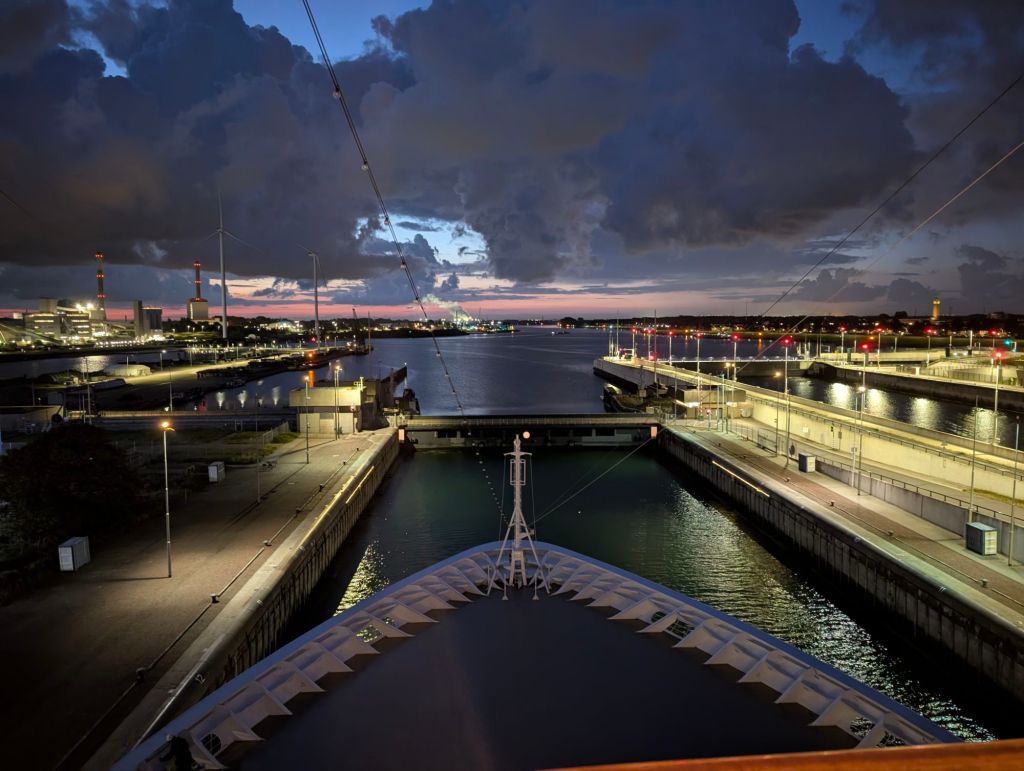

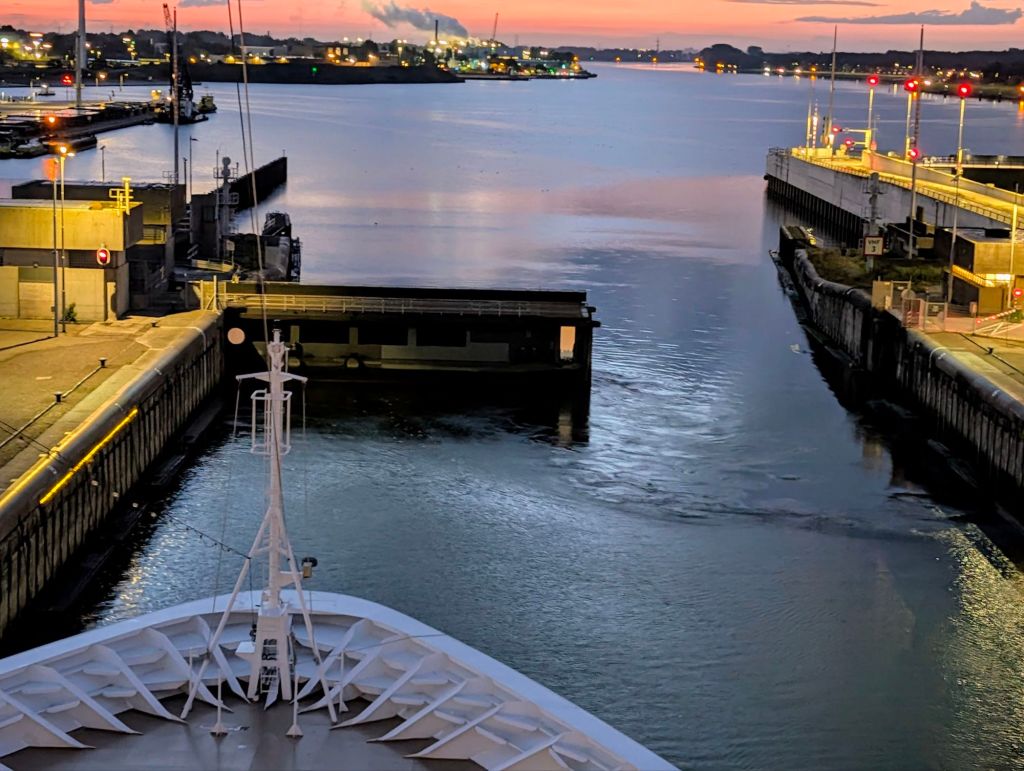


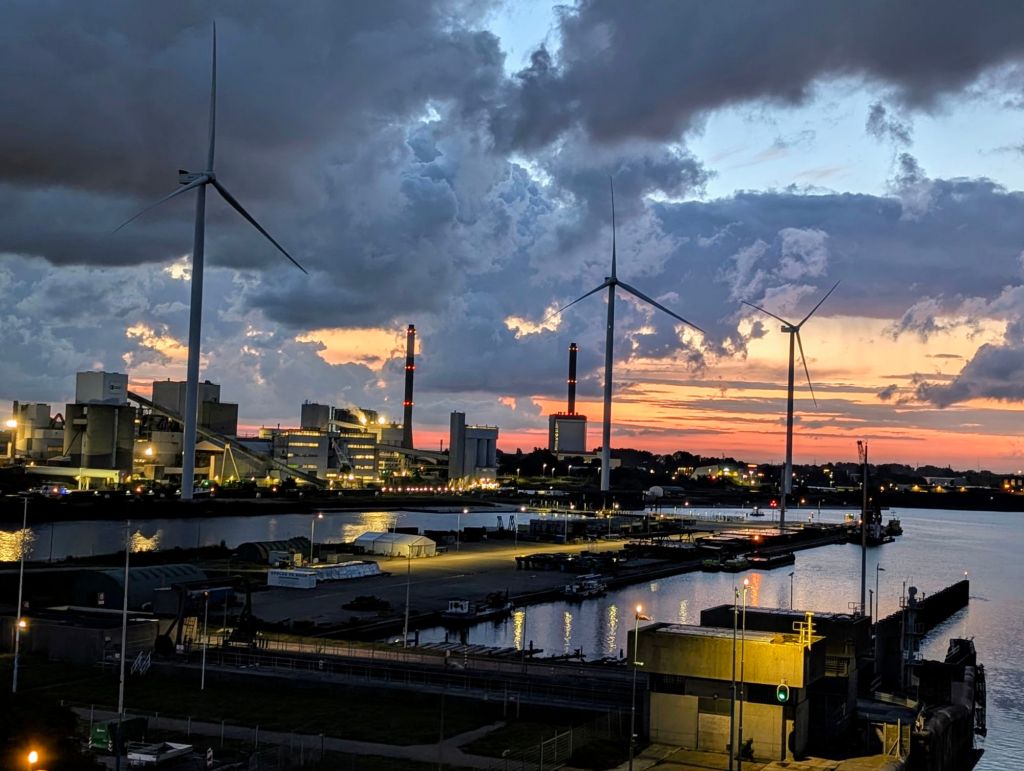
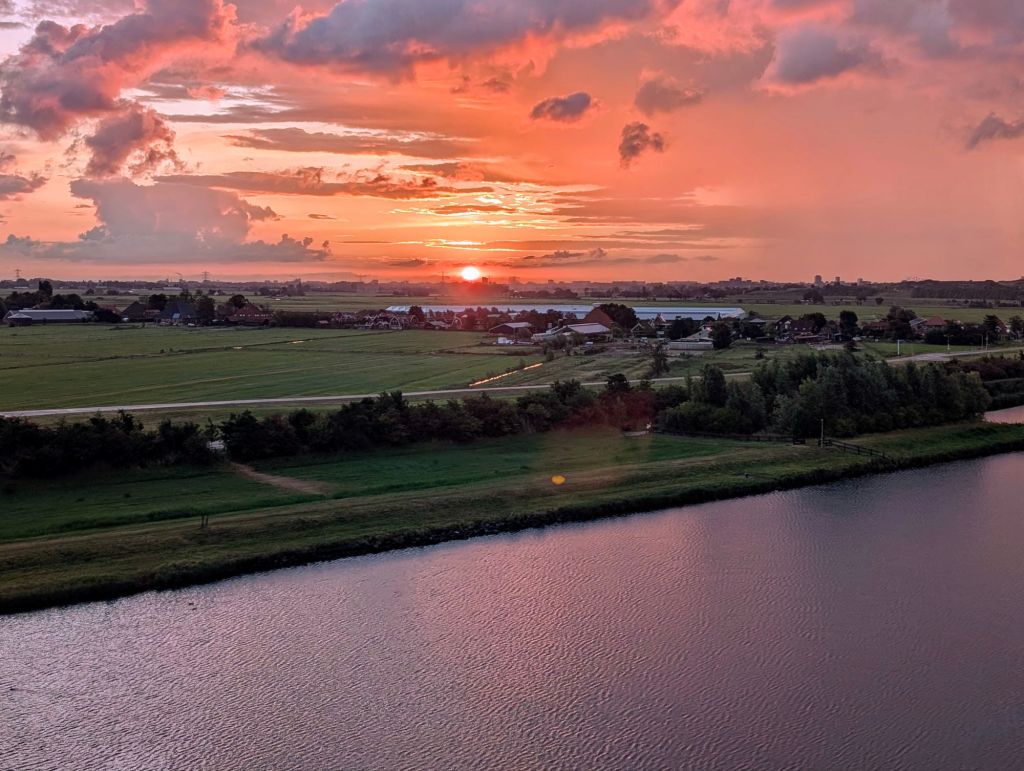


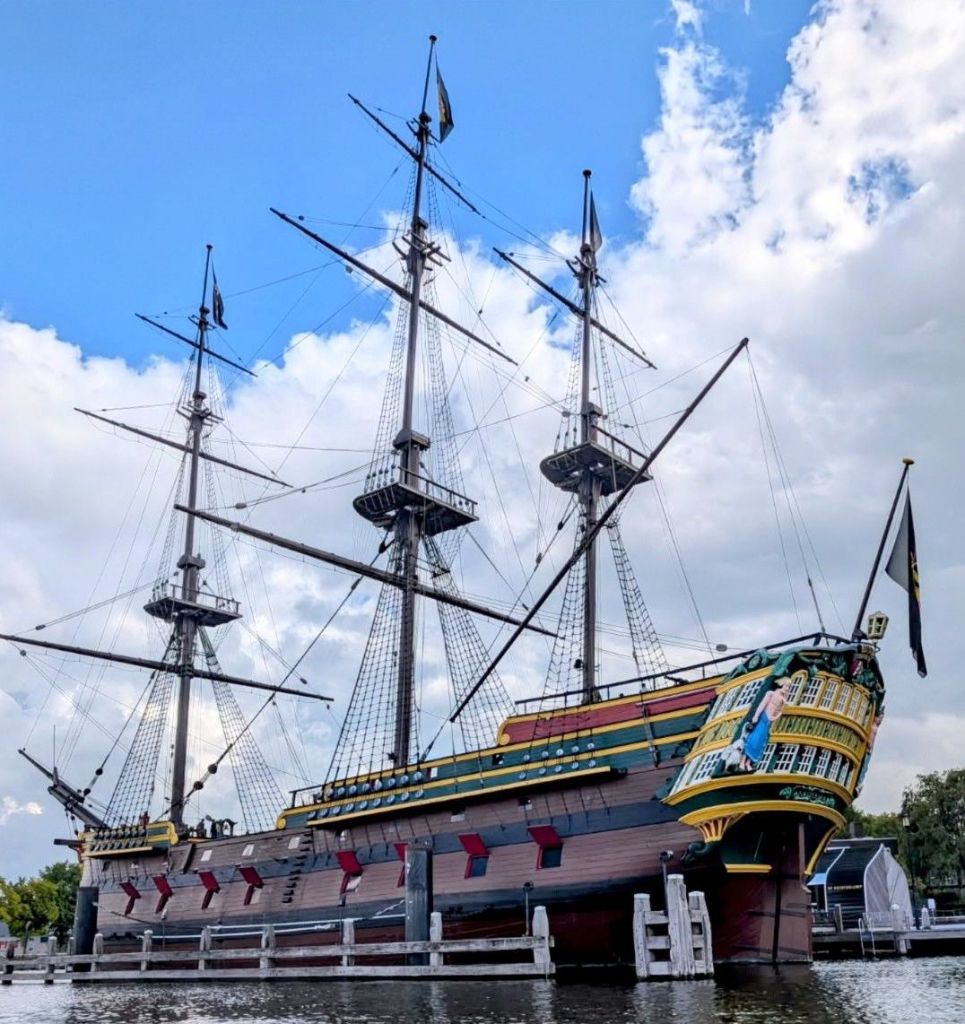
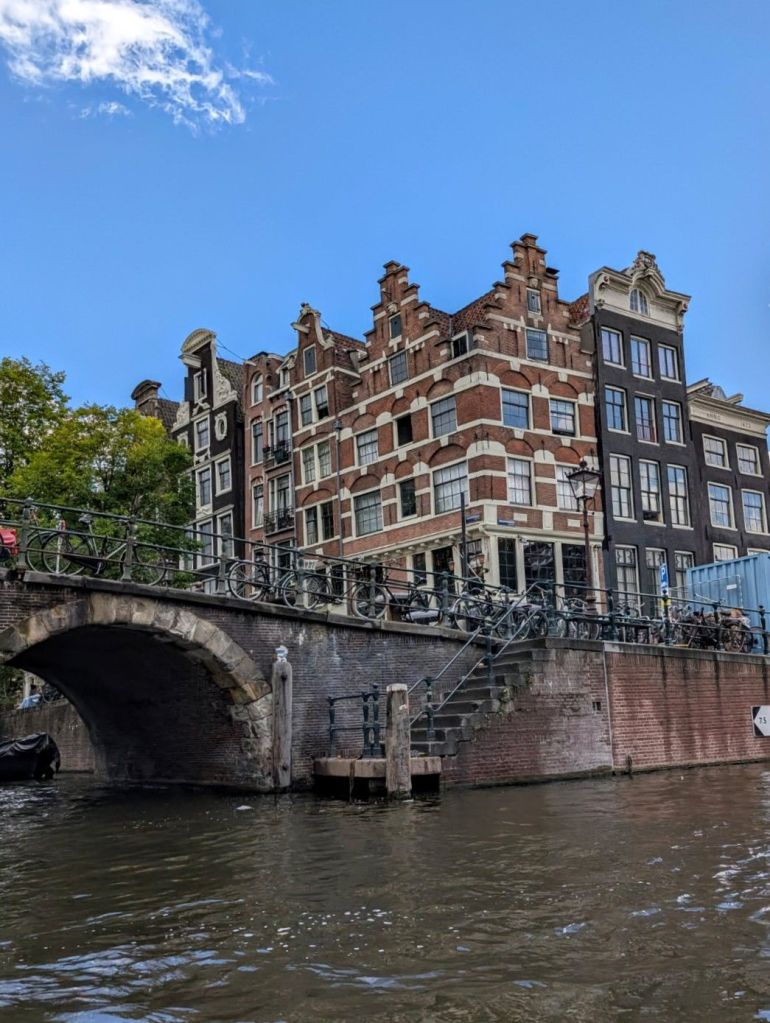
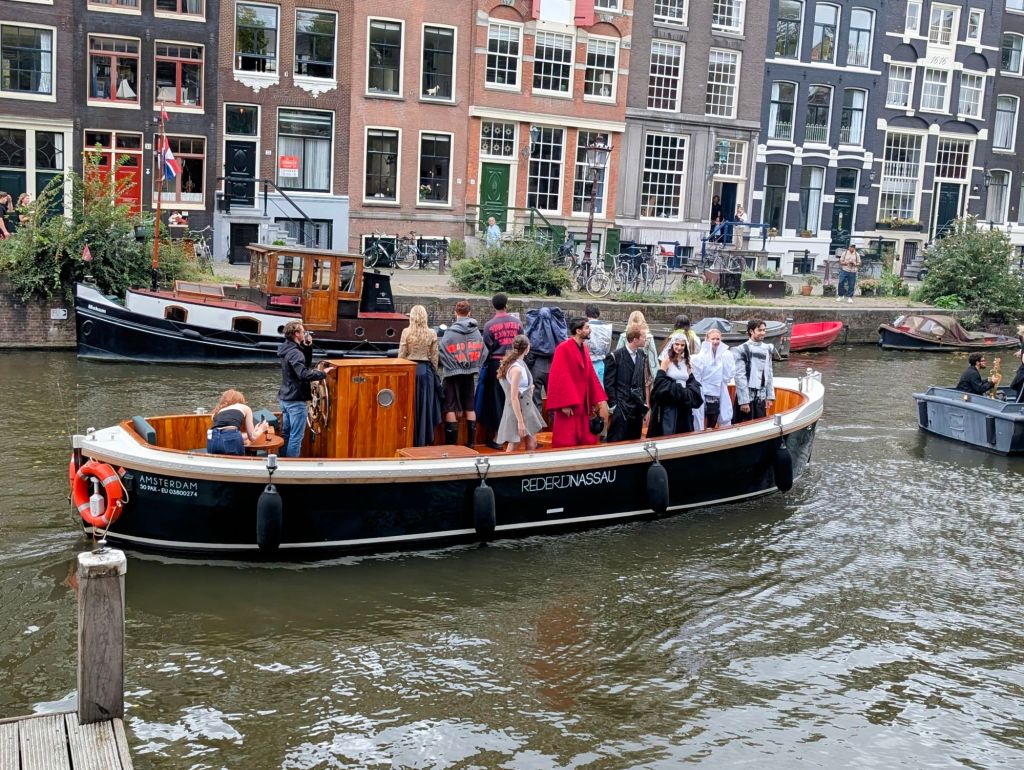
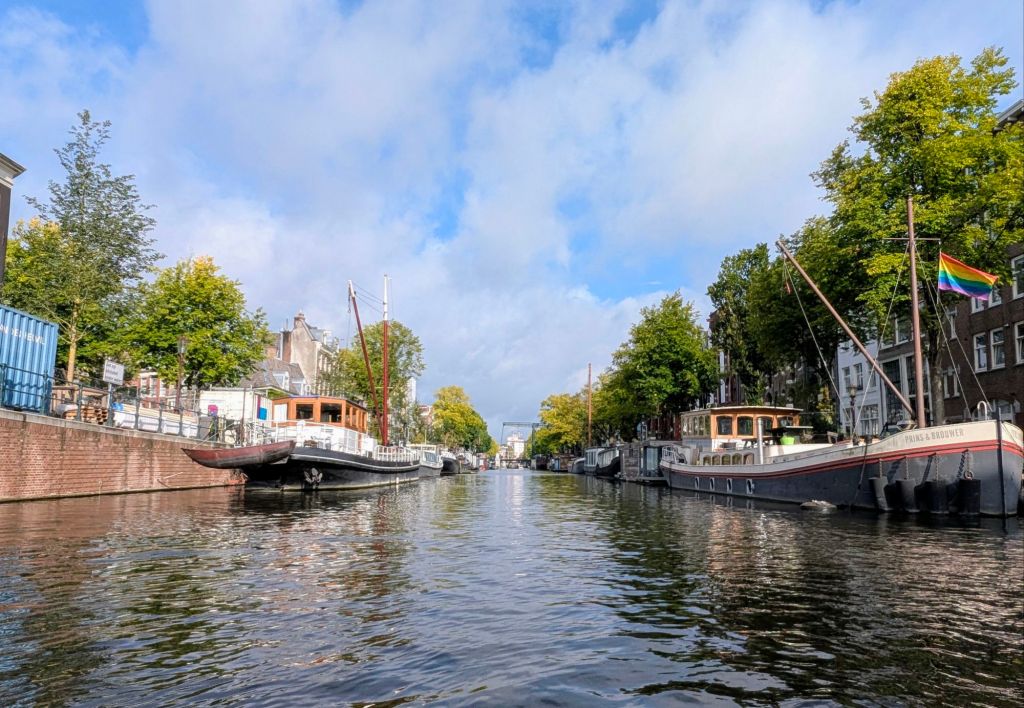
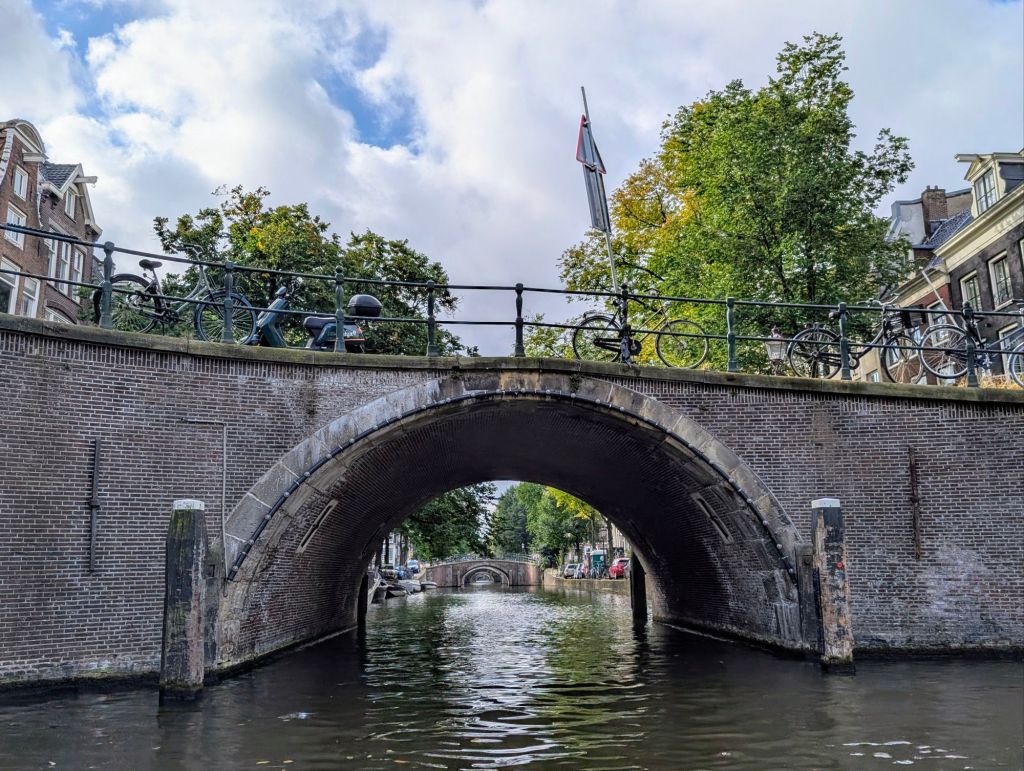


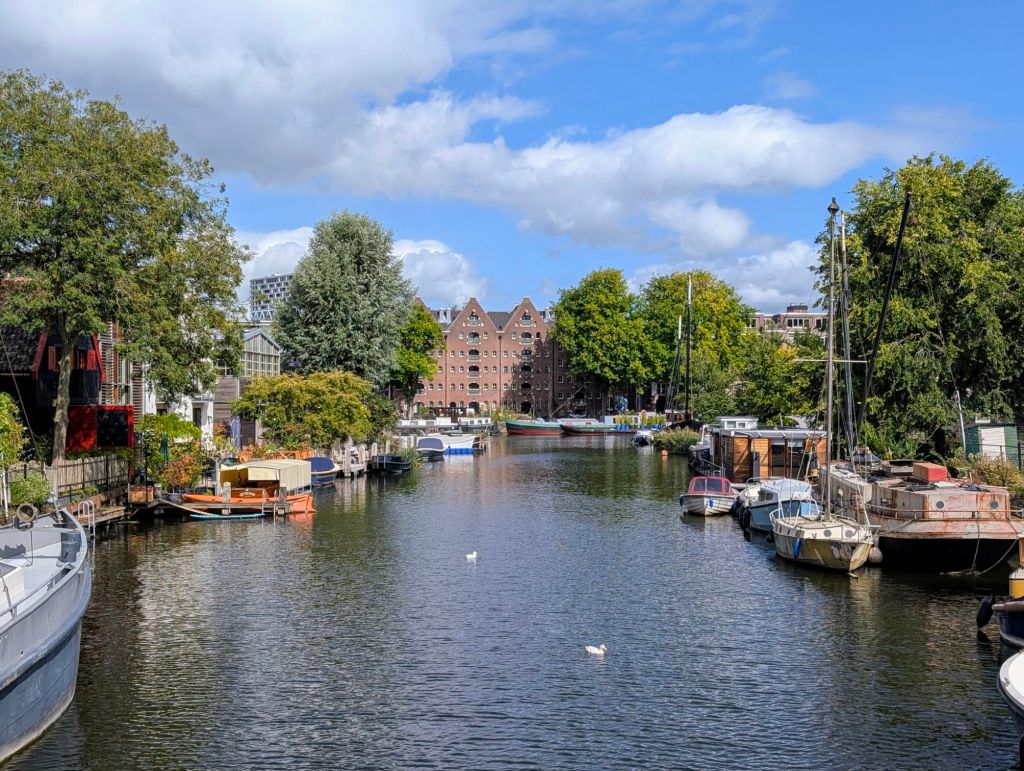
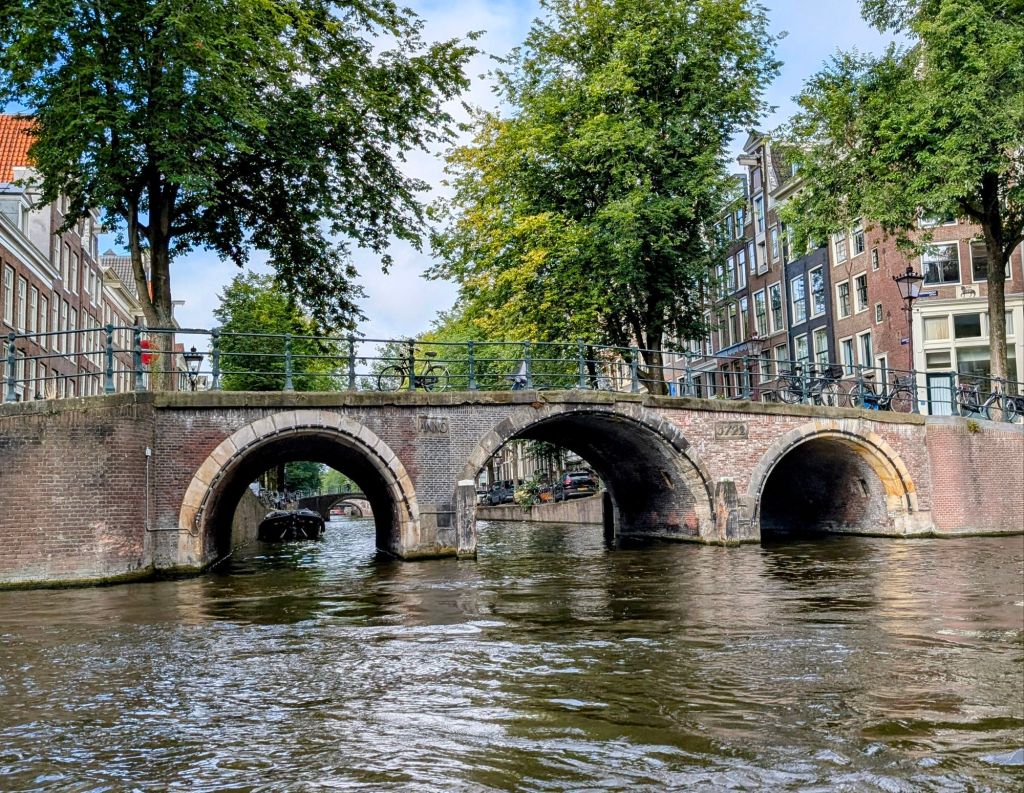

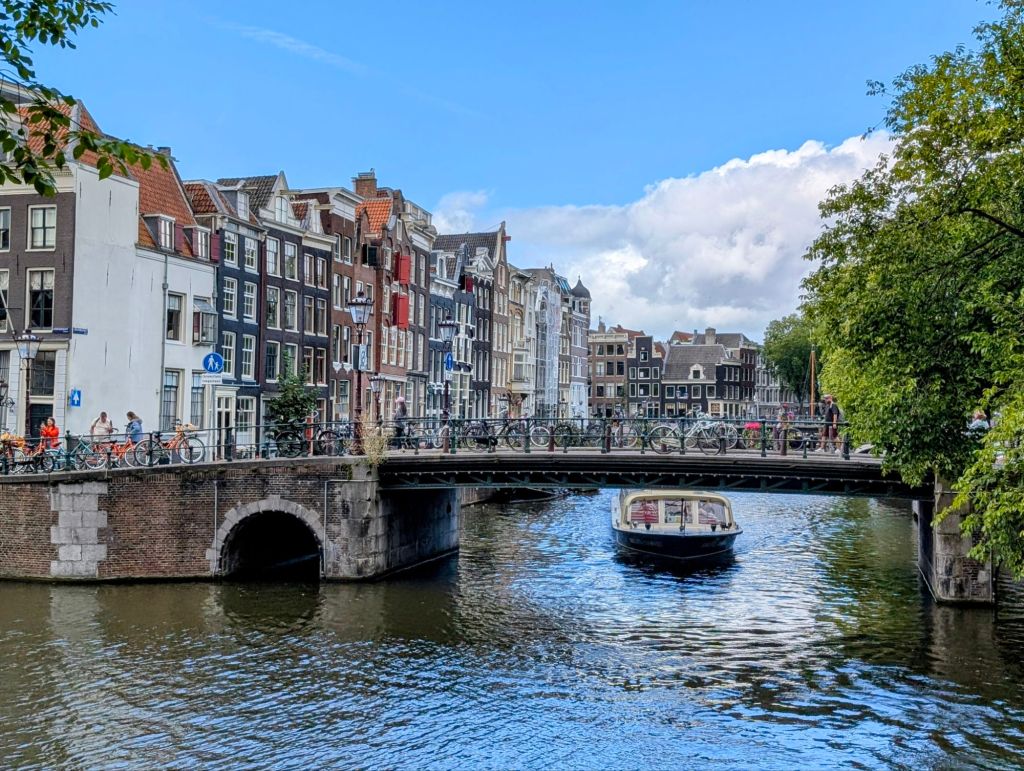
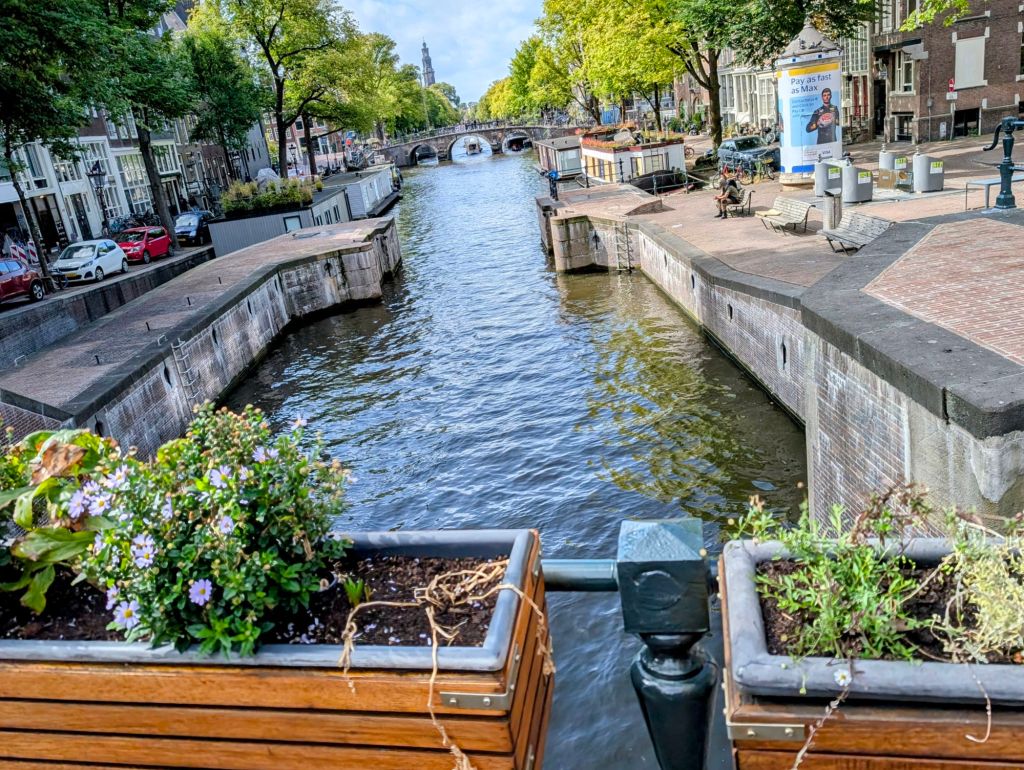
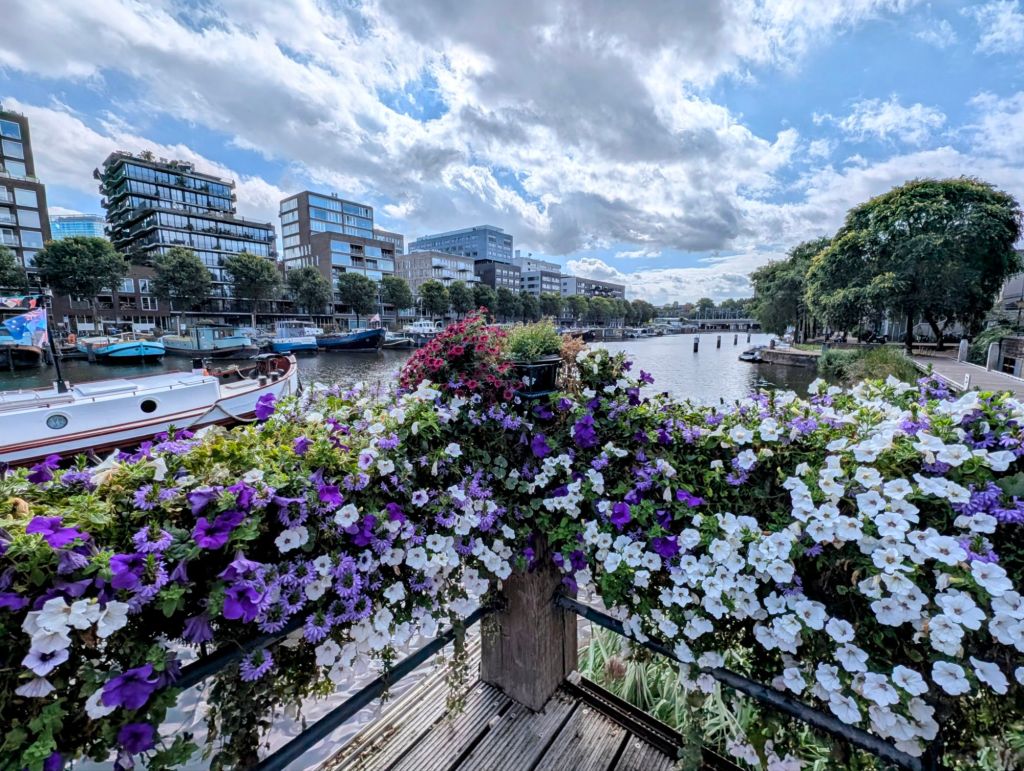
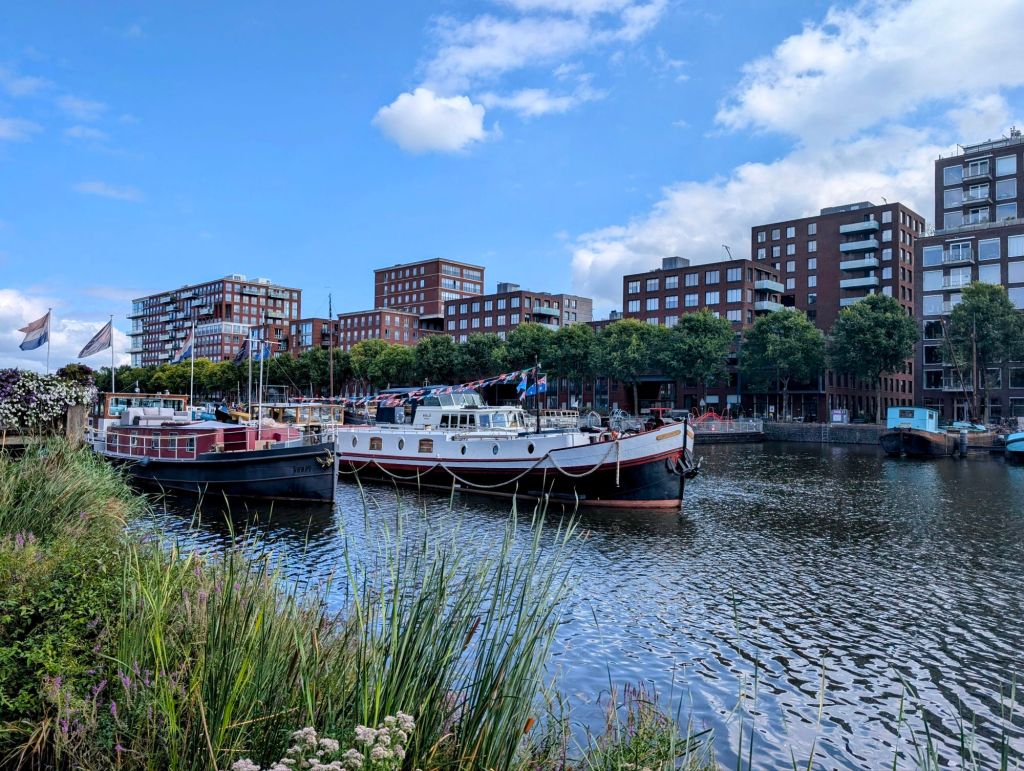
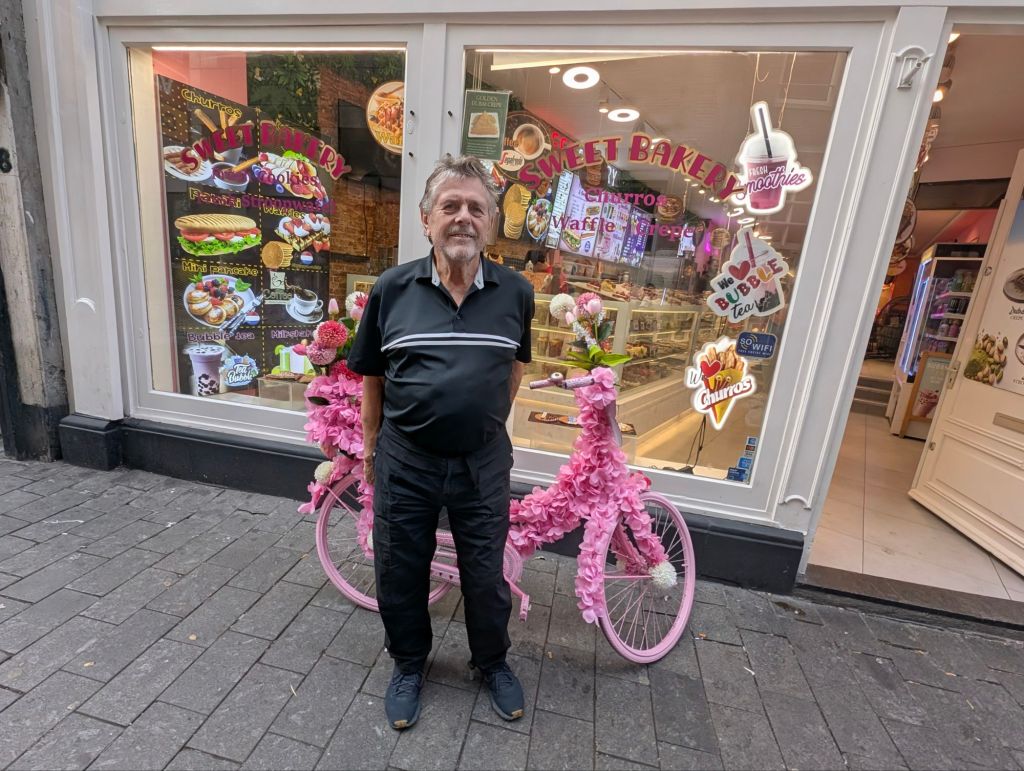
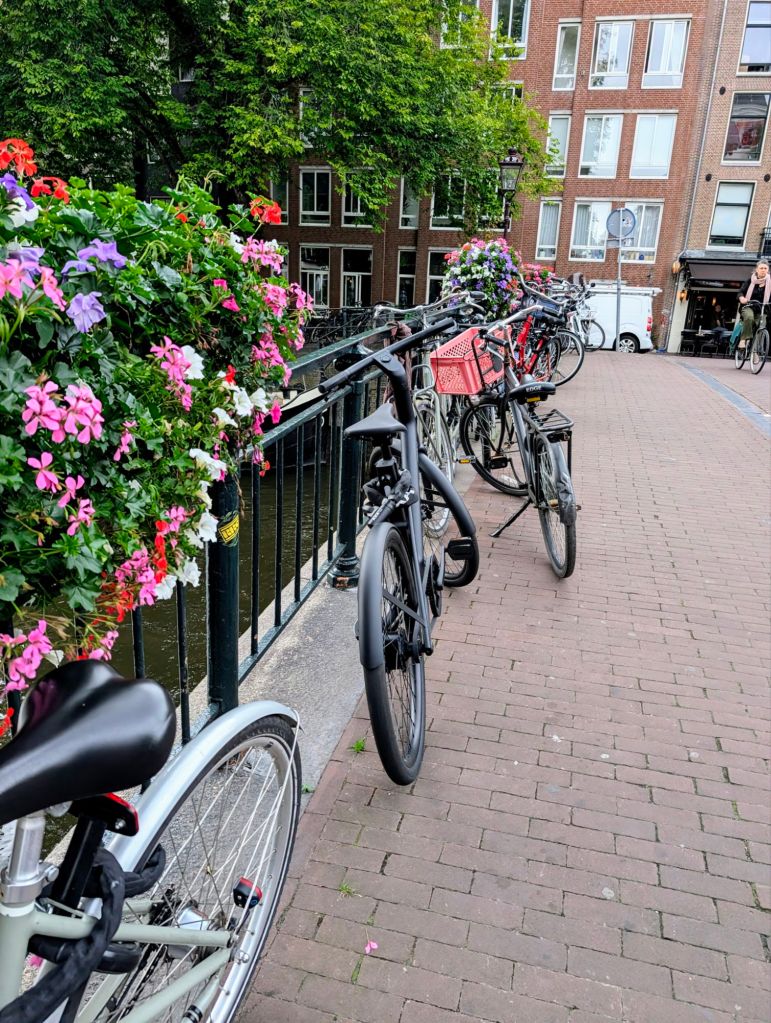

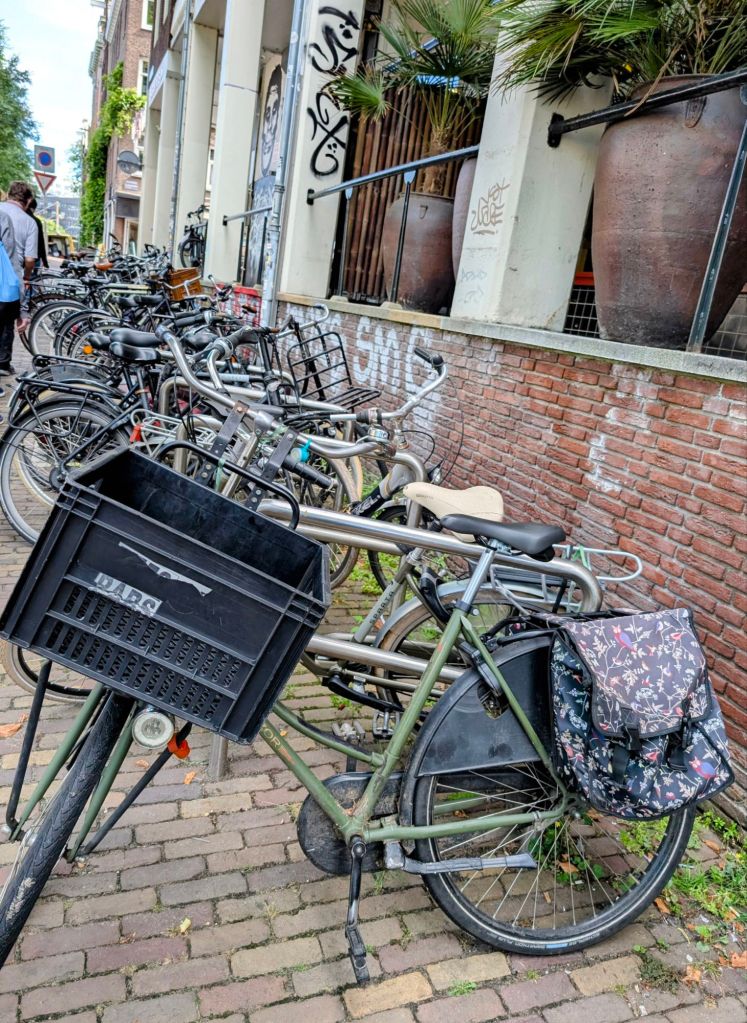
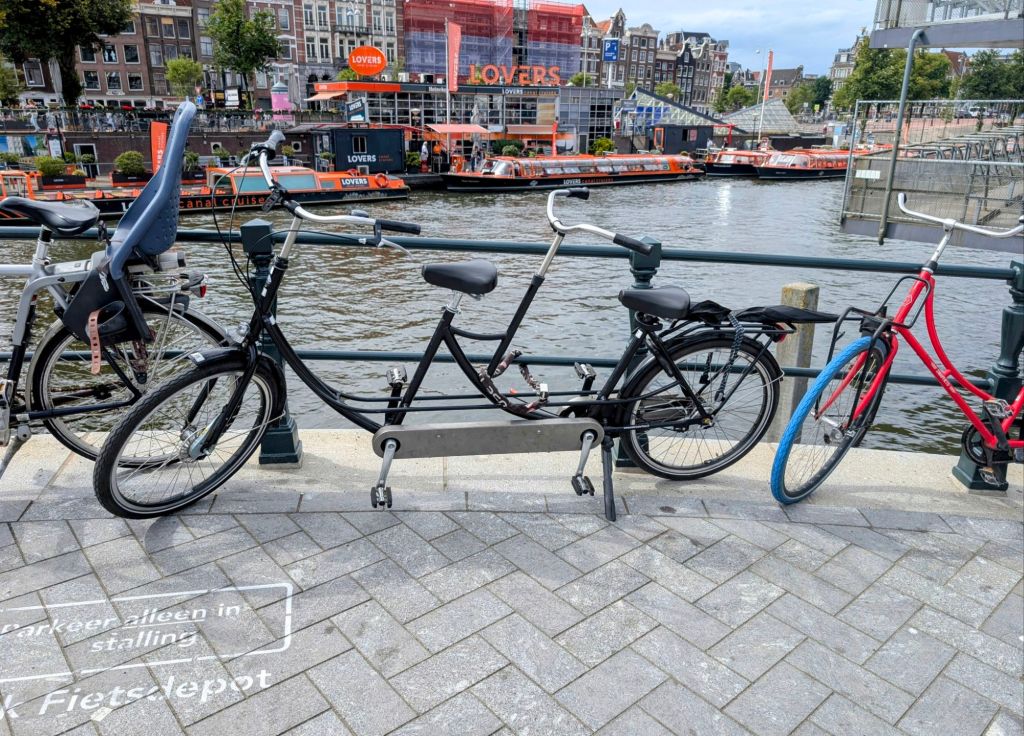
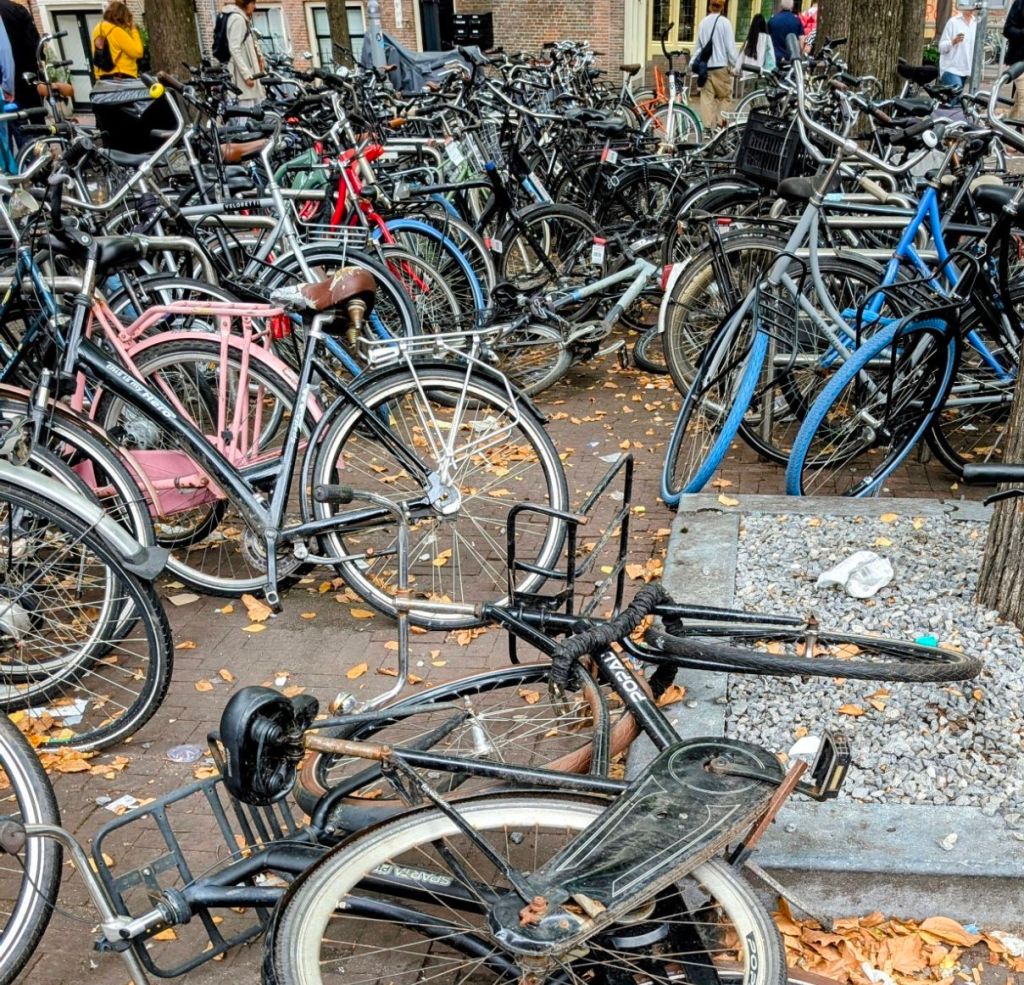

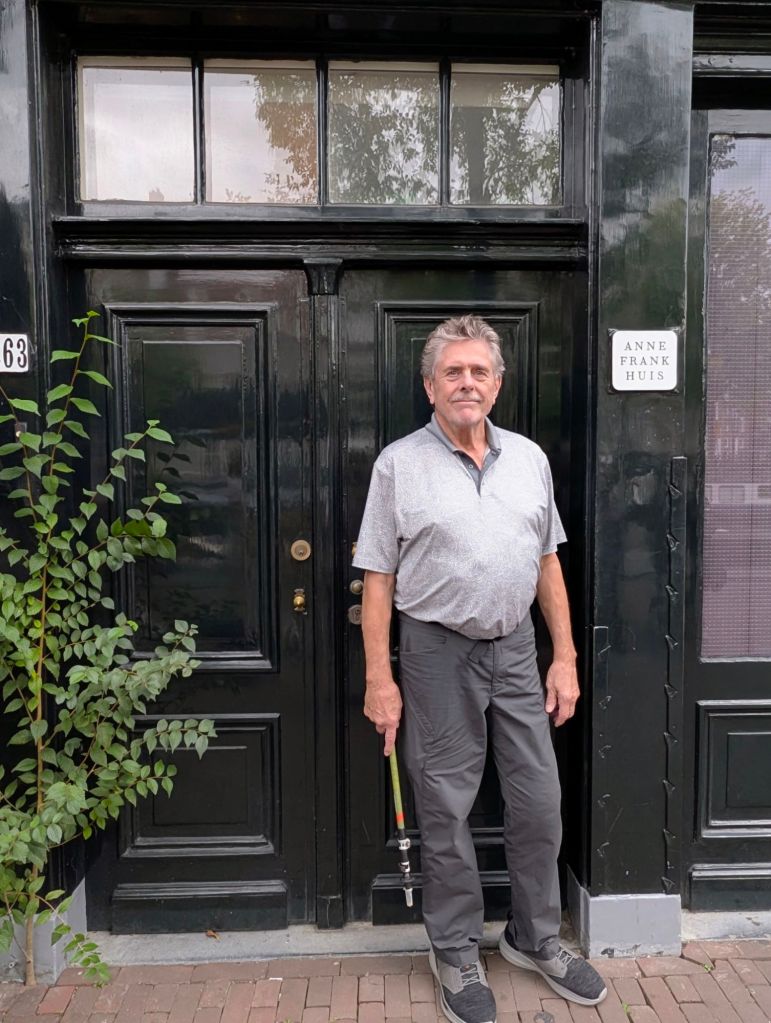
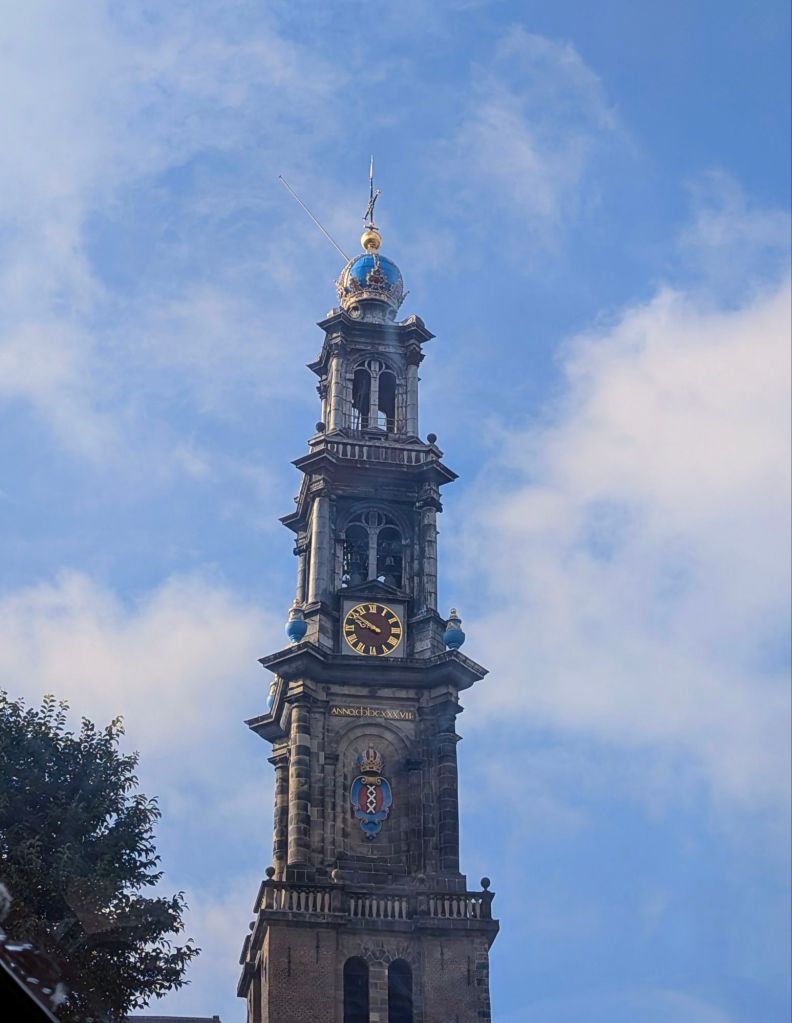


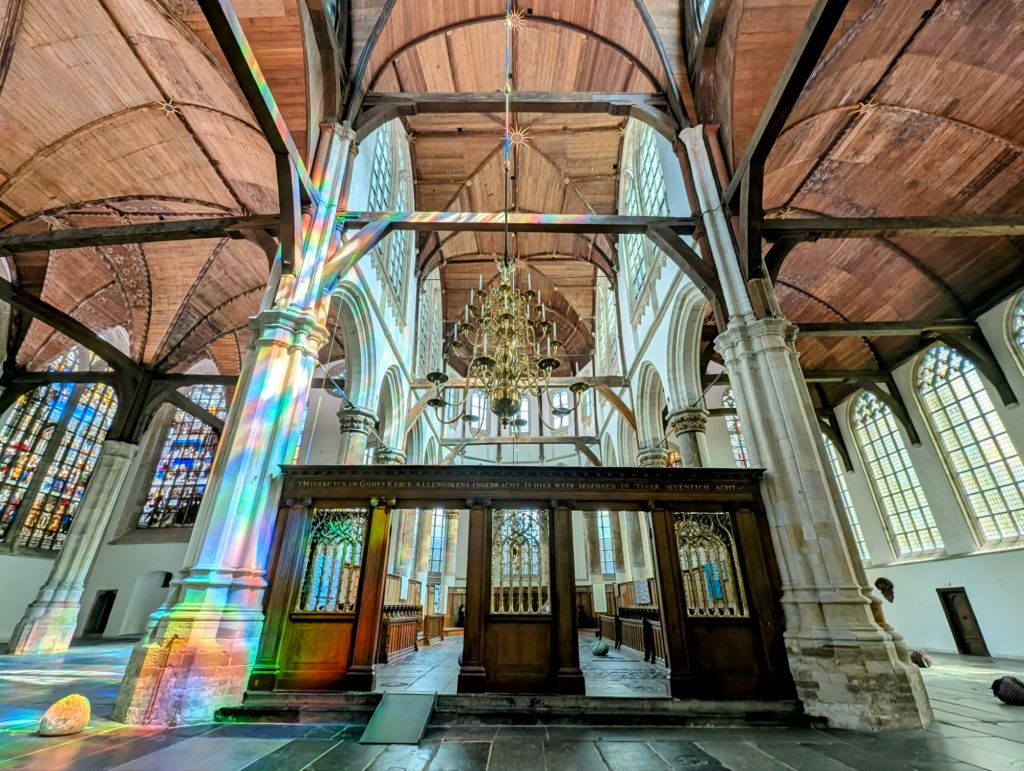
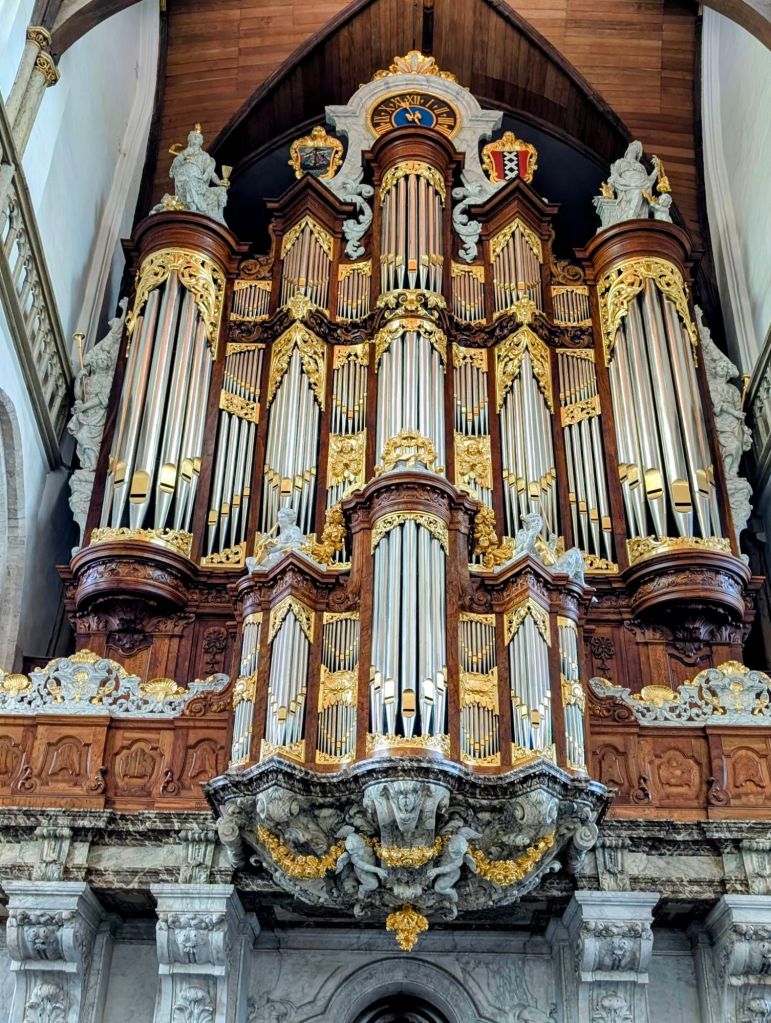
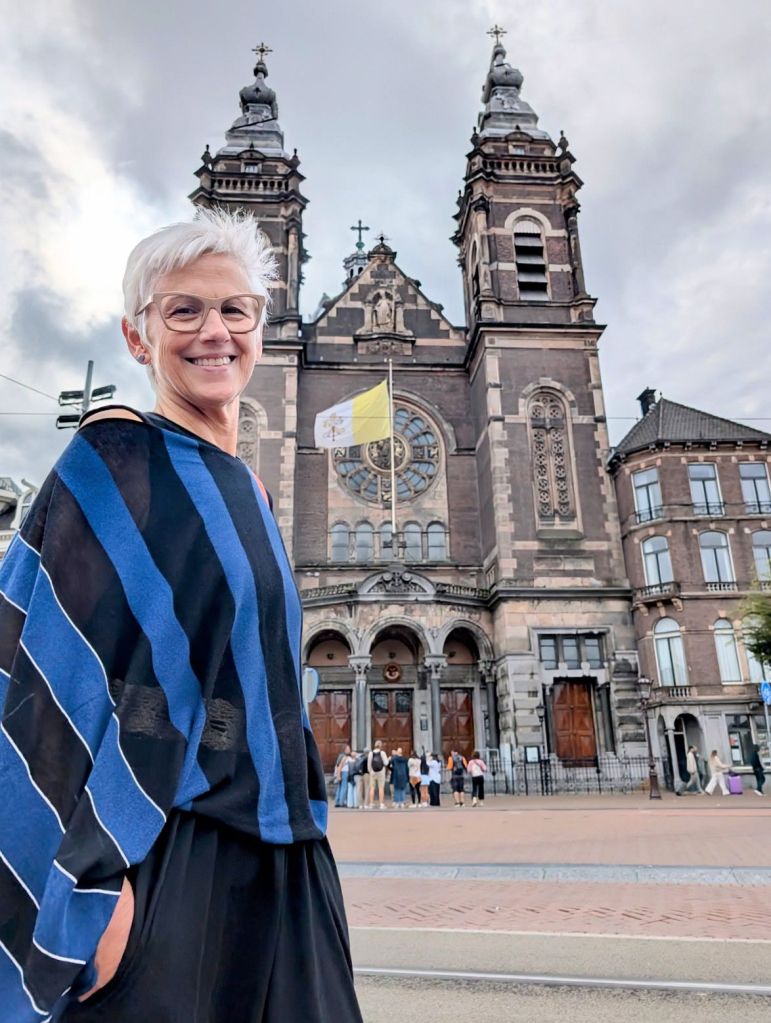


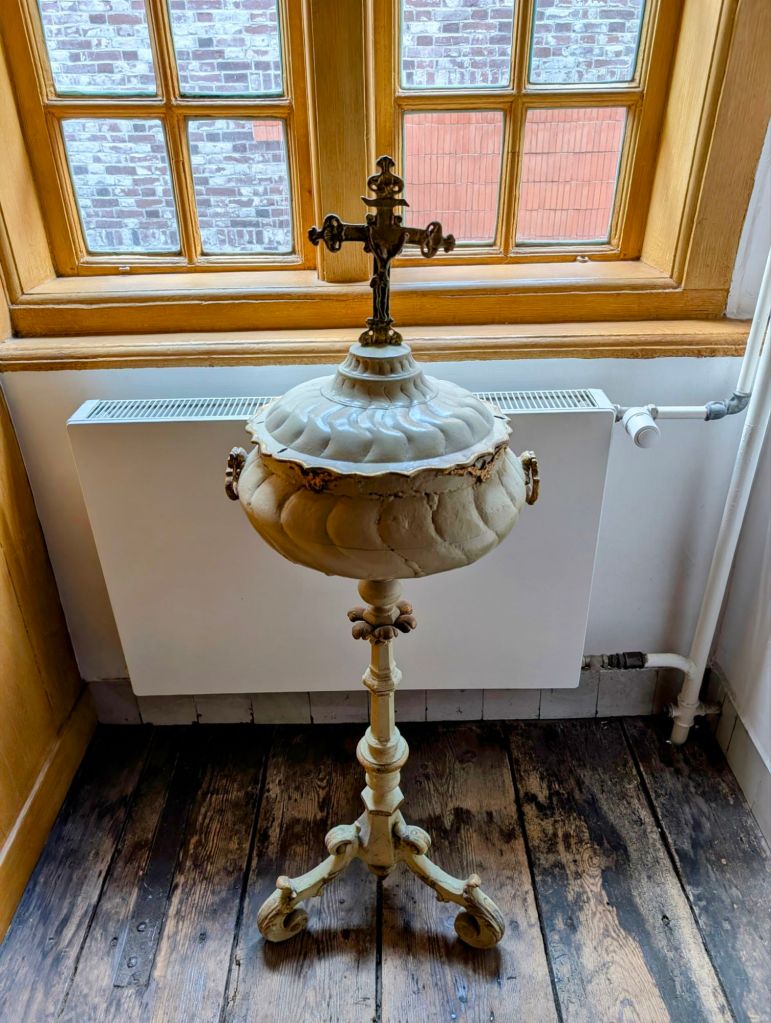


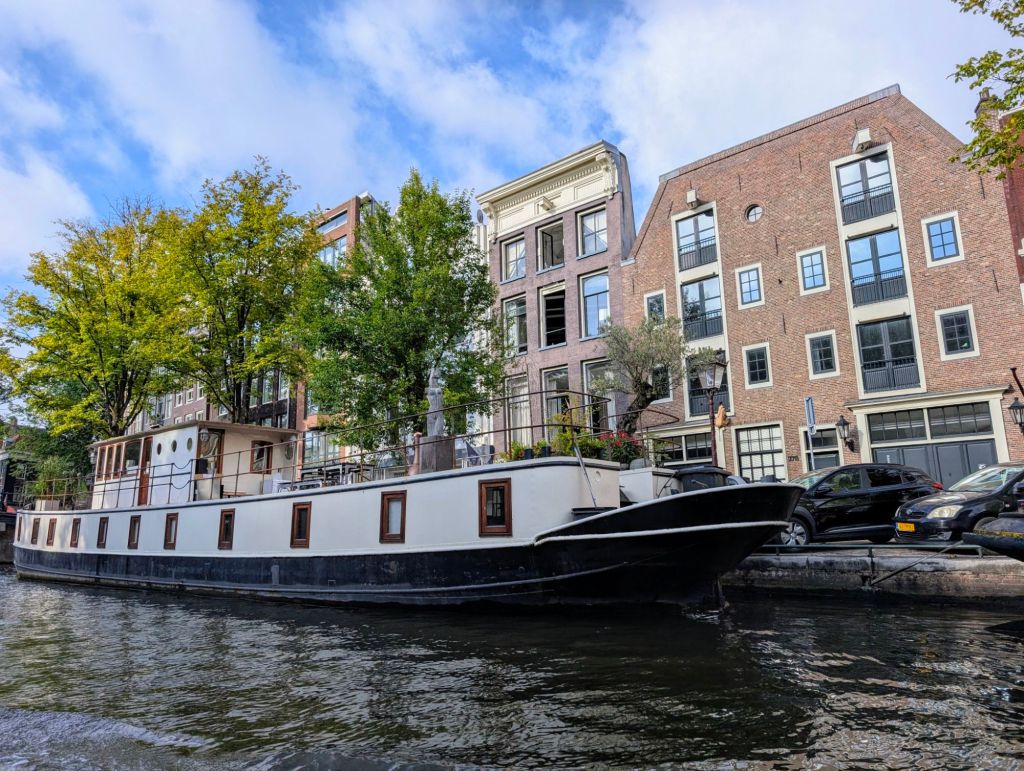


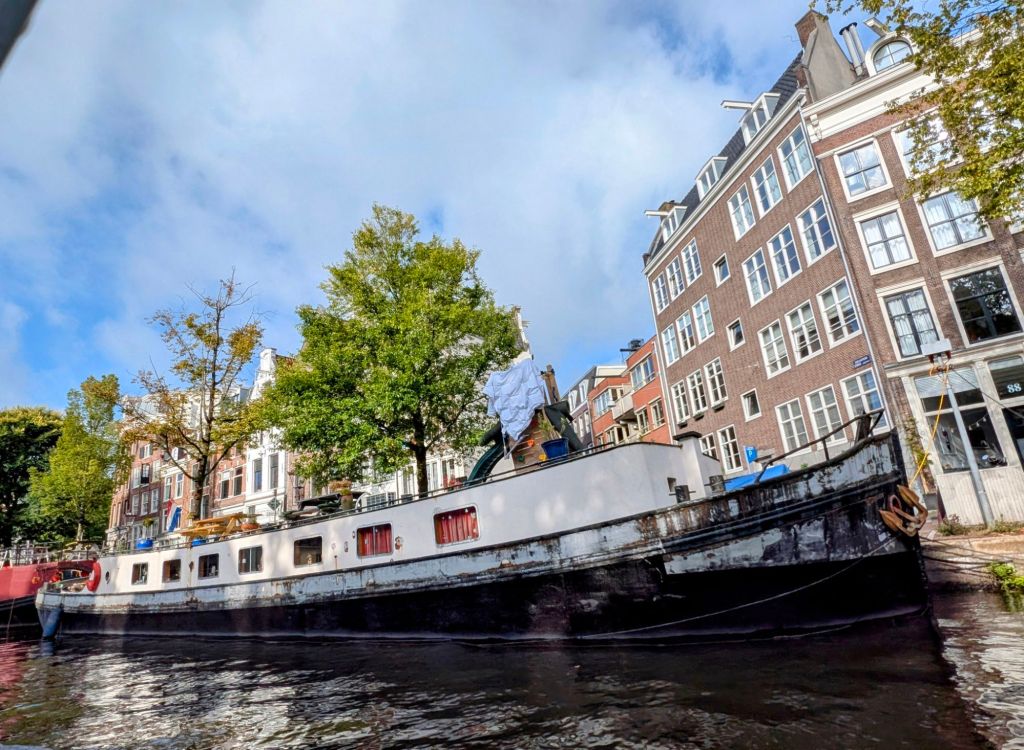
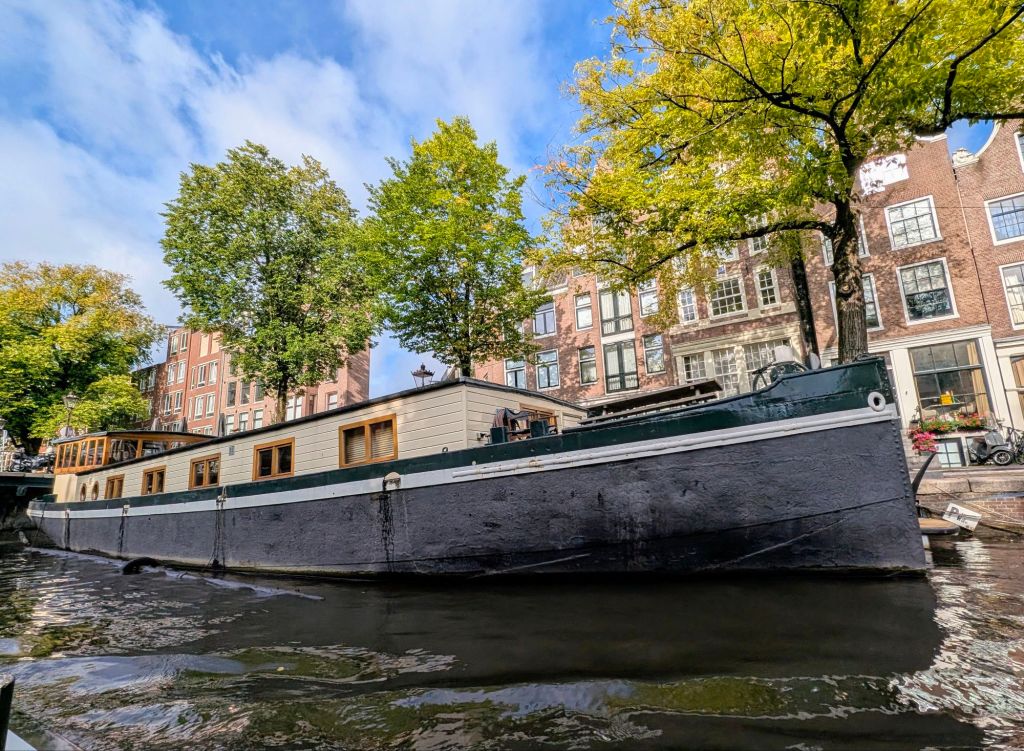
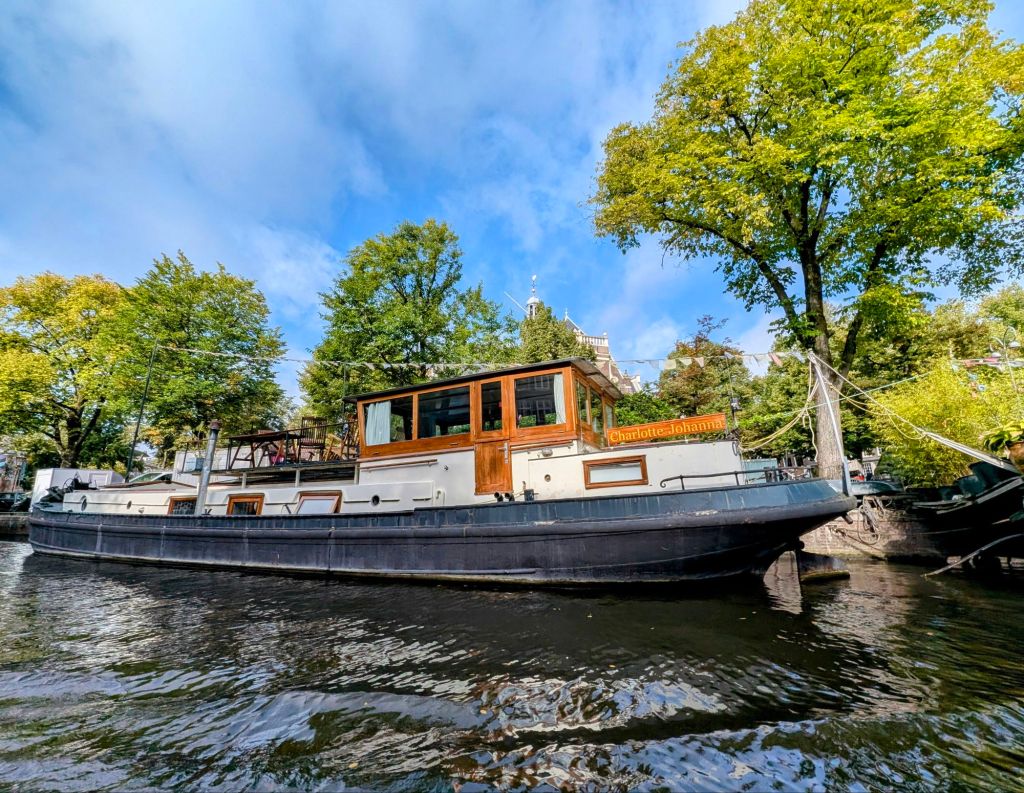
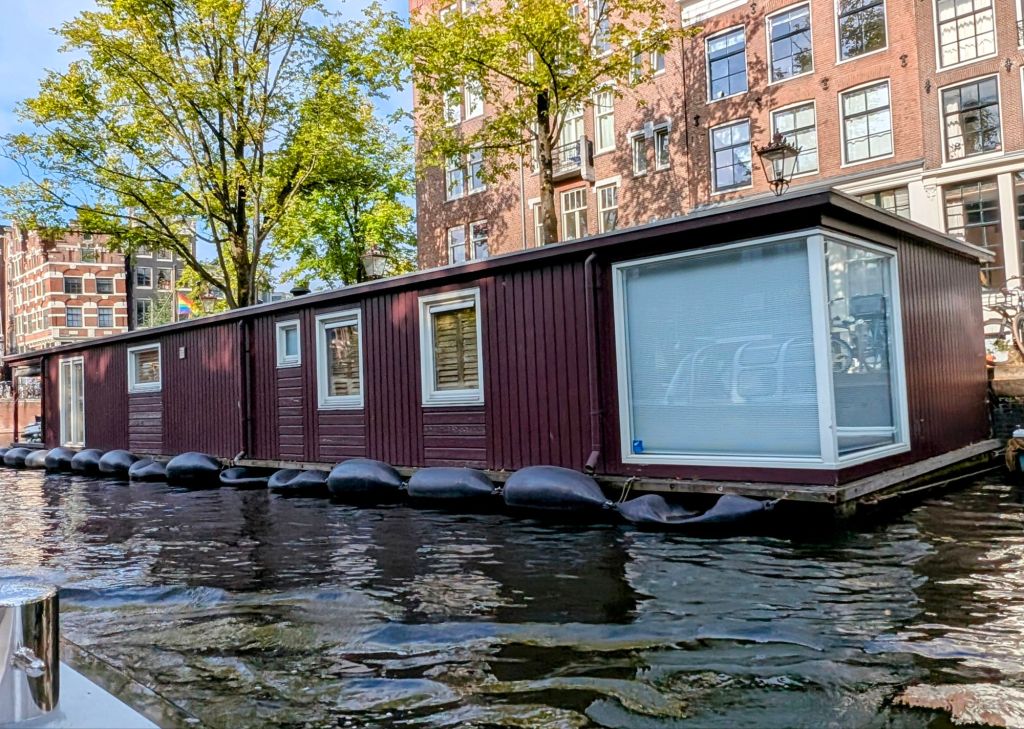
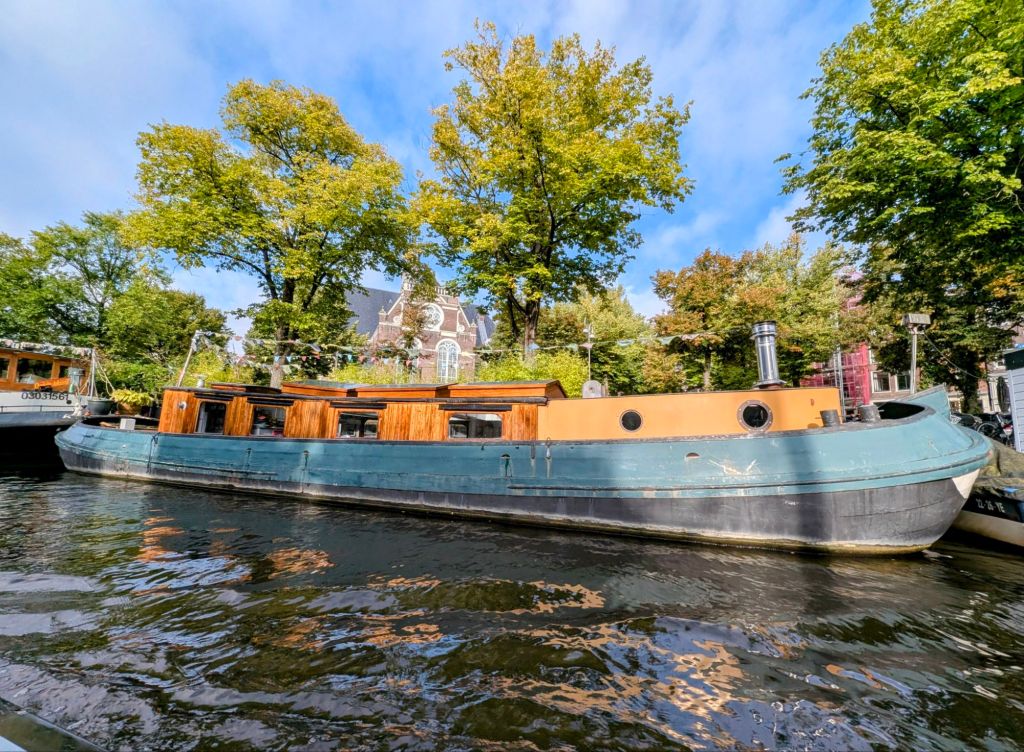


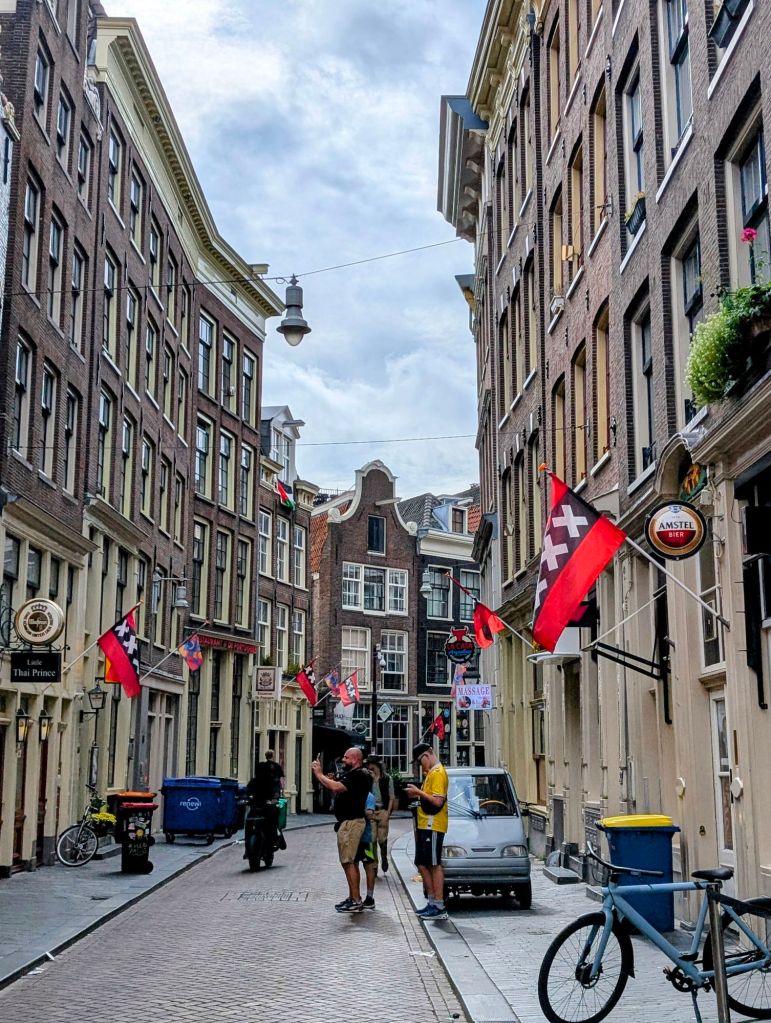

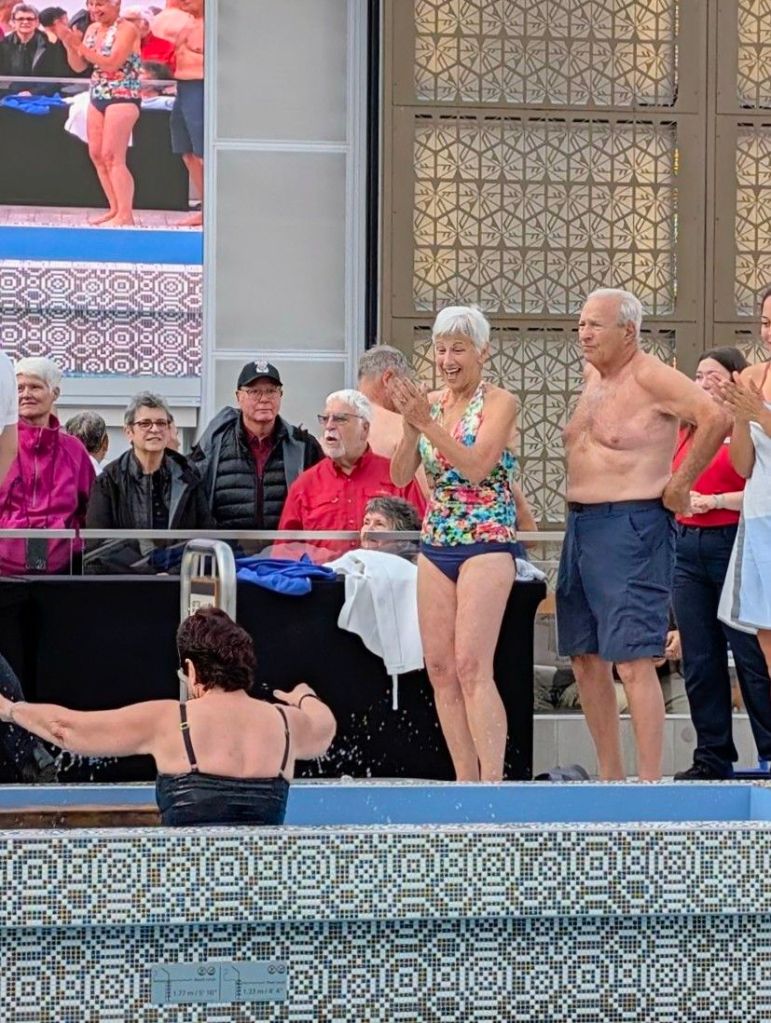

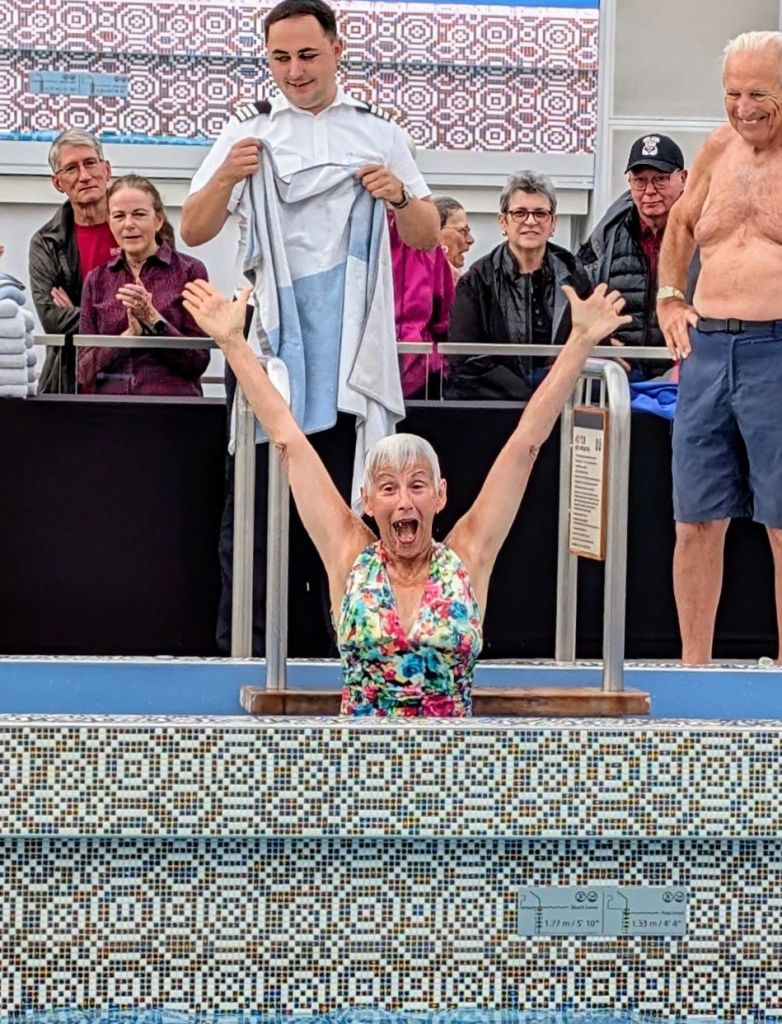


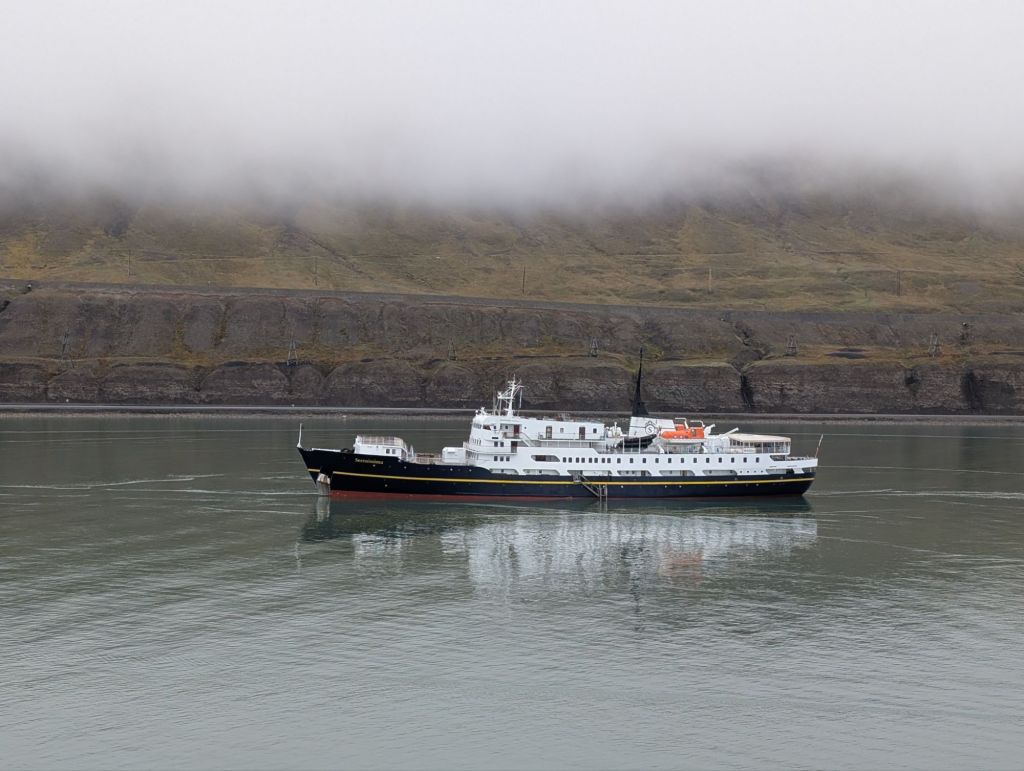


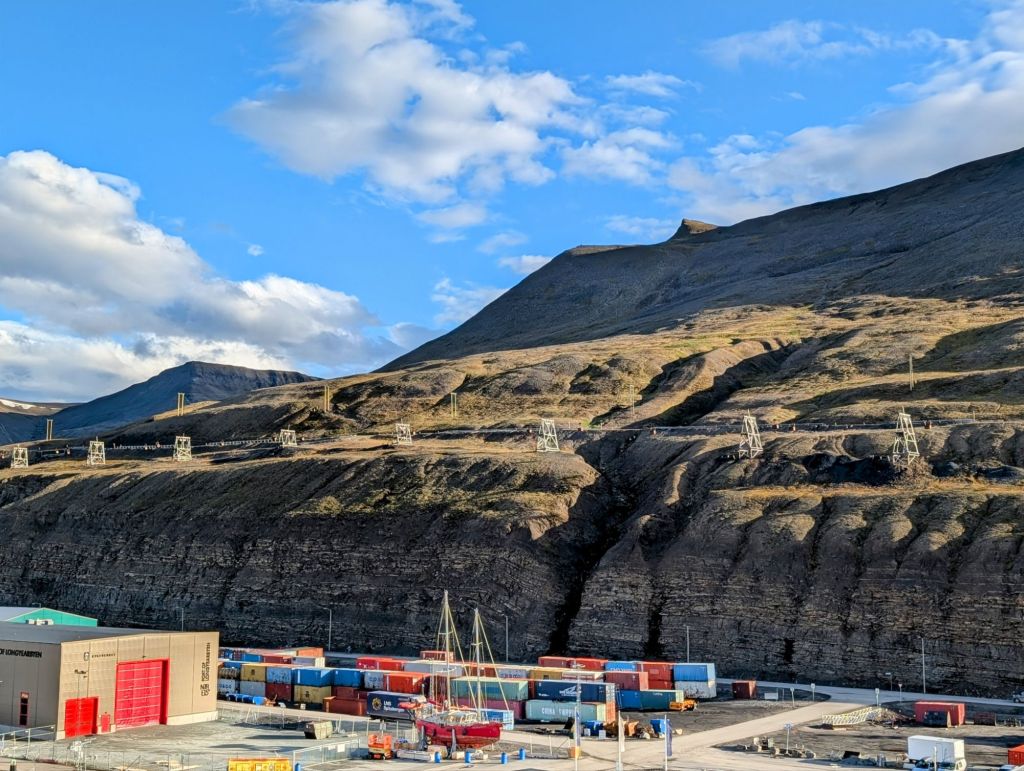
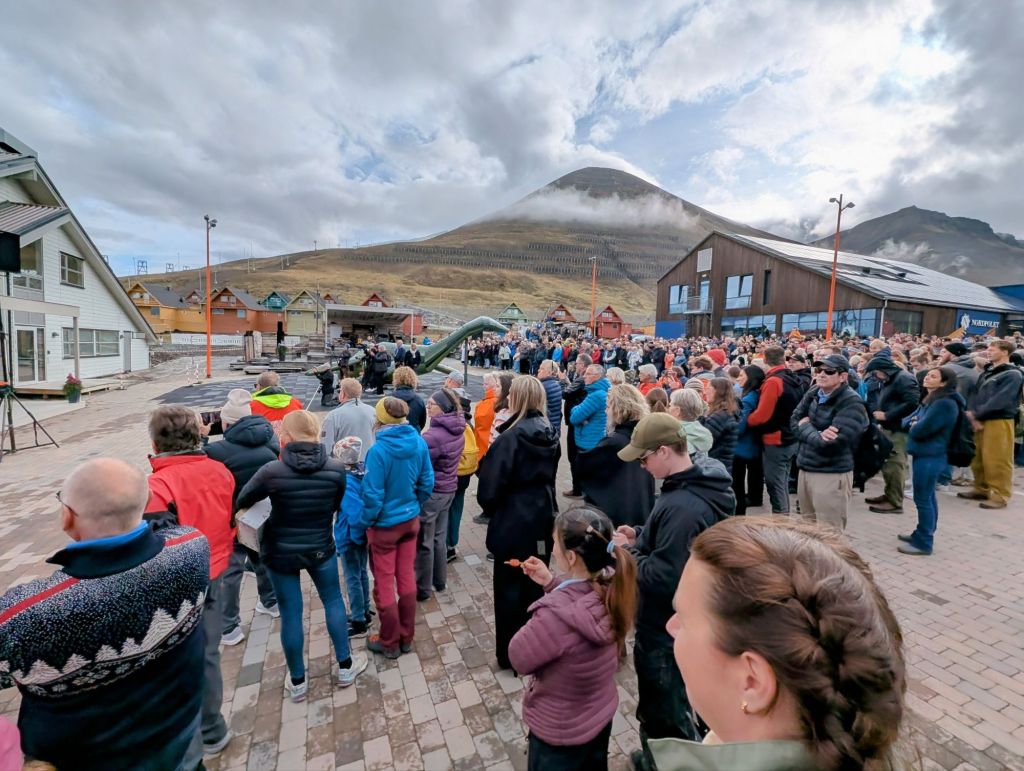

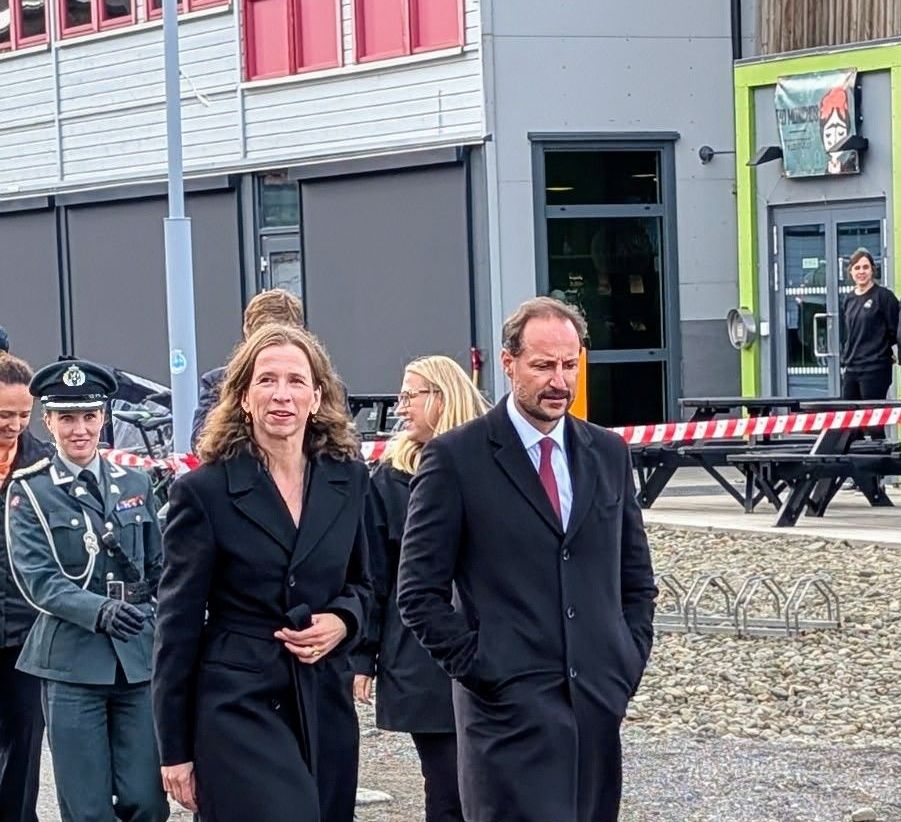


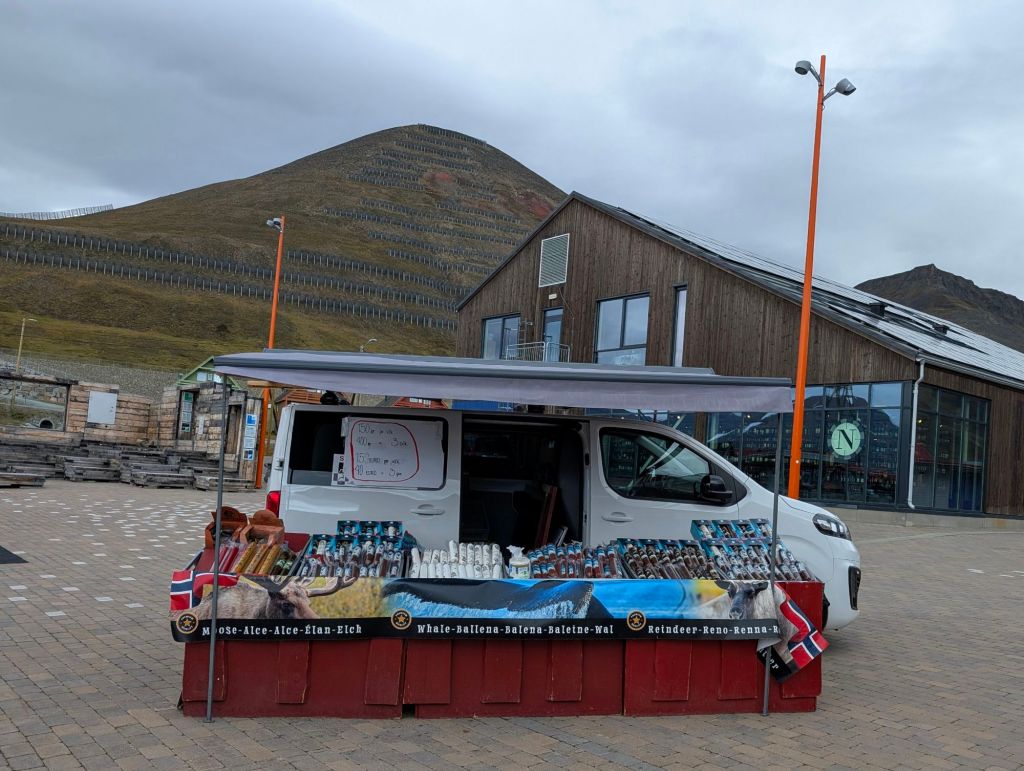
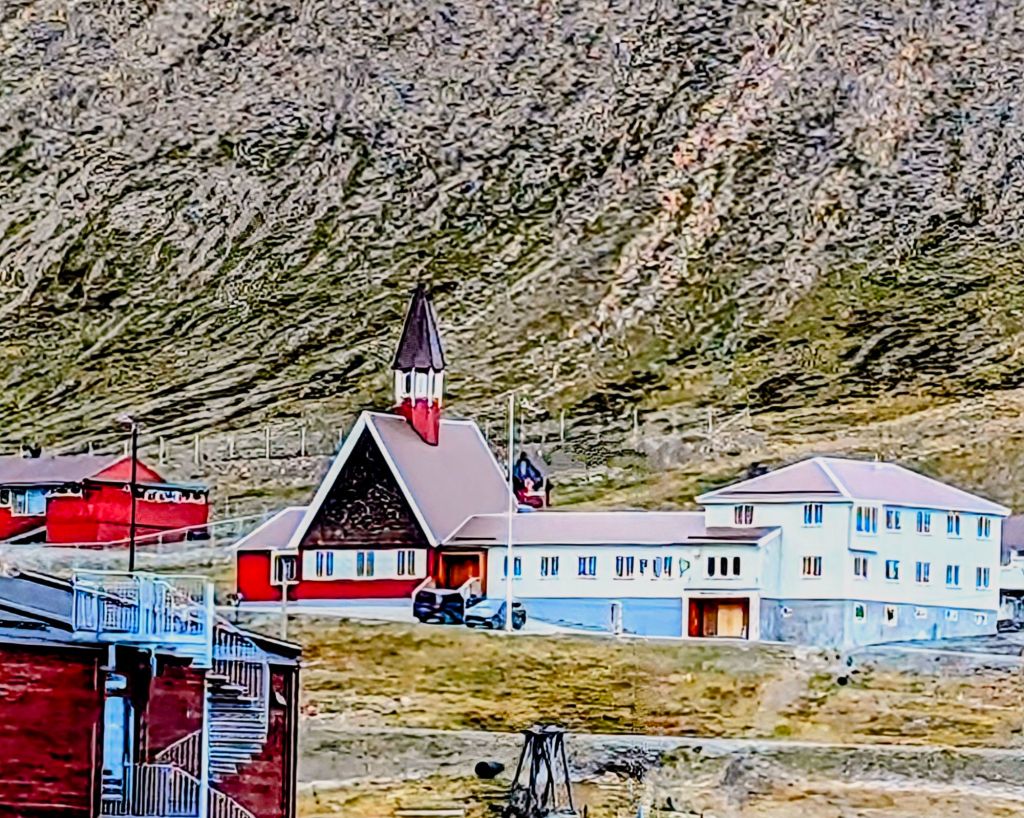

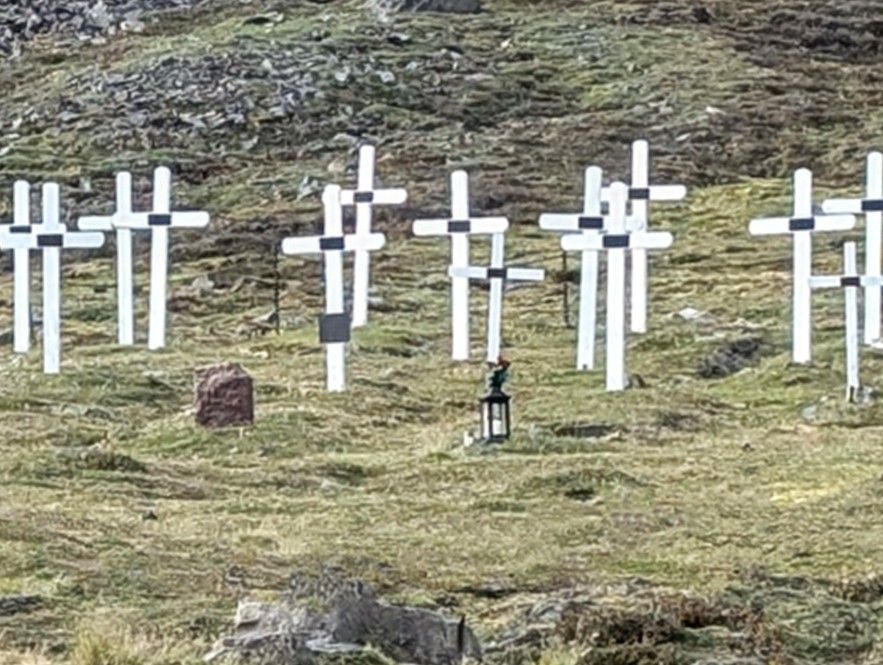
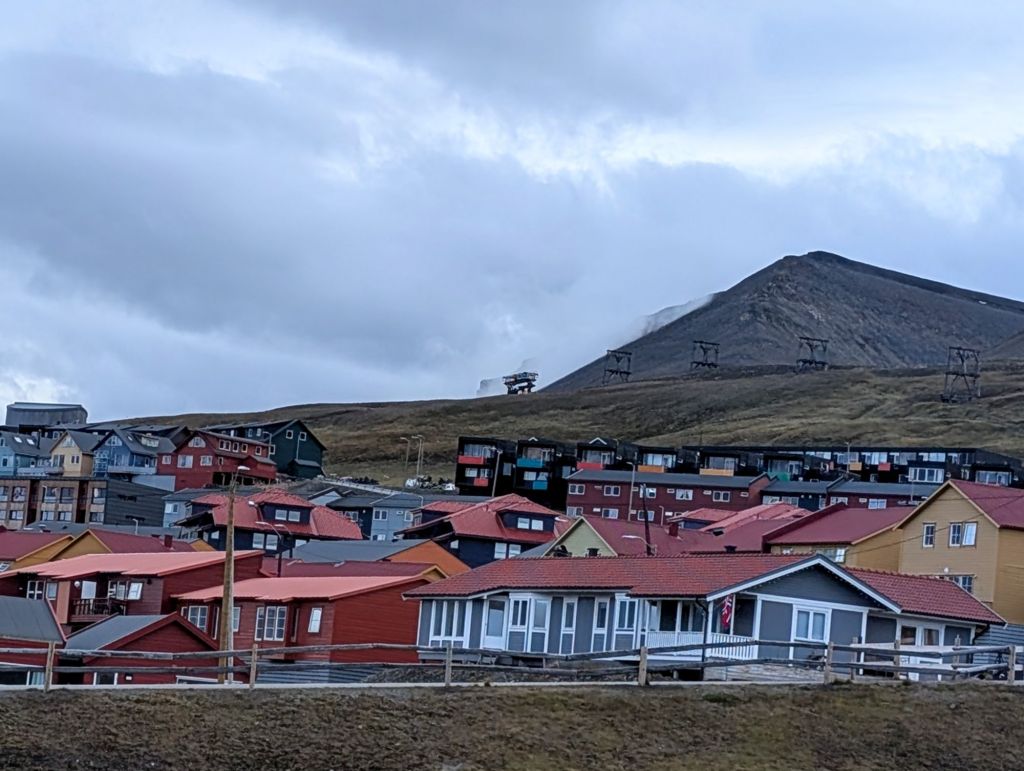

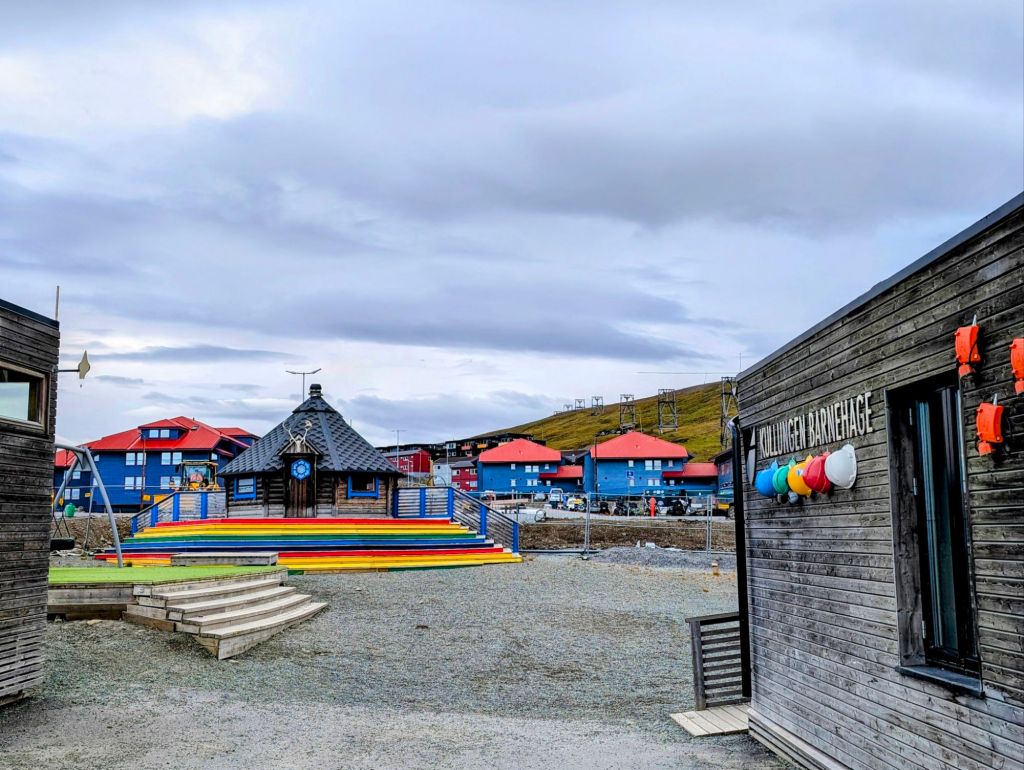
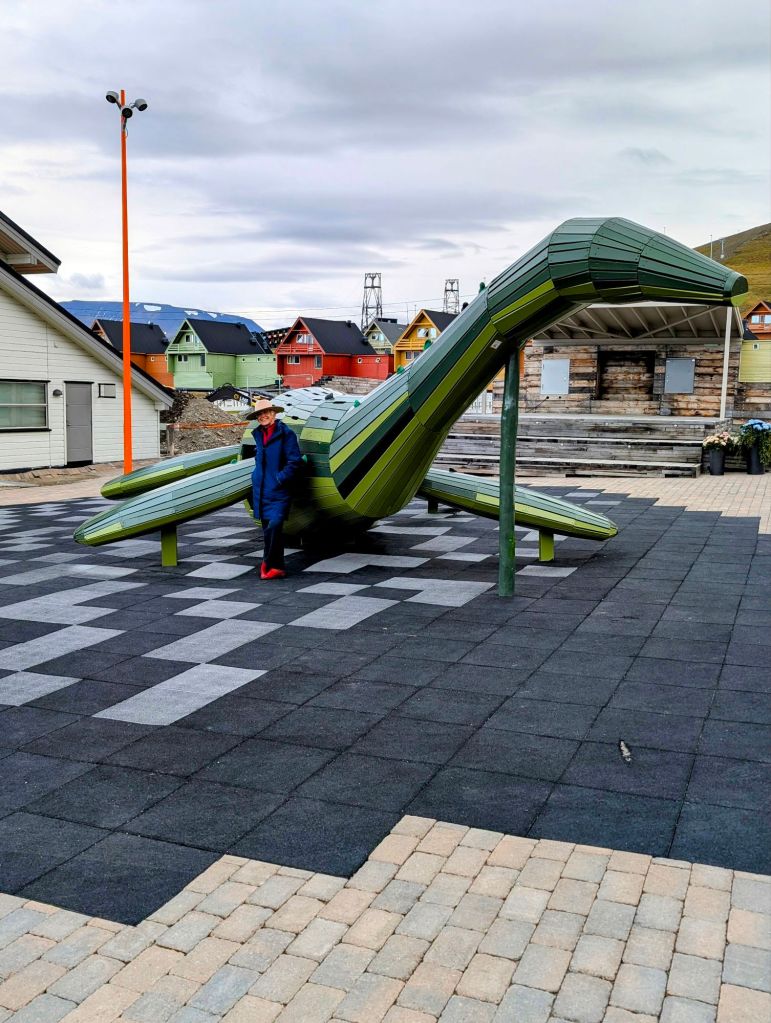
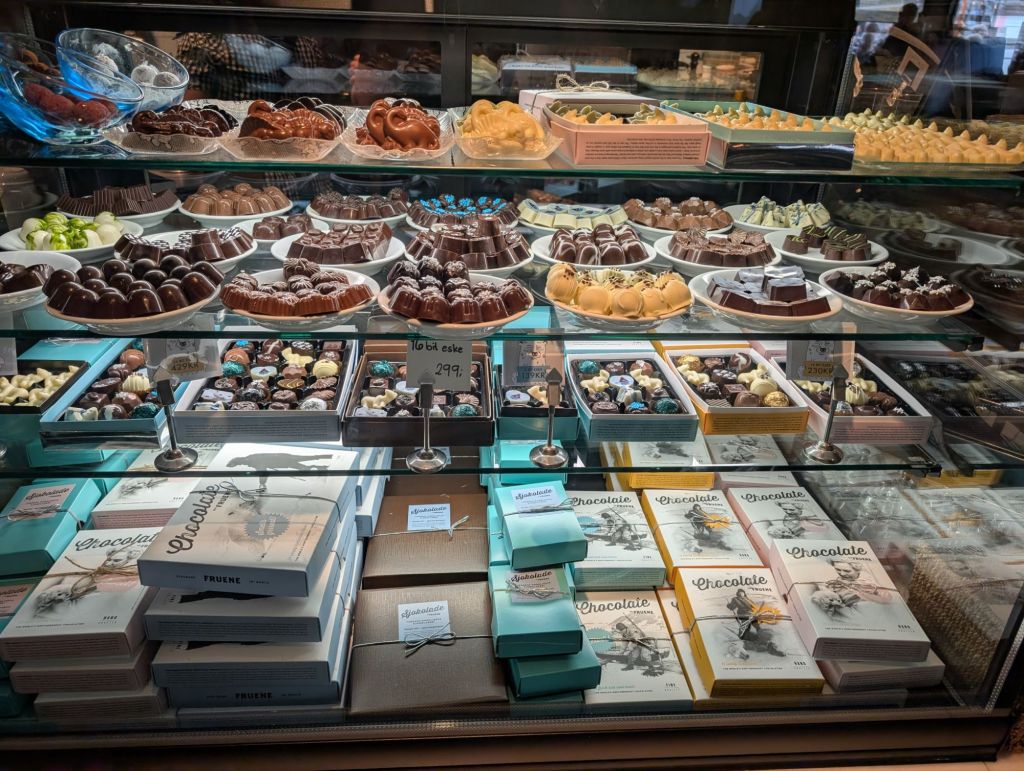
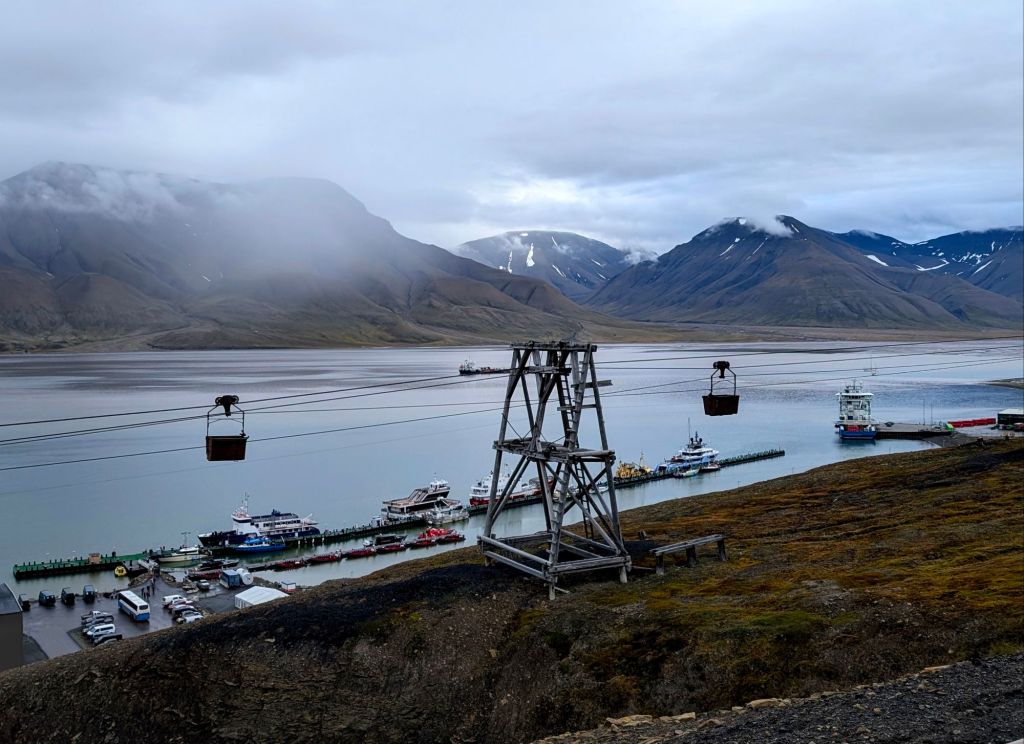
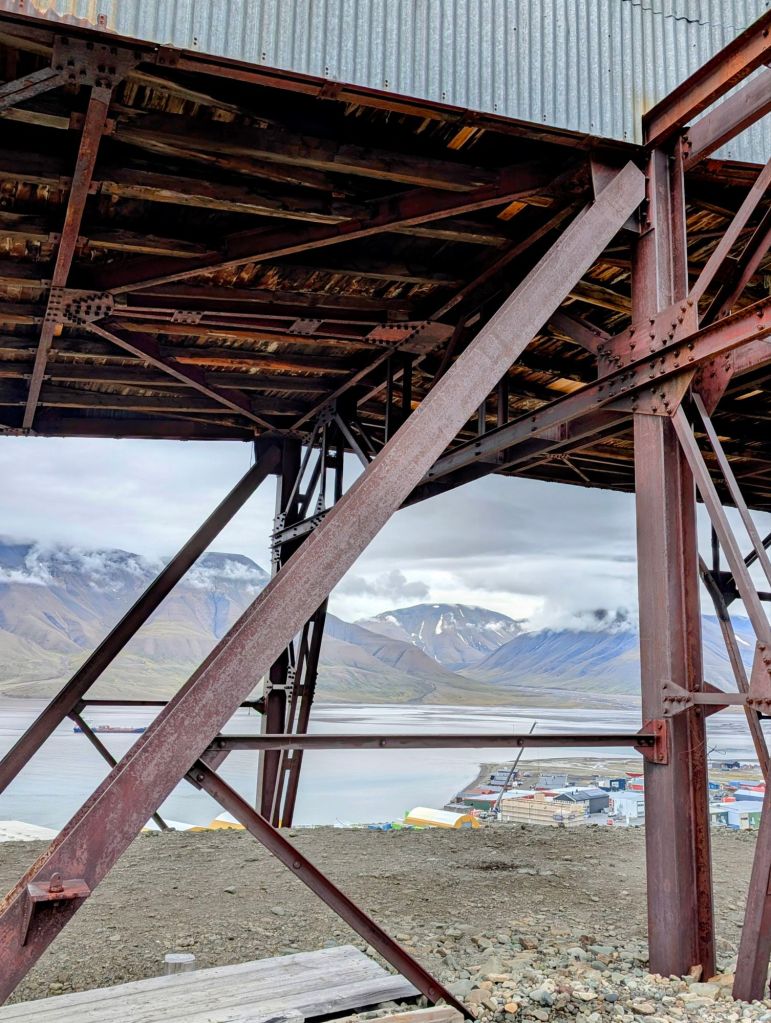


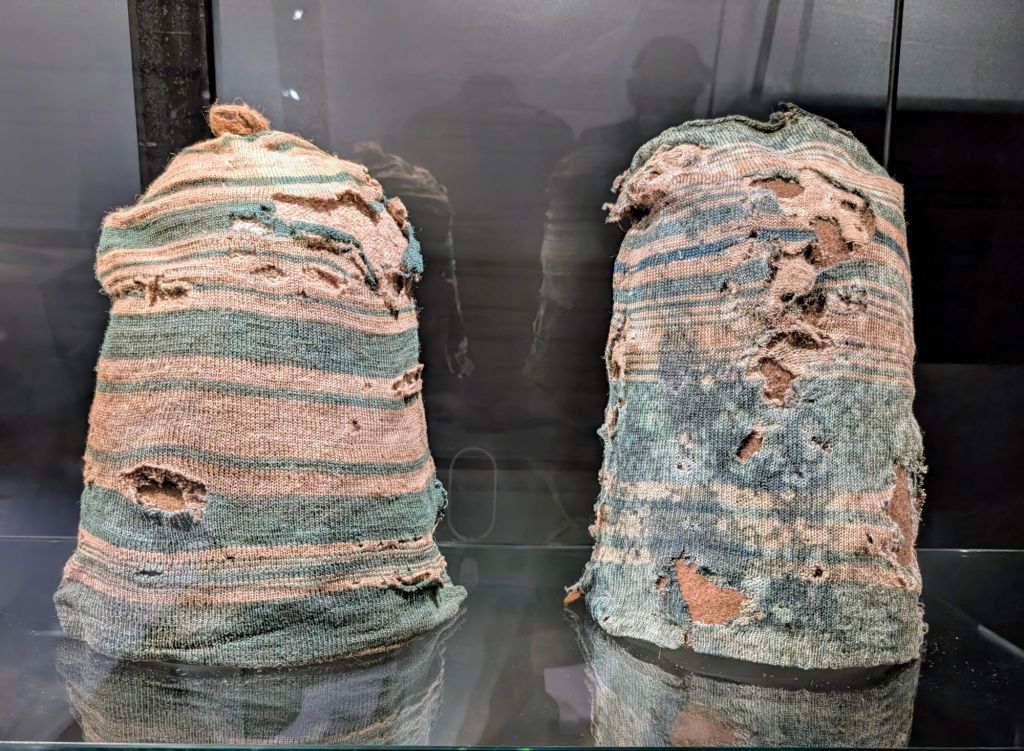
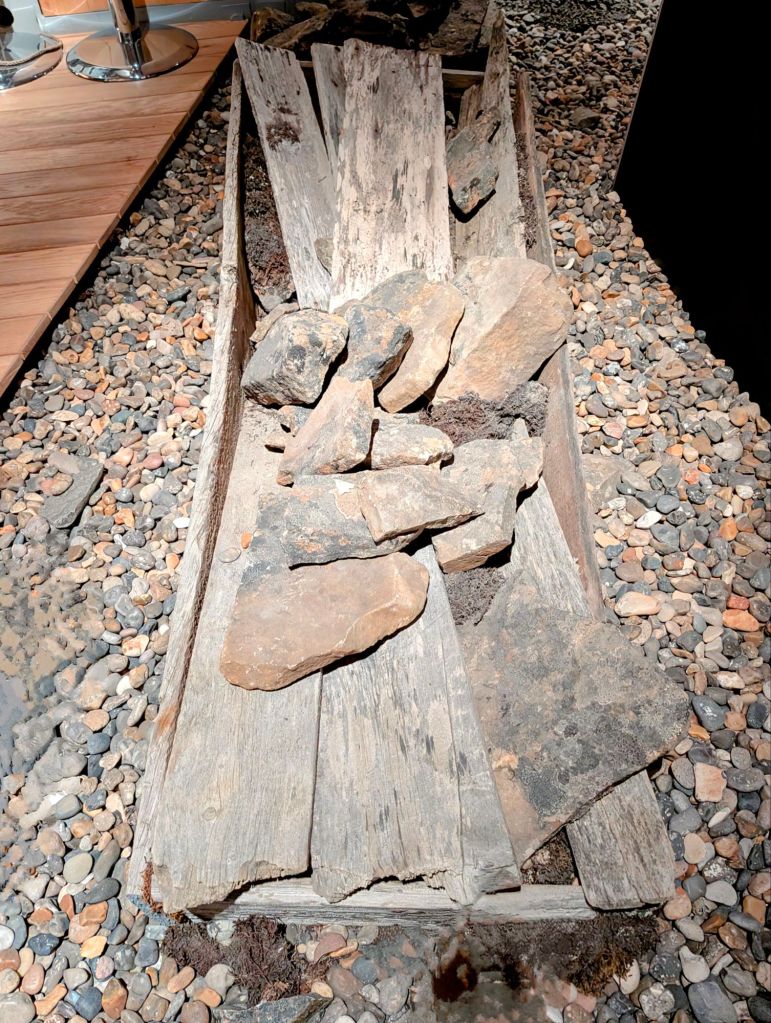
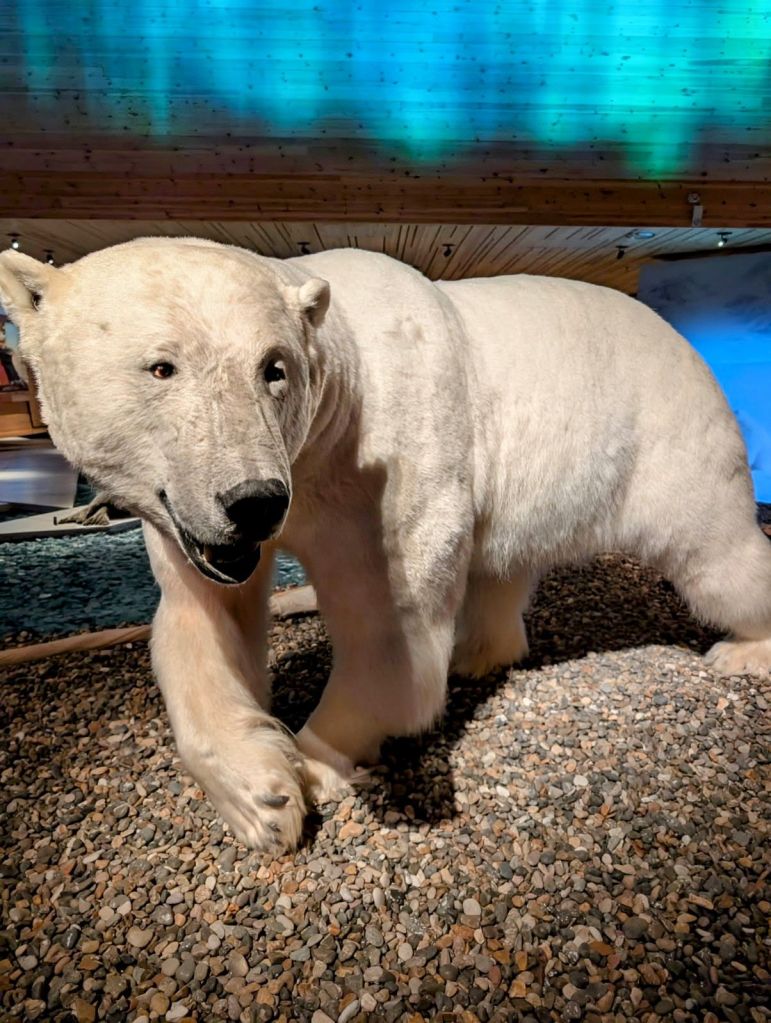

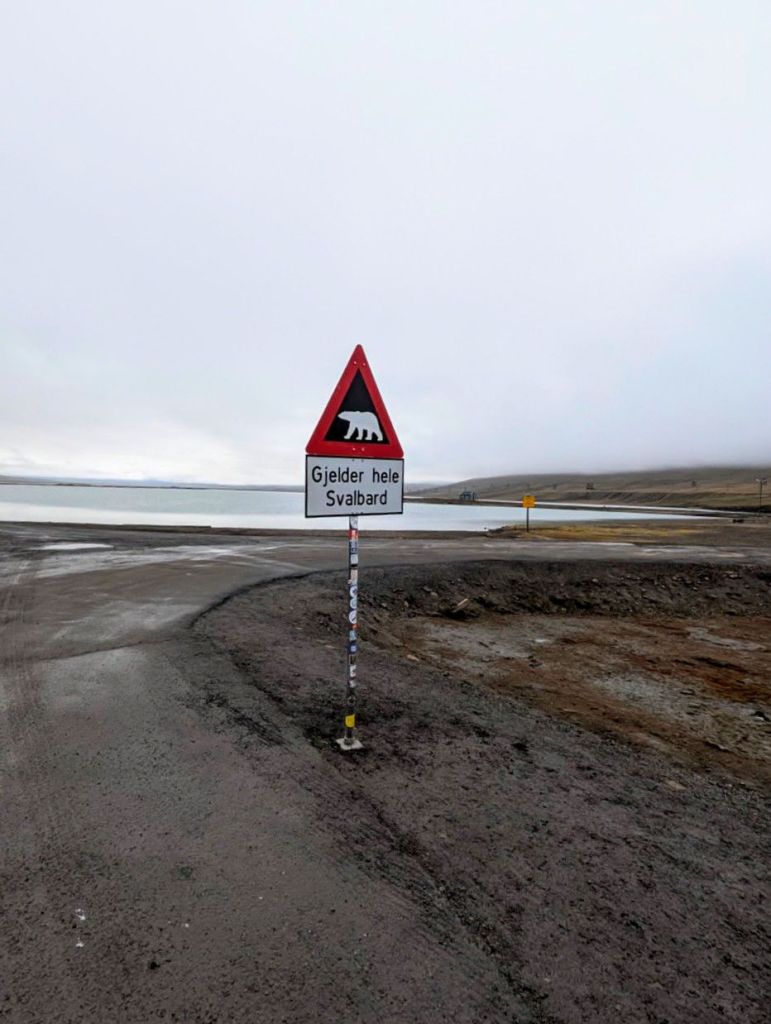


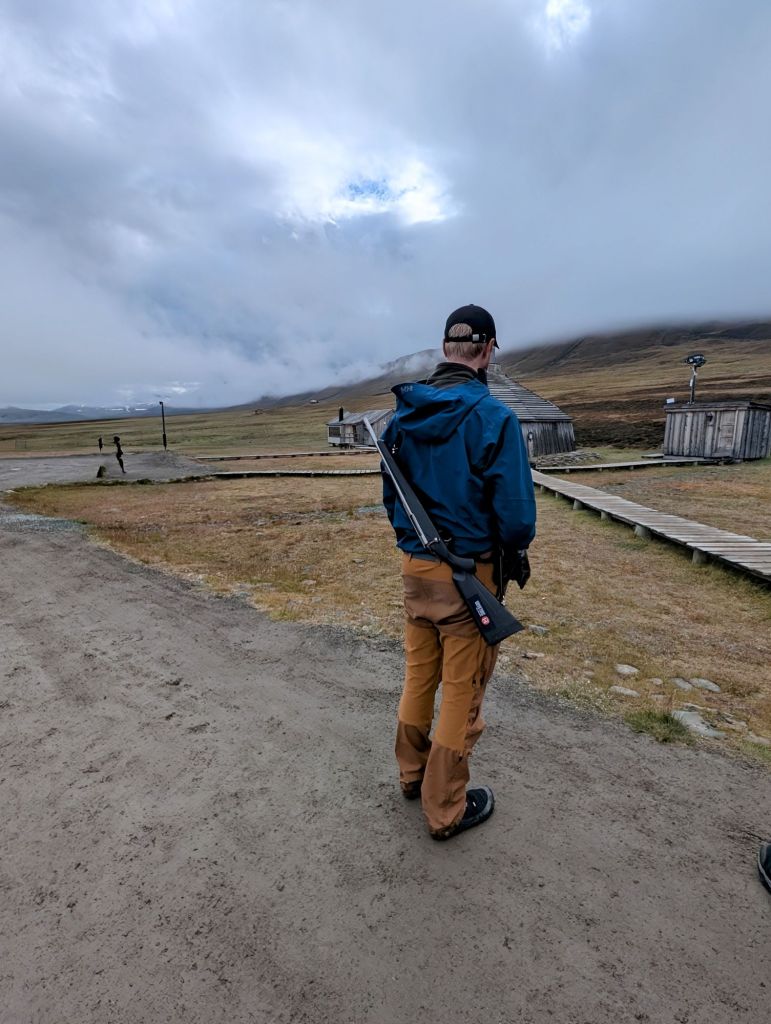

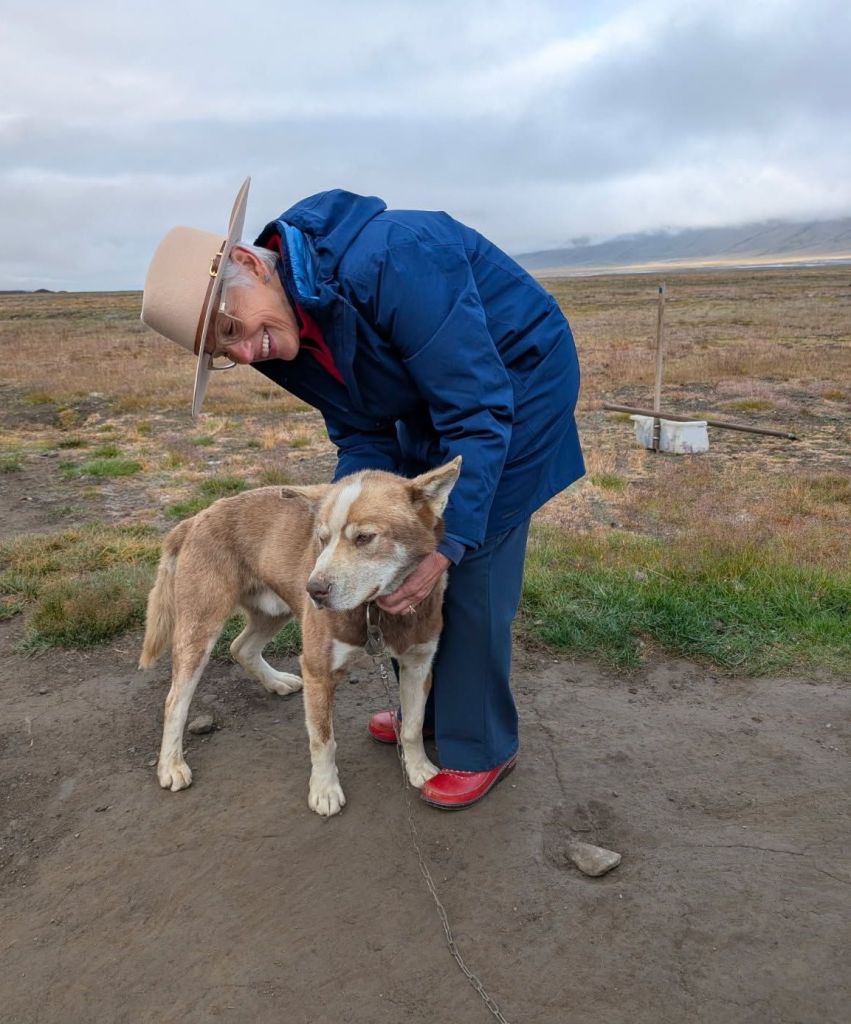

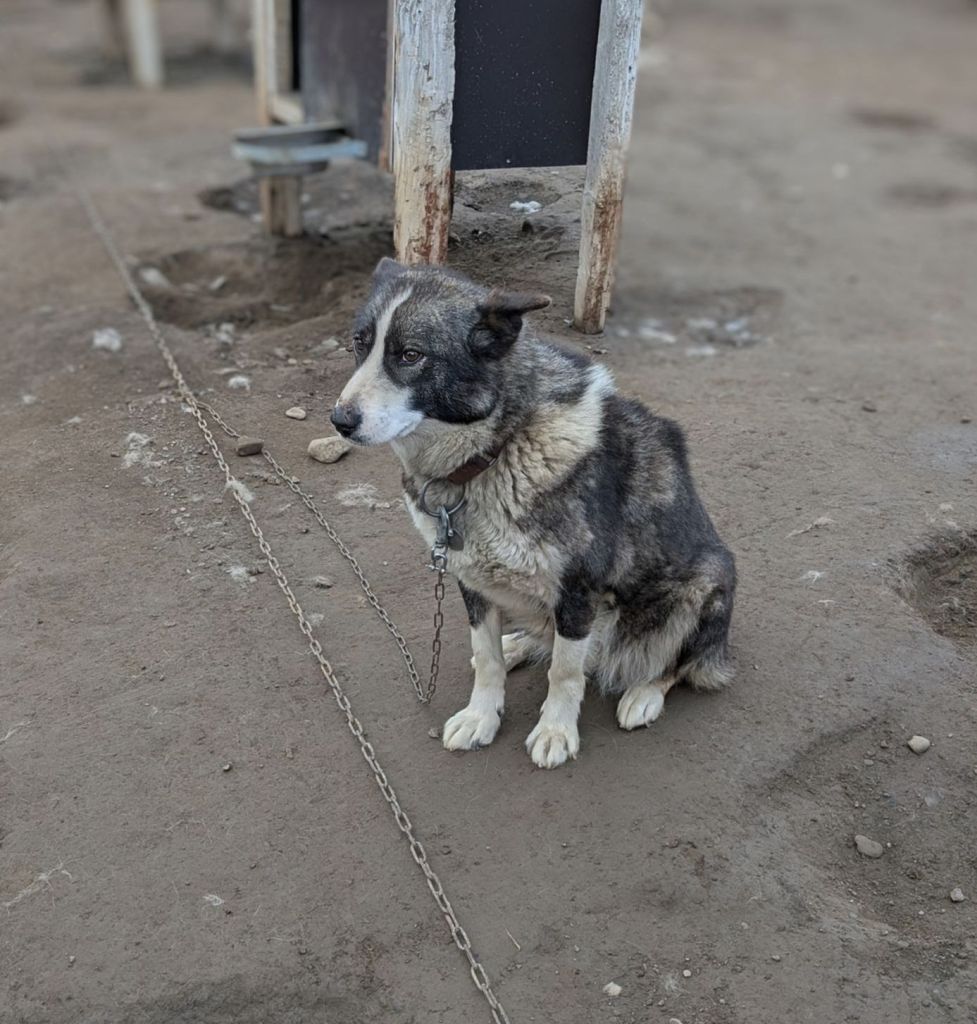


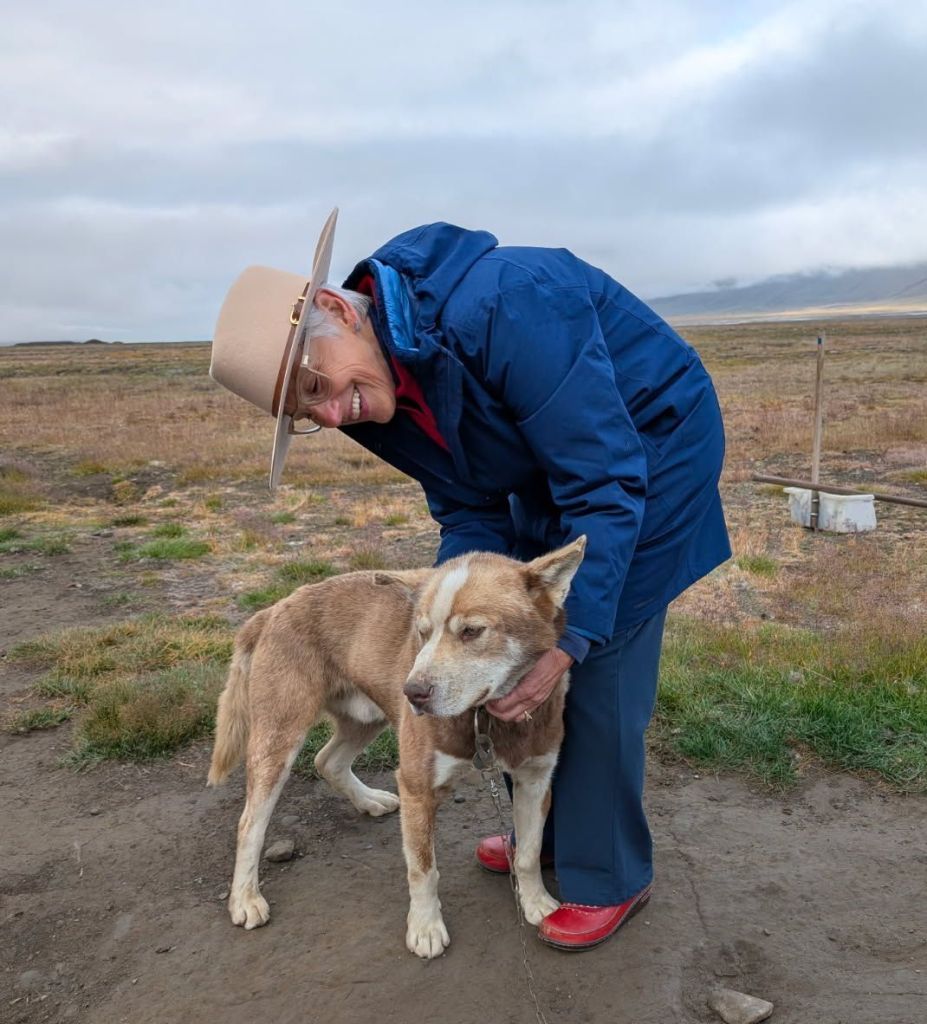
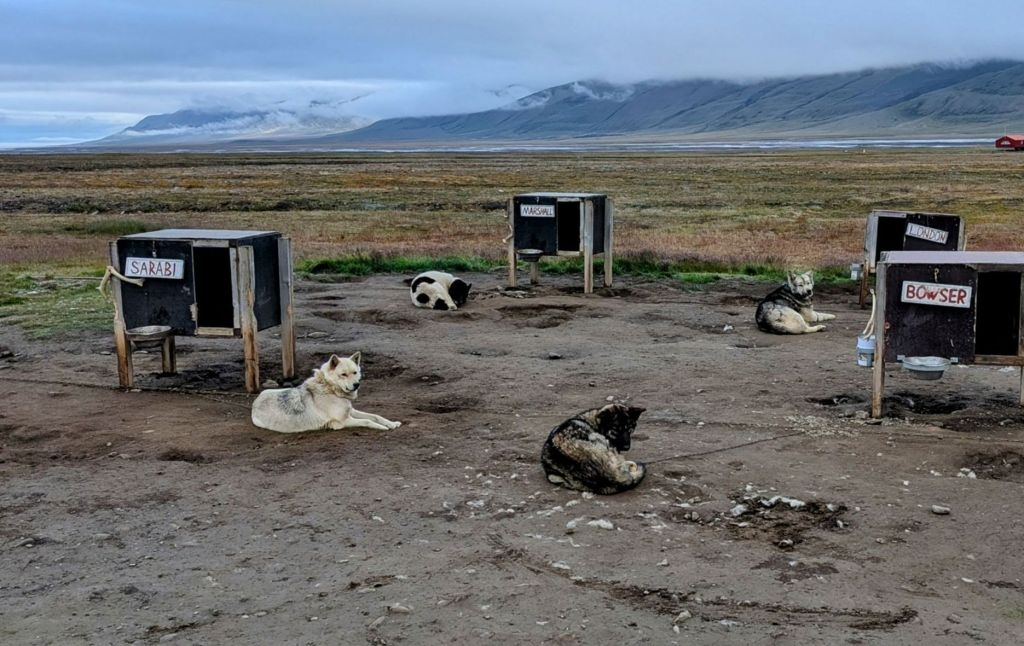
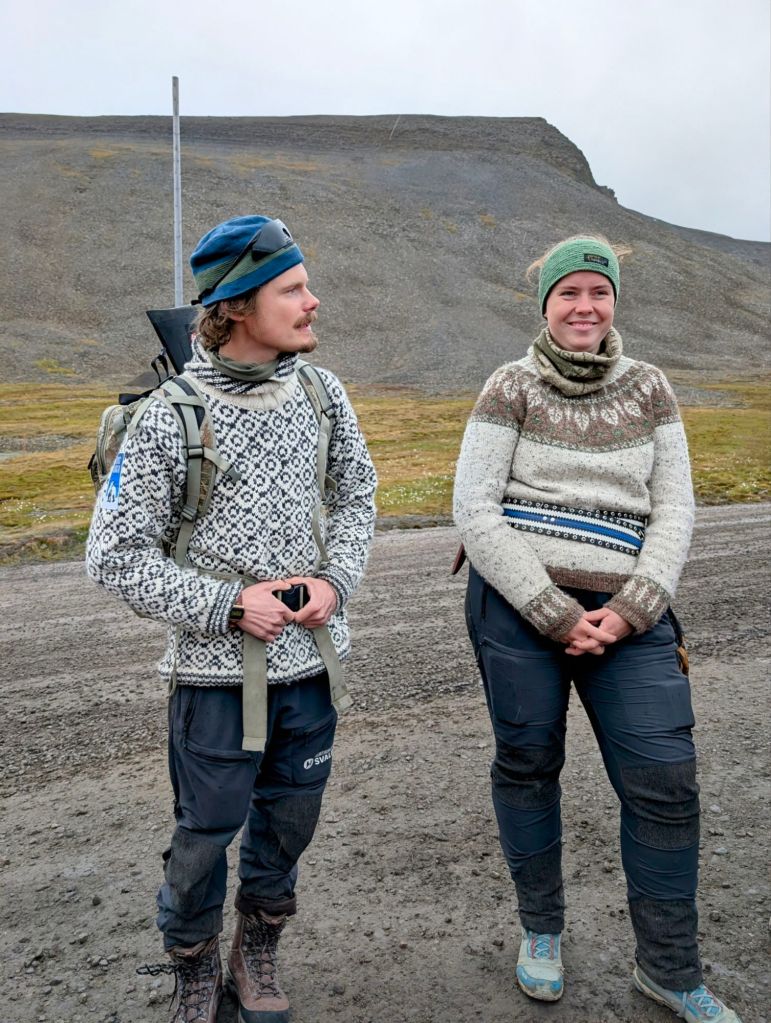
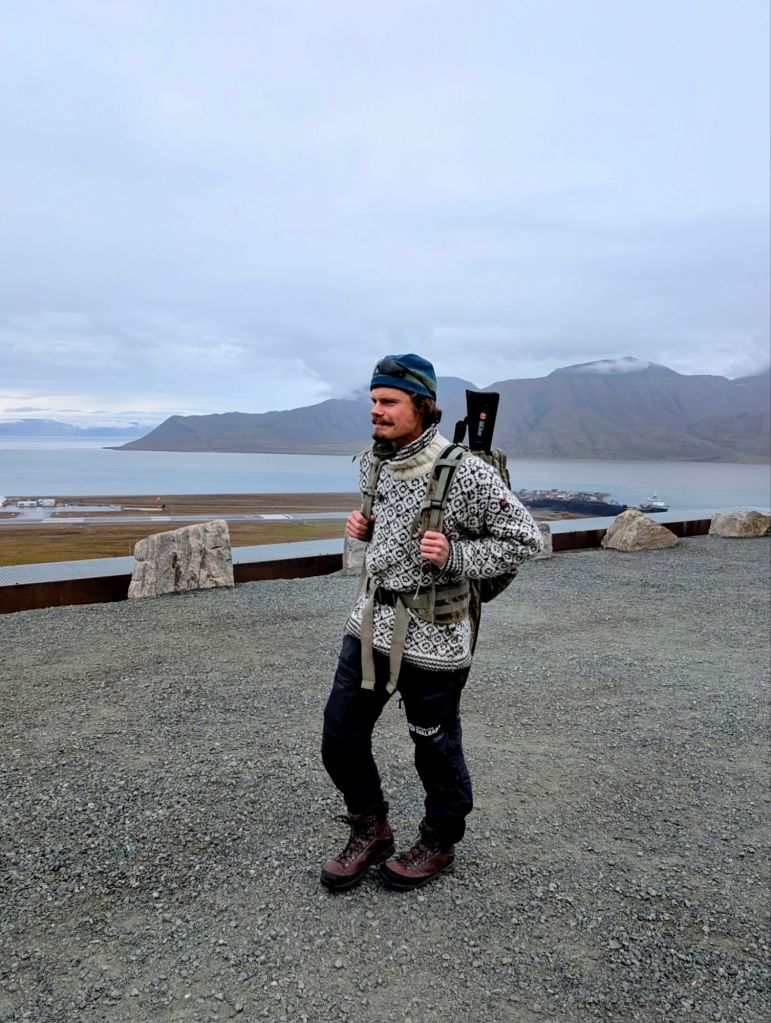
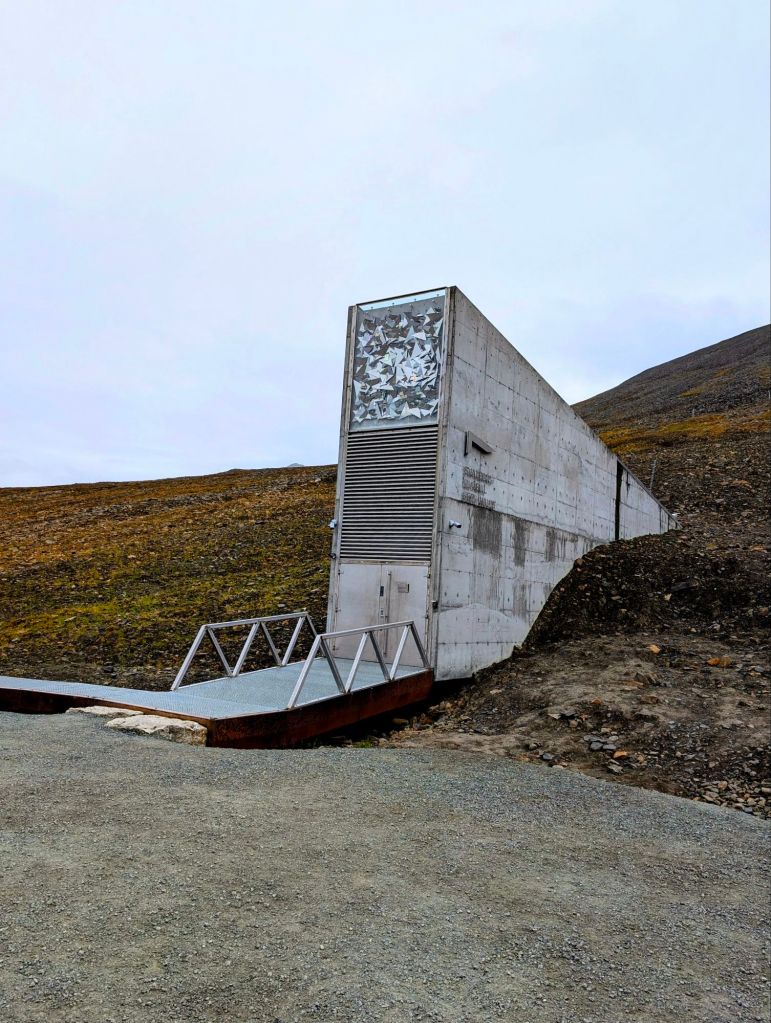
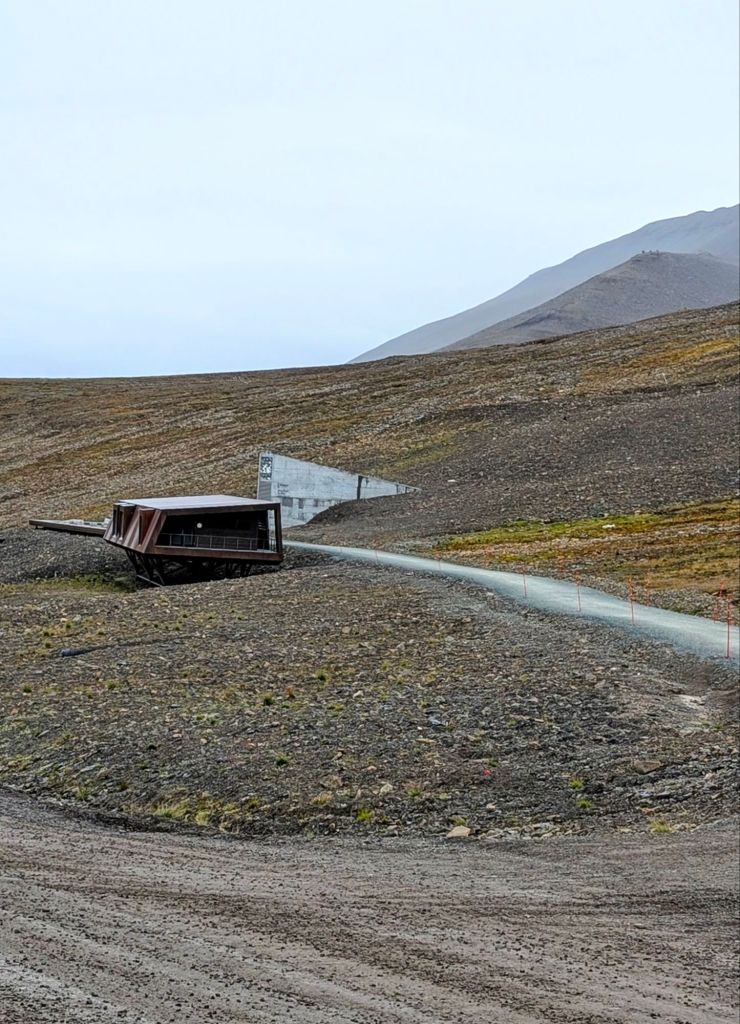

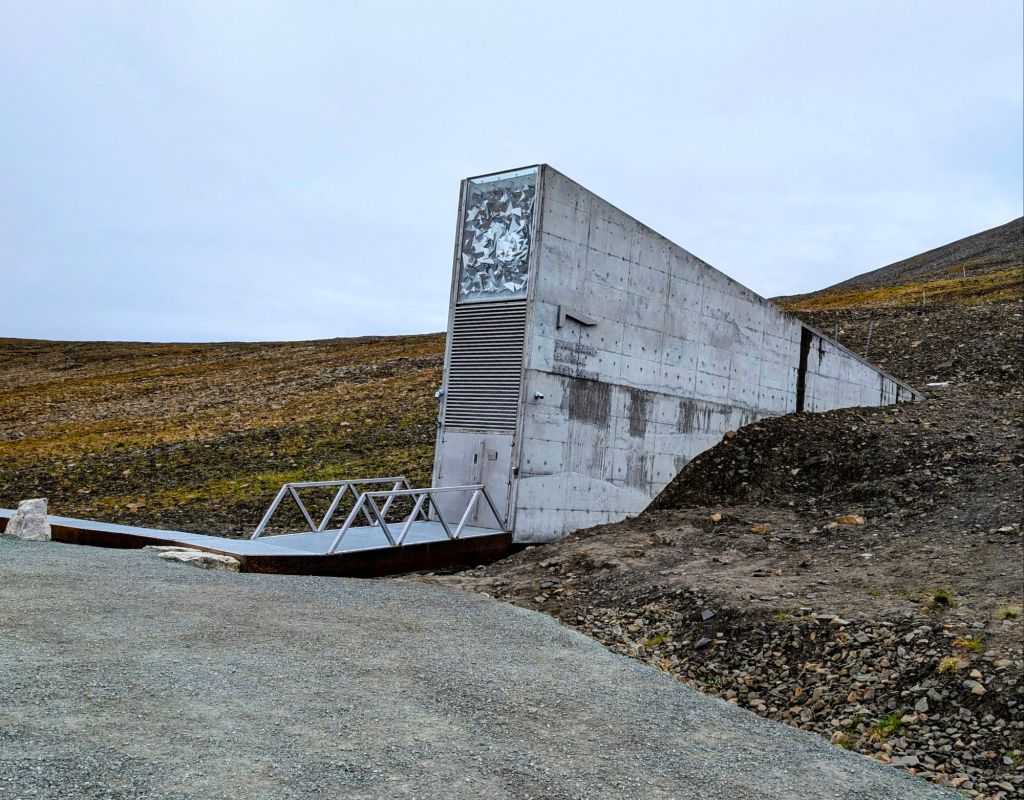


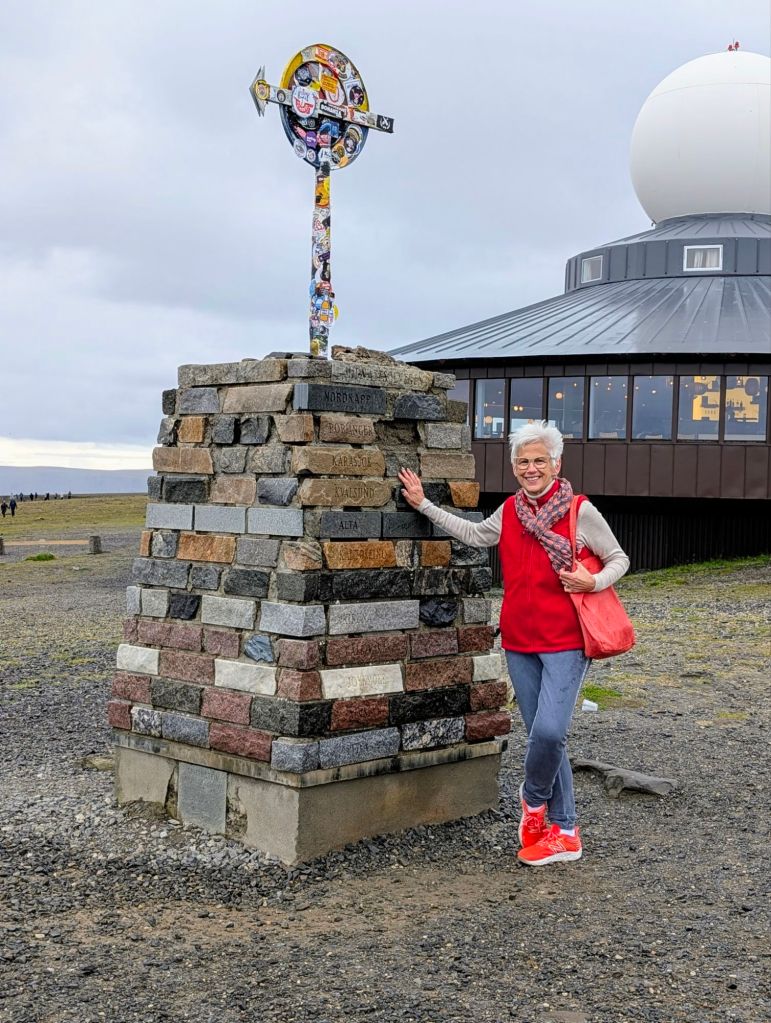
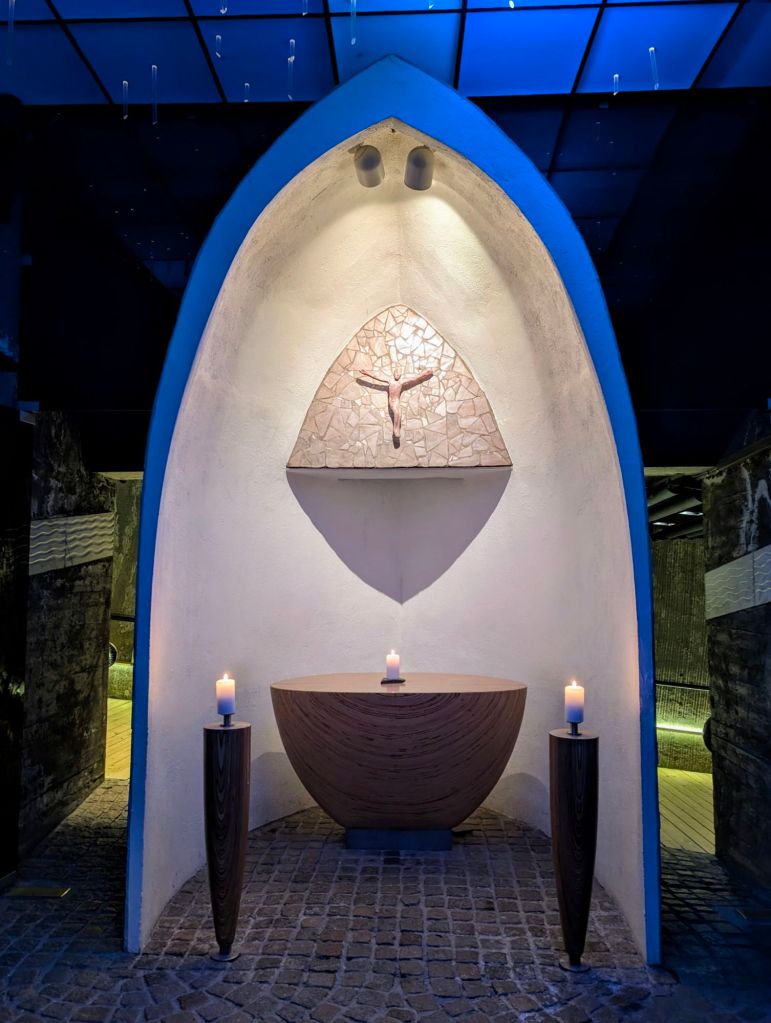
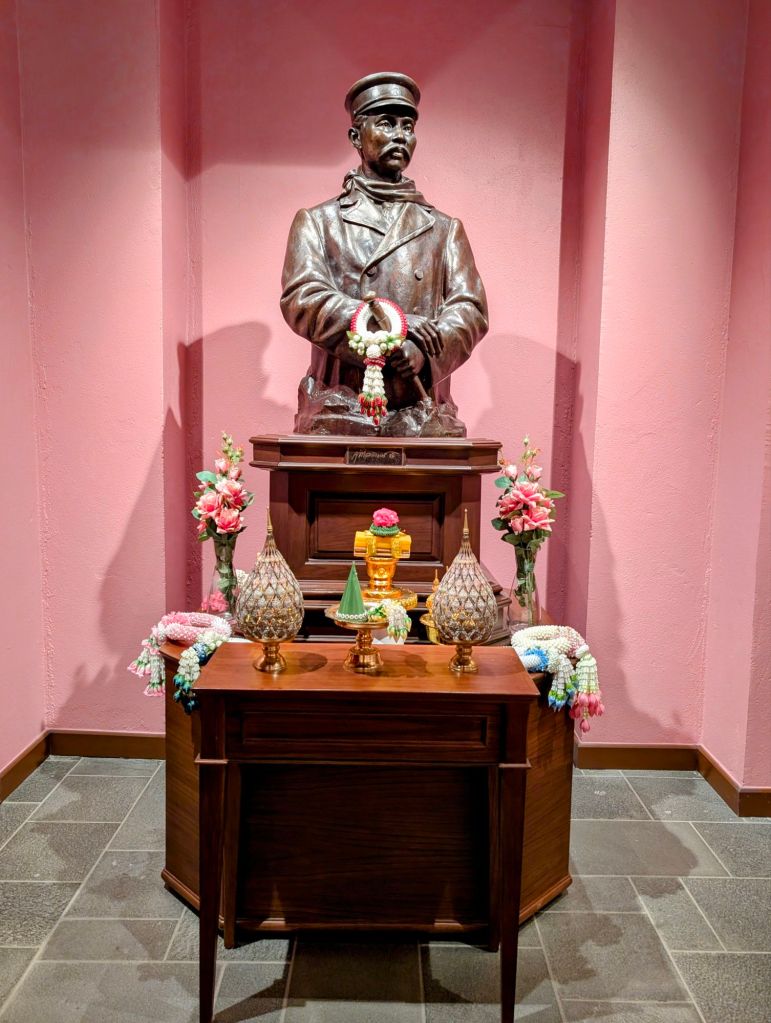

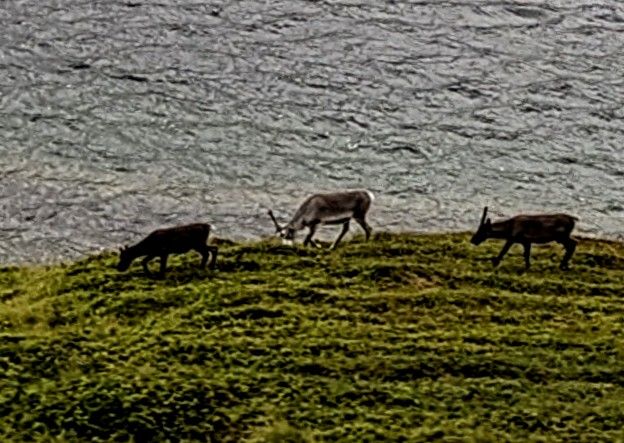
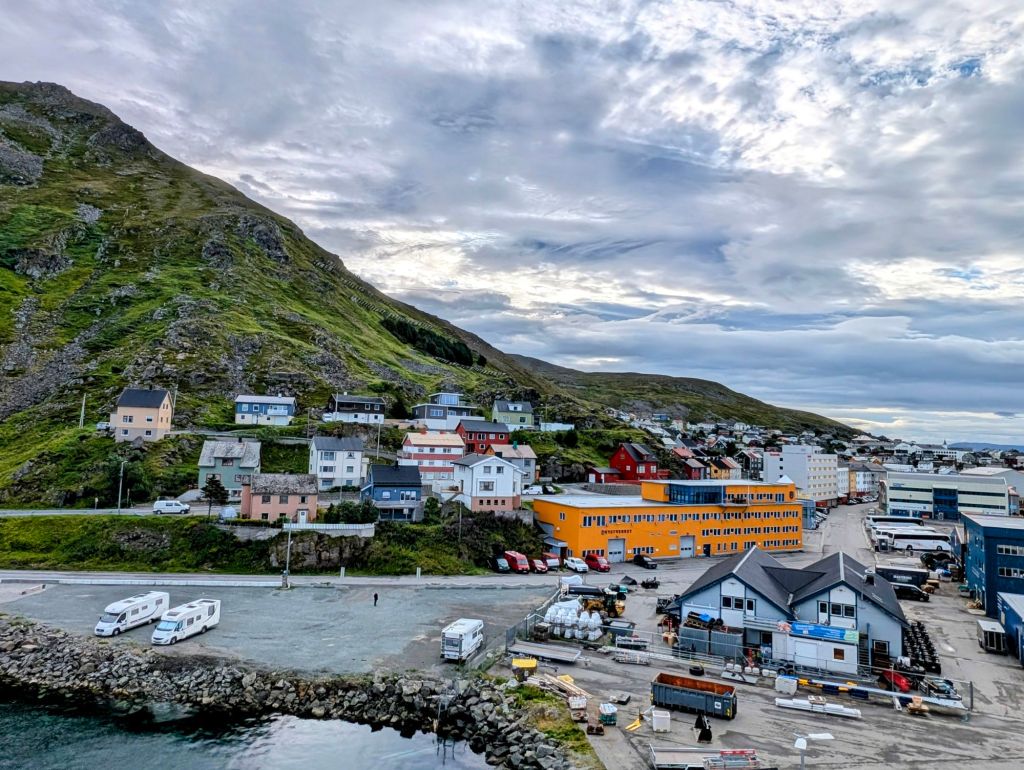


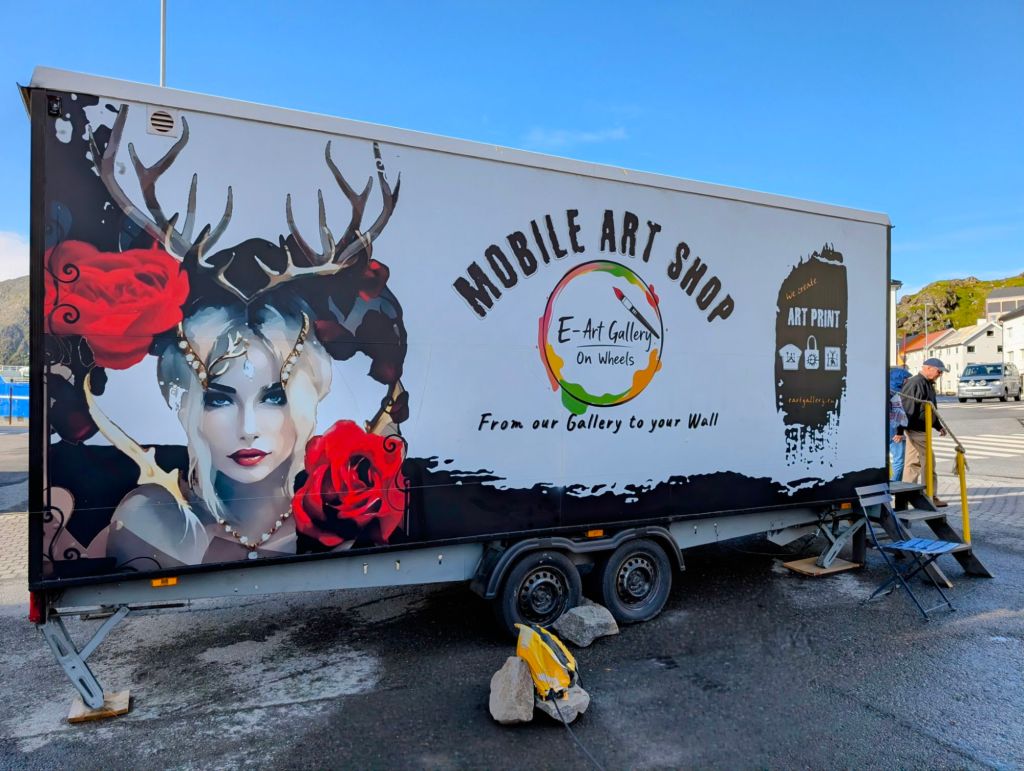
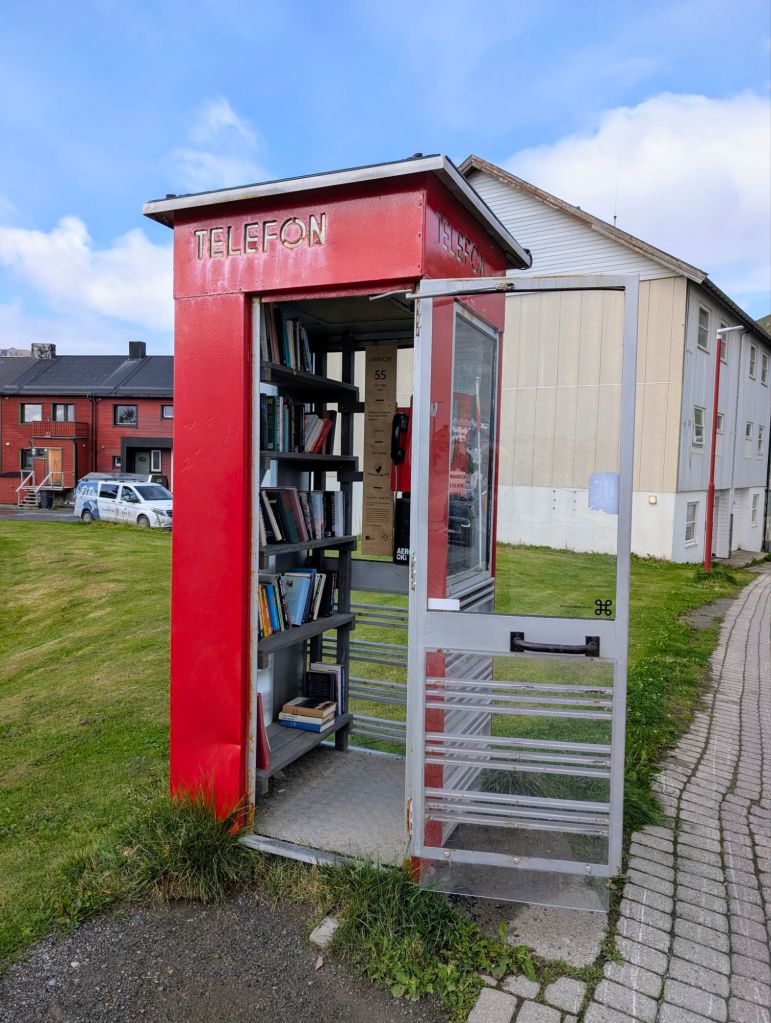
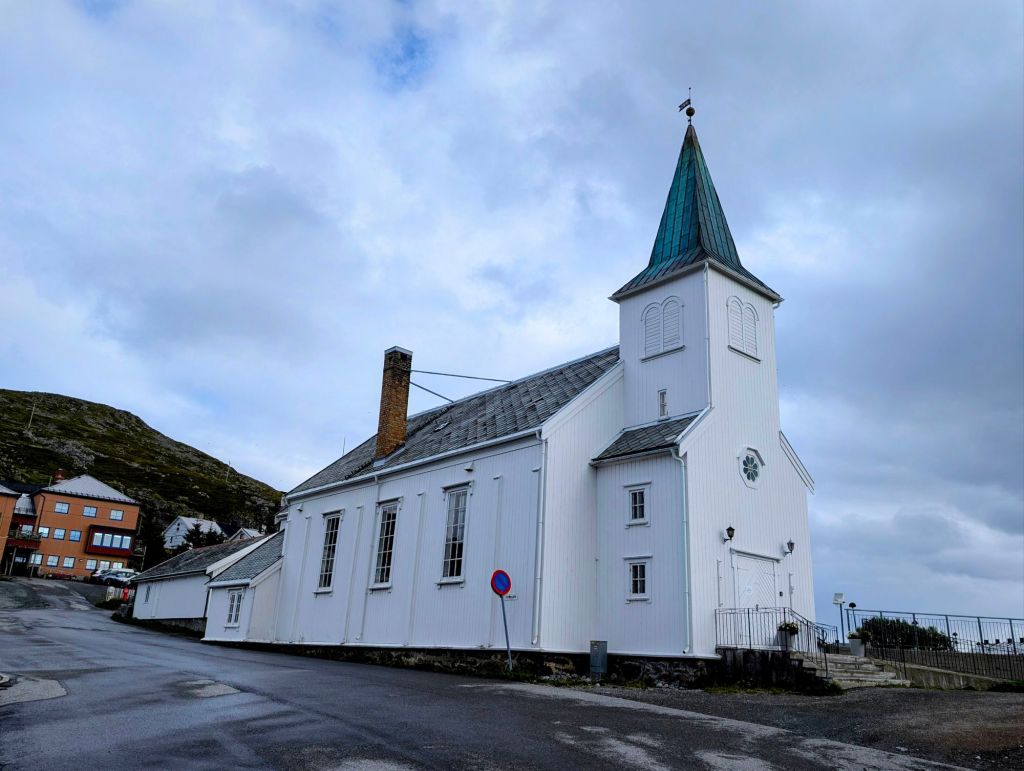
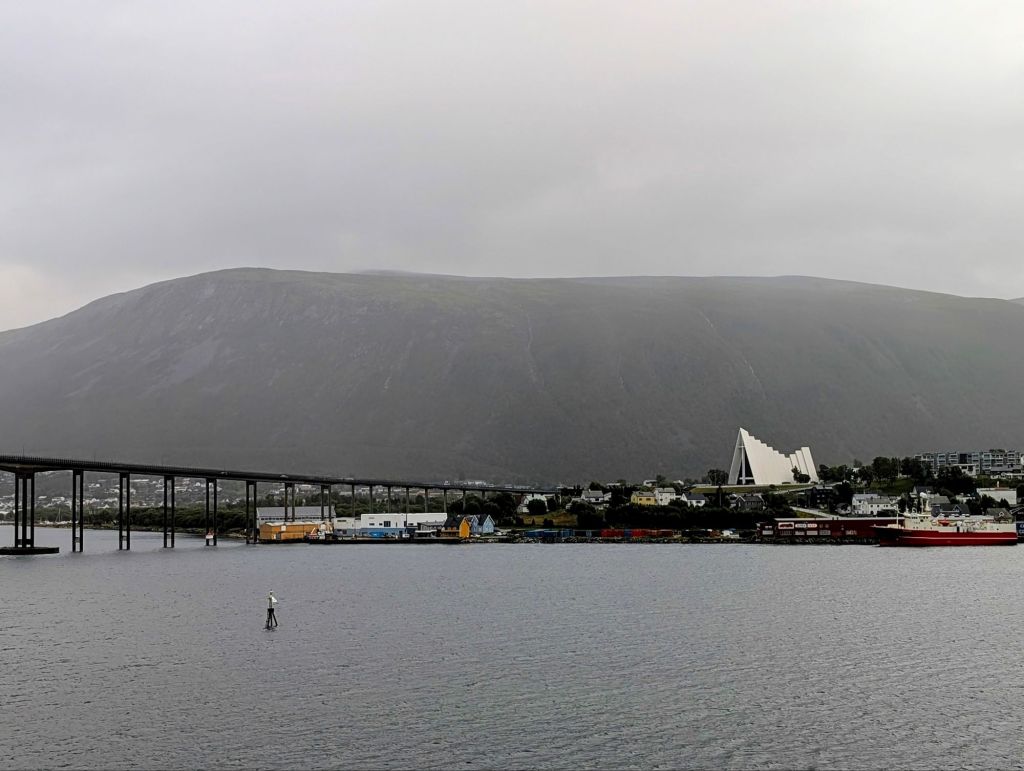

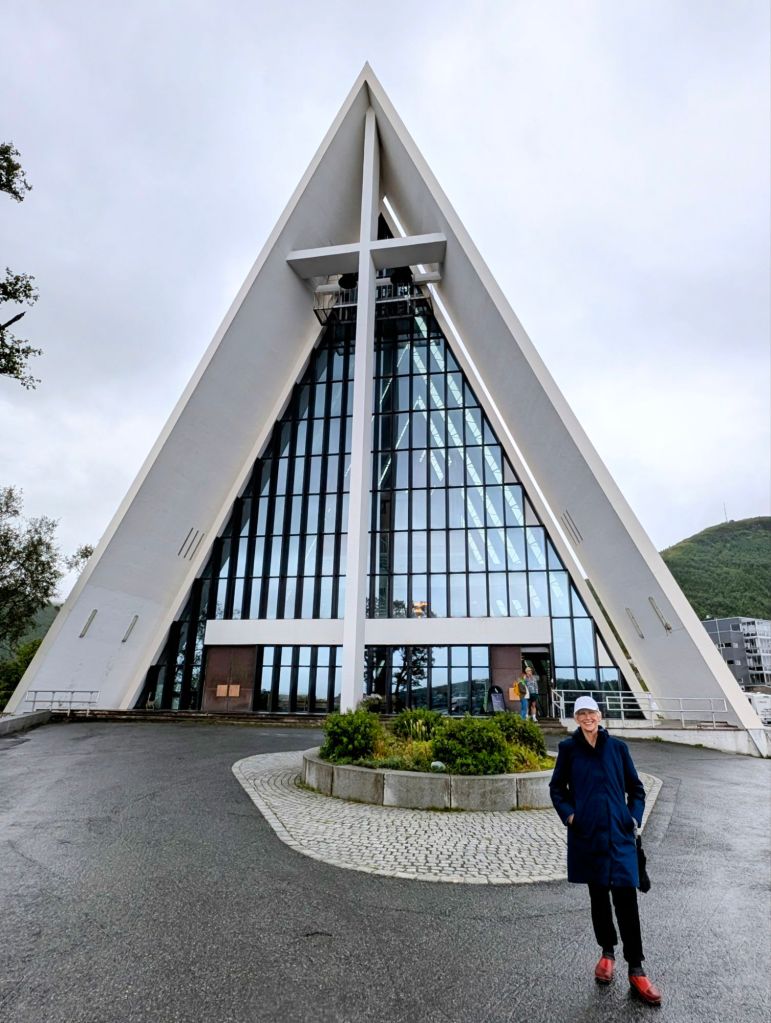

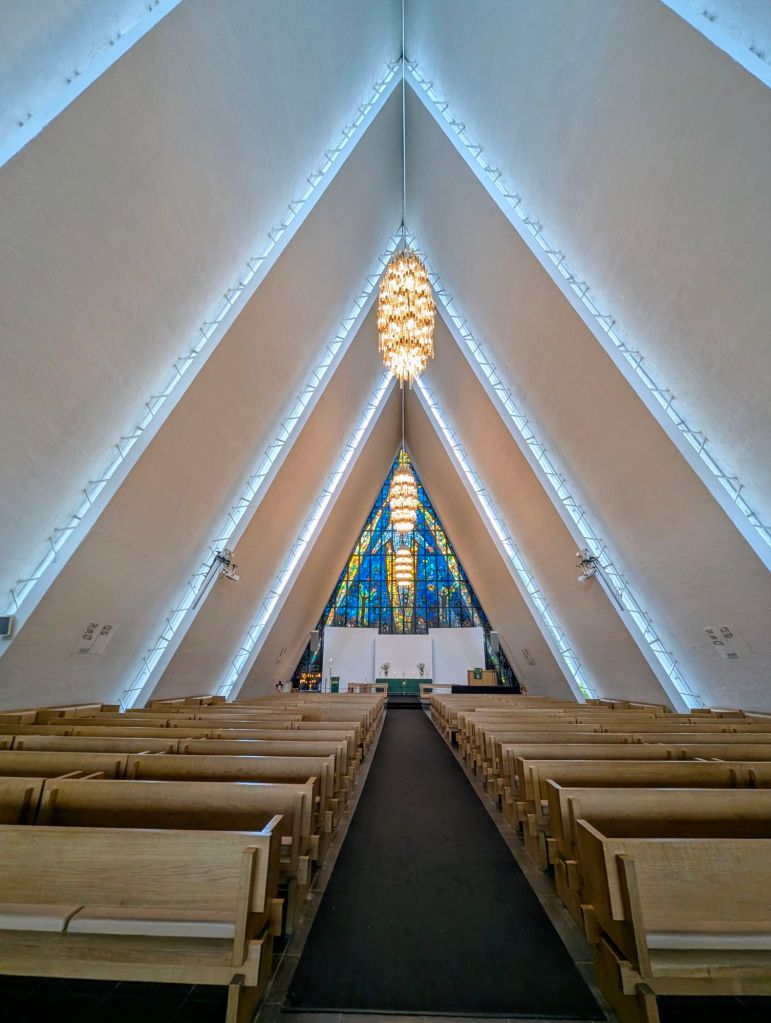


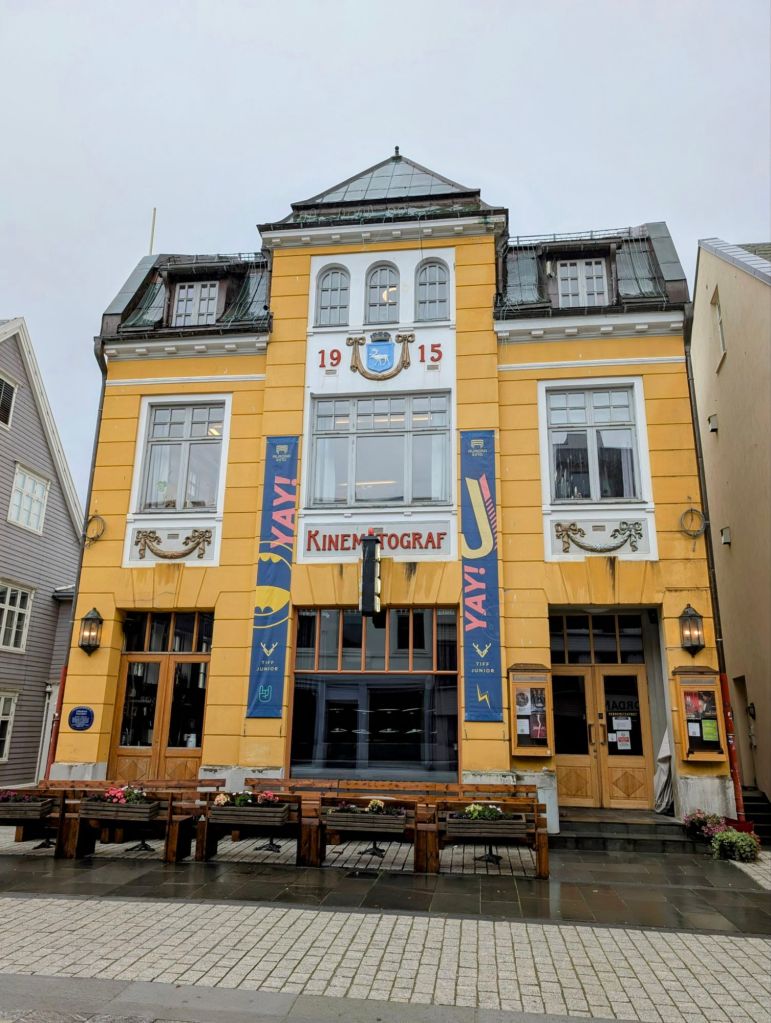

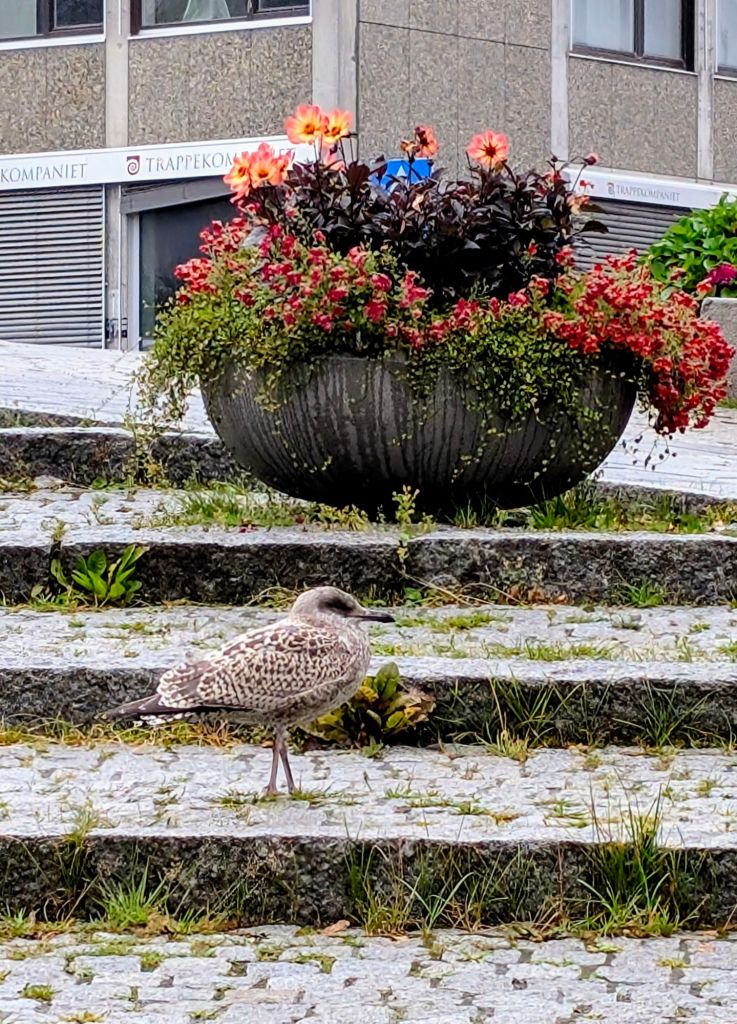
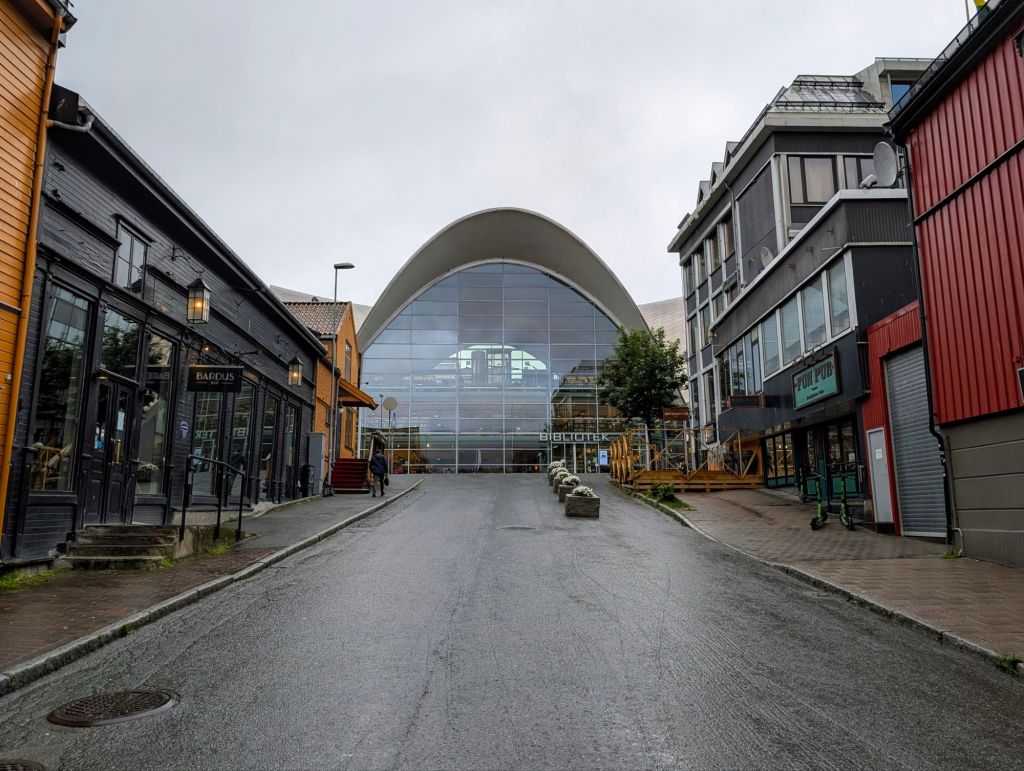
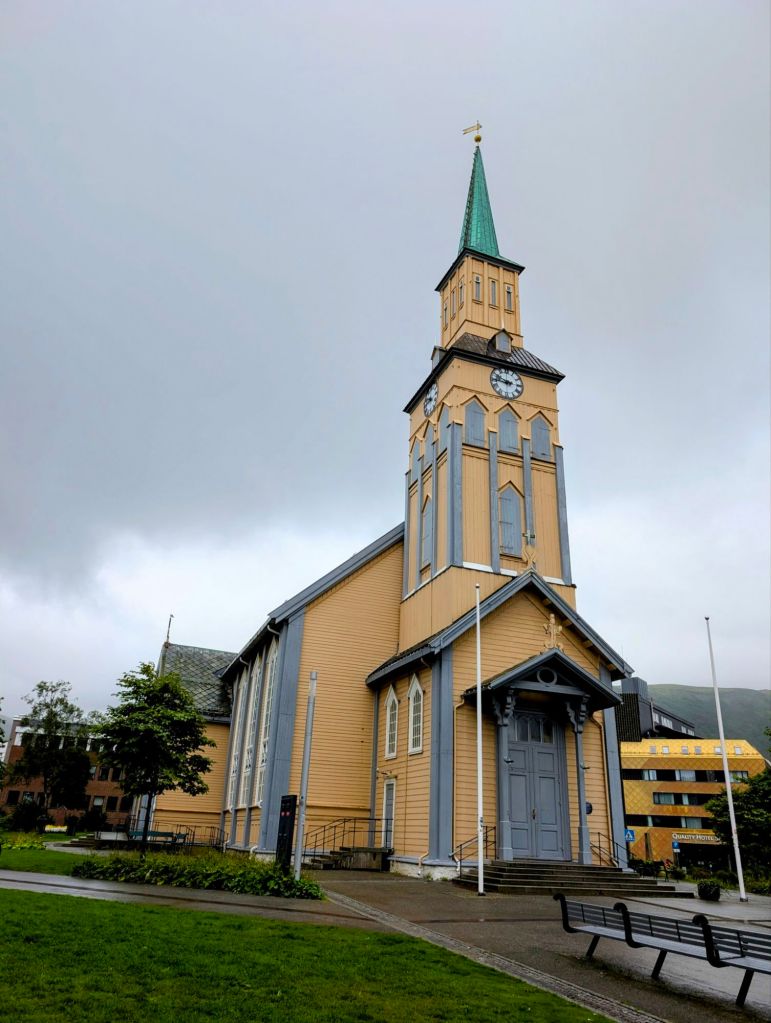
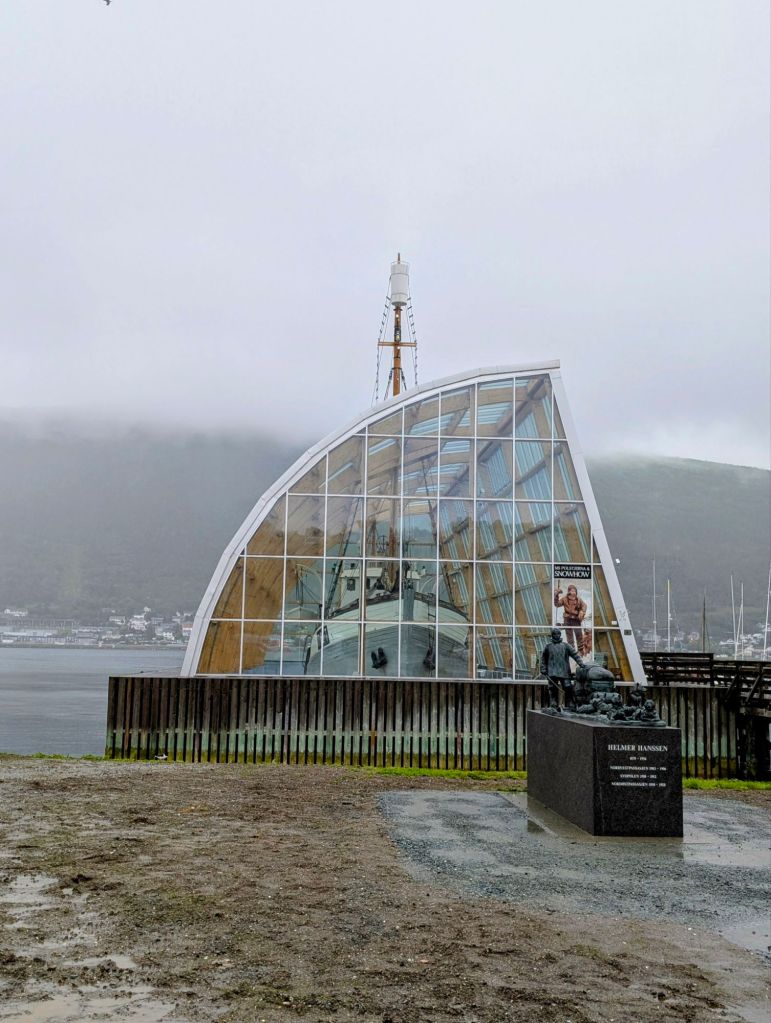

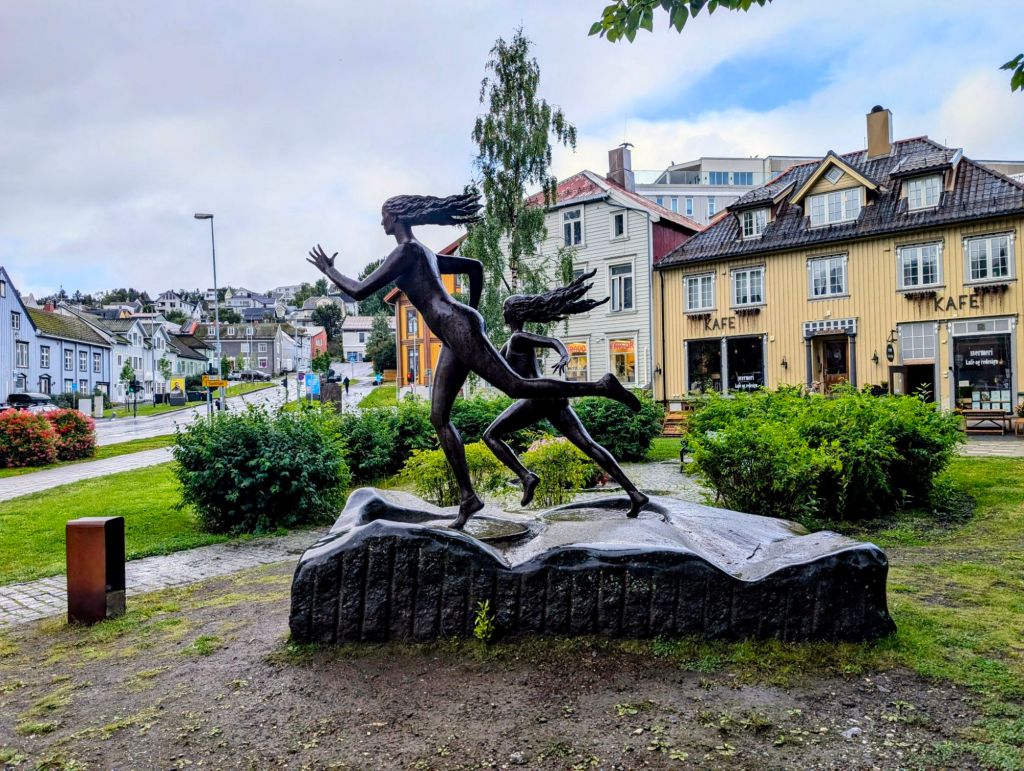


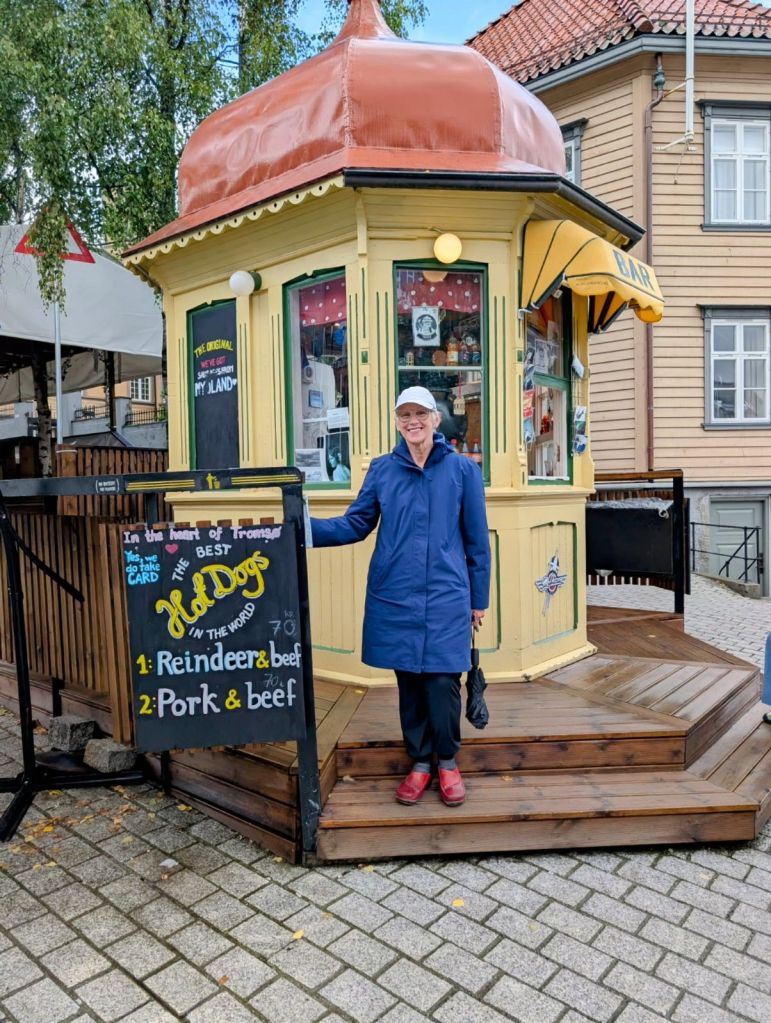


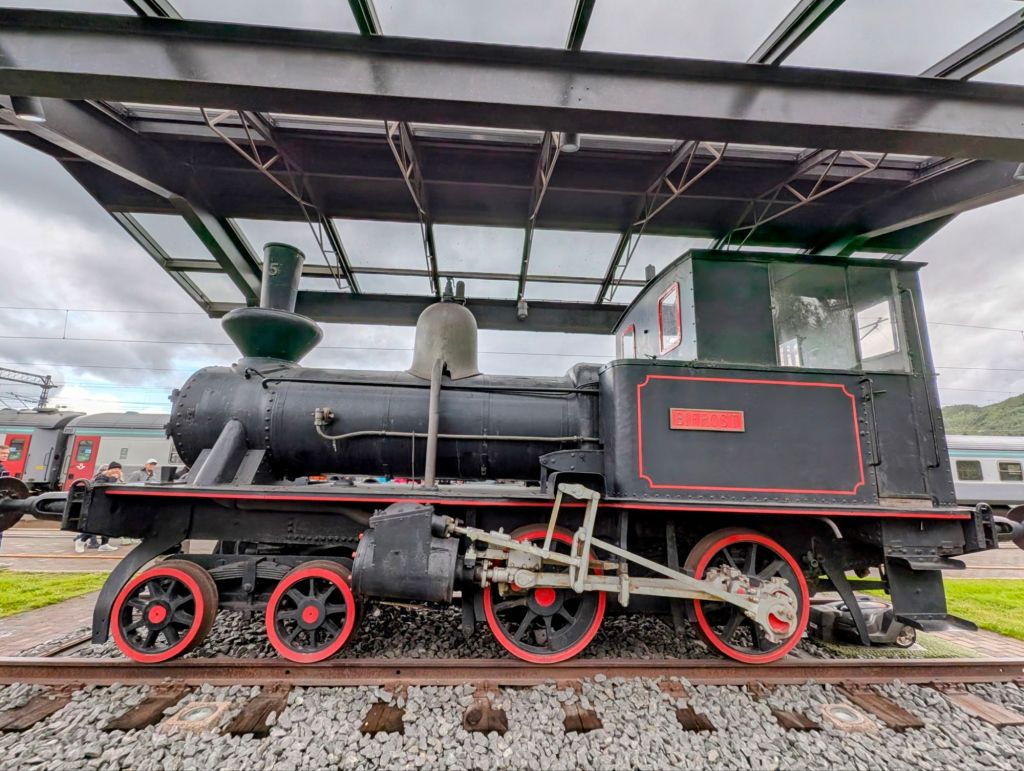


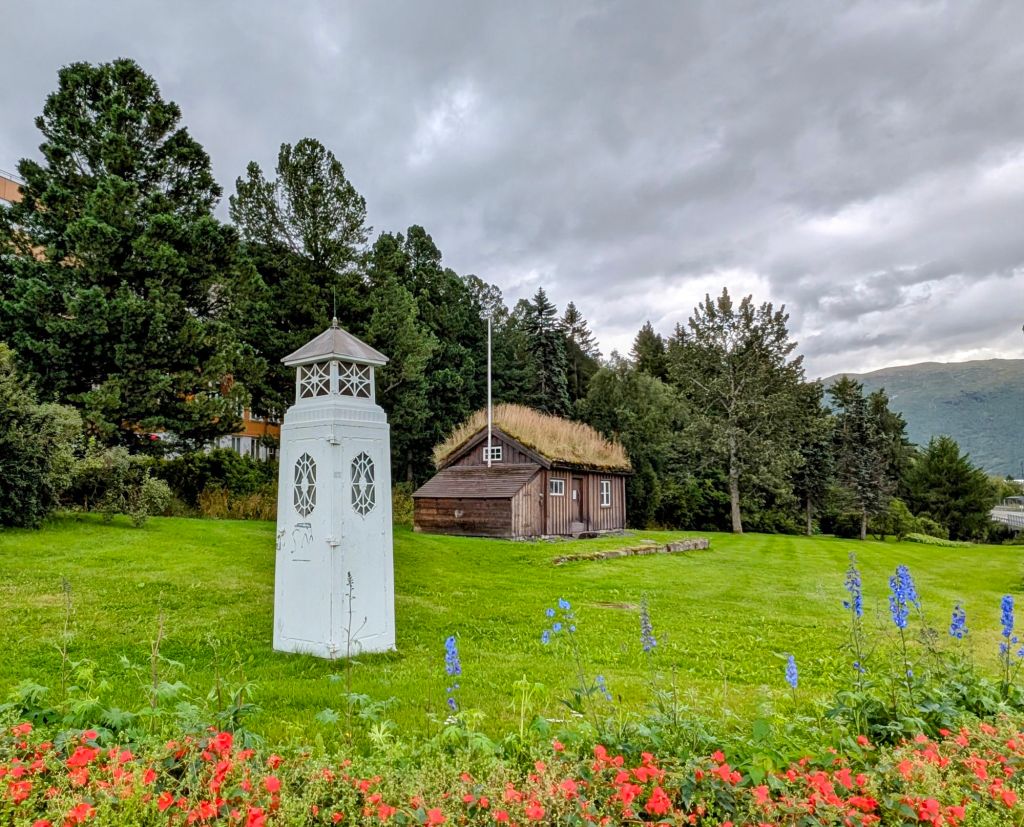

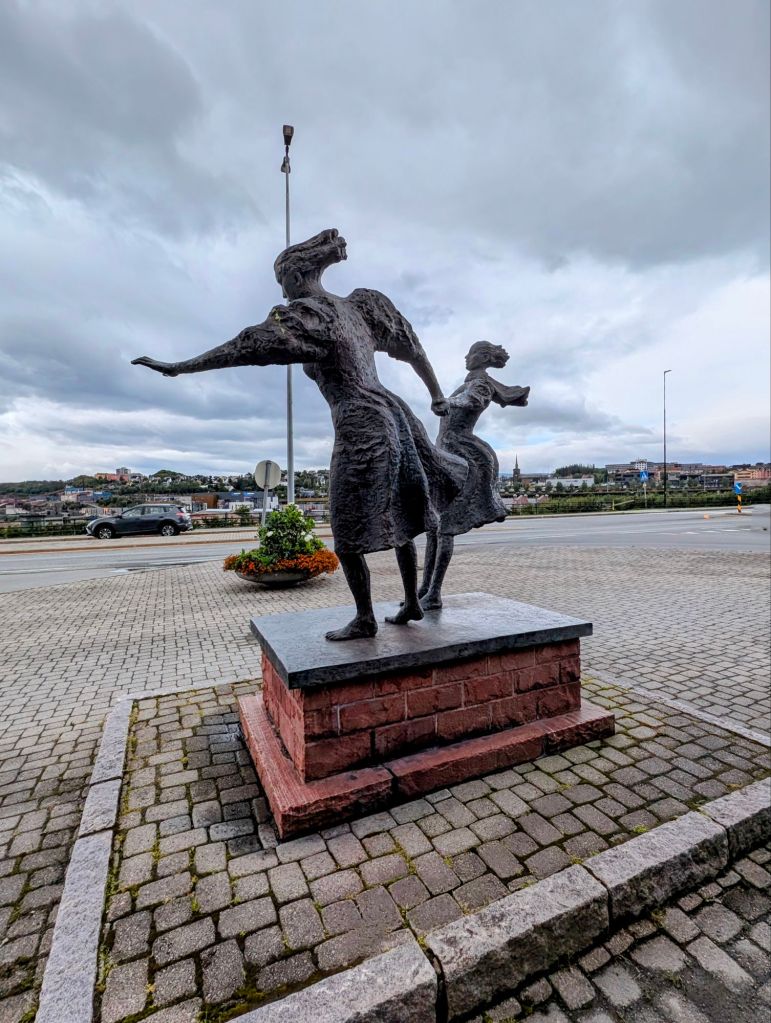
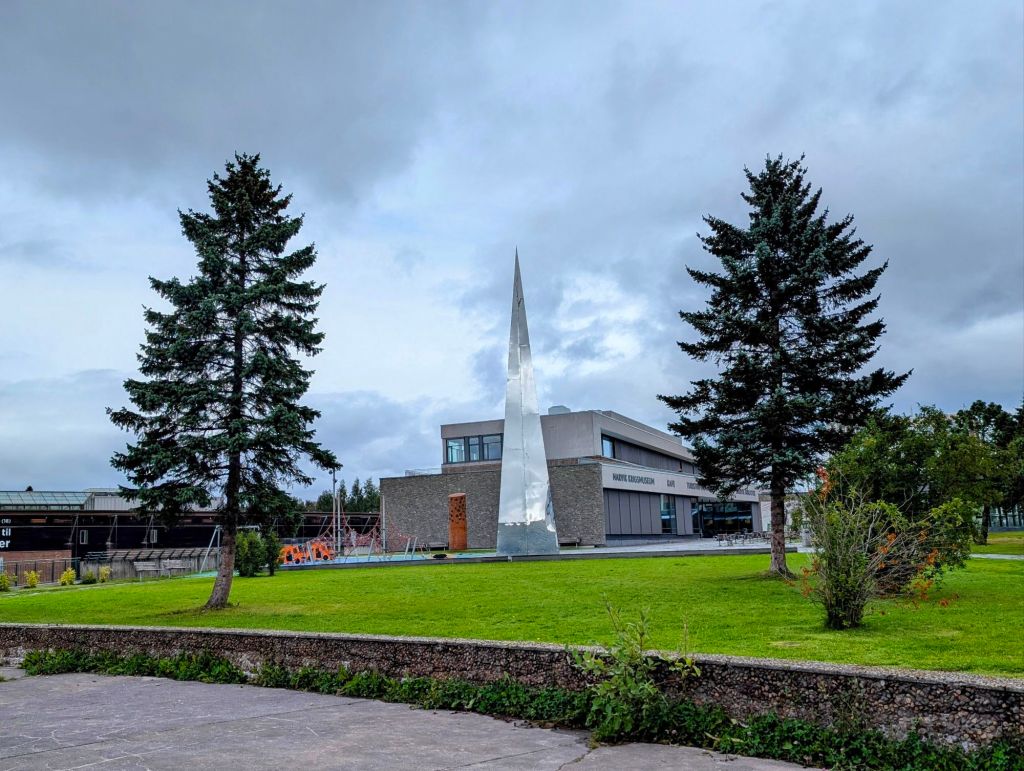
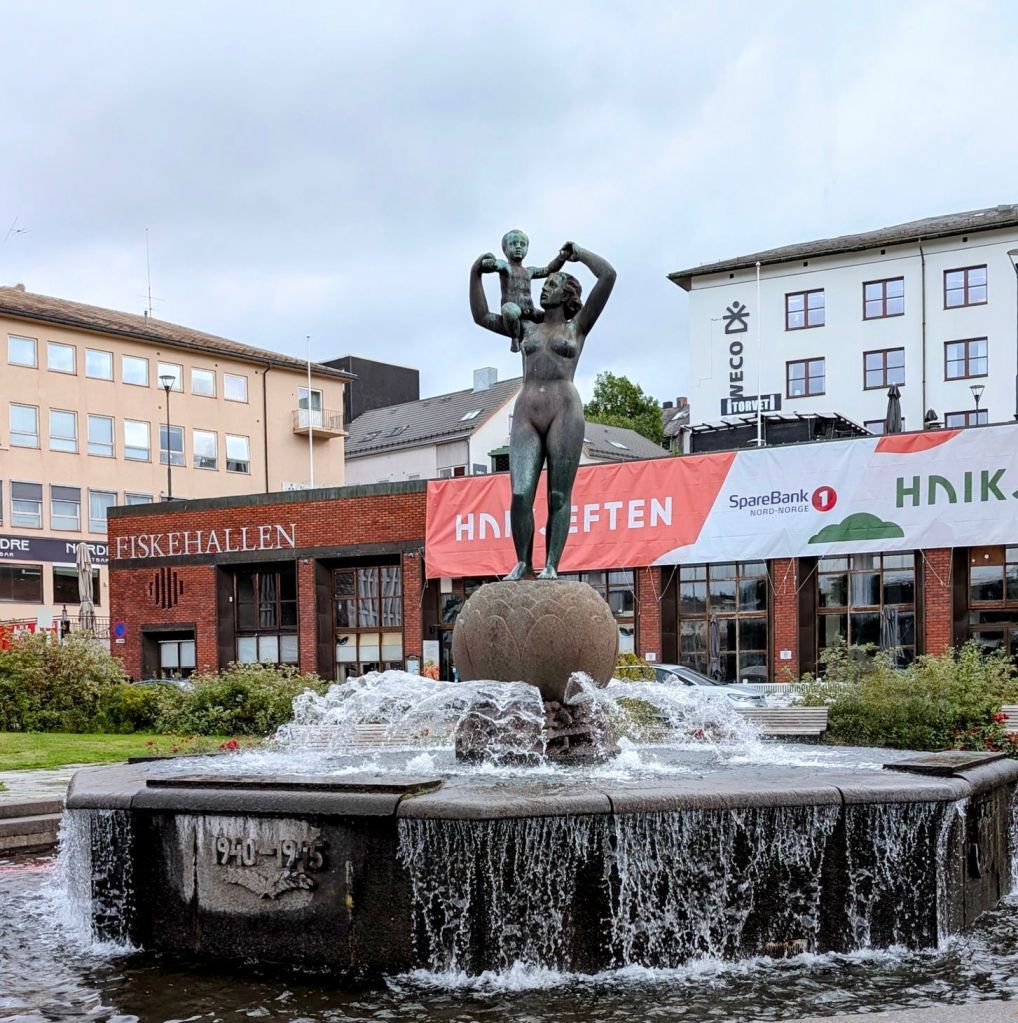

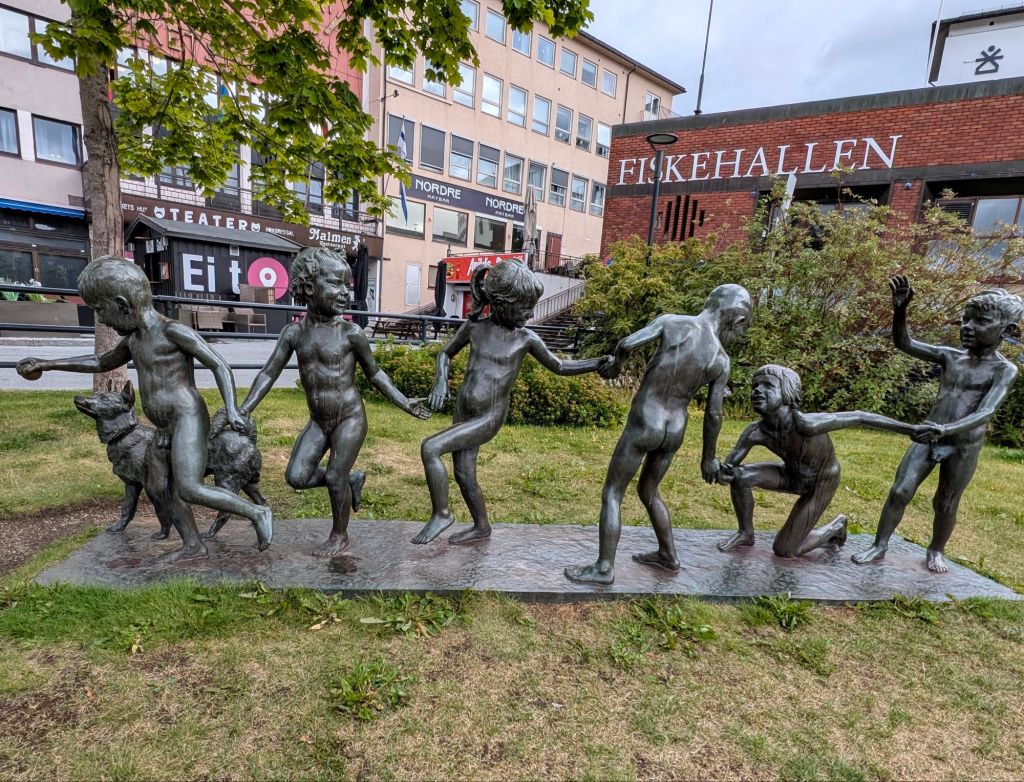

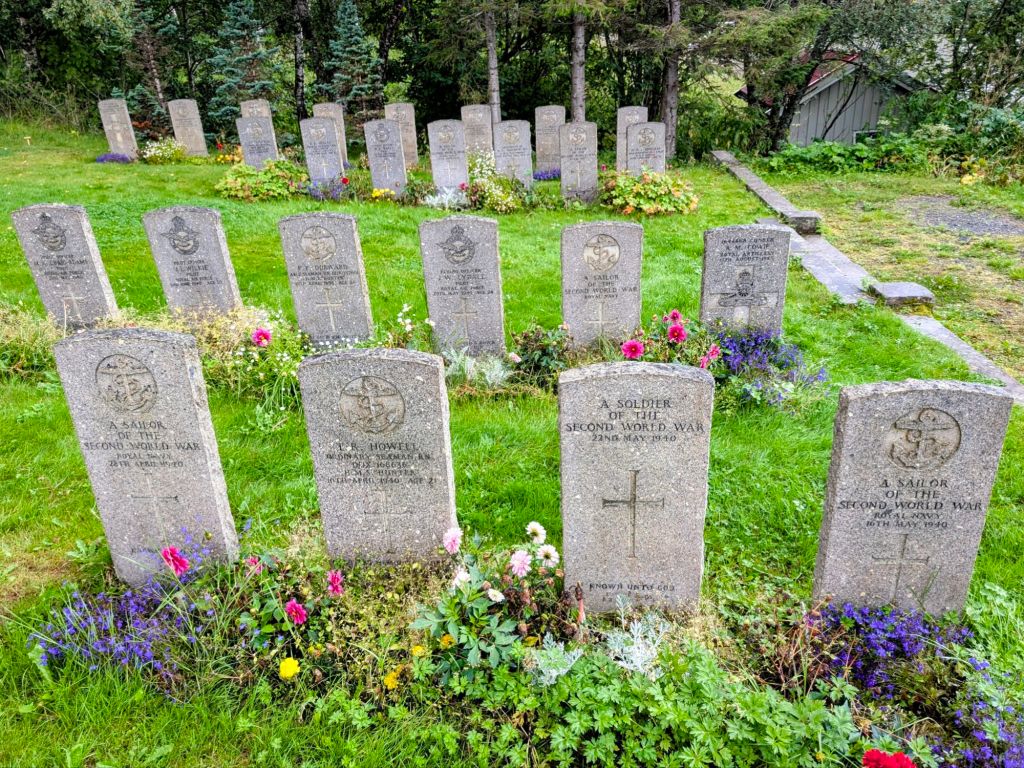


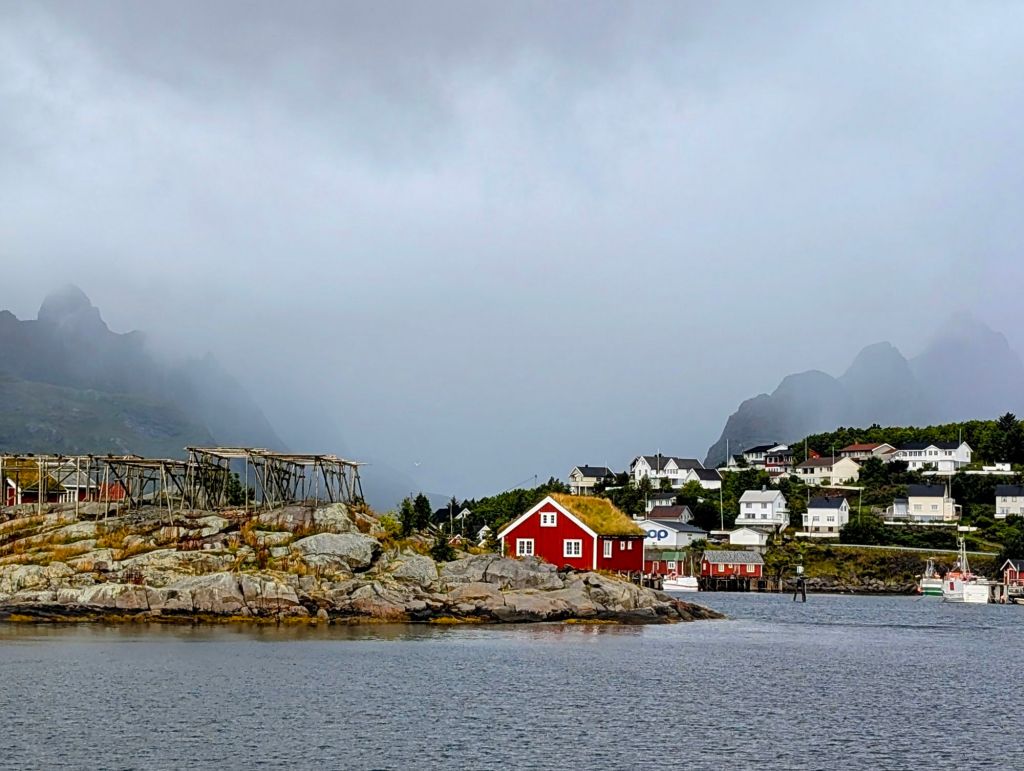
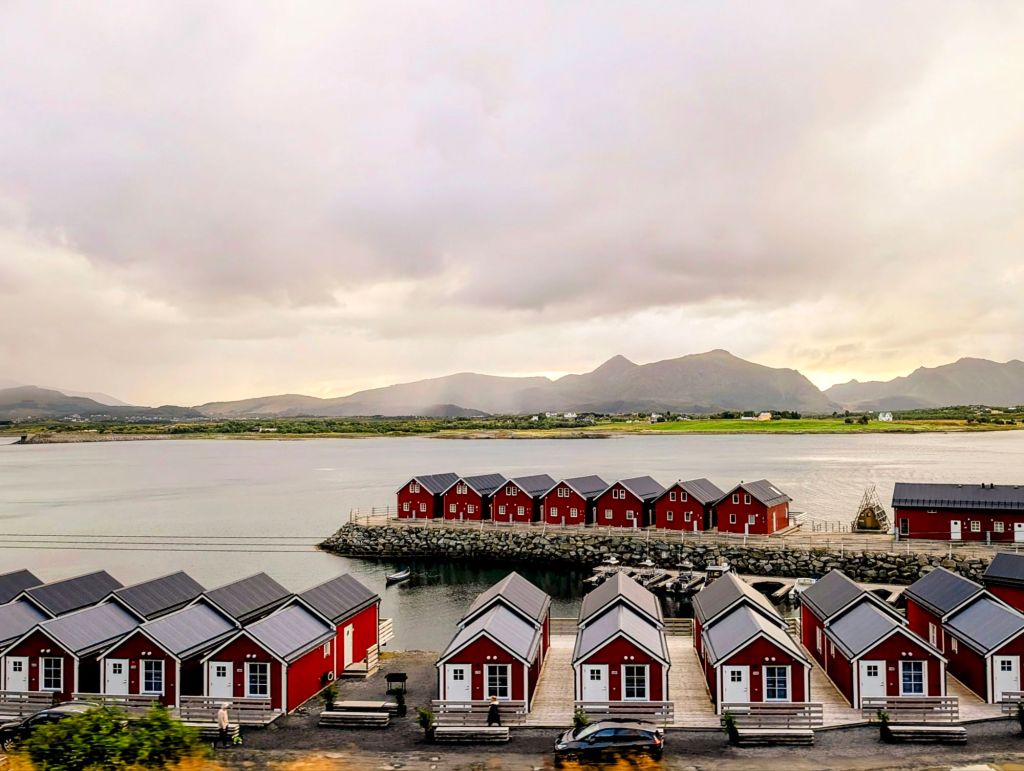


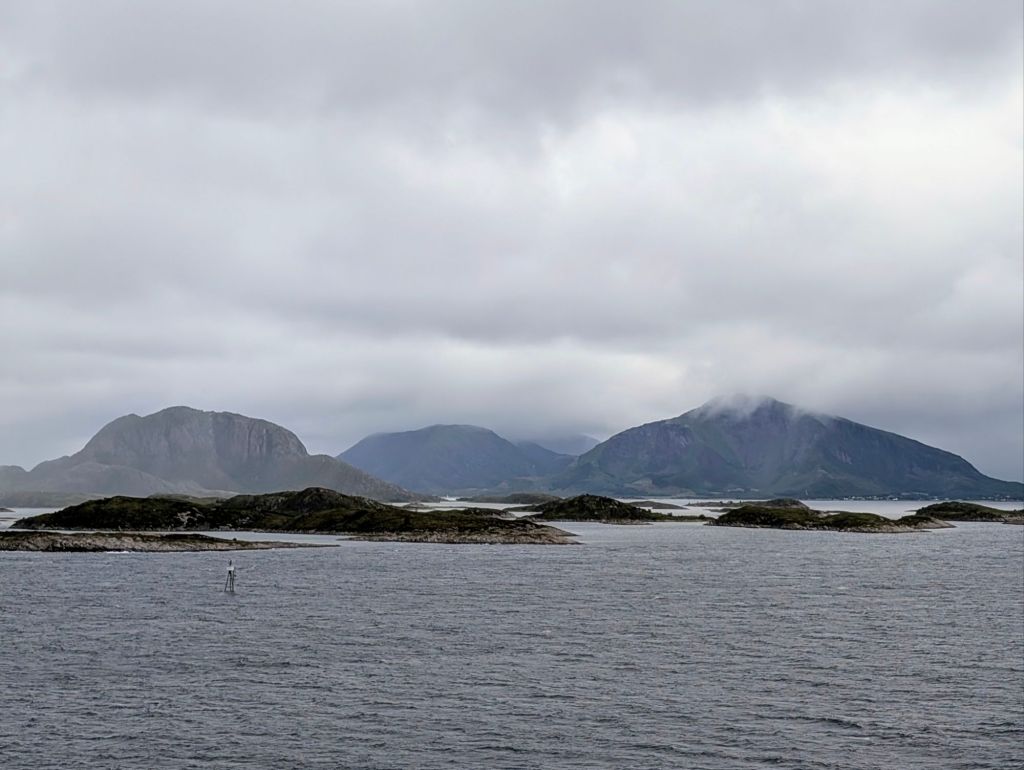


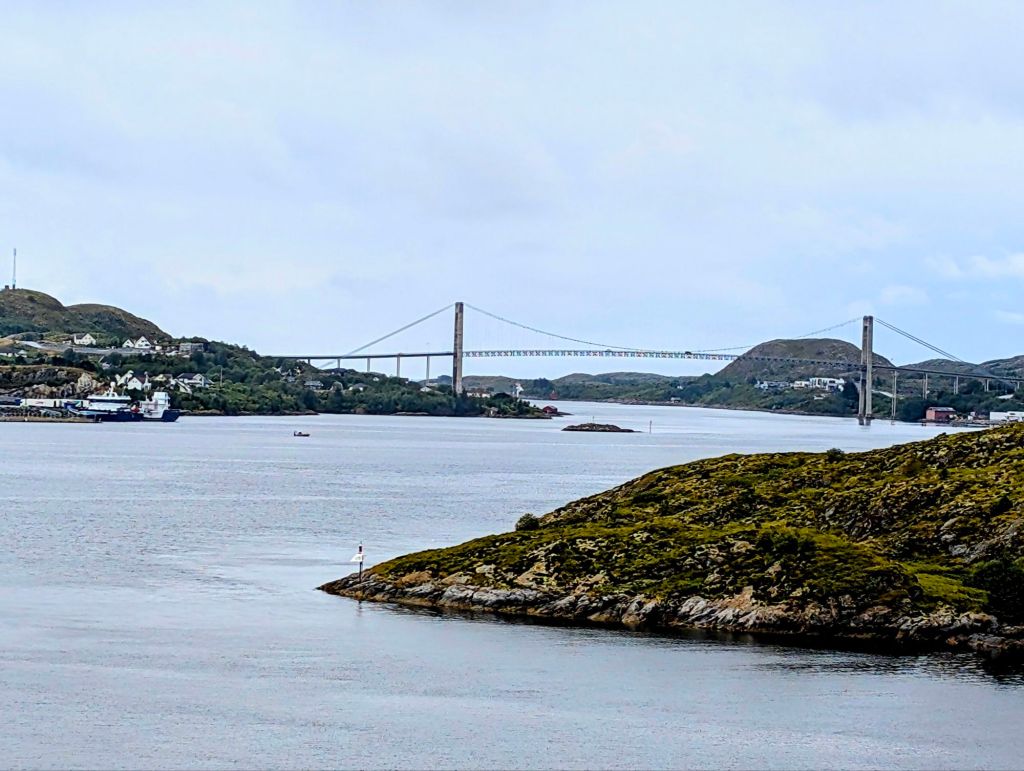
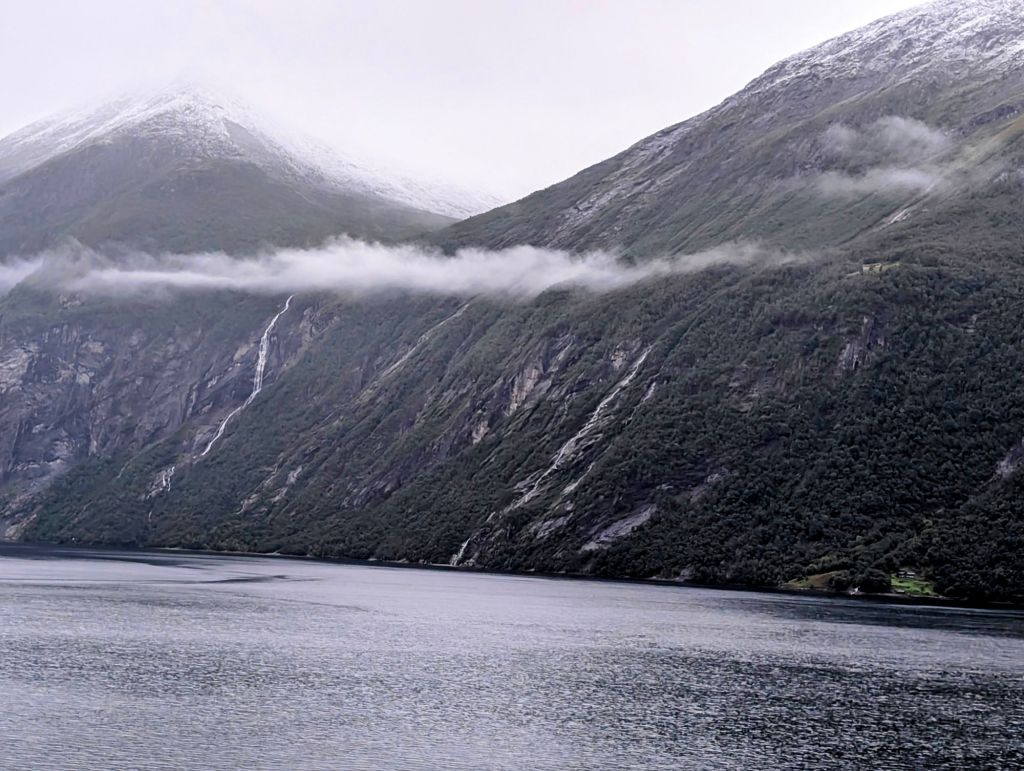

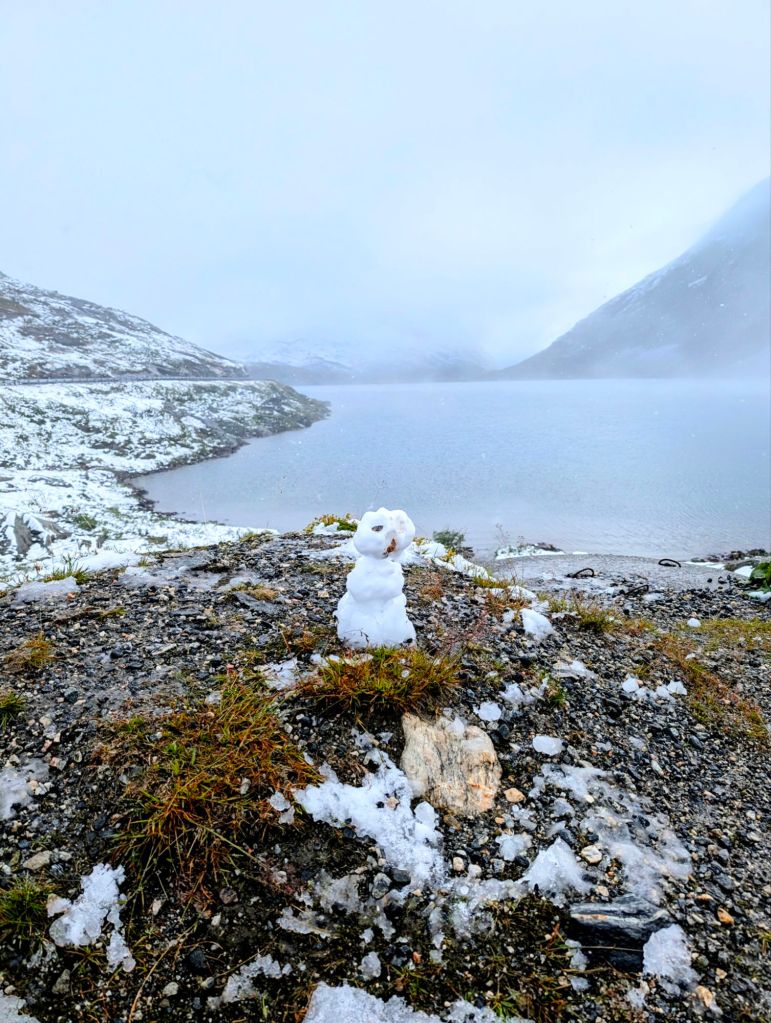
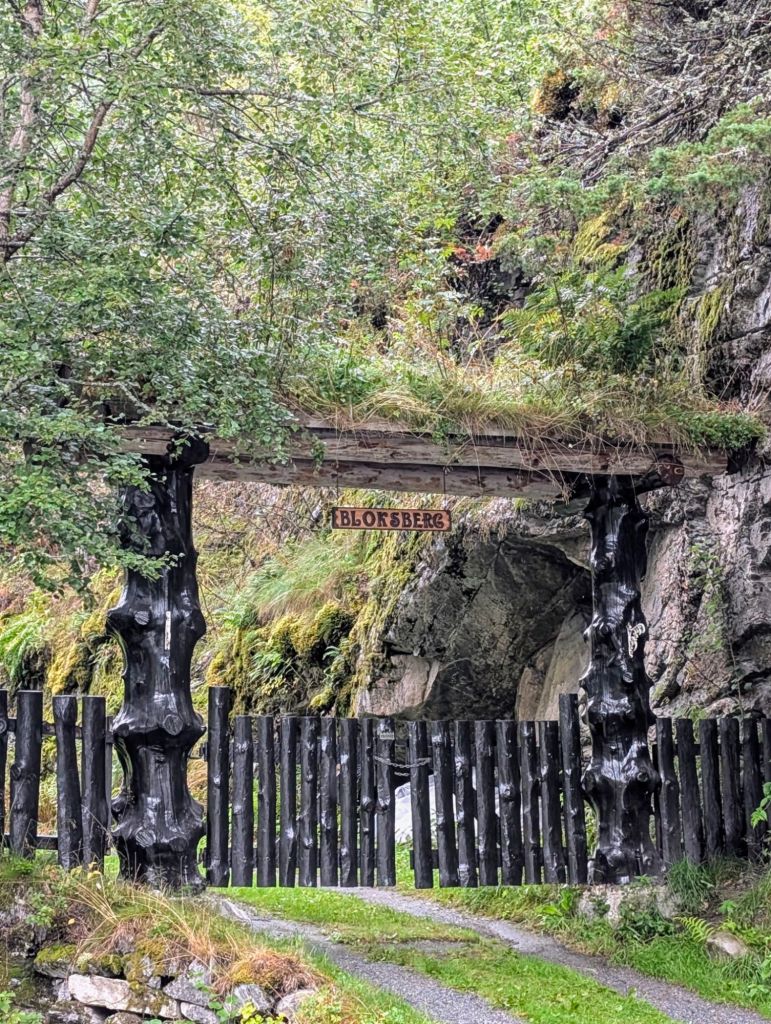


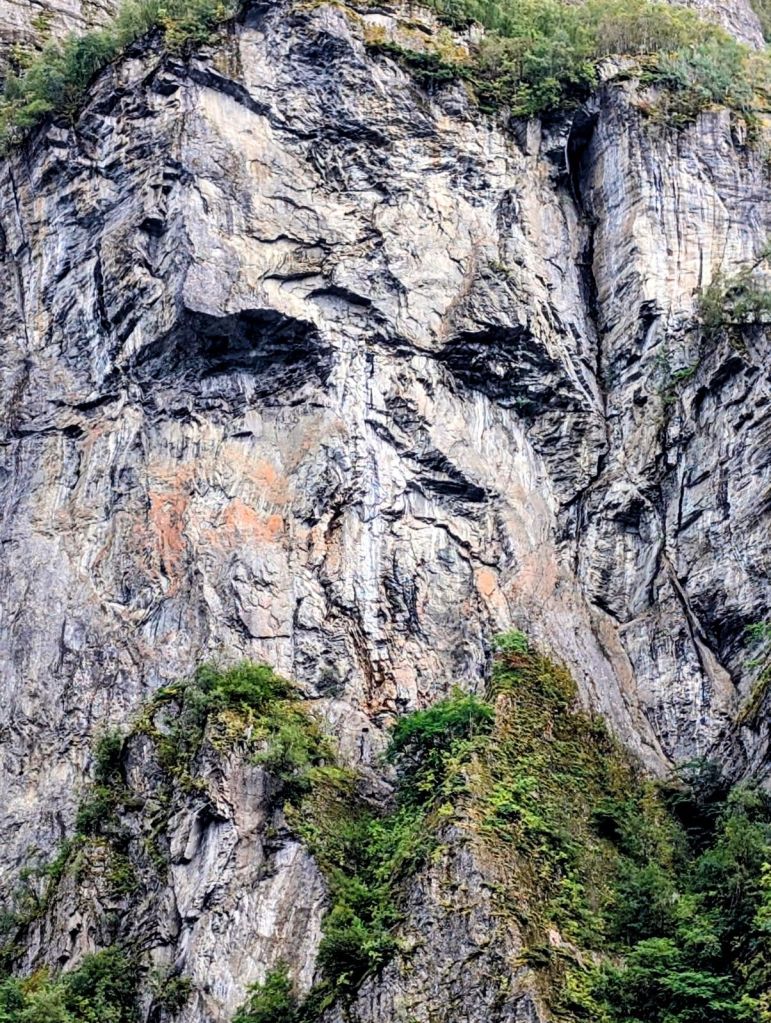

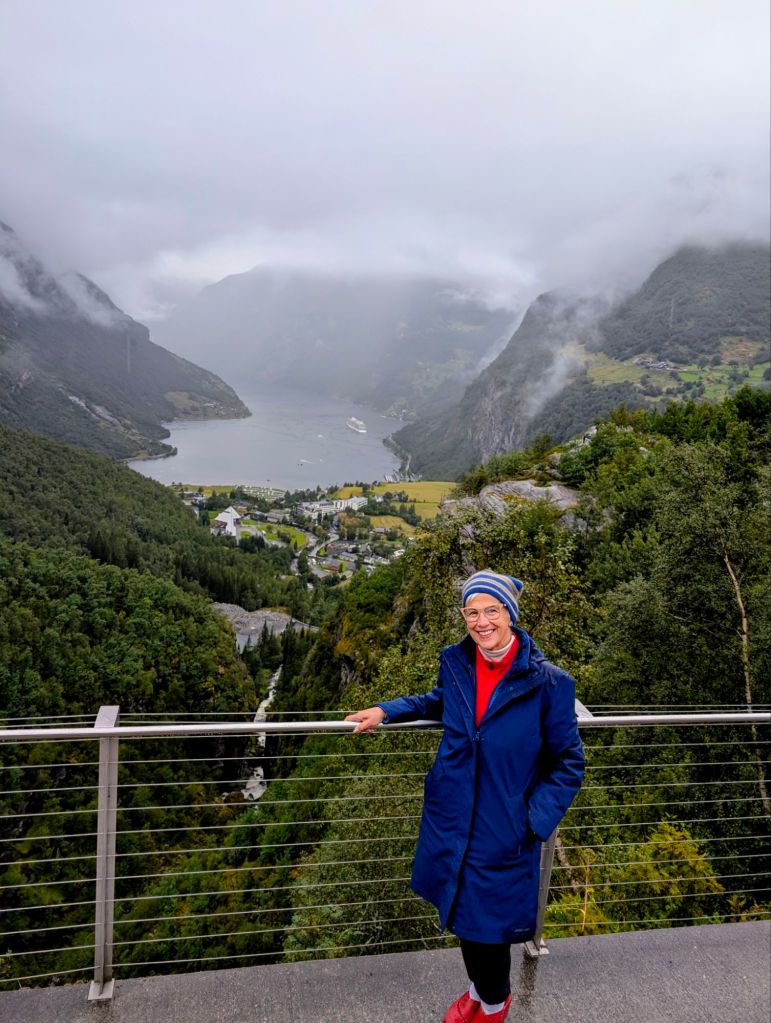


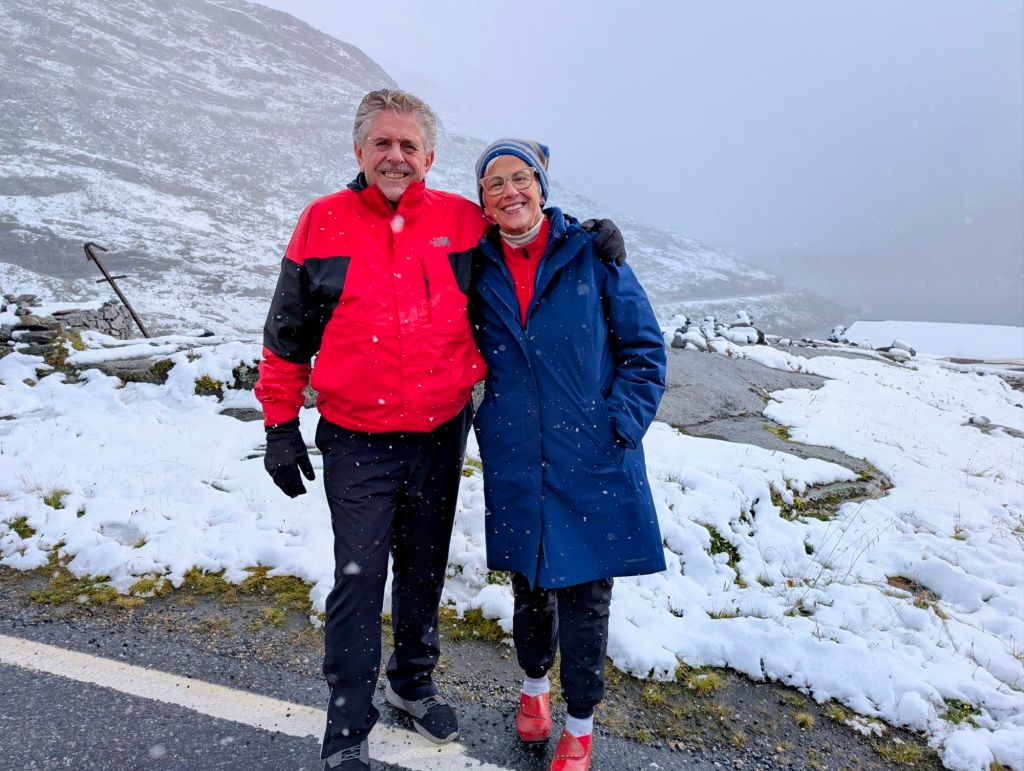
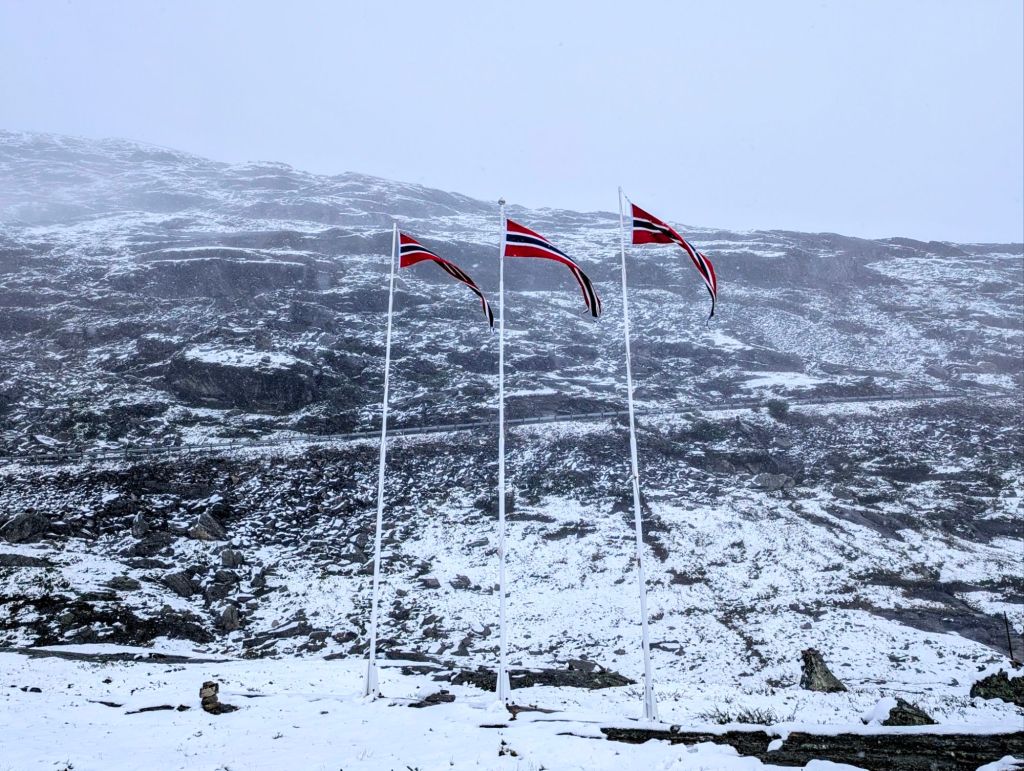
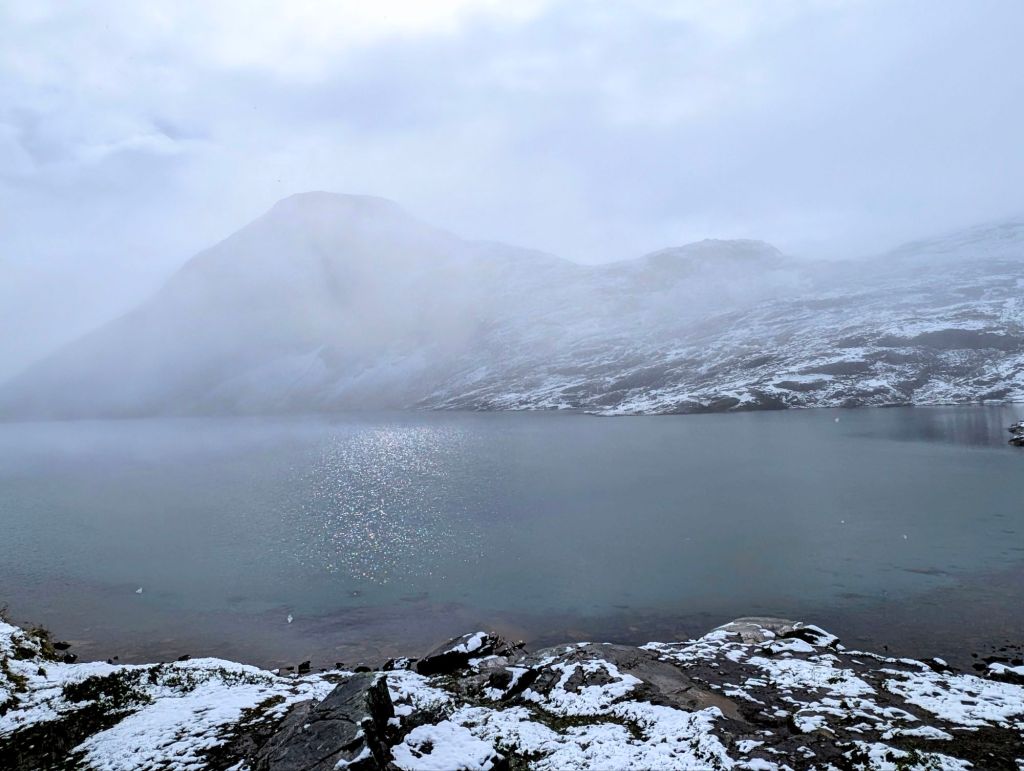


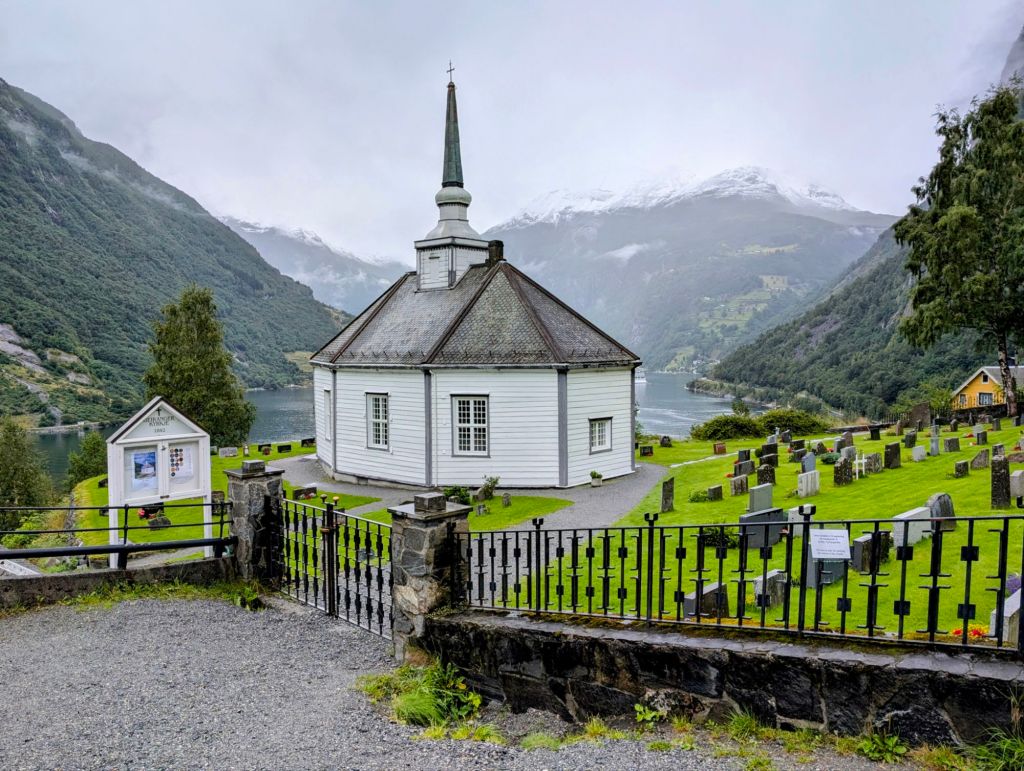


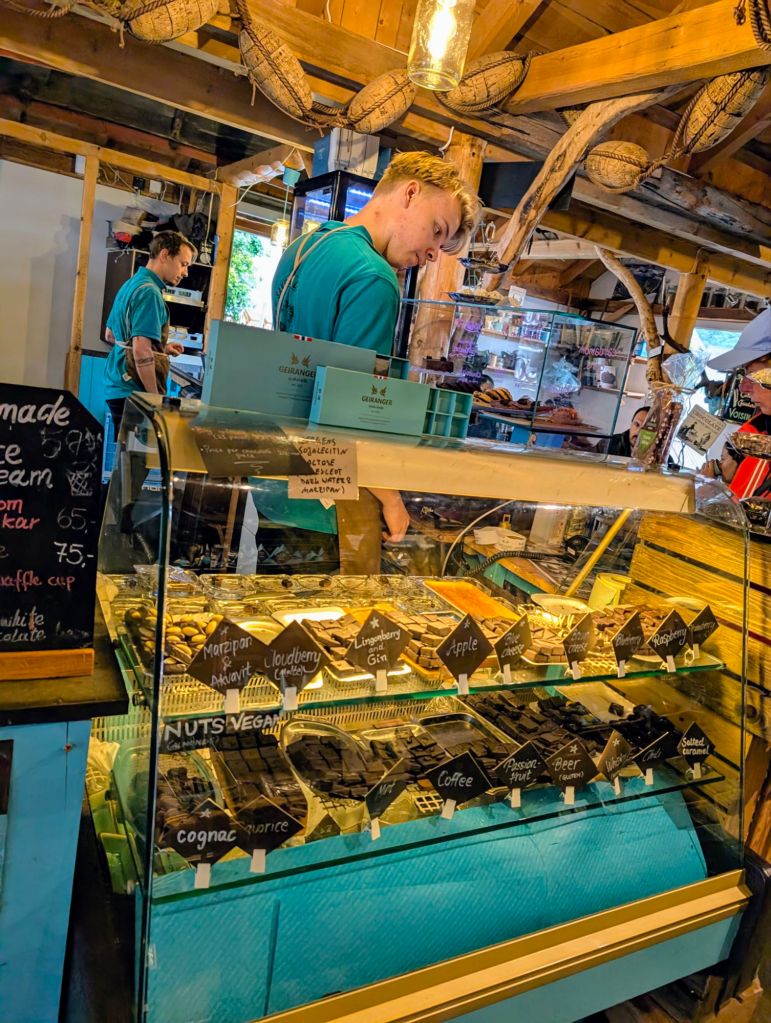


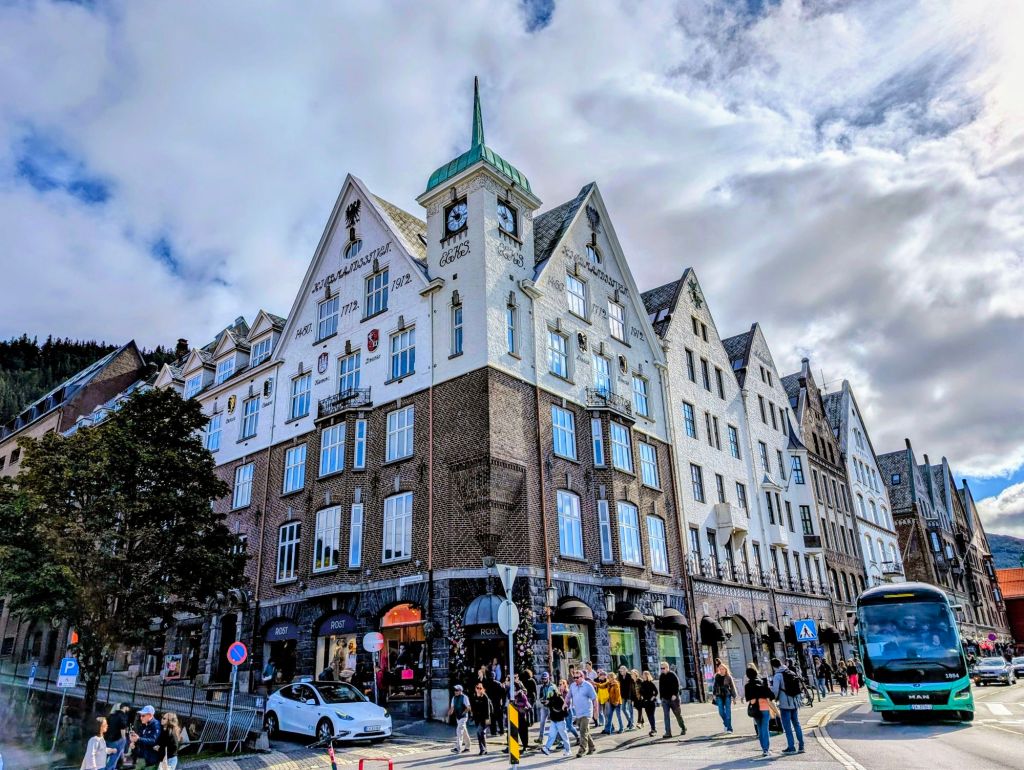


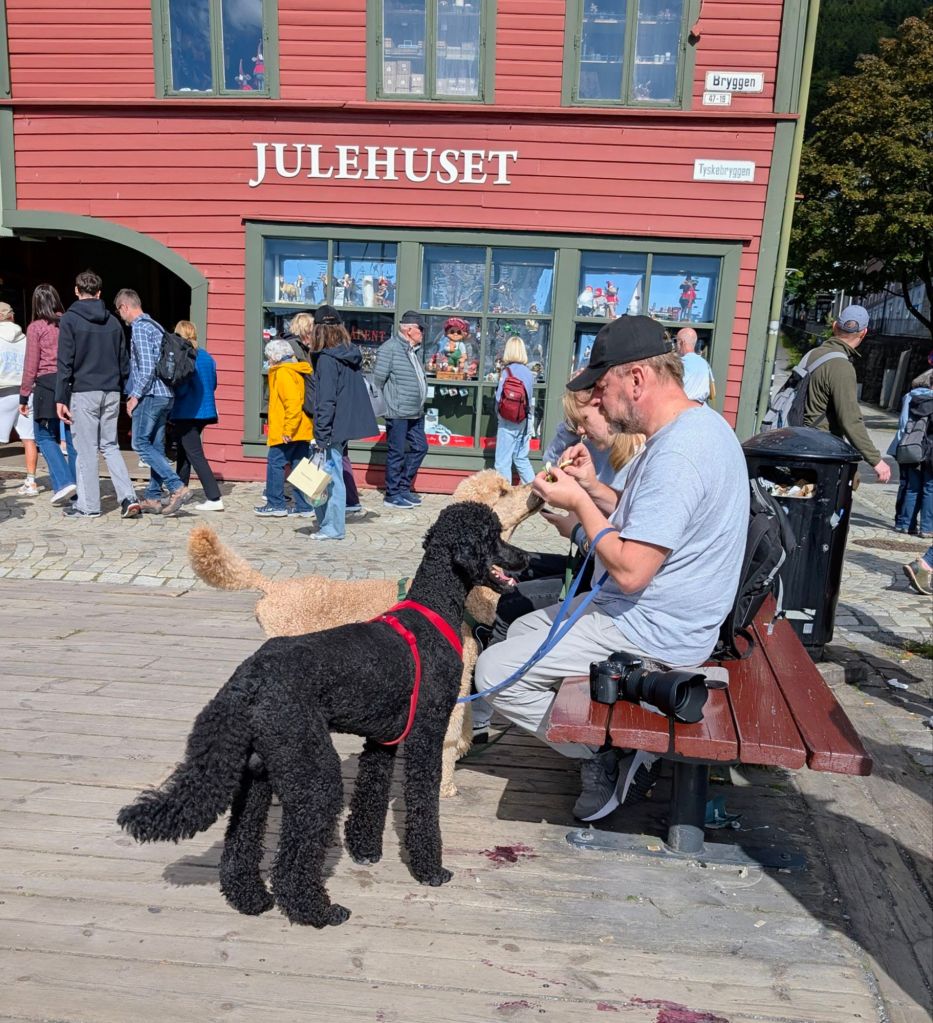
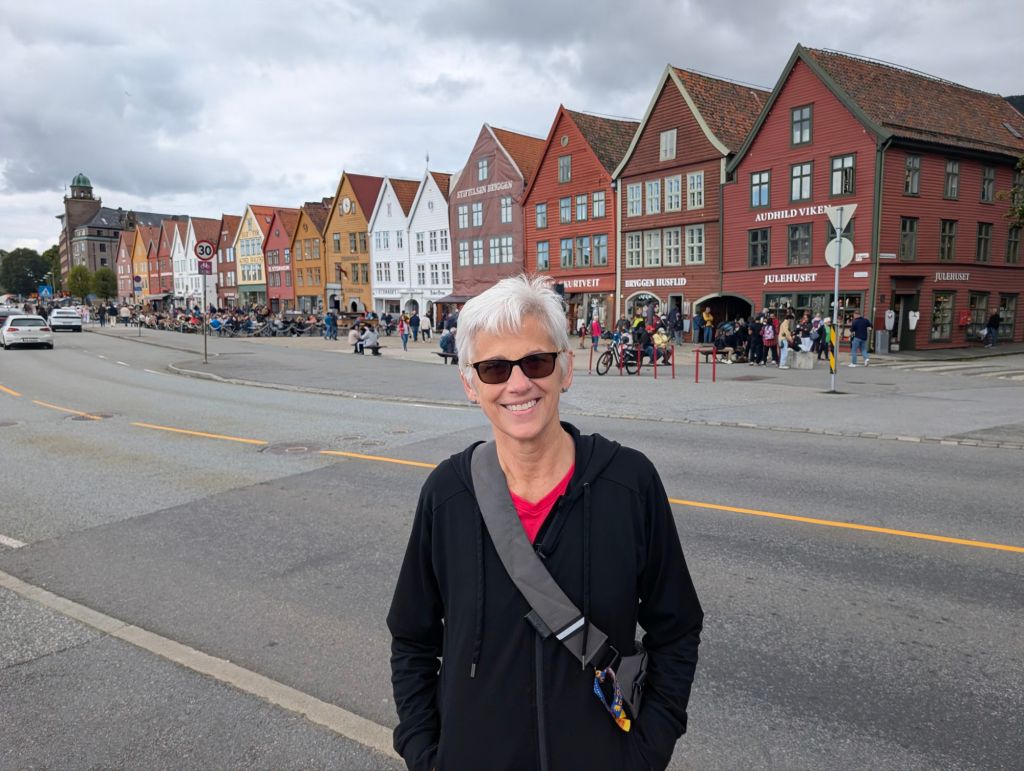
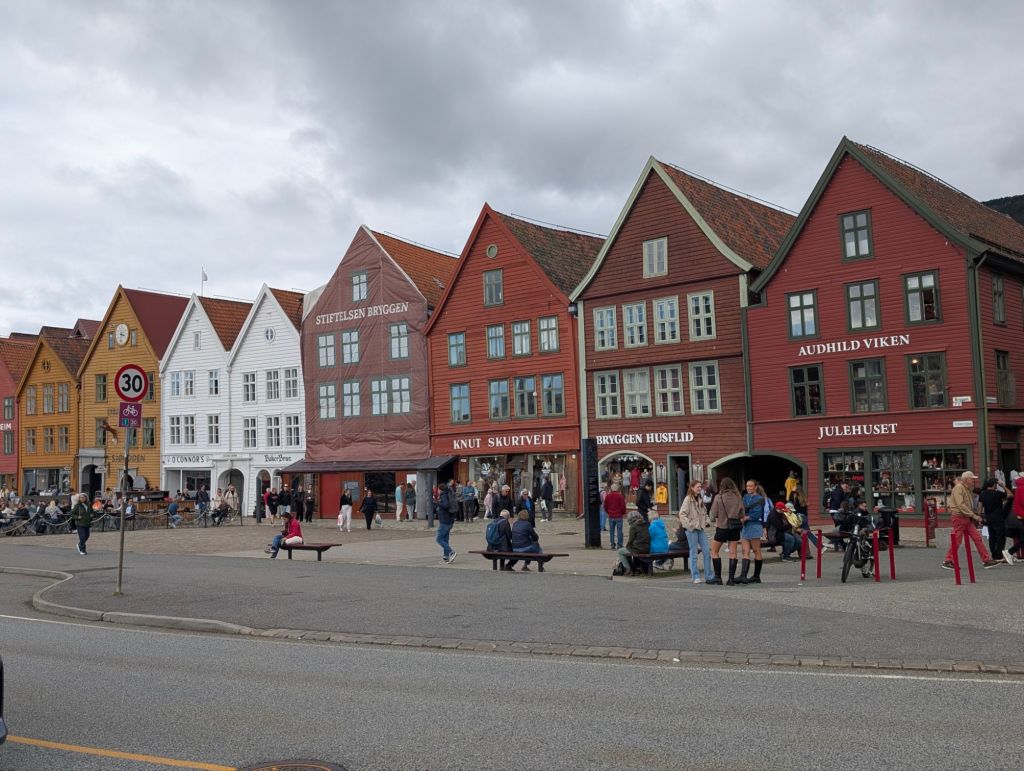


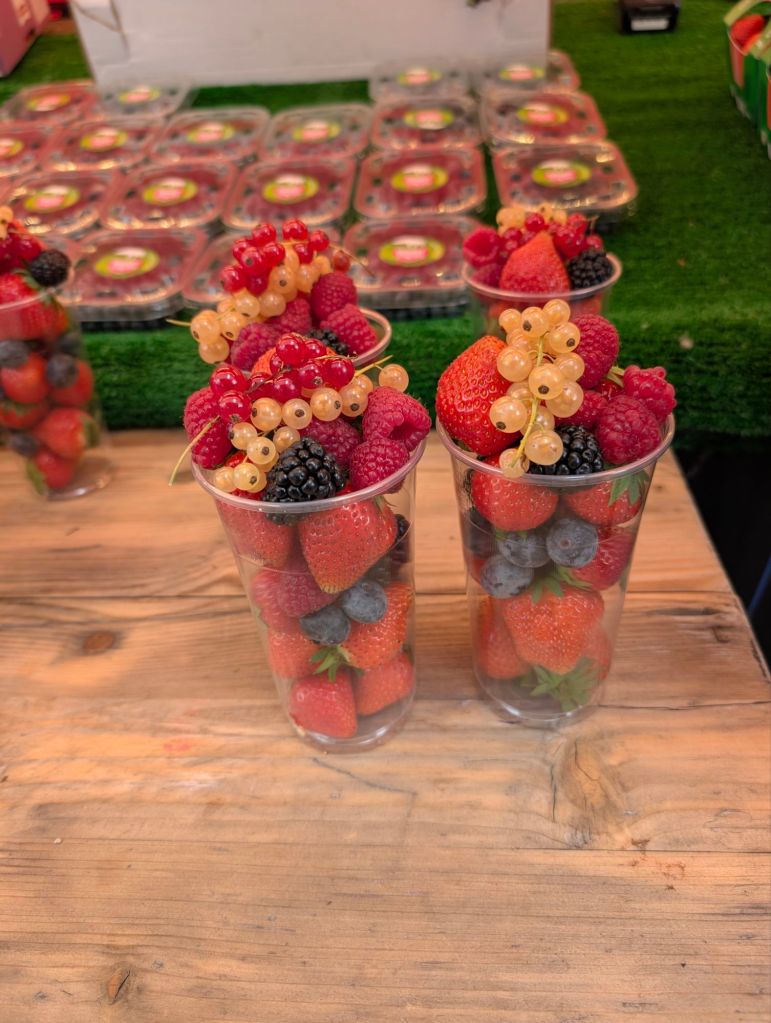
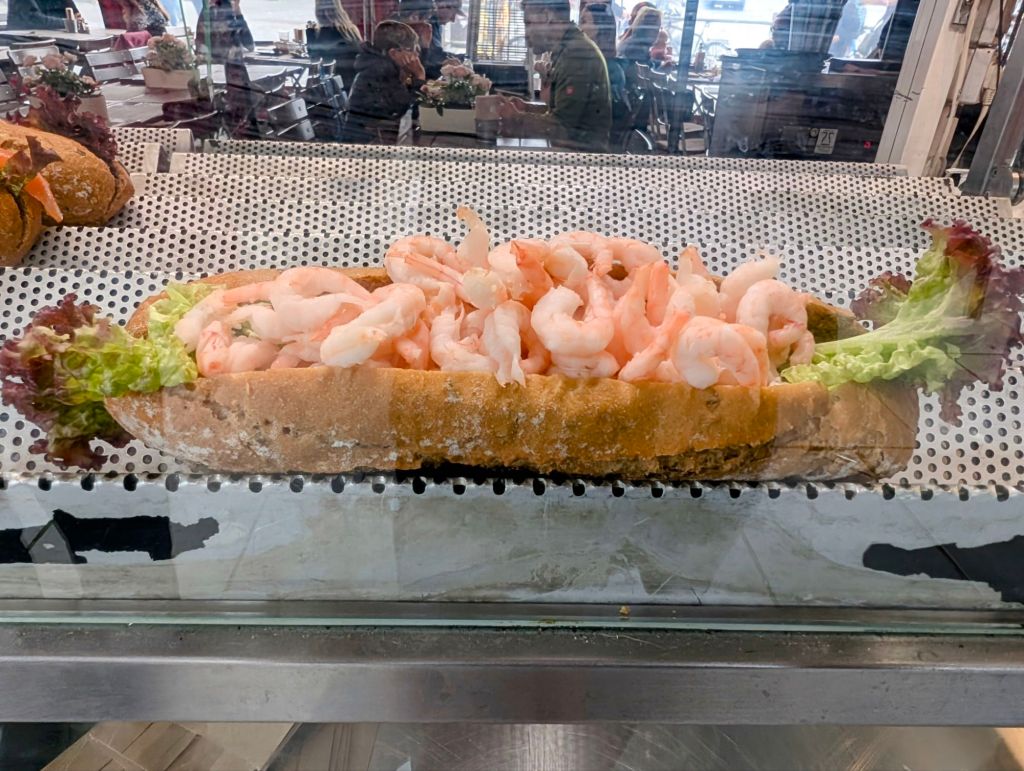
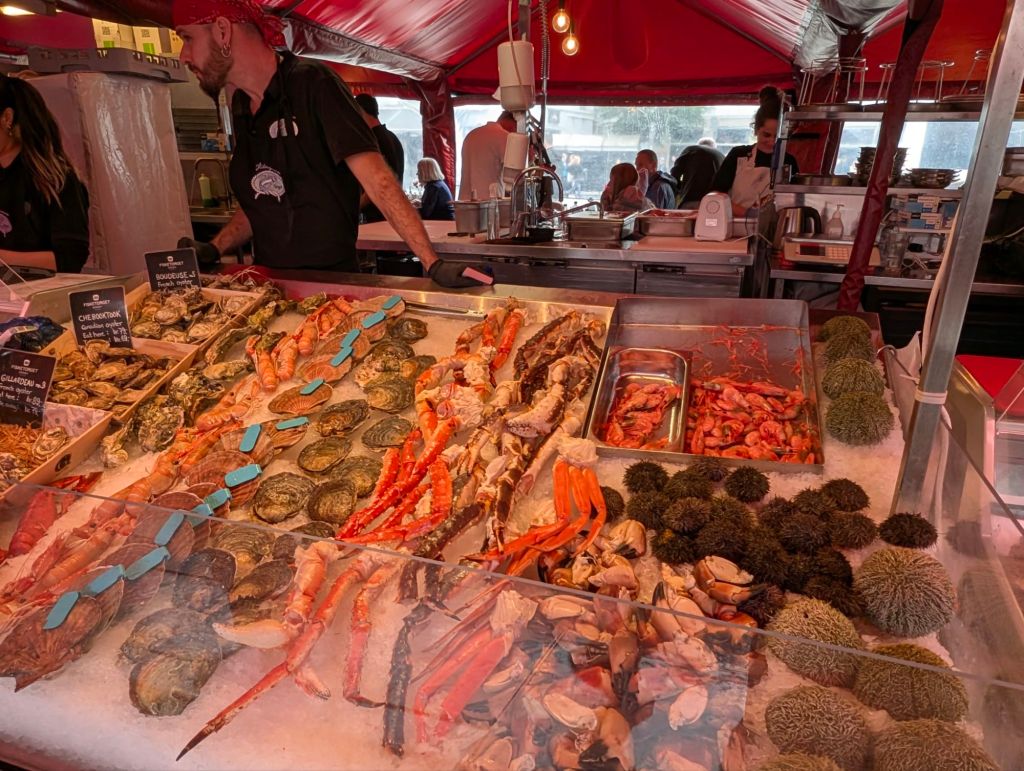
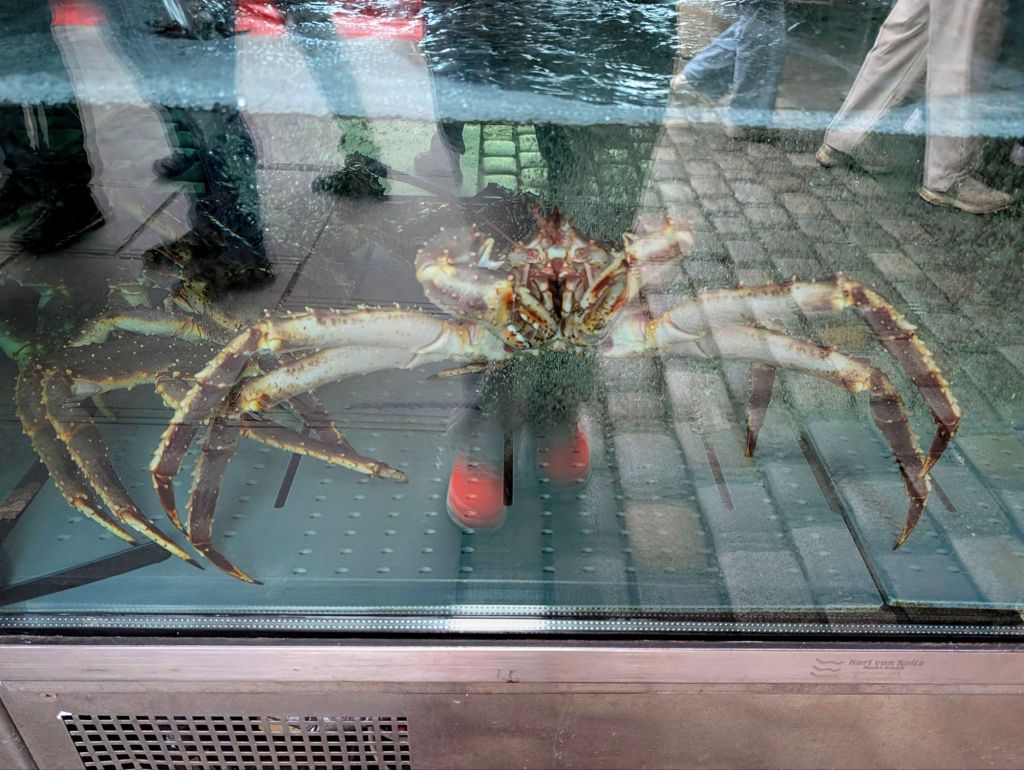


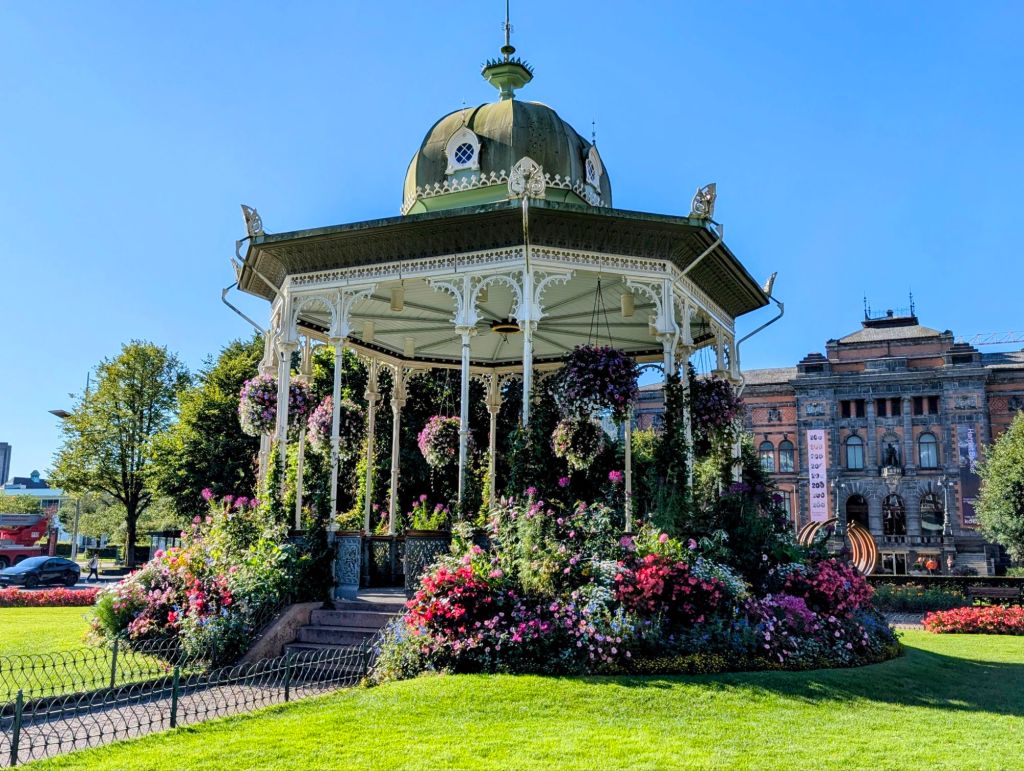

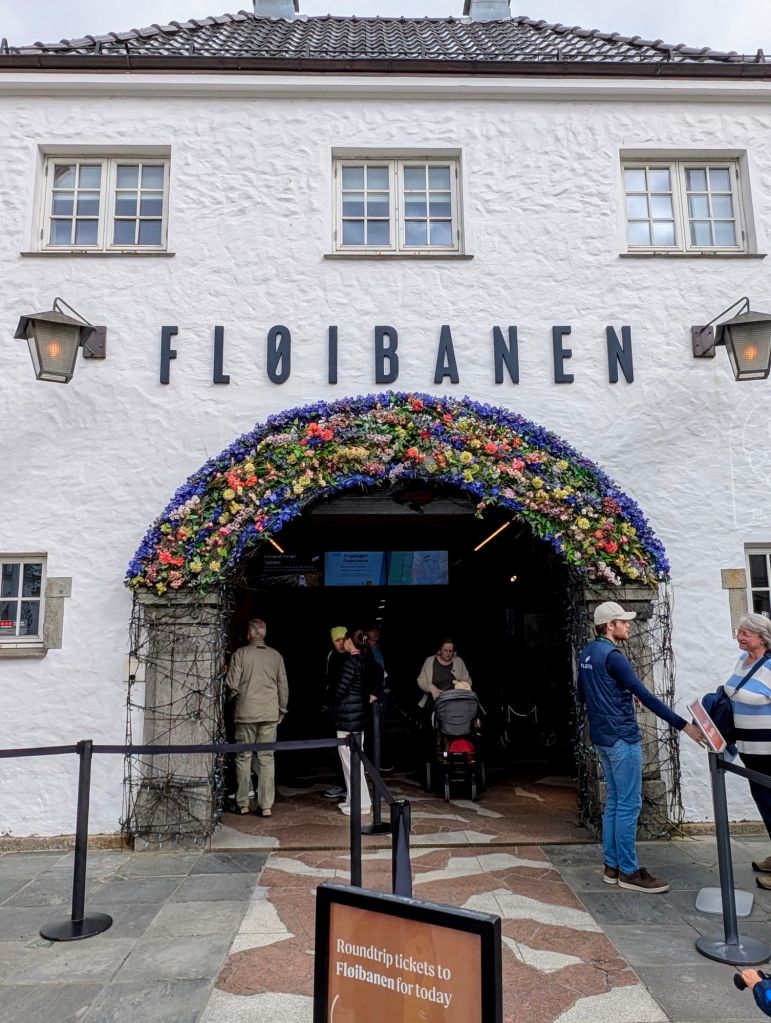
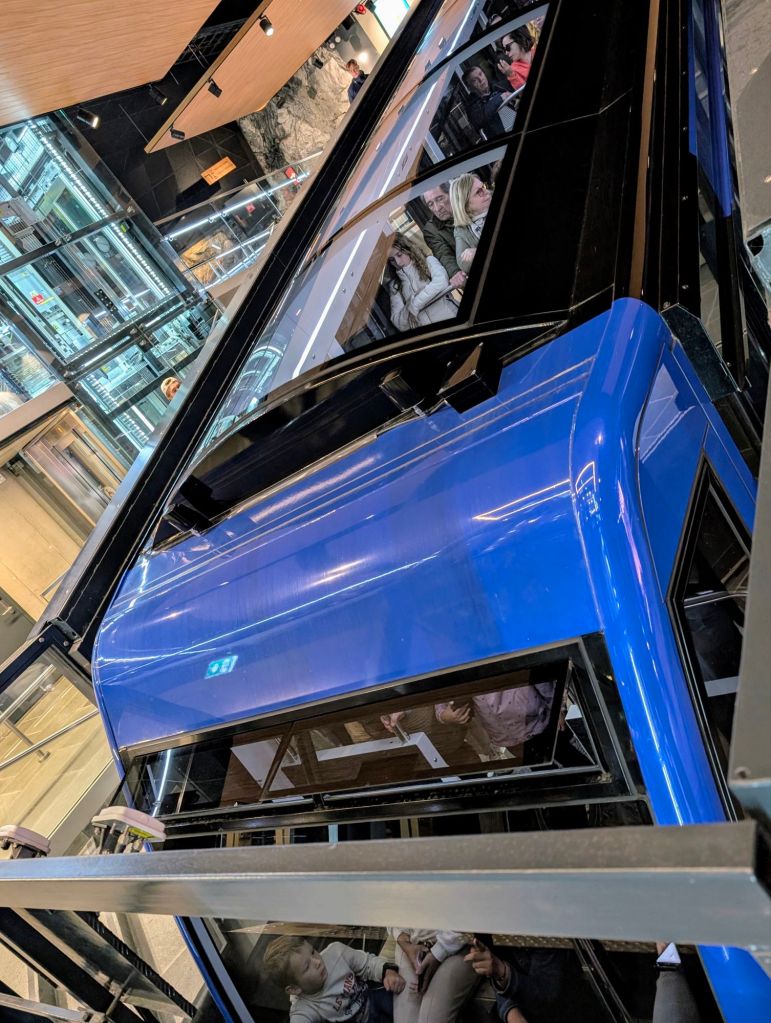
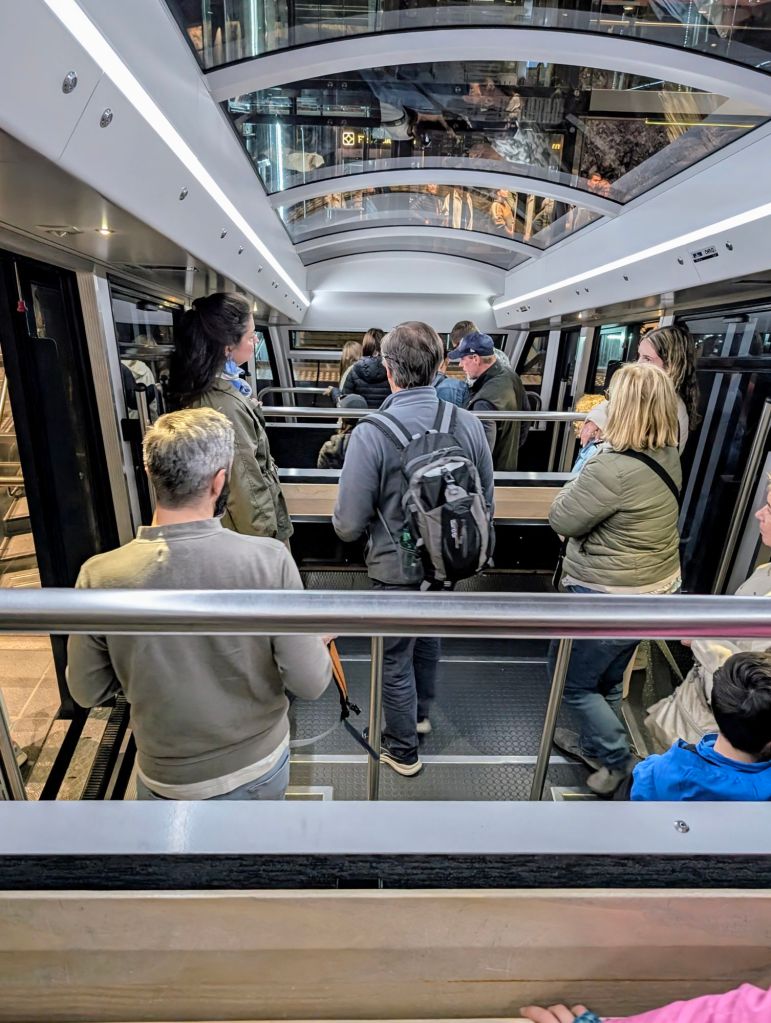


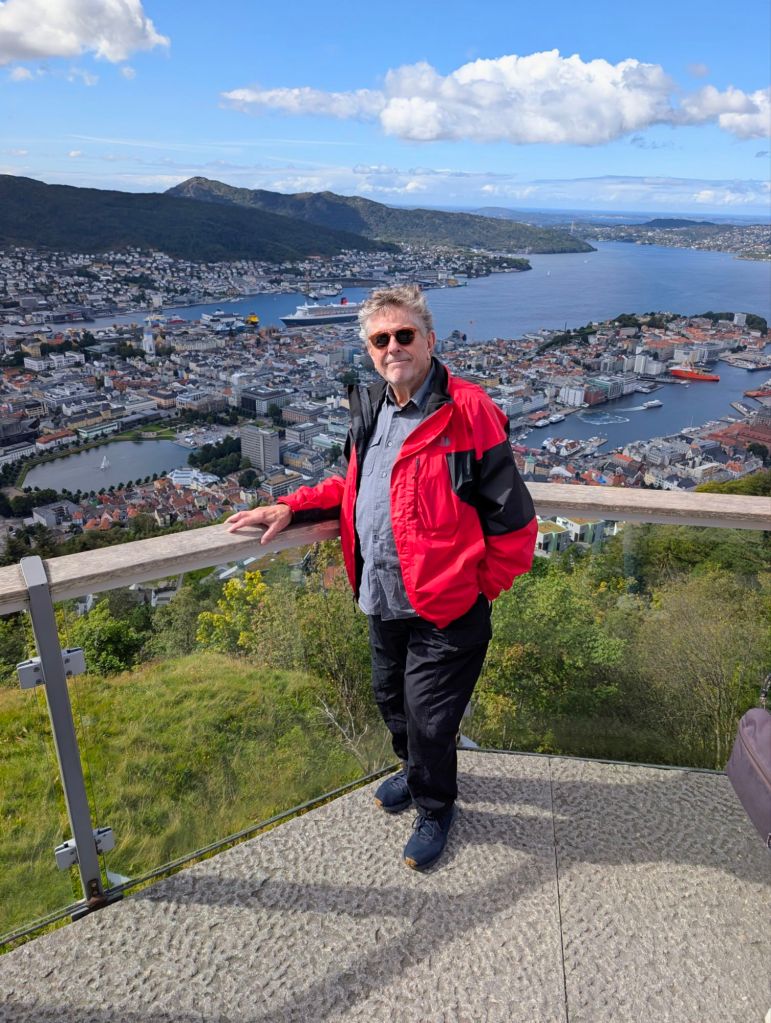

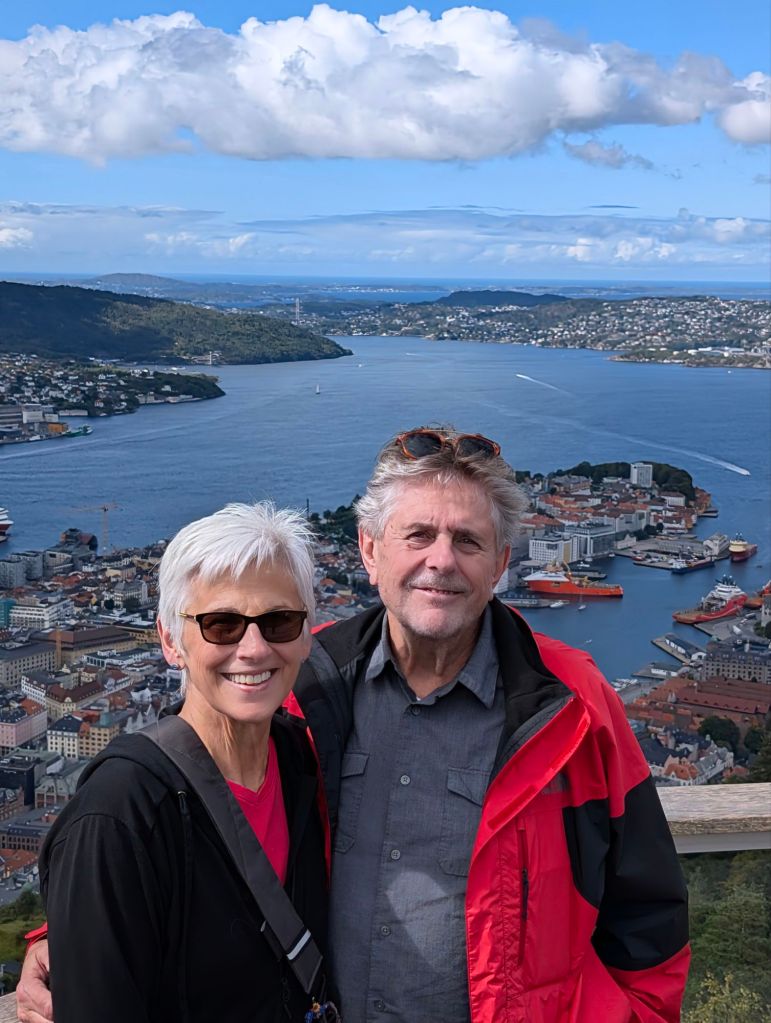


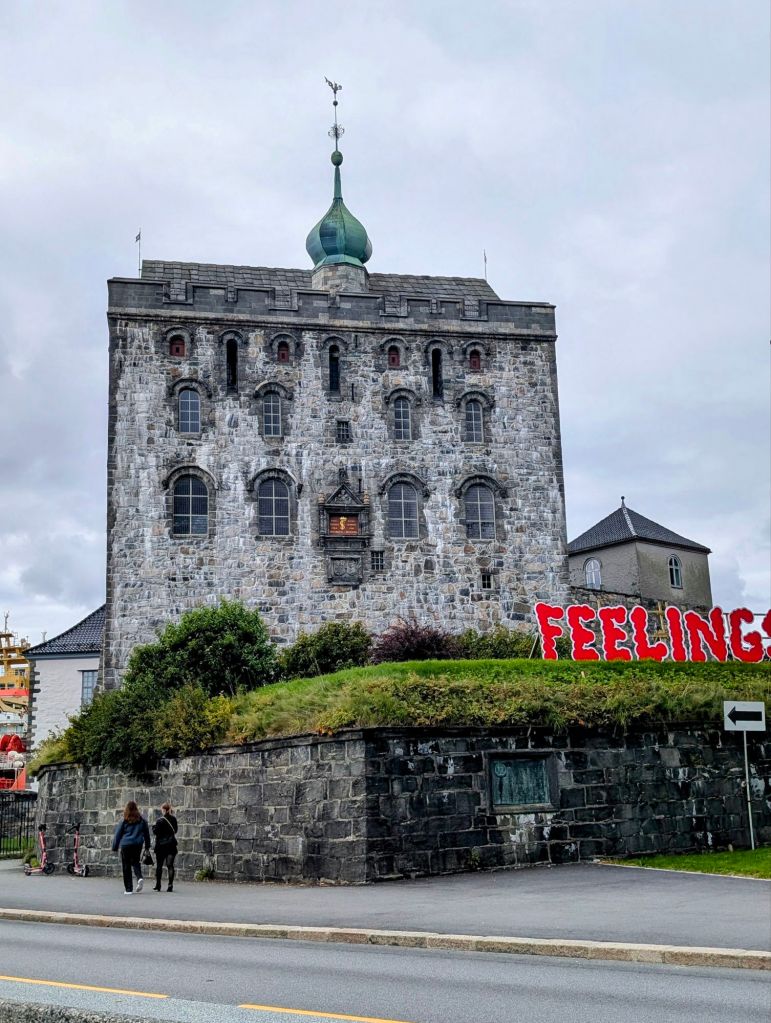


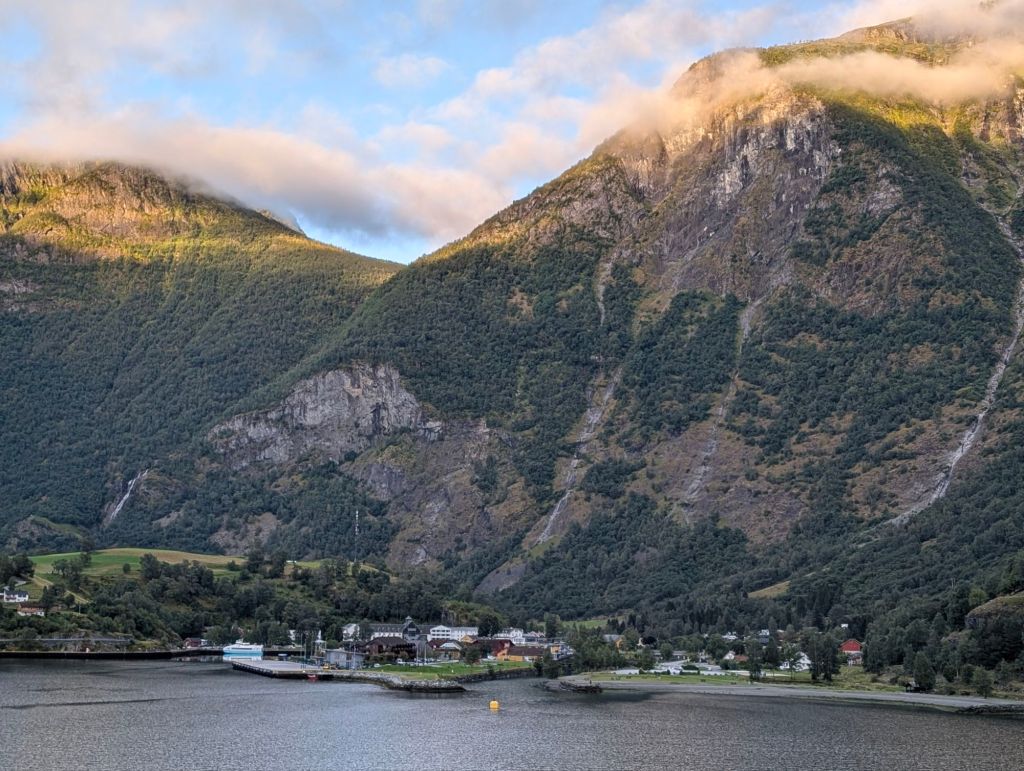

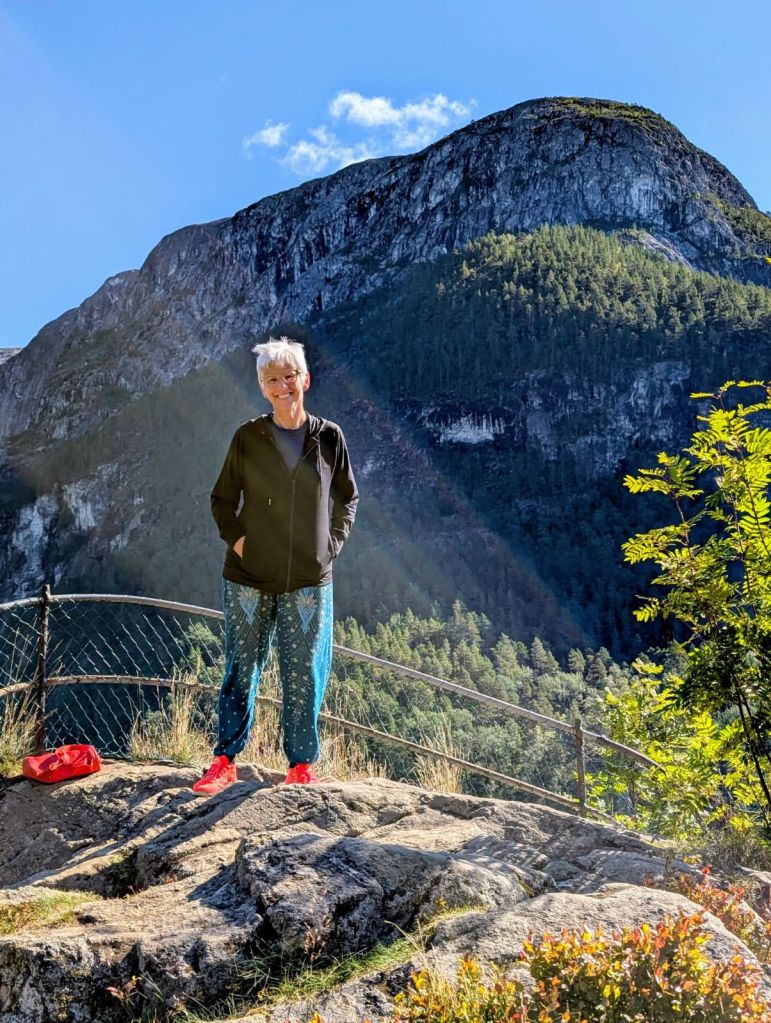
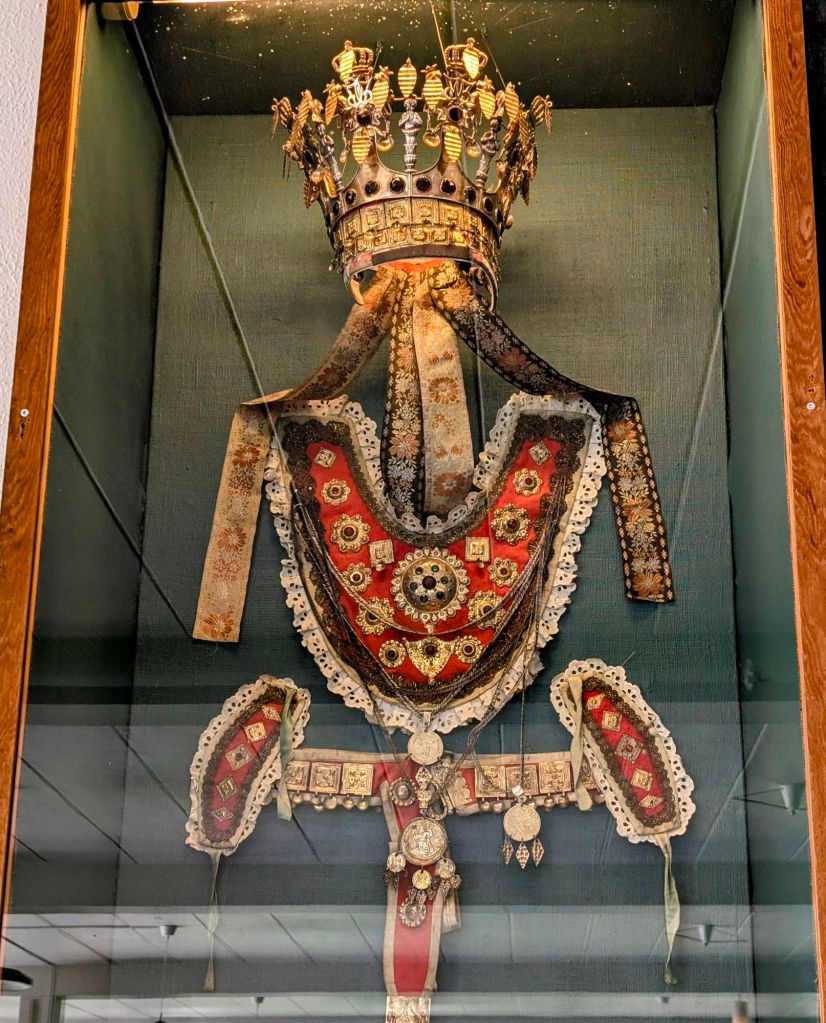


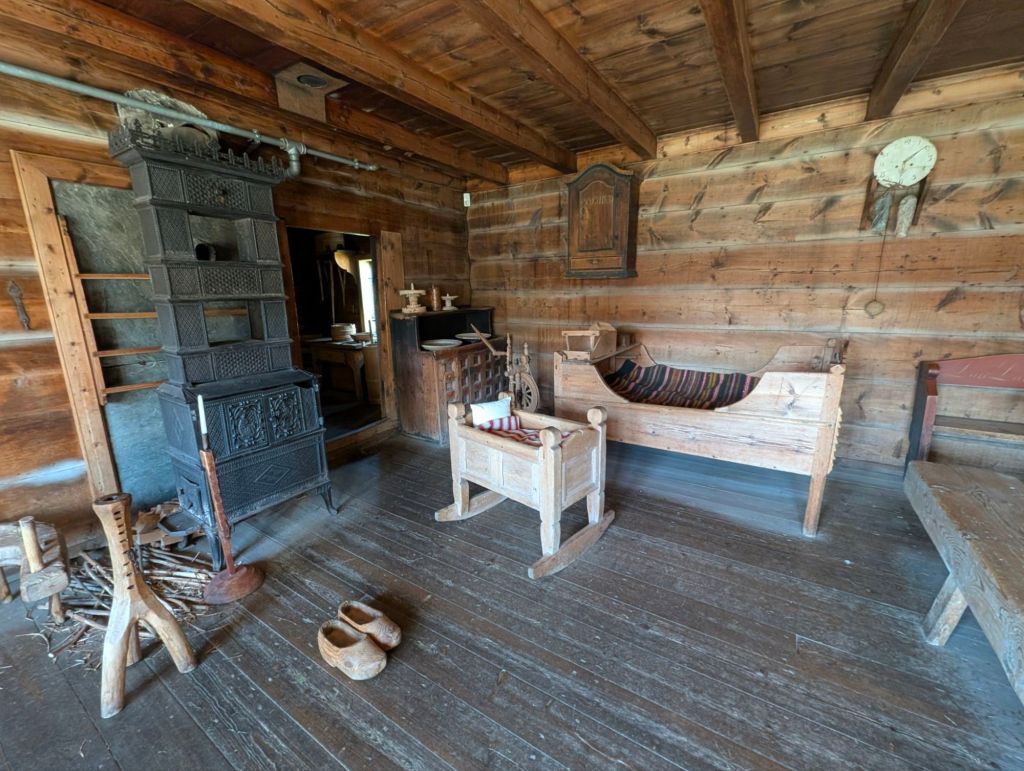
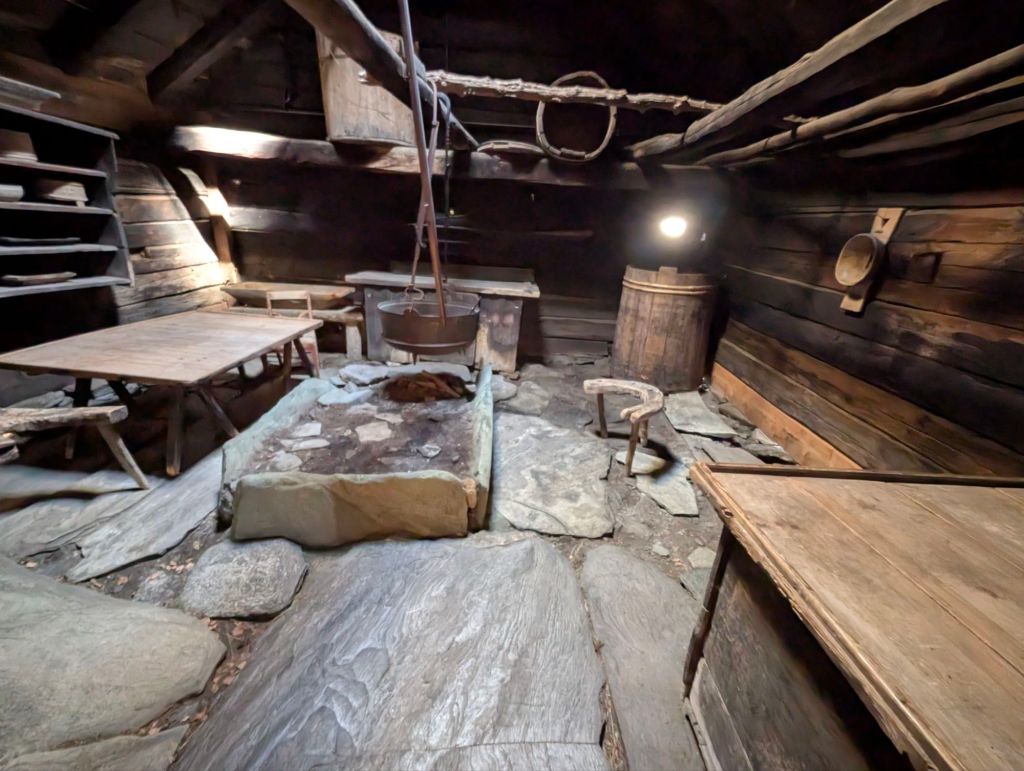
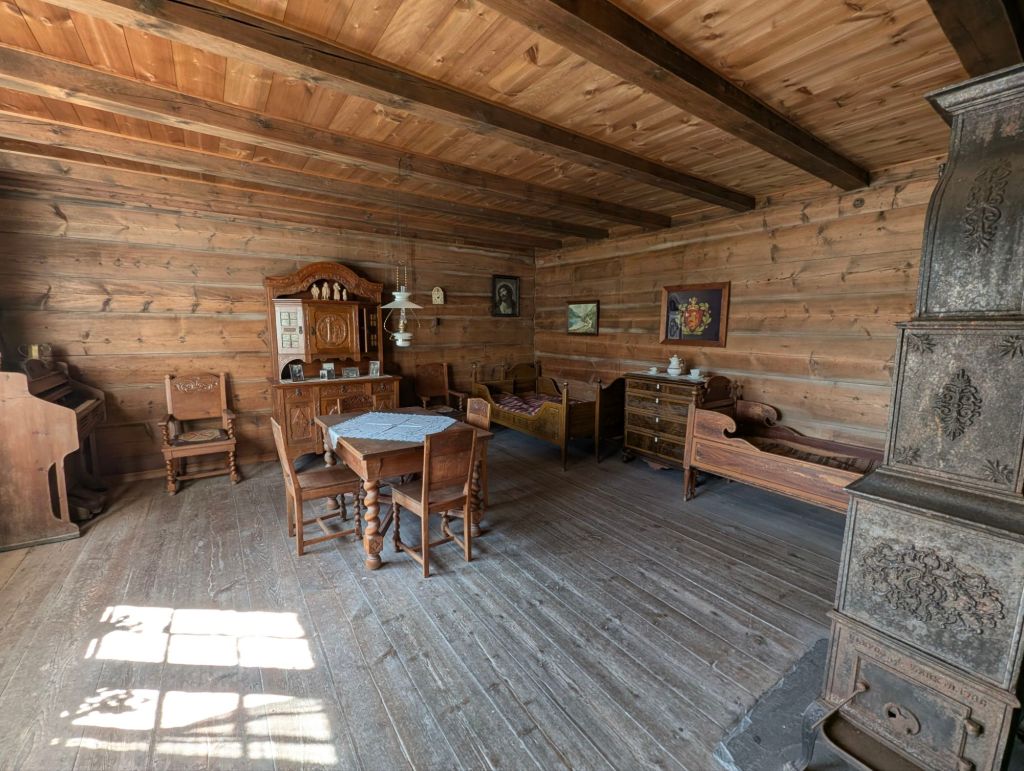
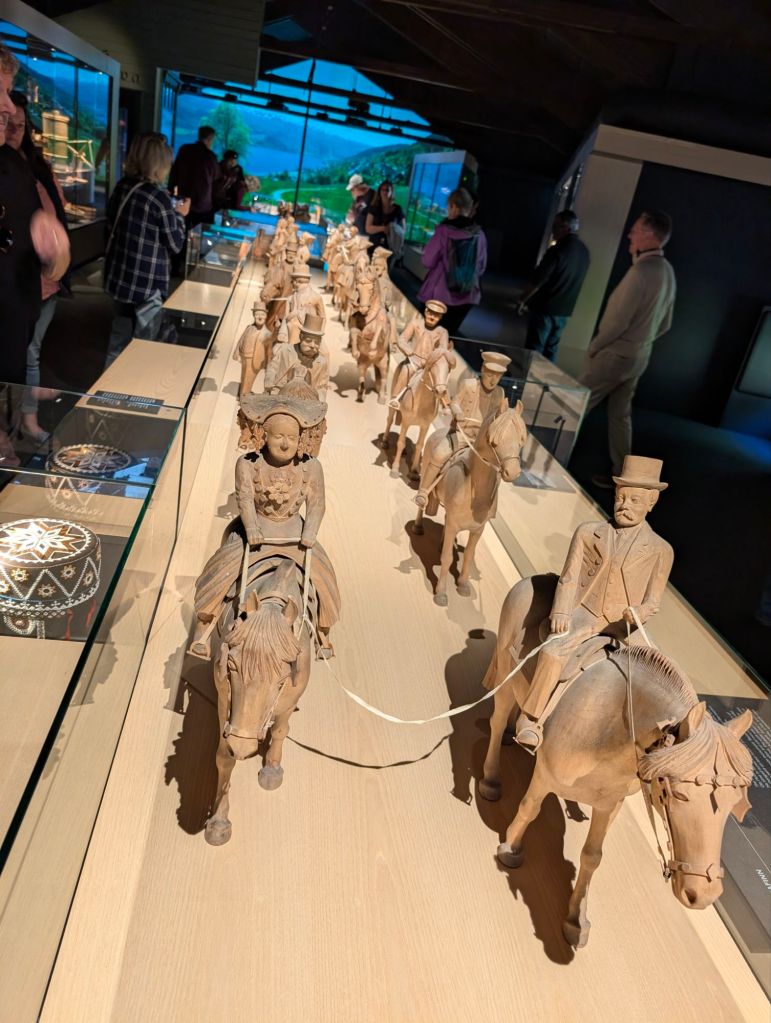


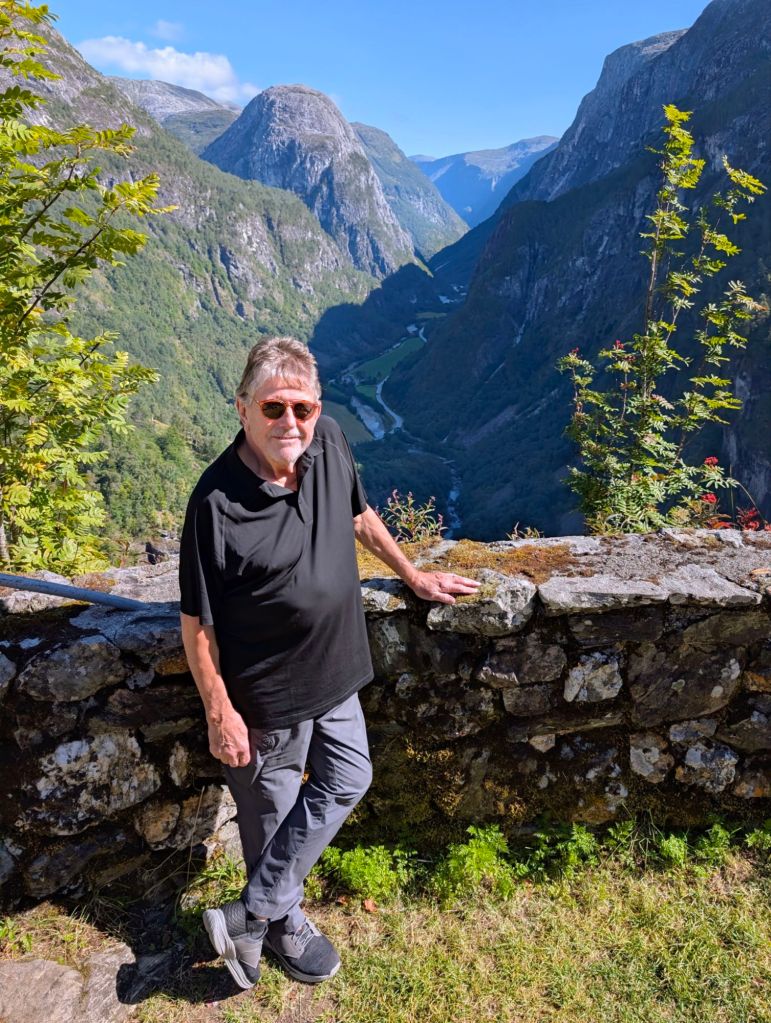
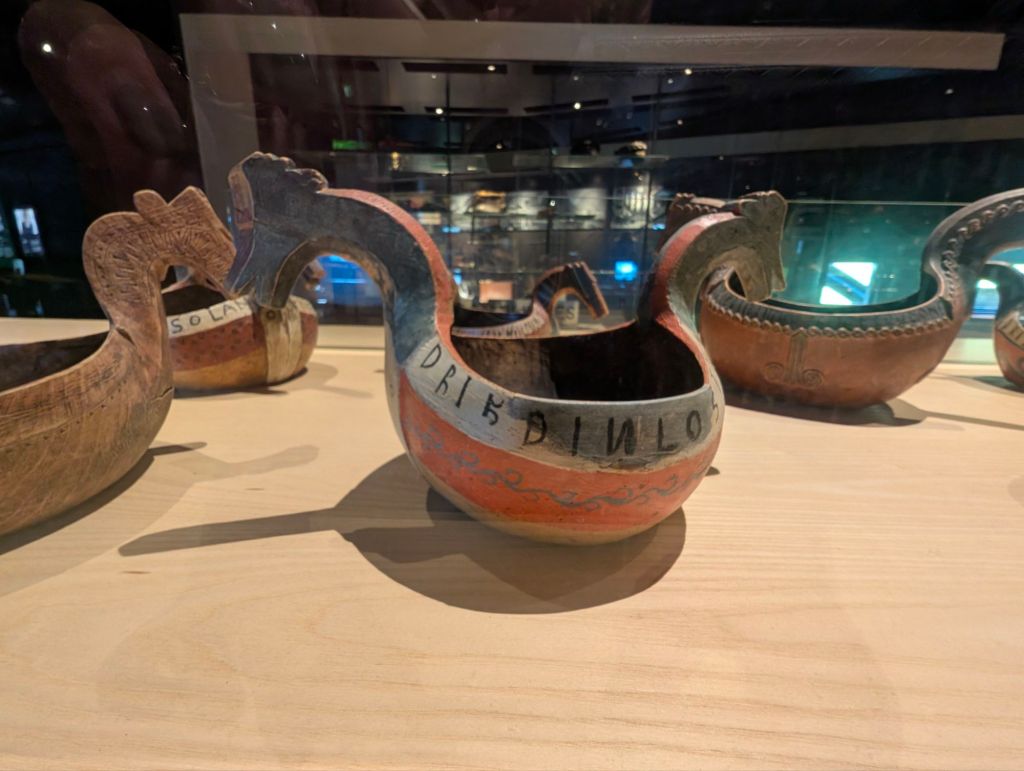
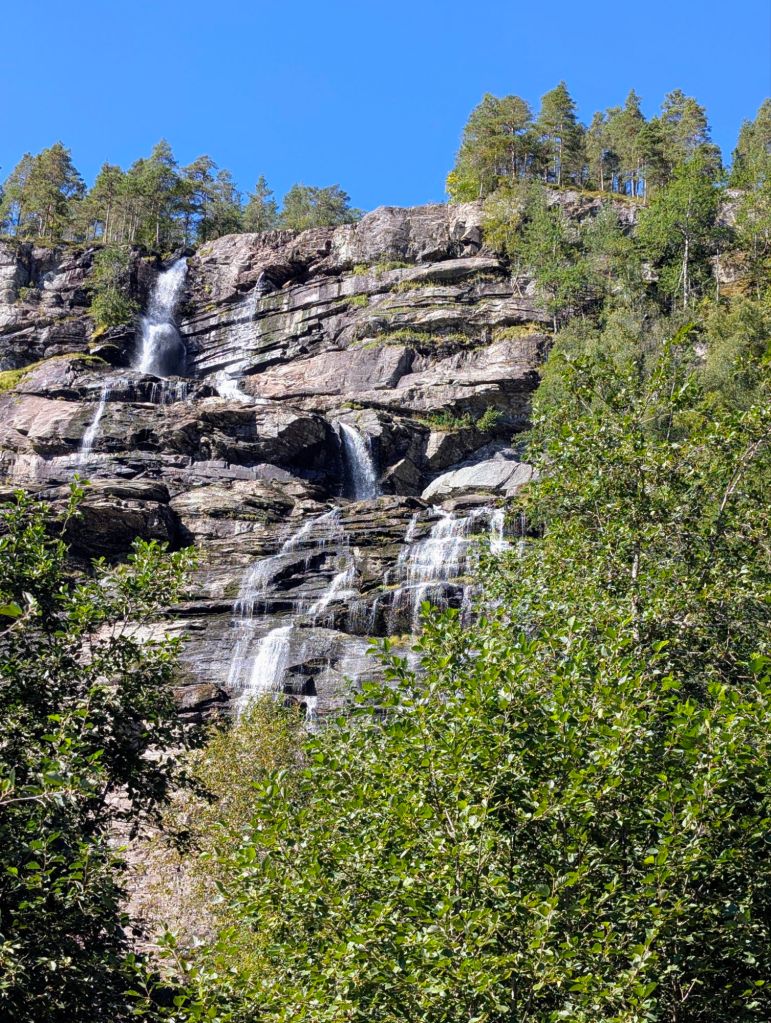

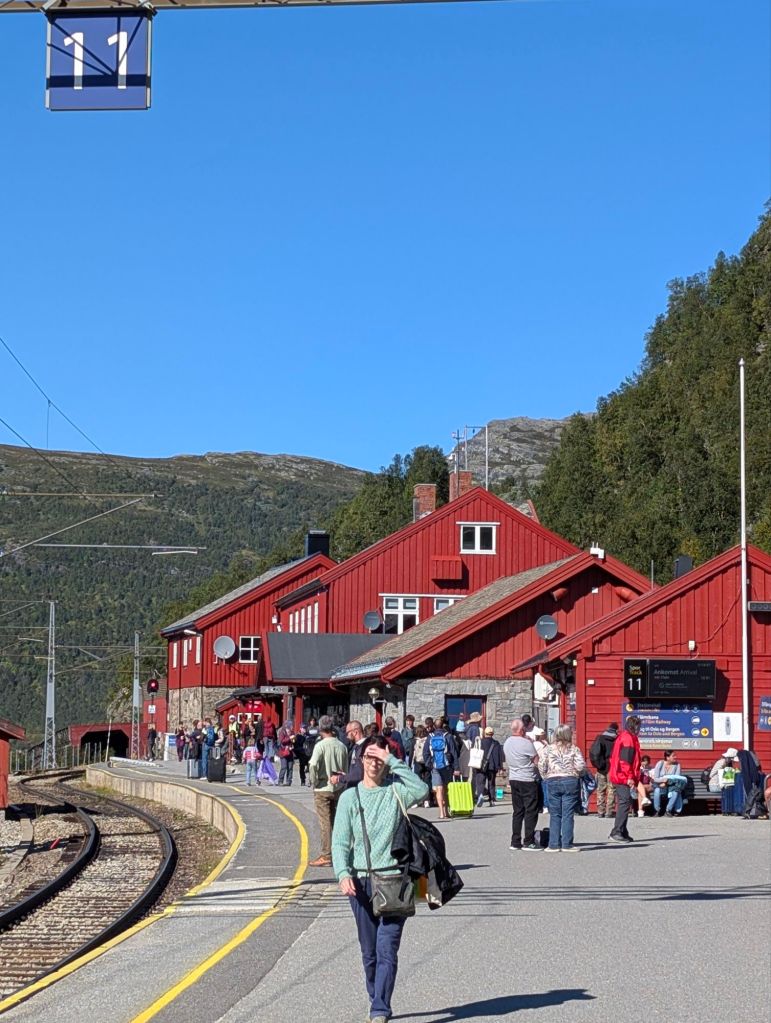
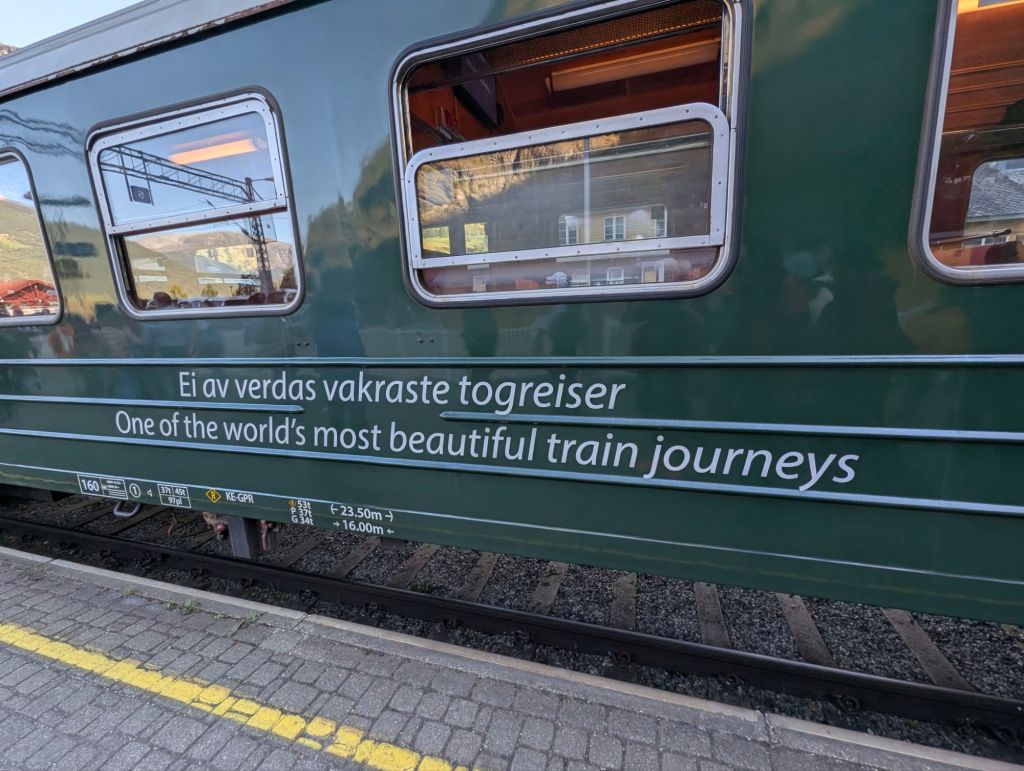
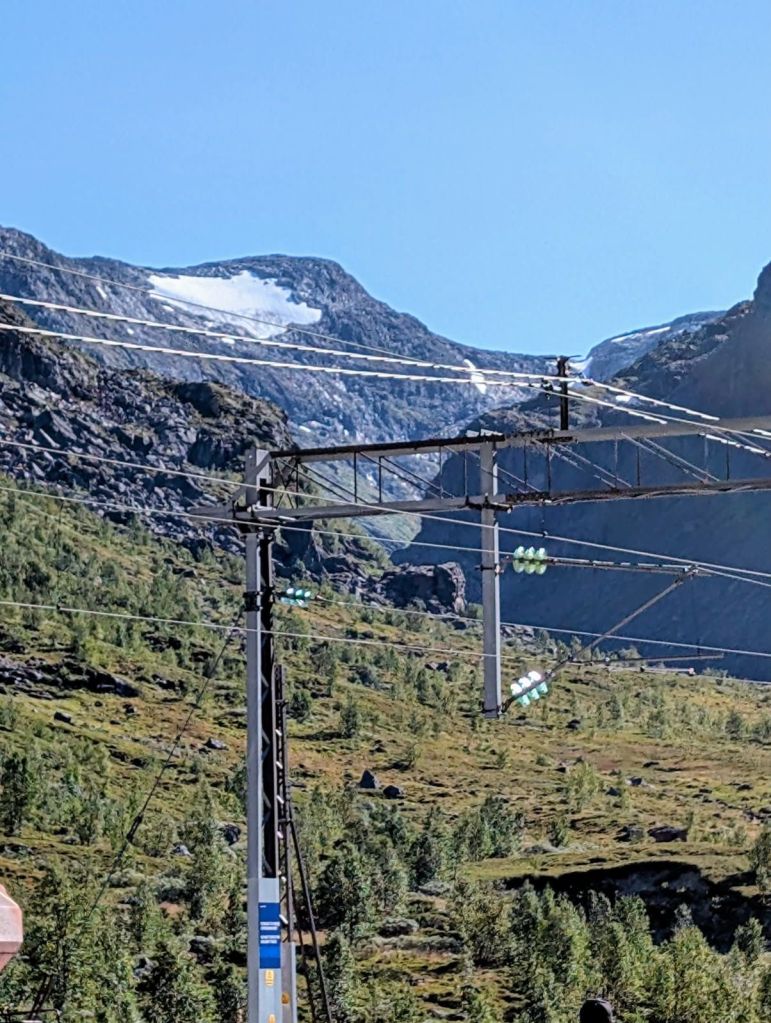
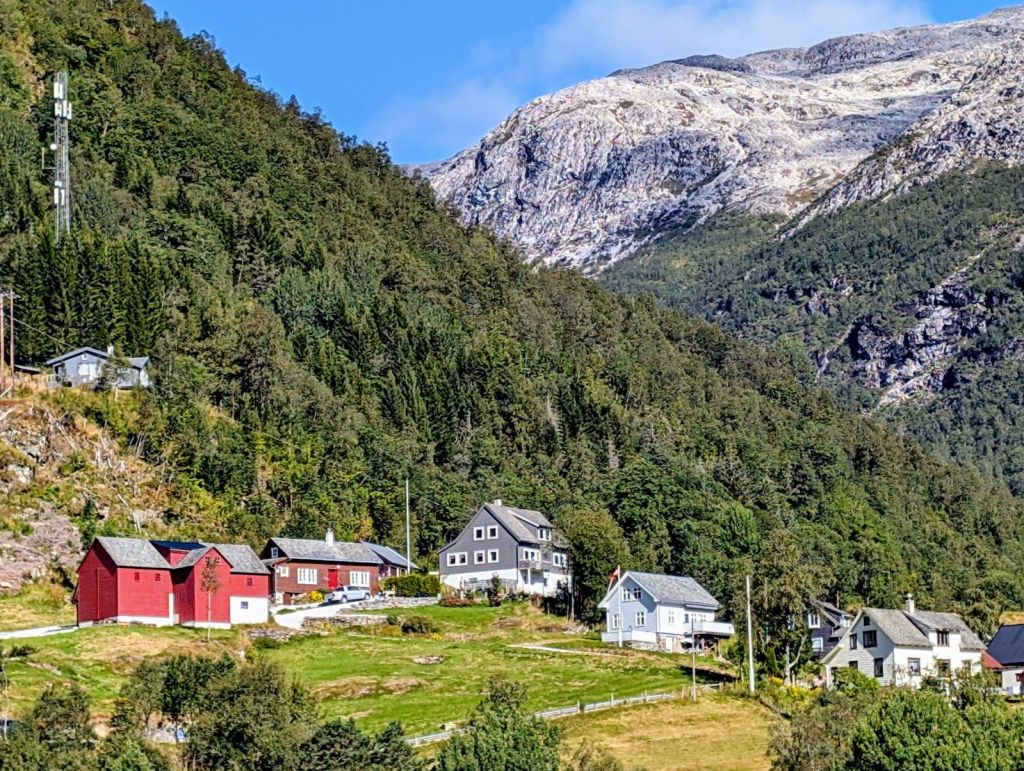



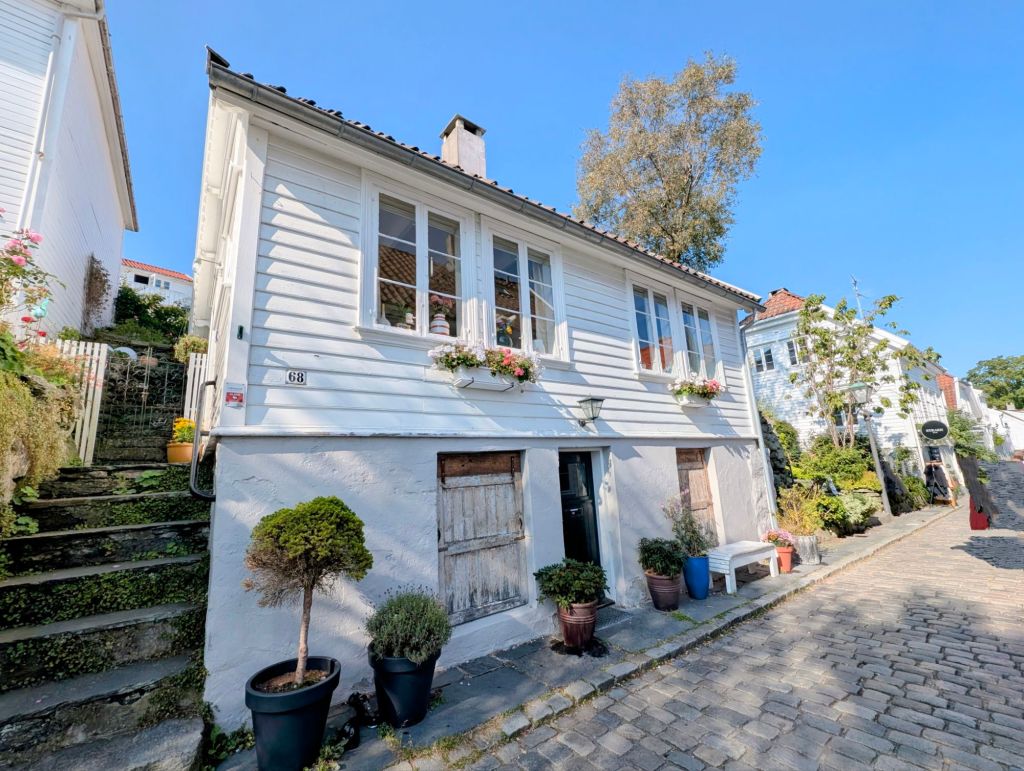


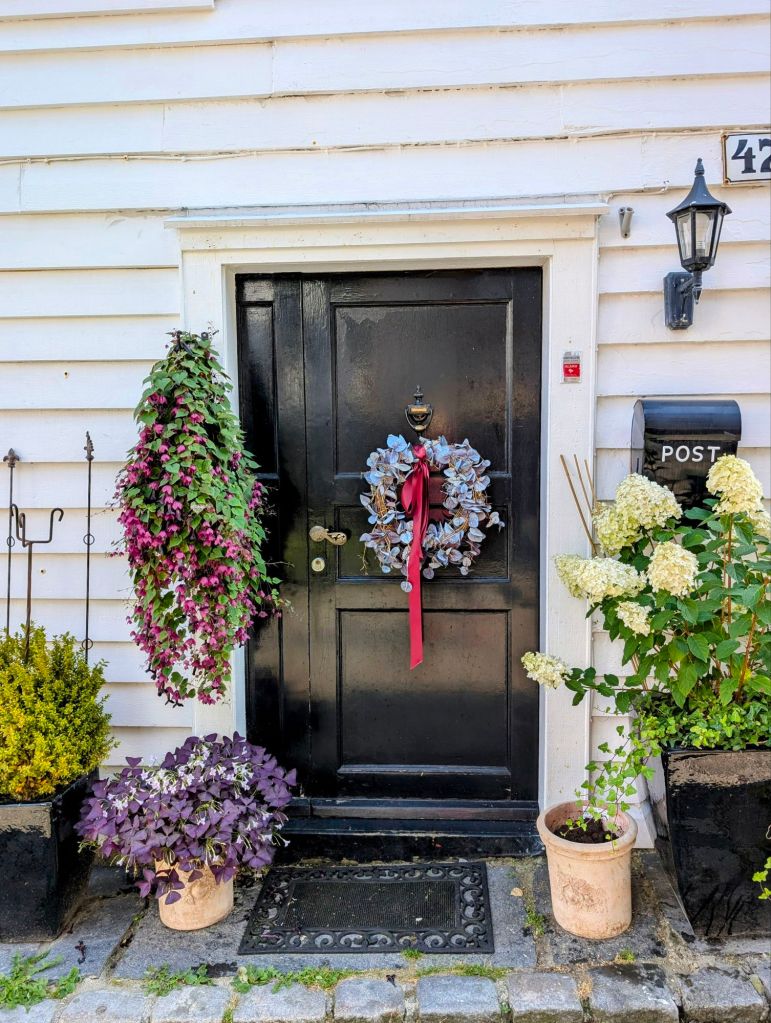
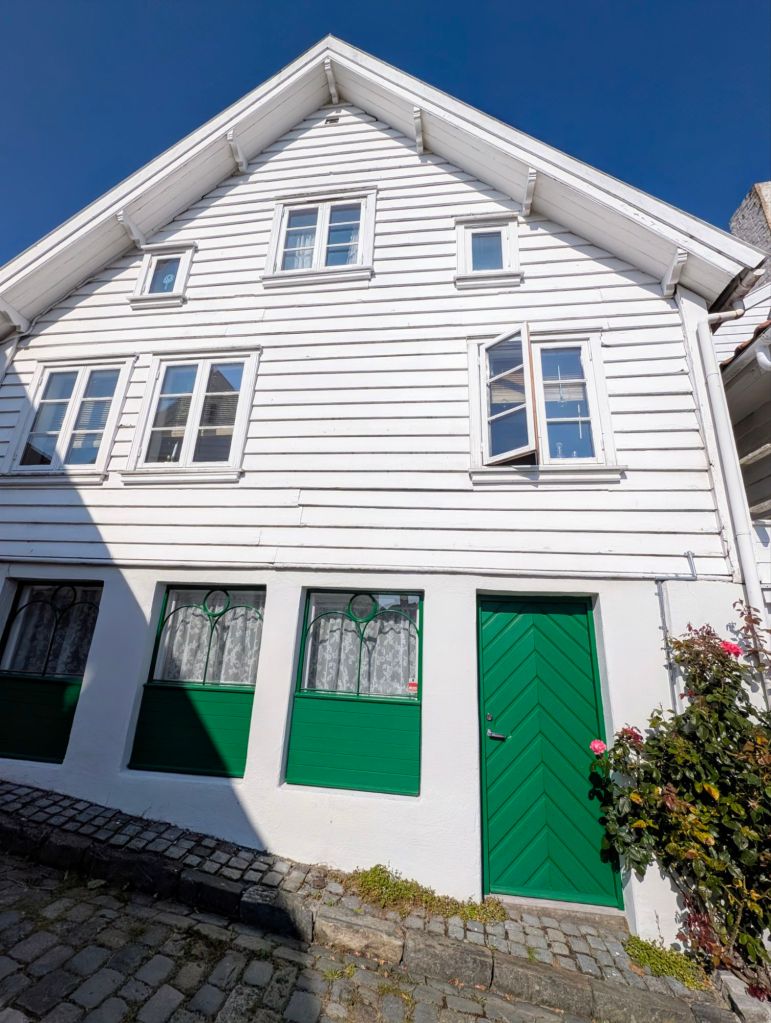


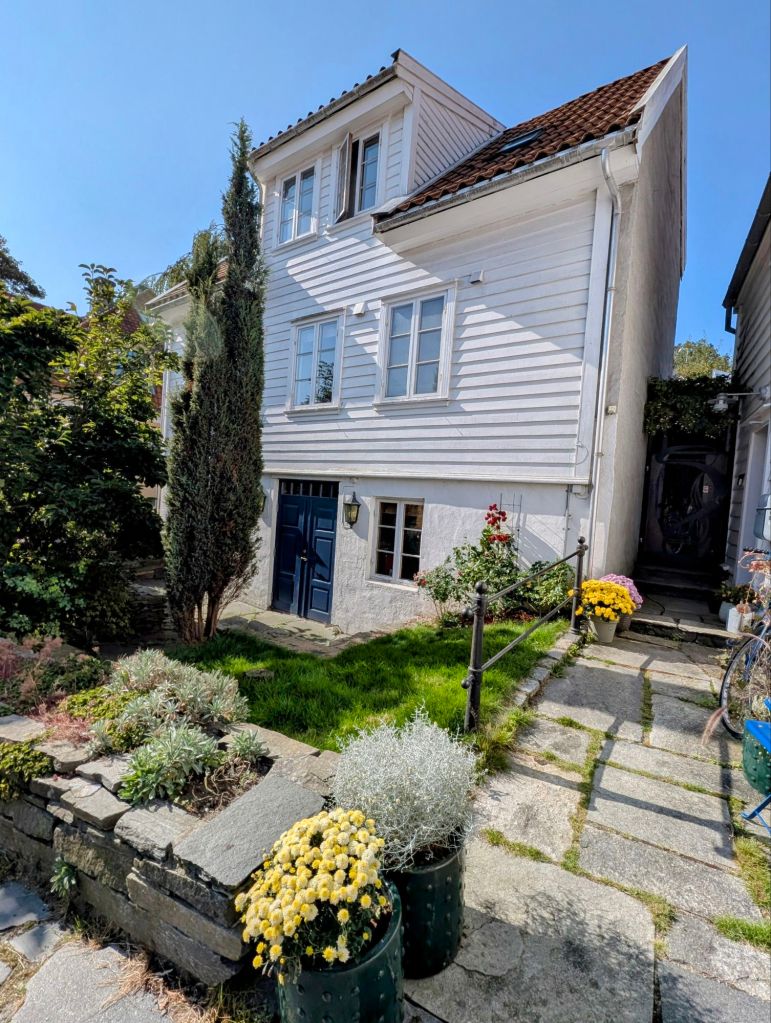

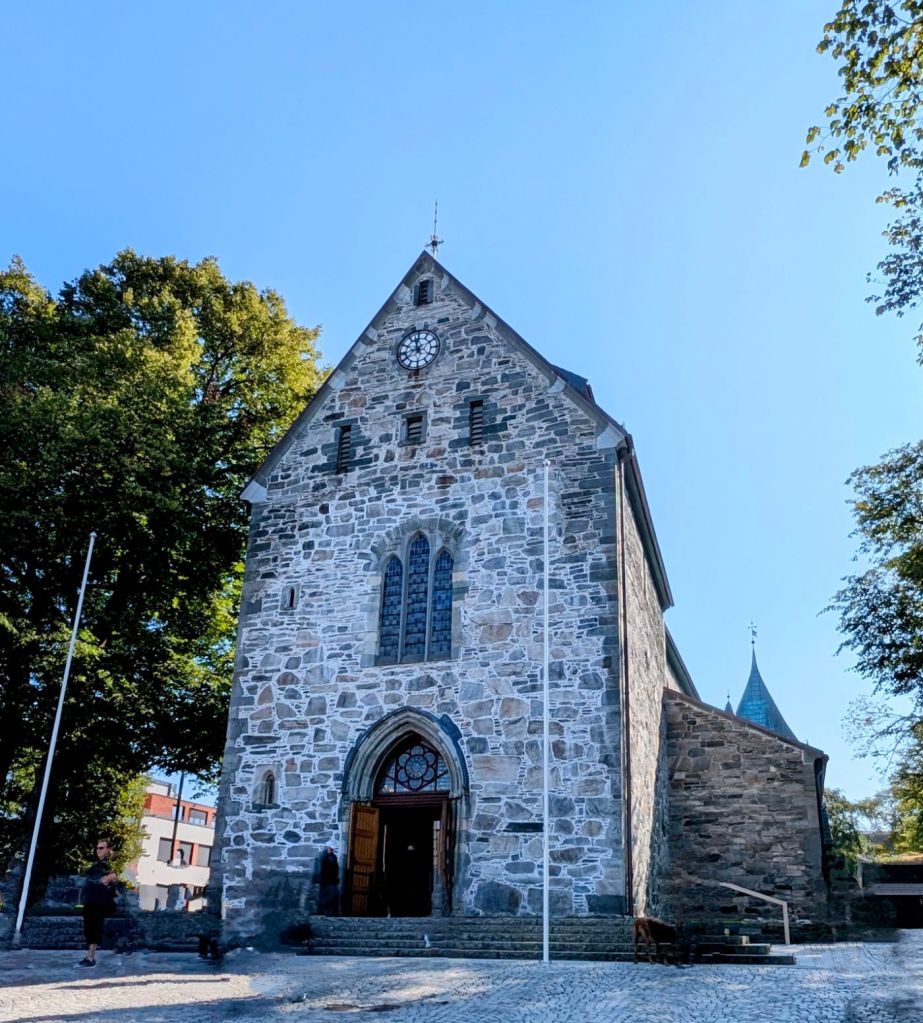


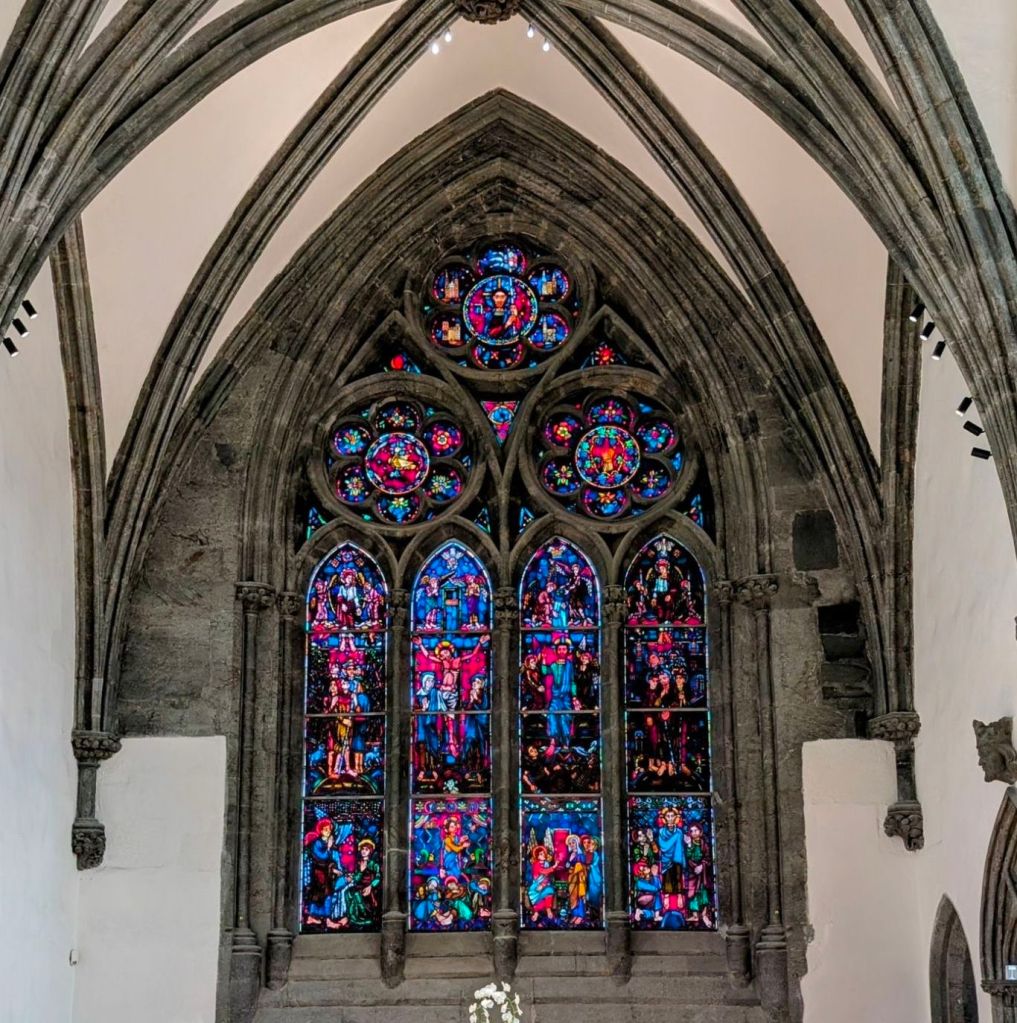
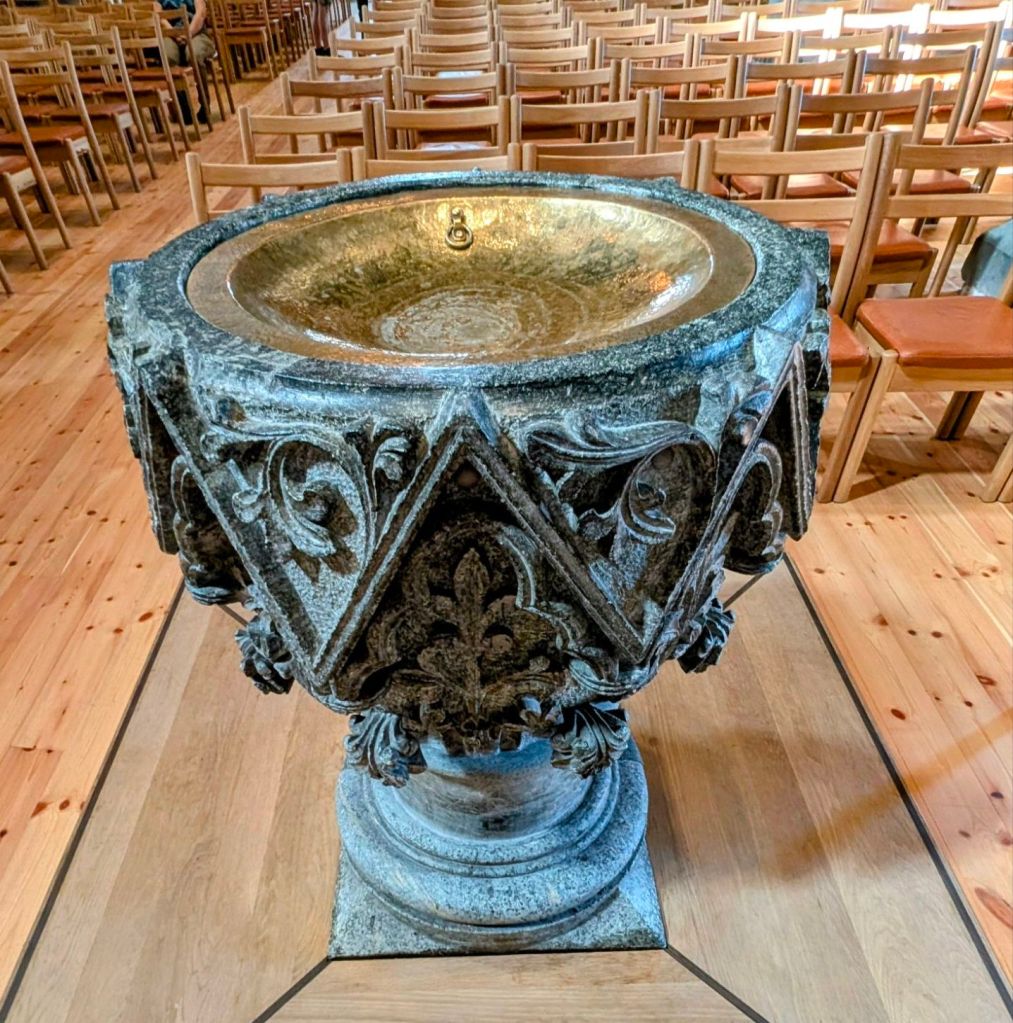
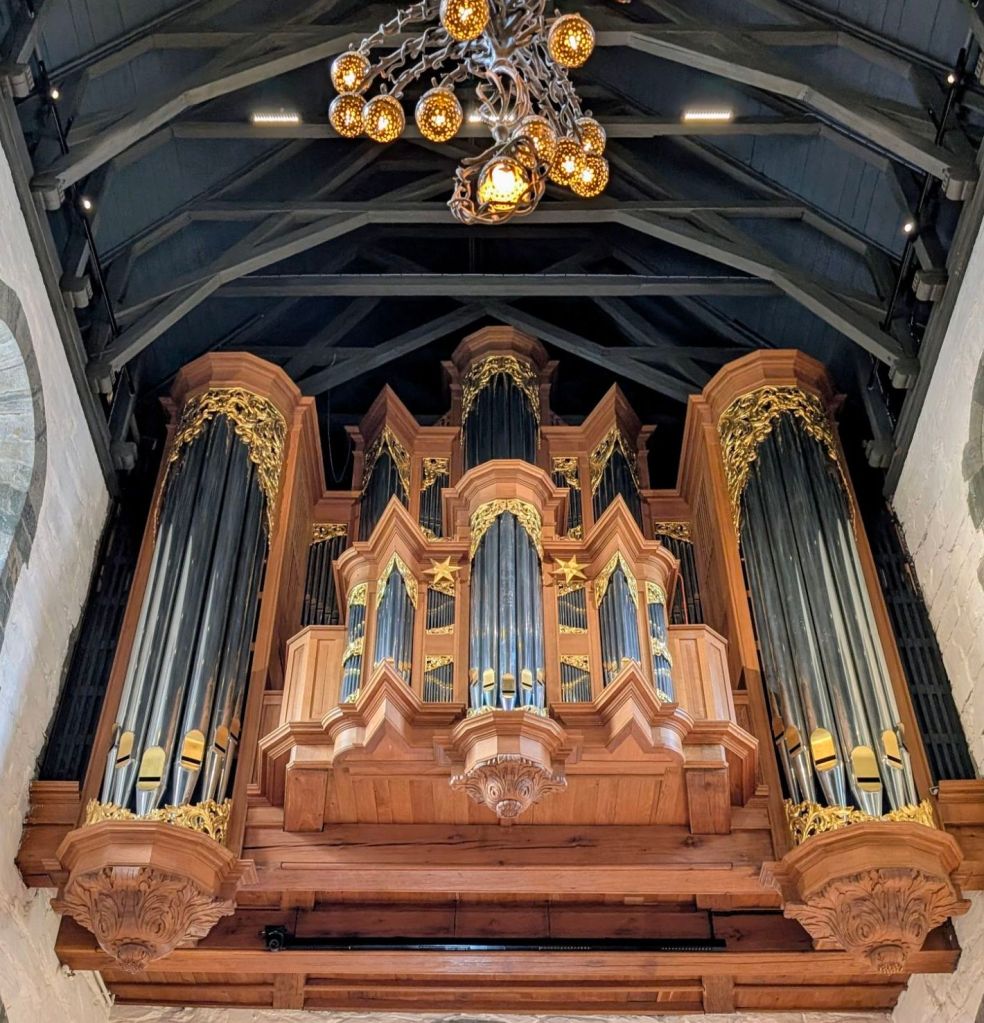

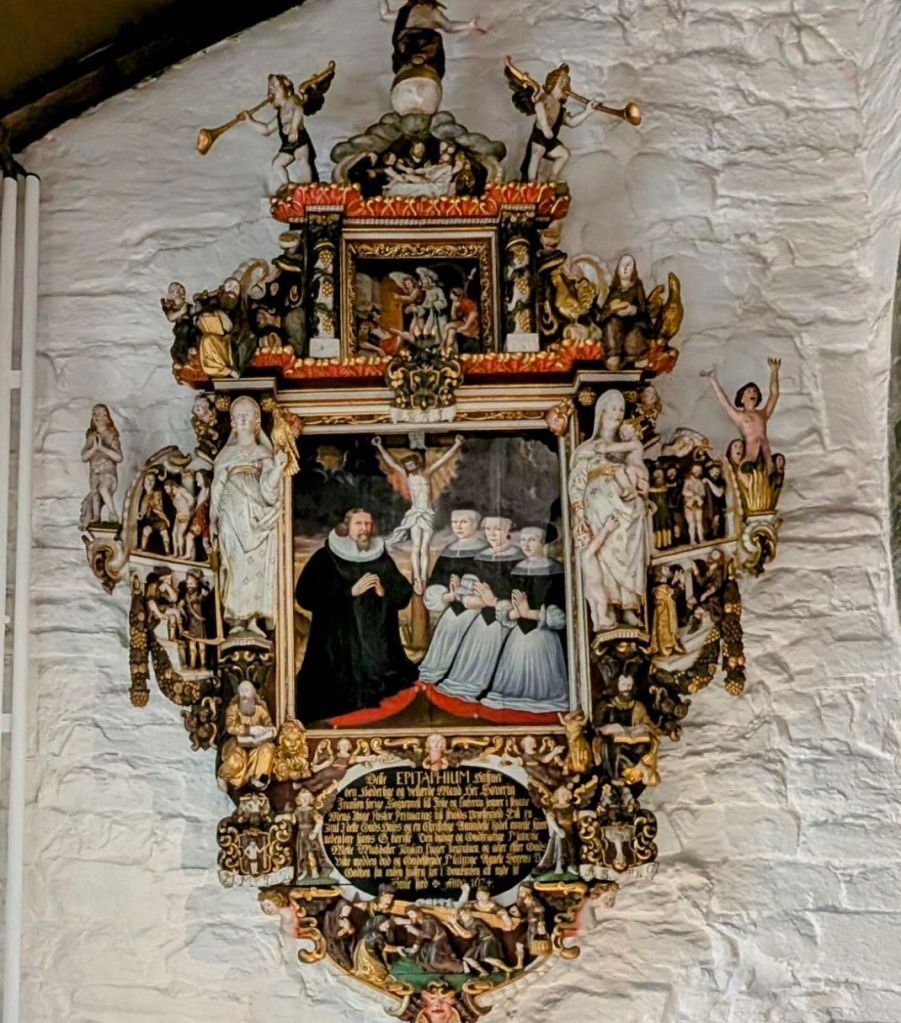
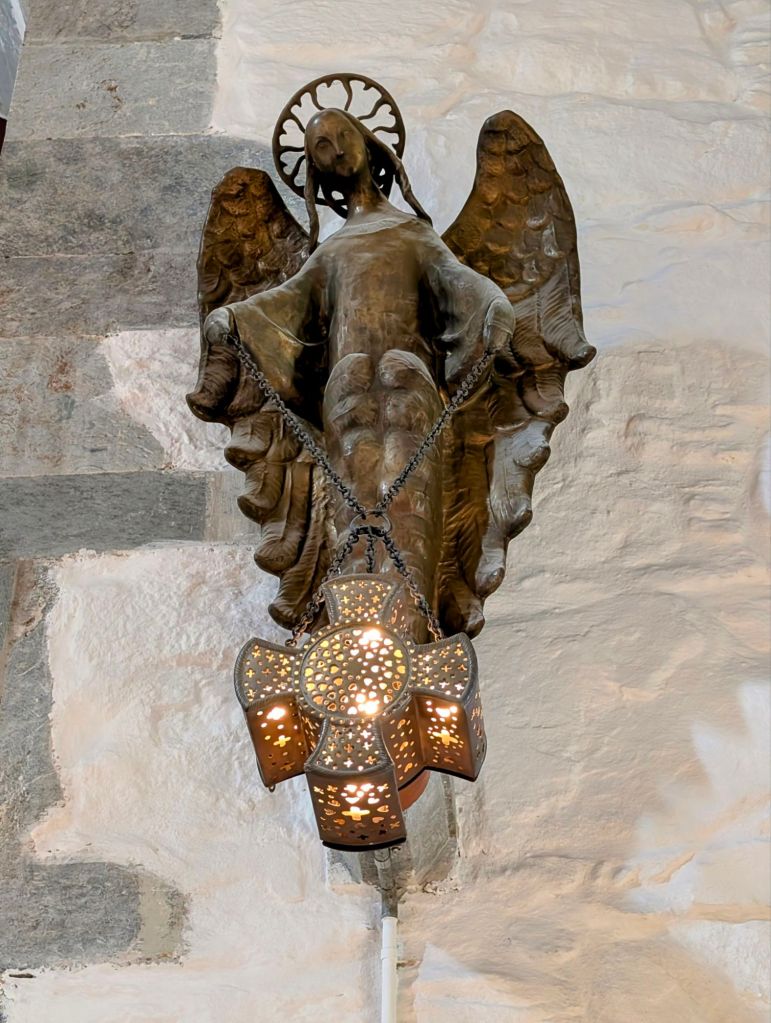
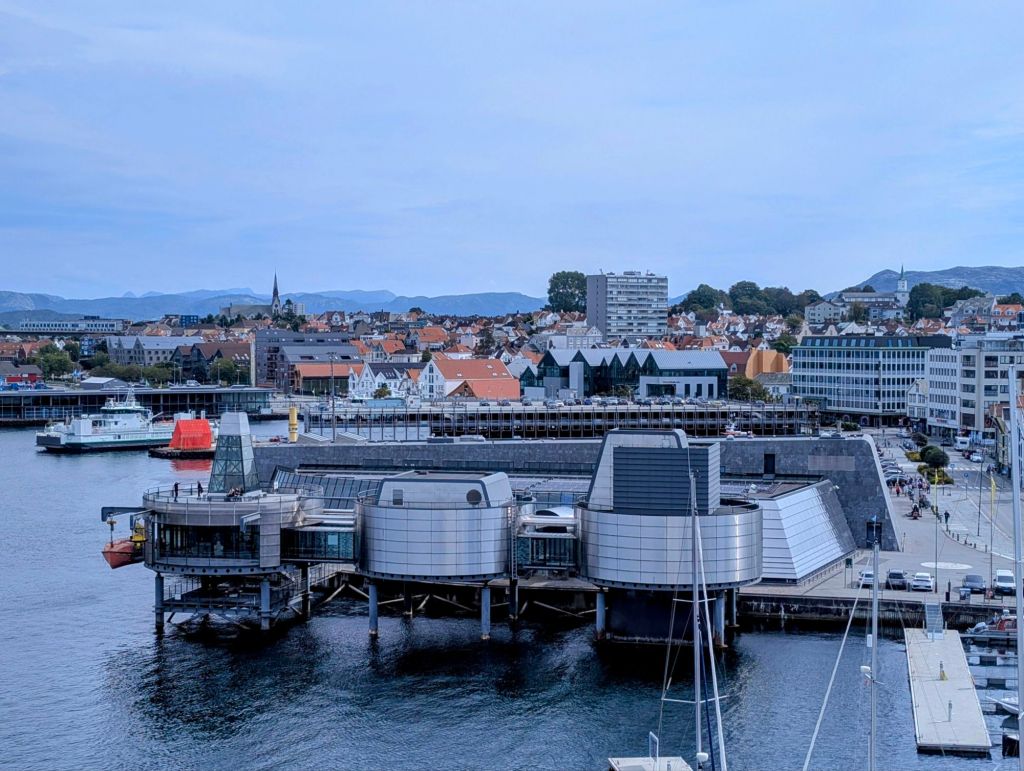

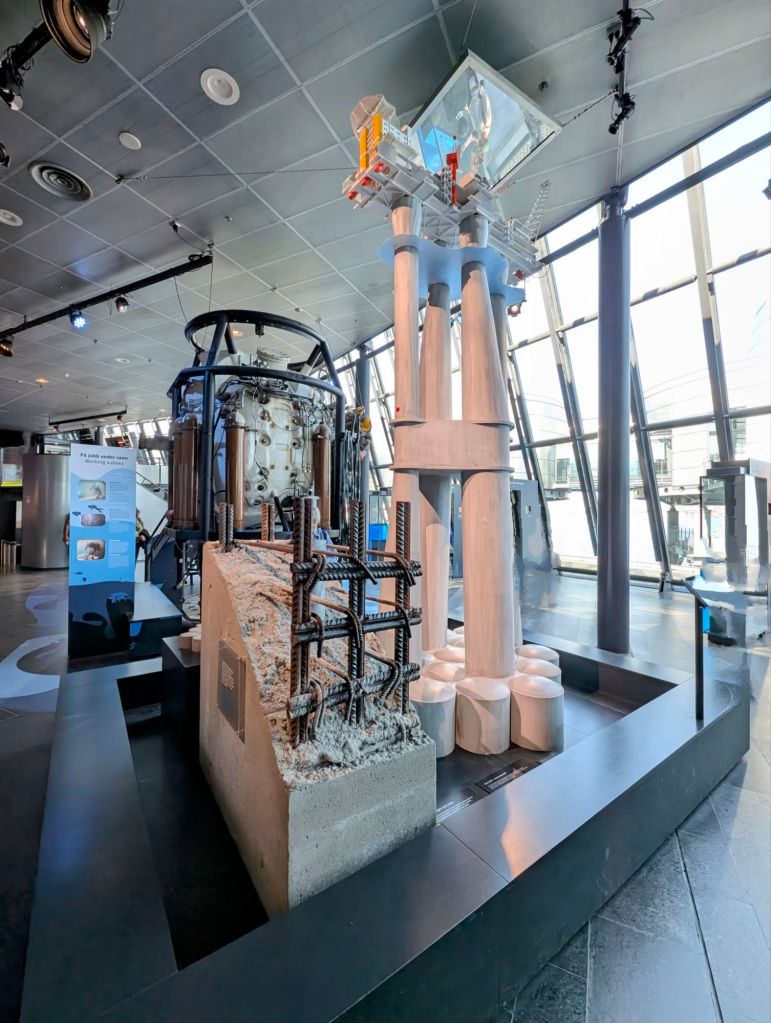

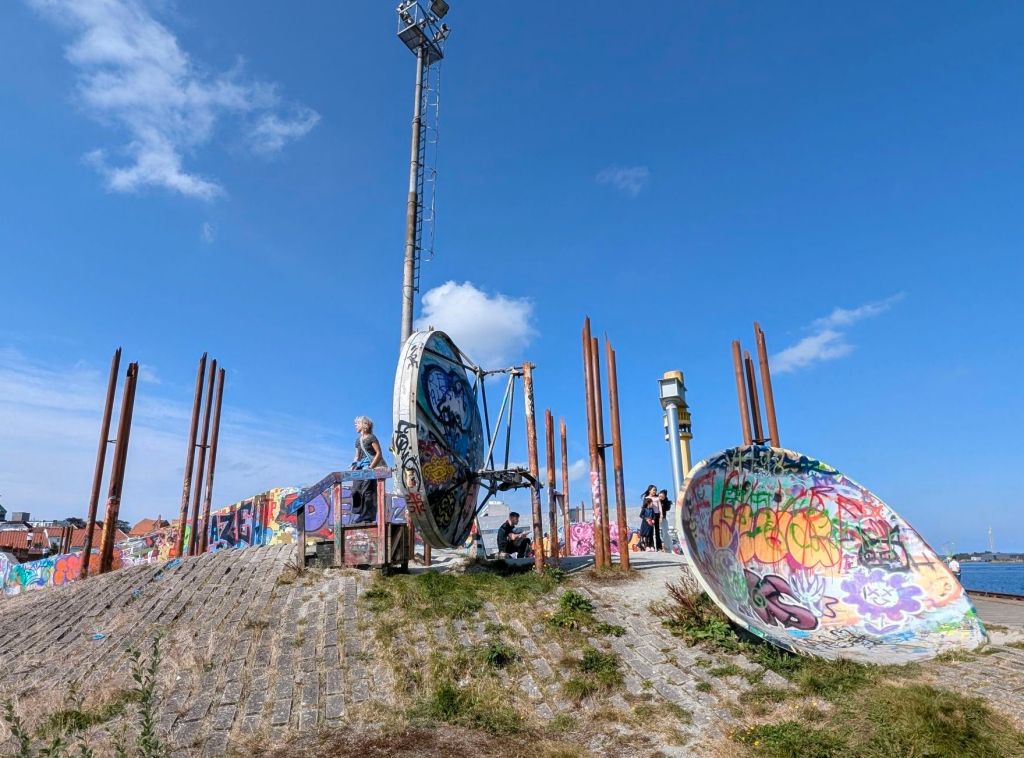

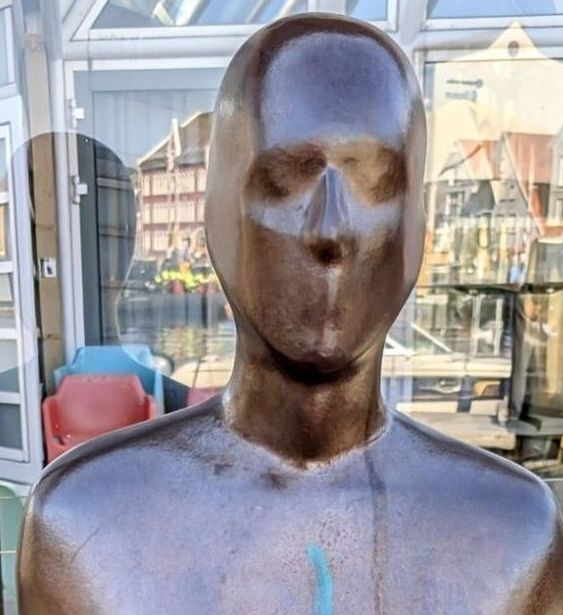
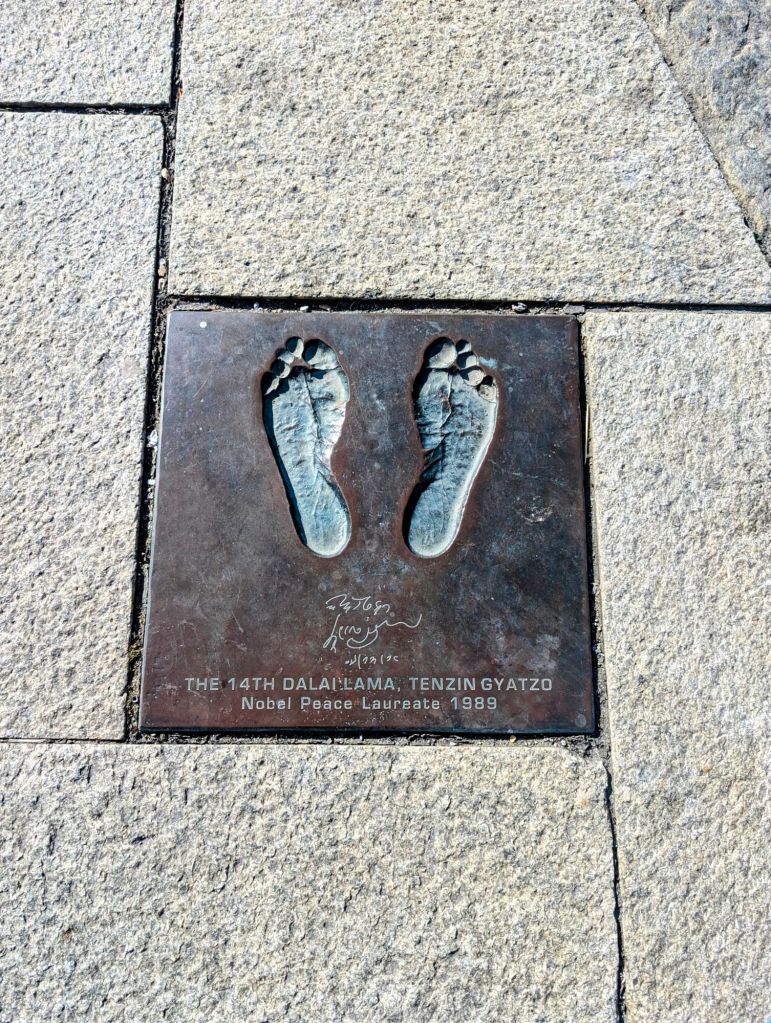


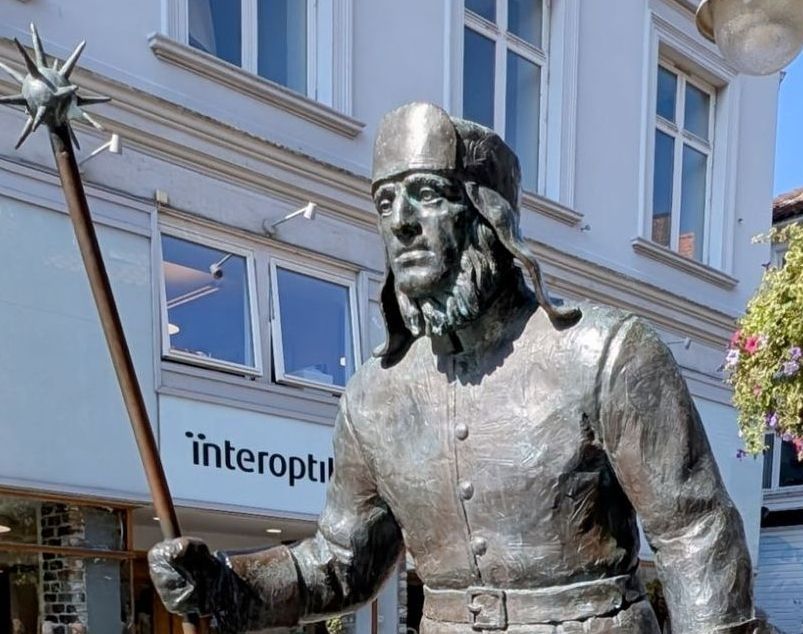


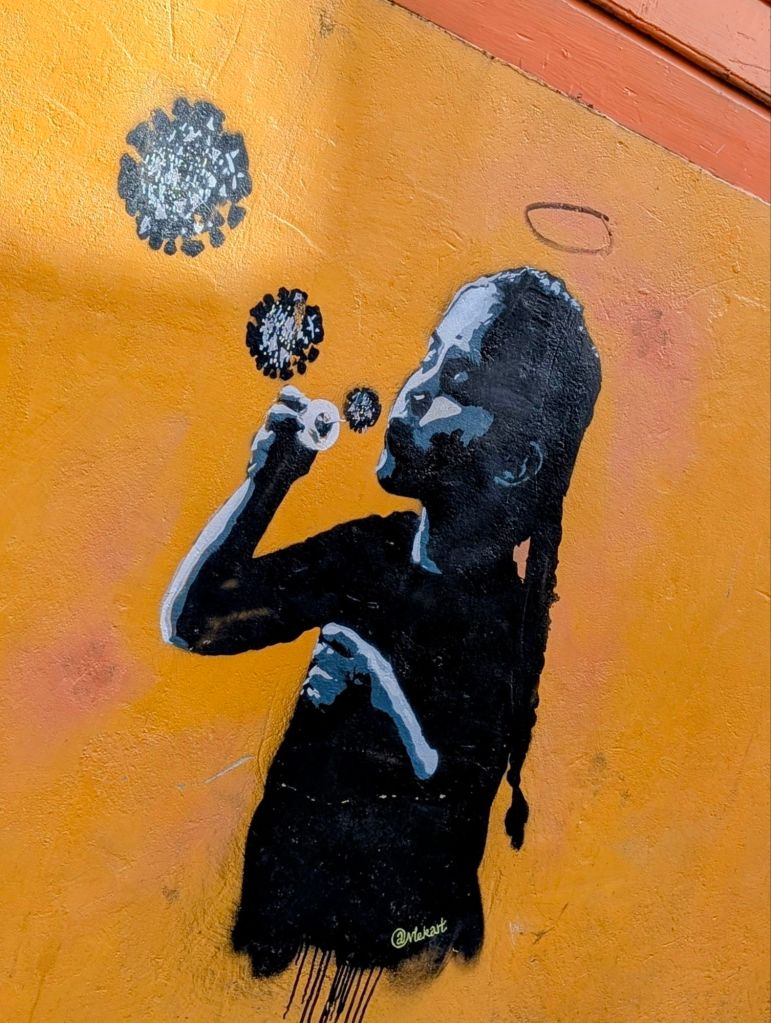

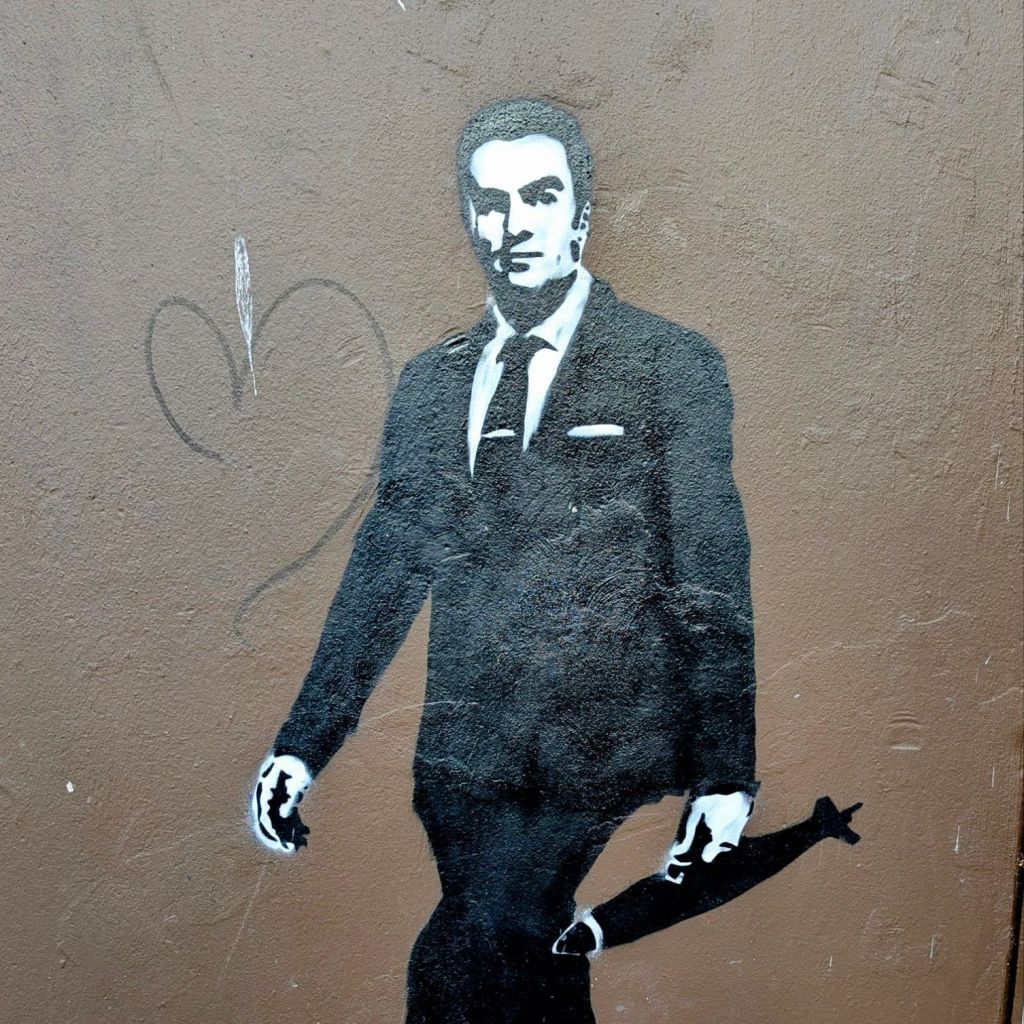



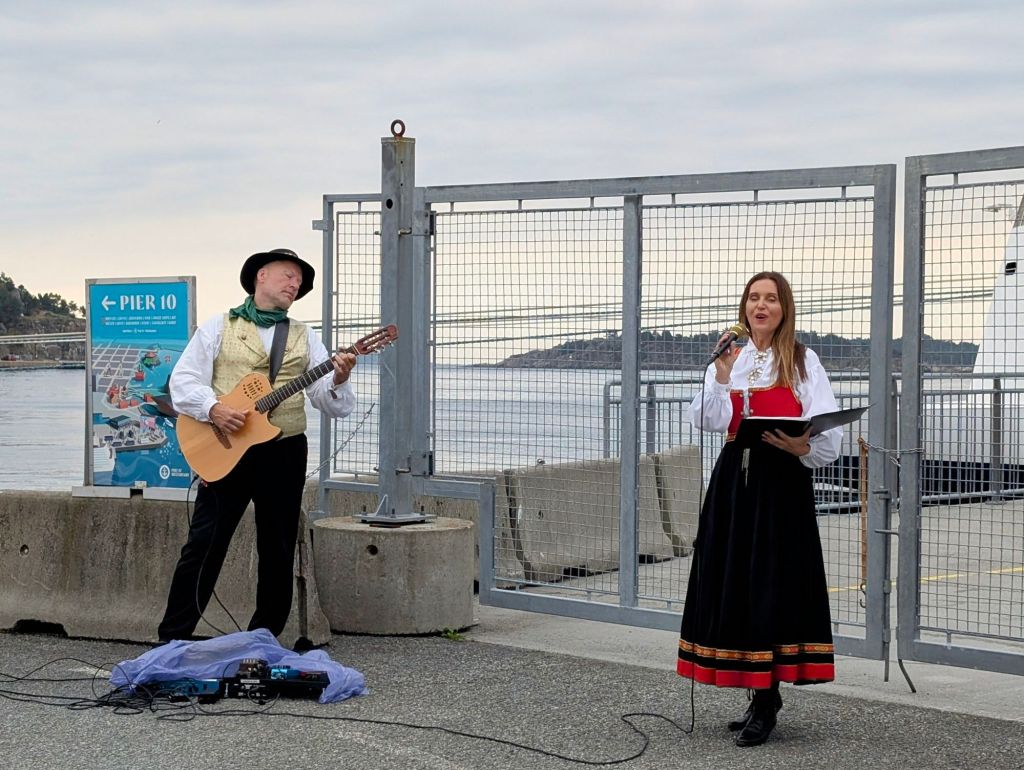


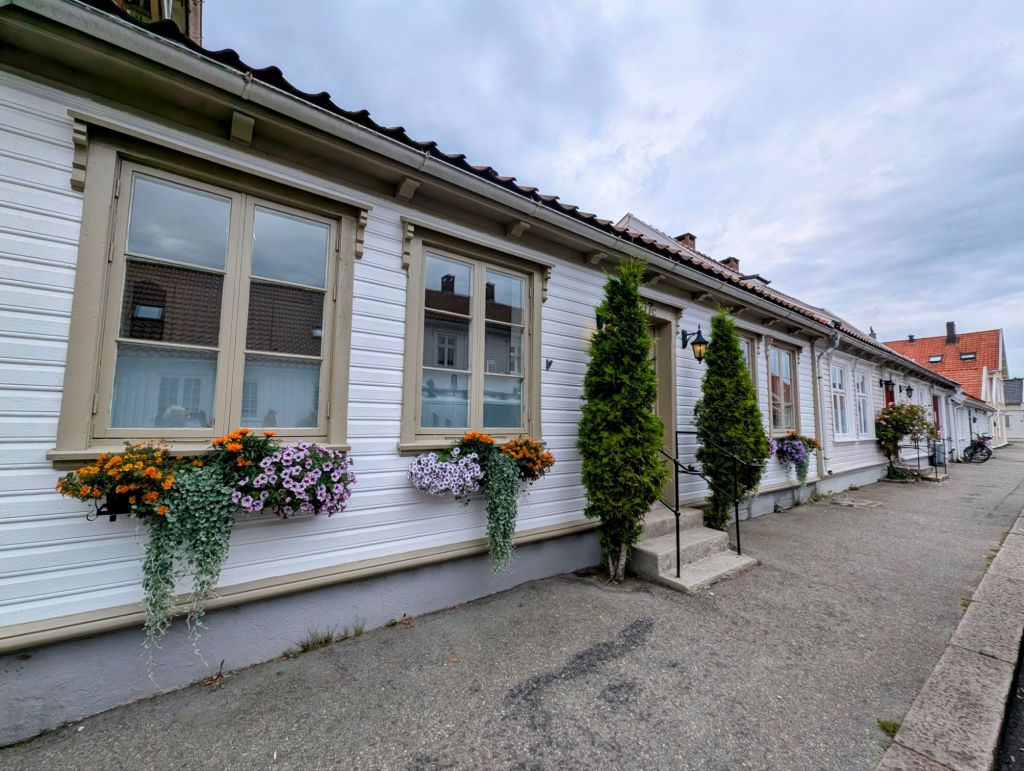

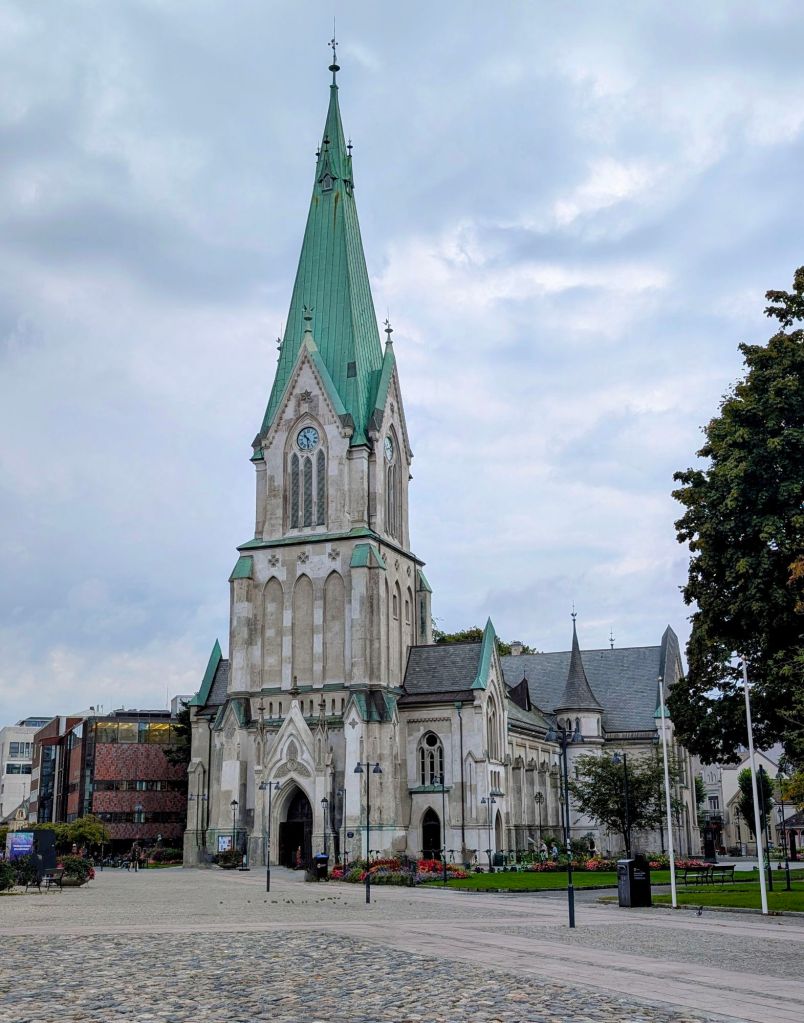

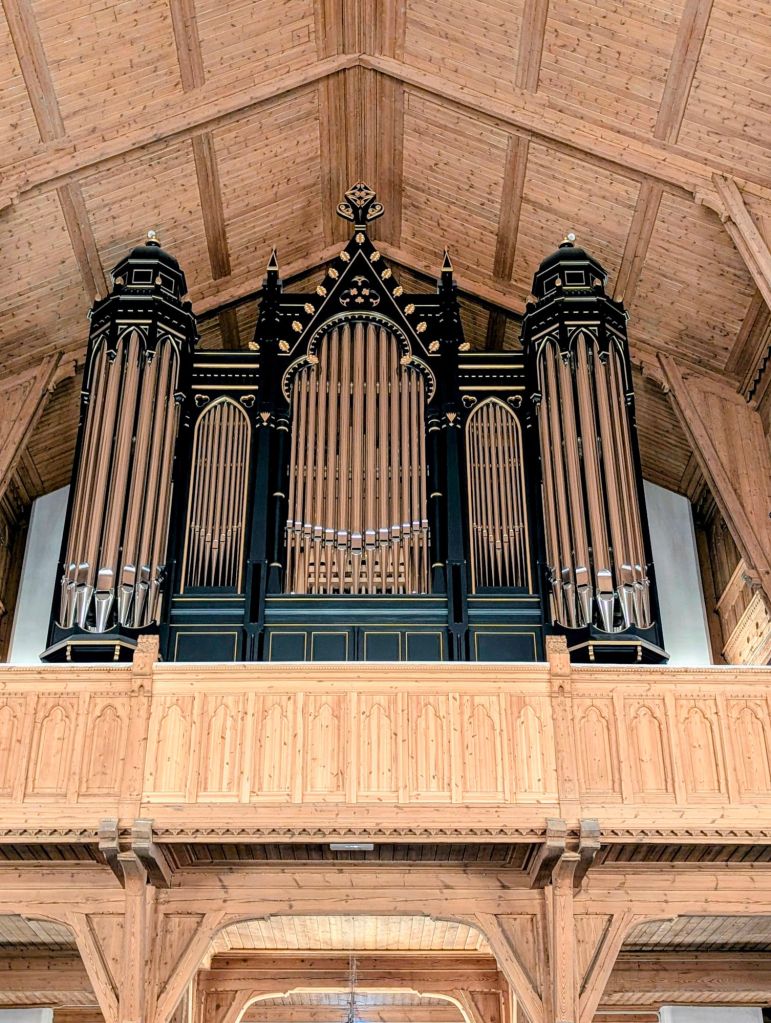

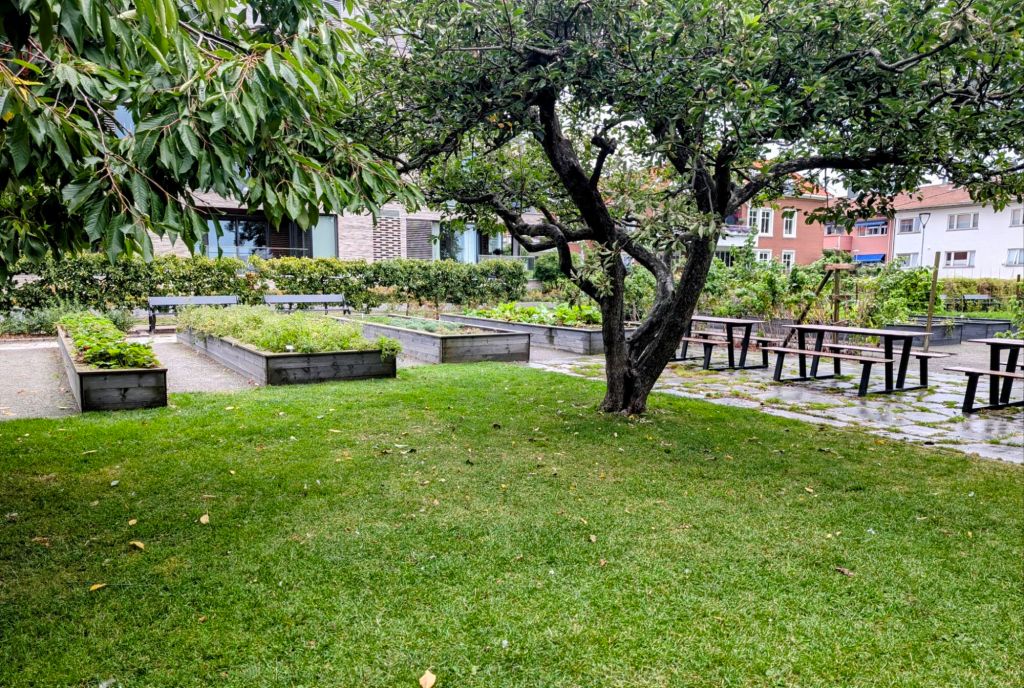
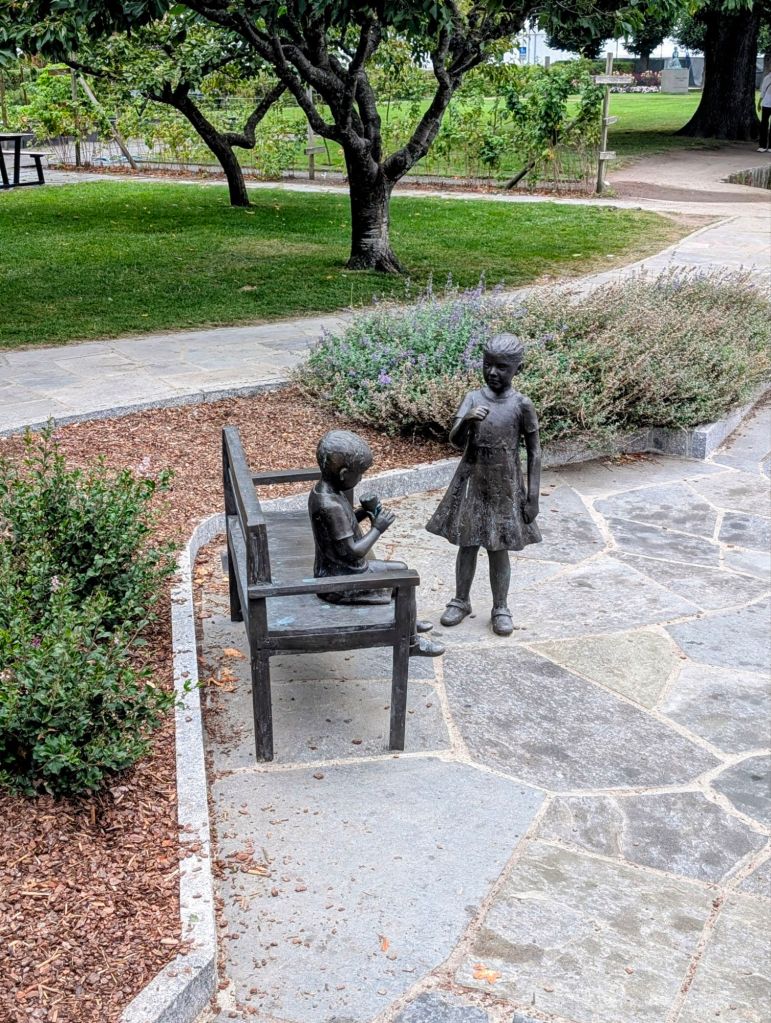
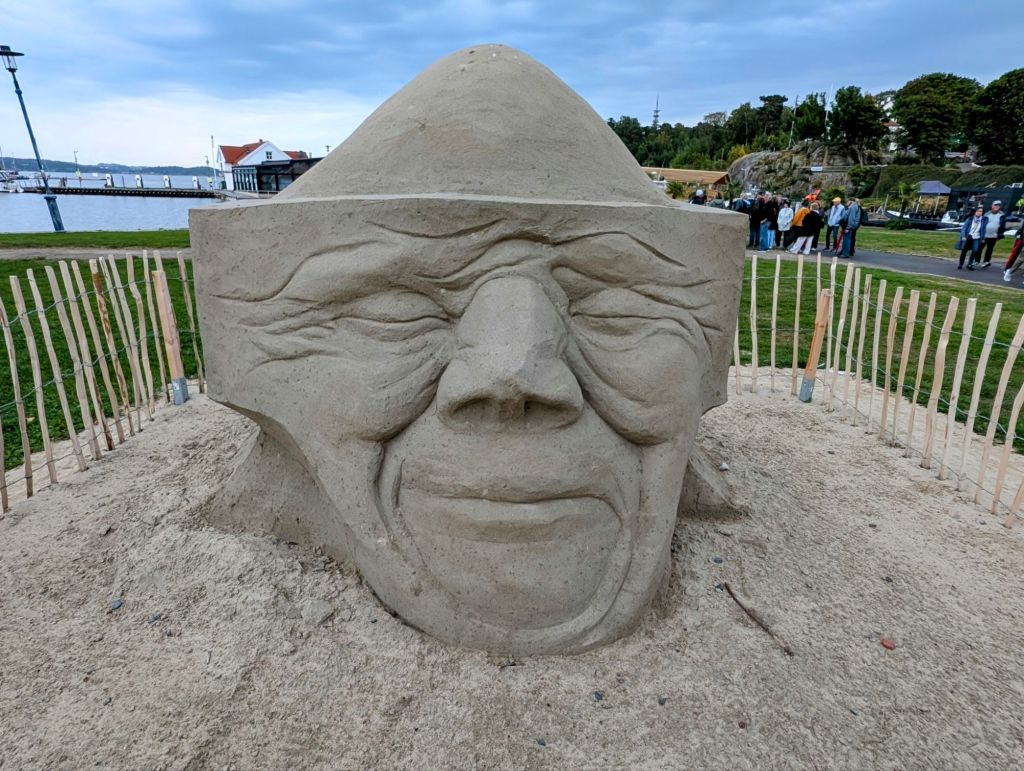
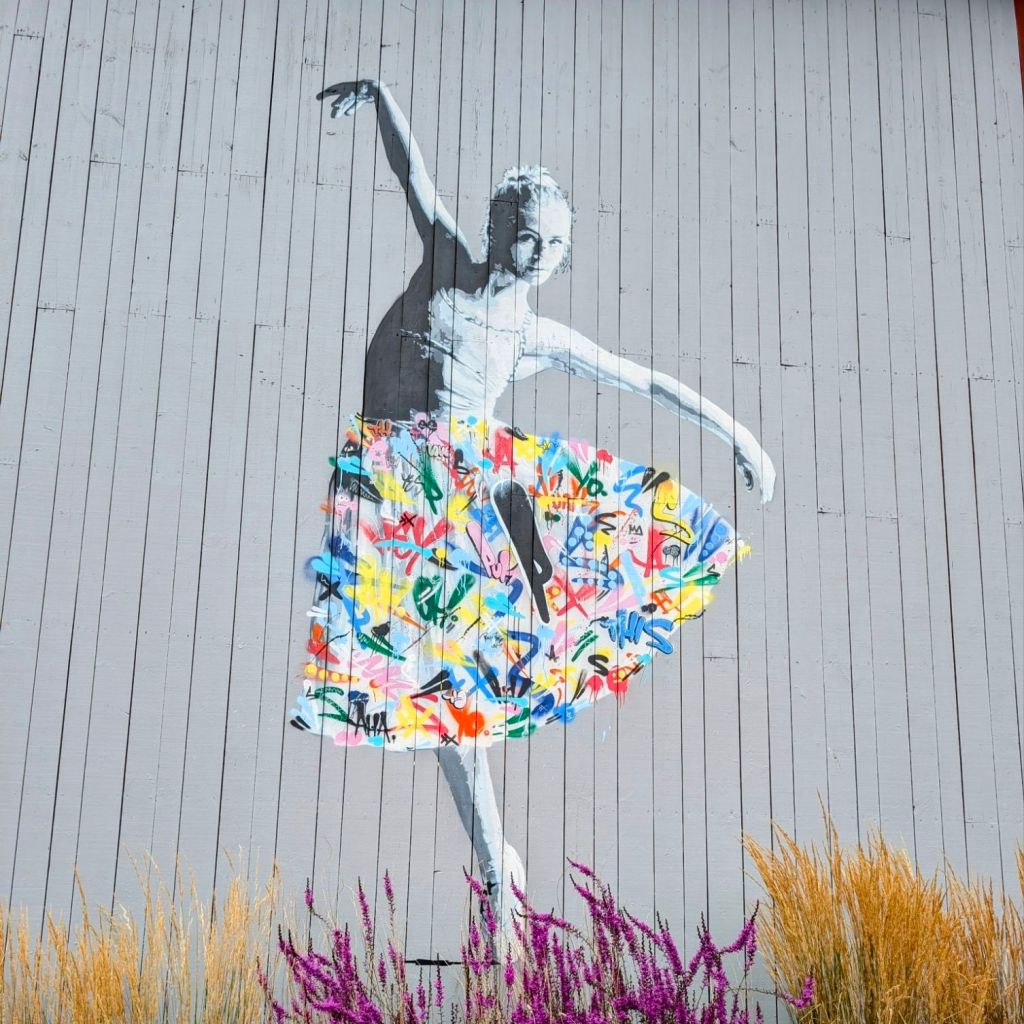


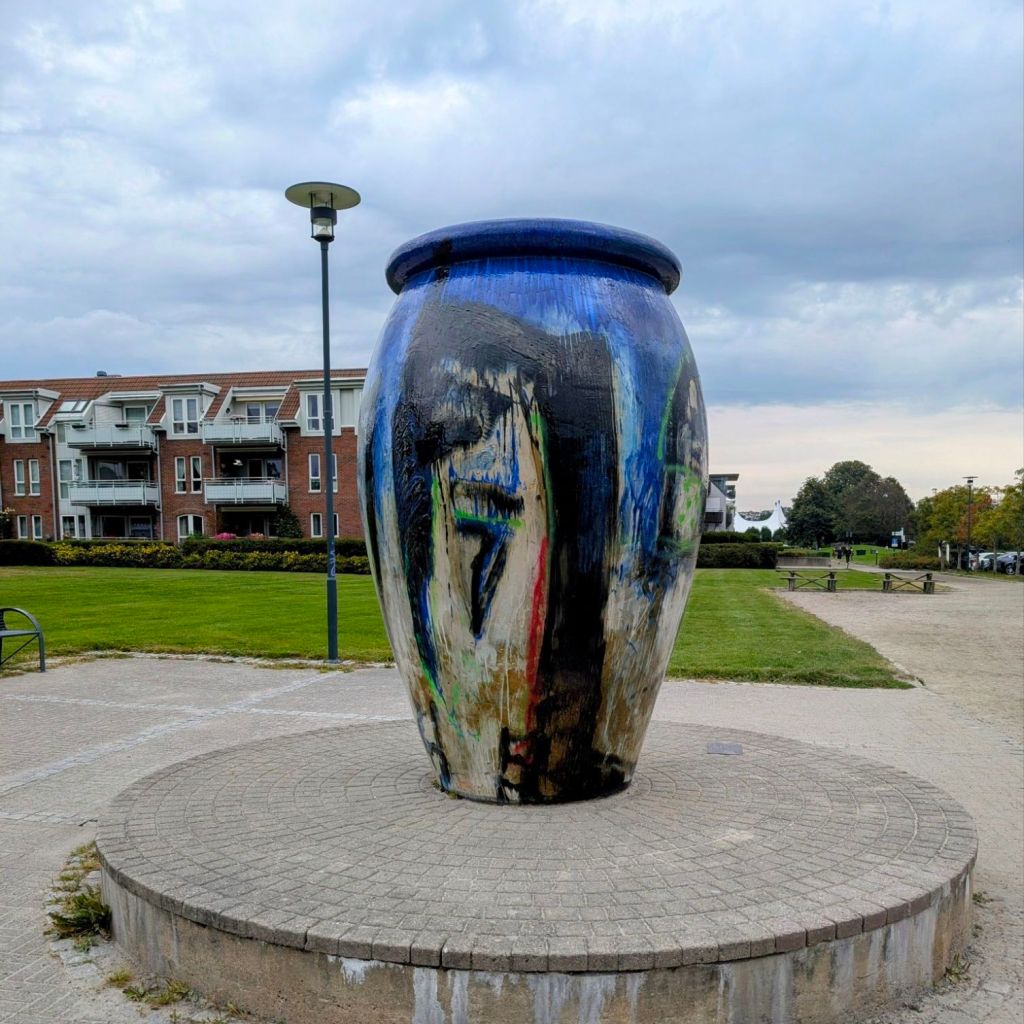

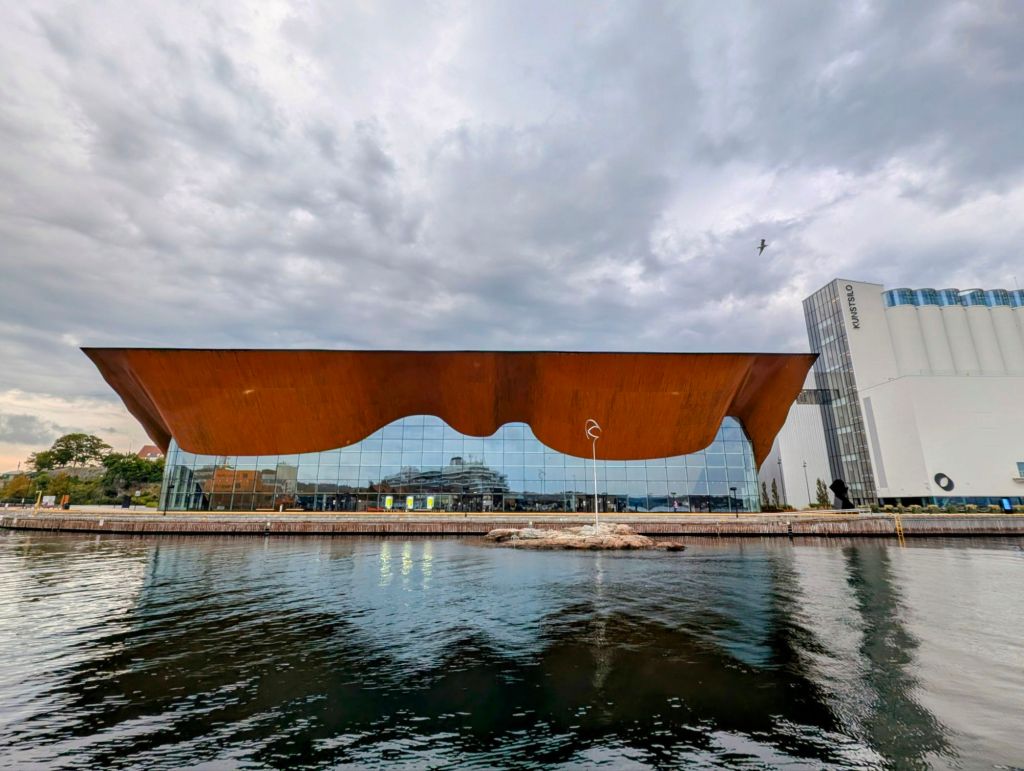
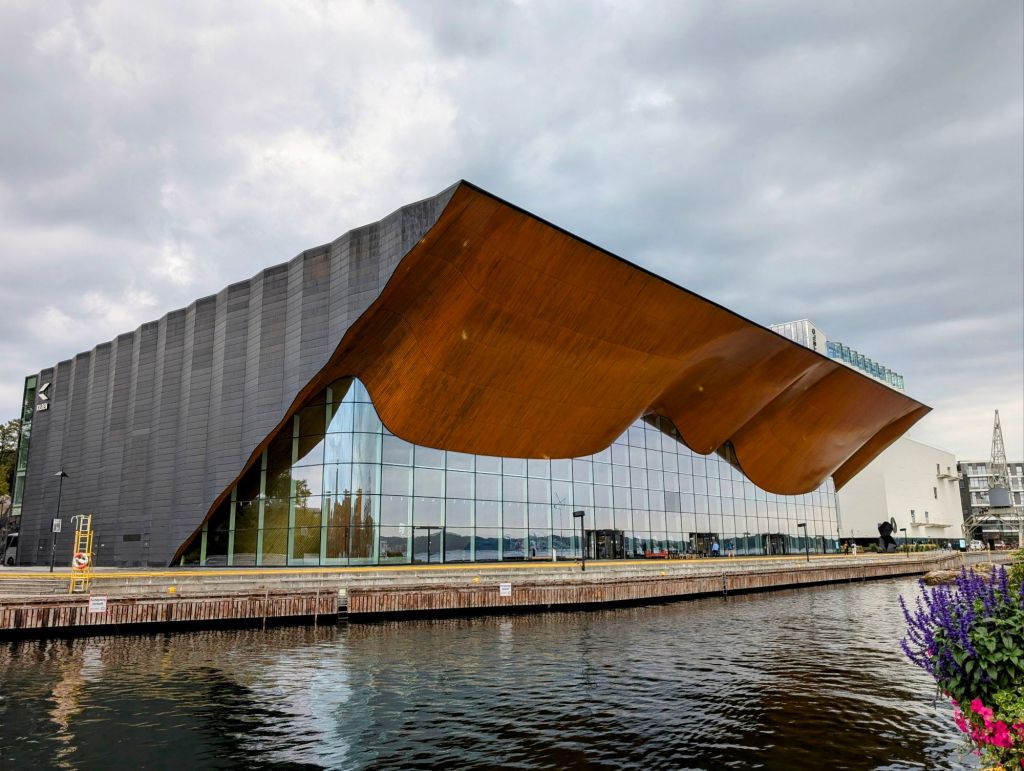
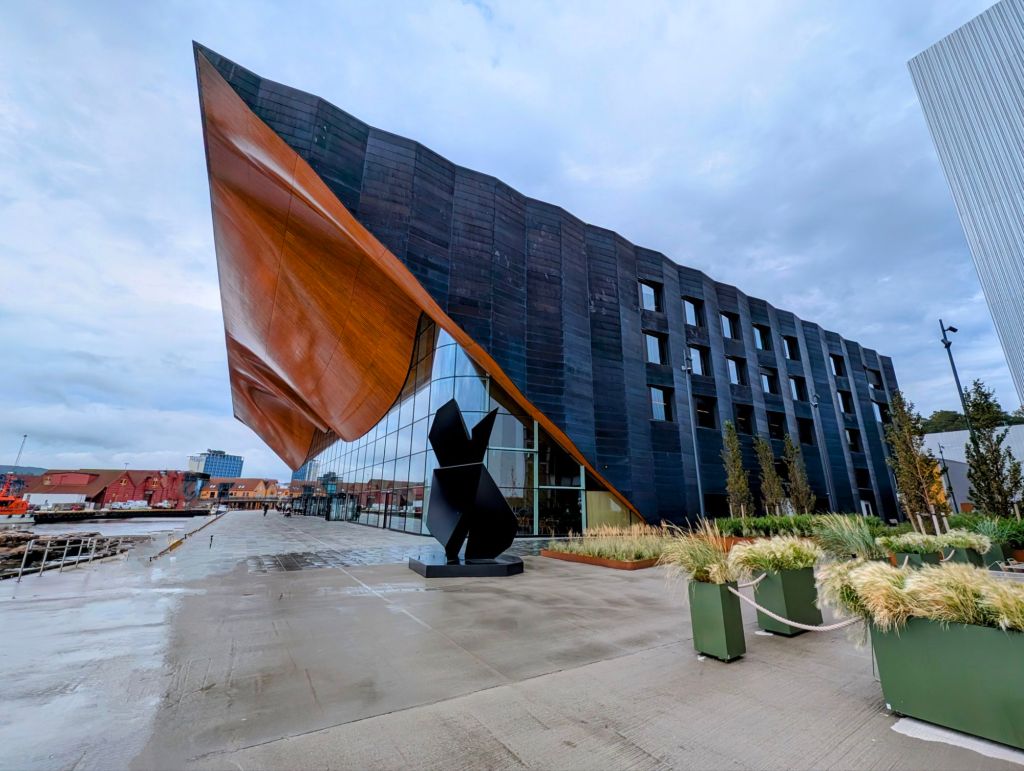
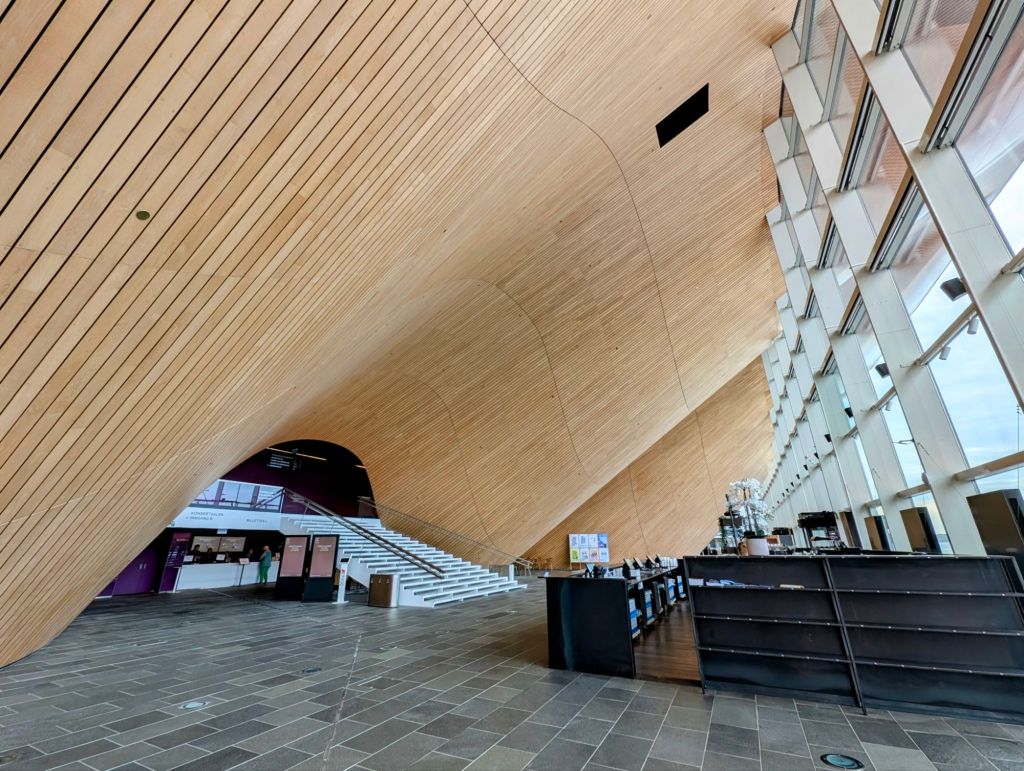
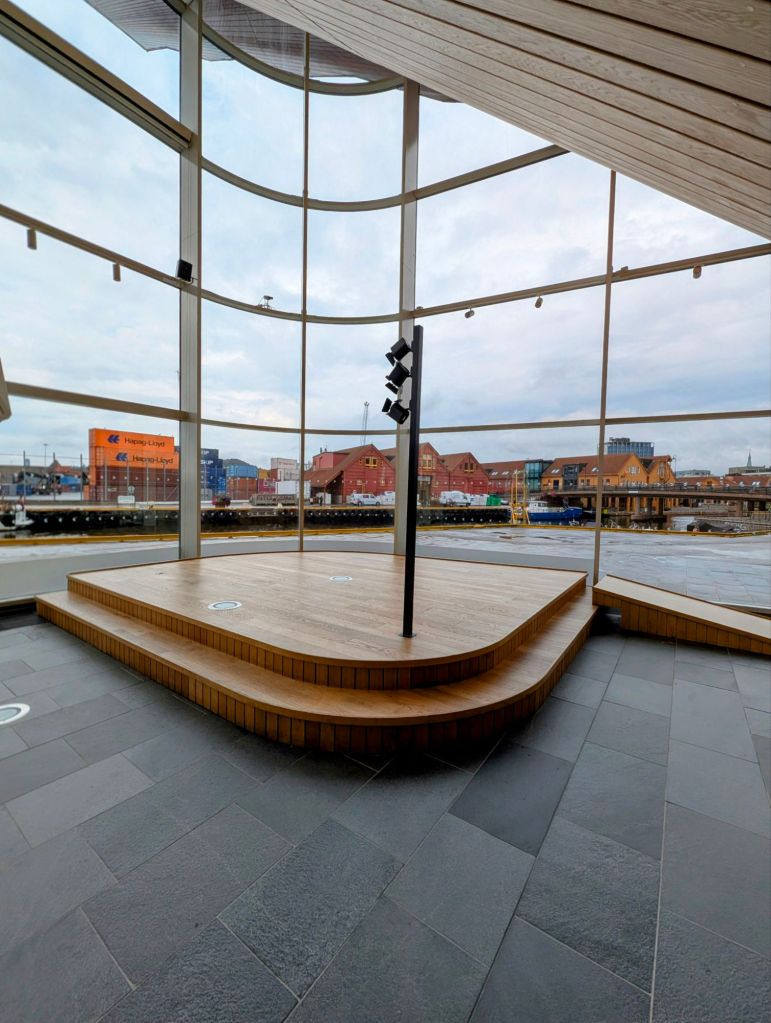

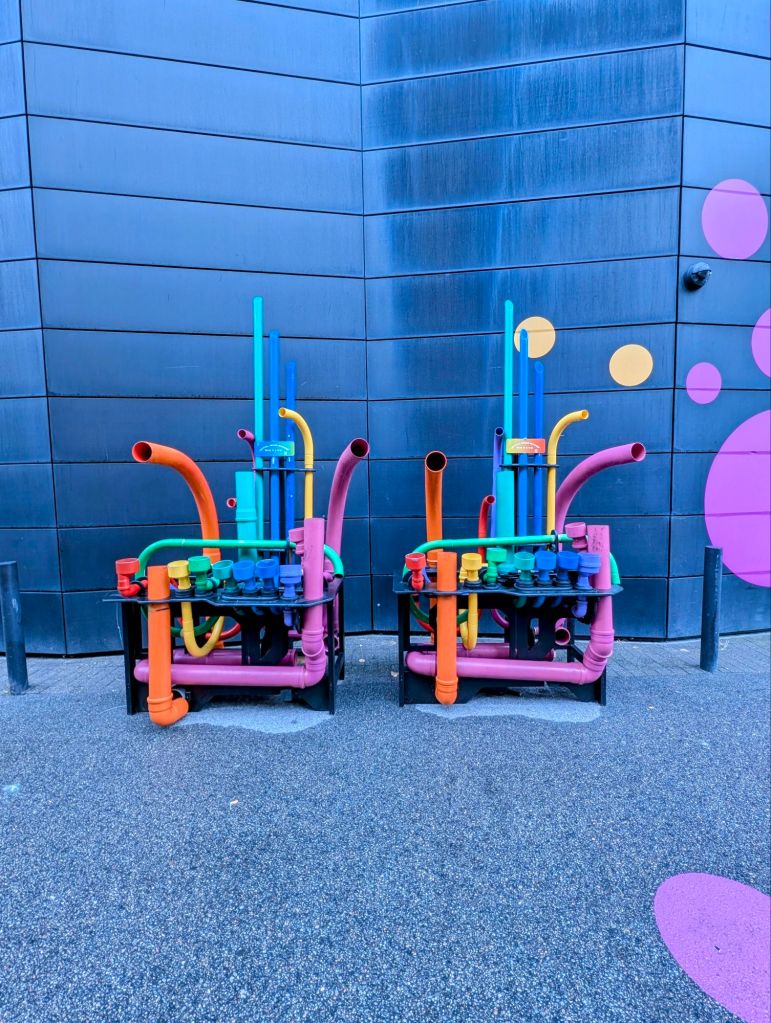
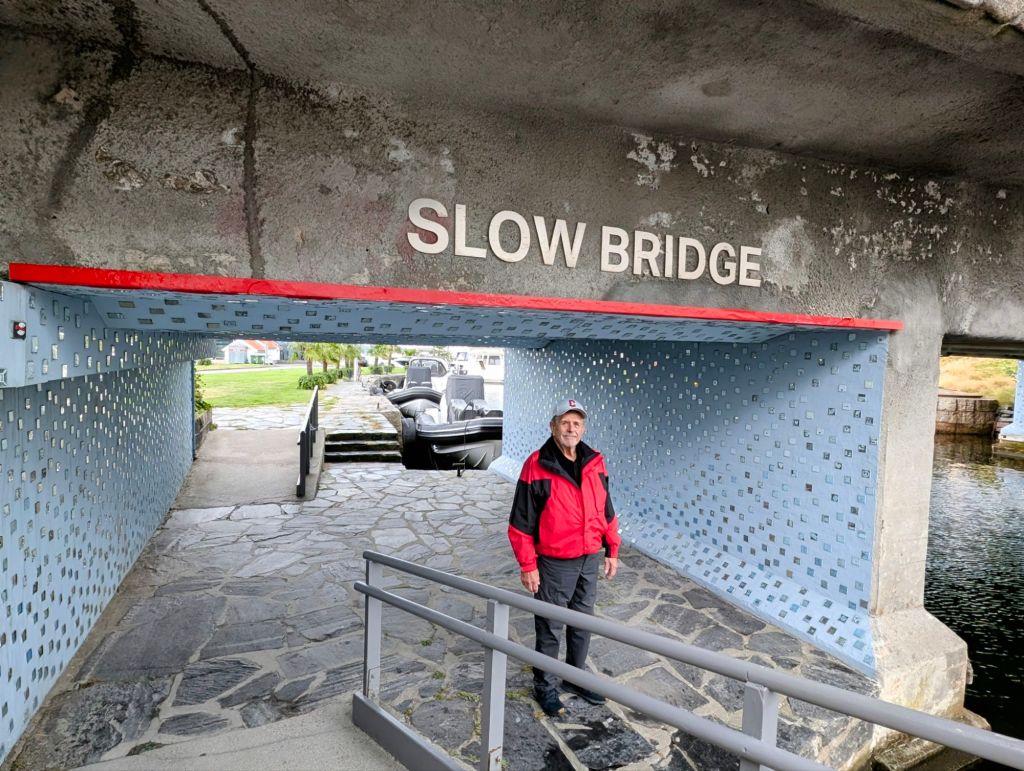

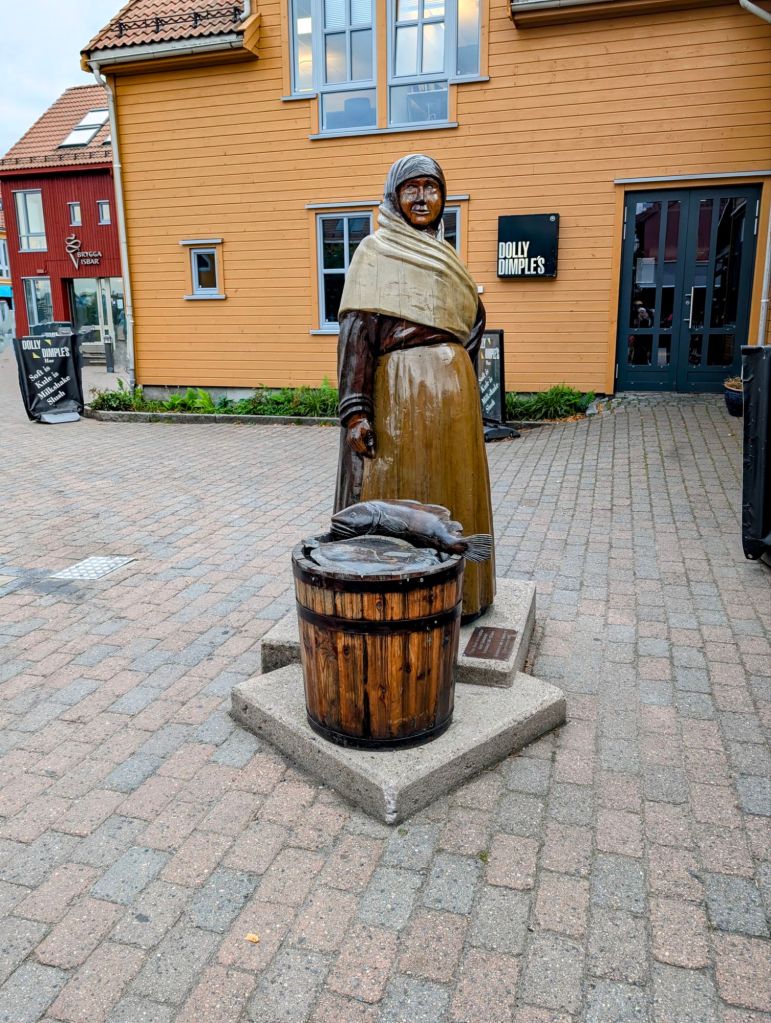


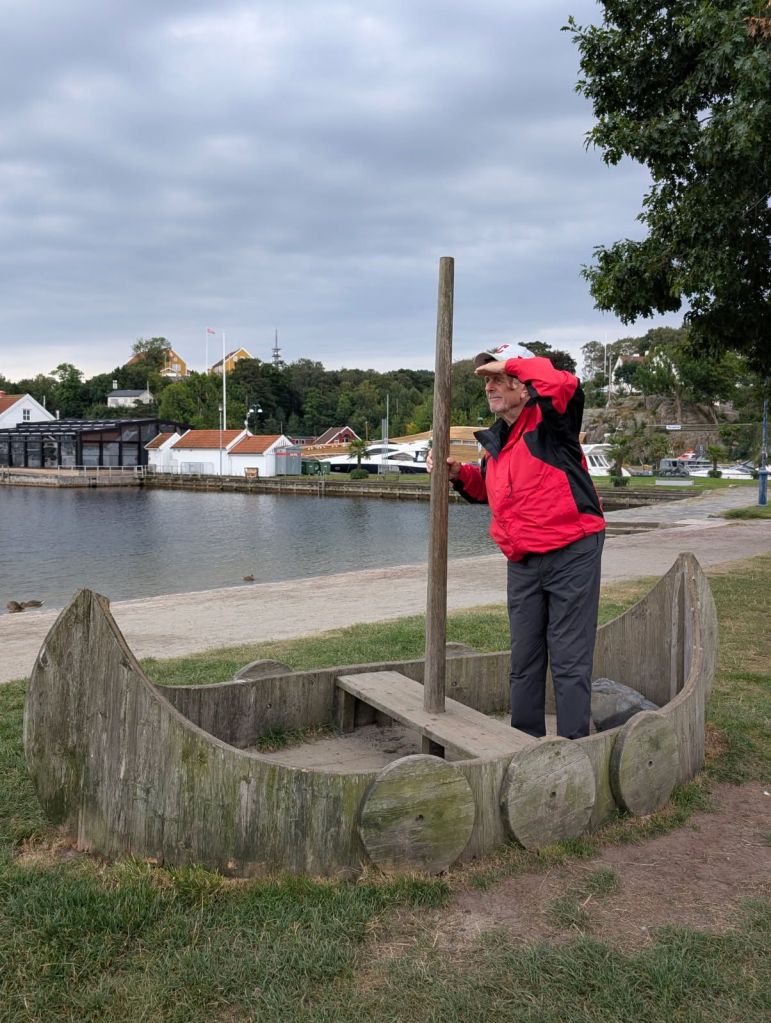

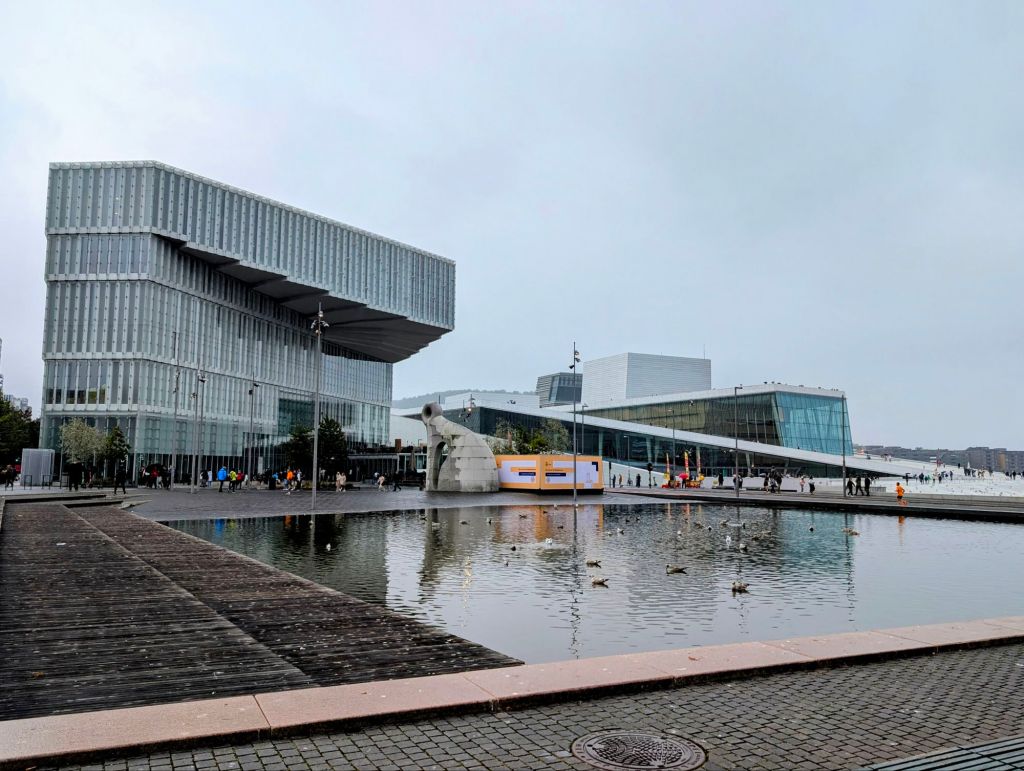


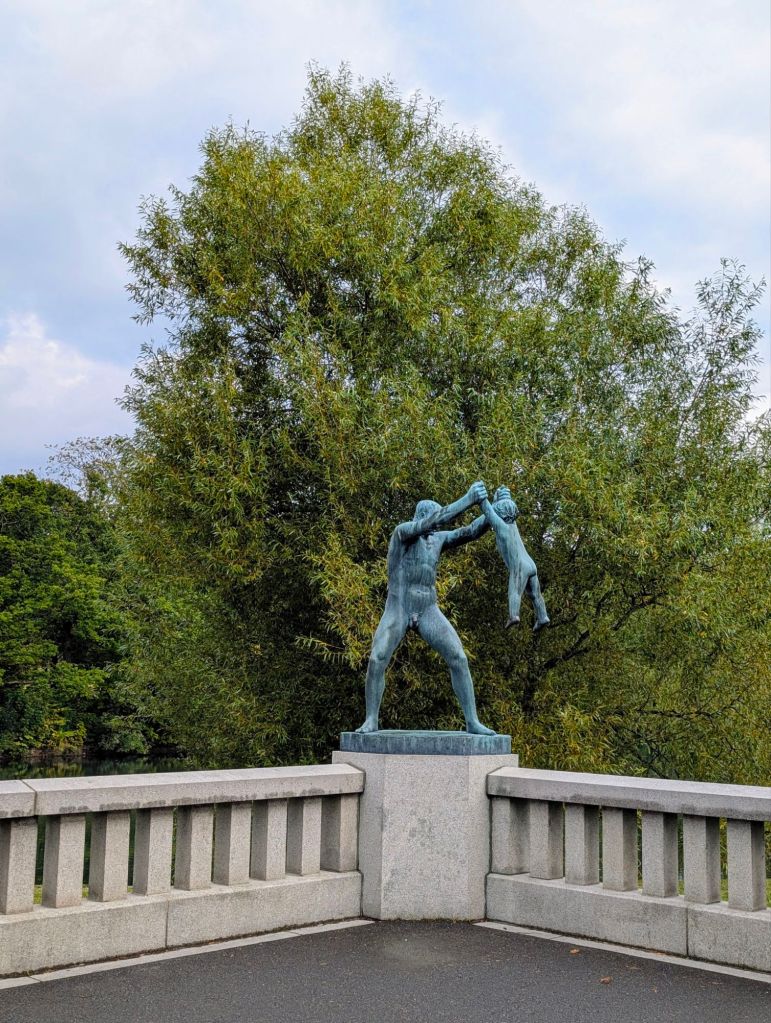


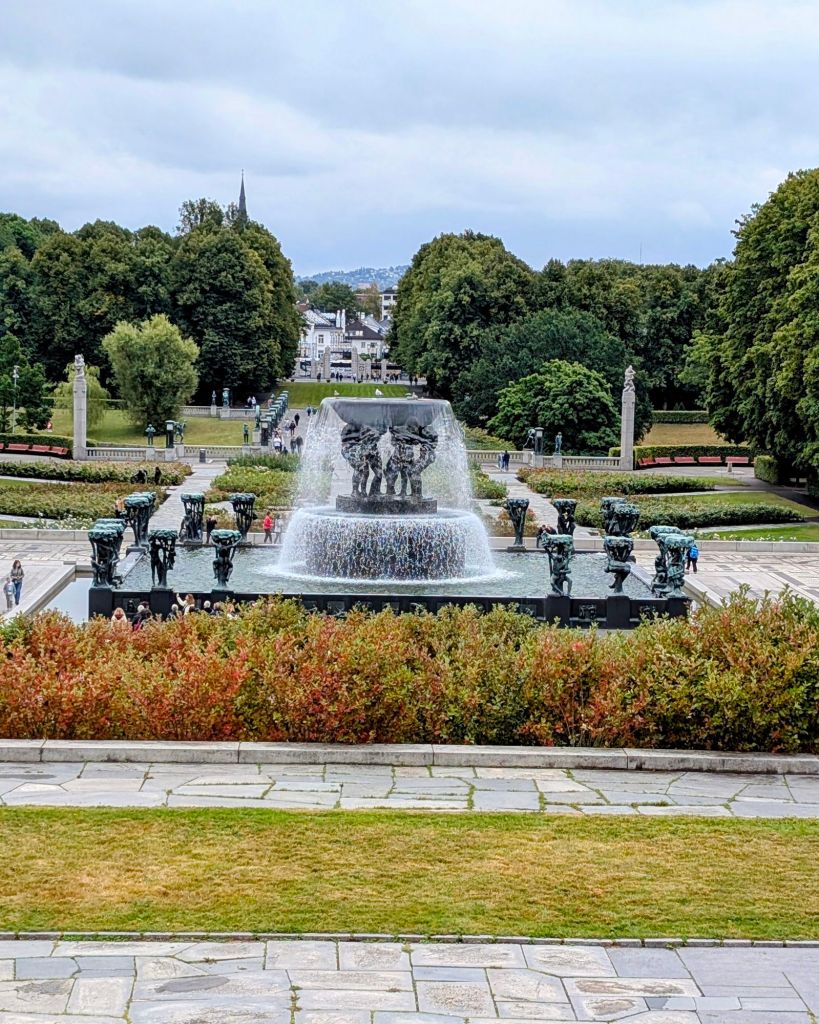
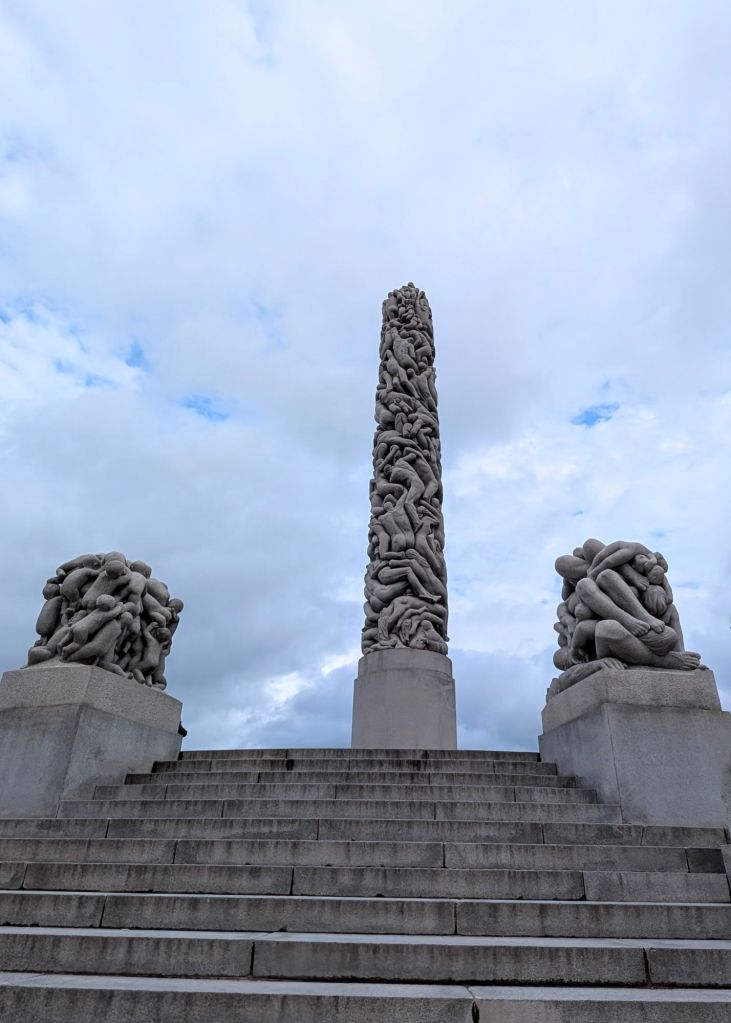
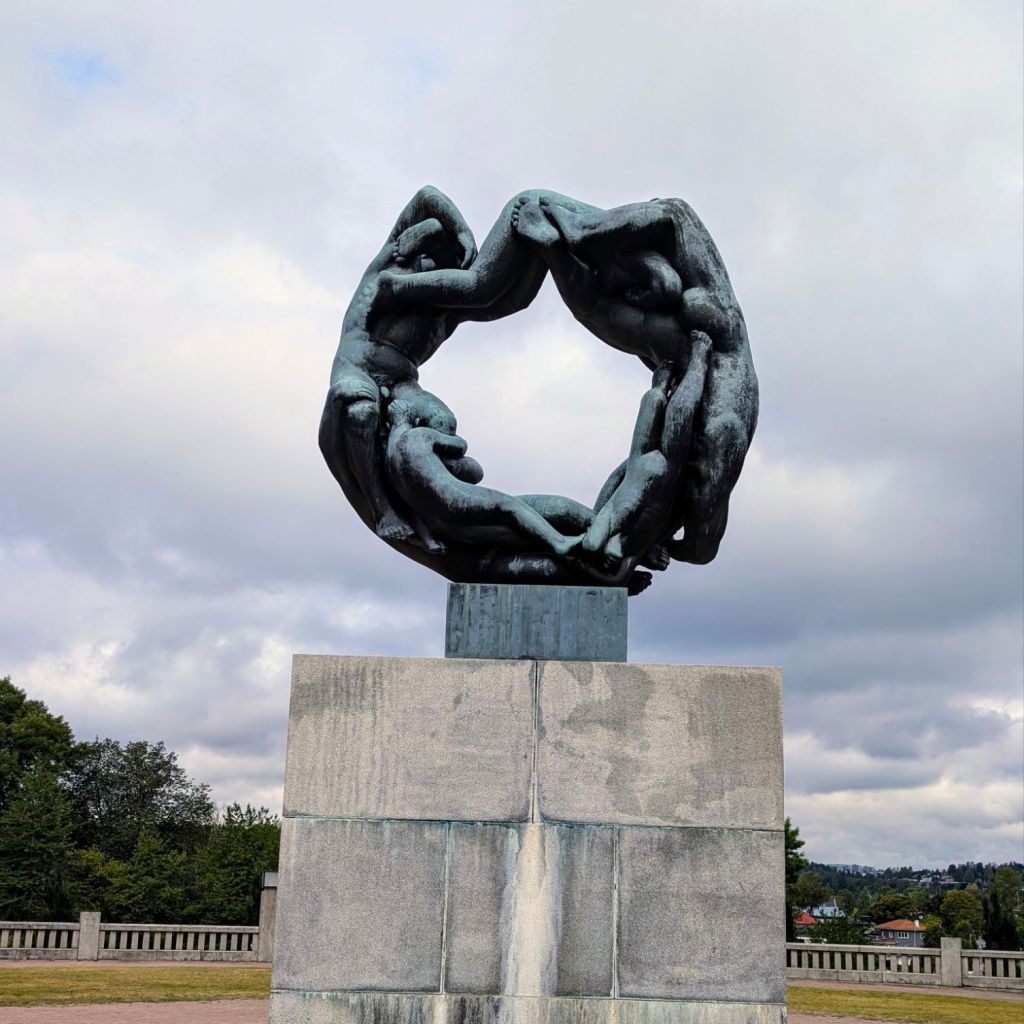


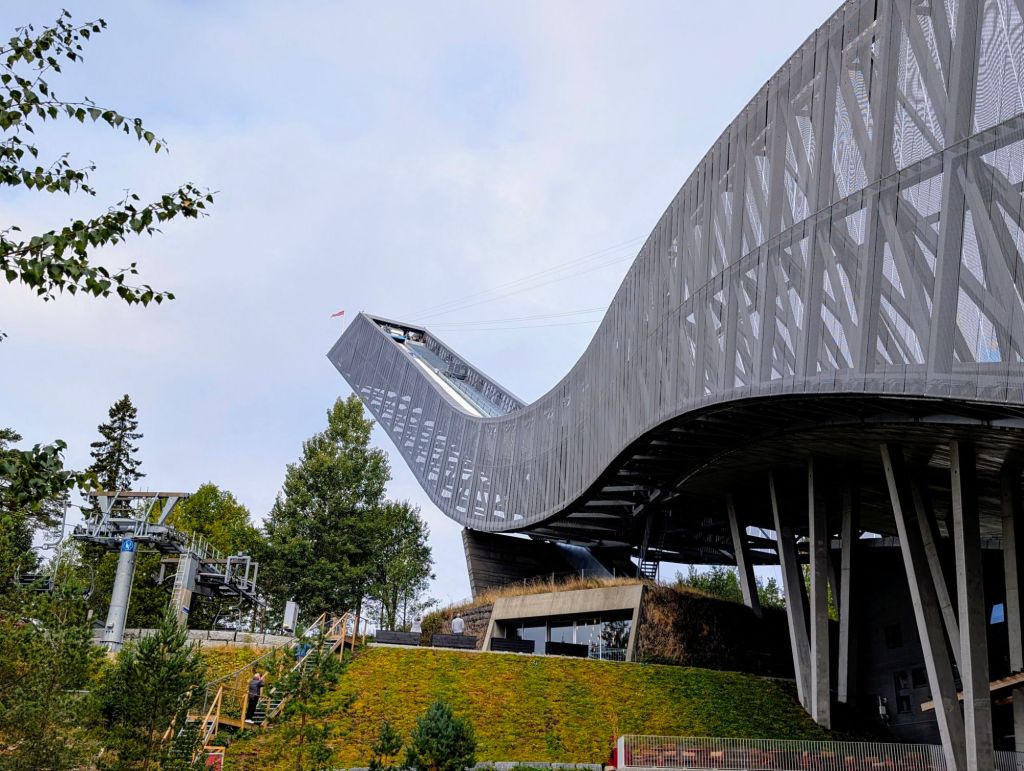
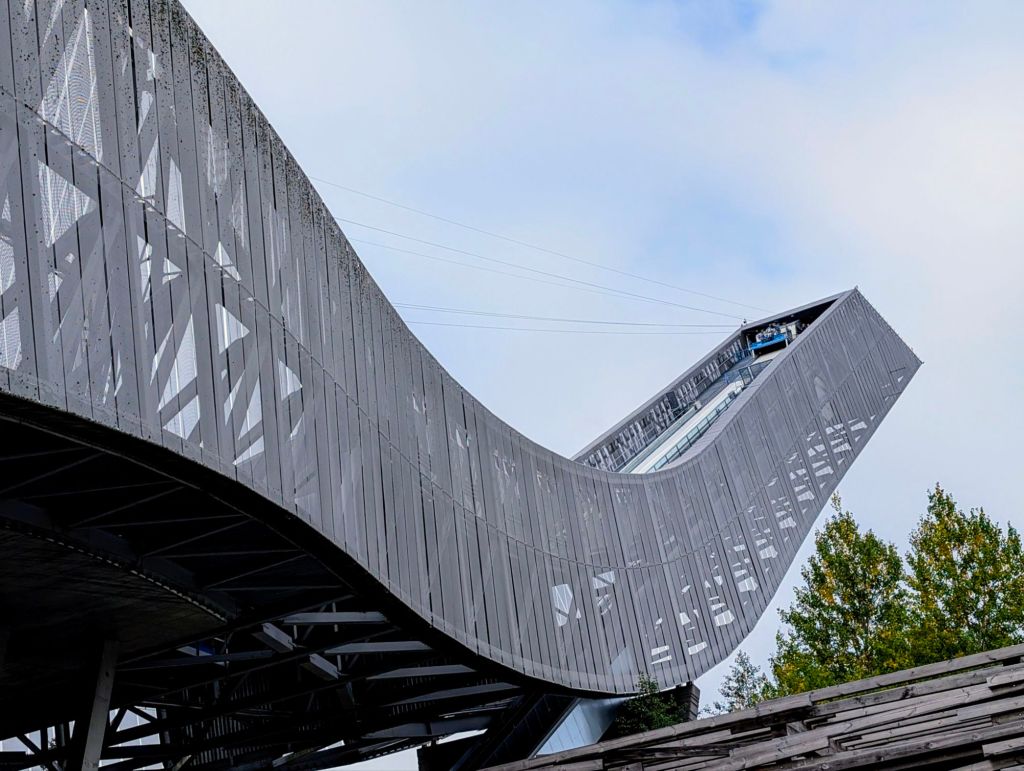


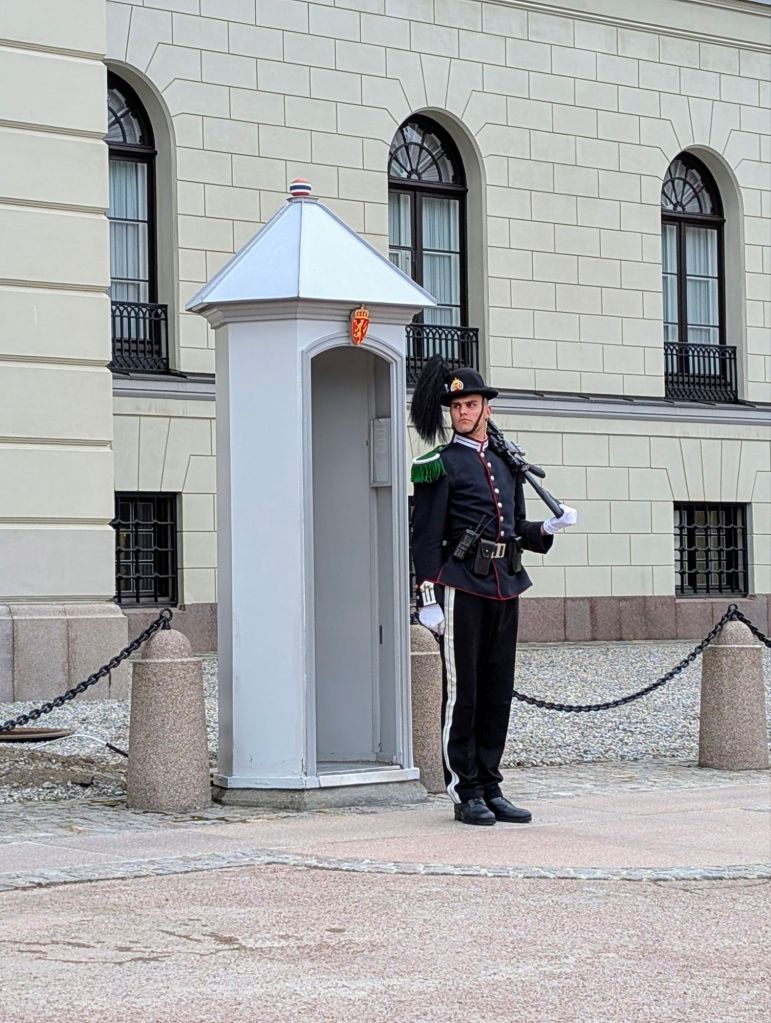

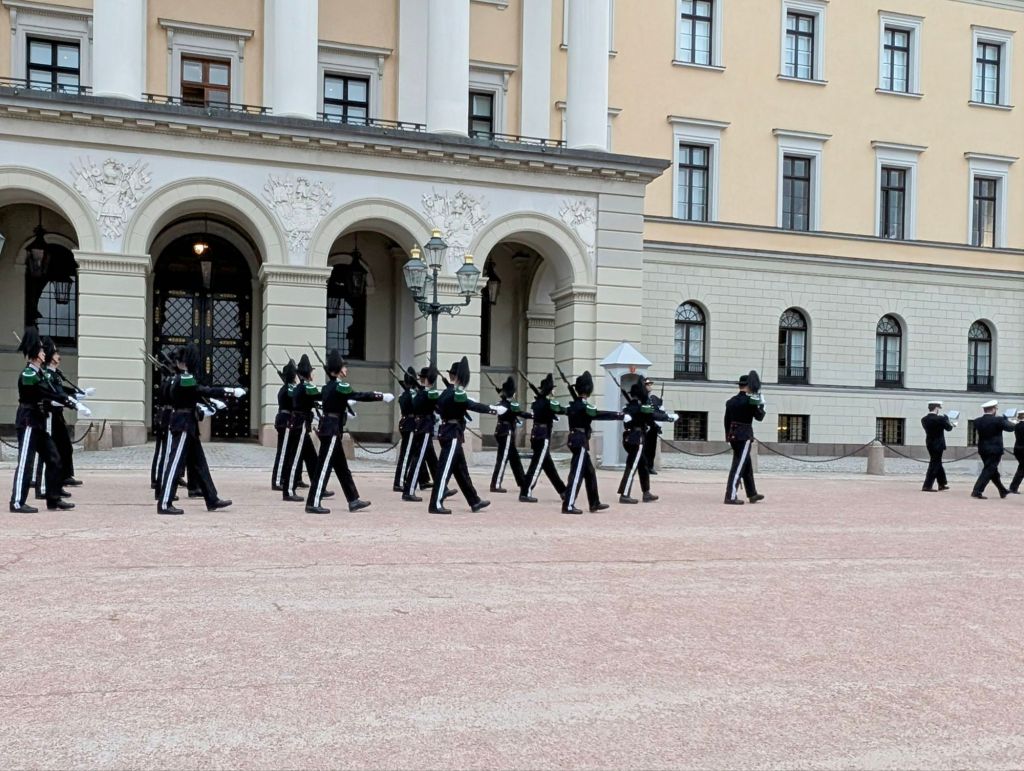
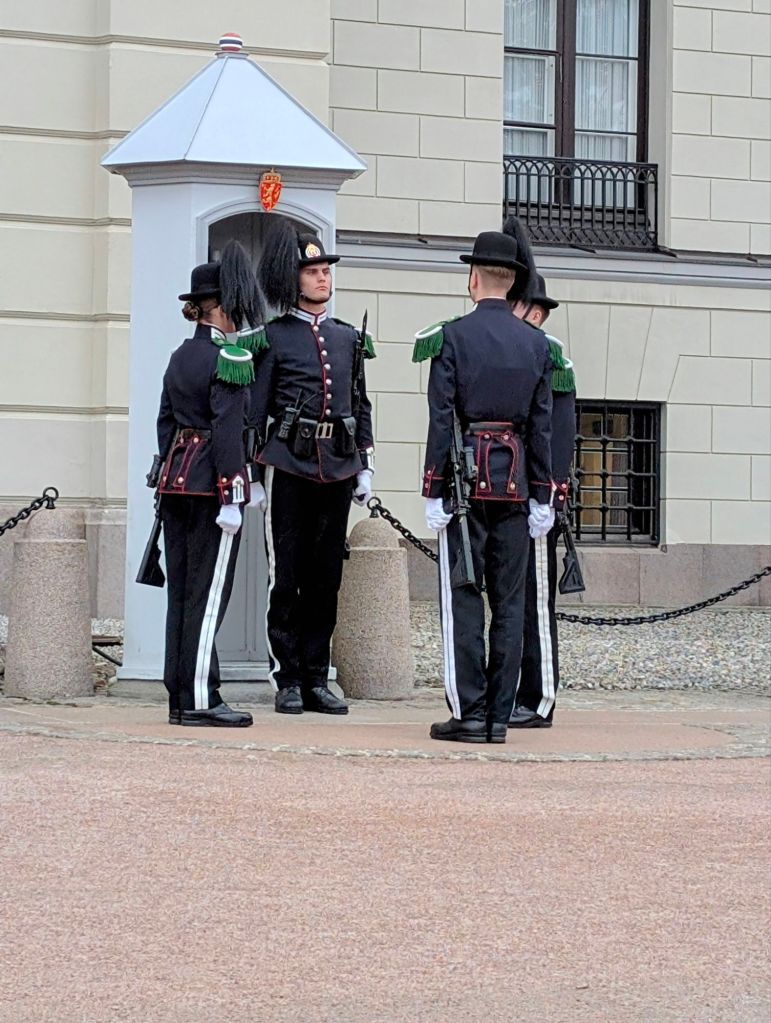
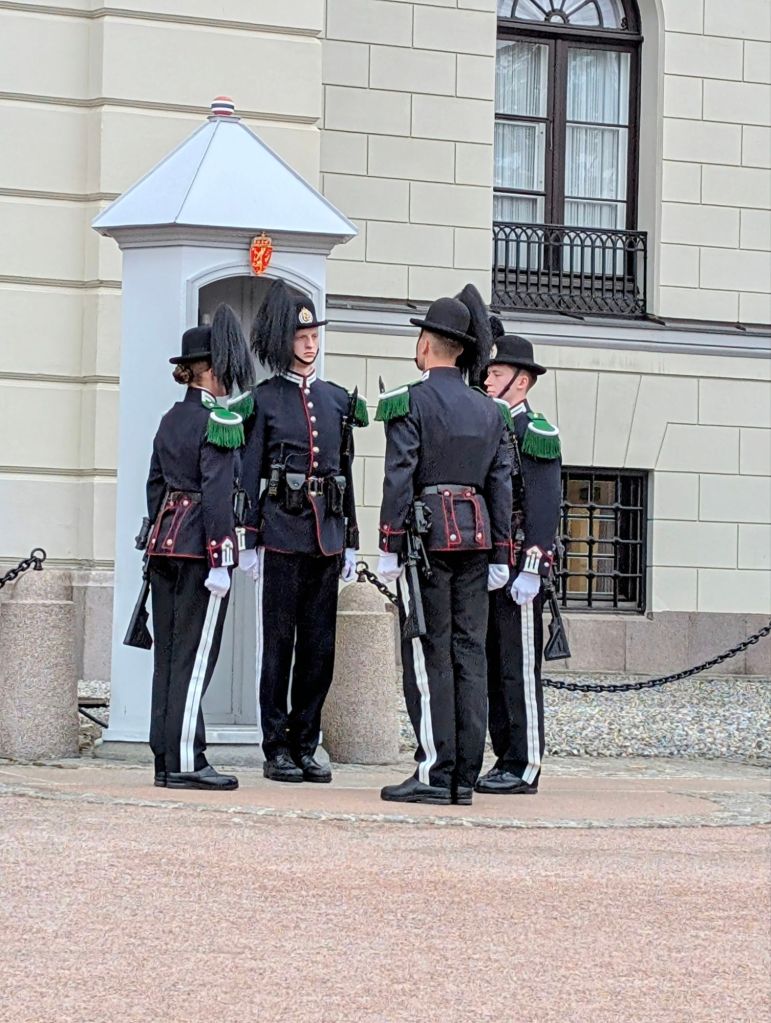
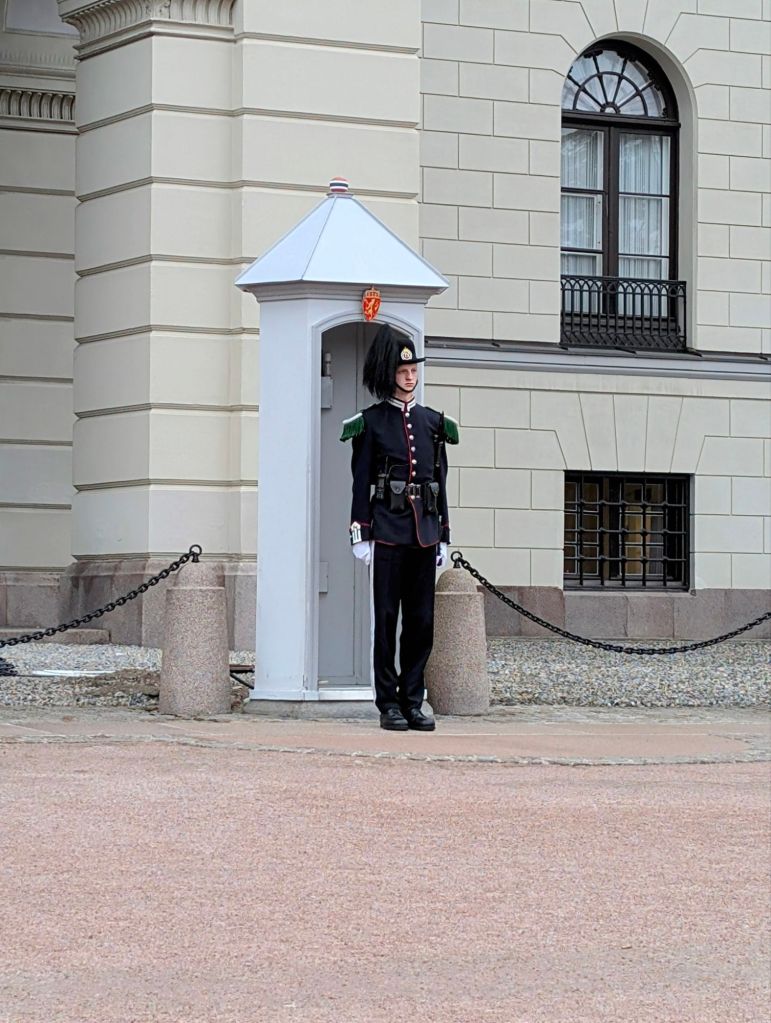
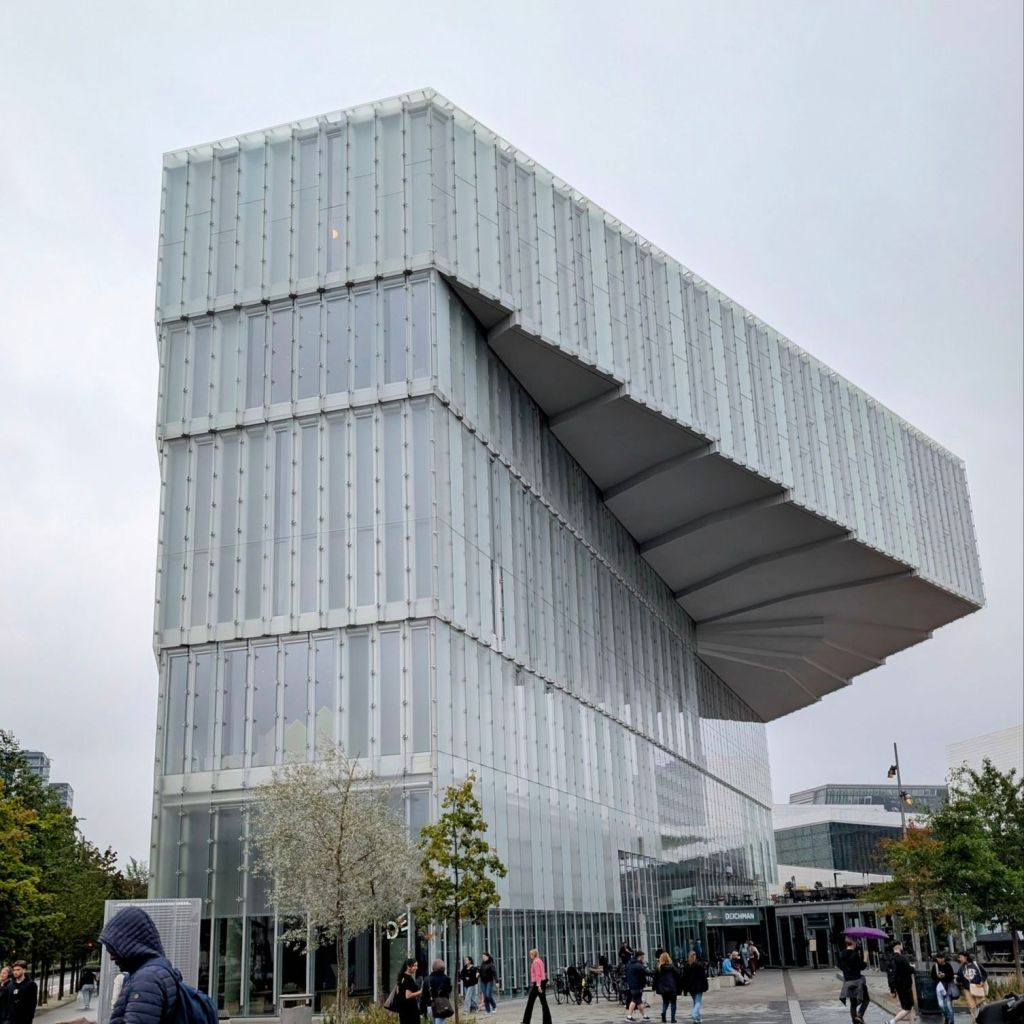
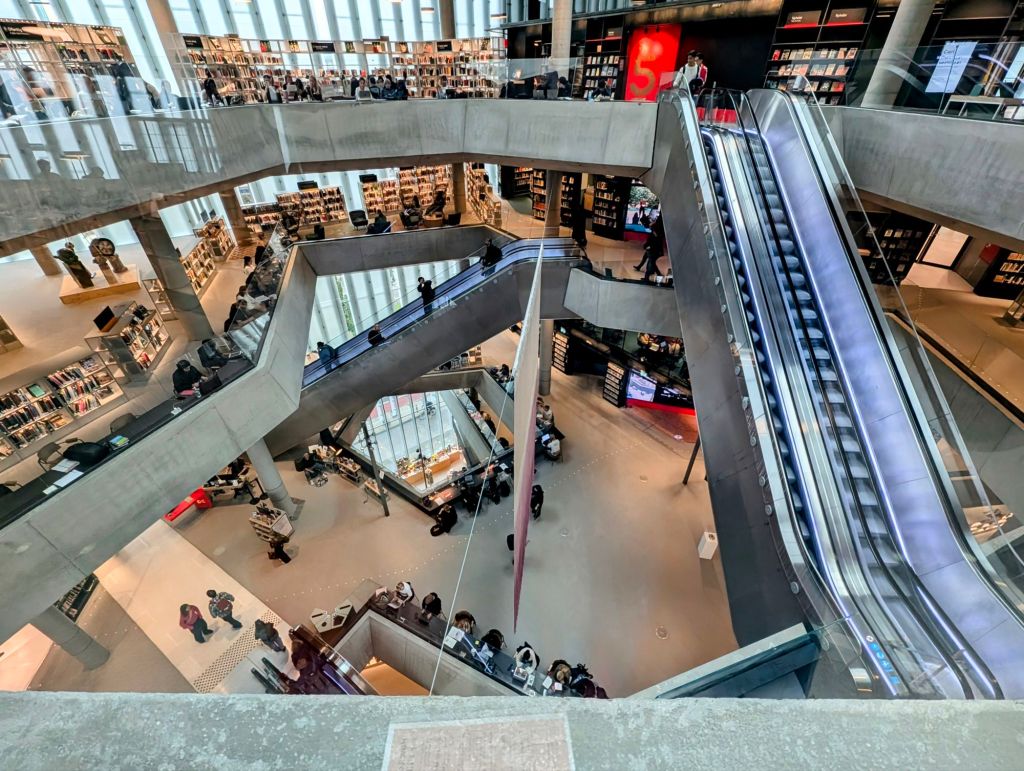

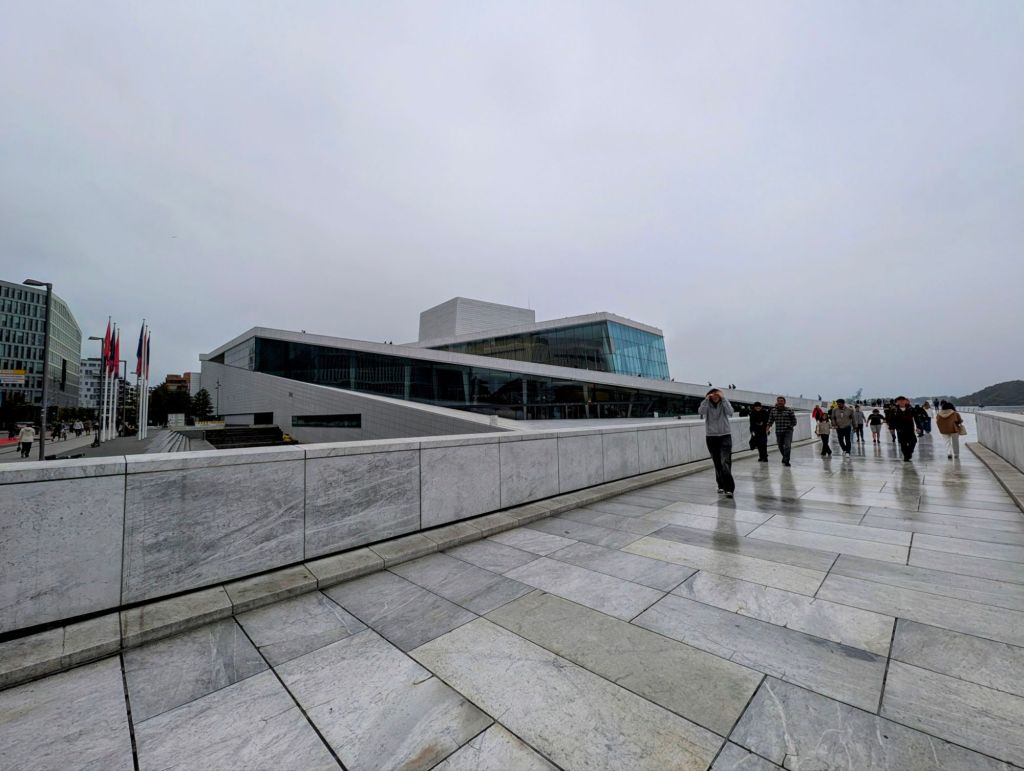
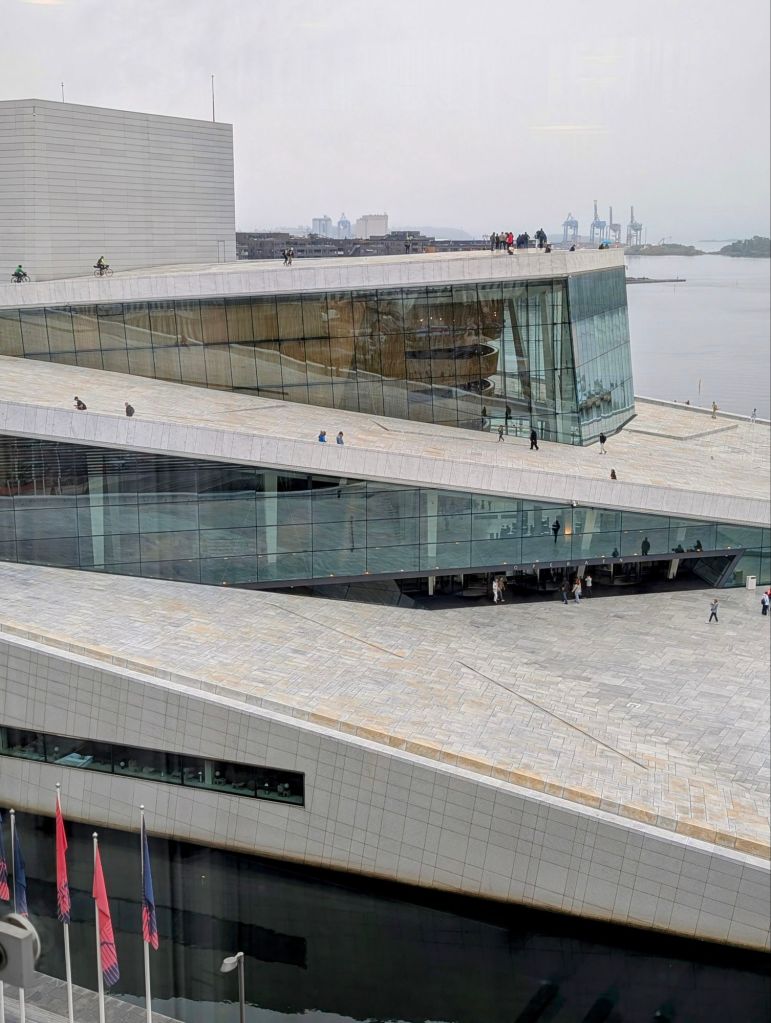


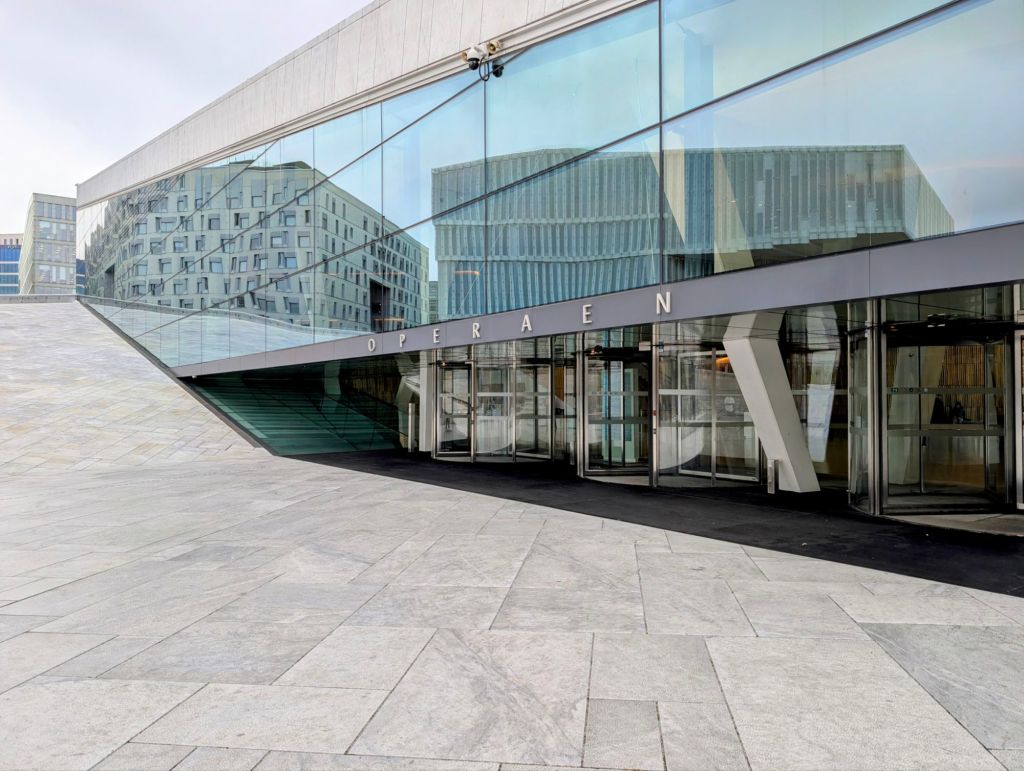

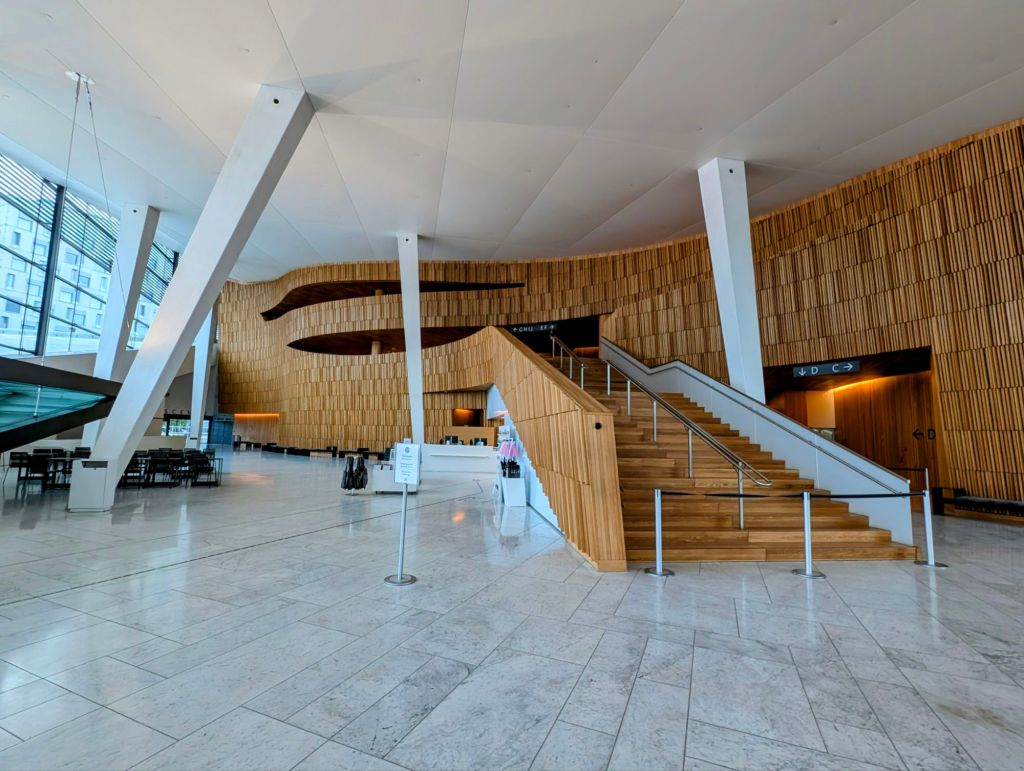


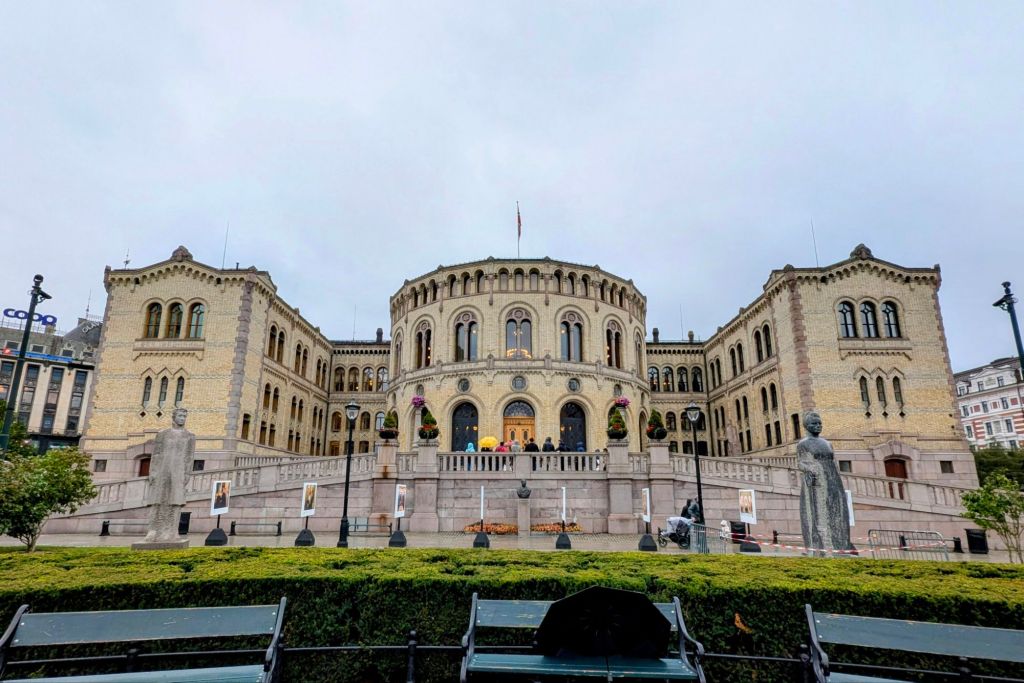

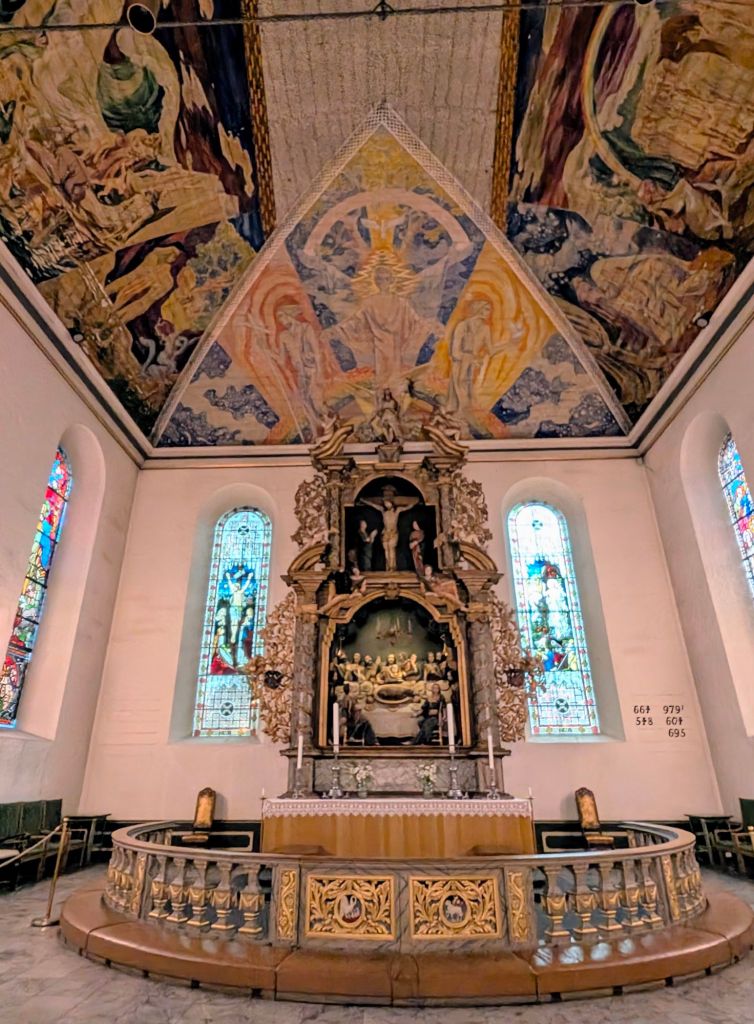

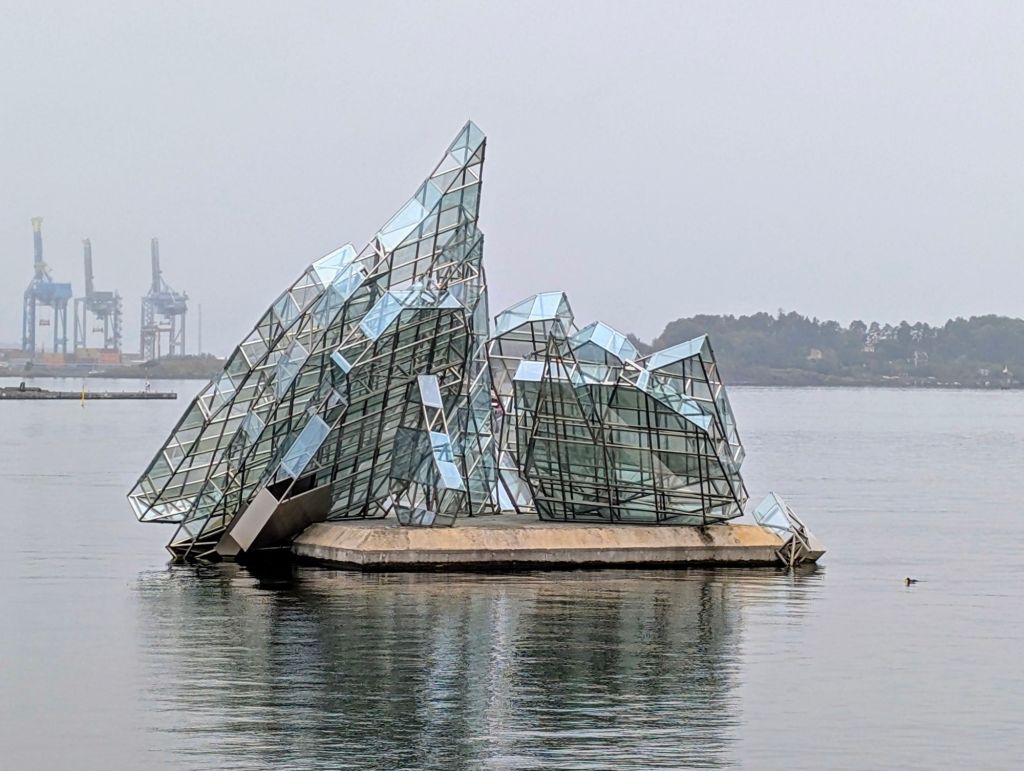

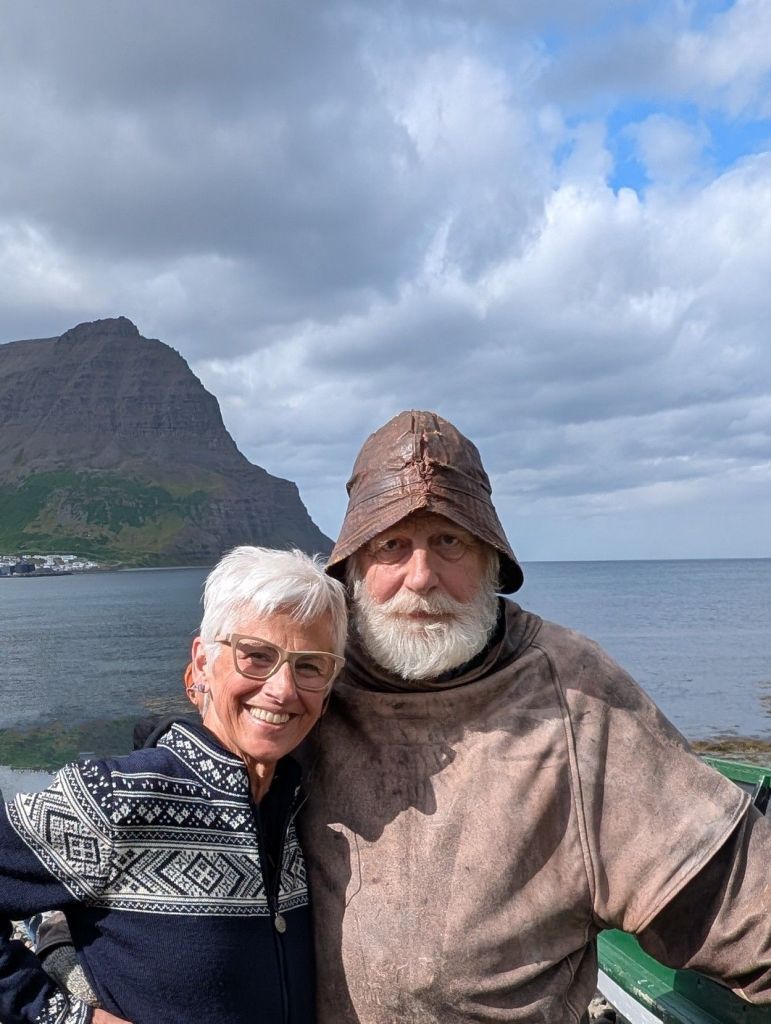

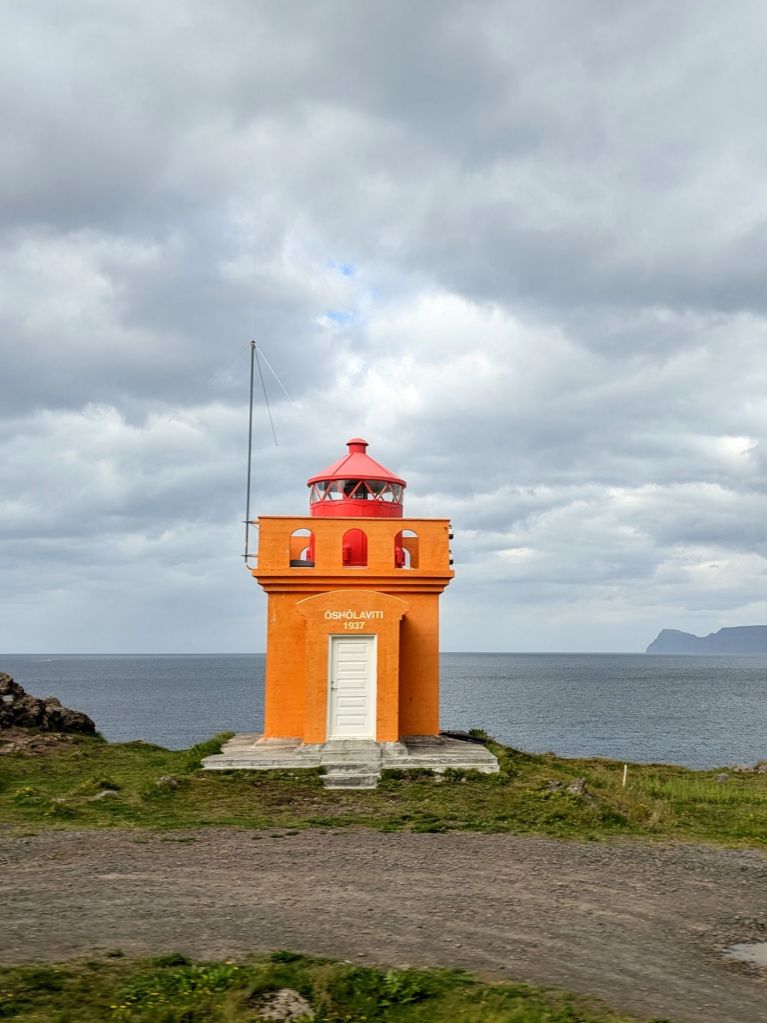
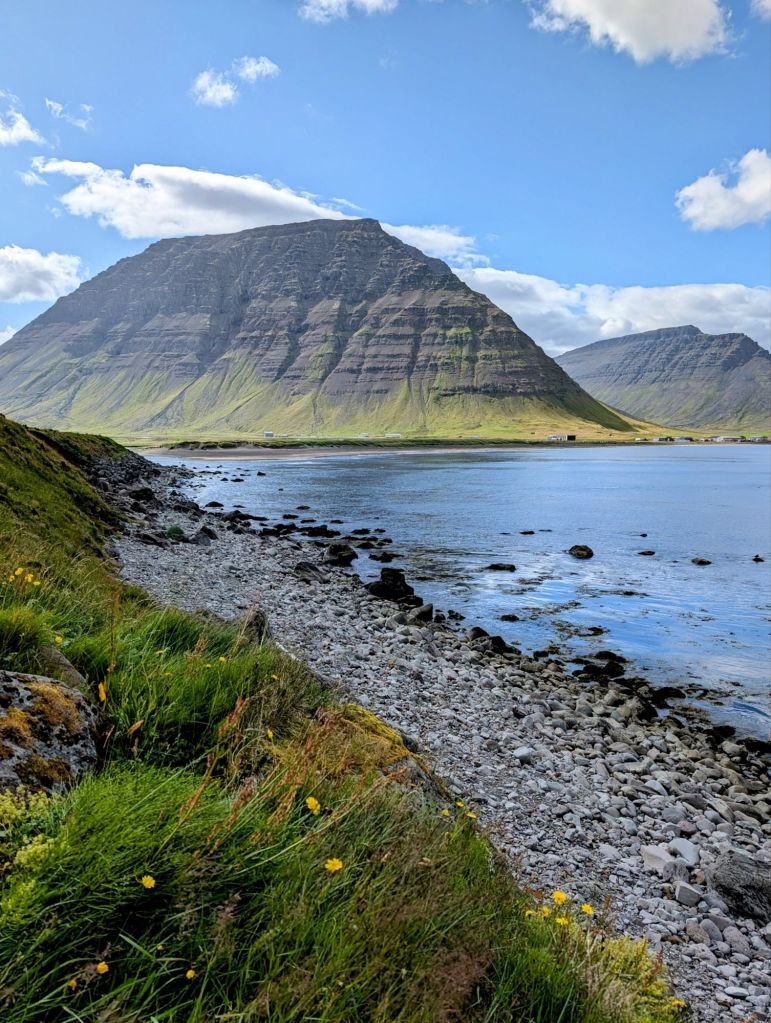
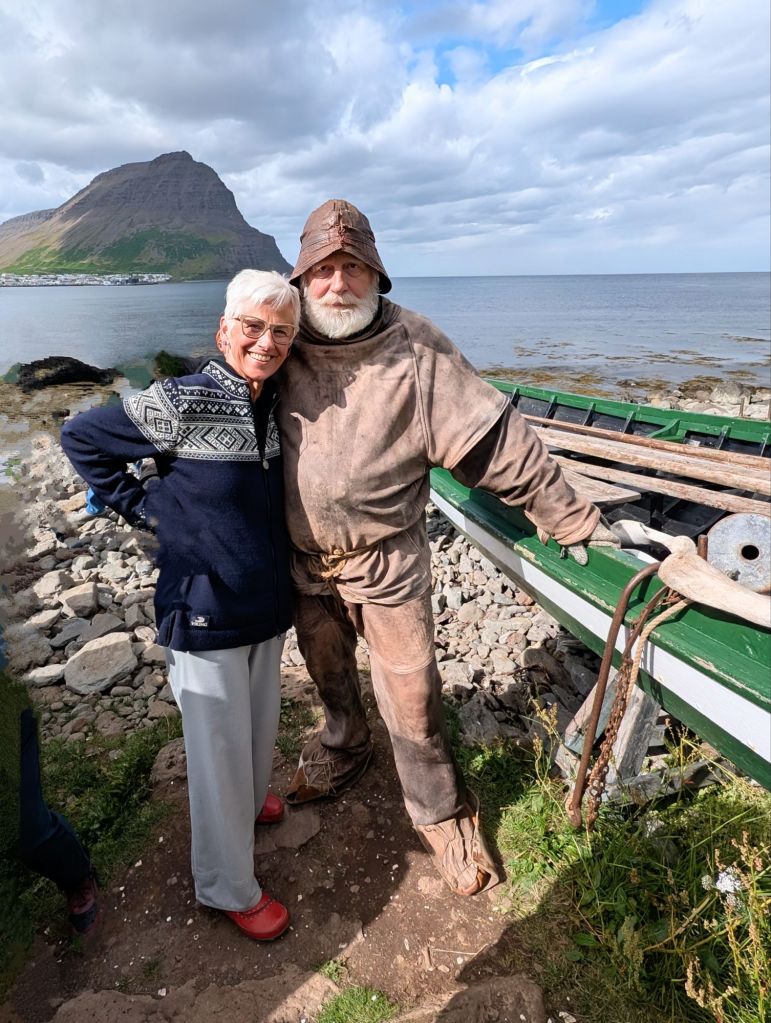


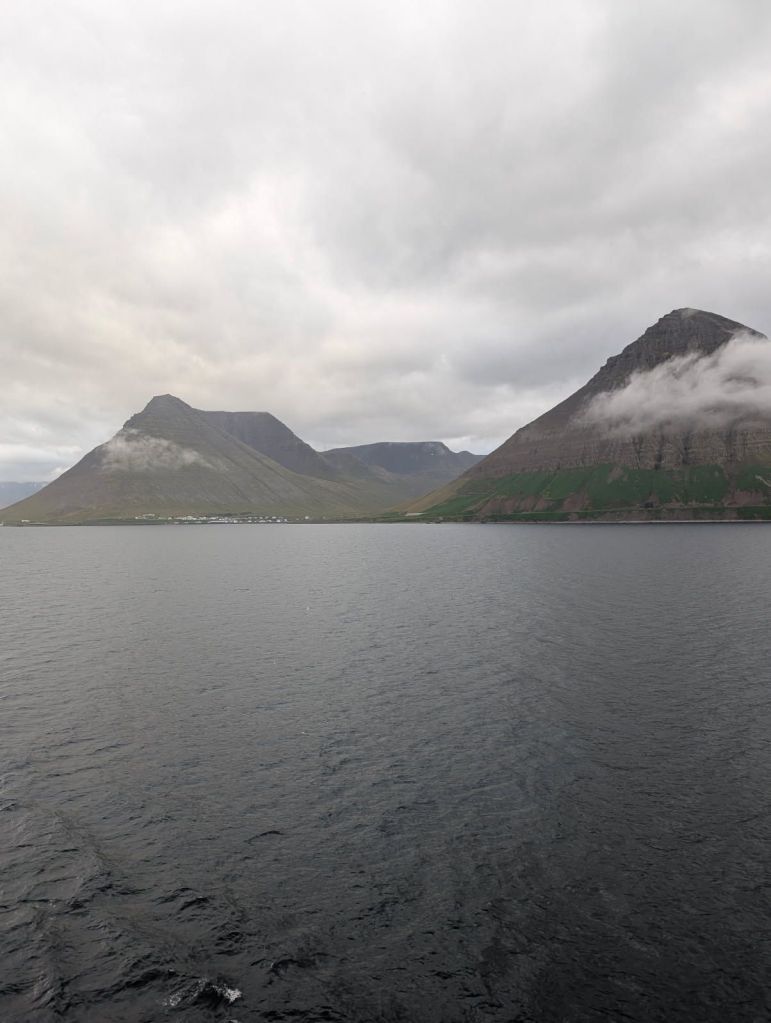

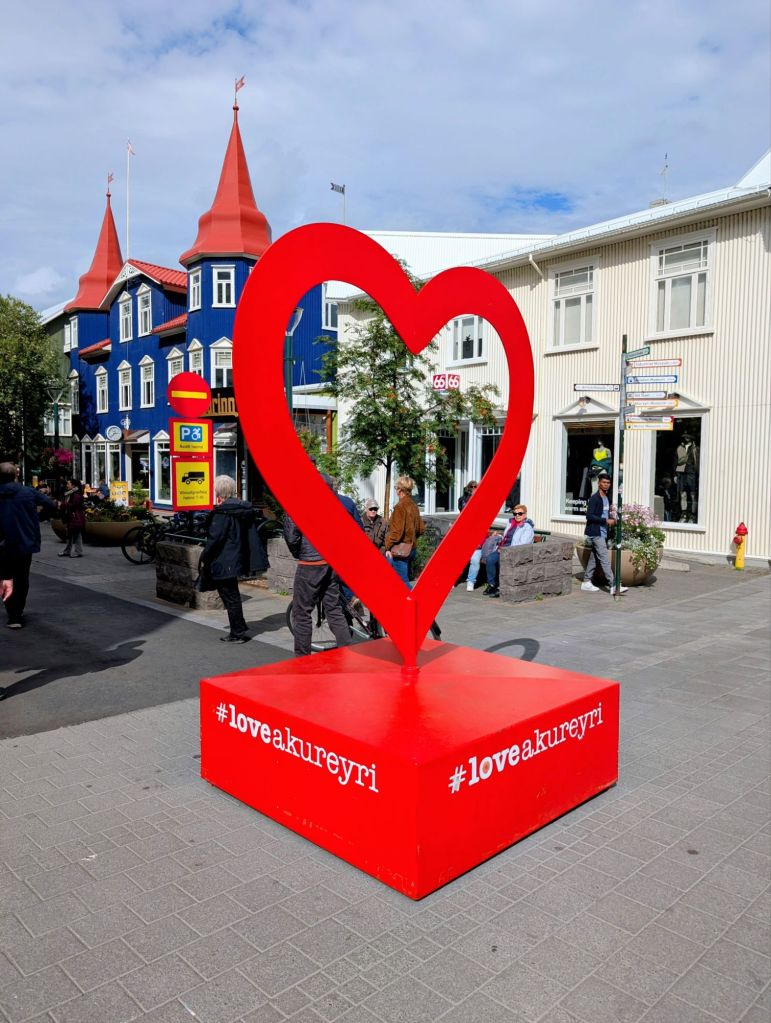


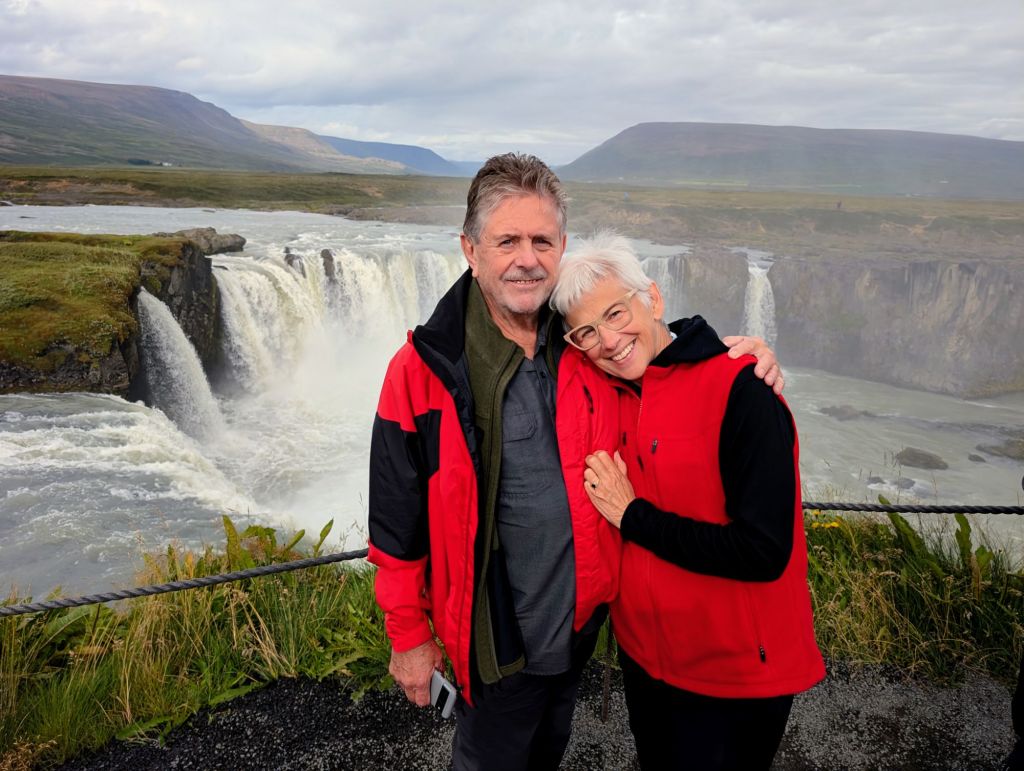


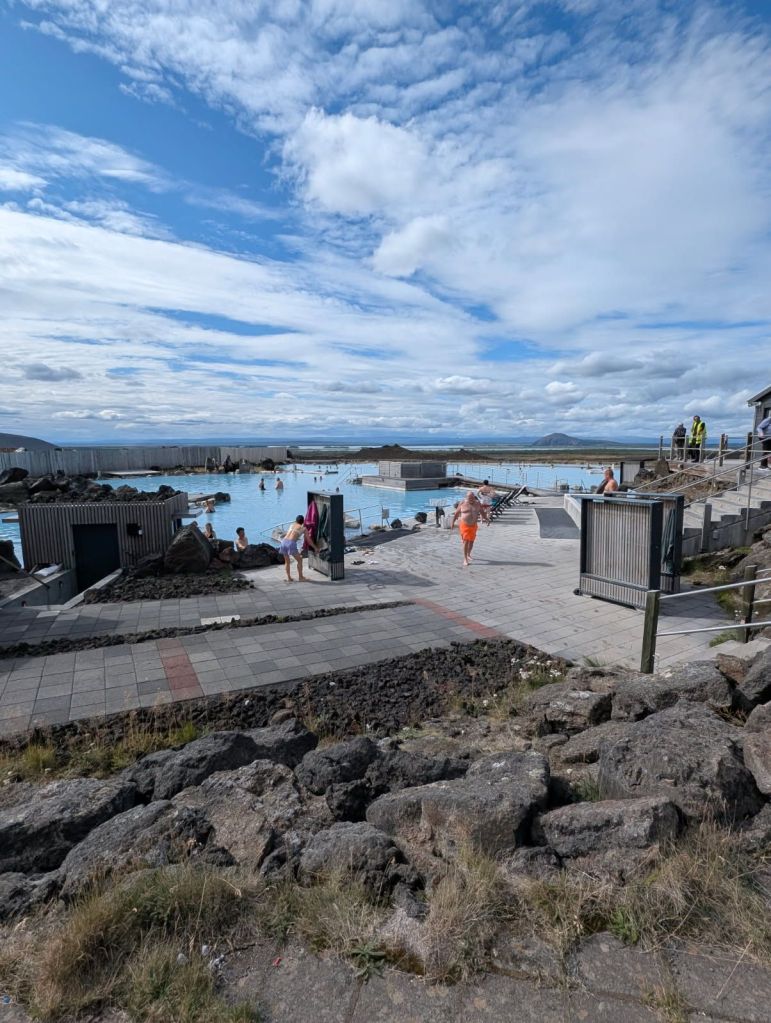
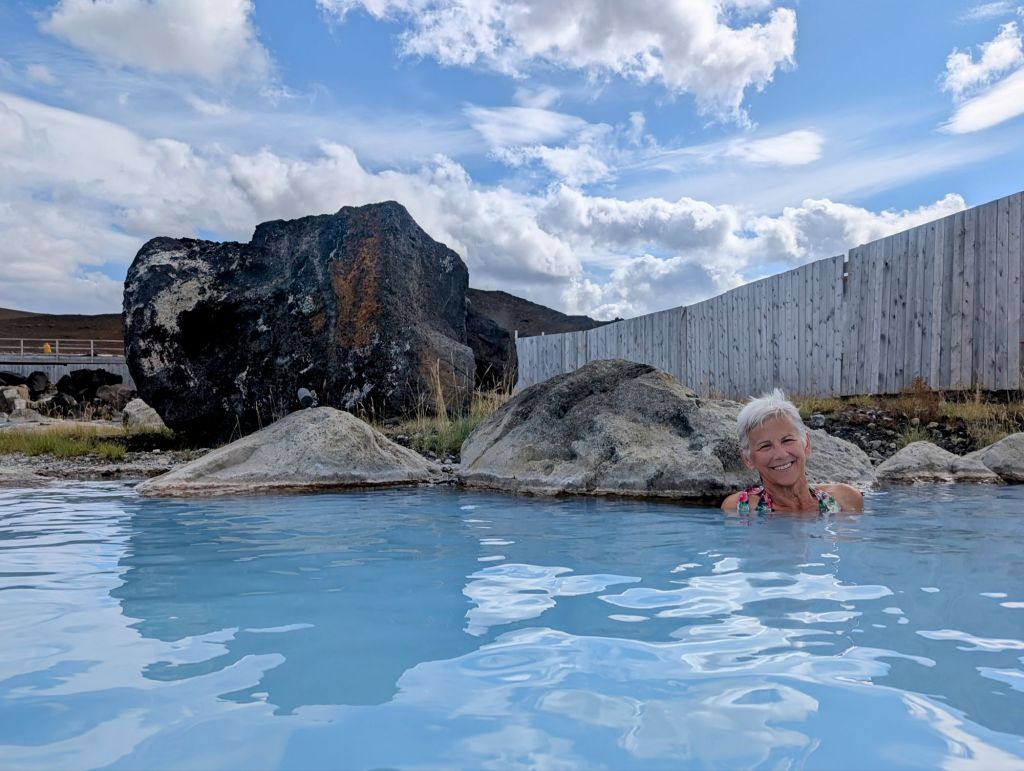

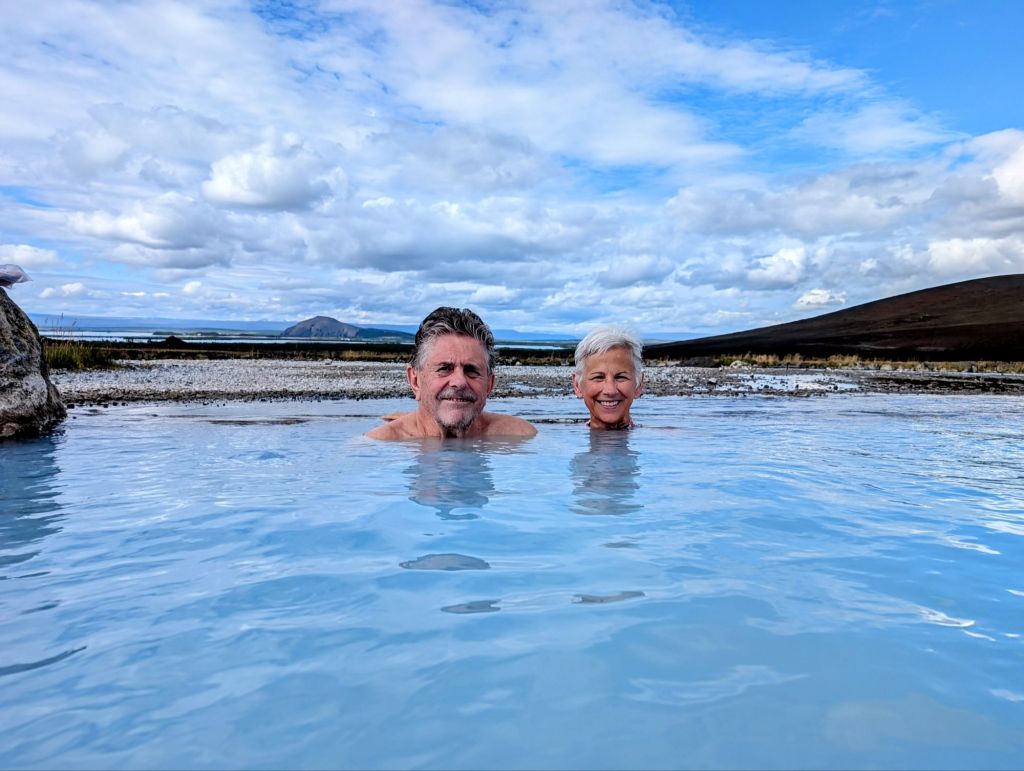


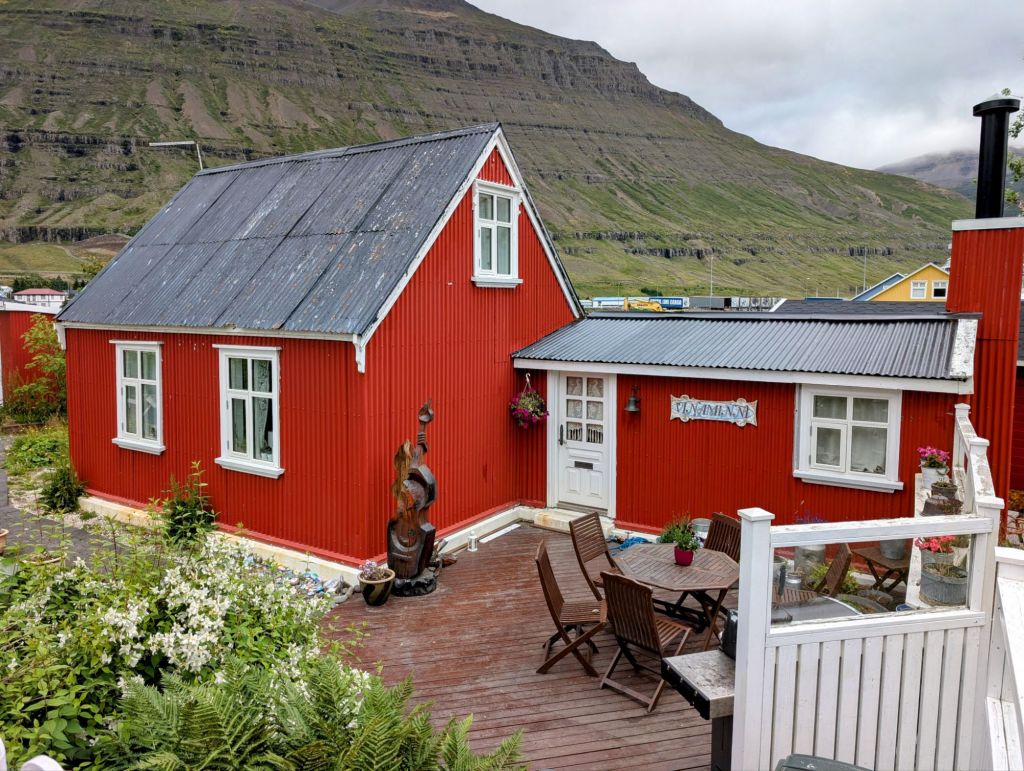


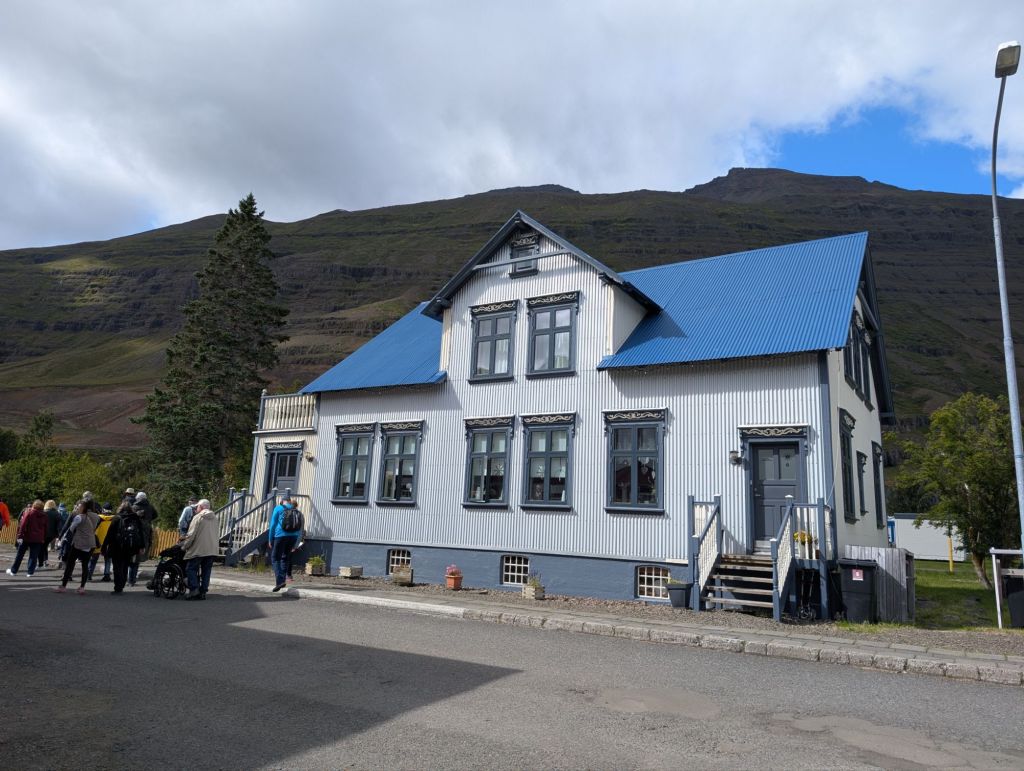


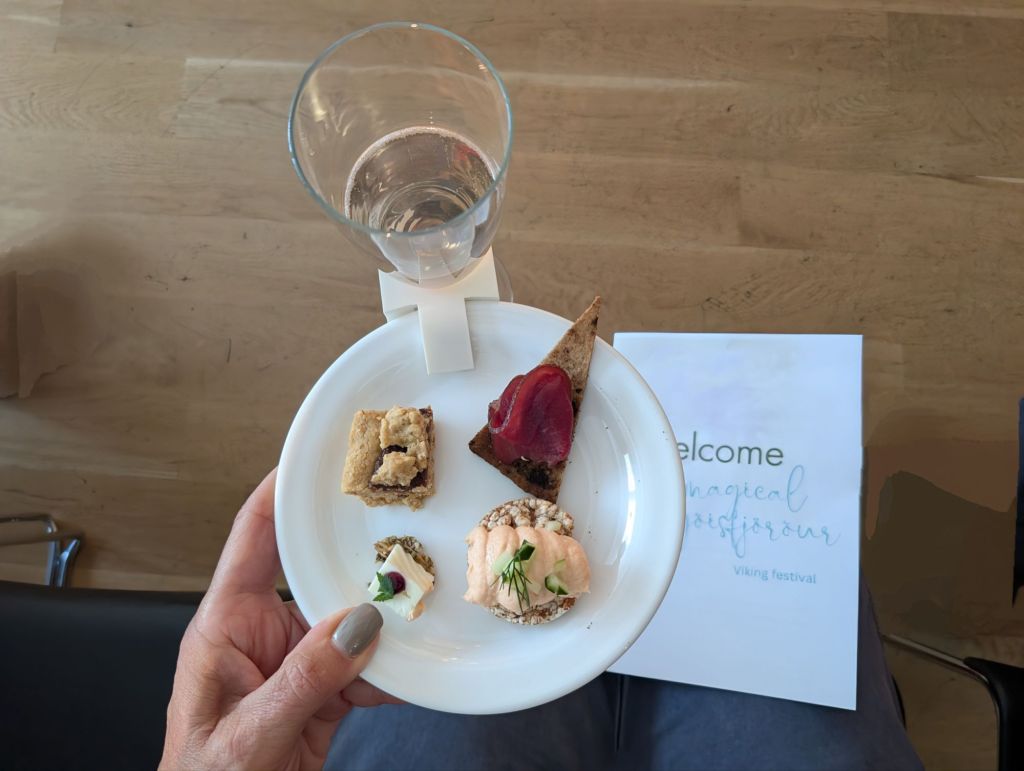
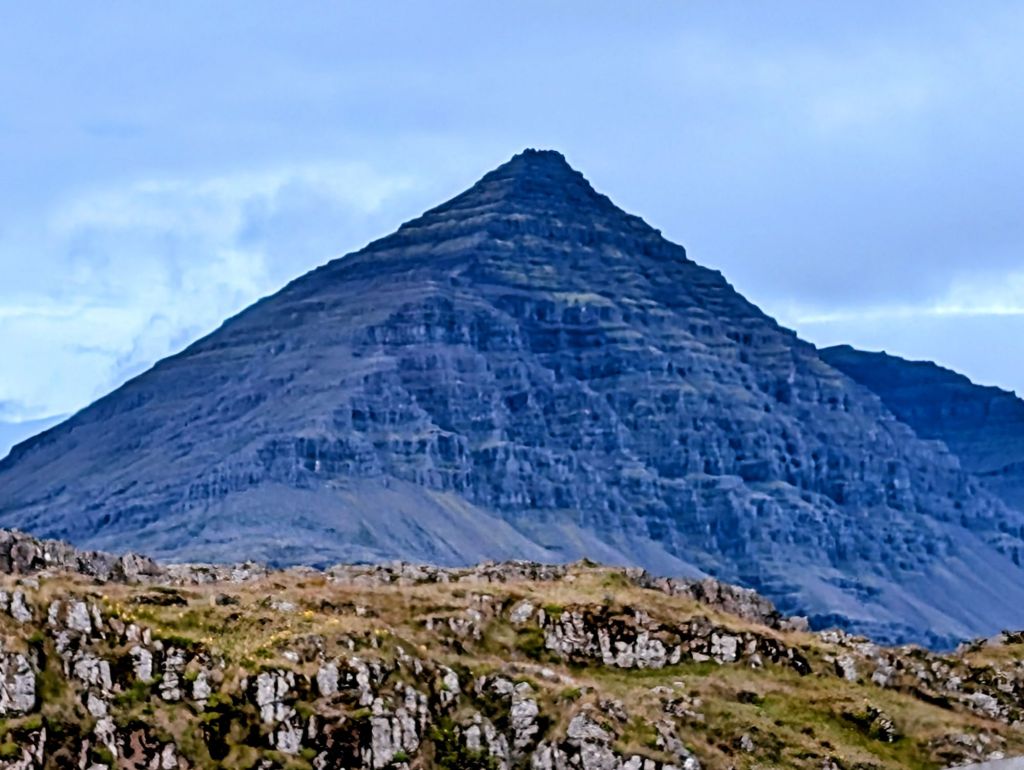


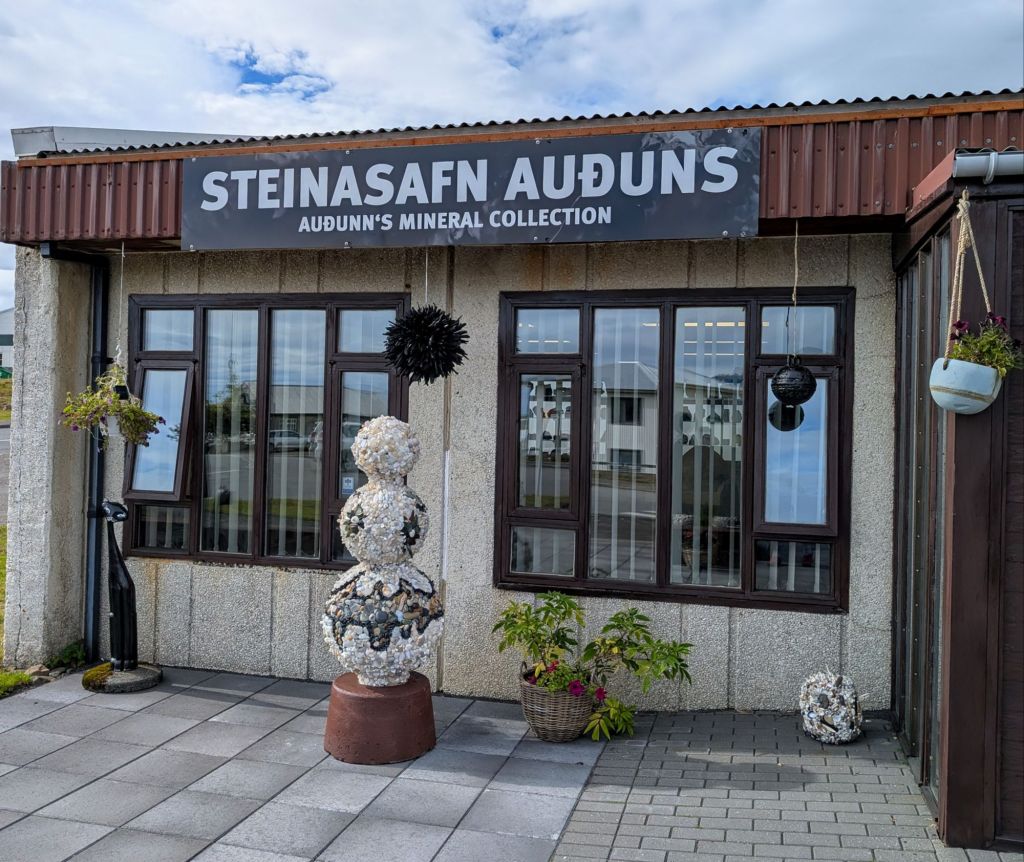


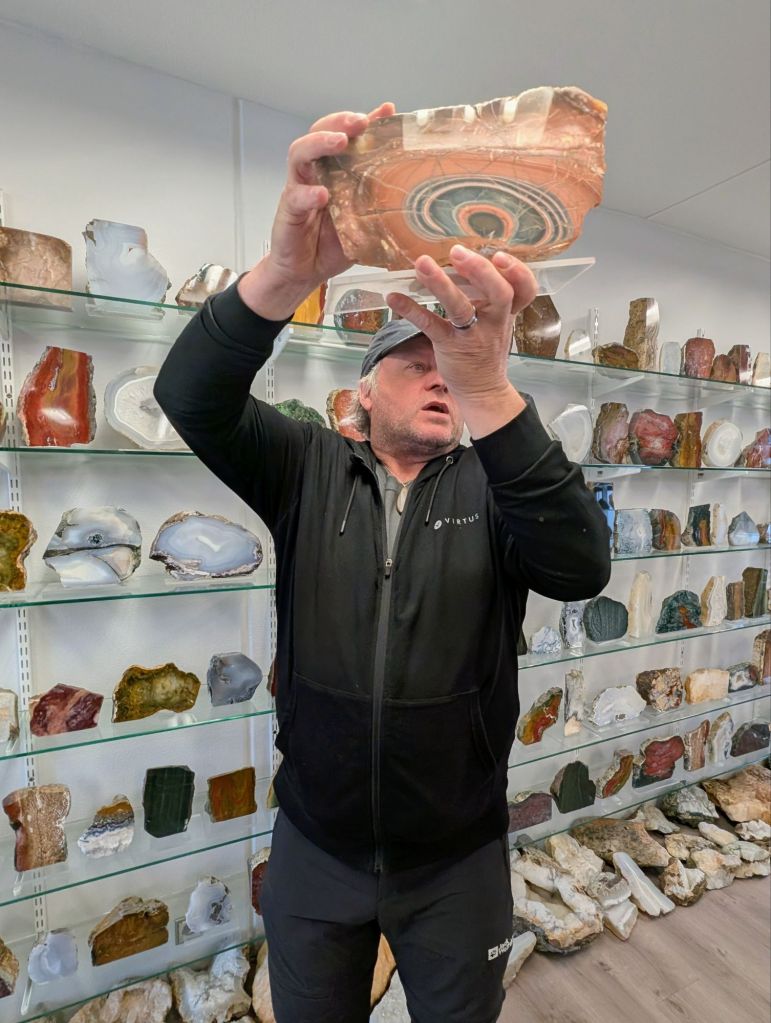
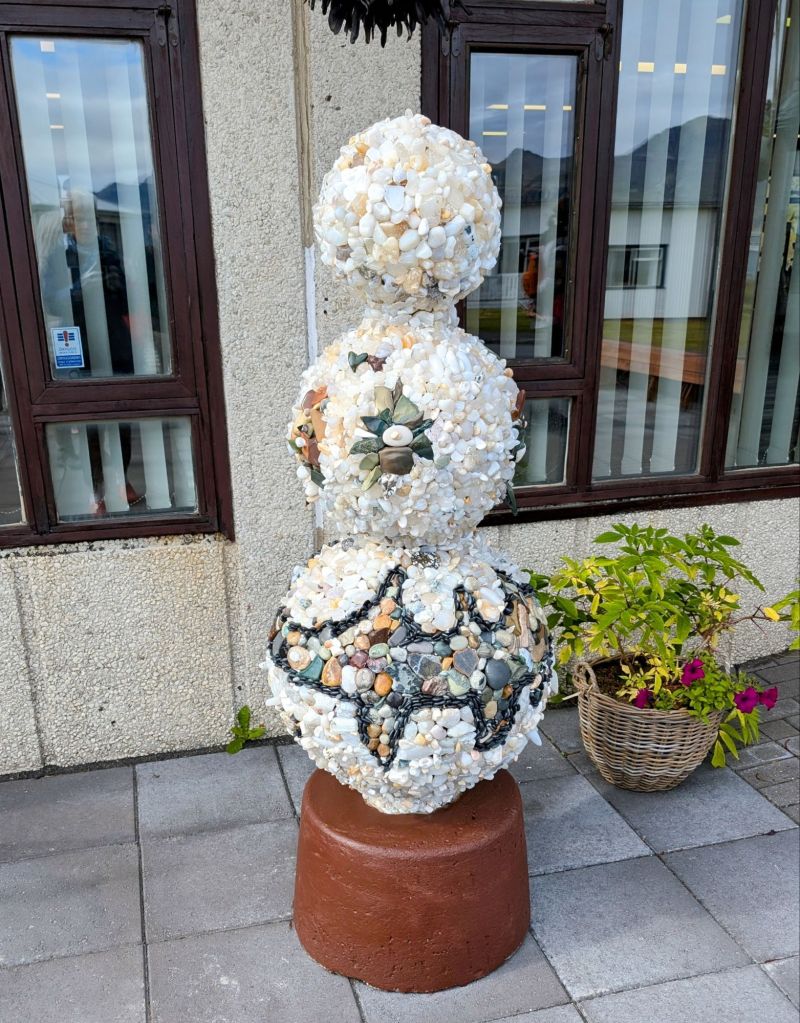


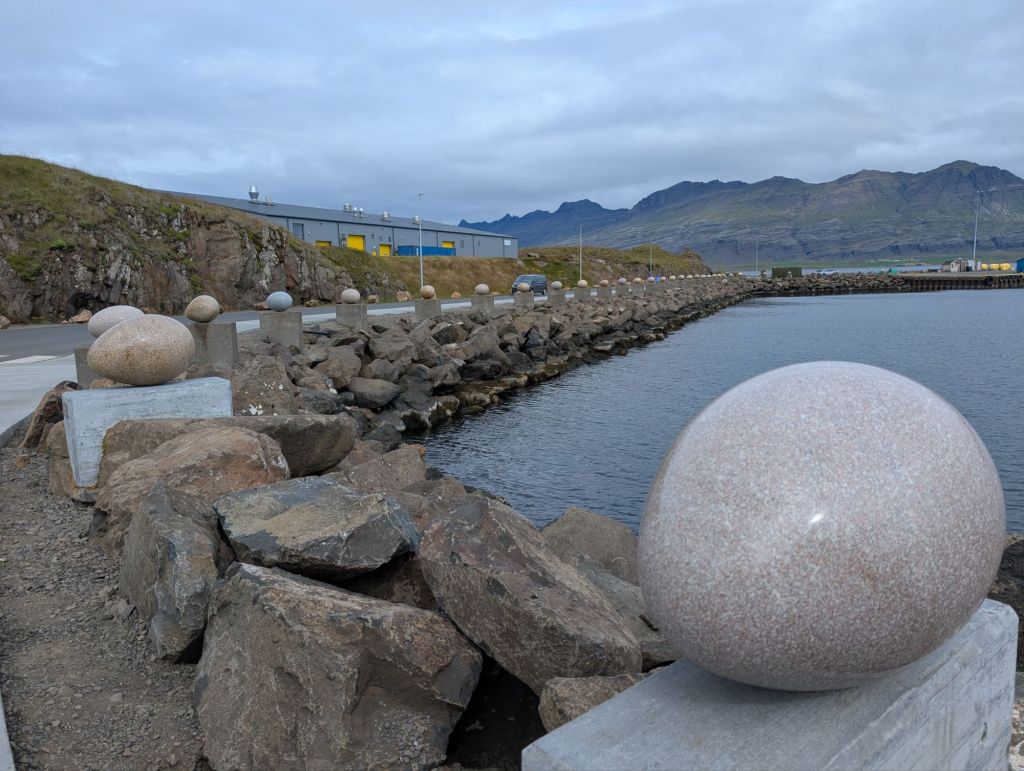
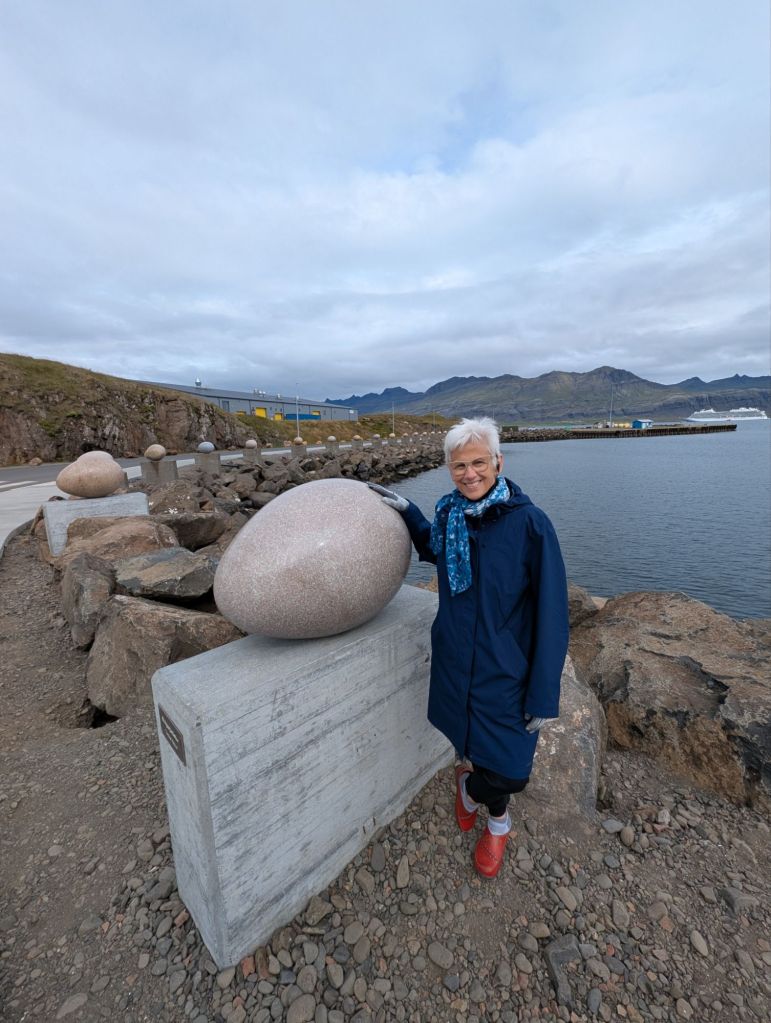

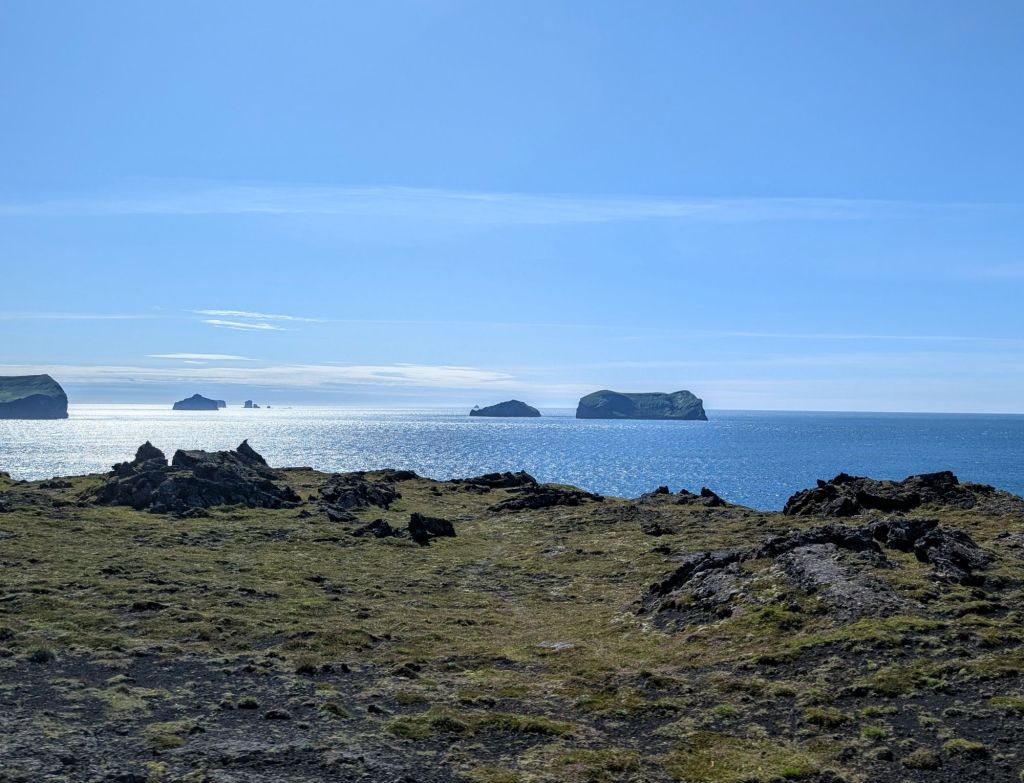
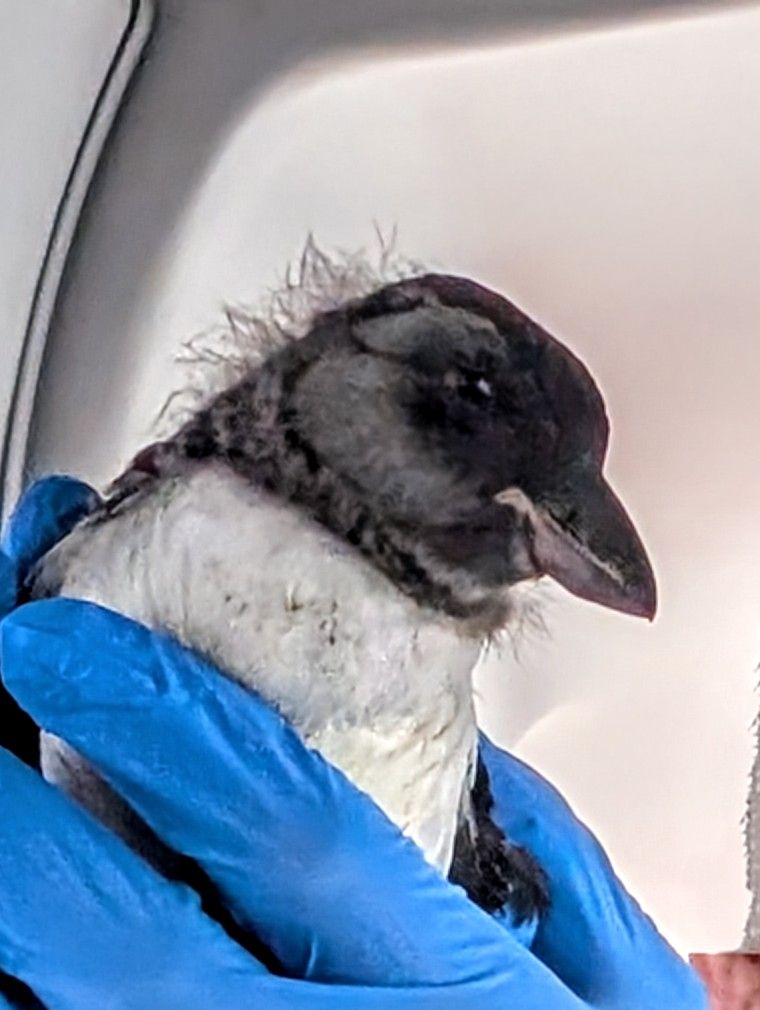

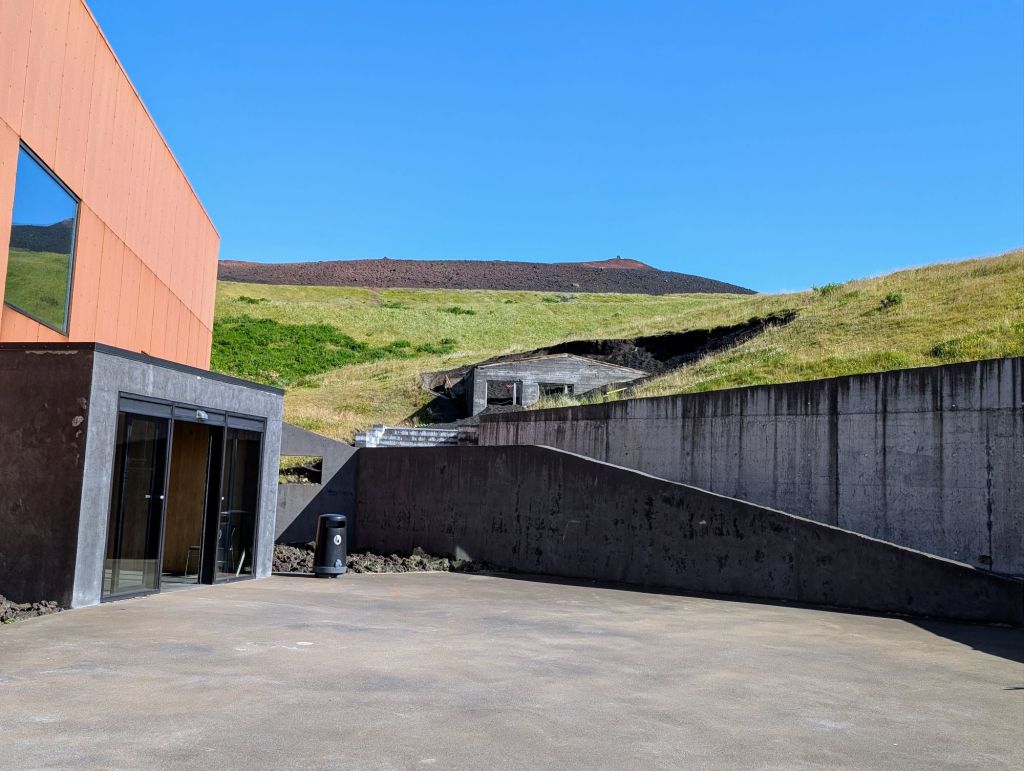


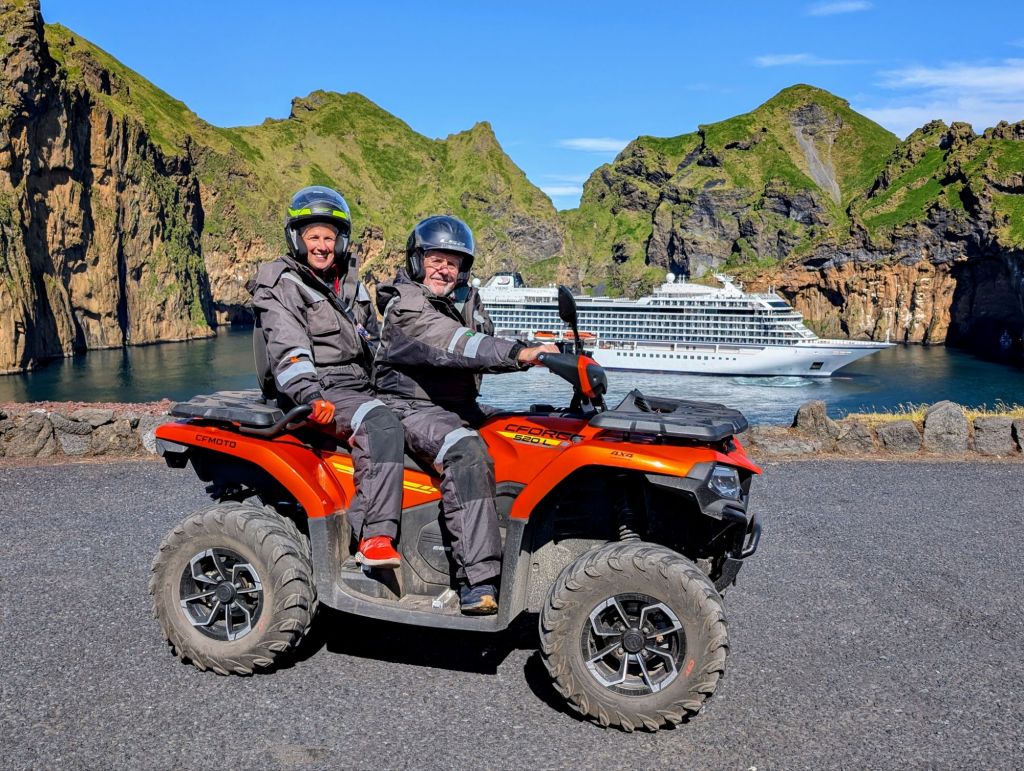

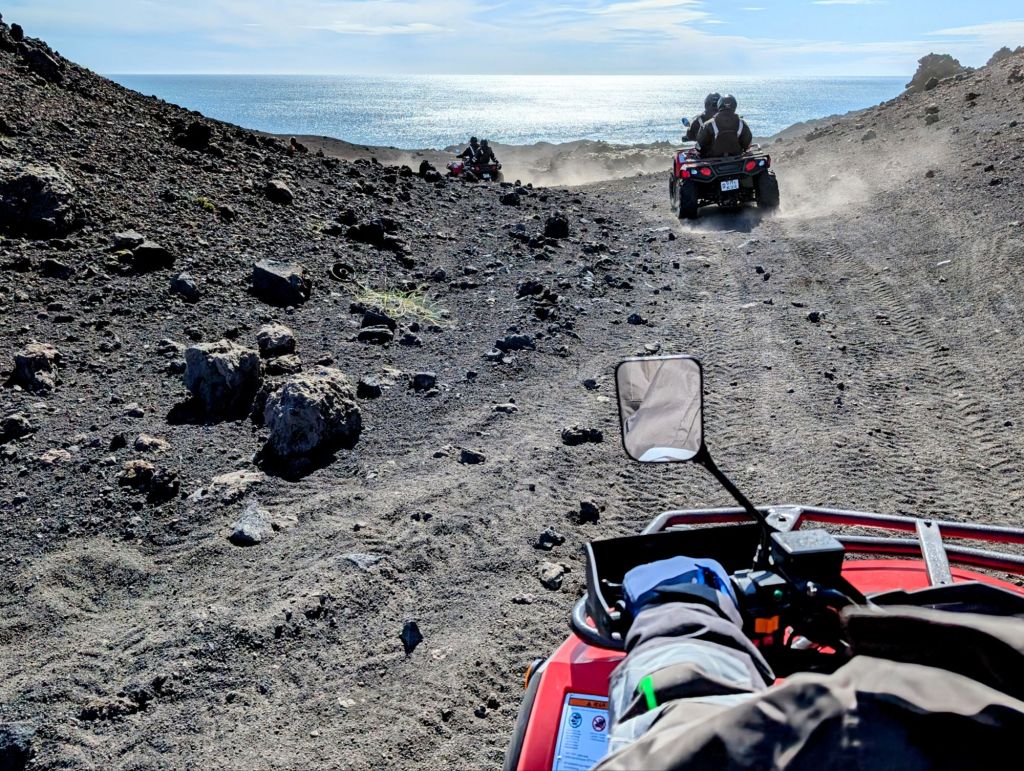

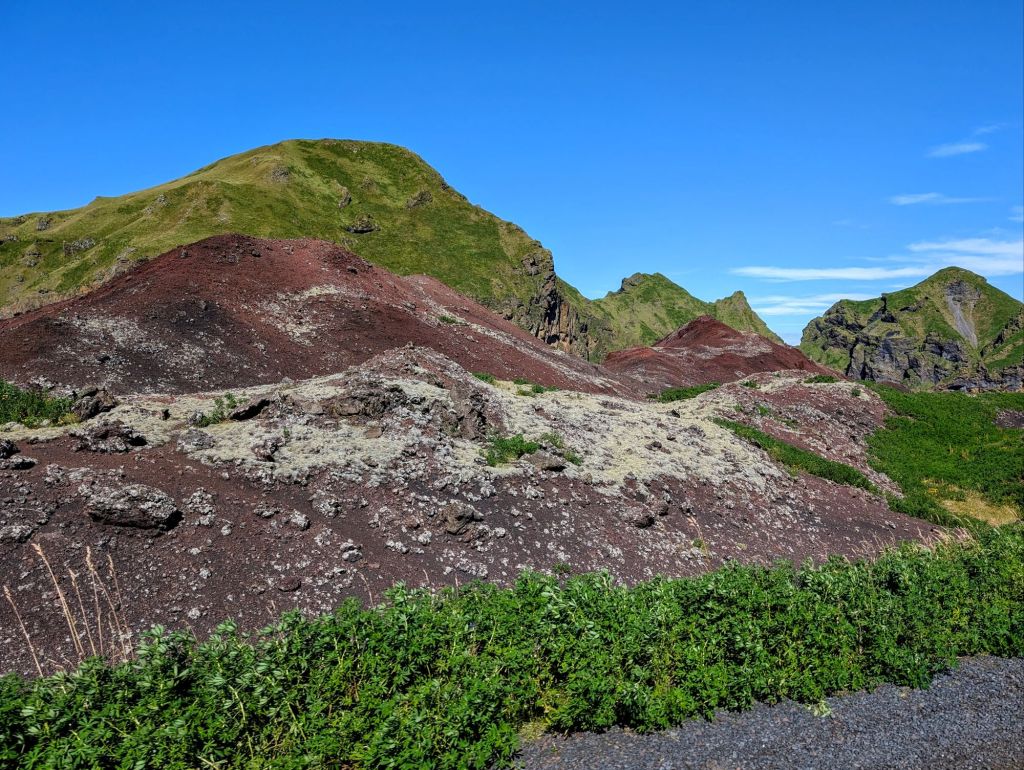
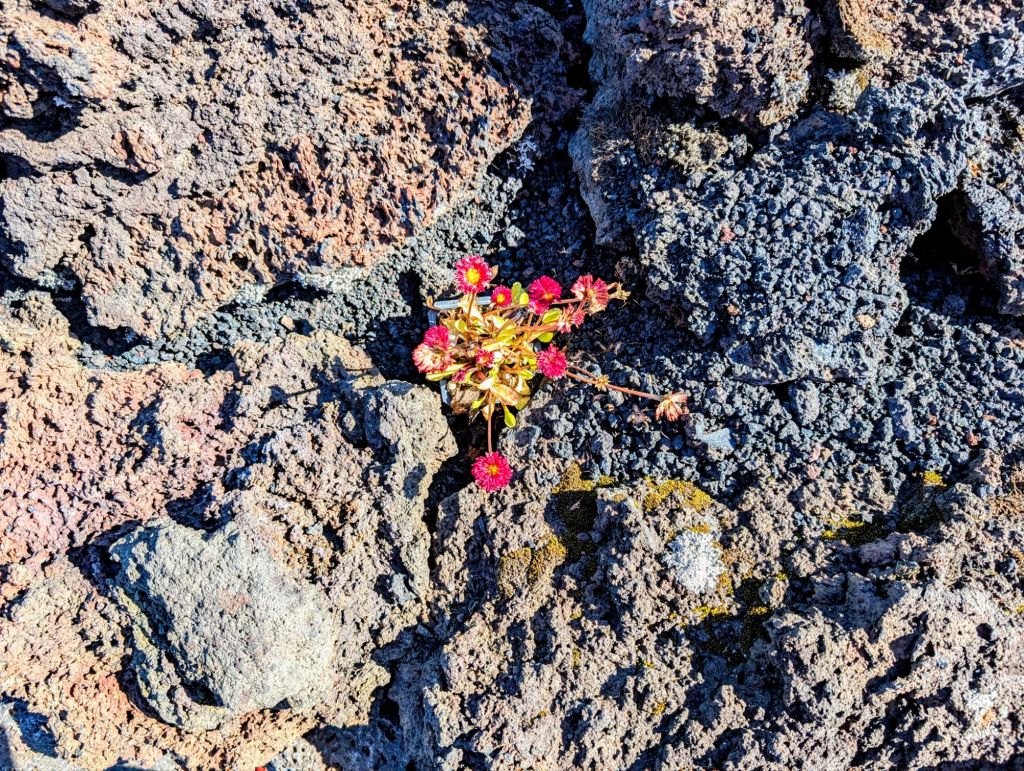


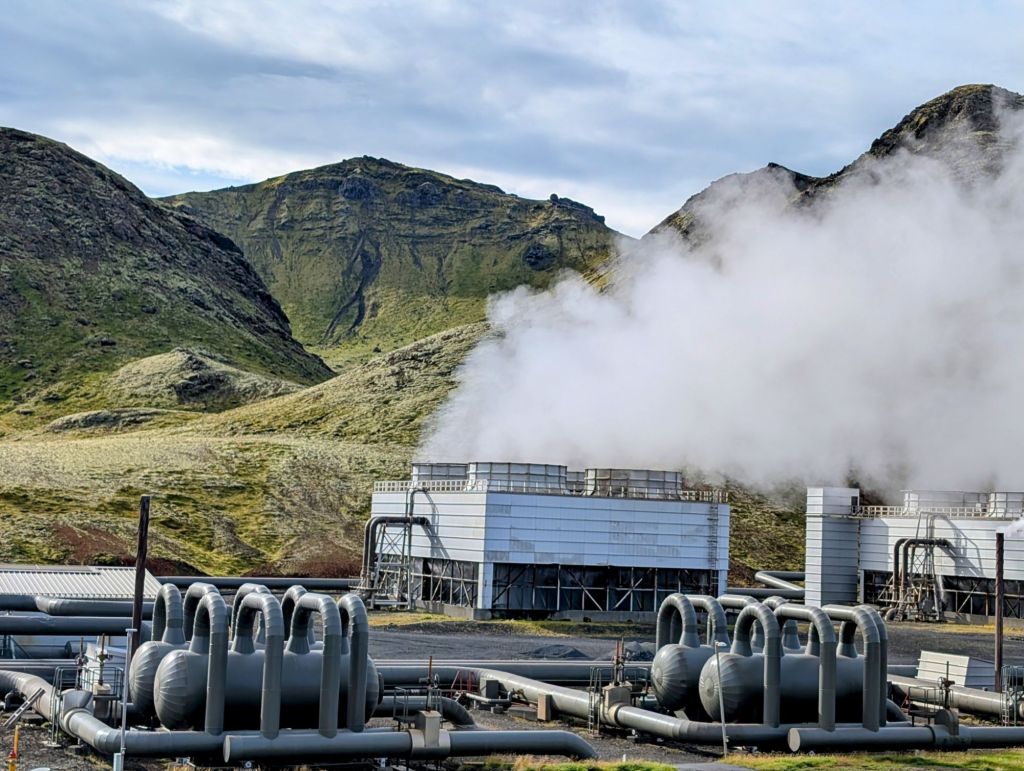
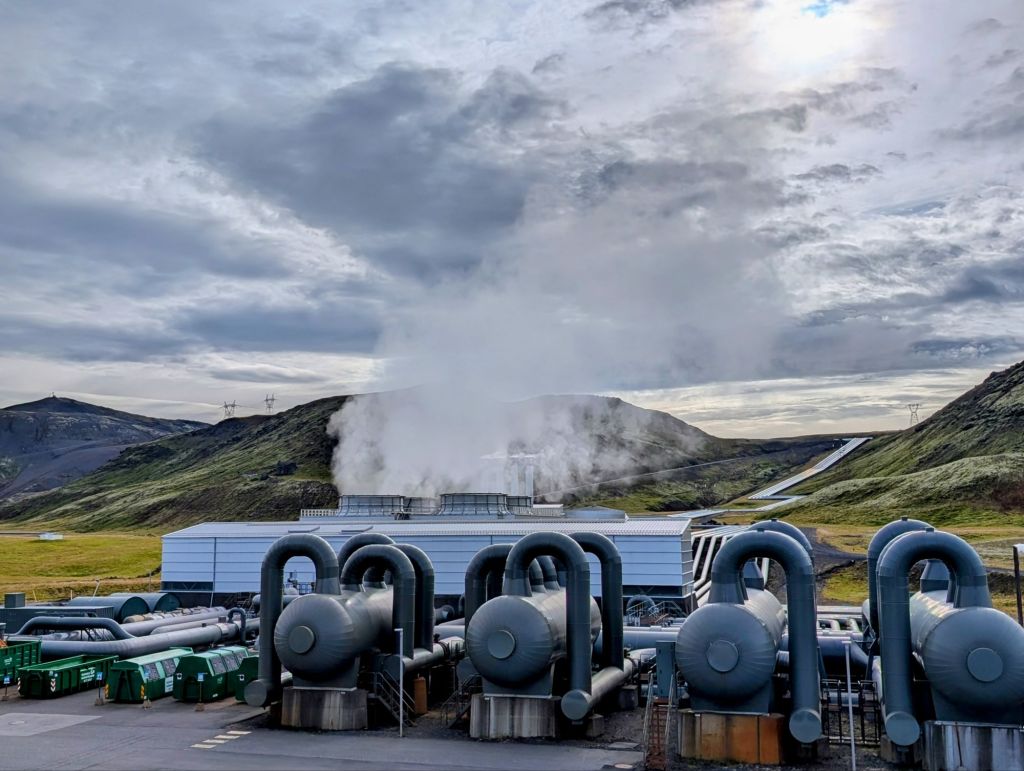

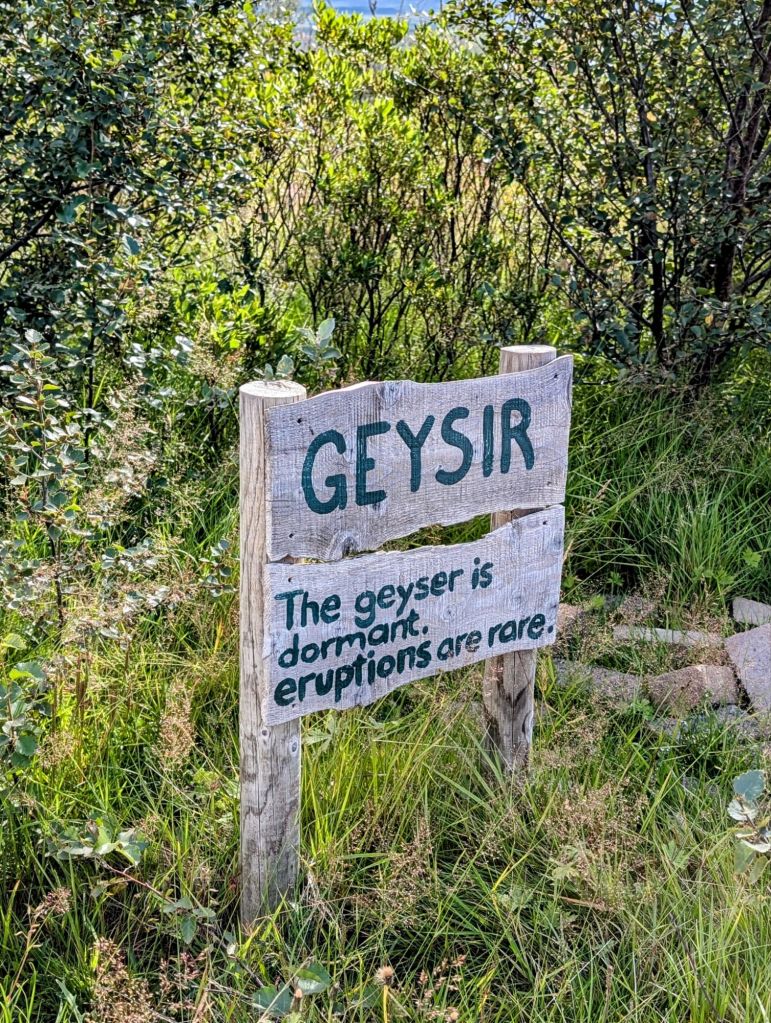


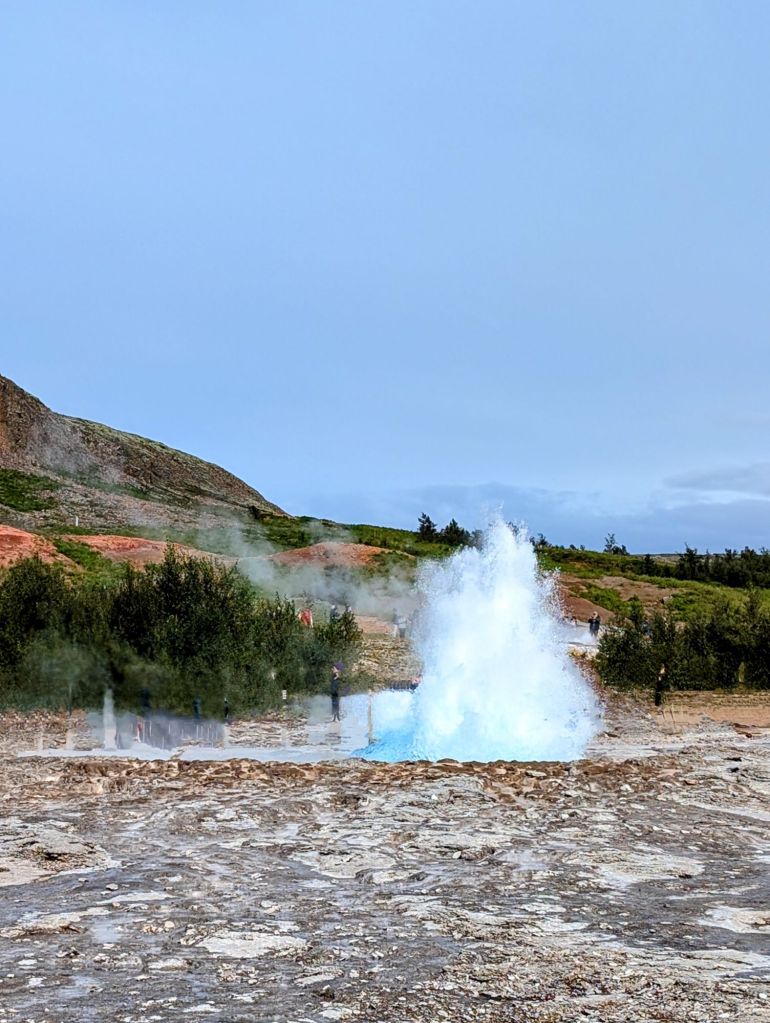


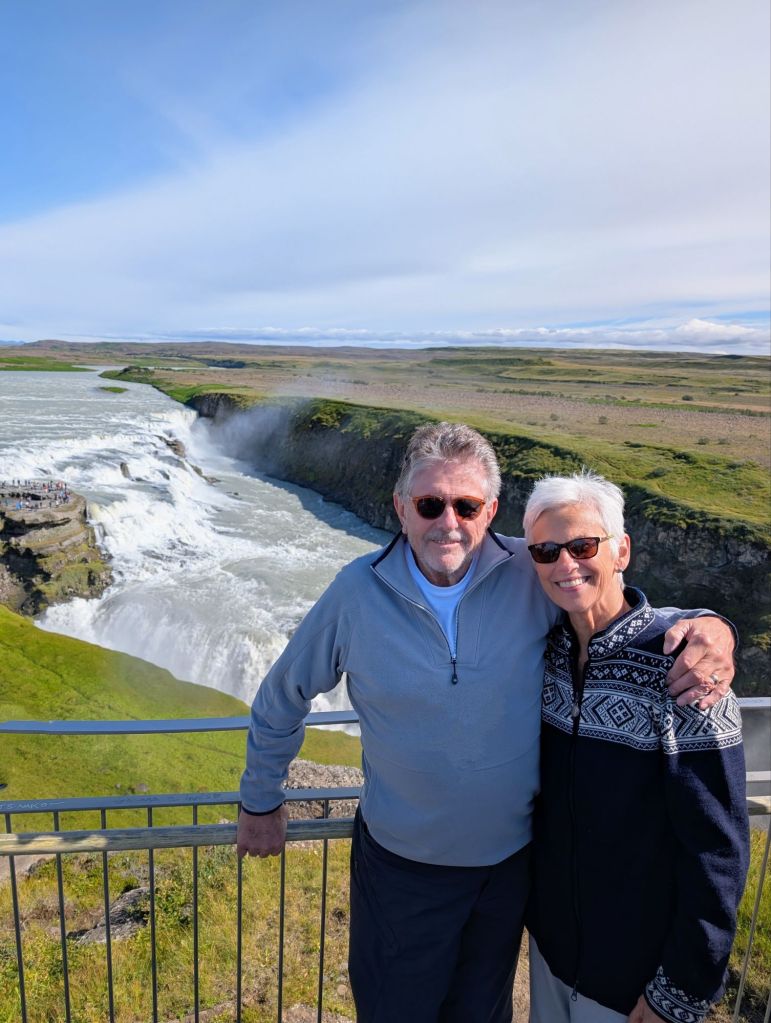


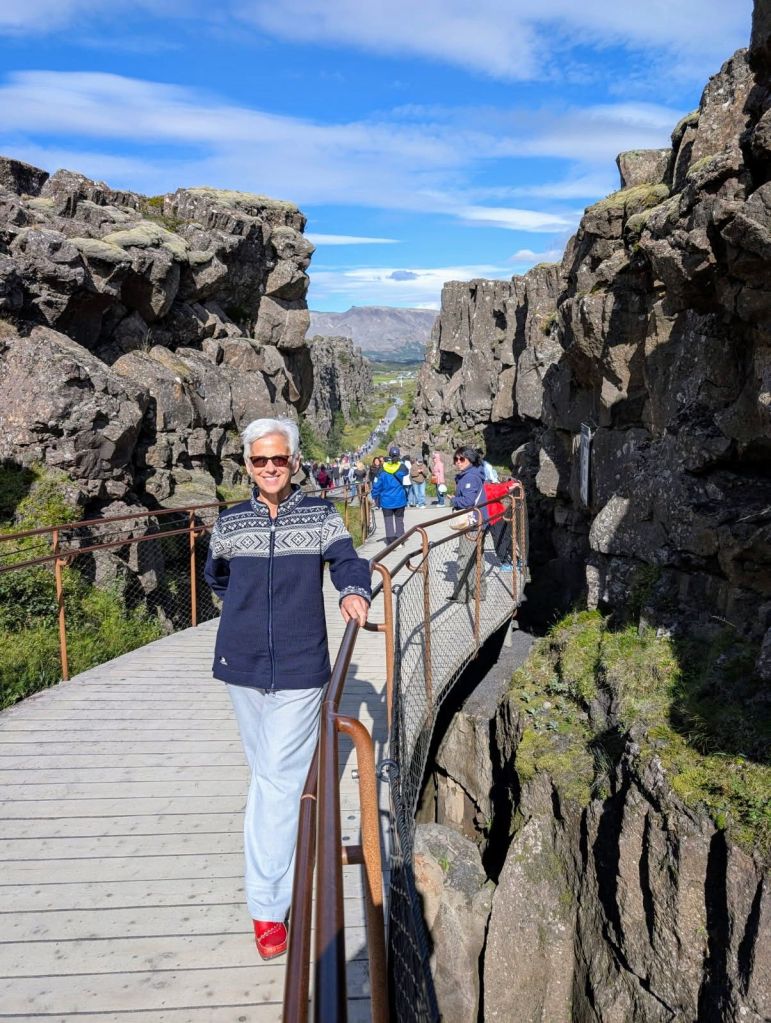
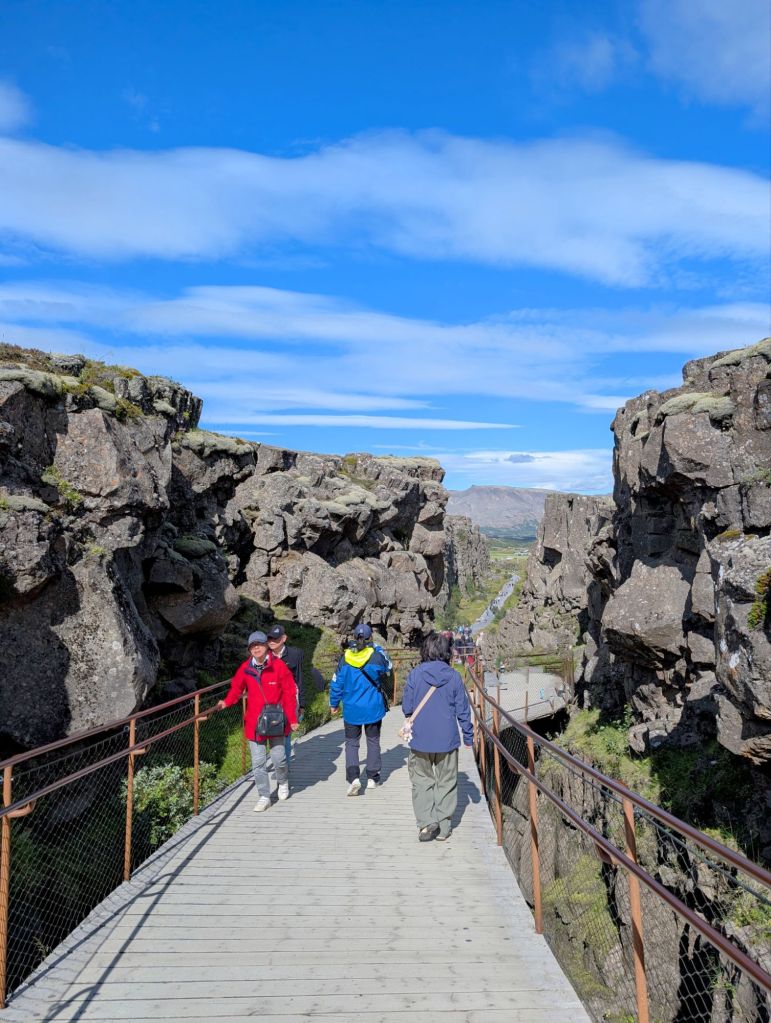

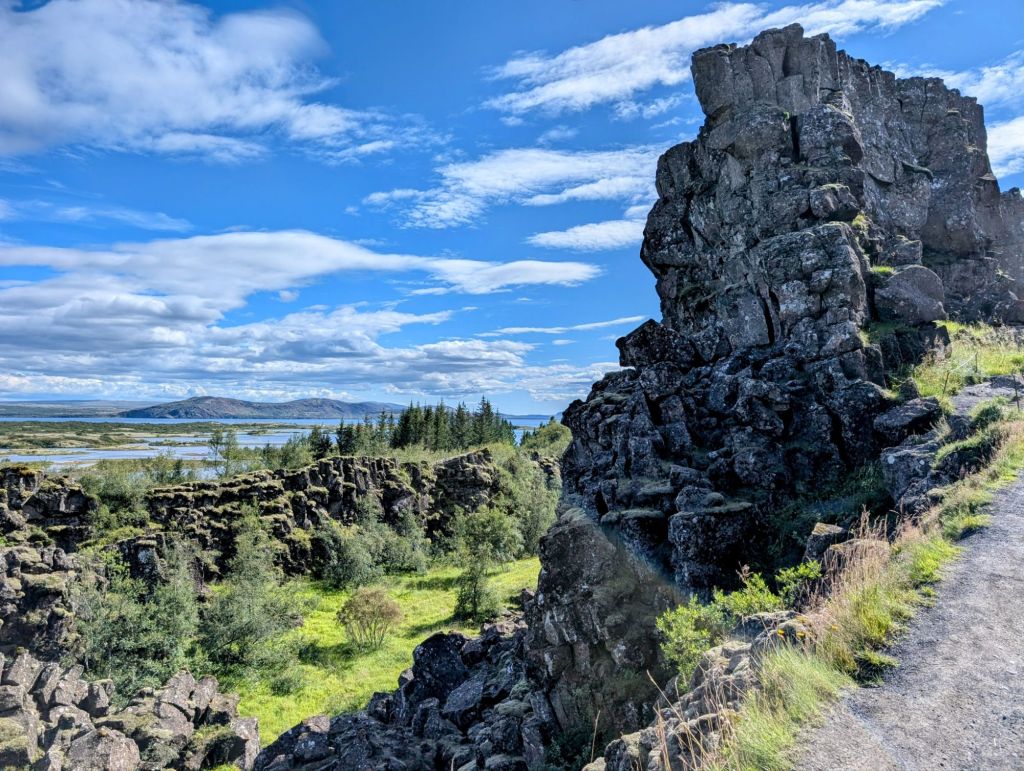

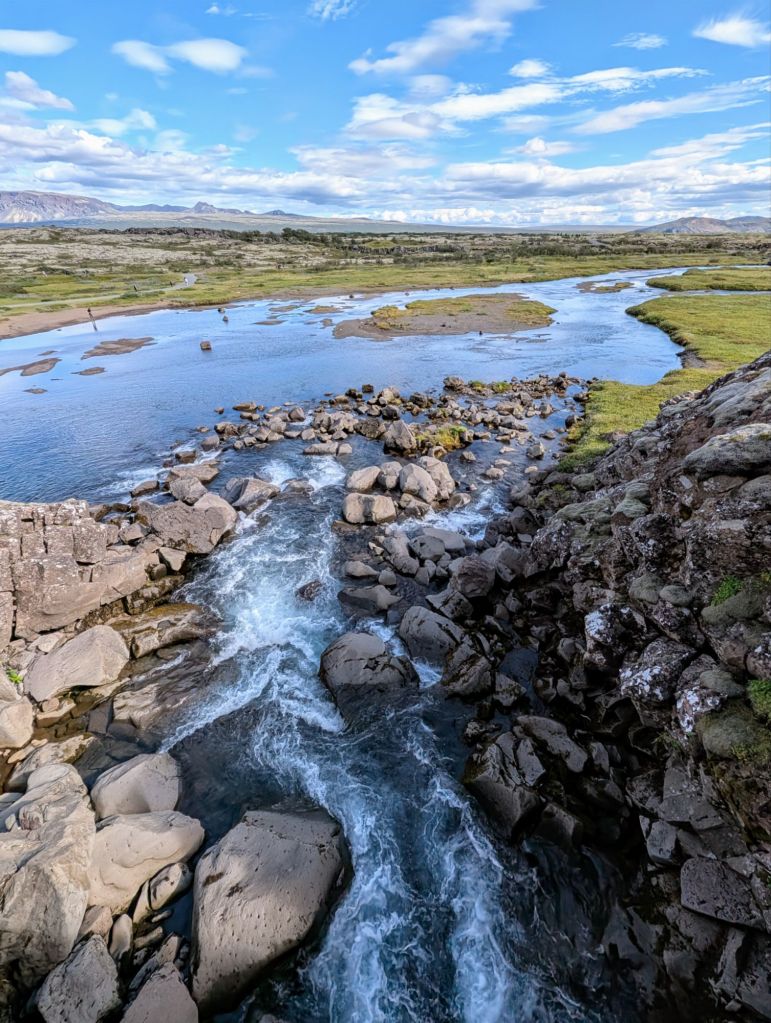

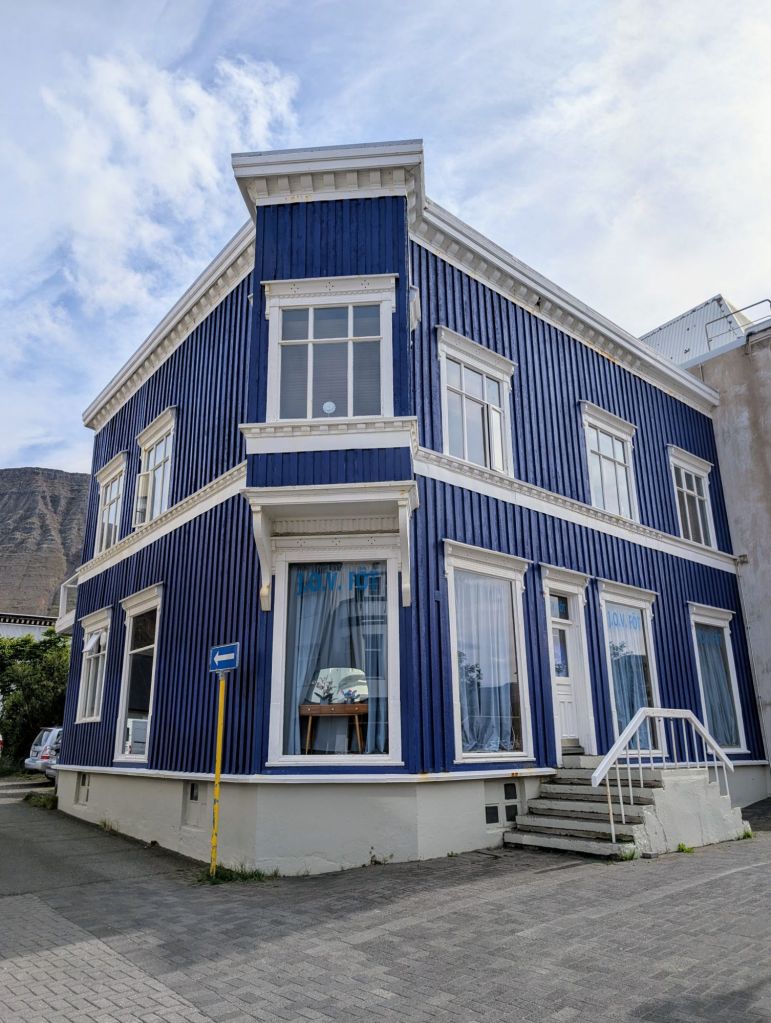

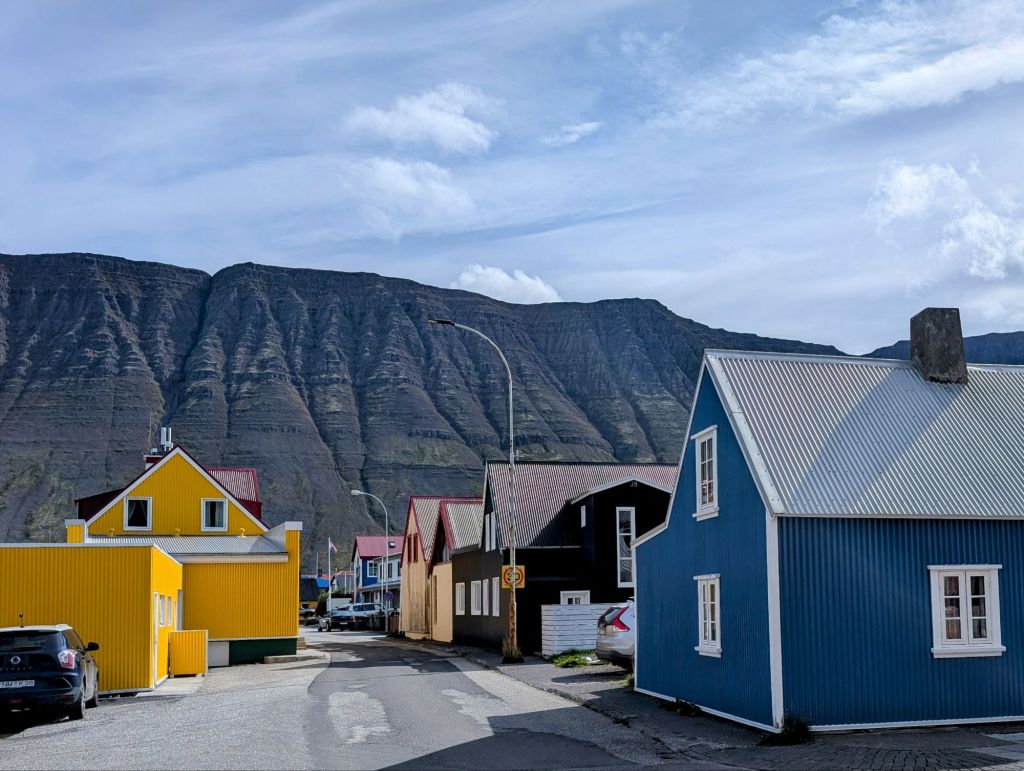


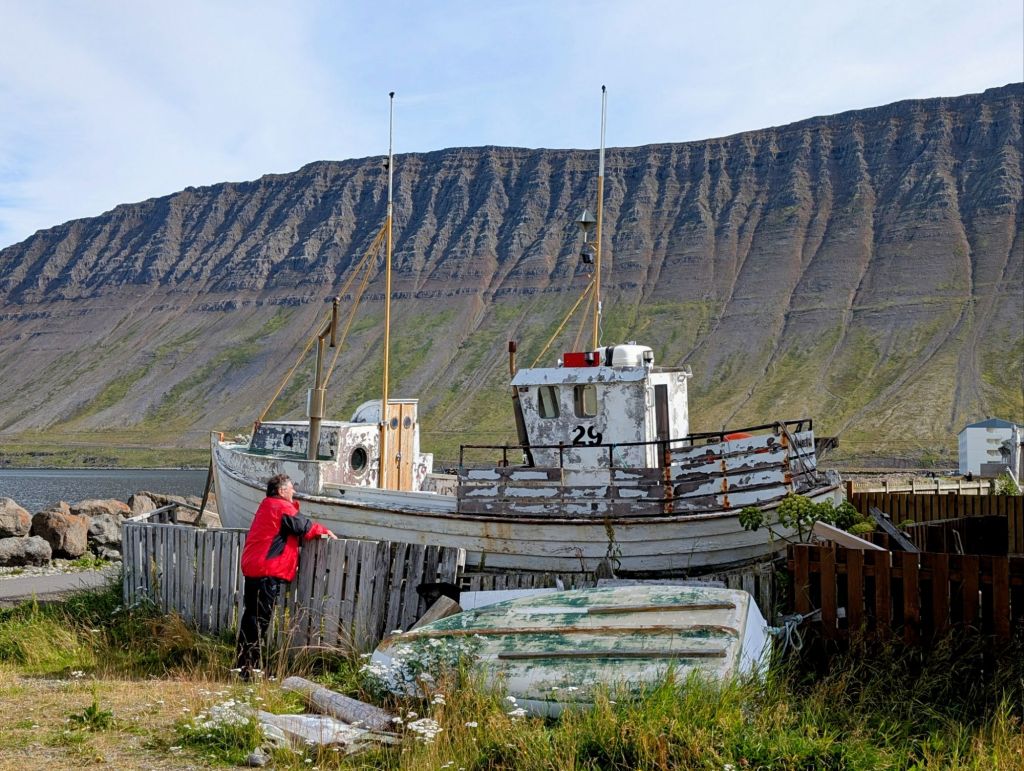
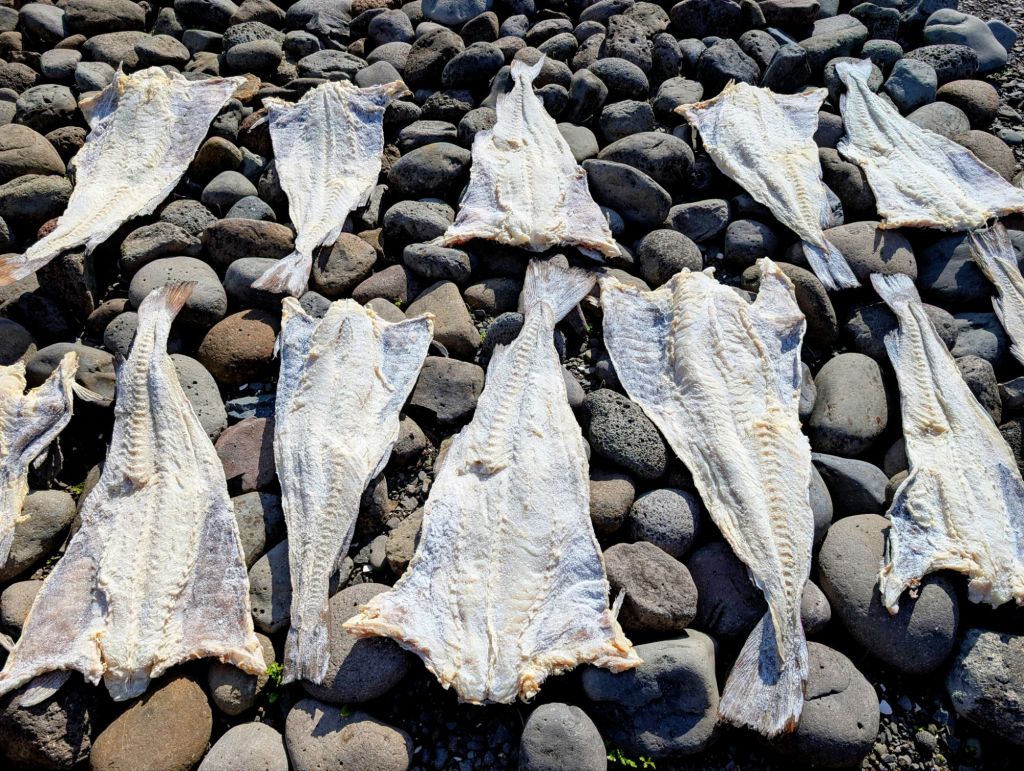

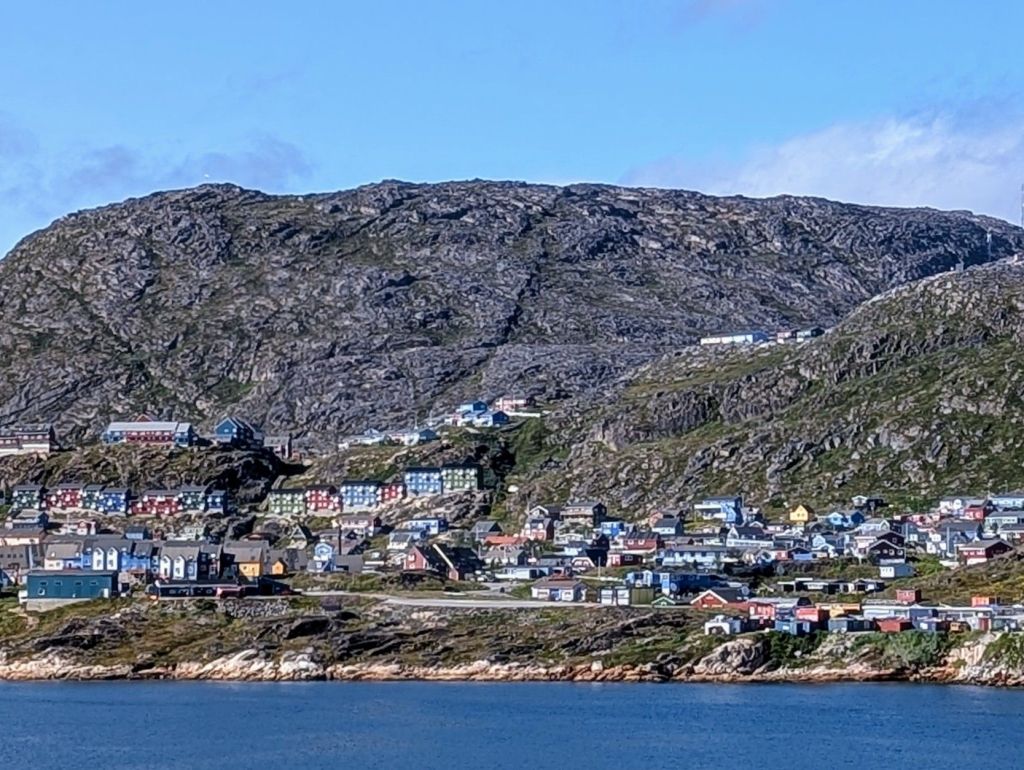


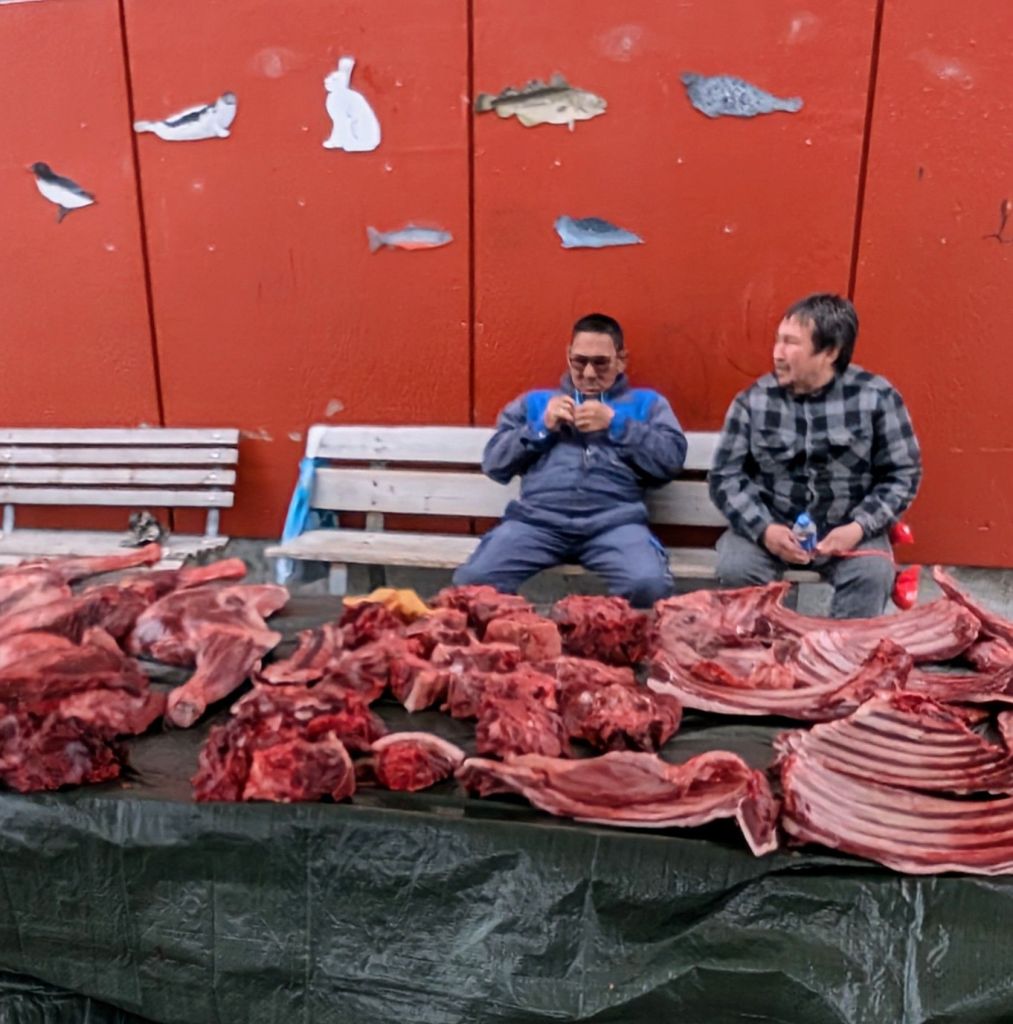
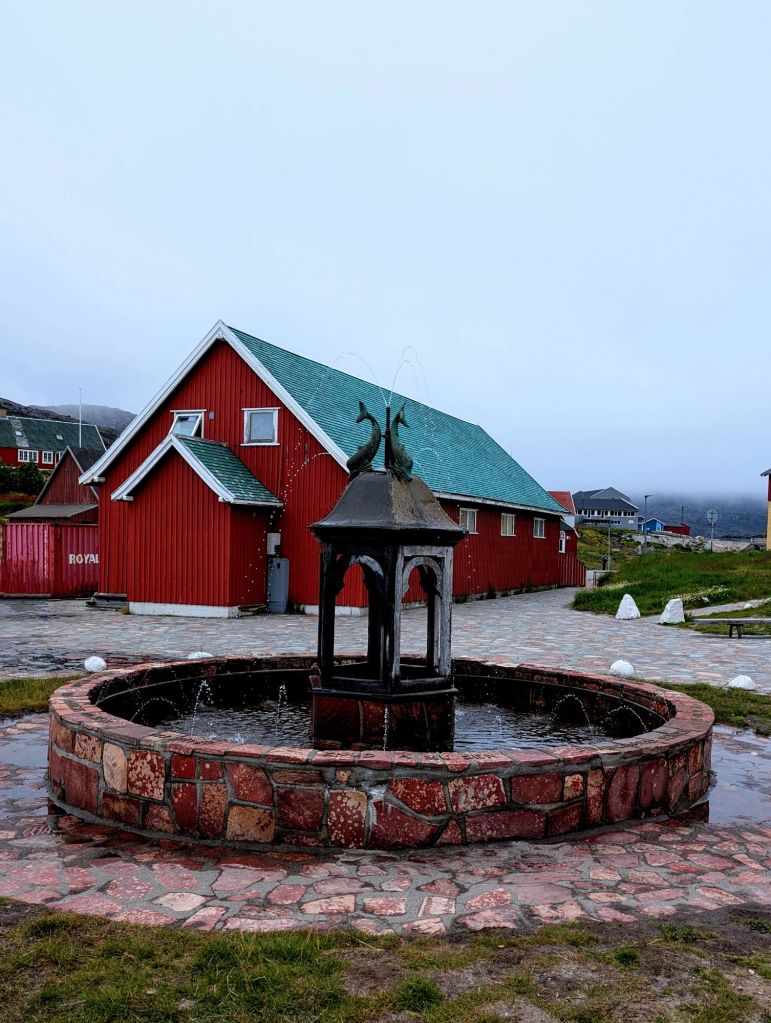

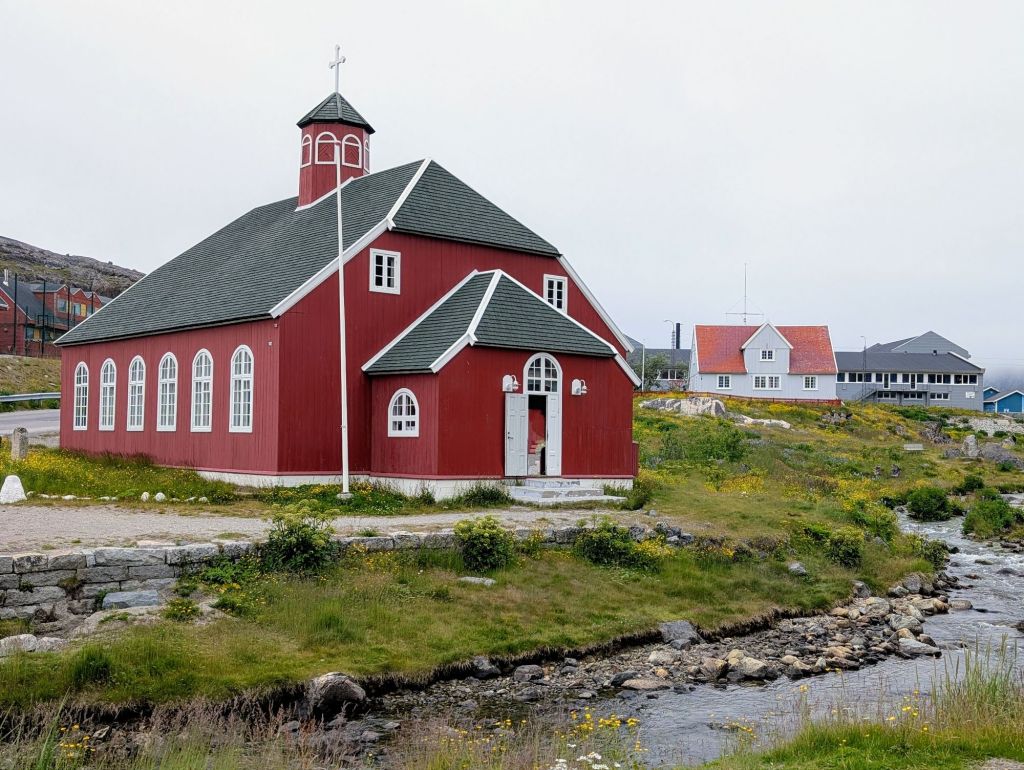

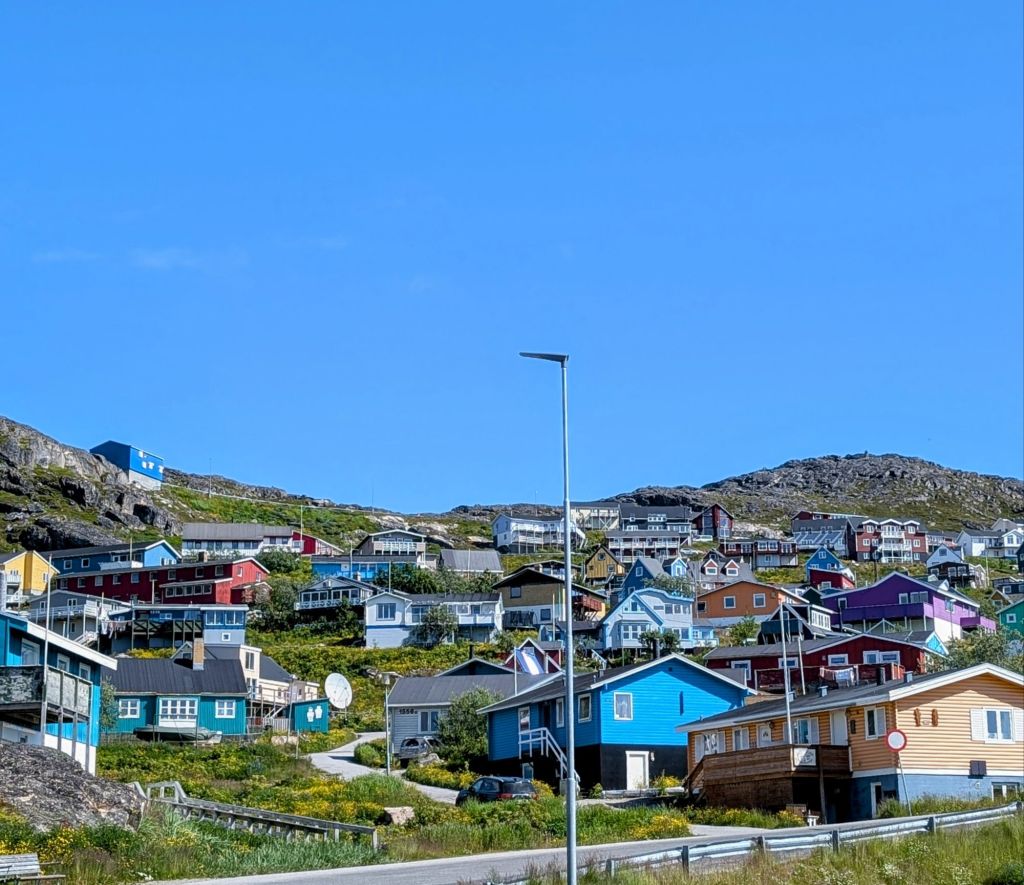


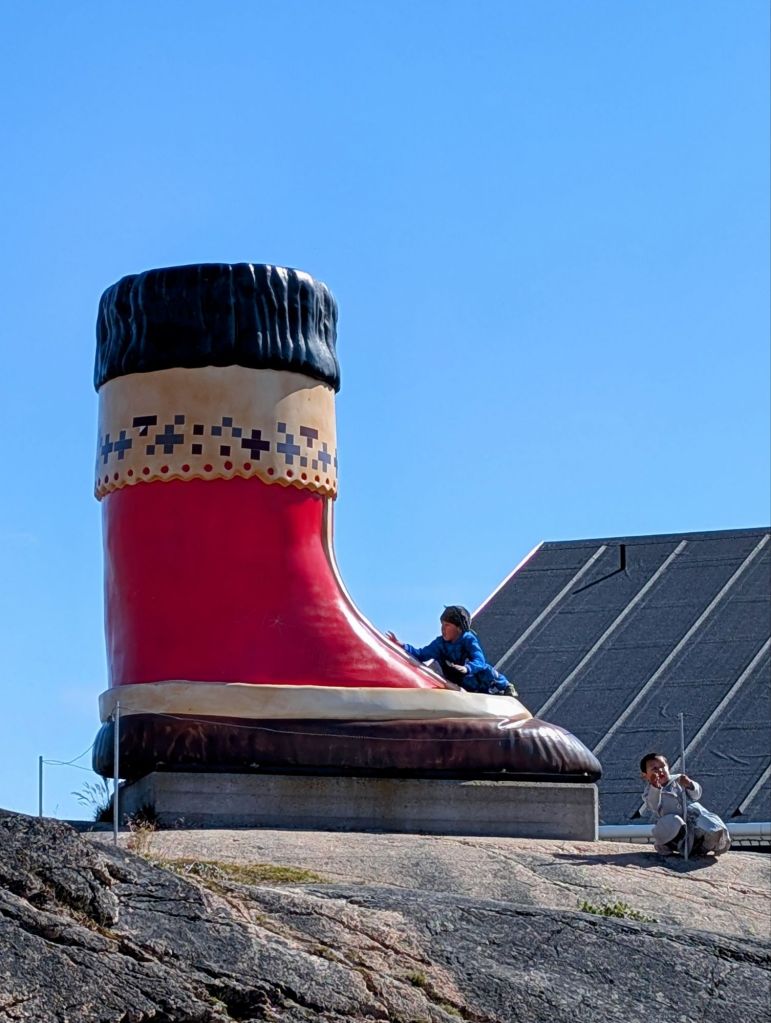


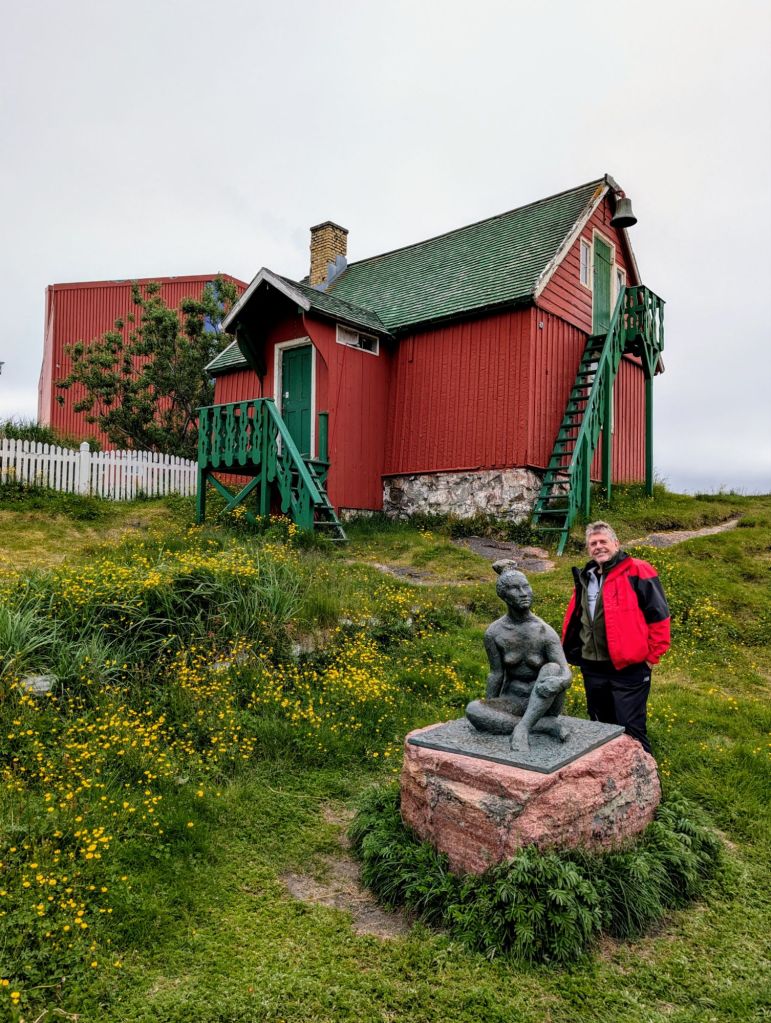


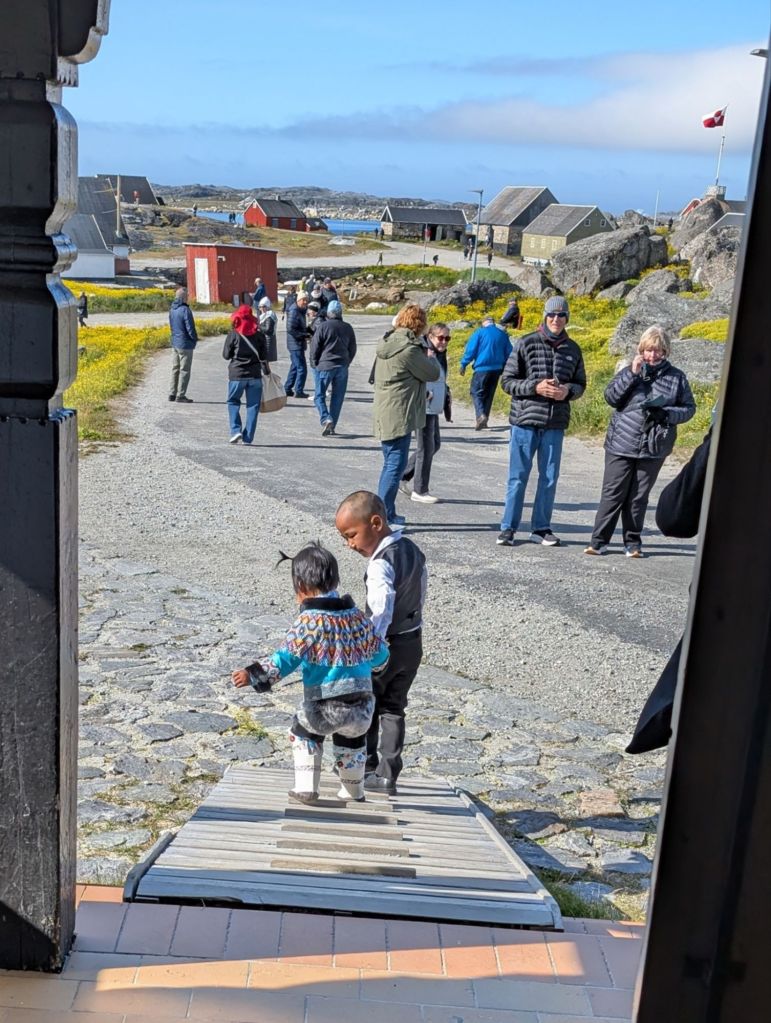



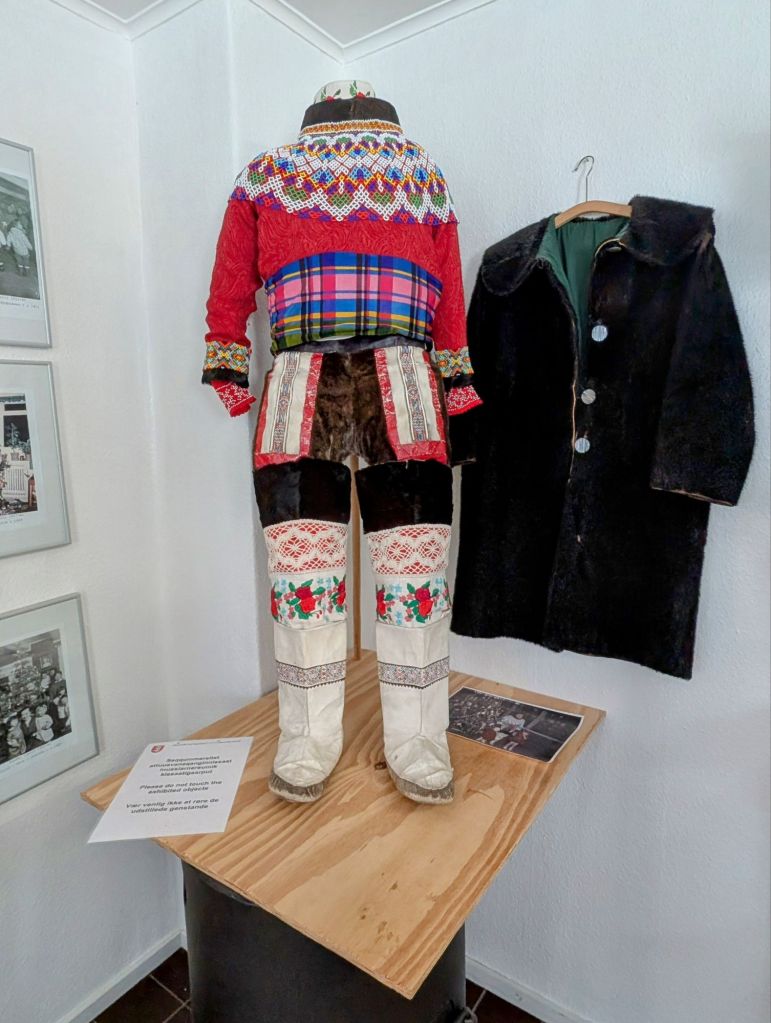
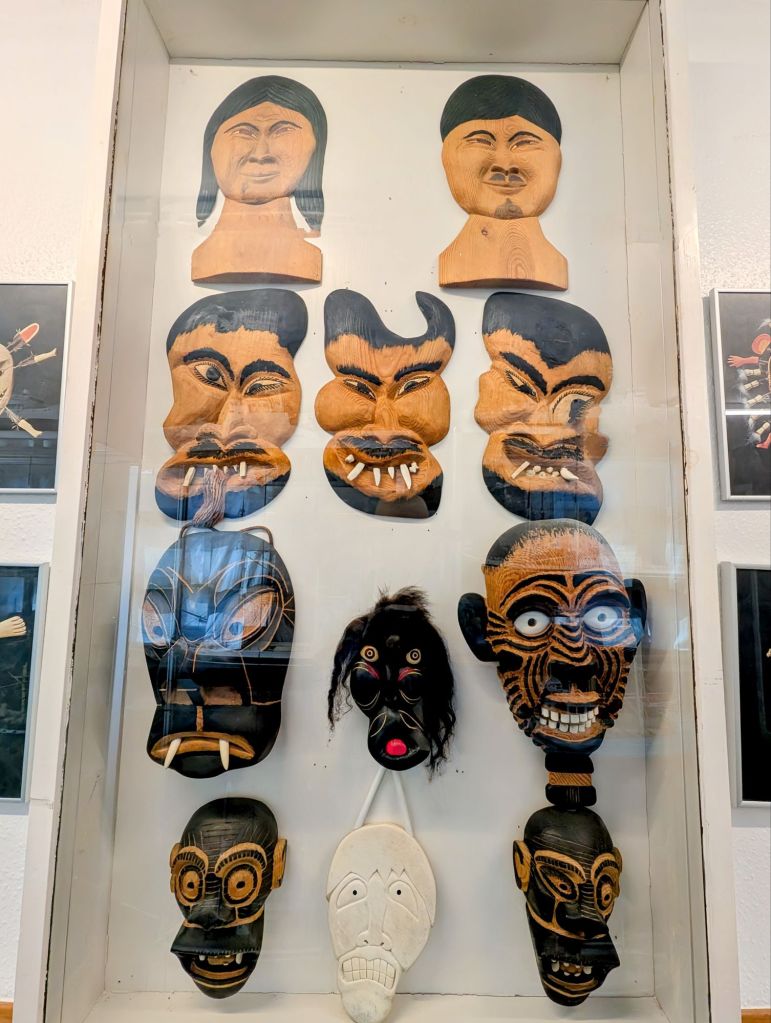
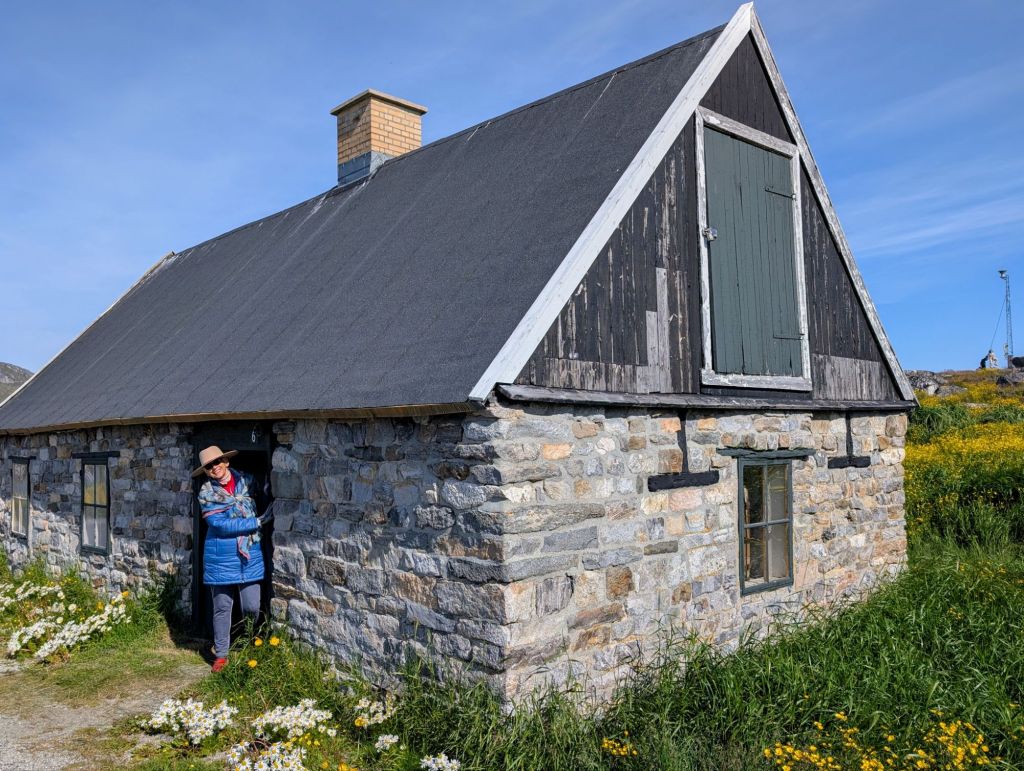


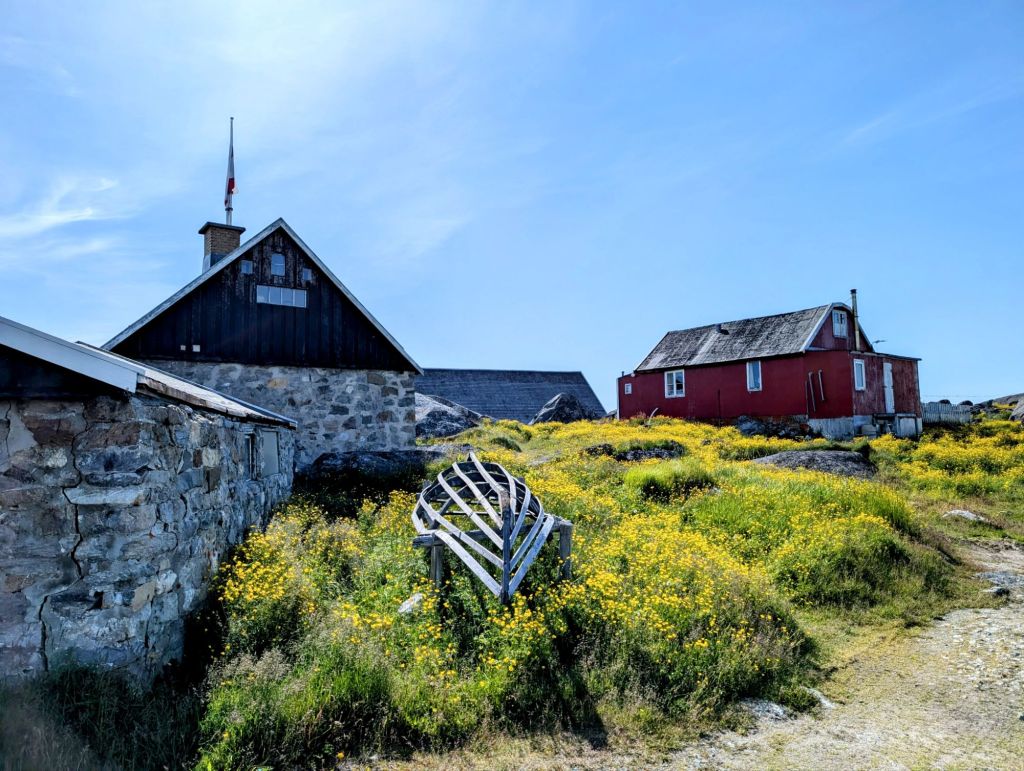
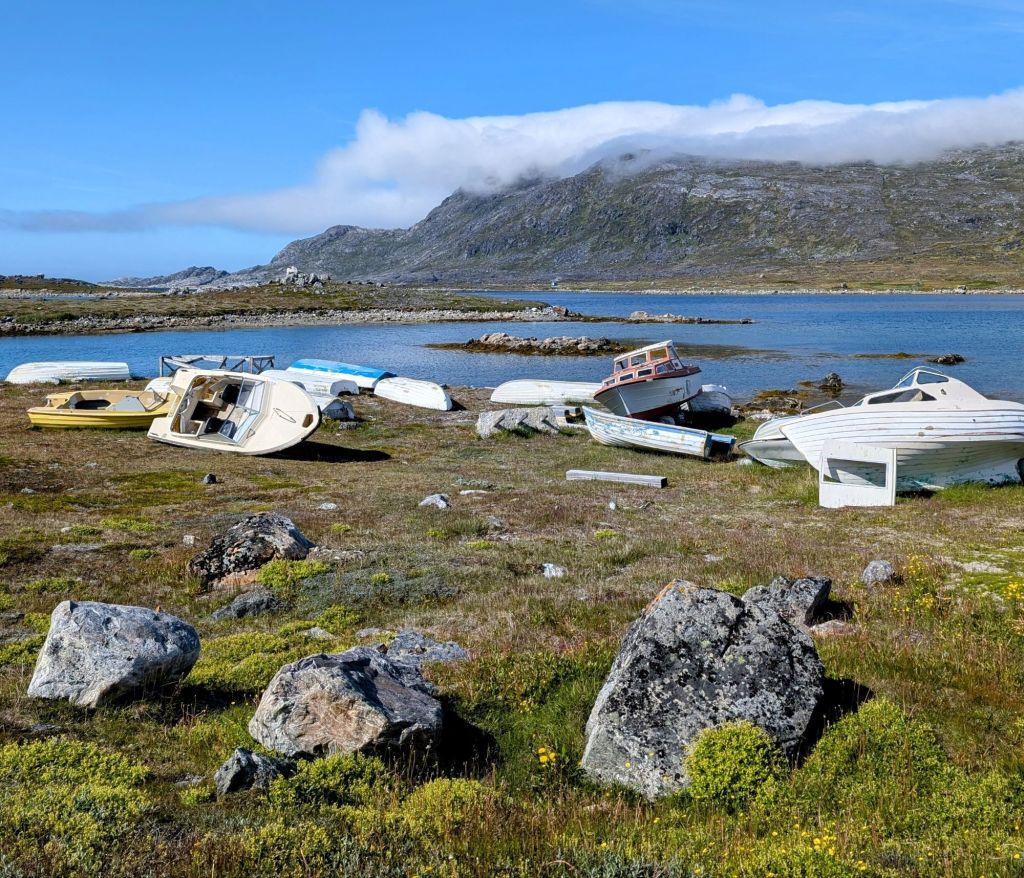


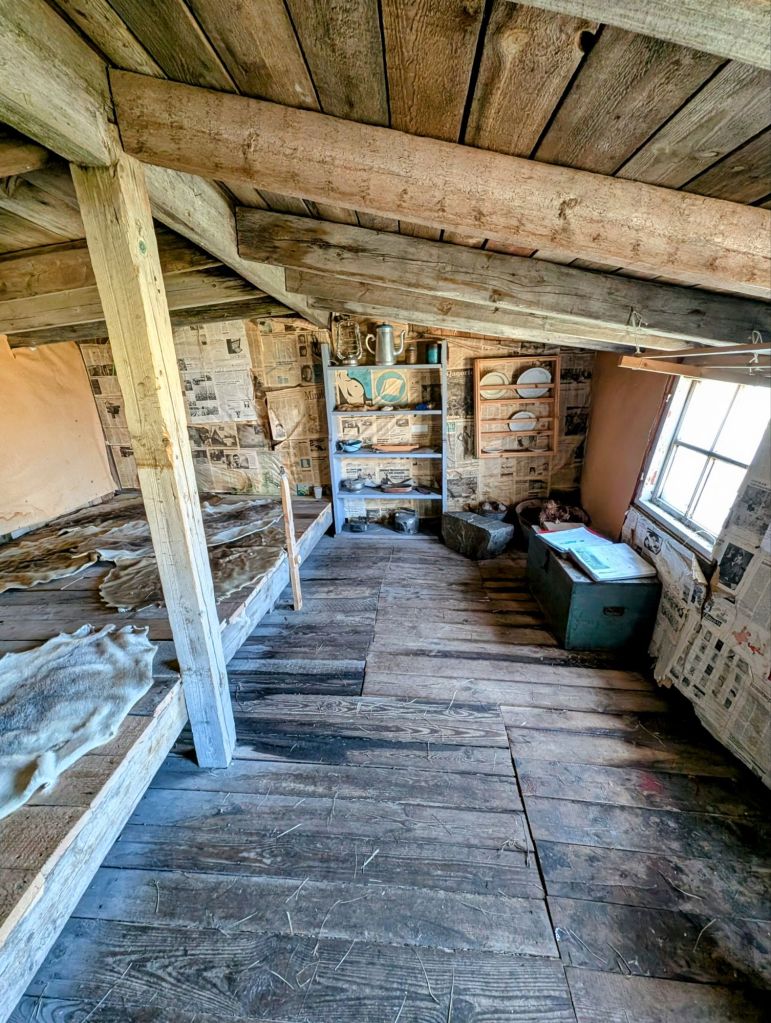
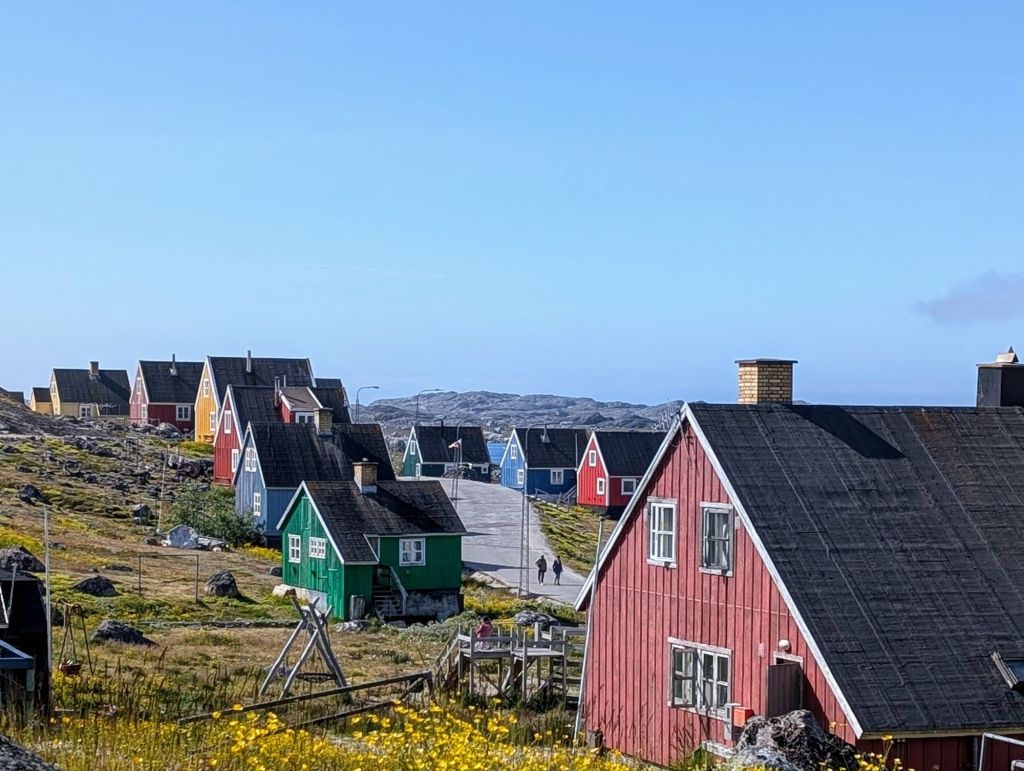
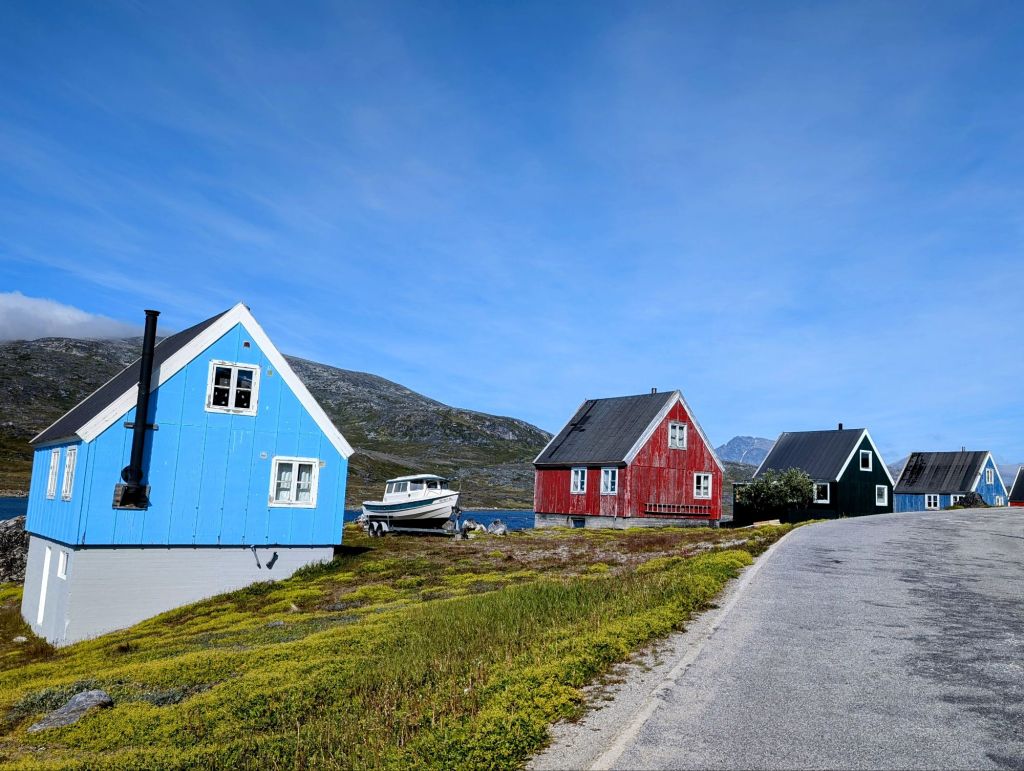
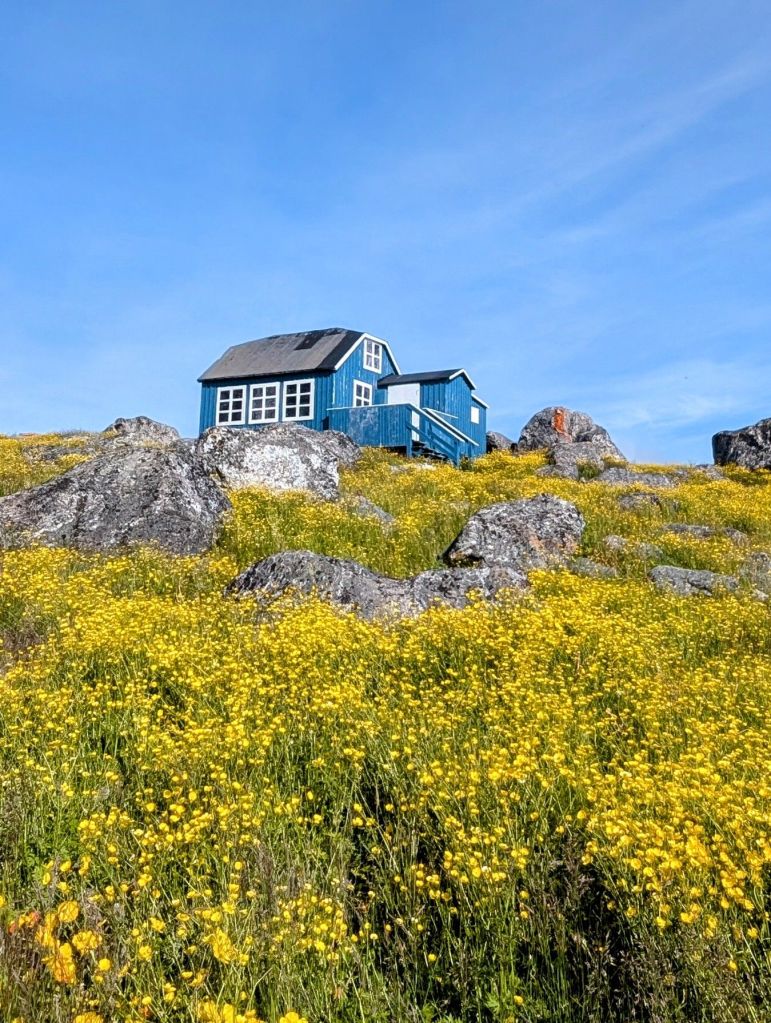

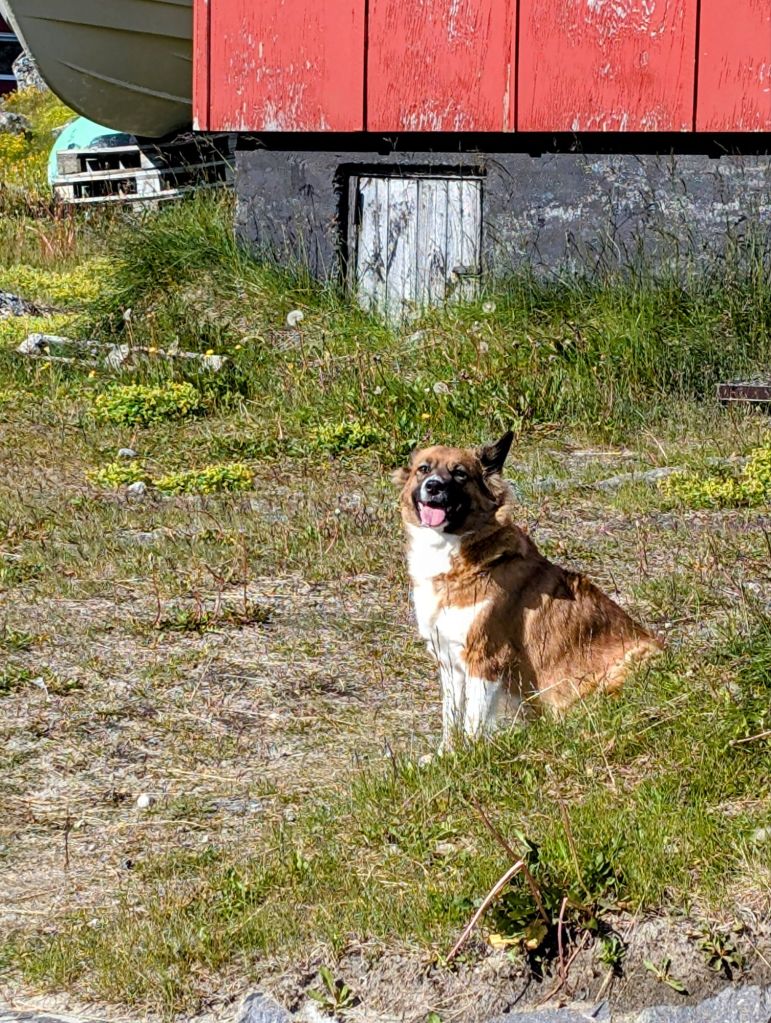
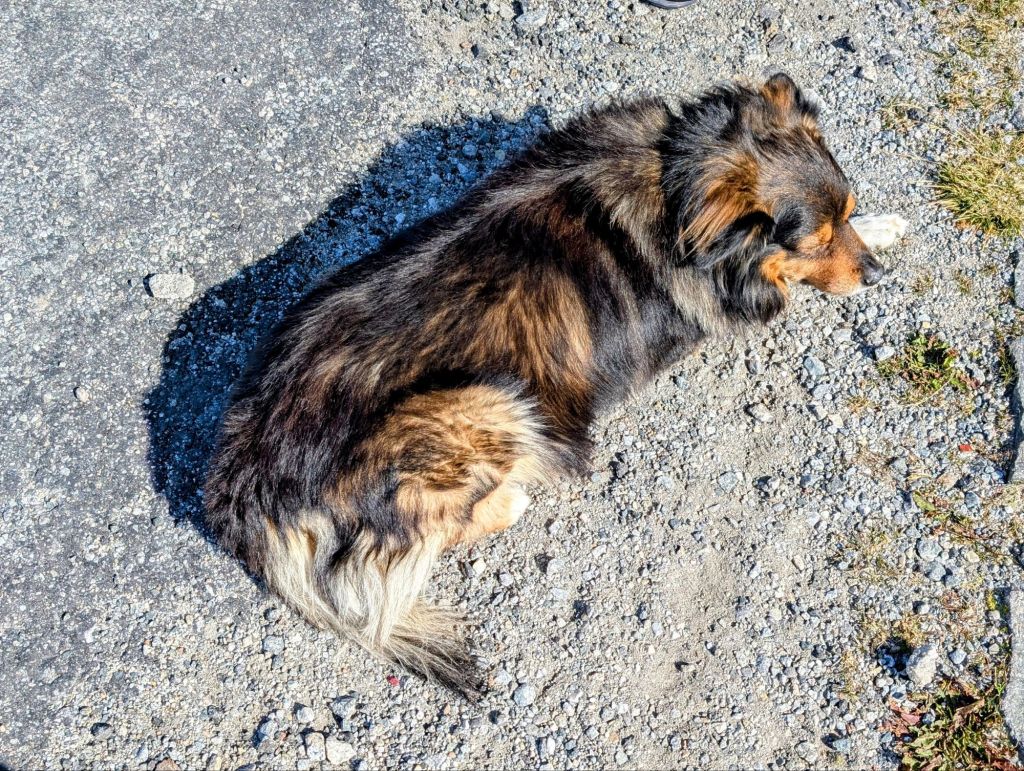


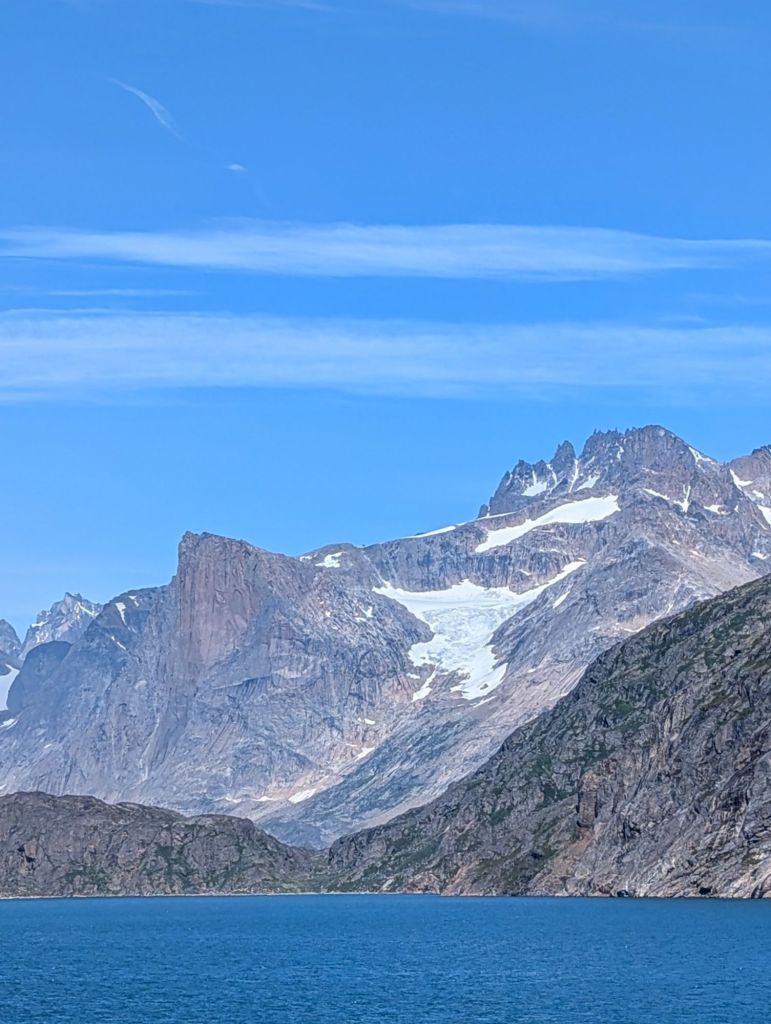

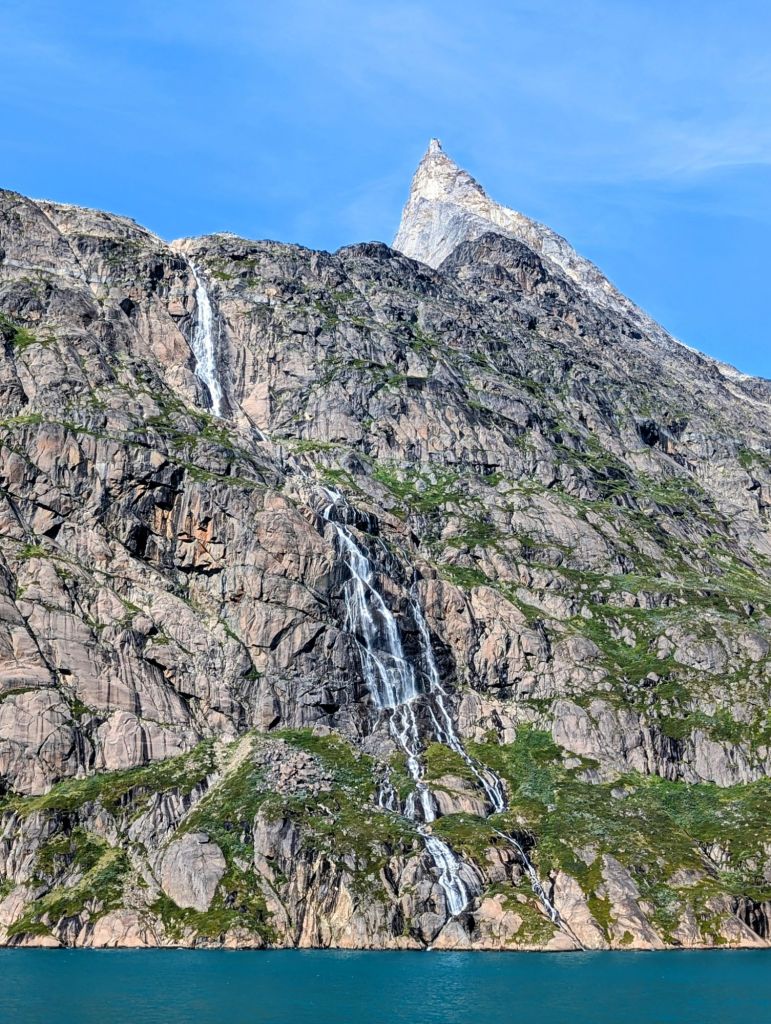


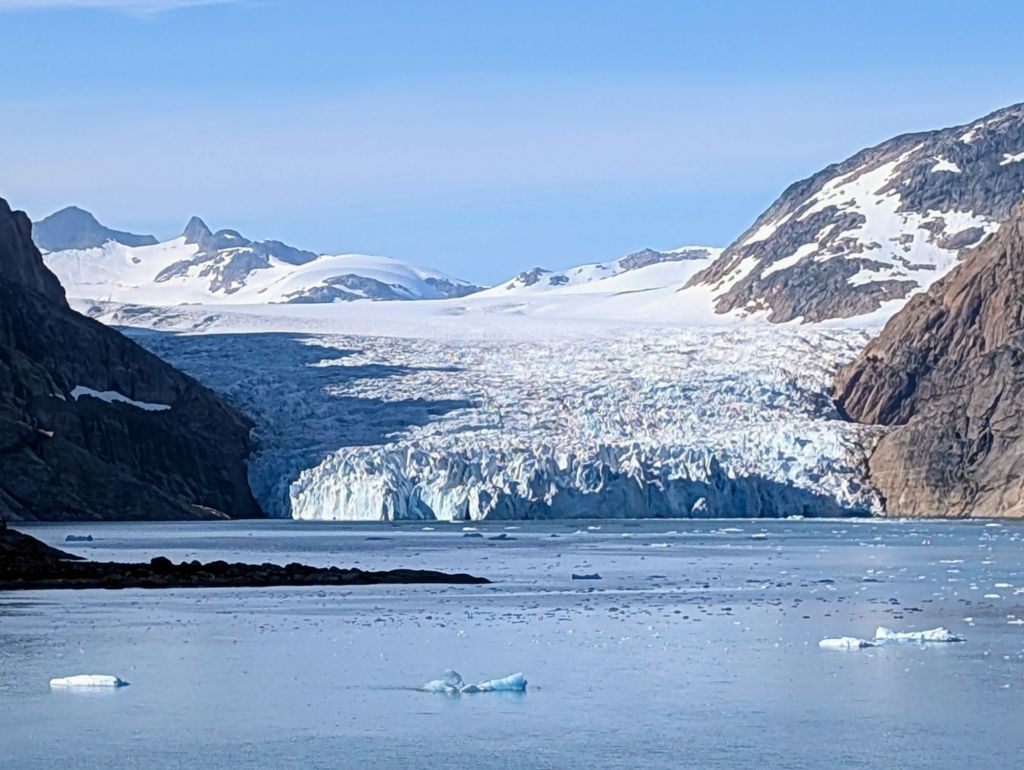
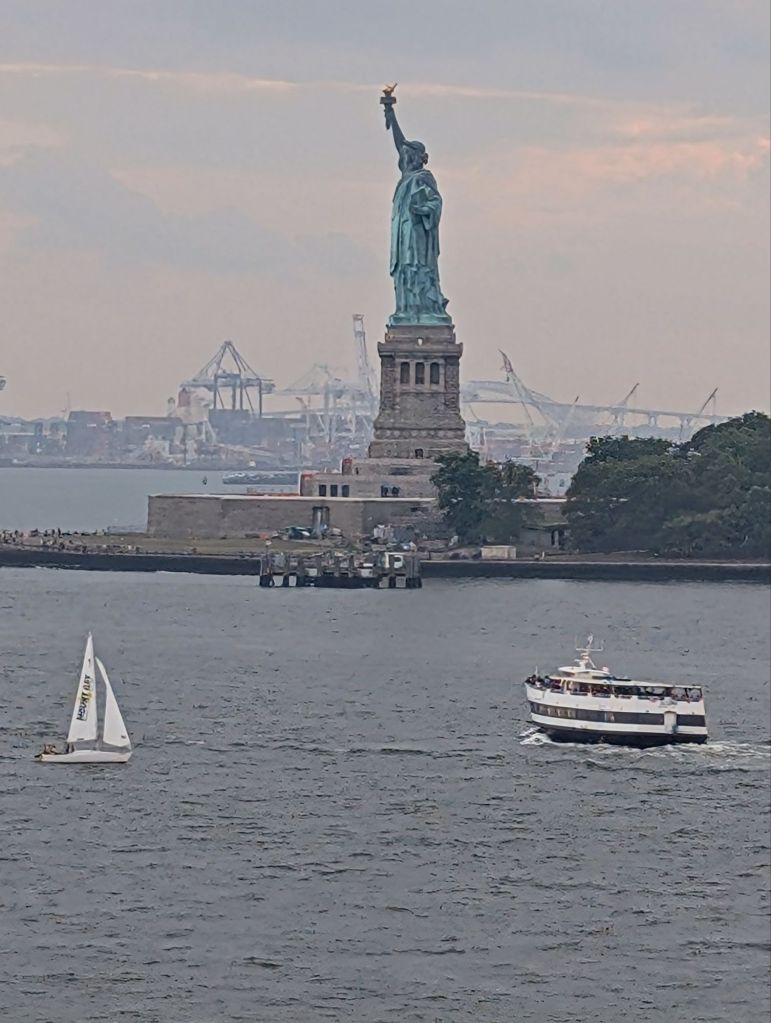

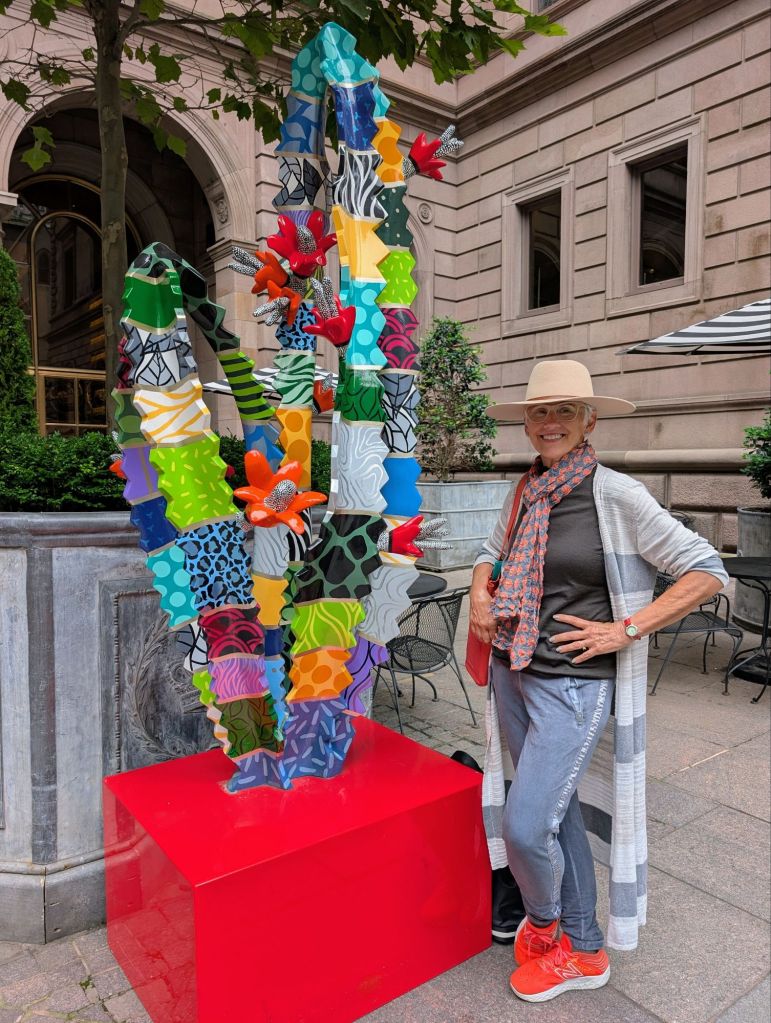

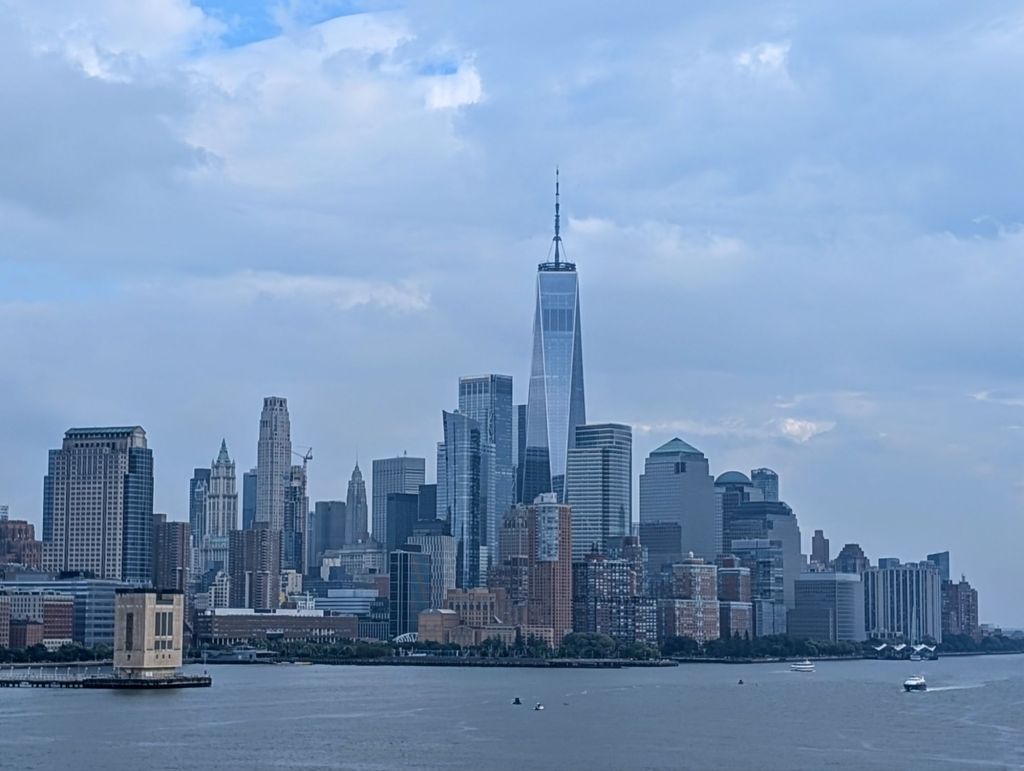
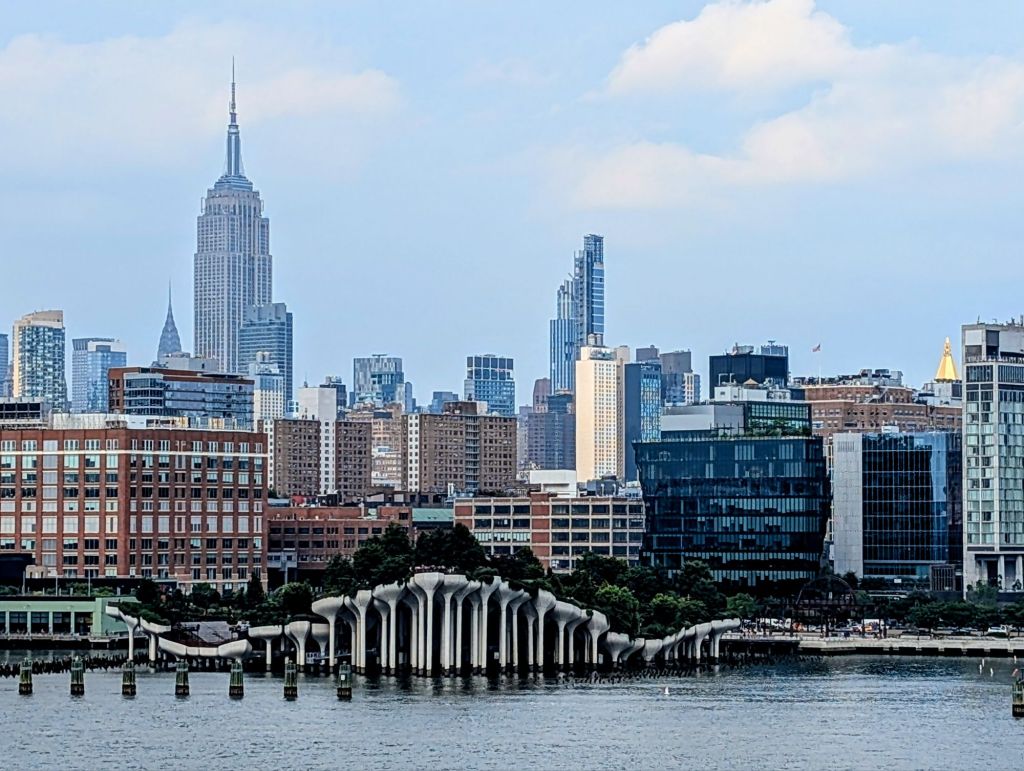


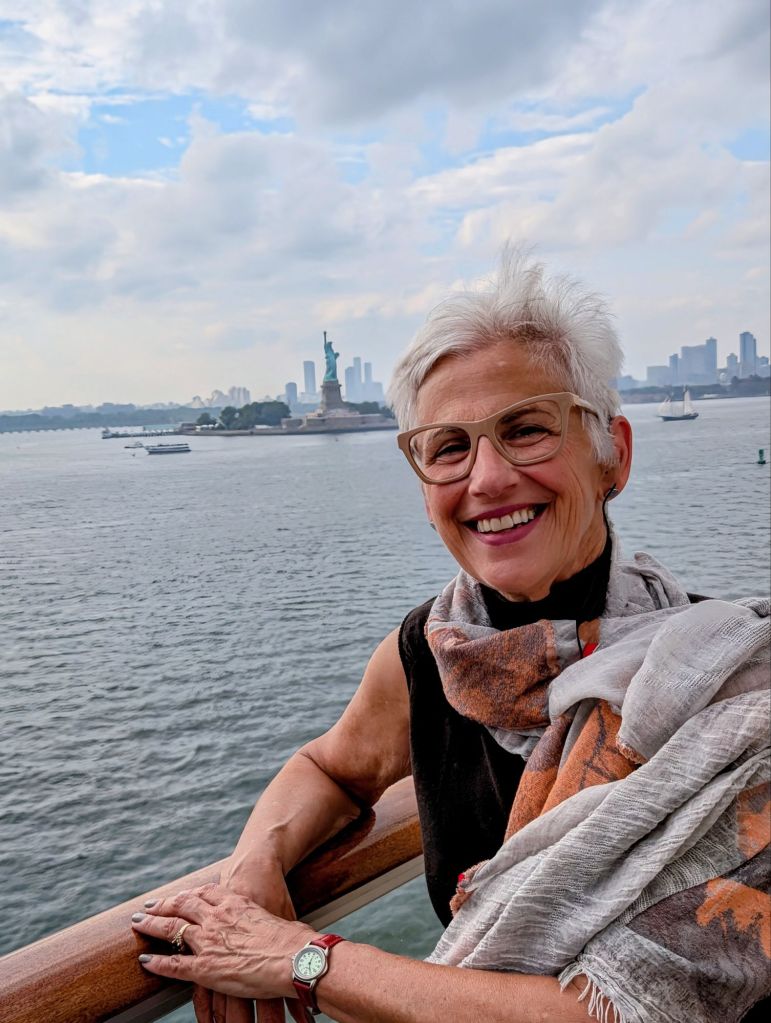

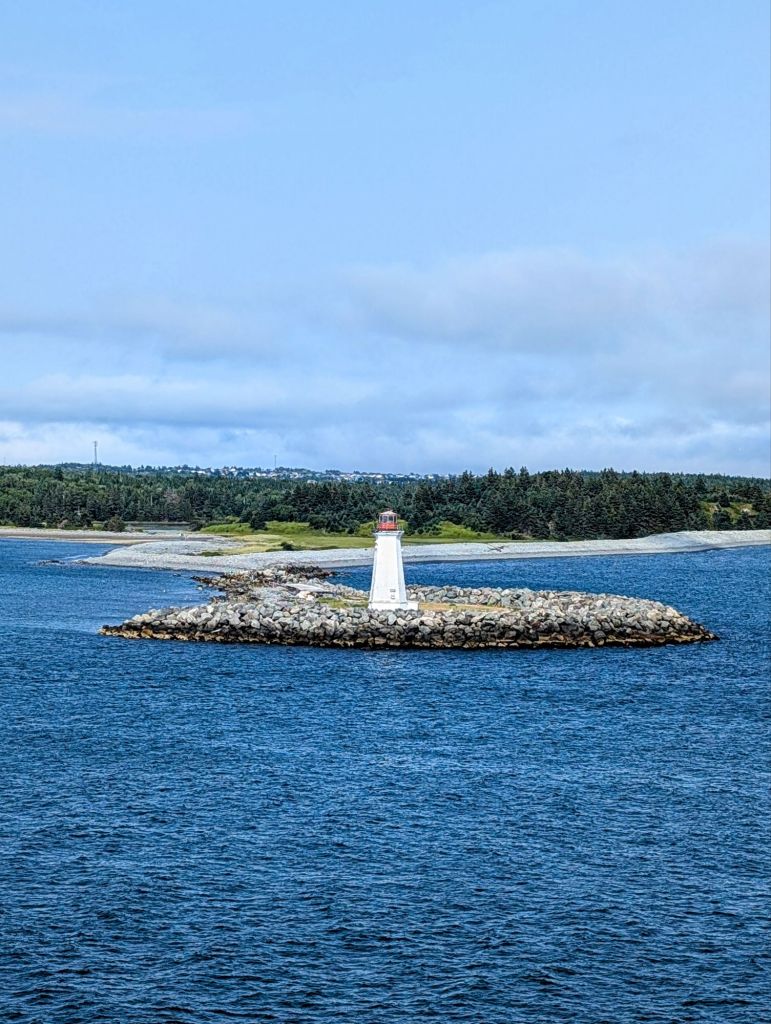


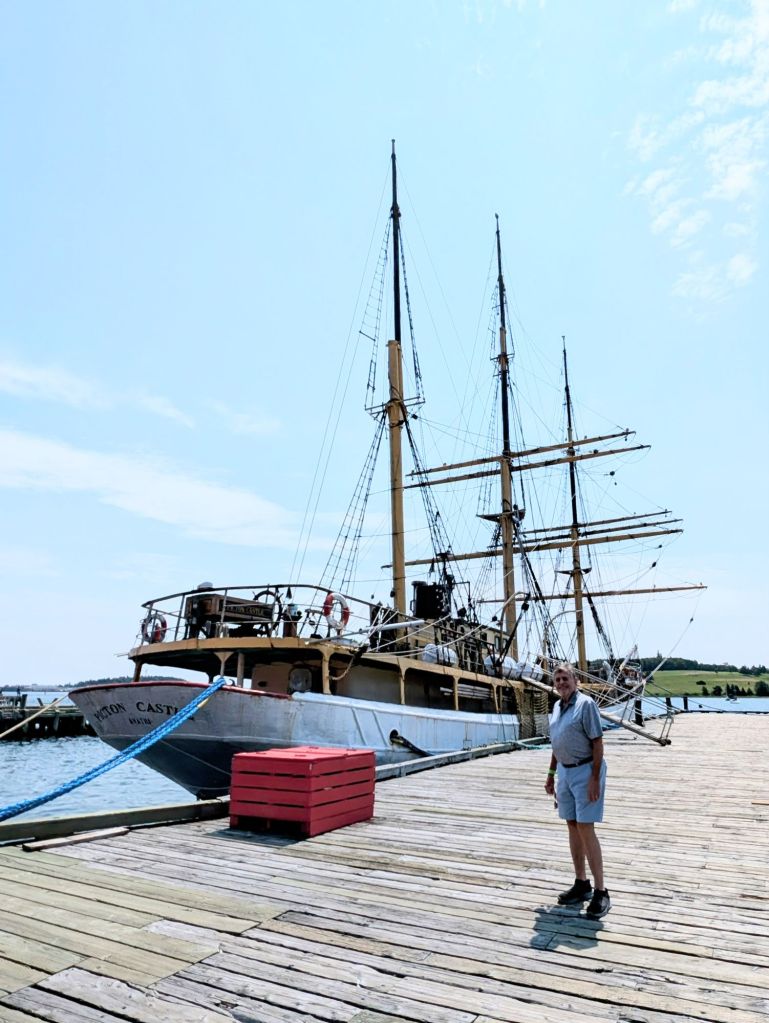


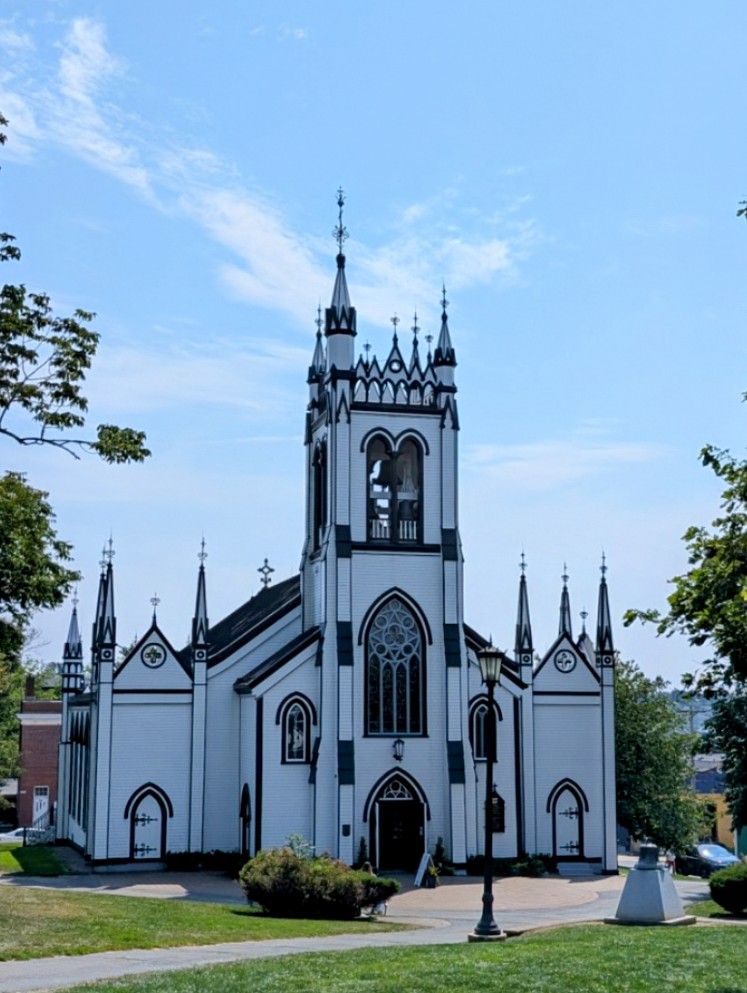
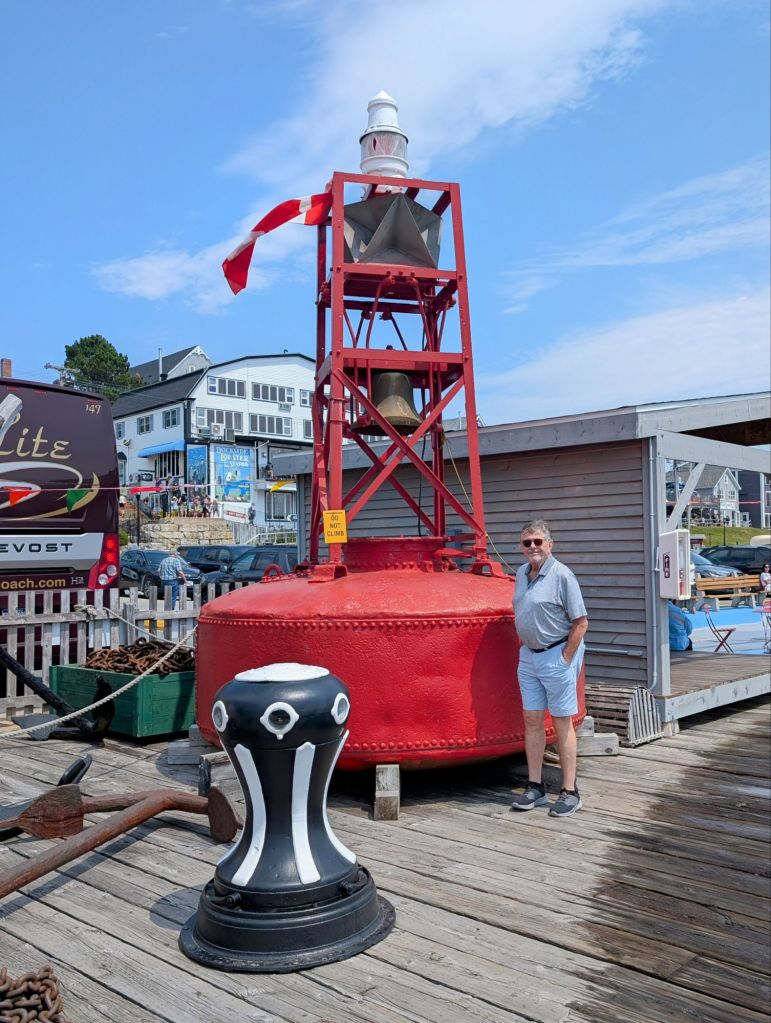
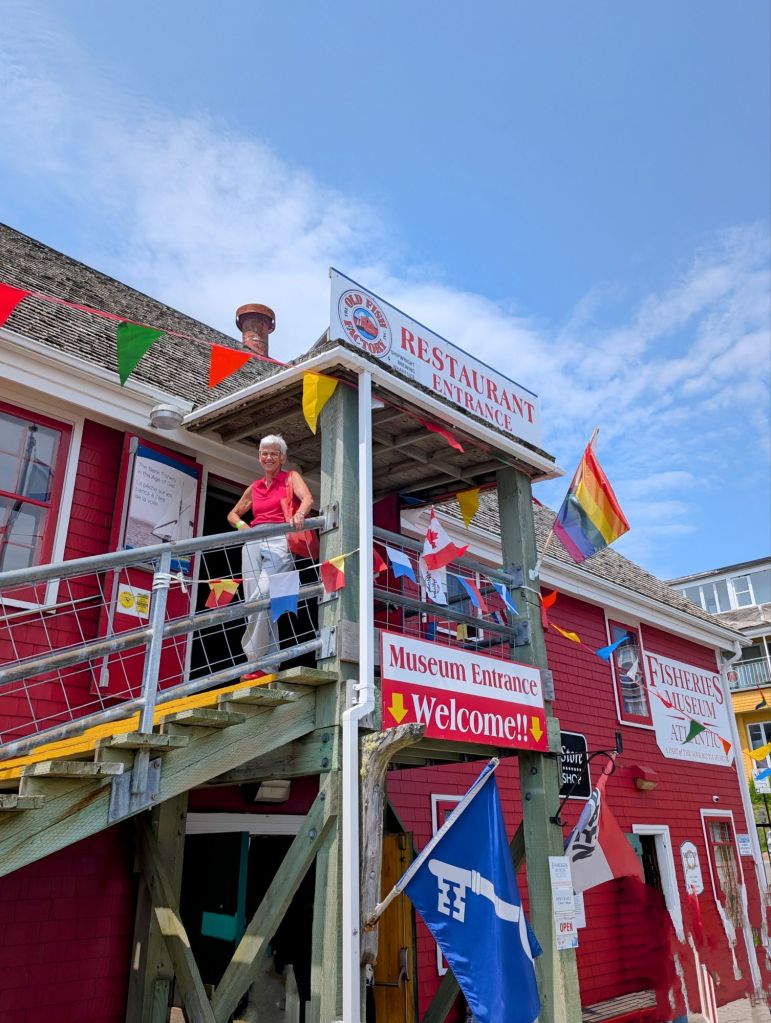


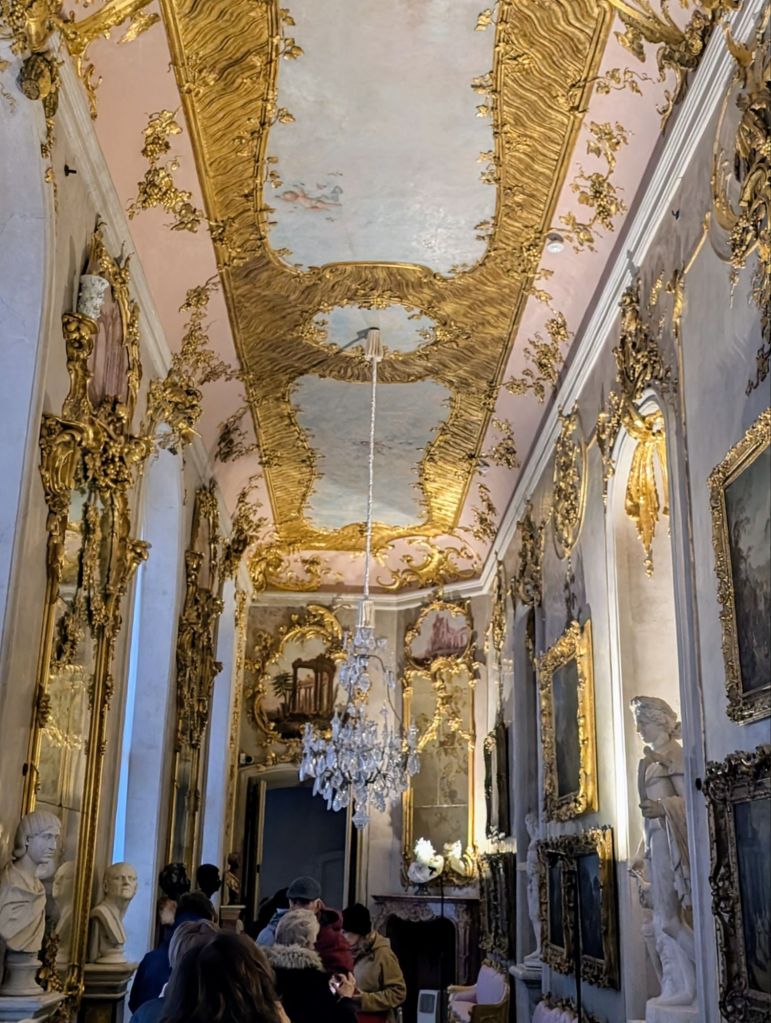


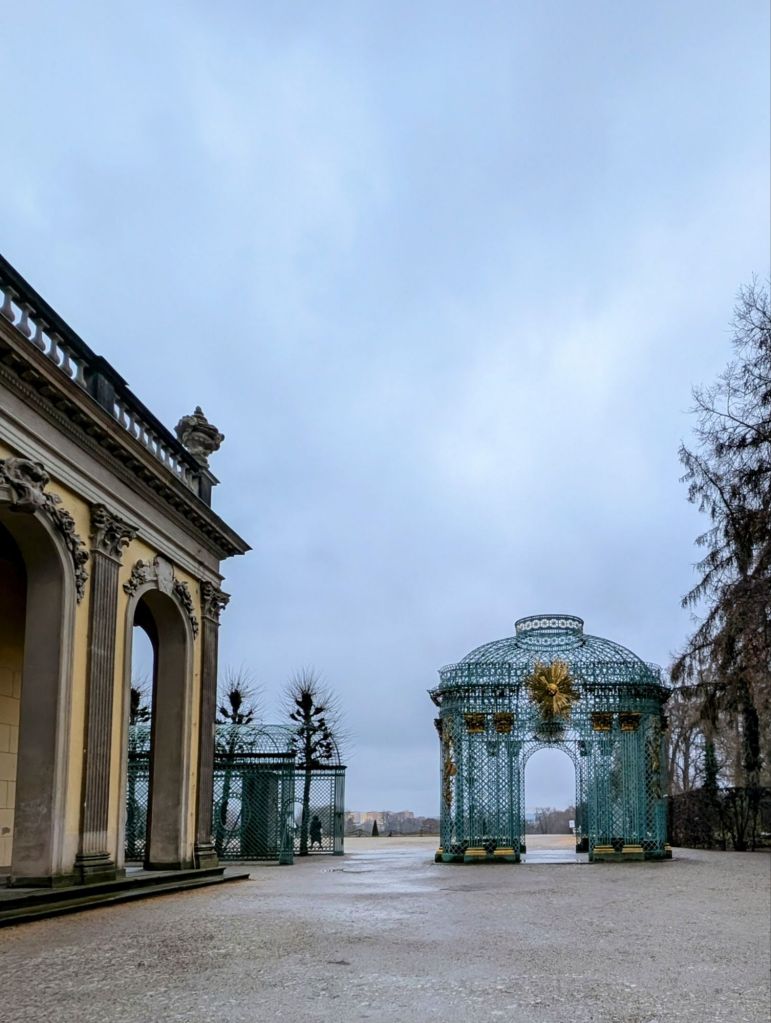


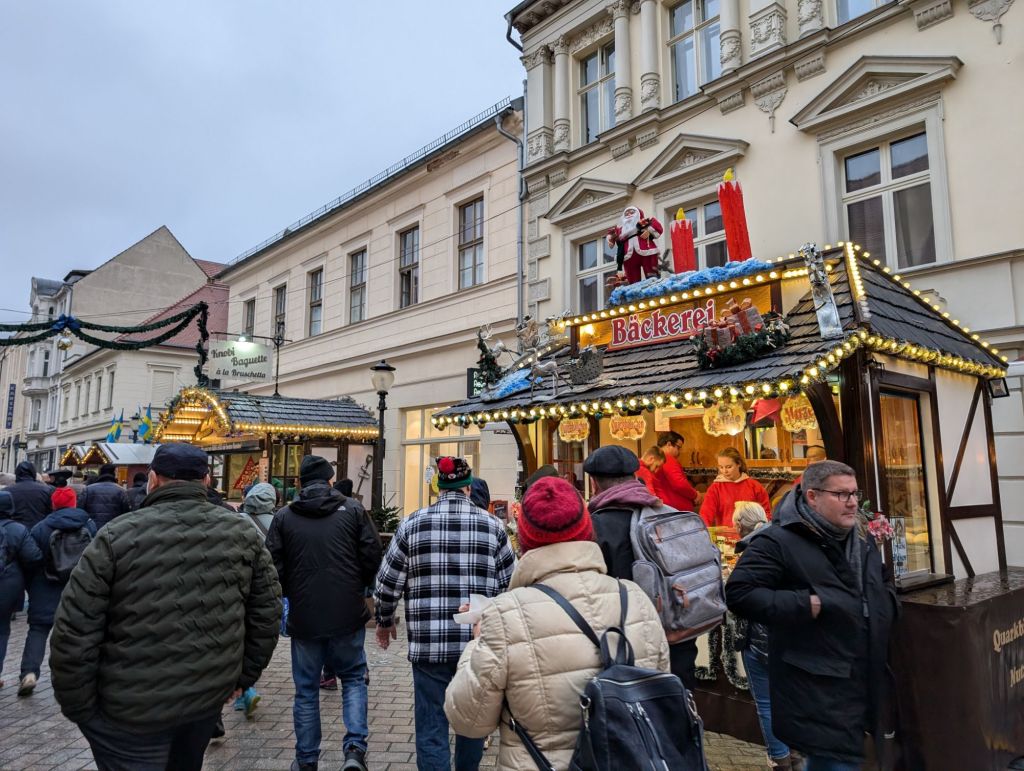


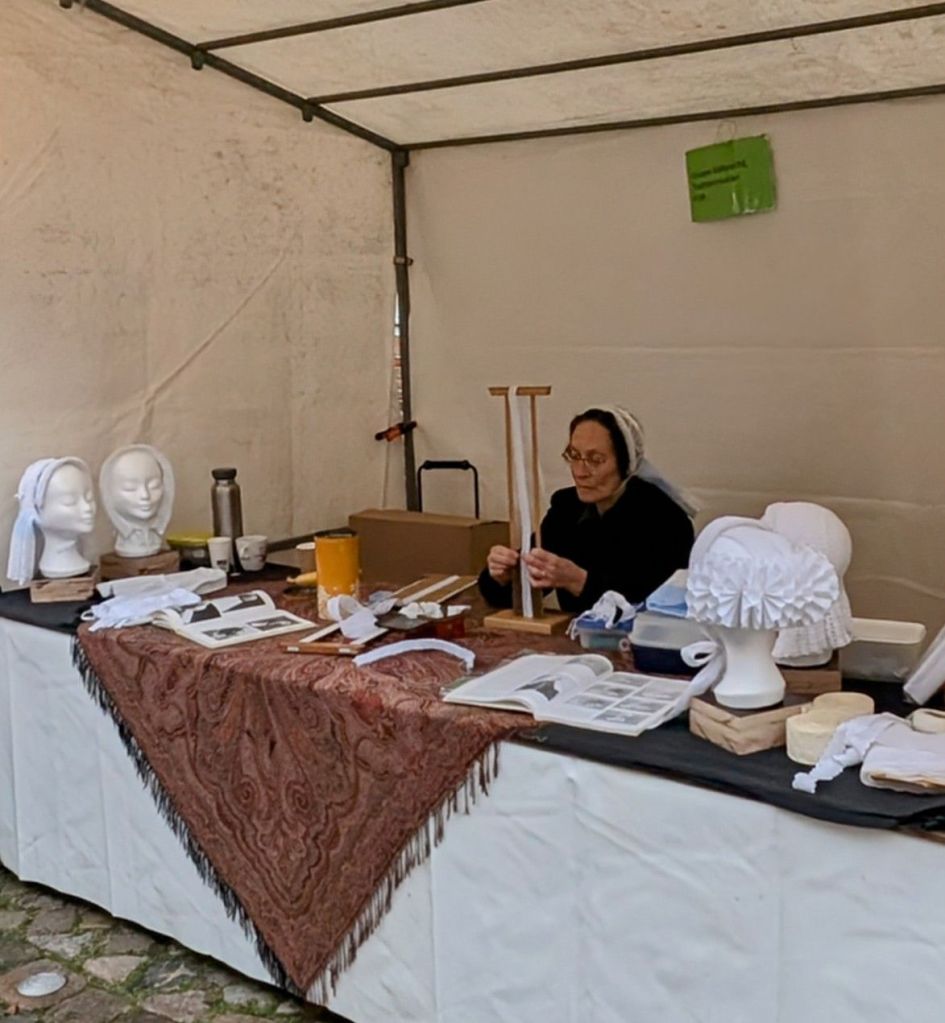
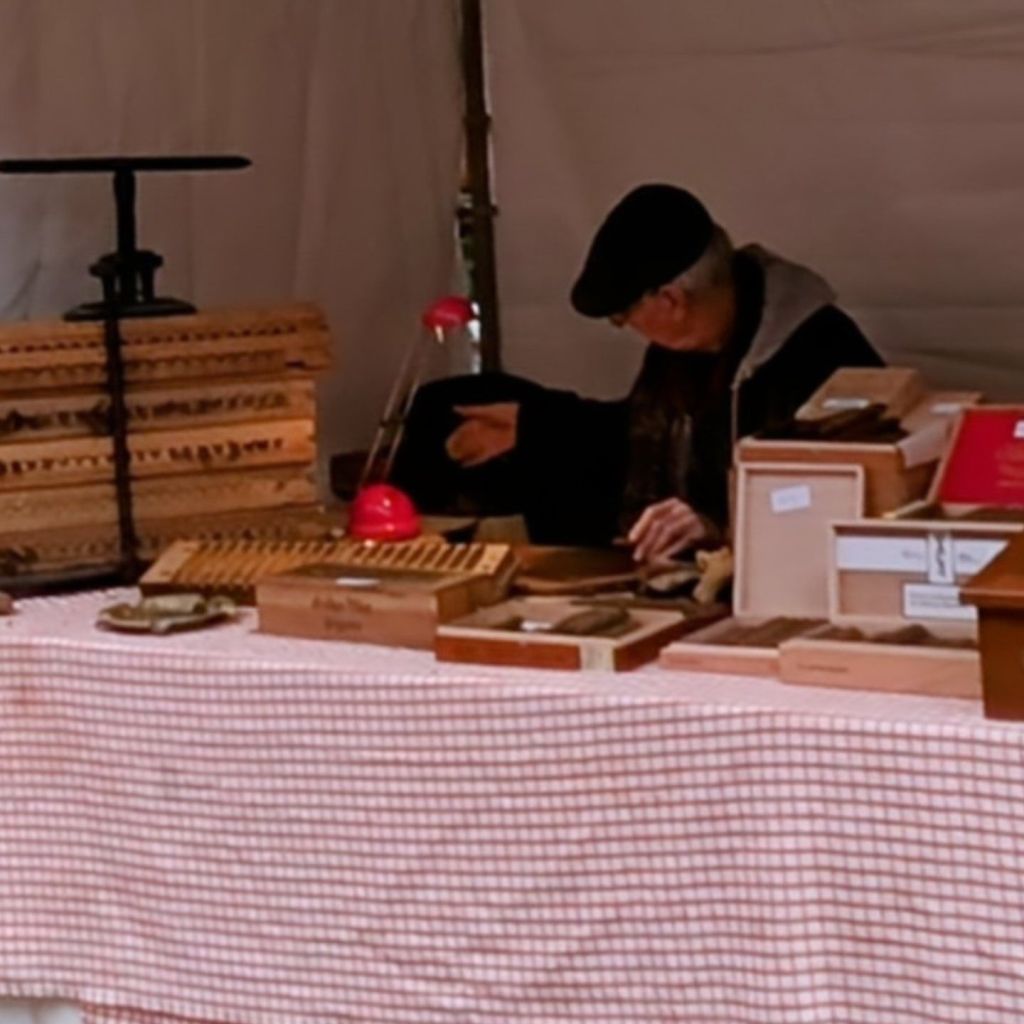


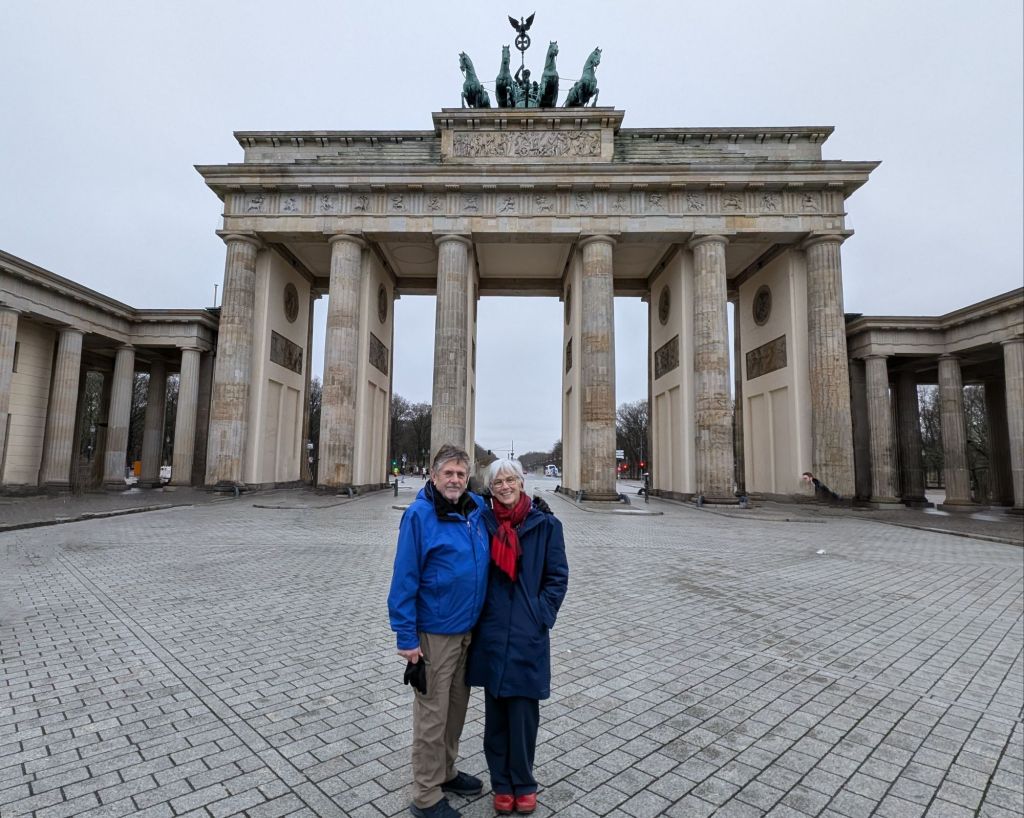
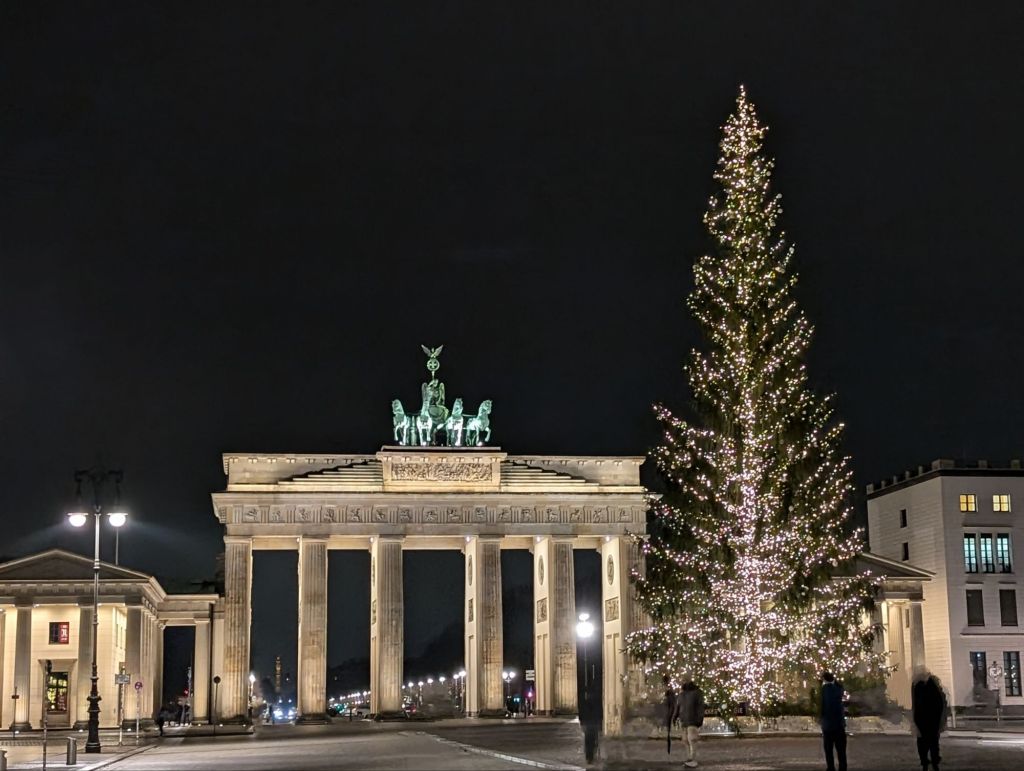
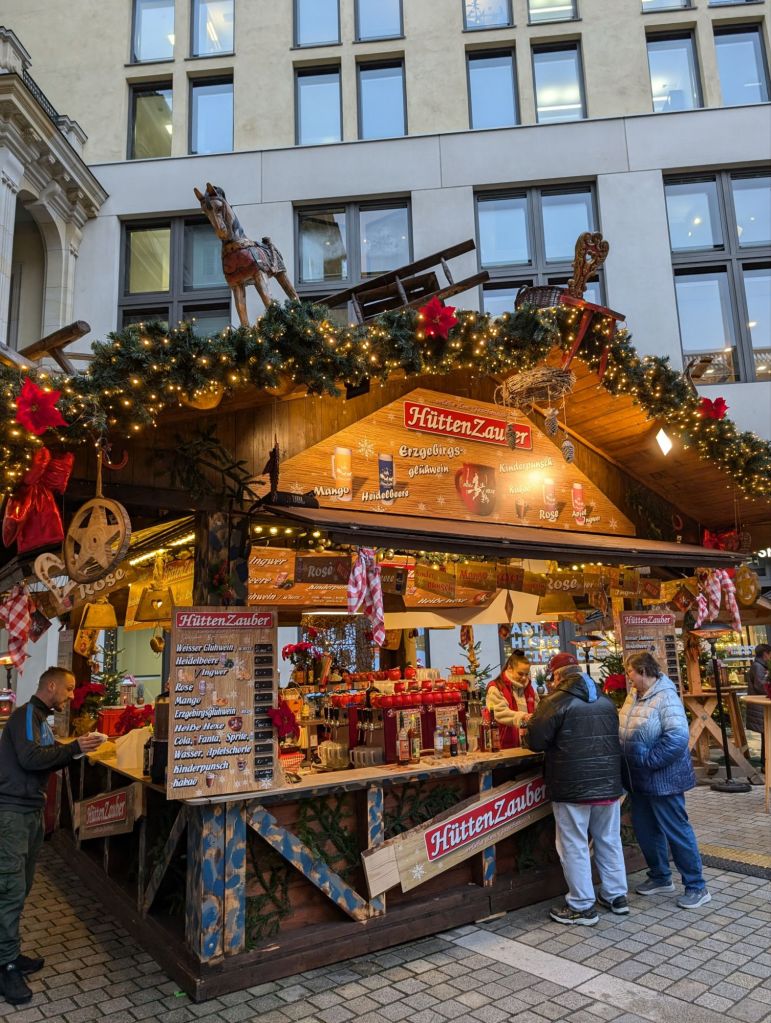
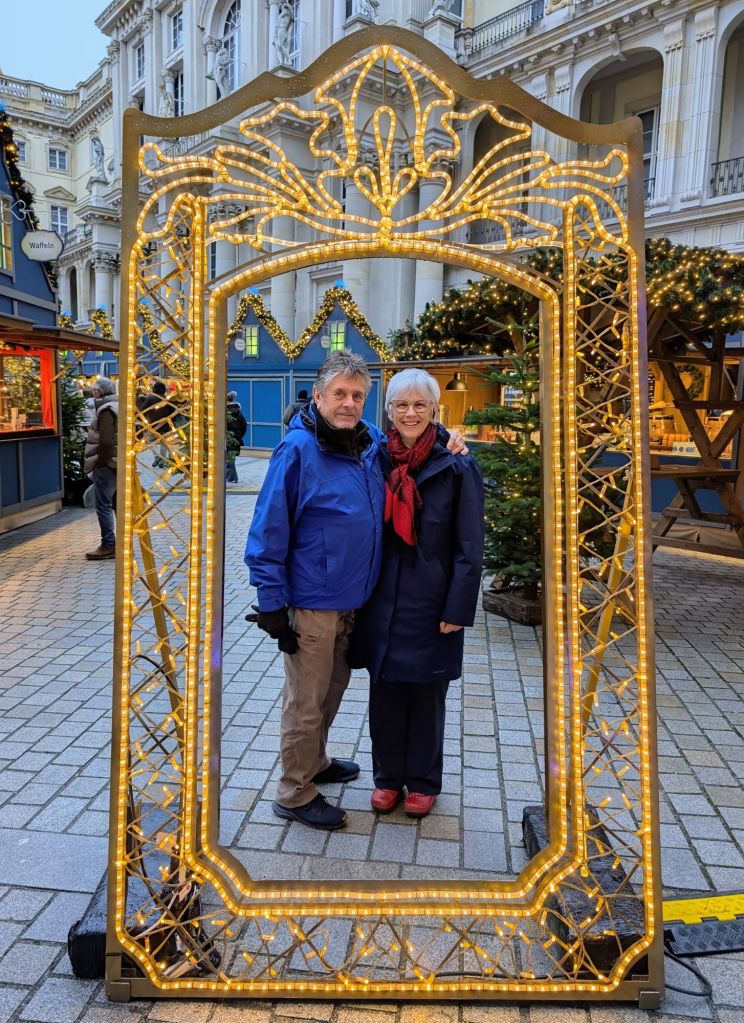
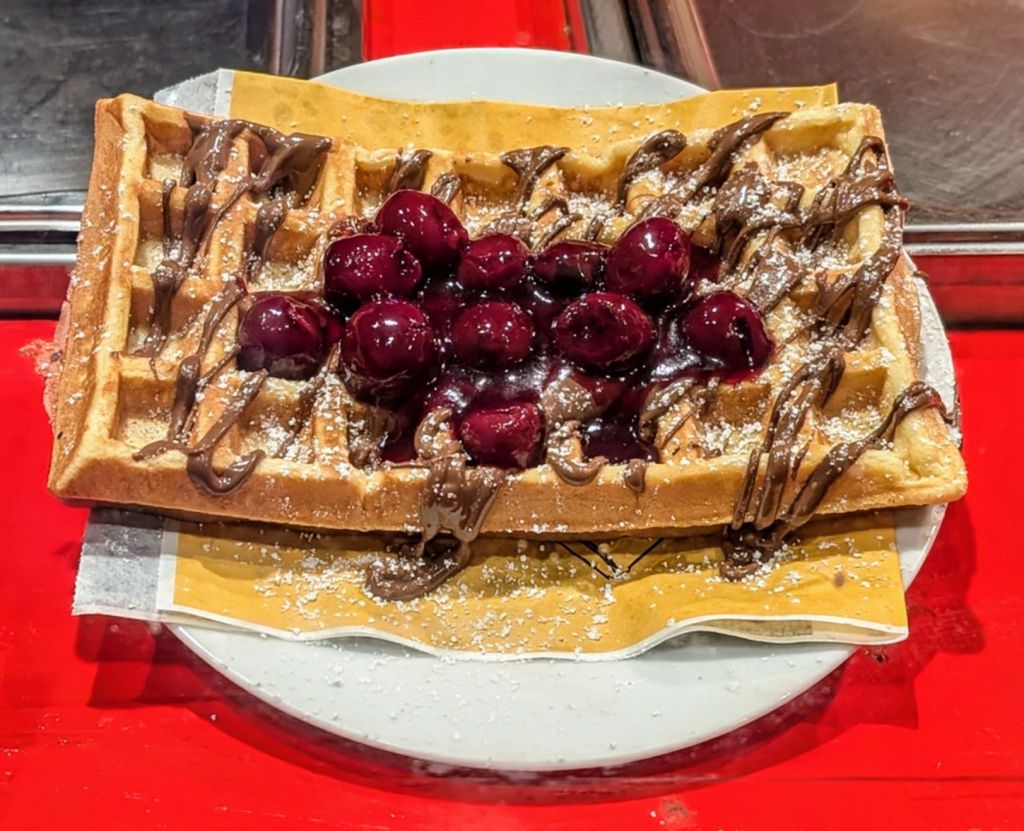
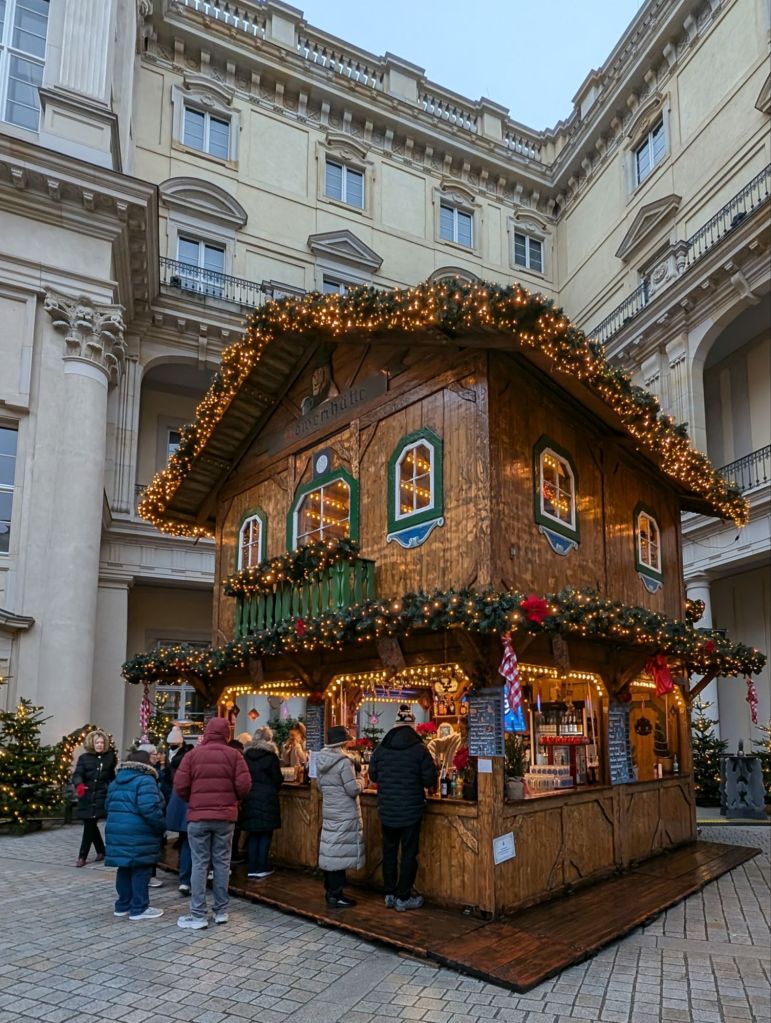
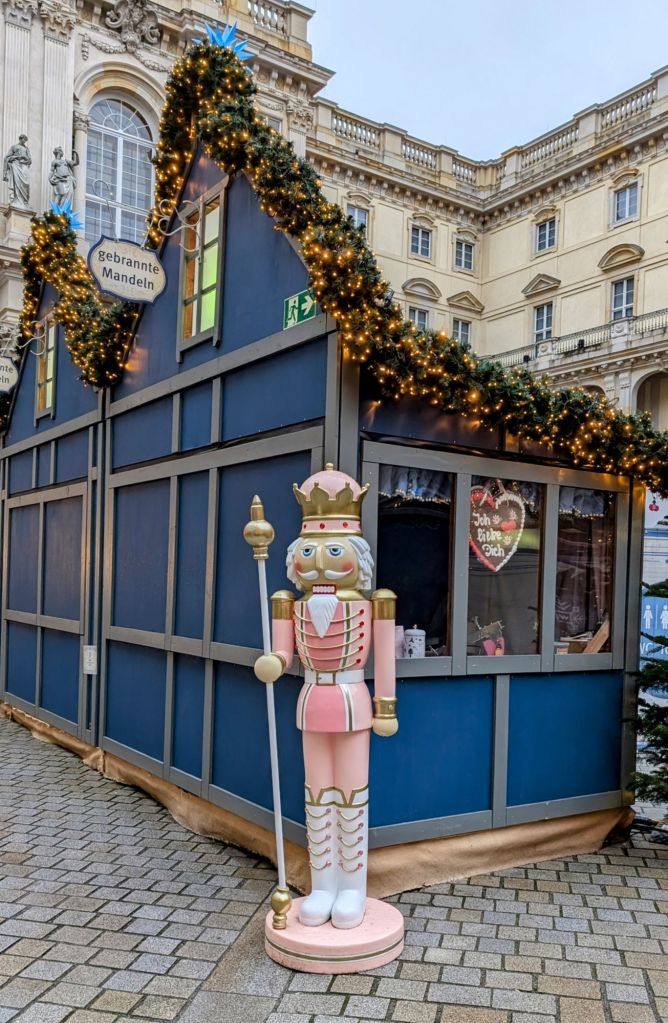
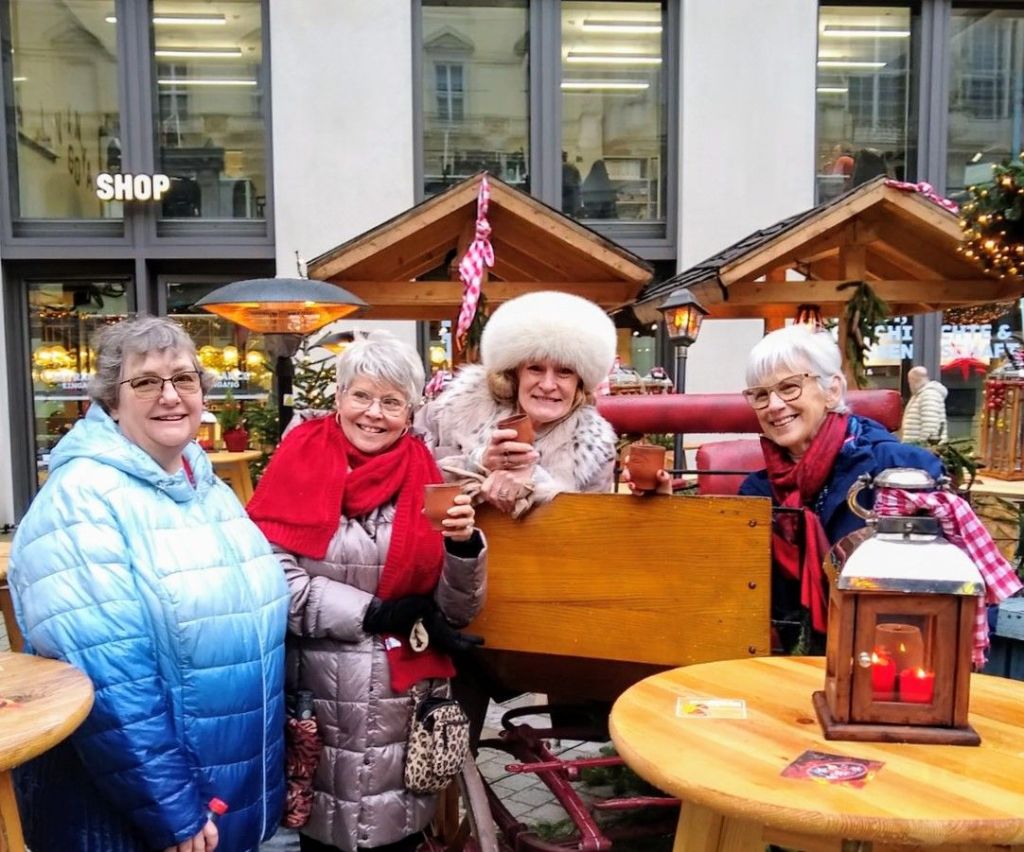

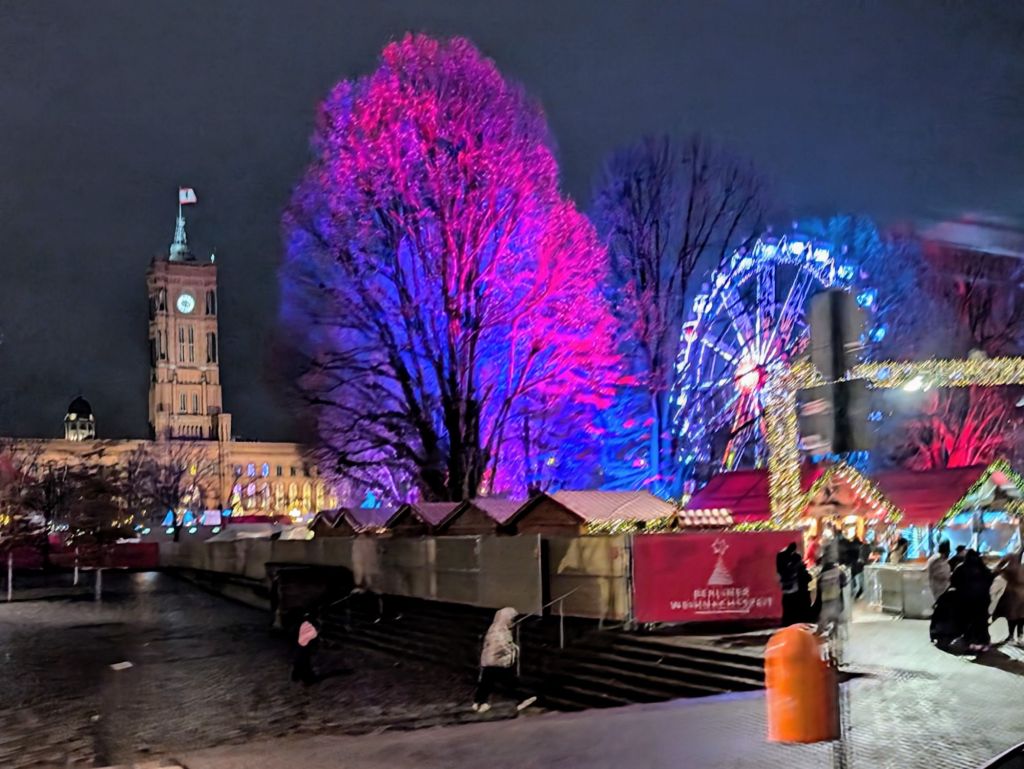

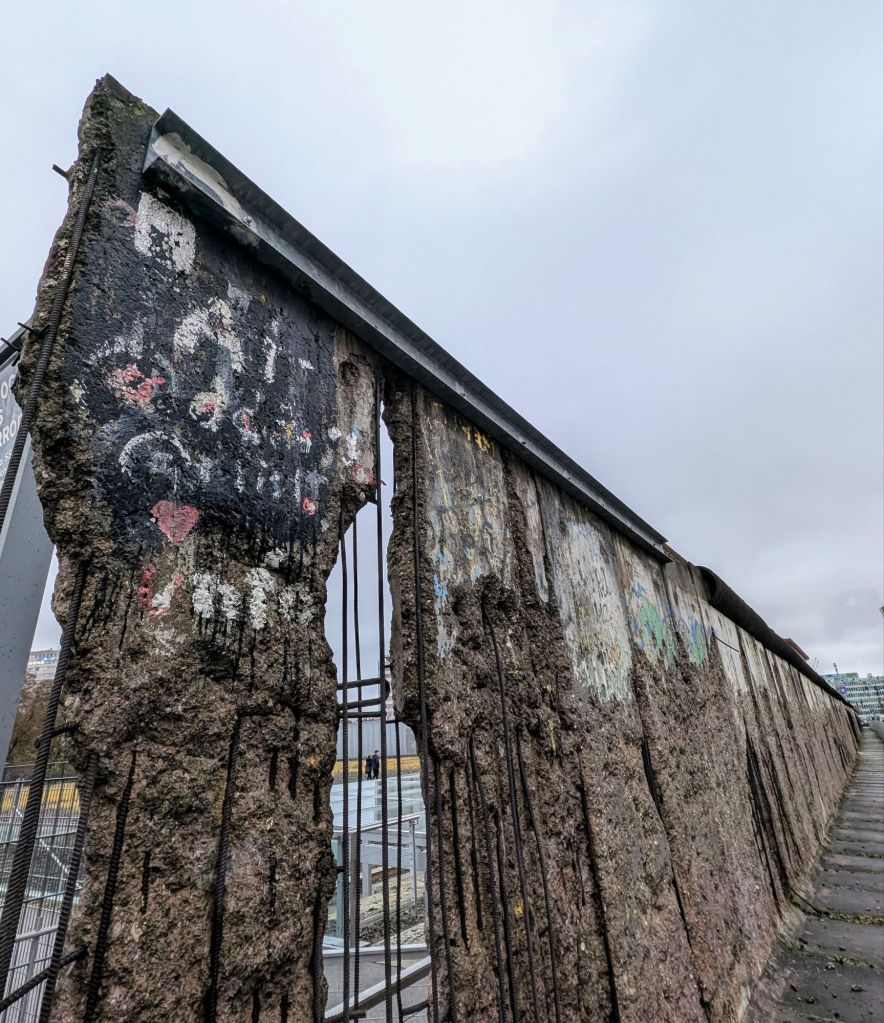


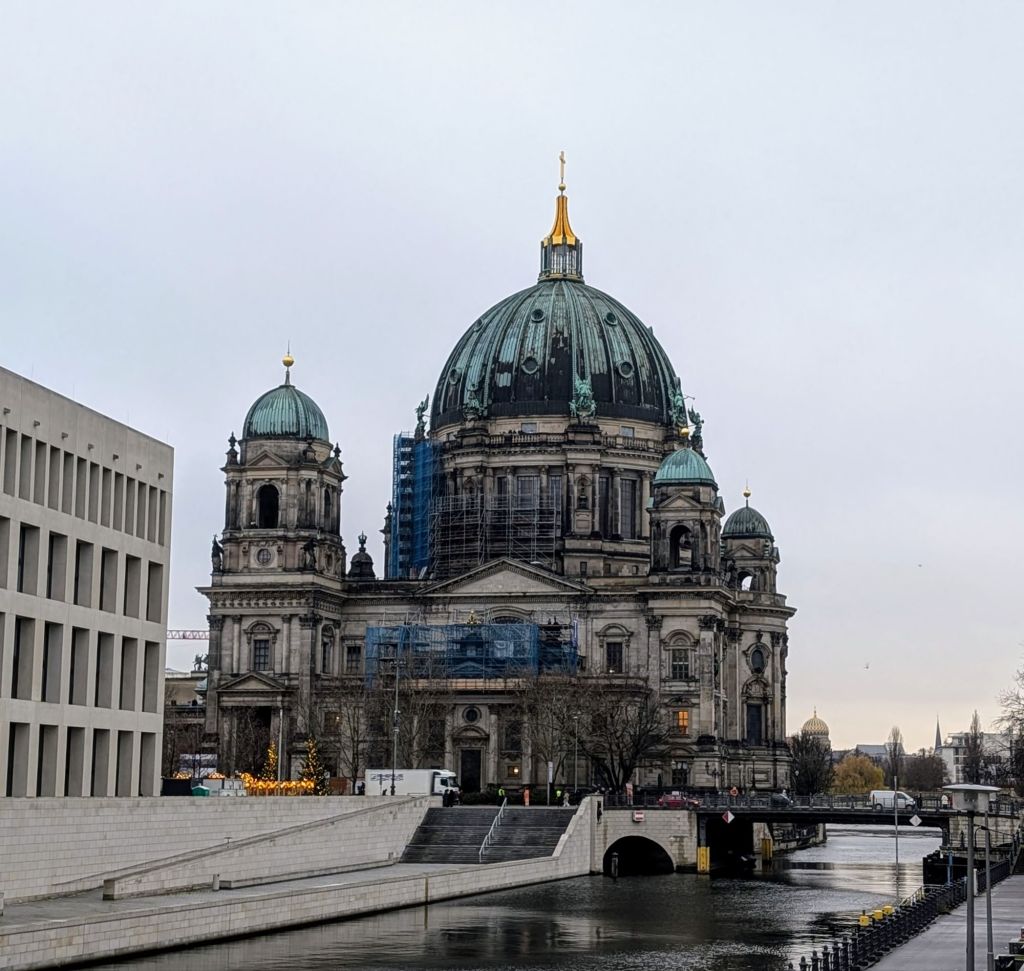


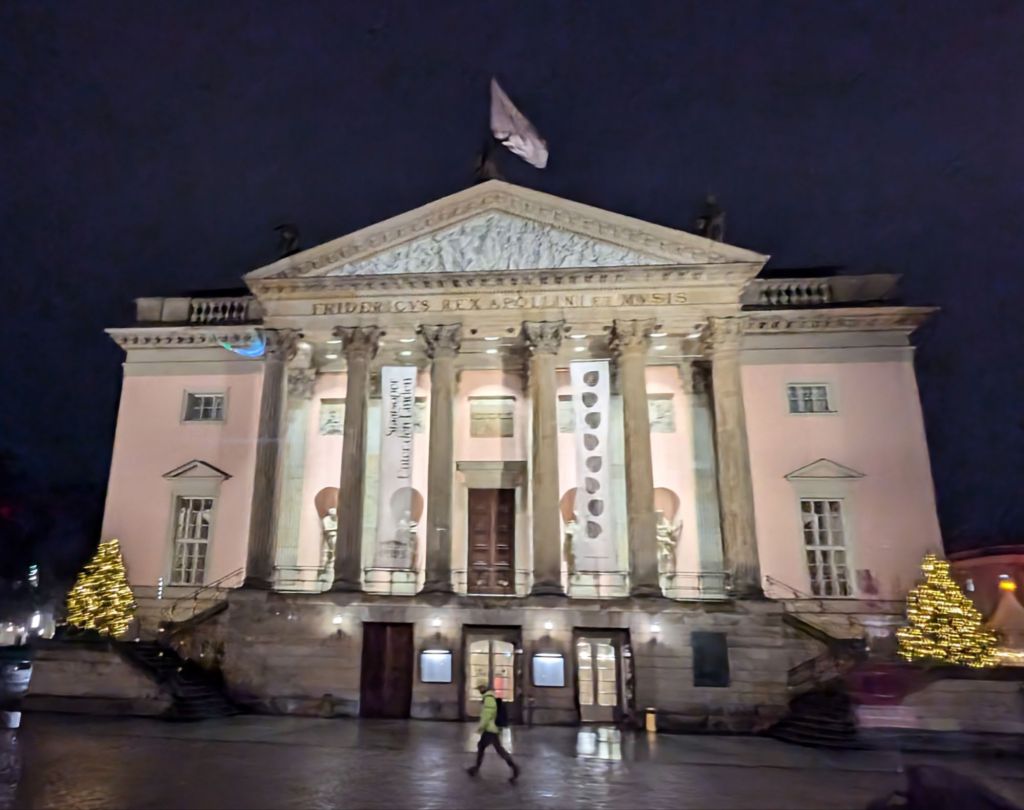


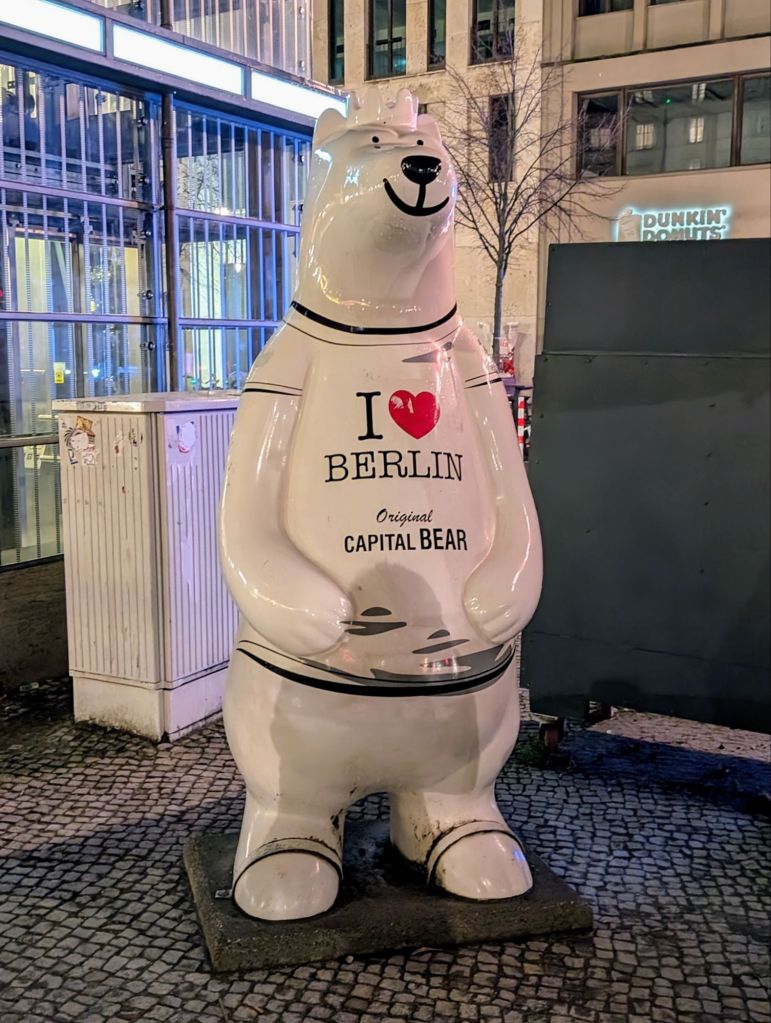


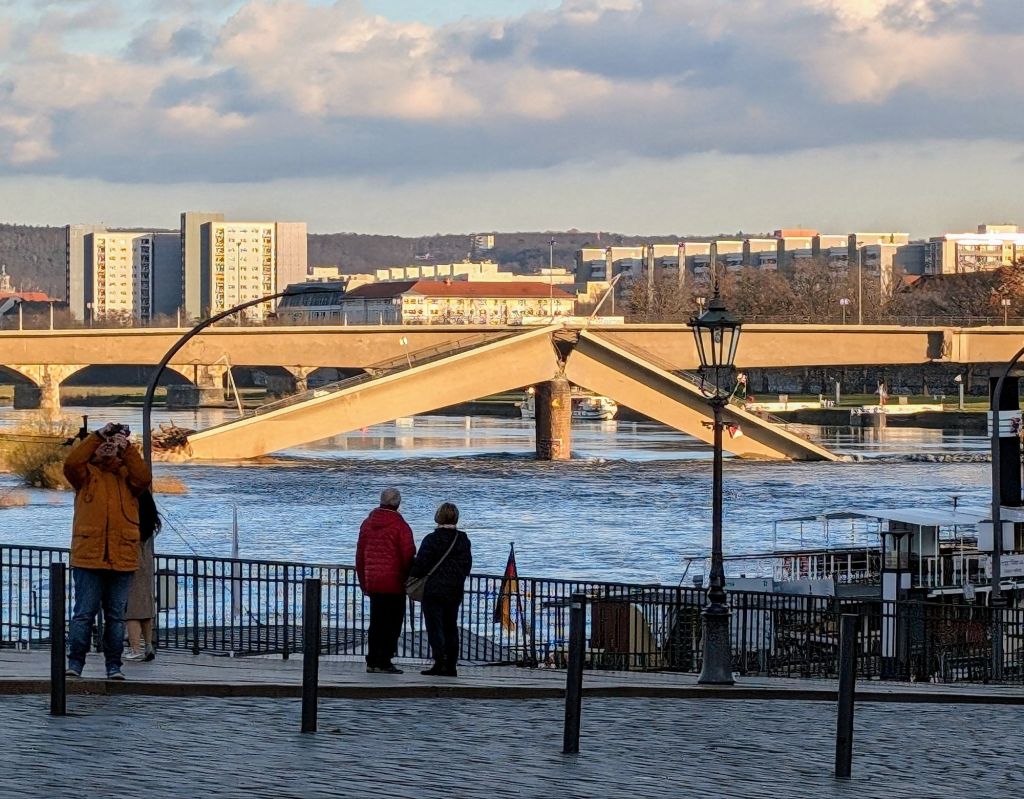
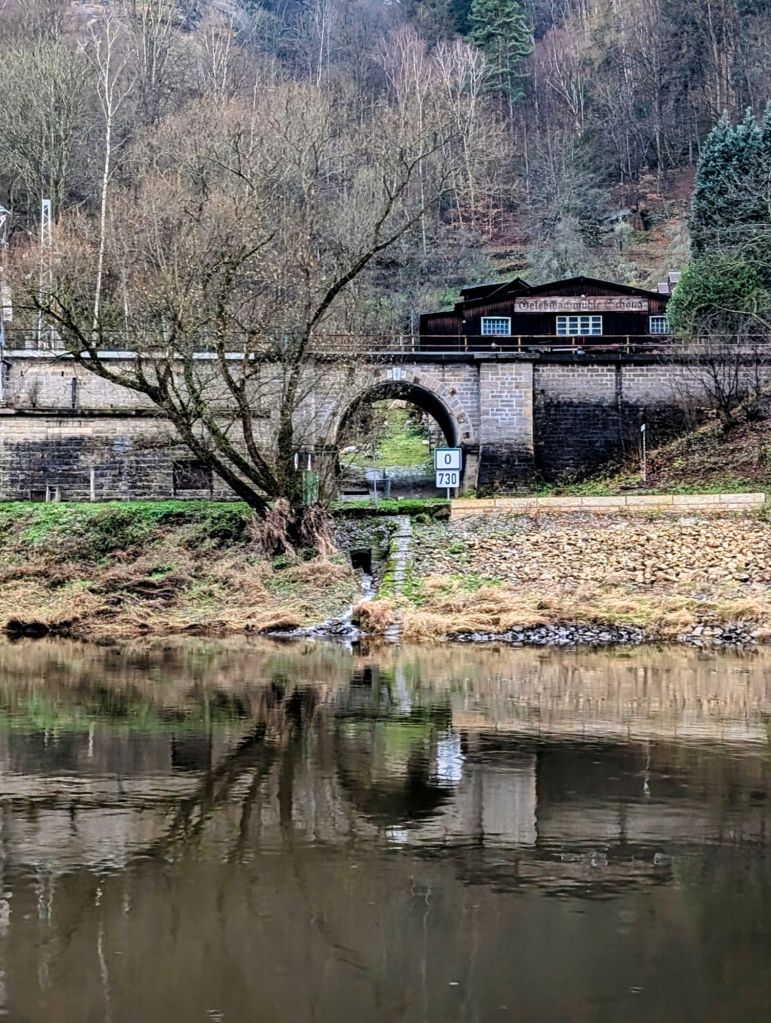


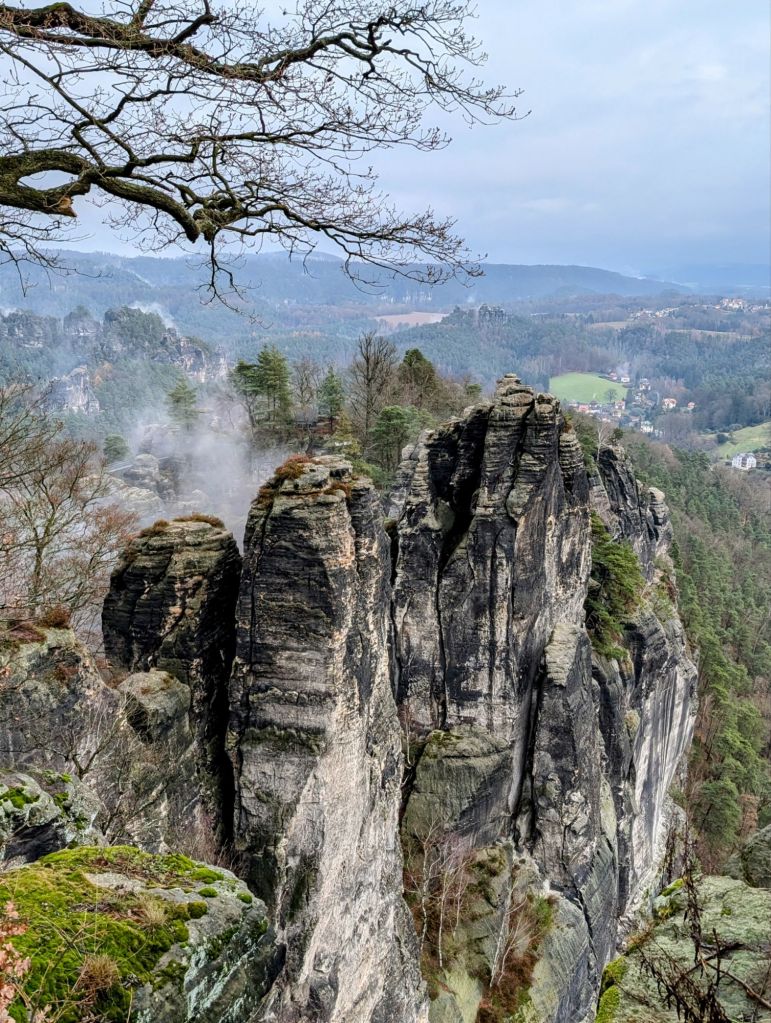
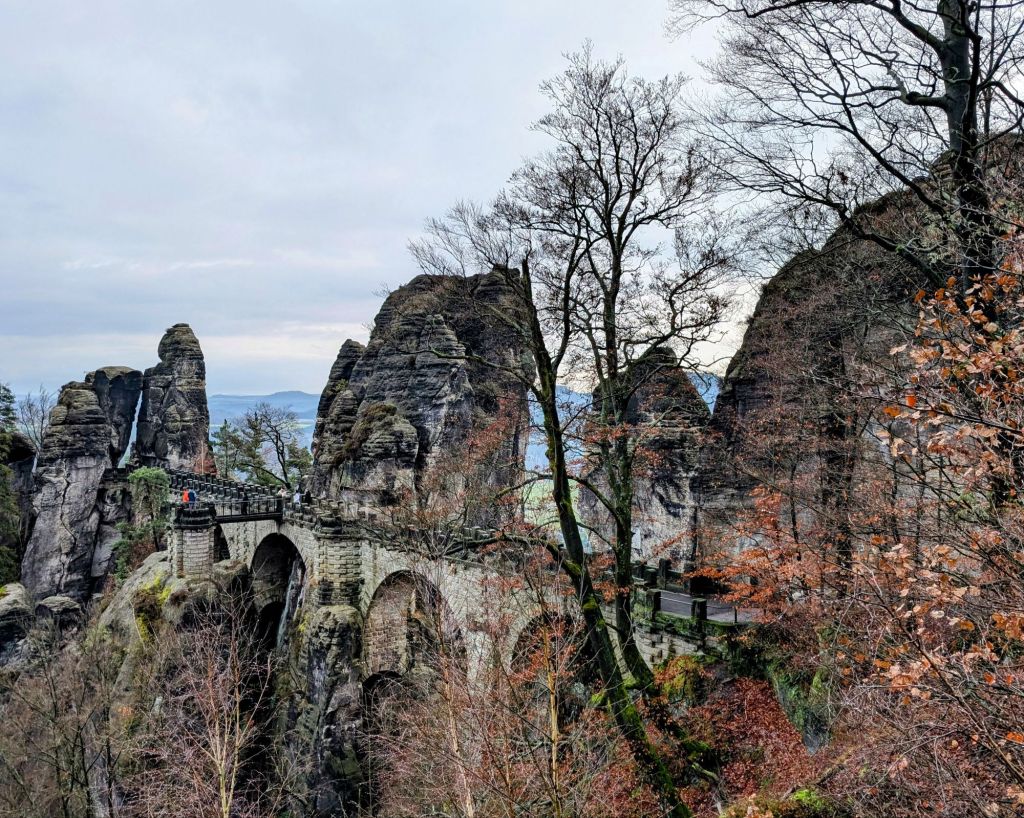

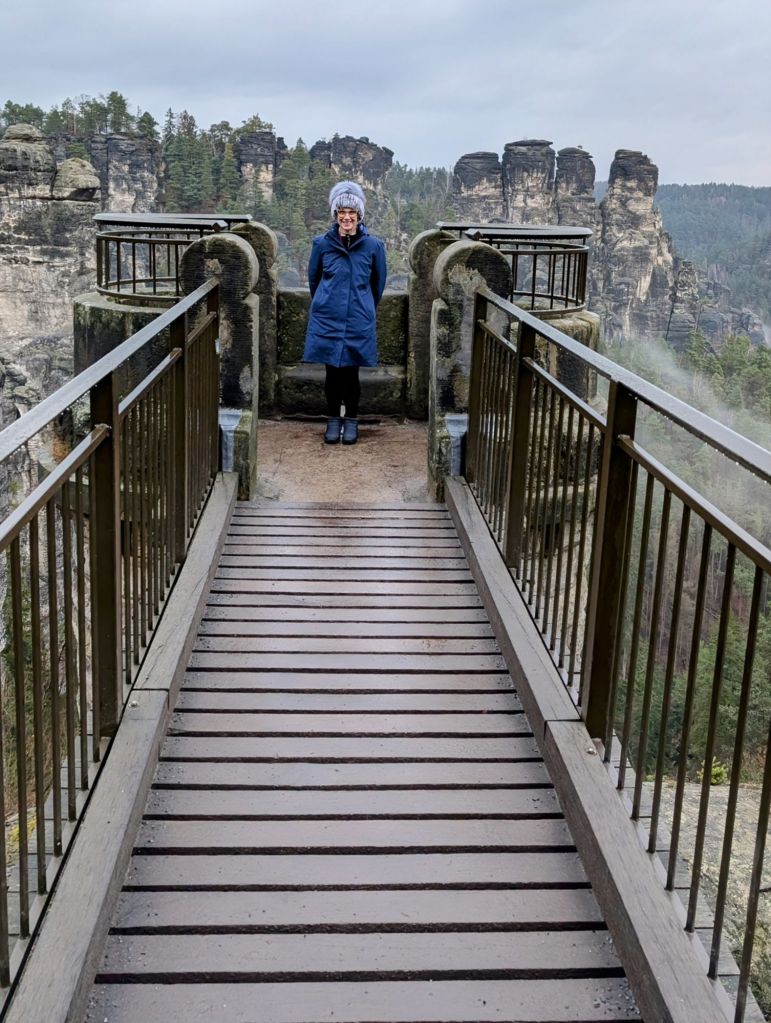
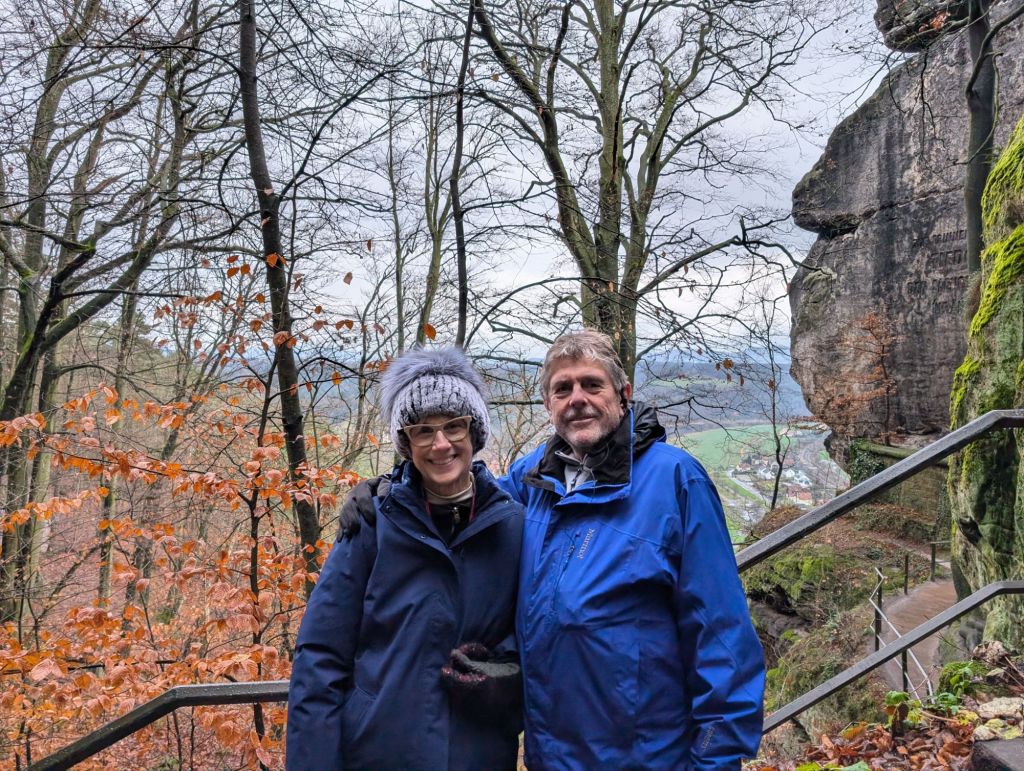

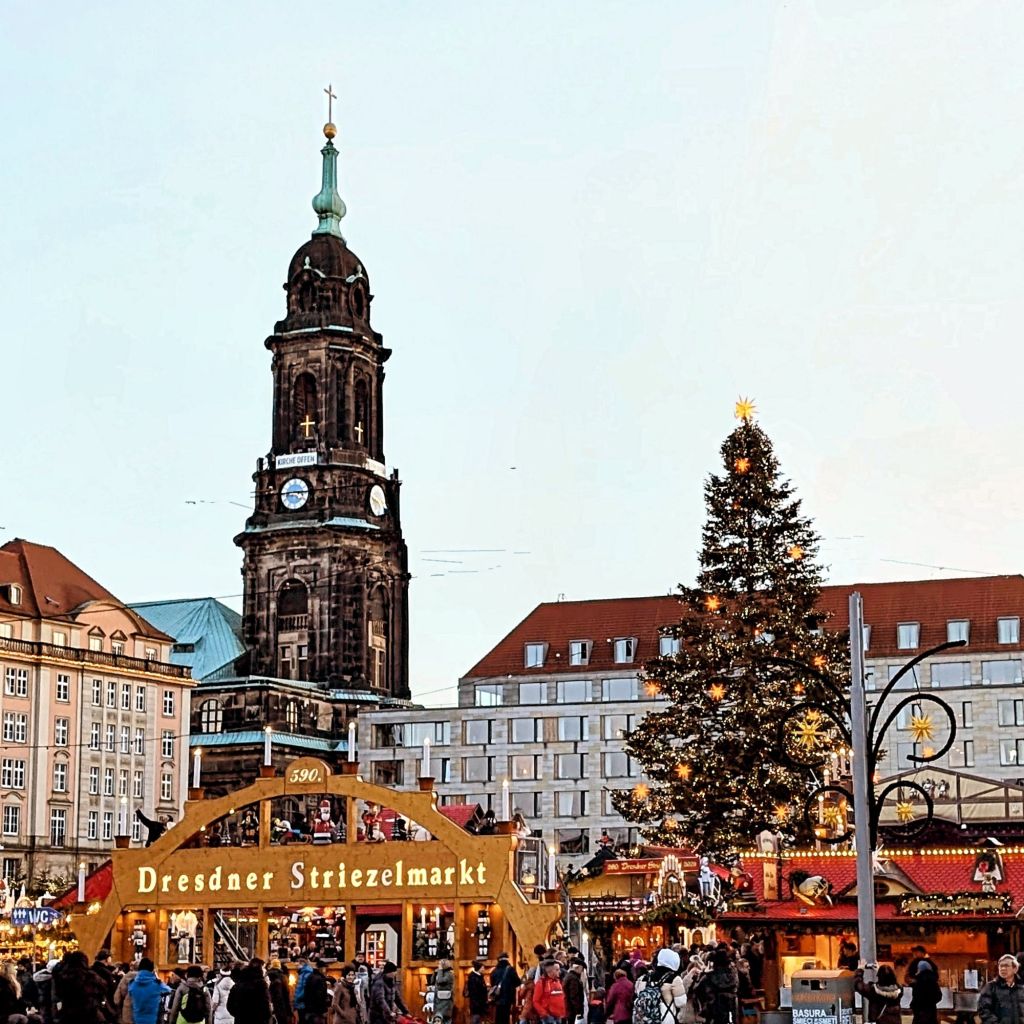
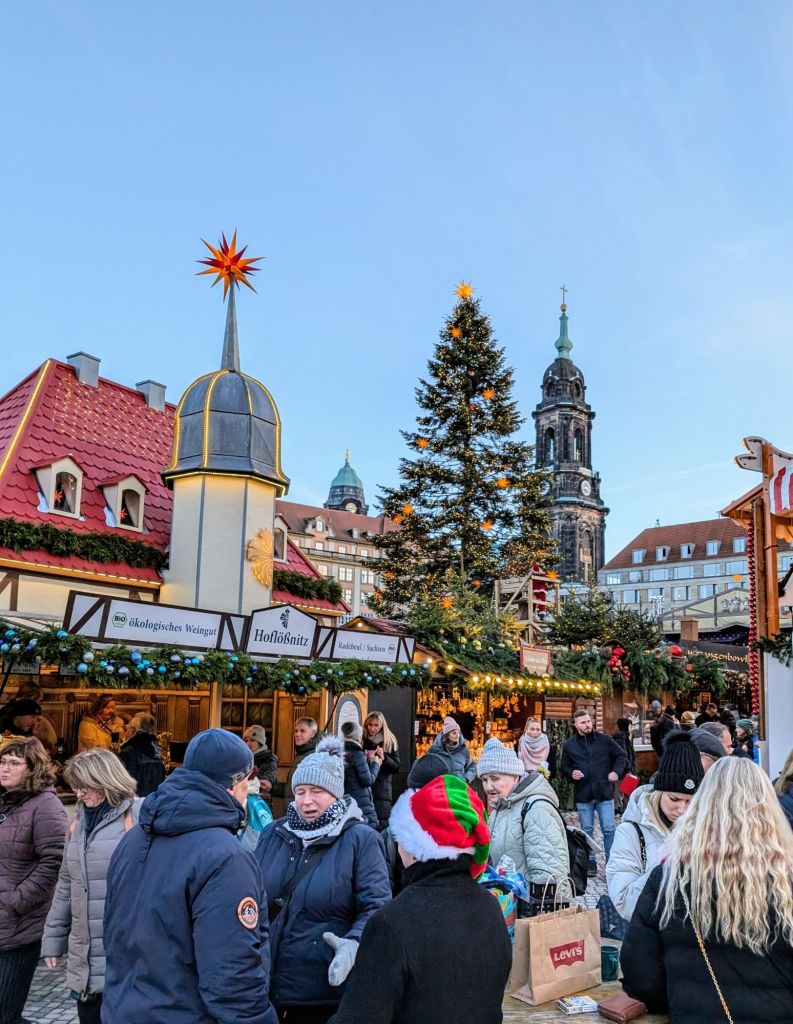


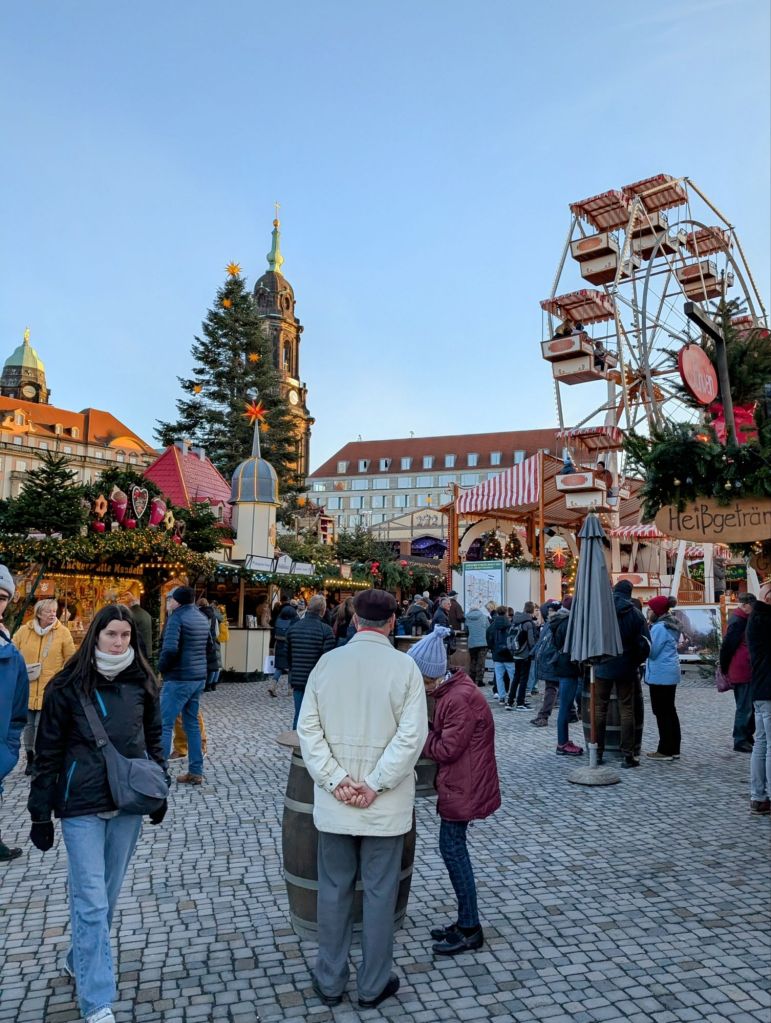
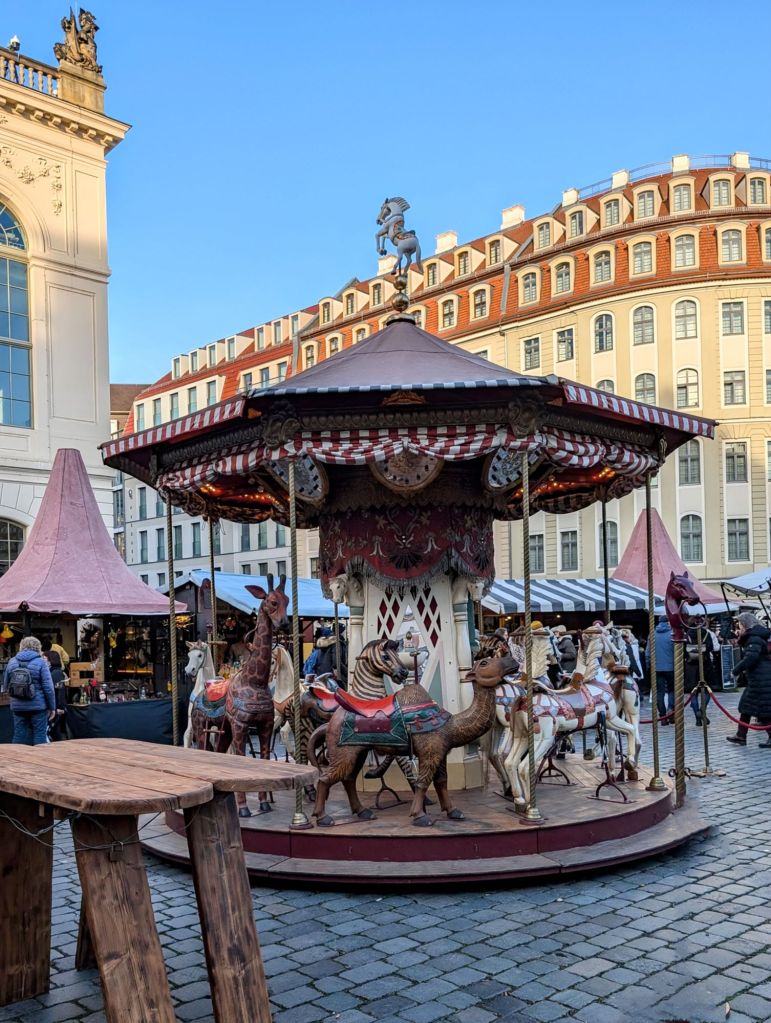
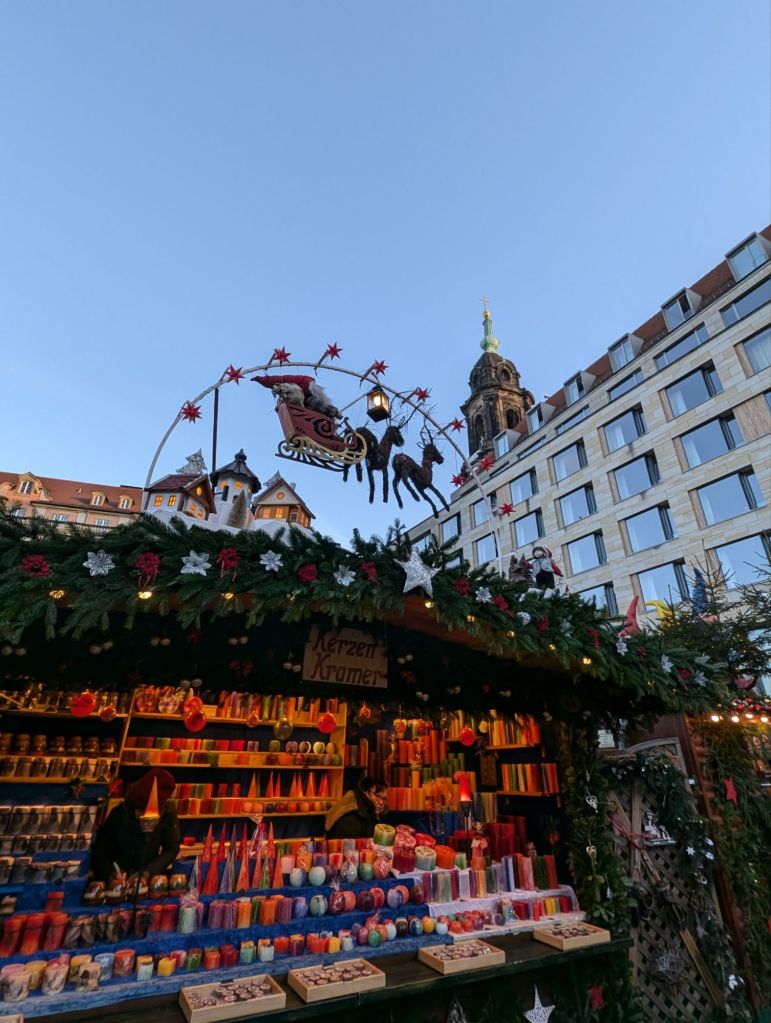


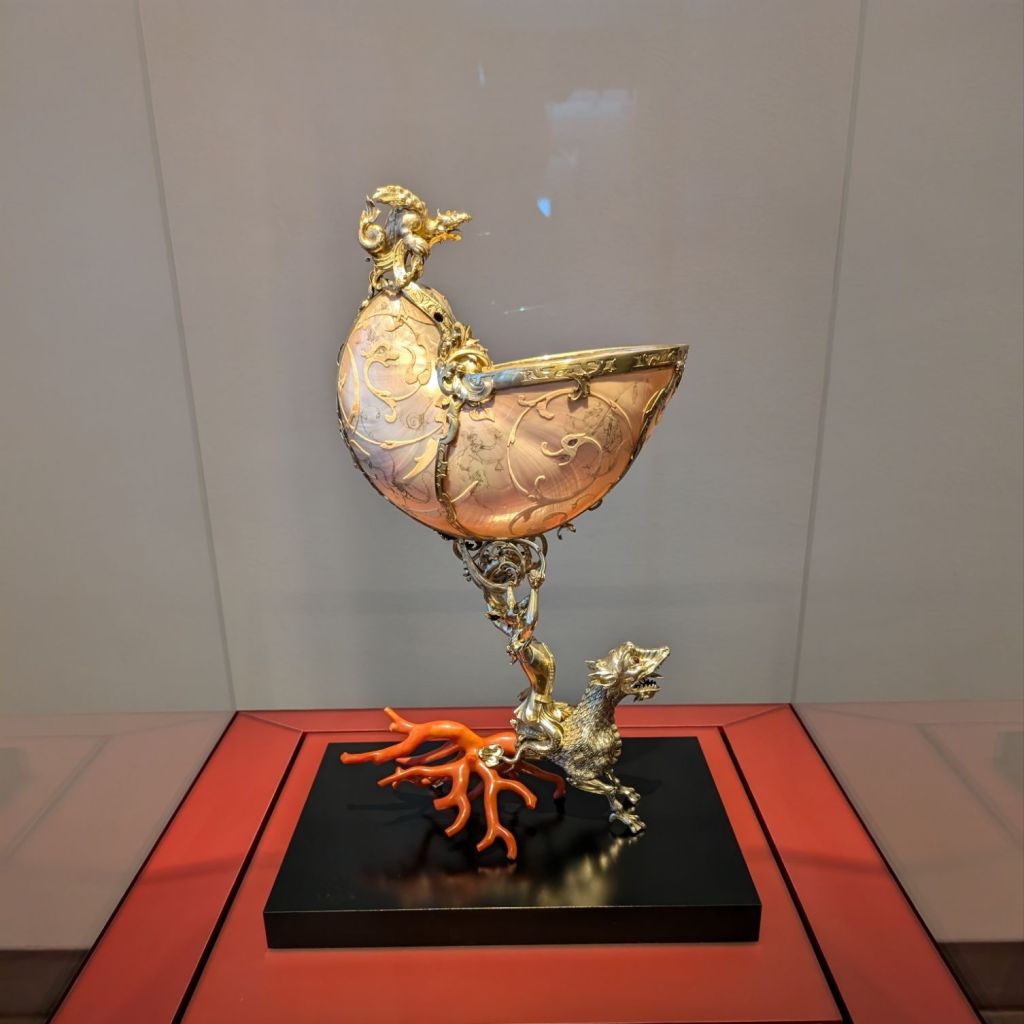


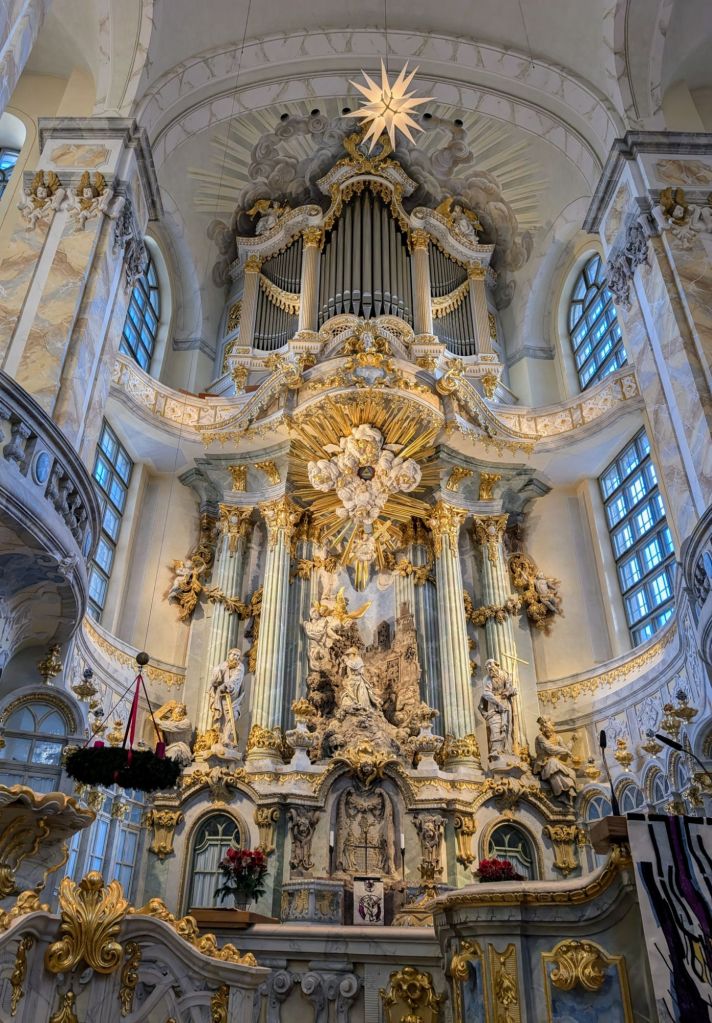
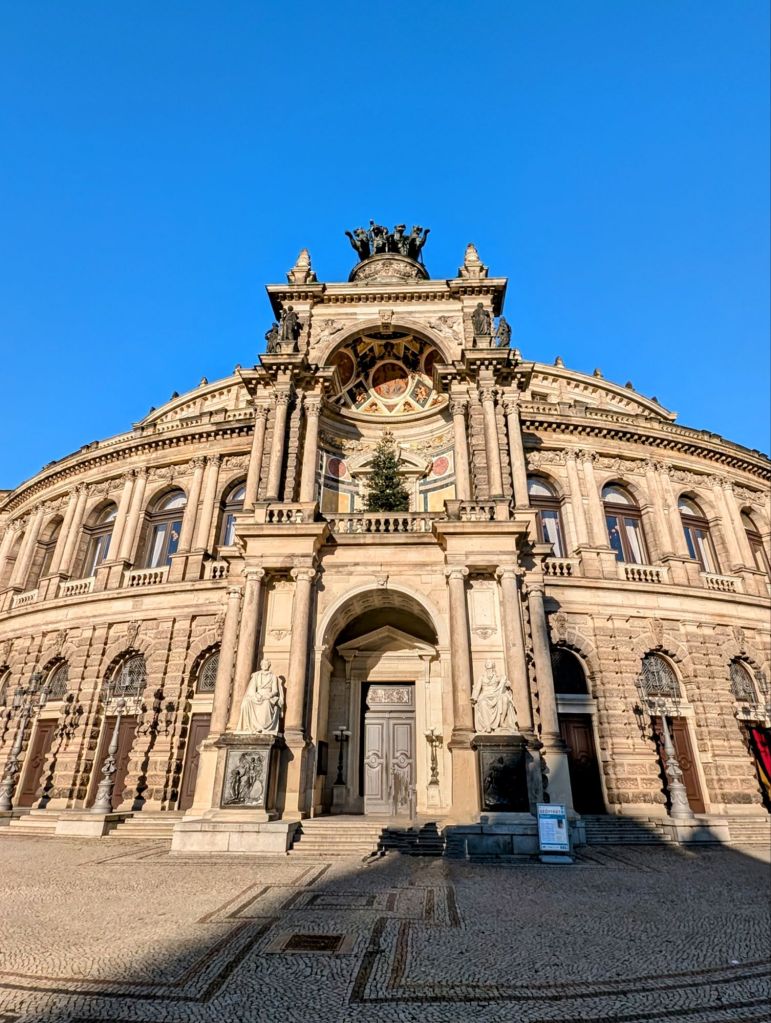


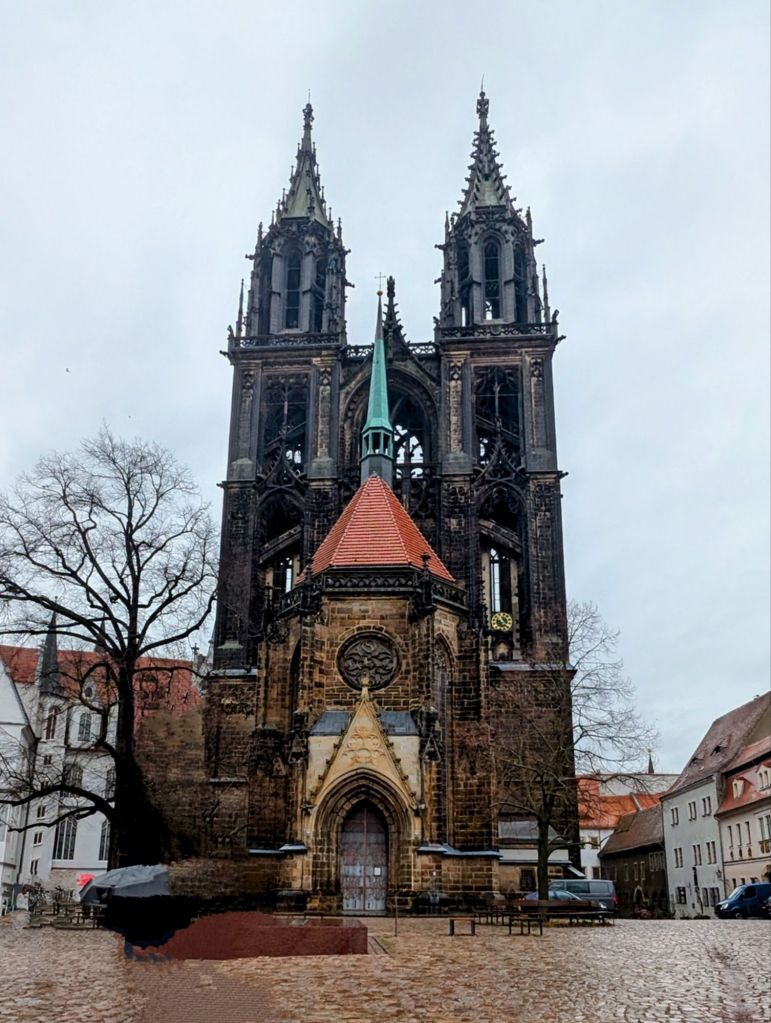


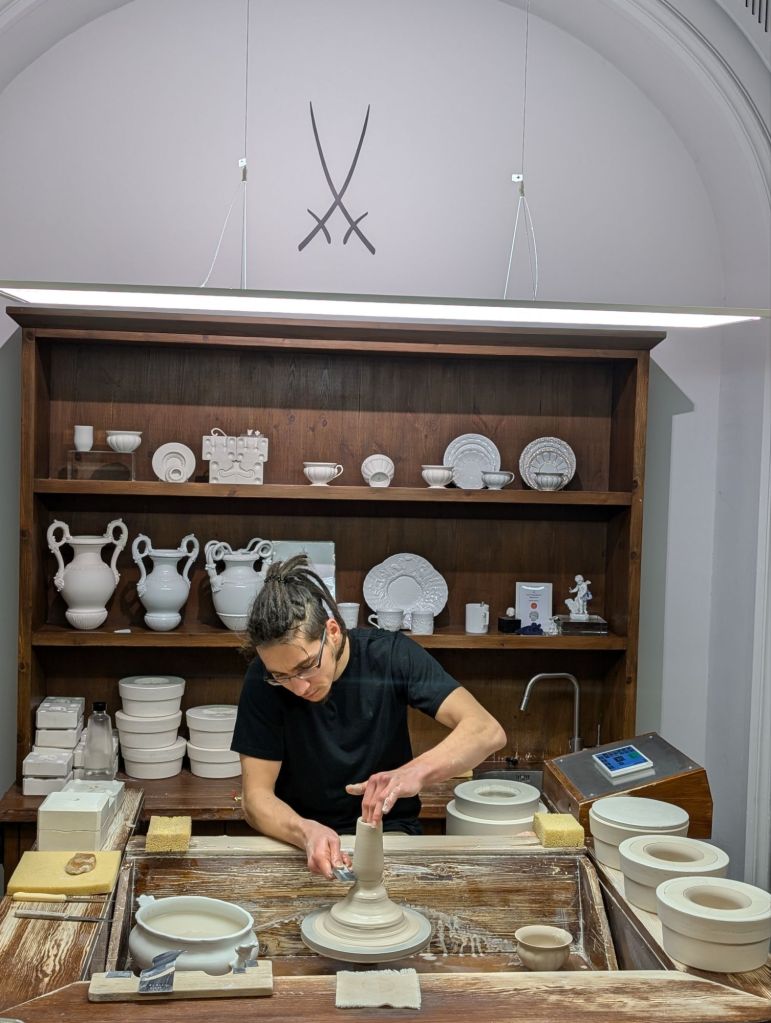
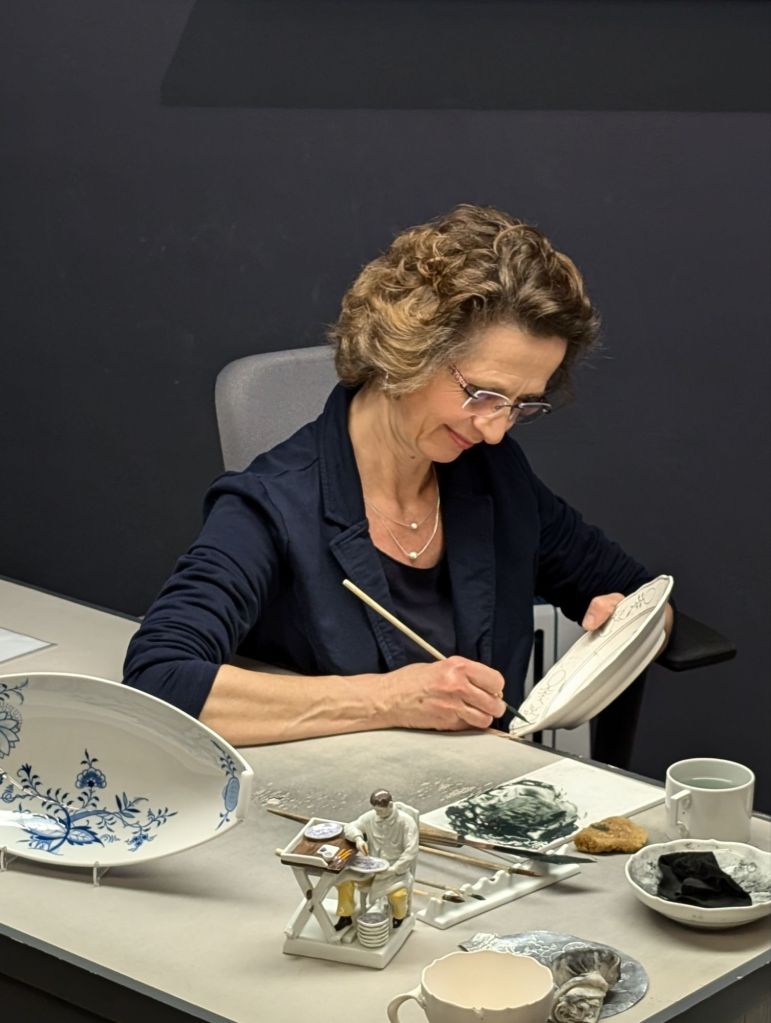

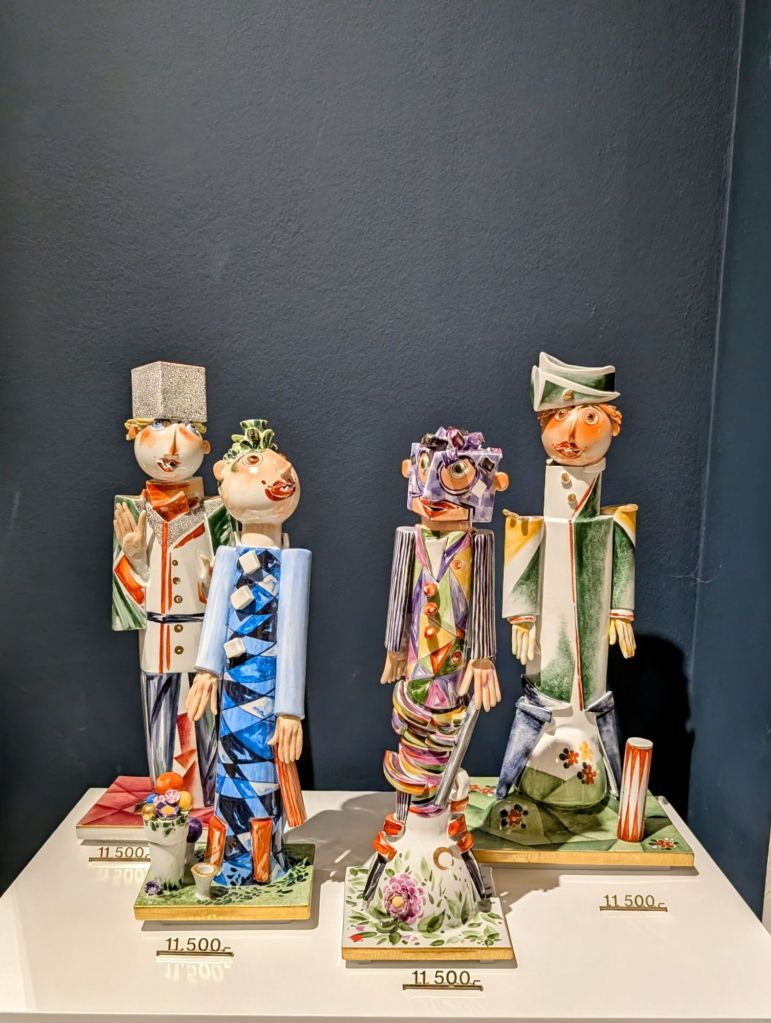


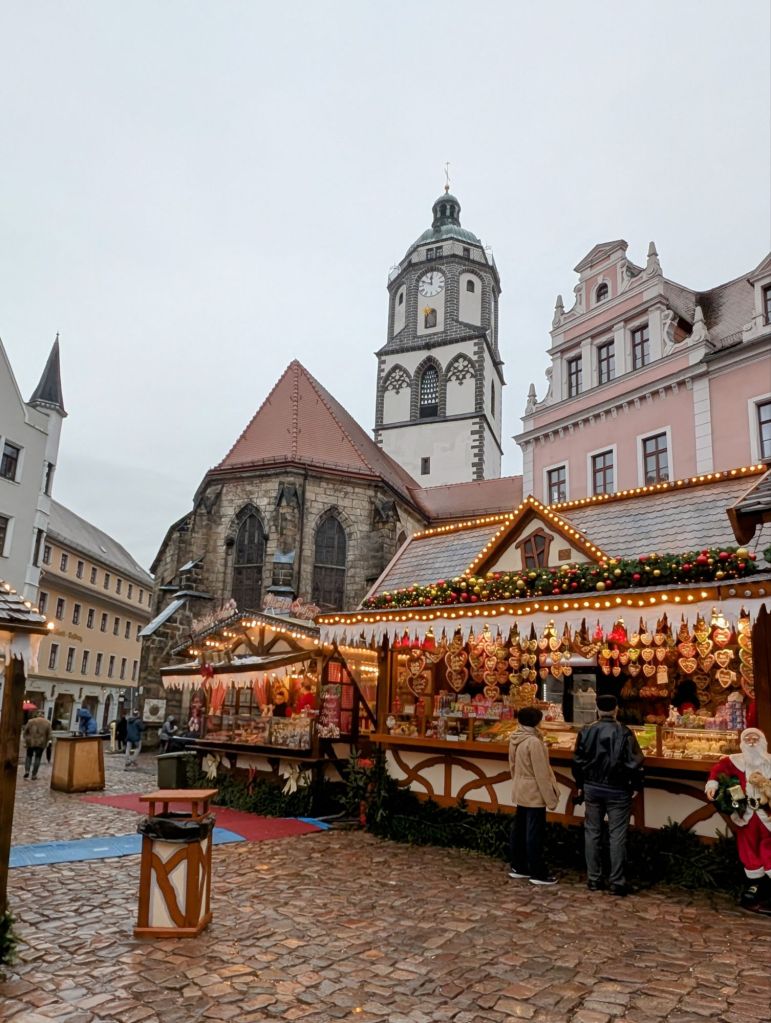
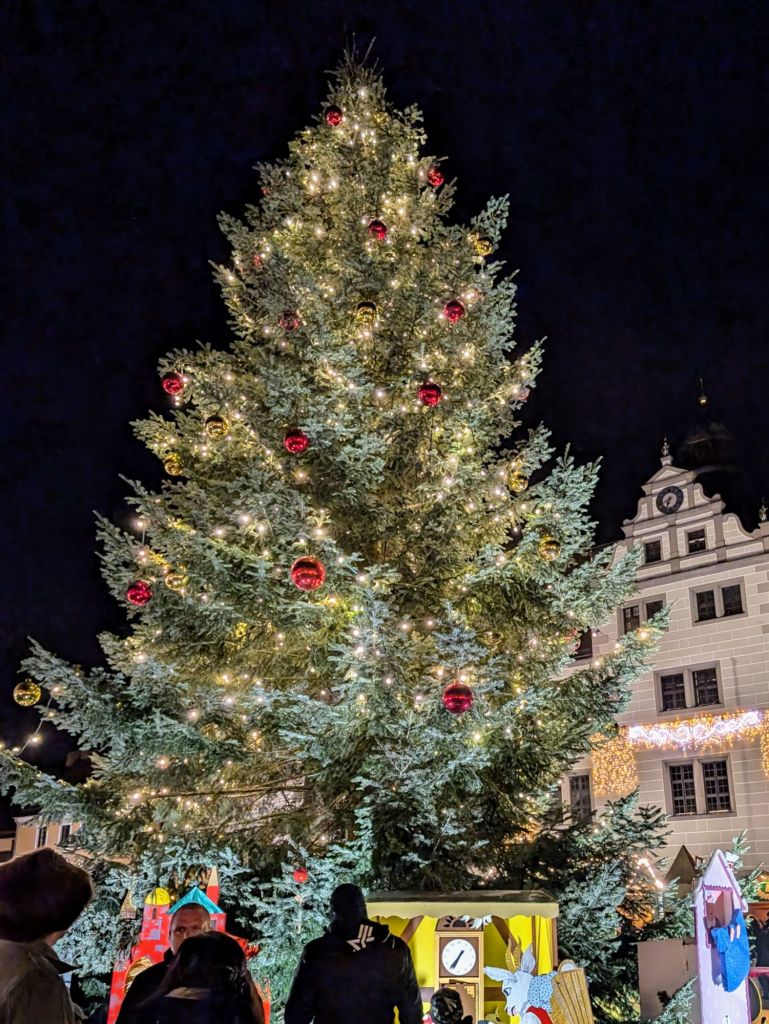
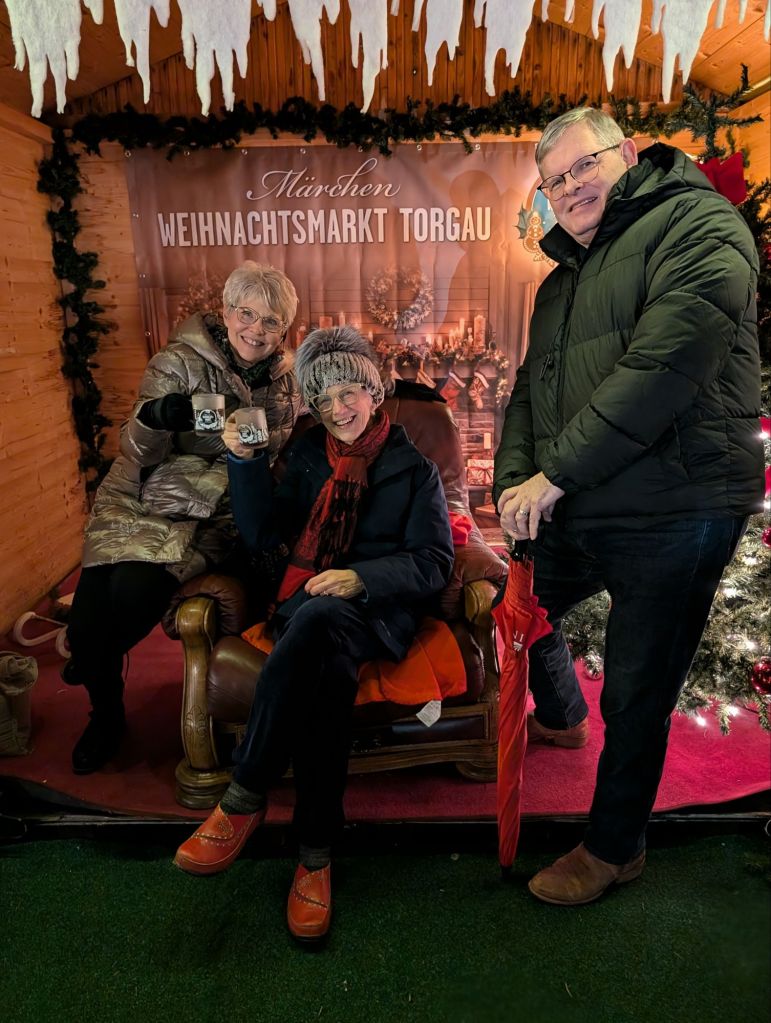


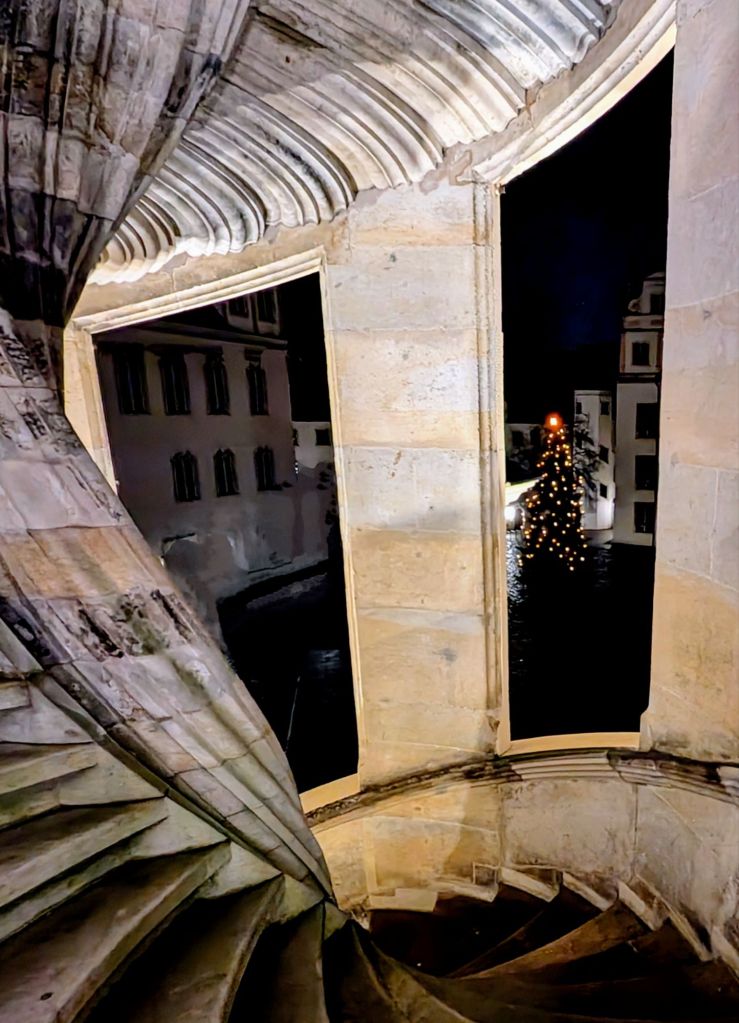

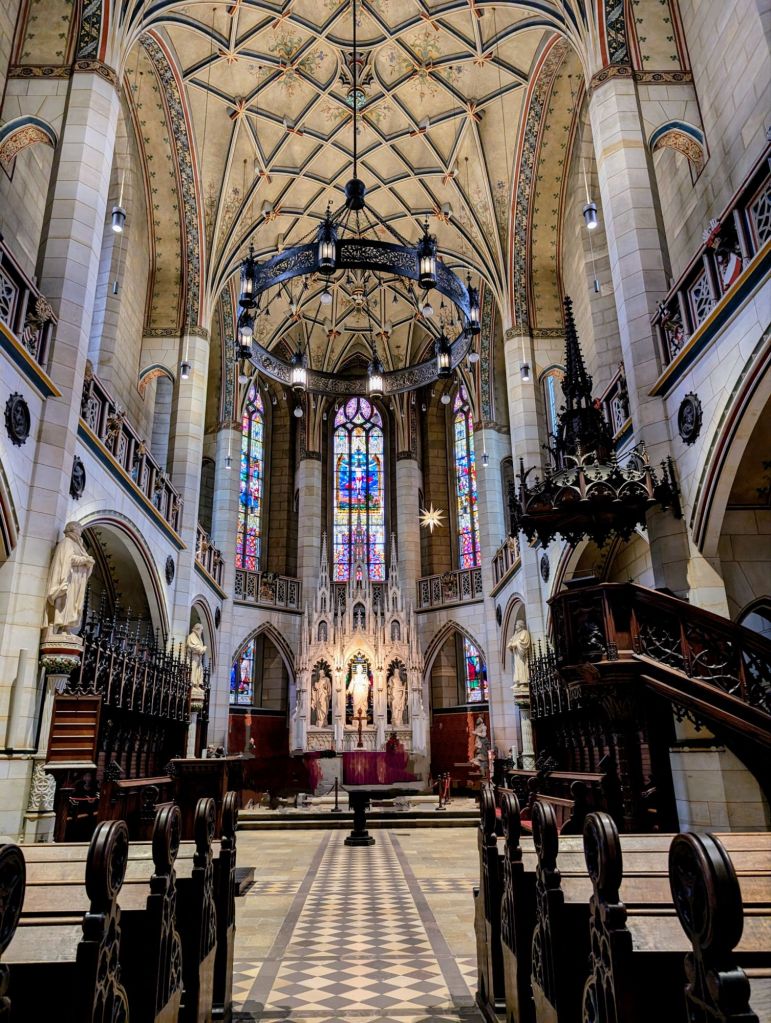


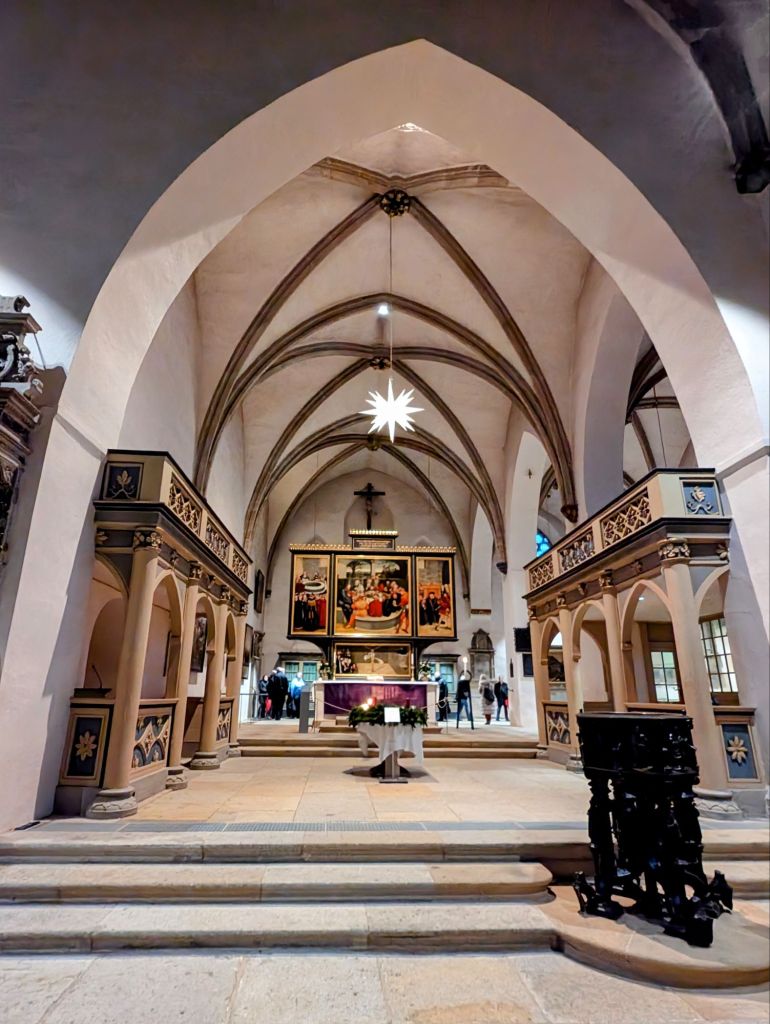
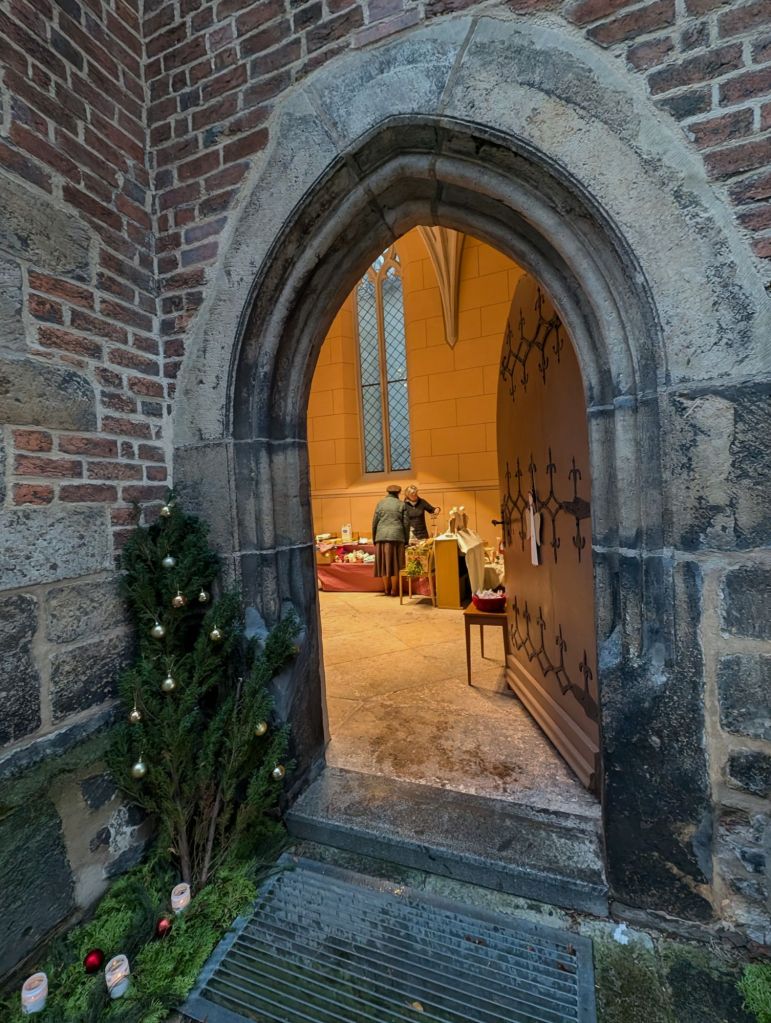


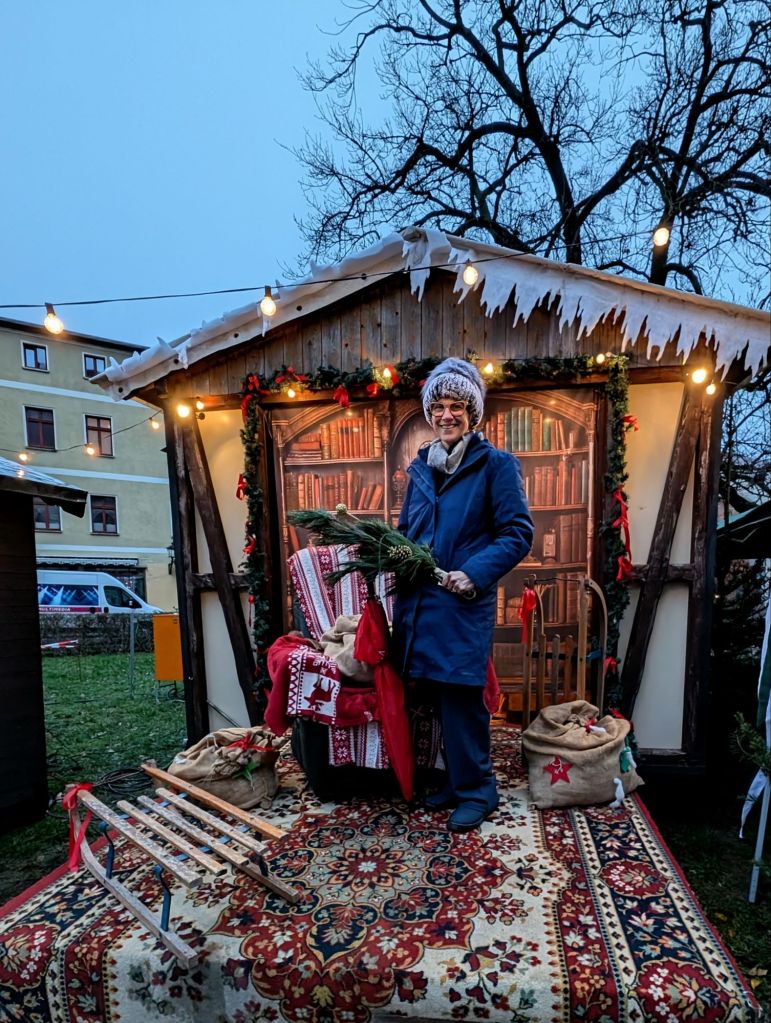

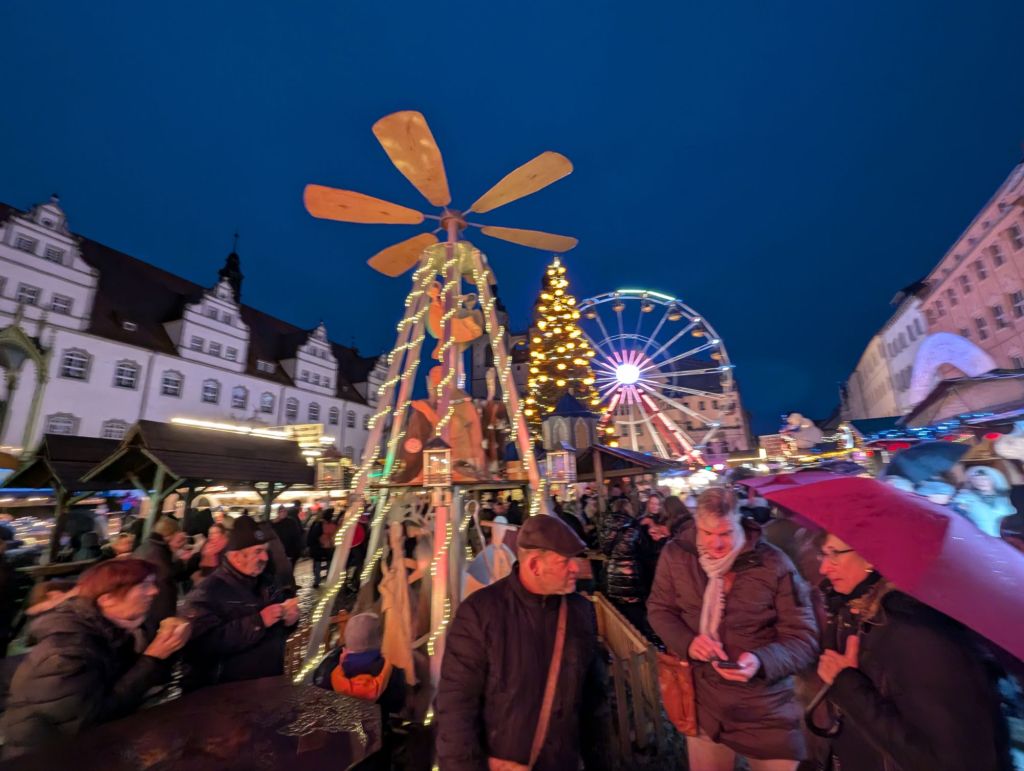
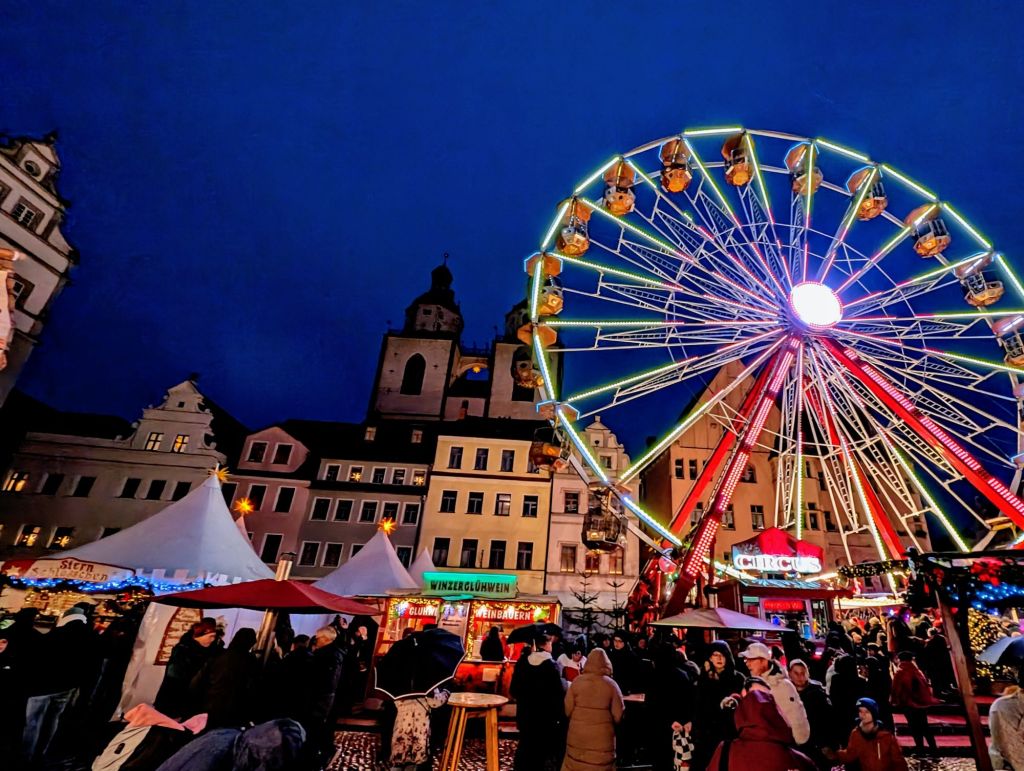


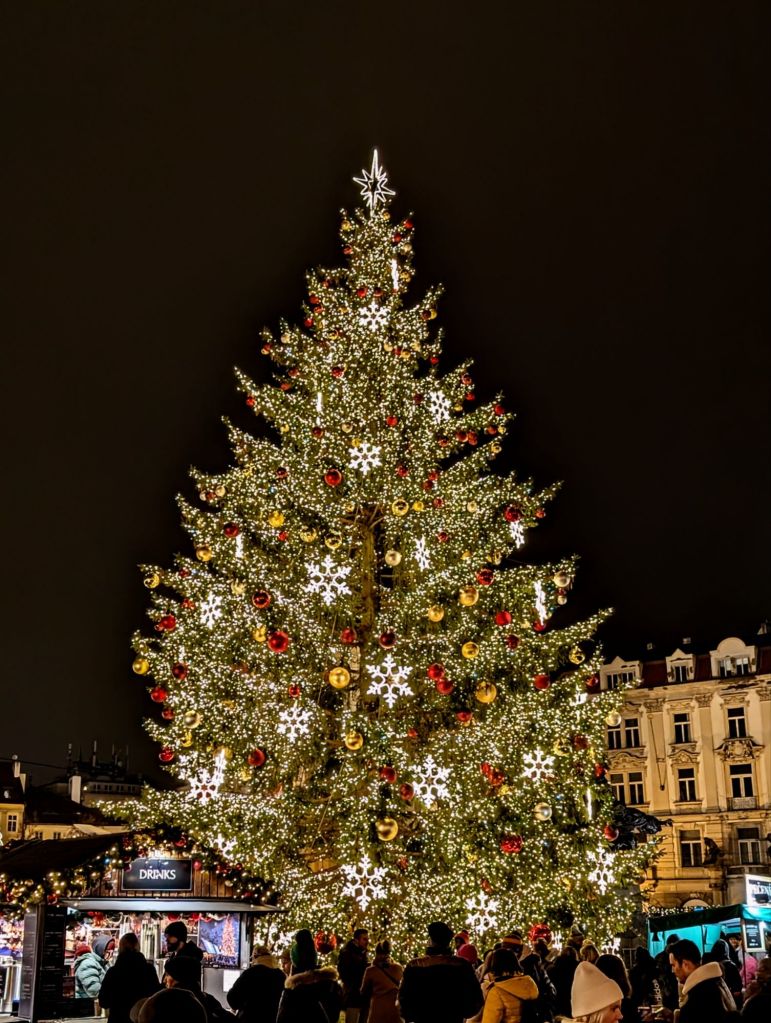
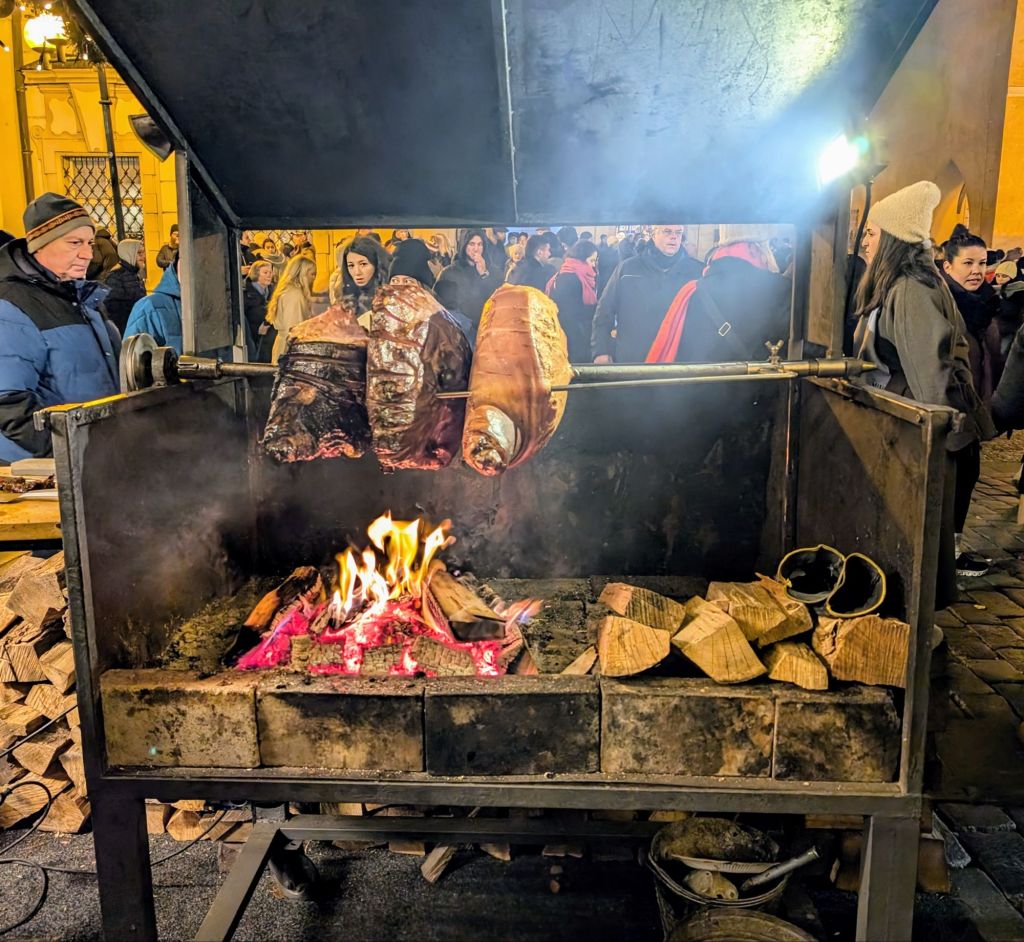

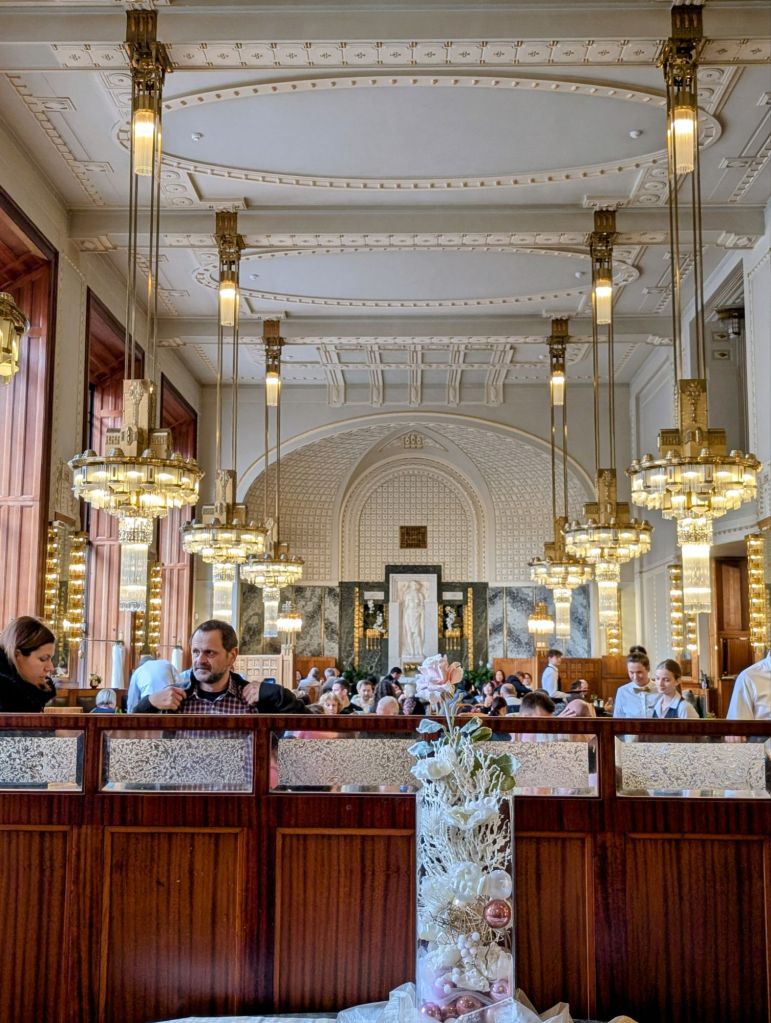


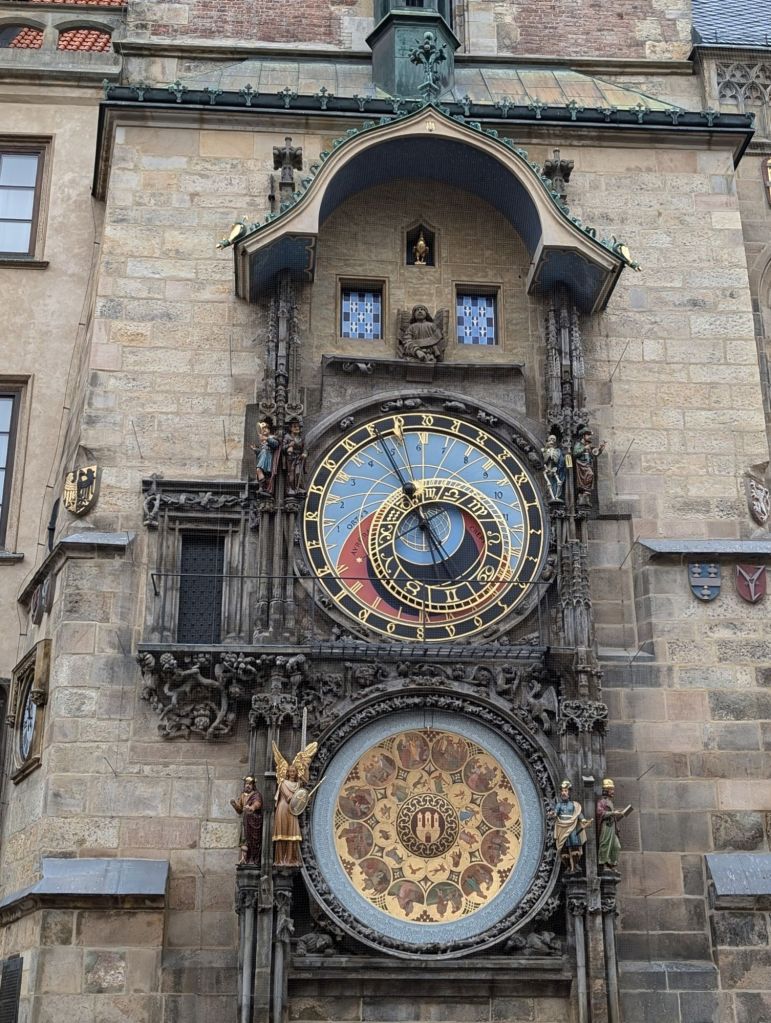
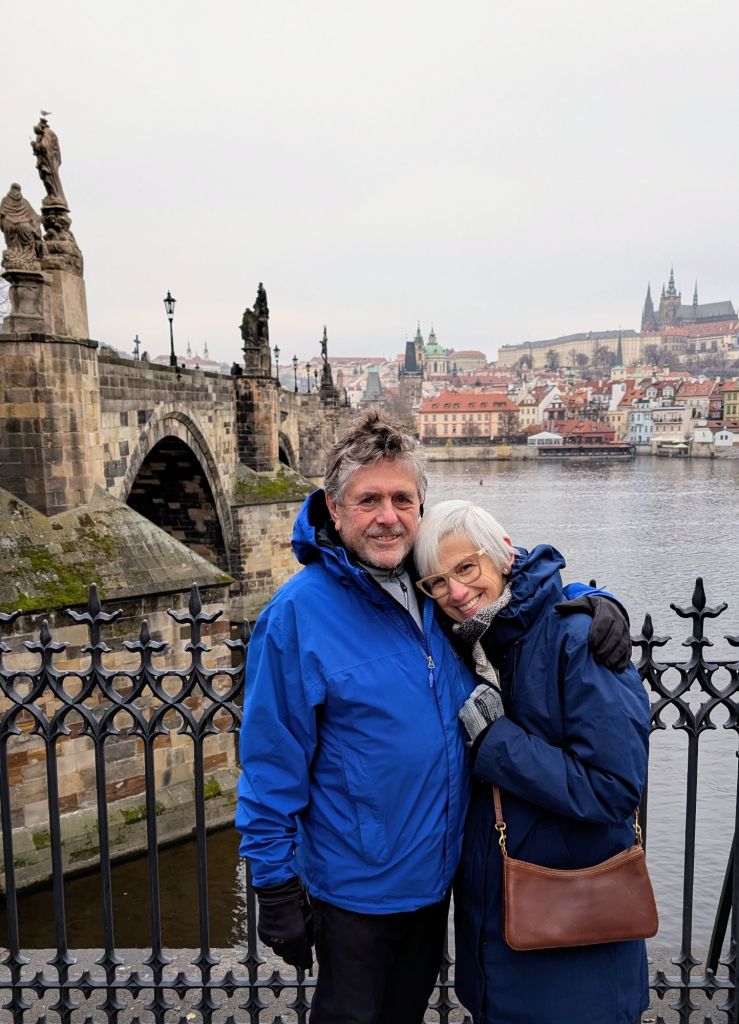
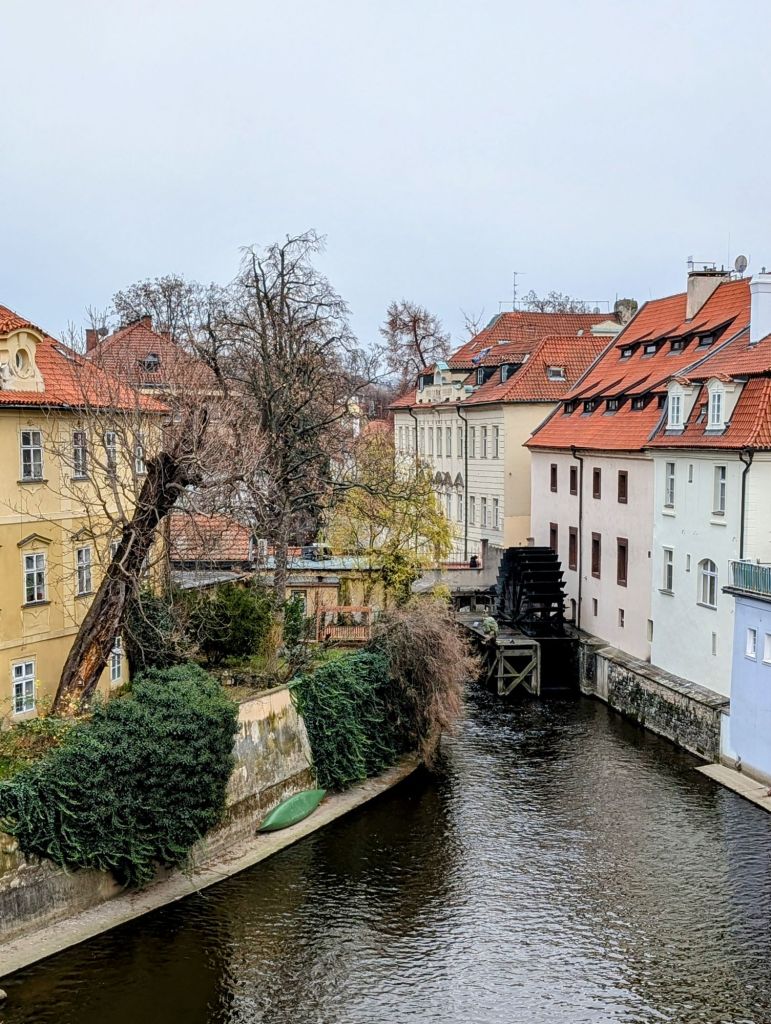

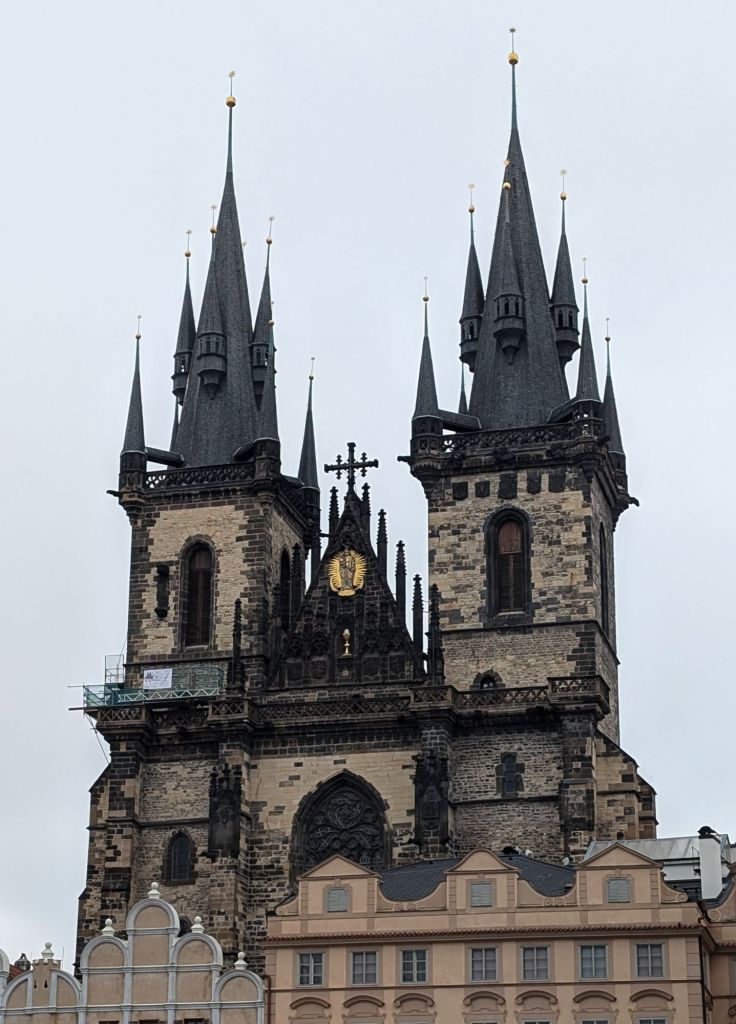
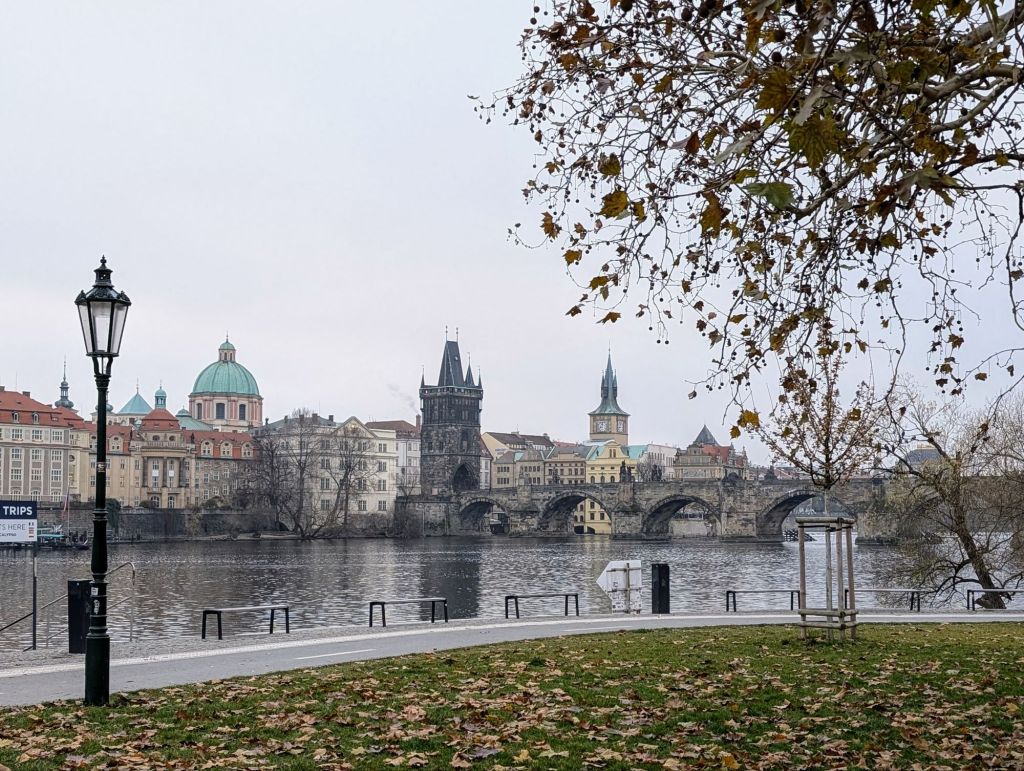
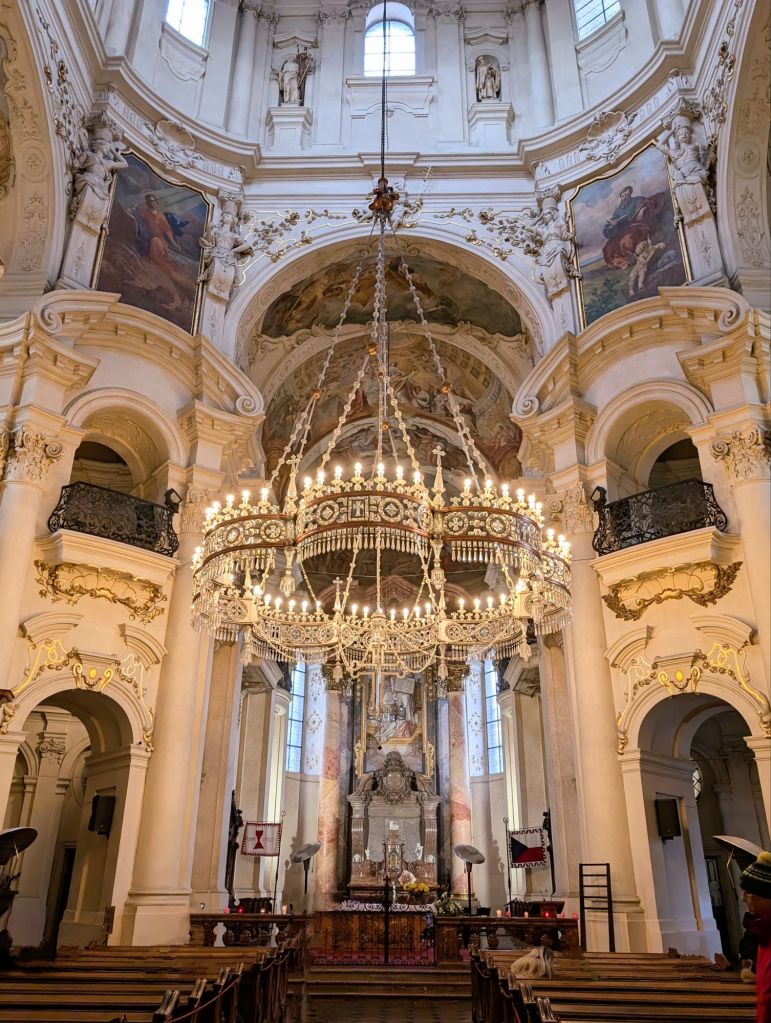
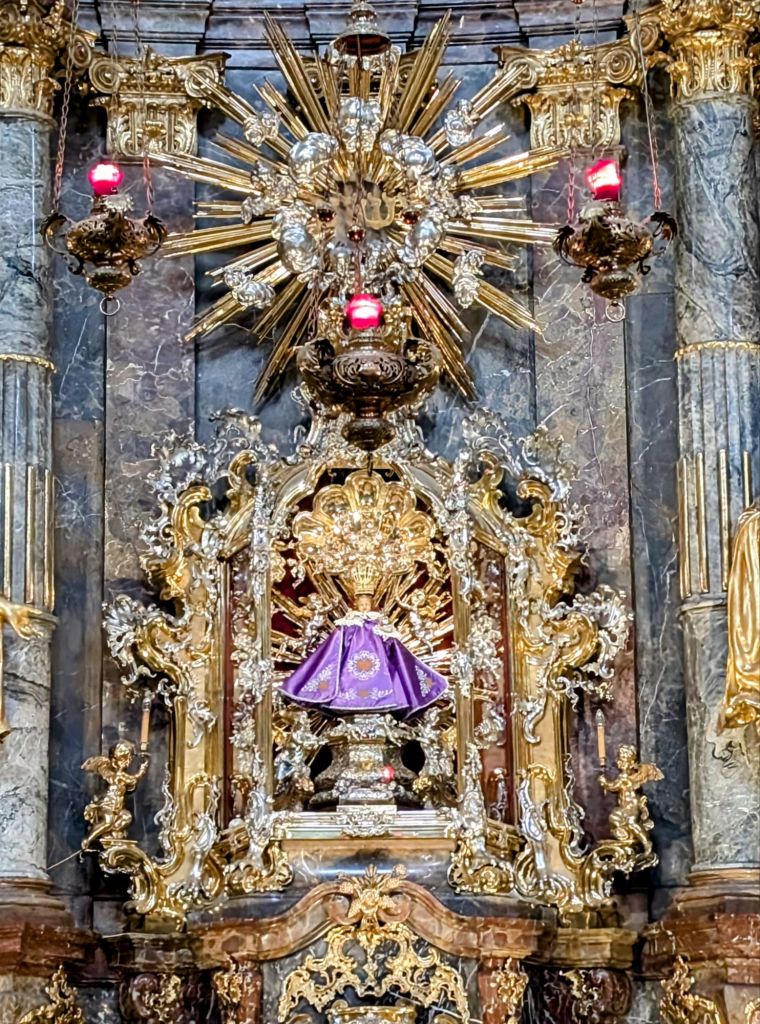


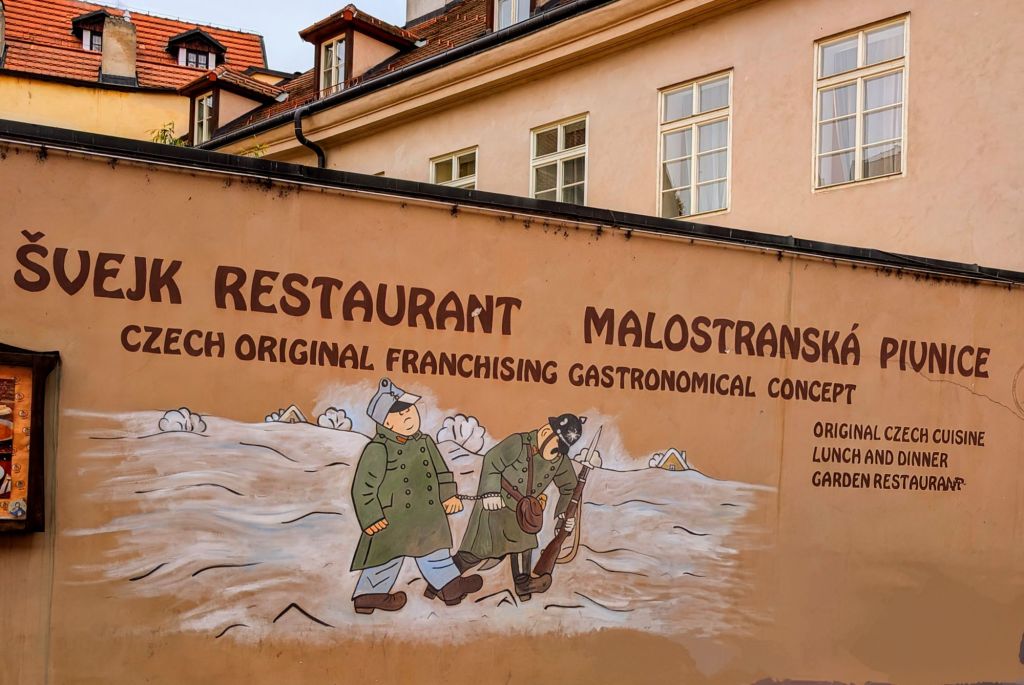

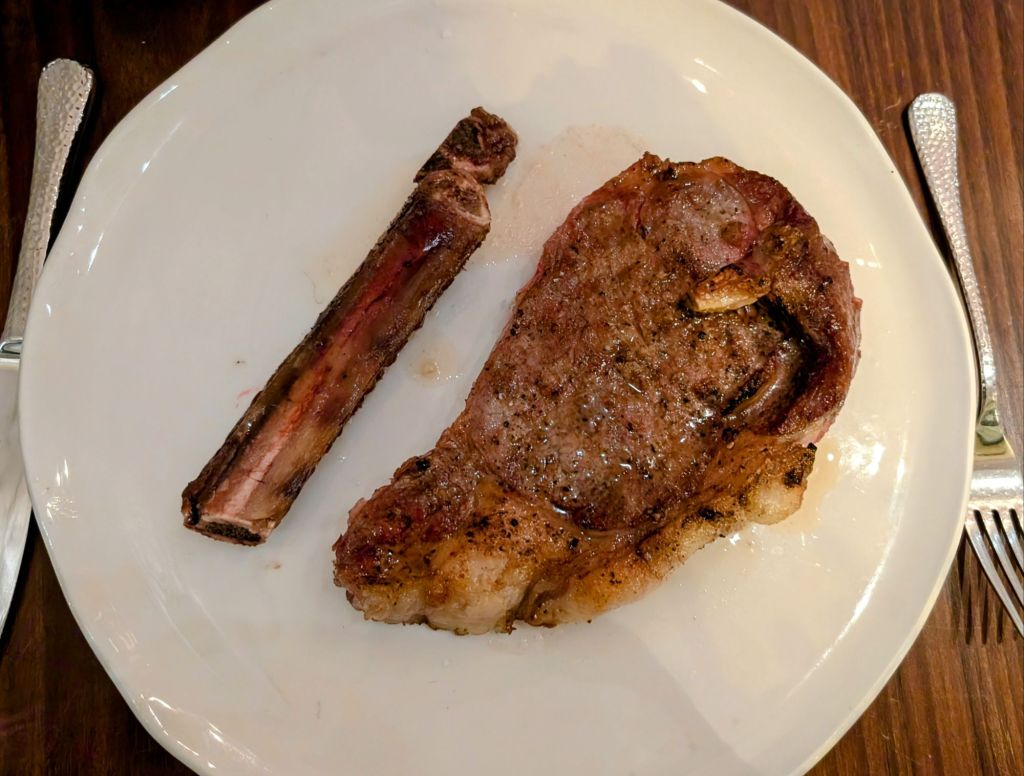
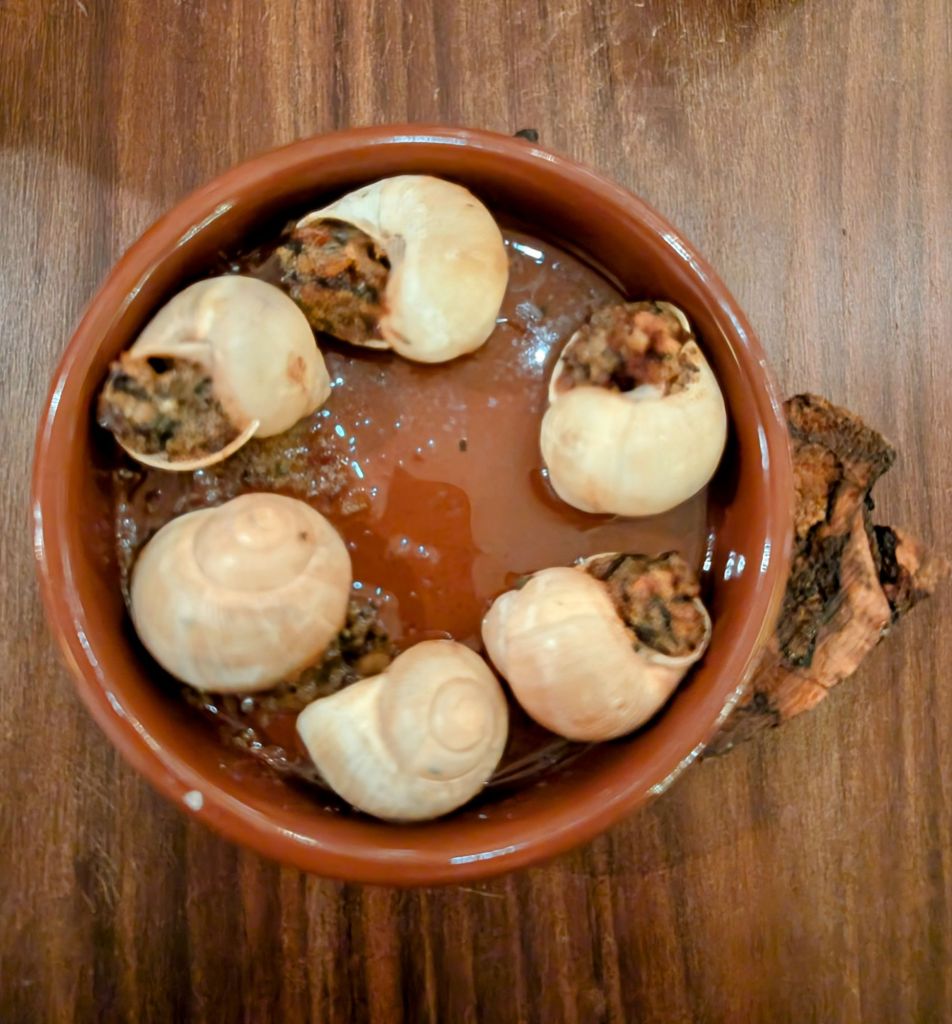
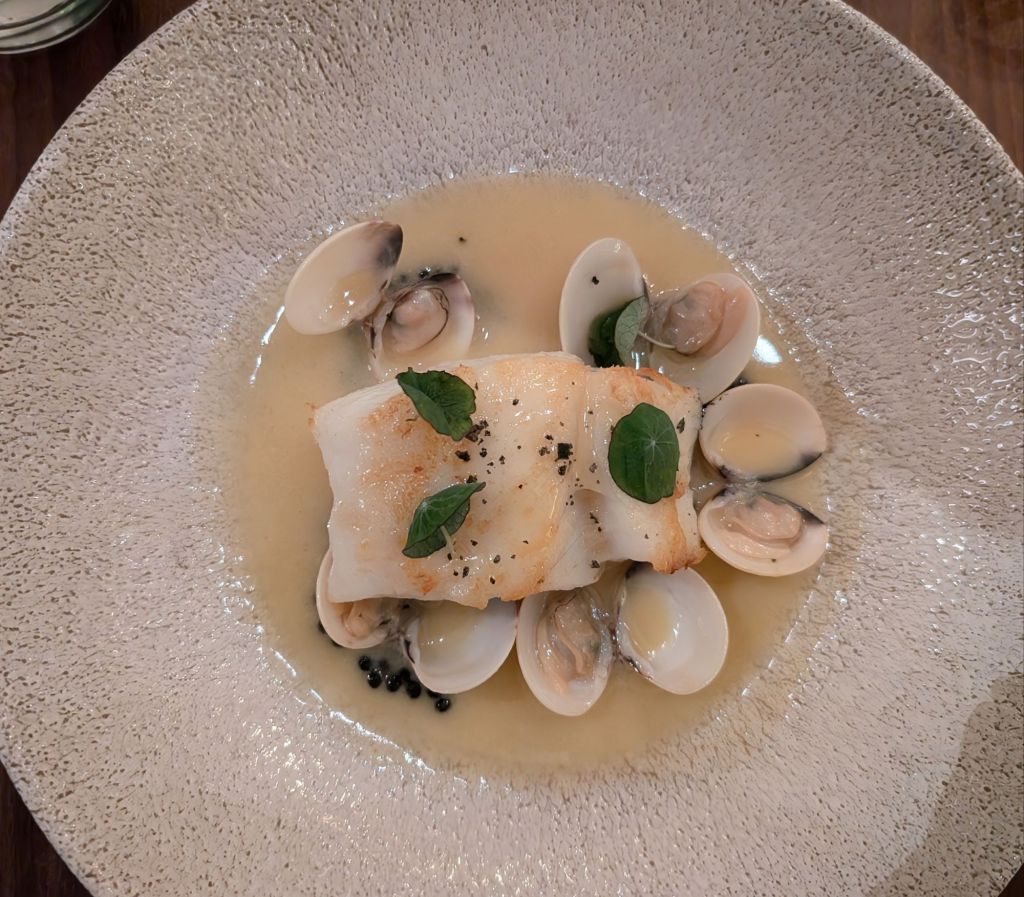
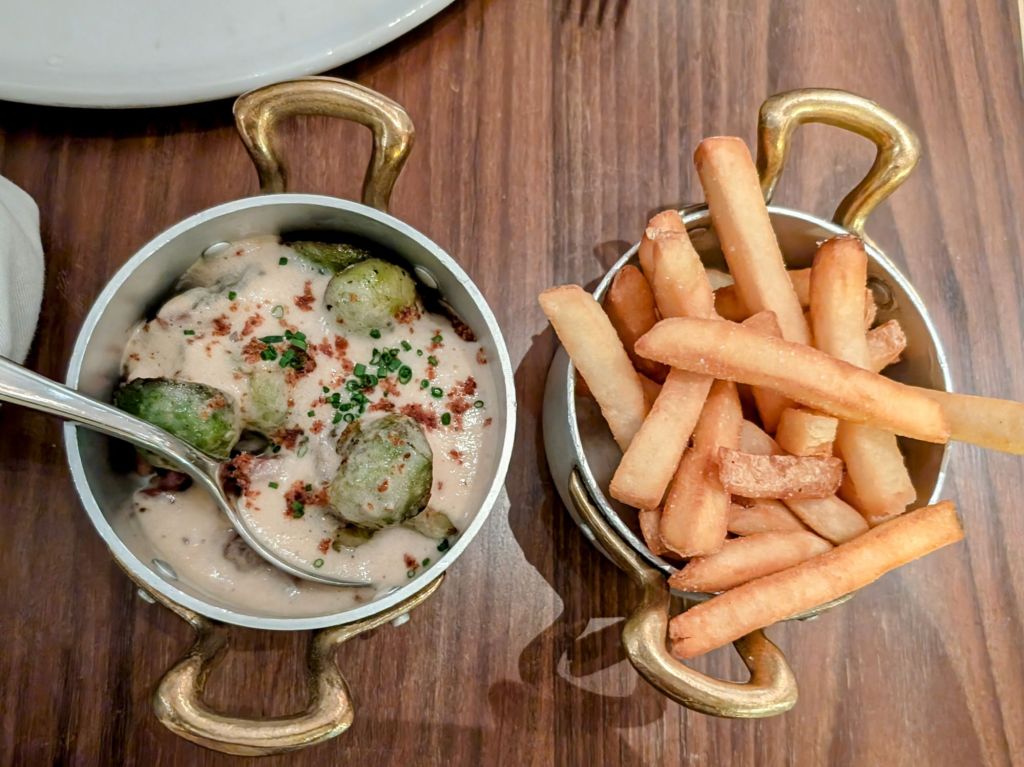
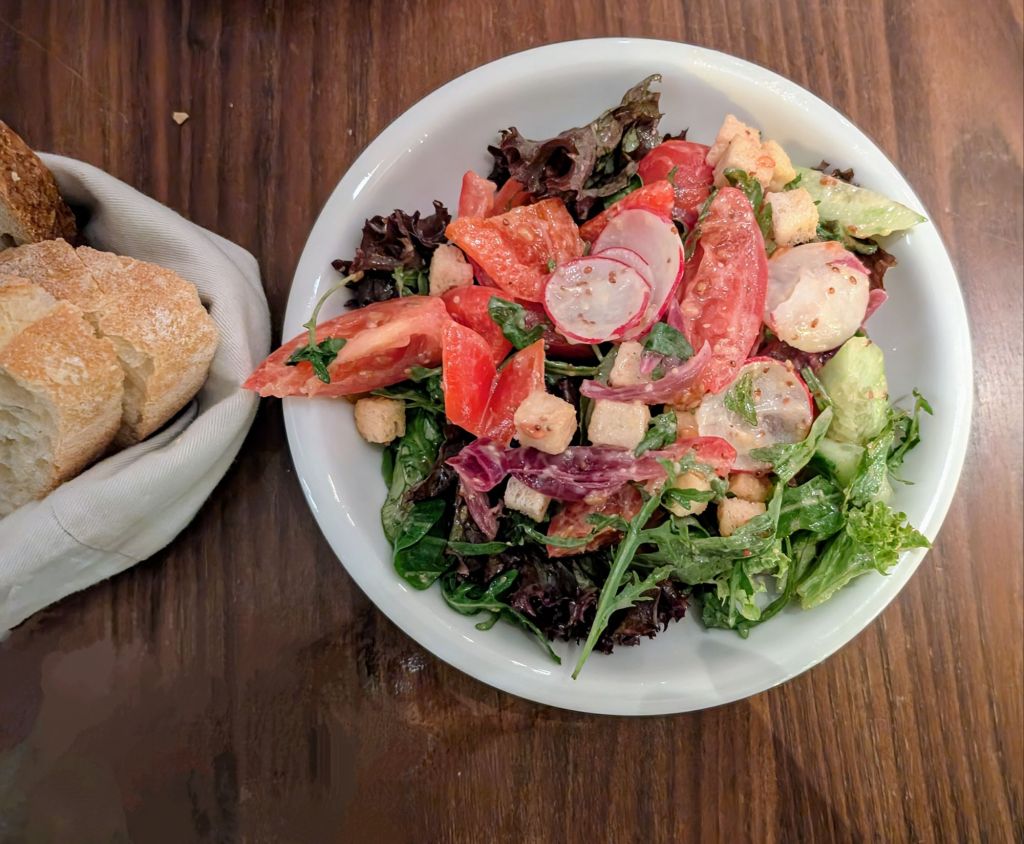

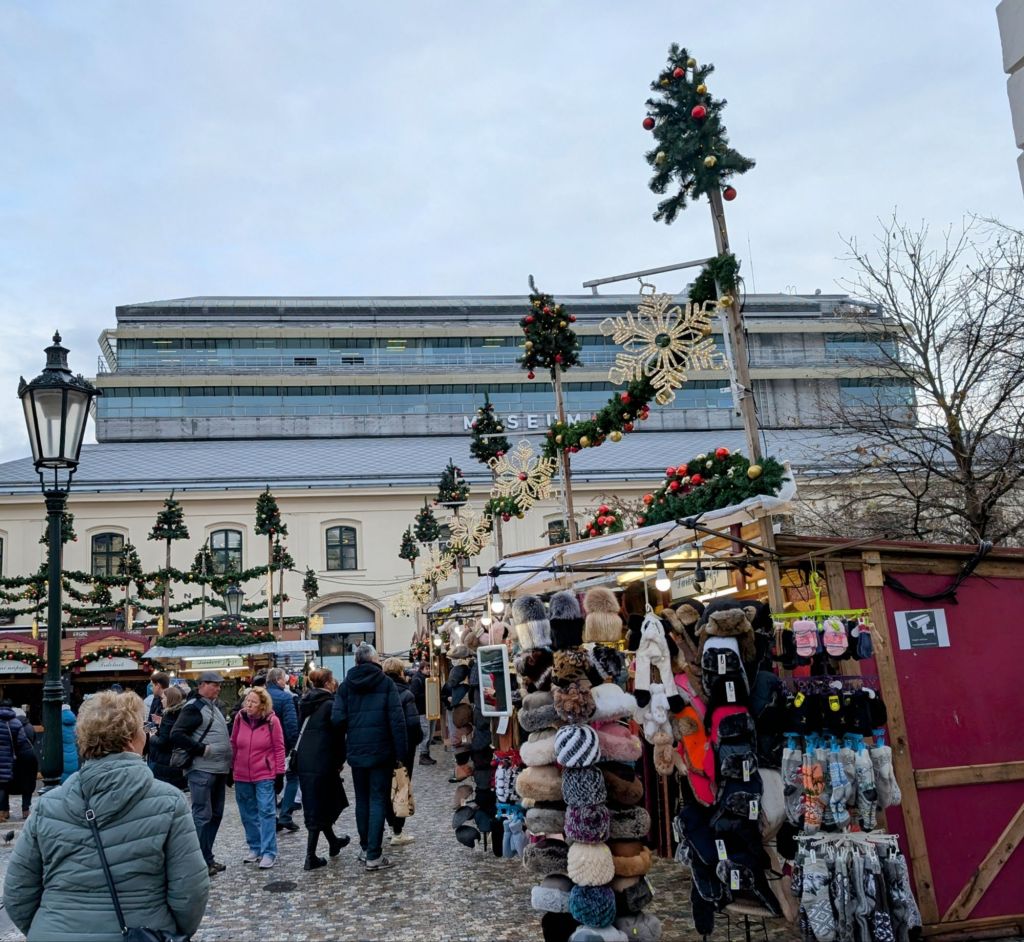


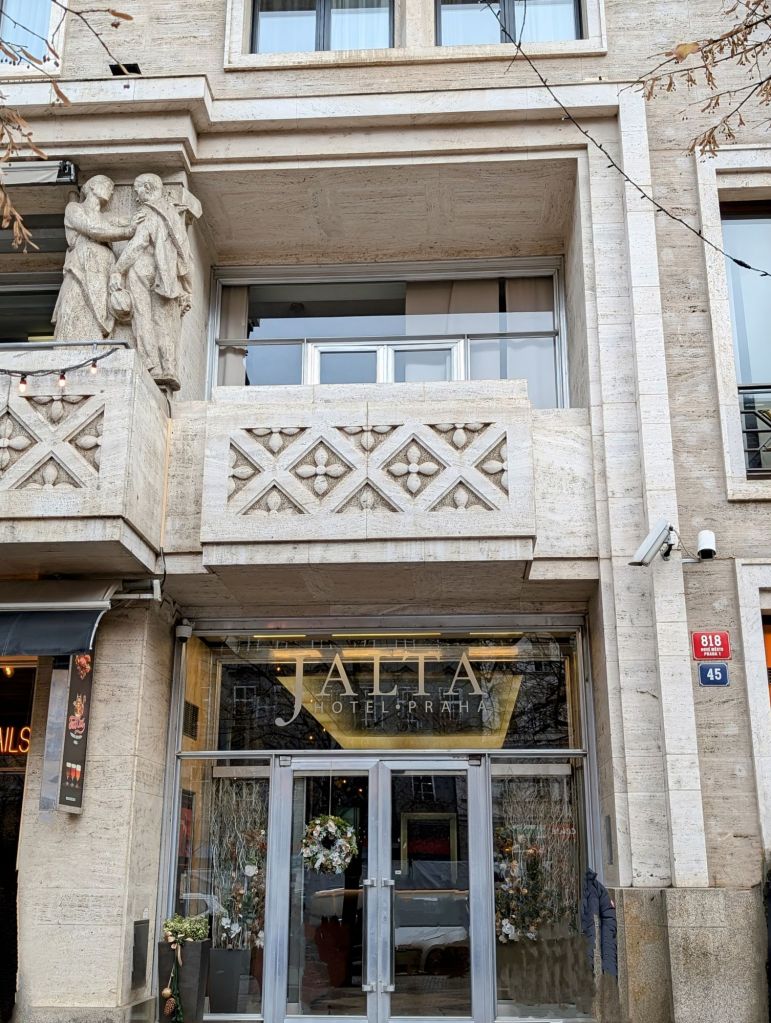


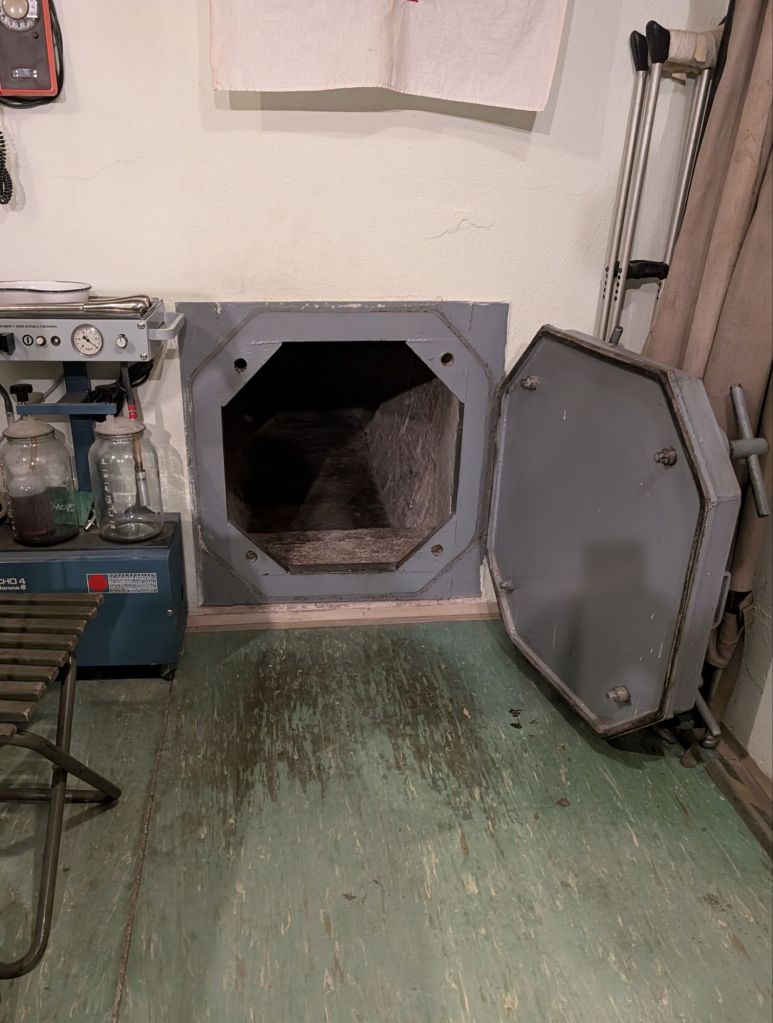
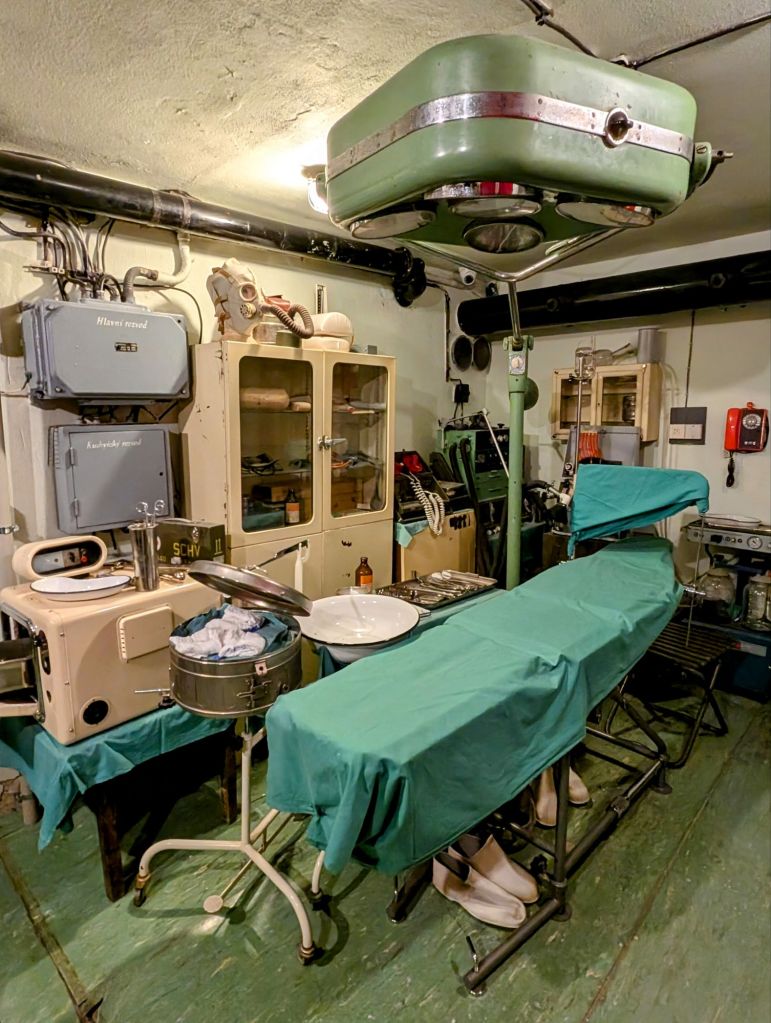
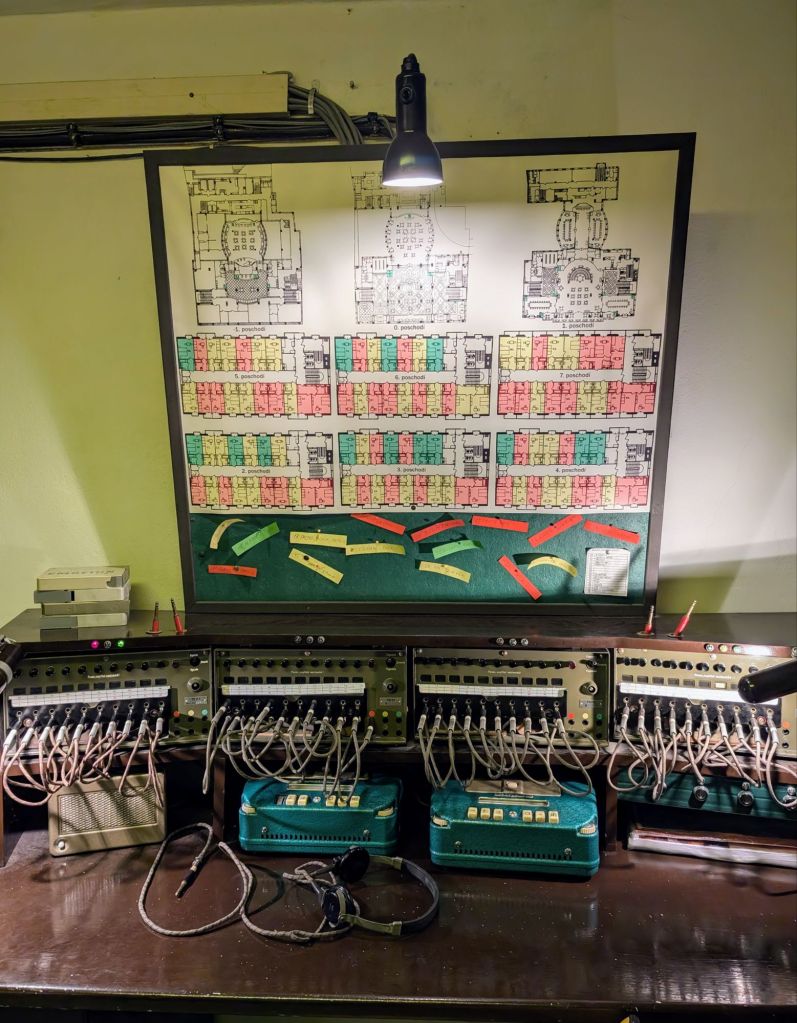
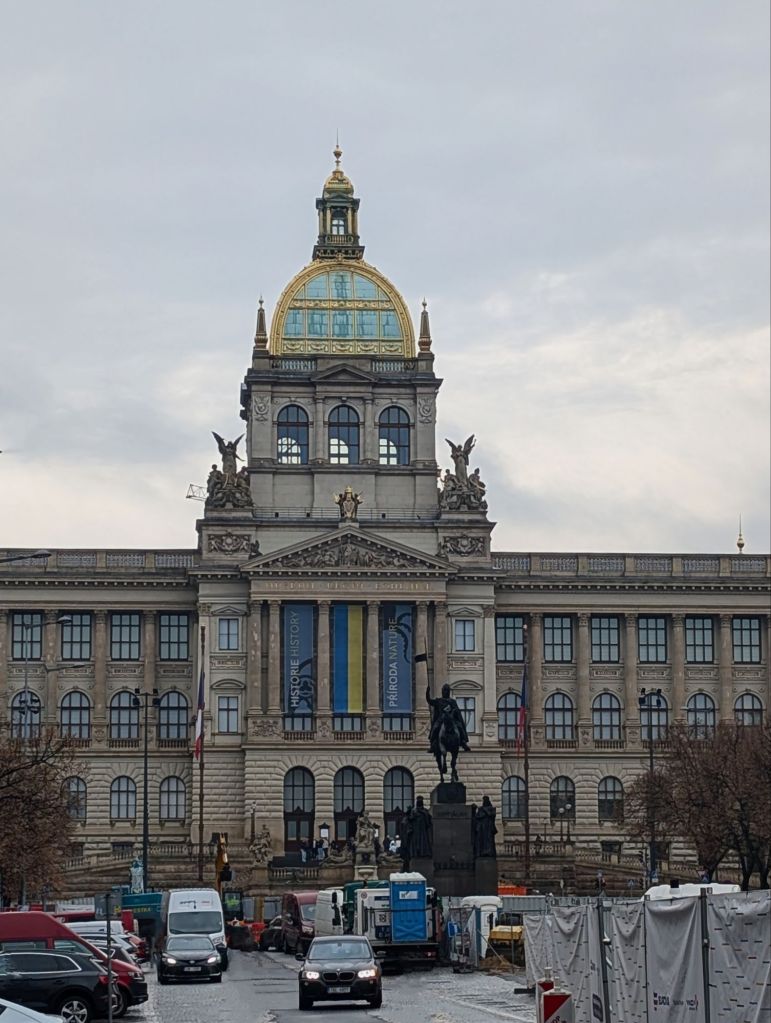

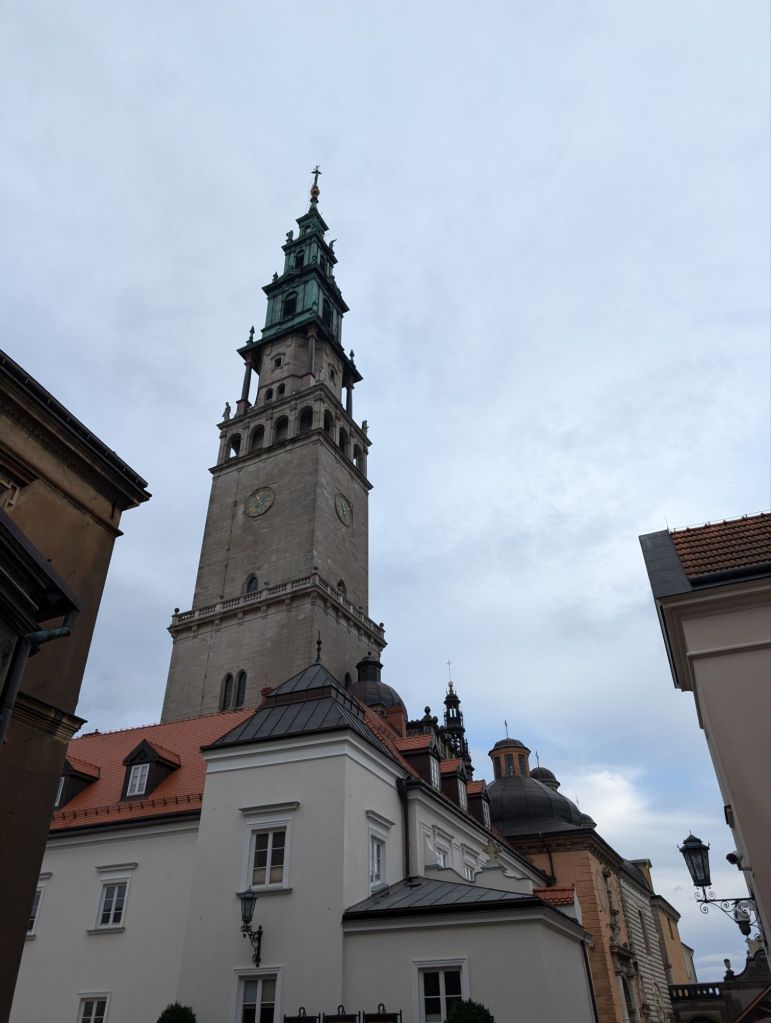
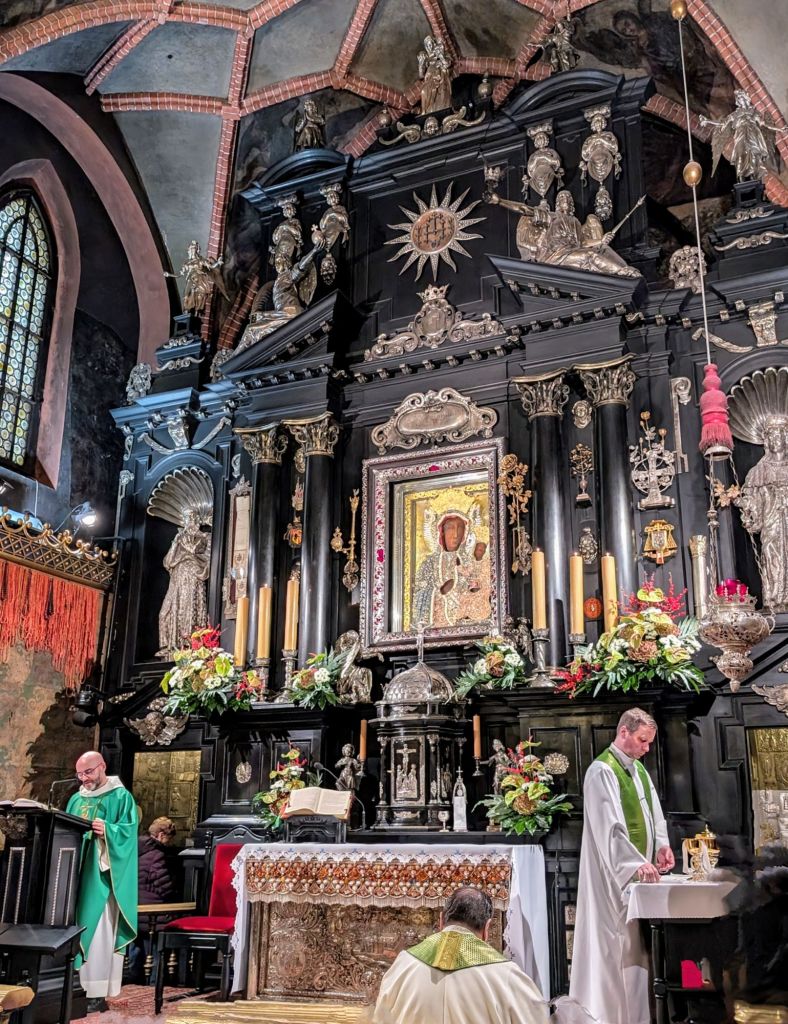

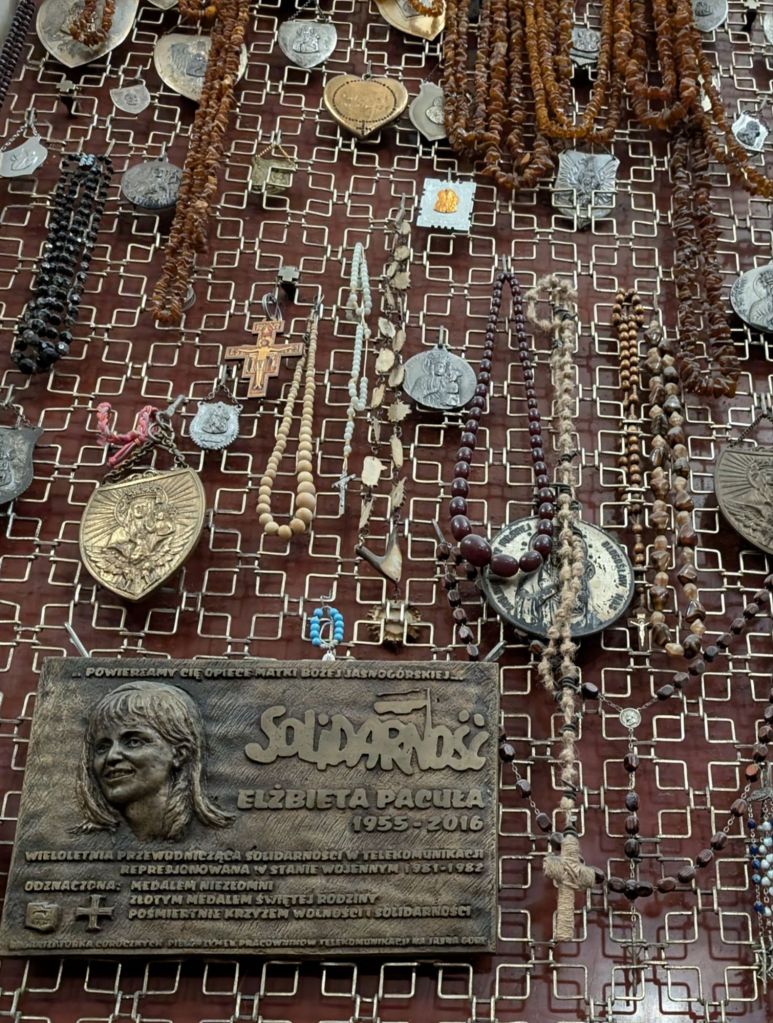
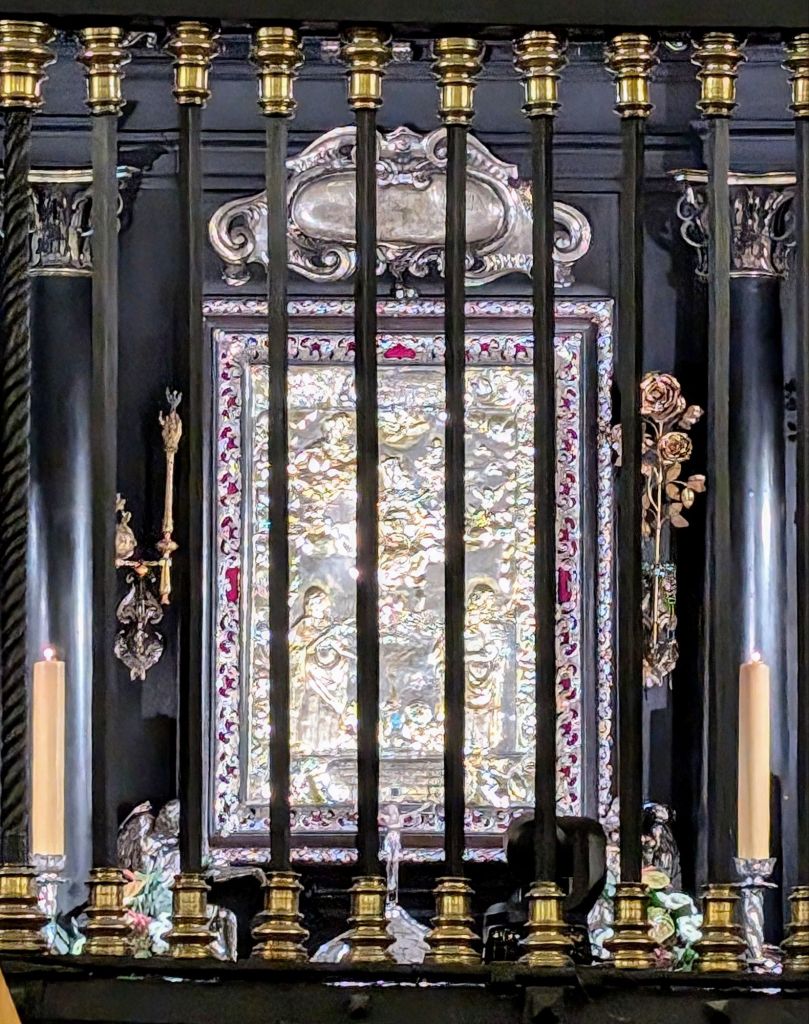

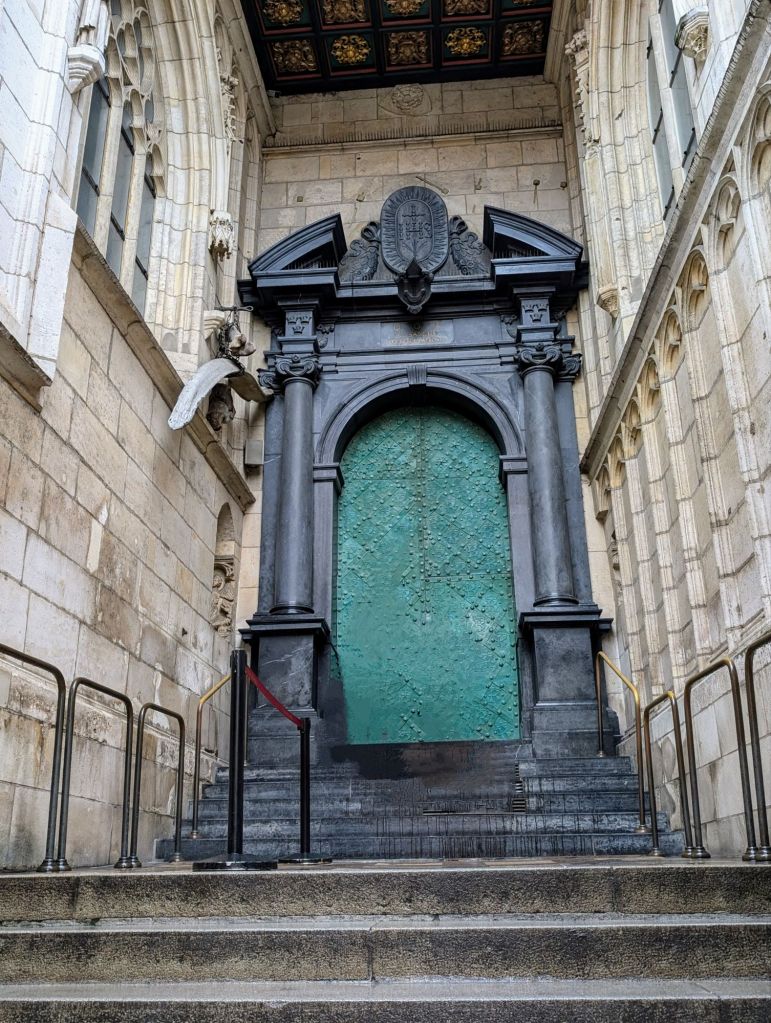

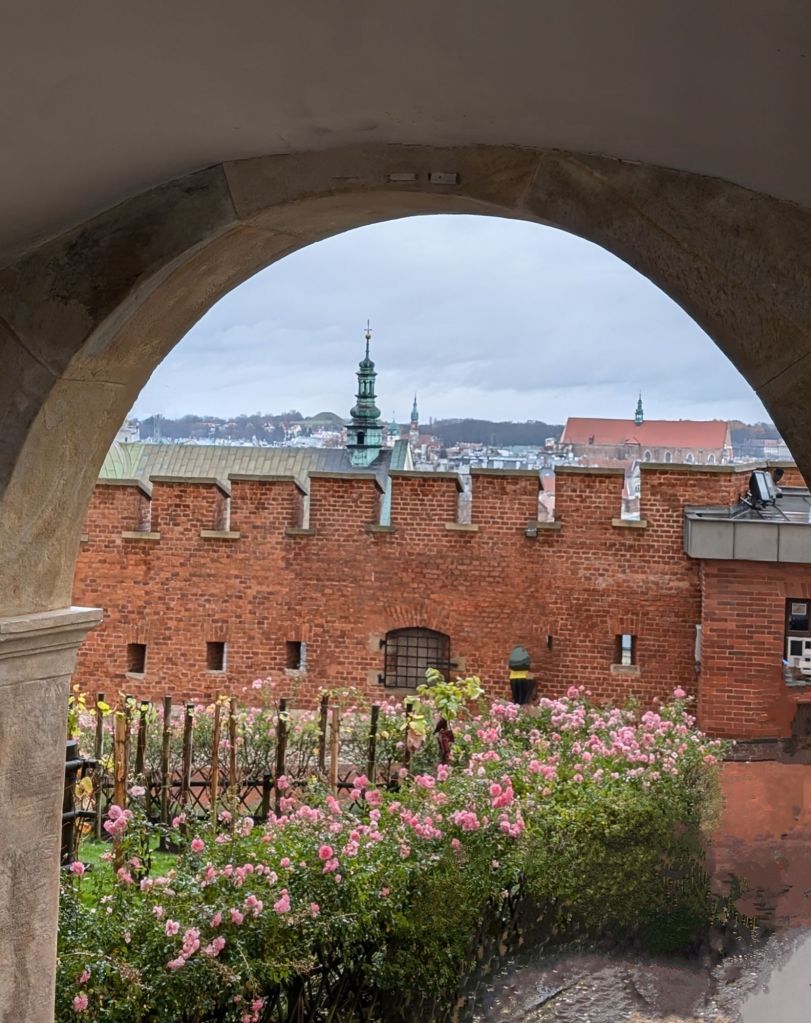
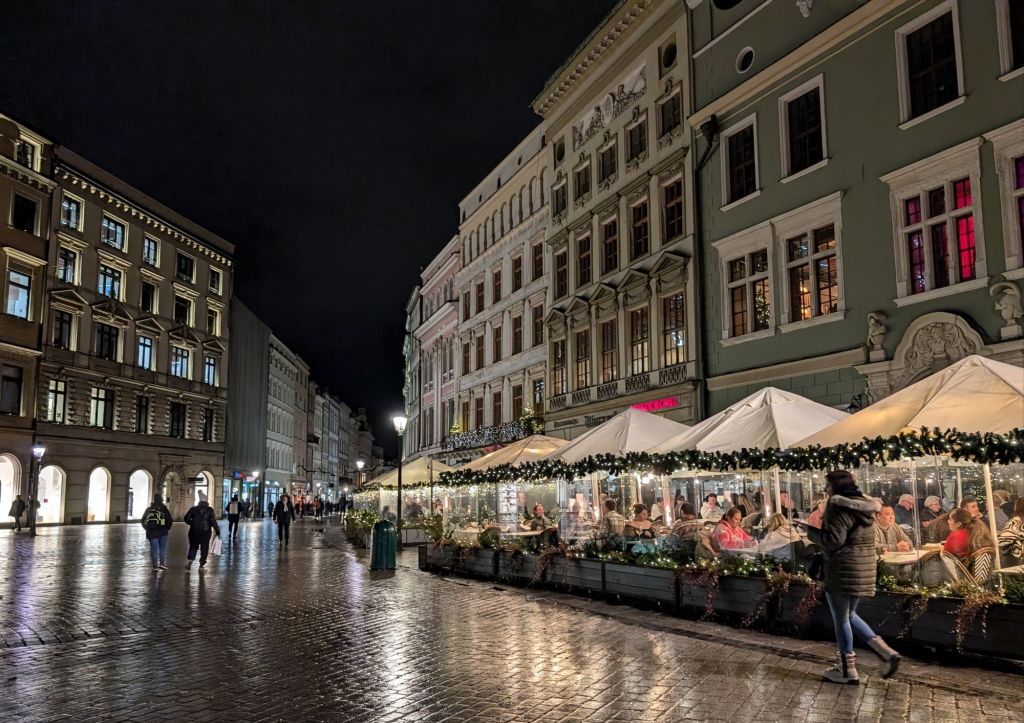
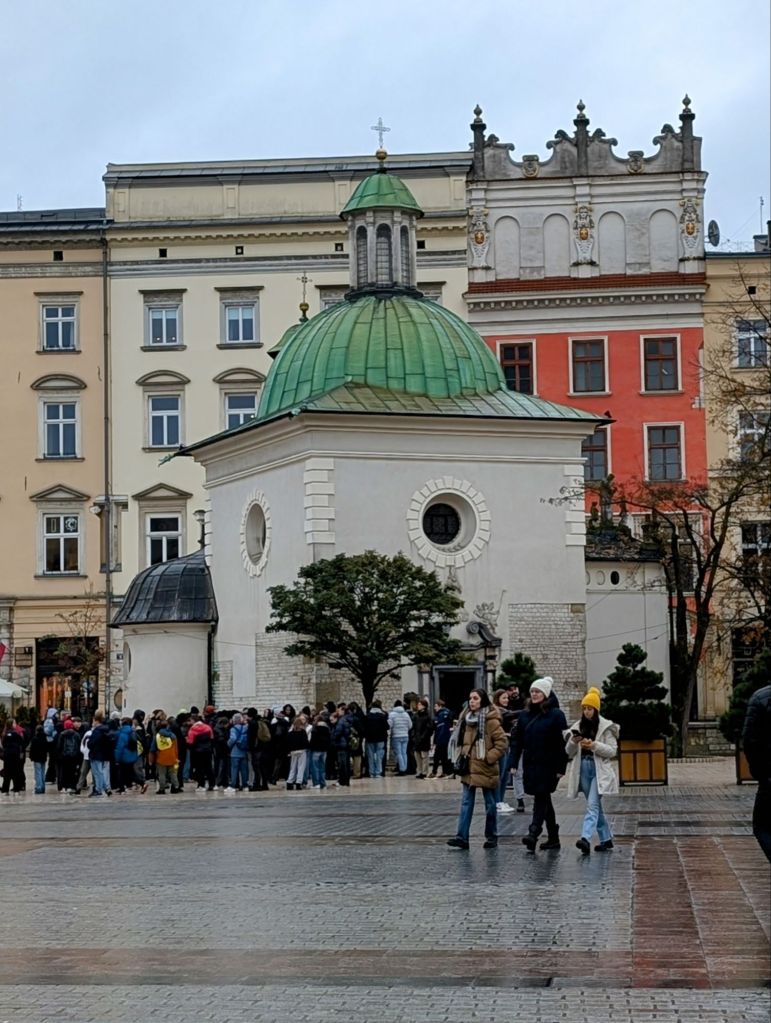


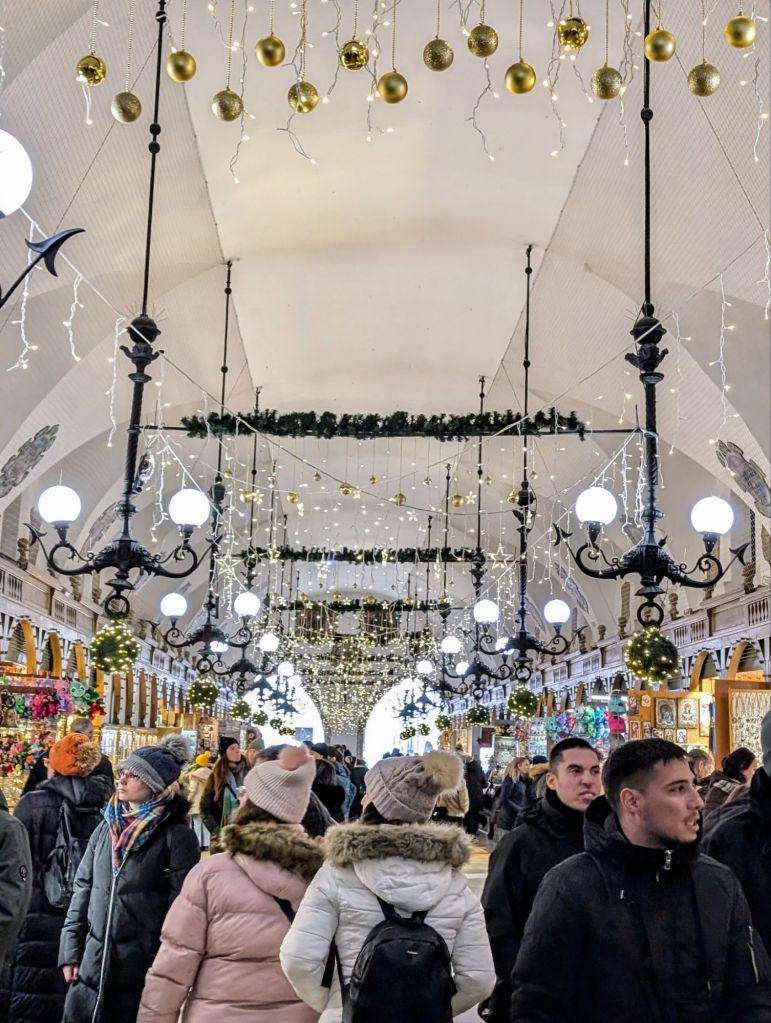
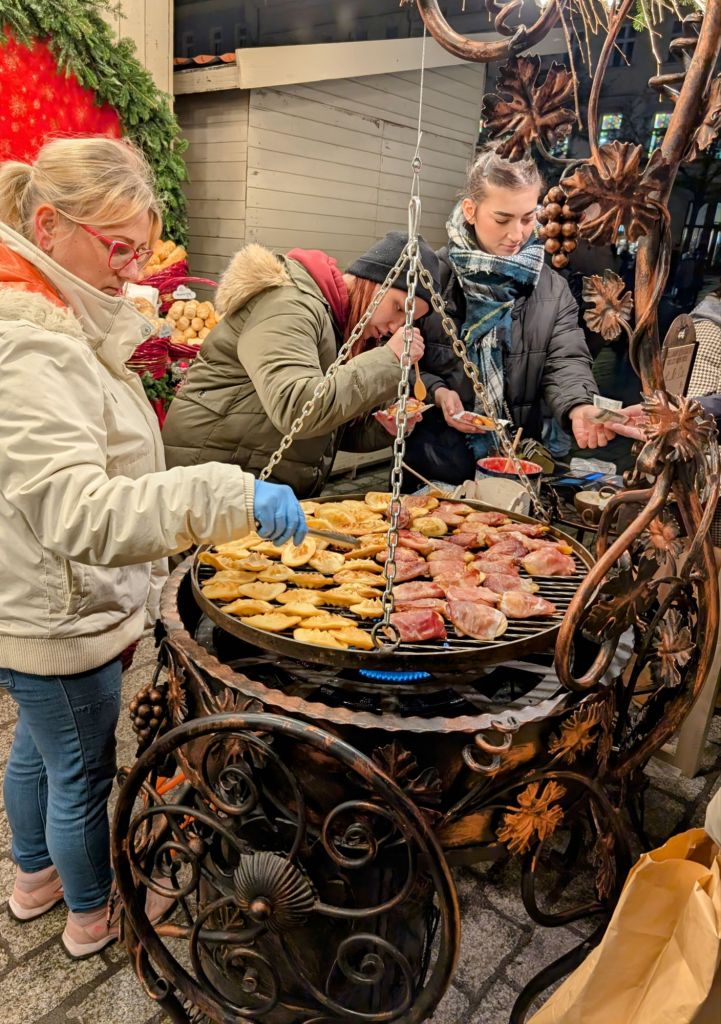


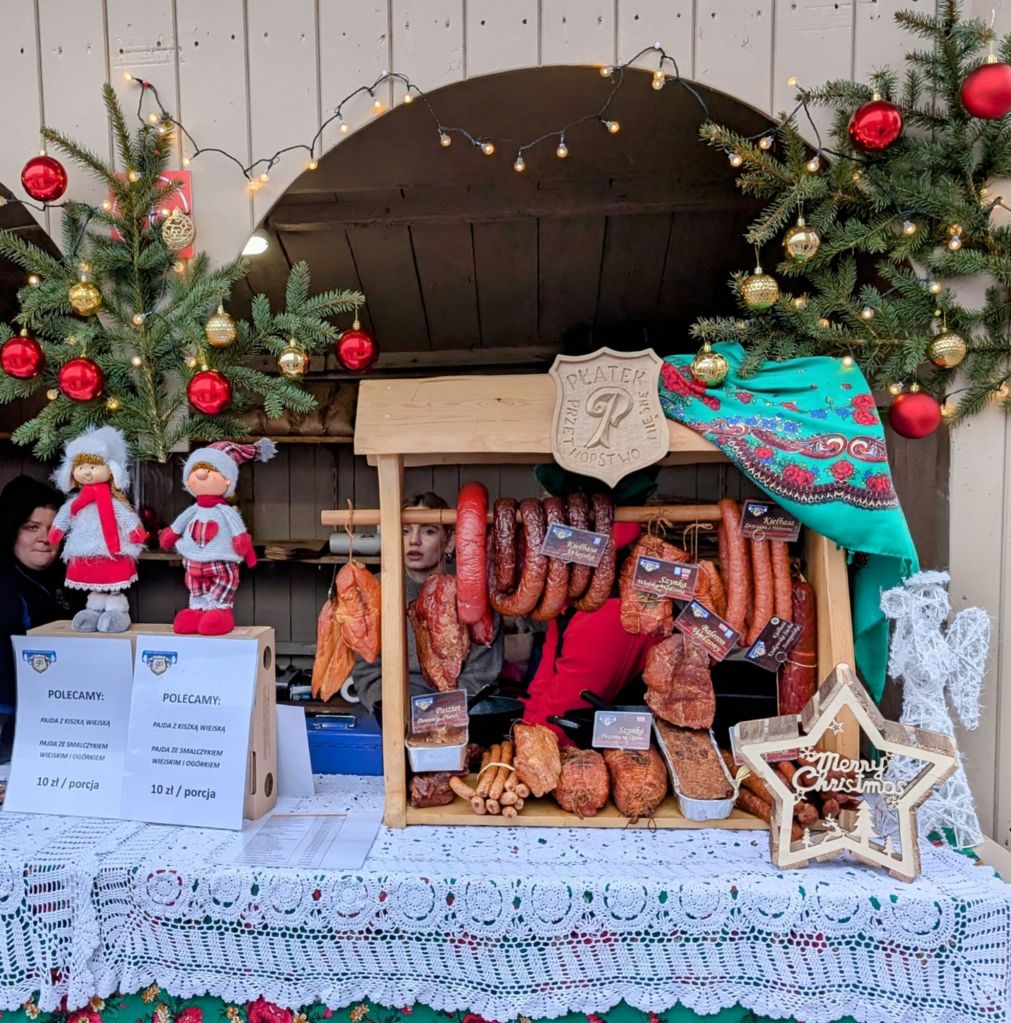


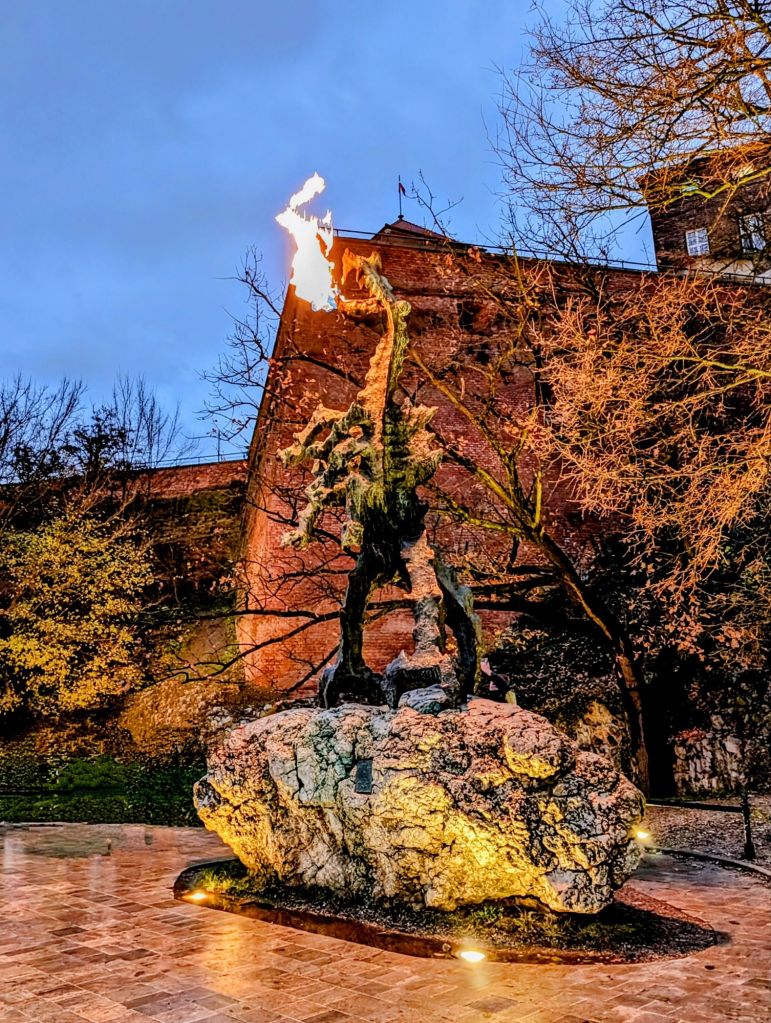
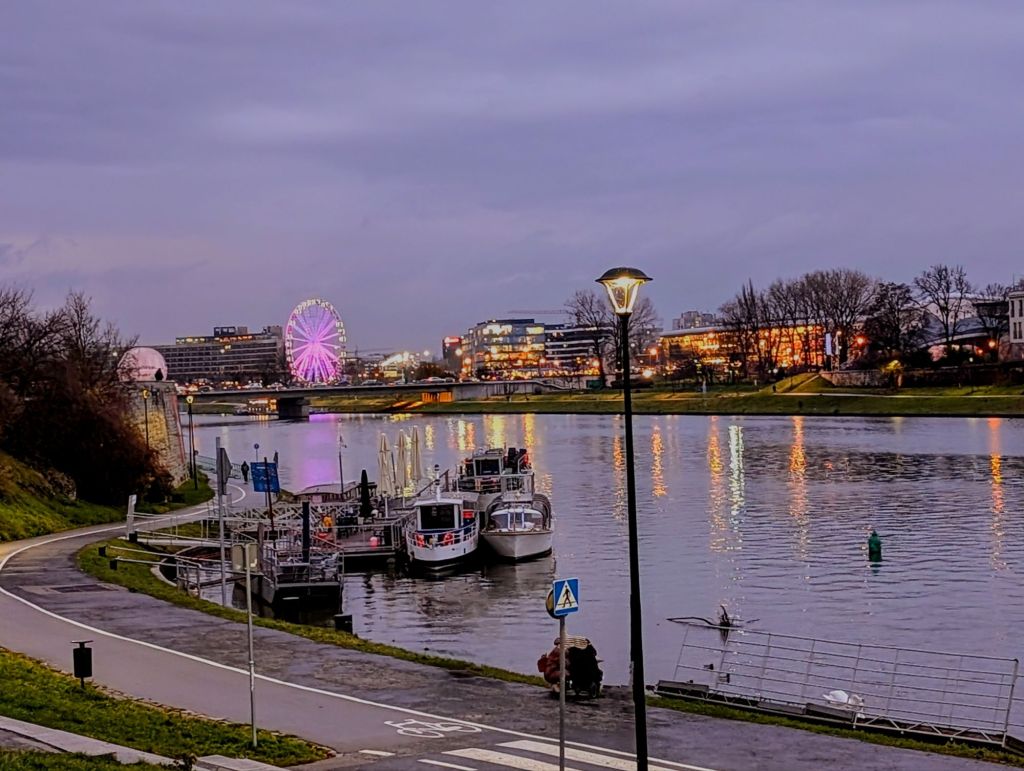
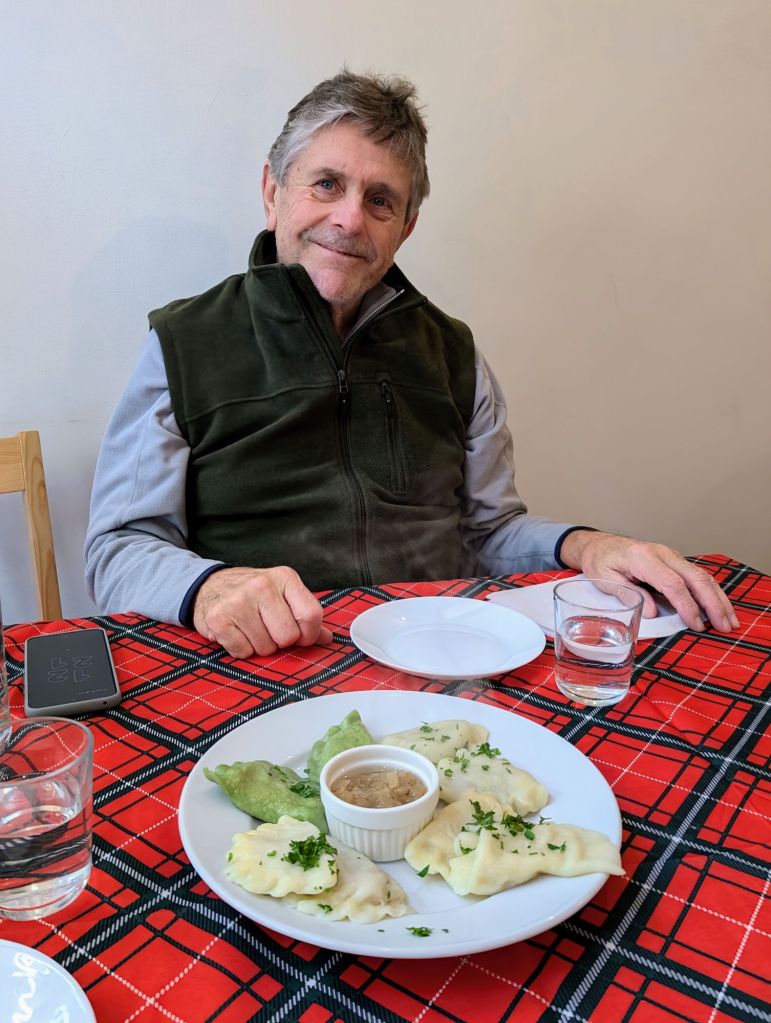

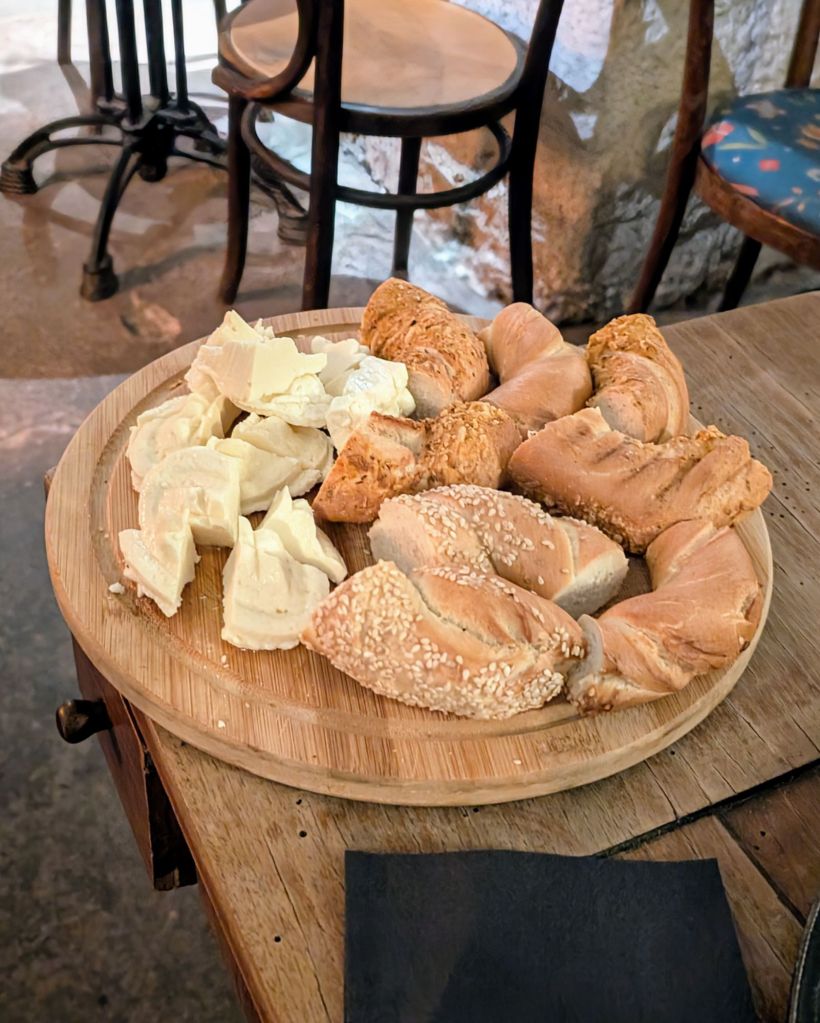


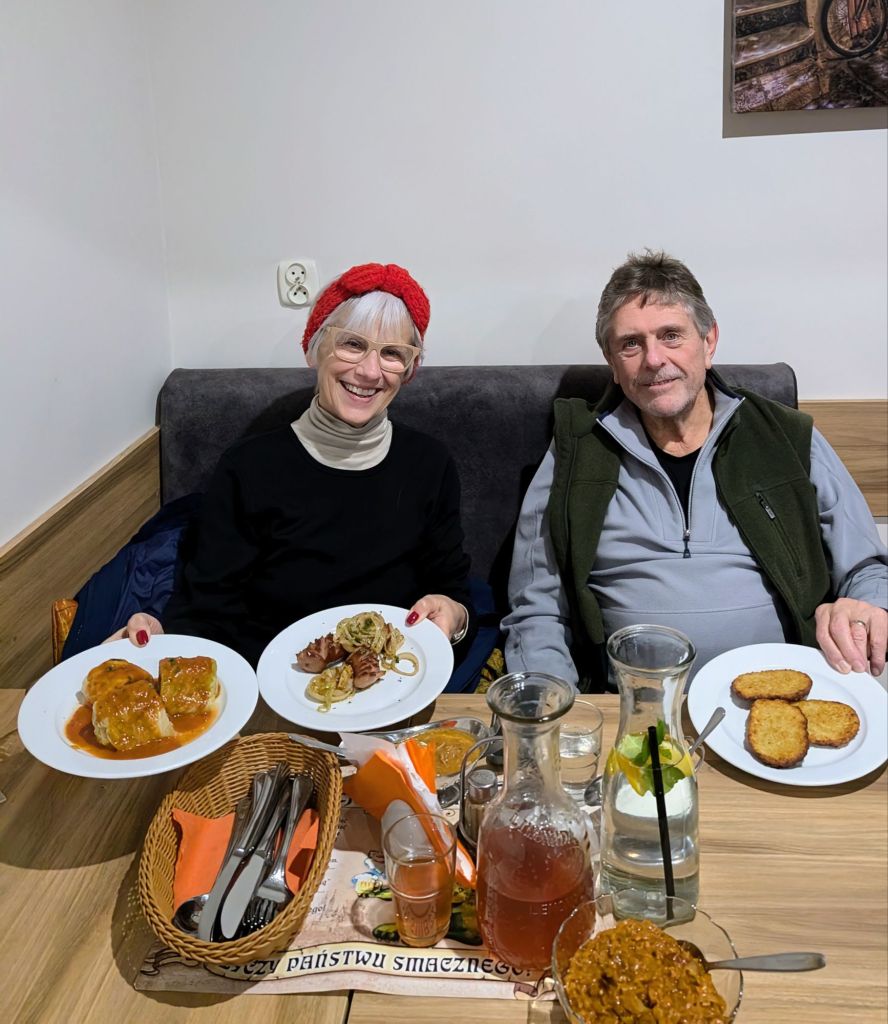
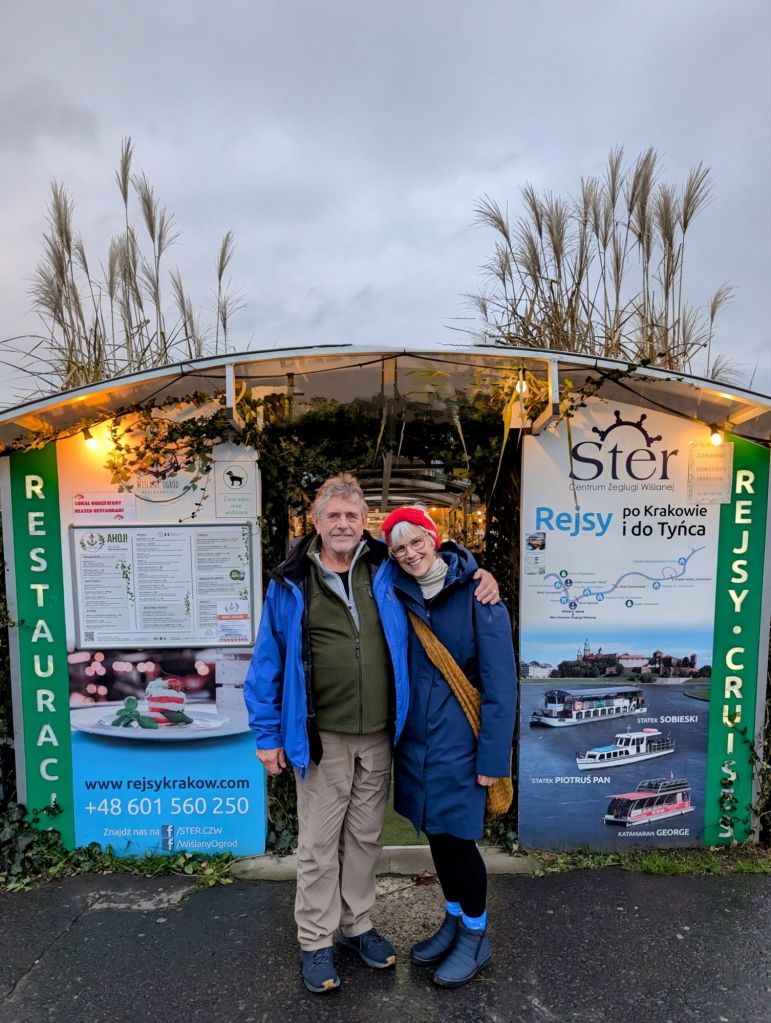
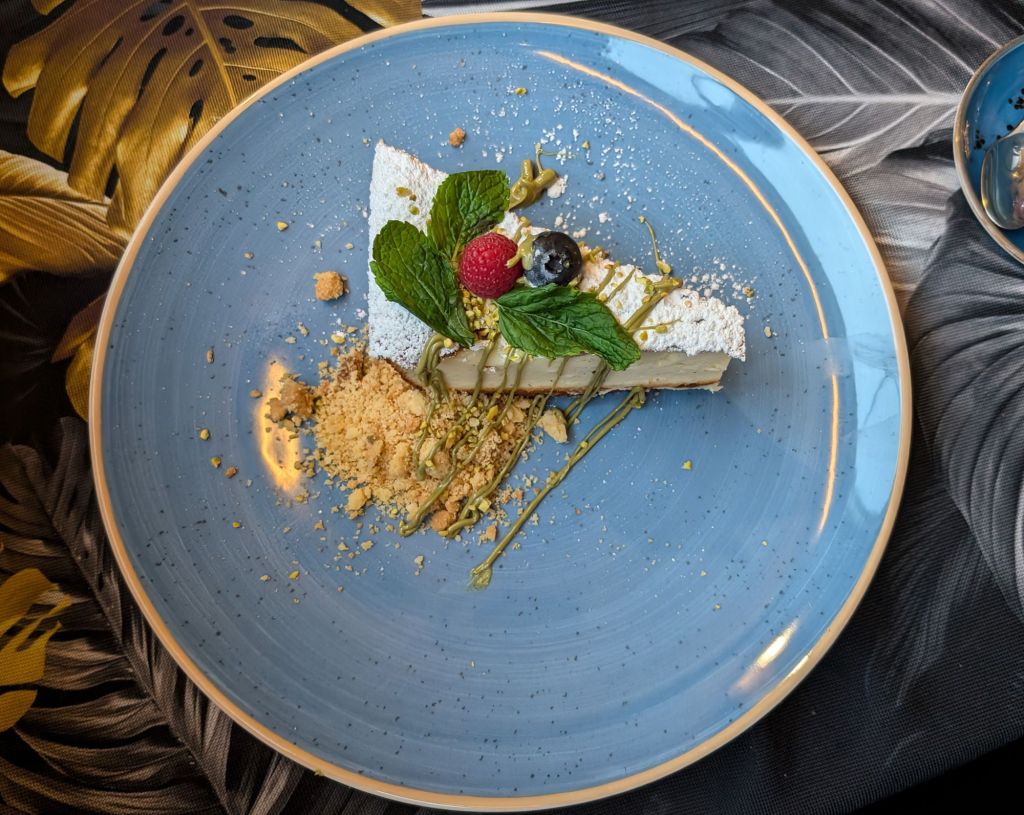

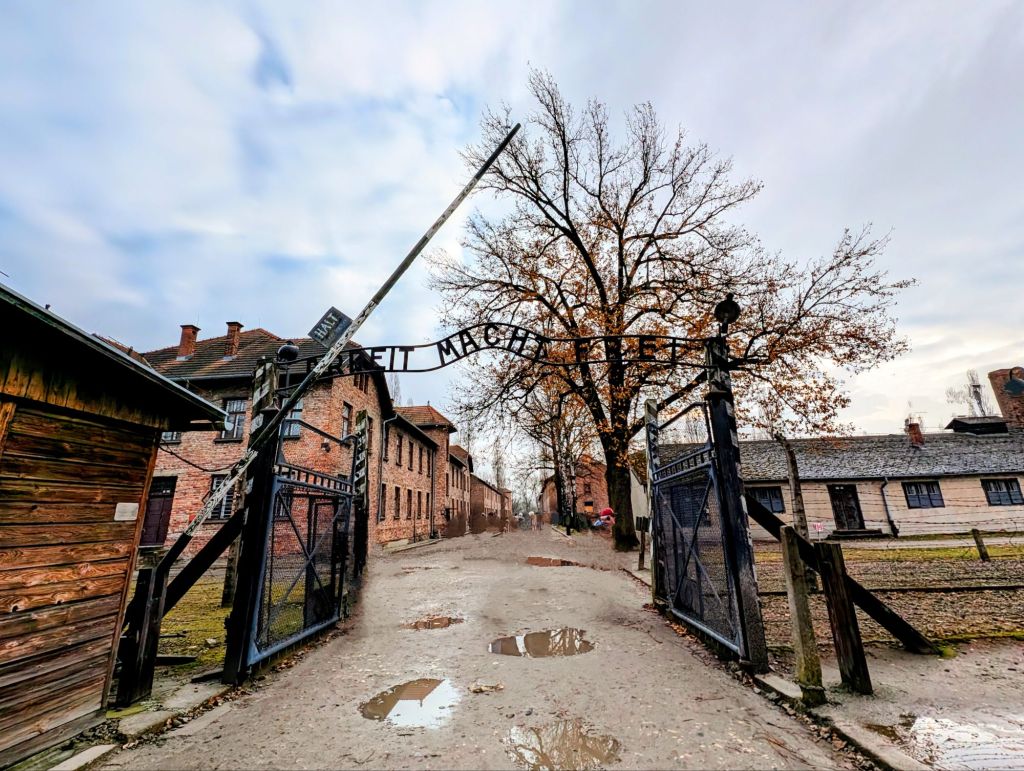

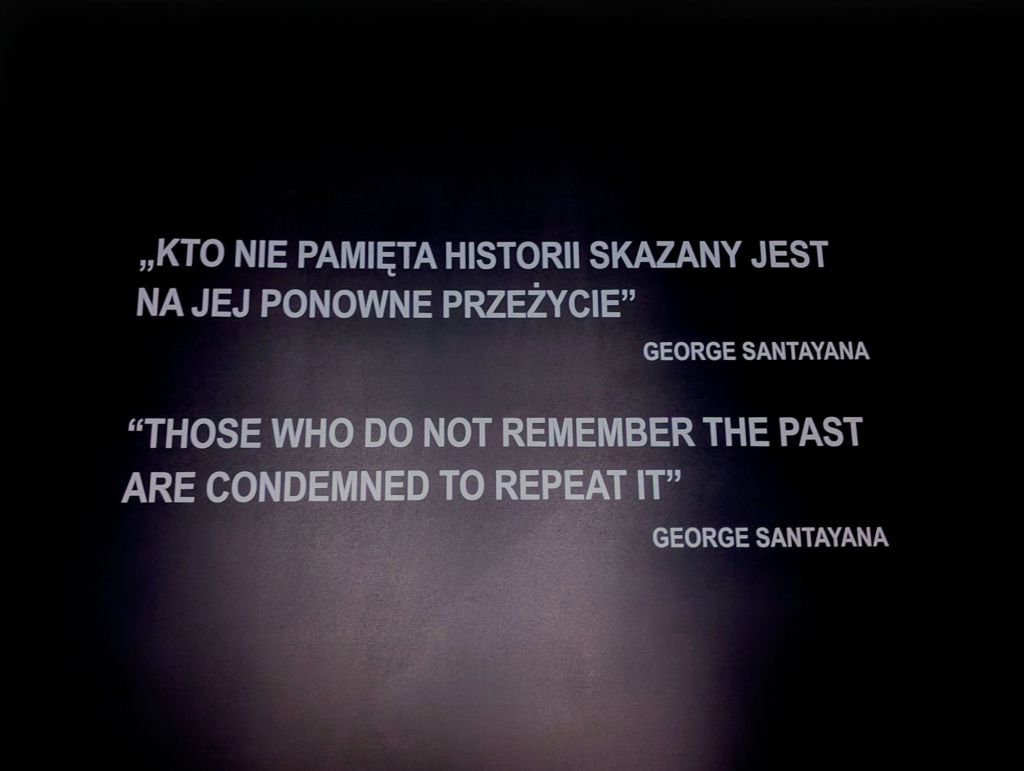
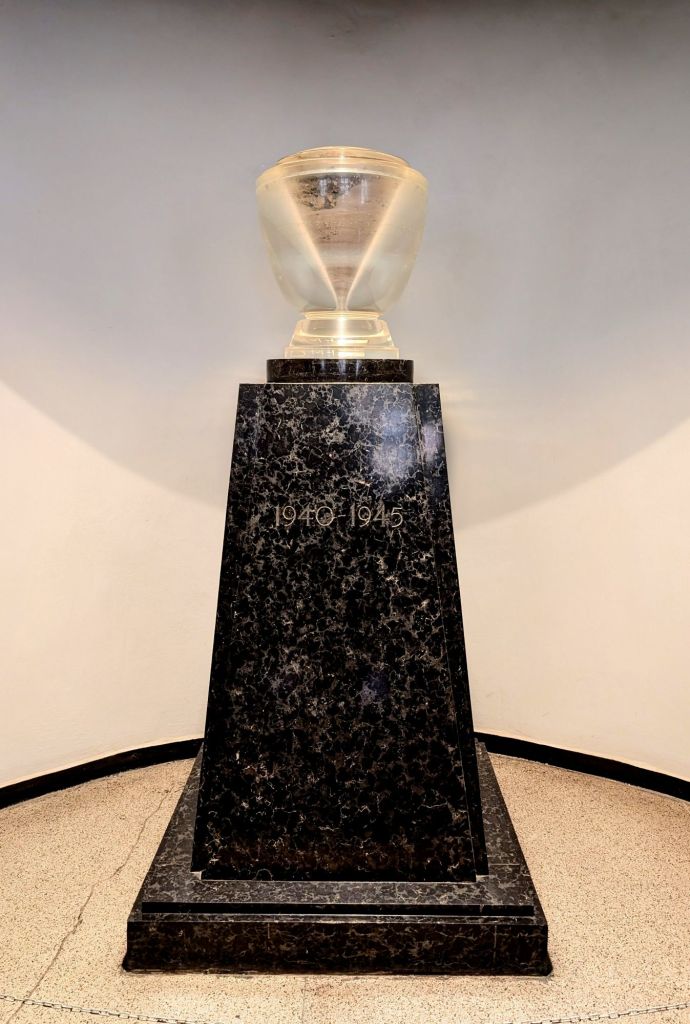

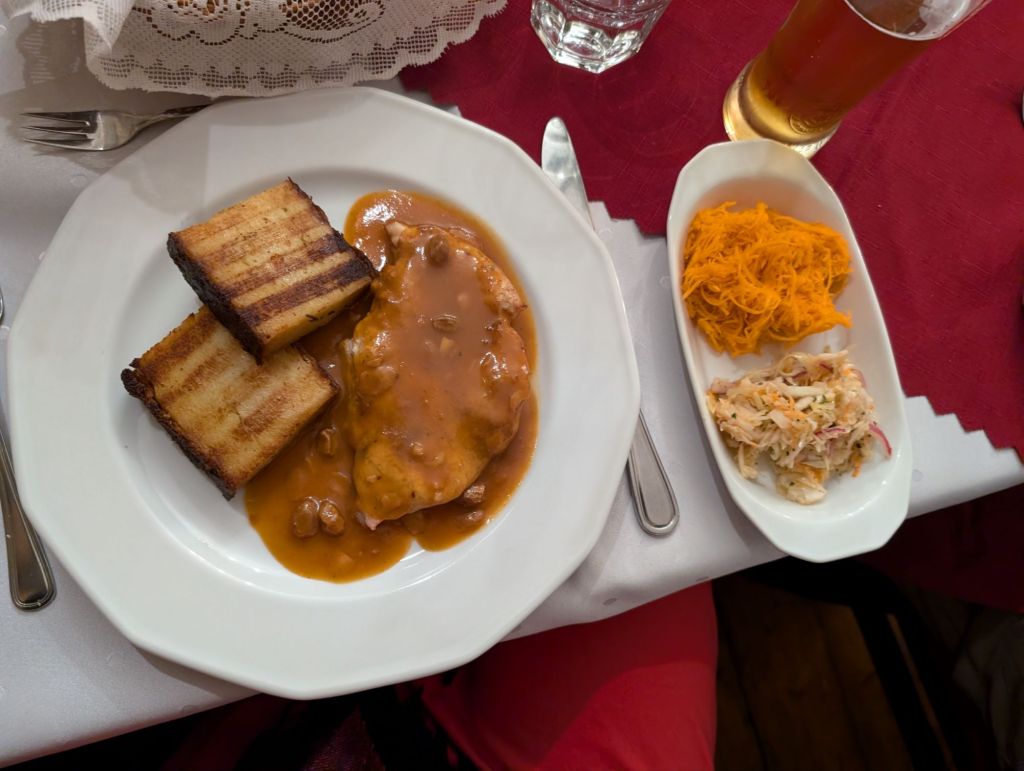
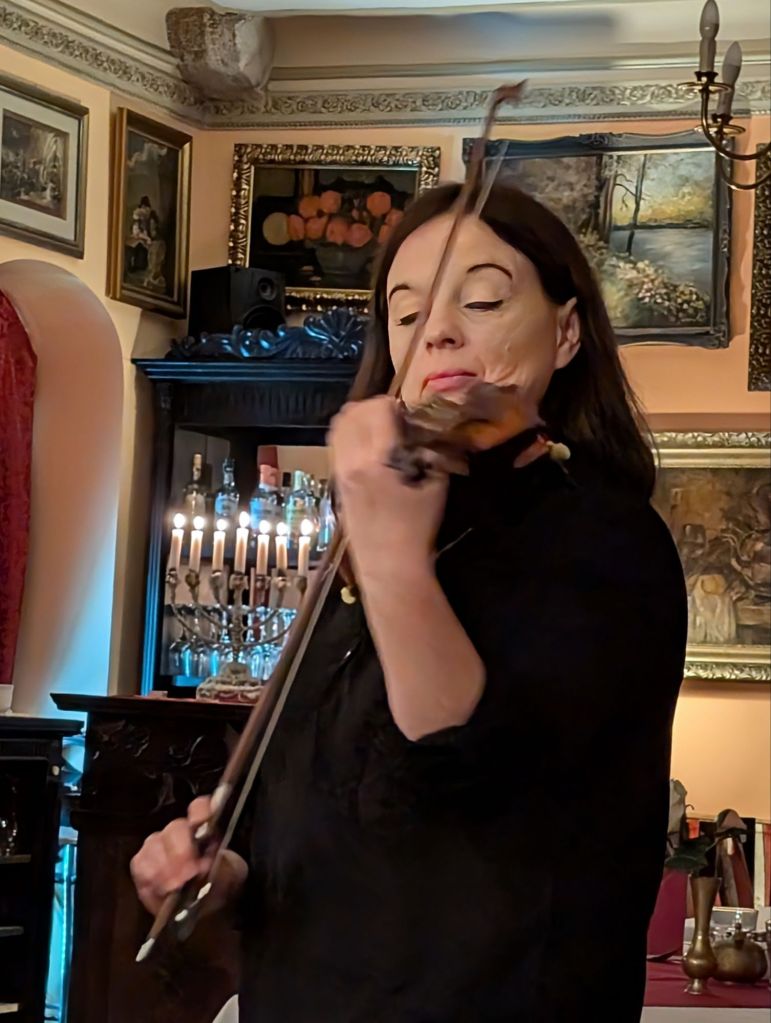

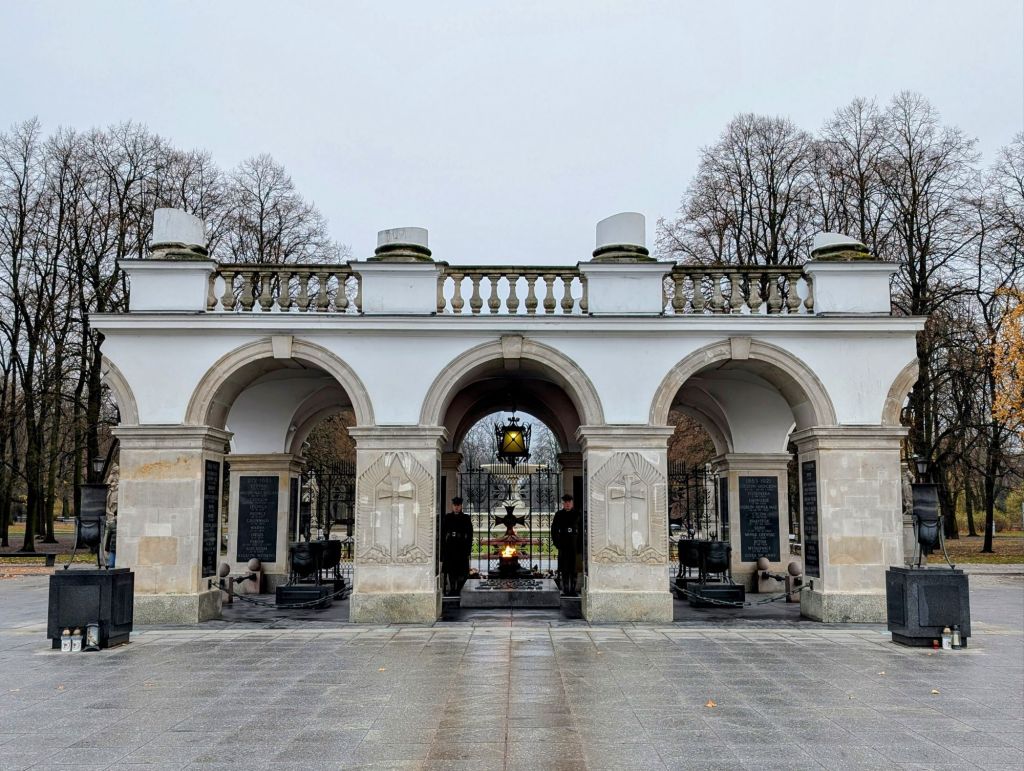

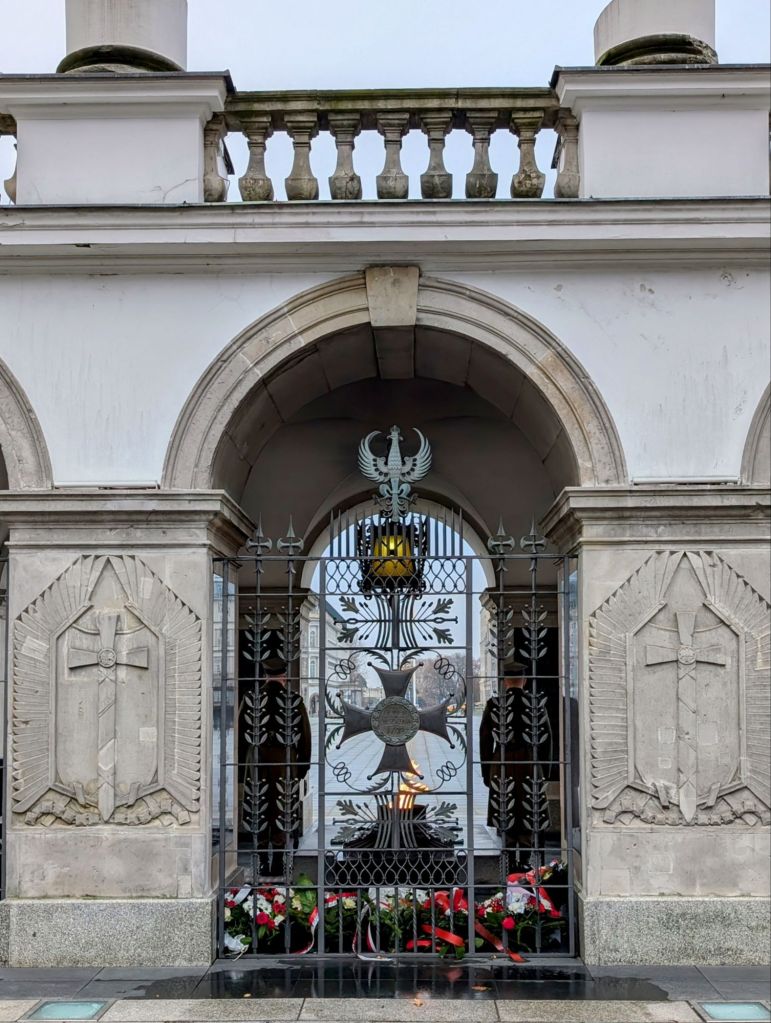


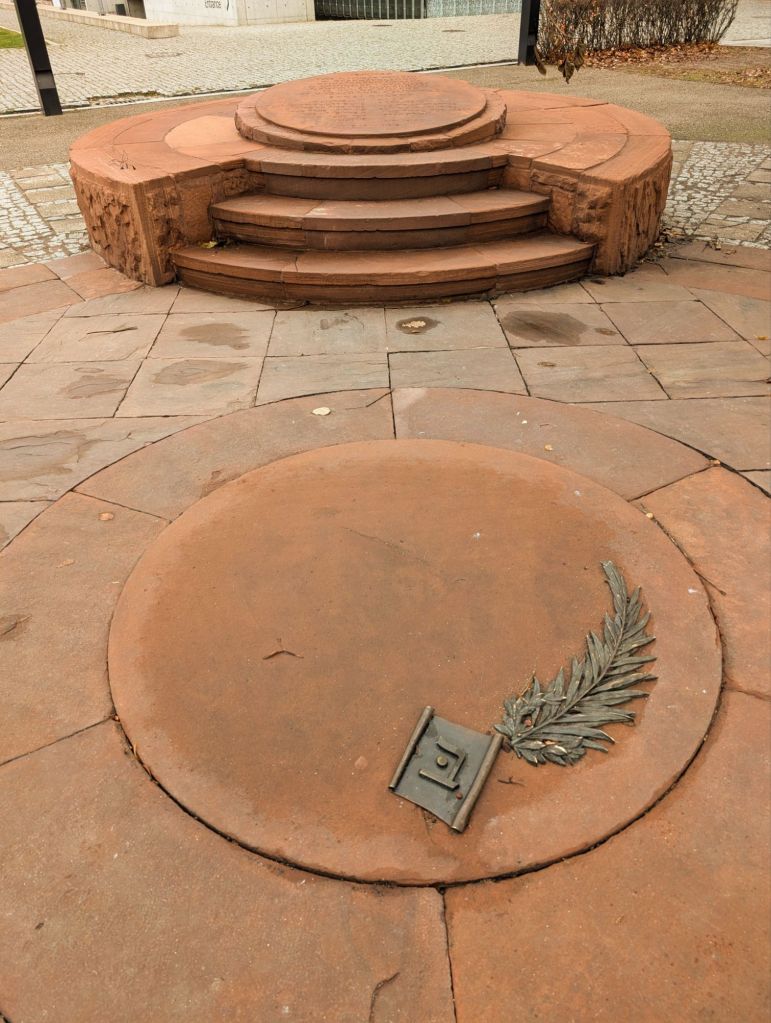


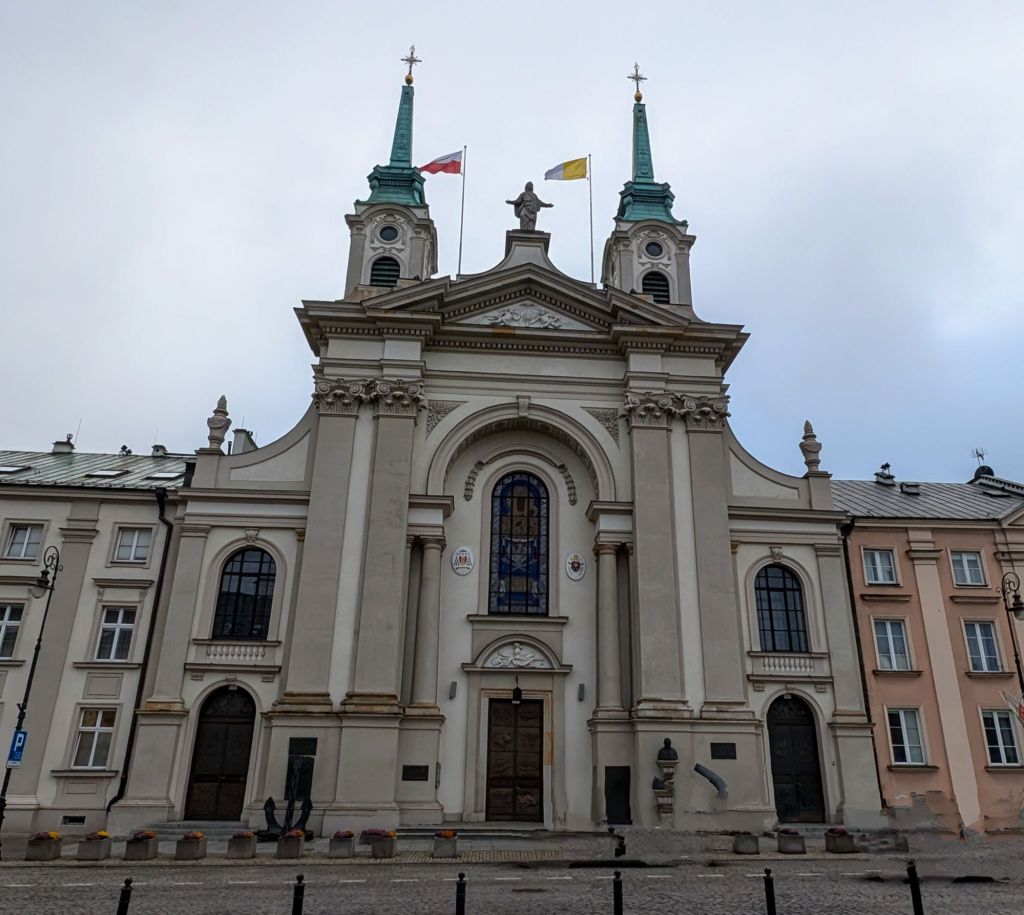
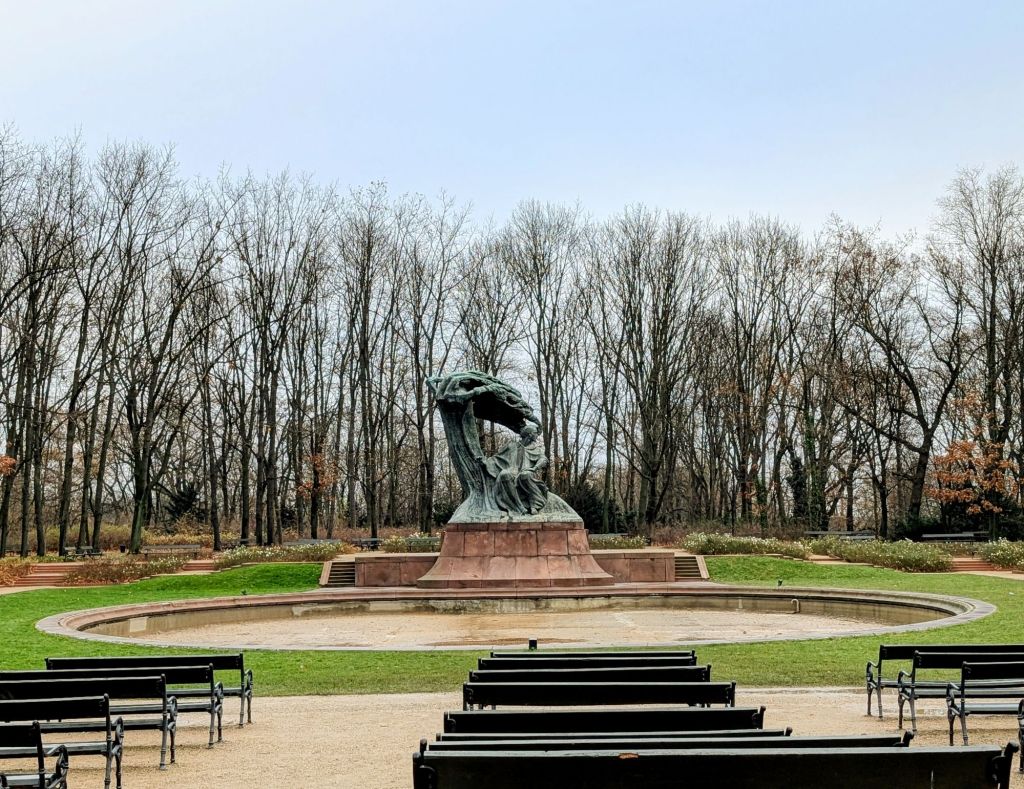


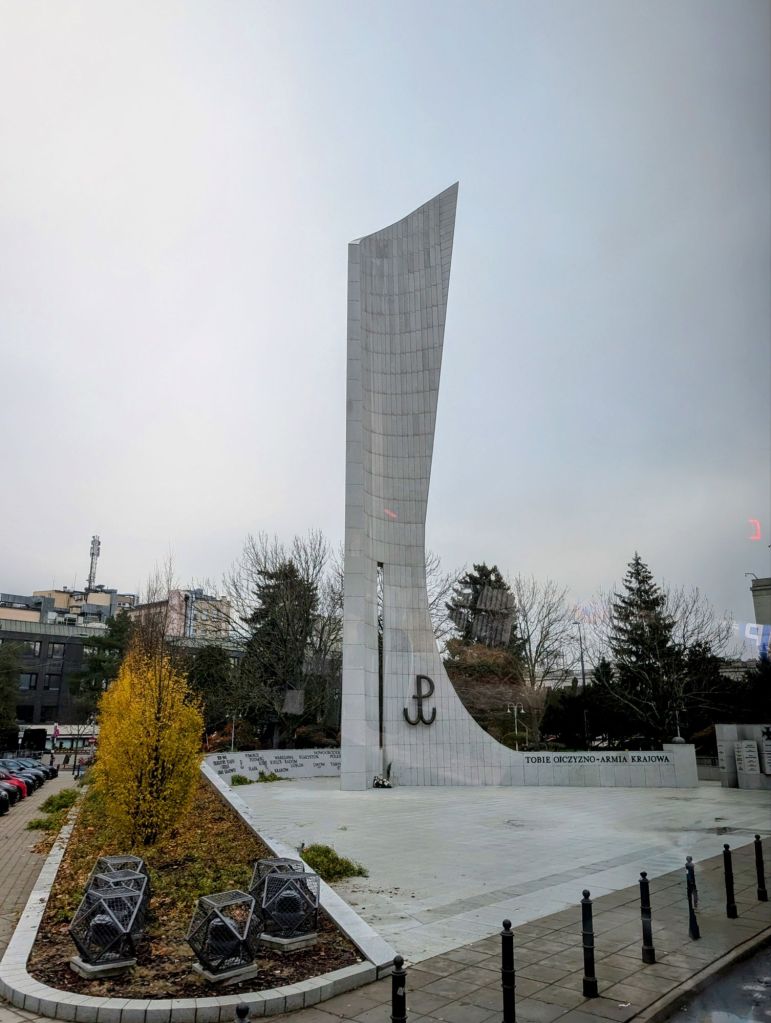
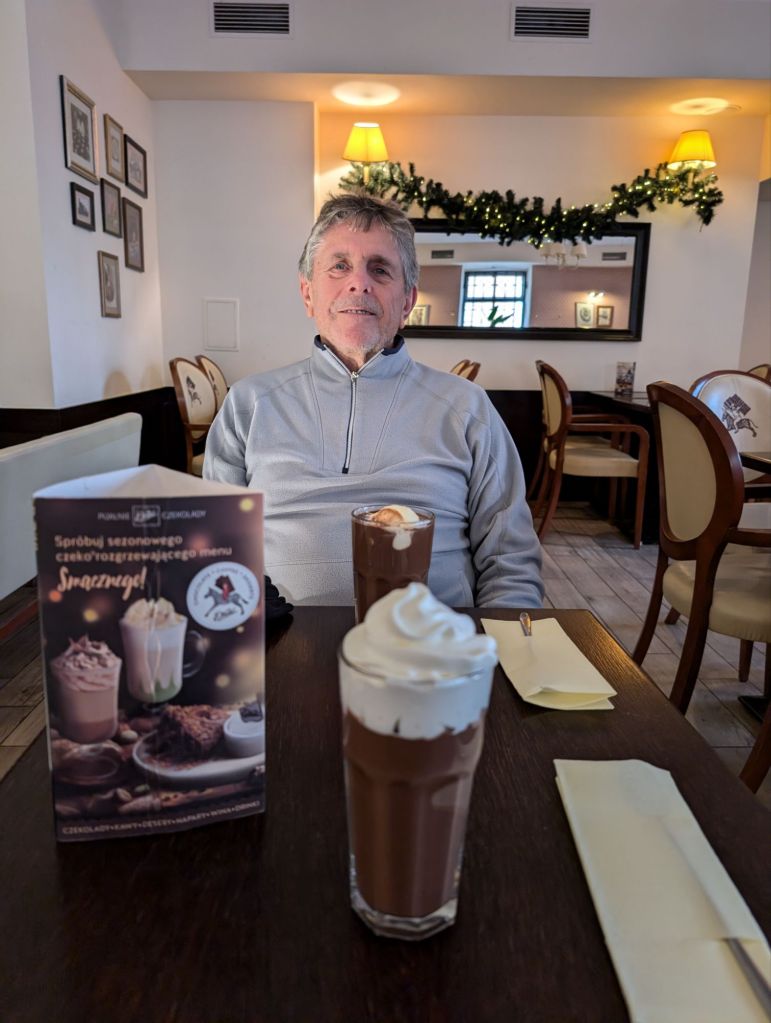
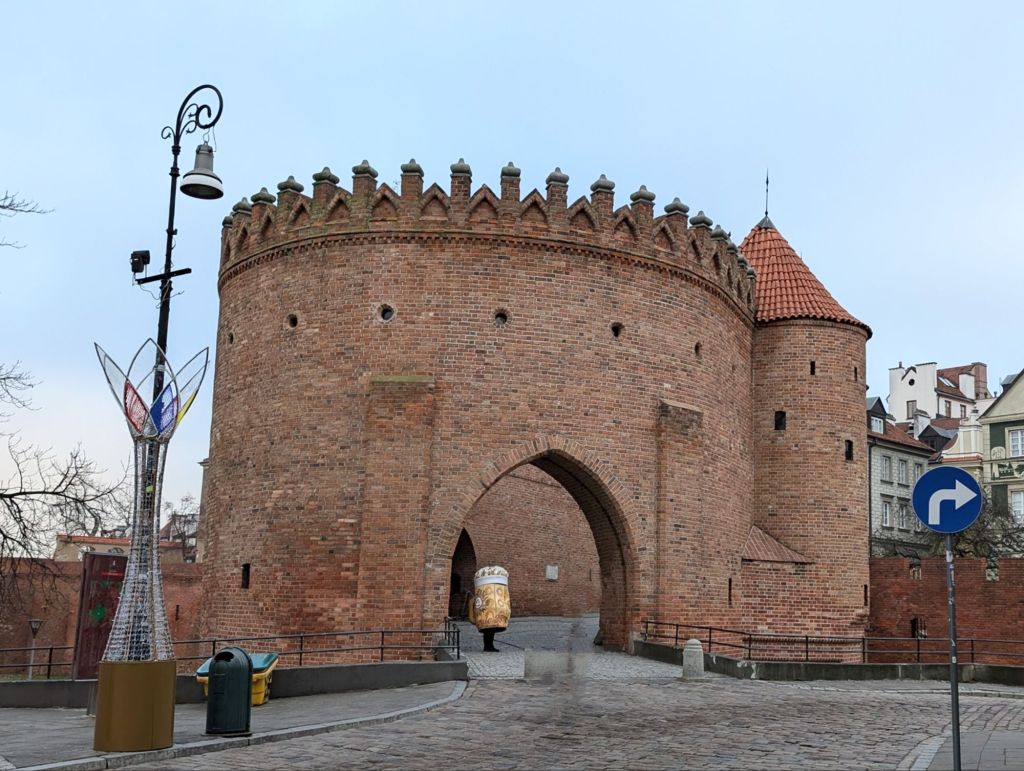
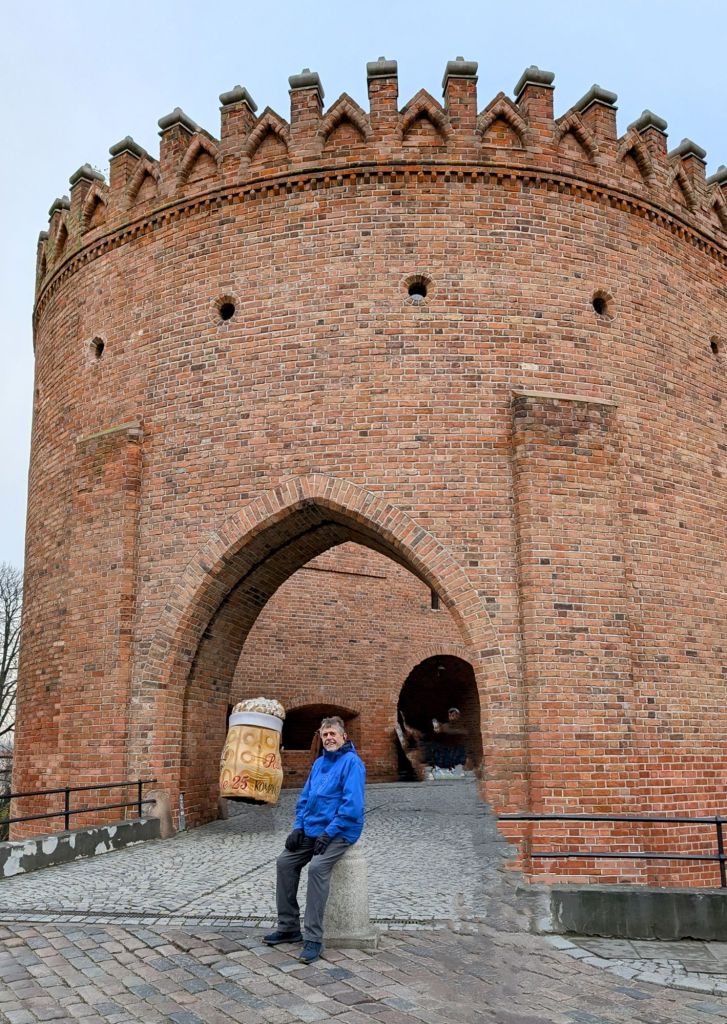
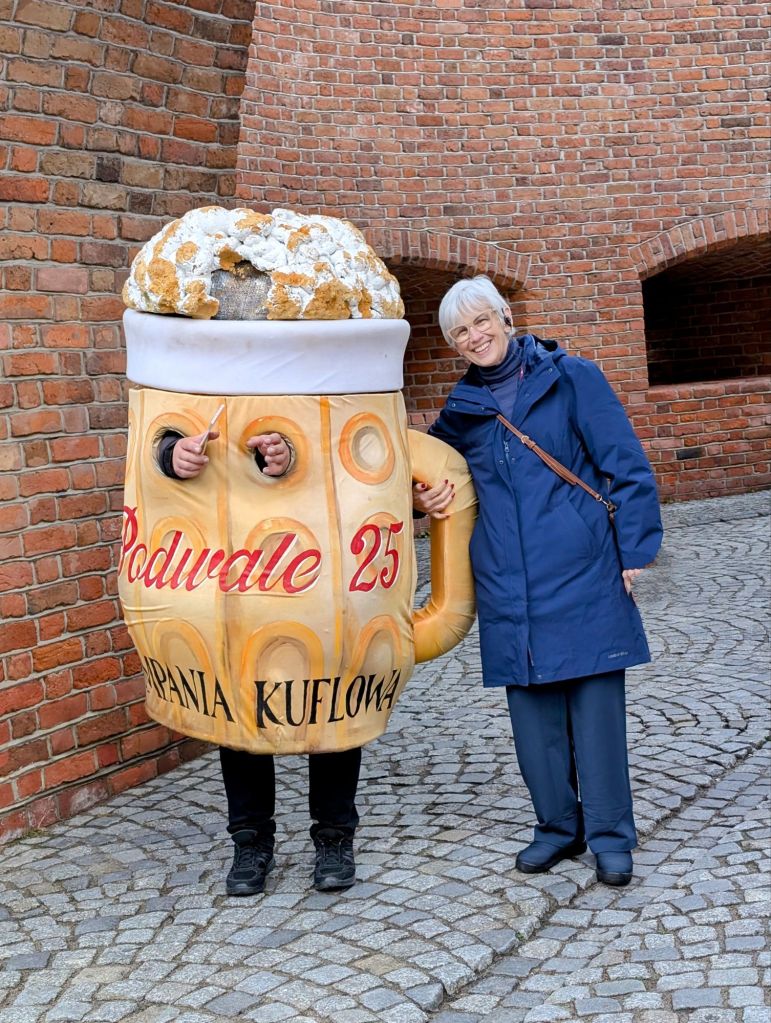

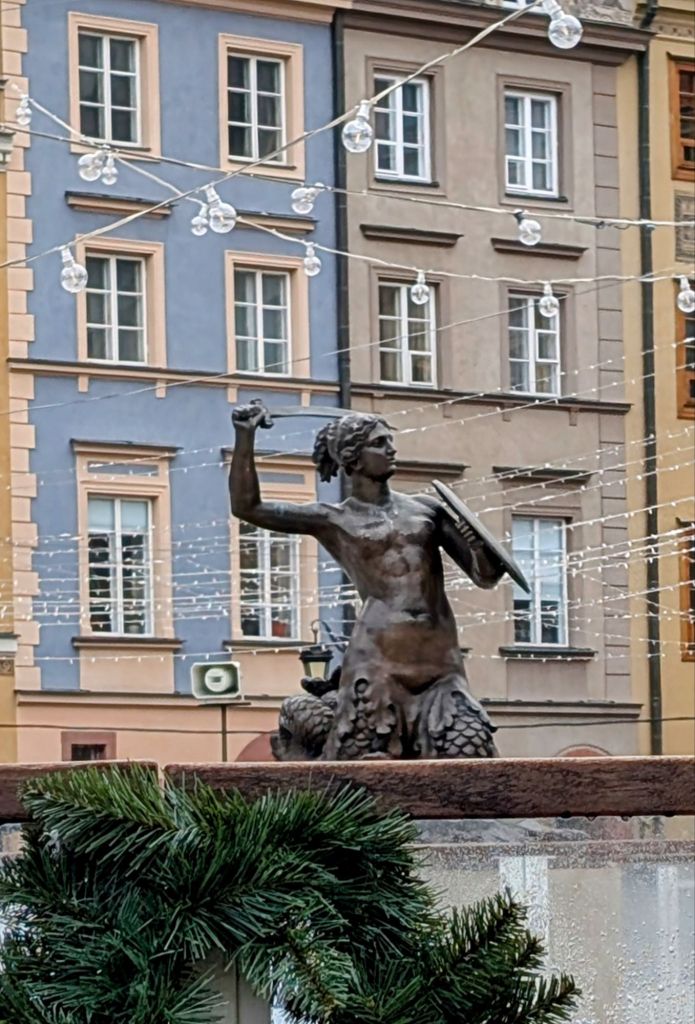


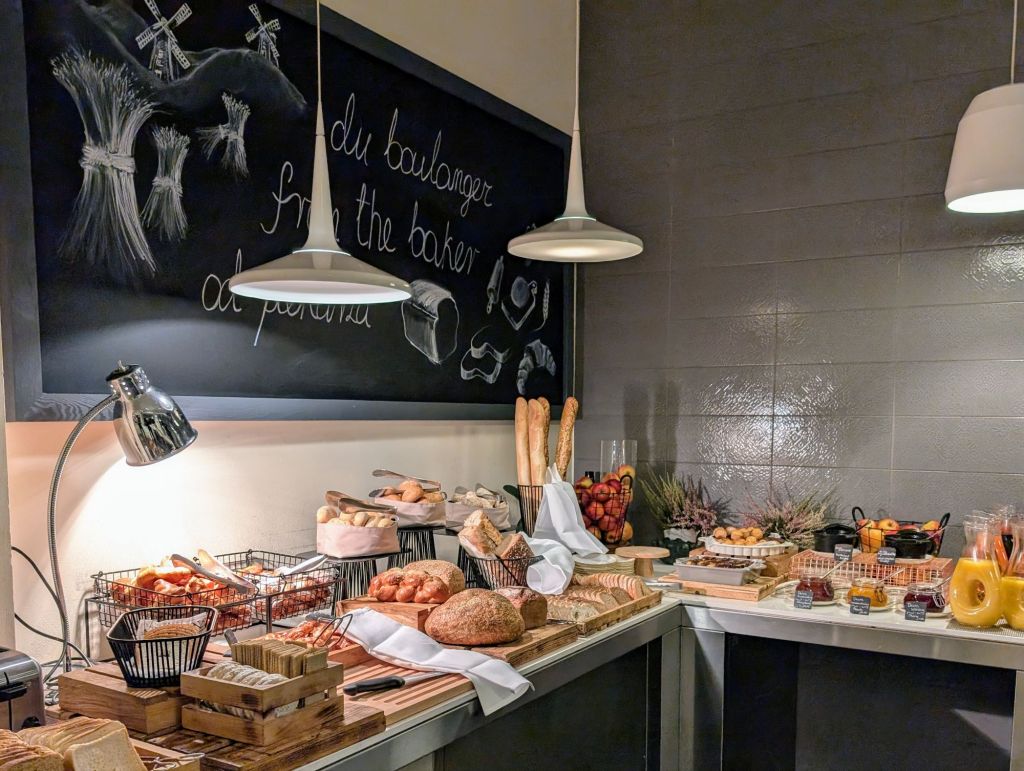
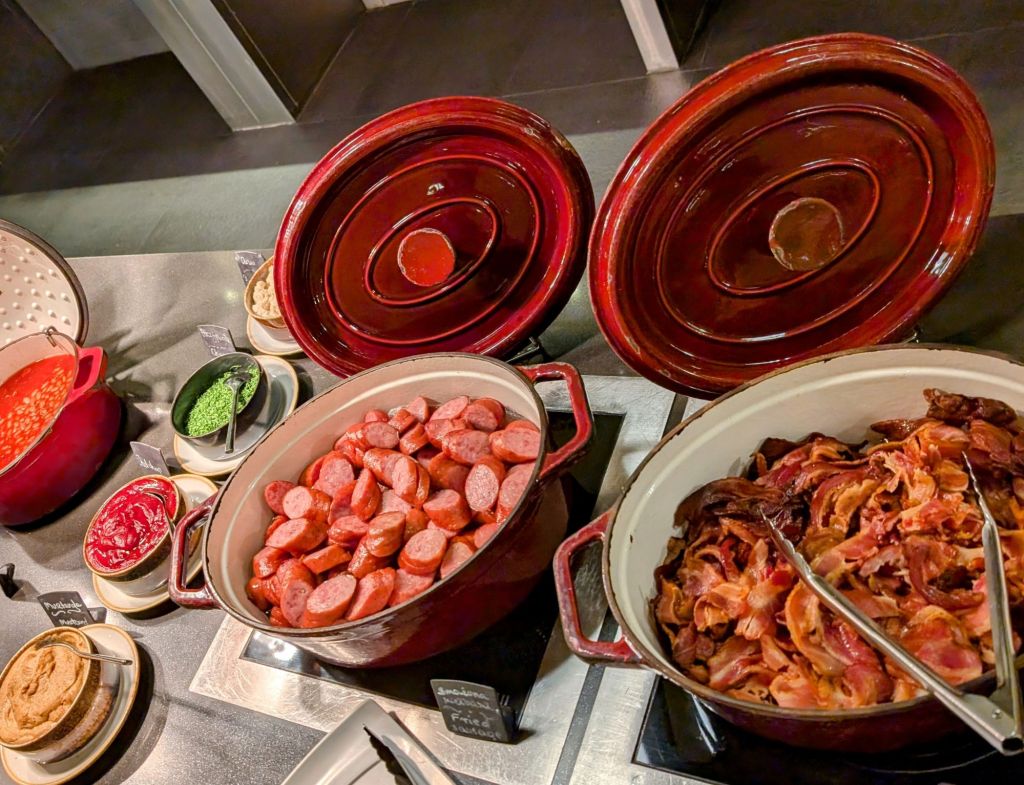

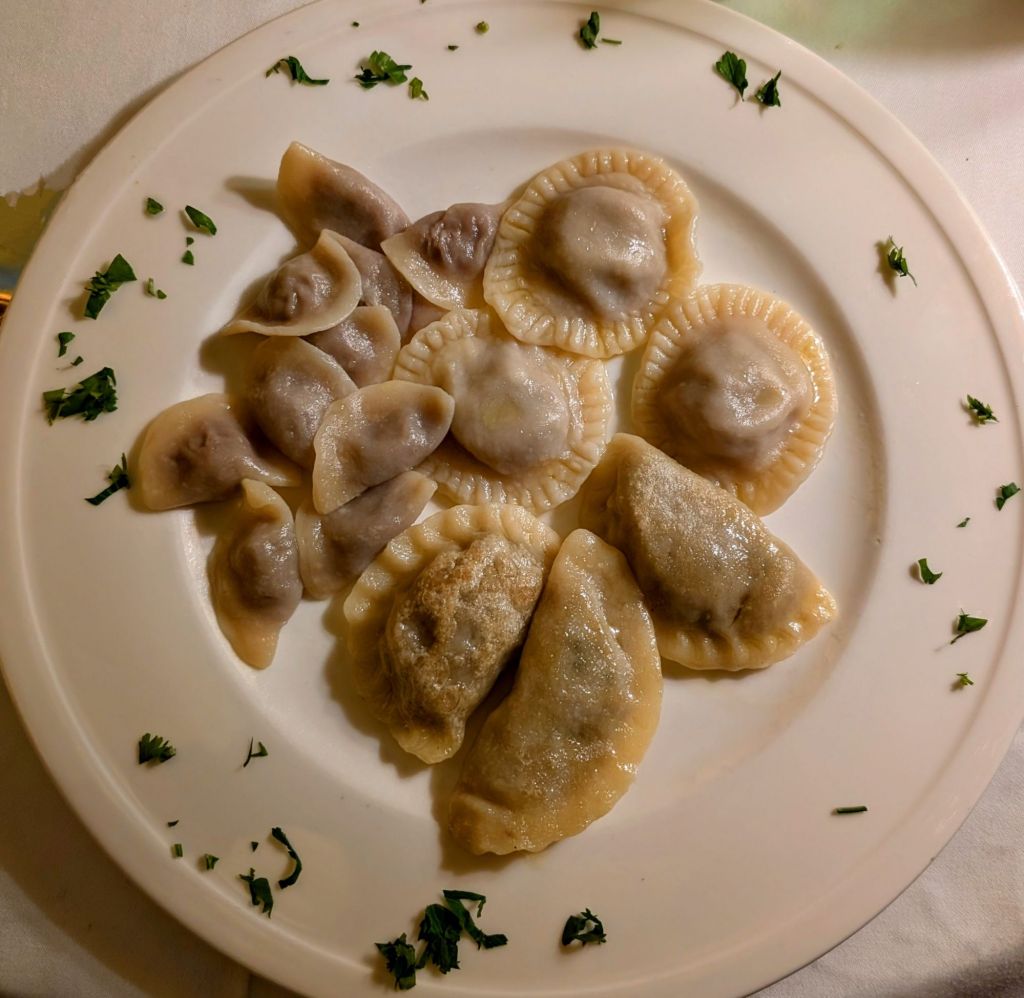
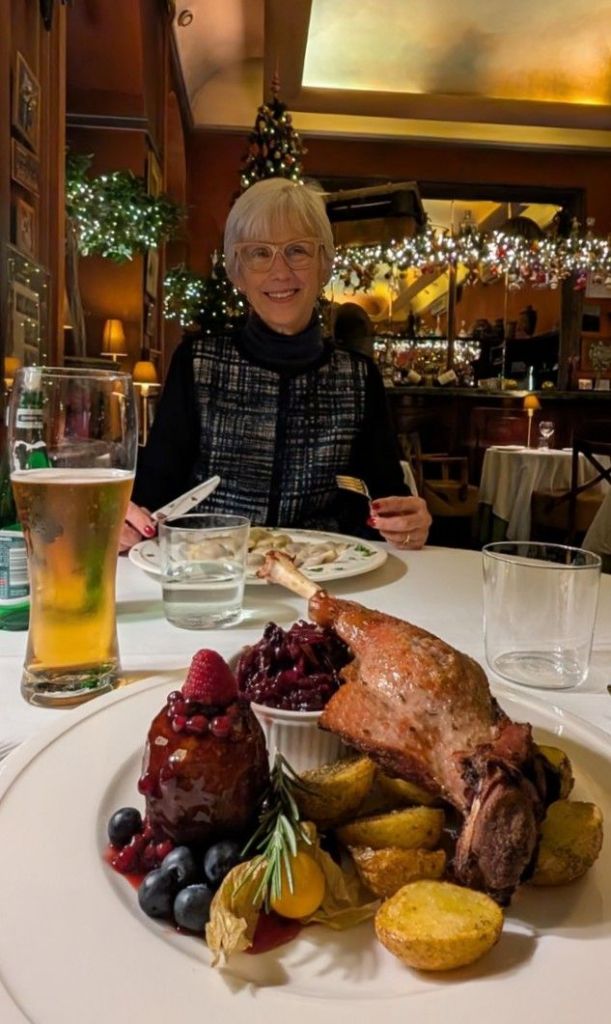
 Timeless Travelers