Windy Wellington

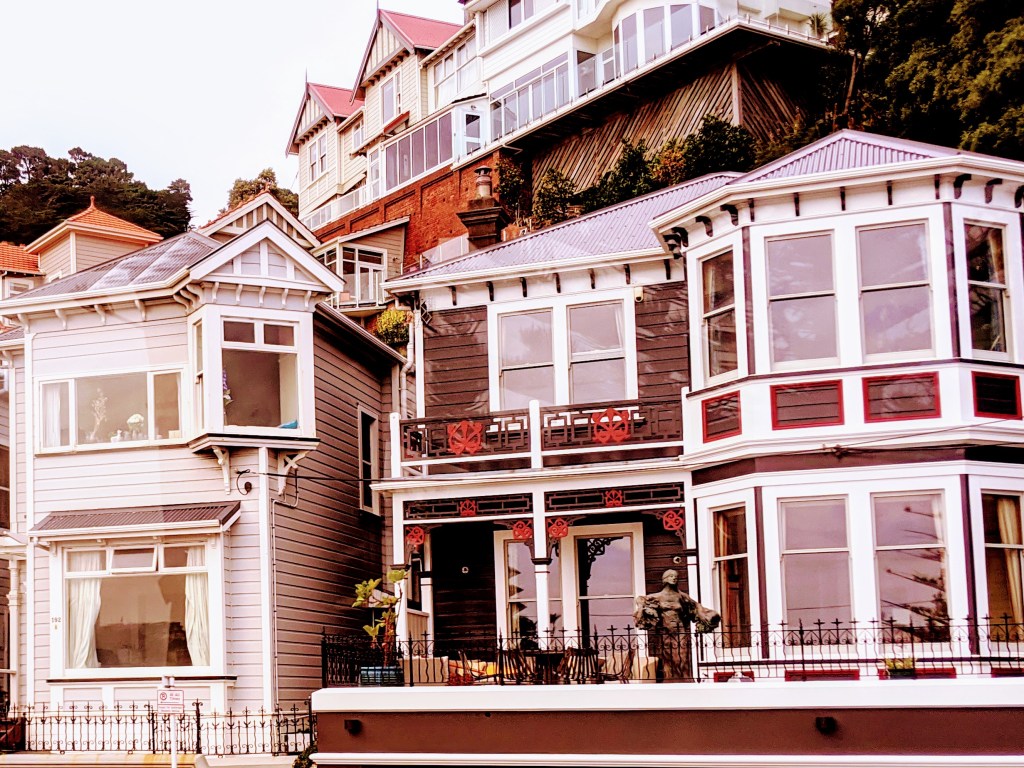
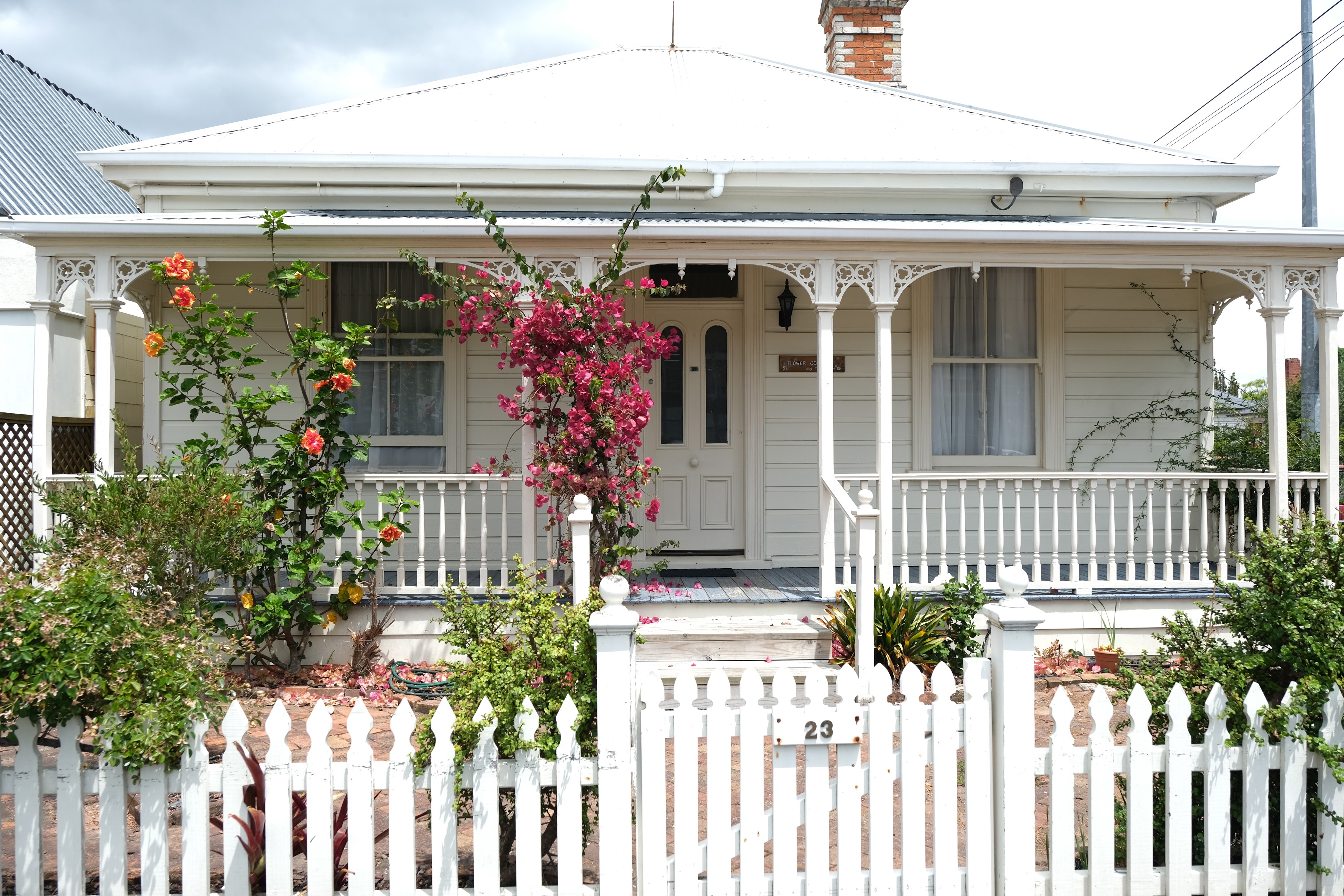
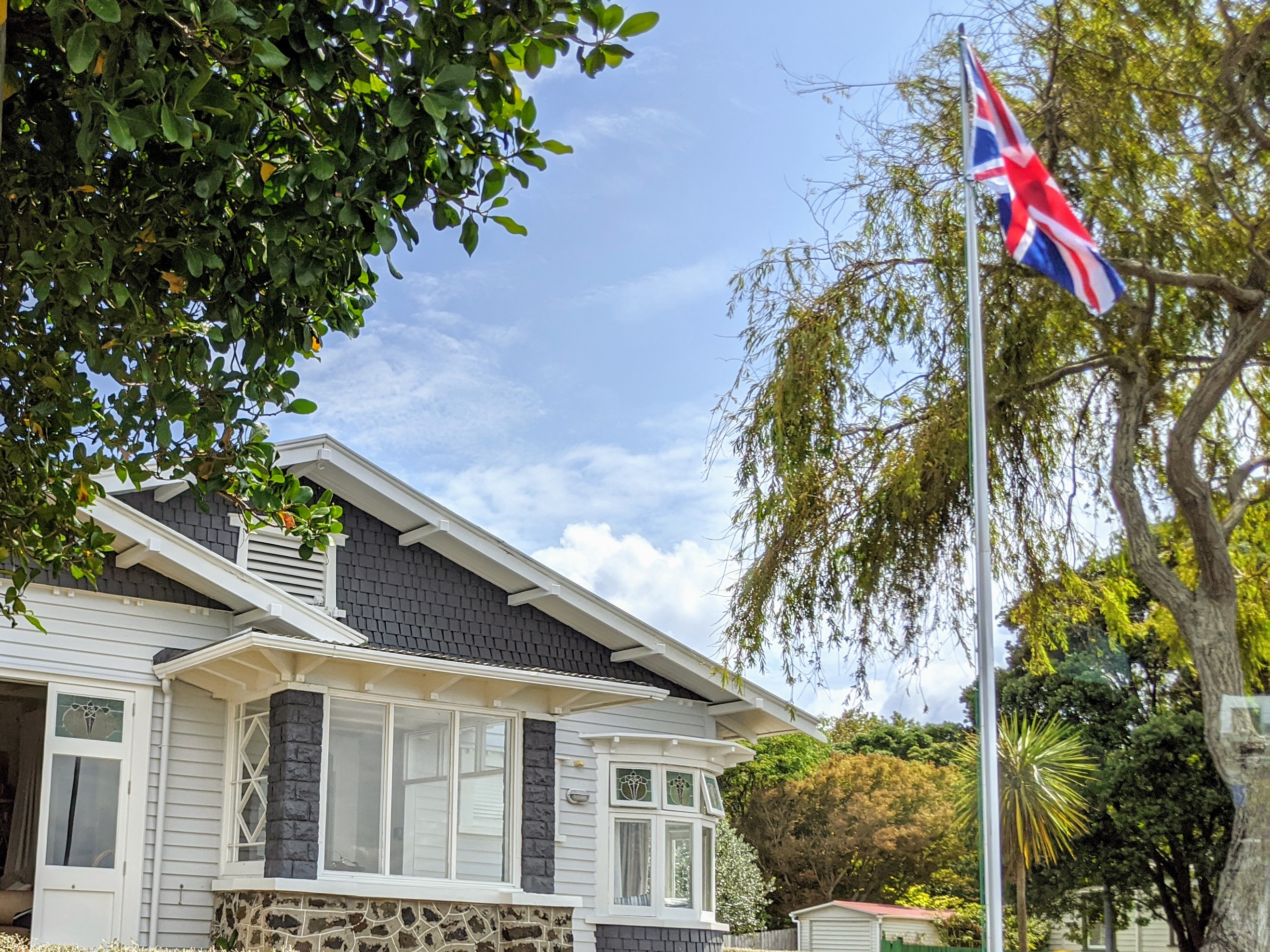
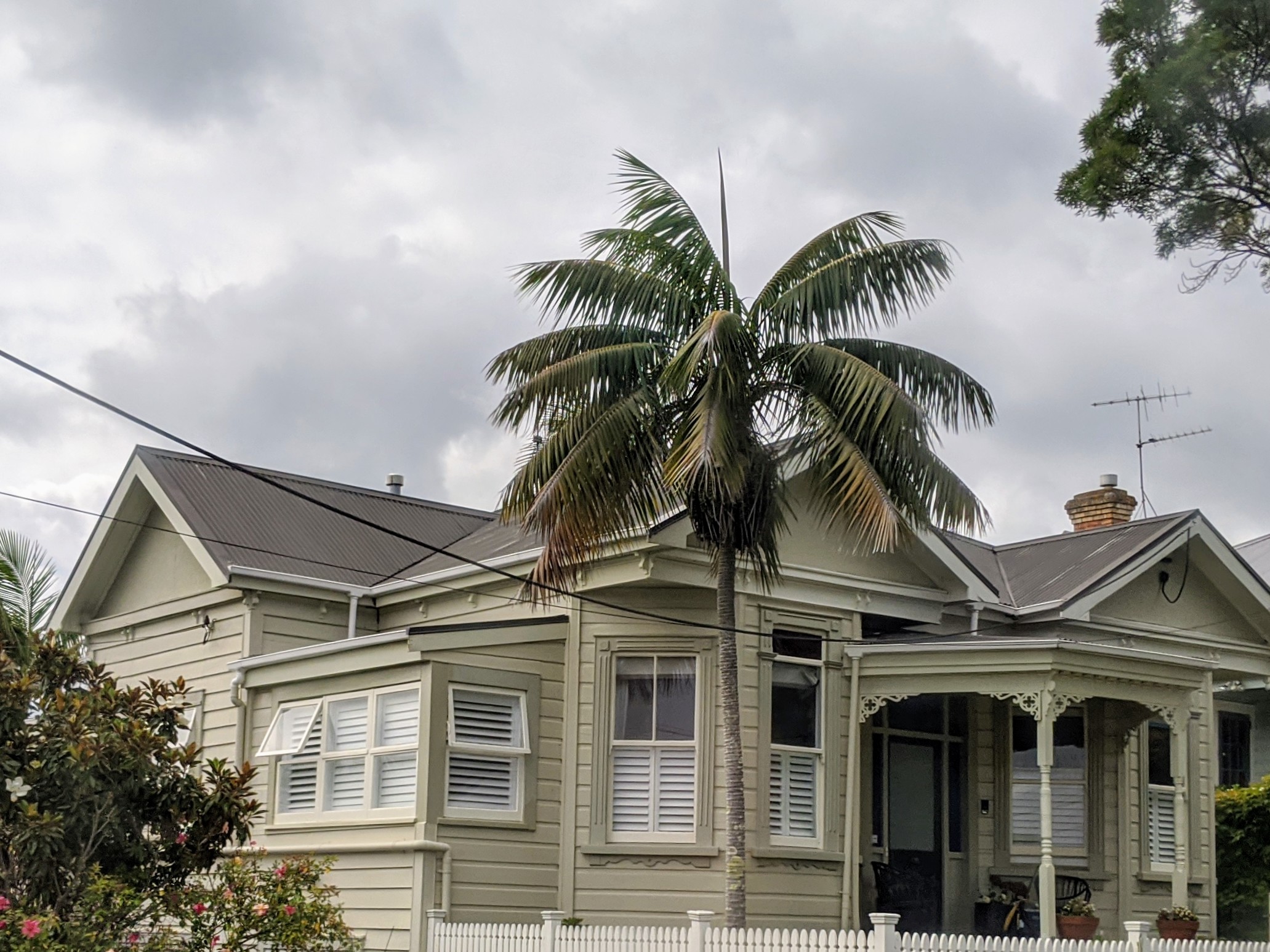
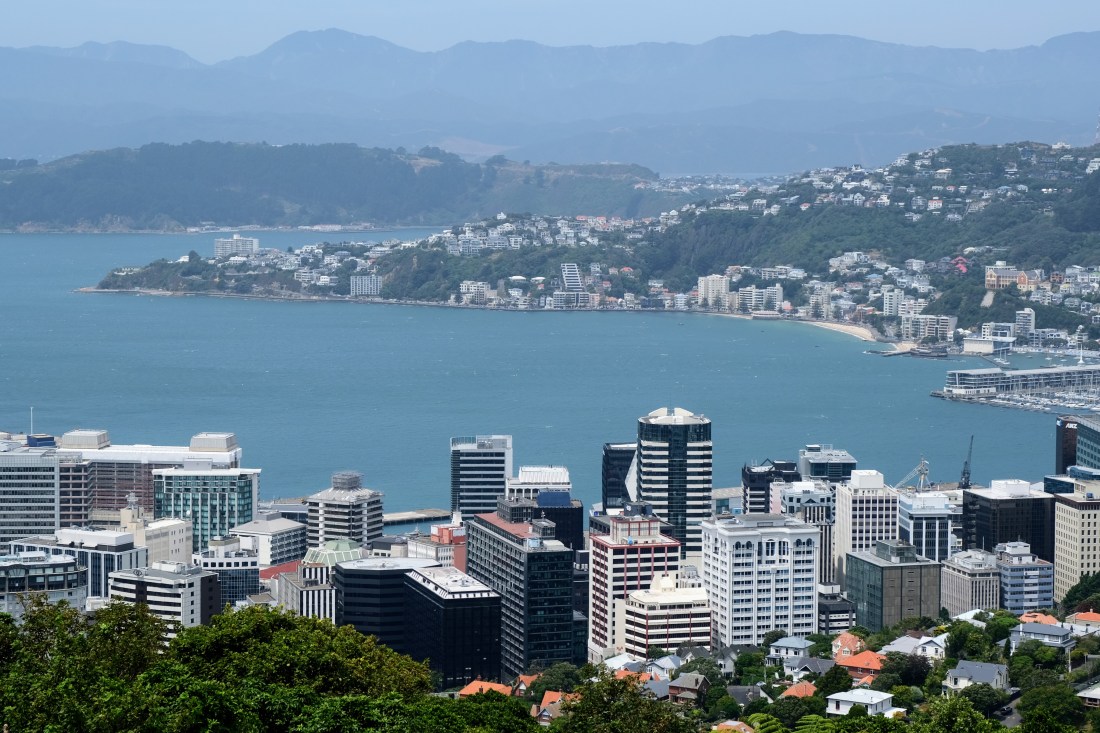
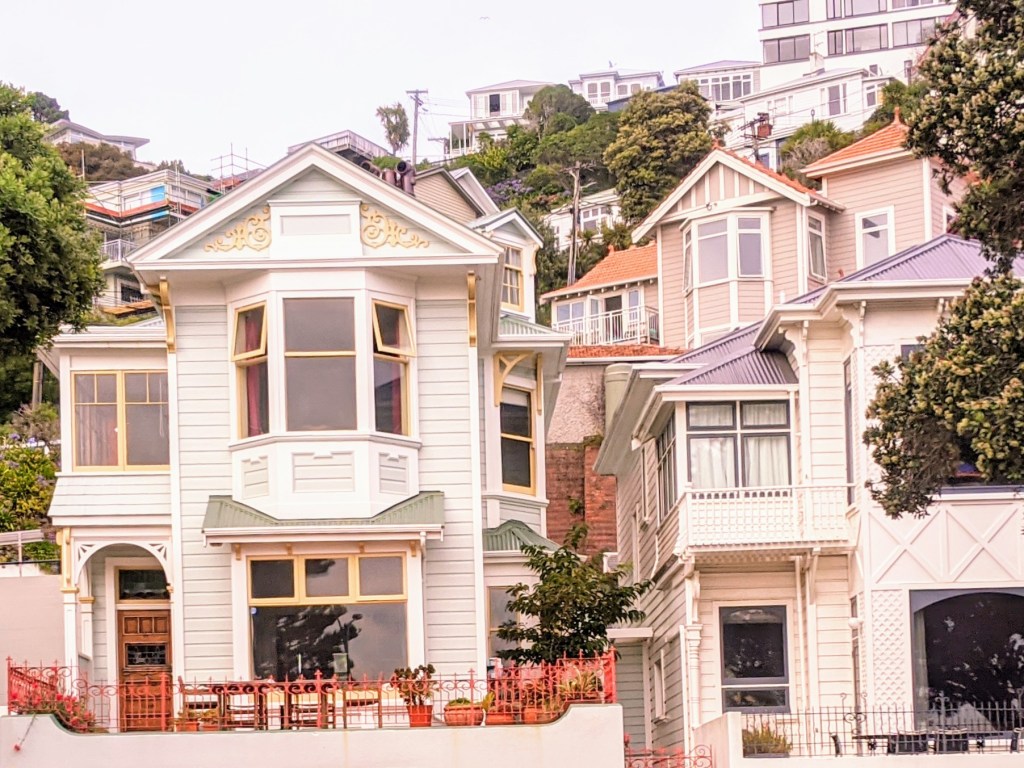
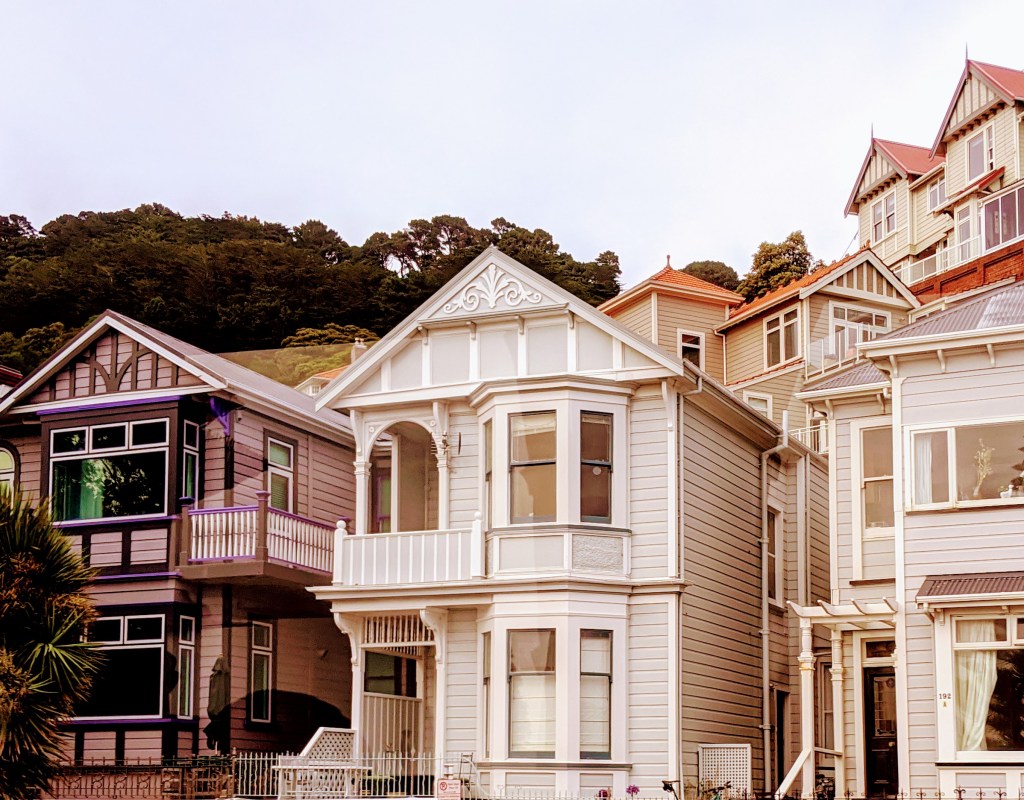
With its waterfront promenade, chic residents, colorful cable cars, iconic landmarks, fascinating history, beautiful botanical gardens. sandy beaches, hilly streets, strenuous hiking paths, working harbor, world class museums, colorful Victorian houses, and spectacular views of the Cook Strait and Rimukata Range, Wellington, the capital of New Zealand, reminds us of San Francisco, a city we have always loved. A noticeable haze, created by the recent wildfires in Australia, brings to mind the fog that often engulfs San Francisco. Wellington sits near the North Island’s southernmost point on the Cook Strait. Strong winds through the Cook Strait give it the nickname “Windy Wellington.” We started our day with a guided tour that allowed us to explore the rich architectural history and cultural heritage of this wonderful city. Winding our way through the bustling port and metropolitan area, we were struck by the attention Wellingtonians have given to creating an architecturally rich city. Wellington’s “Seven Sisters” are a beautiful example of a New Zealand interpretation of San Franciscan terrace housing. These houses were all designed by Joshua Charlesworth, a prominent local architect. They are highly visible from Oriental Parade, and contribute significantly to the streetscape. The varied designs contribute significantly to the value, character, and sense of place on Oriental Parade.
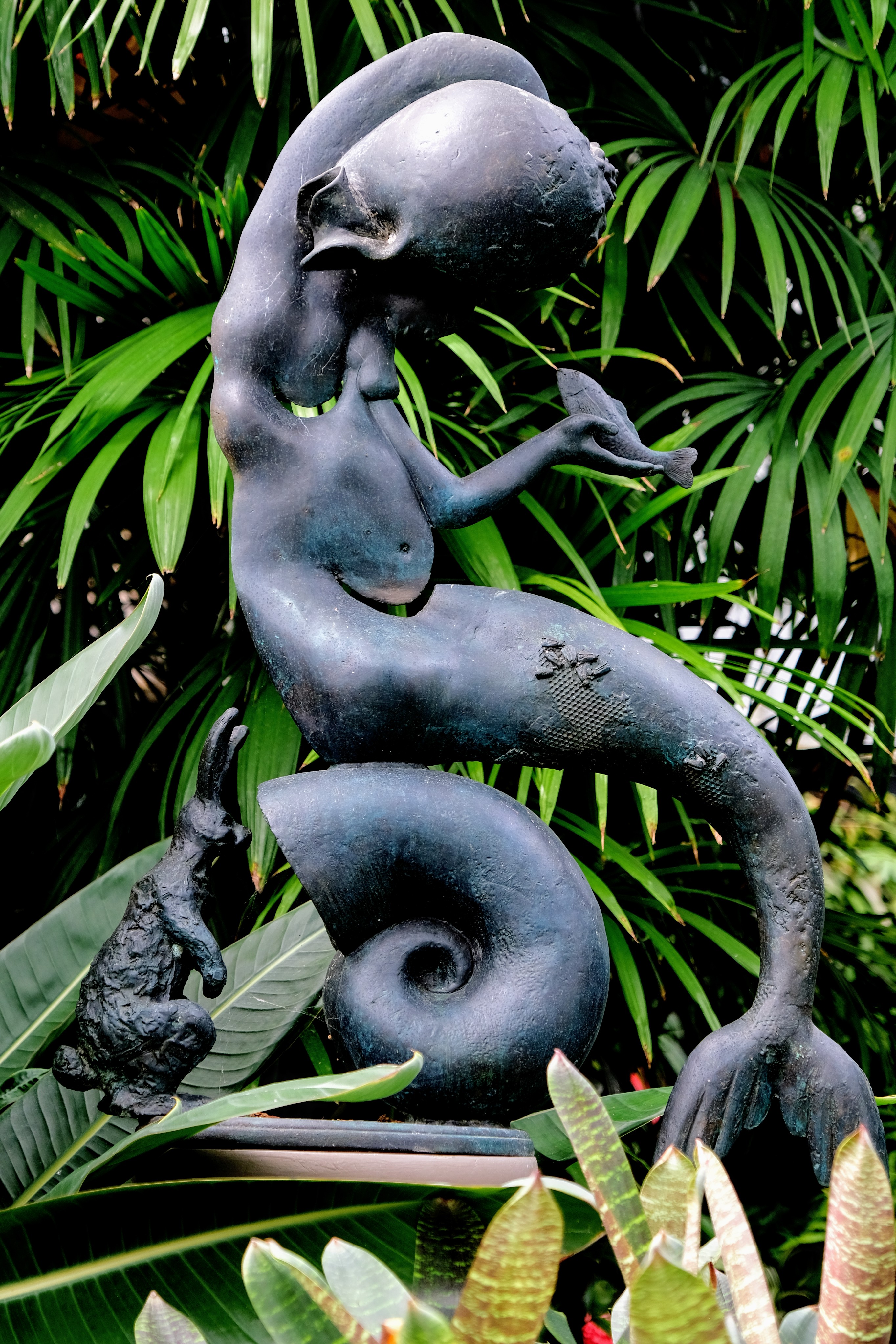
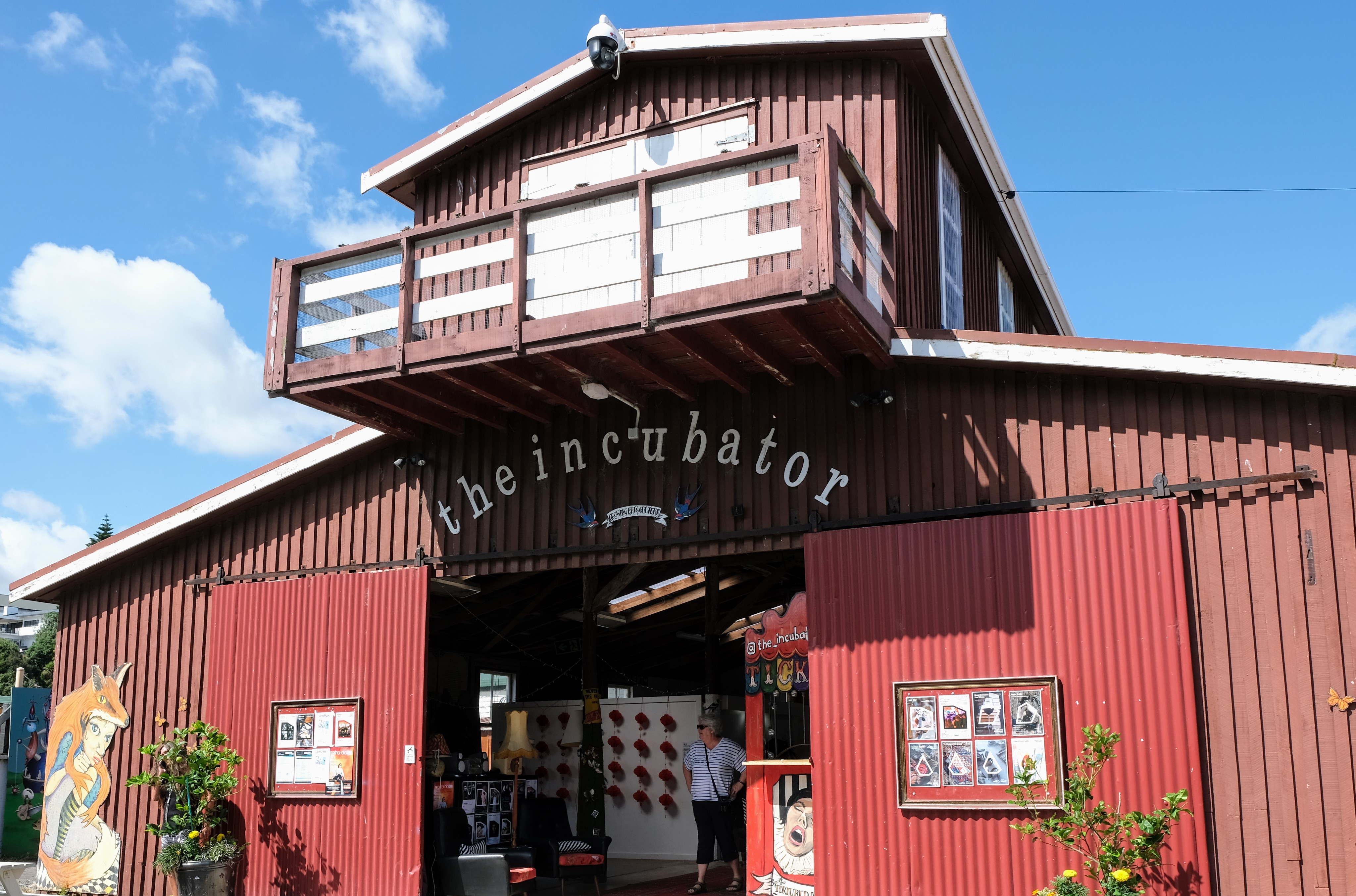
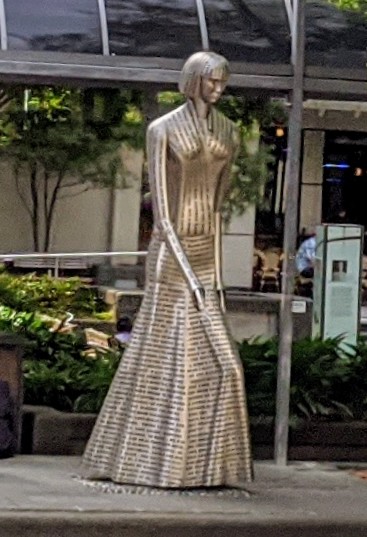
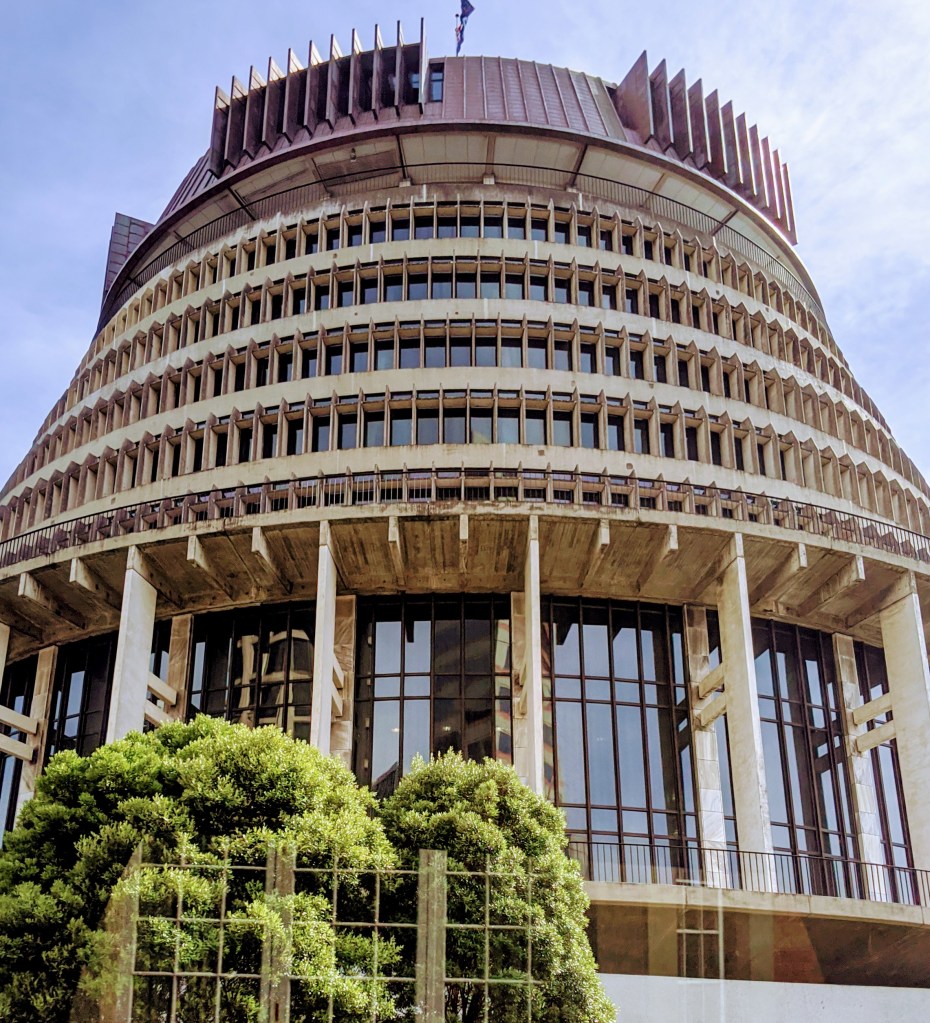
New Zealand’s Parliament has several impressive buildings, including Parliament’s Executive Wing known as the “Beehive” due to its shape. Wellington also has many small, interesting urban parks. A fairly recent addition to Midland Park (2016) is “Woman of Words,” which celebrates the life and work of renowned New Zealand writer Katherine Mansfield. The stainless steel figurative work is entirely laser cut with quotations from Mansfield’s journals and short stories. During the day the sculpture reflects the color, movement and ambiance of the surrounding area. At night, illuminated from within, the work becomes a lantern of silhouetted words. Many of Wellington’s beautiful historic buildings have been re-purposed for more modern use.
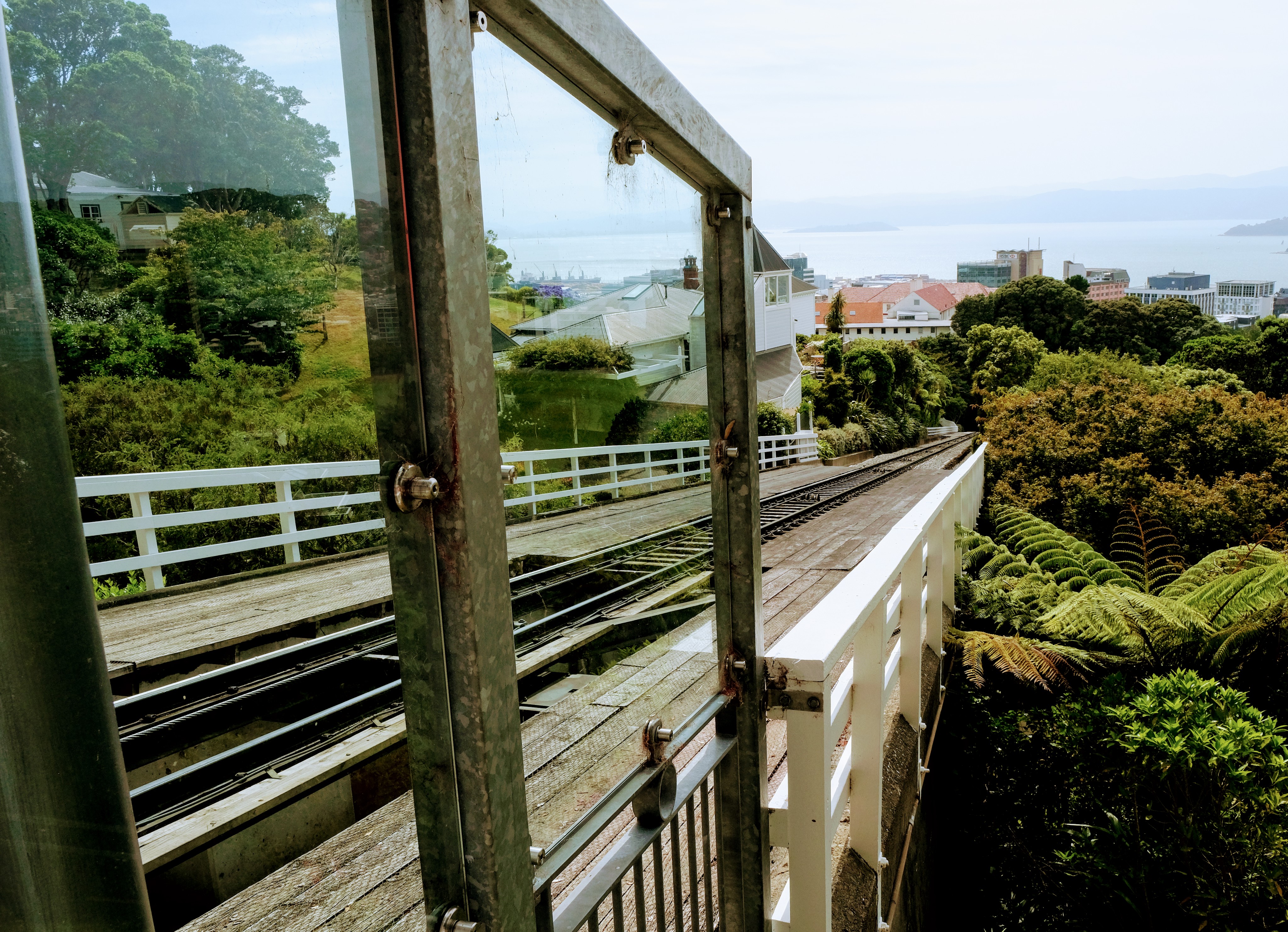
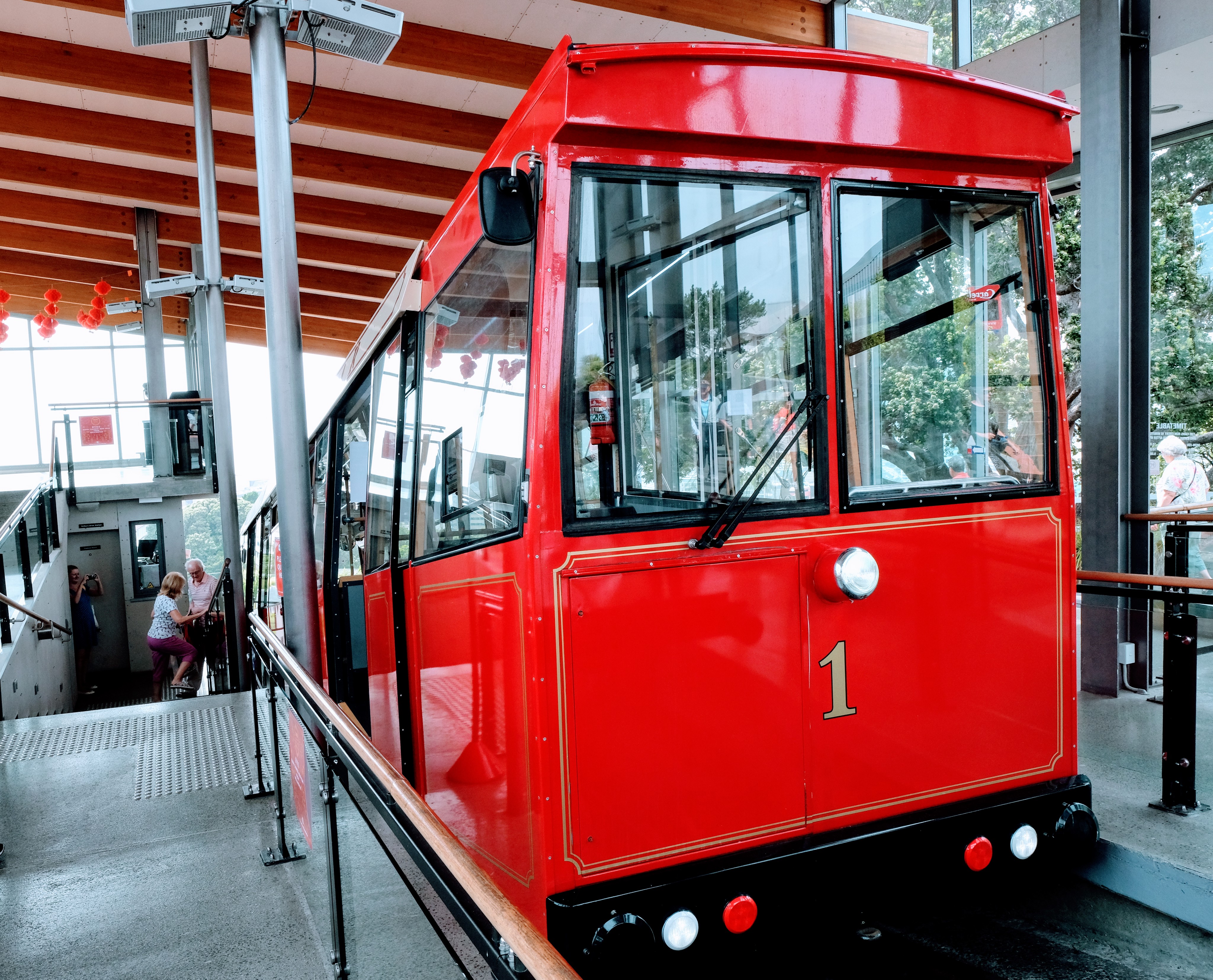
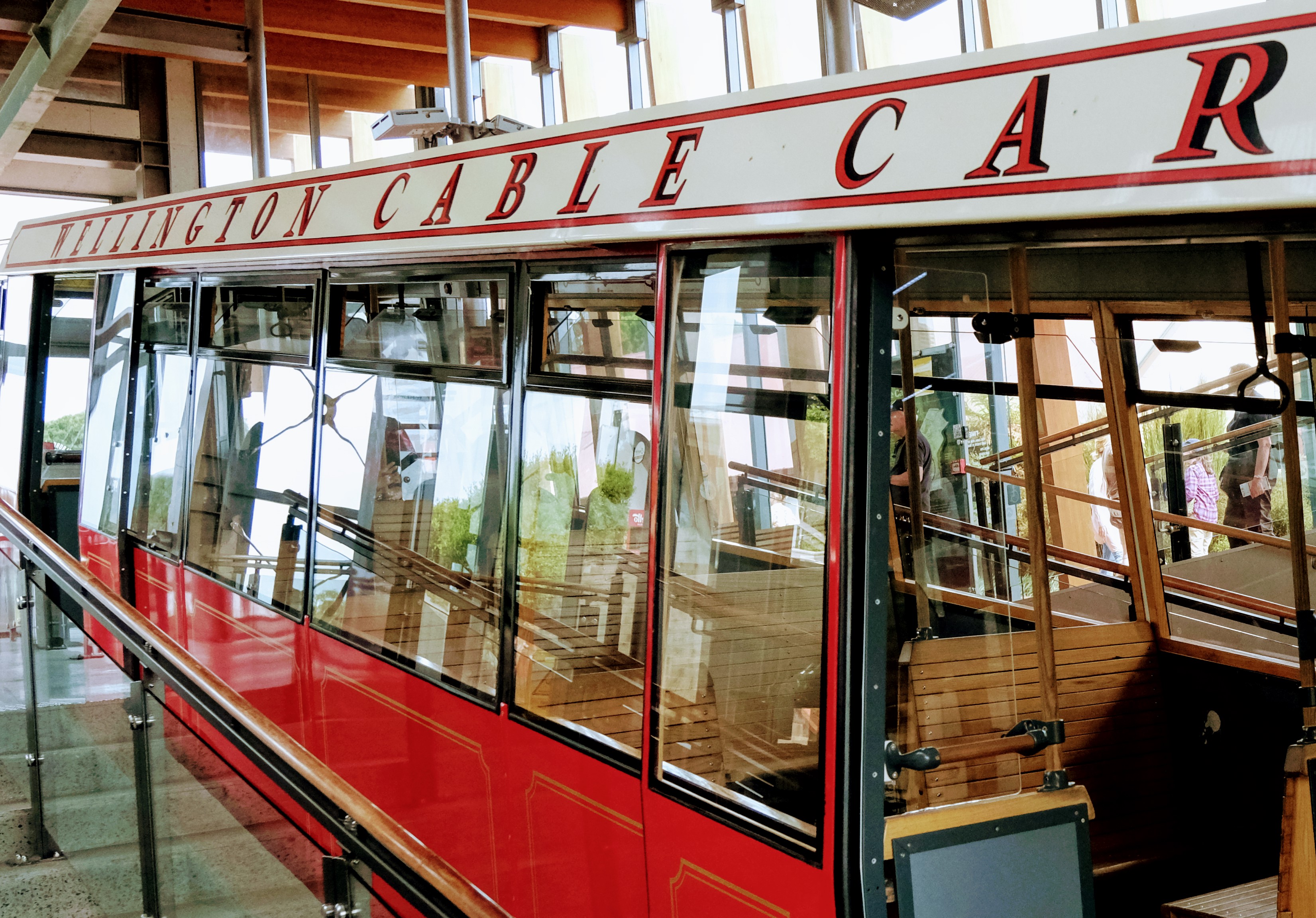
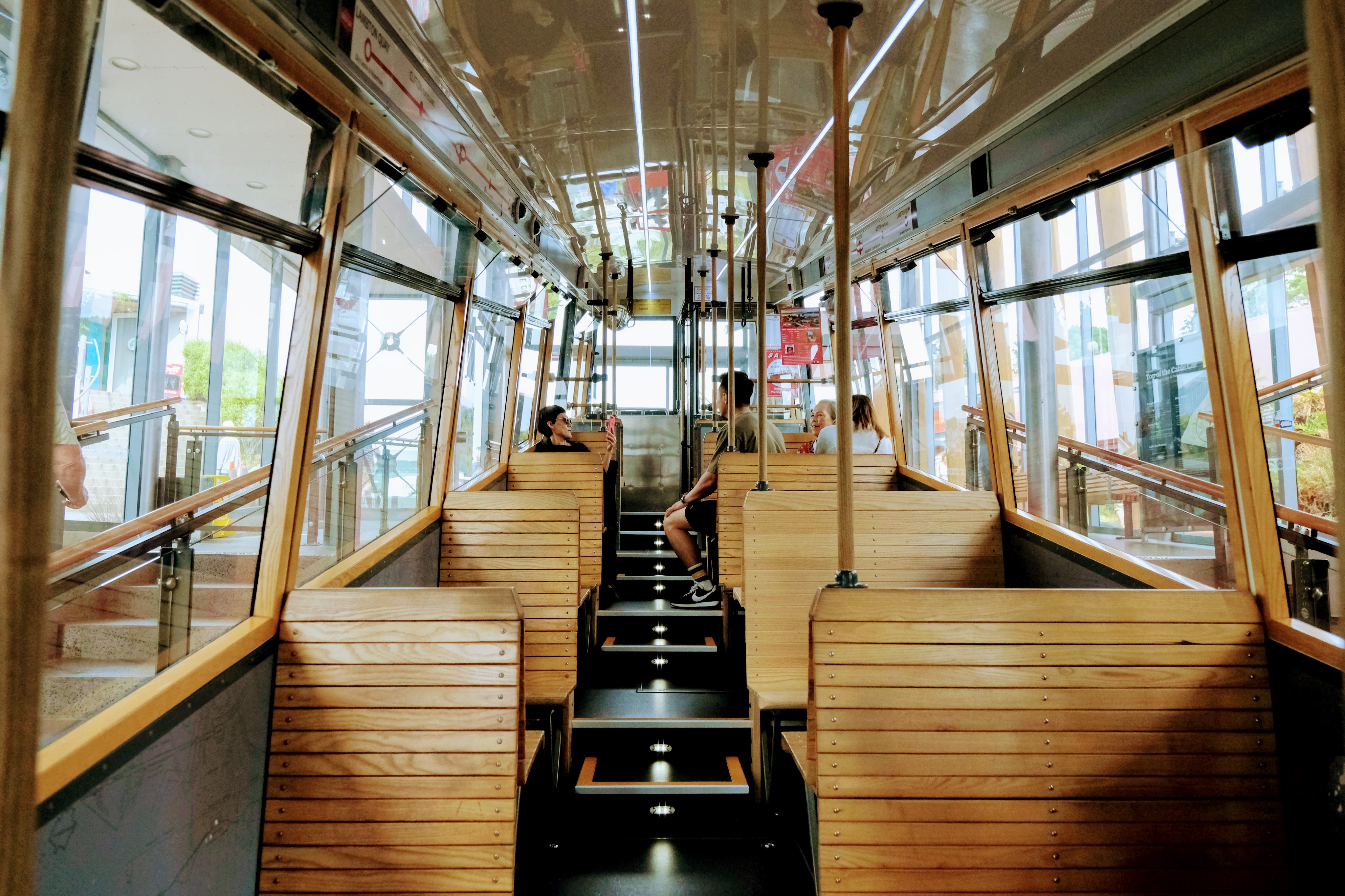
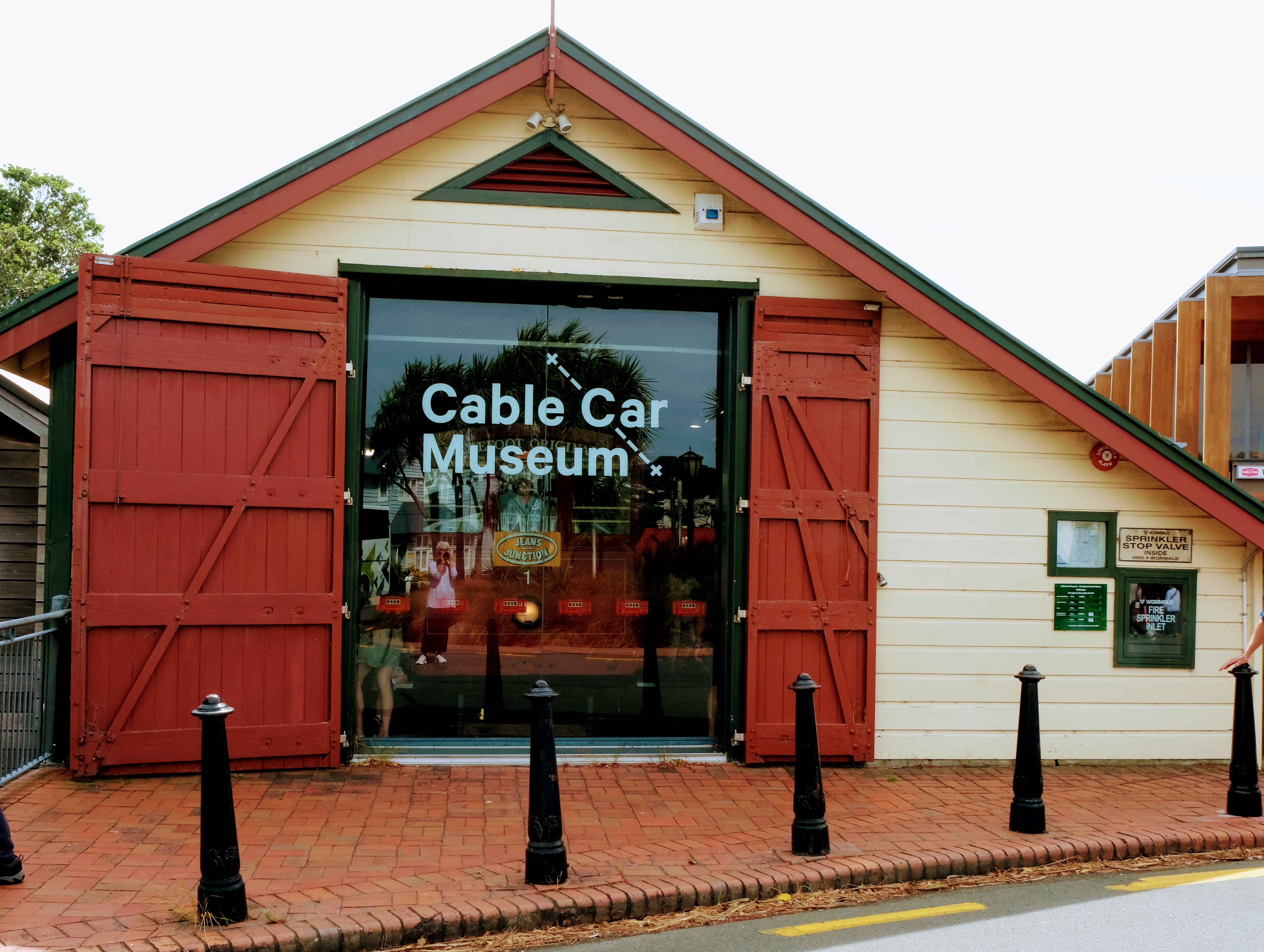
Another Wellington icon is its Cable Car. The Wellington Cable Car is a funicular railway in that connects Lambton Quay, the main shopping street, and Kelburn, a suburb in the hills overlooking the central city. The one way trip takes approximately five minutes. 
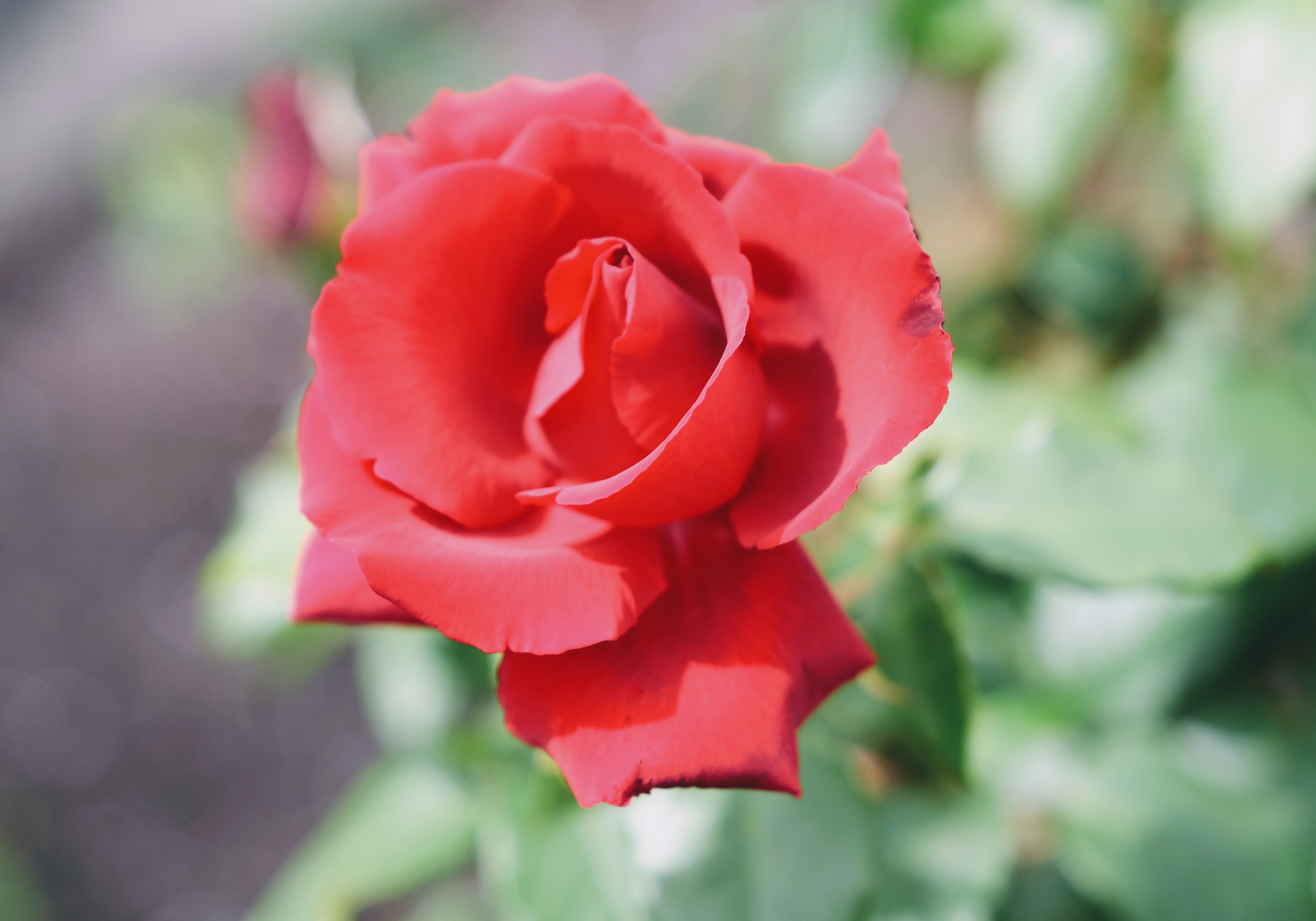
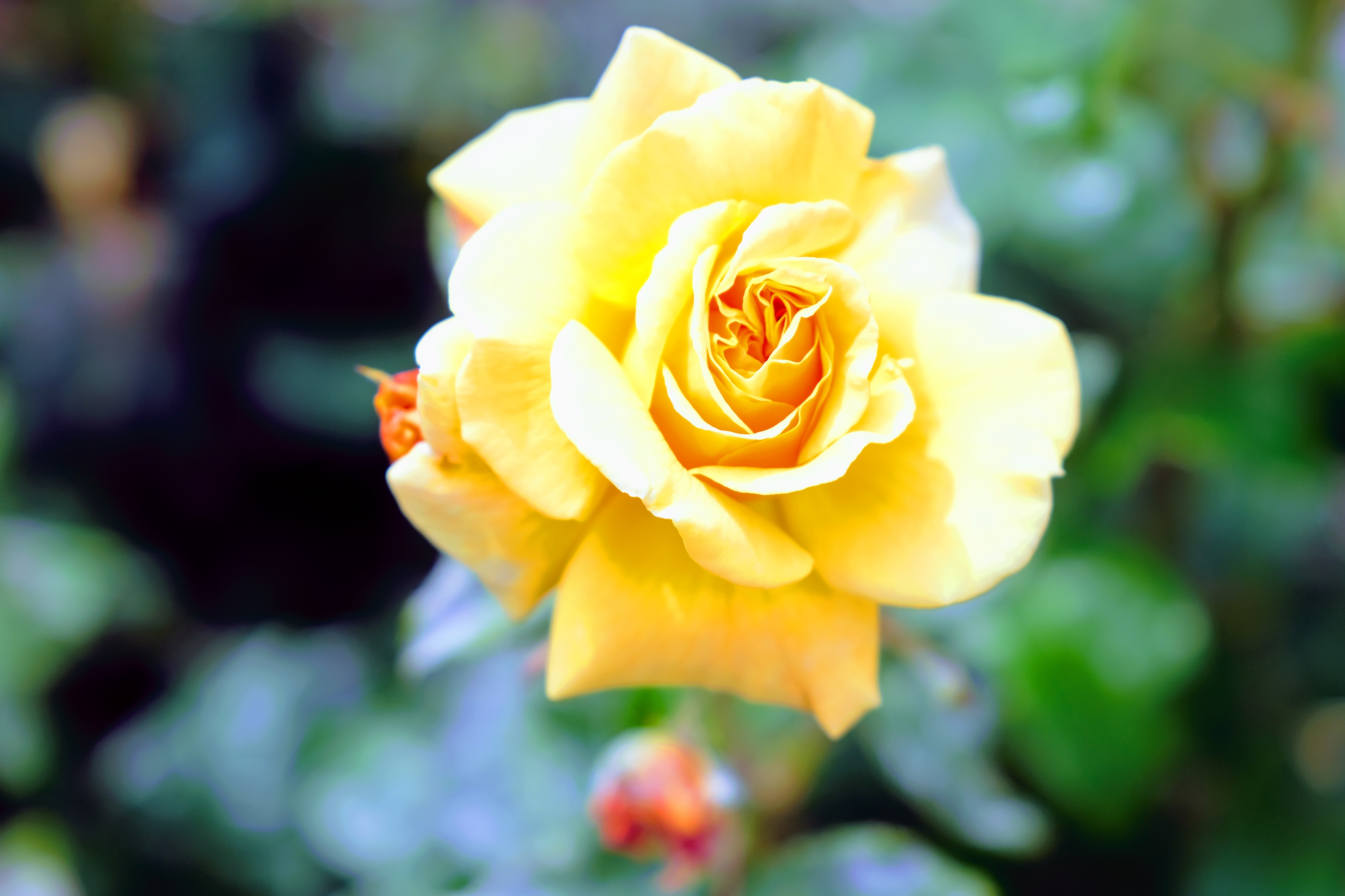
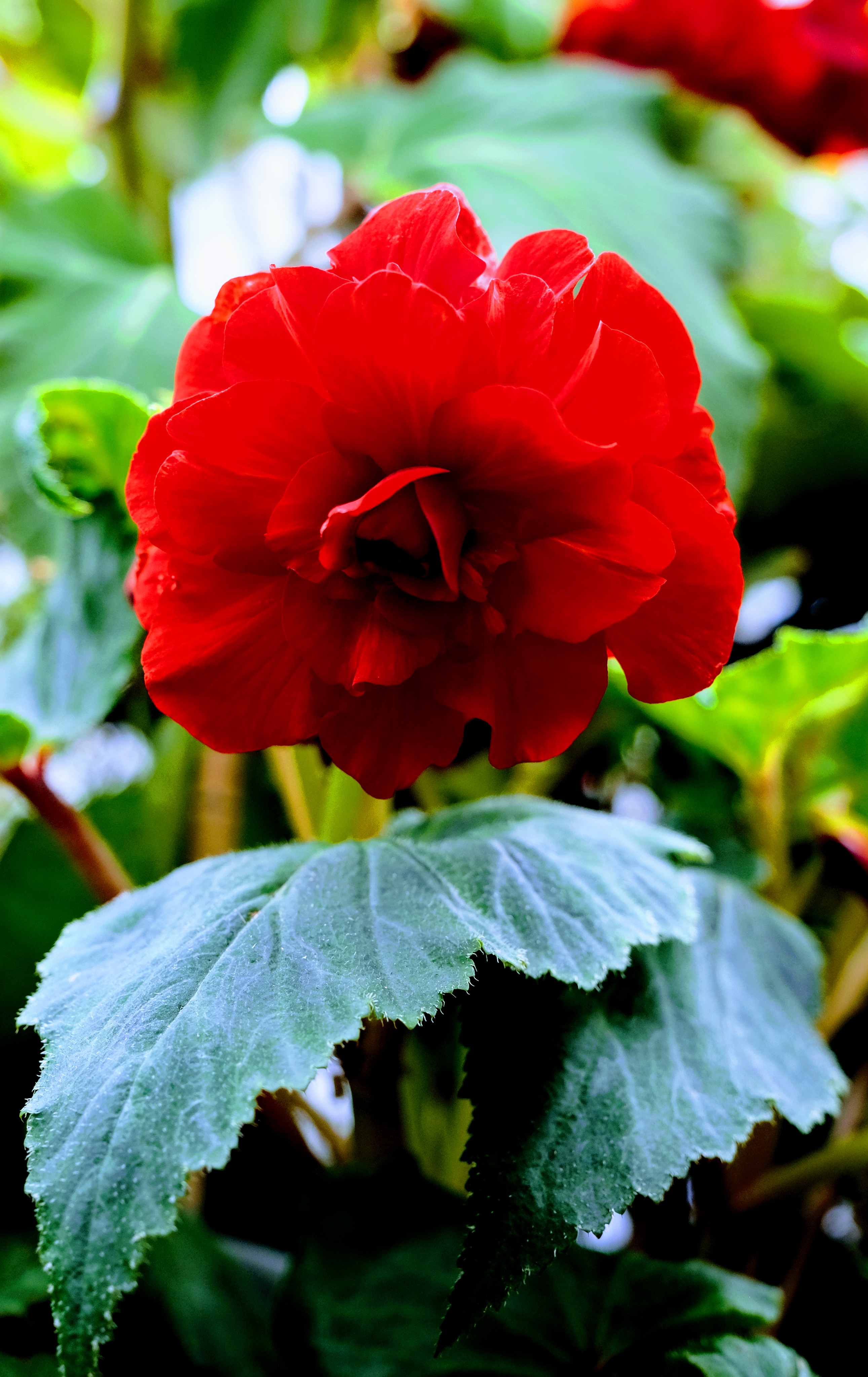
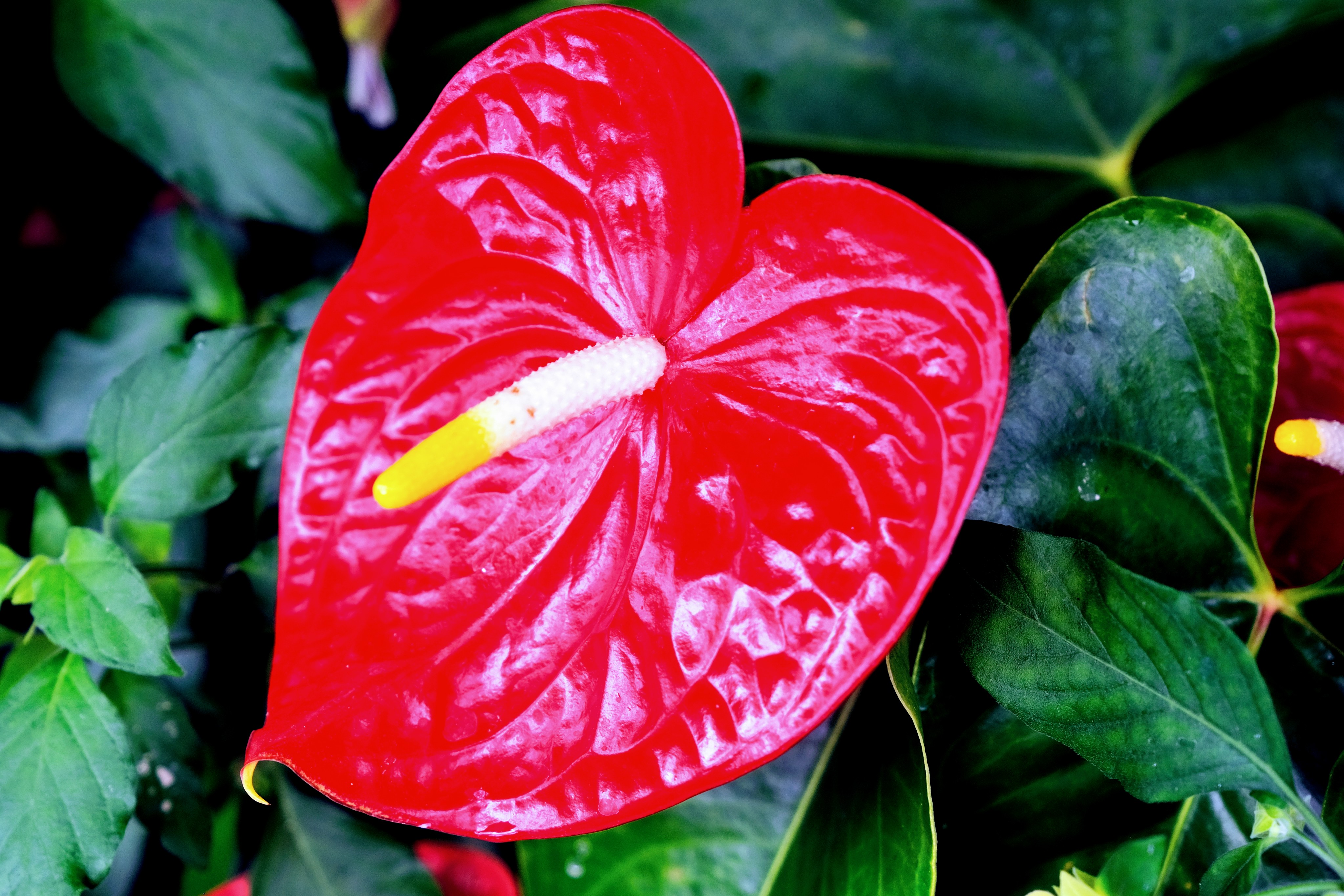
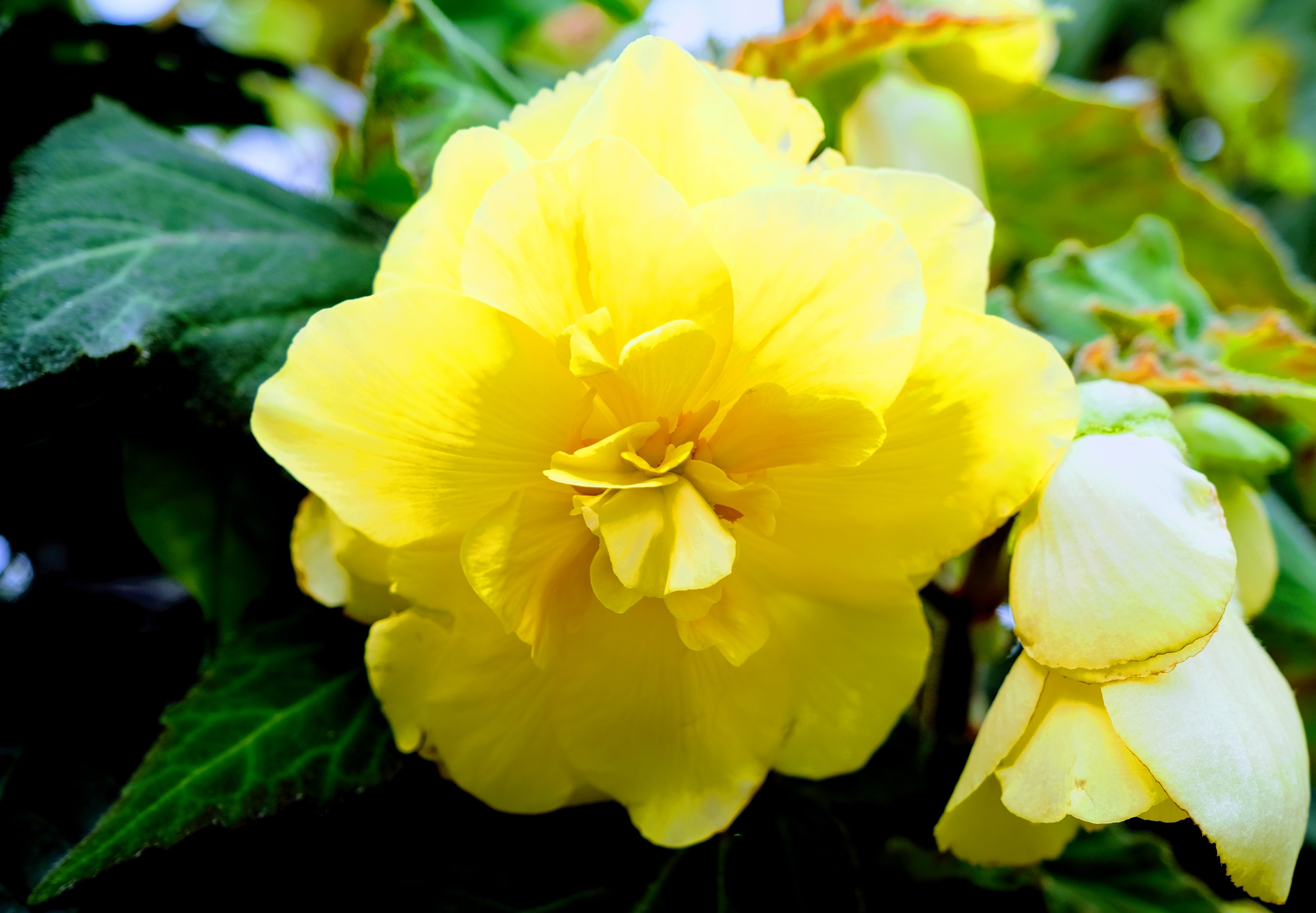
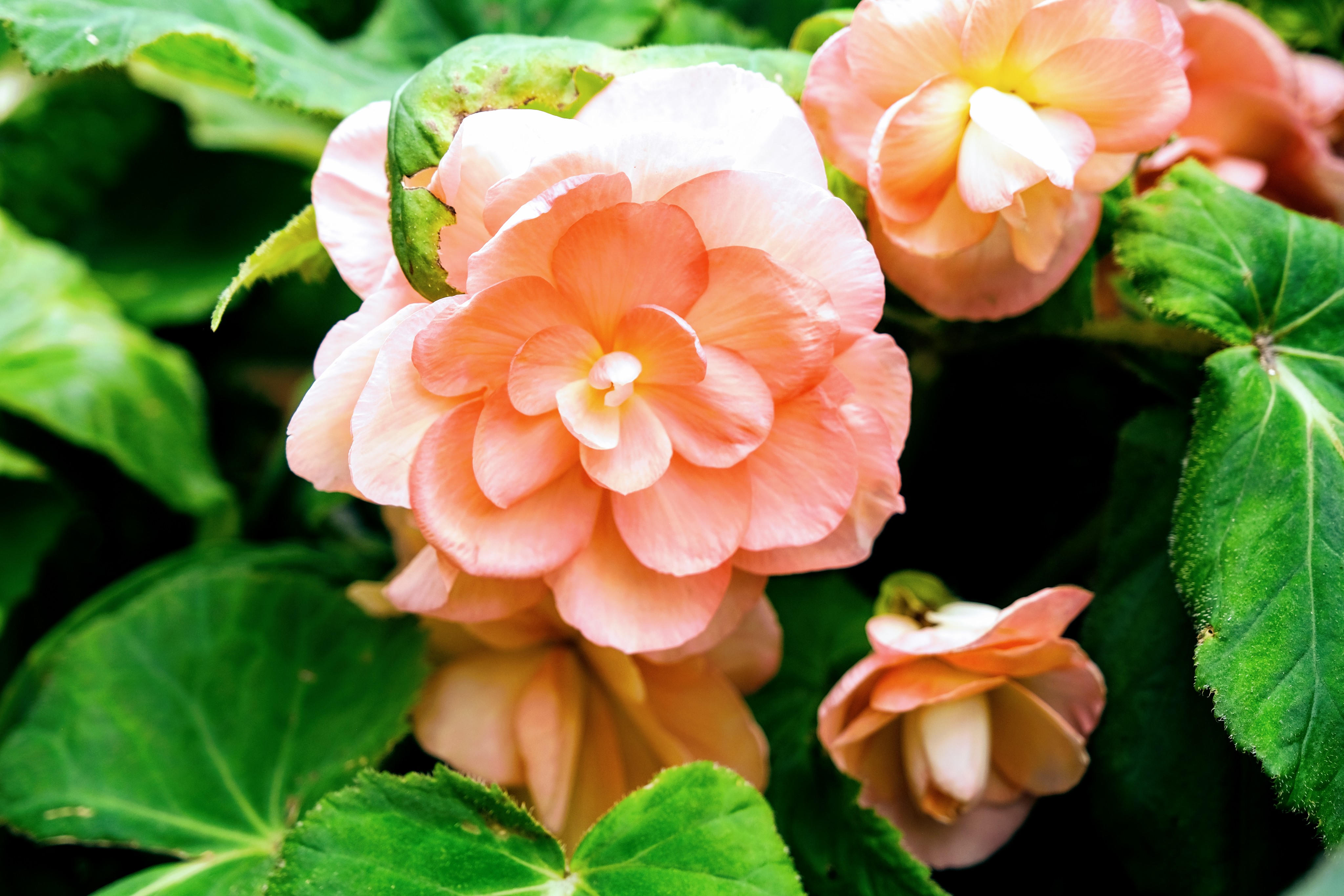
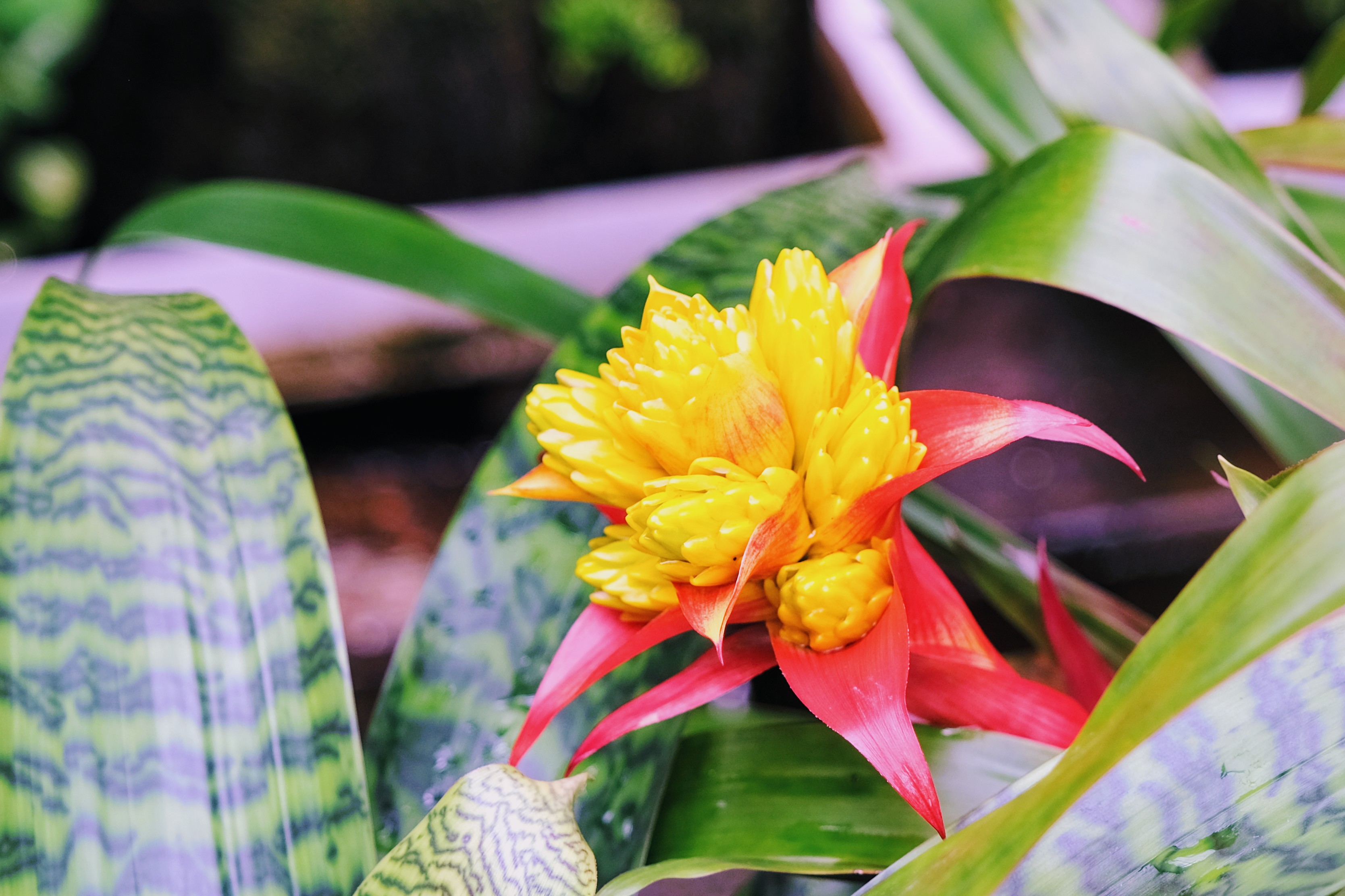
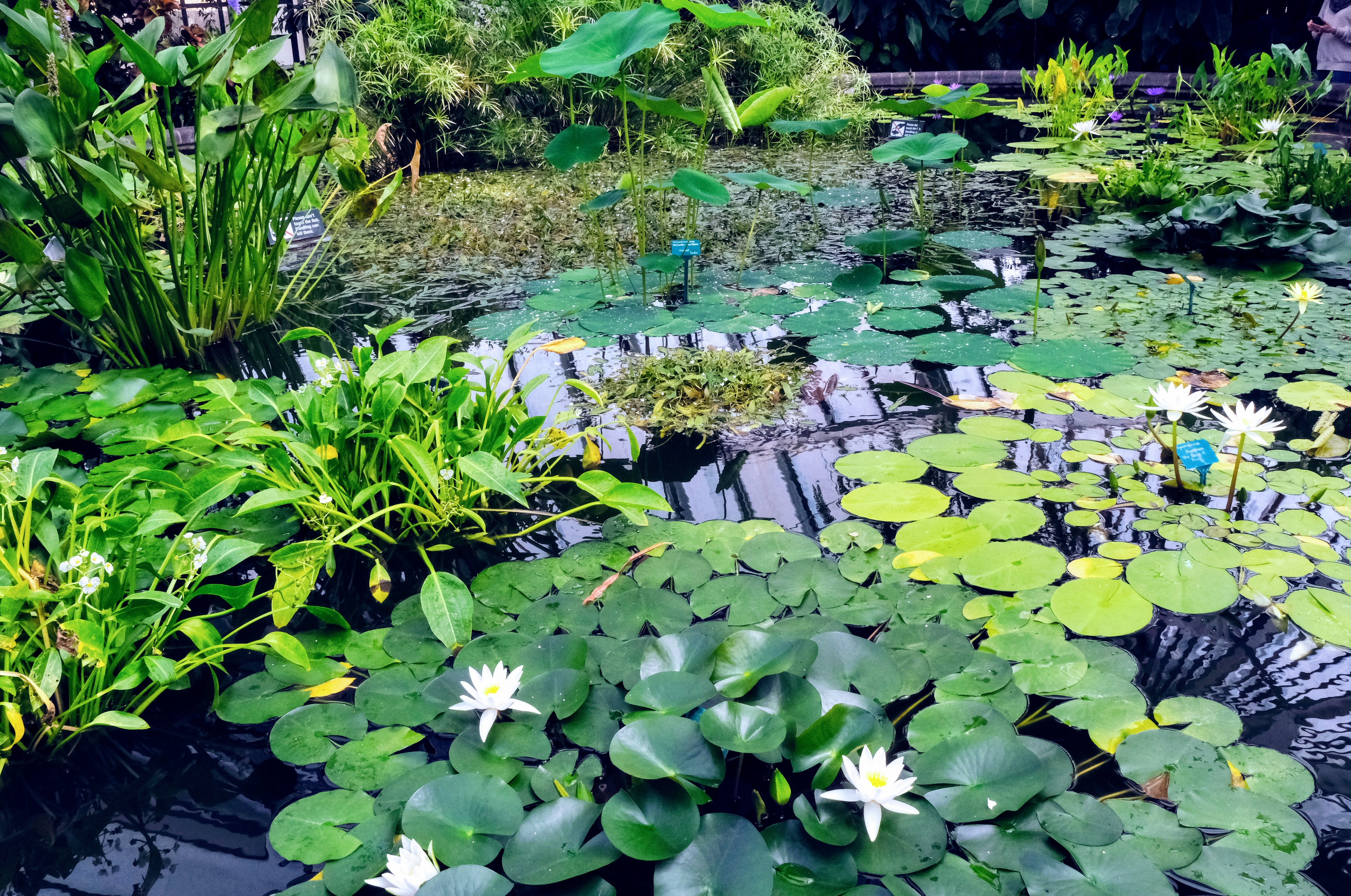
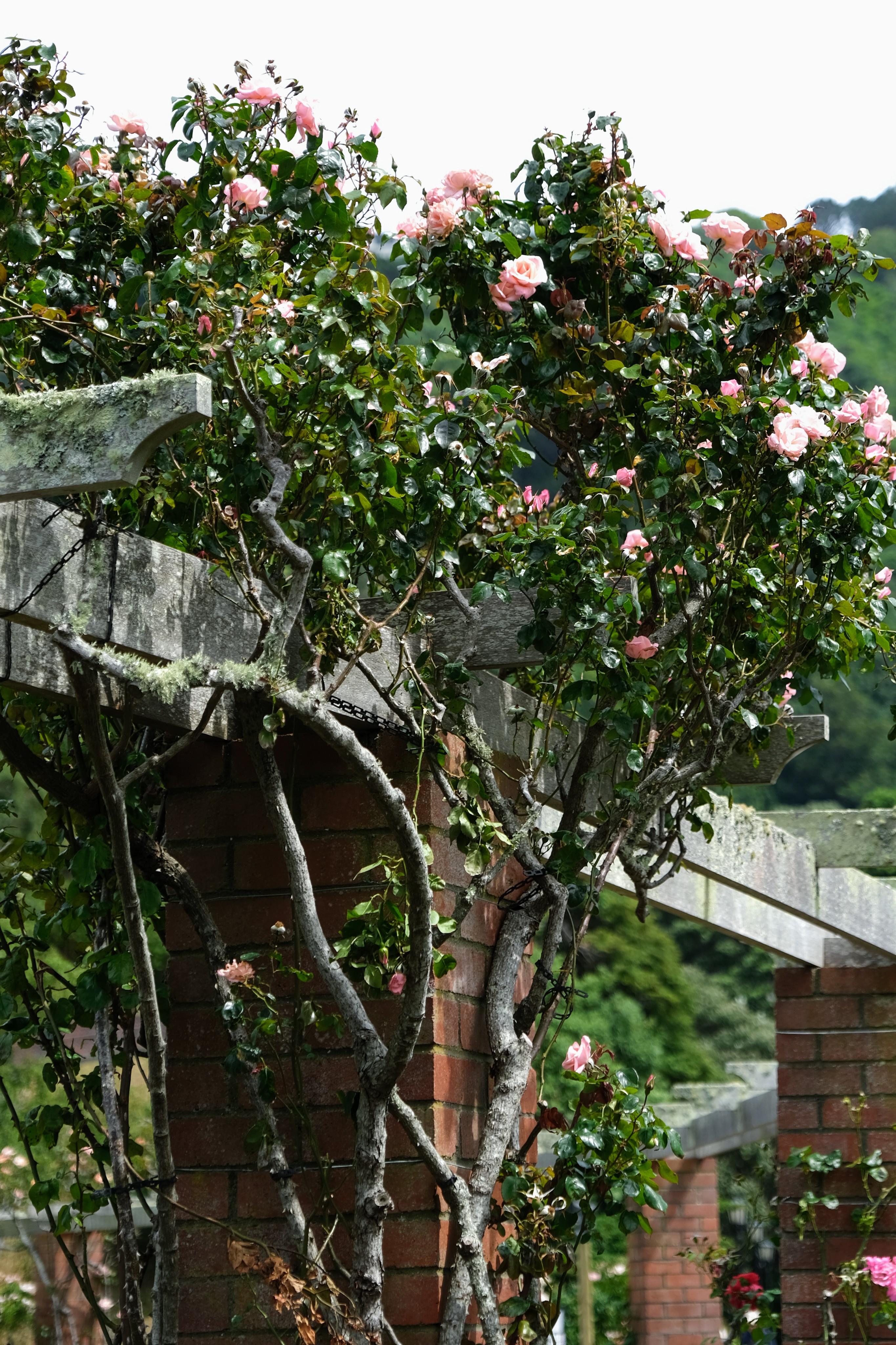
We enjoyed a leisurely lunch at the idyllic Botanic Garden. The garden features protected native forests, conifers, lily ponds, plant collections, sculpture, a rose garden, begonia house, and seasonal displays, but the breathtaking flowers are truly the main attraction.

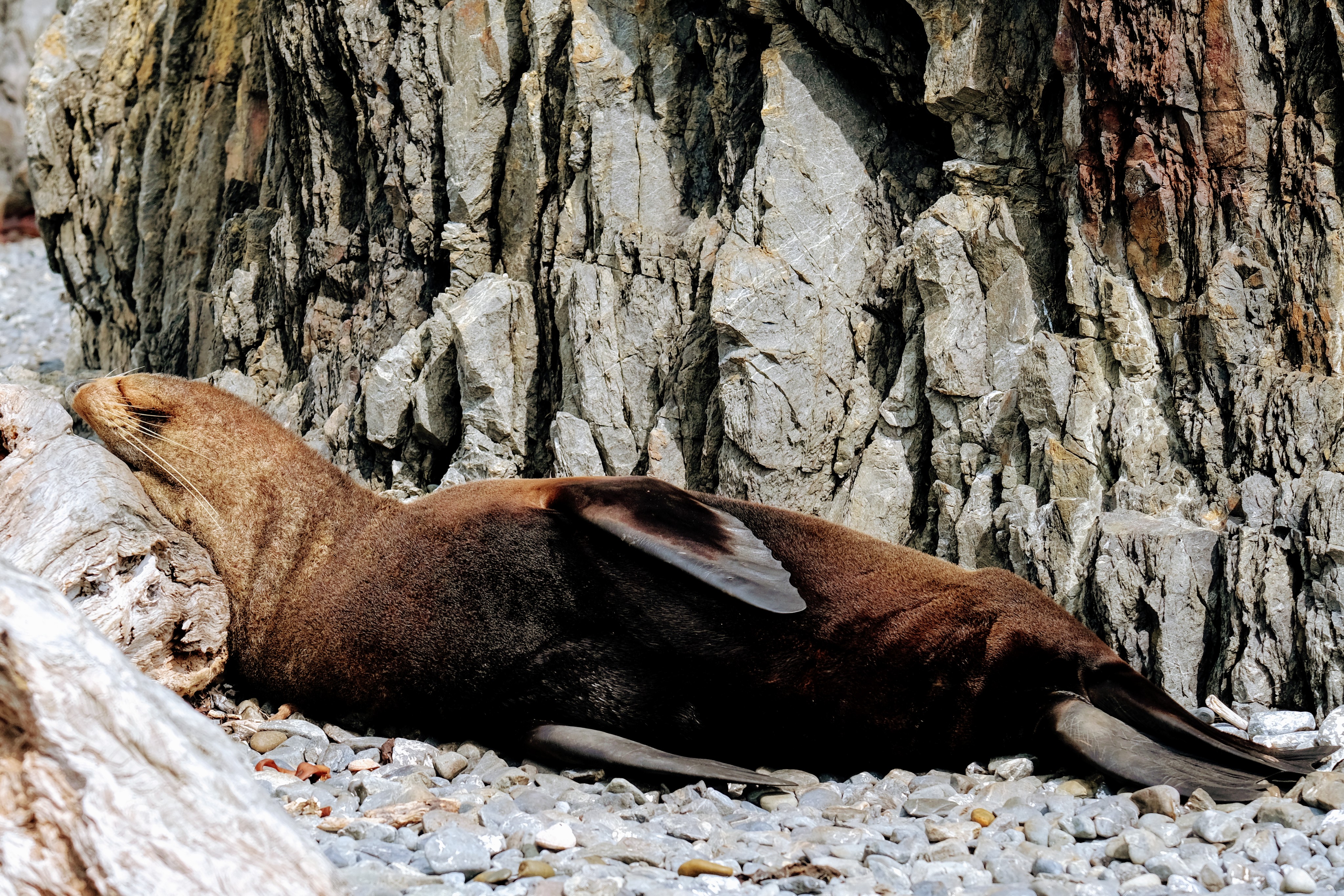
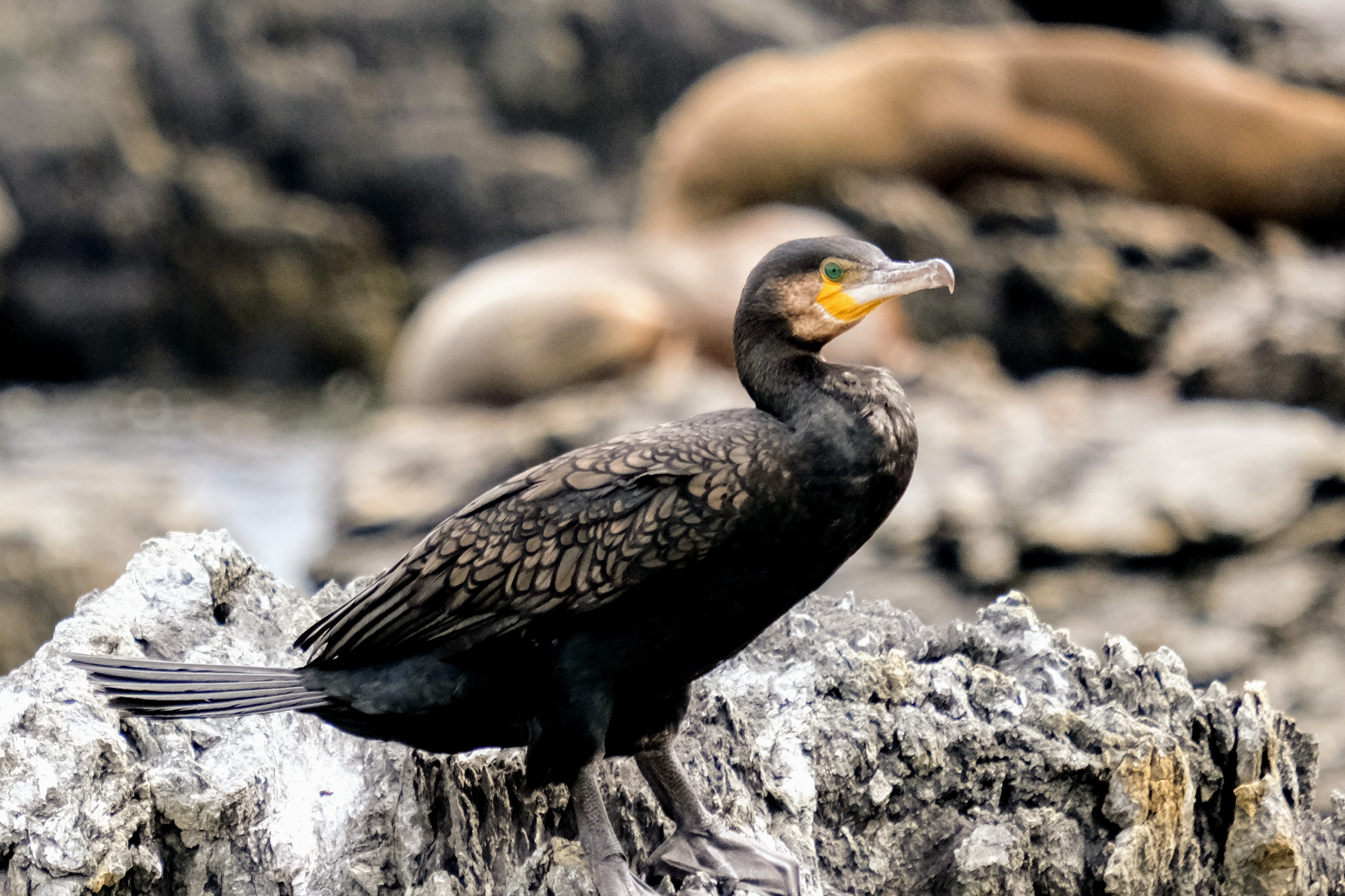
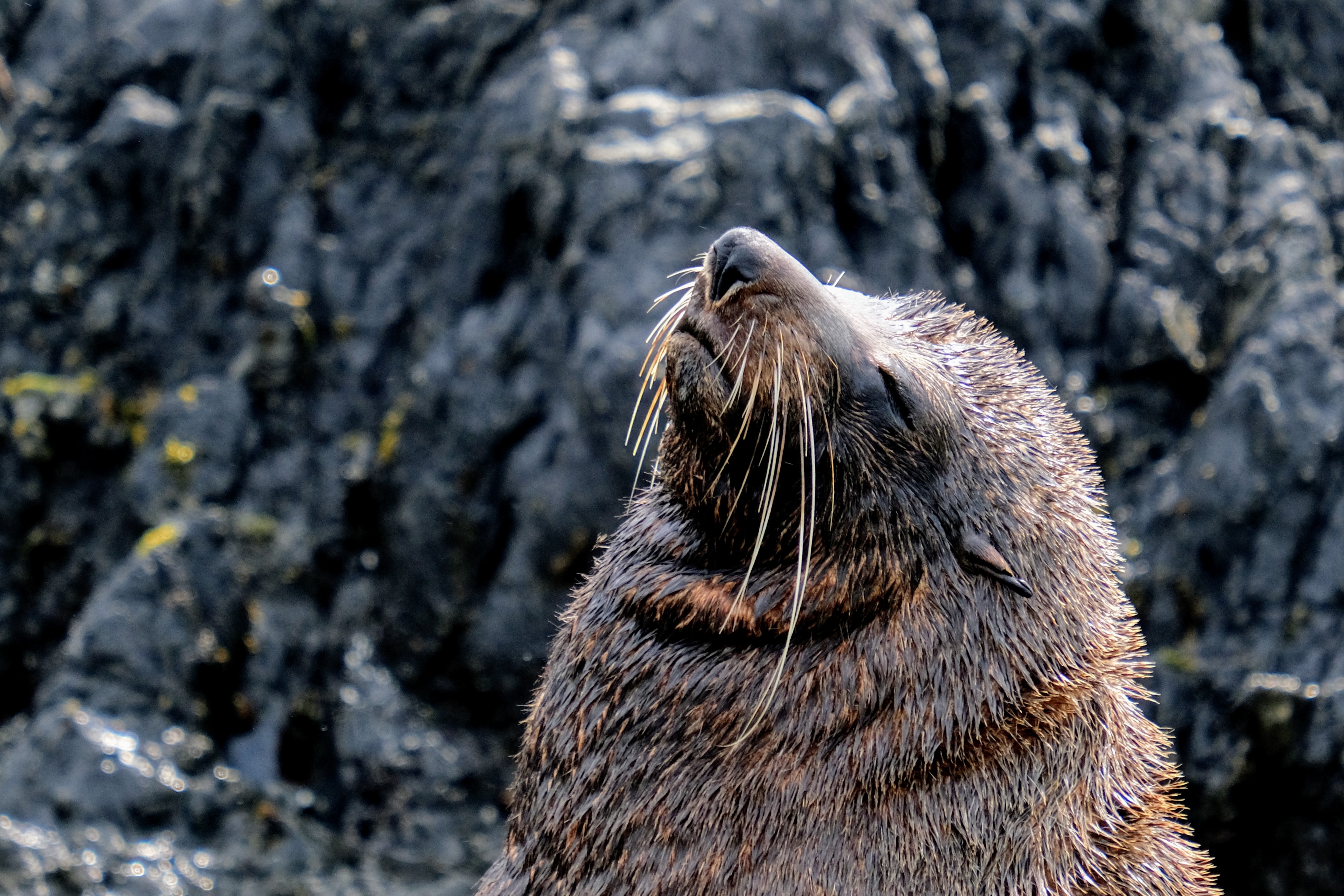
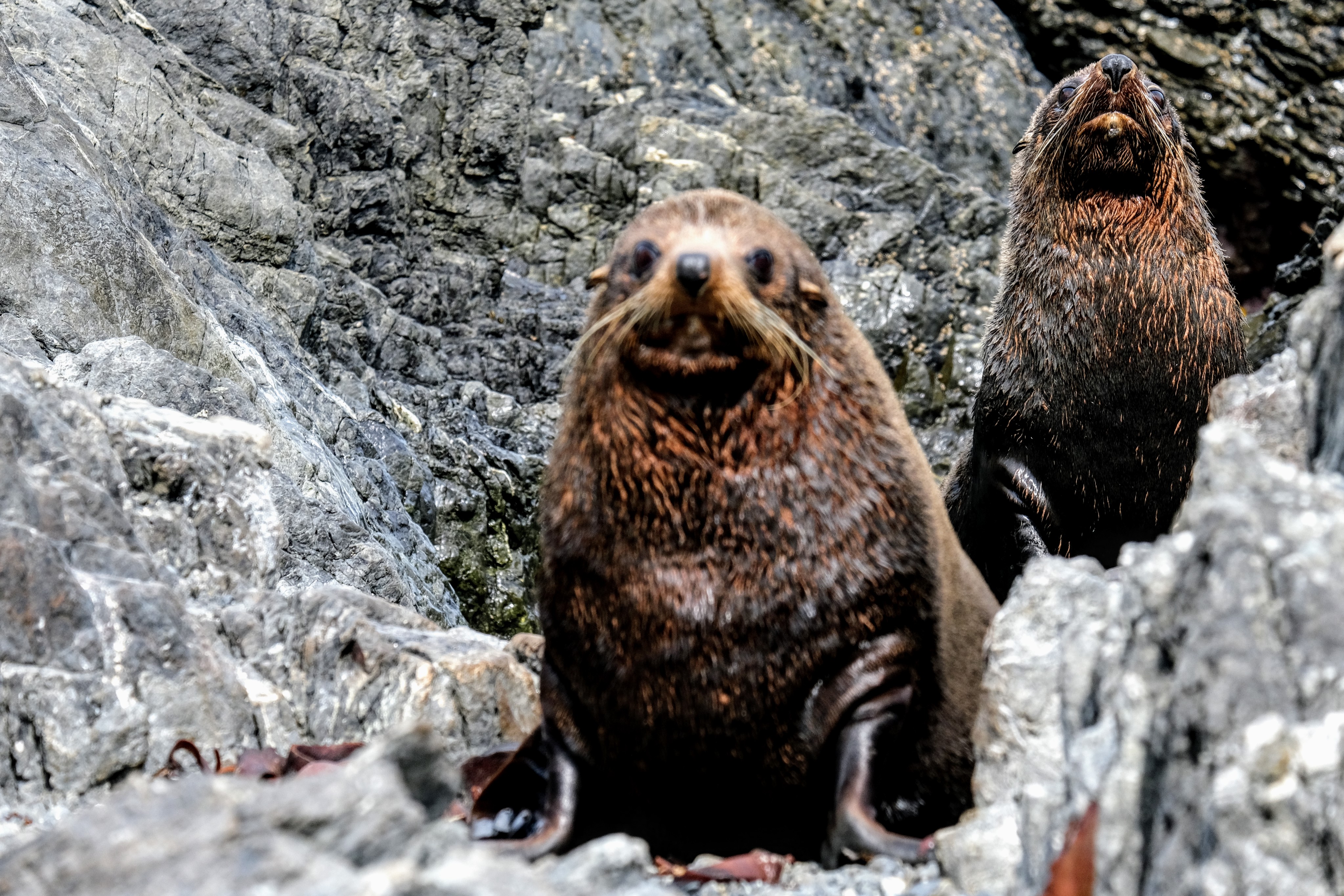
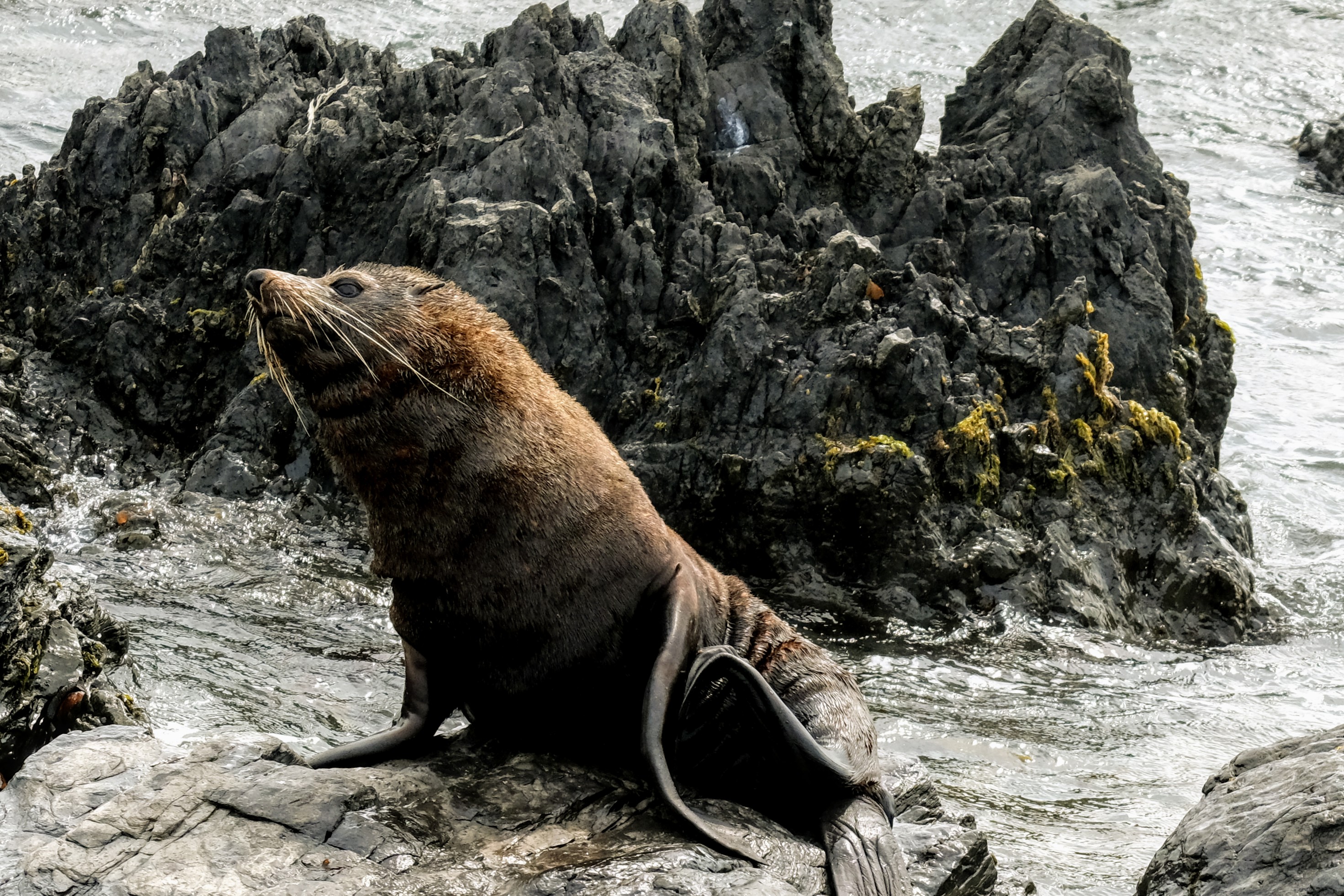
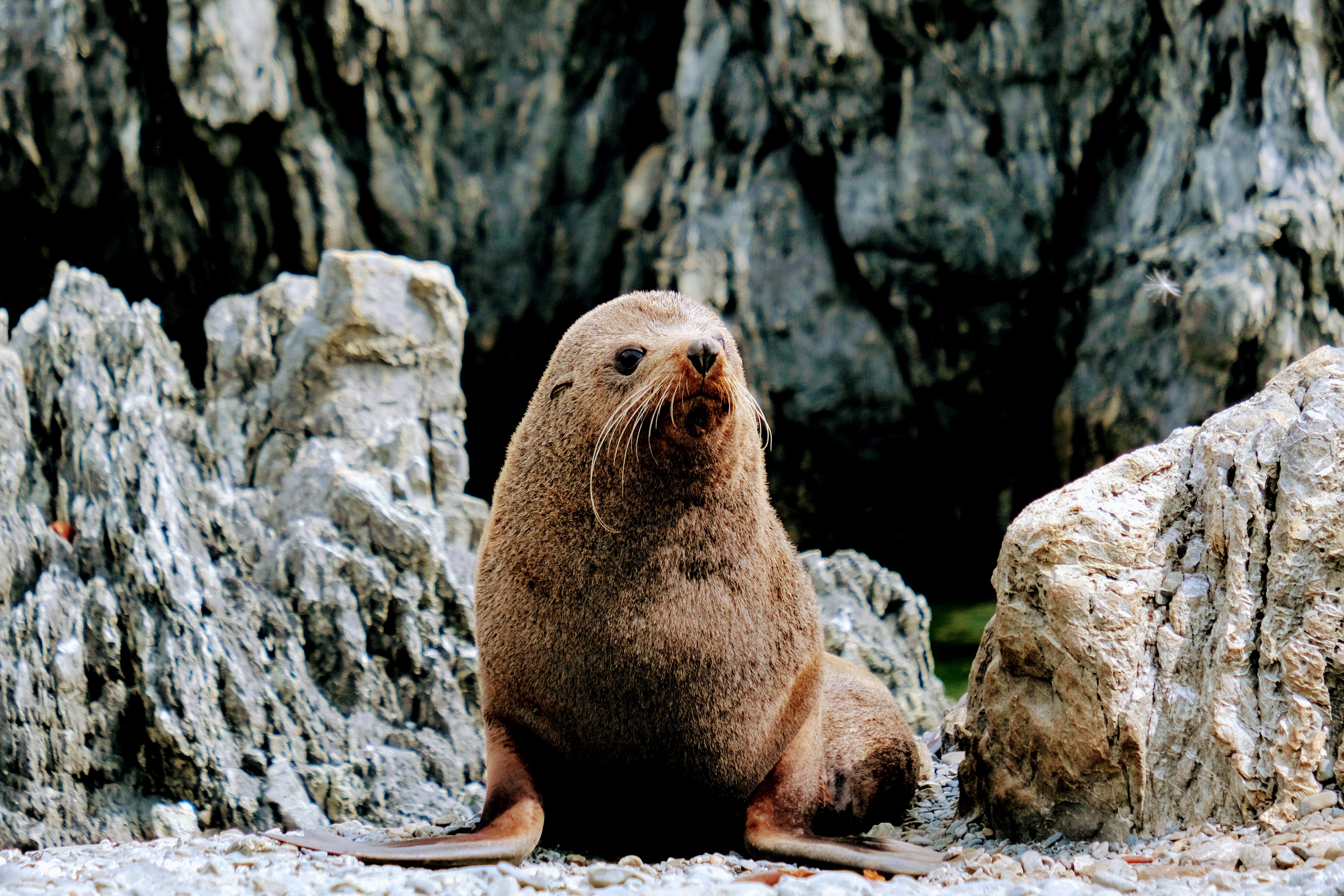
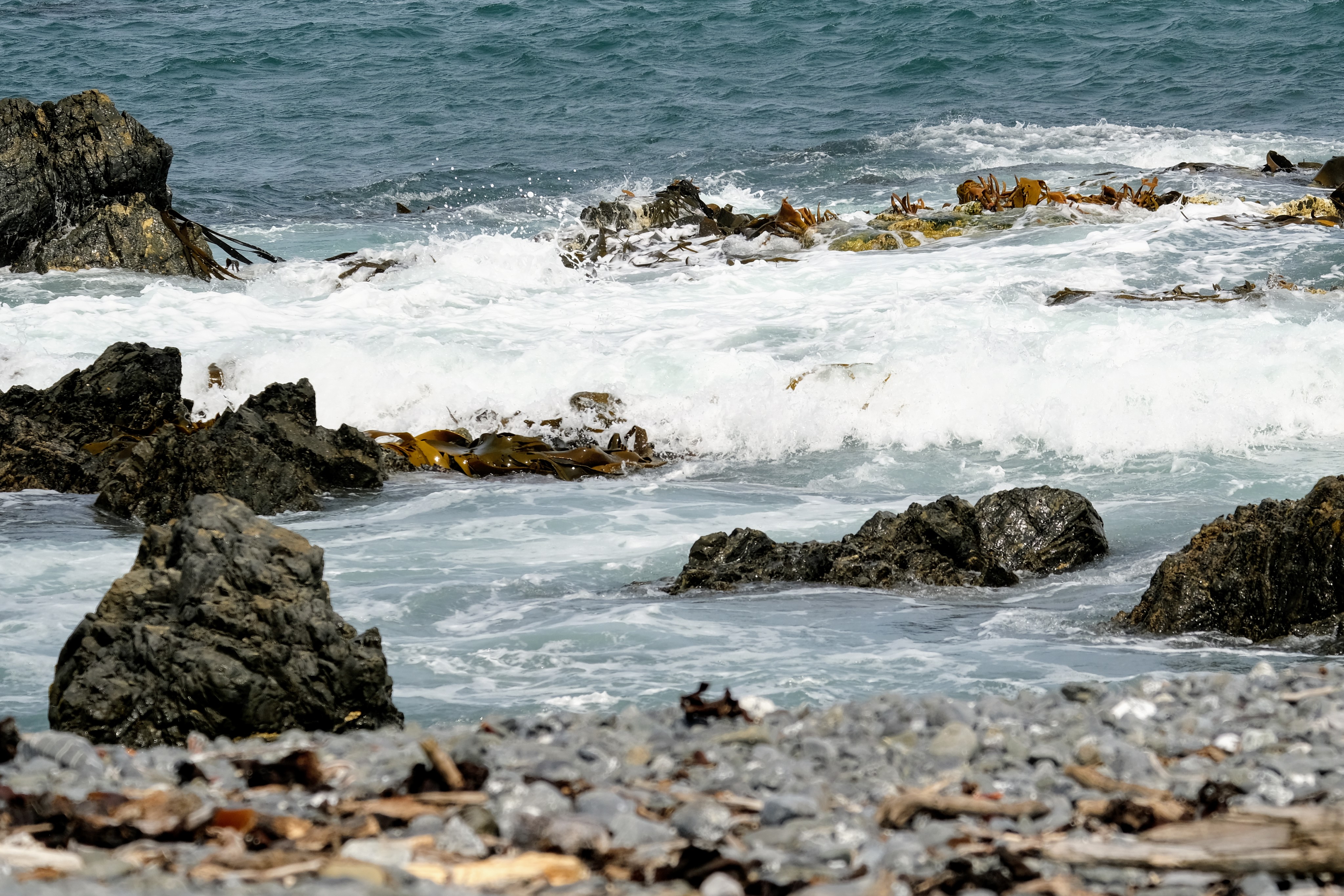
Later in the afternoon, we traveled to Tongue Point to view fur seals and other wildlife. Along the way, we viewed lots of wild goats (who were too fast for our photo lens!), horses, sheep. deer, and cattle. We also saw the famous Leaning Lighthouse, but here the main attraction is the seals. On the beach at Tongue Point, we watched singles, pairs, and groups of seals bask in the sun, and slither into the water for a swim. Various birds of New Zealand share the beach with the seals, and seem oblivious to their carrying-on.
Wellington is an incredibly diverse, interesting, and fun city. Nature is just a short distance away, making it a very vibrant, livable nation’s capital.

A Lazy Day in Tauranga

Nestled on the Bay of Plenty, the port of Tauranga is a lovely harborside city on New Zealand’s North Island. It hosts some historic buildings like the Elms Mission Station, an 1847 Georgian-style home, and is one of the fastest-growing cities in the country. A bridge over the harbor connects Tauranga to Mount Maunganui, a beach town with hot saltwater pools and an extinct namesake volcano with winding walking paths. Maunganui towers over the city, and is a great attraction for hikers, campers, and outdoor enthusiasts. Offshore is the active volcano White Island, which most recently erupted on December 9, 2019 claiming the lives of 21 people. We obviously didn’t visit White Island.

This area , with its rolling hills, lush green pastures, sandy white beaches, as well as a sense of Maori magic, got the attention of Sir Peter Jackson’s scouting team who came here in 1998 to find the perfect location to film the movies based on J.R.R. Tolkein’s classic fantasy trilogy. Some of our fellow travelers enjoyed the world of The Lord of the Rings at the nearby Hobbiton movie set where Bilbo Baggins lived and where the quest for the Ring began. But after two very busy days in Auckland, we opted for a lazy day of simply enjoying the sparkling harbor and taking a stroll to a nearby beach. Unfortunately, we no sooner got settled on our beach towels when there was a cloud burst, sending everyone for cover.

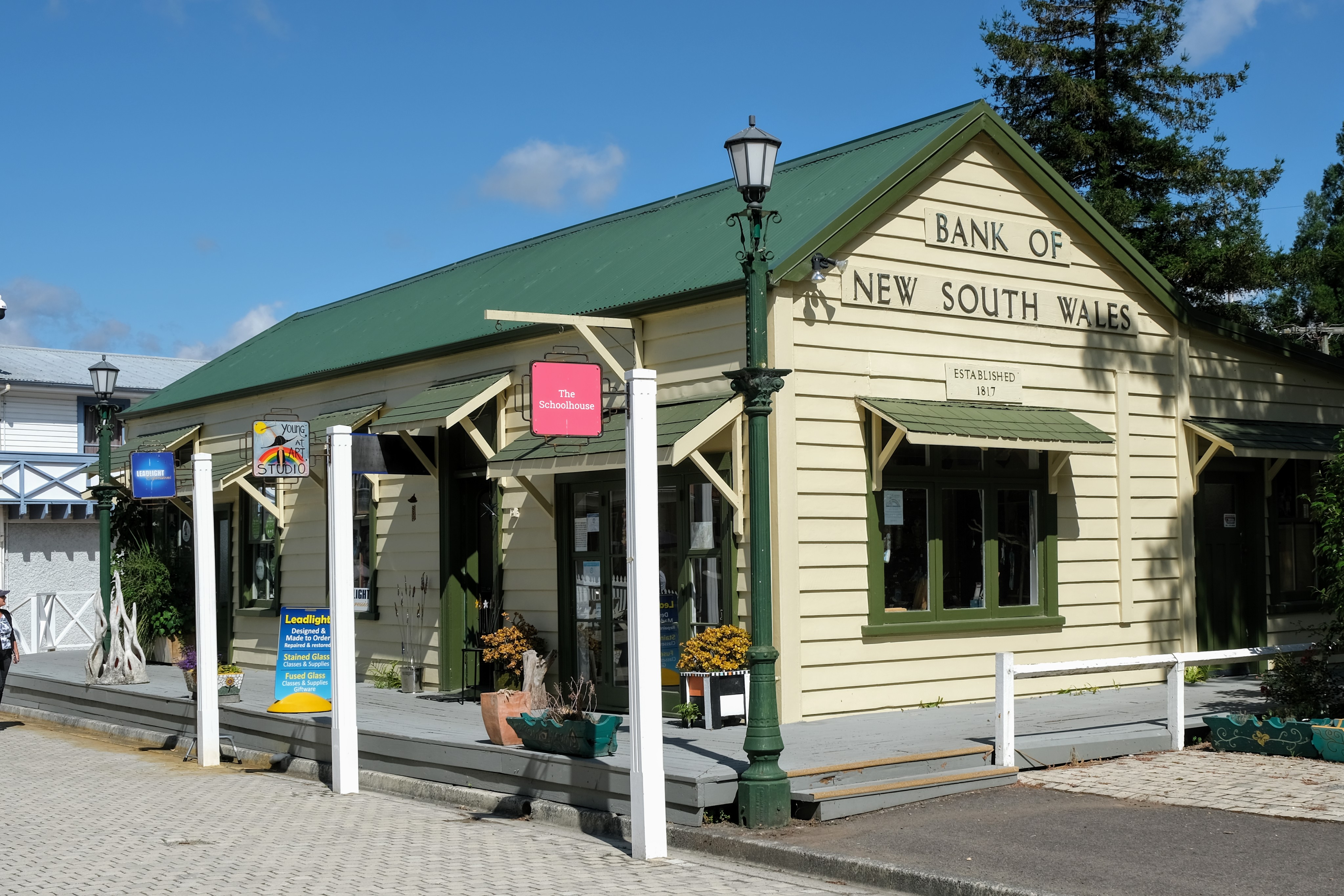
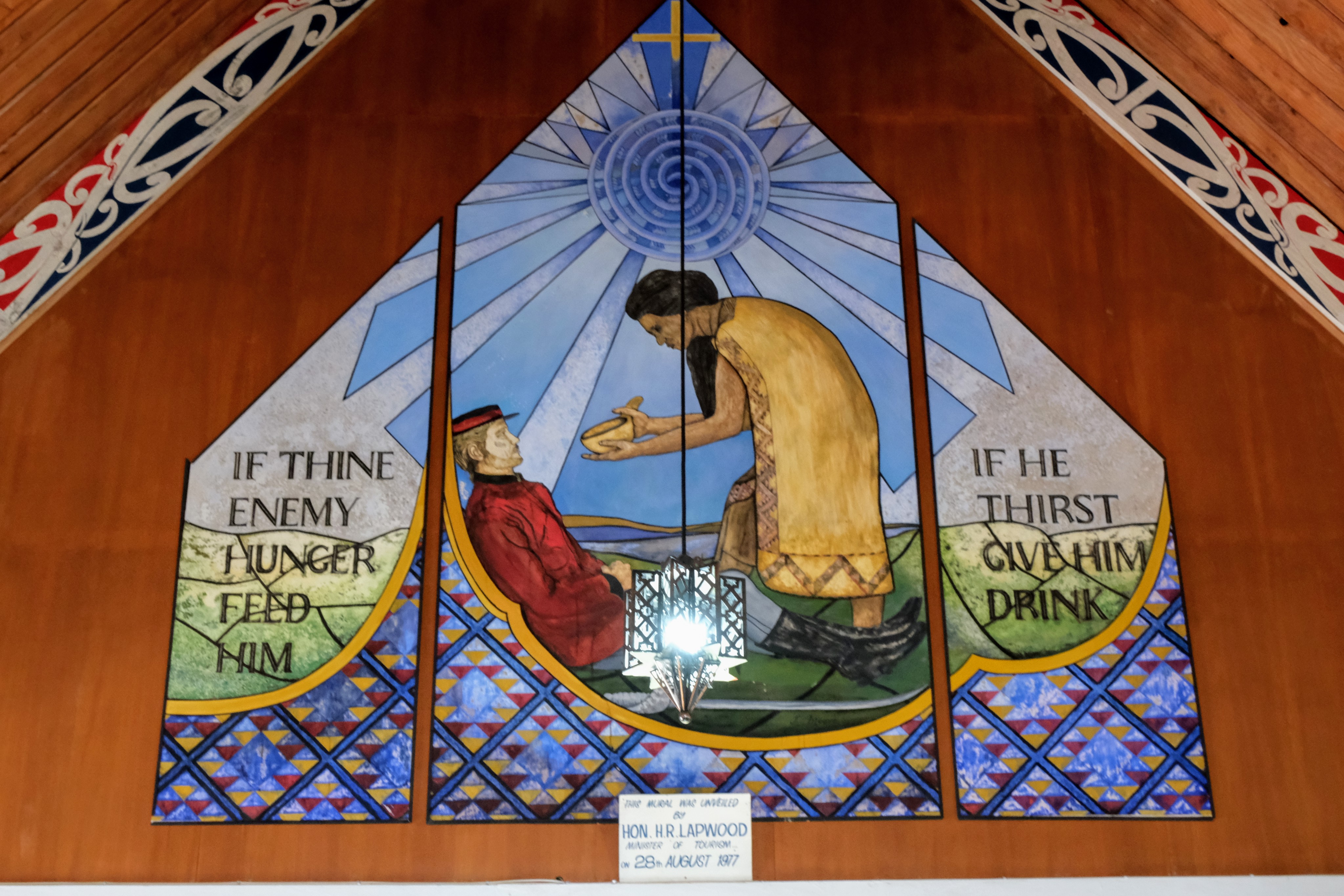
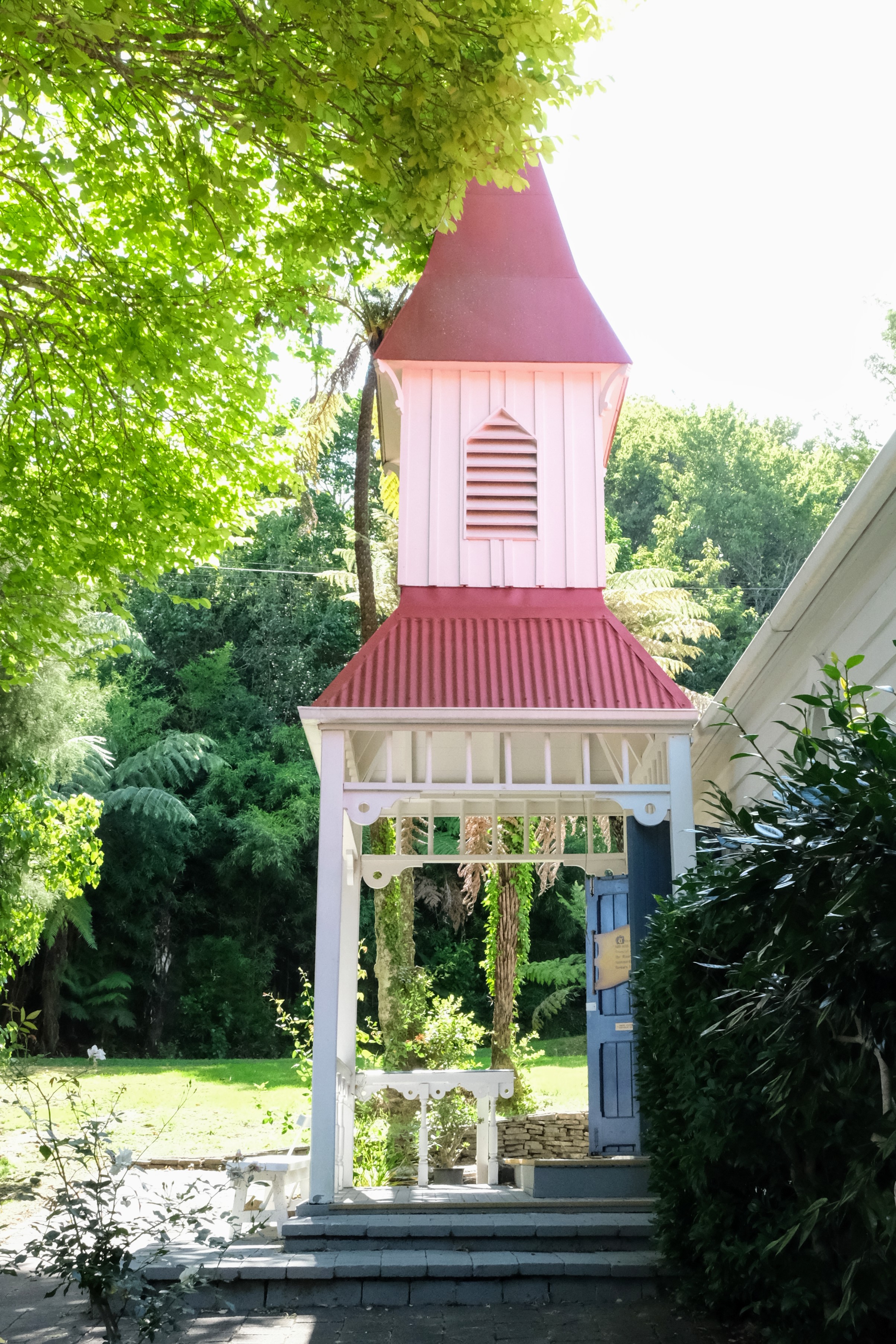
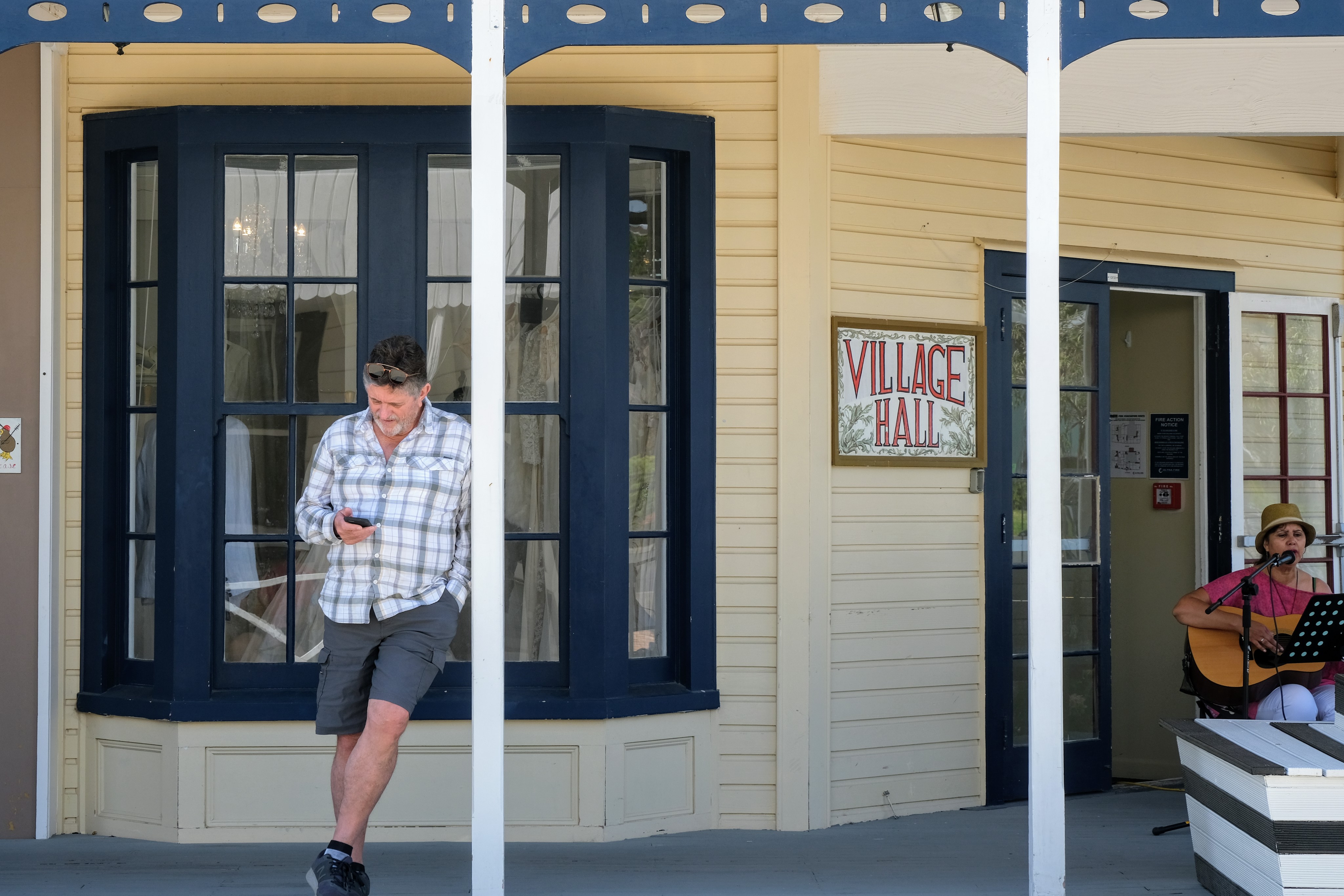
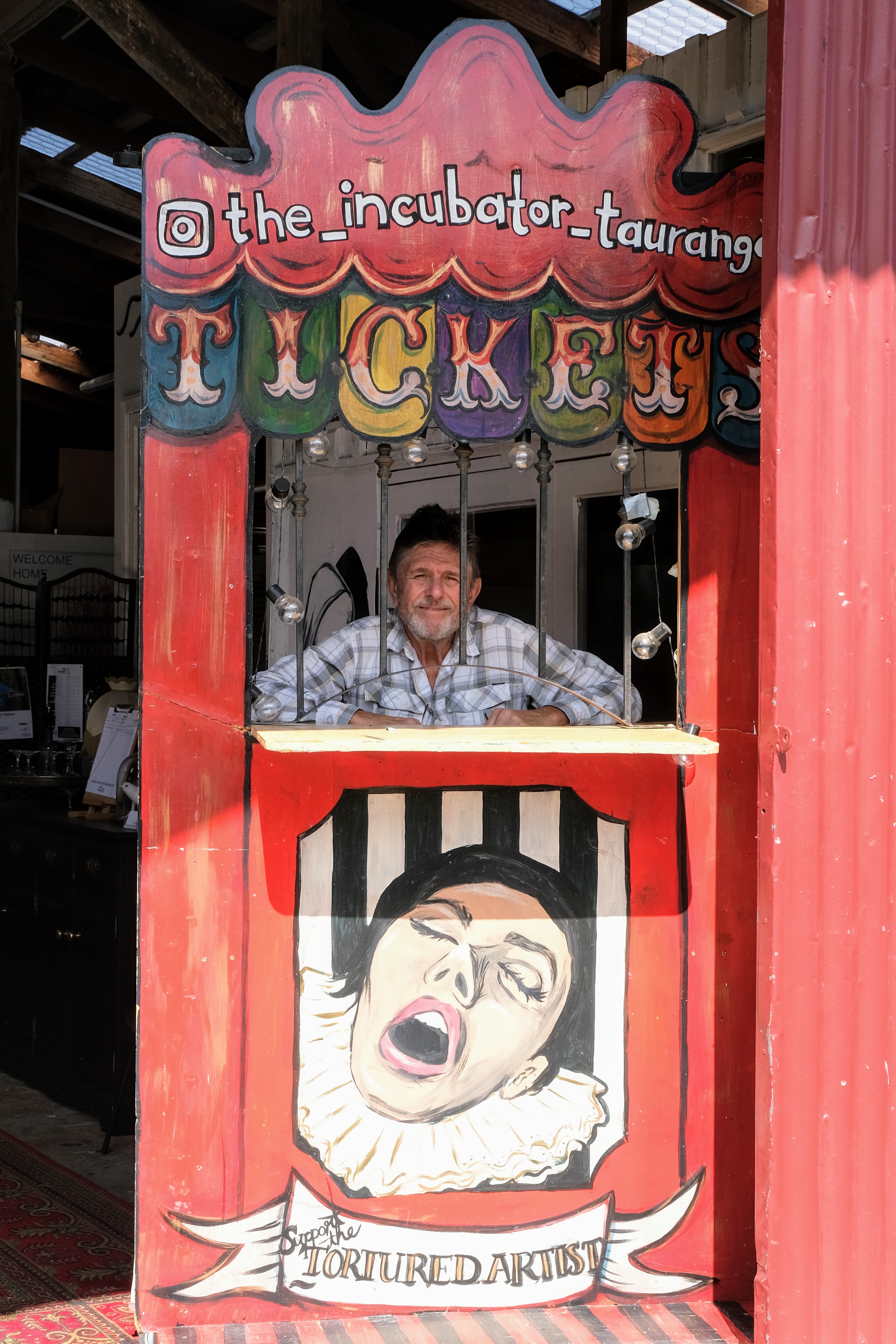
We also visited the Historic Village, a collection of original and replica buildings from the city’s early days that have become home to cafes, art collectives, boutiques, galleries, and shops of local artists who offer their artwork, classes, and workshops. Some of the buildings are home to local community organizations and businesses.

Auckland: City of Sails…and So Much More!

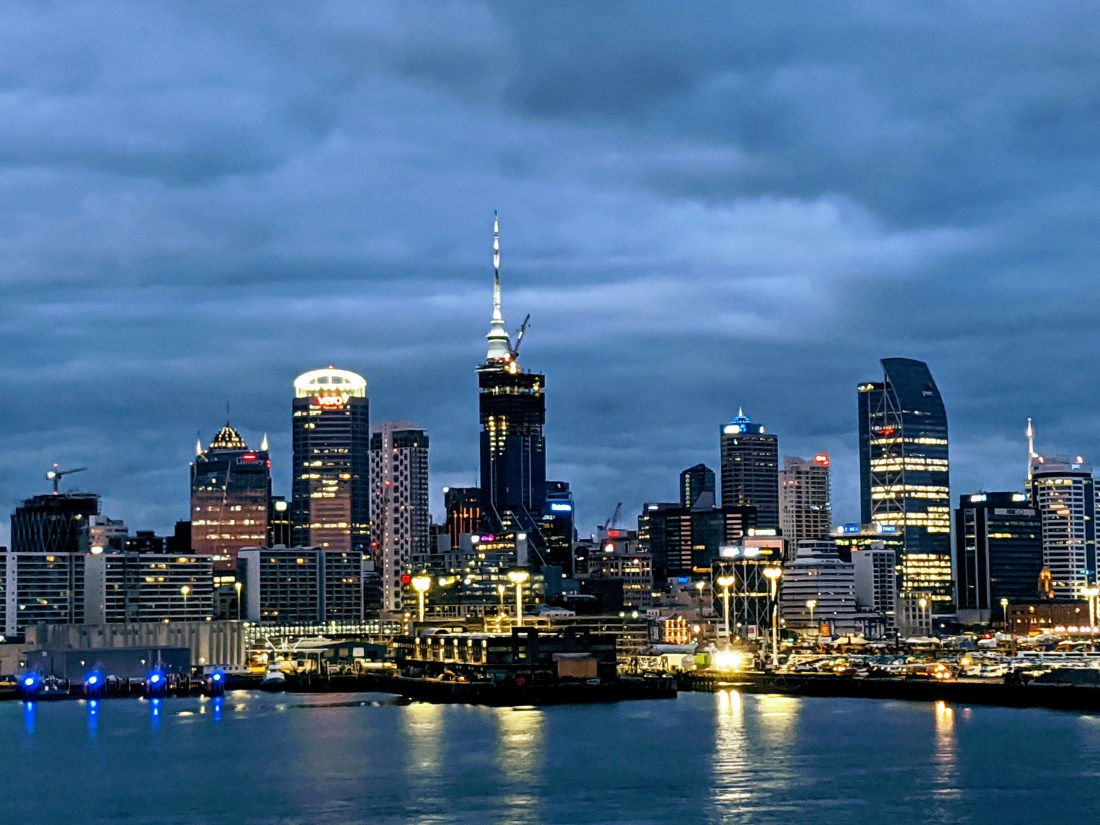
Auckland is truly a place where cosmopolitan style and spectacular landscapes go hand in hand. Breathtaking scenery, beautiful beaches, natural habitats, great shopping, exciting nightlife, and deep history are all a part of the Auckland experience, and we had the opportunity to see and do so much in two glorious days. New Zealand Maori called this area Tamaki Makaurau (maiden desired by 100 lovers), while today’s residents refer to it as the City of Sails because of the number of luxury boats per capita. The seafaring city has hosted two America’s Cup challenges and its marinas are brimming with world-class yachts. And the Mercer Quality of Living Survey consistently ranks Auckland near the top of the world’s most livable cities, and except for the cost of living, we agree!

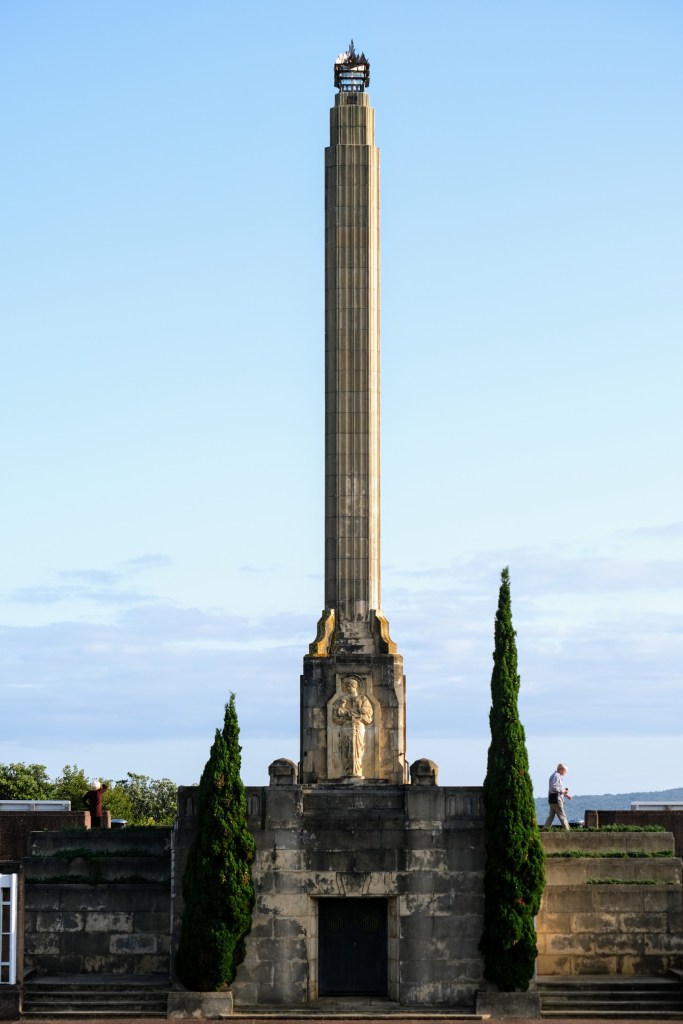
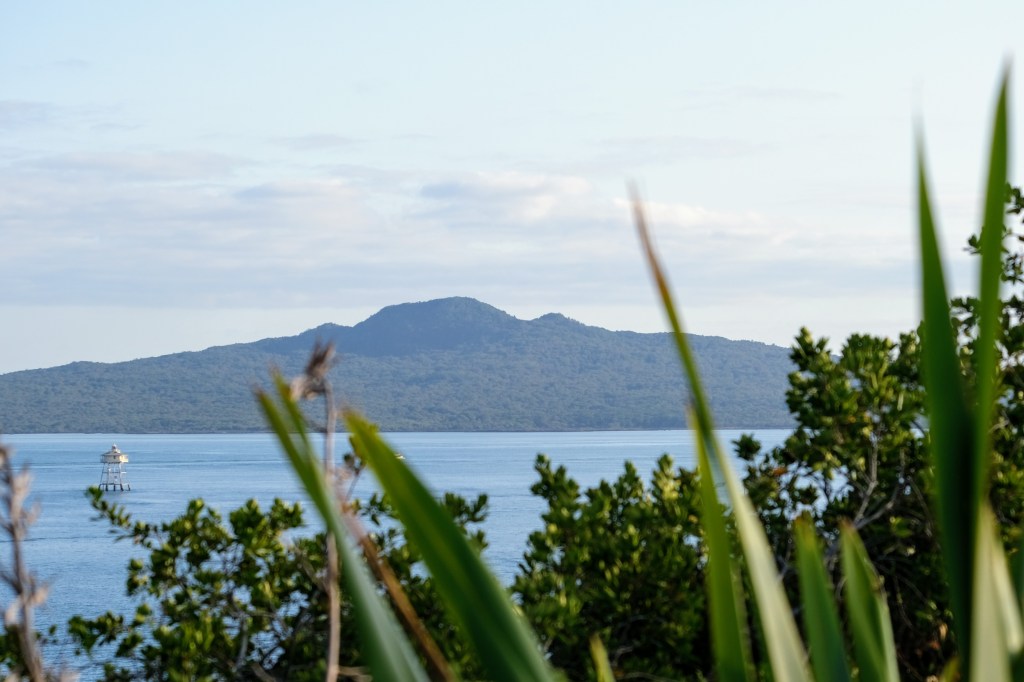
We started our visit to Auckland with a panoramic city tour. Situated between two stunning harbors, Auckland boasts spectacular waterfronts and bays just brimming with unique shops, quirky cafes, and interesting boutiques, some new and some in restored Victorian buildings. One of our more interesting stops was the Michael J. Savage Memorial, with panoramic views of the Waitemata Harbour and Rangitoto volcano, lush gardens, and imposing monument. Located at Auckland’s Bastion Point, the memorial to Michael Joseph Savage celebrates the contributions made by New Zealand’s first Labour prime minister. Although he only served from 1935-1940, Savage is credited for instituting many of the social programs in education, healthcare, housing, fair labor practices, and other programs that enhance the quality of life for all New Zealanders to this day. 

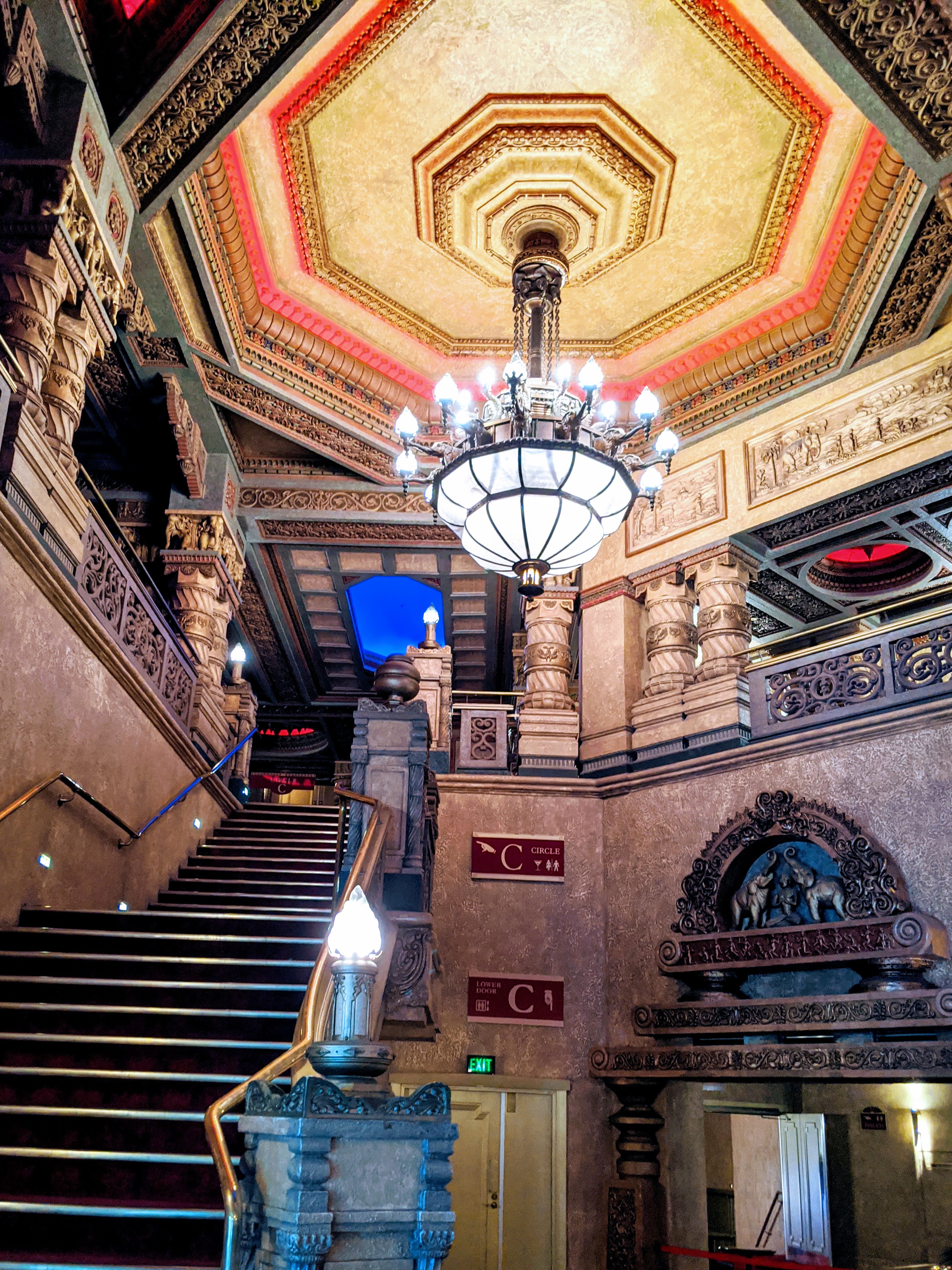
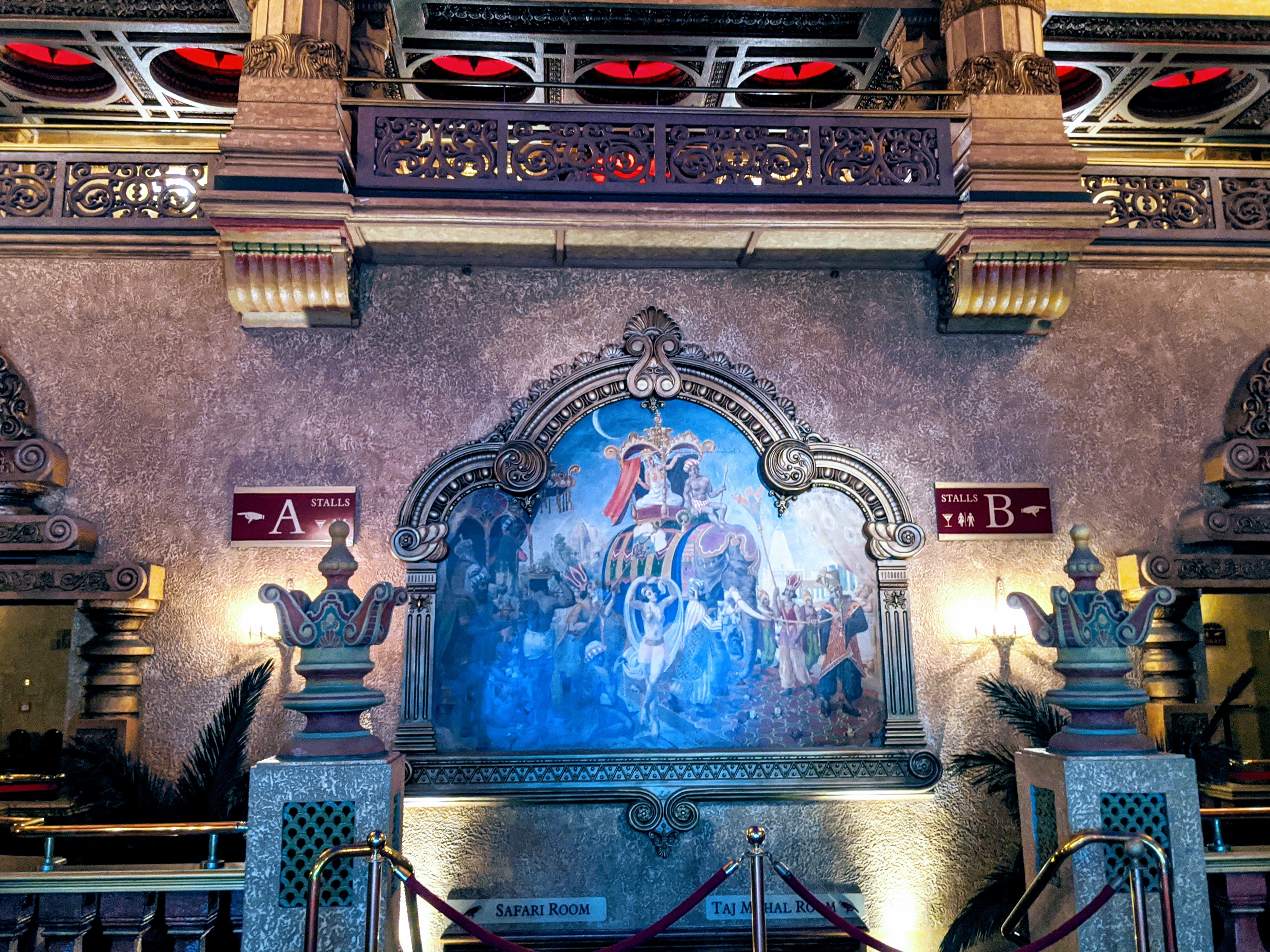
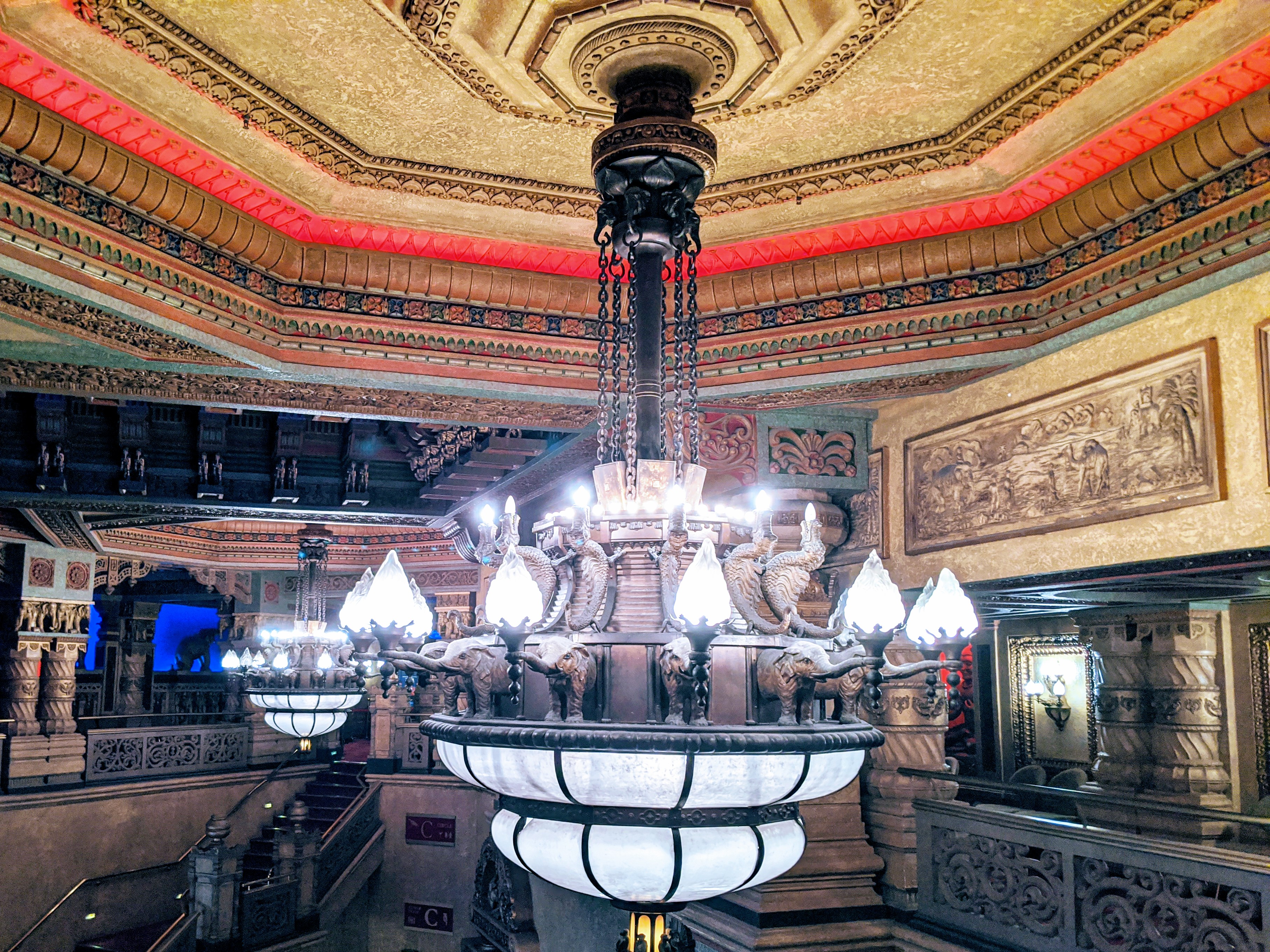
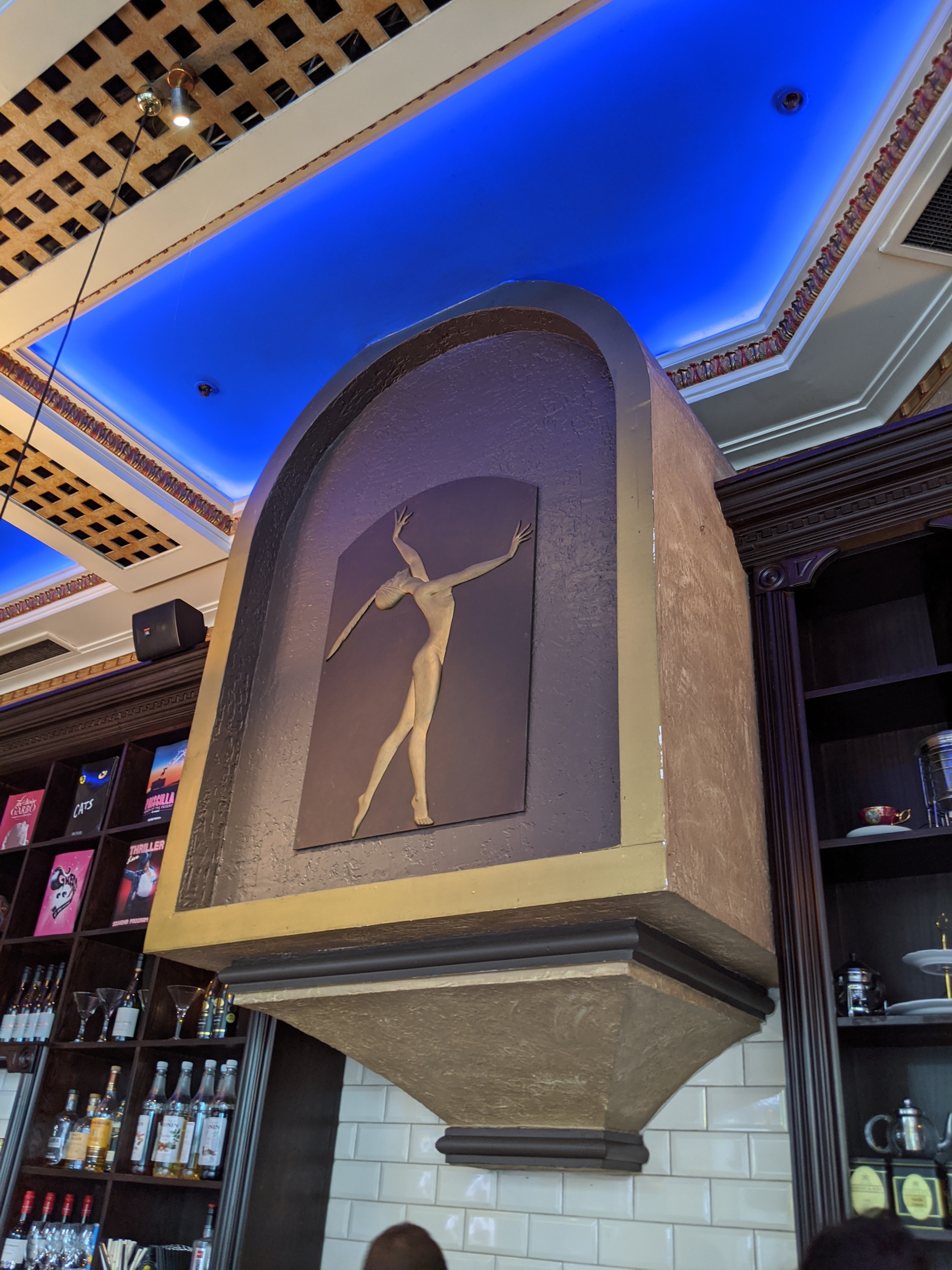
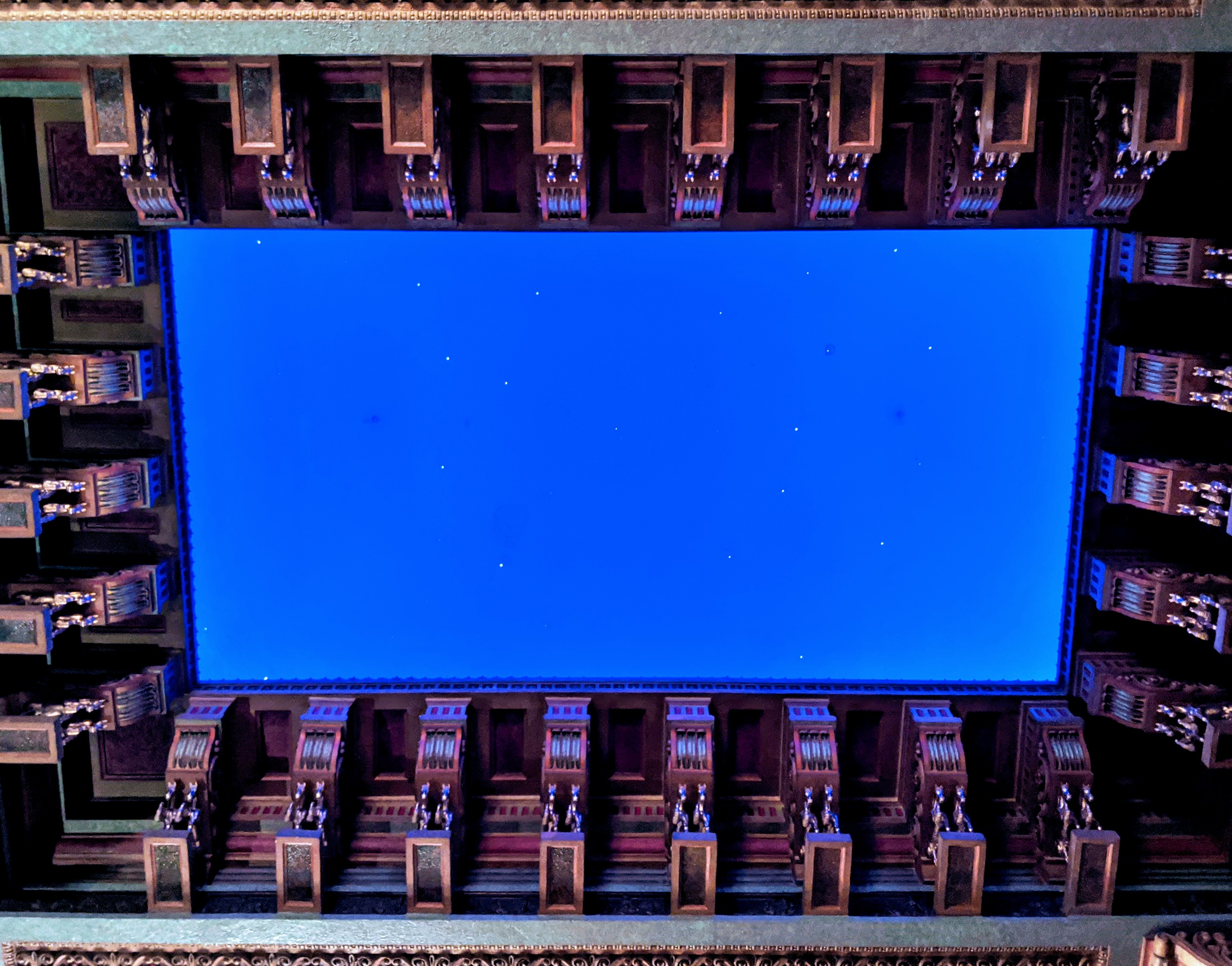
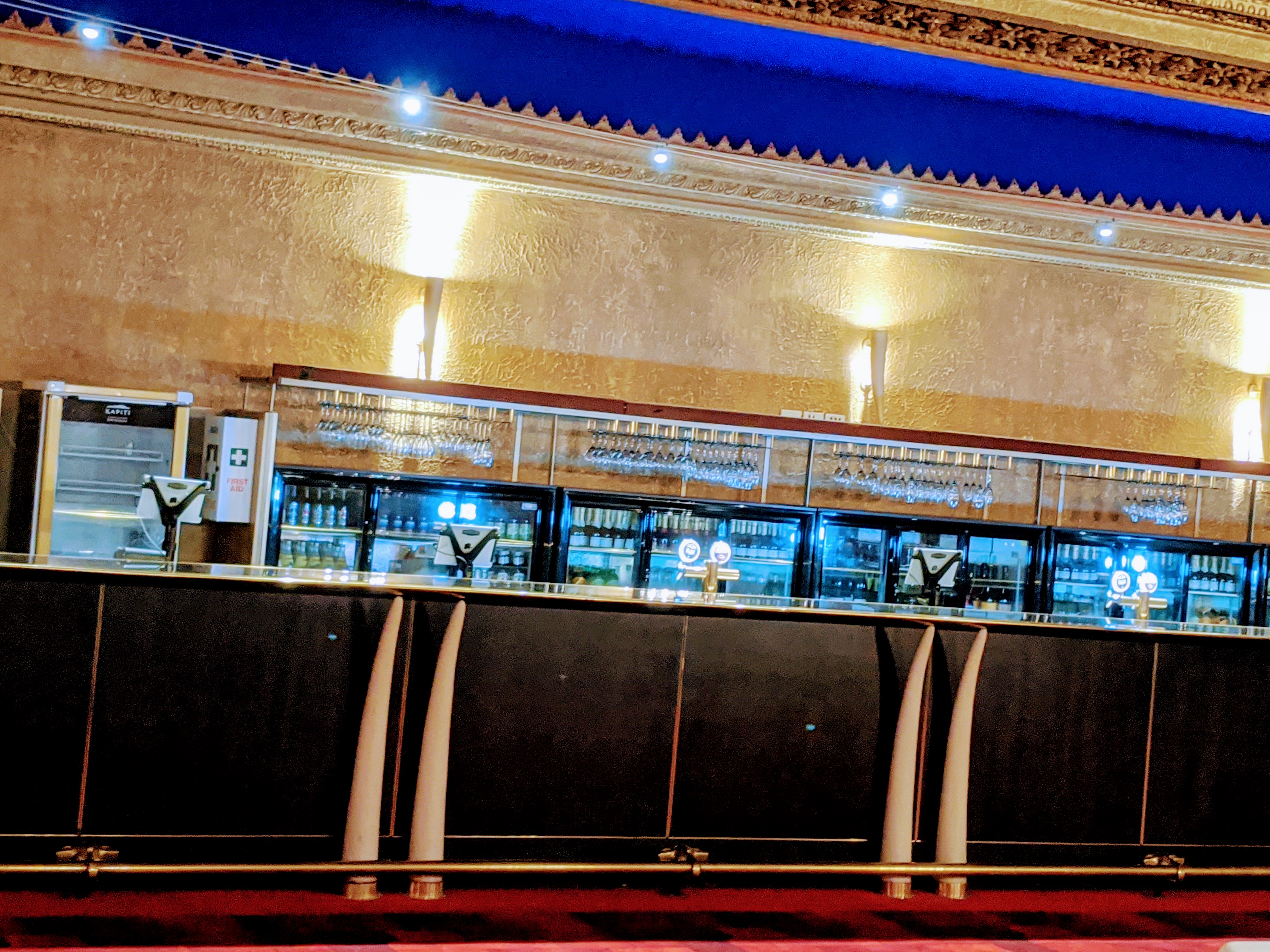
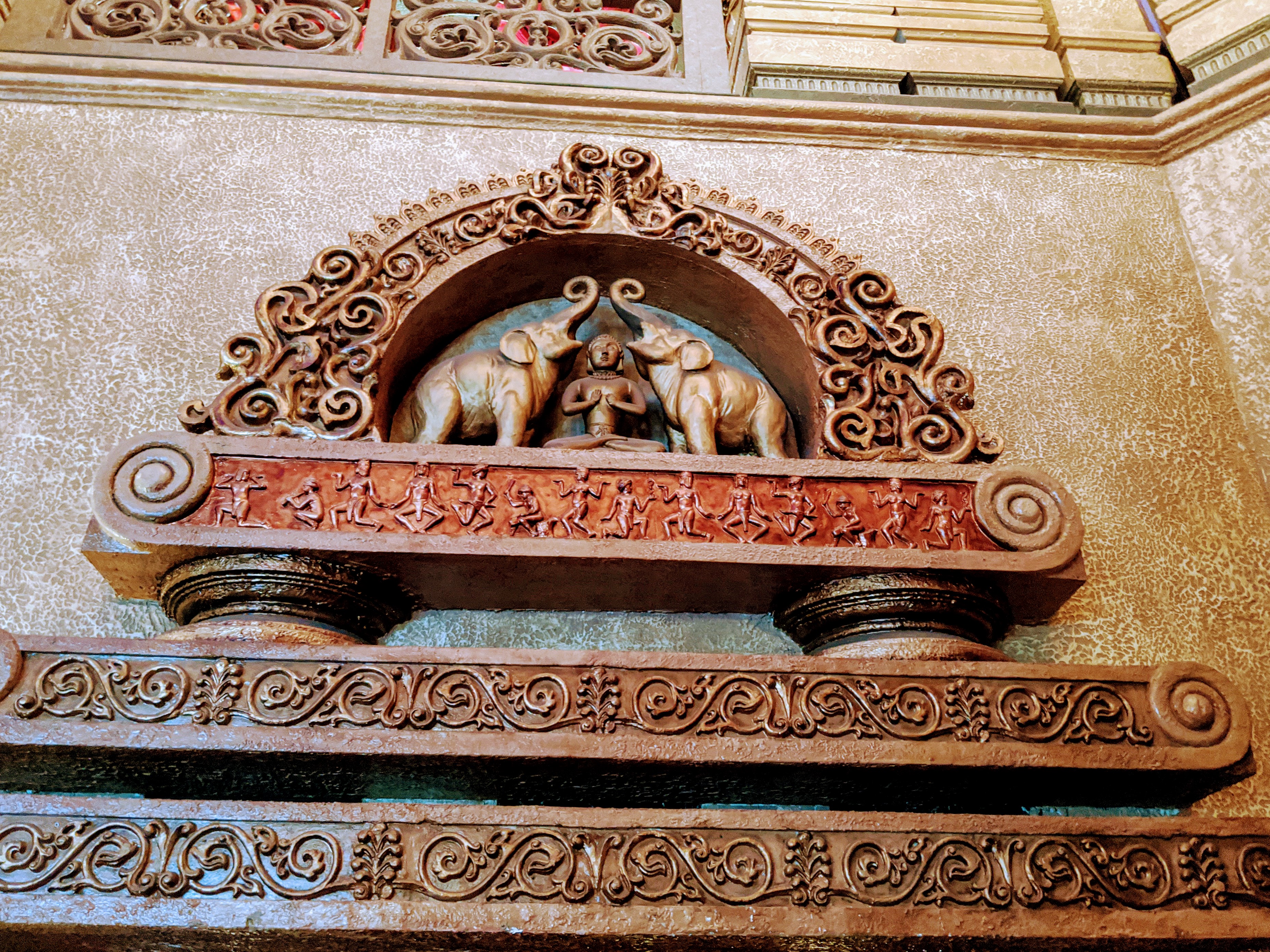
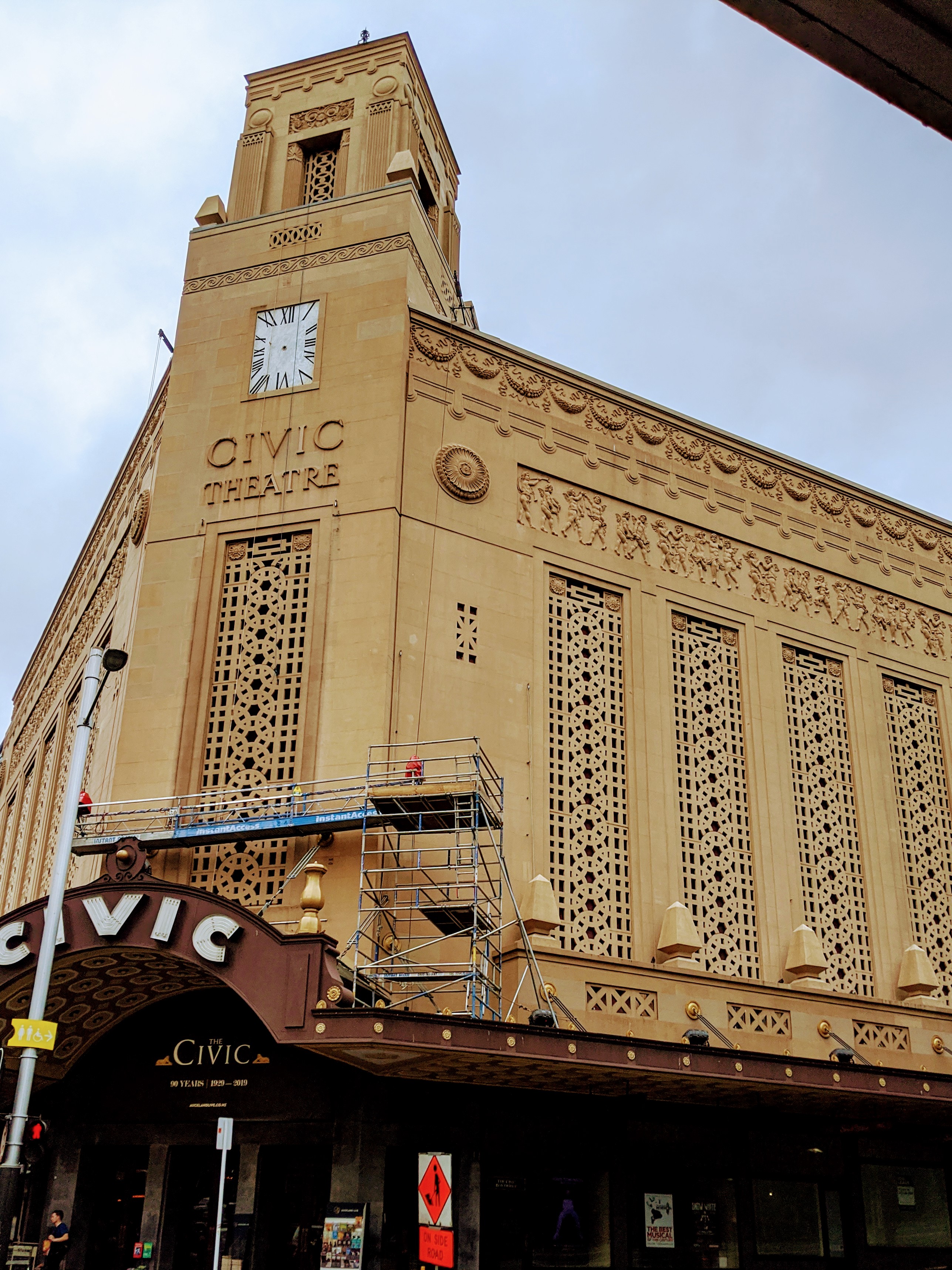
Back in the central business district, we walked along Queen Street, with its exciting blend of new and old architecture. Of particular interest to us was the historic Civic Theater. The Civic opened in 1929 as a “picture palace” to usher in the era of the talkies. It was the creation of Thomas O’Brien, who declared at its opening “It is with supreme confidence in the future of Auckland, and with gratitude to those who have toiled with me in this great endeavour, that I present to my fellow citizens the consummation of an ideal – the creating of a place of entertainment symbolising the progressive spirit of our beautiful city.” O’Brien chose an Eastern theme, with Indian-inspired motifs in the public foyer including seated Buddhas, lavish twisted columns, and domed ceilings. The main auditorium features Spanish courtyard turrets, minarets, spires, tiled roofs, Abyssinian panther statues, and a soft-top ceiling that looks like a domed sky with twinkling stars and floating clouds. Every year in July, the Civic becomes an iconic destination for the New Zealand International Film Festival.

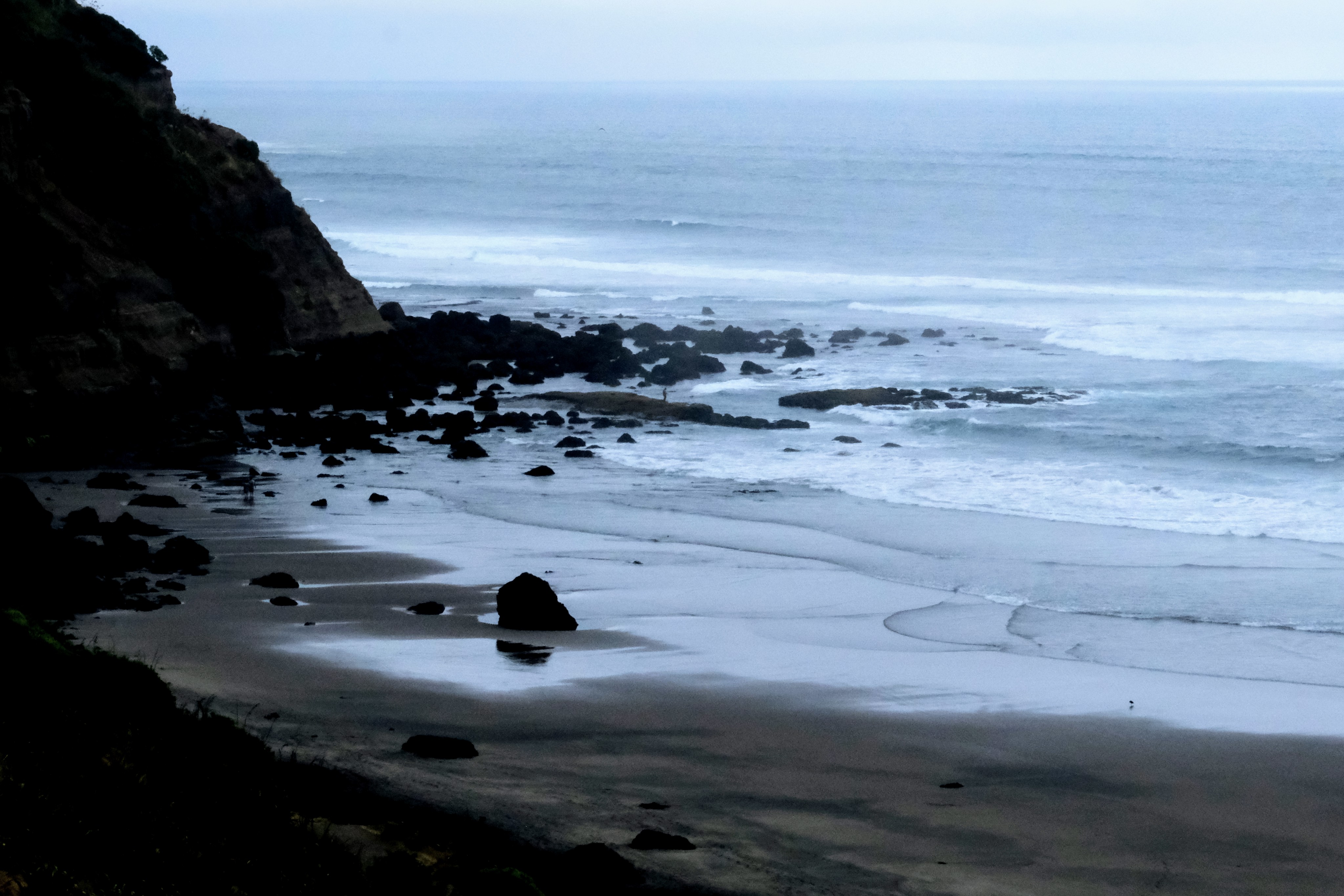
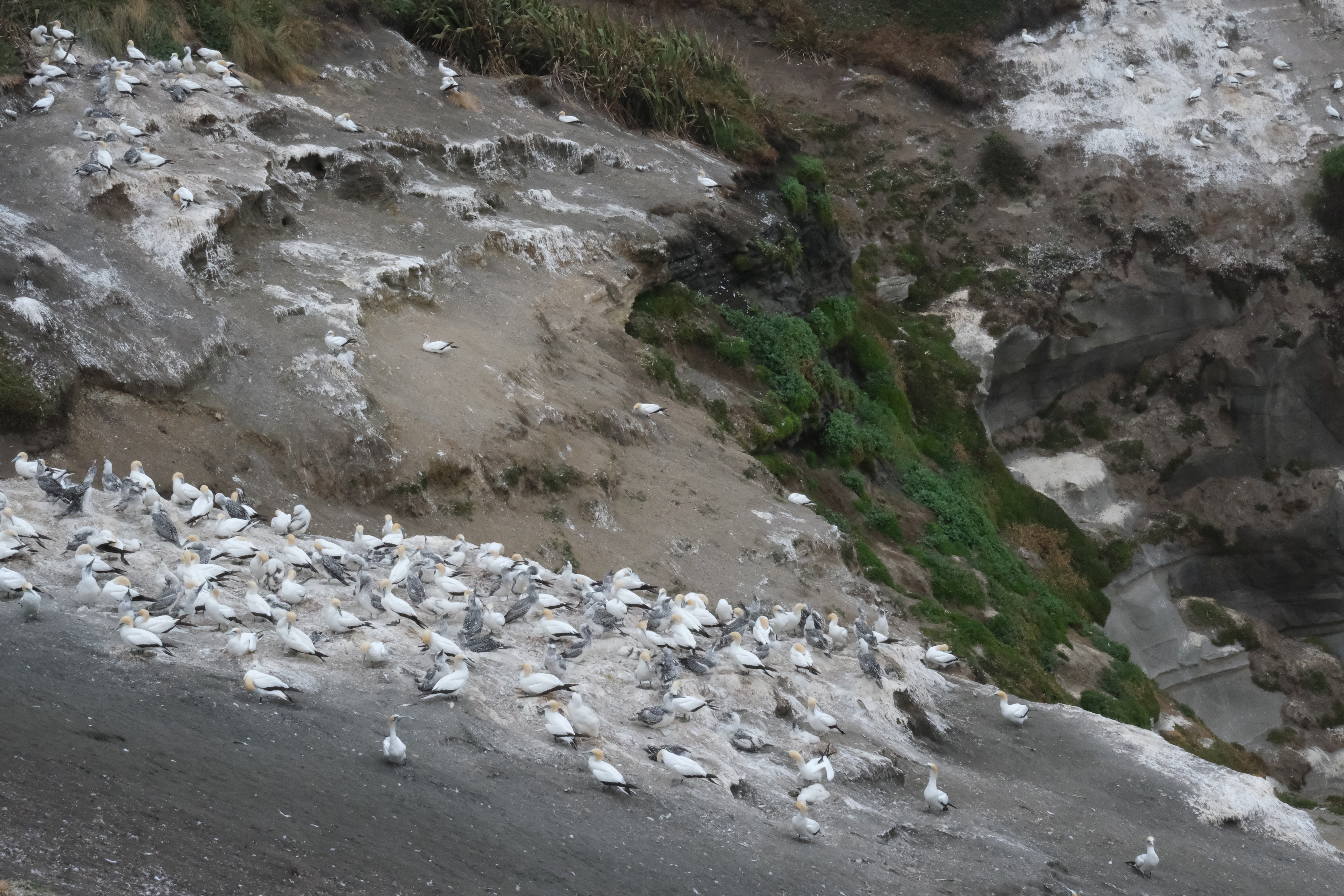
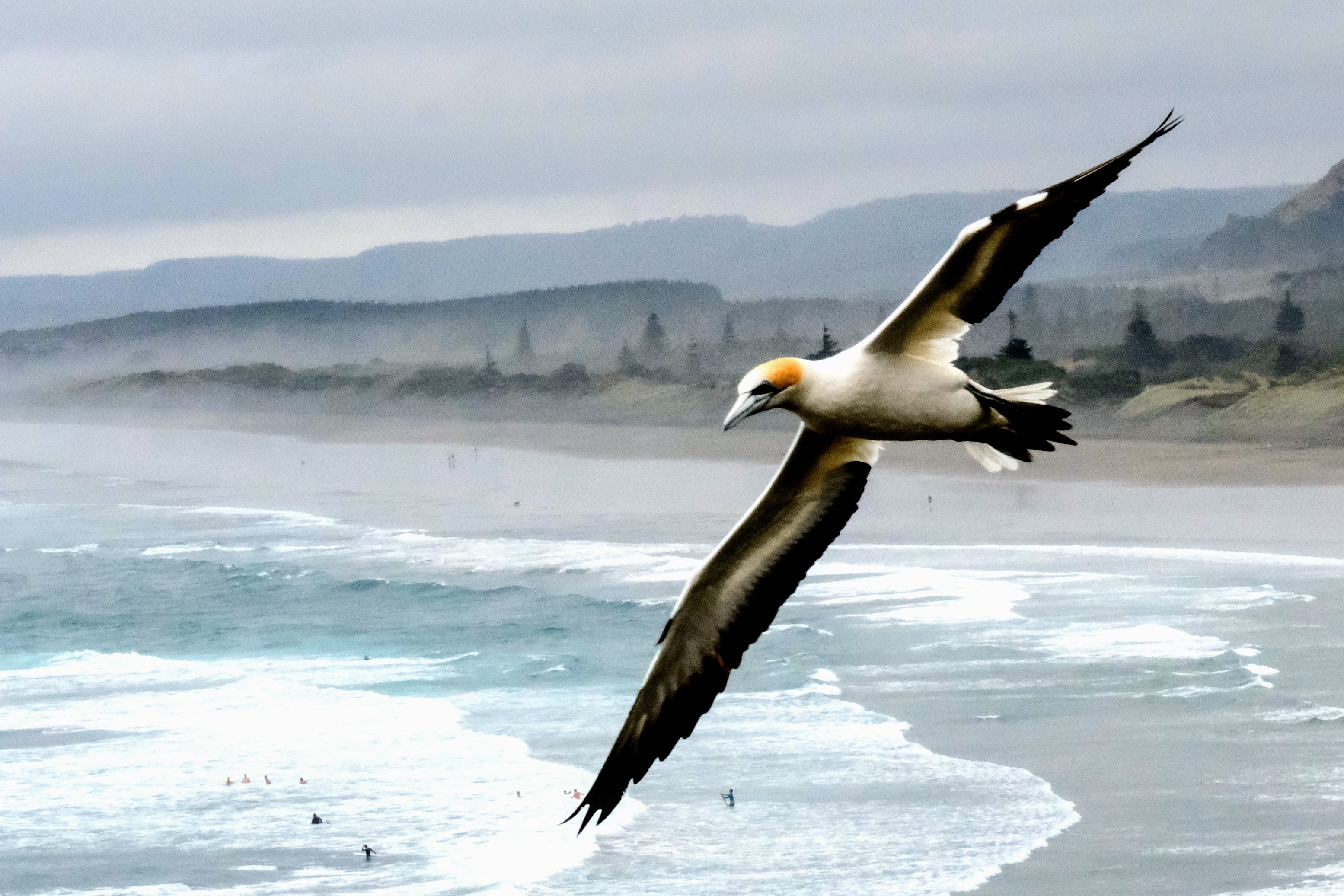
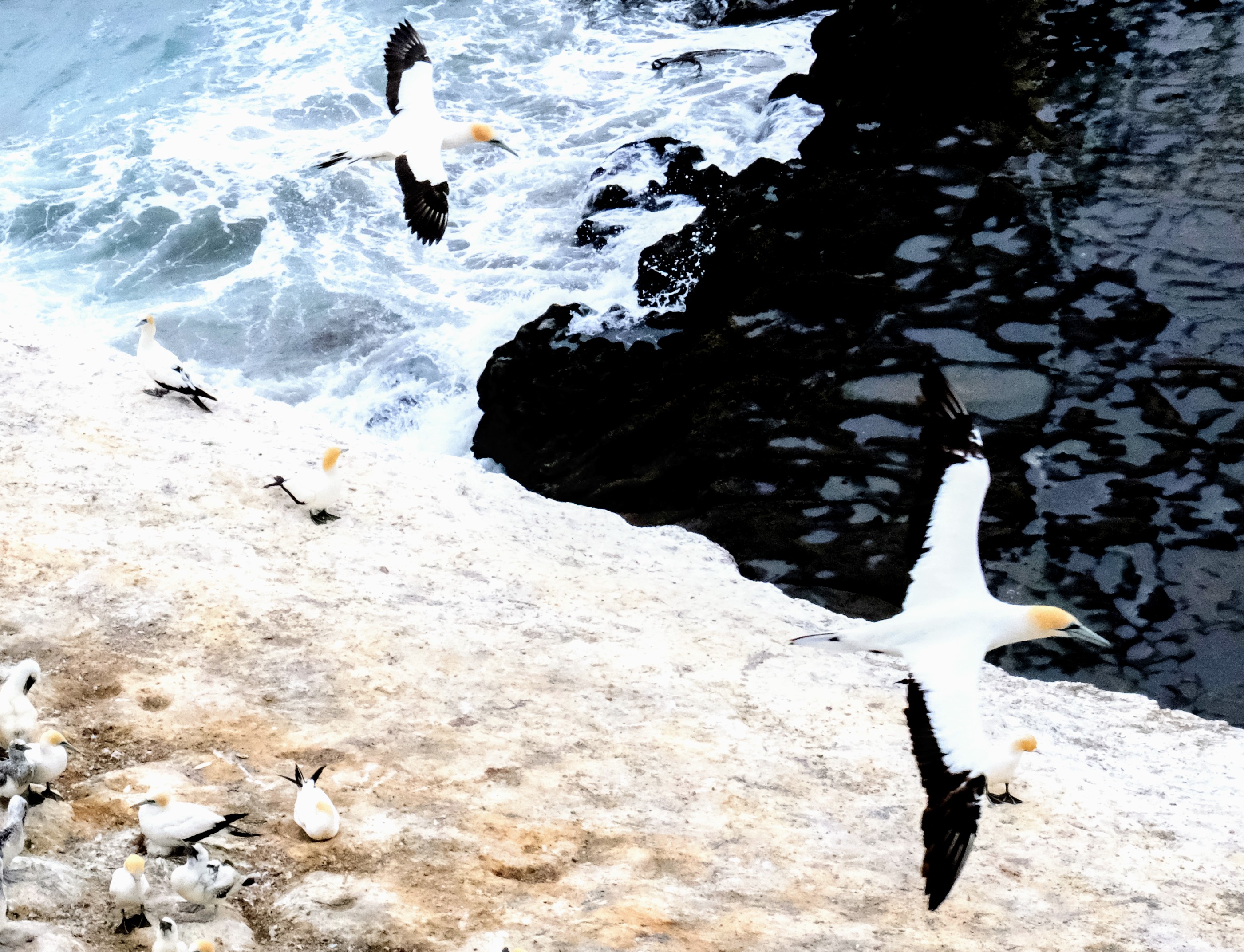
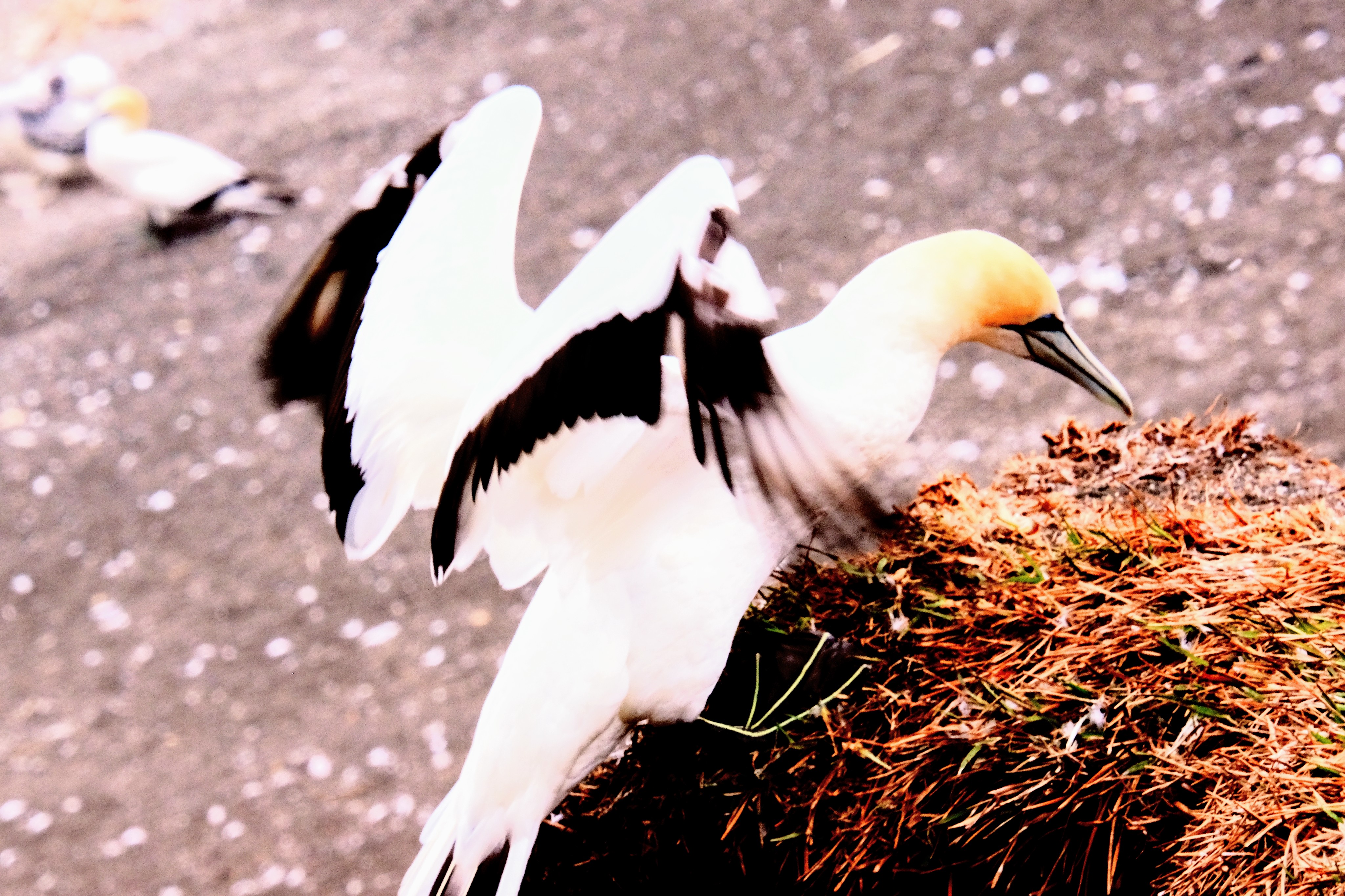
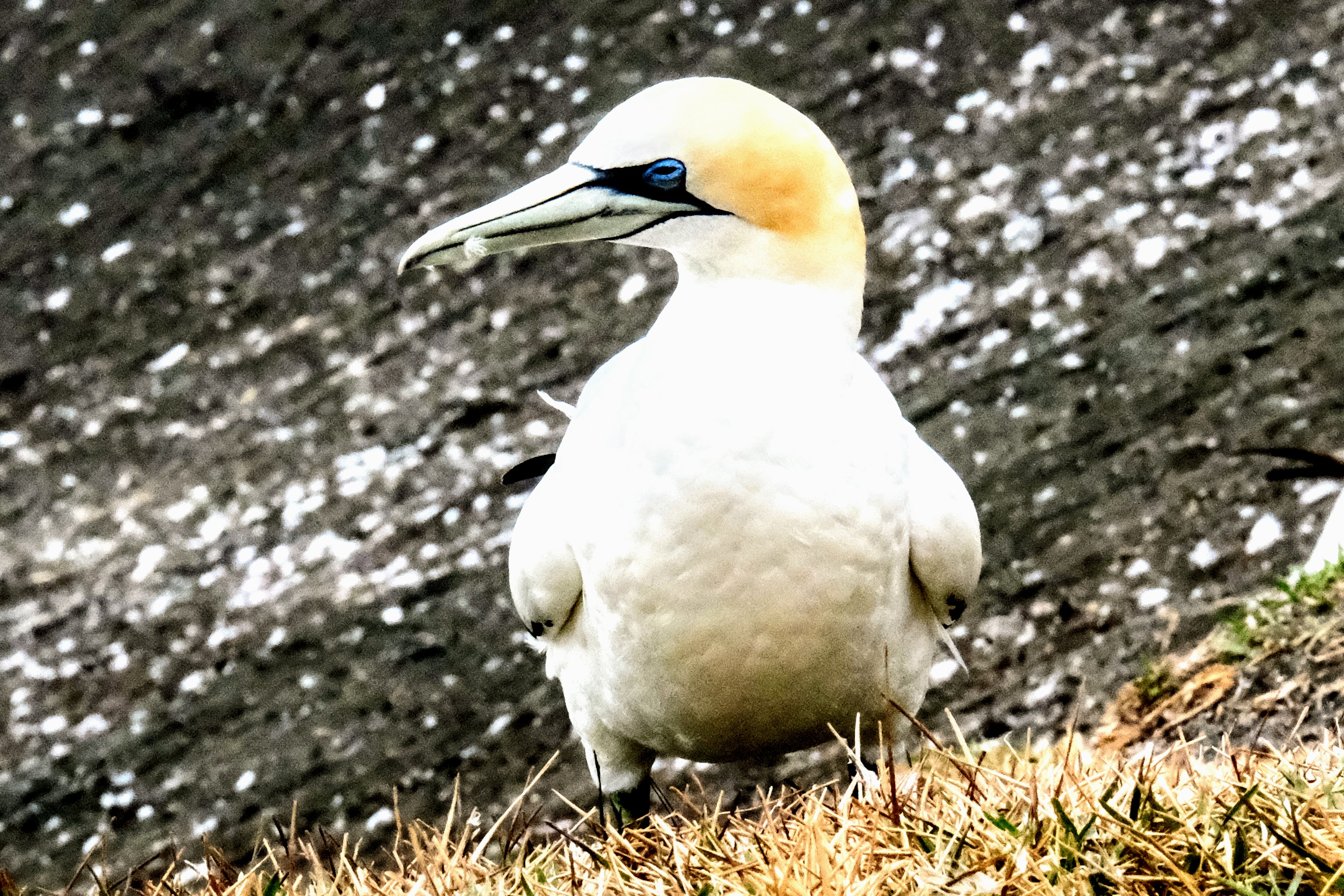
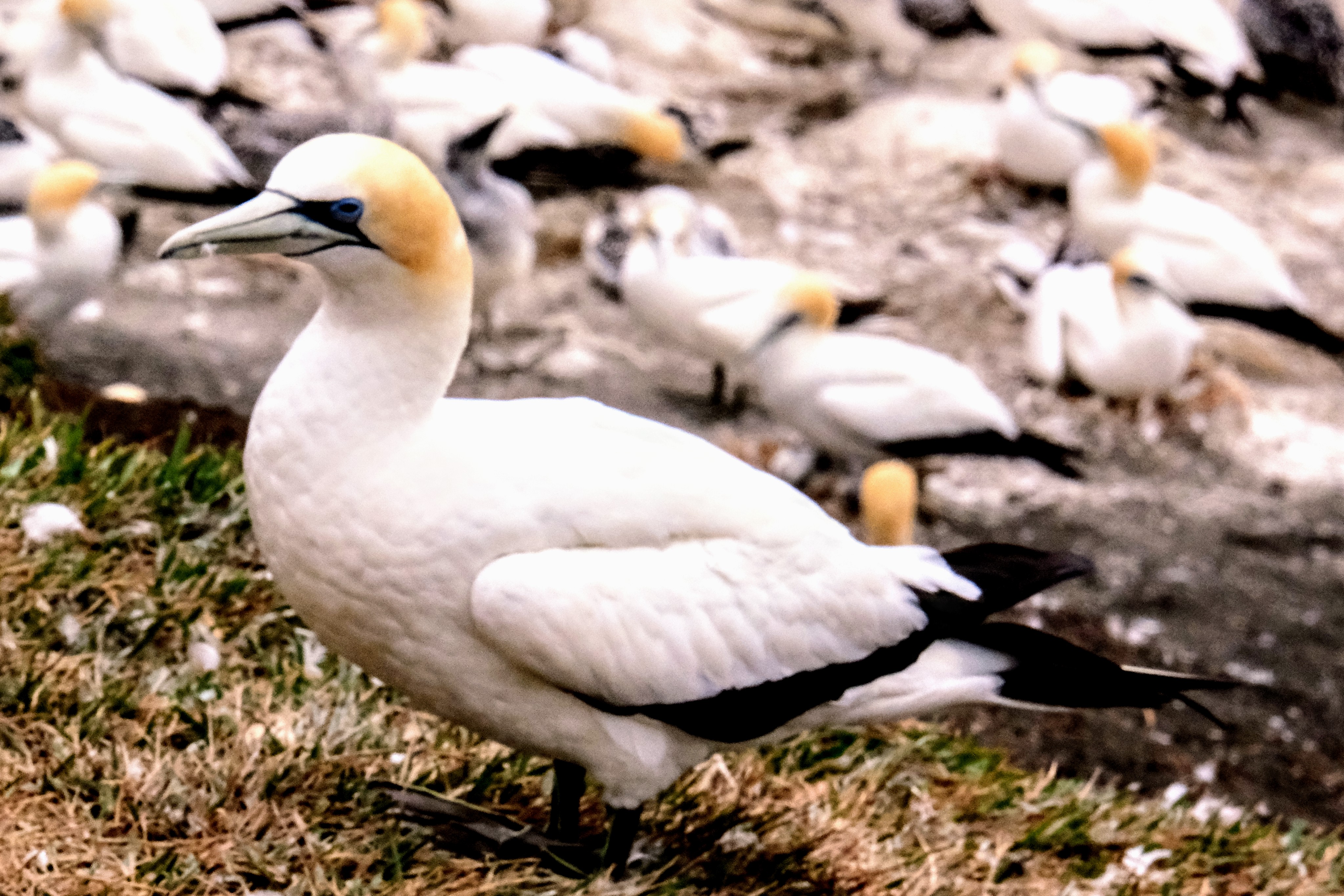
We also spent a delightful afternoon in the kiwi countryside, where we took in the North Island’s splendid beauty during an excursion to the West Coast. Traveling through the wine regions of Kumeu and Huapai, we made our way to Muriwai Beach. We enjoyed a short hike through this unspoiled area of black sand, rugged terrain, and pounding surf to the cliffs overlooking the beach. We took in spectacular views of the Tasman Sea and its rocky coastline, but the real reward was the colony of gannets that greeted us at the top. This seabird colony is one of only three in the country, and was a highlight of our tour.

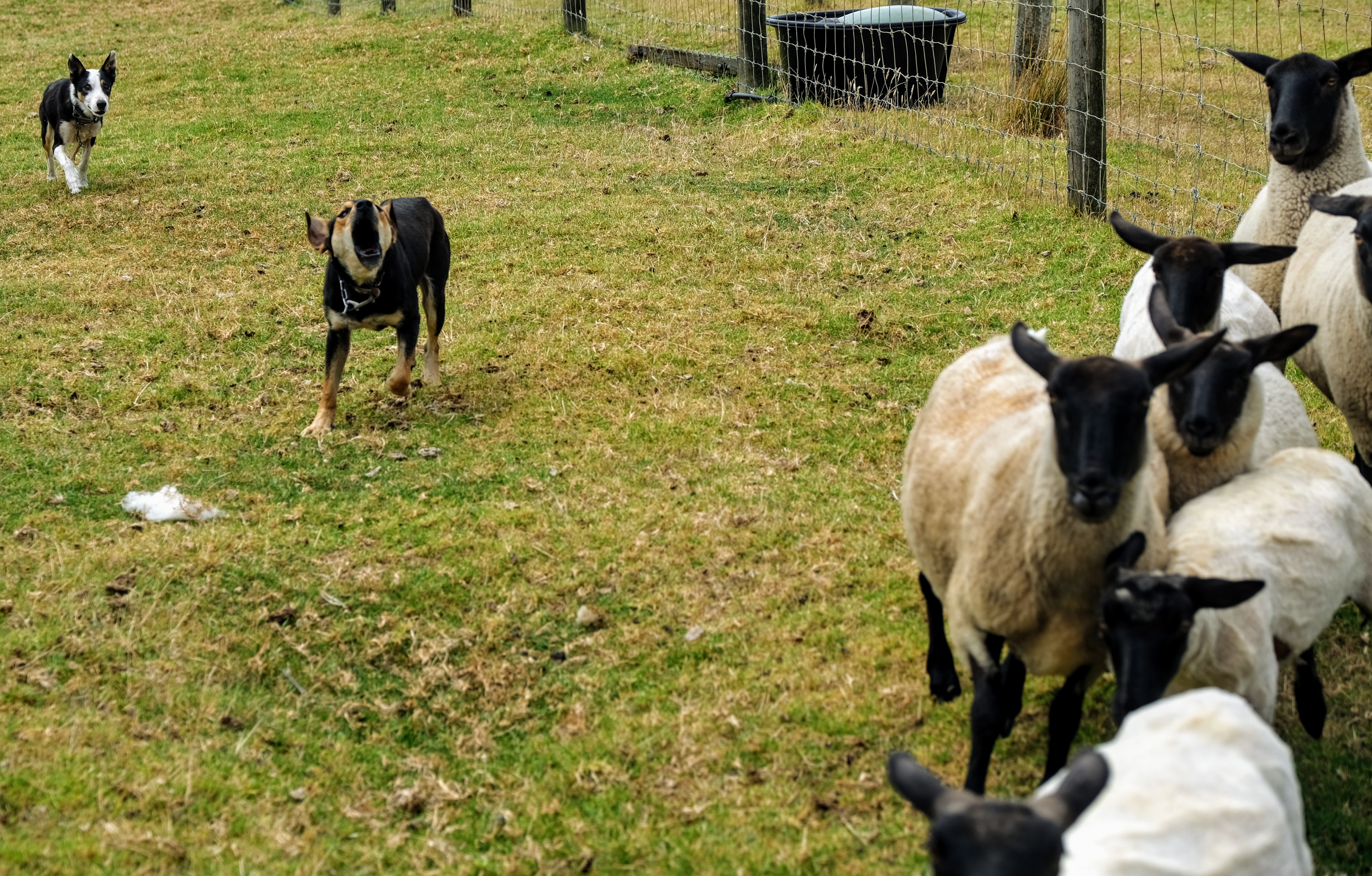
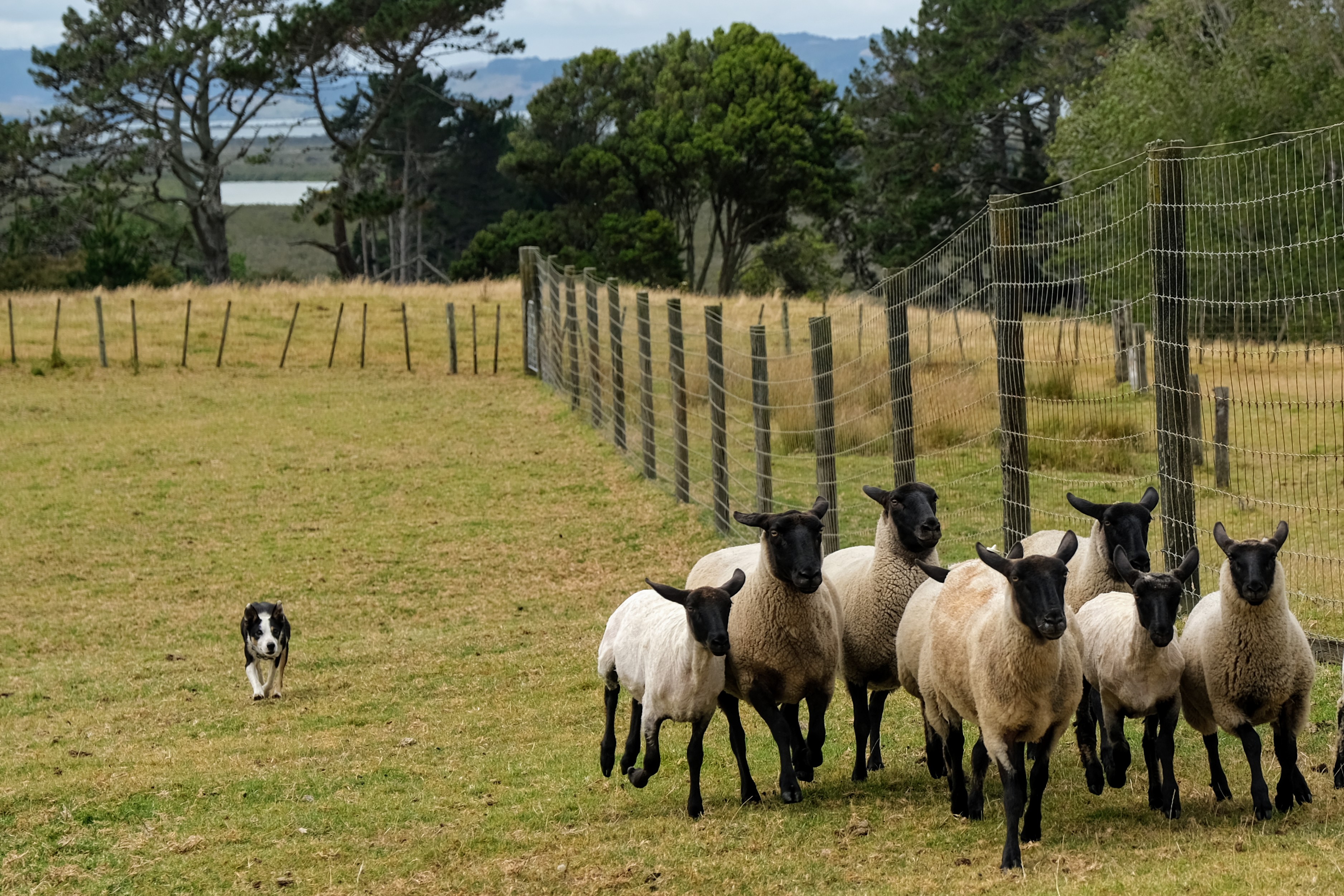
We continued on to the family-run Haumoana sheep farm. While taking in the peaceful ambiance of their rolling 300 acre property, we enjoyed refreshing afternoon tea and some delicious home-made treats. Then, their two sheepdogs rounded up several sheep for an interesting sheep-shearing demonstration. One of their good boys silently organizes the sheep with “the look” while the other barks them into the paddock to await their turn for shearing.

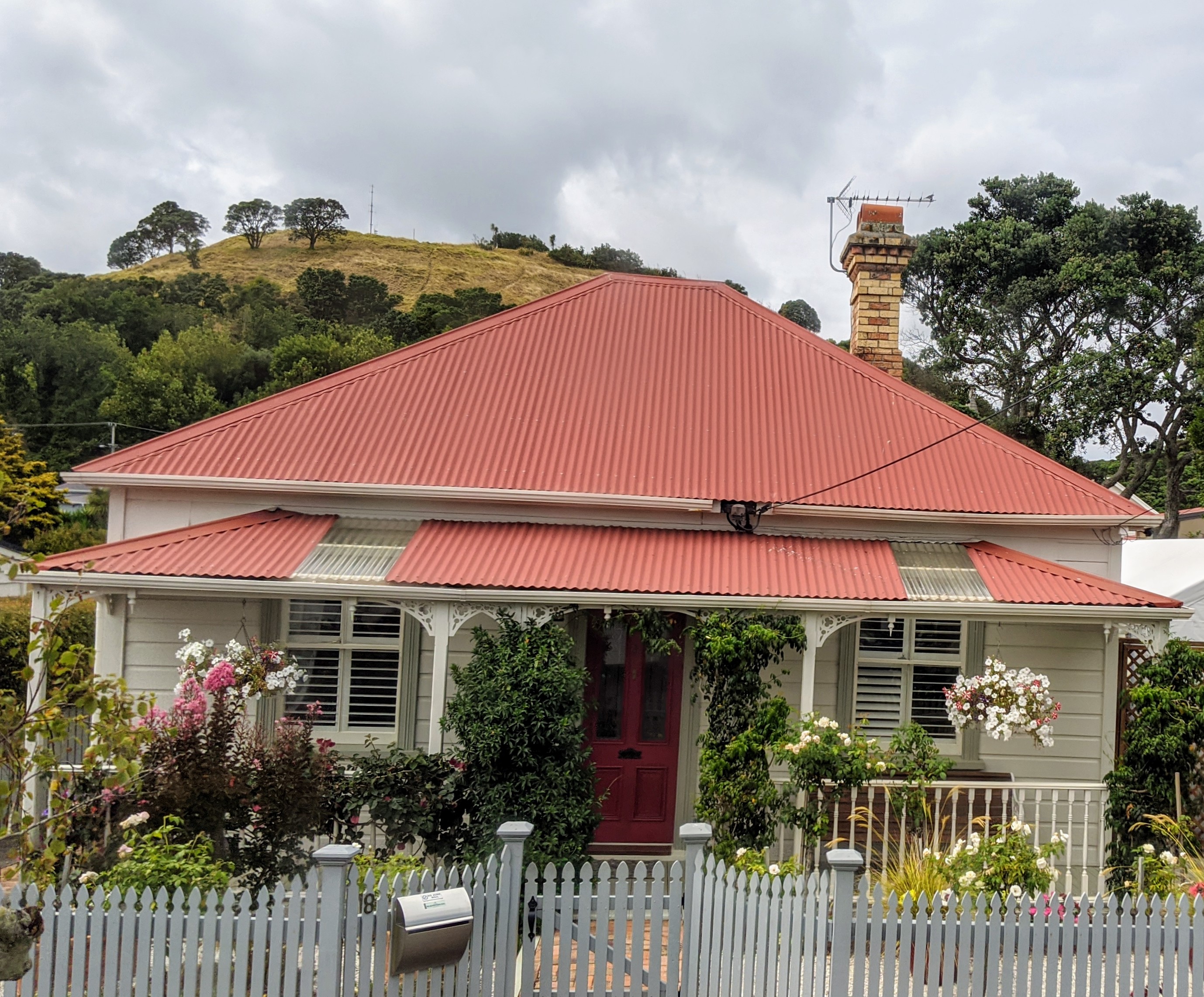
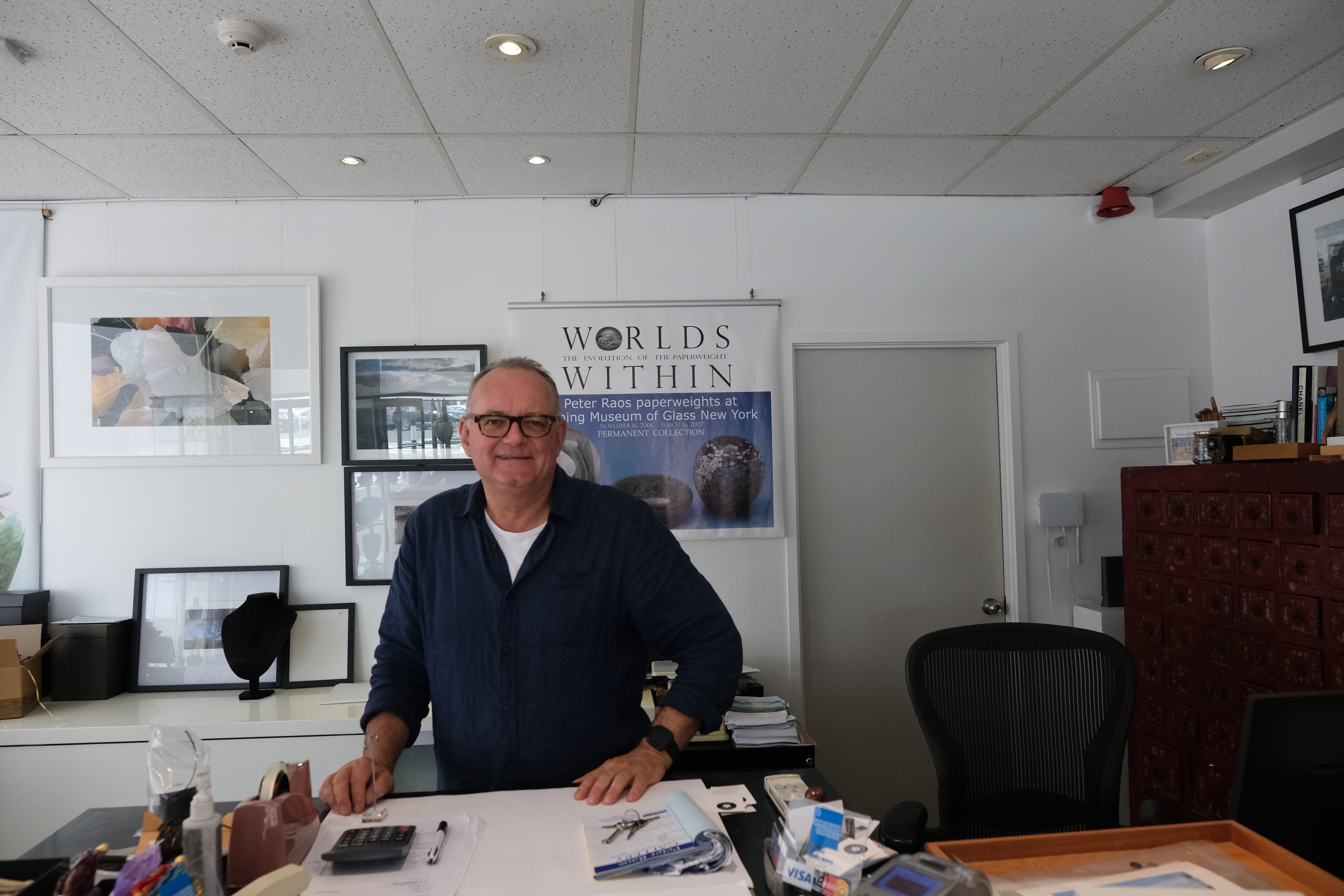
Our next adventure took us to Auckland’s North Shore and Devonport Village (sorry, Devin…they use the British spelling for your name!) This picturesque peninsula village boasts a colorful array of lovely homes and cottages ranging from Victorian to modern. Its main street has a wonderful array of specialty shops and cafes, and we were delighted to visit Peter Raos’ fine glass art gallery, where we met Peter and learned that several of his exquisite hand made pieces are in the permanent collection at the Corning Glass Museum in New York, one of our favorites. We might have even made a small purchase or two! Devonport also has its own historic theater (The Old Vic), and the modern, inviting library provides a welcoming place for young and old. Inspired by yesterday’s sheep-shearing, Doug went under the expert shearing of the lovely Mira and was none the worse for the experience!

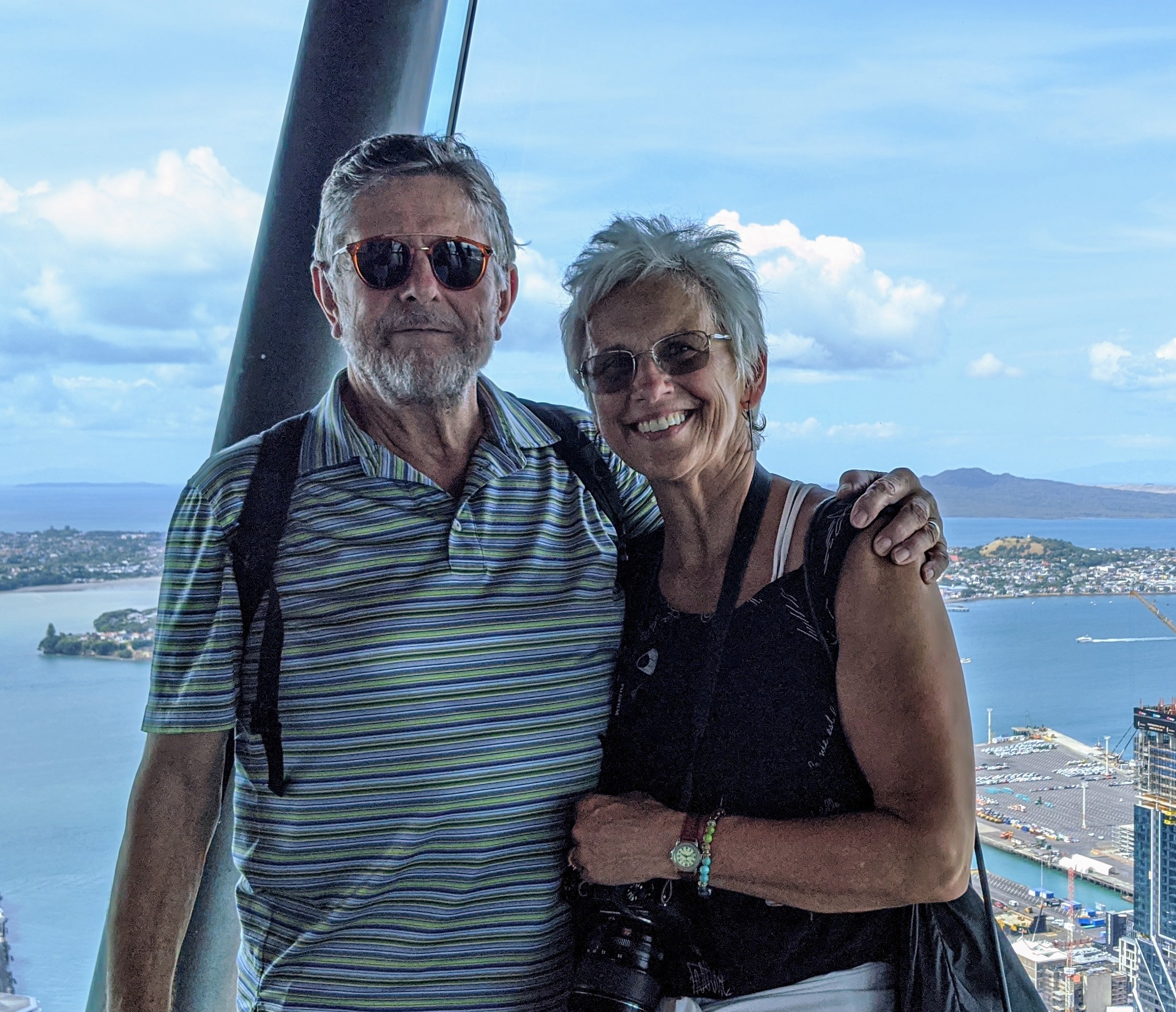
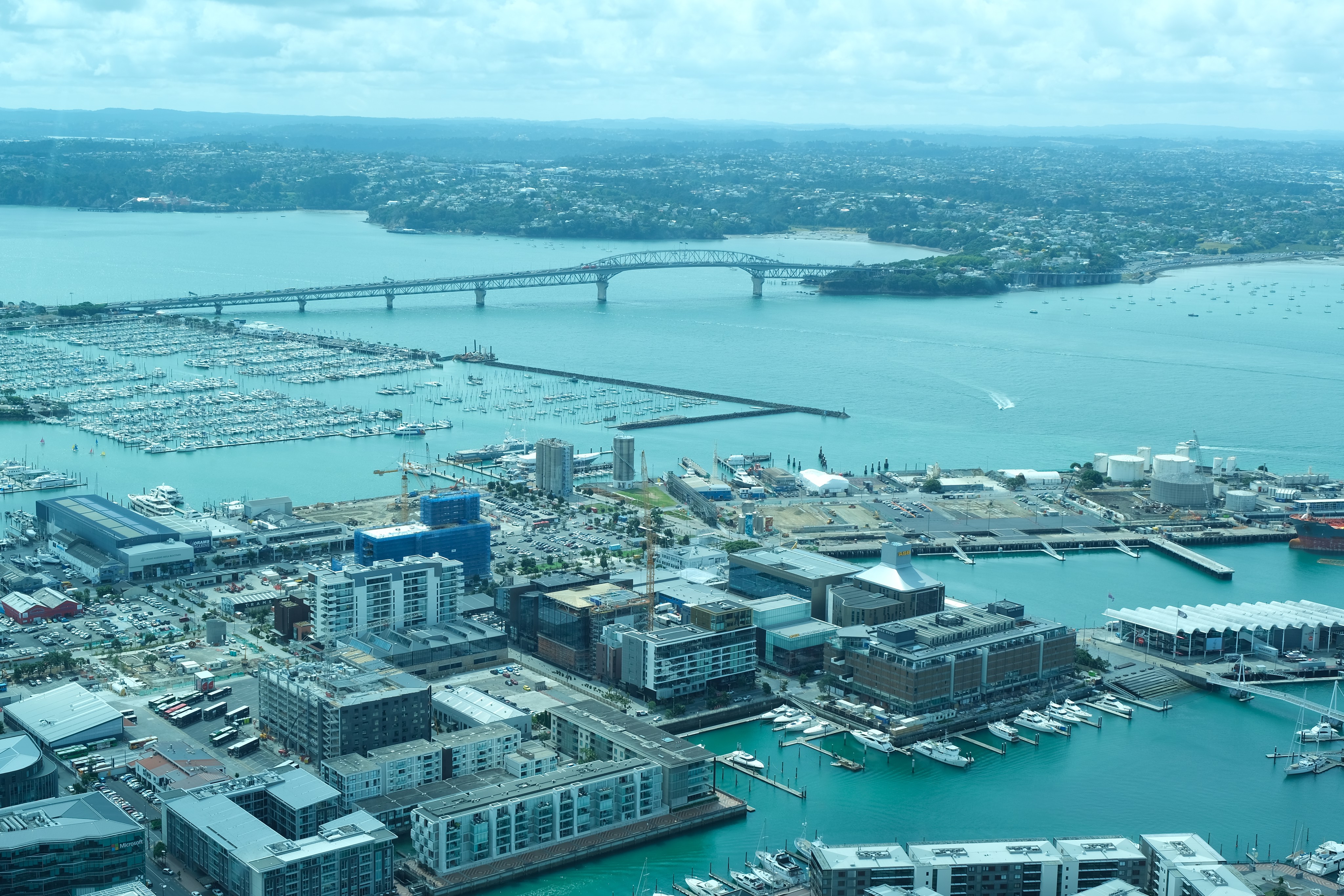
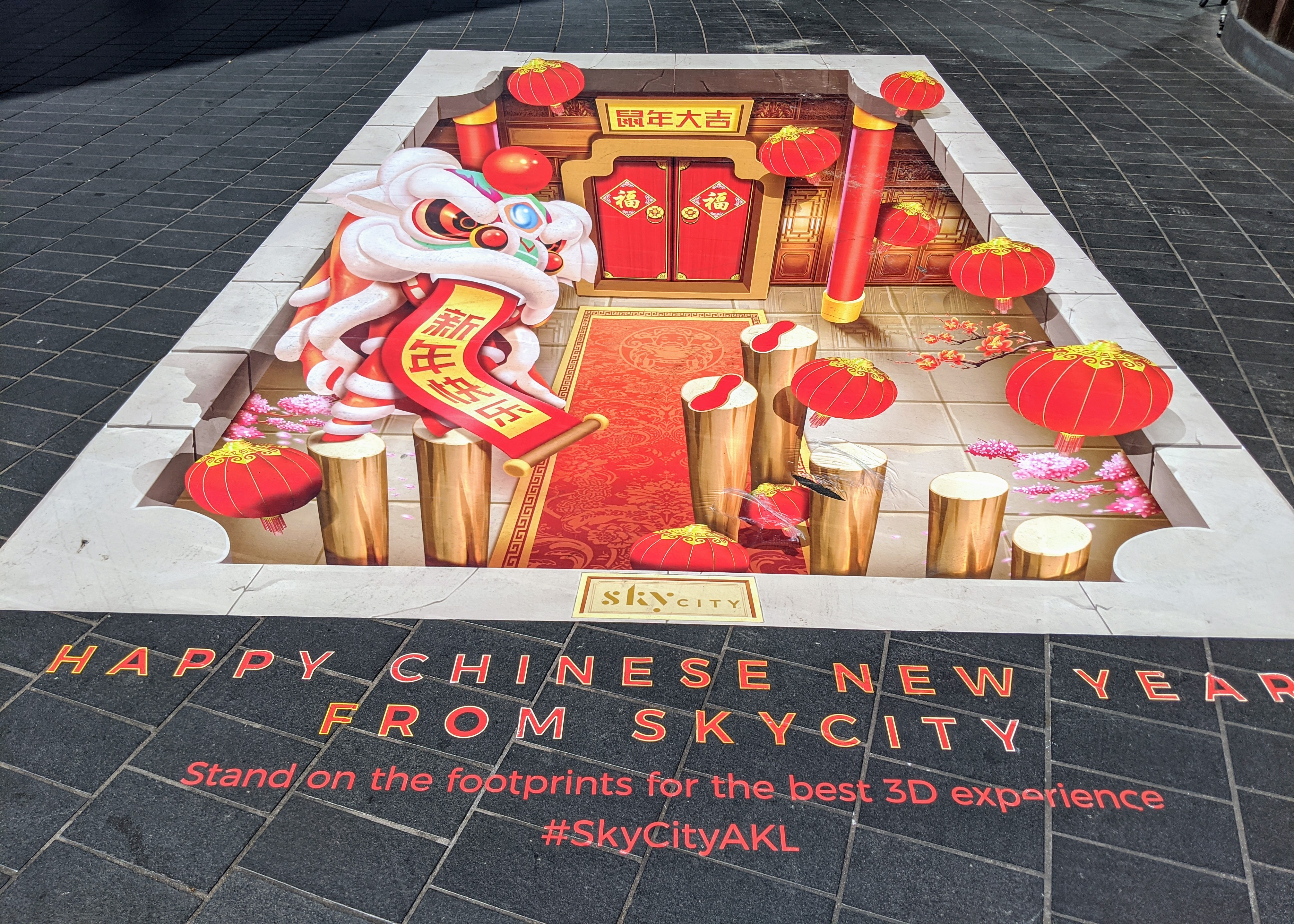
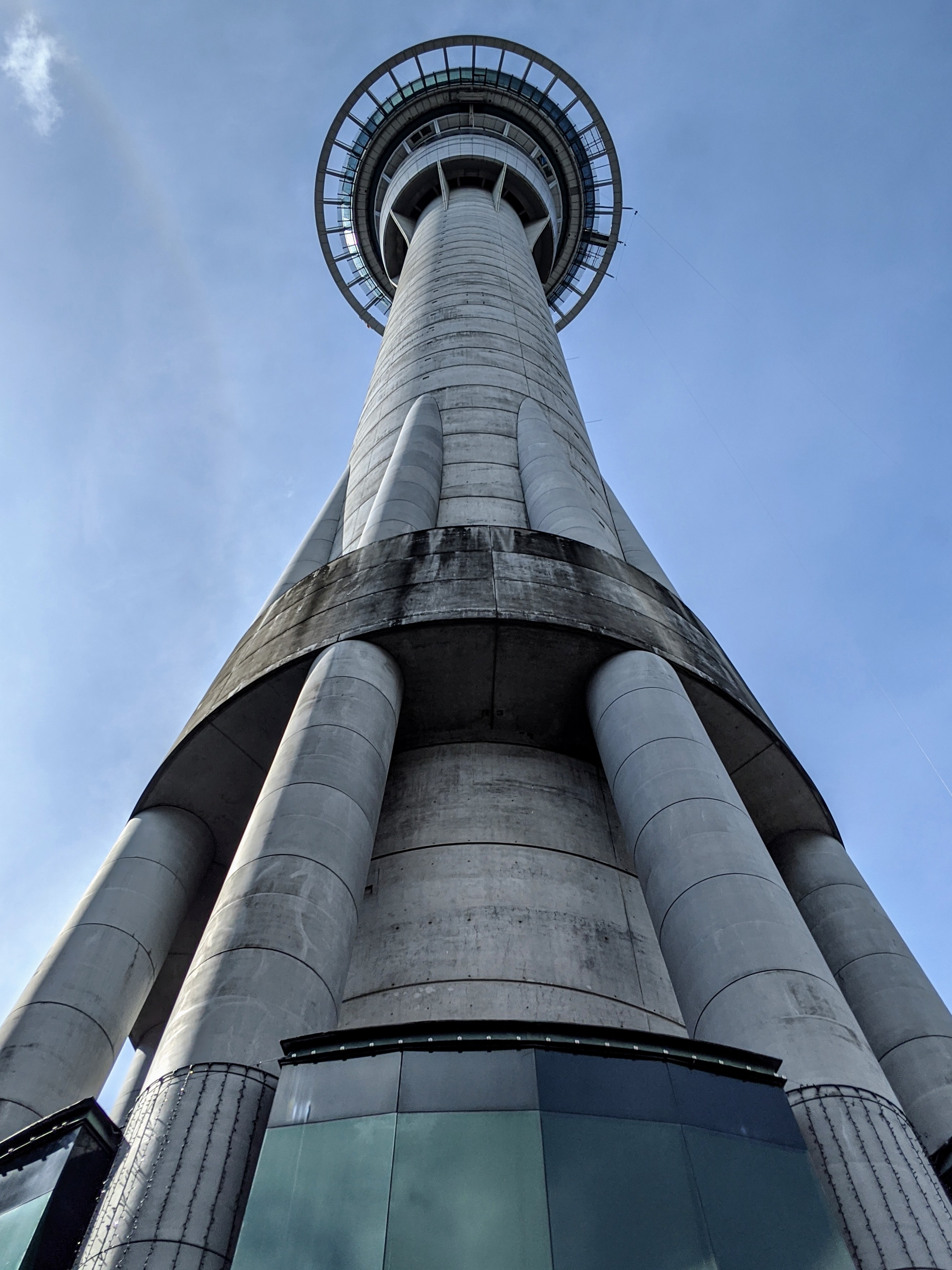
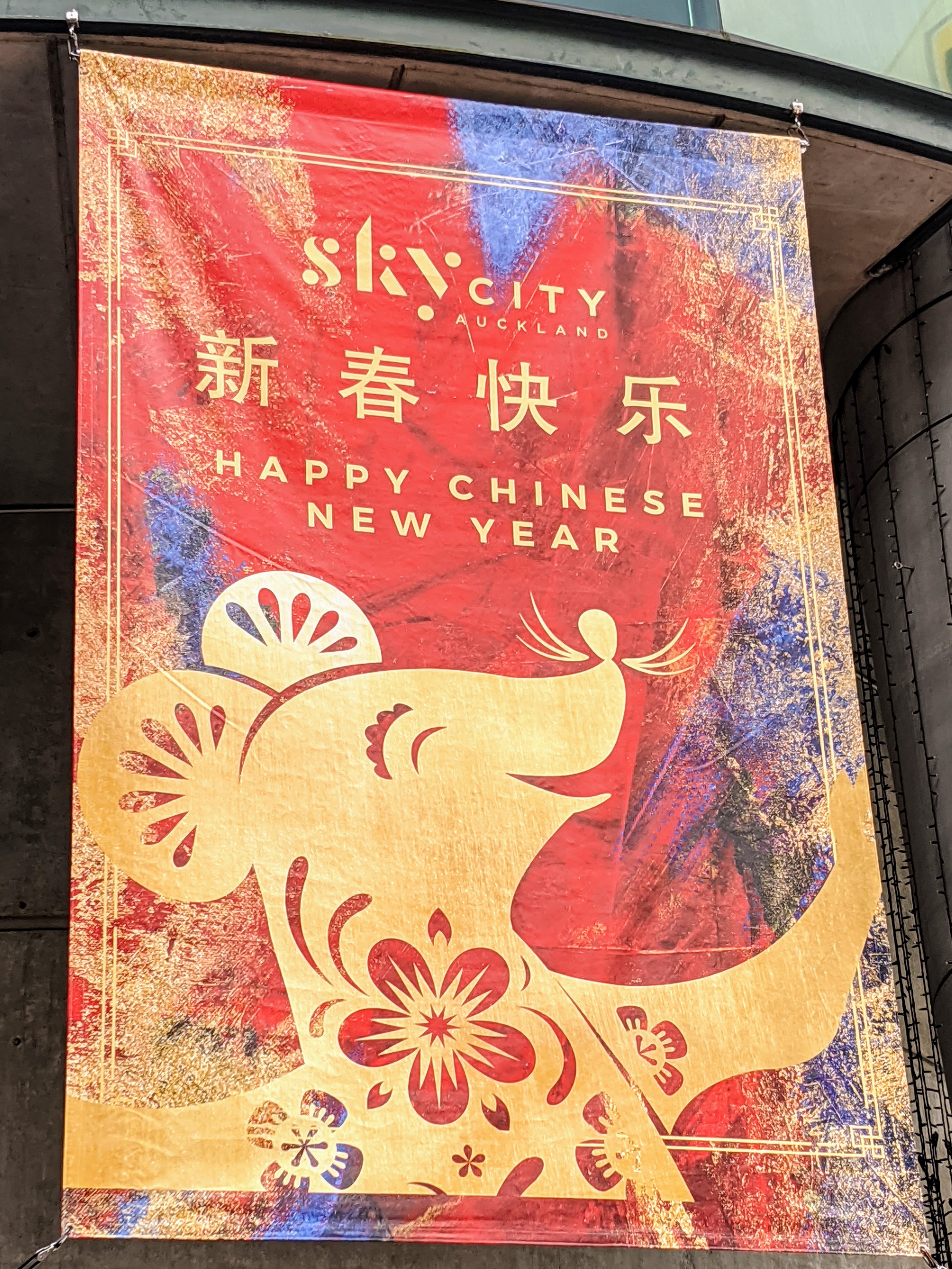
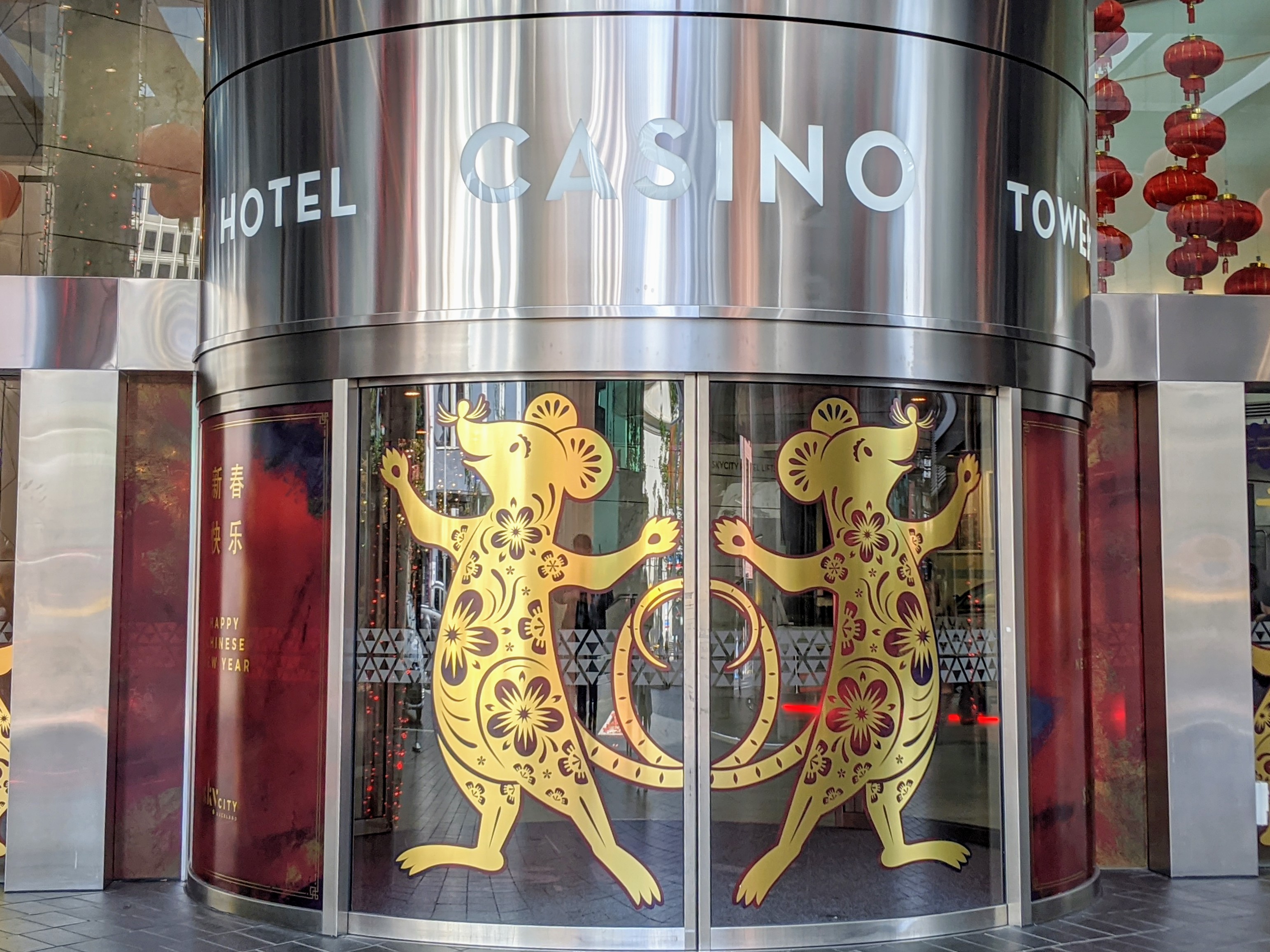
And no visit to Auckland would be complete without a visit to the iconic Sky Tower. Located at the corner of Victoria and Federal Streets within the city’s central business district, it is 328 metres (1,076 ft) tall, as measured from ground level to the top of the mast, making it the tallest freestanding structure in the Southern Hemisphere and the 25th tallest tower in the world. We DID NOT do the tower jump, but we did ride to the sky deck for some of the most spectacular views of this wonderful city! At the base of the tower, SkyCity Auckland, a casino and event center, was celebrating Chinese New Year and the Year of the Rat.

Bay of Islands, New Zealand

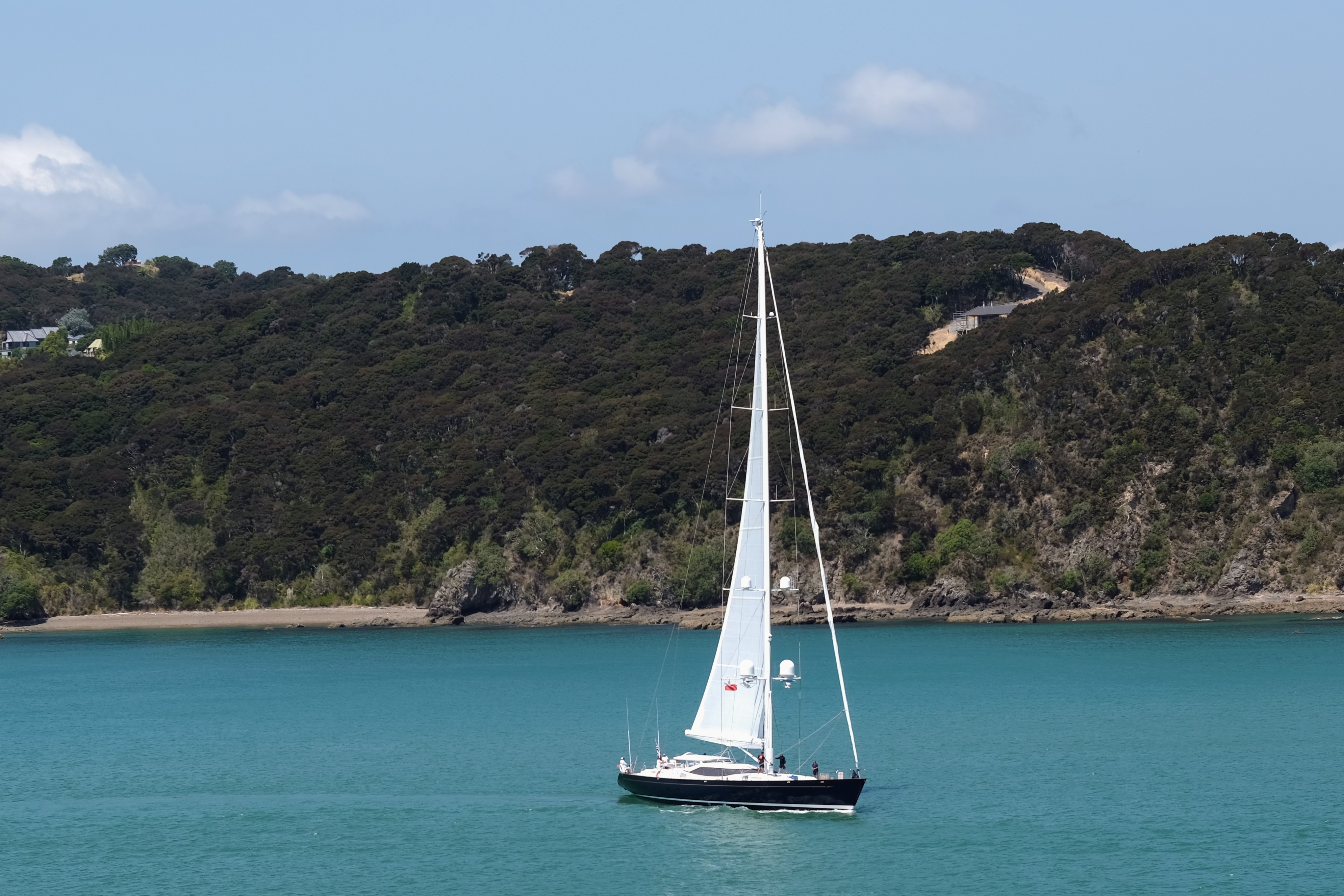
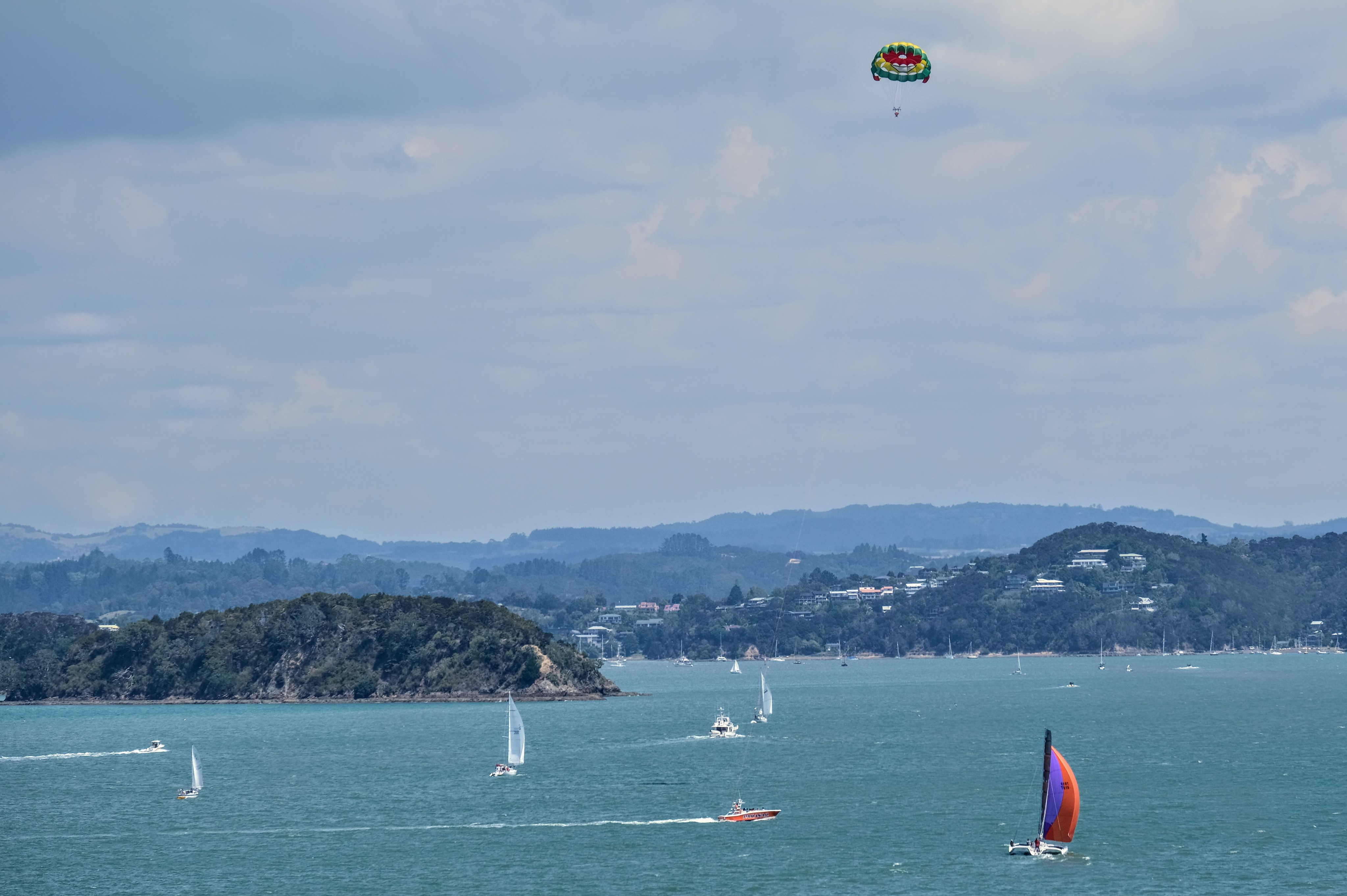
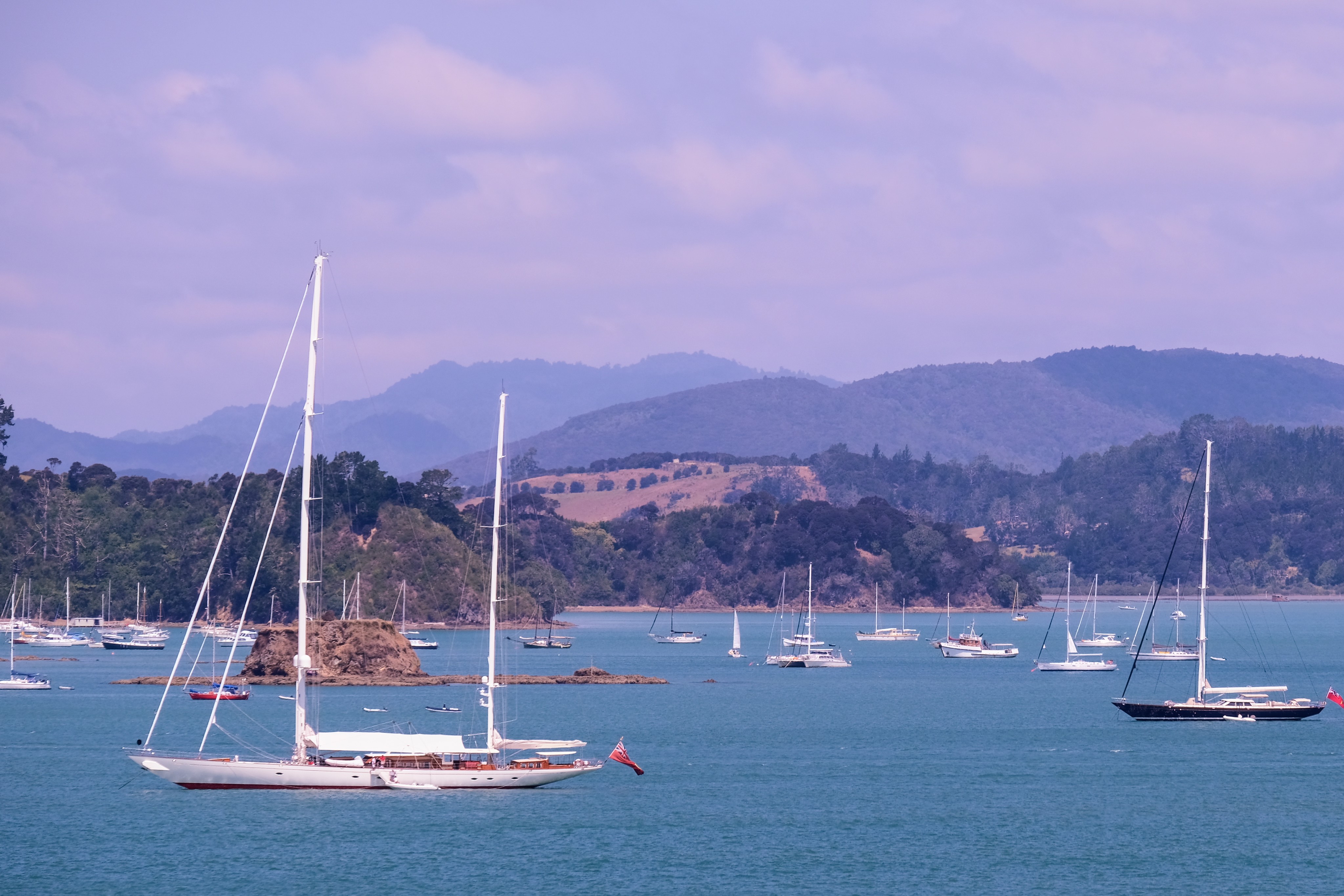
As the sun rose on the Bay of Islands (Waitangi), the Viking Sun anchored near the port town of Paihia, an ideal place to start our next nine days in New Zealand. As we made our way to shore, we learned that Waitangi holds a central role in the history of New Zealand. In 1840, the Treaty of Waitangi was signed here by British officers and Maori chiefs, bestowing sovereignty over the growing nation on Queen Victoria. Today, the 140 sub-tropical Waitangi islands are a fascinating blend of Maori and colonial culture. Paihia provides a gateway to some interesting history, sandy beaches, and diving sites throughout the islands. Sail boats, jet skis, kayaks, parasails, and other recreational watercraft dot the shoreline, all pointing to a beautiful first day in this scenic part of the world.

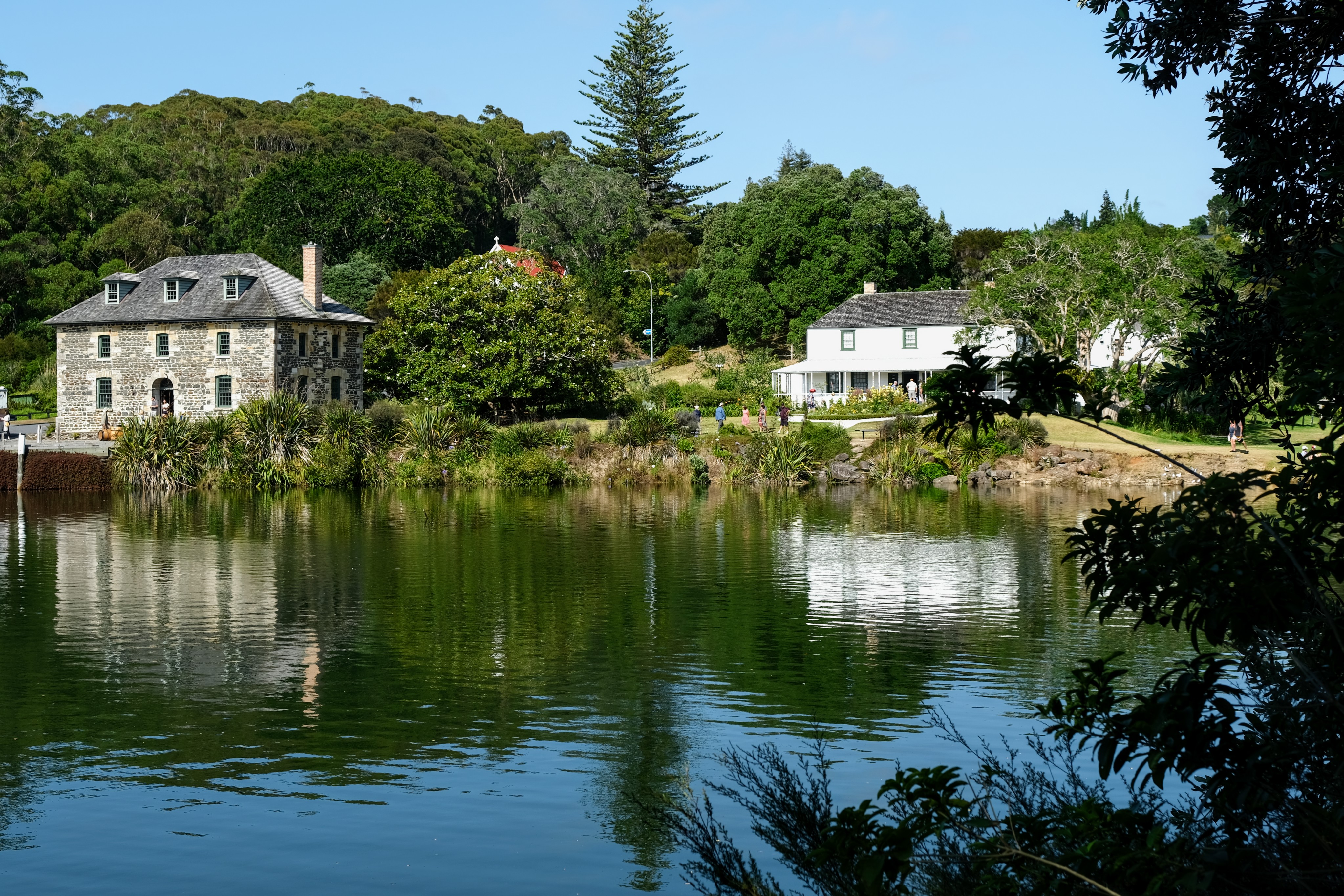
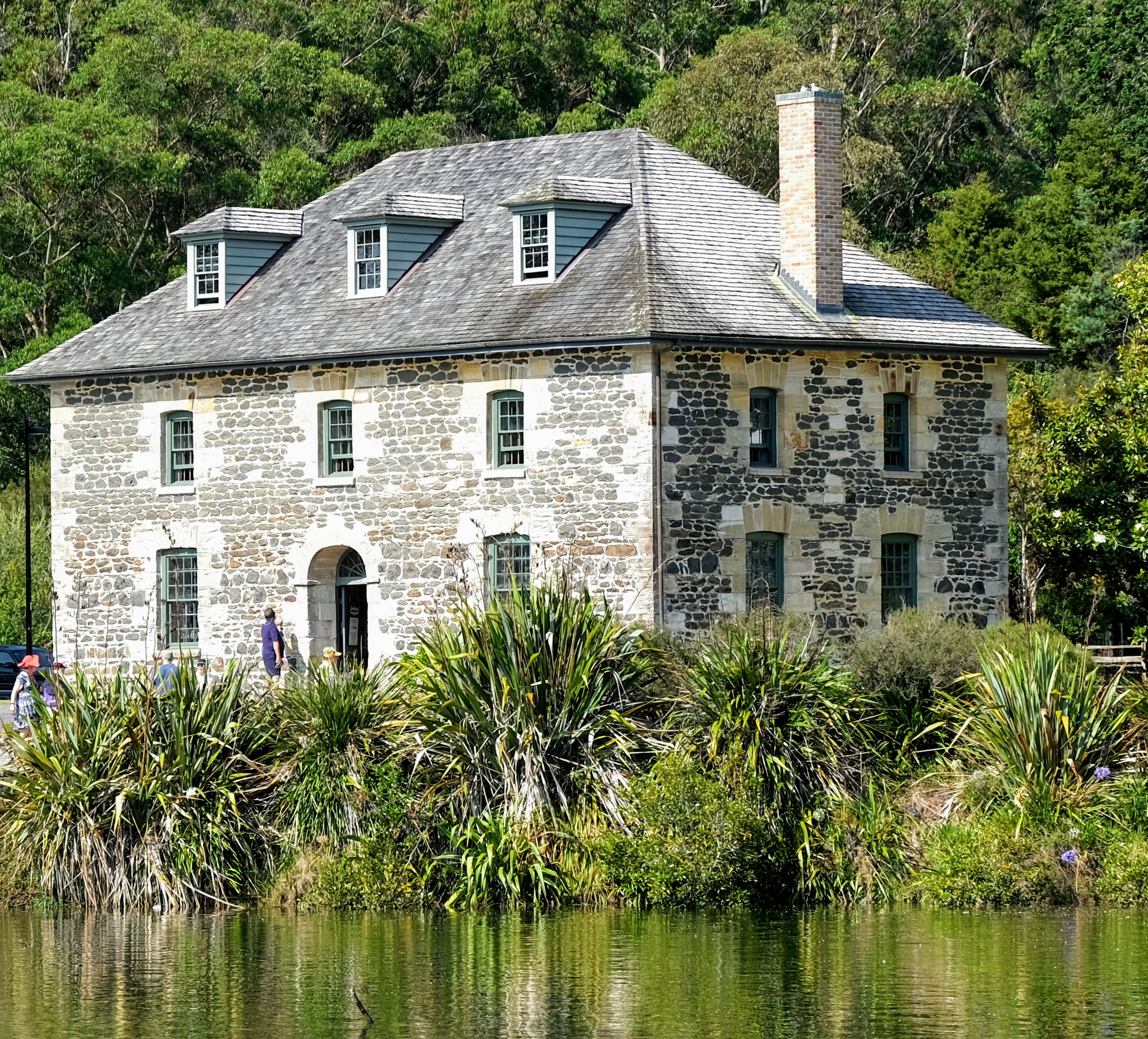
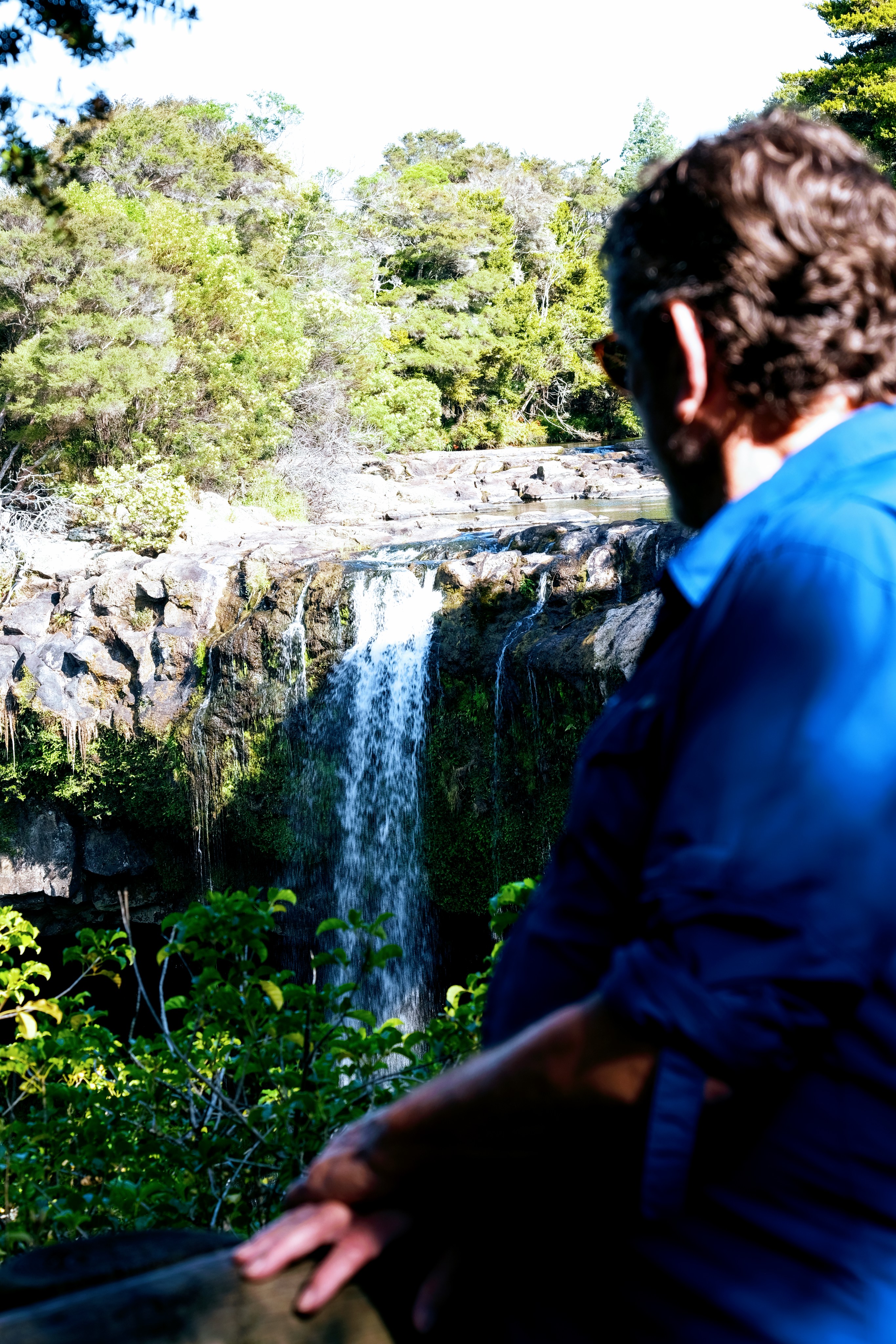
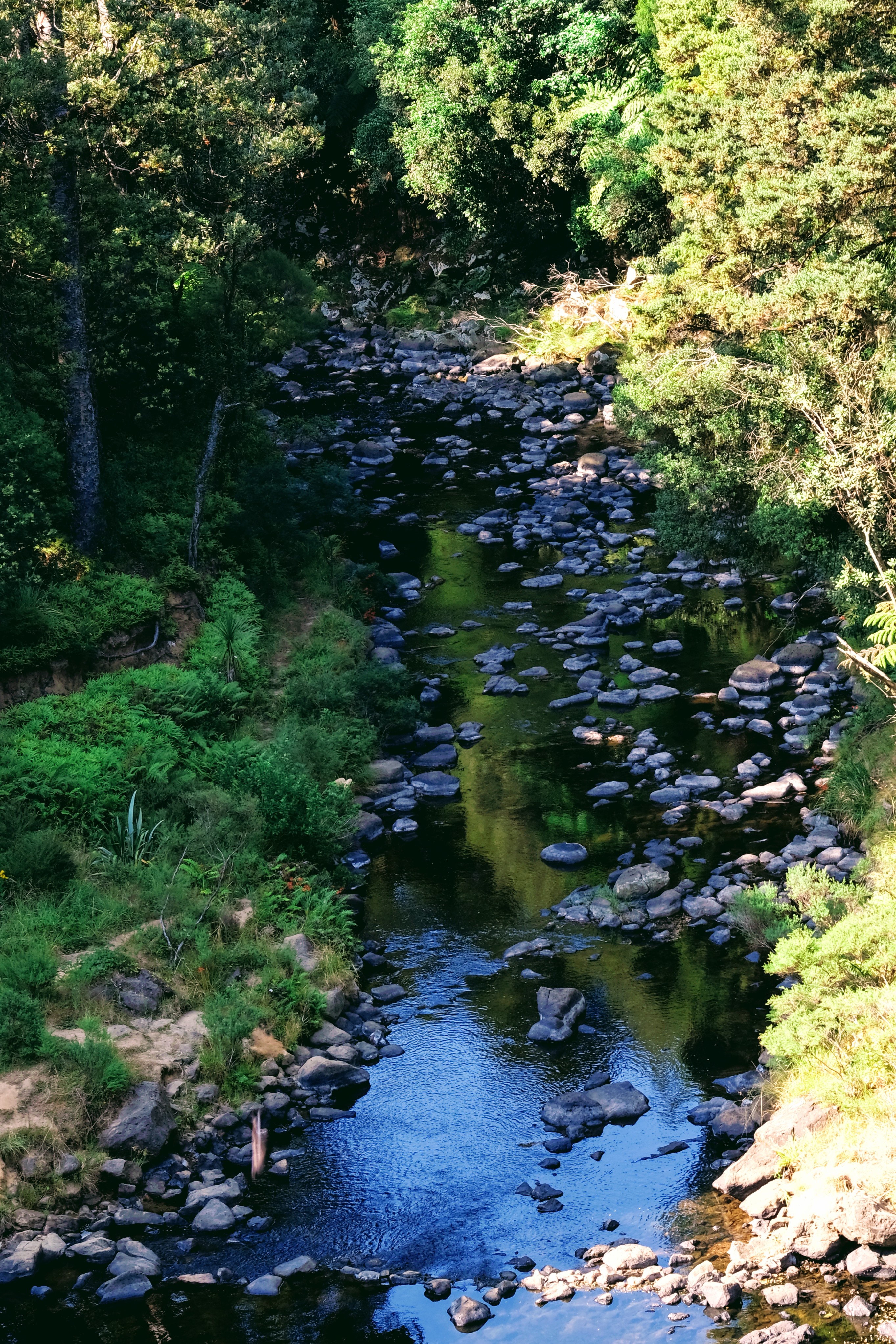
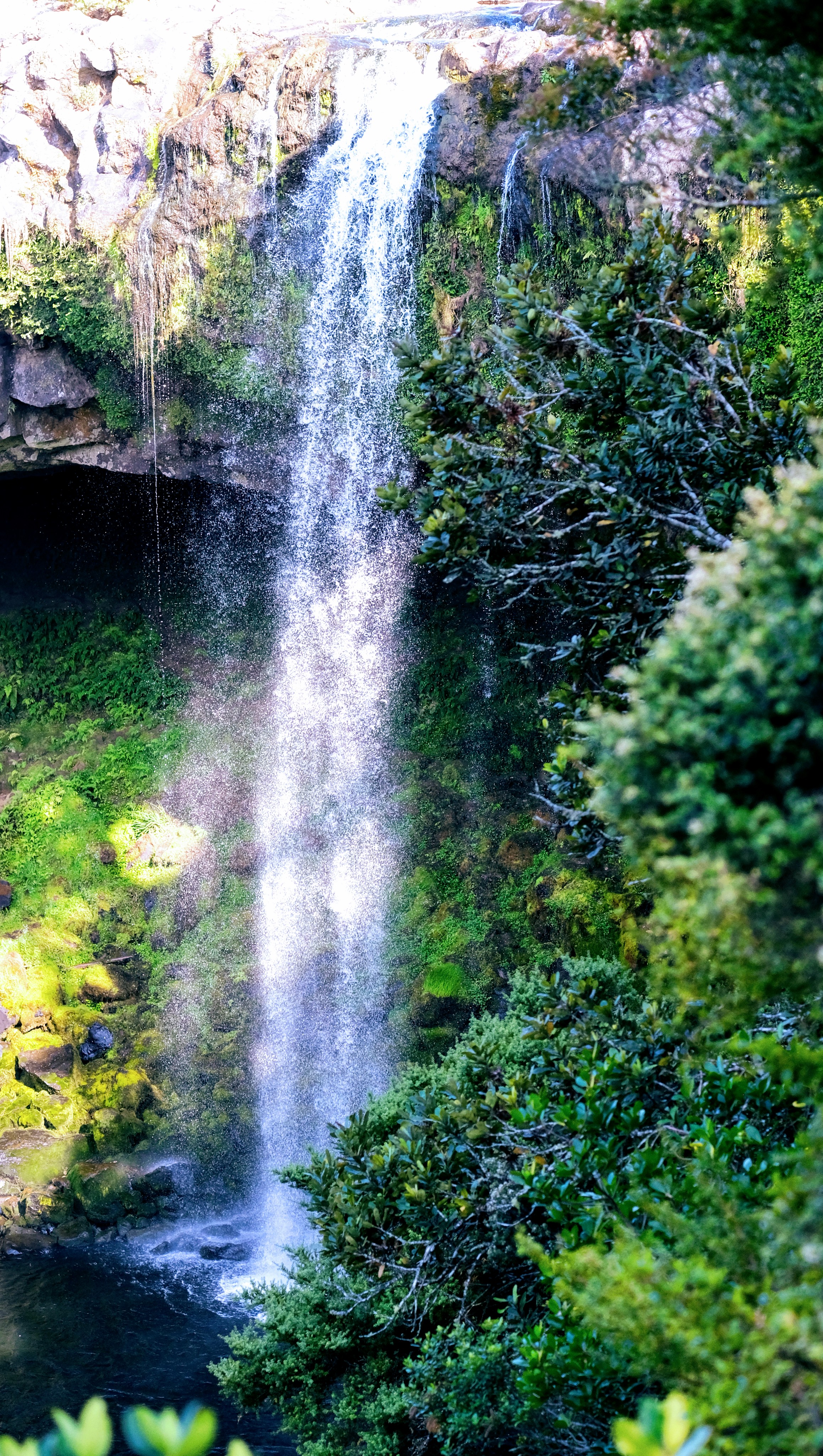
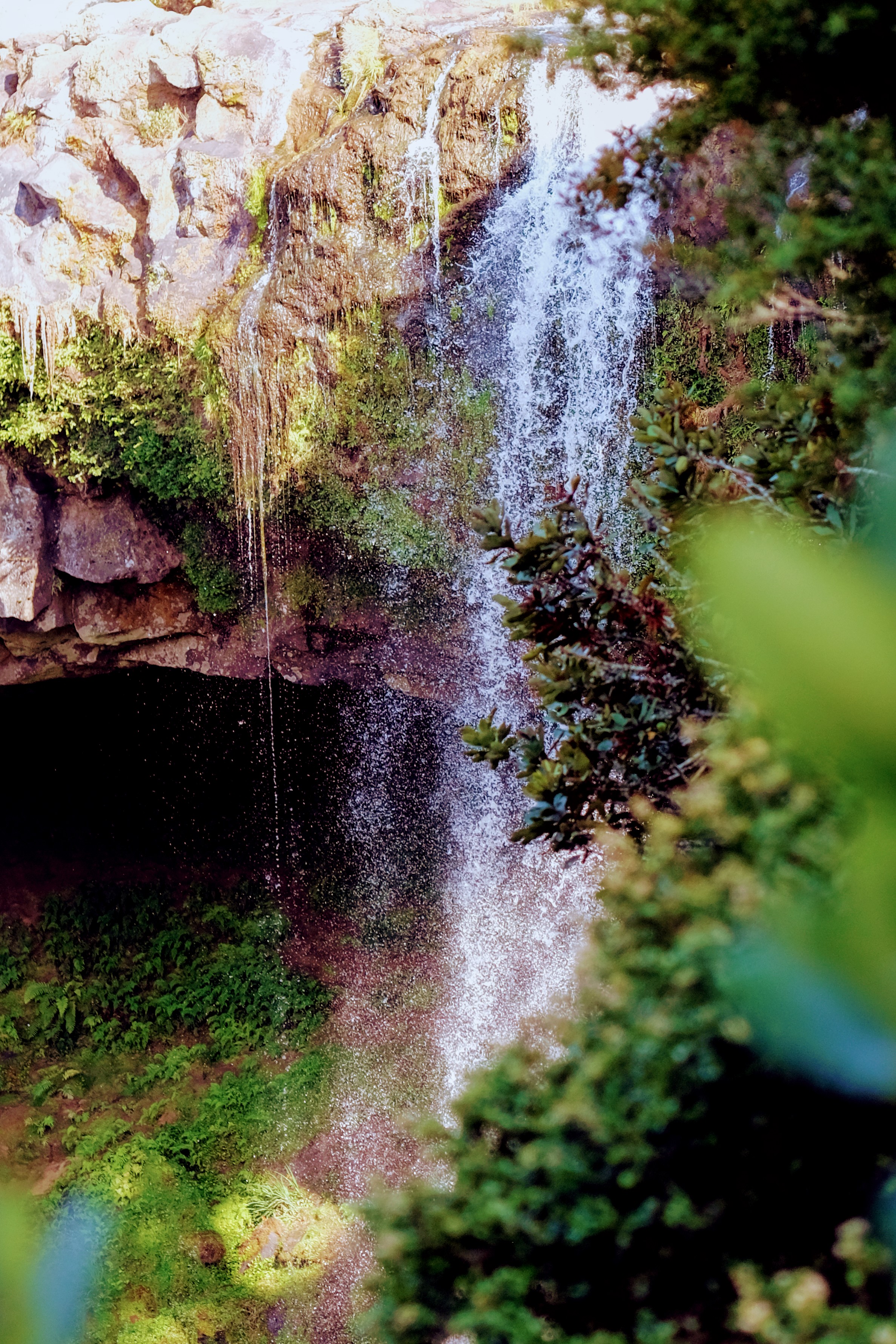
A short drive through the countryside brought us to the Kerikeri Basin, one of New Zealand’s most historic sites. The Kerikeri Mission Station was founded in 1819. It is the oldest surviving European settlement in New Zealand. The Kemp House, built in 1822, is New Zealand’s oldest surviving building, and the Stone Store, built in 1836, is New Zealand’s oldest stone building and the oldest trading building. The two stand close together and dominate the former wharf frontage to the river. The Kerikeri River meanders through the basin, and Rainbow Falls is one of the outstanding natural features of this area.

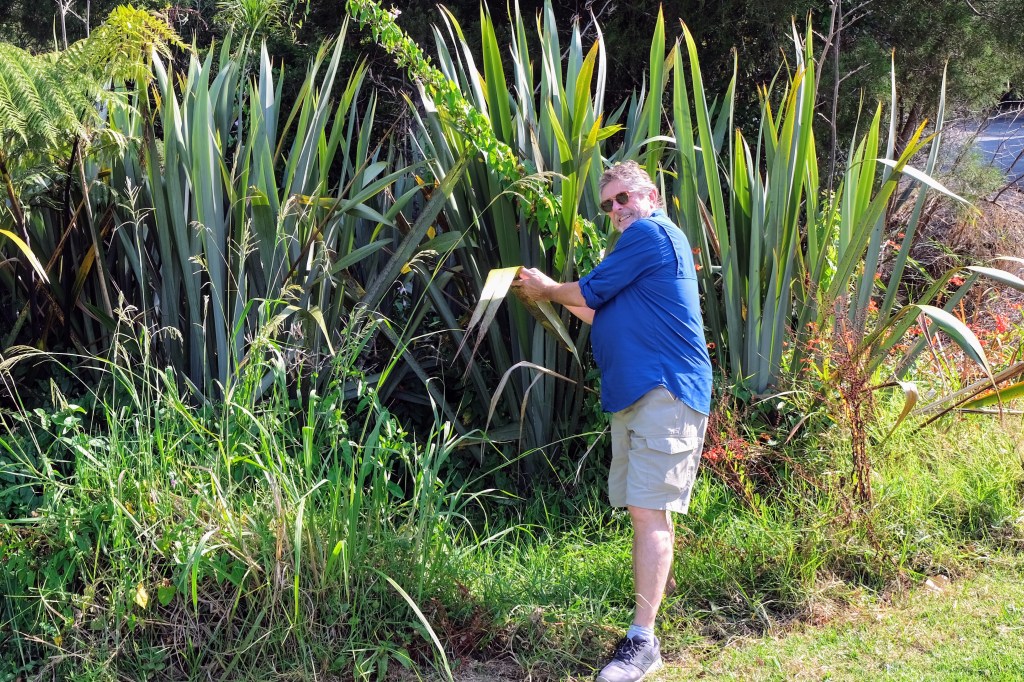
New Zealanders take full advantage of the health benefits of their native plants, many of which have their origins in traditional Maori herbal medicine. One example is honey made from the blossoms of the manuka plant, which has been recognized for its medicinal properties and is added to lotions, oils, and balms for export throughout the world. In addition to honey, manuka seeds are said to aid digestion, and the leaves can be steeped into a delicious, soothing tea. Kawakawa, one of New Zealand’s most distinctive plants, has also been an important healing herb in traditional Maori herbal medicine, and is still in use today. Kawakawa plants can be found throughout the countryside, and we had the opportunity to sample some during our visit. And harabeke leaves (a type of flax) contain a sticky sap that is said to have antiseptic properties.

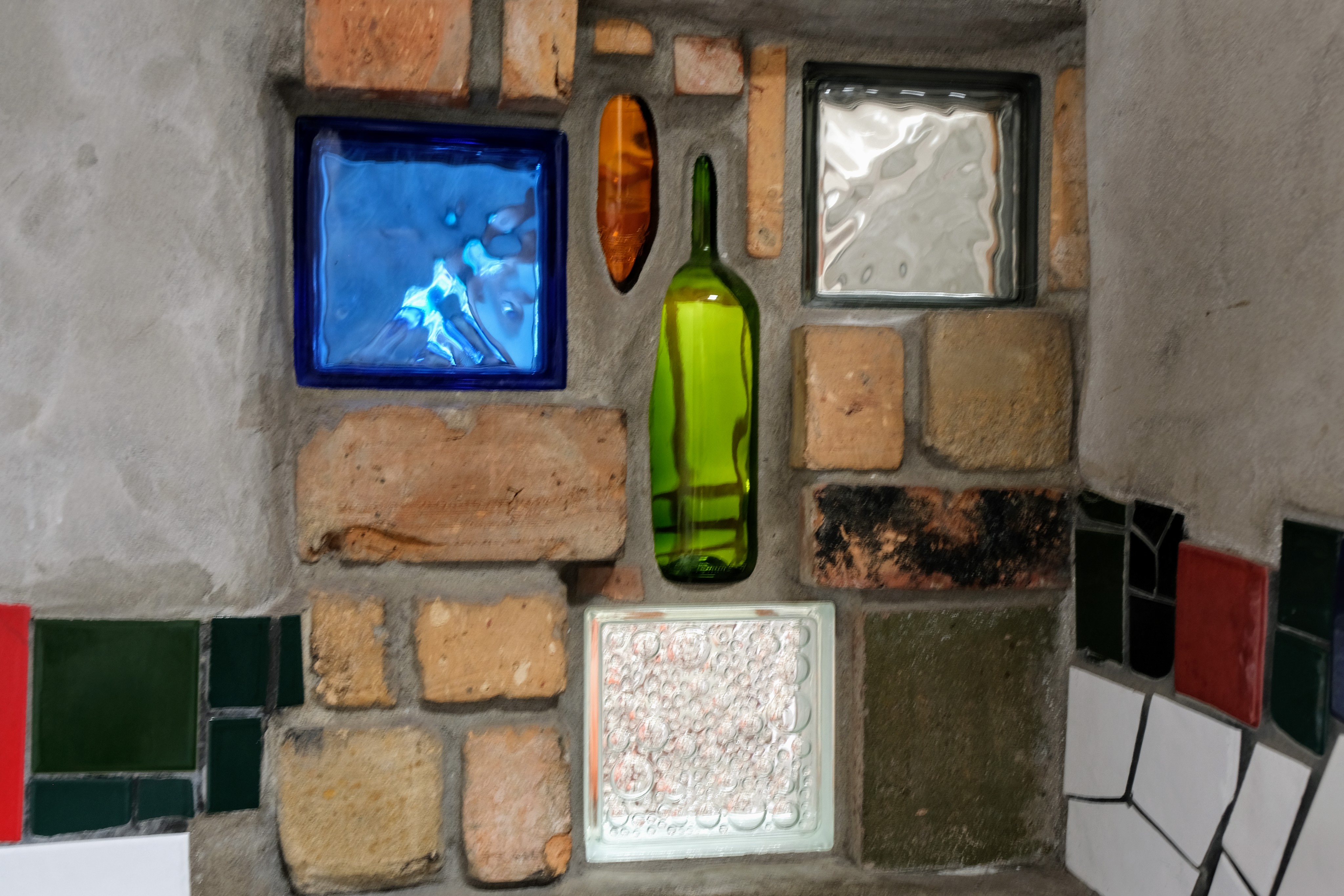
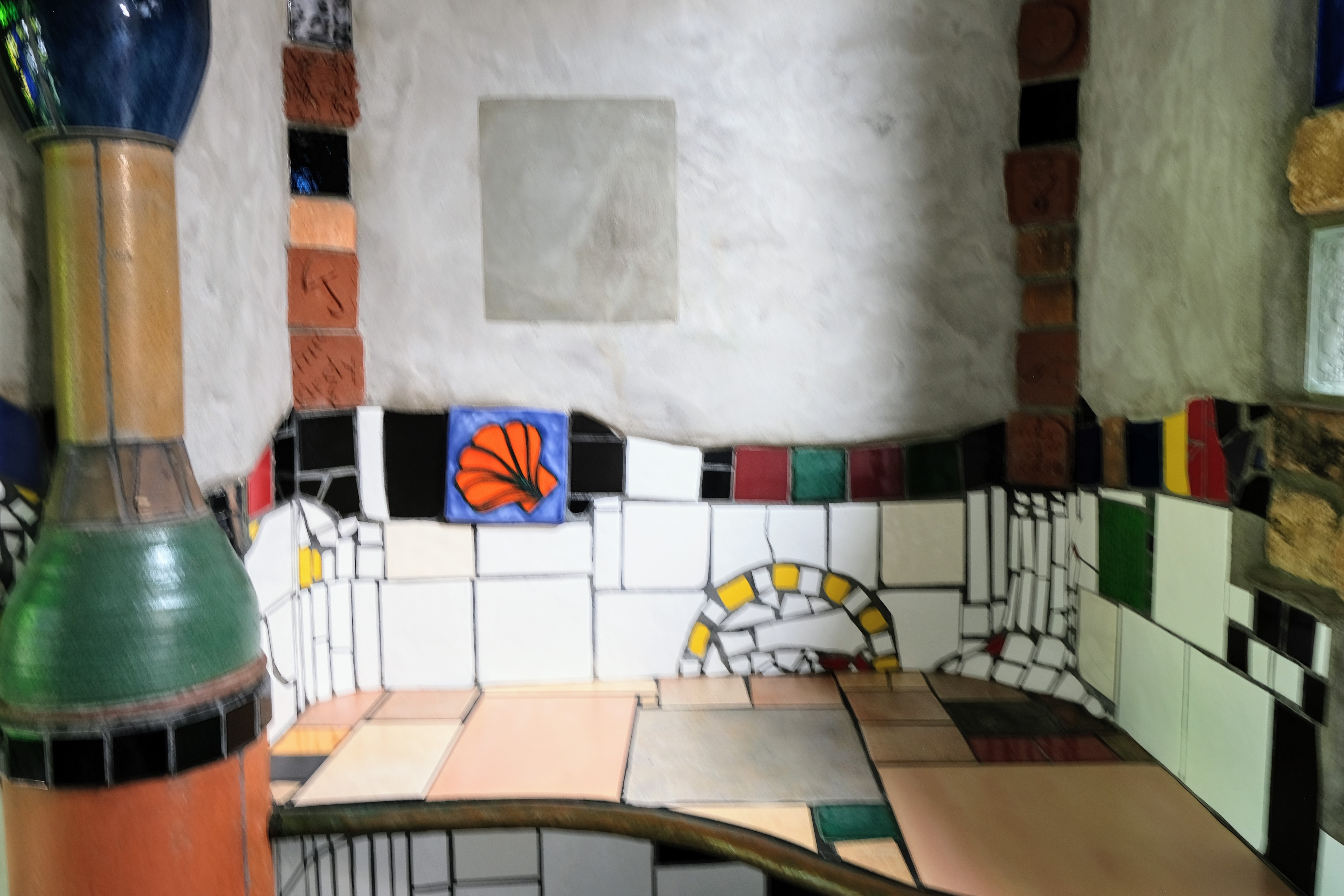
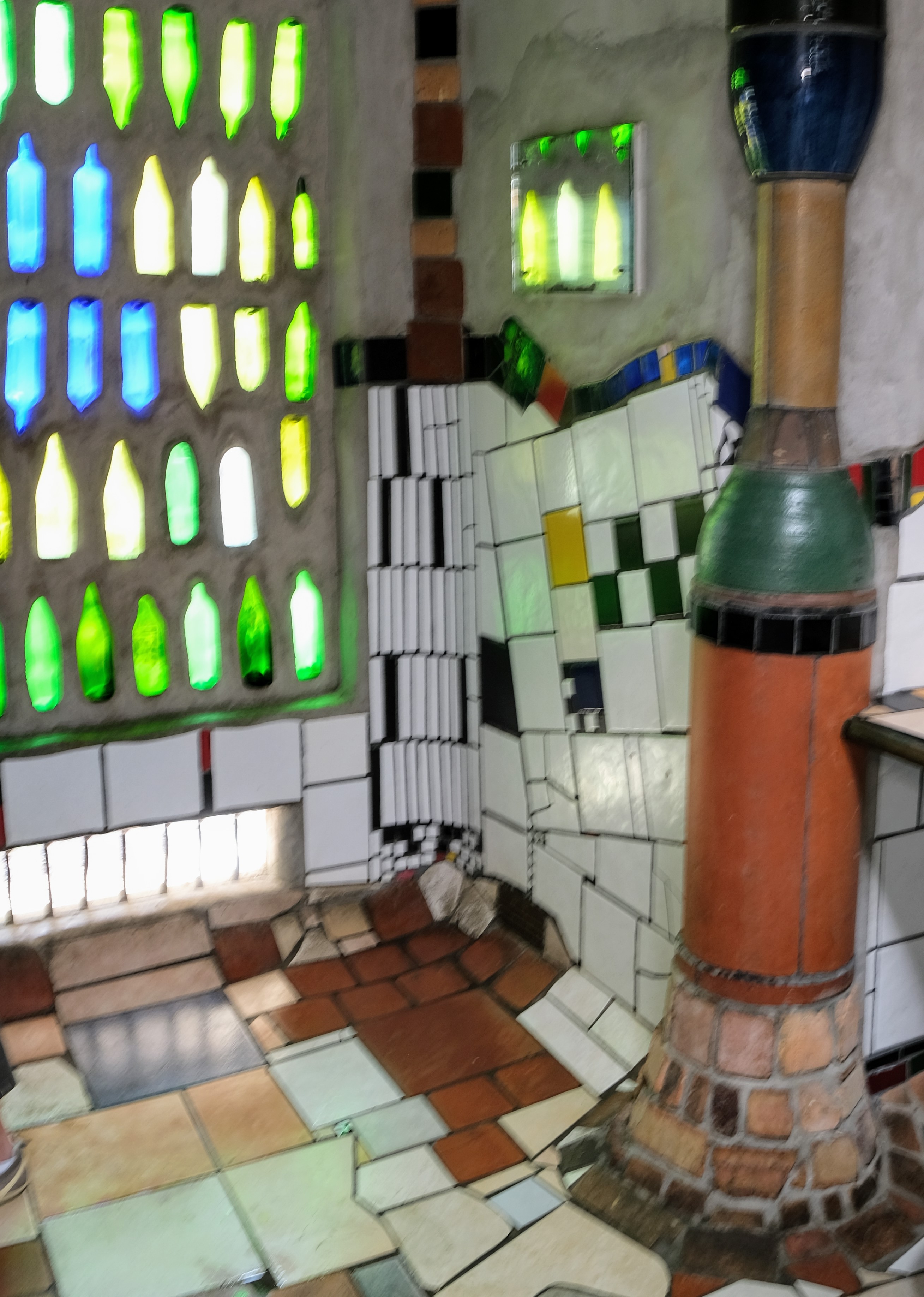
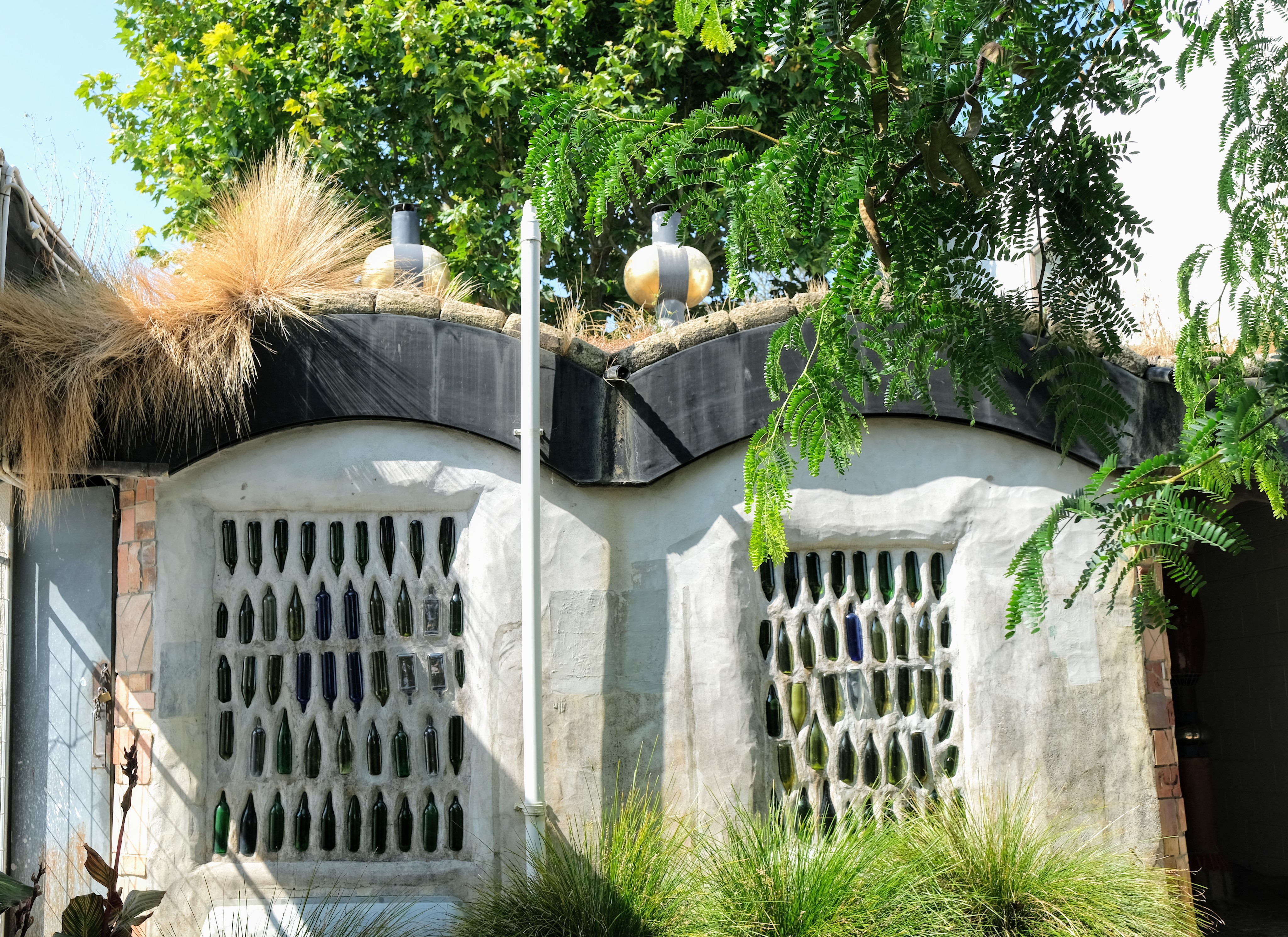
Kawakawa is also the name of a quaint town that was literally put on the map by the world-famous Bohemian architect/designer Frederick Hundertwasser for his design of public restrooms, described by Atlas Obscura as “possibly the world’s most architecturally important public bathrooms!” Hundertwasser spent his whole career championing the curve of organic nature against the straight line. From the mid 70s, all of his imaginative buildings – such as Hundertwasser House in Vienna (1985) and the hot springs village of Blumau in Styria (1990-97) – were ergonomically curved and ecologically integrated with rooftop gardens. In consultation with the Bay of Islands College, students prepared ceramic tiles which were used throughout the building. The bricks came from a former Bank of New Zealand building, and both young and old from the local community volunteered their services to the construction process. The finished product is a work of art, from the grass roof, to gold balls, ceramic tiles, bottle glass windows, mosaic tiling, copper handwork, cobblestone flooring, individual sculptures, and a living tree integrated into the design structure.

It’s going to be hard to top the bathroom story, but if our first day in New Zealand is any indication, we’re in for a pretty spectacular visit!

“Hey, Mr. Tambourine Man…”

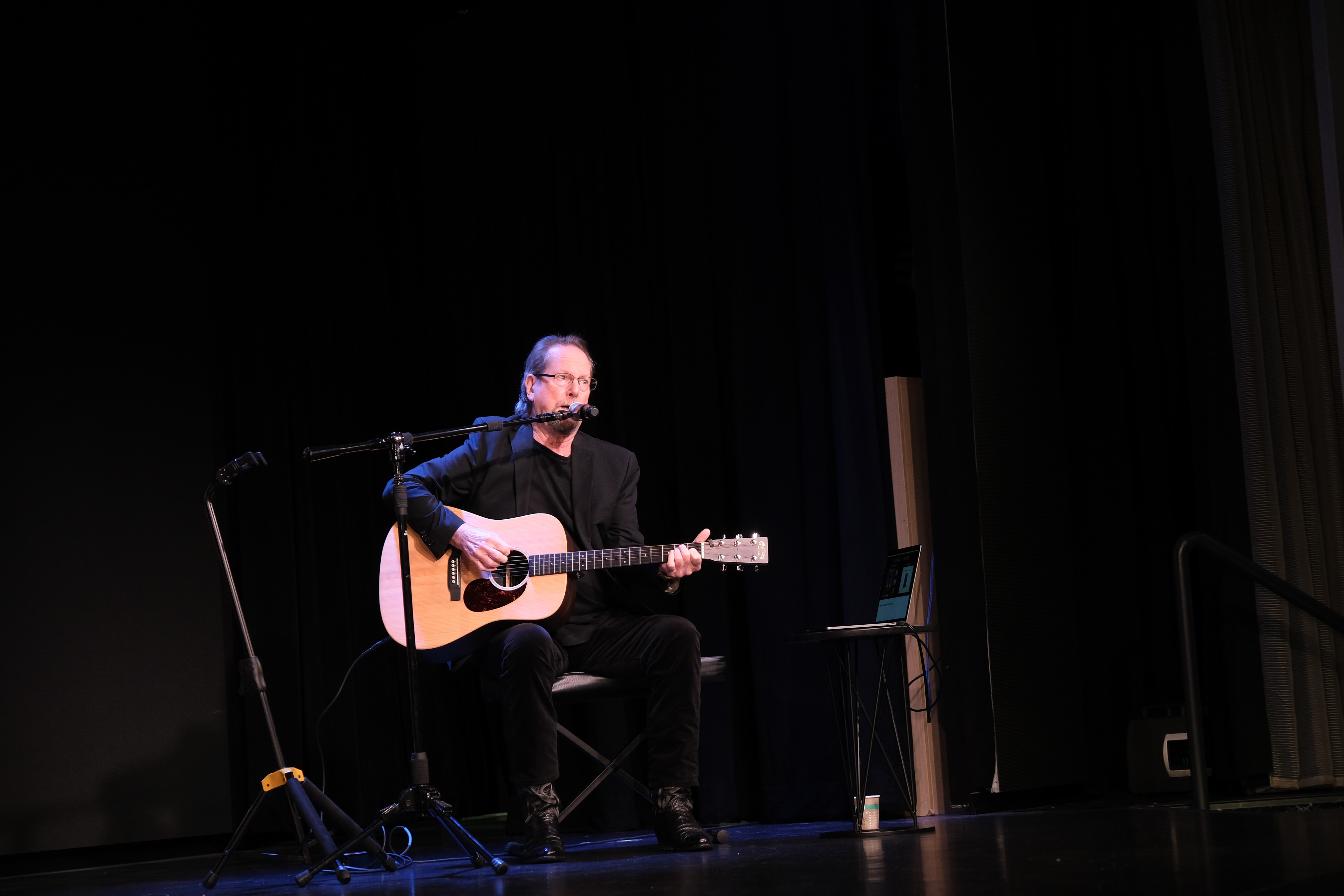
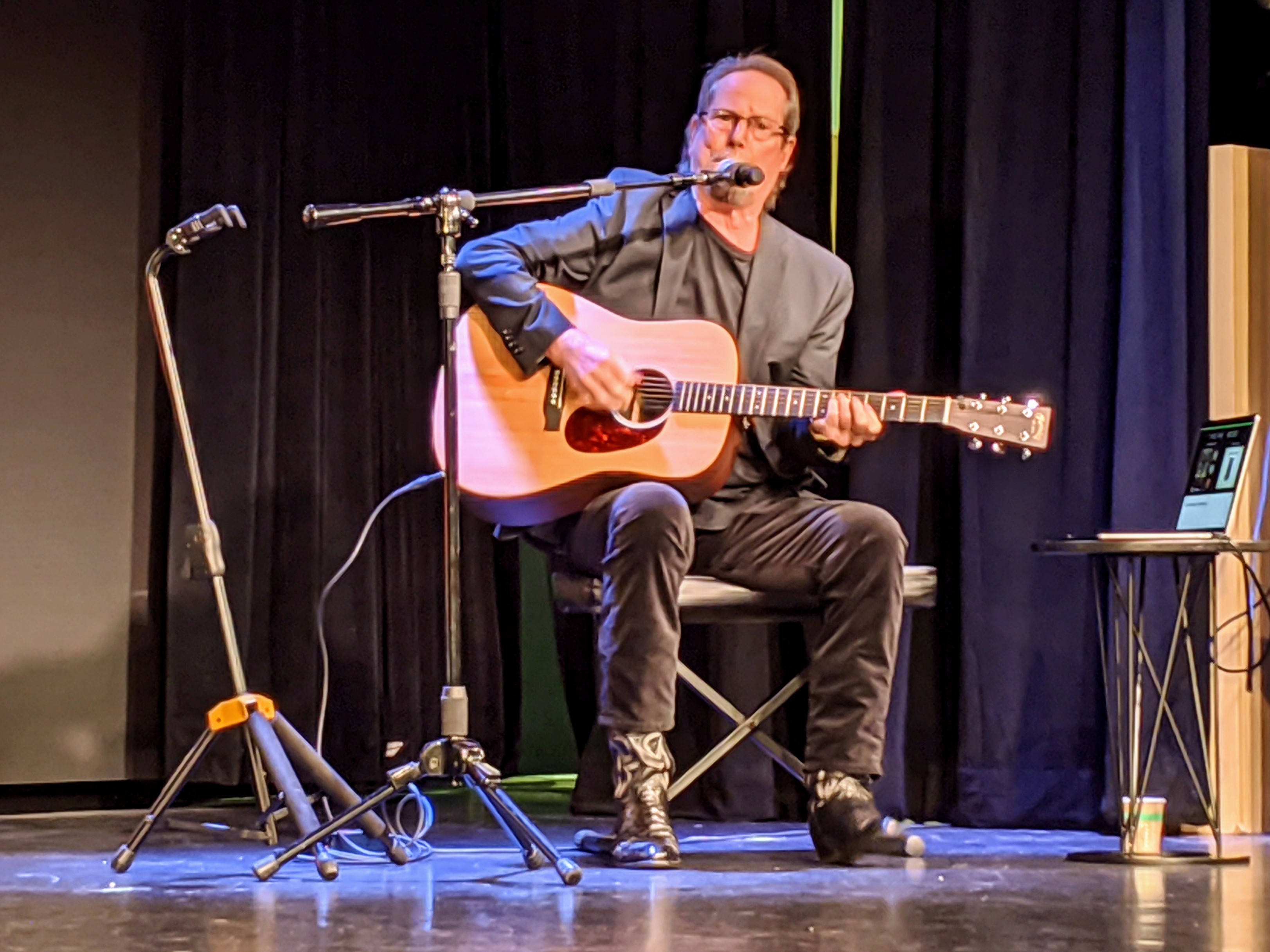
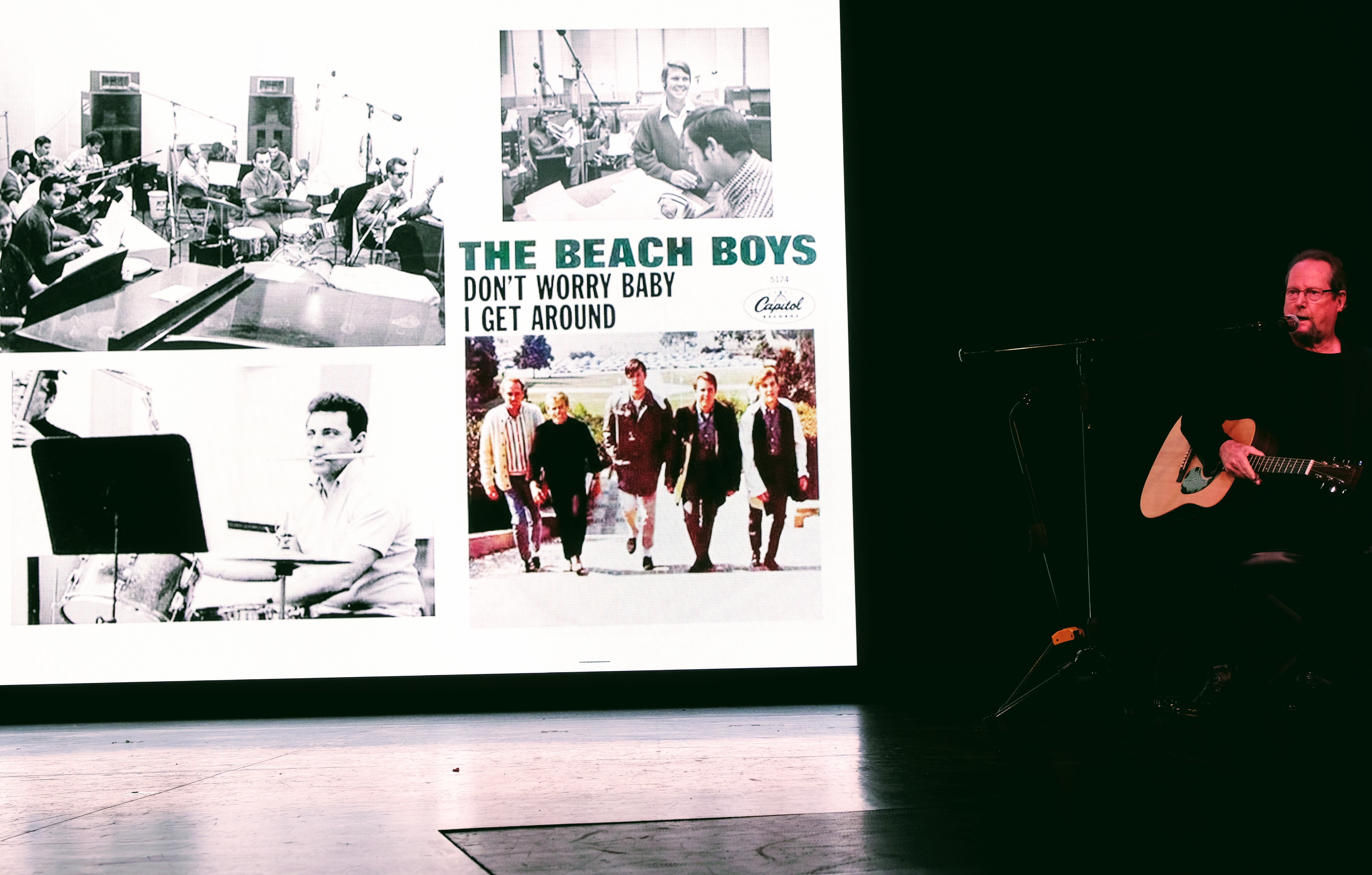
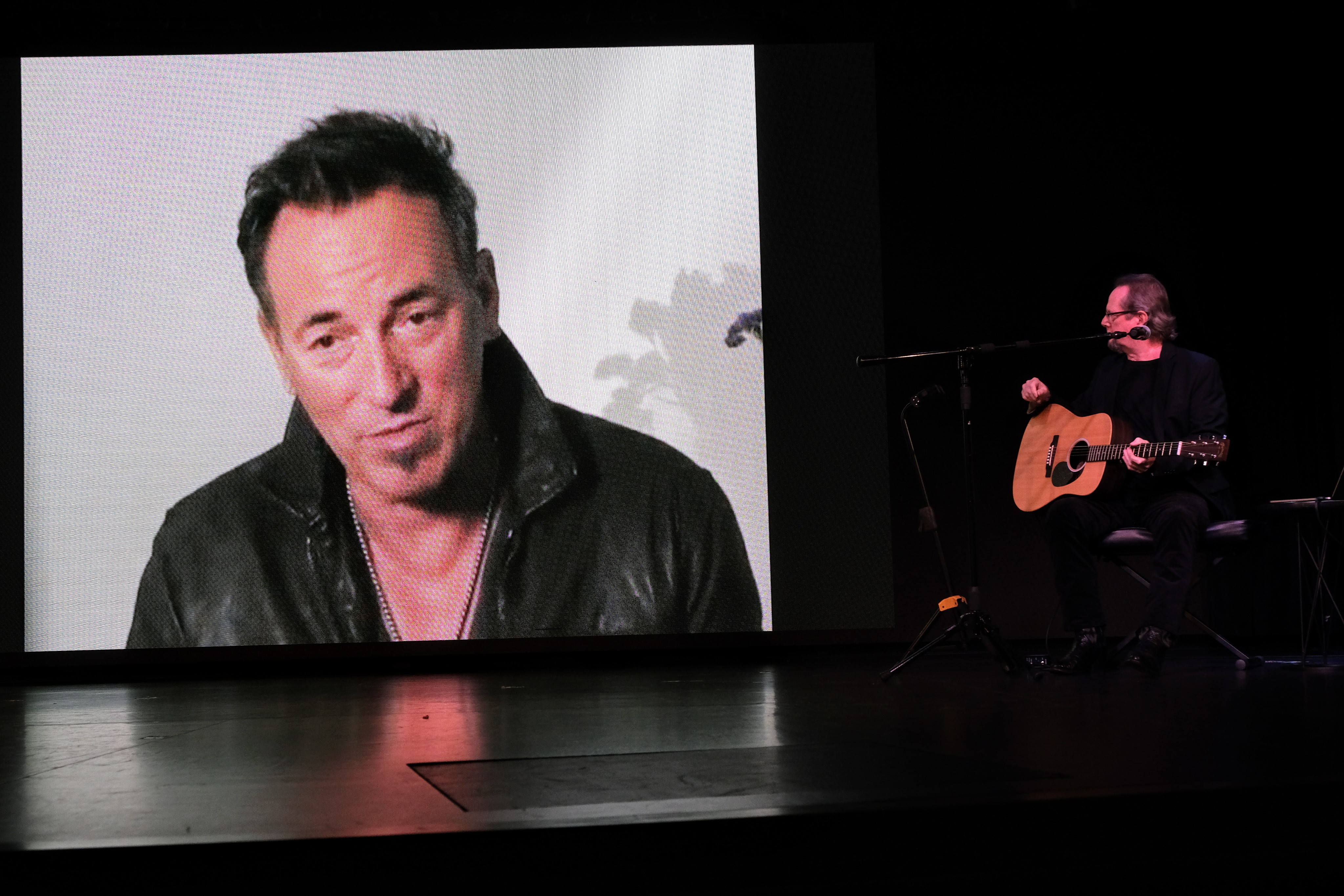
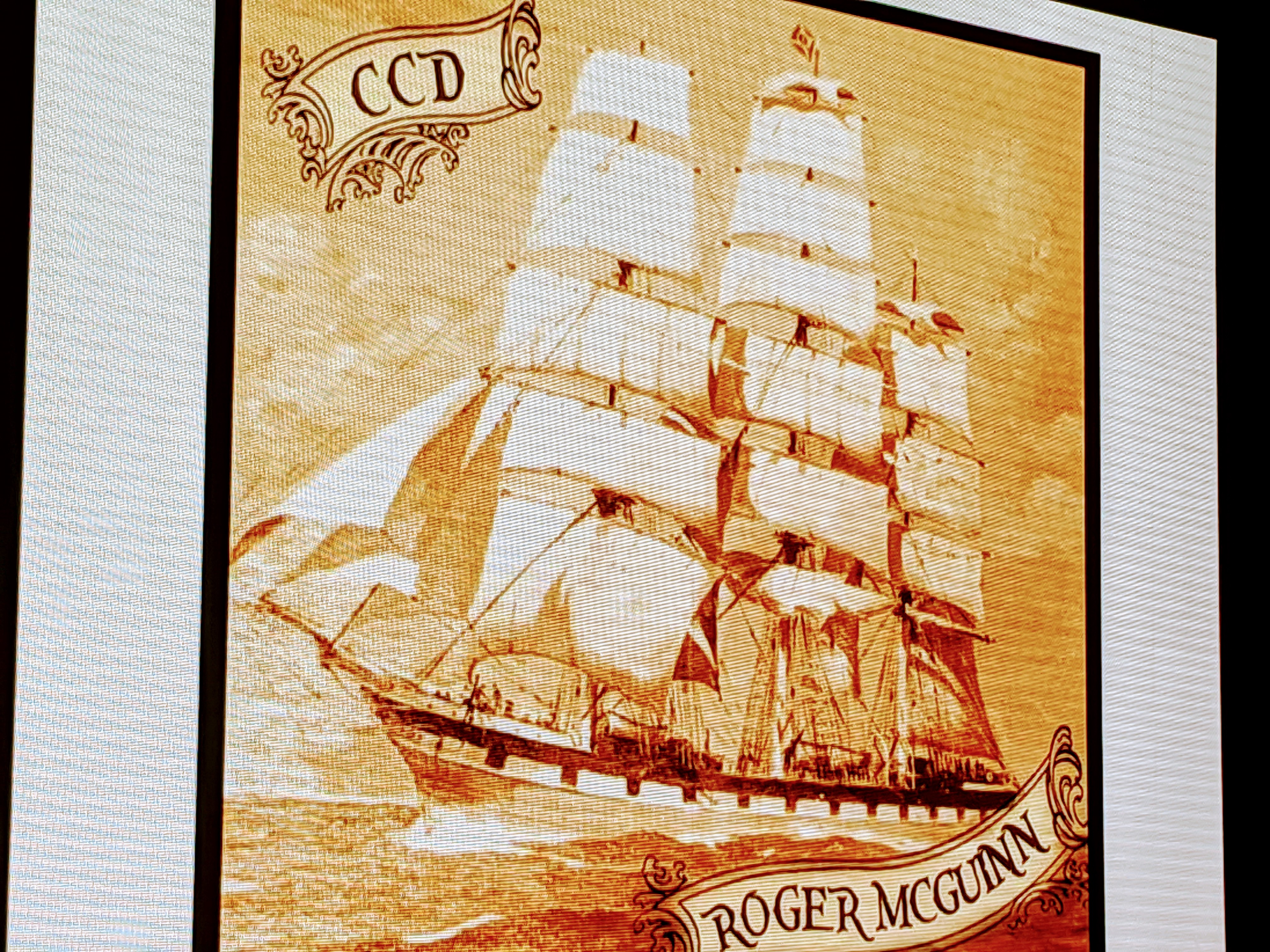
The entertainment on-board the Viking Sun is first class and designed to appeal to a variety of tastes, and we promise to share more highlights about the shows and performers later in our voyage. But we just can’t wait to provide you with the most exciting entertainment we’ve seen anywhere on the high seas! For this first leg of our trip (Los Angeles to Auckland) we’ve been joined by a REAL ROCK STAR! When we first saw the notice in the Viking Daily, we thought it was some kind of “tribute band,” but we were delighted to learn that our first Celebrity Guest Lecturer was, indeed, Roger McGuinn himself! Roger and his lovely wife, Camilla, are guests on the Sun from Los Angeles to Auckland. He presented four lectures/concerts/Q&A sessions to enthusiastic, packed theaters, and we were front and center for all of them!

His first session took us on a musical journey from the folk scene of Chicago to the Rock and Roll Hall of Fame. Jim McGuinn, later known as Roger, was inspired to learn guitar by Elvis. He studied at the Old Town School of Folk Music in his home town of Chicago, and toured and performed folk music with the Limeliters, Chad Mitchell Trio, and Bobby Darin as a guitarist and banjo player. After touring with Bobby Darin, he moved to New York to work as a songwriter for Darin’s publishing company. In 1963 he and Frank Gari co-wrote the song “Beach Ball,” and performed it with Darin as the City Surfers. It was there that he heard the Beatles and began playing folk songs to a rock beat in the coffee houses of Greenwich Village, but the folk purists didn’t buy it. He moved to Los Angeles to work at the Troubadour, and it was after an opening set for Hoyt Axton that Gene Clark approached Roger with praise for his new musical blend. They started writing songs together in the folk den of the Troubadour, and it wasn’t long before David Crosby joined them, adding his unique approach to harmony. They recruited conga player Michael Clarke to join them because he looked like two of the Rolling Stones, and soon mandolin player Chris Hillman joined them to play bass guitar. During one Thanksgiving dinner the band was contemplating various names, and settled on the name “Byrds,” using what they thought was an English spelling. And in 1965 they recorded their first number one hit “Mr. Tambourine Man.” In 1968 McGuinn and Hillman hired Gram Parsons and headed to Nashville where they recorded the critically acclaimed “Sweetheart of the Rodeo.” McGuinn disbanded the Byrds in 1973 to pursue his dream of a solo career. He re-joined Clark and Hillman in 1978 for three albums, and in 1981 he decided it was time to return to his folk roots and began touring solo acoustic. Arista records released “Back from Rio” in 1991, a rock album that included his friends Tom Petty and the Heartbreakers, Elvis Costello, Chris Hillman, David Crosby, Michael Penn, and John Jorgensen. And also in 1991, he was inducted into the Rock and Roll Hall of Fame with the Byrds. Since 1995, McGuinn returned to his folk music roots and began recording and uploading a series of traditional folk songs to his website, where they are available for free.

His presentation was engaging, fun, and sprinkled with video clips, images, and songs. His voice is still the same as we remember, and his musical talent is off the charts! And he graciously waited around after the session to autograph CDs for very enthusiastic fans.

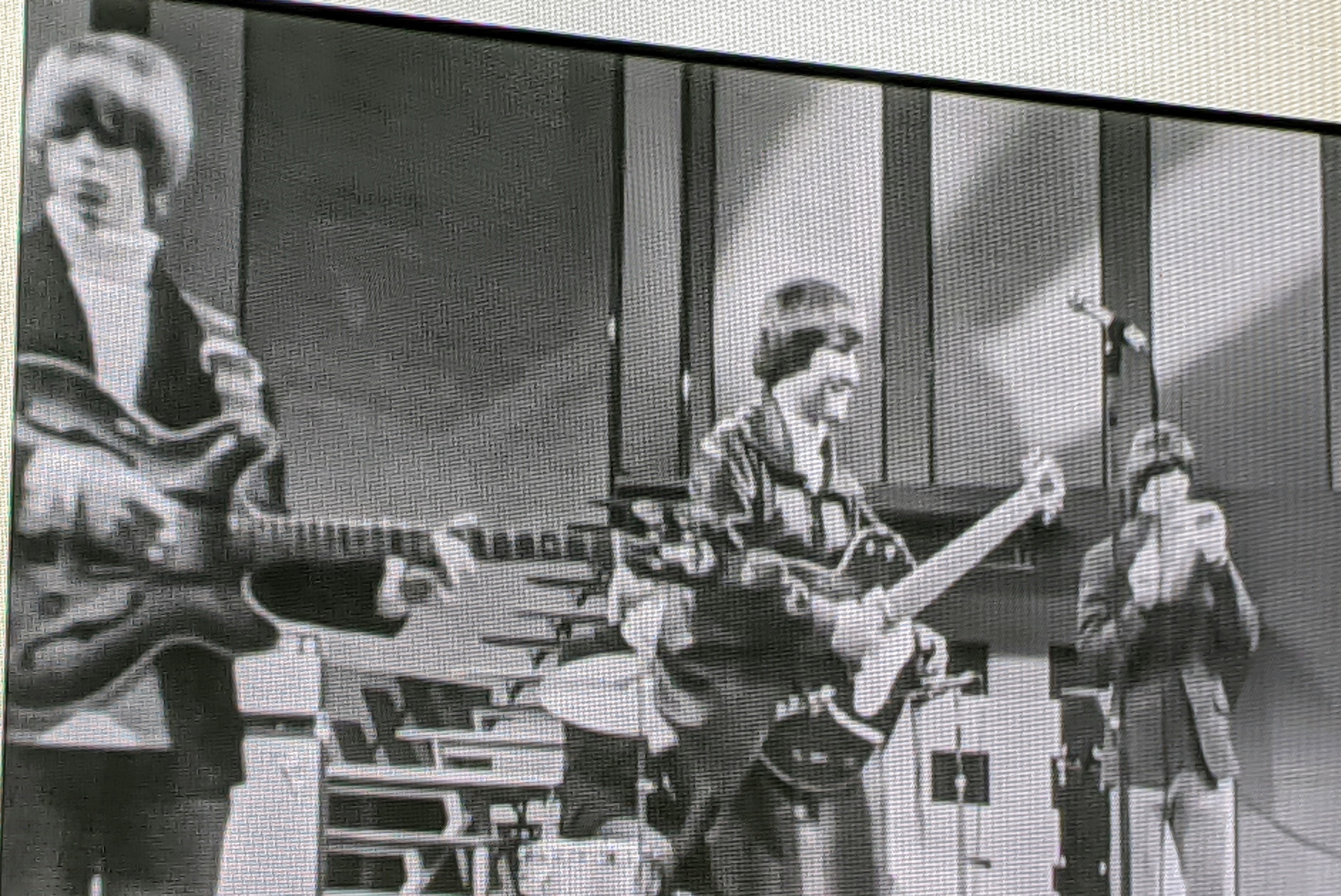
His second lecture took a “deep dive” into the history of the Byrds, discussing their journey to stardom and the various artists and generes they influenced. He noted that during their first “live” appearance on the Ed Sullivan Show, they lip synched and most viewers didn’t notice that the instruments weren’t plugged in and they didn’t have microphones. Throughout it all, he was very genuine and humble, always recognizing those who influenced him, as well as those they impacted. This presentation included video clips of many fellow Rock & Roll Hall of Fame inductees as well as songs that were featured in TV and film, ending with “Jesus is Just Alright” in The Ballad of Easy Rider.

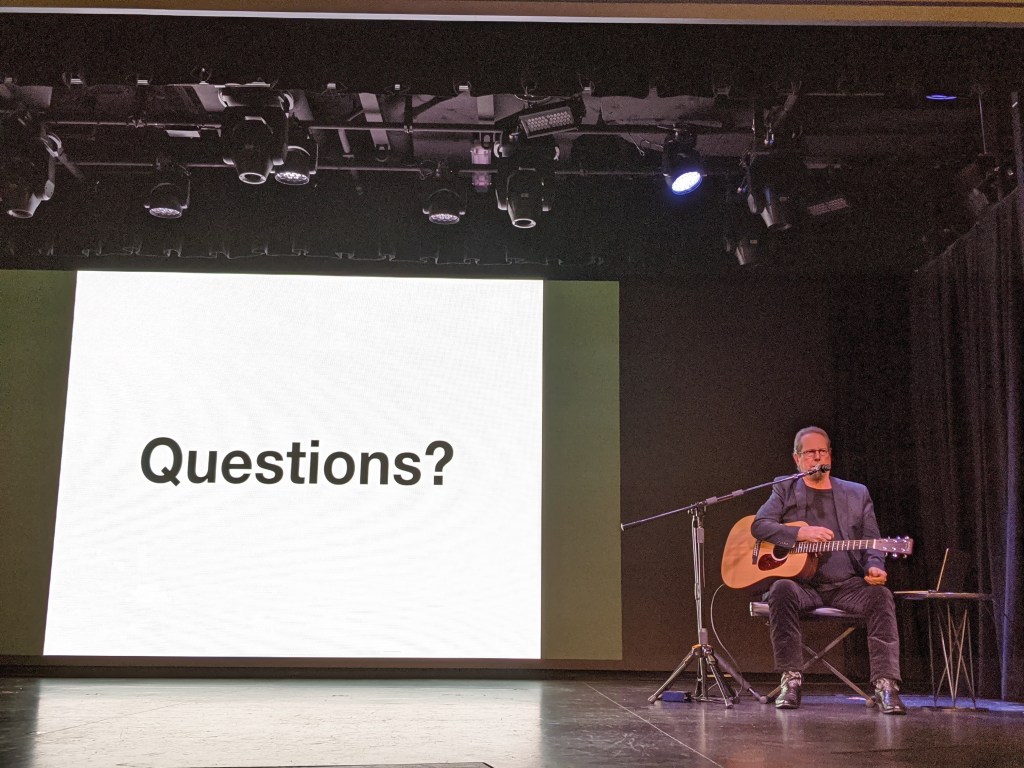
The third presentation was very special. McGuinn took an hour of Q&A from the audience, patiently answering every question, some twice! A sample of questions follows:
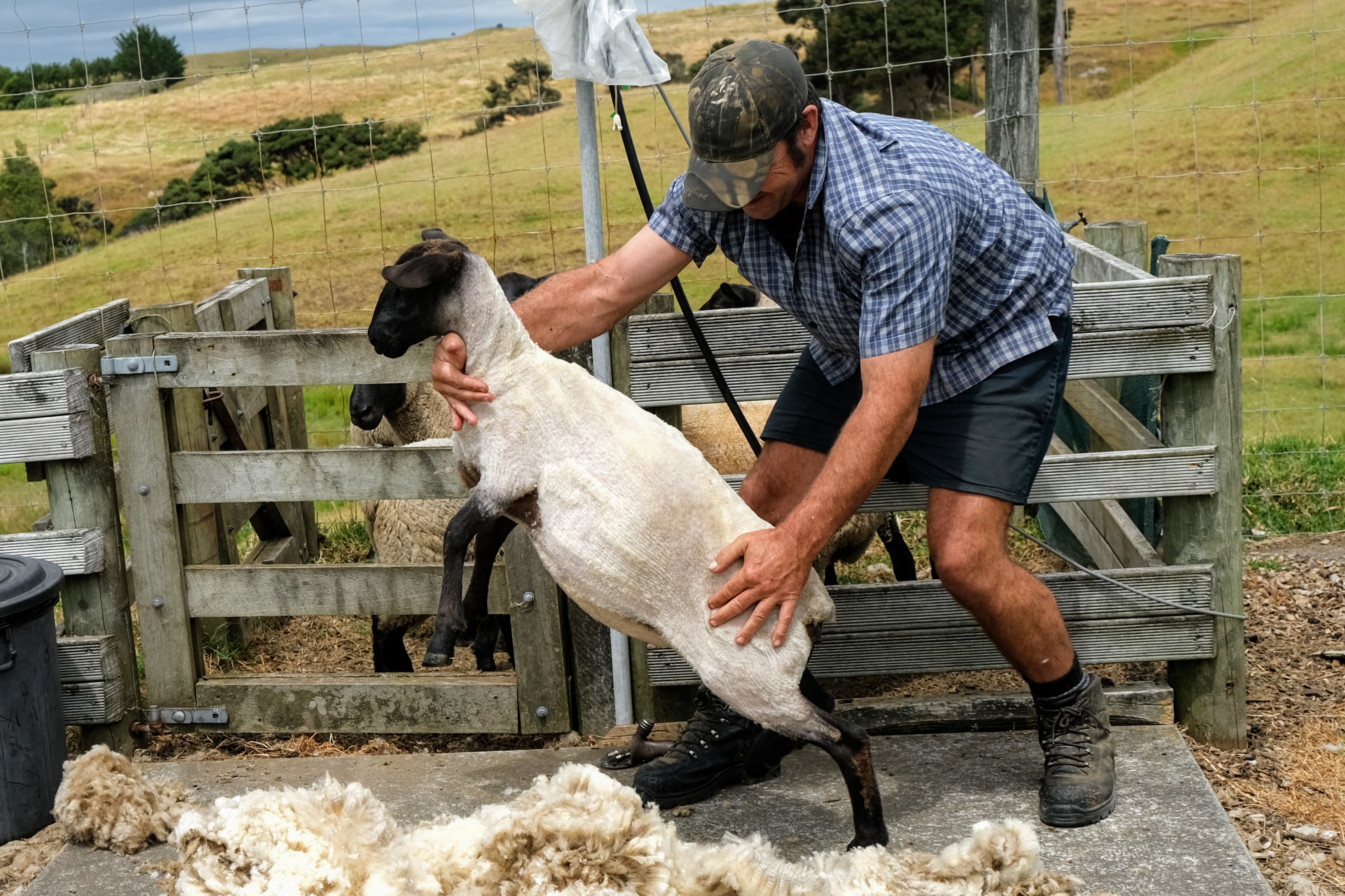
Q: Who is the funniest person you ever performed with? A: Dave Barry

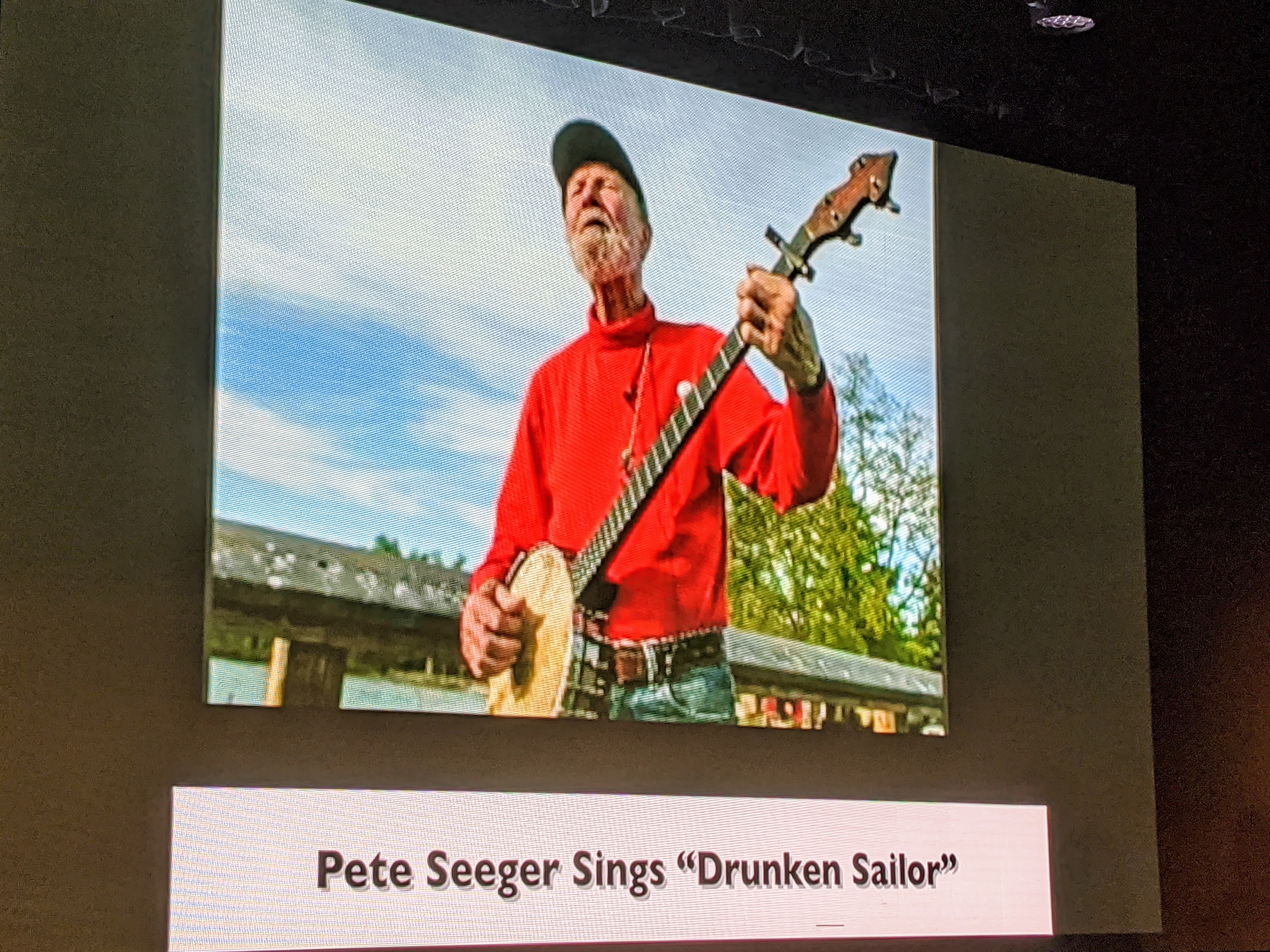
Q: Who were your biggest influencers: A: Elvis Presley (the reason I learned guitar) and Pete Seeger

Q: Were you friends with Bob Dylan? A: Yes, we used to shoot hoops at my house in Malibu

Q: What advice would you give to a young, aspiring musician? A: Take control of your own publishing

Q: Who were the nicest musicians? A: George Harrison, Tom Petty, Clarence White, Pete Seeger

Q: Did you ever meet Elvis? A: No, I came close once. I was visiting with the Beatles and they were going to go meet Elvis. I asked if I could come along, but they didn’t think it would be appropriate to bring a surprise guest
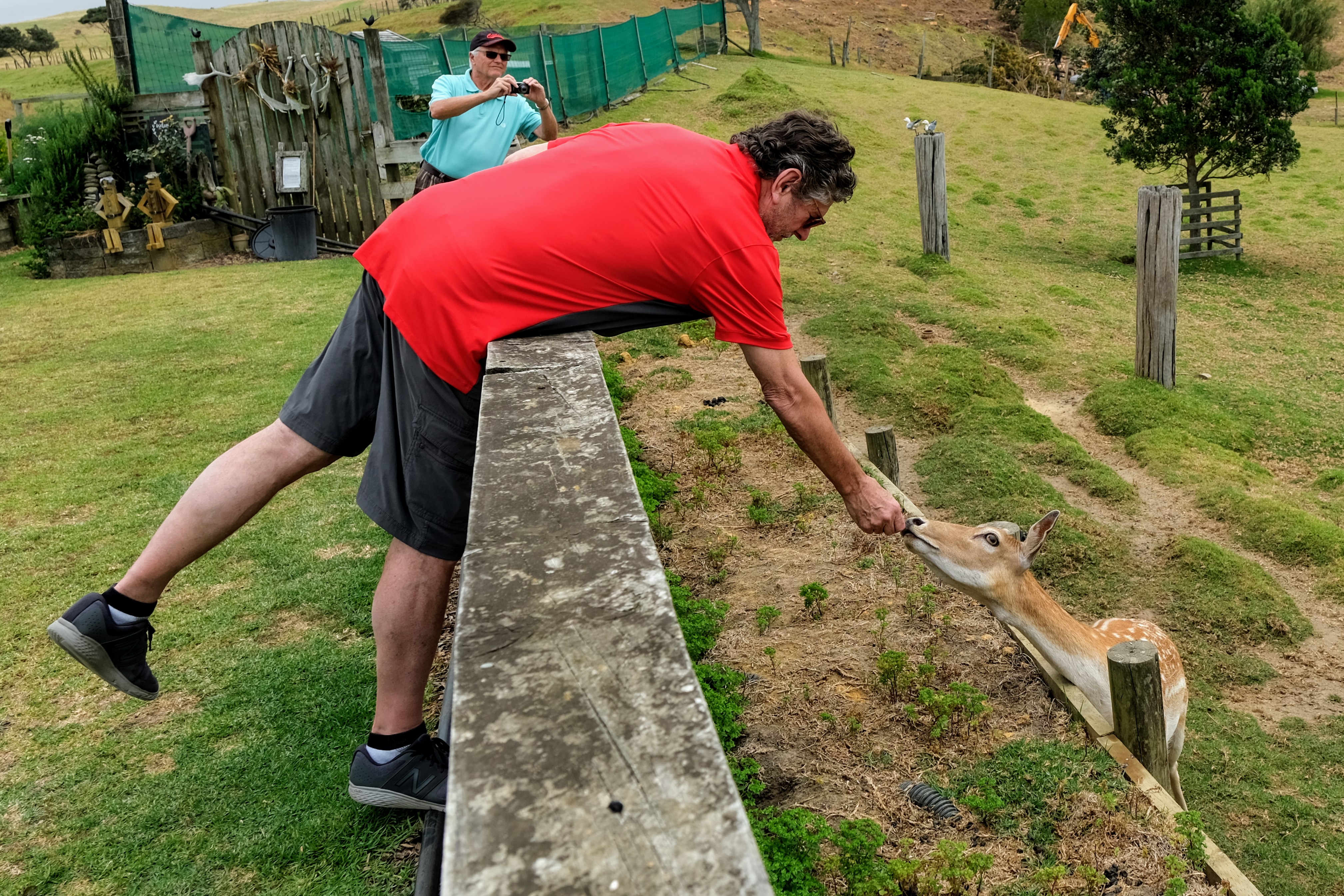
Q: Who was your best friend in the business? A: Clarence White

Q: What was the best time of your career? A: Now is the time I’m happiest. We’ve whittled it down to what we enjoy, and we enjoy doing this! (And he showed a video of the modest van they use to travel back roads throughout the USA)

He ended this session with a lovely tune he wrote one day when he was thinking about his friend, Tom Petty.

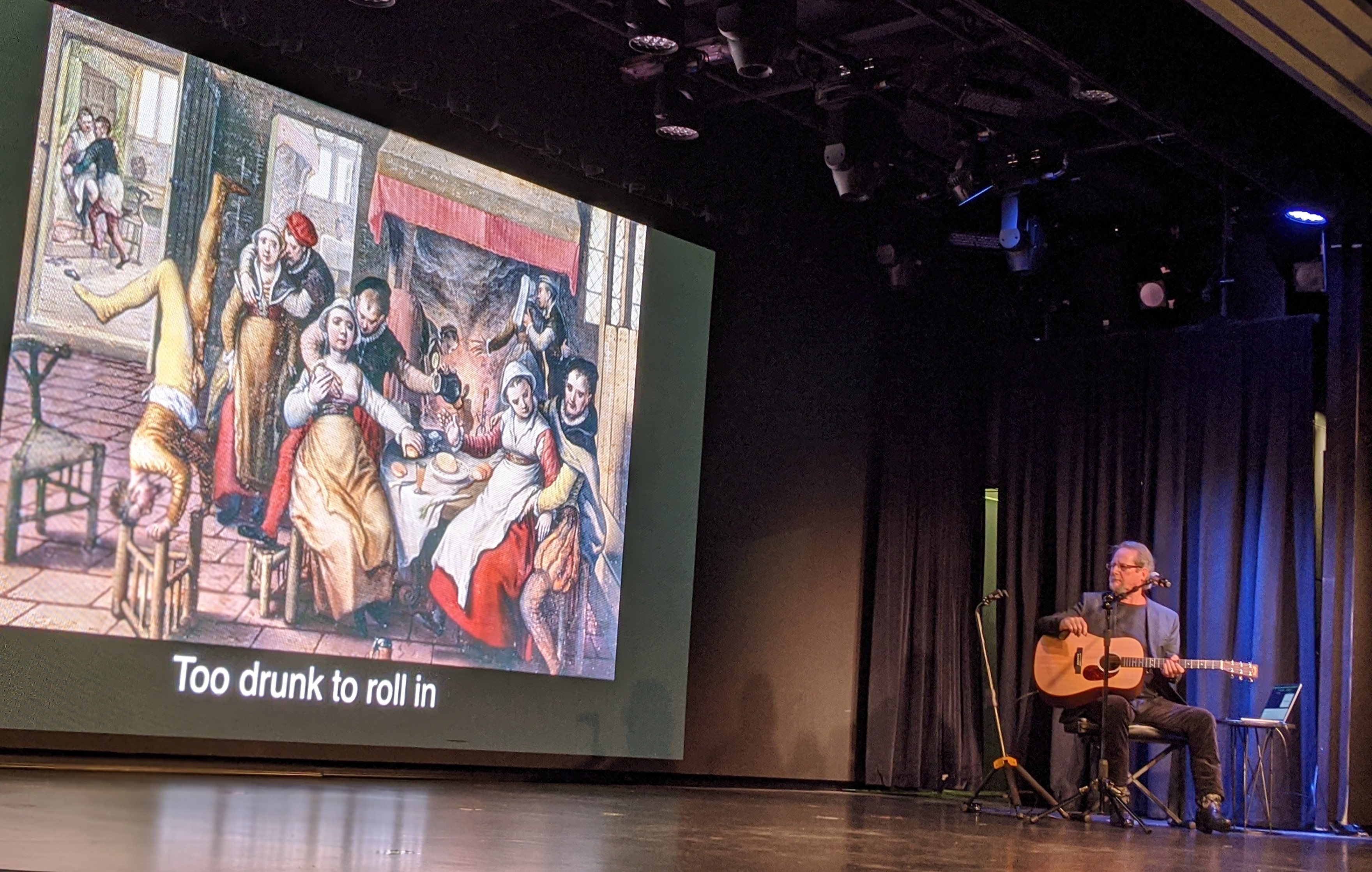
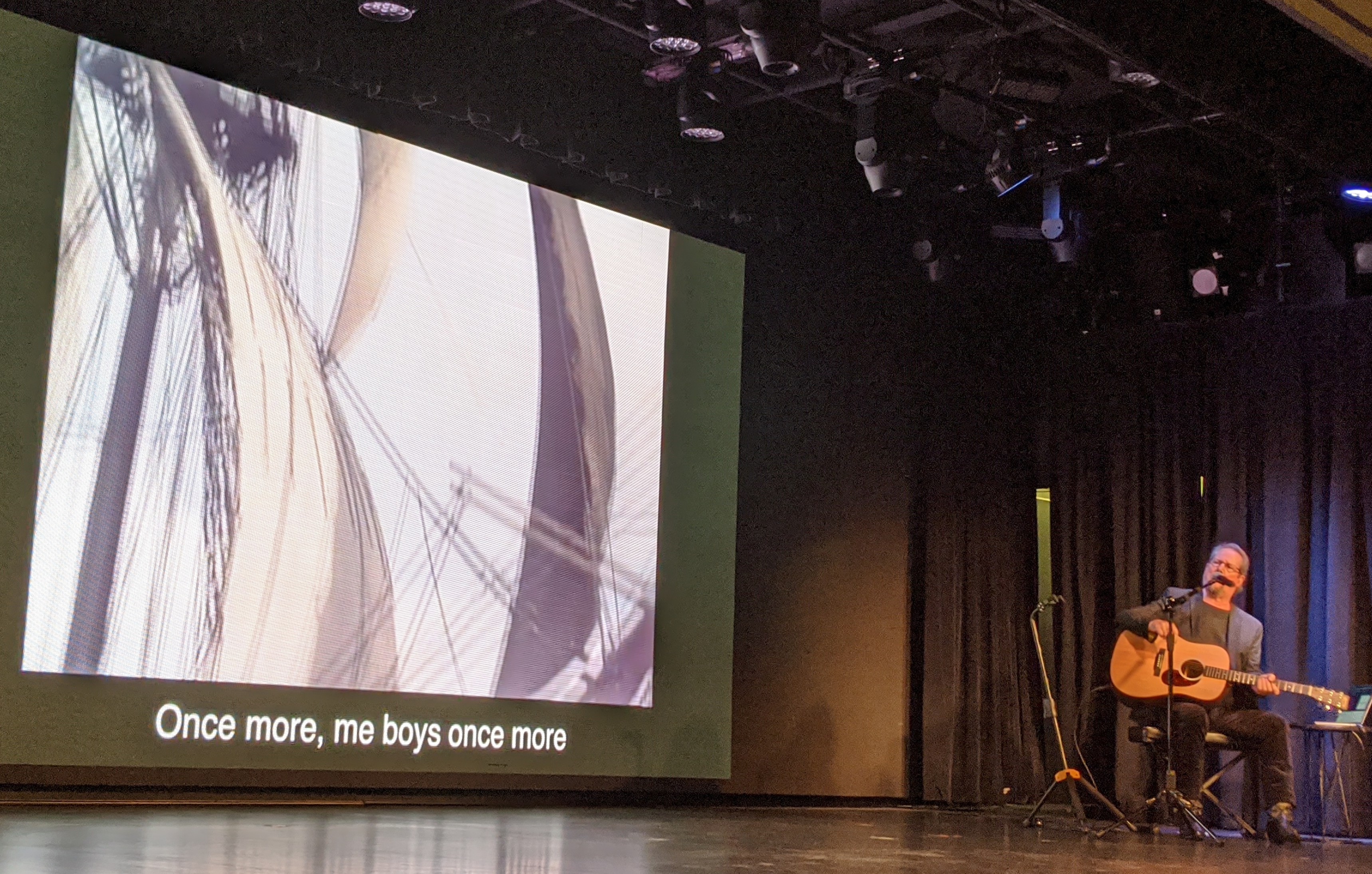
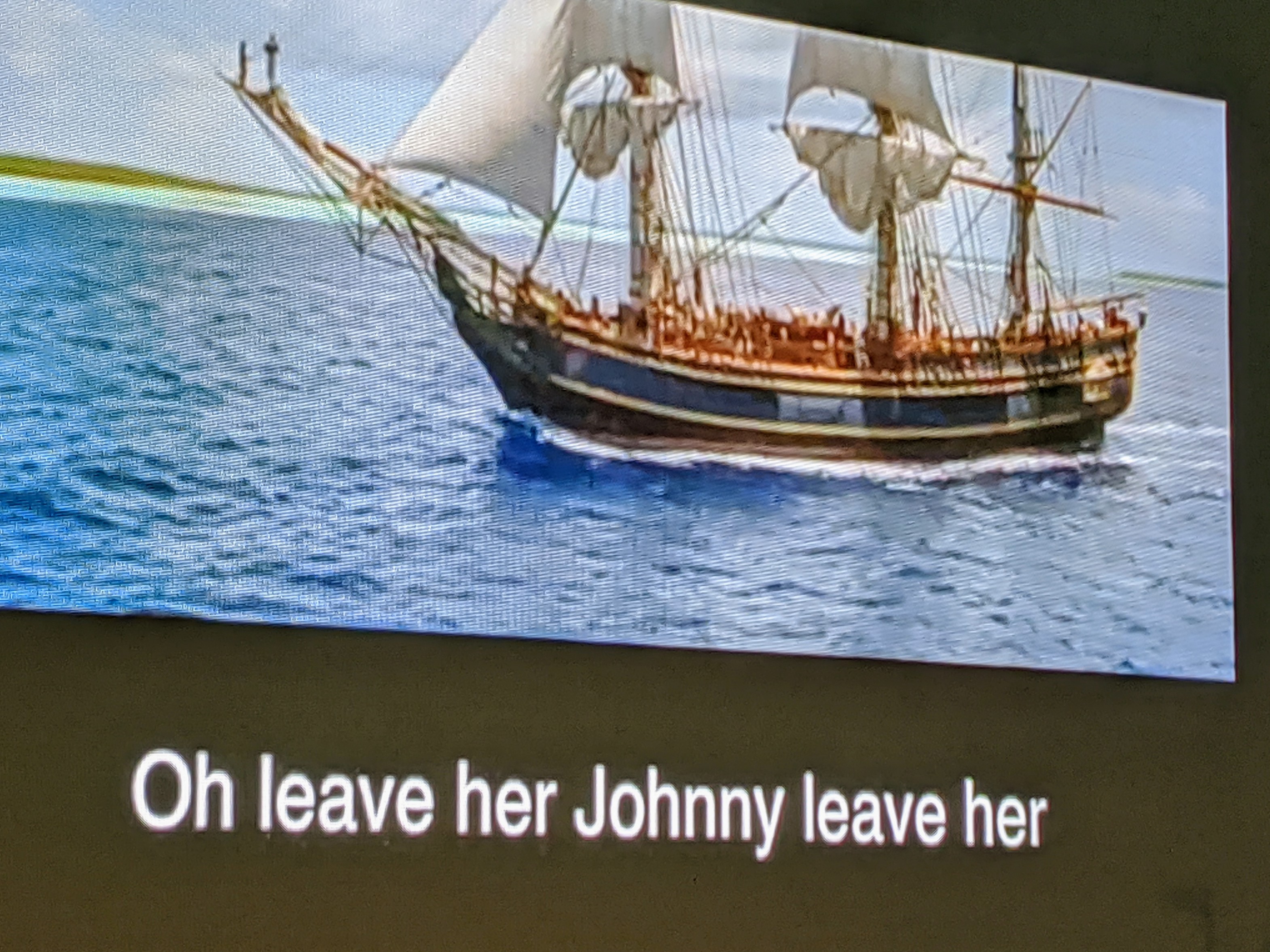
The fourth and final session was titled “Songs of the Sea – A Tribute to the Golden Age of Sail.” It was a lovely exploration of the history of 19th-century sailing songs with video, stories, and music. It was a fun way to end his lecture series, and the audience enthusiastically sang along.

So of course we’re saving the best for last! Whenever we would see Roger and Camilla on board or on shore, they were open, friendly, and totally approachable. So one afternoon (it happened to be Denise’s birthday) we saw them relaxing at the Living Room Bar. Denise told him it was her birthday, and he graciously agreed to a quick picture…adding a sincere “Happy Birthday!” Swoon!

“Bula!” from Suva, Fiji

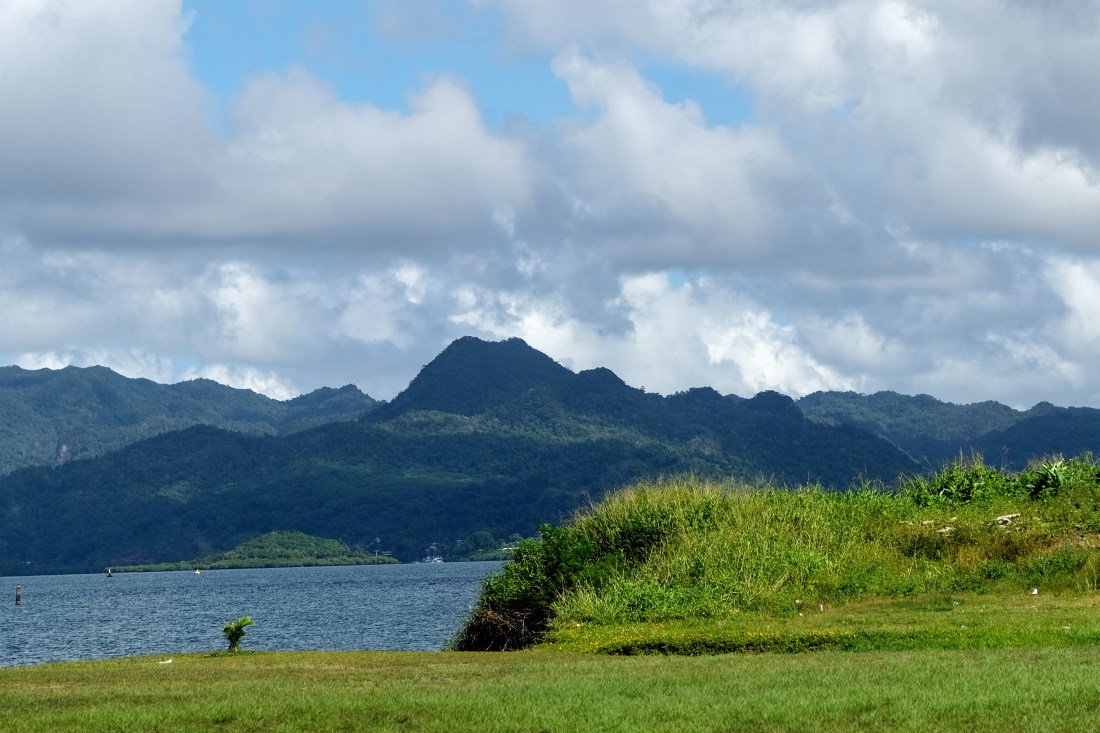
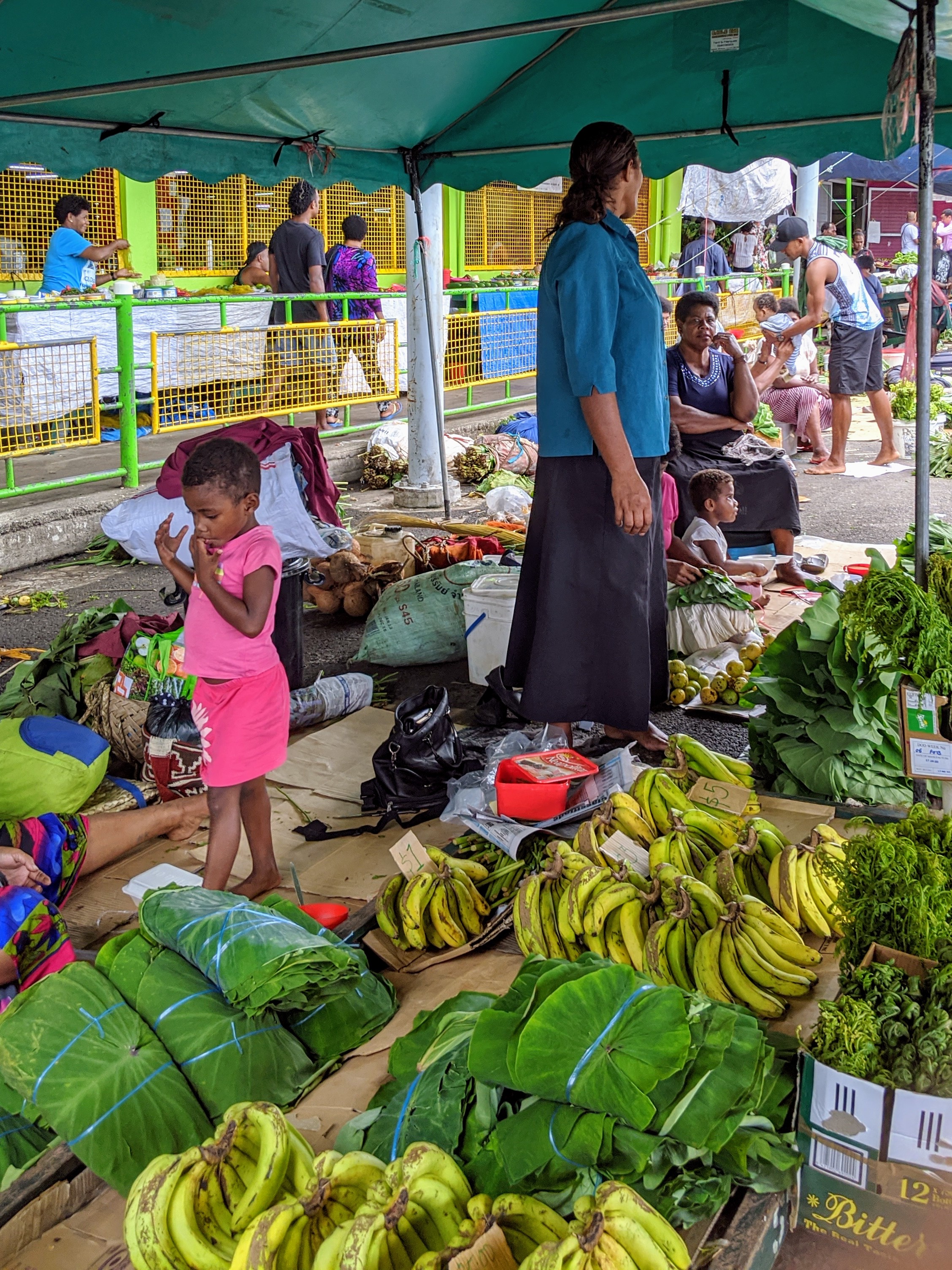
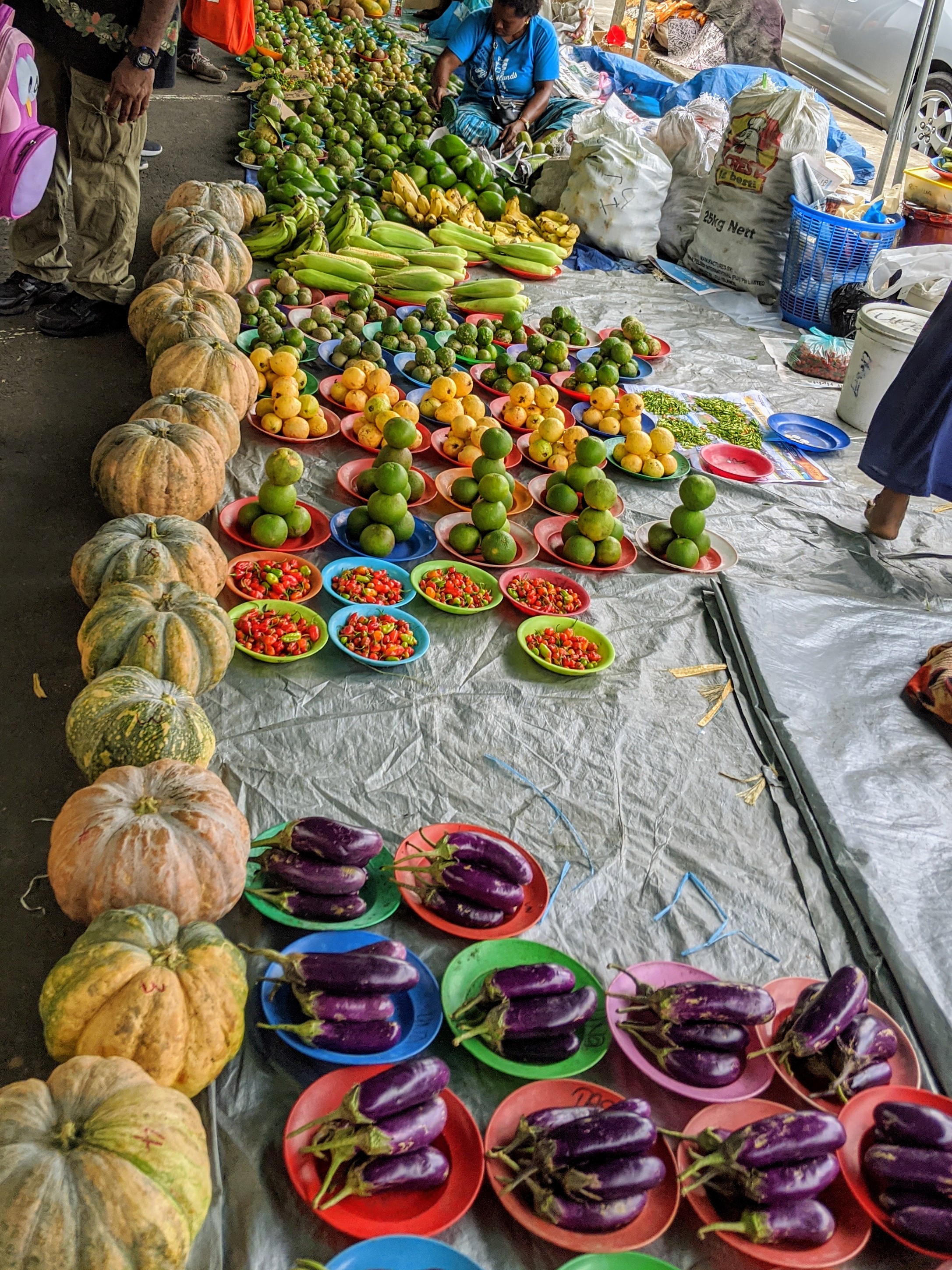
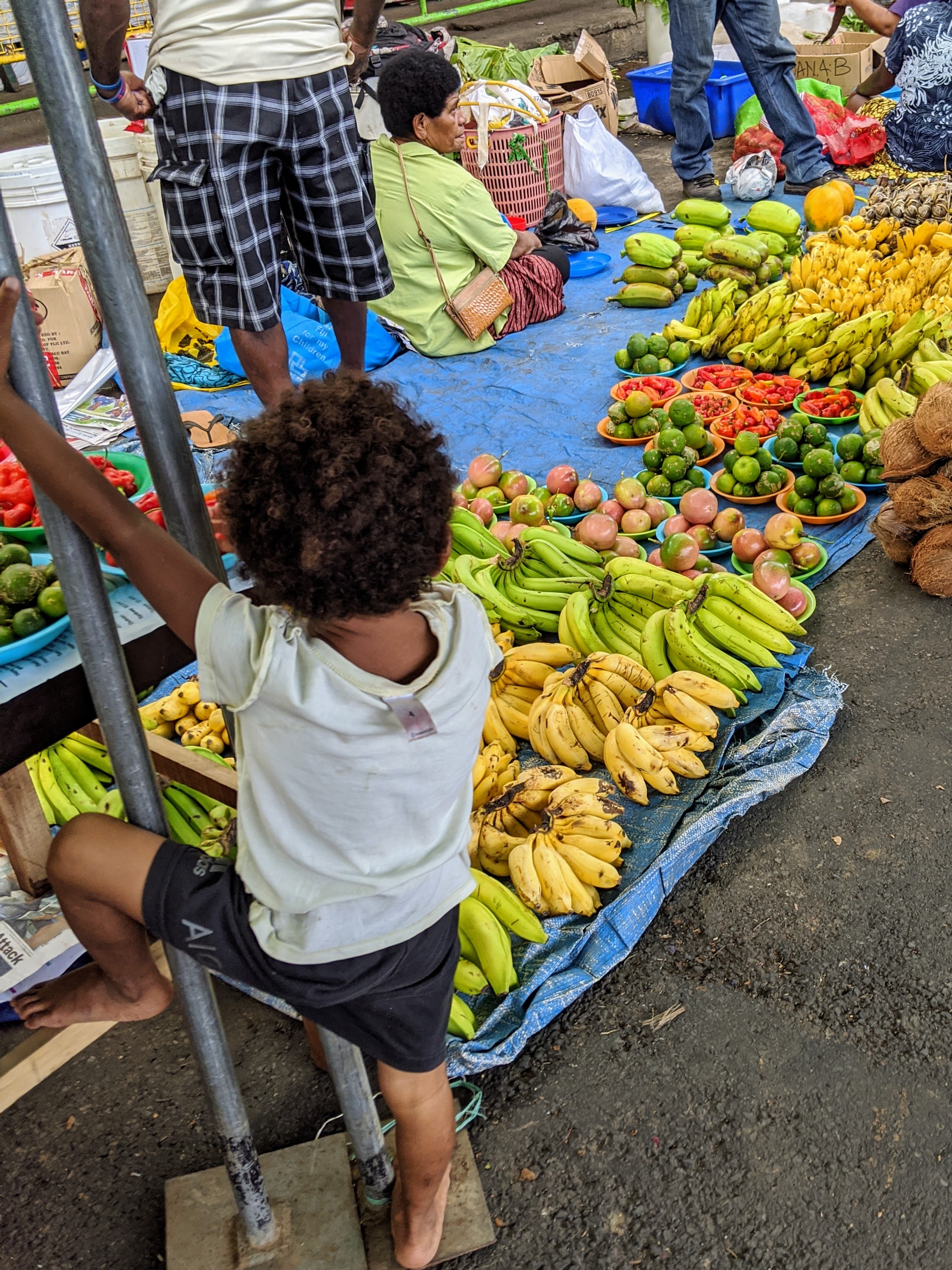
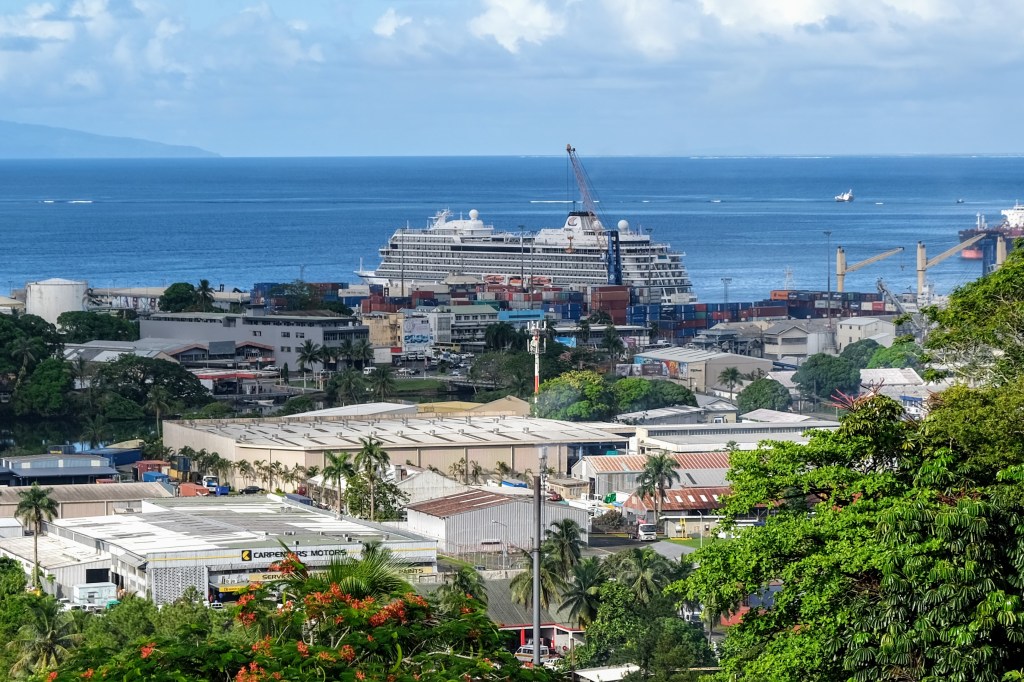
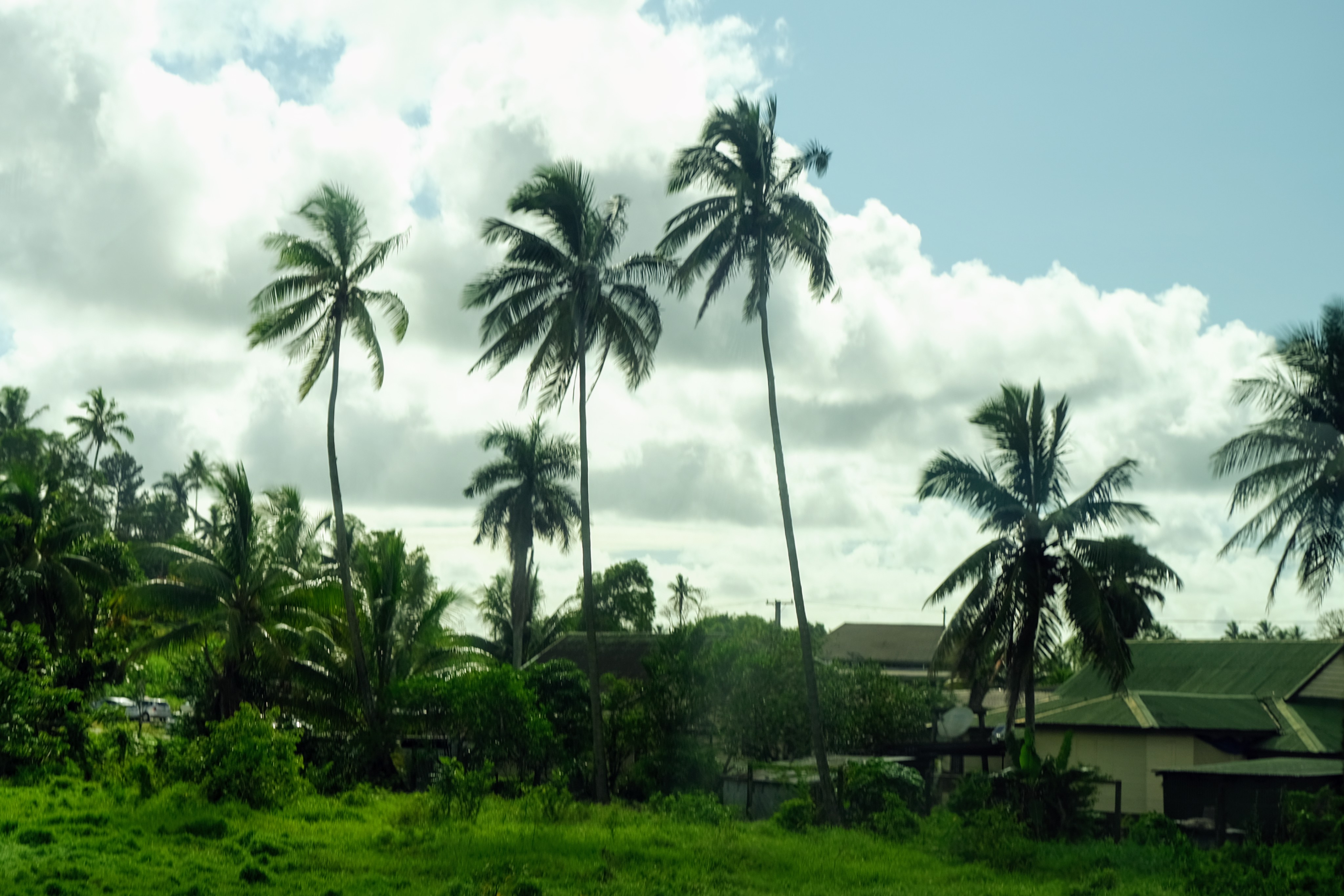
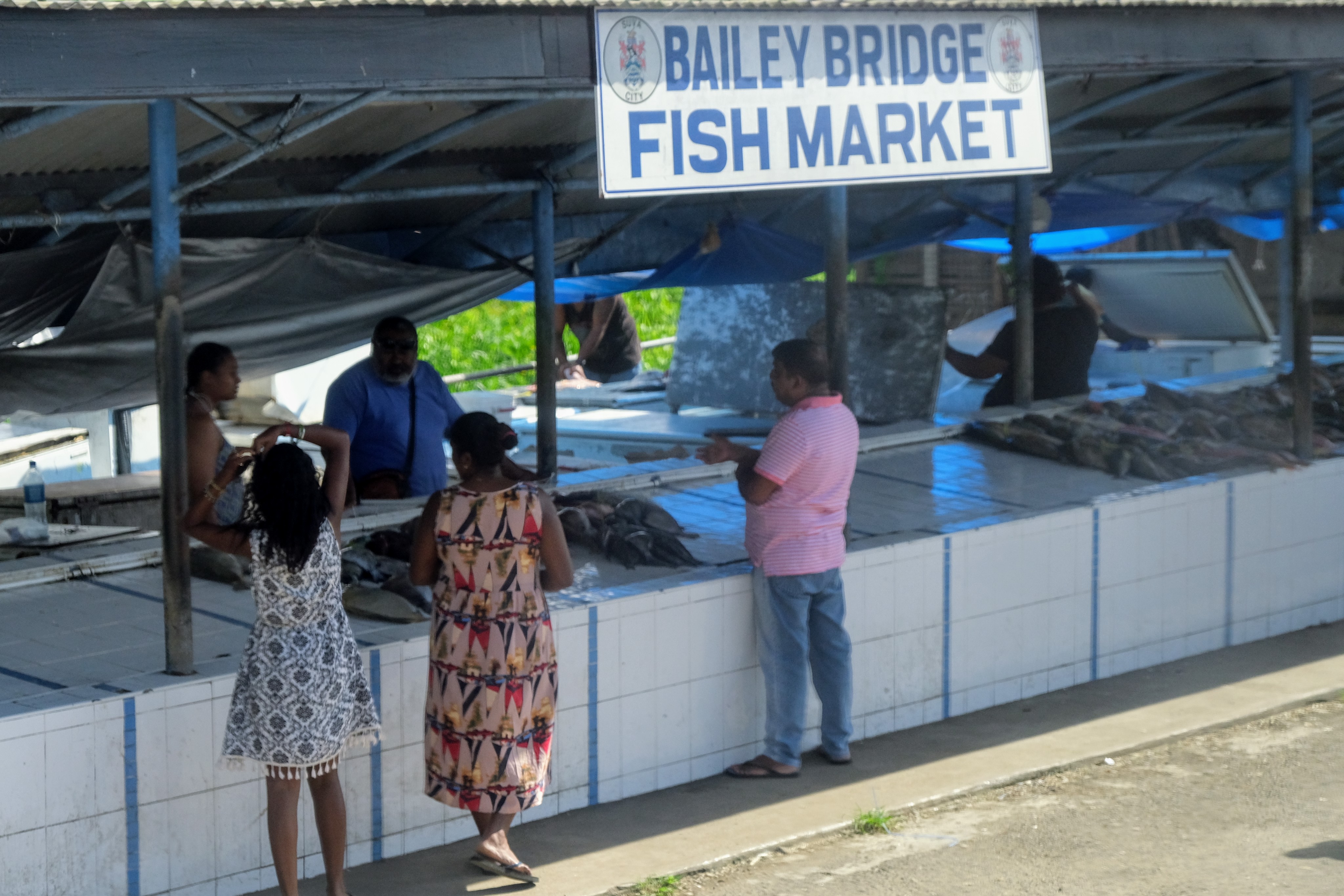
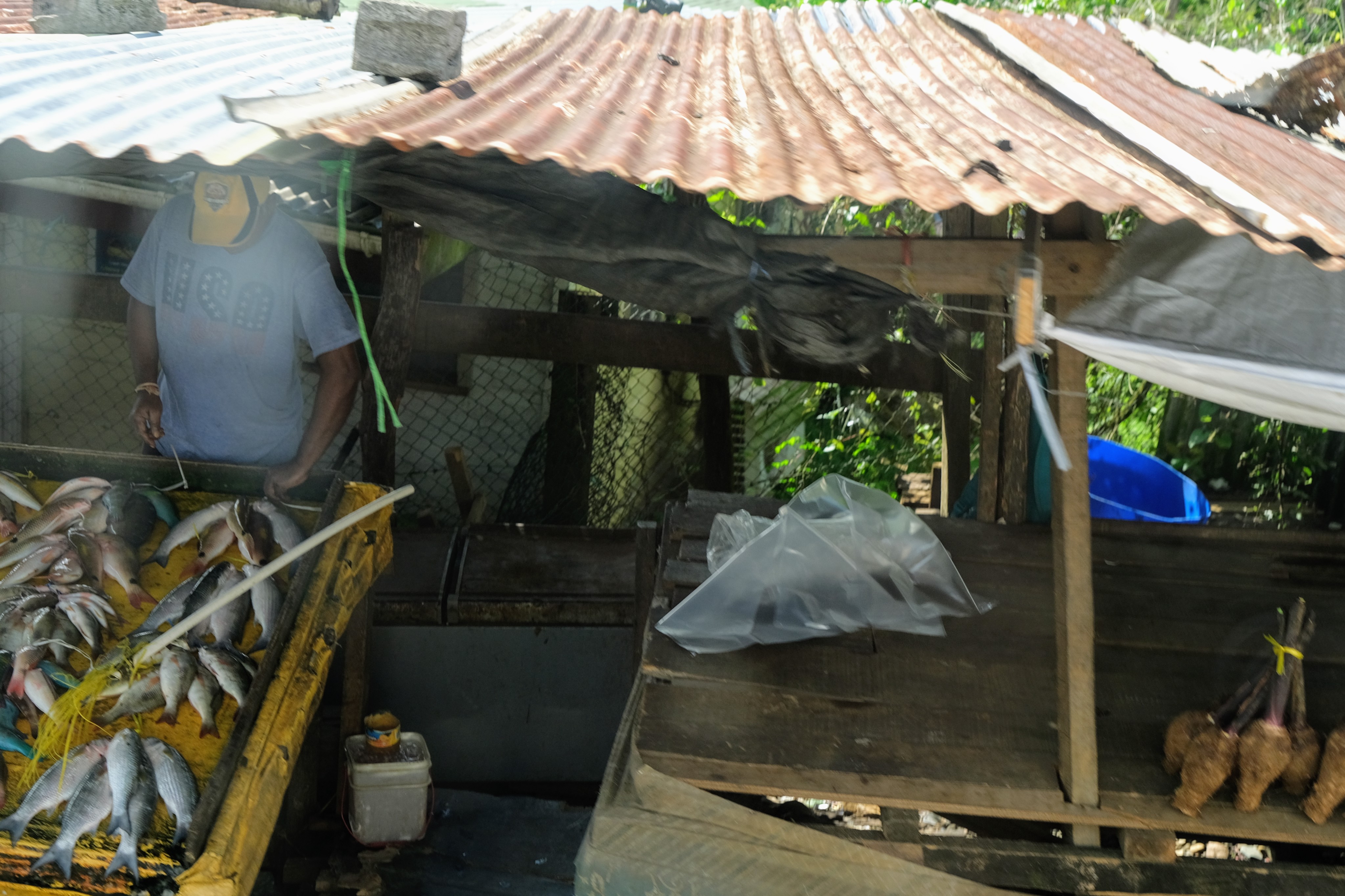
Fiji is comprised of 300 small islands, the largest of which is Viti Levu. The Viking Sun docked in the port of Suva, the largest city in the South Pacific, on a bright, sunny morning. The image of Fiji that comes to mind is one of alluring sandy beaches, magnificent emerald-clad hills, and stunning coral reefs, but the capital city of Suva looks very much like most busy port towns with a bustling shipping industry and commercial district. Just a few steps from the pier, we were greeted with friendly “bula!” the Fijian word for hello. The Fijian people seemed welcoming and eager to have us experience everything from a taxi ride, to a massage, to shopping, to touring the rain forest. We soon stumbled upon the wharf’s market where mostly women and children display row upon row of ripe produce, beautiful flowers, and the fresh catch of the day, along with a wide variety of roots, oils, and herbs. Wandering through the market was a fun way to start our day.

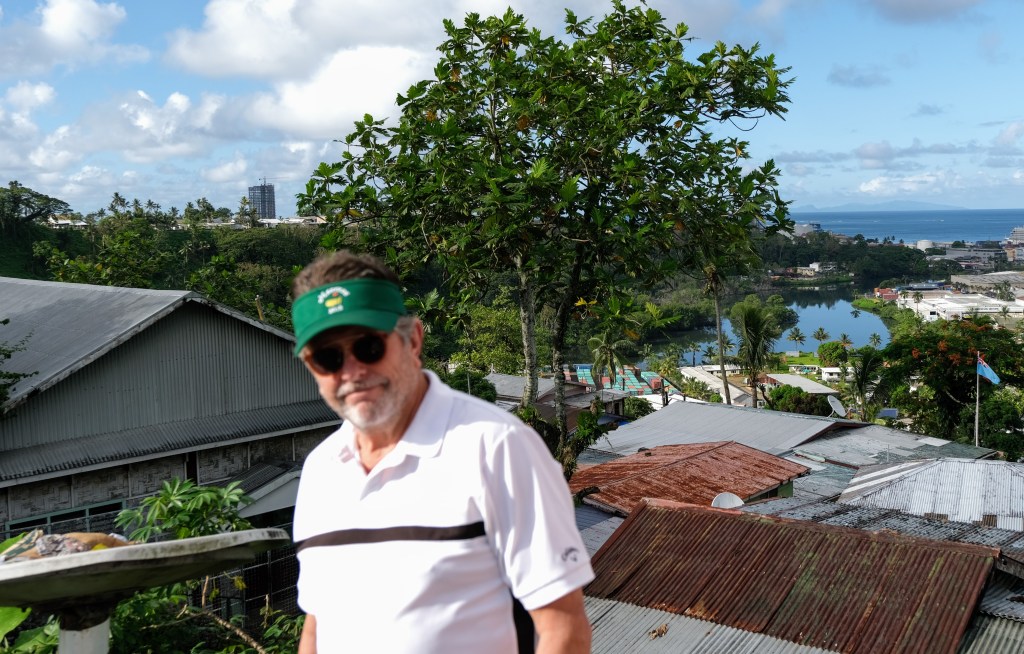
Moving on, we climbed a steep hill to catch some gorgeous views of Suva Harbor.

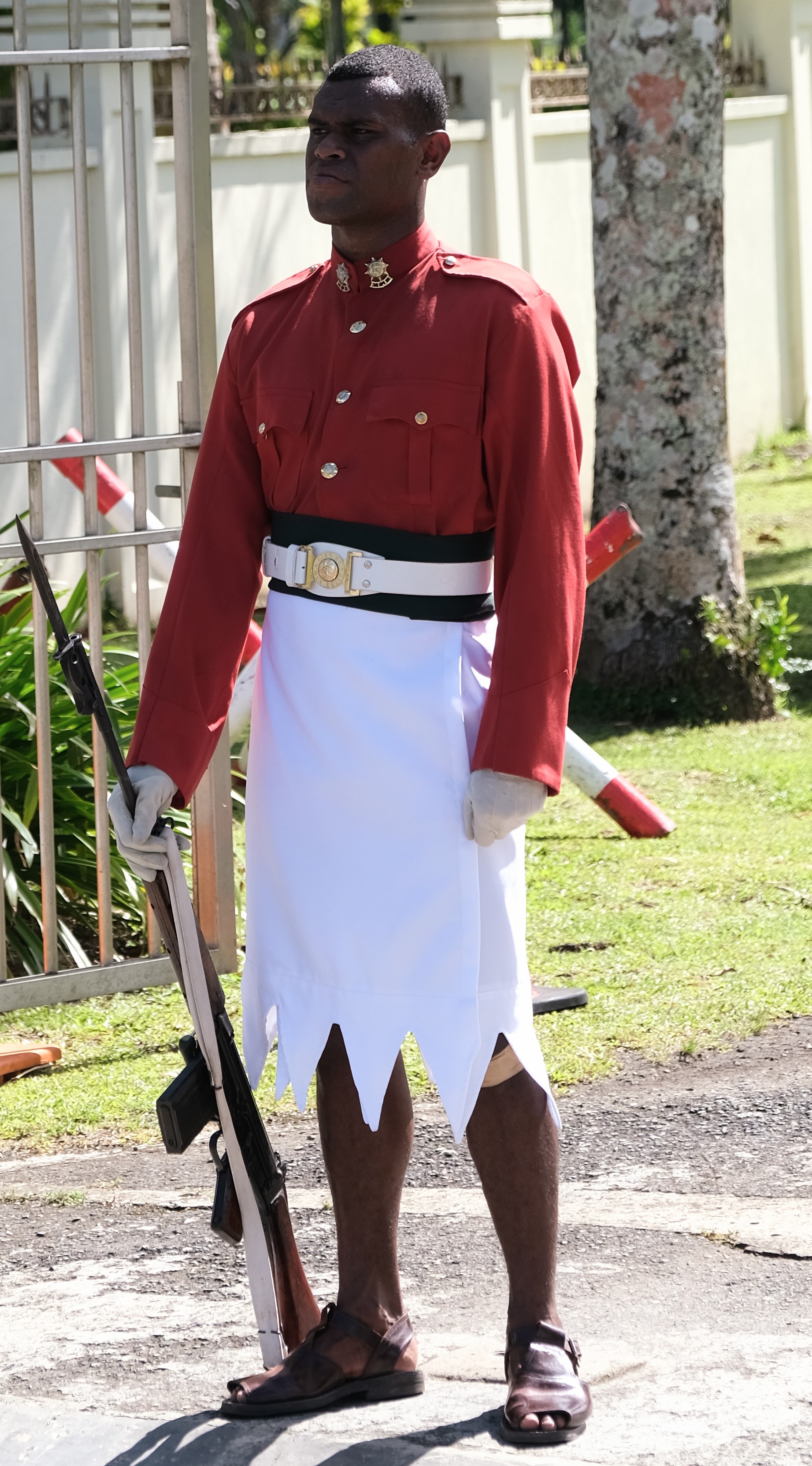
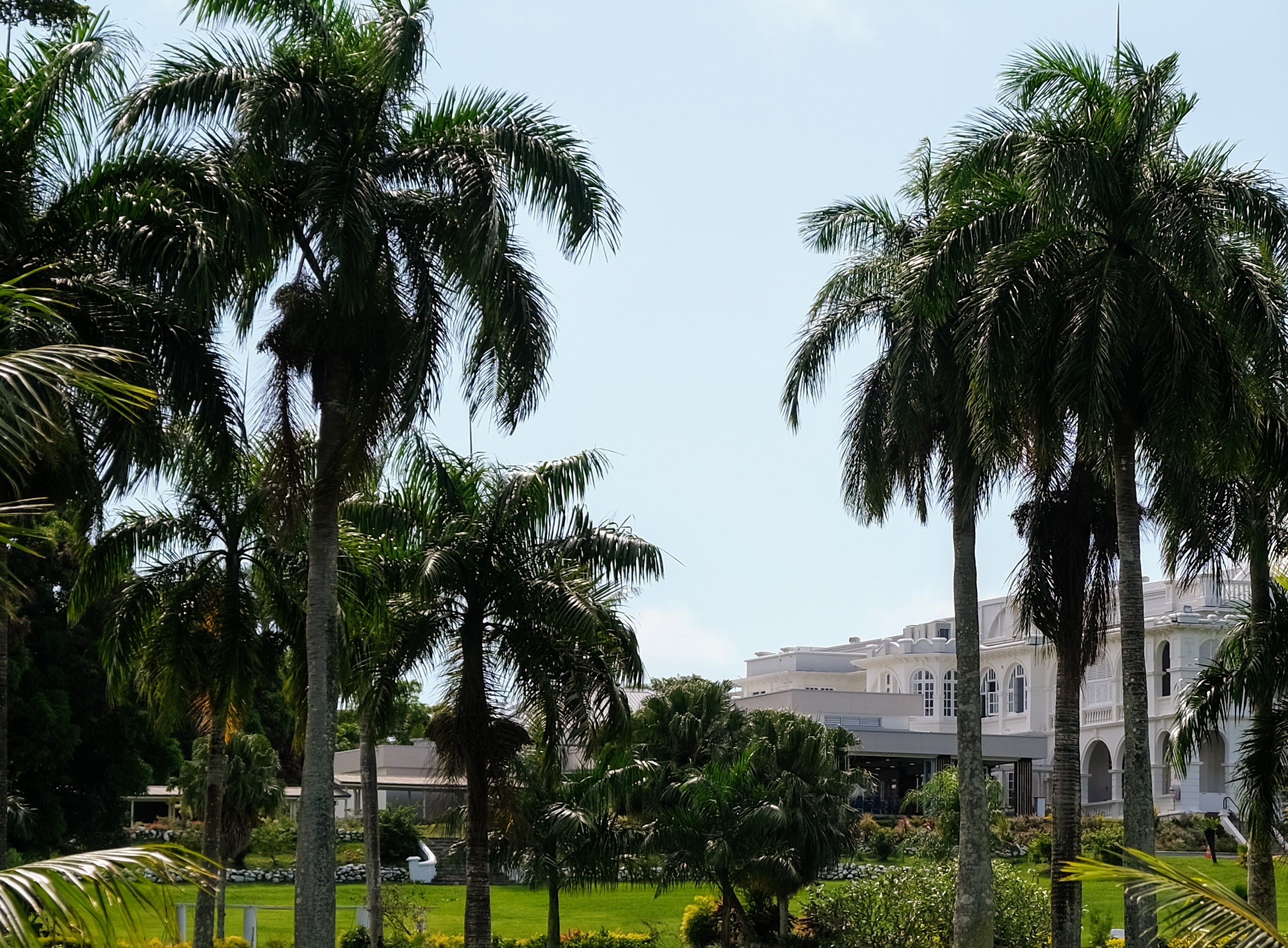
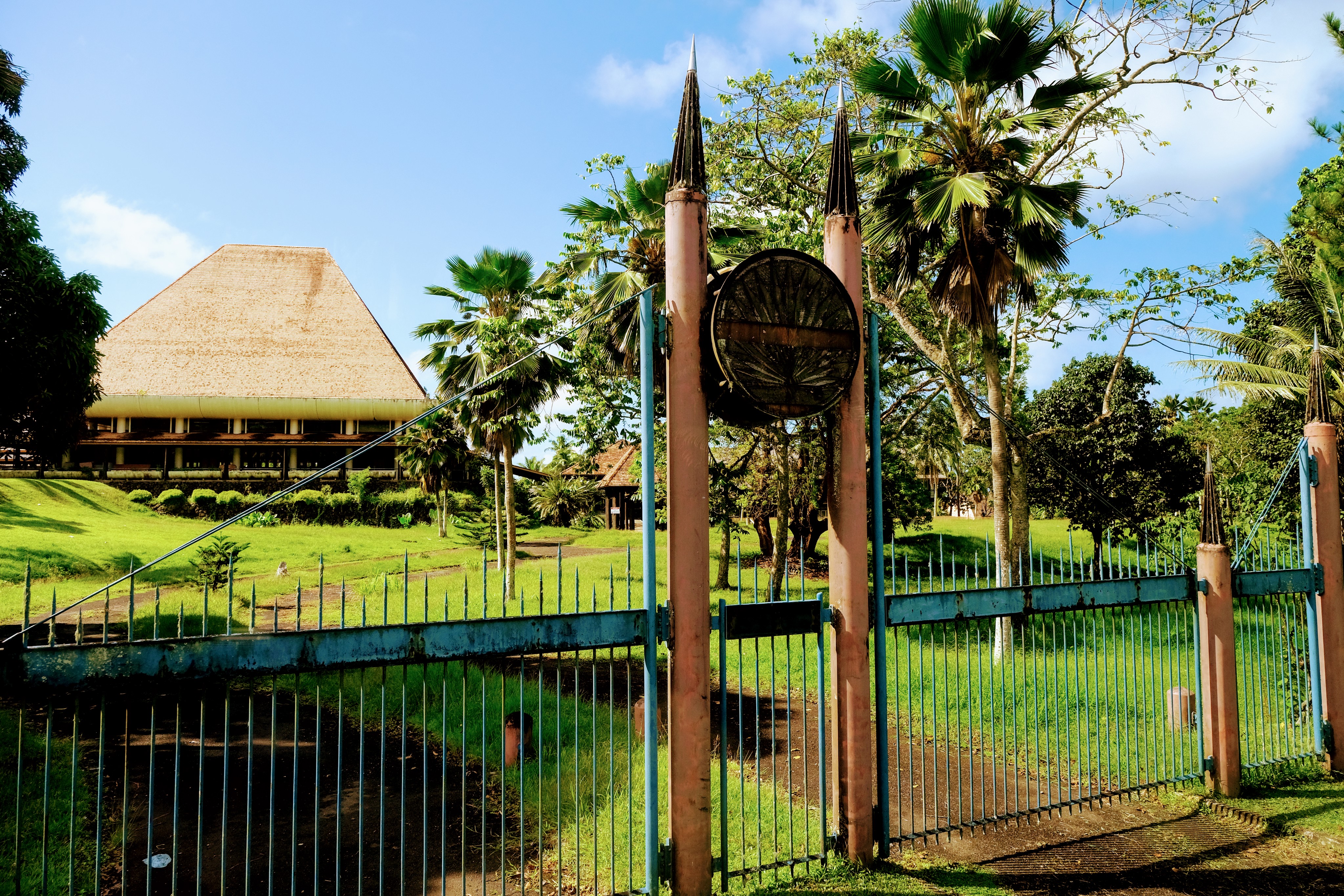
We also got to see the Great Council of Chiefs building and the colonial-style President’s Palace. The palace guards wear traditional uniforms and ensure that the president and his family are well protected.

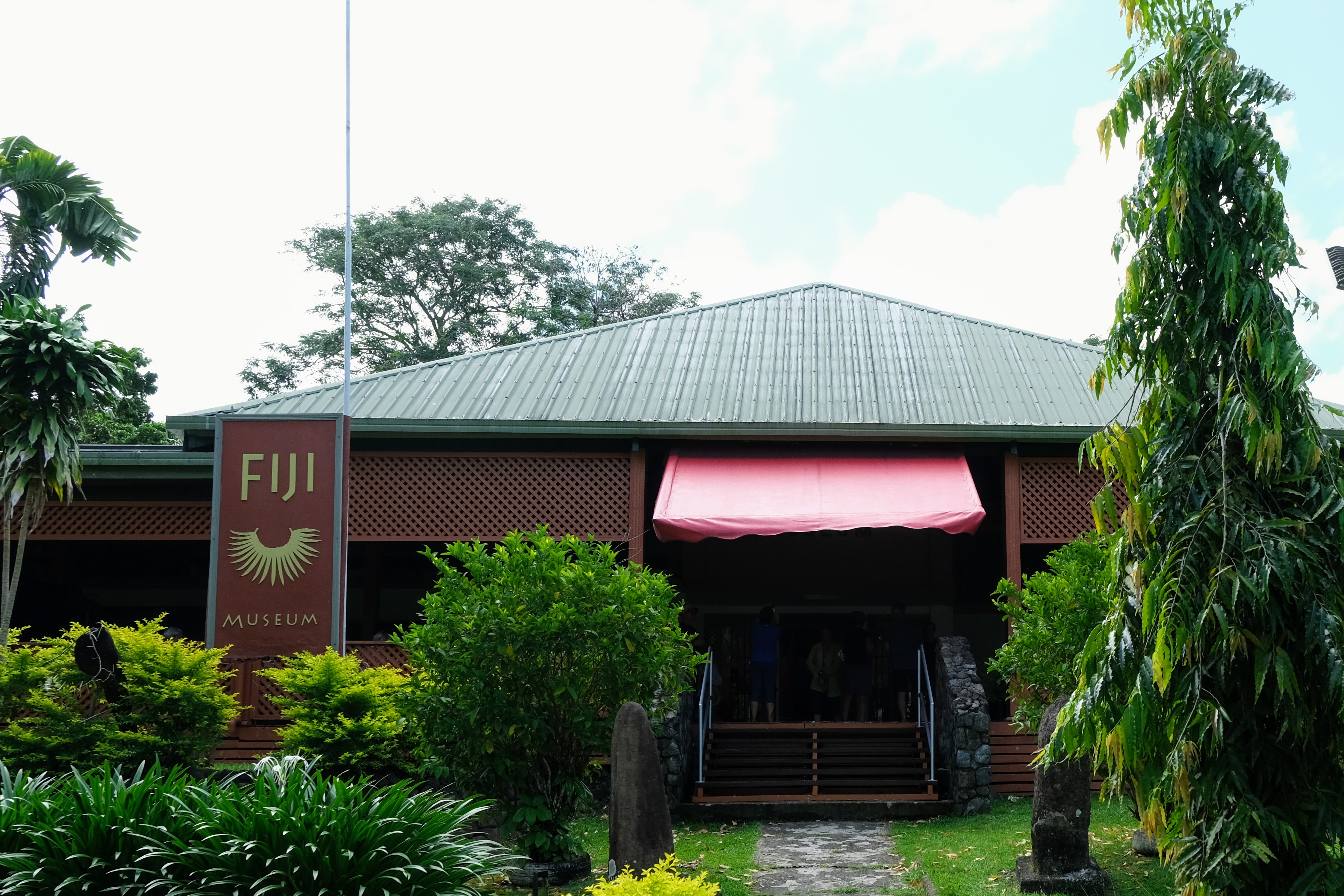
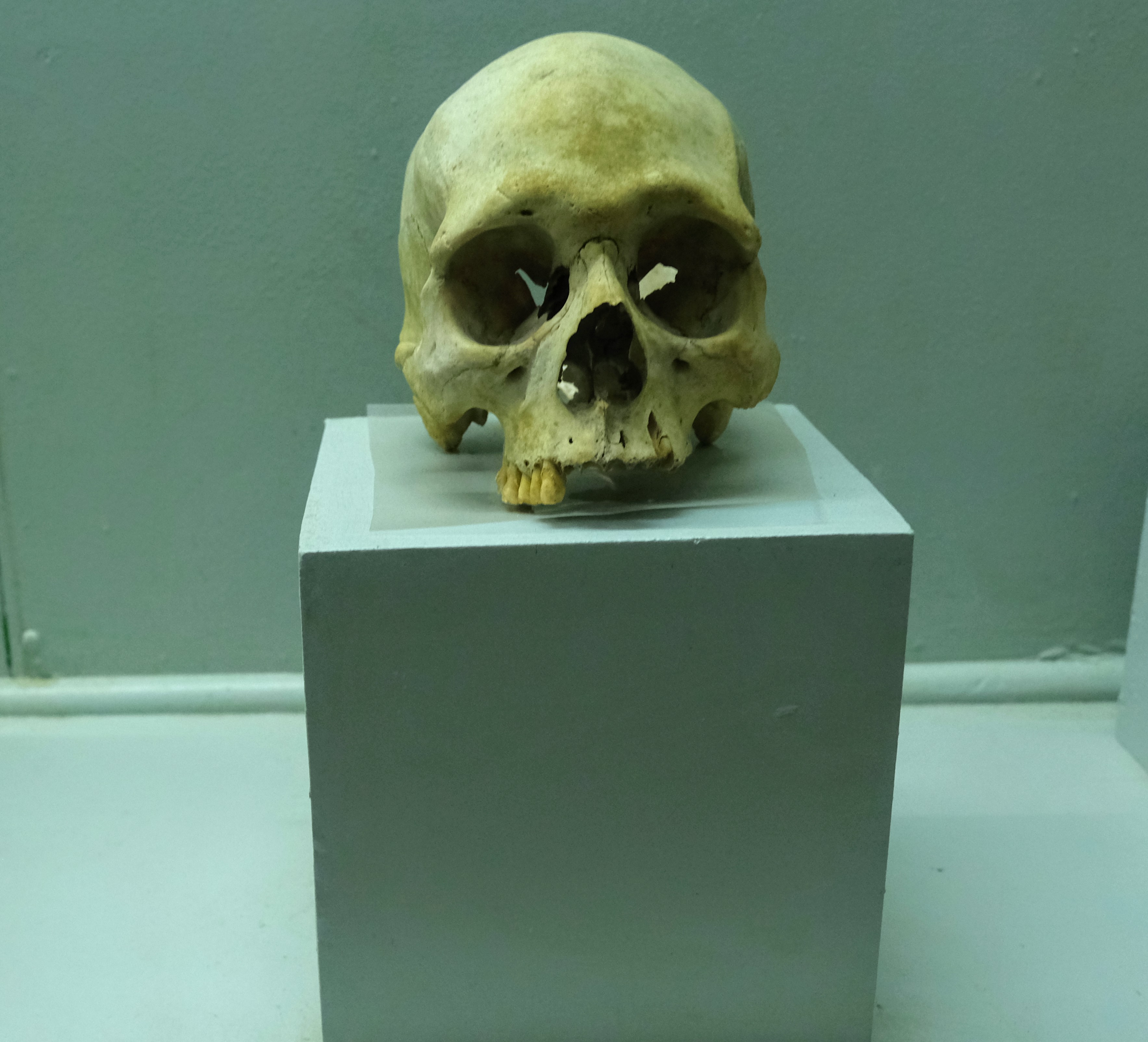
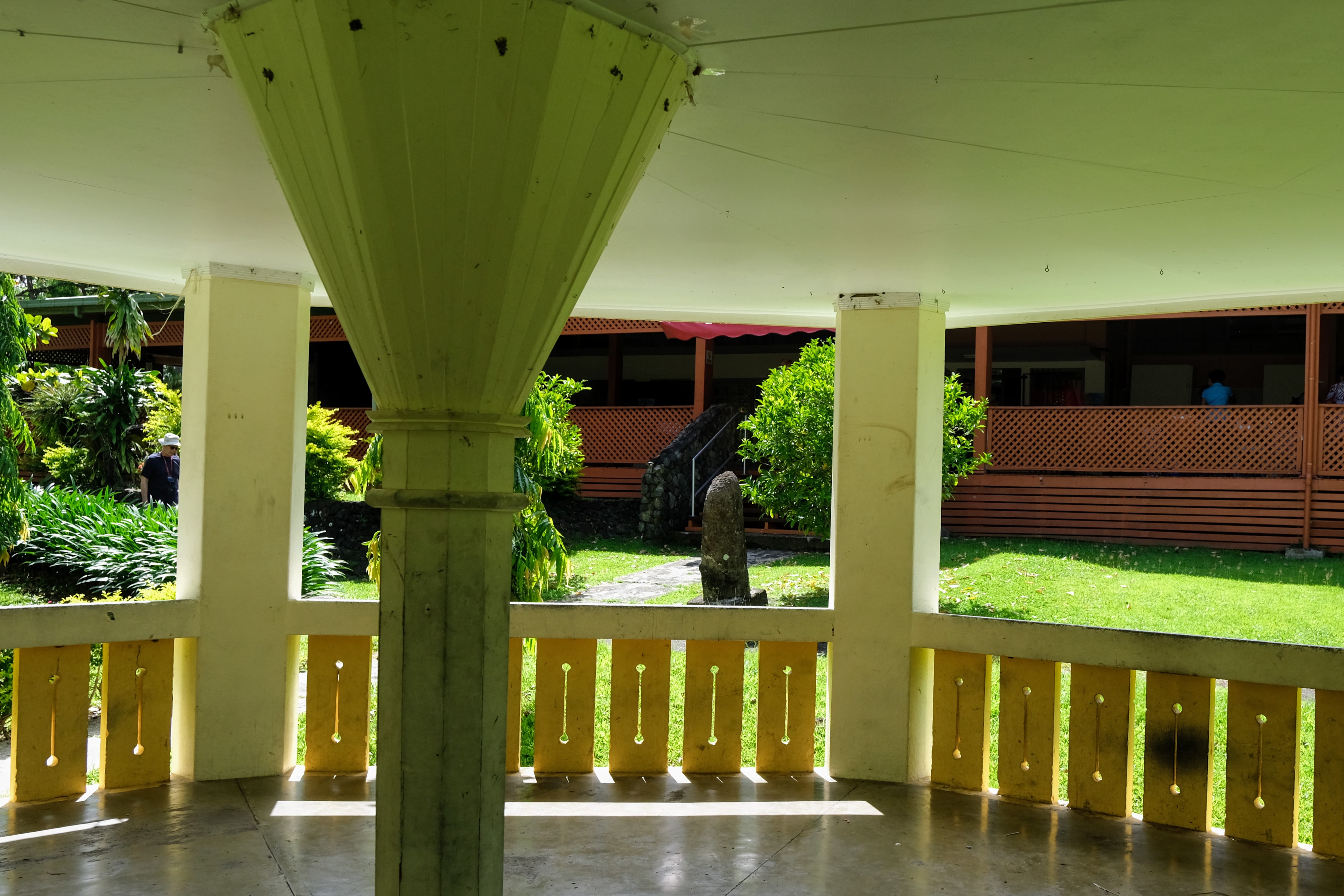
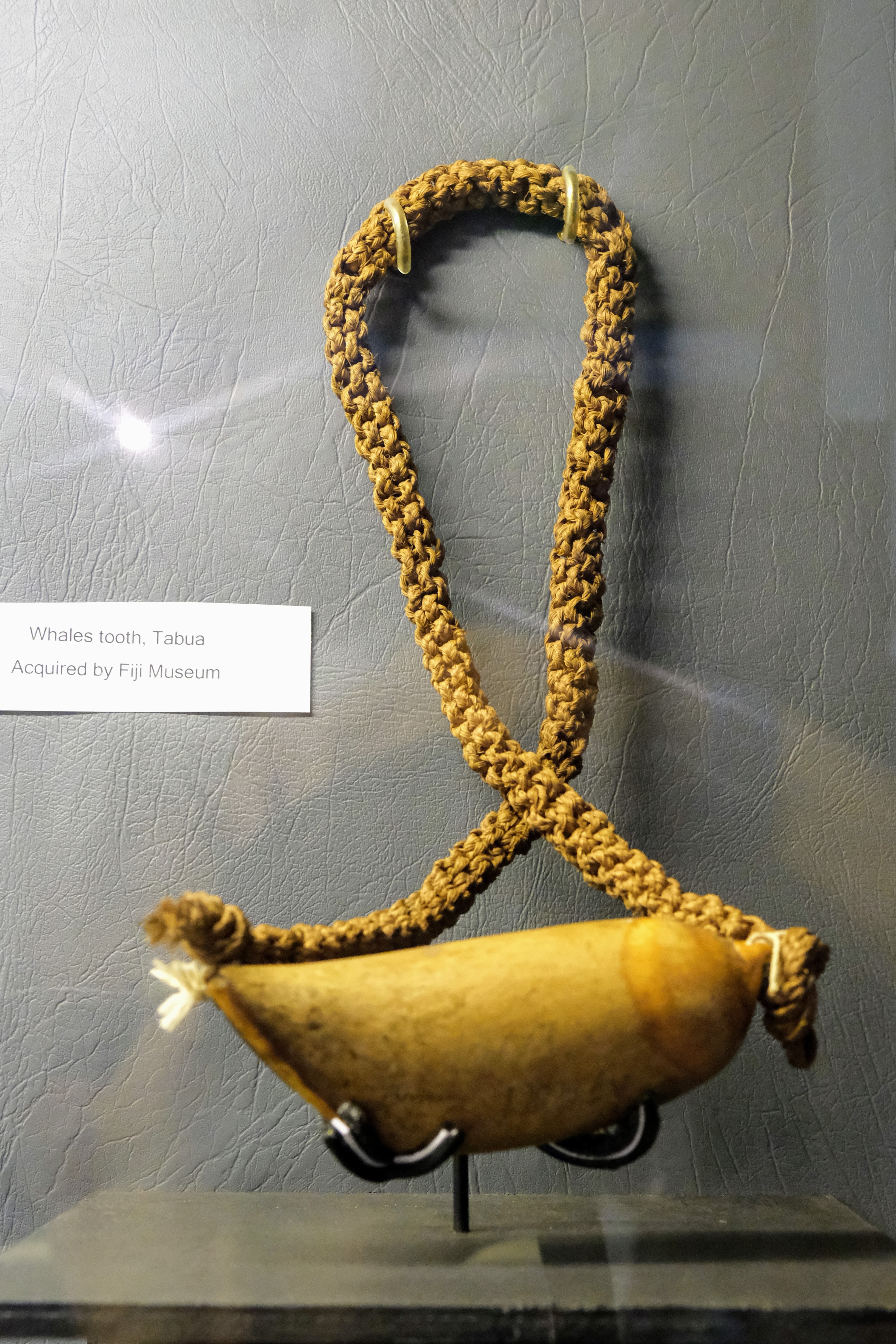
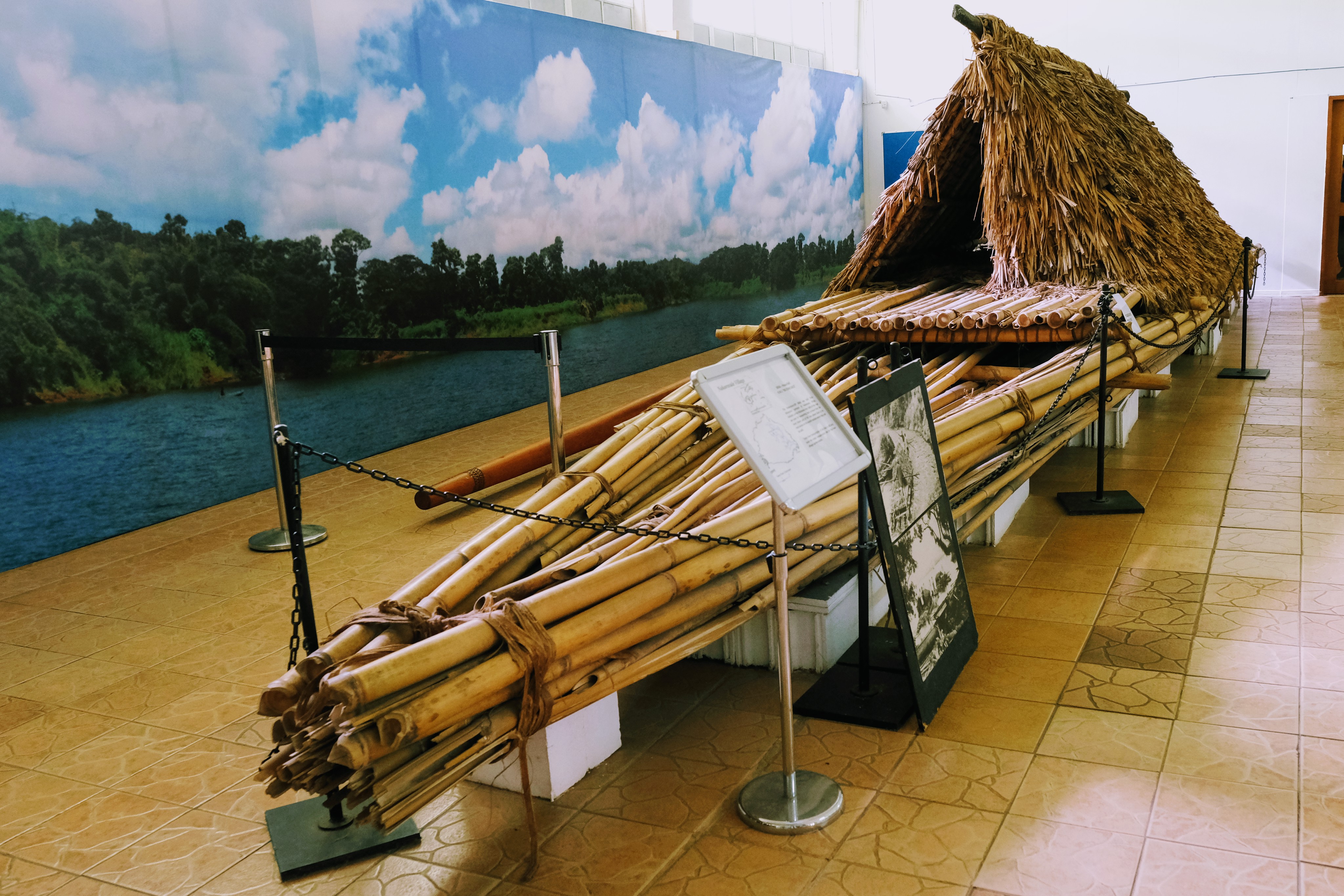
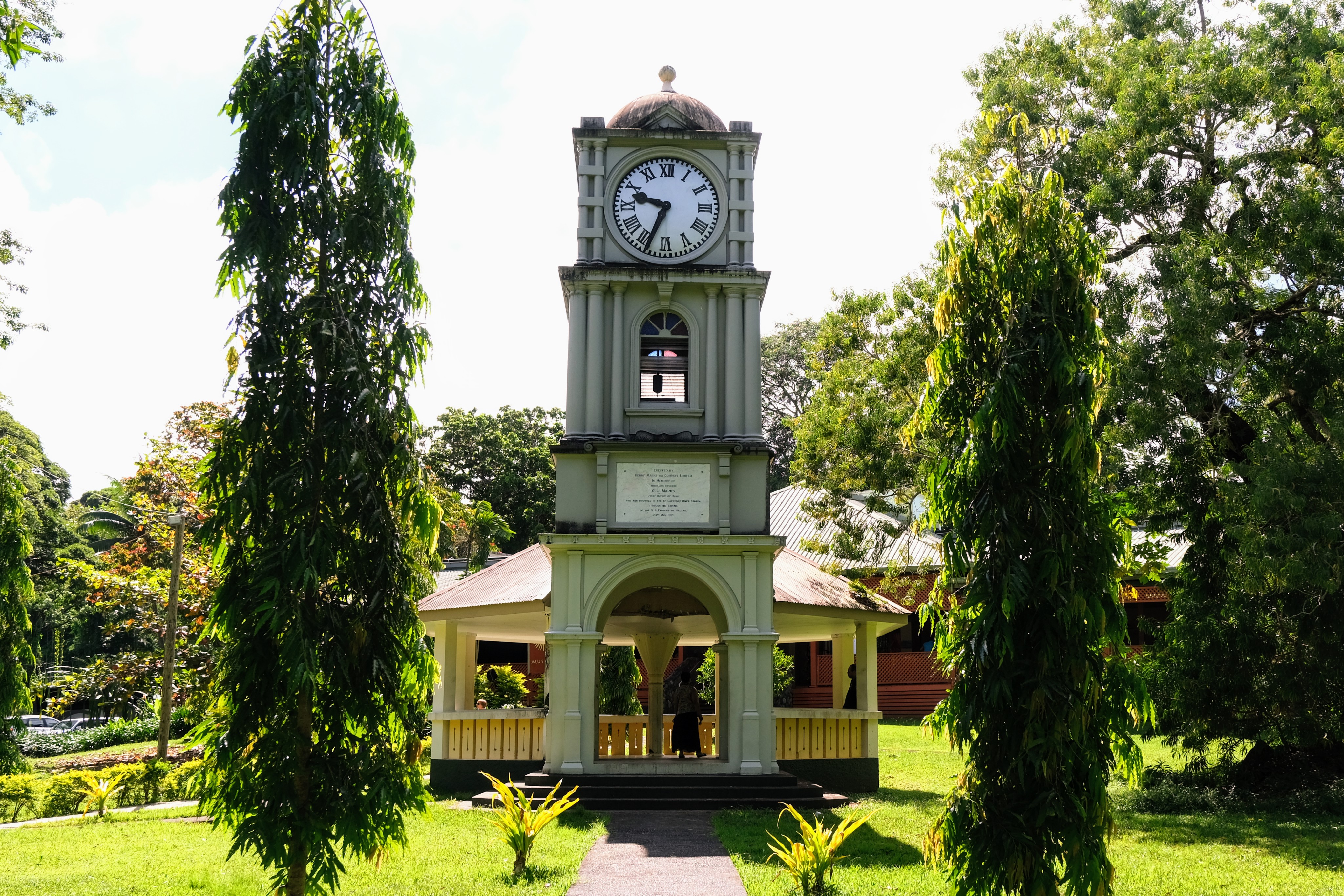
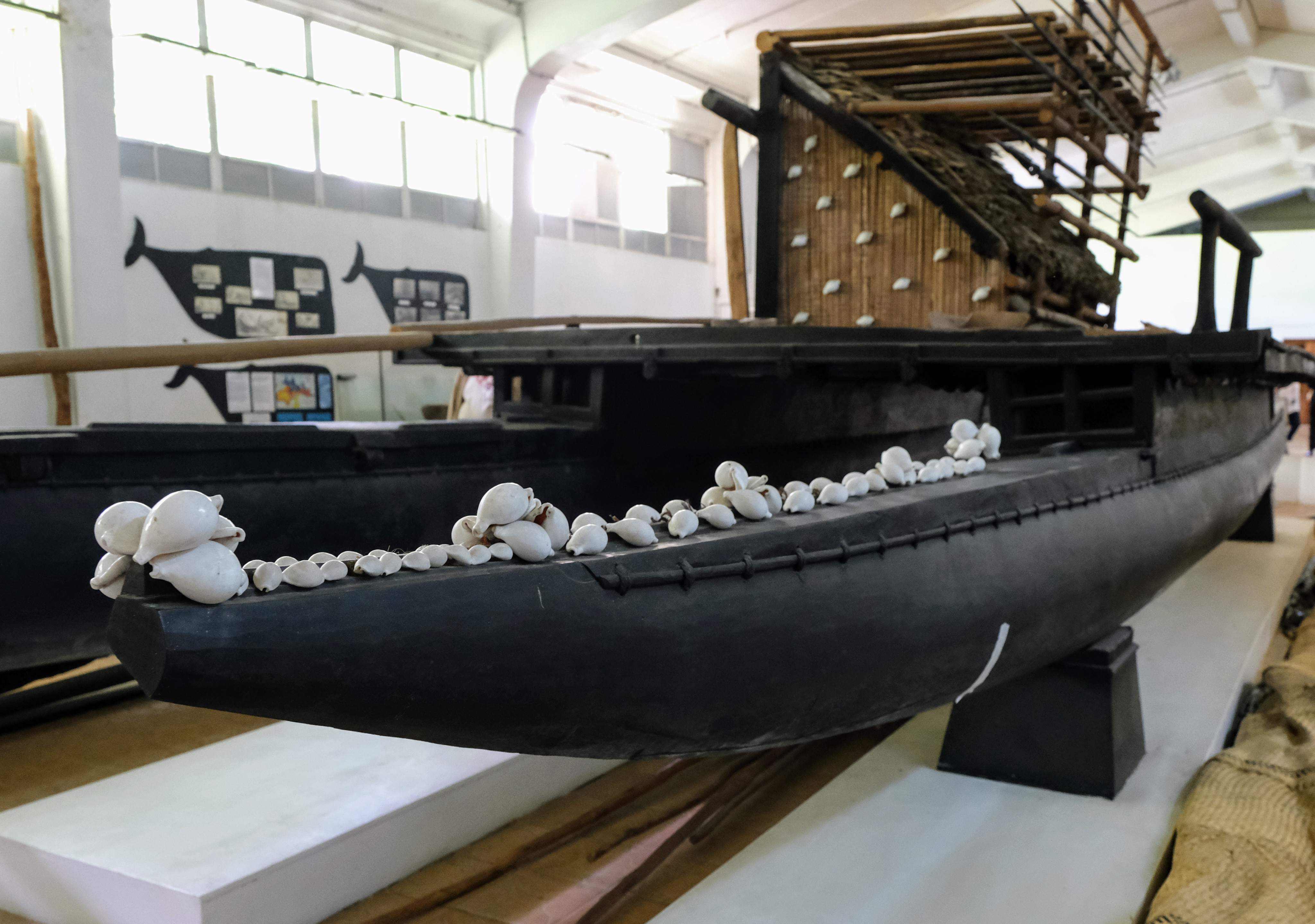
A visit to the Fiji Museum provides fascinating insight into Fiji’s cannibalism period as well as the world’s largest collection of Fijian artifacts, including relics dating back 3,700 years. And the Thurston Gardens surrounding the museum provide an idyllic setting with palm trees, water lilies, ginger trees, and other local flora. The island’s beloved clock tower sits proudly in the middle of the gardens.

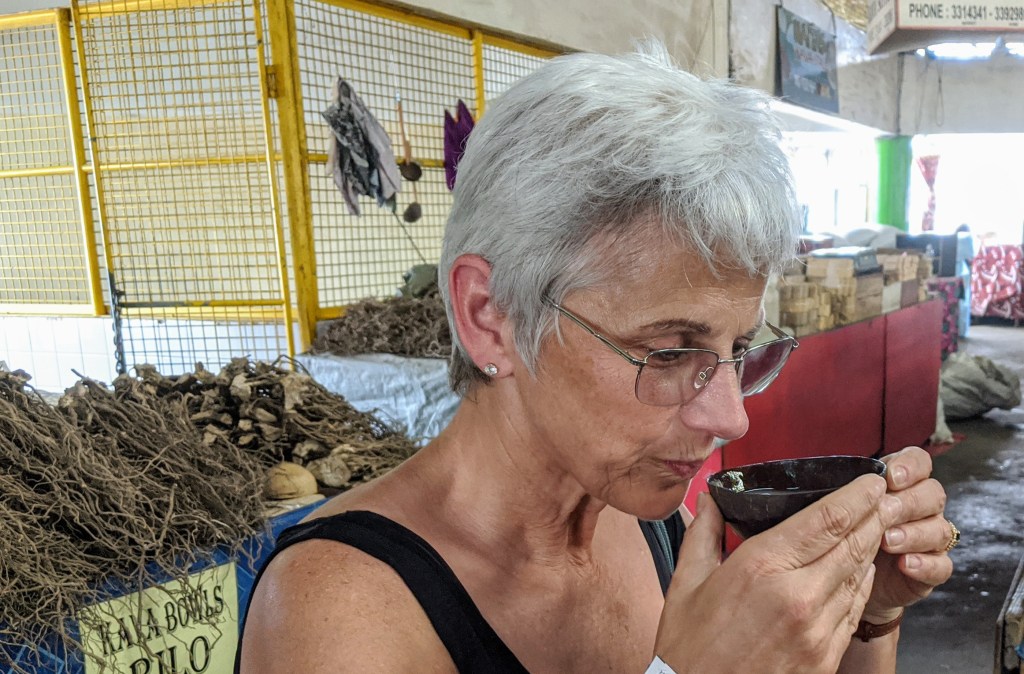
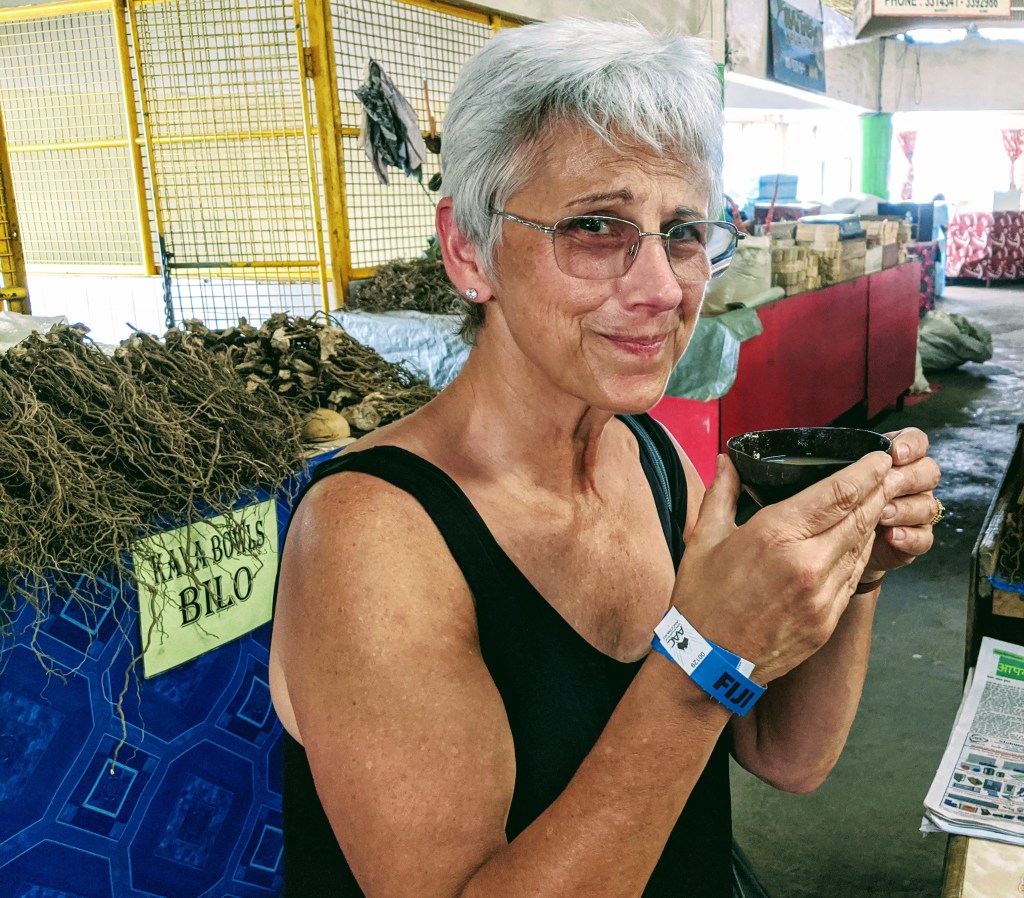
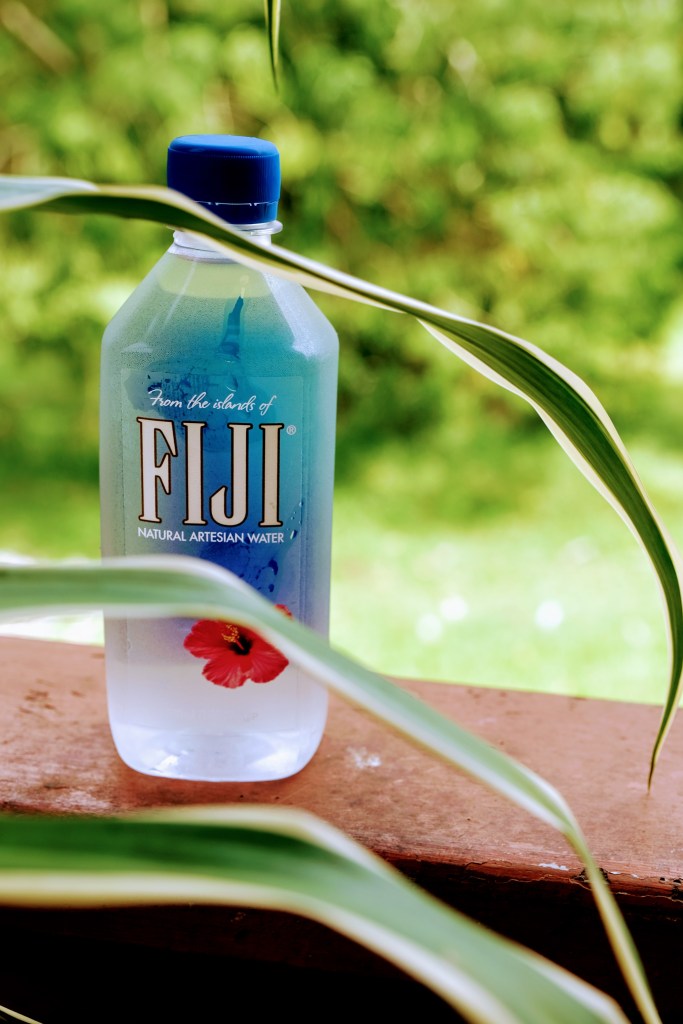
The food and beverages of Fiji range from the traditional to contemporary, but the one beverage that piqued our interest most is kava, and we wanted to try some. Kava is used for medicinal, religious, political, cultural, and social purposes throughout the Pacific. In Fiji, a formal yaqona (kava) ceremony often accompanies important social, political, and religious functions. The beverage is made by pounding sun-dried kava root into a fine powder, straining and mixing it with cold water until it takes on a muddy appearance. Traditionally, kava is drunk from a dried half-shell of a coconut, called a bilo. Kava is very popular in Fiji, especially among young men, and often brings people together for storytelling and socializing. Drinking kava for a few hours brings a tongue-numbing and relaxing effect to the drinker. Denise decided to try it…her facial expression tells it all. In the future, she’ll likely stick to the OTHER Fijian beverage.

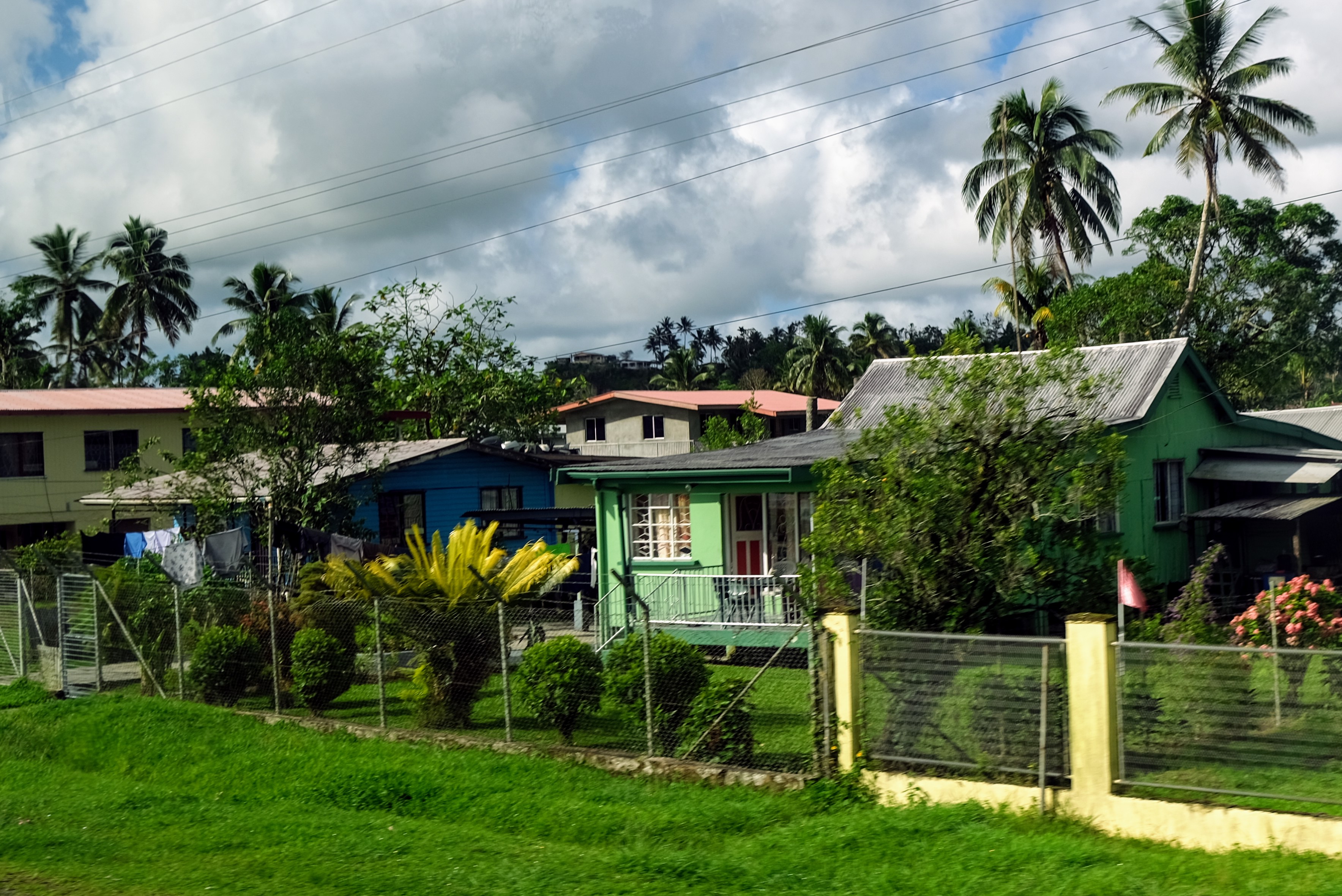
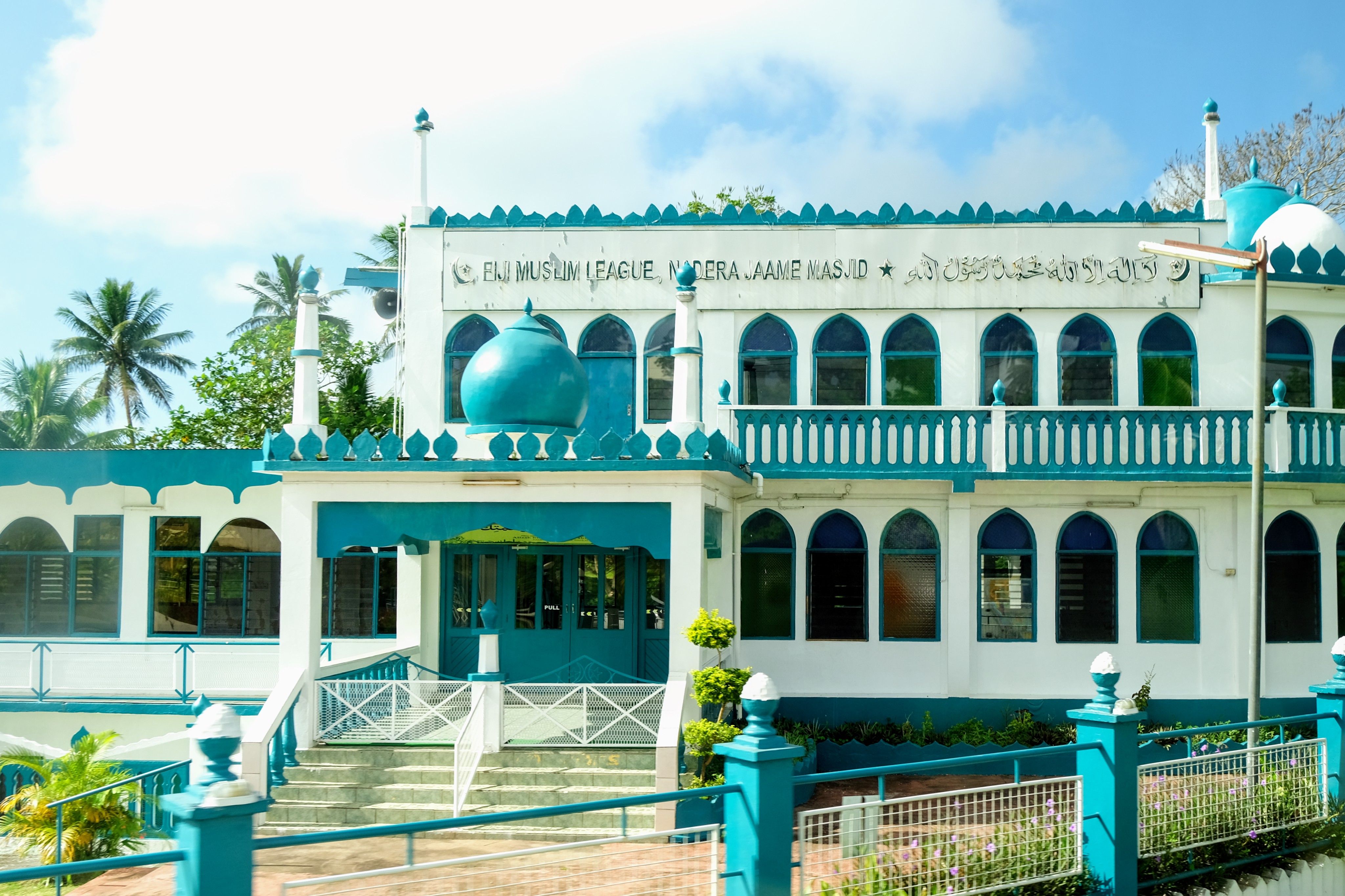
We were a bit disappointed that we didn’t have more time to get to see other parts of Fiji, but we did take a quick tour around to see where the people of Suva live, work, shop, eat, worship, and play. We learned that there is great religious freedom in Fiji, and people tend to live in tribes that are related to the work they do. Each tribe is governed by an elected chief, and our guide was quite proud to tell us that his tribe had recently elected its first woman chief.

As we sailed away from Fiji, we realized that we had only seen a small piece of this lovely island, but perhaps our travels will bring us back…we wouldn’t mind that a bit!

Tropical Tonga: The Friendly Islands

Although the Viking Sun successfully navigated around Cyclone Tino to arrive in Tonga a day early, his wrath could be felt and seen throughout the kingdom, with many places still without power. Historically called the “Friendly Islands,” Tonga’s official name is the Kingdom of Tonga. It is a Polynesian sovereign state made up of more than 170 islands, only 36 of which are inhabited.

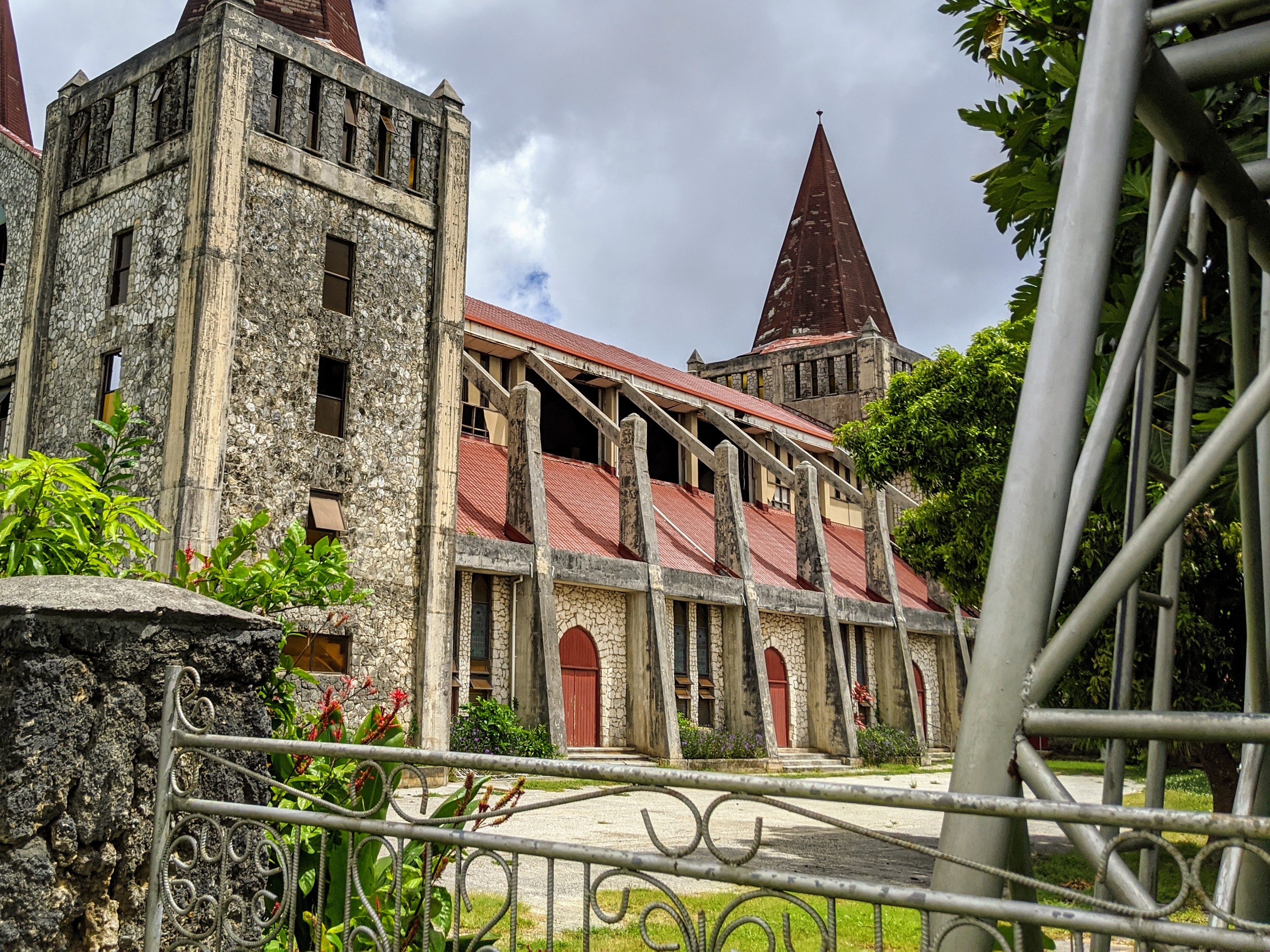
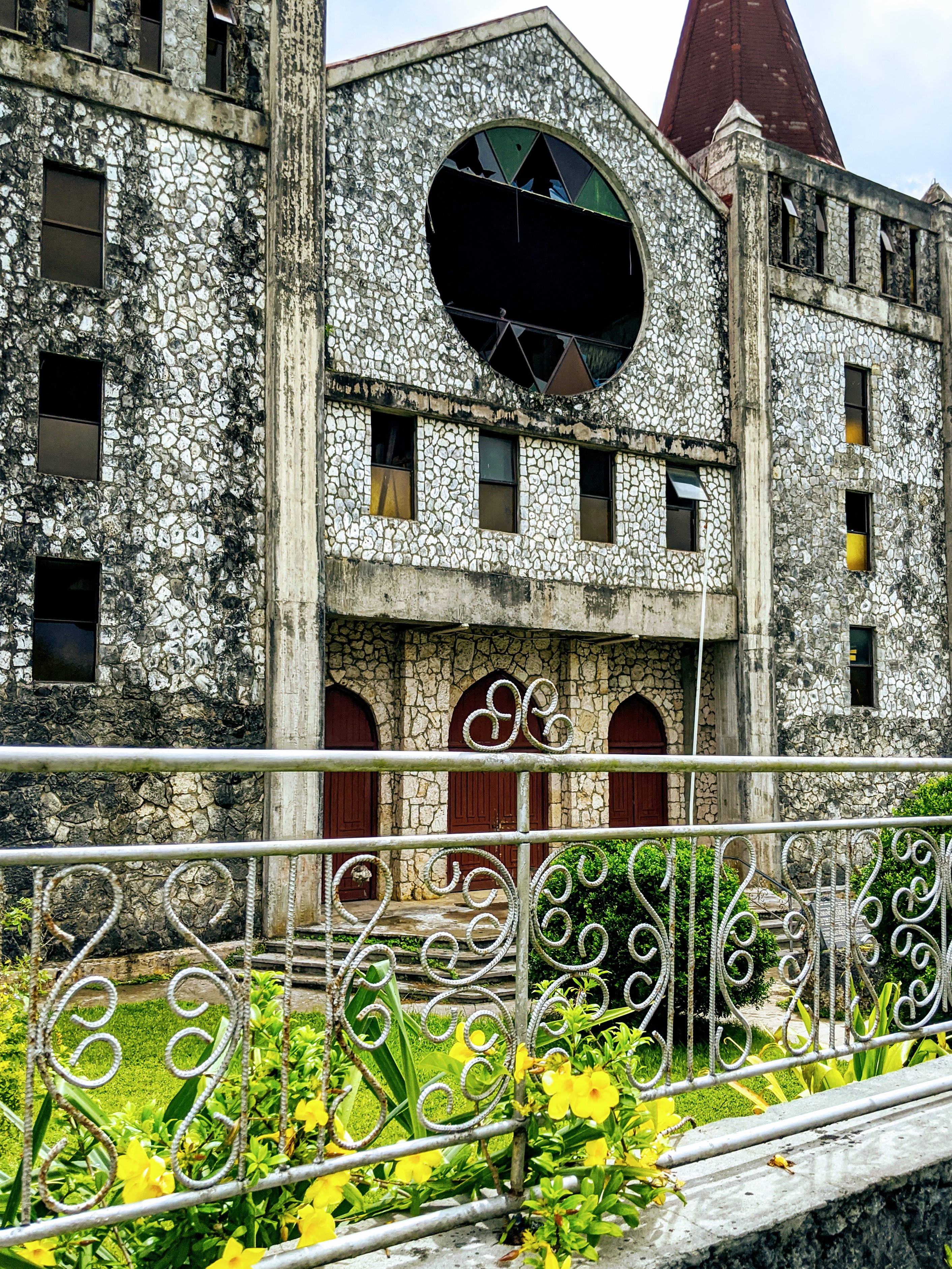
We were greeted with a warm “Malo e lelei” (hello!) by the Tonga Police Dancers, and our cruise staff arranged transfer service to Likualofa for an afternoon at the beach. Along the way, we saw the devastating effects of severe storms that have decimated mango and bread fruit crops, and buildings in varying stages of destruction and repair. The biggest cyclone to hit Tonga in 60 years was Cyclone Gita in 1918. Gita took out historic churches, communications centers, rooftops, and schools, many of which are still in the process of being re-built.

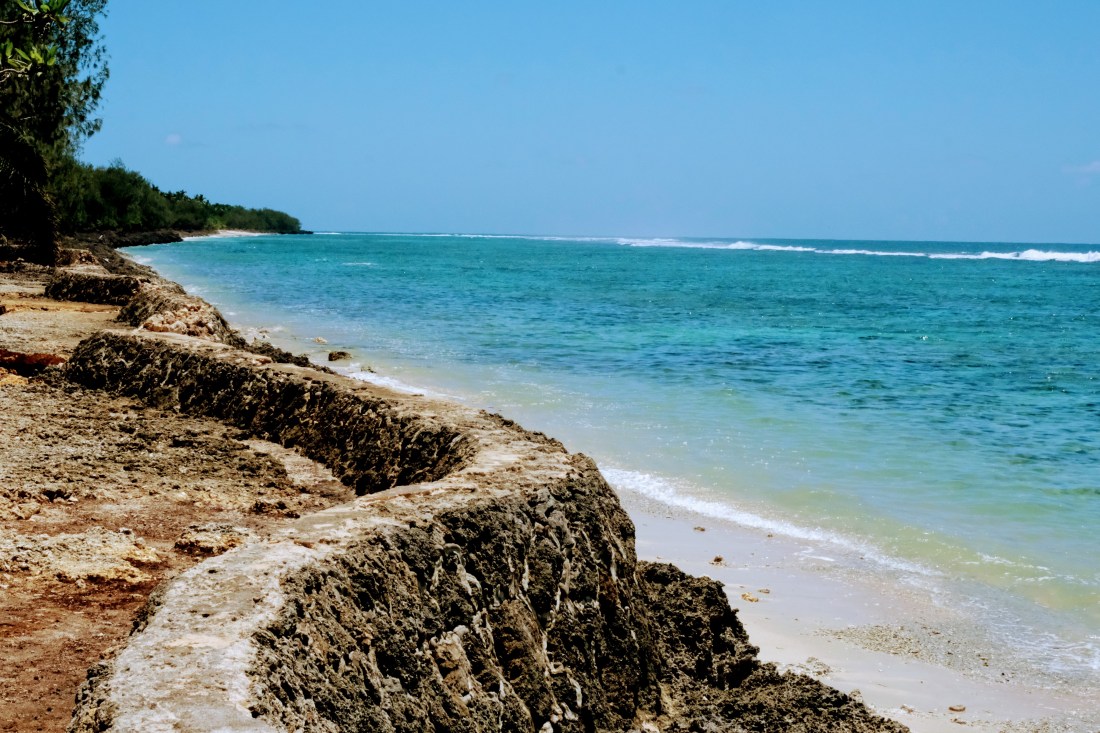
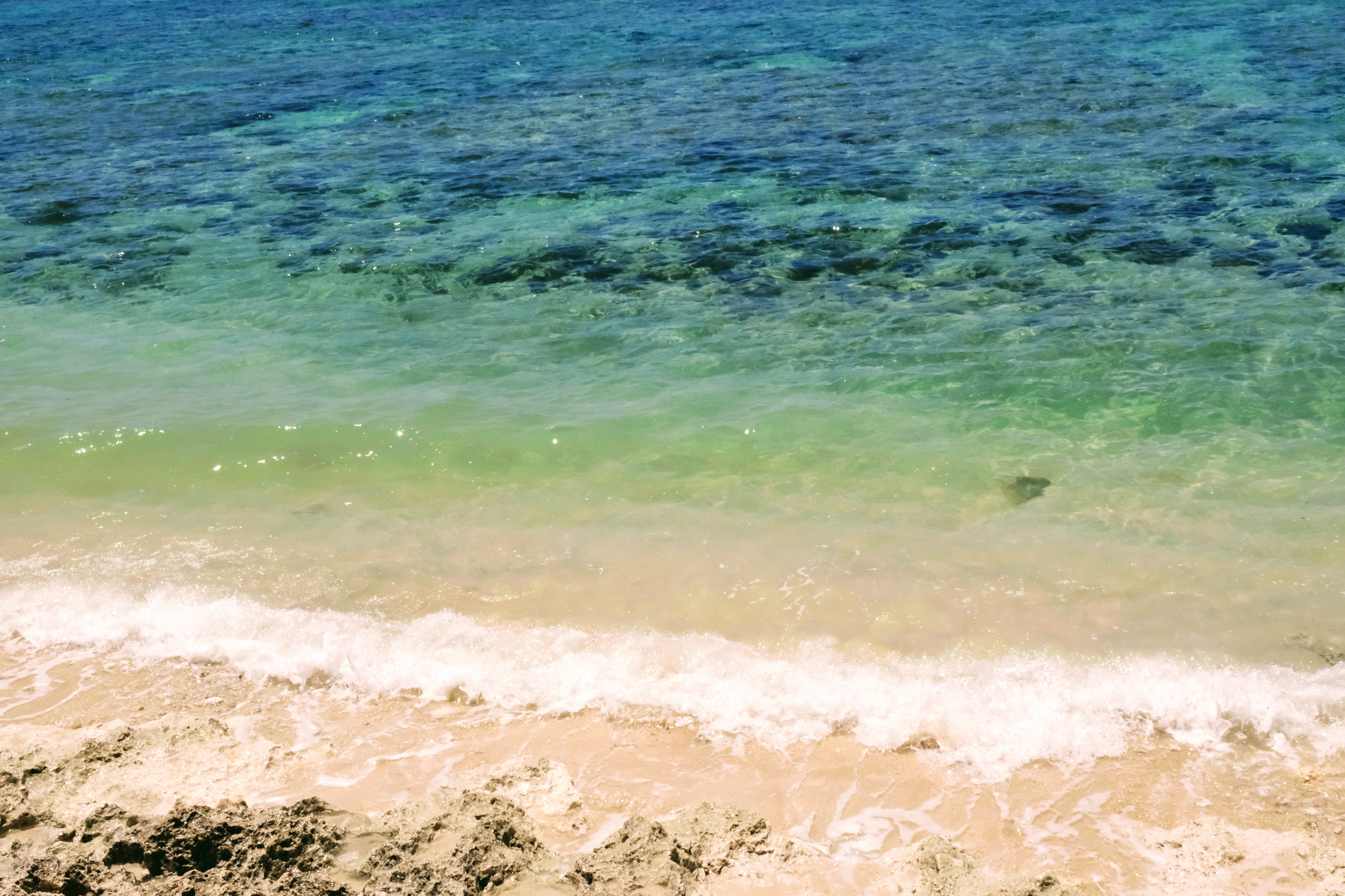
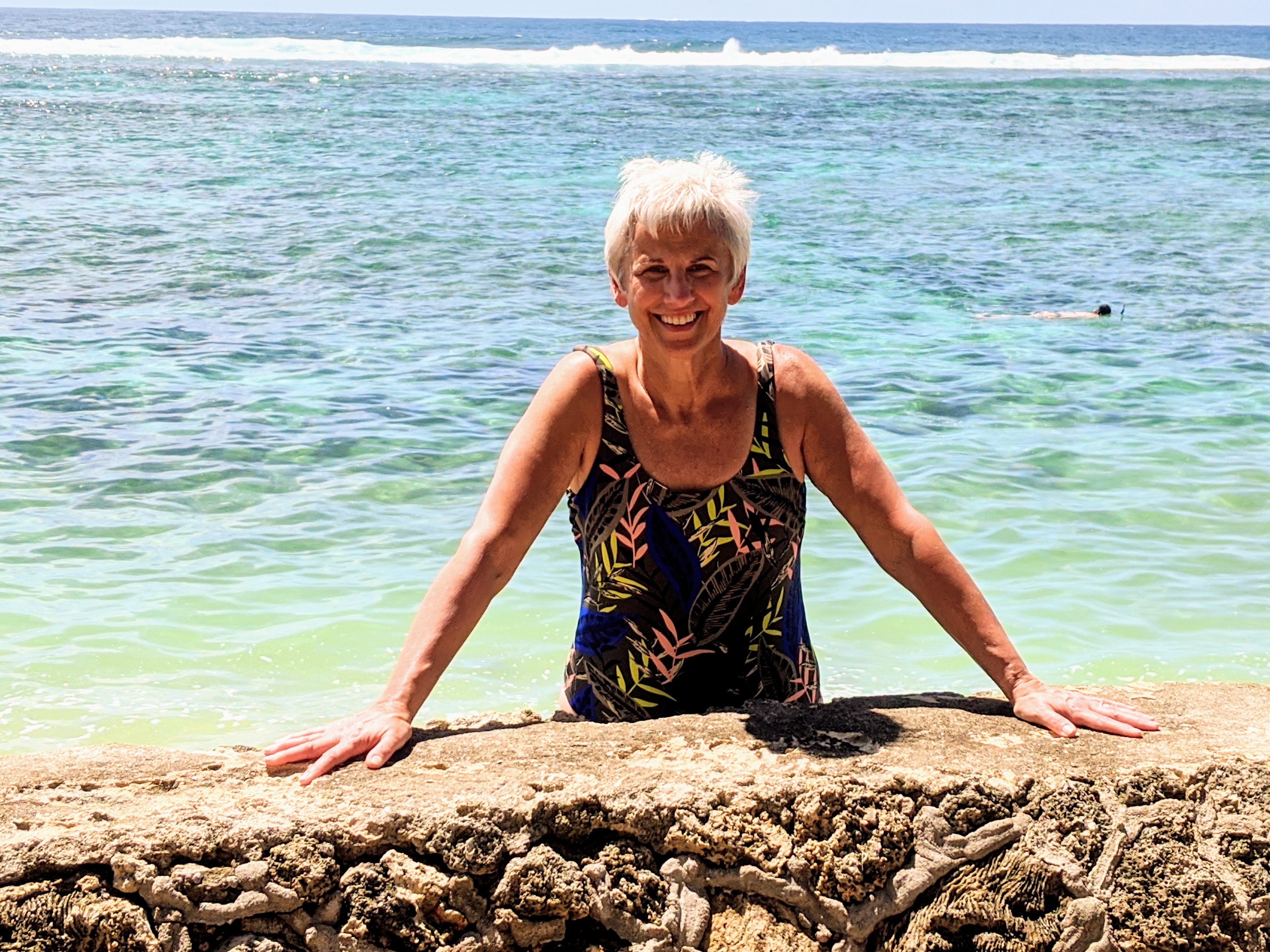
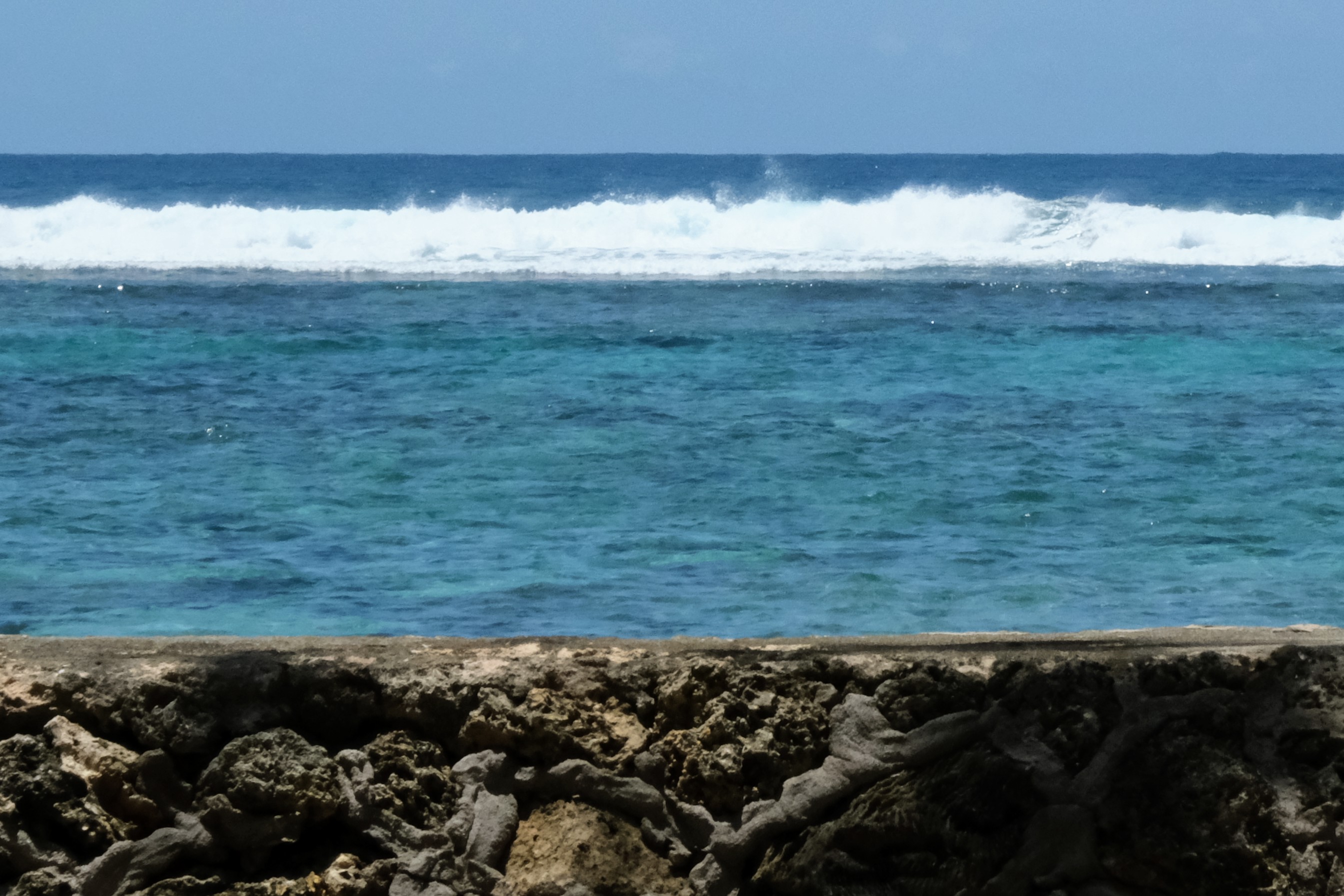
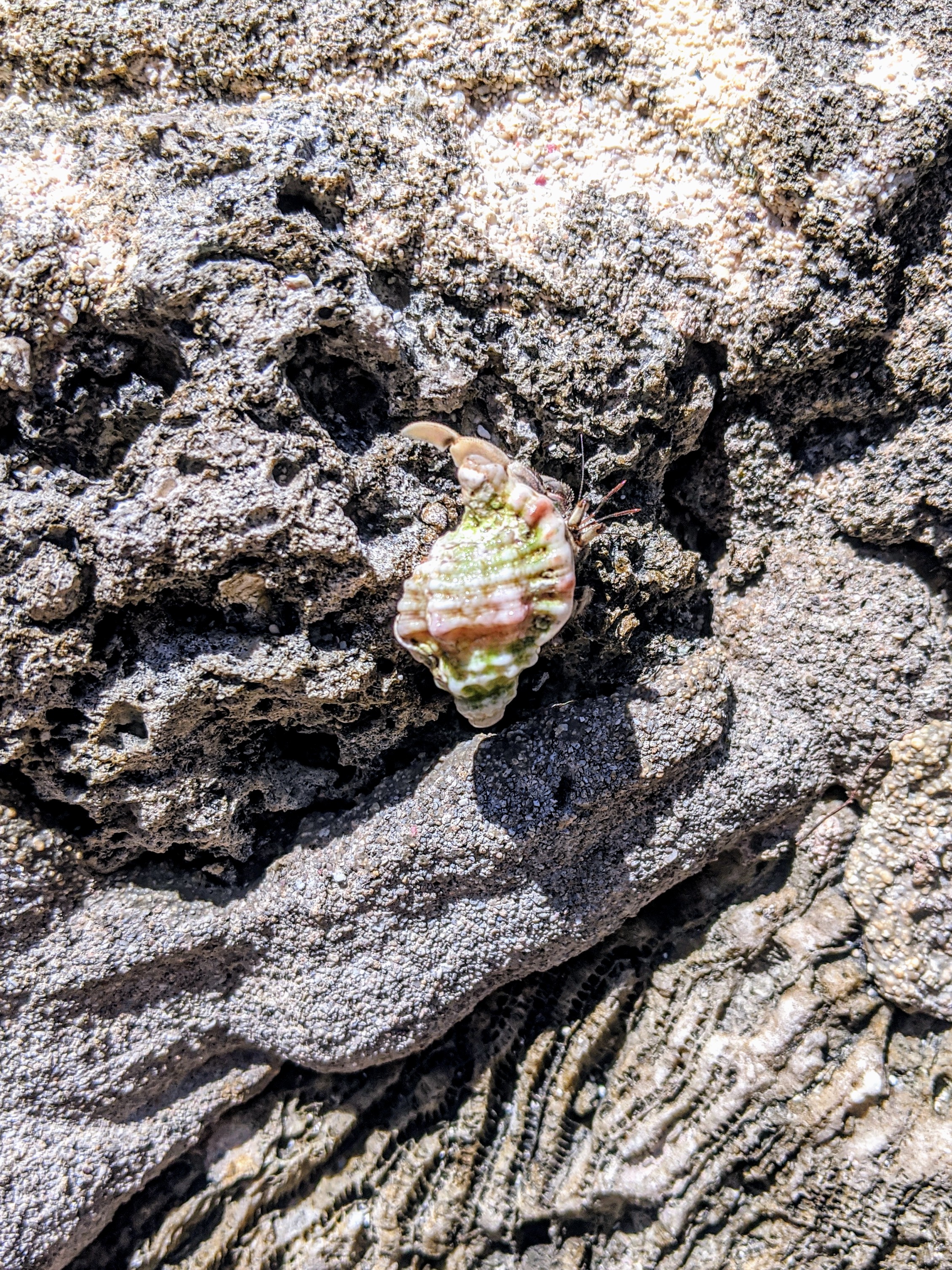
Unlike the soft, sandy beaches in Tahiti and Bora Bora, the beach at Likualofa is mostly limestone and coral, but the water is 50 crystal clear shades of blue/green. There are numerous pine trees dotting the beach, making umbrellas unnecessary. The coral and limestone make walking and getting into the ocean a challenge and the undertow makes it difficult to get out, but the water provides a welcome respite from the heat and humidity of the day. And Doug spotted an ambitious land crab blending inconspicuously on a coral reef!

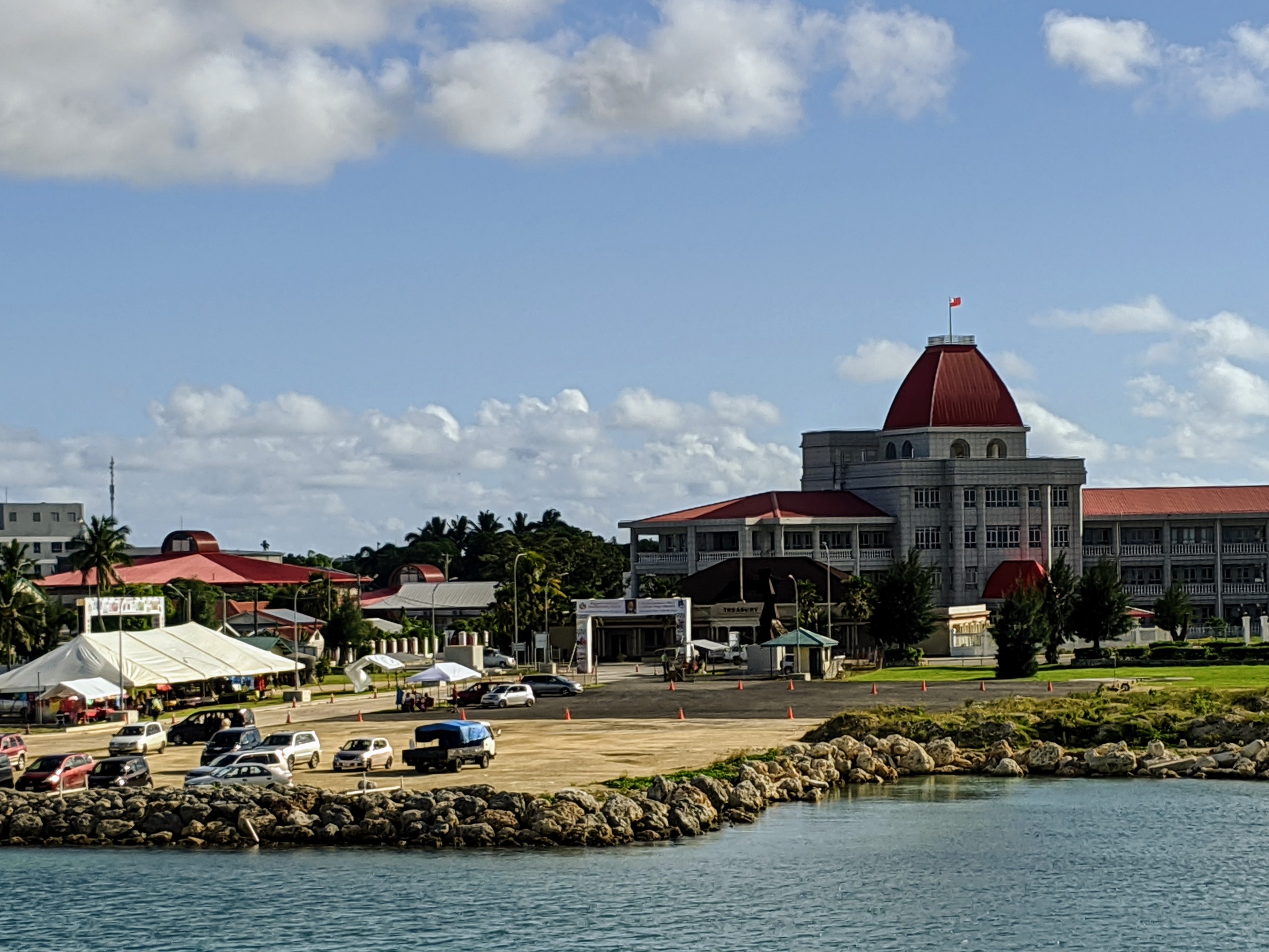
The next day we explored the port town of Nuku’Alofa and learned more about life in Tonga. Tonga was united under one monarch in 1845 by King George of England. A British protectorate until 1970, they acquired their independence and became a sovereign nation, but remain an active member of the Commonwealth. Tonga has a population of just over 100,000 inhabitants, and the official languages are Tongan (spoken at home) and English (taught in schools.)

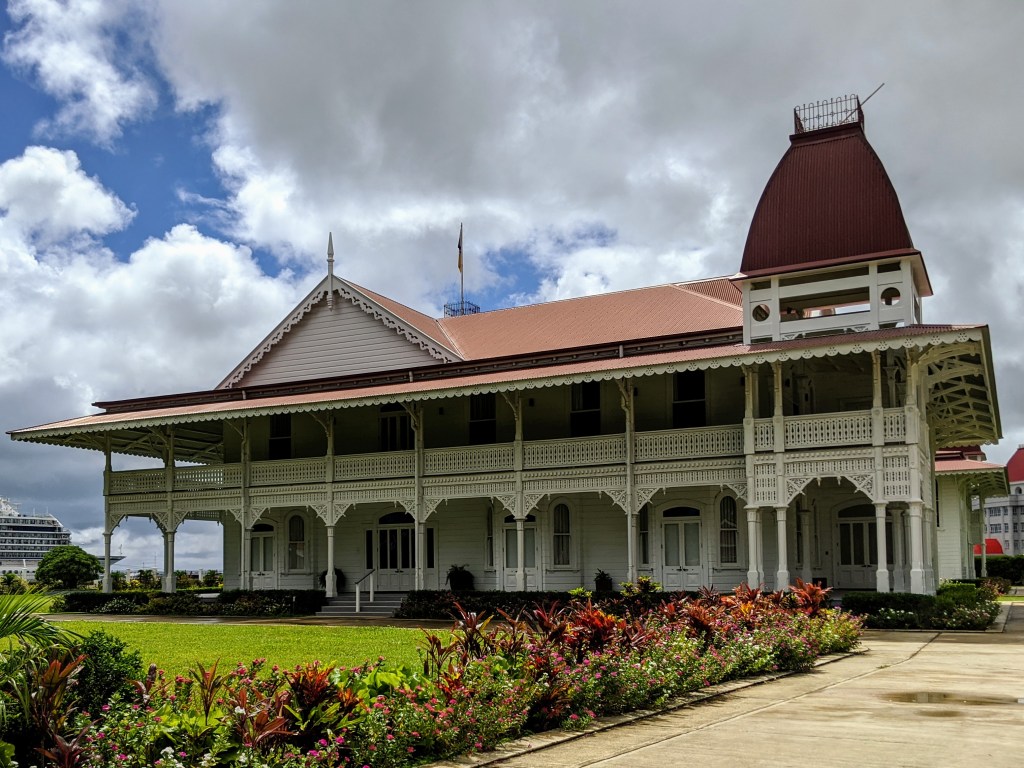
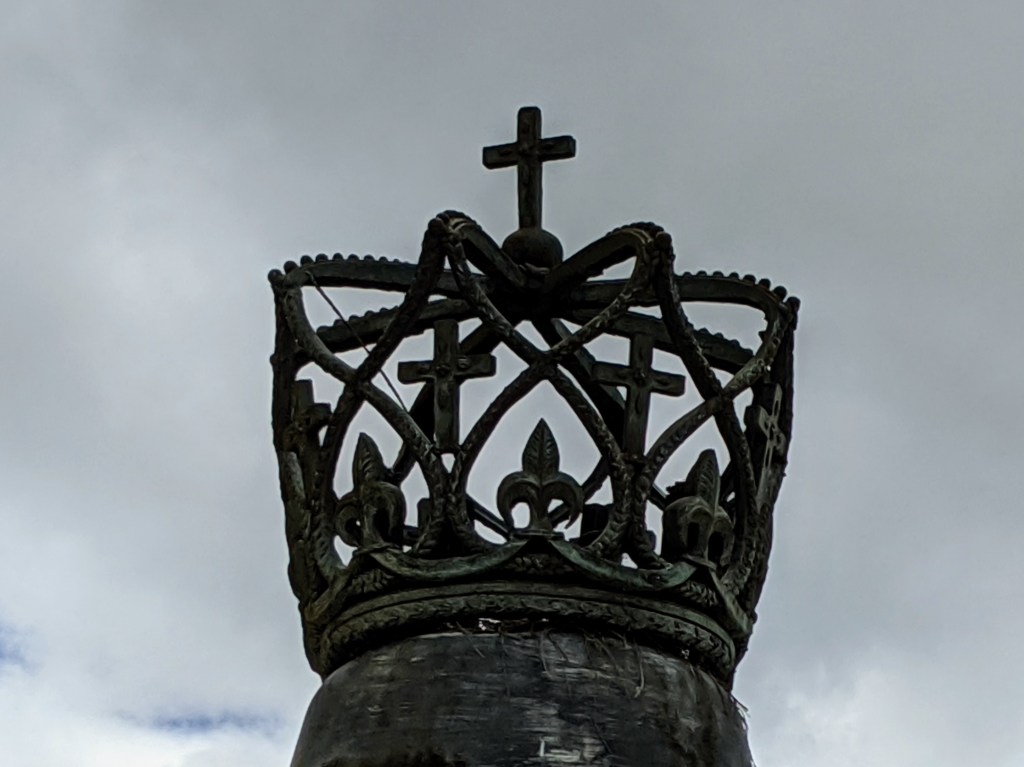
The Royal Palace is the official residence of King Aho’eitu Tupou VI and the royal family. The white Victorian wooden palace was built in 1867. The palace is not open to the public, but it is very visible from the waterfront. The royal family uses the palace for official functions, but they have another home in which they actually reside.

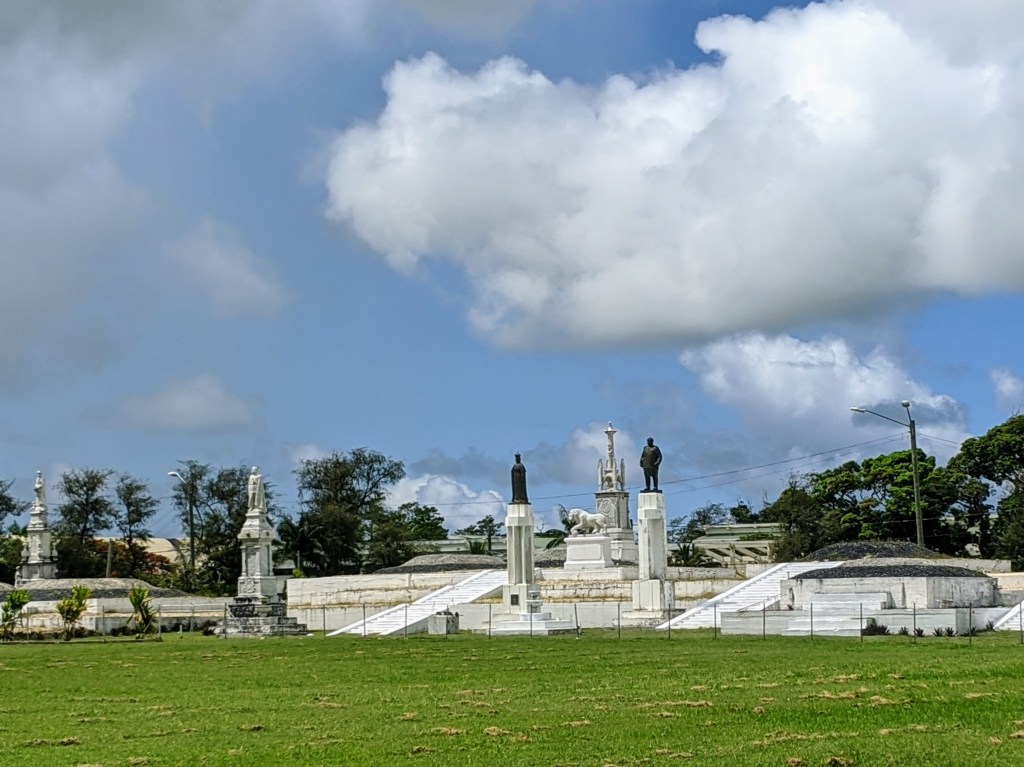
The Maia’e Kula (Royal Tombs) were built in 1893 when His Majesty King George Tupou I passed away. These are considered sacred grounds by the Tongans, and they are not open to the public. Another Tongan custom is to drape one’s house with purple and black bunting when someone has recently passed away. It is considered a sign of respect for the deceased, and we saw several draped houses and businesses.

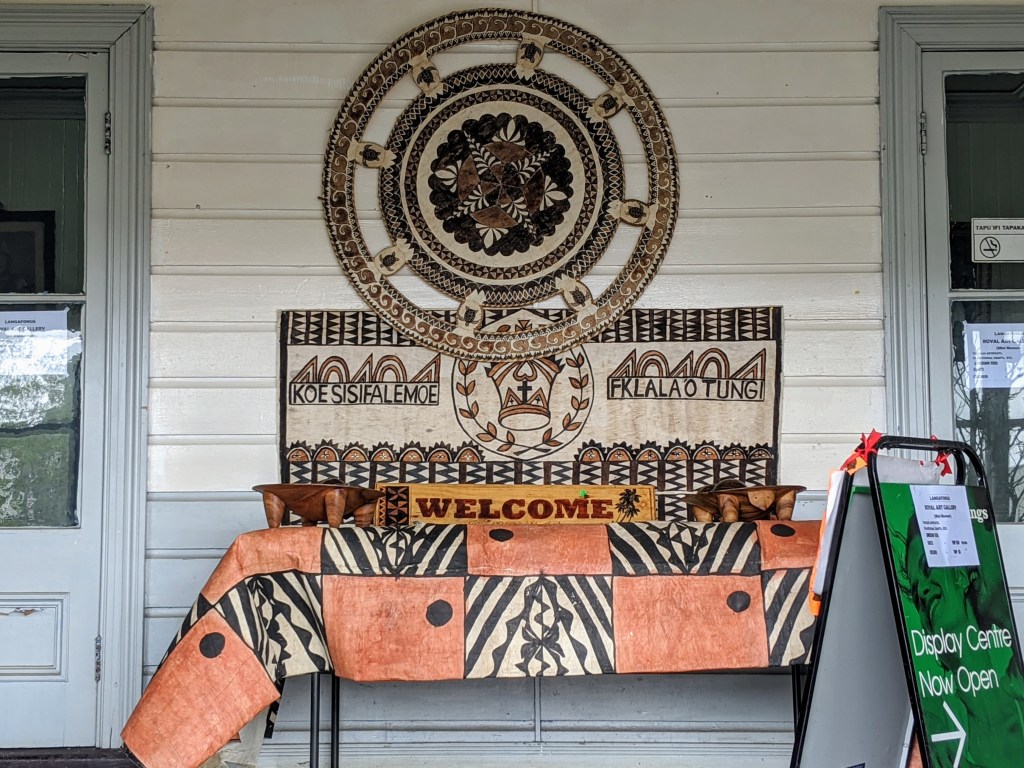
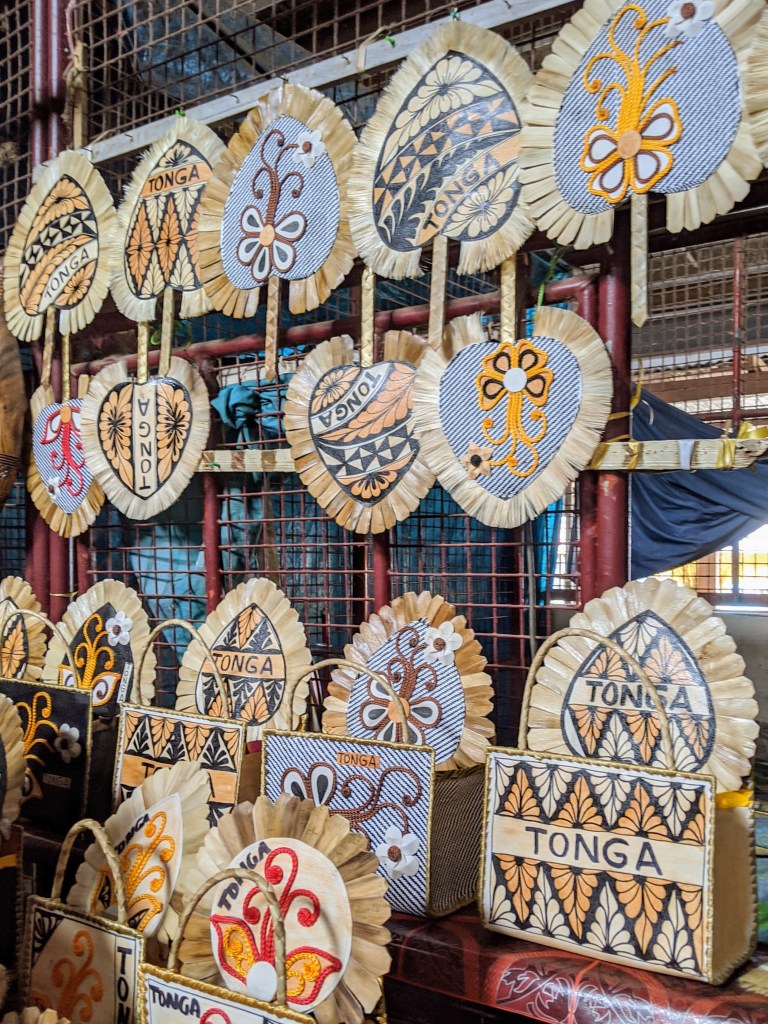
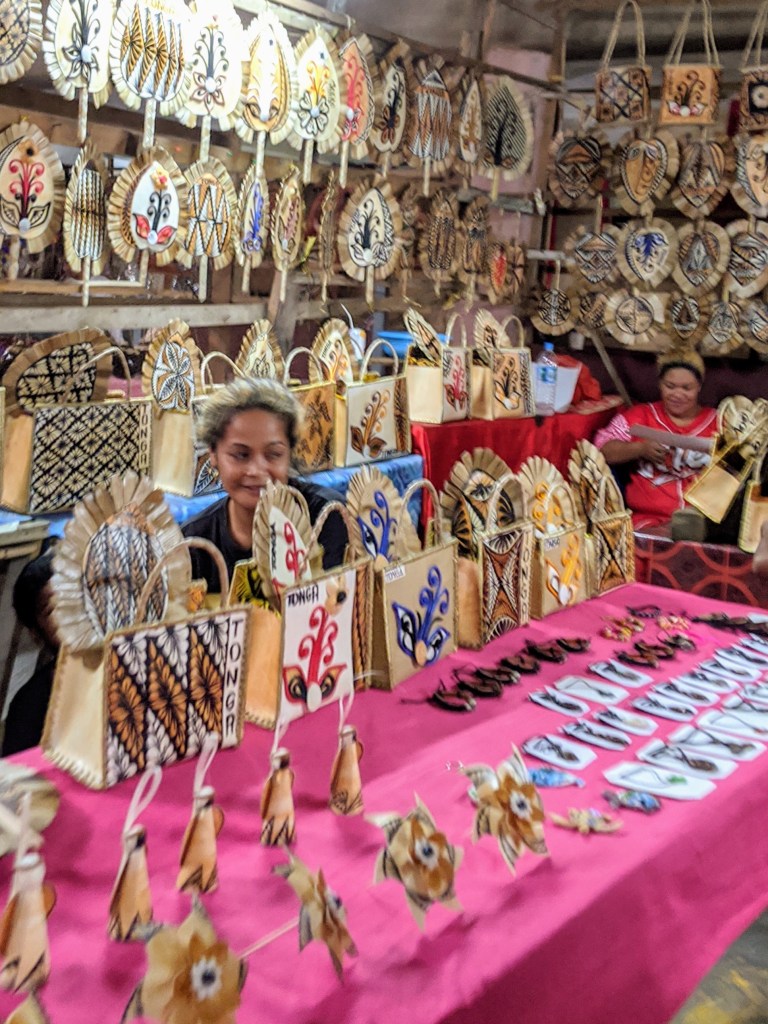
Arts and Crafts are a big source of income for Tongan women, and the Langafonua Handicrafts Center stocks the best range of traditional Tongan handicrafts and fine arts. The center was set up to preserve the ancient craft skills and promote Tongan handicrafts in 1953. Everything in the center is made locally to reflect the proud culture and heritage of Tonga.

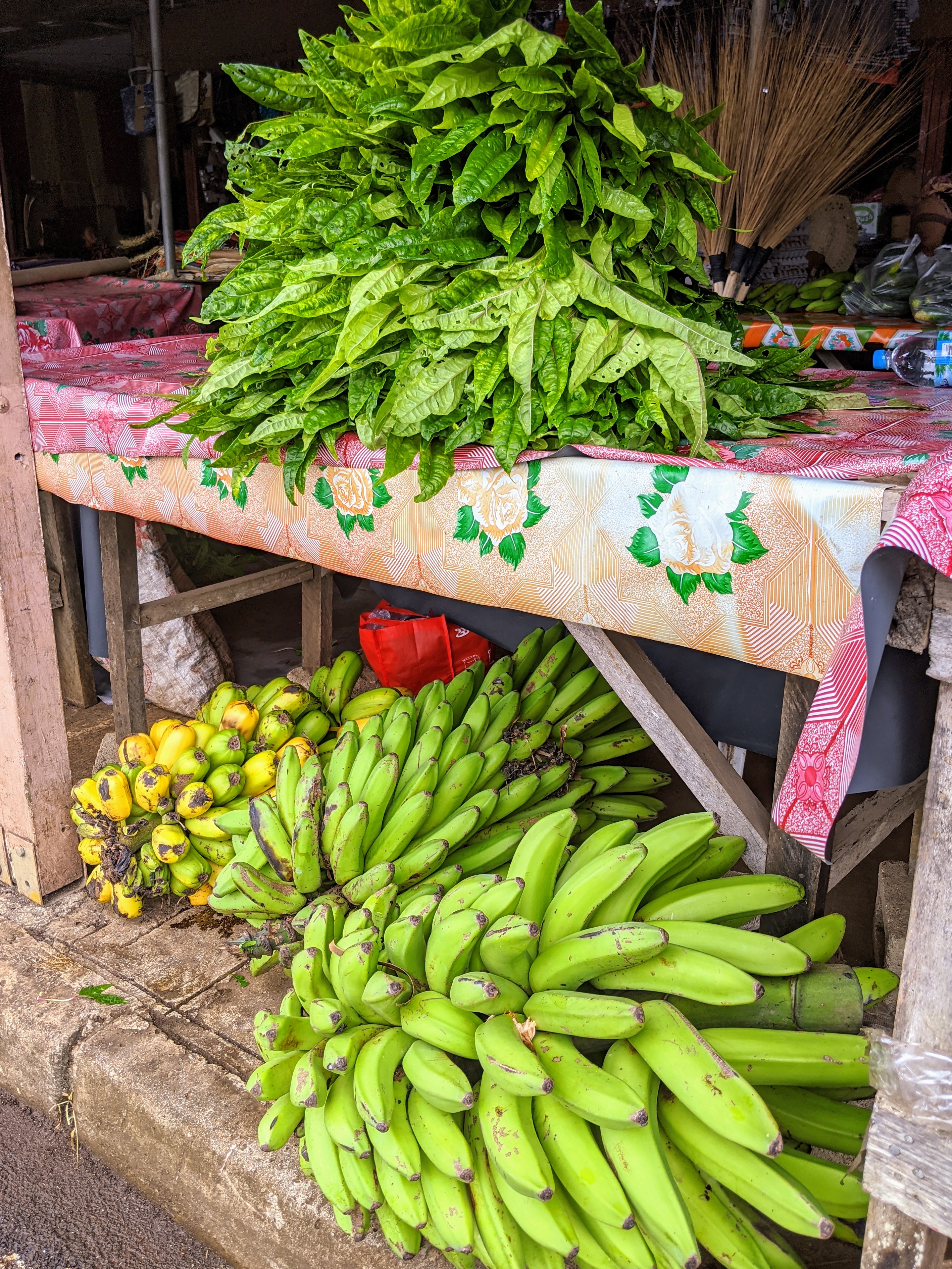
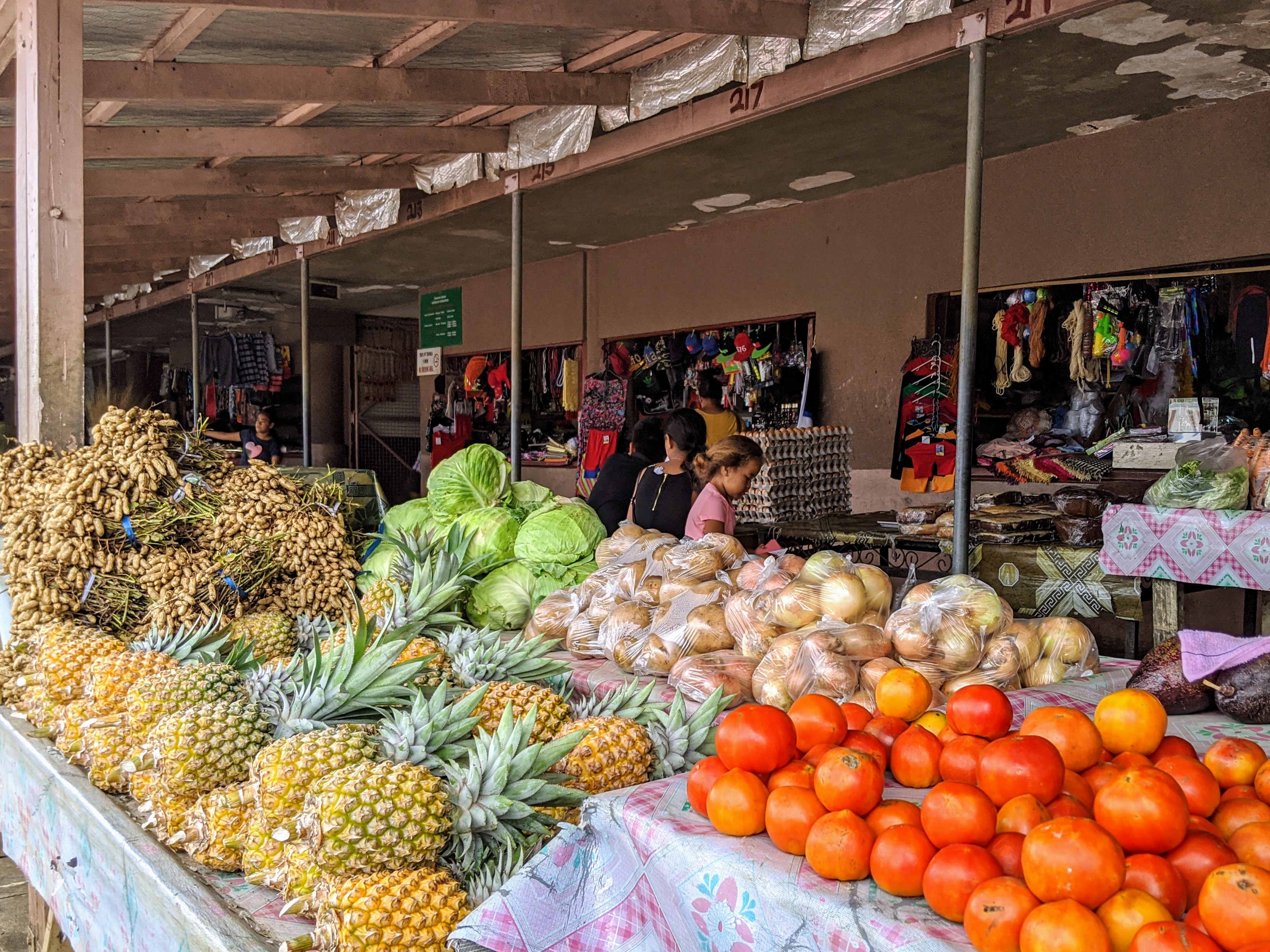
The Marketi Talamanhu is a lively produce market where vendors sell a variety of fresh, local produce ranging from huge taro roots, sweet potatoes, pineapples, and melons to string beans, greens, and tiny bananas.

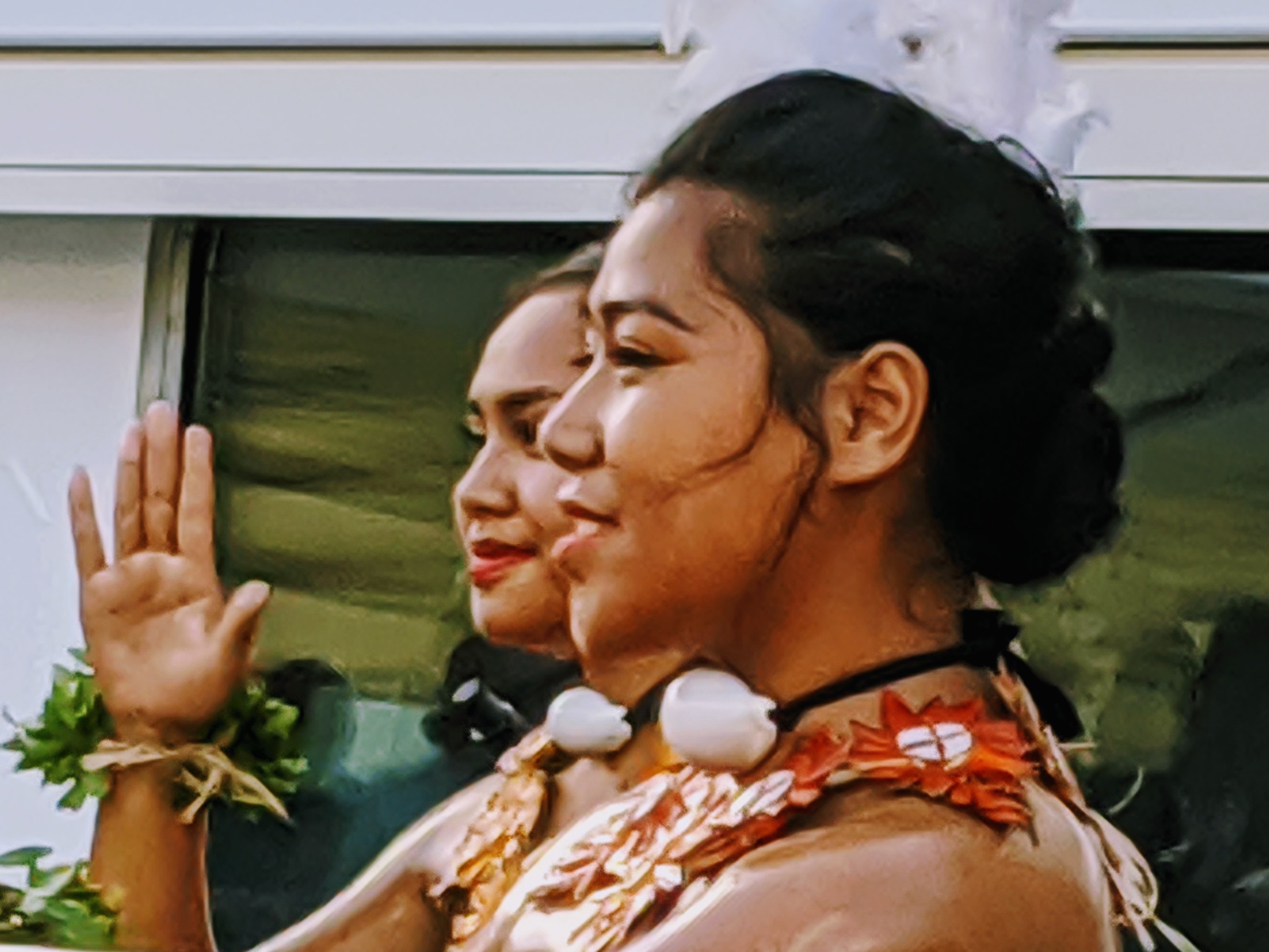
The people of Tonga live up to their historic moniker as the “friendly island.” In spite of signs of poverty all around us, everyone we met was genuinely friendly and very proud of their island and heritage. For special occasions, the women and men wear traditional garlands of red flowers and handmade wrap skirts called ta’ovalas as a sign of respect. Our guides wore these skirts over their clothing to let us know how much they appreciate tourists. In fact, if one word could be used to describe the Tongan people, it would be “respectful.” Trip Advisor ranks Friends Cafe as Tonga’s best coffee shop, and we have to agree. It might not stand up to Papa Latte’s in terms of quality, but the warm, respectful service and the smiles of the Tongan people make it a cut above!

A Cyclone and a Spa Day

Circumnavigating Cyclone Tino, a Category 3 topical storm that promises “heavy rain, strong winds, and rough seas to Fiji and Tonga” (our next two ports) is the goal of Captain Olav Soevdsnes in canceling our stop in Rarotonga, Cook Islands, and taking a more northerly route to Tonga. This new route reduces the projected wind gusts from 45 down to 20 knots and seas from 16-18 feet to something closer to 6-8 feet. Nonetheless, the sea is angry as we look out our balcony window, and we’re feeling confident in Captain Olav’s judgement in keeping us safe…what option do we have at this point?

Our current situation!

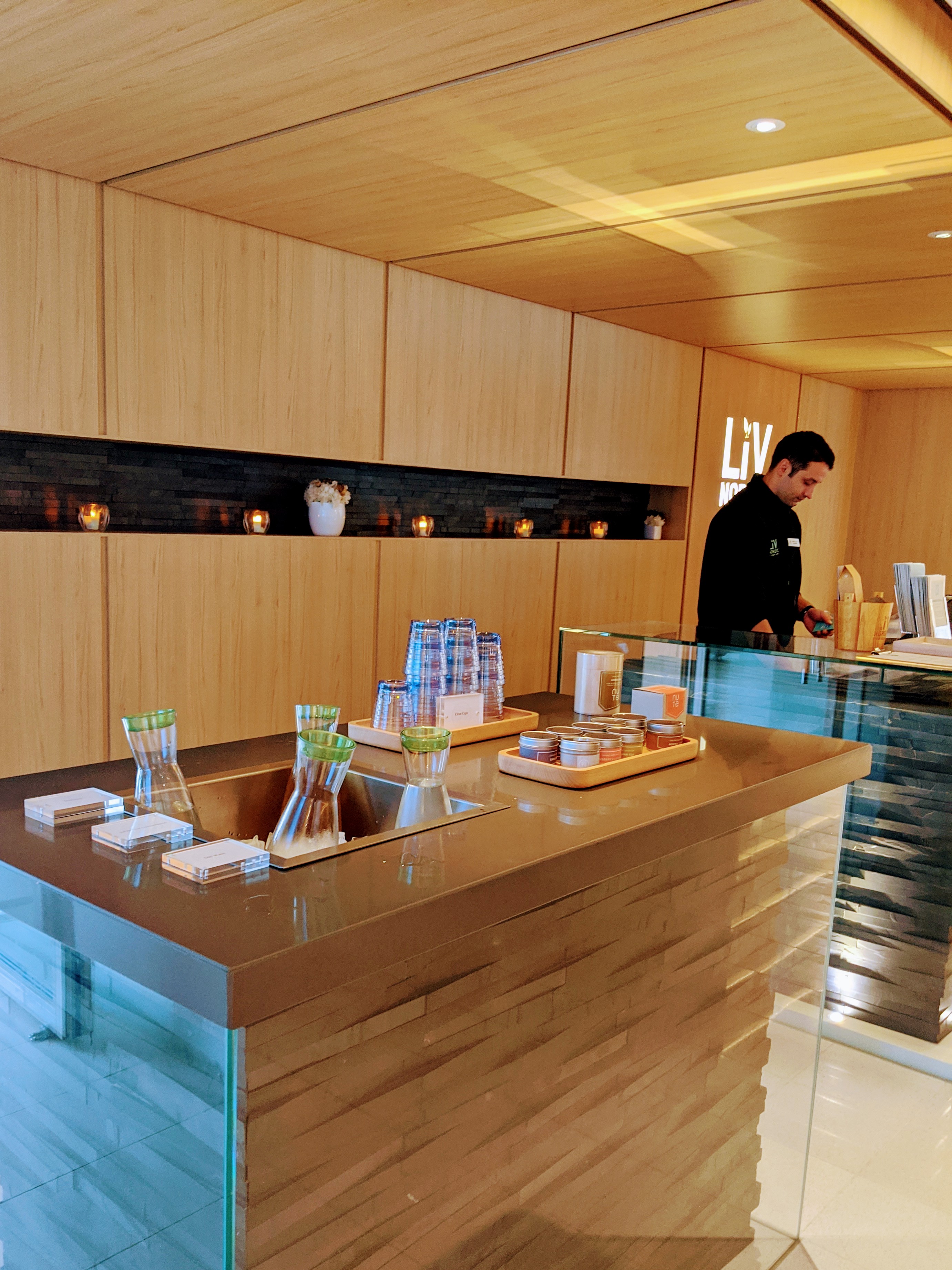
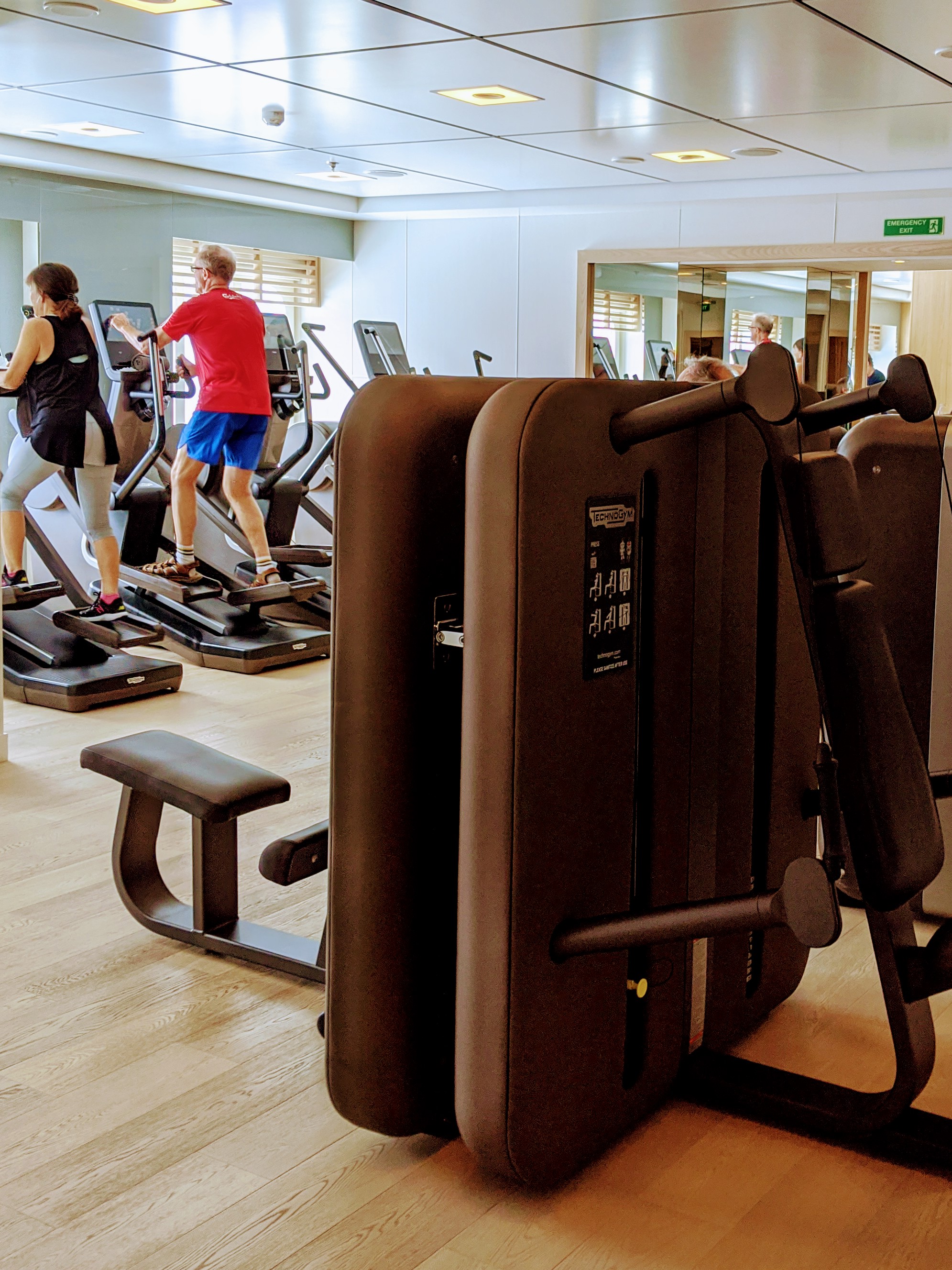
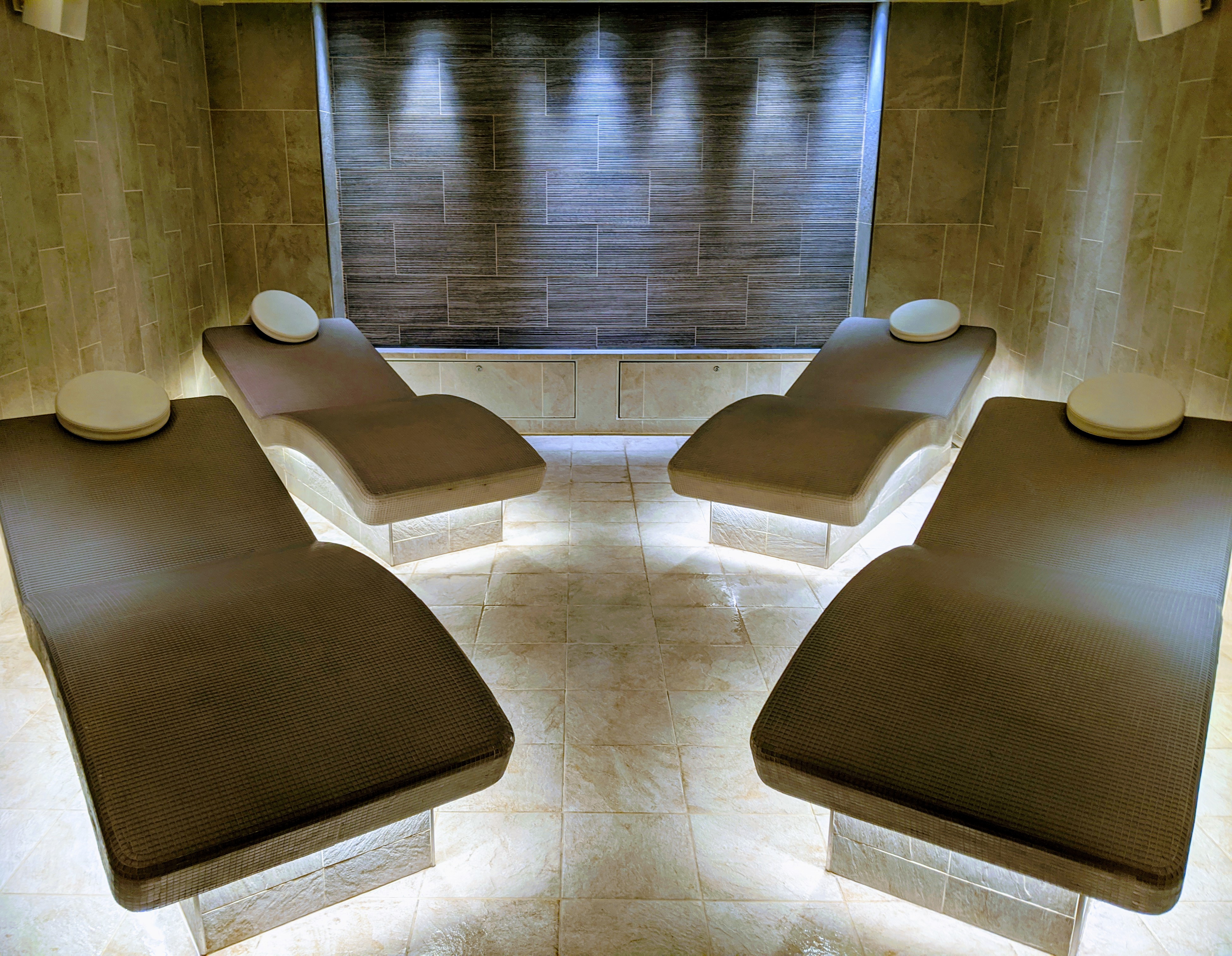
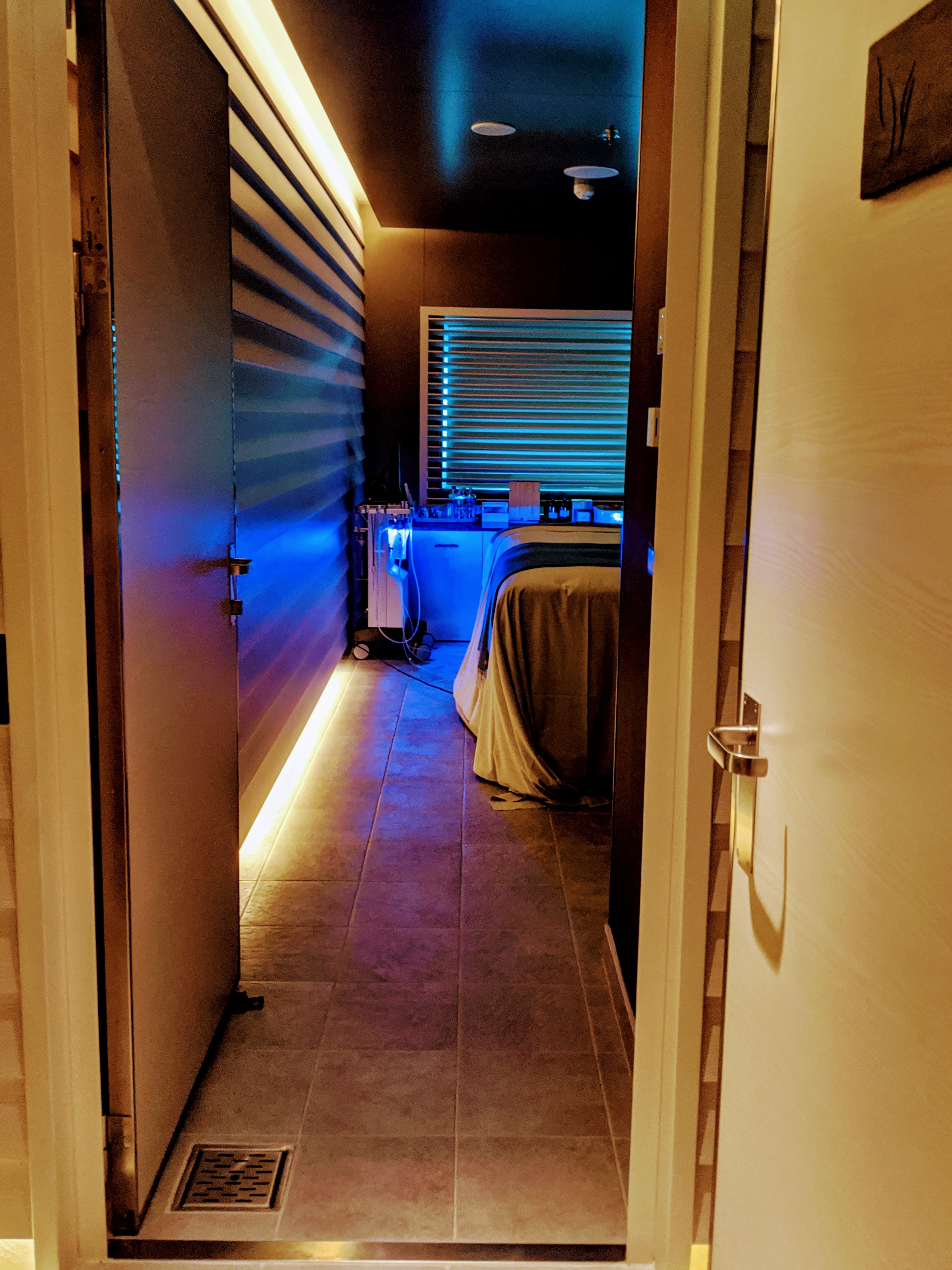
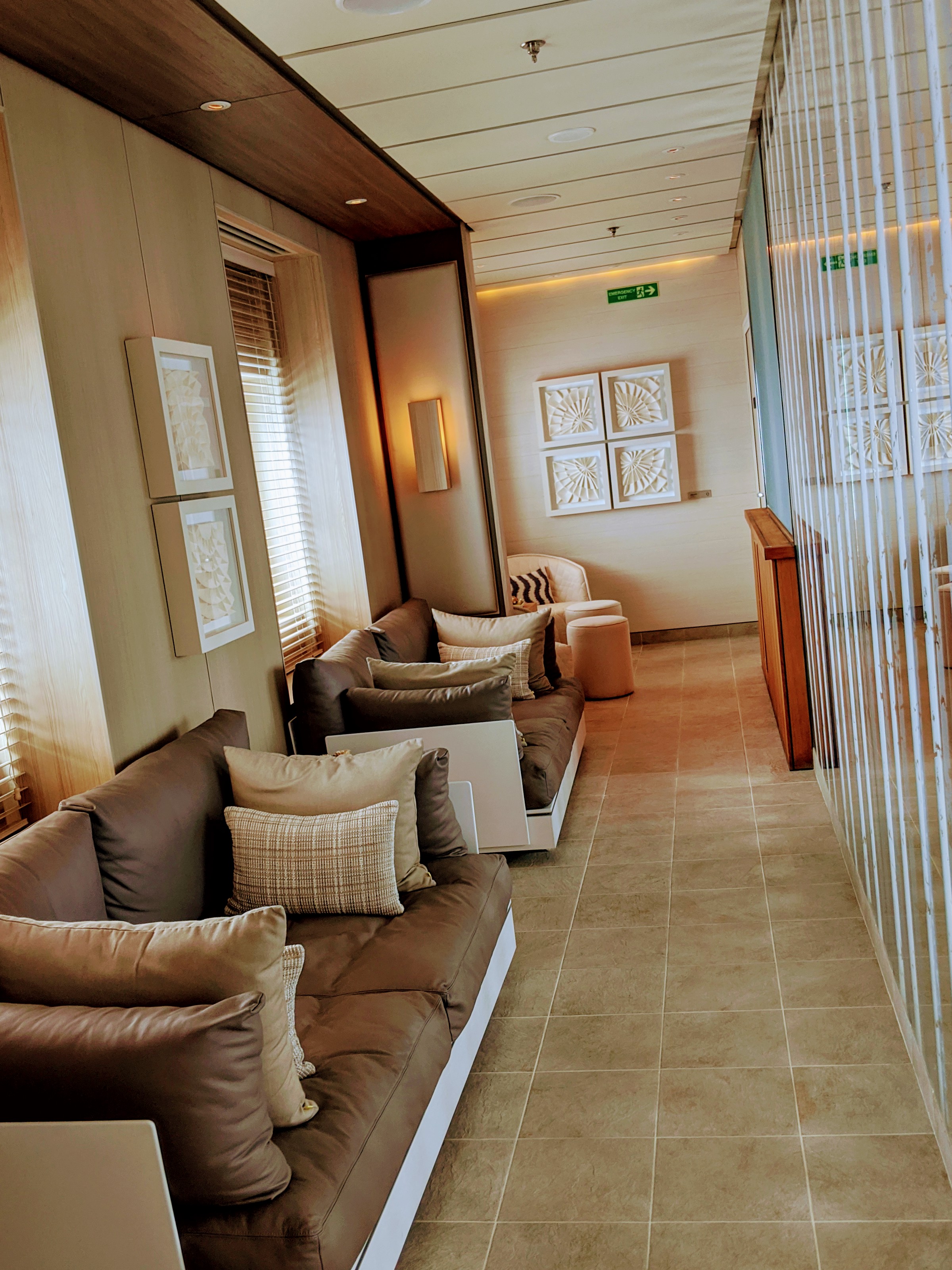
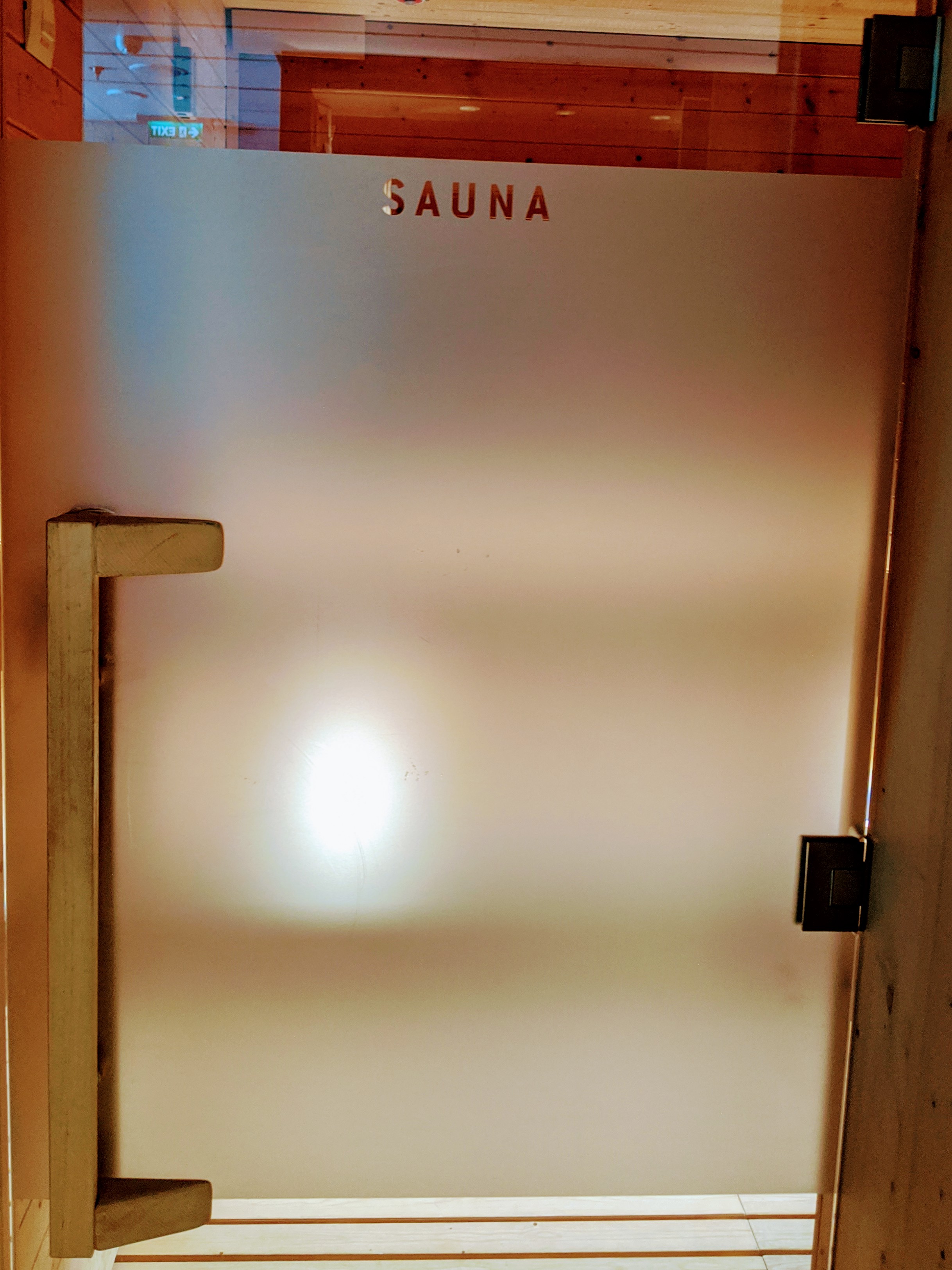
So we decide to head down to the first deck to spend the better part of our day in the beautiful Liv Nordic Spa and Fitness Center, and to take this opportunity to share more about this beautiful space with you. The well-equipped fitness center is open from 6:00 am until 10:00 pm, and includes several stationary bikes, treadmills, rowing machines, weight equipment, pulleys, free weights, and a variety of other fitness tools. Help is readily available, and personal trainers can be engaged by the hour to develop an individualized plan to counterbalance the many temptations from the kitchen.

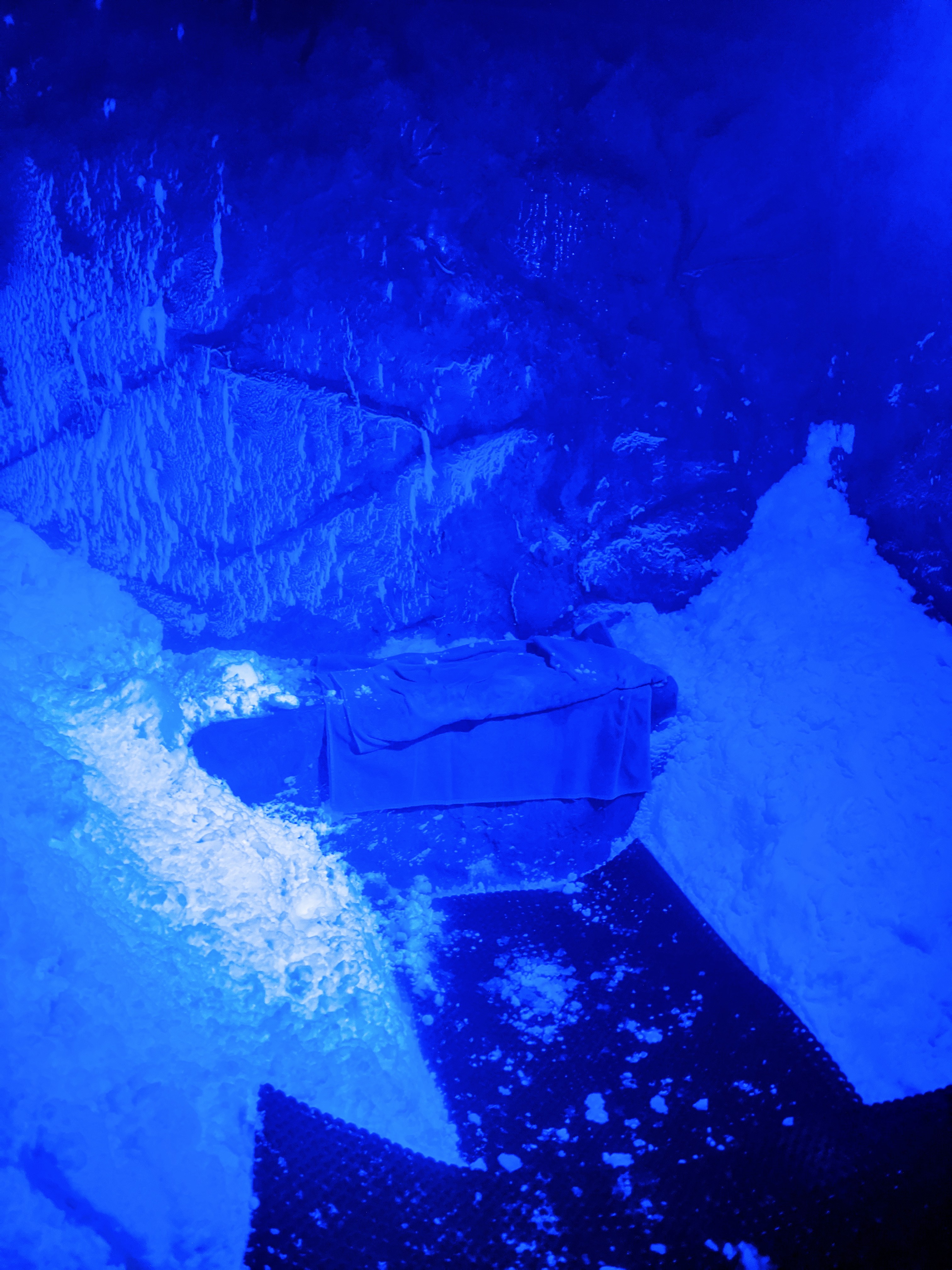
After a vigorous workout (that challenges our balance and coordination!), we head to the adjacent spa for some pampering and relaxation. The spa provides an oasis from whatever else is happening in the world. A full menu of customized spa services is available, including massage, facials, Nordic bathing rituals with contrasting hot and cold therapies, steam room to snow grotto, and mineral pools. We try them all, and can honestly say that this is time well spent while sailing AROUND a cyclone!

When all is said and done, we think this might just be our favorite spot on board. We hope you’ve enjoyed our glimpse of the Viking Sun’s fitness center and spa. We try to spend at least part of every day here, and you can see that Doug feels right at home catching up on emails and the news of the day from his poolside lounge chair while the sea continues to churn beyond these protective walls.

Breathtaking Bora Bora

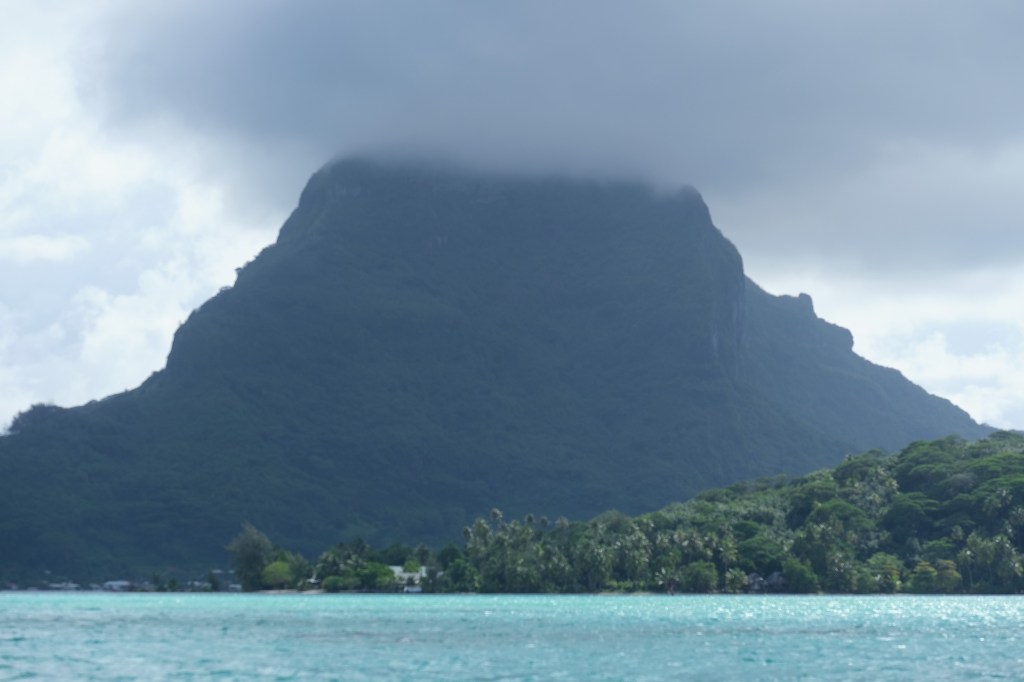
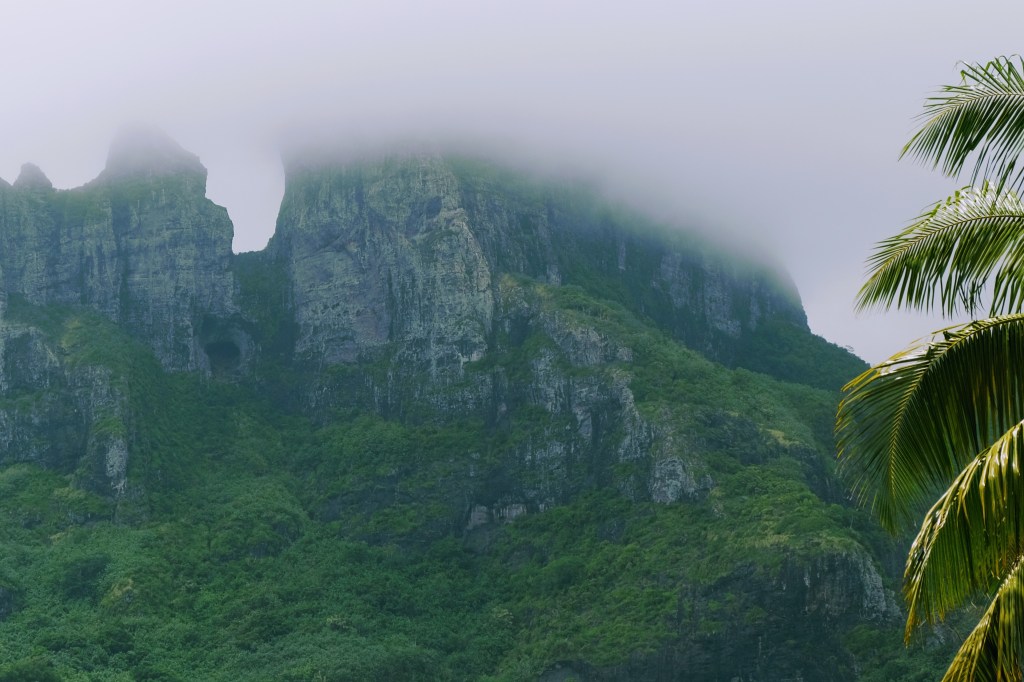
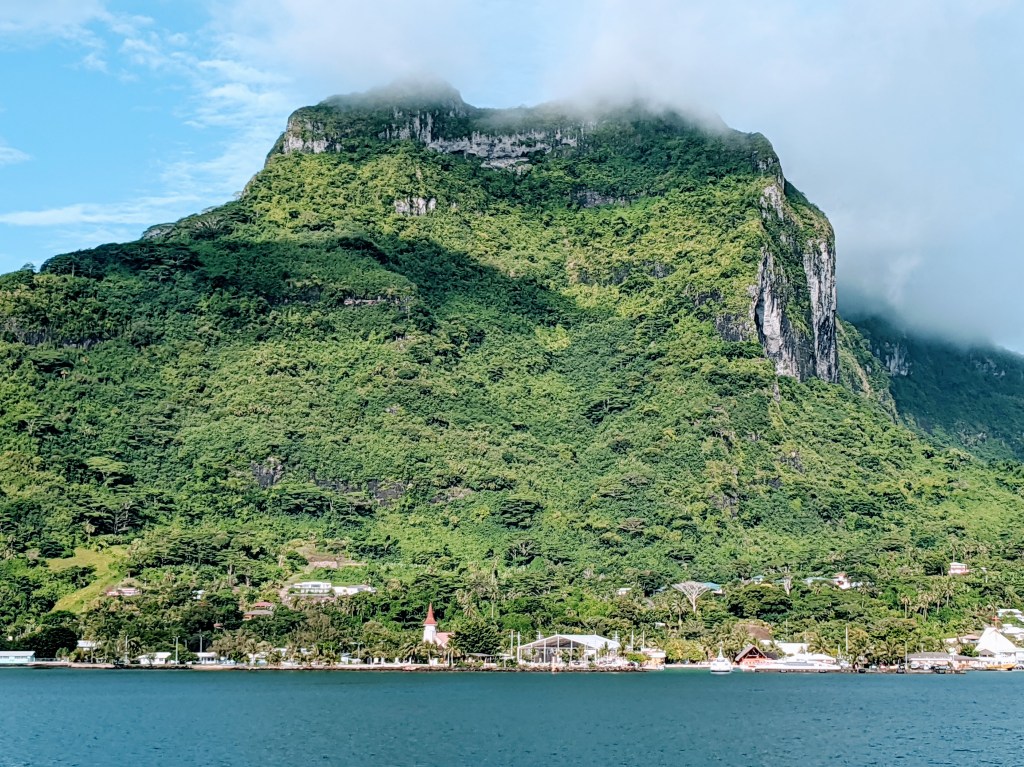
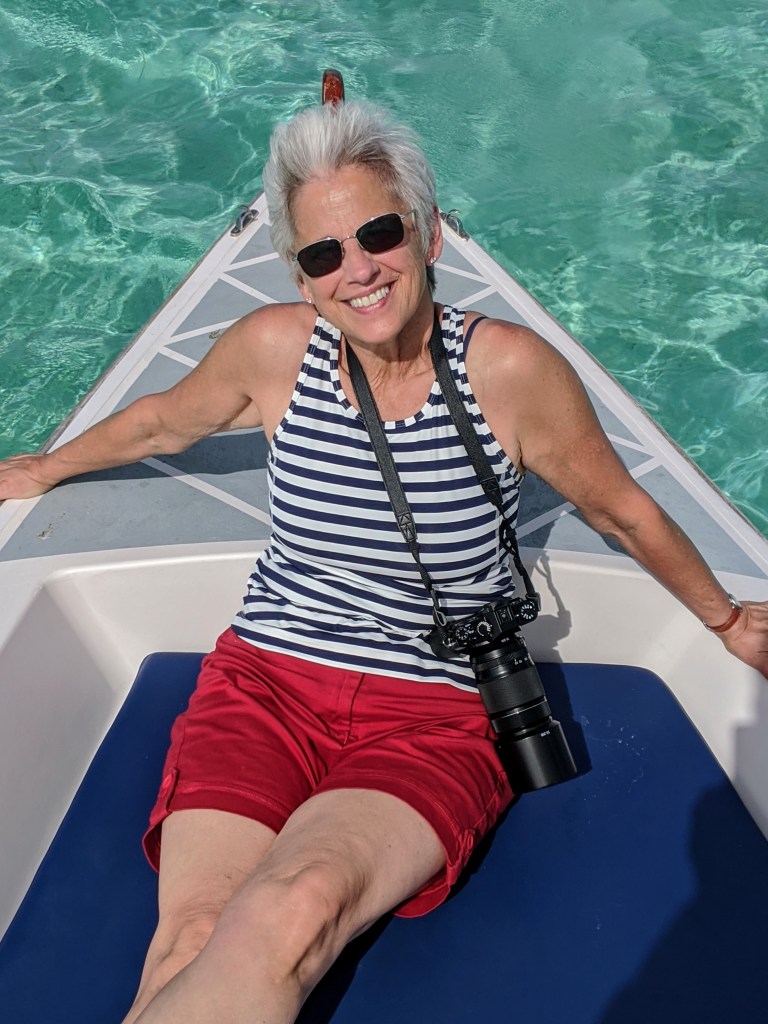
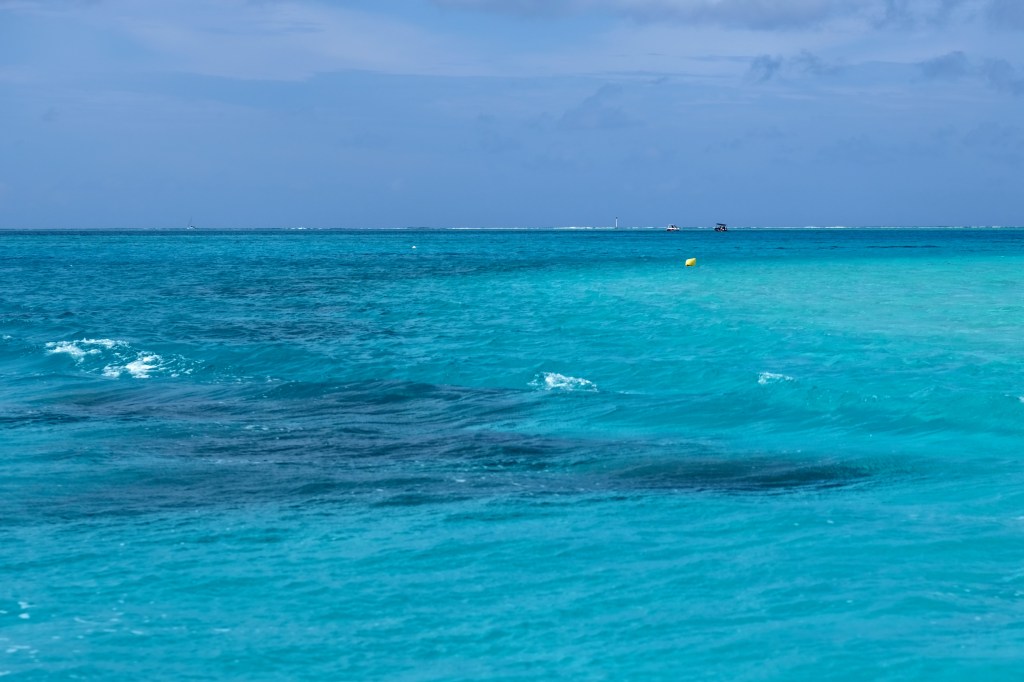
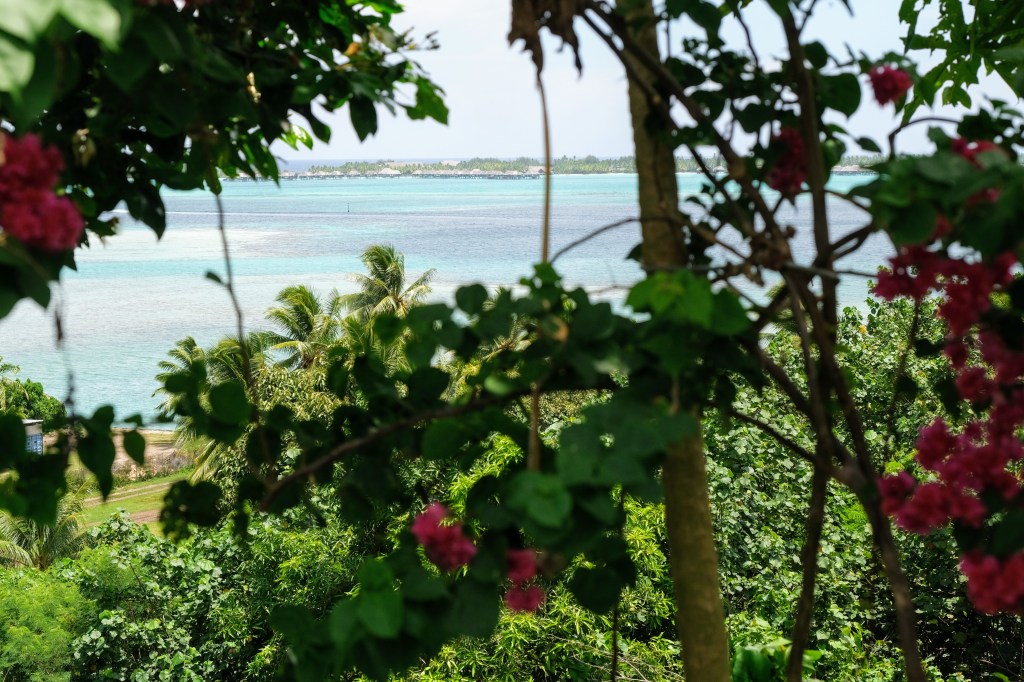
Our first look at the tiny Society Island of Bora Bora reflected how beautiful yet changeable the views can be. As the Viking Sun dropped anchor just across from the town of Vaitape, the peak of Mt. Otemanu was shrouded in thick, dark clouds that promised the outbursts of rain that would occur on and off throughout the day. Around noon, the cloud cover dissipated somewhat, revealing more of the rugged mountain, and changing the look of the crystal clear waters surrounding it. And by the time we sailed away at the end of the day, the clouds were just kissing the top of Otemanu’s 2,379 foot vertical, revealing lush vegetation almost all the way up to its rocky summit.

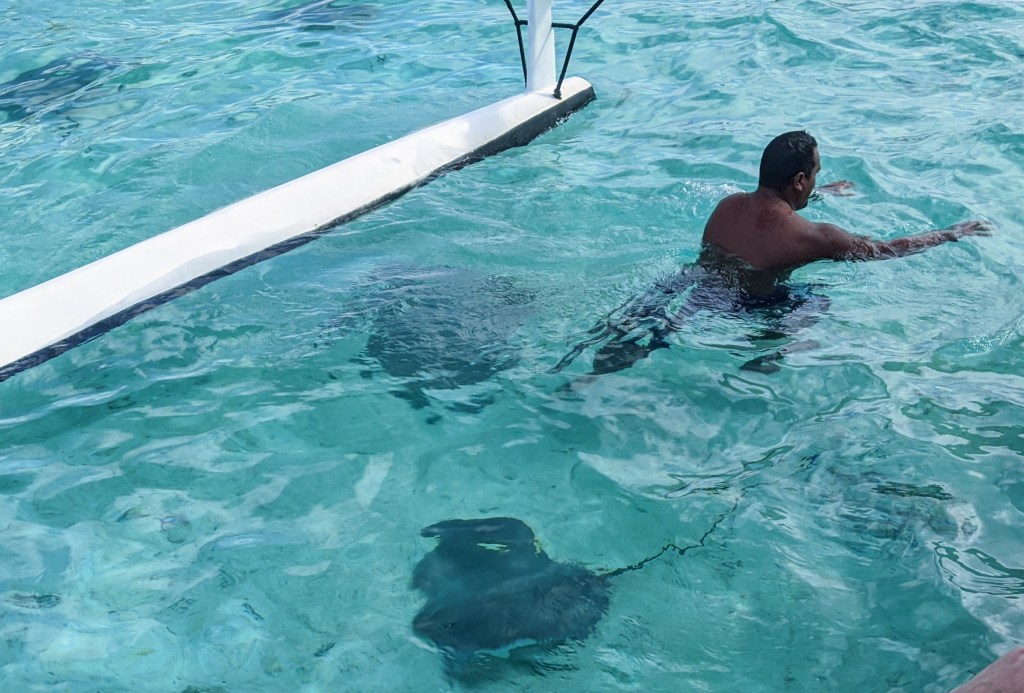
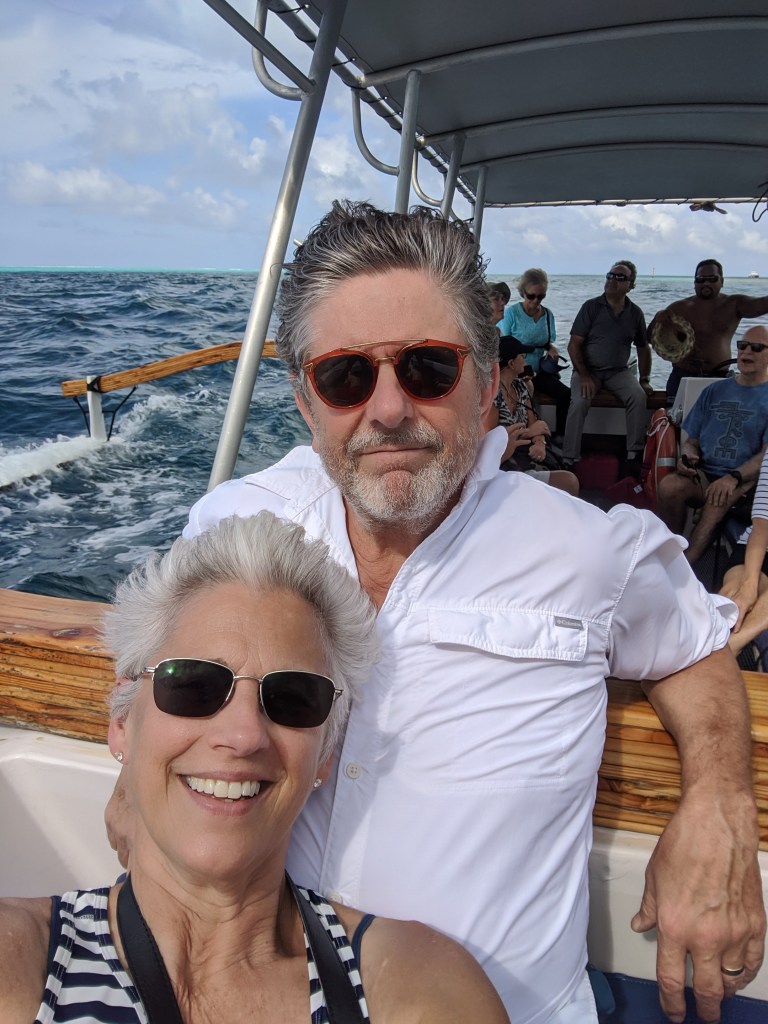
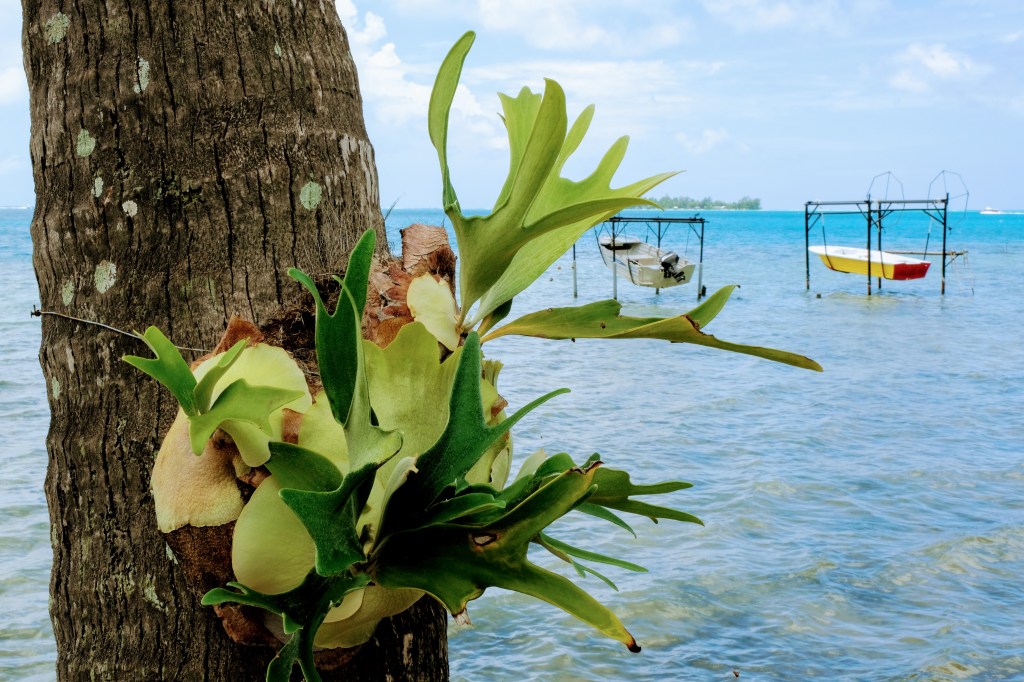
In the colorful port of Vaitape, we boarded a small motorboat and spent the next hour cruising through the crystal clear waters of this enchanting island paradise. Sailing across the turquoise lagoon, we sat back, relaxed, and admired the breathtaking views all around us. Bora Bora’s scenery is considered by many to be some of the most stunning in the South Pacific, and strains of “Bali Hai” kept crossing our minds. The shallow lagoon is home to a wealth of colorful tropical fish, and our boat captain/guide jumped out to play with a stingray! The opposite side of the island offered a slightly different perspective, and a glimpse of the second Bora Bora mountain peak, Mt. Pahia. A host of birds greeted us overhead, and the overall effect was relaxing and magical.
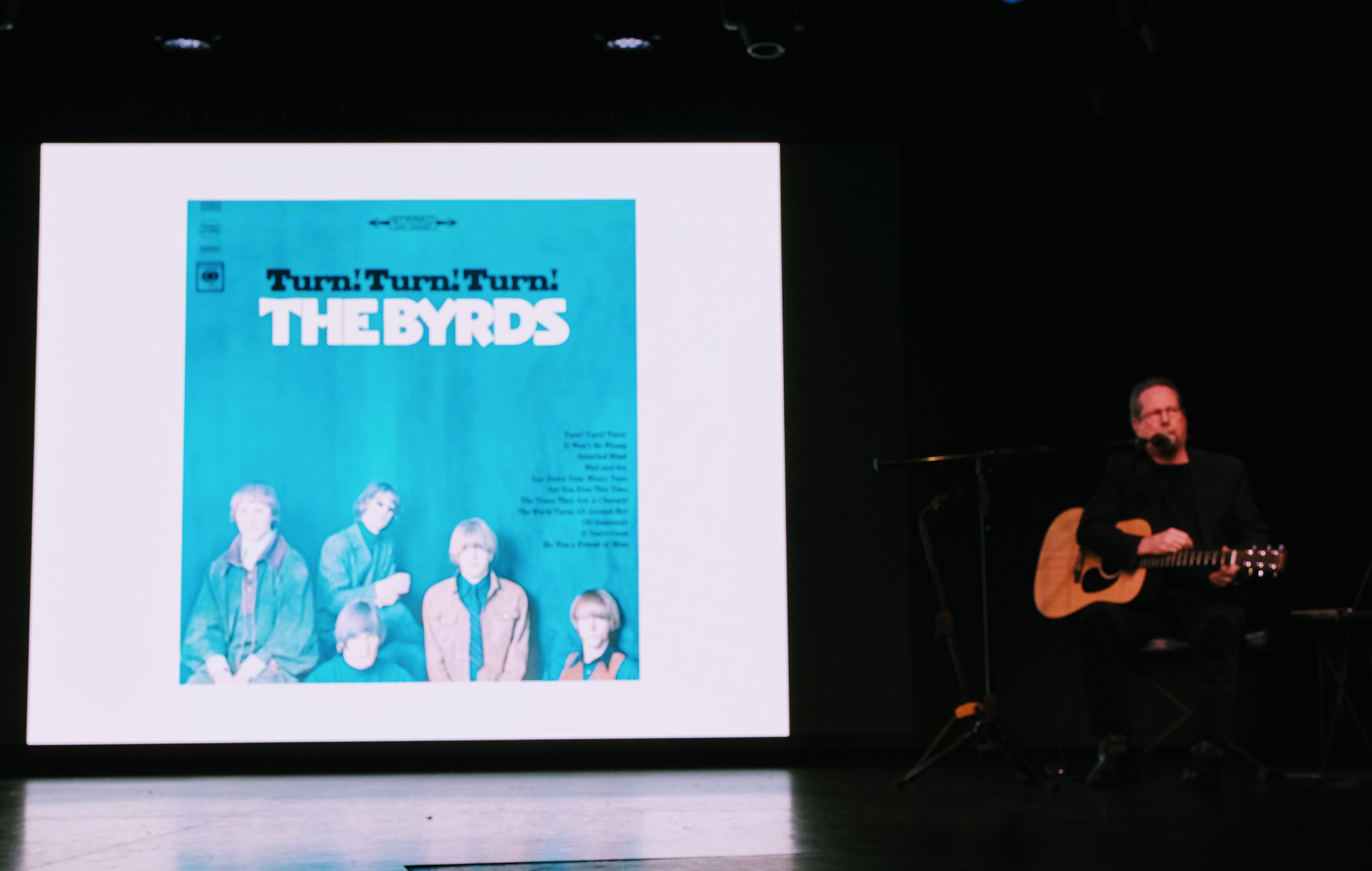
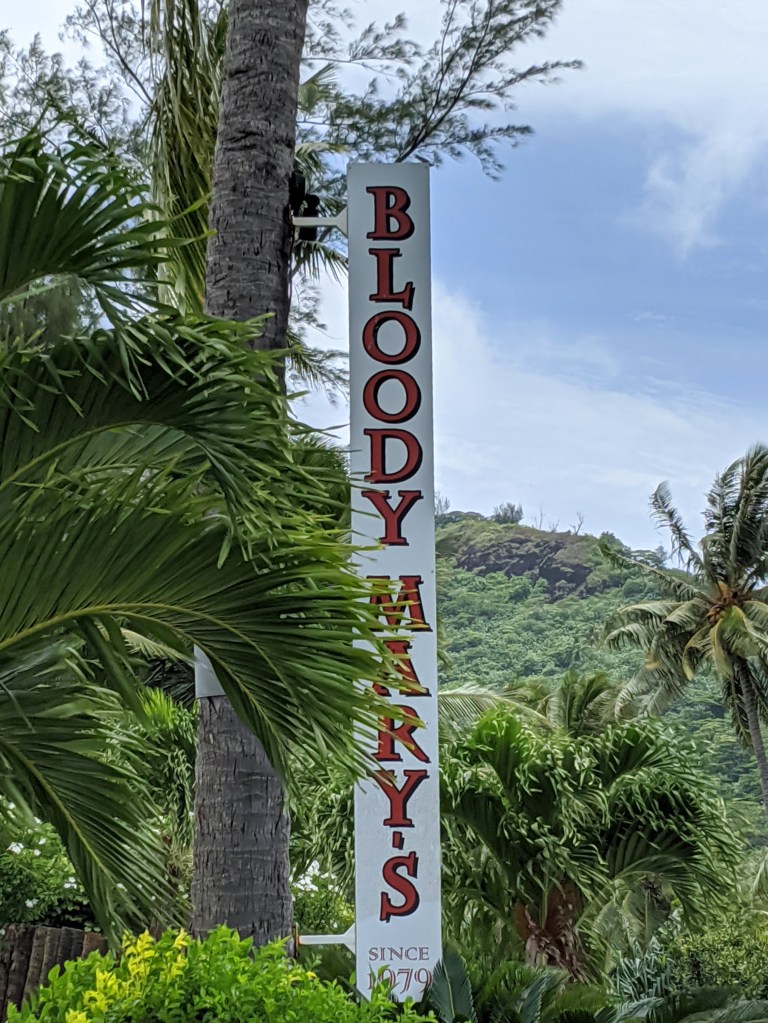
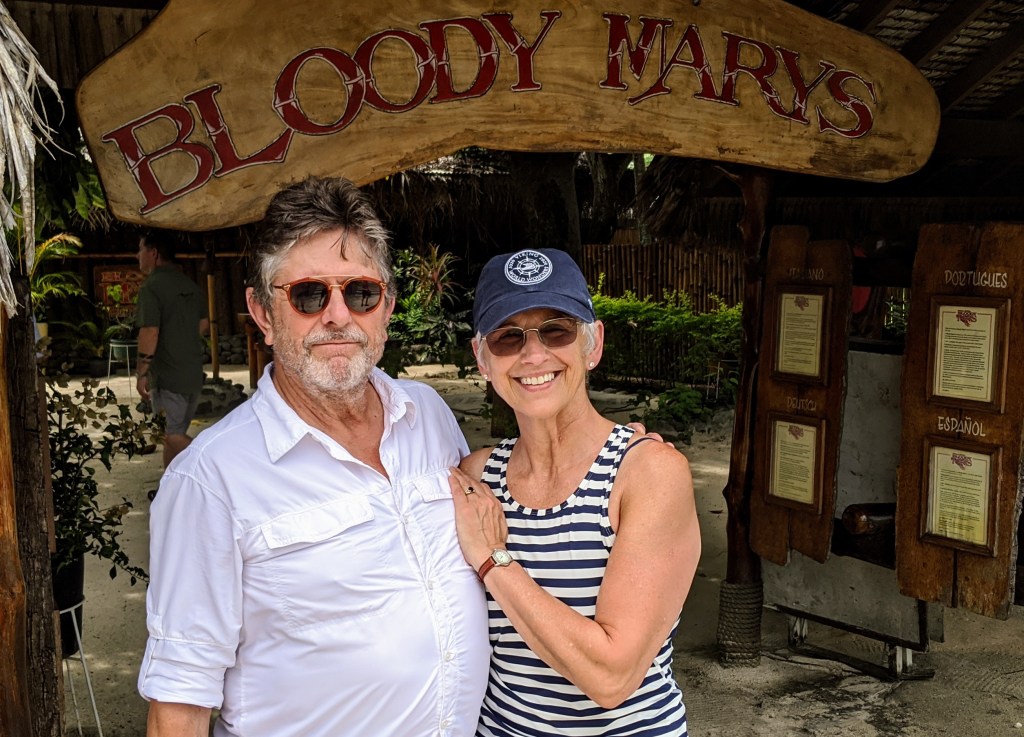
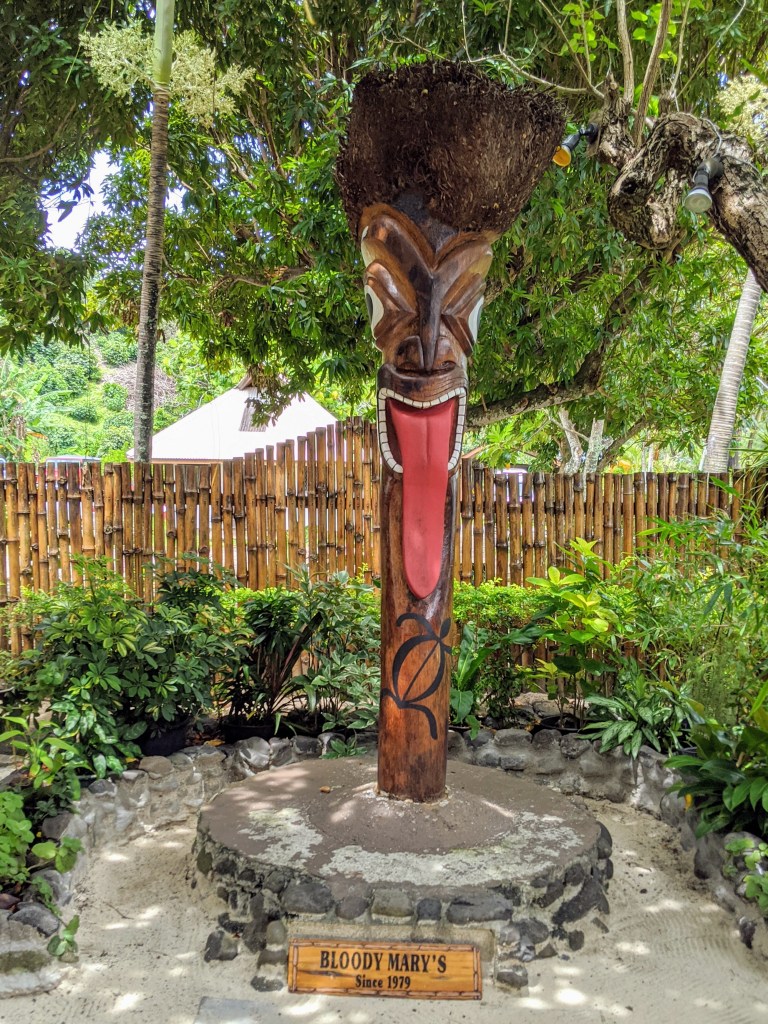
After our delightful cruise, we returned to Vaitape and hired two cab driving brothers for a delightful private tour around the island. They were rightfully proud to share the beauty of their home island, even showing us the parcel of land their grandmother “sold” them for one beer. Here four generations live together, all contributing to the family resources with a variety of jobs from driving, to fishing, to working in the public sector and in local retail establishments. Their dream is to build a small hotel some day, and we believe they’ll be successful! Although it was closed for renovations, we made a photo stop at the famous restaurant, Bloody Mary’s, and in spite of the construction going on, one could see that this must be a fun place to gather with friends. They took us to numerous, white sandy beaches, one more beautiful than the next, and introduced us to their cousin, who makes hand-made batik fabric for colorful pareos.
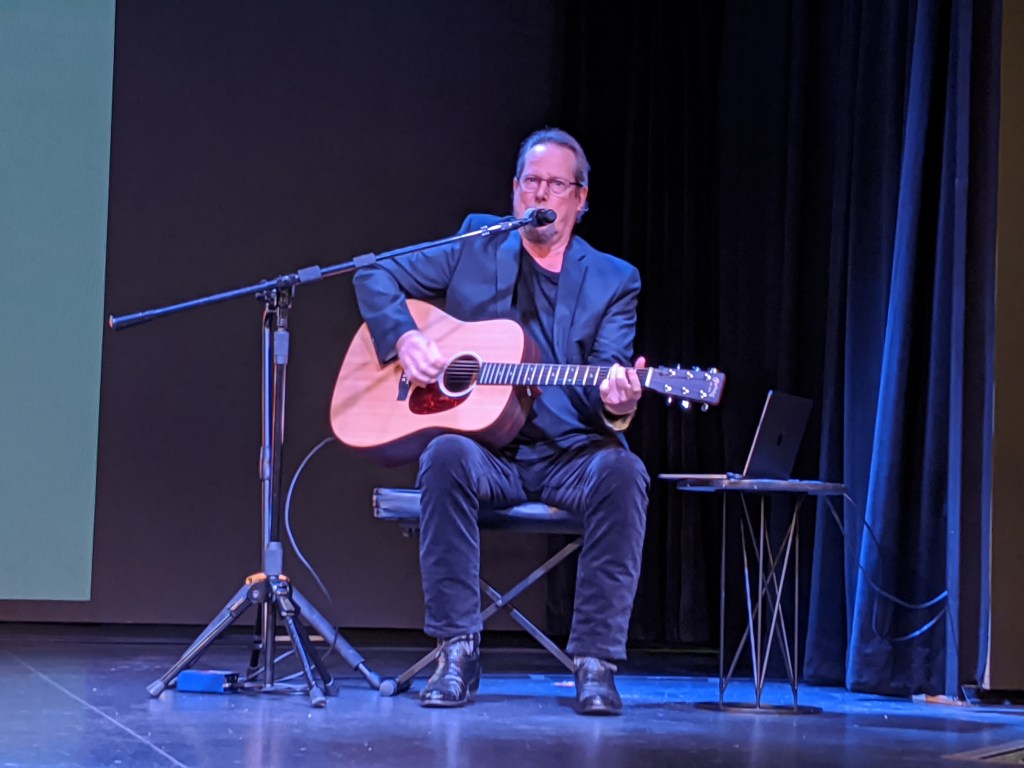
And no visit to Bora Bora would be complete without mentioning the ubiquitous water bungalows. Standing on stilts over the ocean, these unique resorts and residences are the quintessential answer to the dream of being at one with nature…even those with skylights and their own private piers!

American novelist James Michener brought Bora Bora to the rest of the world in the 1950s when he called it “the South Pacific at its unforgettable best.” Today, five-star resorts coexist with small beachfront properties and some abandoned hotels that are in need of some TLC. But any way you look at it, Bora Bora is truly one of the most breathtaking places we have visited to date!

Twenty-four Hours in Tahiti

We docked in Papeete, Tahiti, French Polynesia shortly after sunset, and took a leisurely stroll around this charming capital of French Polynesia. Although most businesses were already closed for the evening, dozens of Les Roulottes (Tahiti’s answer to food trucks) were busy preparing and selling fresh food of all types in a bustling park. We learned that each evening at 6:00 pm, dozens of food trucks line the Place Vai’ete park just across from the pier, and local chefs bust out griddles, grills, and bar-b-que equipment of all kinds to prepare and serve huge portions of fresh food from appetizers to crepes, all at a fraction of what one would pay for a similar meal at a restaurant or resort. It was fun to walk among the local residents and tourists enjoying this casual, al fresco dining option. The palm trees were glittering with twinkling lights, and we loved catching the tail end of the sunset from dry land.

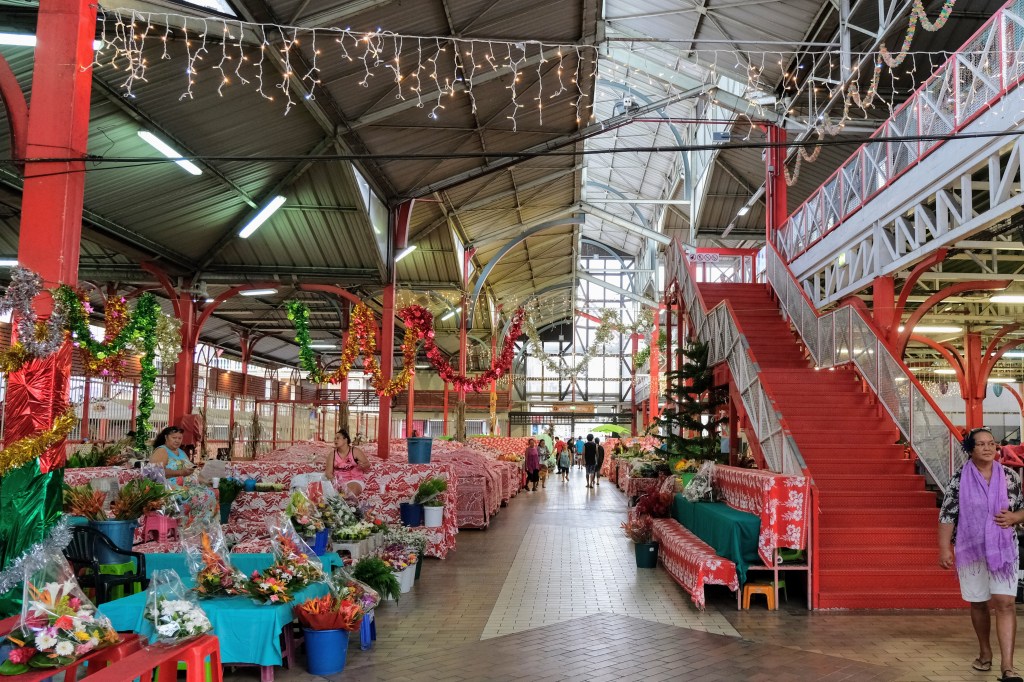
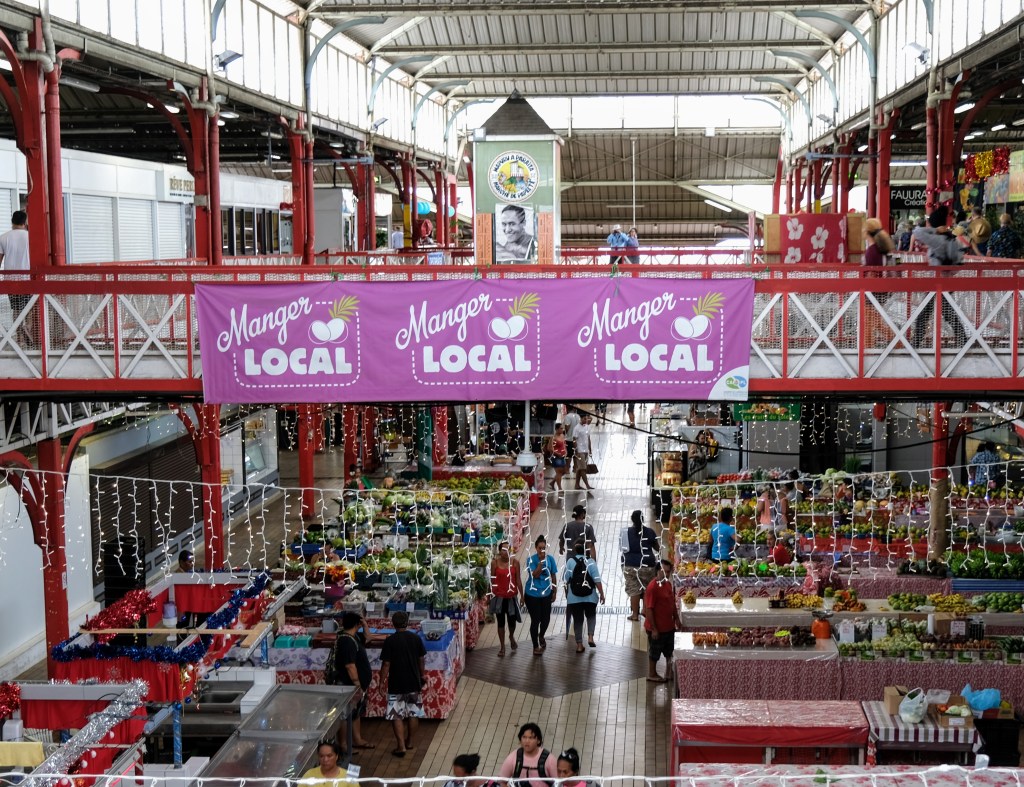
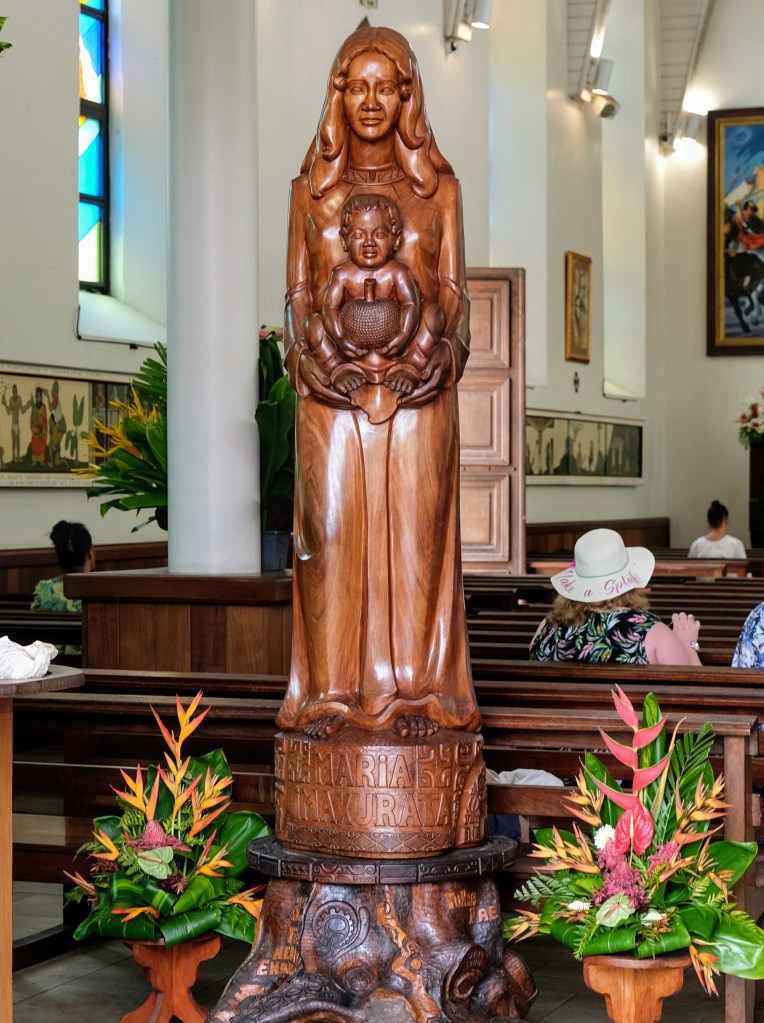
Those of you who know Denise know that she often makes insomnia work to her advantage, and today was no exception. She had learned that the Papeete Market opens at 4:00 am, so she made her way down to the market early to catch a glimpse of the vendors opening their stalls. She was delighted to see a large banner across the second floor of the market encouraging shoppers to “Manger Local.” As she made her way around the city of Papeete as it was just waking up, she heard singing coming from the open doors of the Cathedral of Notre Dame. Peeking in, she was surprised to see a packed church so she stayed for Mass and was warmly welcomed by the congregants who embraced her and one another with hugs, air kisses, and “Paix a vous!”

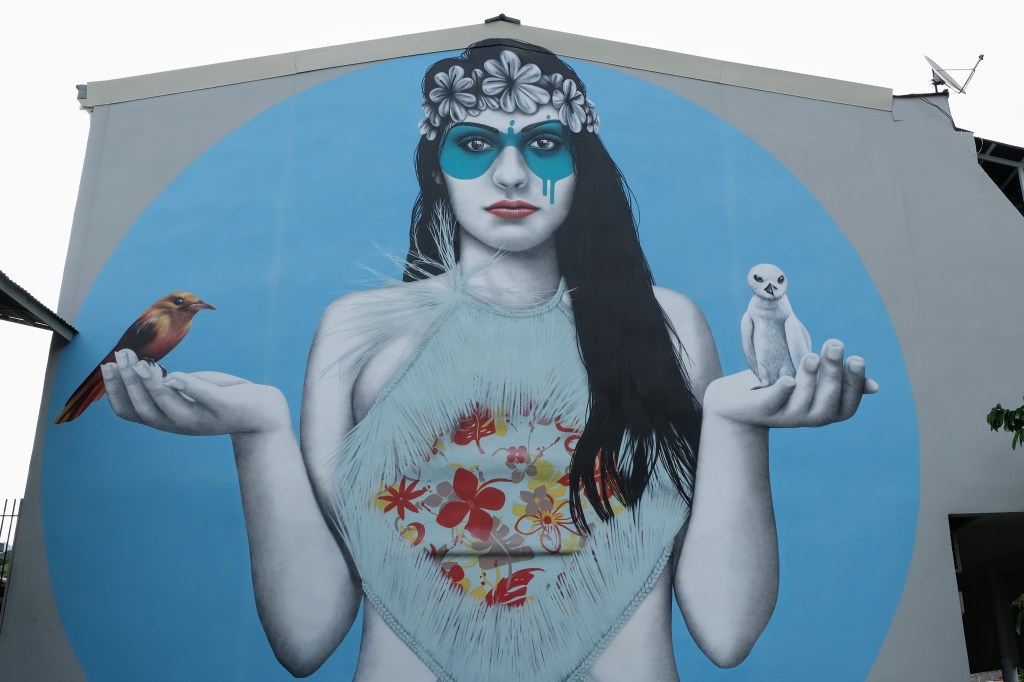
At a more reasonable hour, we took a guided walking tour around the city, where we learned more about life in Papeete and saw some beautiful public art; the Town Hall, which is a replica of the former Royal Palace with elaborate courtyards and a quaint wedding chapel; and Bougainville Garden with its lush, inviting green space and secret spring.

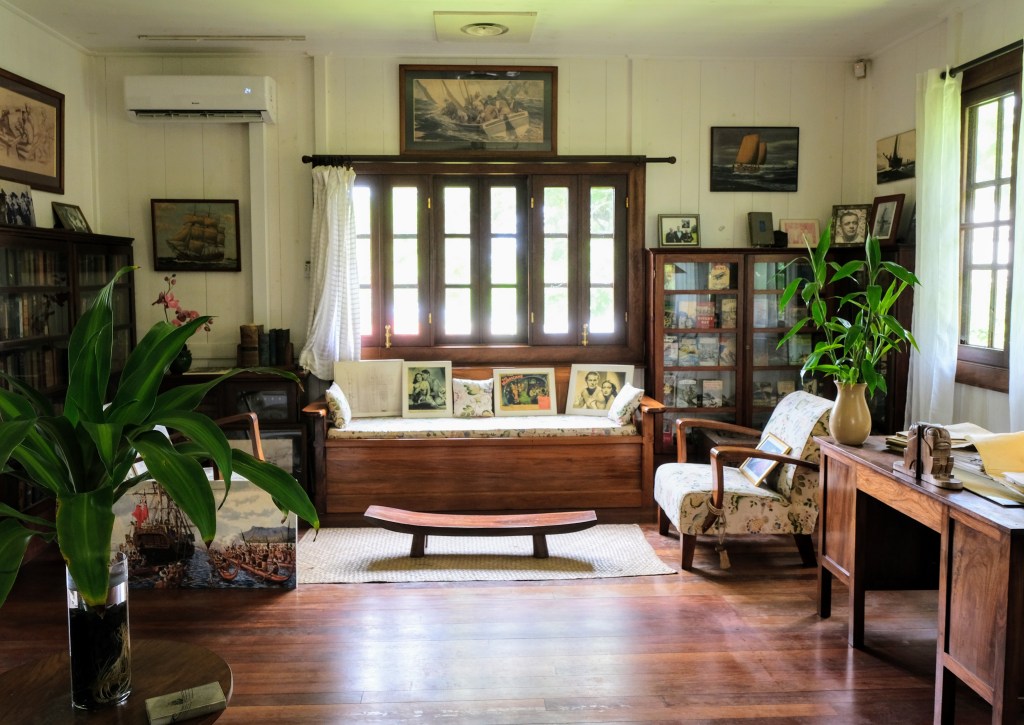
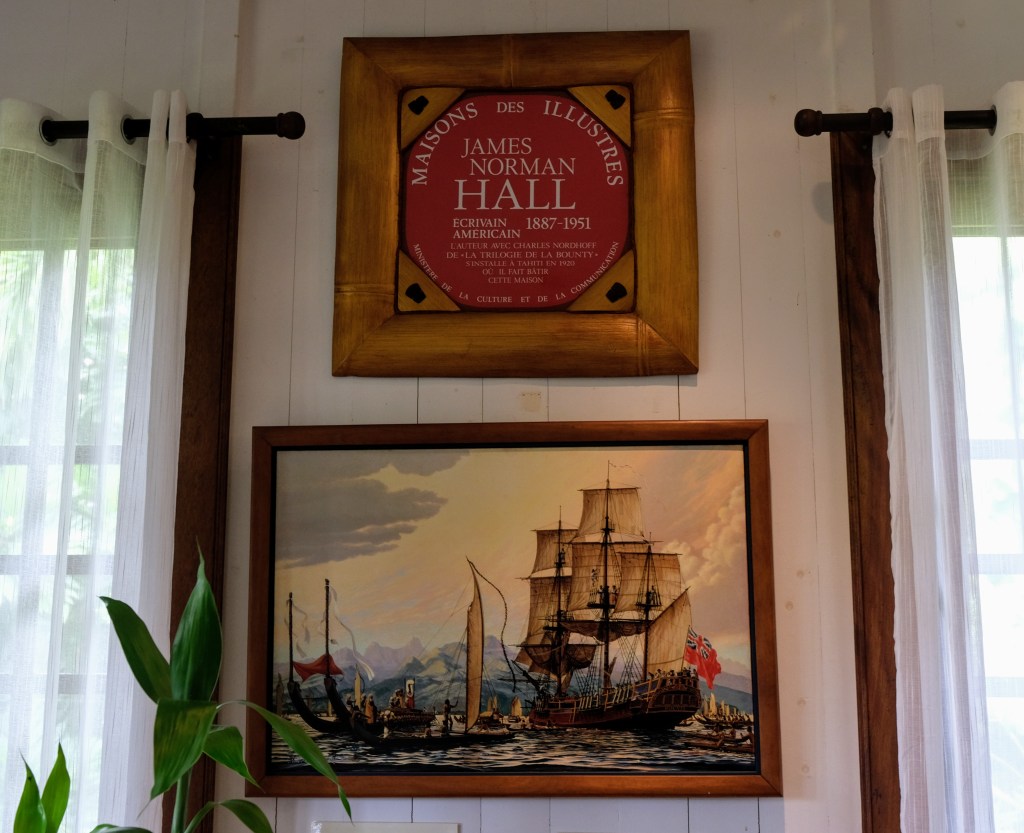
Later in the day, we took a step back in time with a visit to the historic home of James Norman Hall, decorated war hero and co-author of the “Bounty” trilogy – “Mutiny on the Bounty,” “Men Against the Sea,” and “Pitcairn’s Island.” We learned that Hall spent the happiest years of his life here, marrying a local woman, raising his son and daughter, and writing his novels and poetry. The charming home is full of memorabilia from the Hall family and the movies that were based on his stories.

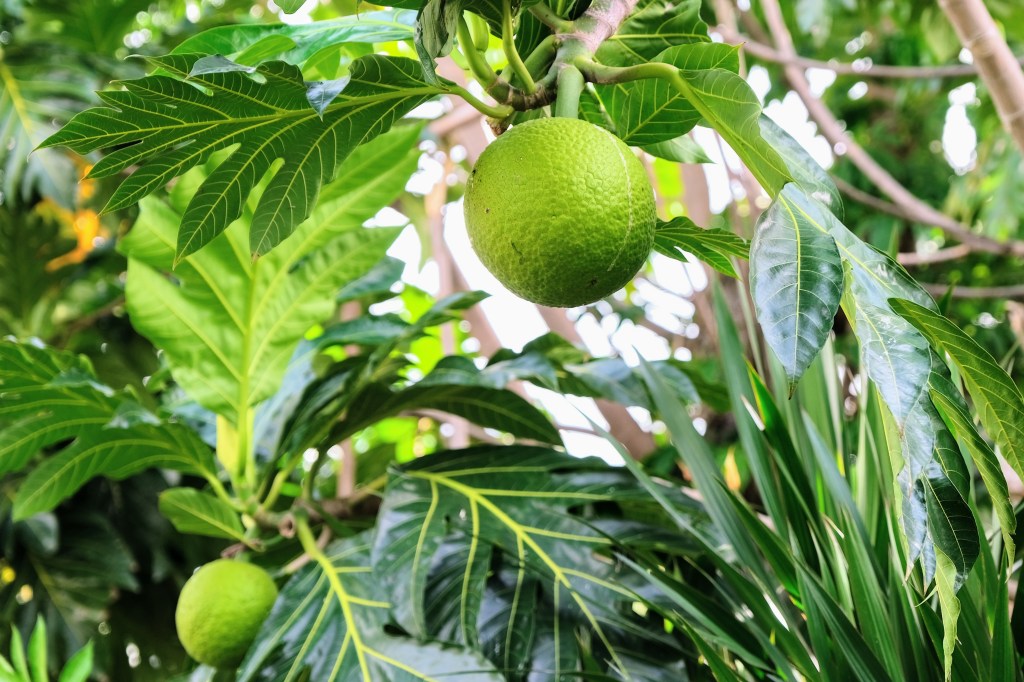
The home’s exterior and gardens reflect many of Tahiti’s local traditions. Our lovely guide talked about the origins of the Tahitian pareo, a type of sarong that she was wearing; discussed interesting local customs; and described the many uses for local produce such as coconut, mangoes, bananas, and bread fruit. We also sampled a delicious toasted coconut treat she made just for us!

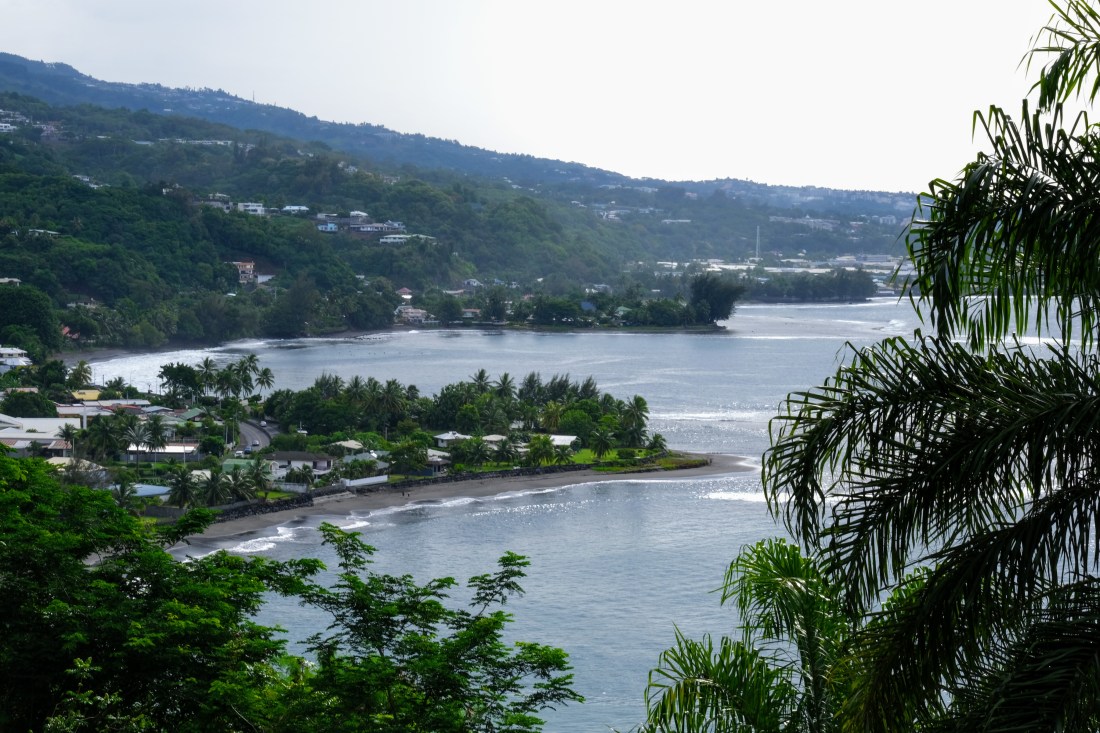
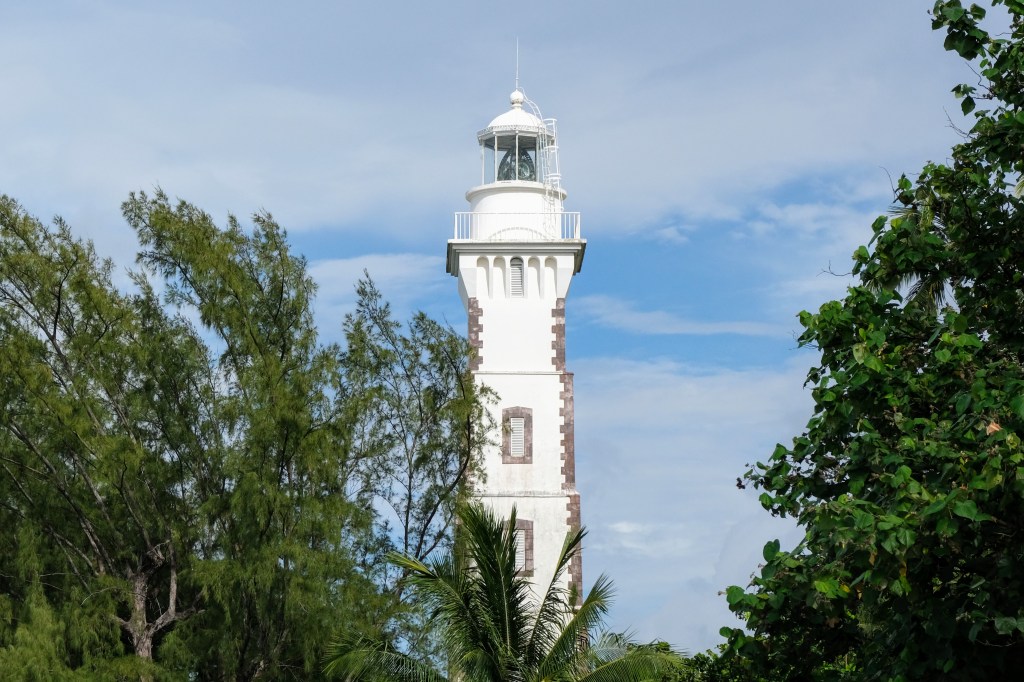
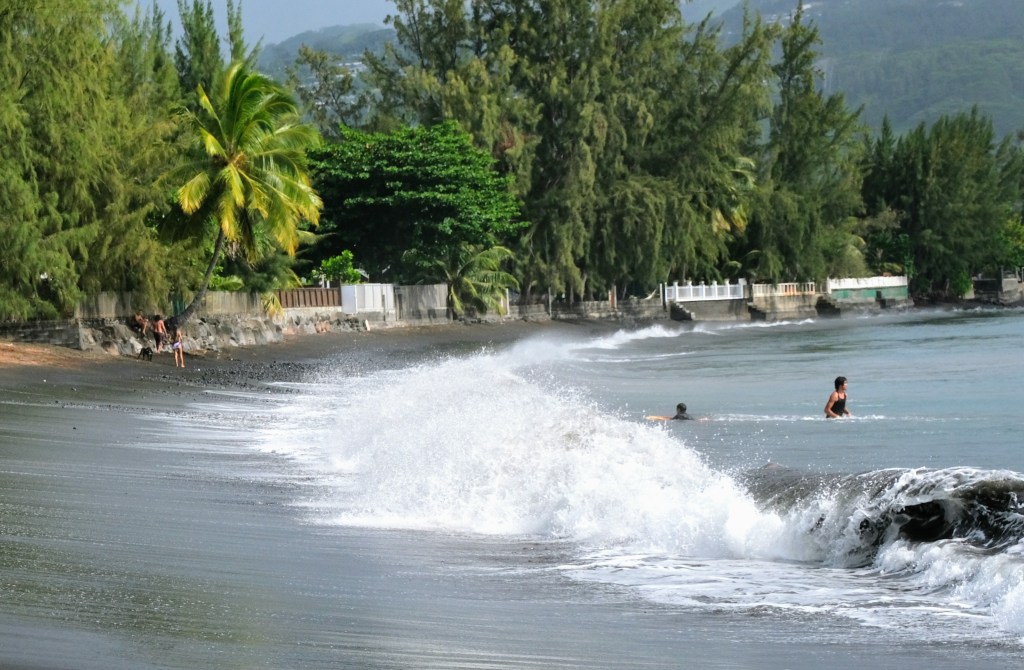
We continued our journey along Tahiti’s north coast to Matavai Bay, landing site of the island’s first European explorers, including Captain Samuel Wallis and James Cook. The bay is also home to magnificent black sand beaches and Point Venus Light House, an historic light house and monument dedicated to the mutineers of the Bounty.

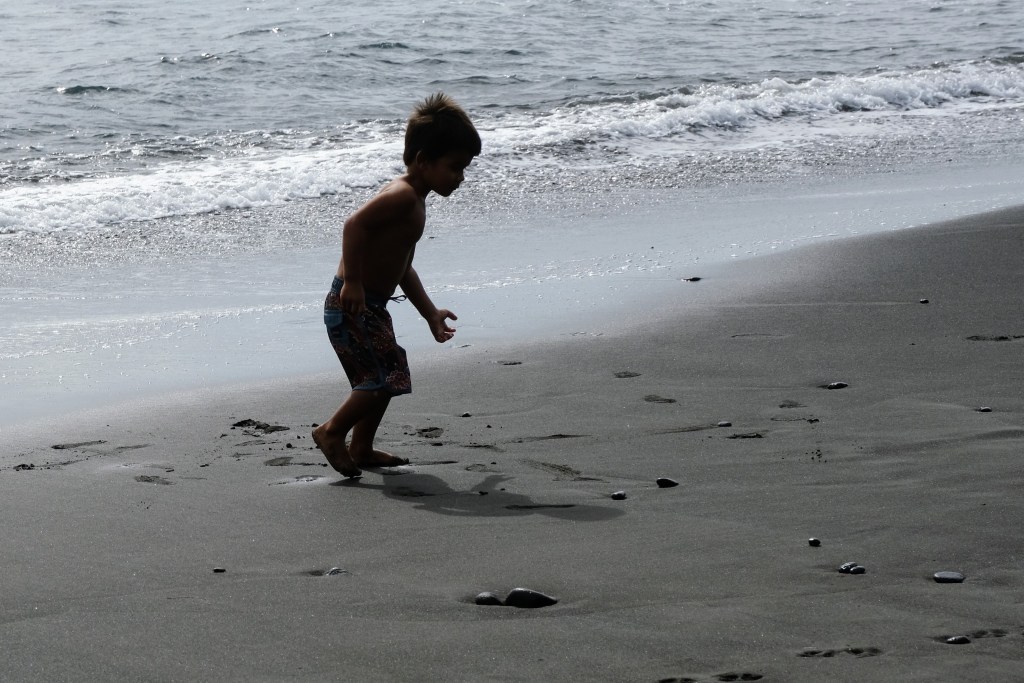
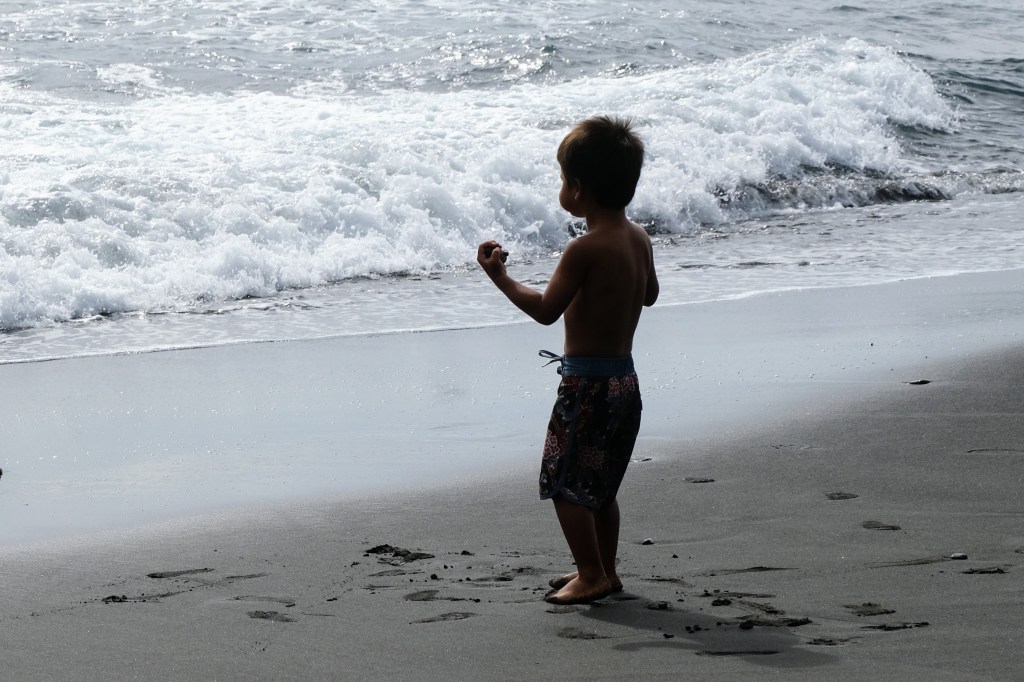
And while we were really enchanted by our entire experience in Tahiti, Denise was completely captivated by a little boy she spotted on the beach. She watched him for a long time as he challenged, teased, and fought with the gentle waves on the black sandy beach. She couldn’t imagine what he was thinking about as he played, but he seemed as delighted doing what he was doing as Denise was just watching him. Seeing him and capturing his innocent game with the waves will always be a highlight of our 24 hours in Tahiti.