Beautiful Bali

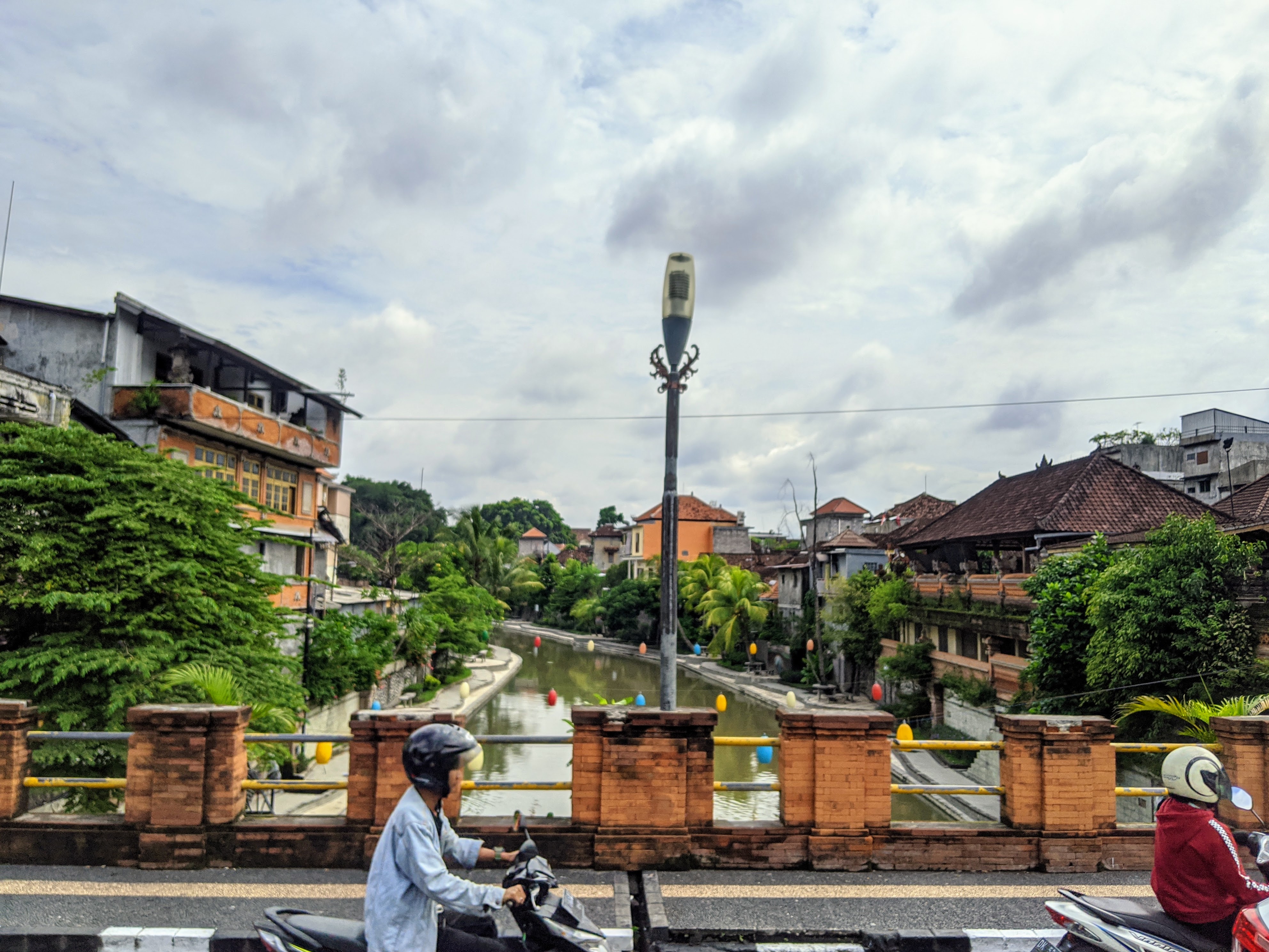
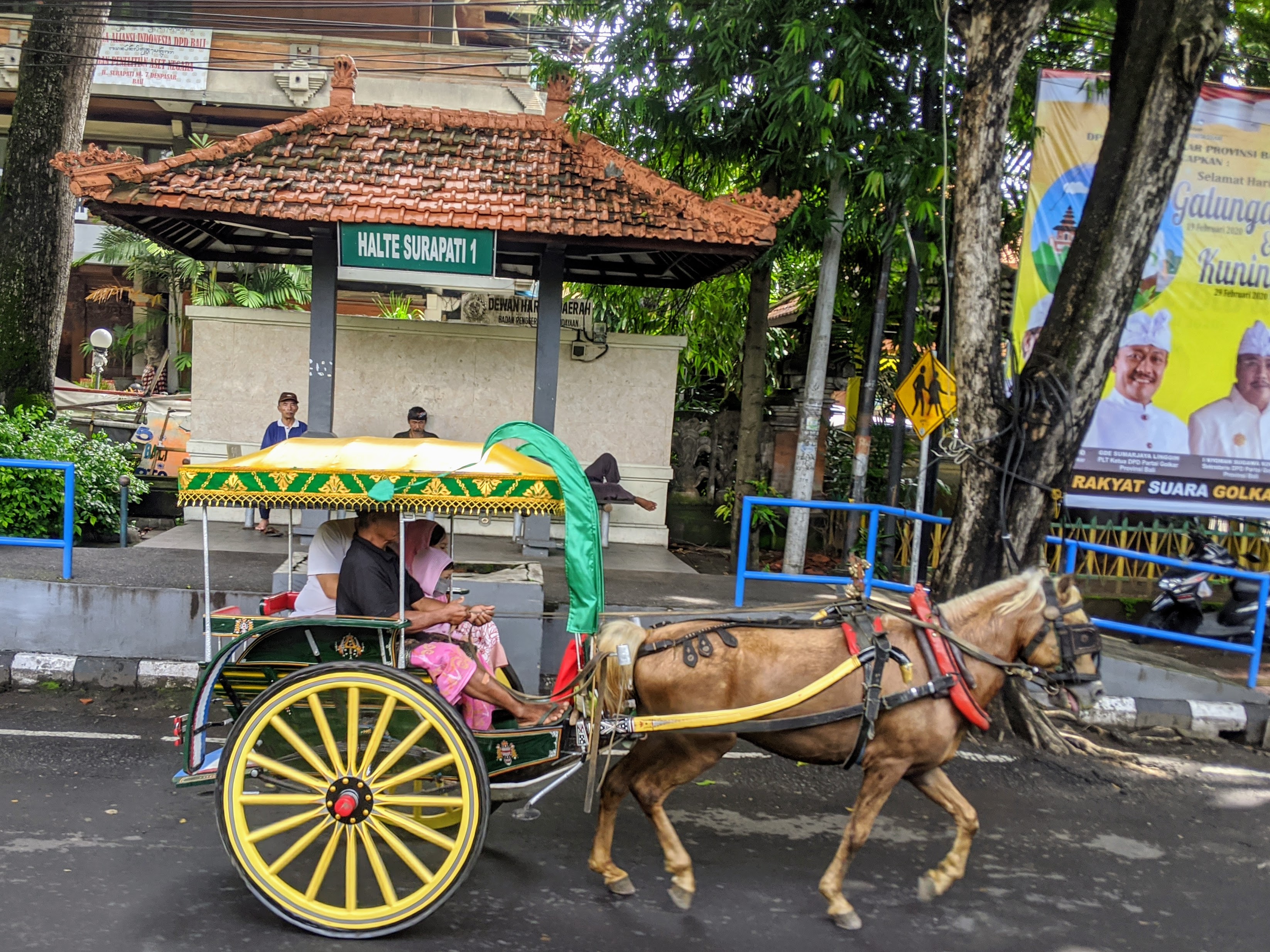
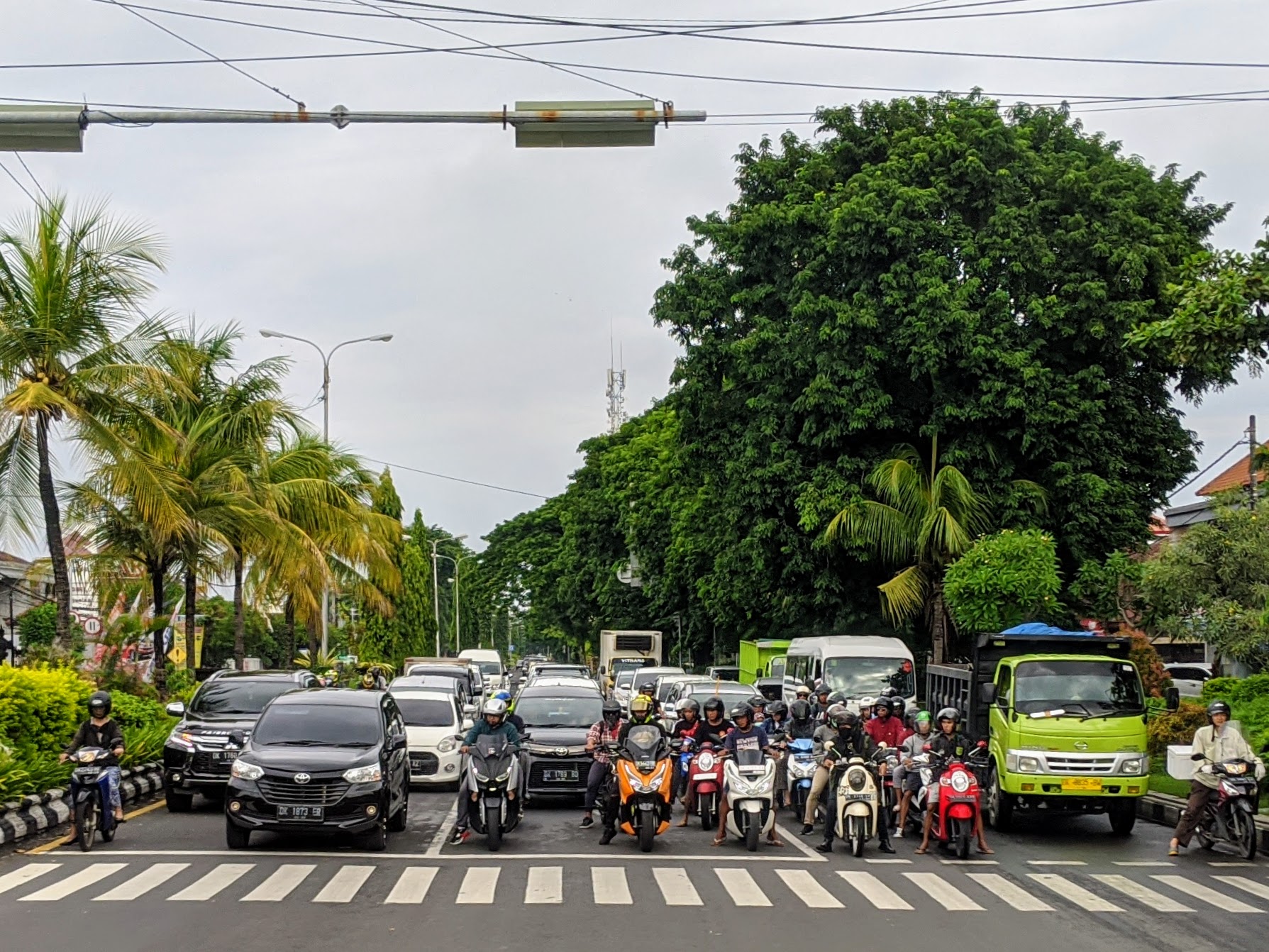
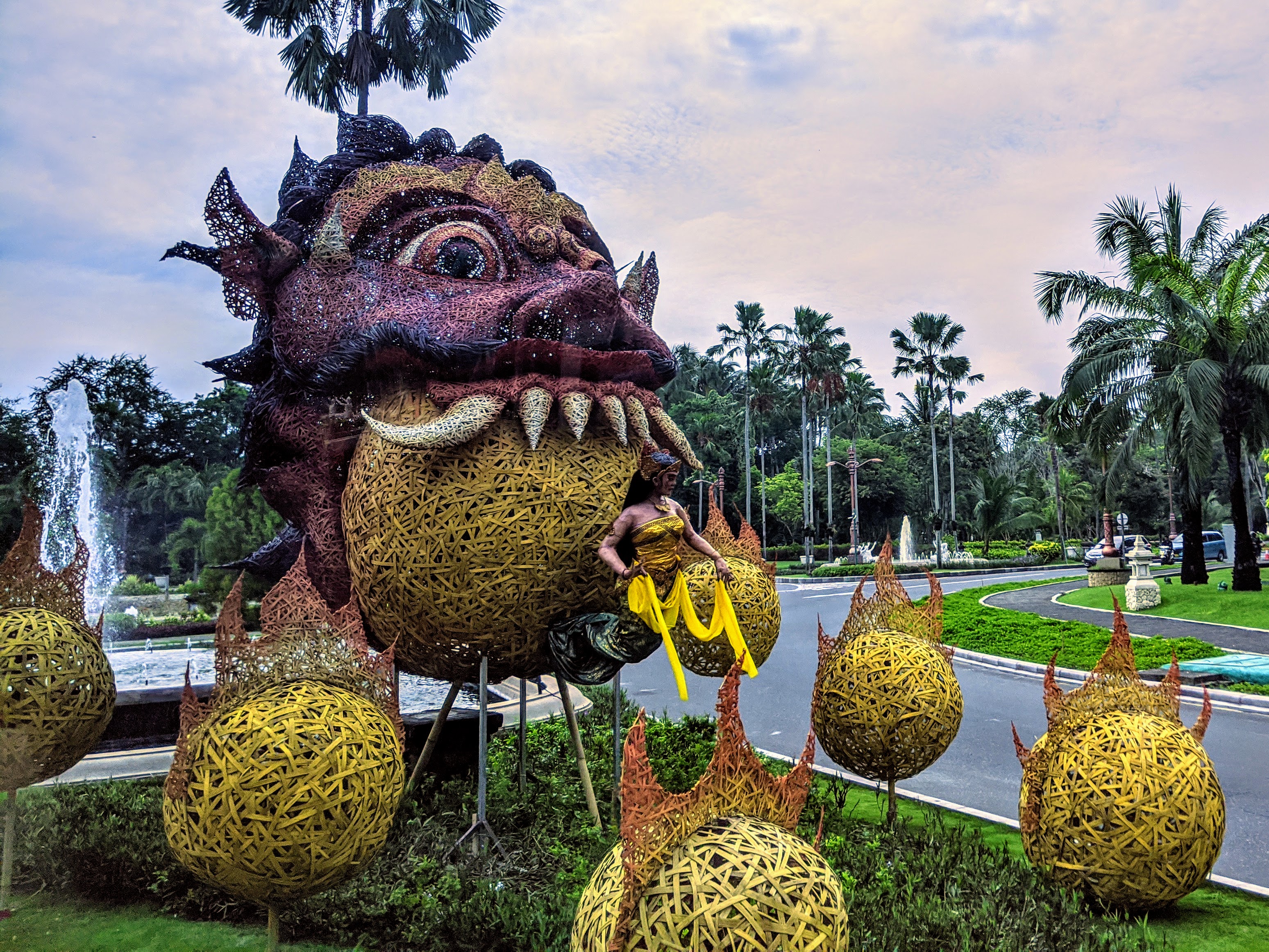
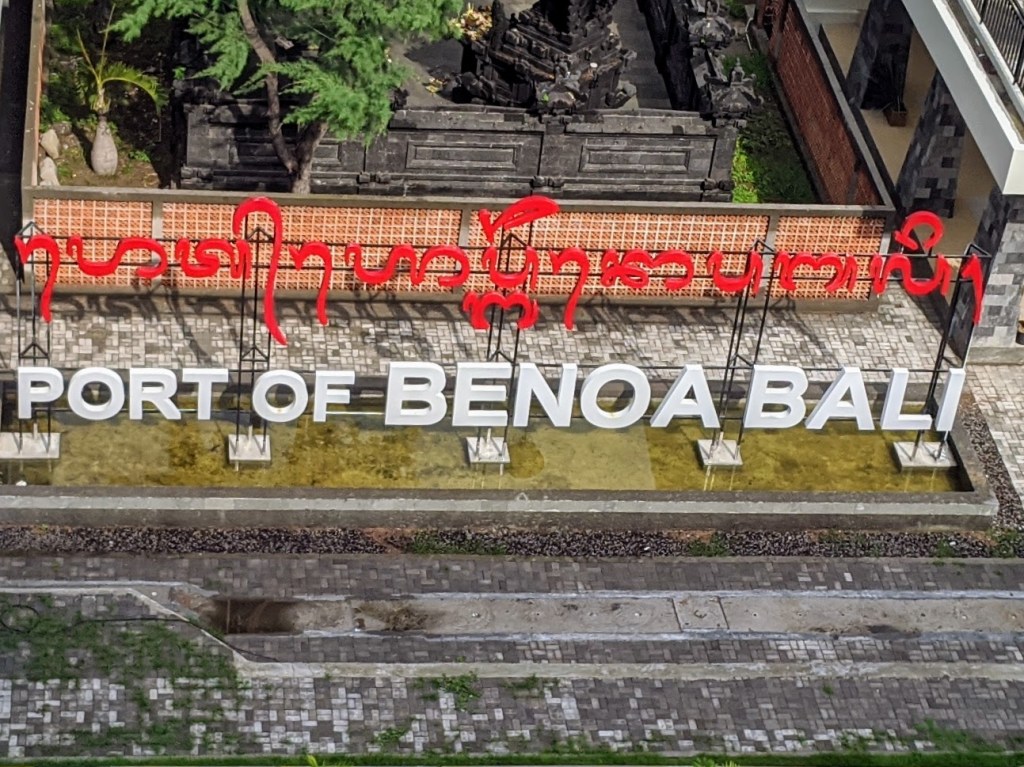
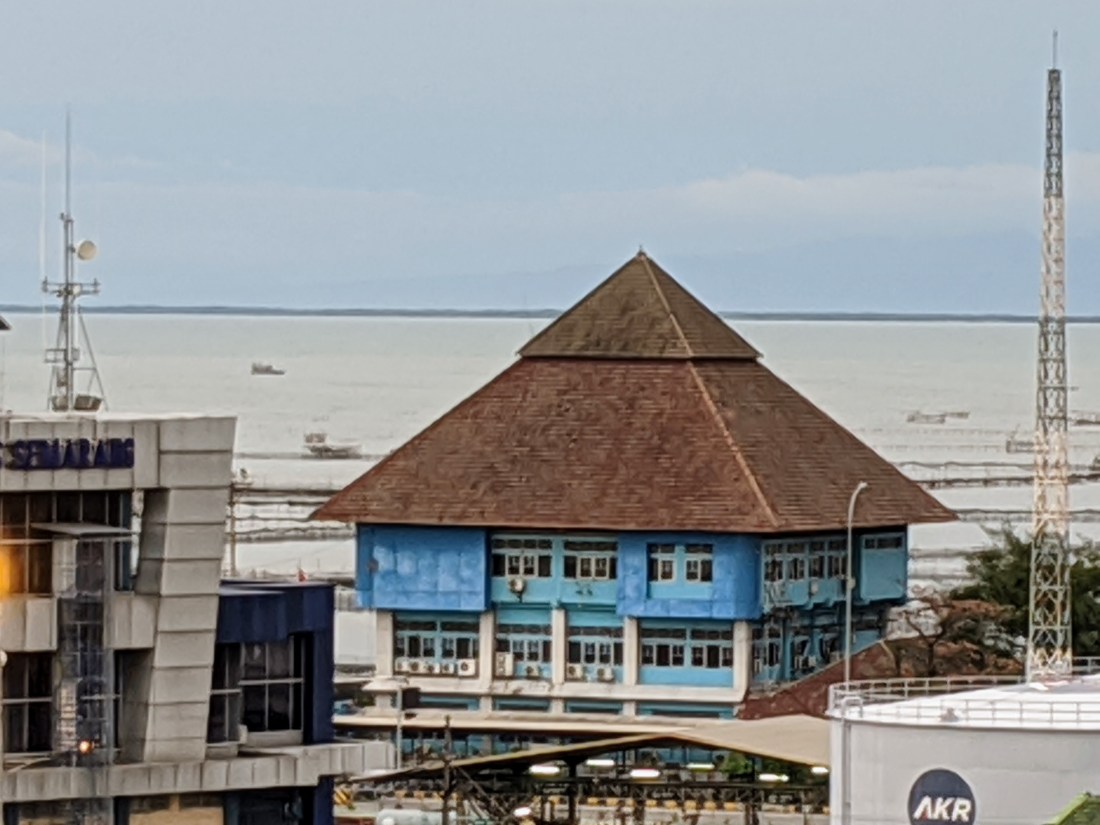
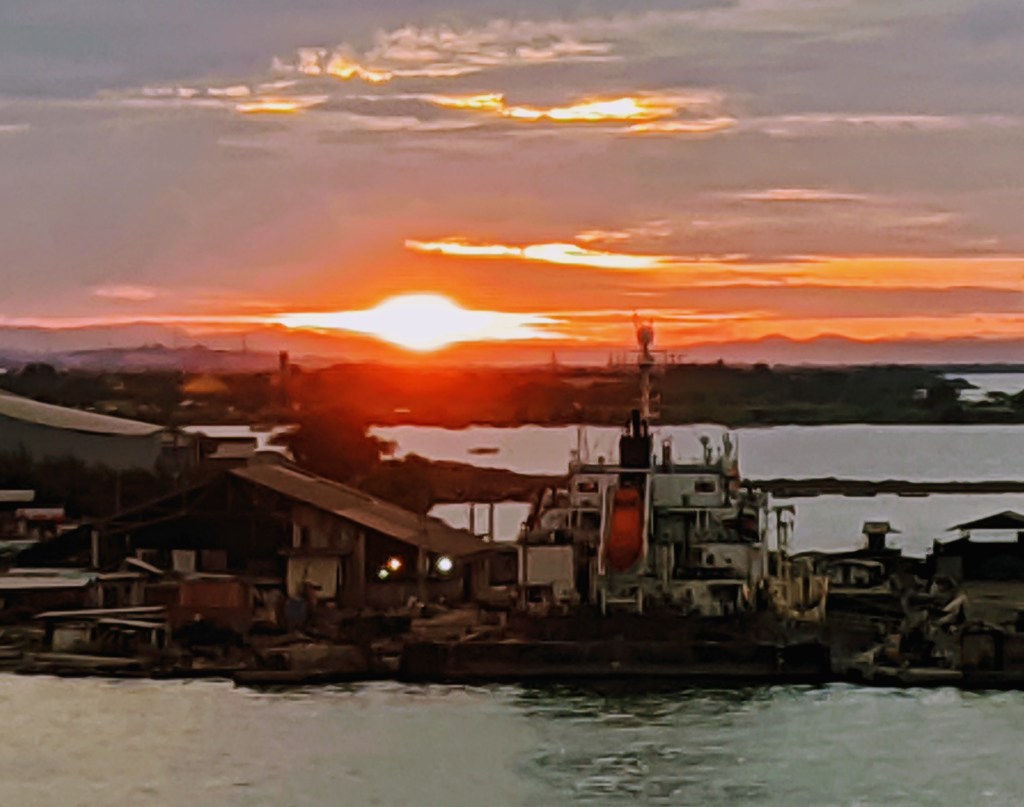
Driving through the Port of Benoa, we were struck by the hustle and bustle of this busy port town. People were taking a variety of modes of transportation, from cars, to scooters, to trucks, to small canal boats, to the occasional traditional horse-drawn carriage.

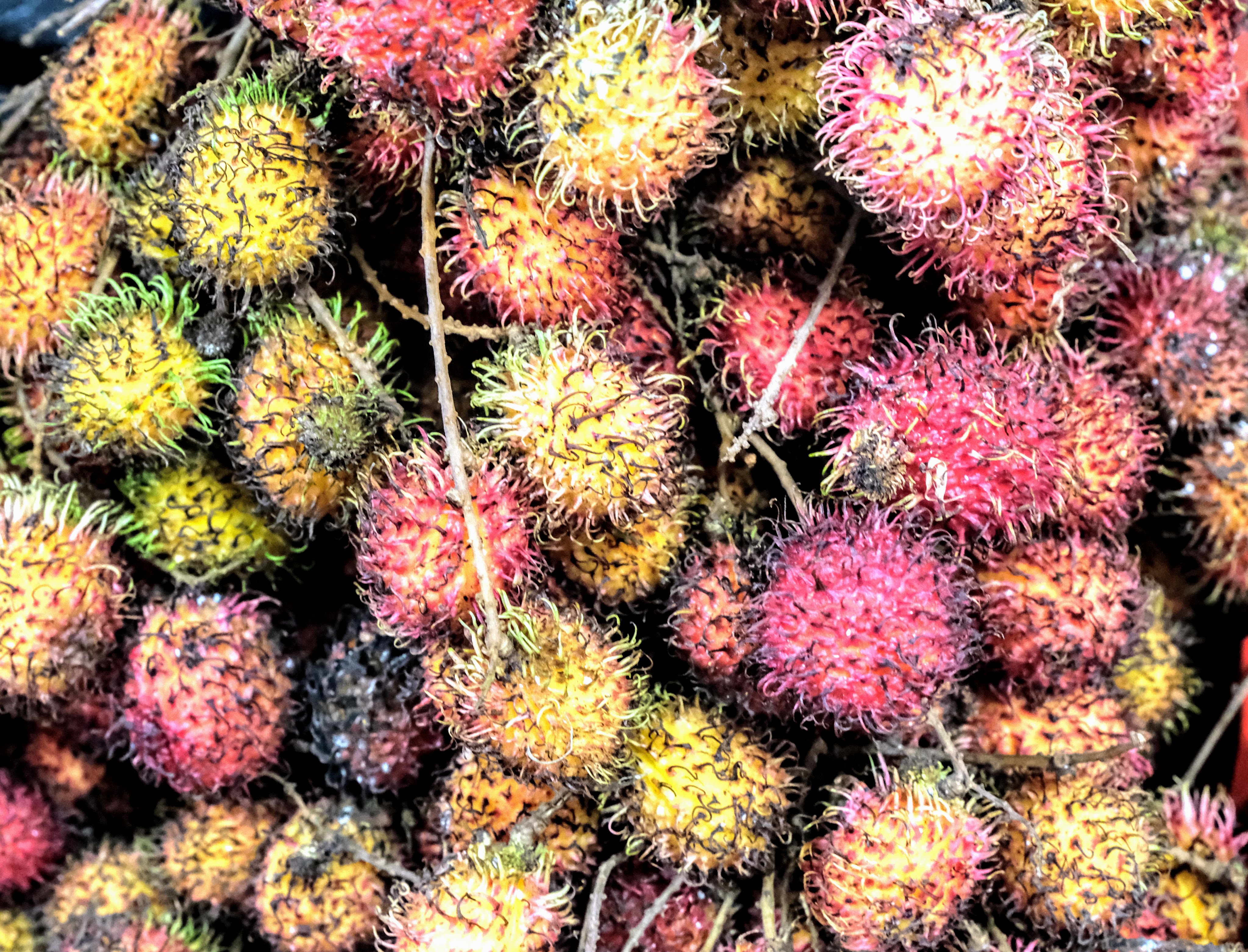
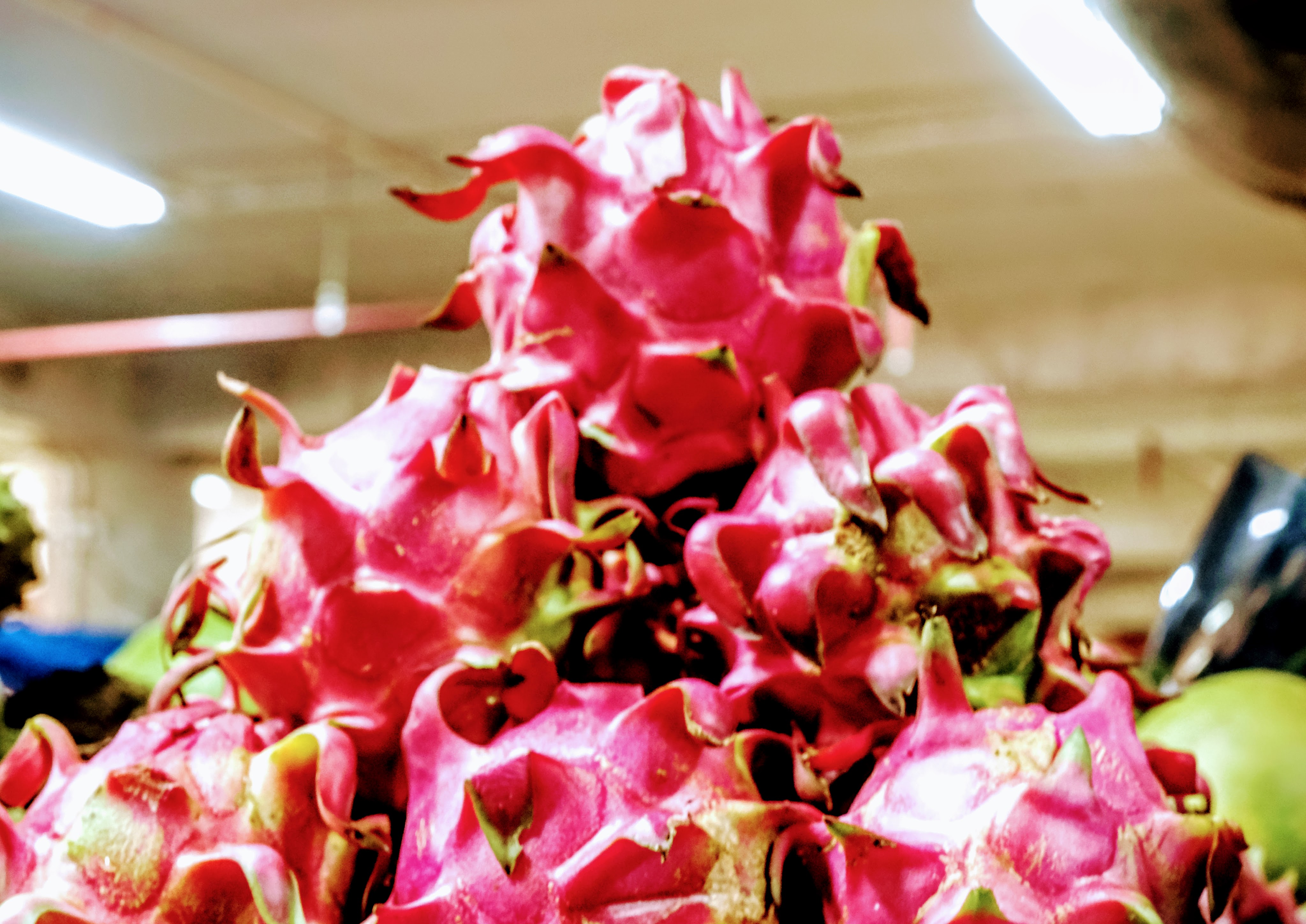
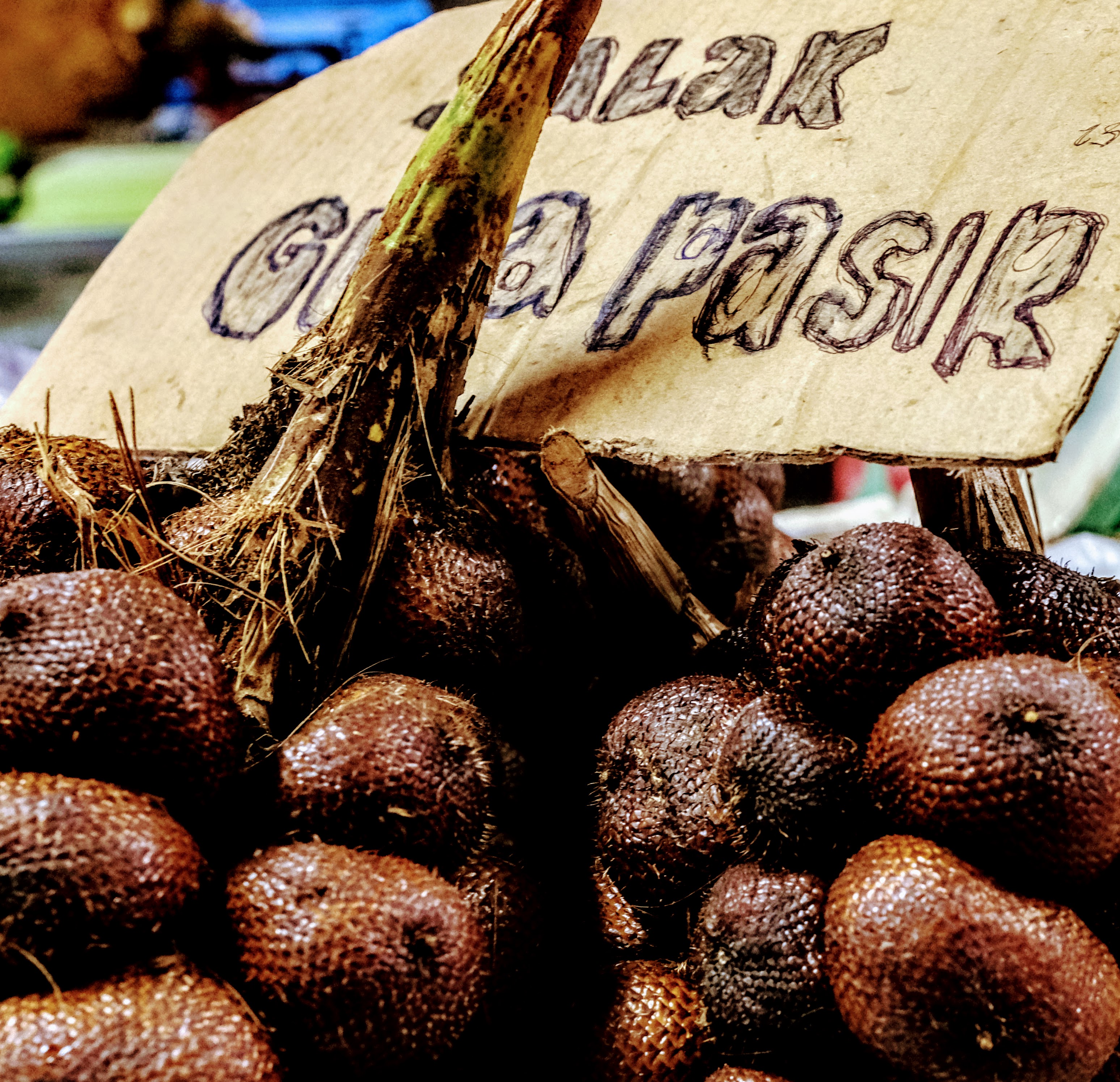
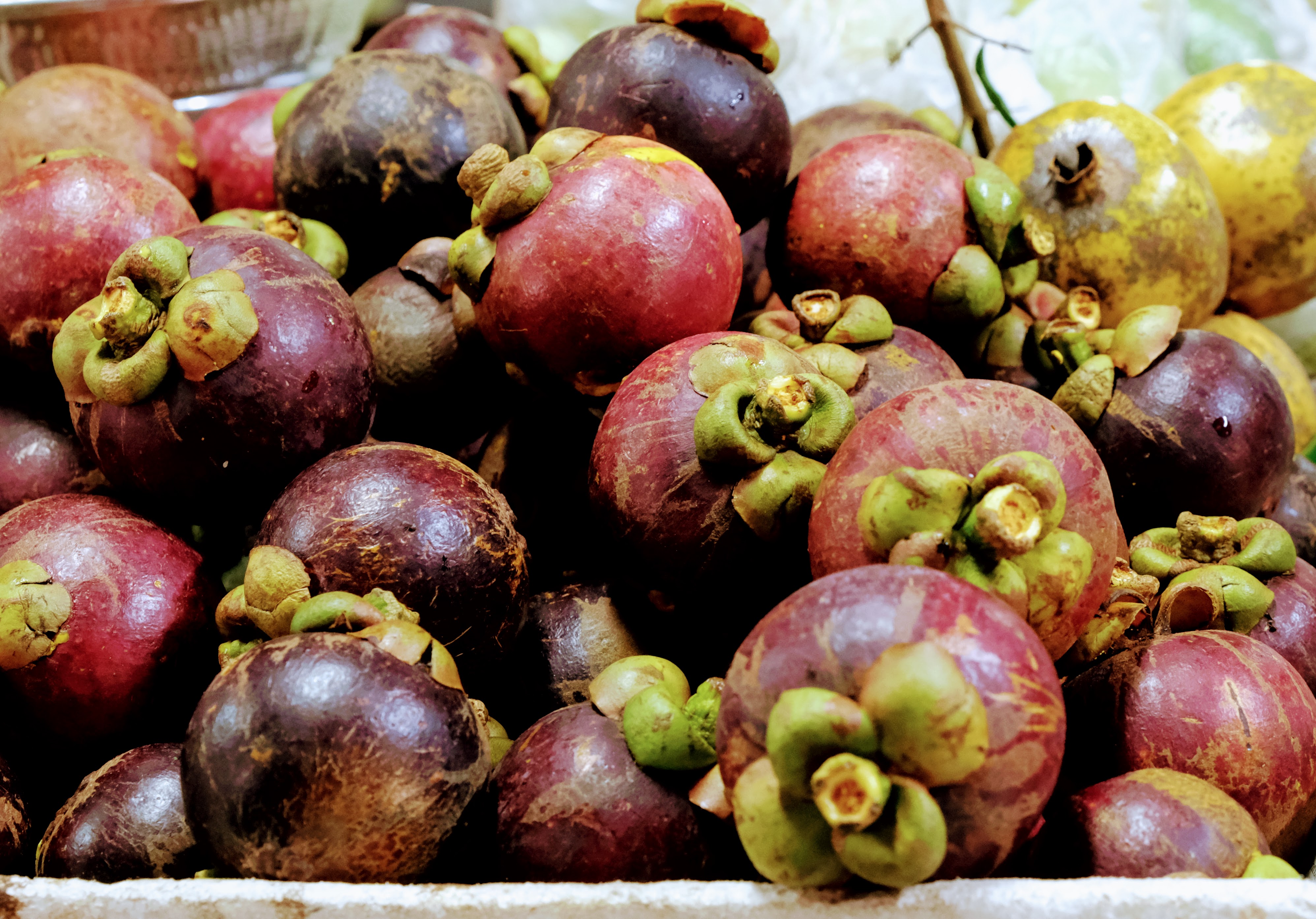
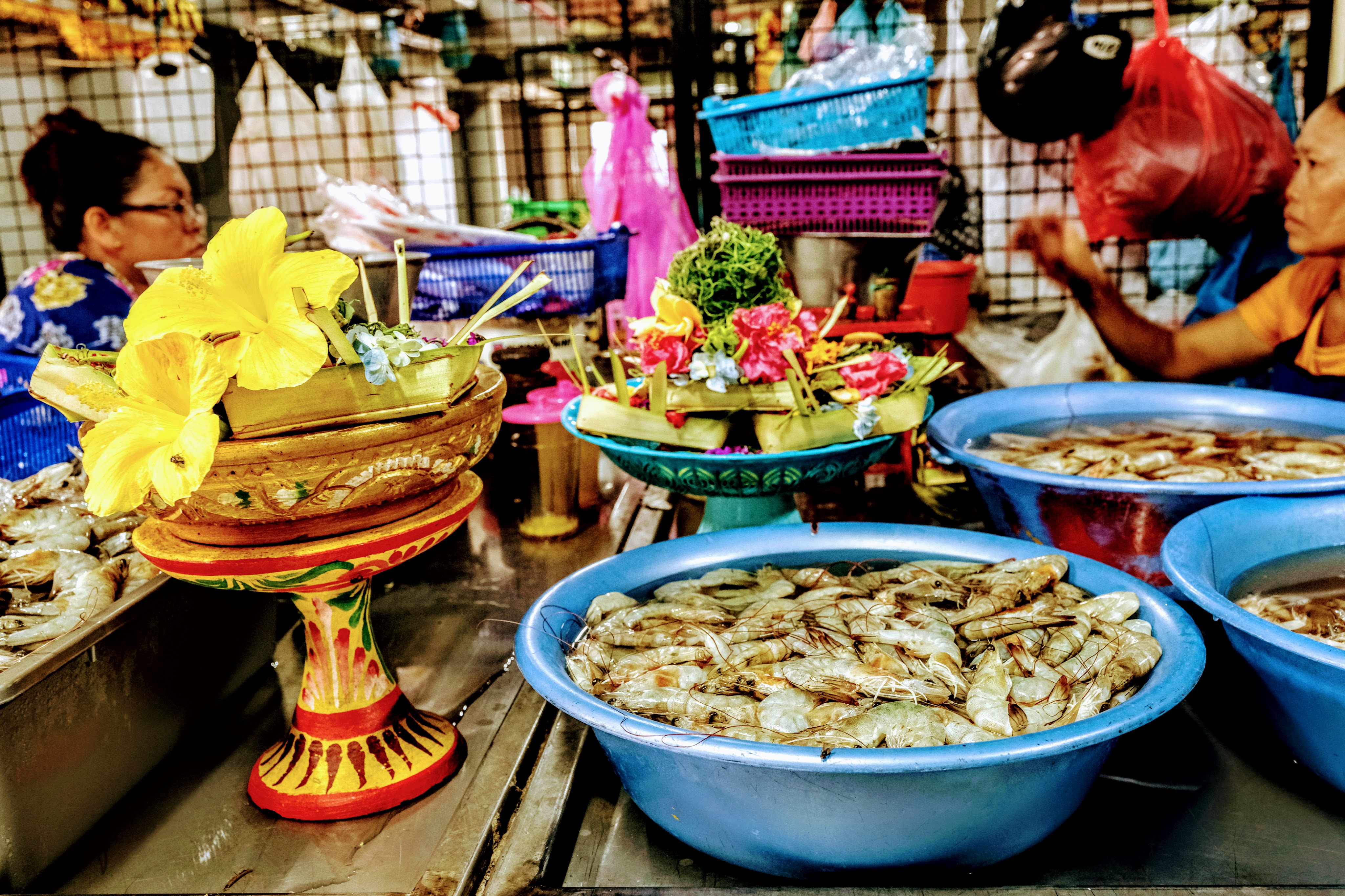
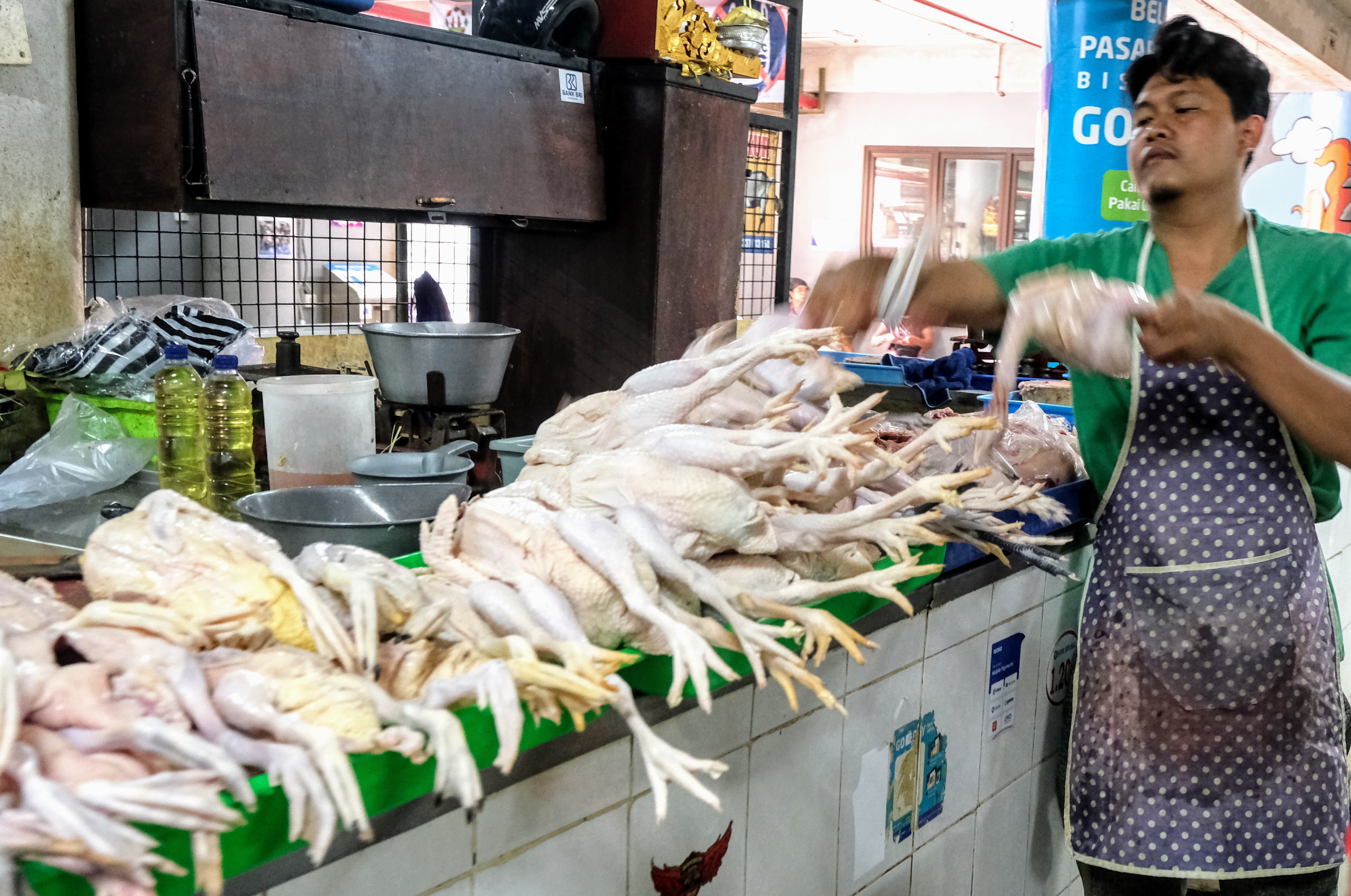
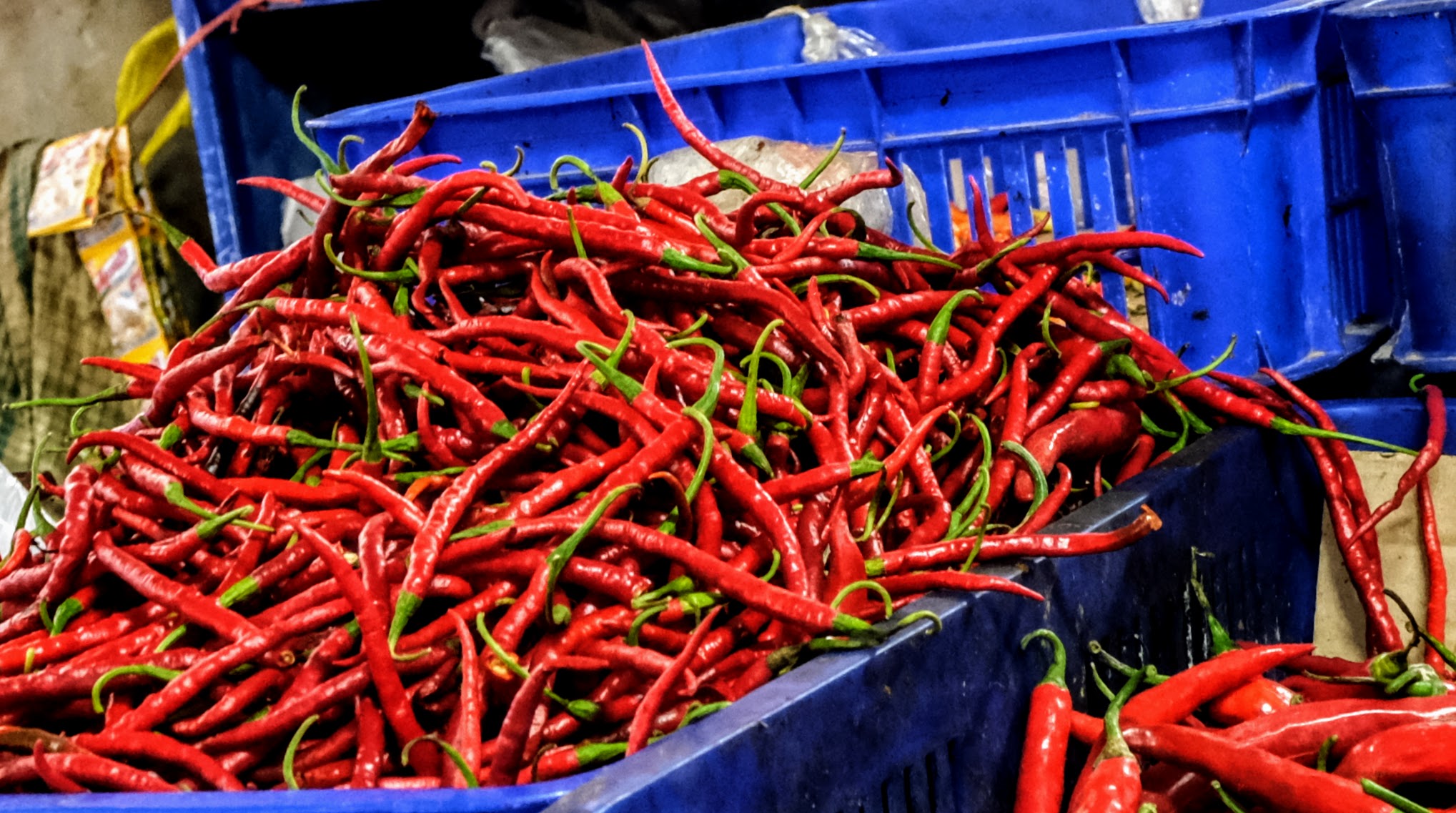
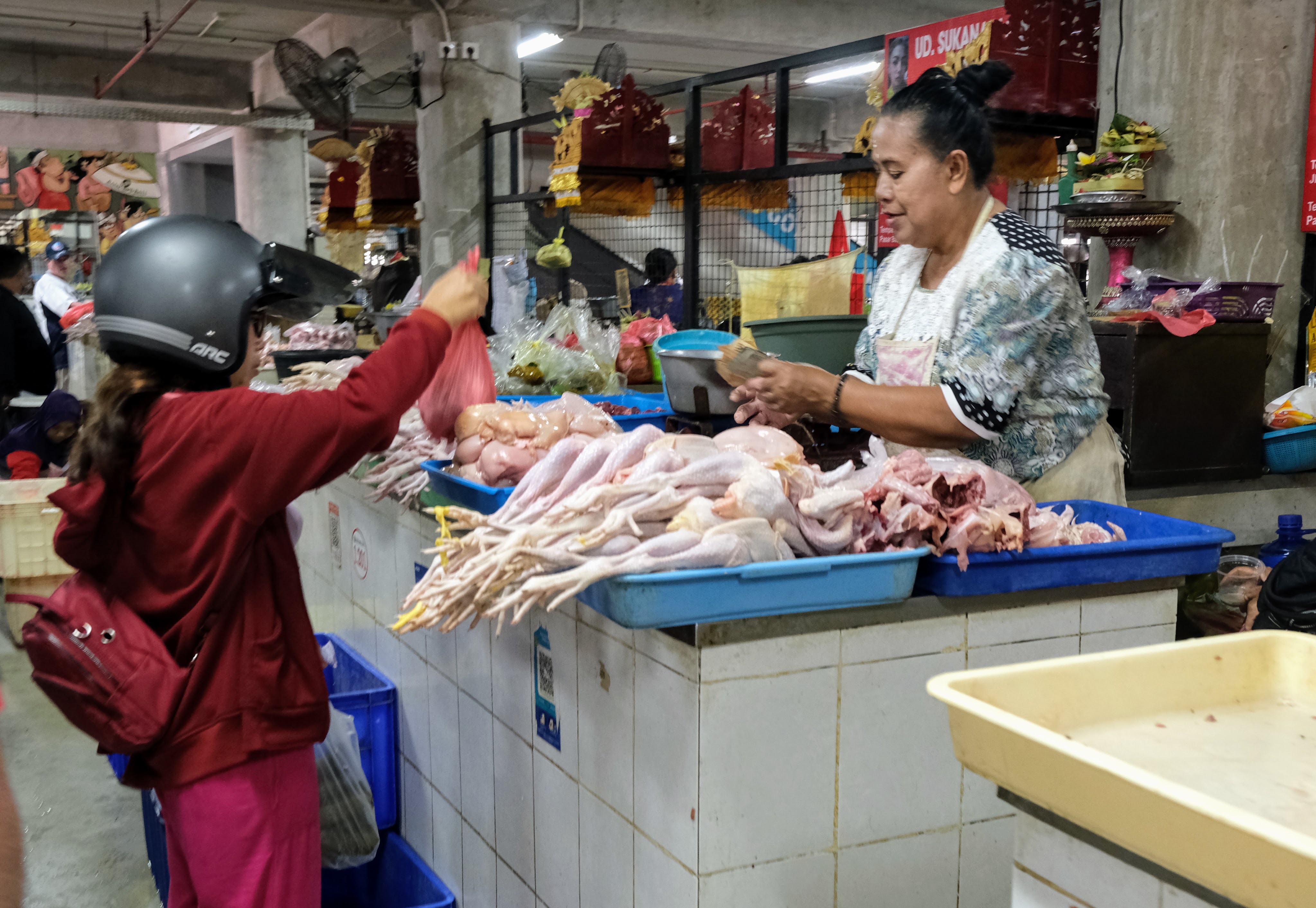
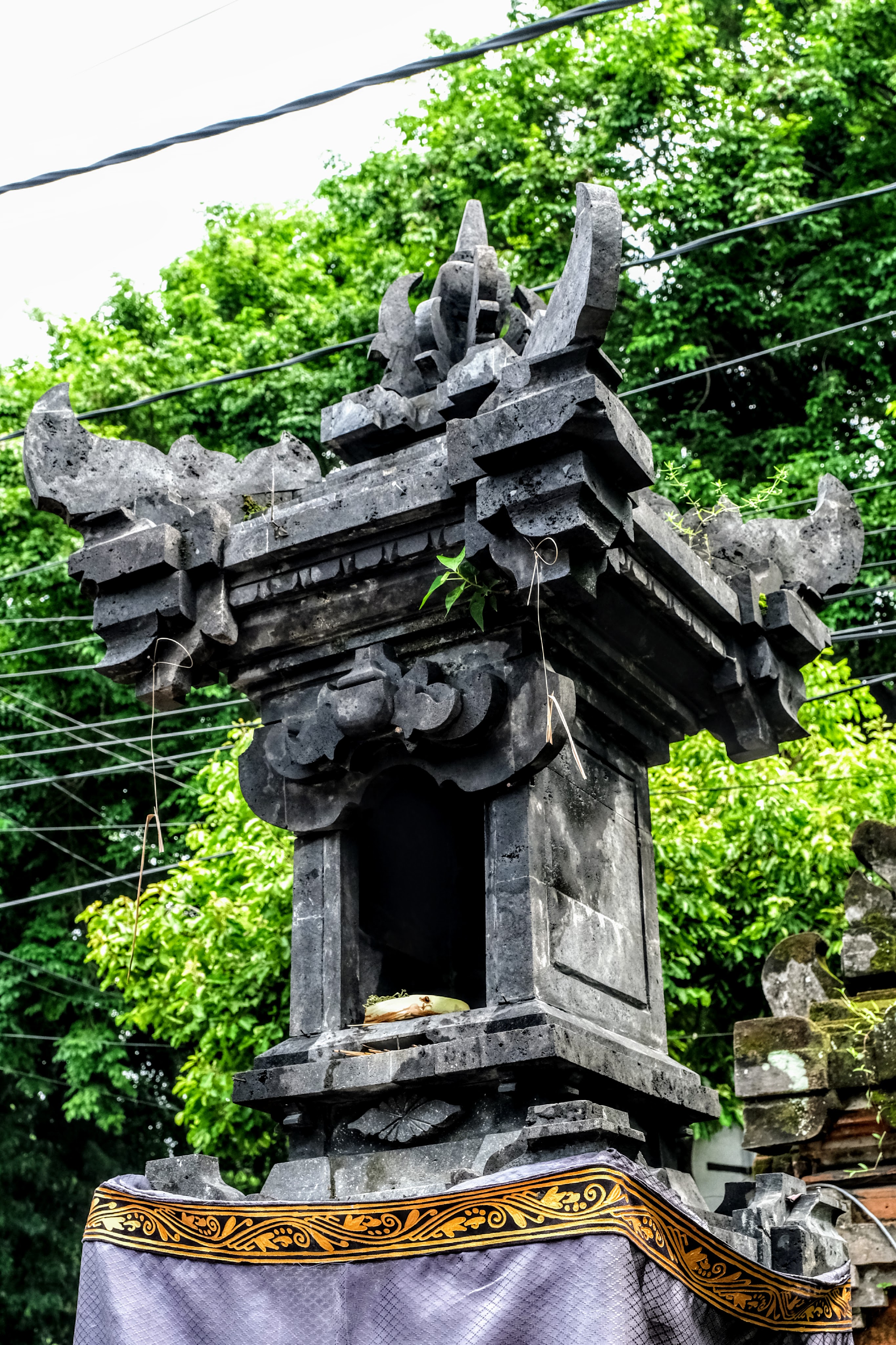
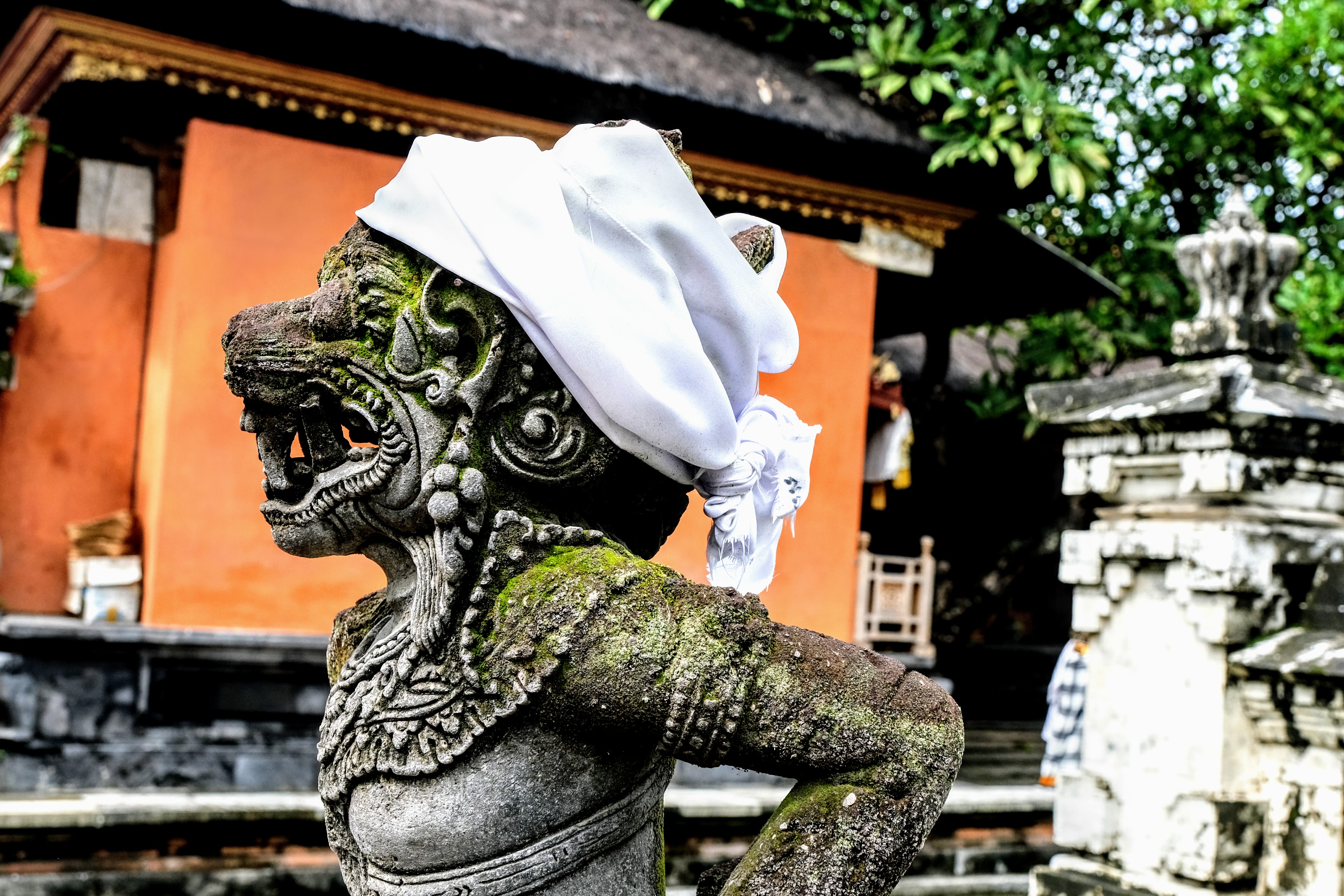
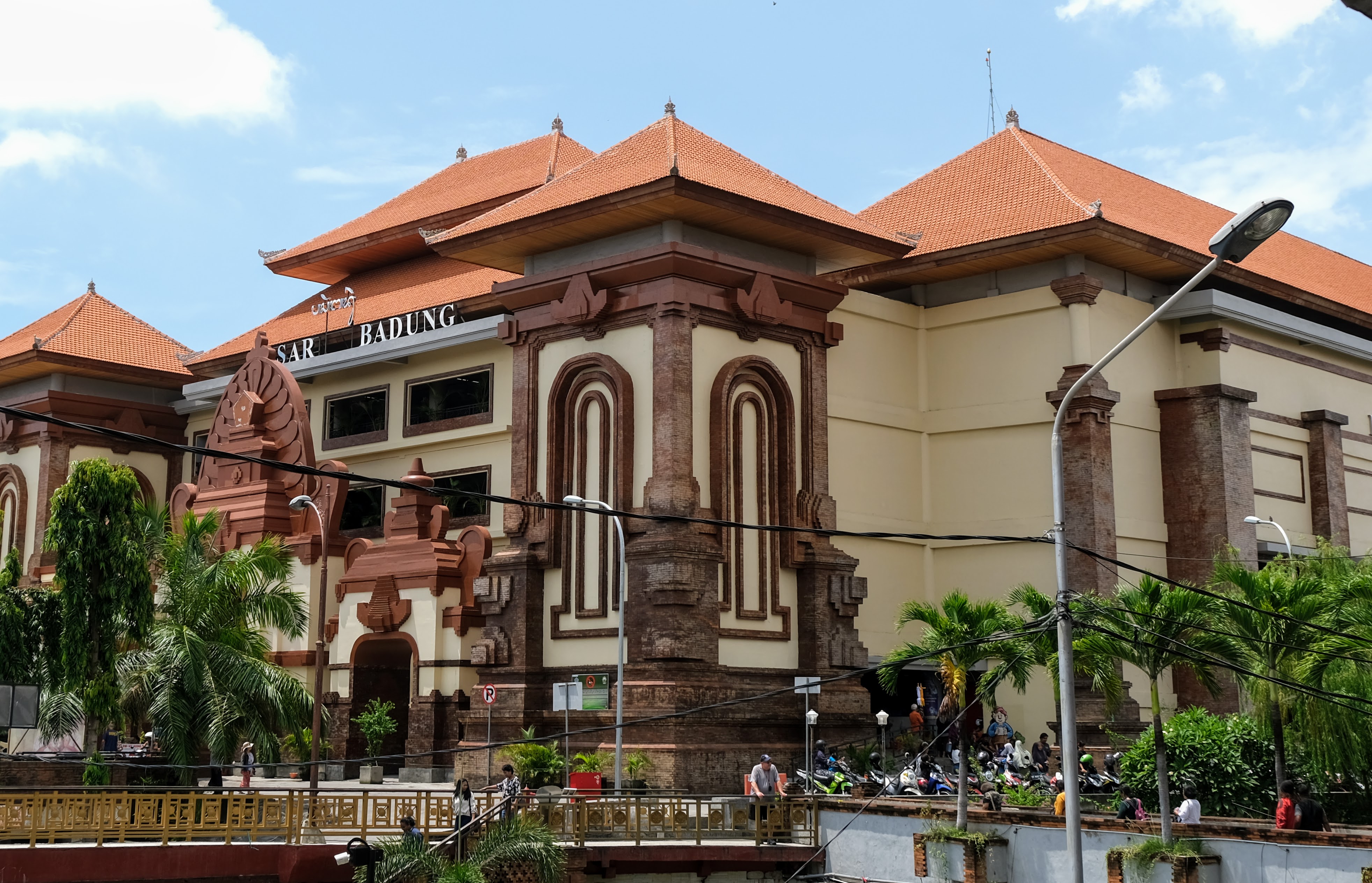
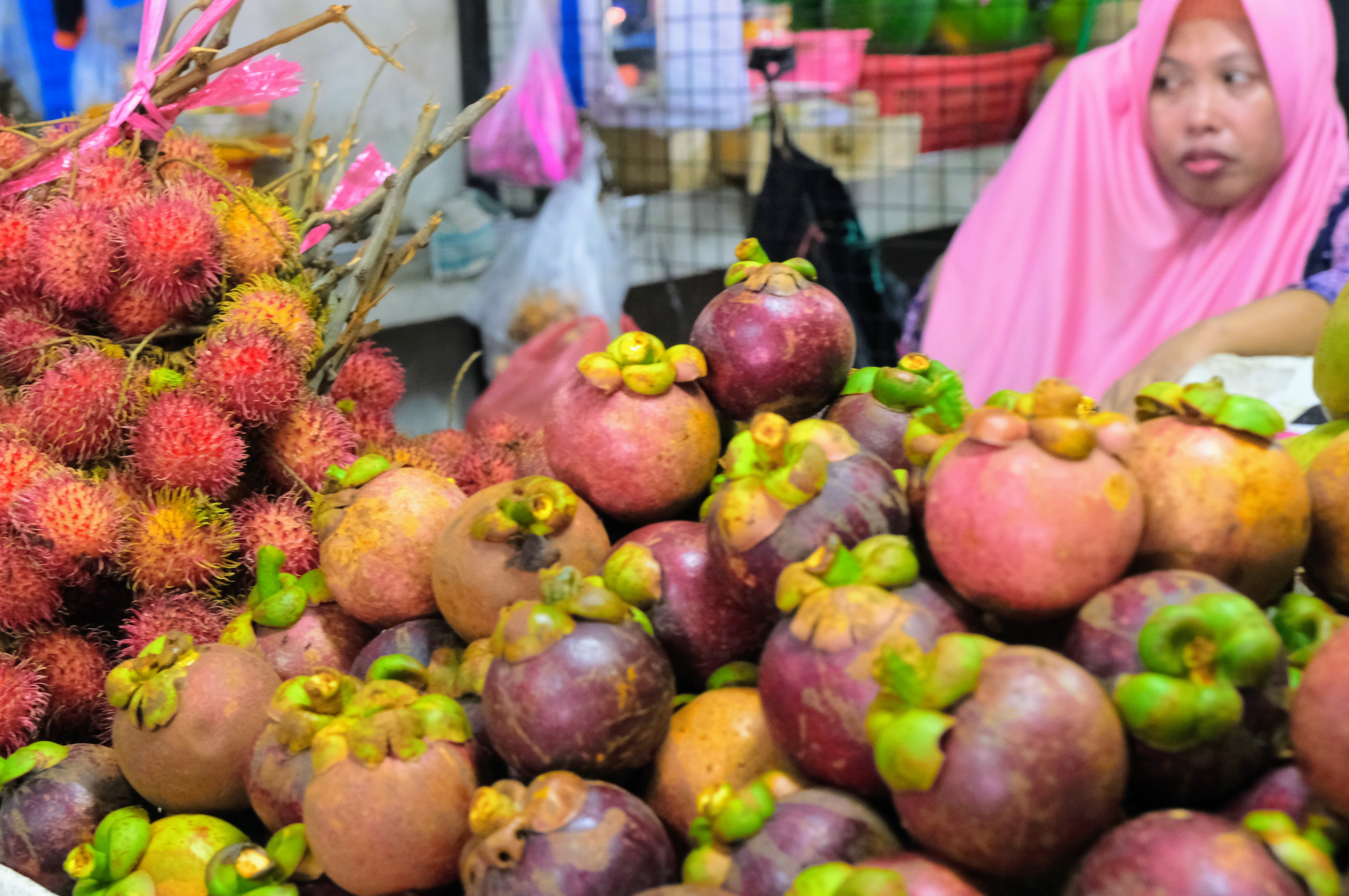
Due to our abbreviated time in Bali, we confined our visit to the southern region, starting with the capital city of Denspar. Founded as a market town (its name translates into “north market”), Denspar offers bright, bustling markets as well as serene, elegant temples. A visit to the local markets offers an almost overwhelming array of colors, sights, sounds, smells, and products. The food market has floors for “wet goods” such as meat and fish and “dry goods” such as fruits and vegetables. While we were able to identify much of it, some of the more exotic items were simply delightful to look at.
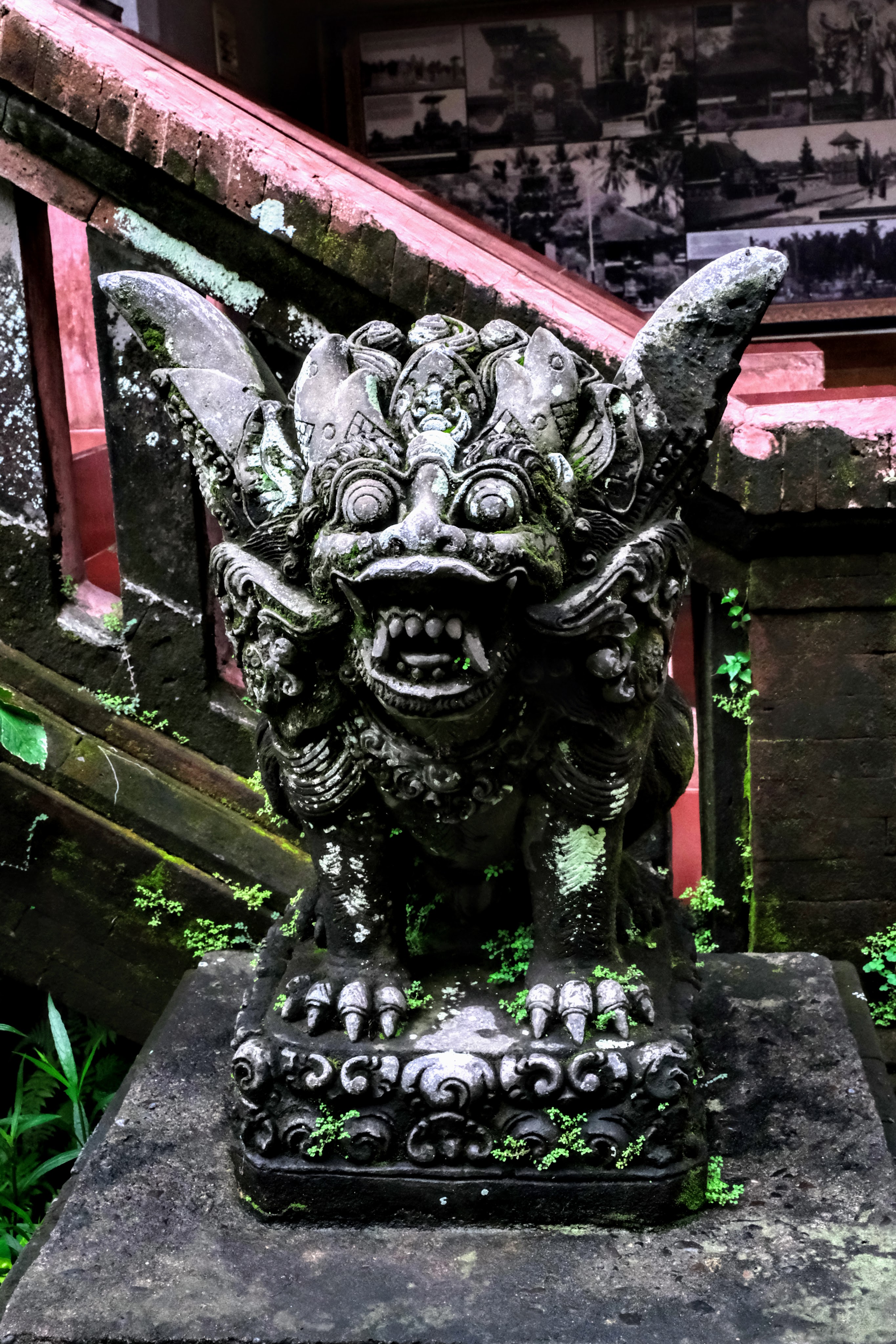
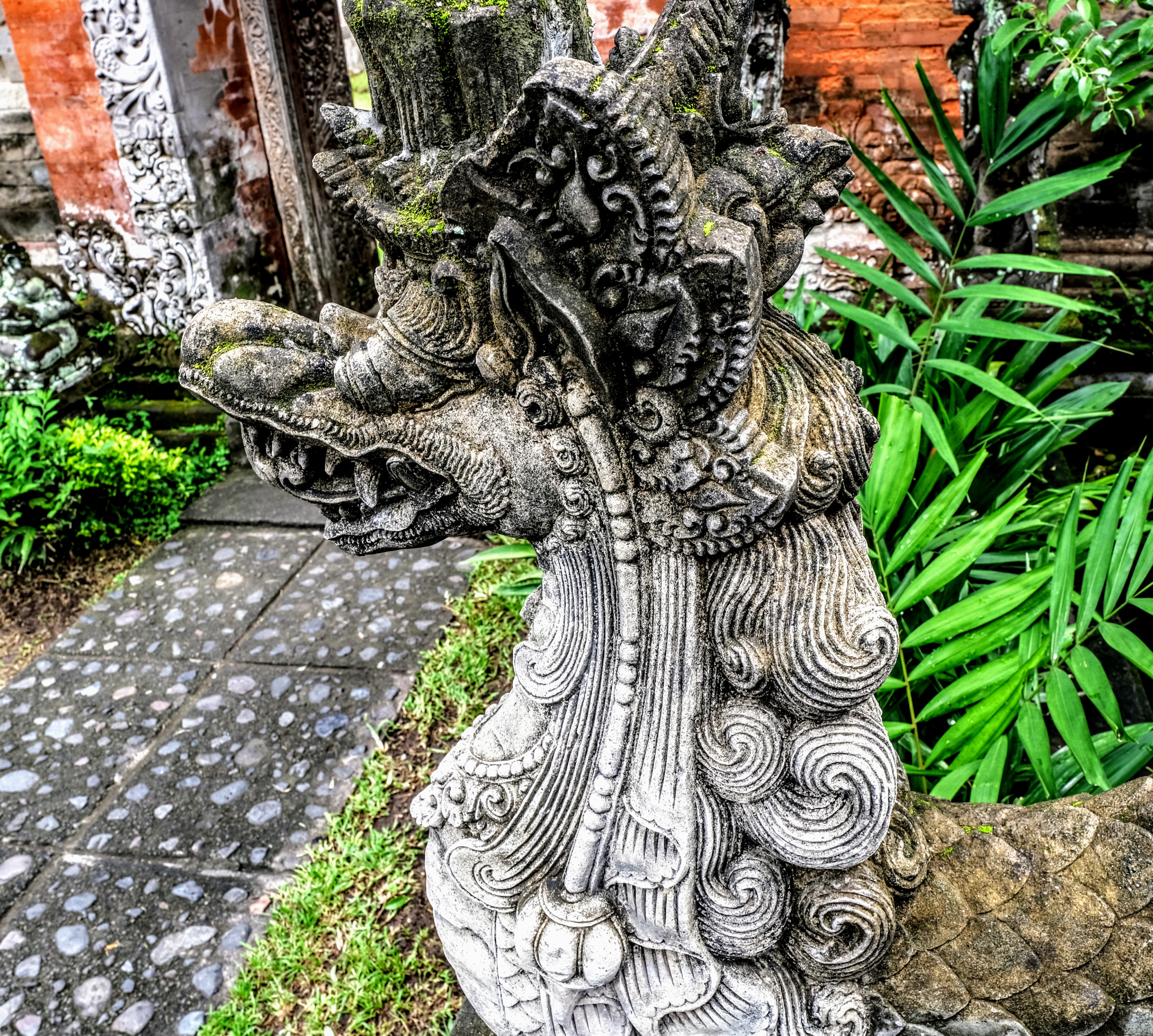
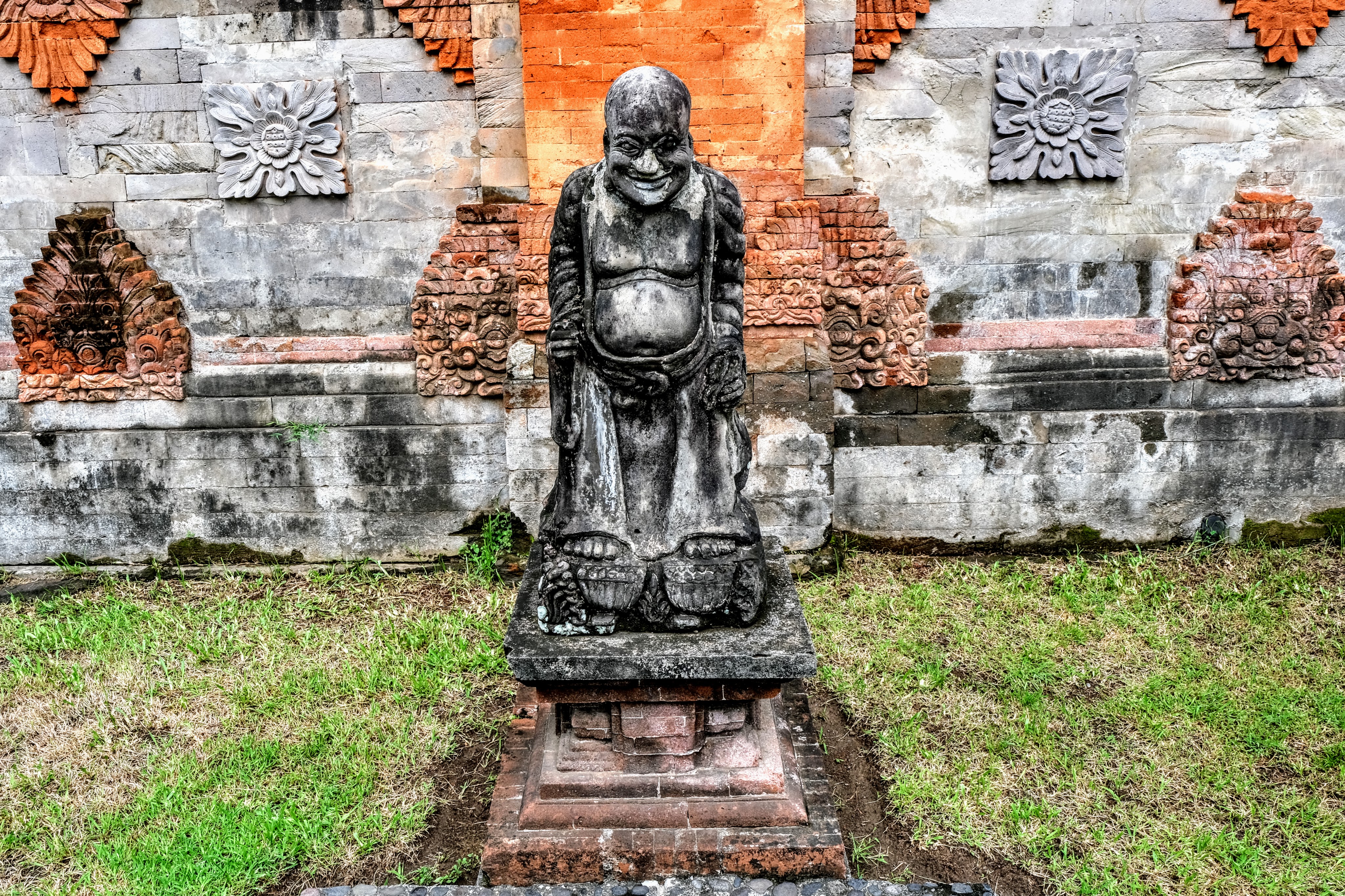
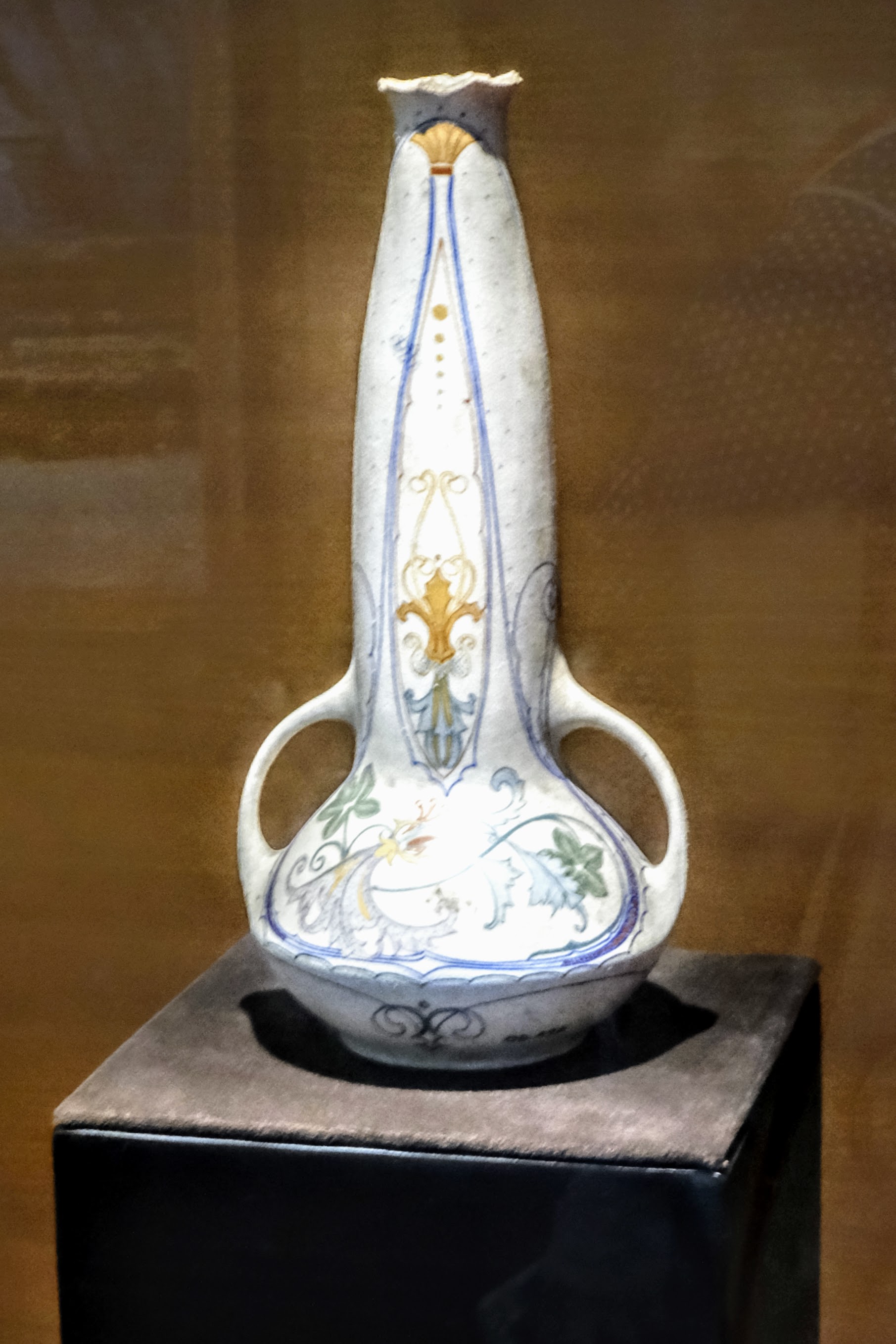
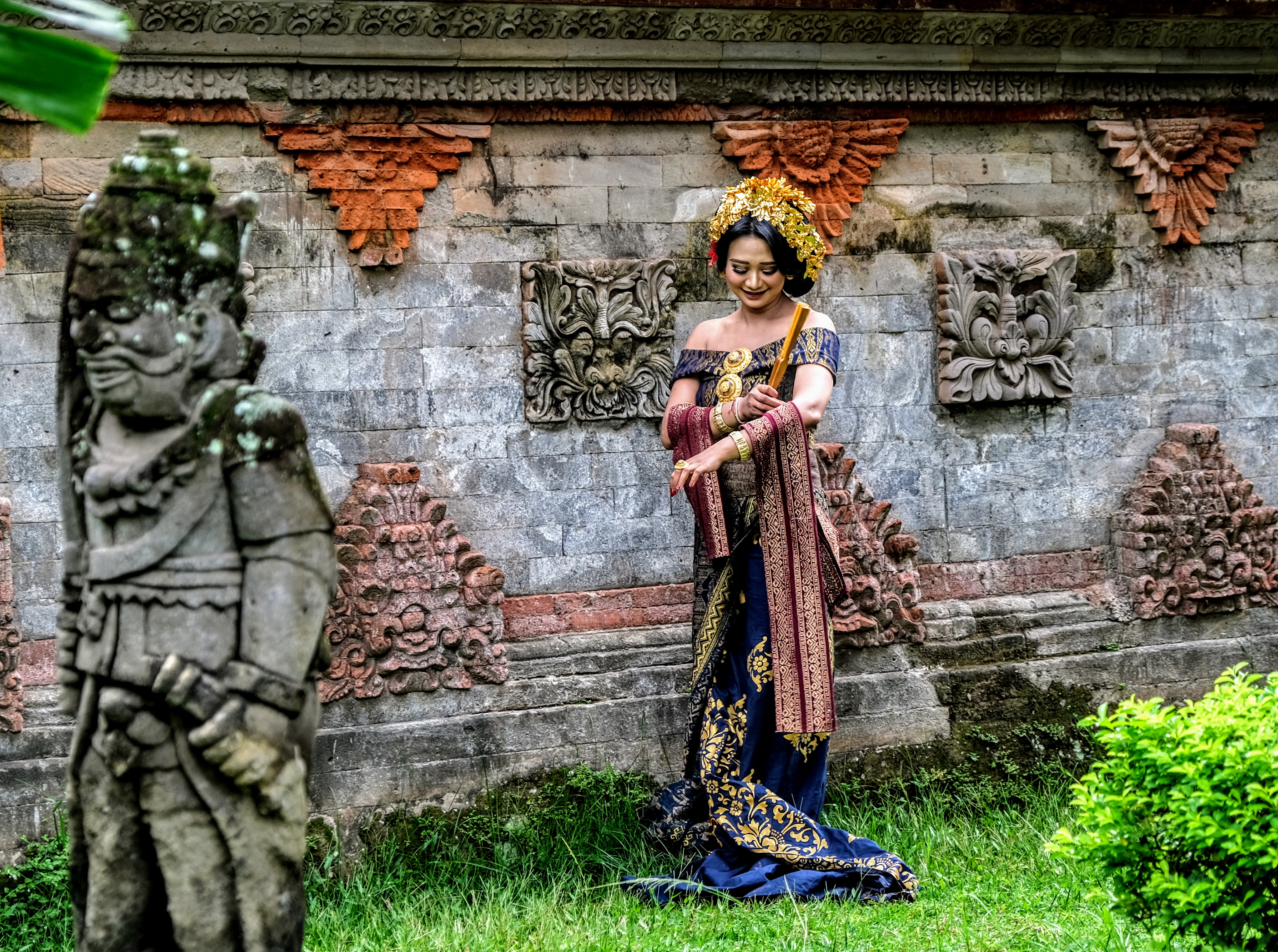
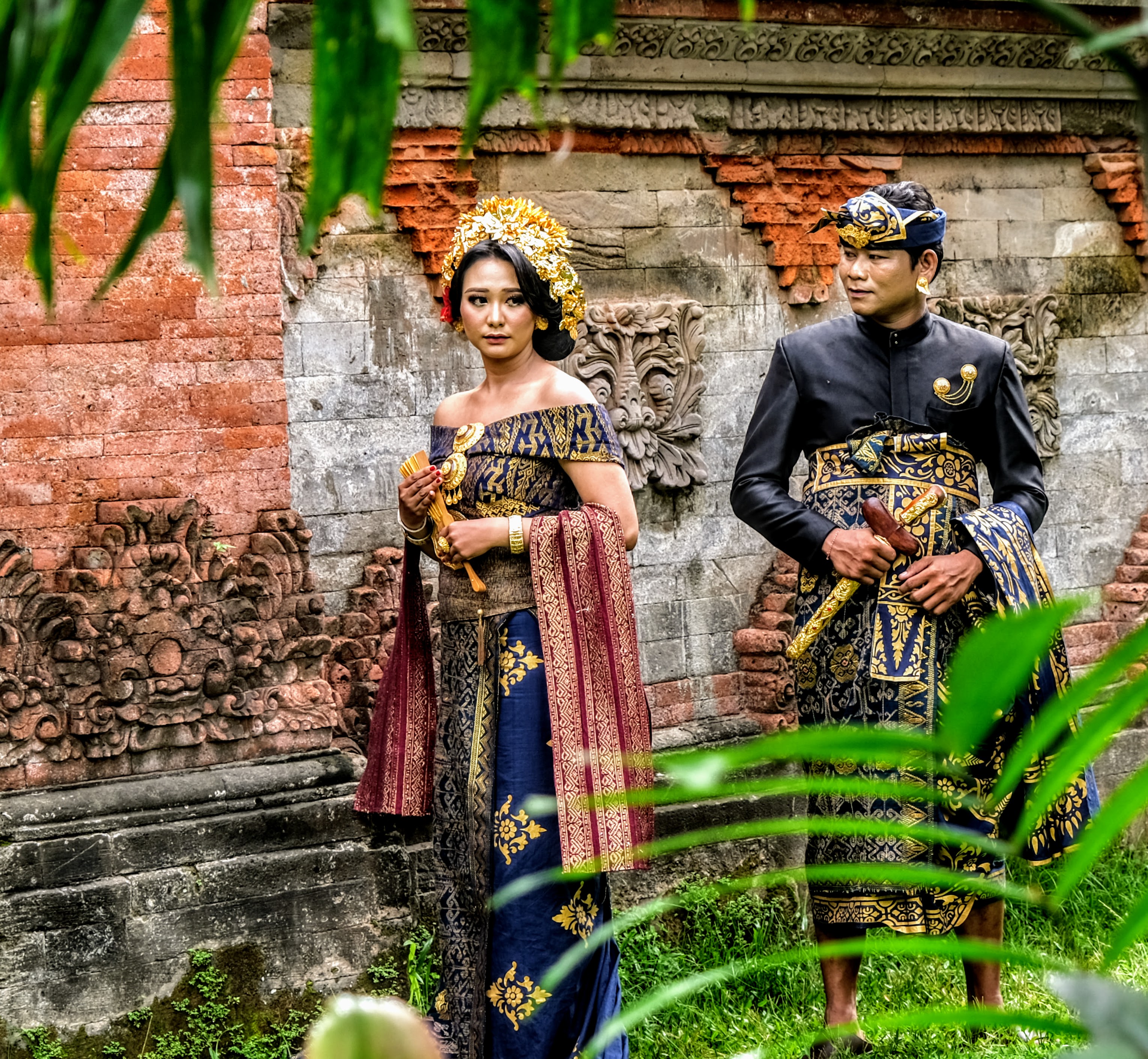
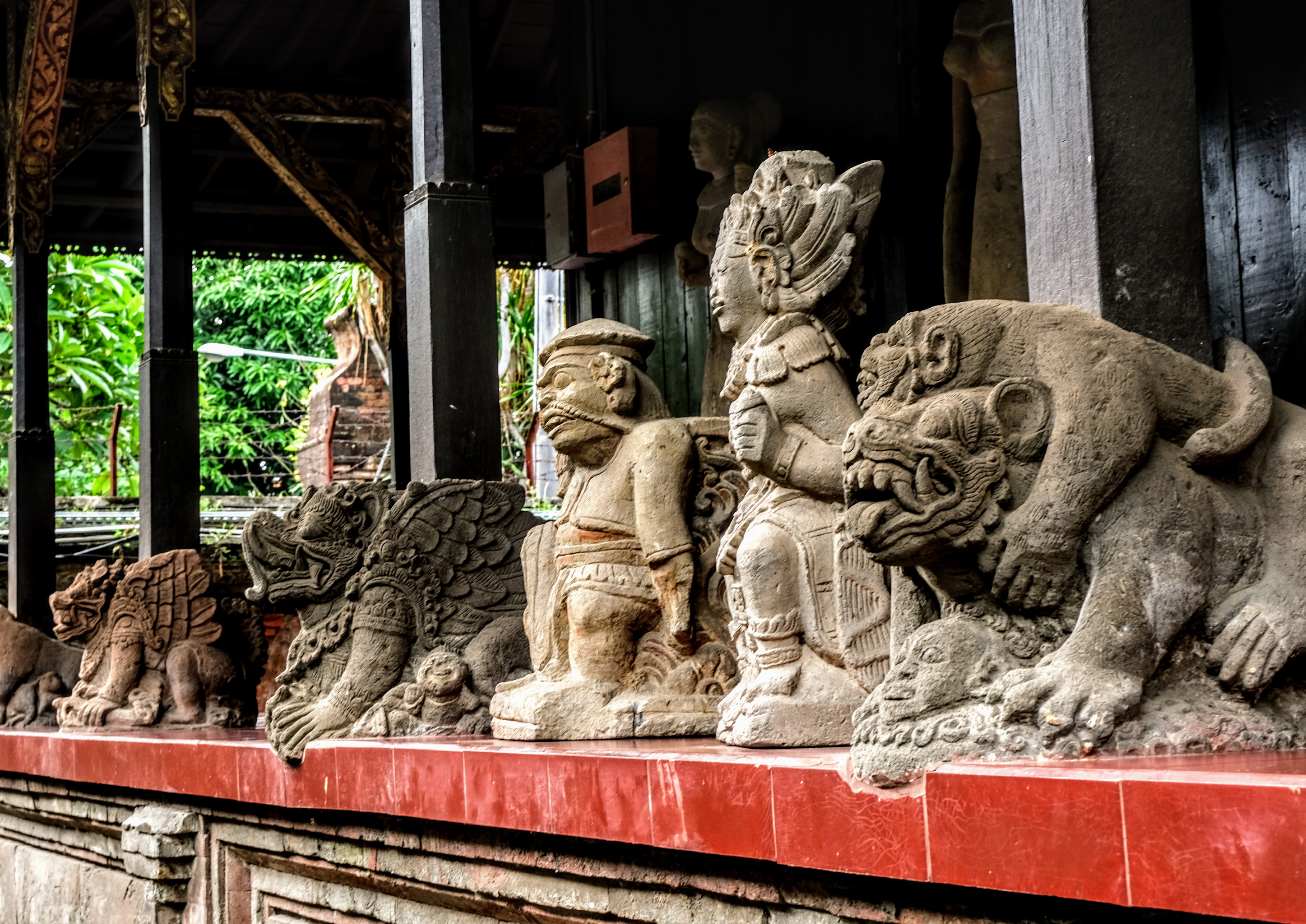
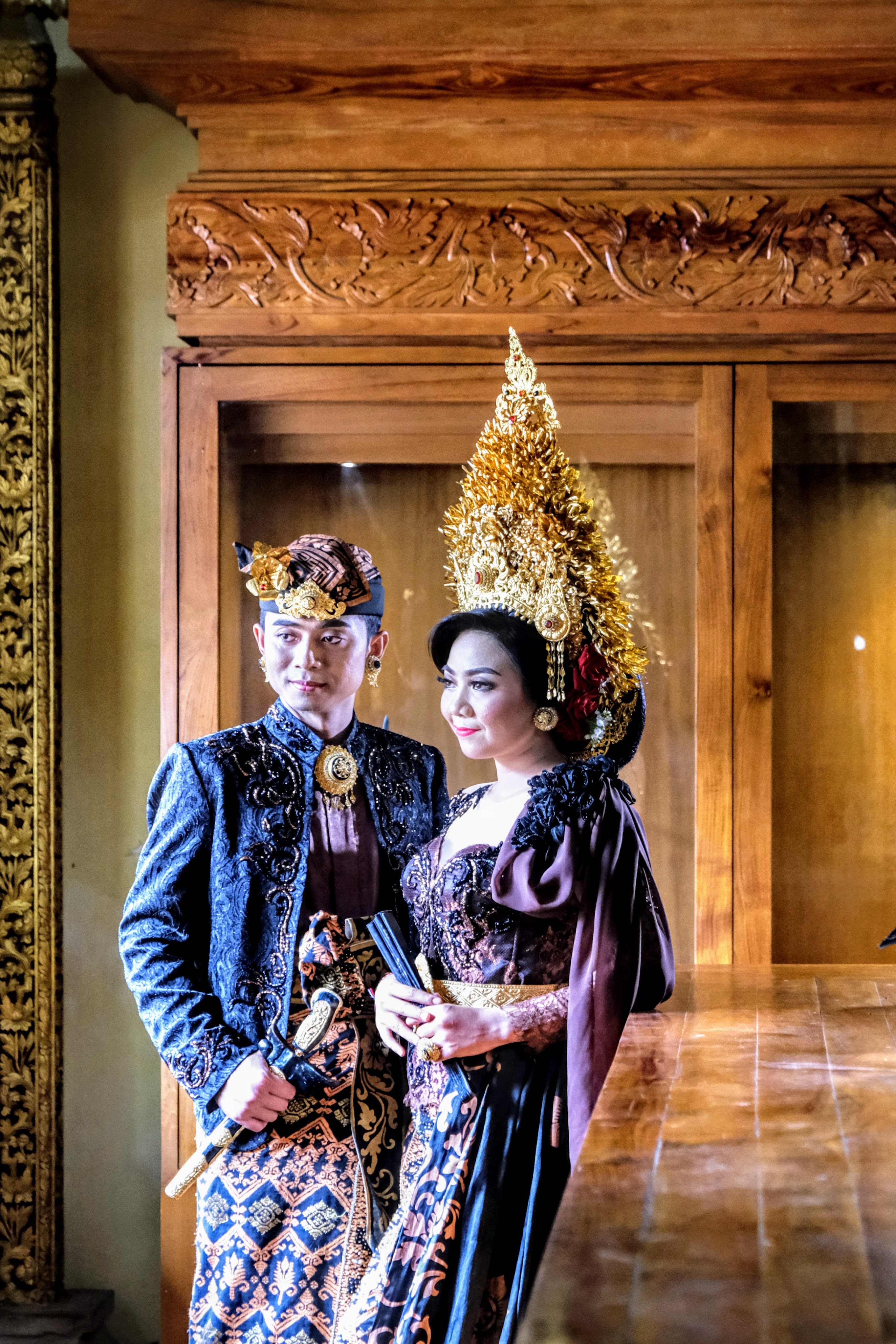
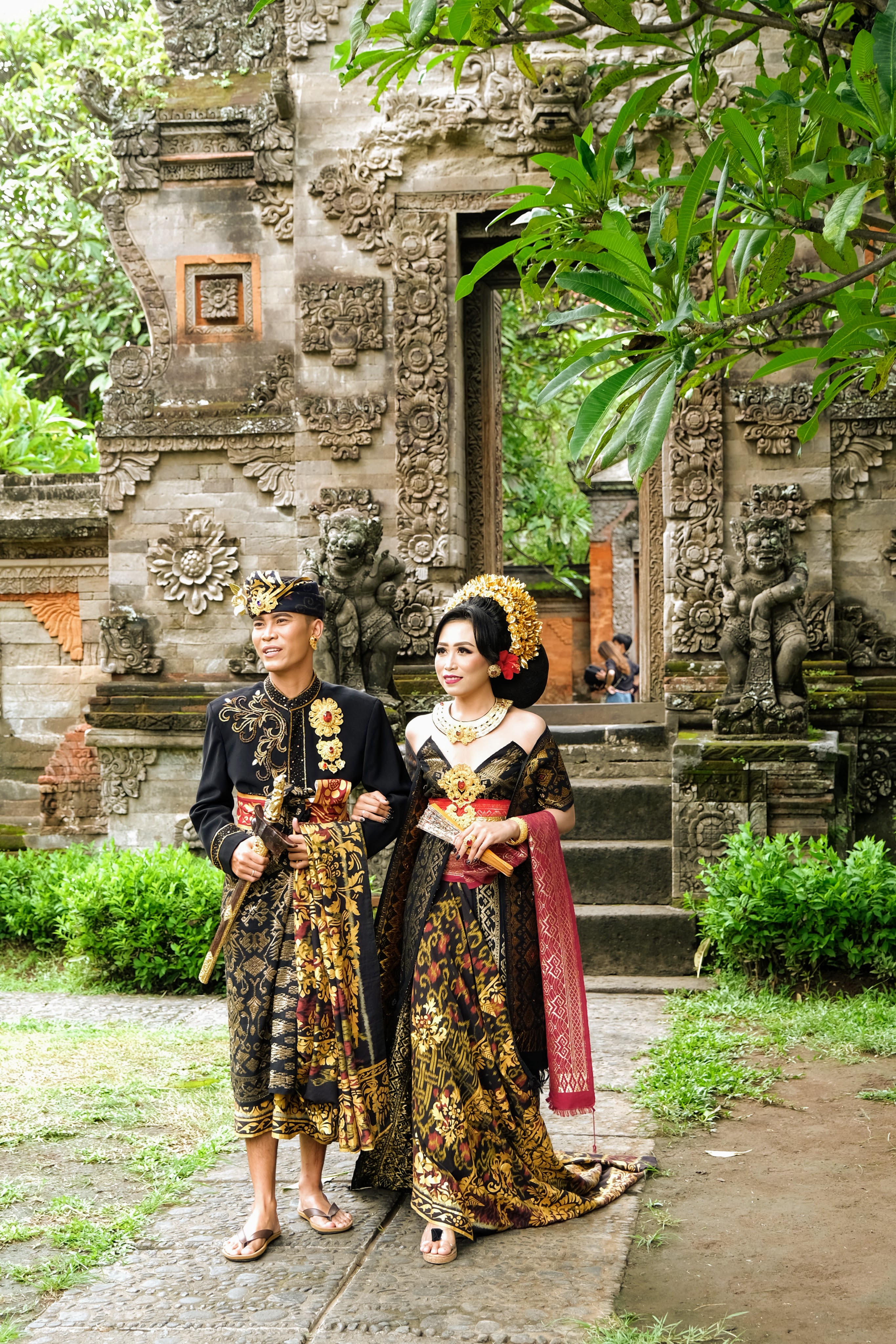
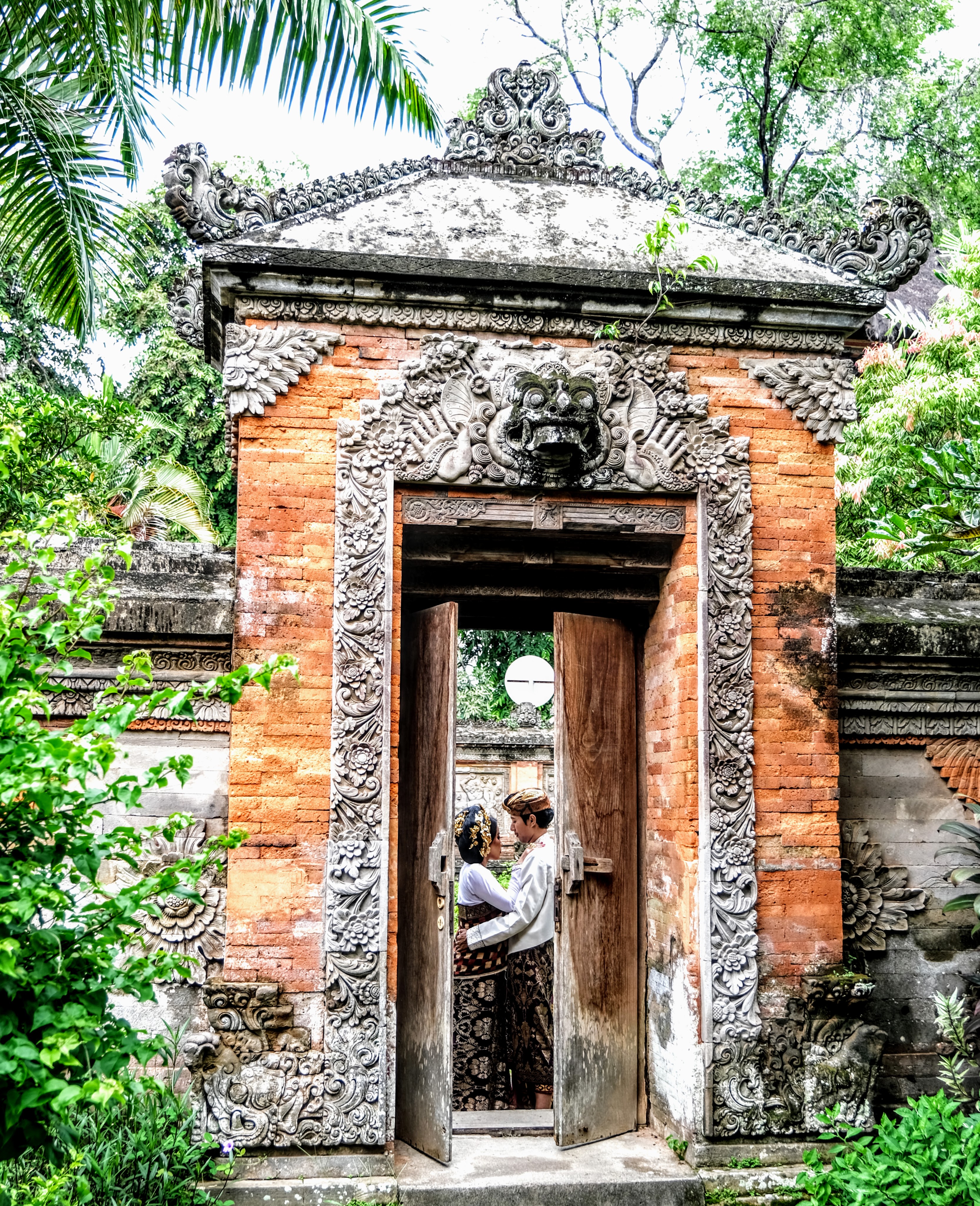
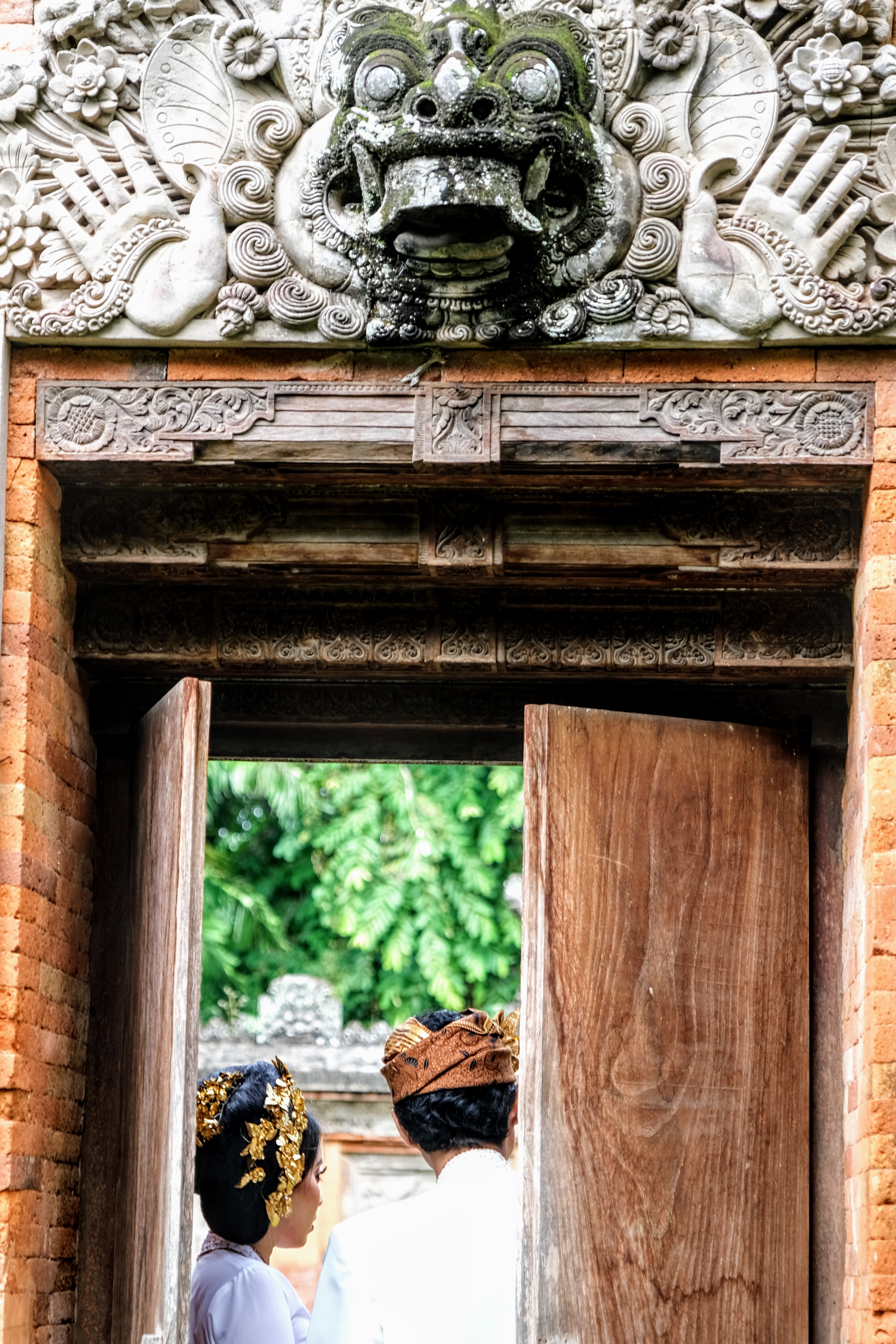
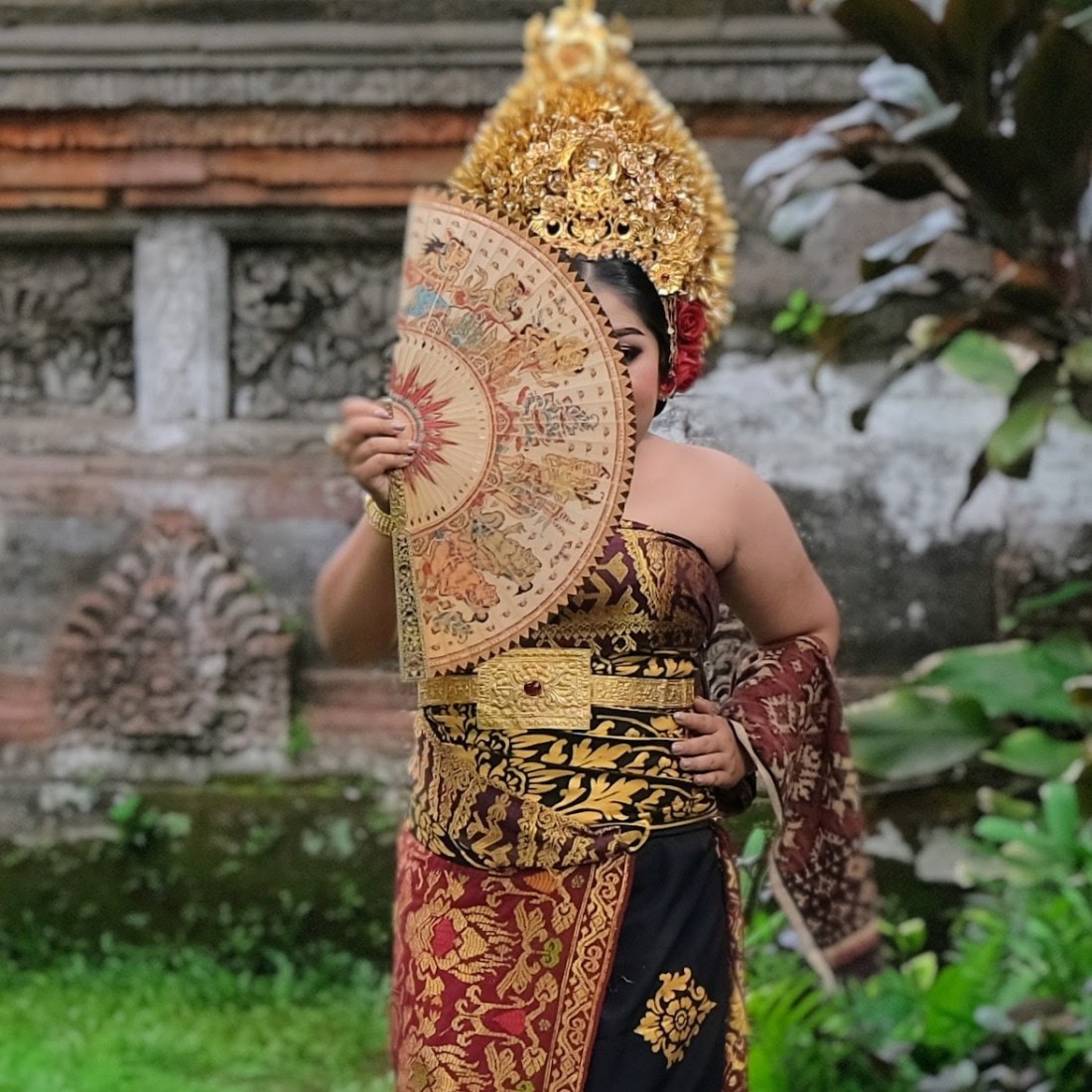
We browsed the galleries at the Bali Museum featuring local art and rich history. While we were there, a number of beautiful young couples were taking pre-wedding photos in traditional Balinese garb. We understand that these photos will be utilized on their wedding invitations. With permission, we captured some of these precious moments.

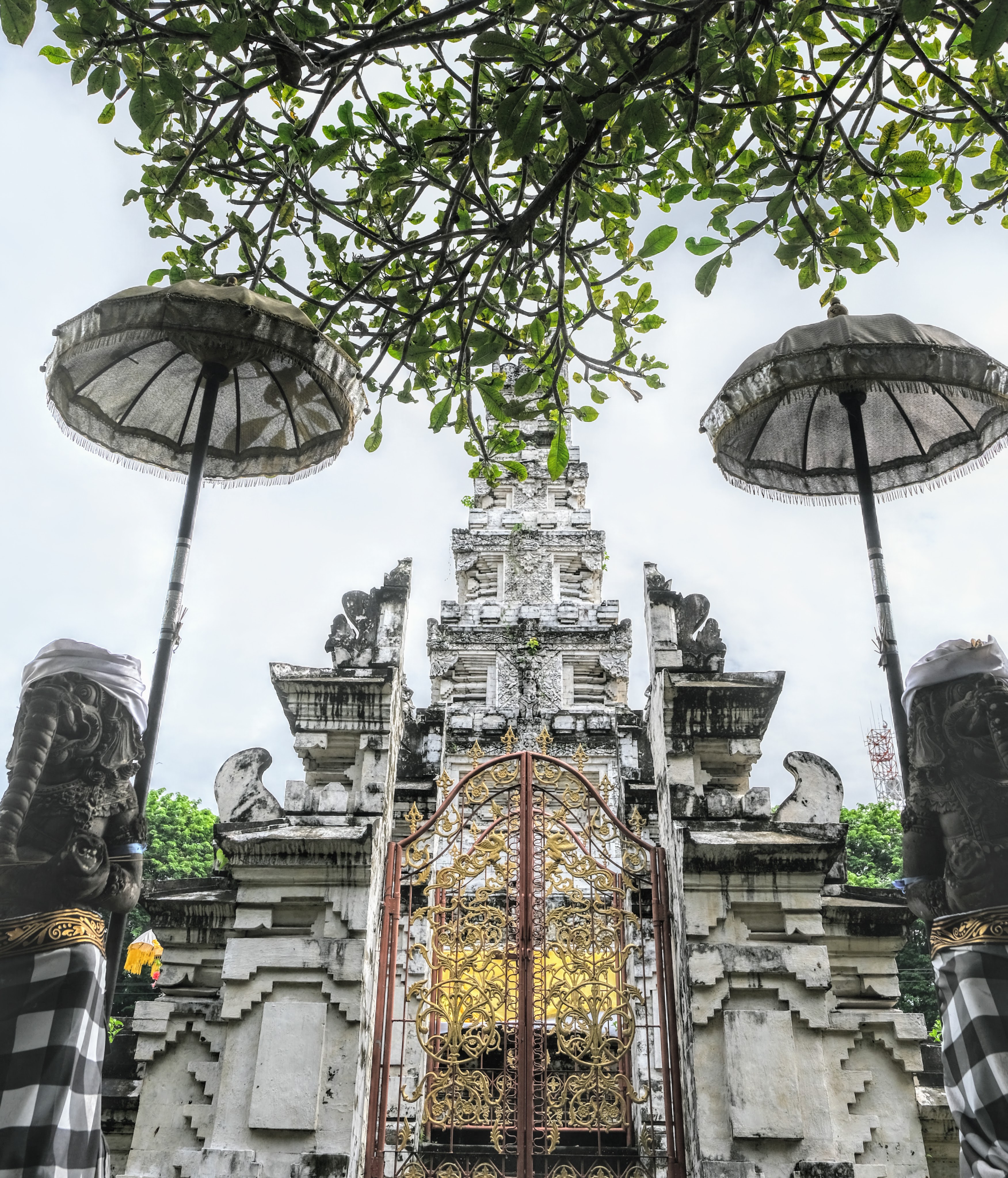
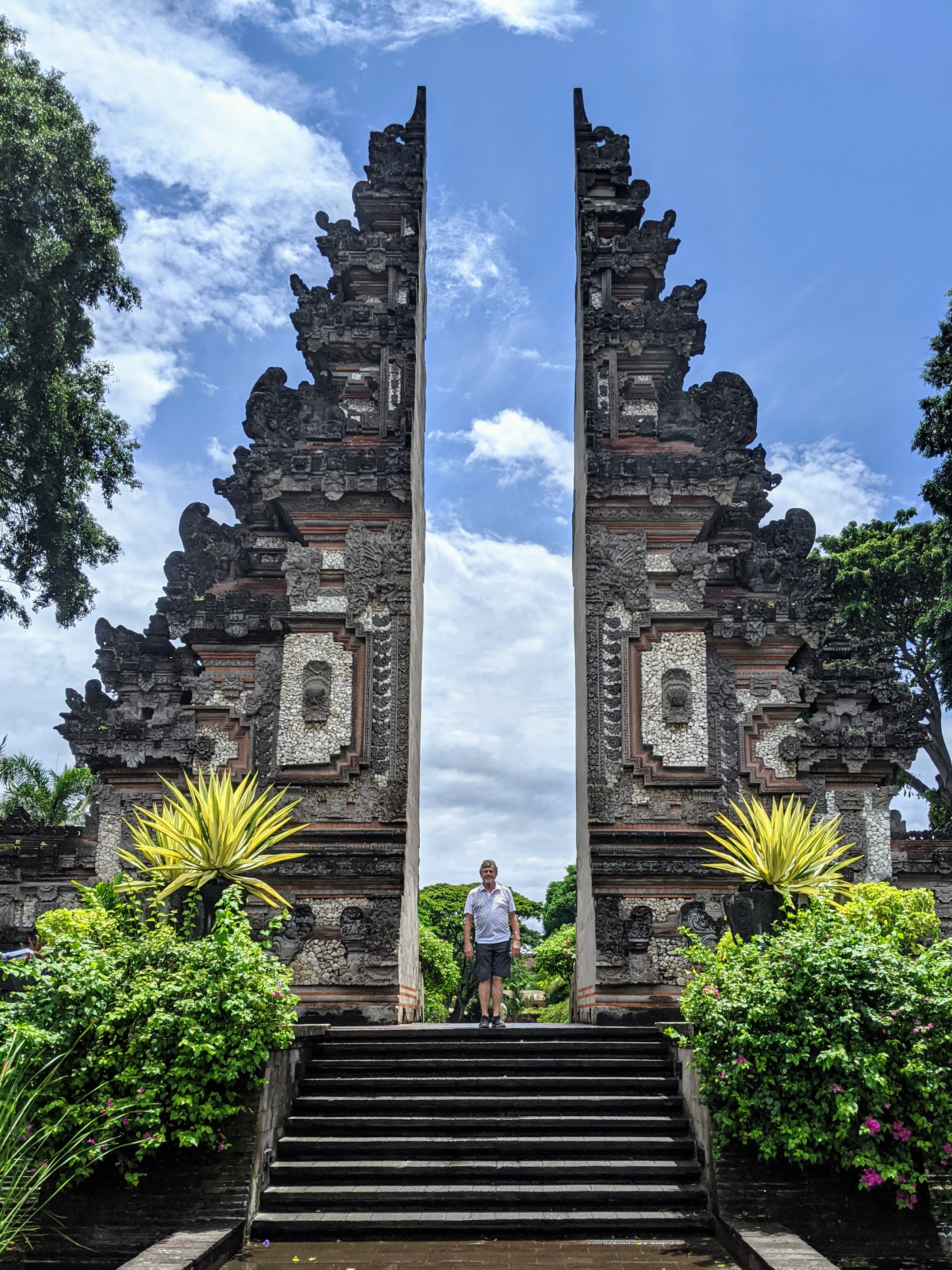
On Denspar’s north side, we visited the temple of Jagatnatha, the most important Hindu Kahyangan temple in the city. Dedicated to the existence of the supreme God, Sanghyang Widi, it is elaborately decorated with carvings symbolizing Balinese Hinduism.

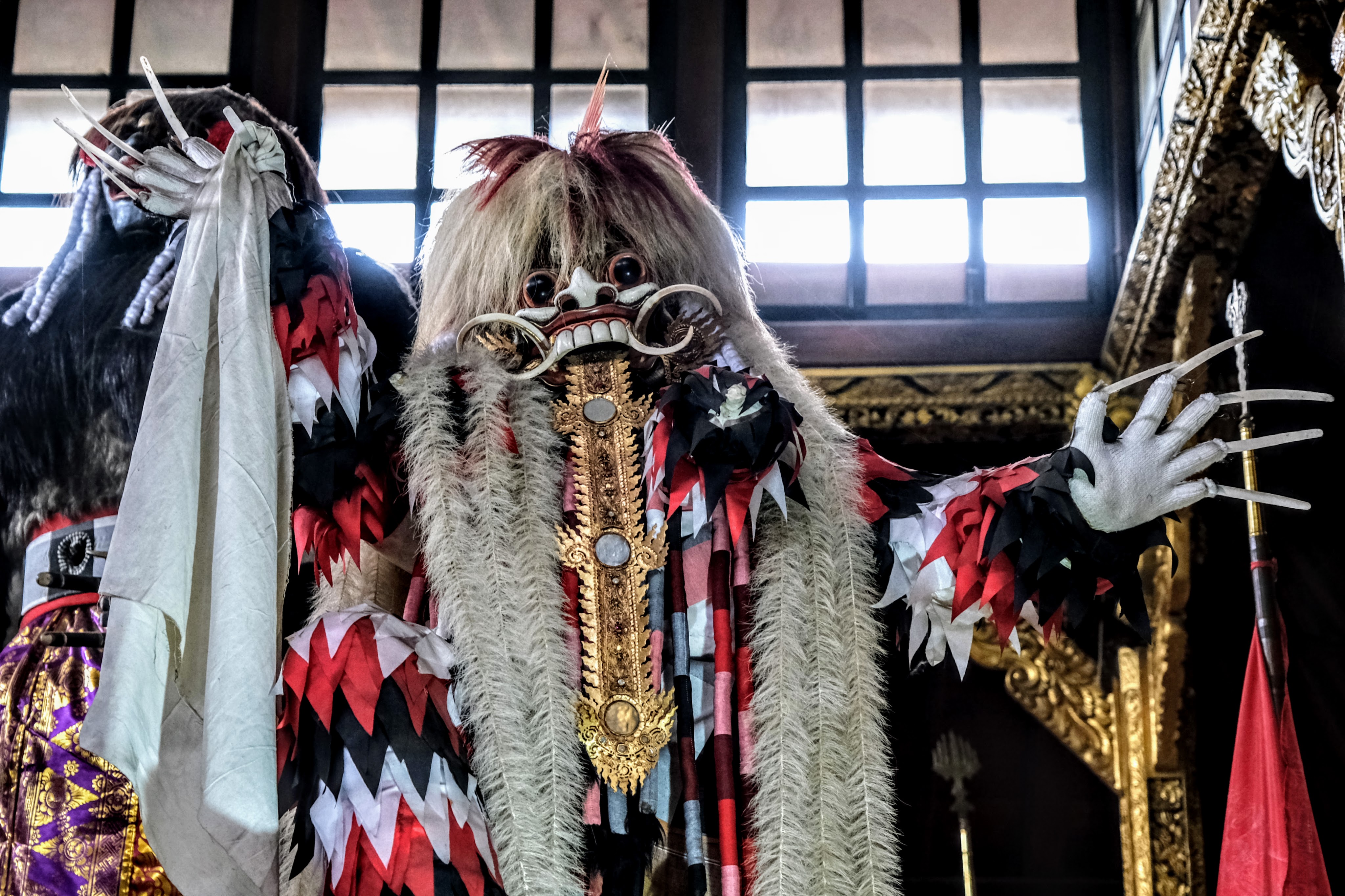
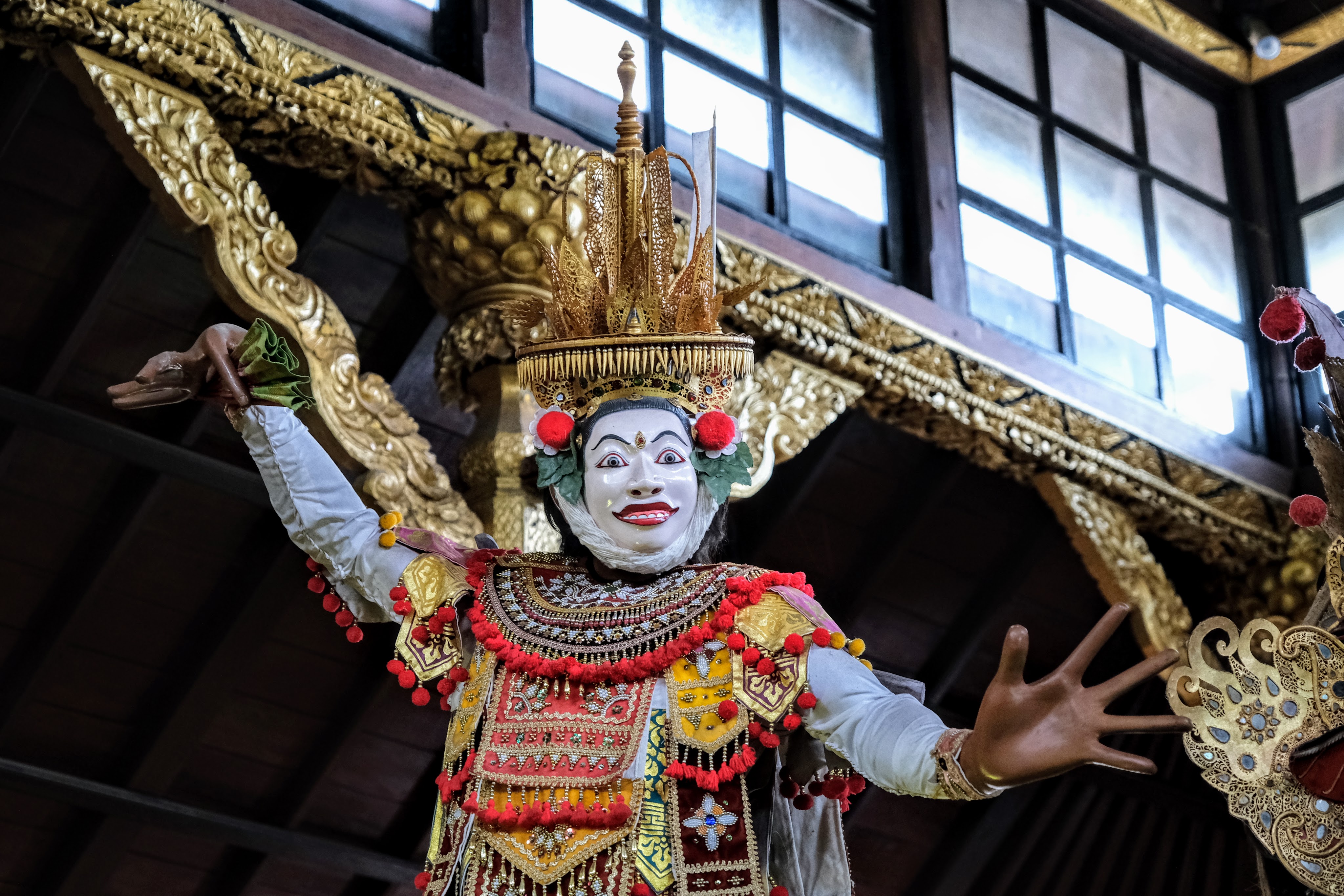
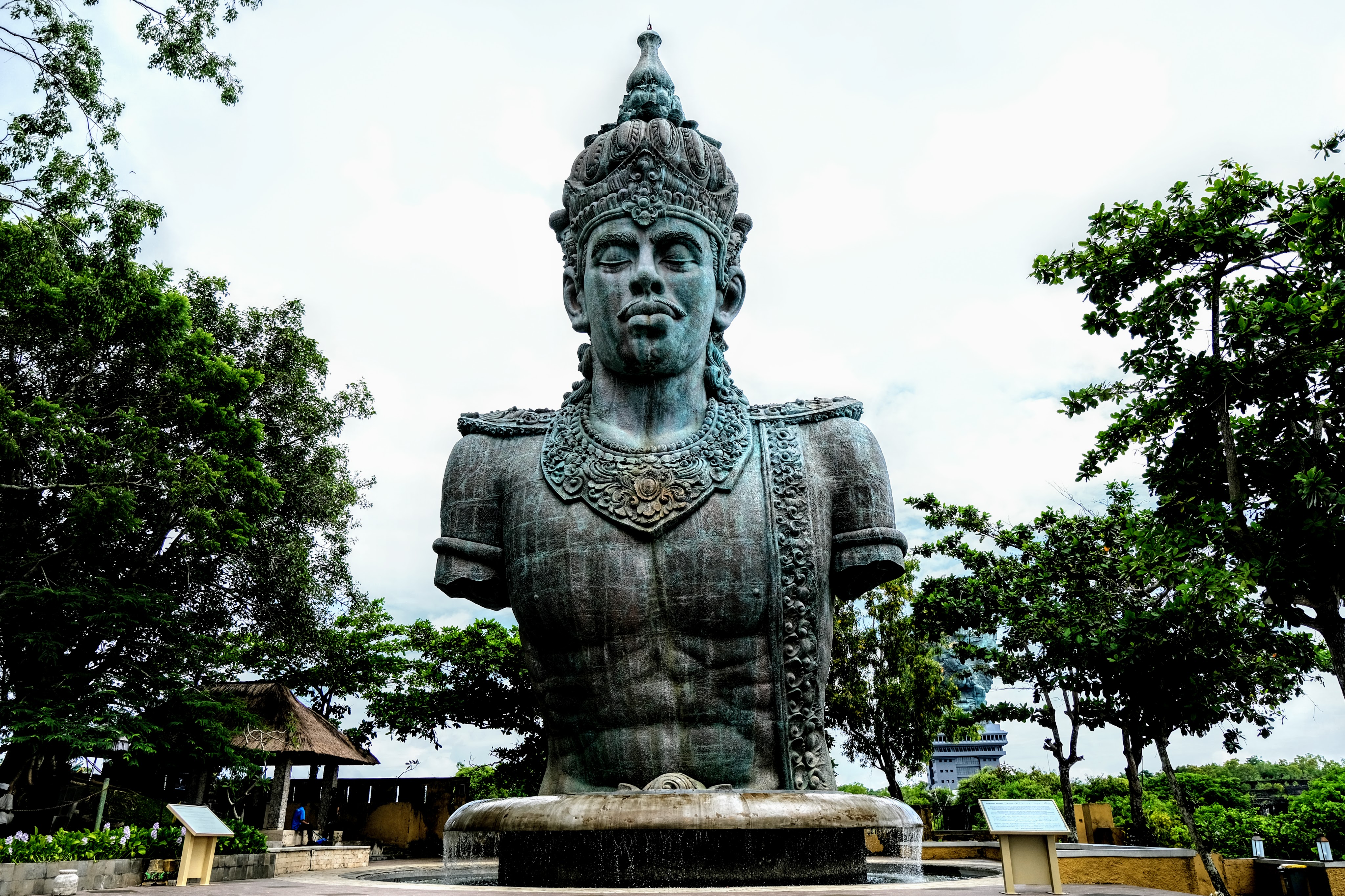
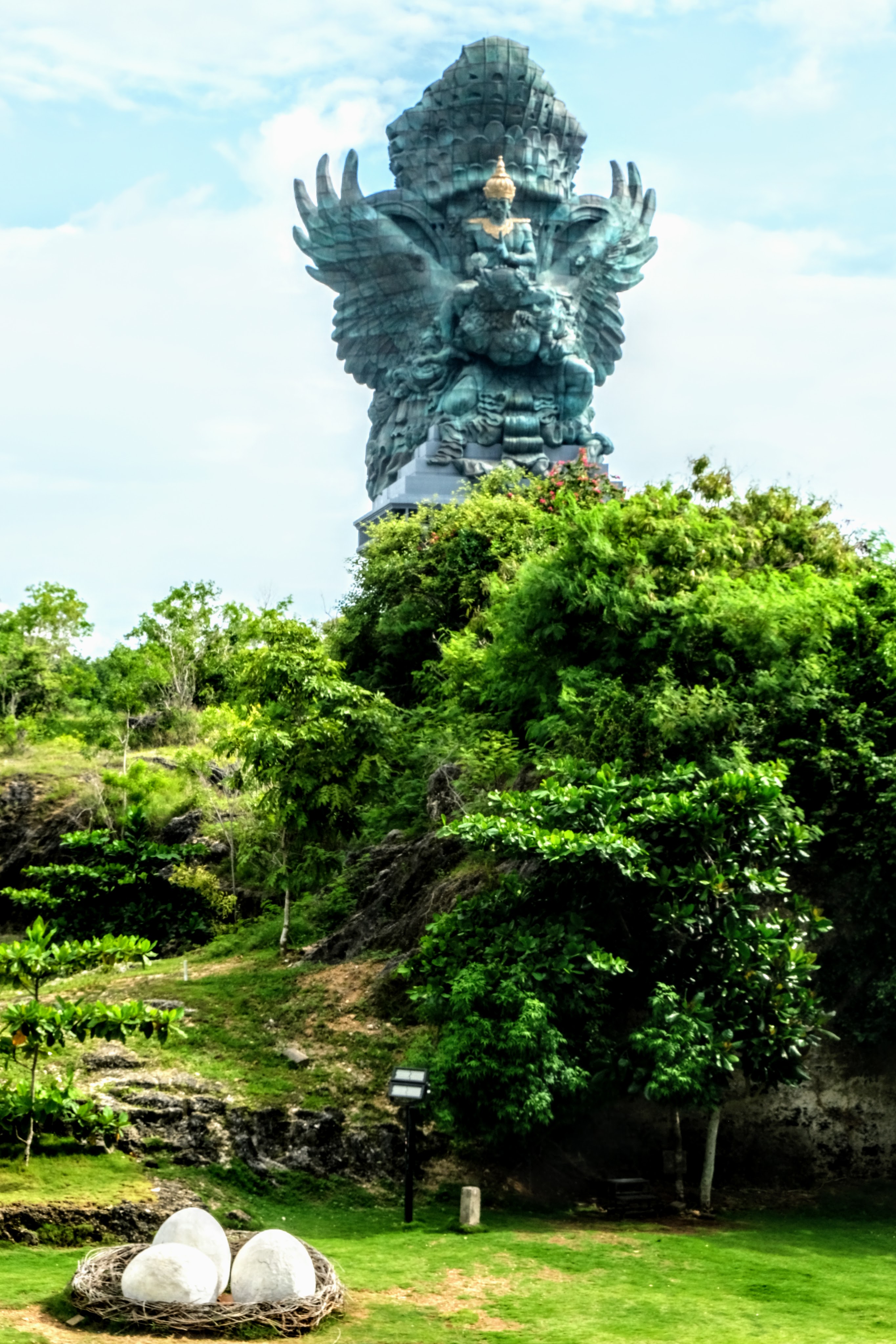
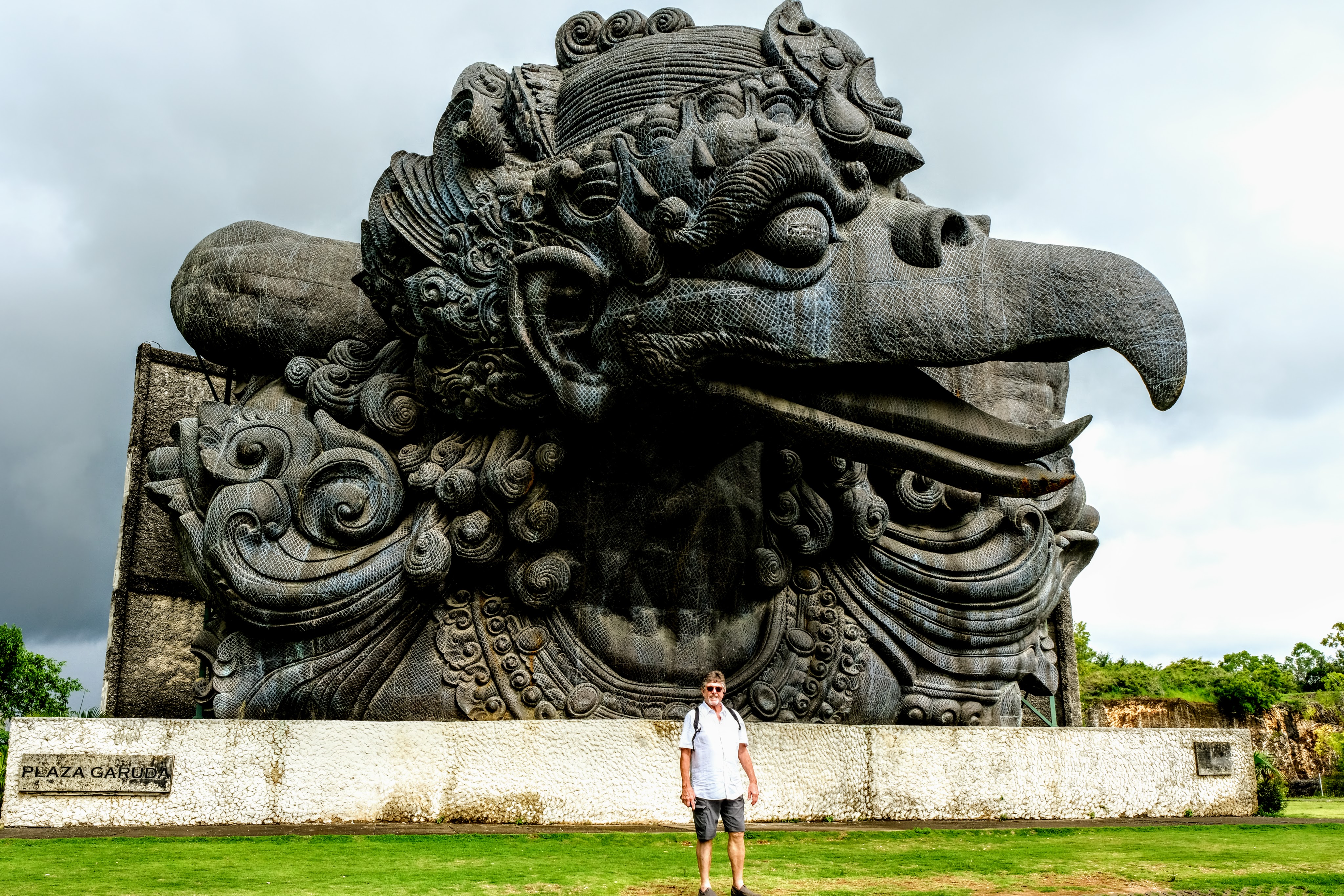
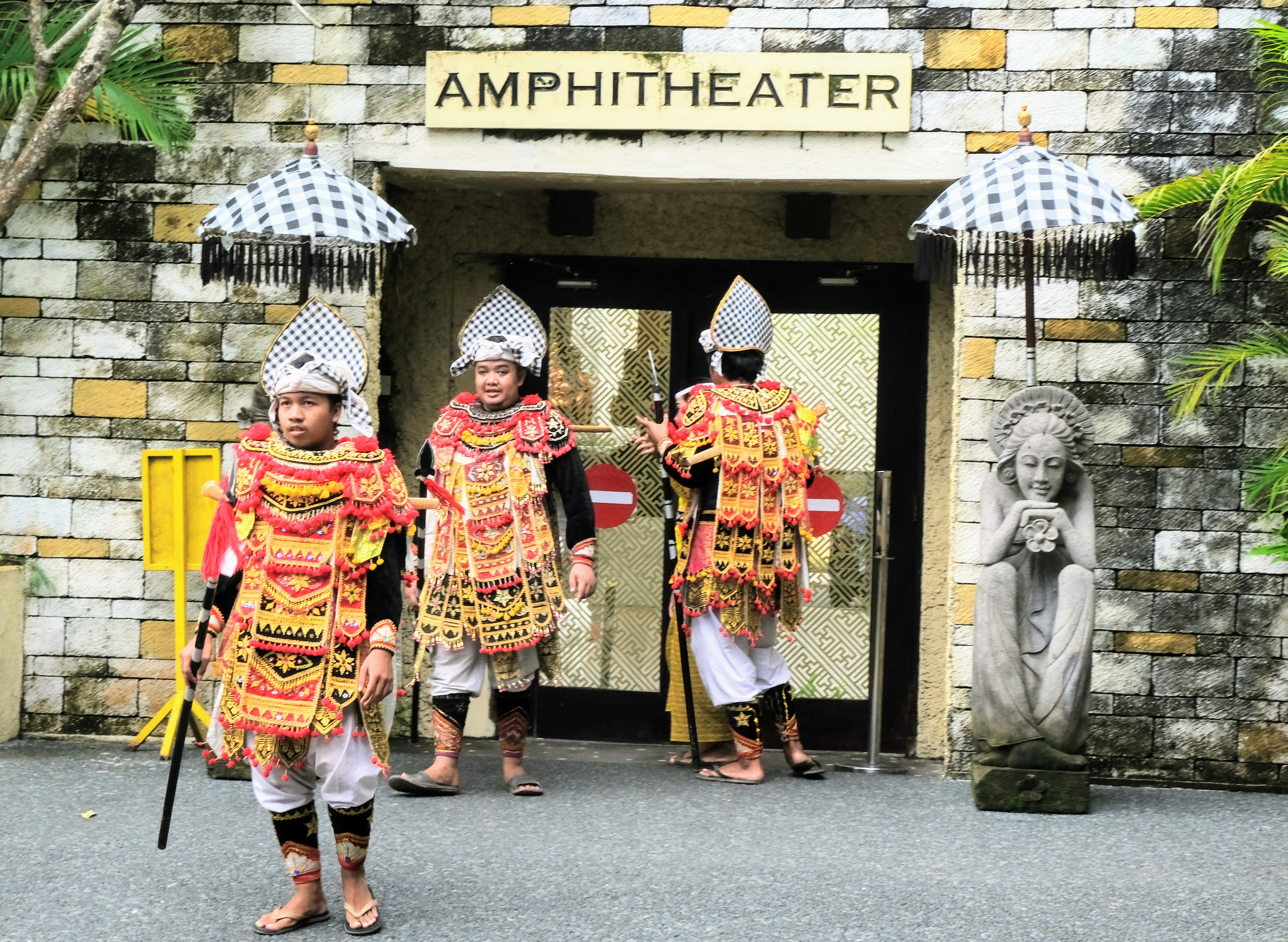
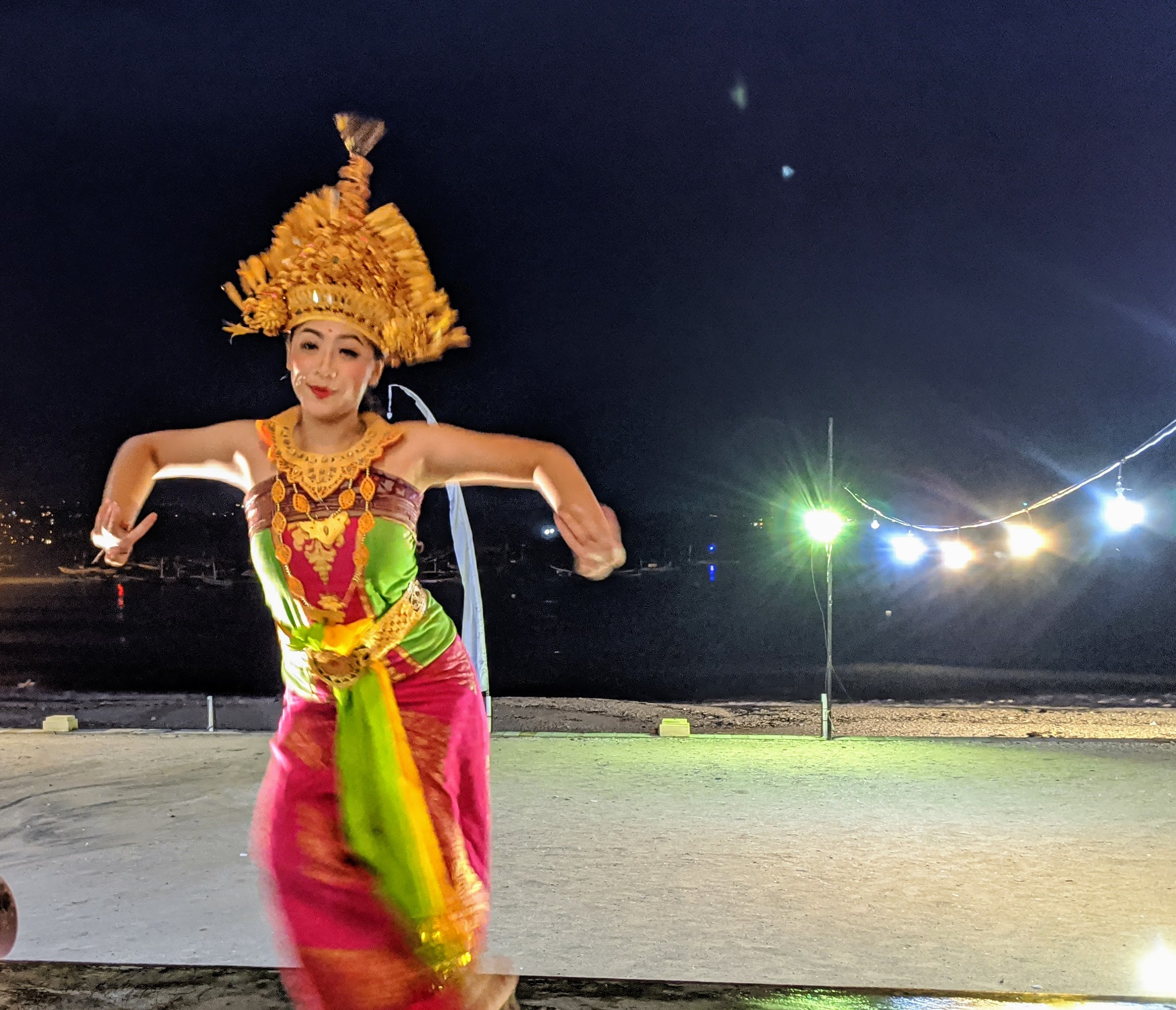
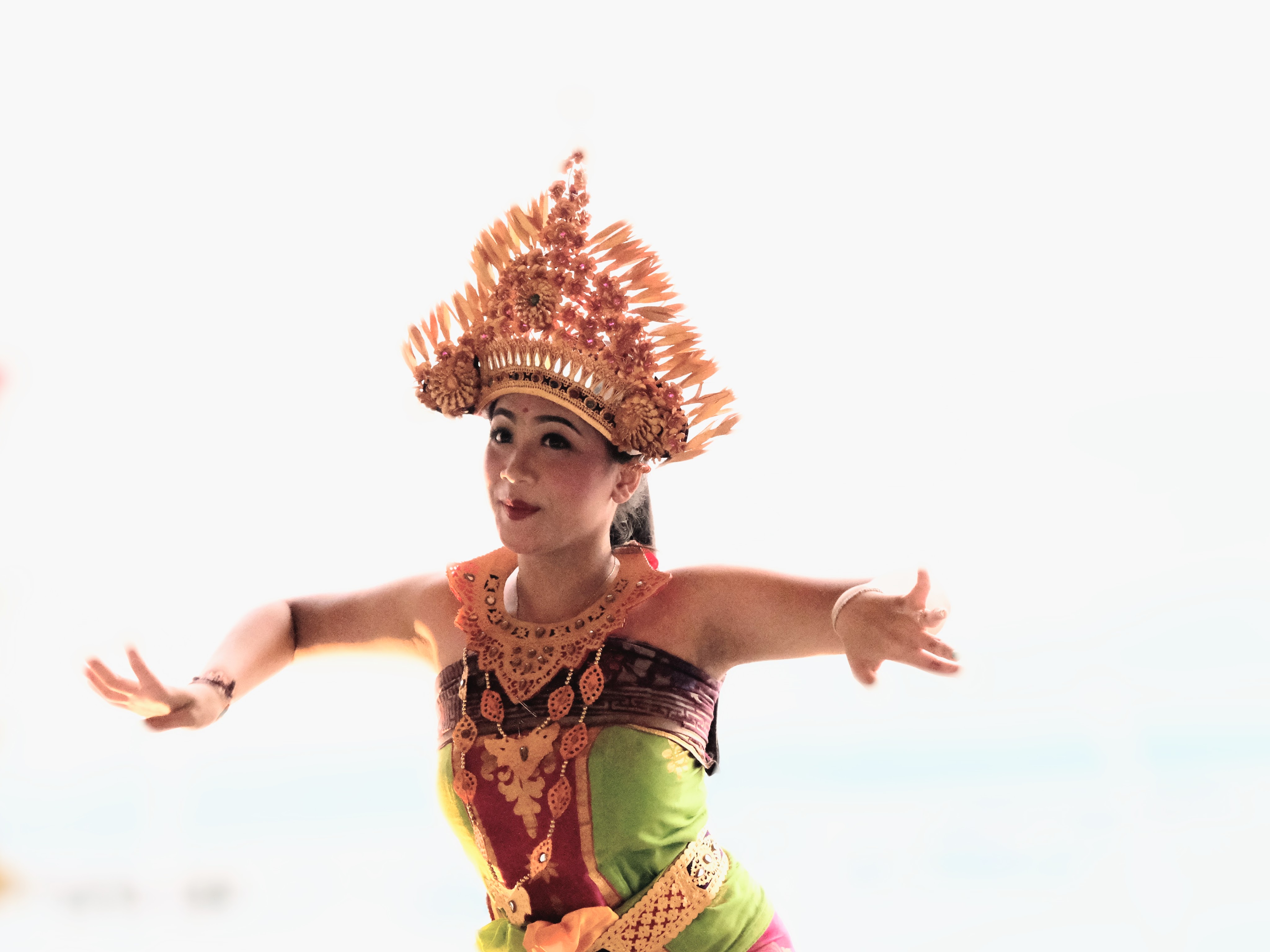
We then traveled to the southernmost part of Bali where we stopped at Garuda Wisnu Kencana (GWK) Park, one of Bali’s most iconic landmarks. The GWK statue depicts Wisnu riding Garuda. In Hindu mythology, Lord Wisnu is seen as the protector of the Universe, while his trusted companion, the mighty eagle-like Garuda represents loyalty and selfless devotion. Kencana means gold, and both are adorned in crowns of gold mosaic. The Garuda is also the national emblem of Indonesia and represents freedom. Designed by renowned Balinese artist Nyoman Nuarta, the statue is made of copper and brass. It stands 397 feet high and has a wingspan of 210 feet. Its distinct green color comes from oxidization as the copper ages. In addition to the magnificent, imposing statue, the GWK Park includes beautiful gardens, a lotus pond, theaters, cinema, food court, and a commercial strip. Traditional Balinese performances and parades are offered throughout the day, making this a delightful place to learn more about Balinese culture.

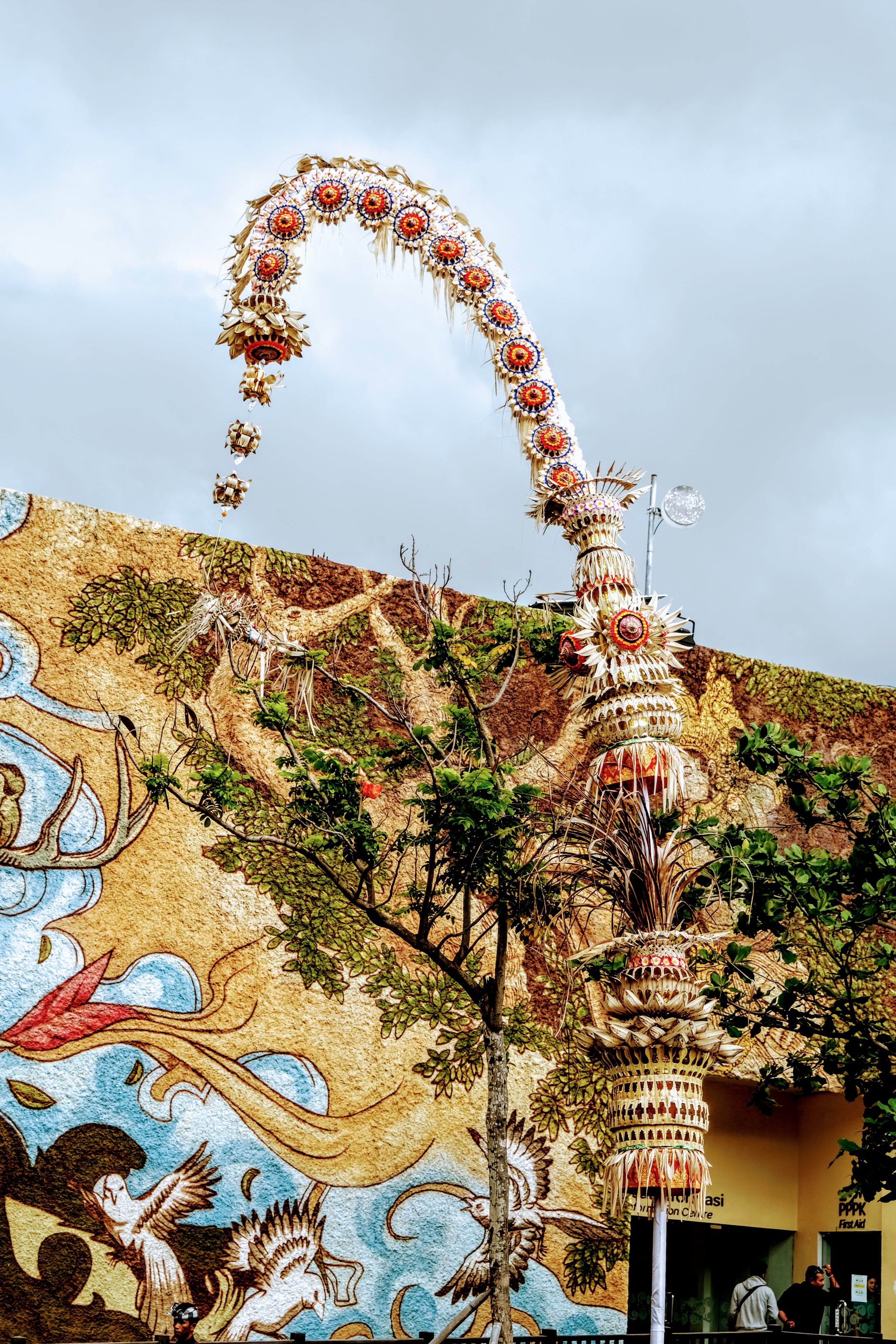
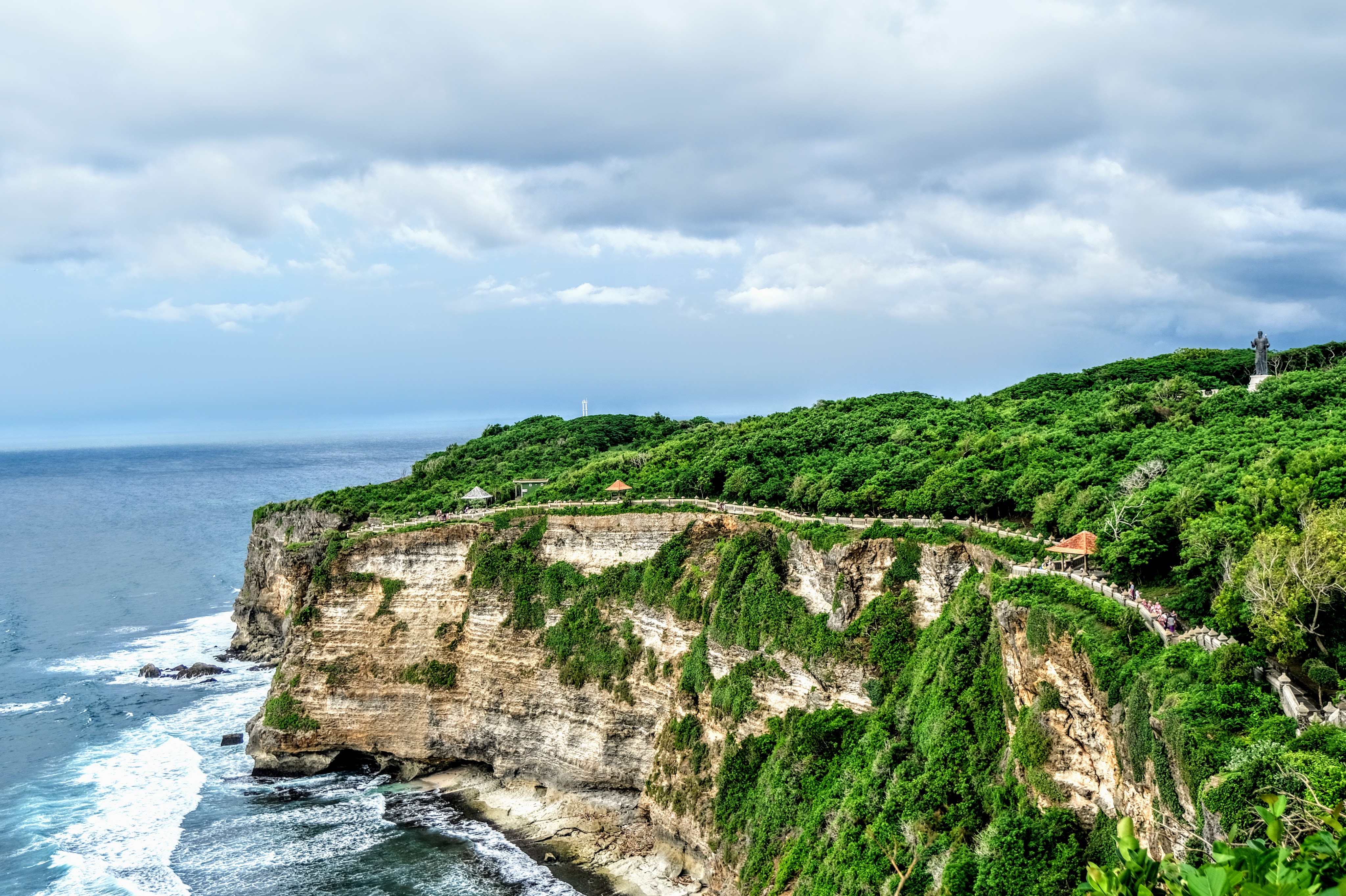
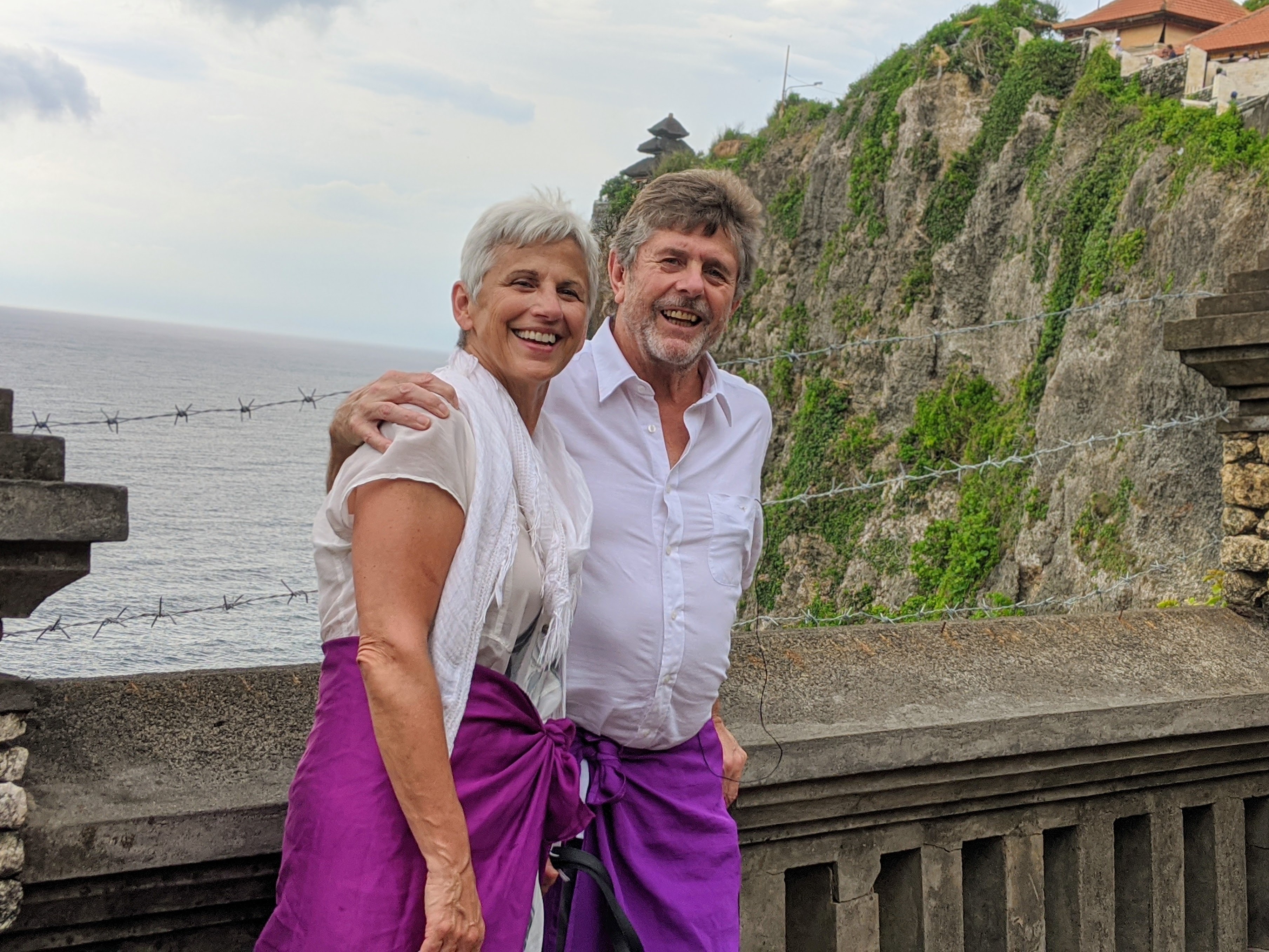
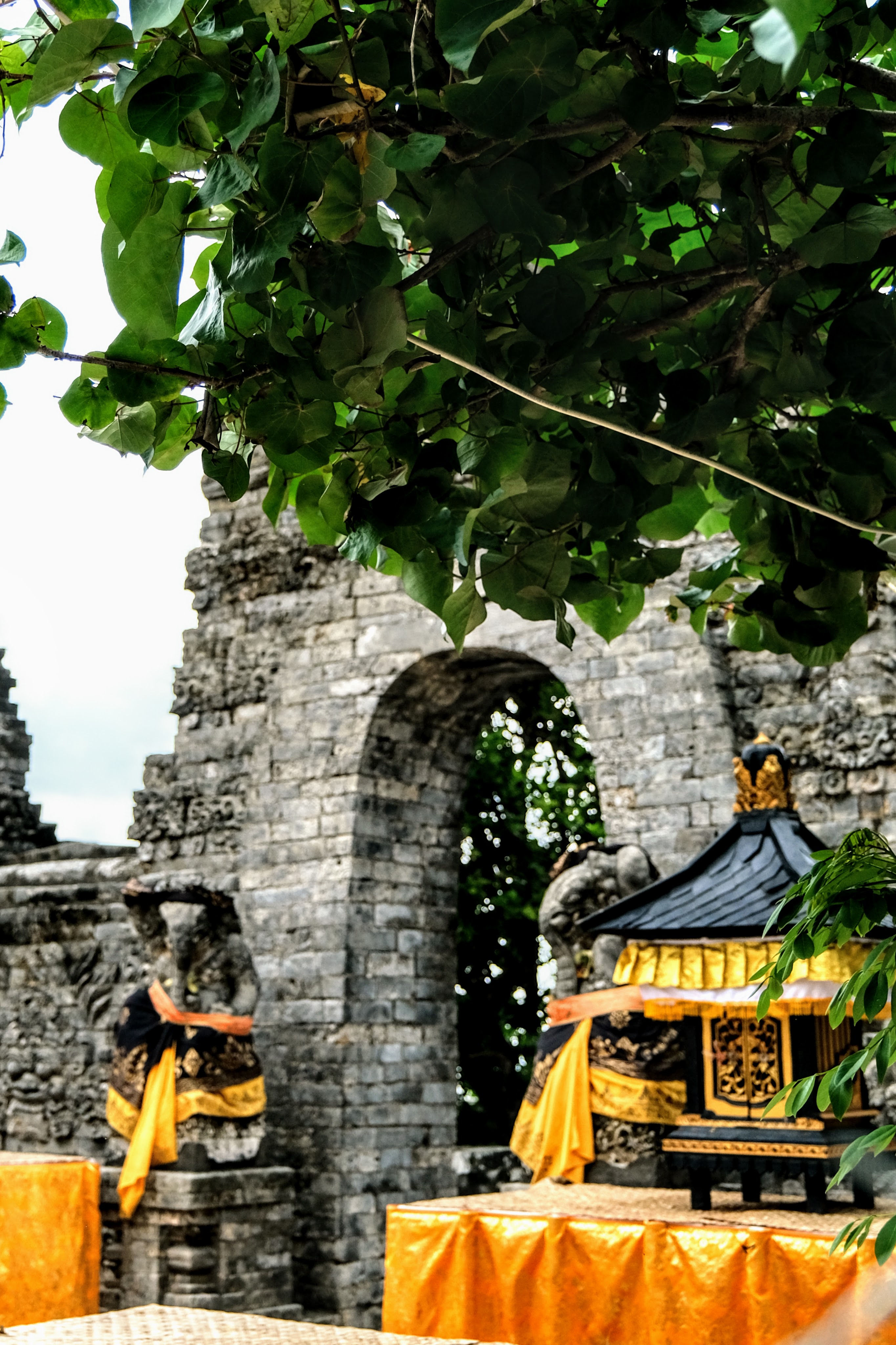
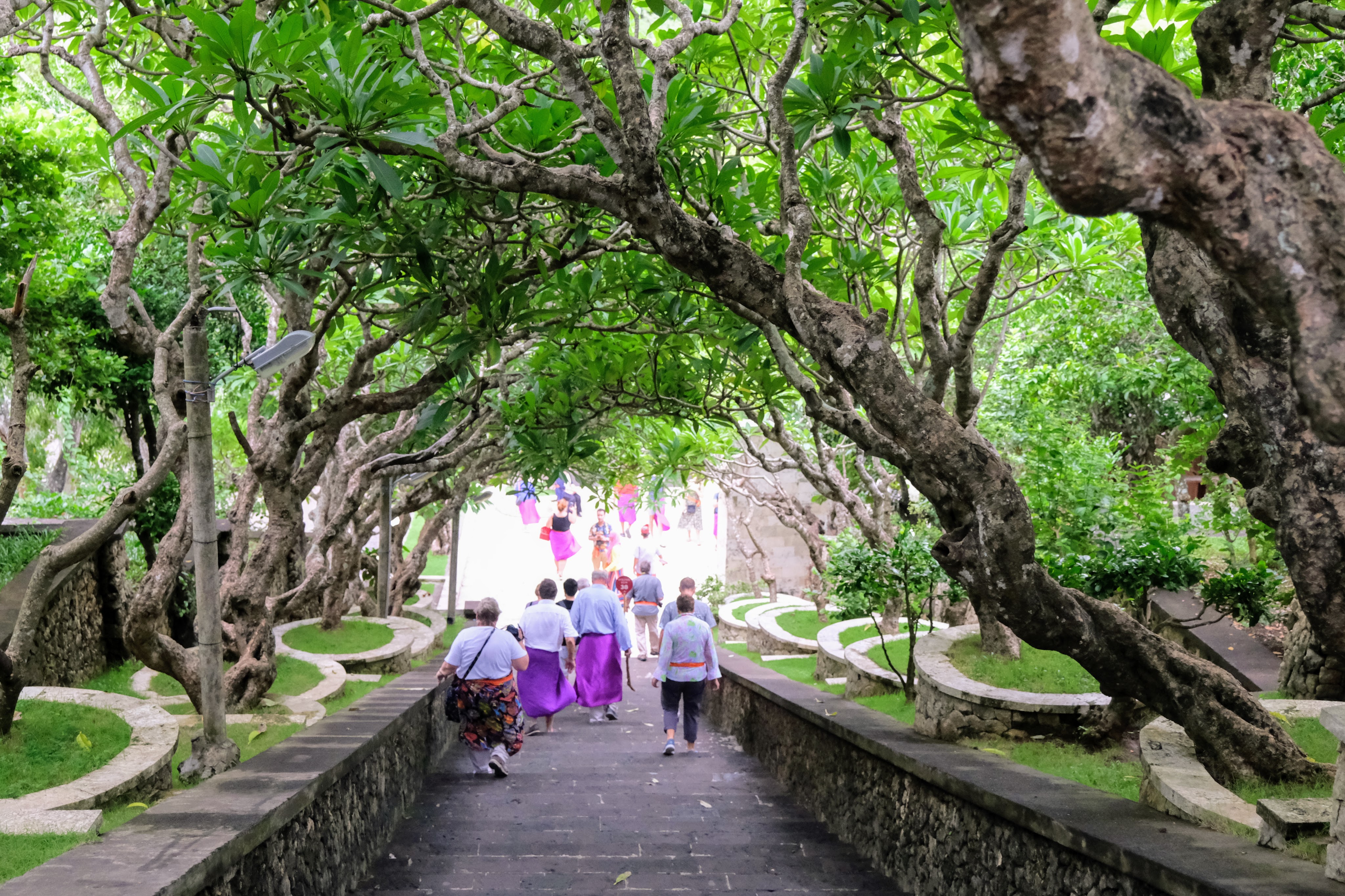
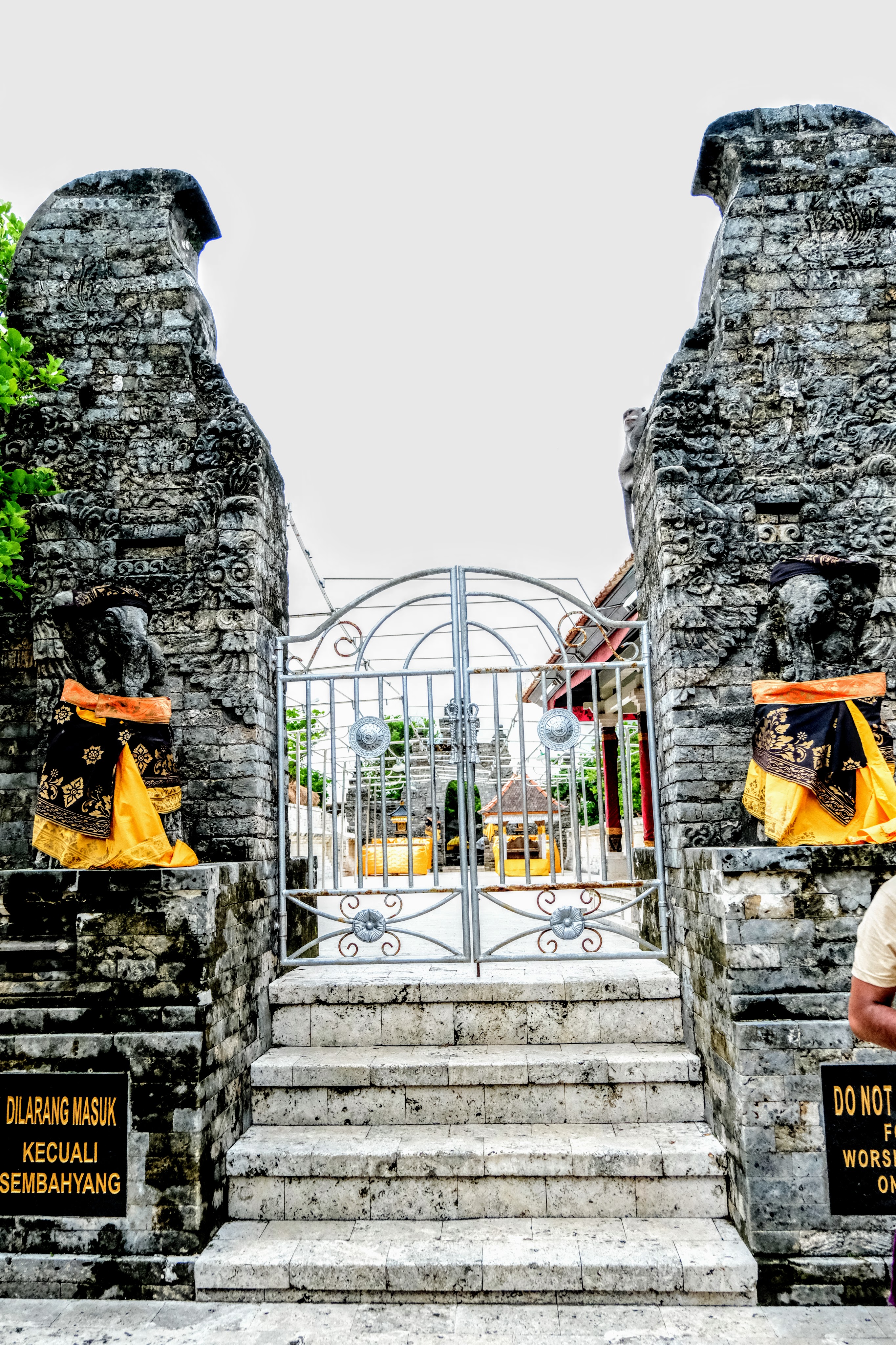
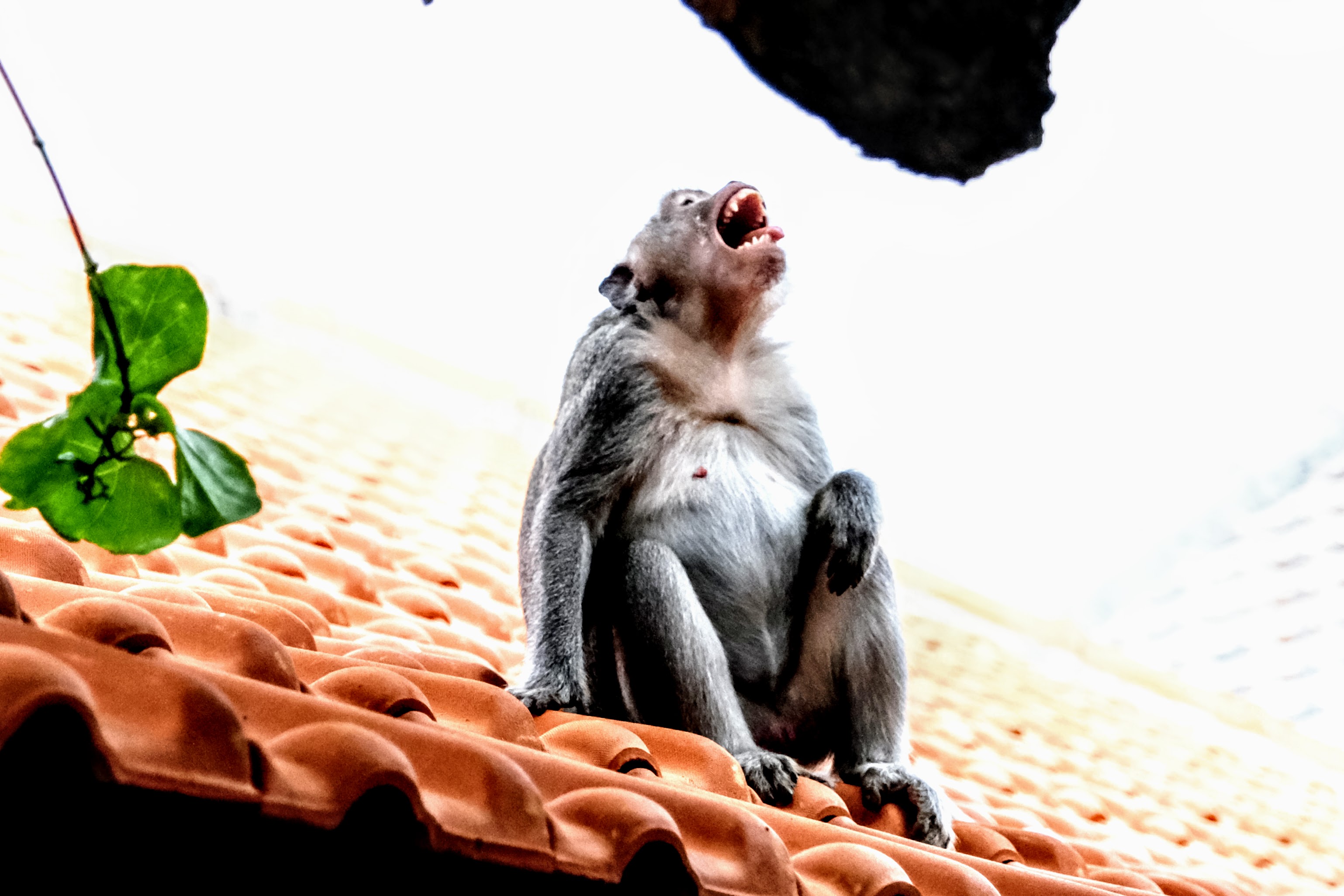
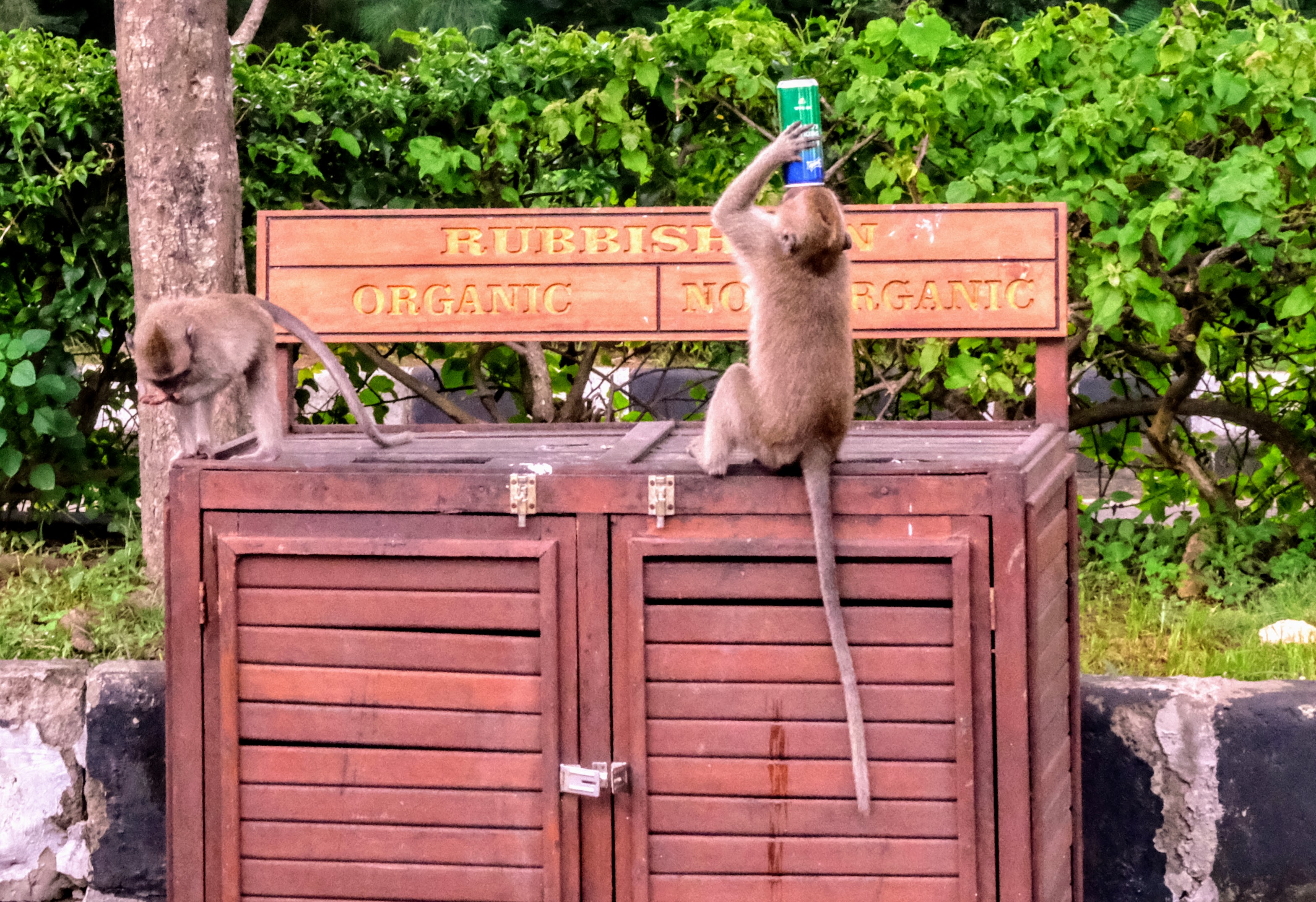
We traveled a bit further south to Pura Luhur Uluwatu, site of the magnificent Uluwatu Temple. Renowned for its picturesque location 250 feet above the Indian Ocean, Uluwatu is surrounded by a small forest where hundreds of monkeys dwell. It is believed that these monkeys guard the temple from any bad spirits. But our guide gave us a strong warning to remove our glasses, earrings, and any other tempting adornments, as the monkeys are quite aggressive and have been known to steal glasses and jewelry with great skill! We saw one help himself to a can of soda and an egg, but we’re not sure where that egg came from! At this temple, we were asked to wear a kamben, a sarong that is worn to cover the lower part of the body. We were told that the kamben is tied around the waist and should fall just below the knees. For men, it is customary to wrap from left to right, representing the good (dharma.) Men’s kambens are a bit longer, suggesting that men should cover more ground in supporting their families. Women tie their kambens from right to left as a sign that women are saktis, keeping the men balanced. Dating back to the 11th century, this beautiful example of Balinese architecture is adorned with traditional gateways and ancient sculptures, but it’s the location that makes it truly special.

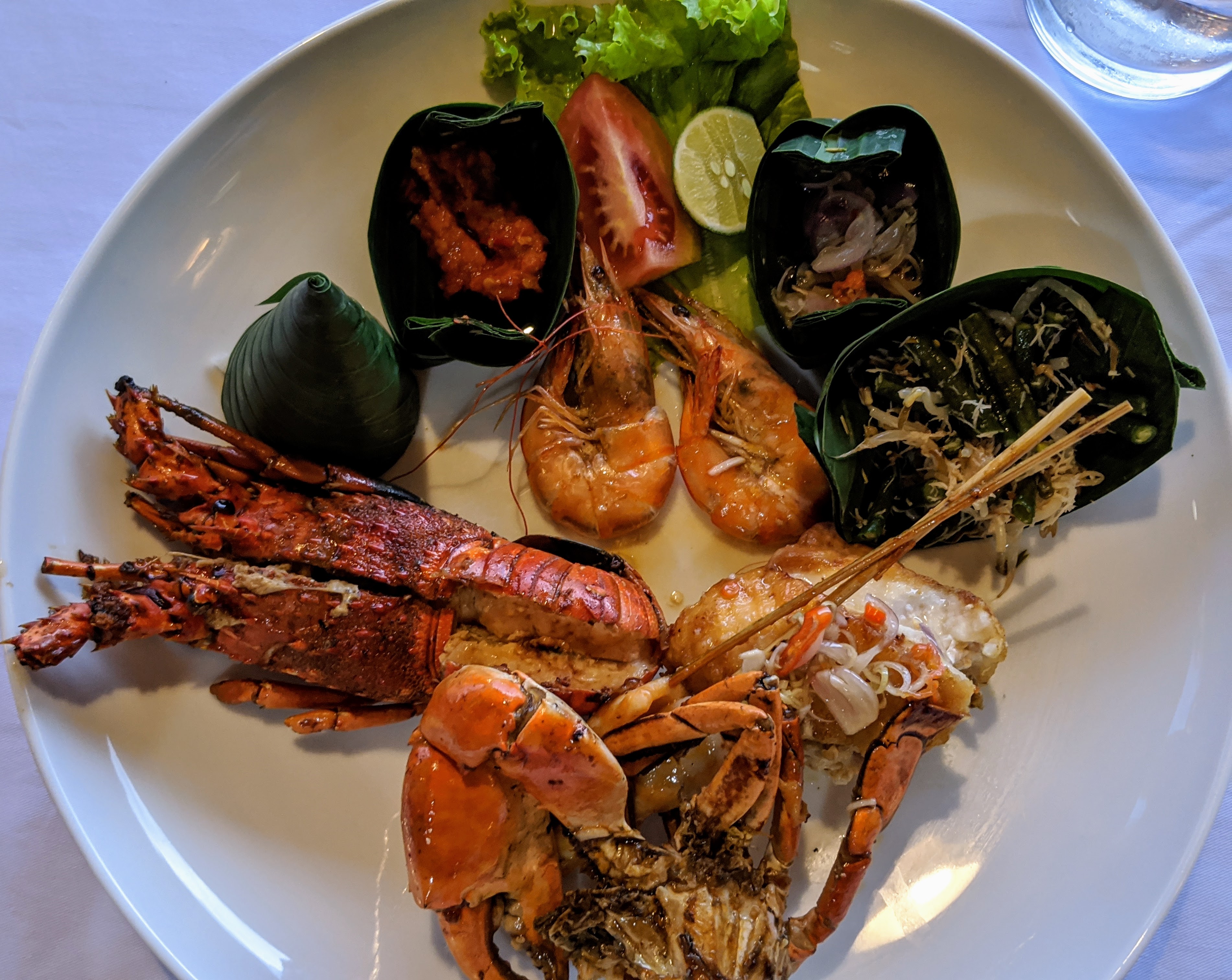
After our visit to Uluwatu, we traveled to the tranquil Jimbaran Bay for a traditional Balinese seafood dinner on the beach, a fitting end to an incredible day.
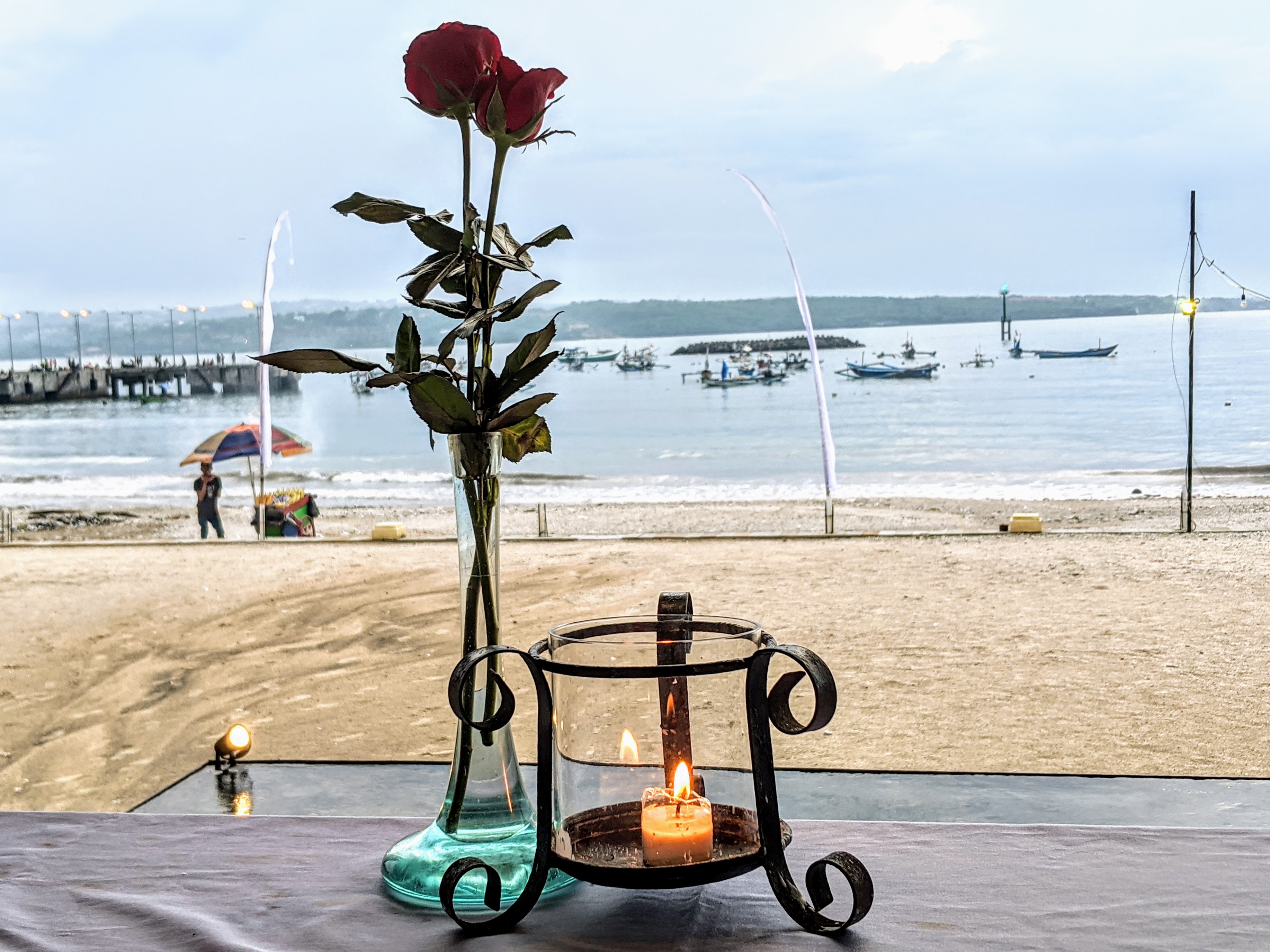
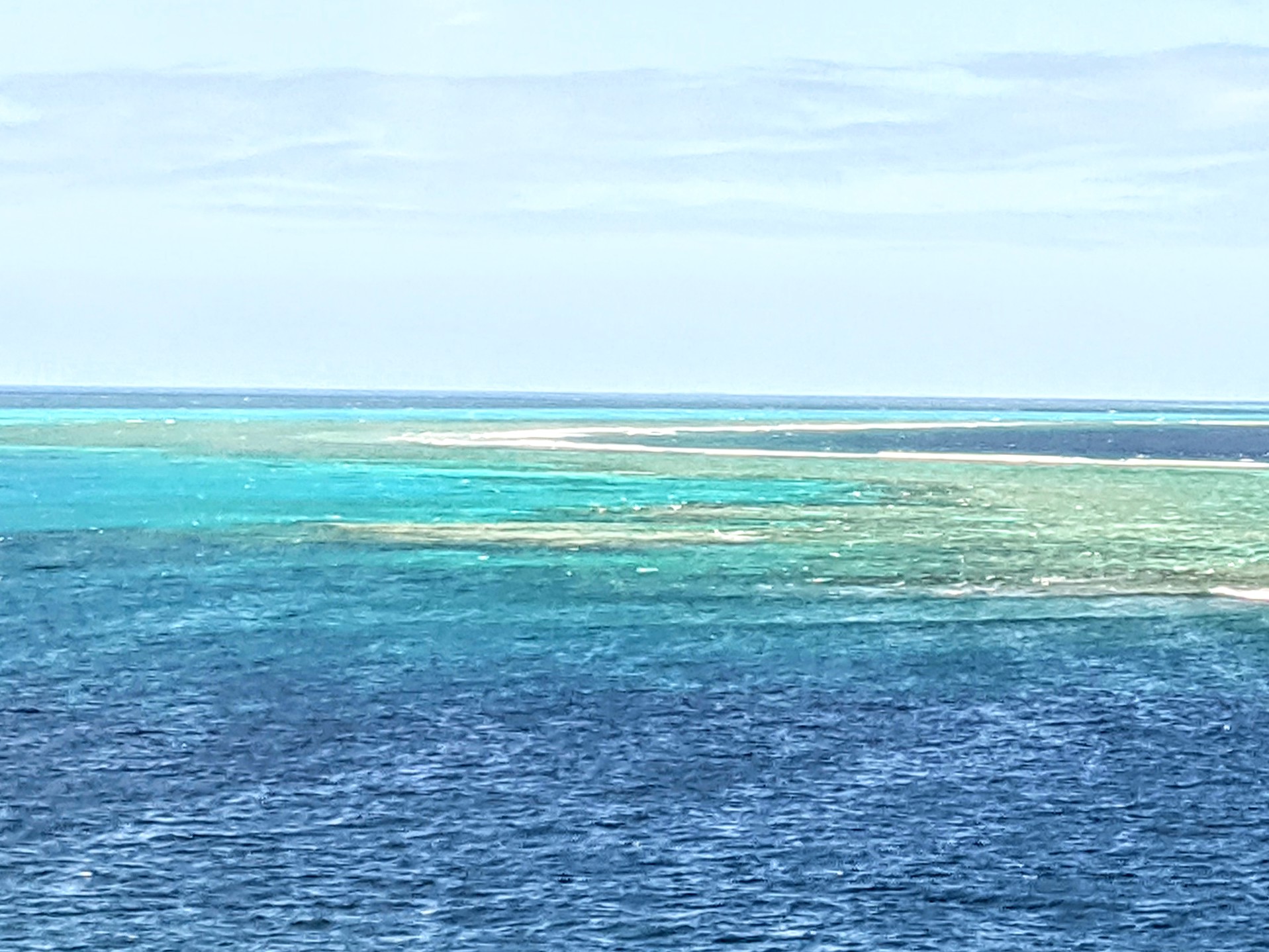
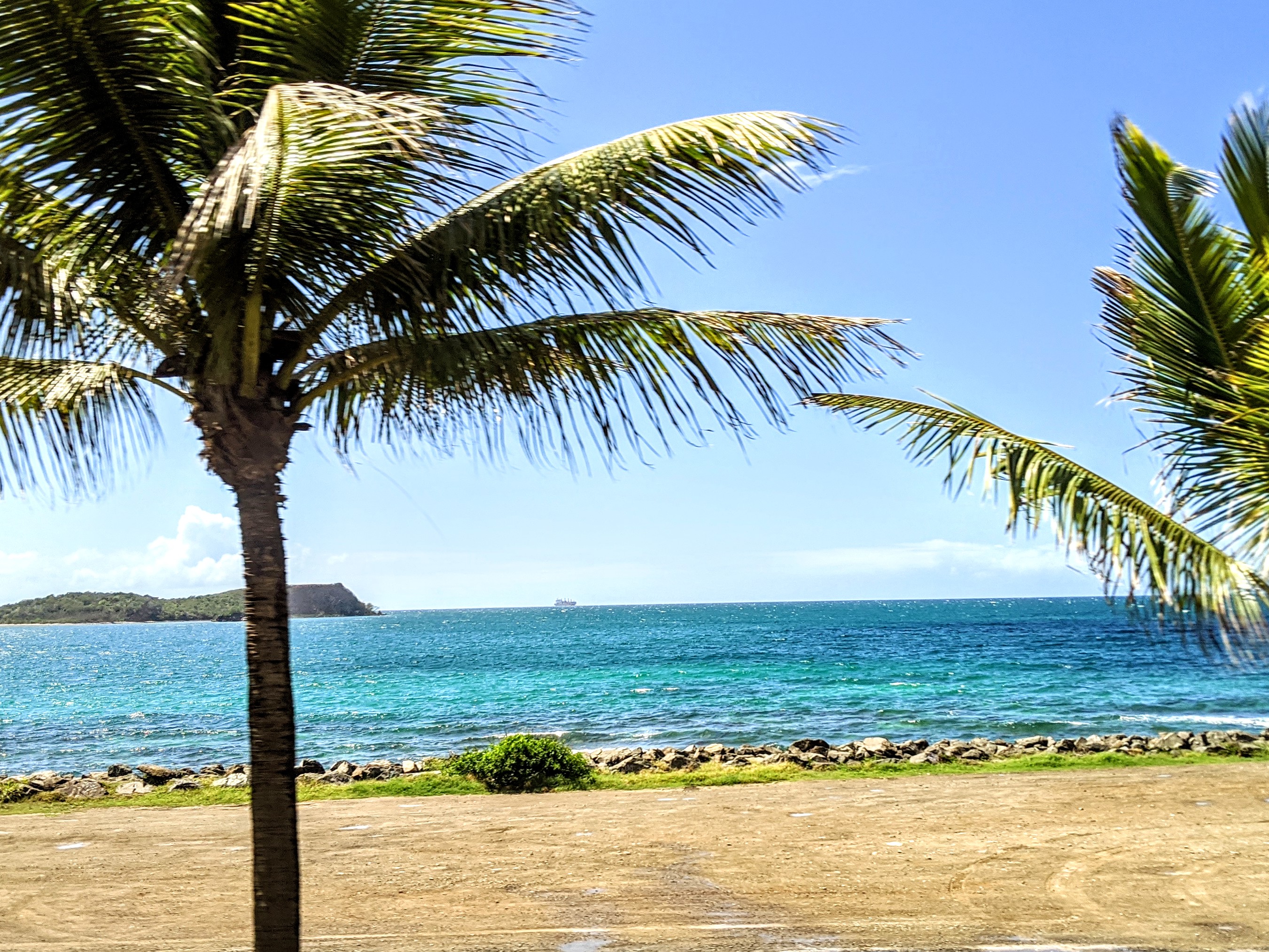
After a very busy day of sightseeing, we opted for a drive to the beach at a popular resort in Nusa Dua. The white sandy beach provided a tranquil end for our two days in Bali, and the ride gave us a different perspective on this lush, beautiful island as we saw pretty parts of Bali that are very popular with tourists.

Not sure where we’re headed next, but our two days in Bali were full and fun. We’re so grateful to have had the chance to experience the beauty of Bali.

Magical Mystery Tour Update

Since our last post on “fake news,” we sailed on to Bali, where we were assured that because everyone had passed the previous health screening, we would be allowed to disembark. After being turned away in Semarang and Surabaya, Java, we were excited about the prospect of spending three beautiful days in Benoa. Upon arrival, we anchored off this southern port and awaited the “All Ashore.” Several hours later, as we continued to wait, we were informed that the governor and representatives of the health department were meeting with staff from the US, Canadian, and several other consulates; leadership from Viking; and others to reconsider our fate. Just before dinner, after waiting around all day, we were notified that if all 1300+ passengers and crew passed yet another screening, we would be able to disembark. So throughout the dinner hour, we were summoned to the theater floor by floor. And once again, miraculously NOT ONE temperature…a testament to all of our nurse pals who have forever been telling us to “WASH YOUR HANDS!” We went to bed not knowing if the Balinese authorities were going to make good on their word. At 7:00 am, we learned that we would, in fact, be able to go ashore in Bali, and all of our excursions would proceed as planned. We were also warned that the media would be there, as this had become big, if fake, news. The paparazzi, wearing masks, were lined up with cameras at the ready.

As all of this was going on, guests and crew were making a difficult decision. While some passengers were scheduled to disembark (originally in Hong Kong, but now in Bali), Viking had offered the rest of us a refund of the balance of the cost of the cruise as well as a future cruise credit to compensate for the missed ports. Crew were also given an option to disembark if they had concerns. The other big question among passengers was how Viking planned to screen new passengers and crew scheduled to board in Bali, and later in Mumbai.

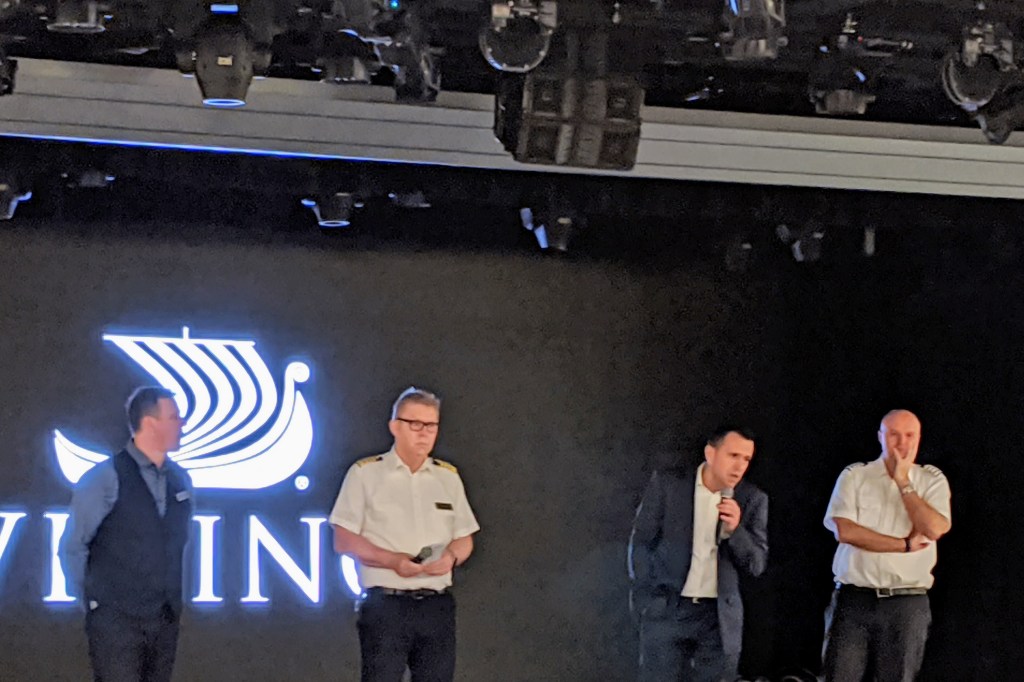
Early on Sunday, before our tours began, we were called to a meeting. On stage were Viking Sun Captain Lars Kjeldsen, General Manager Norbert Tesch, Cruise Director Beven Addinsall, and Viking Operations Director Karl Eckert, who traveled to Bali to help with the situation. Rumors were flying around the room, as passengers speculated on what they might have to say.

Their message was clear and concise. They thanked everyone for their full cooperation and understanding during this difficult time, and reiterated their sincere concern for the guests and crew on board. They informed us that Viking is offering the remaining guests and crew the opportunity to remain on board for a cruise “from Bali to somewhere!” Although additional passengers were scheduled to board in Bali and Mumbai, they had been notified that they would not be joining the cruise, as Viking had no way of assuring their health status. And they gave guests and crew one last chance to disembark. While about 400 guests got off the ship, we decided to stay and enjoy the adventure.

So as it stands, we’re not sure how many will be on board…we’re not sure where we’re going…and today everyone who’s staying is calling the Viking Sun our “private yacht!” This, we were told, will be the first and only time Viking will do this, but it’s being done with our health and well being at the forefront of their decision making, and we are grateful for that. These leaders also gave great kudos to the crew, who have been incredible throughout. As we reflect on how this could have been handled, we realize we’re witnessing great leadership at work. Viking is doing the right thing for the right reasons.

So we’re fine… everyone on board is fine…and we hope you’ll continue to follow our journey. As one dear friend said, “You wanted an adventure!” And adventure is what we’re getting! Today’s daily bulletin says “Welcome to the Viking World Magical Mystery Tour! Bali to Somewhere!”🤣

But for today, we’re off to enjoy another day in Bali.
Fake News…Not the Virus!

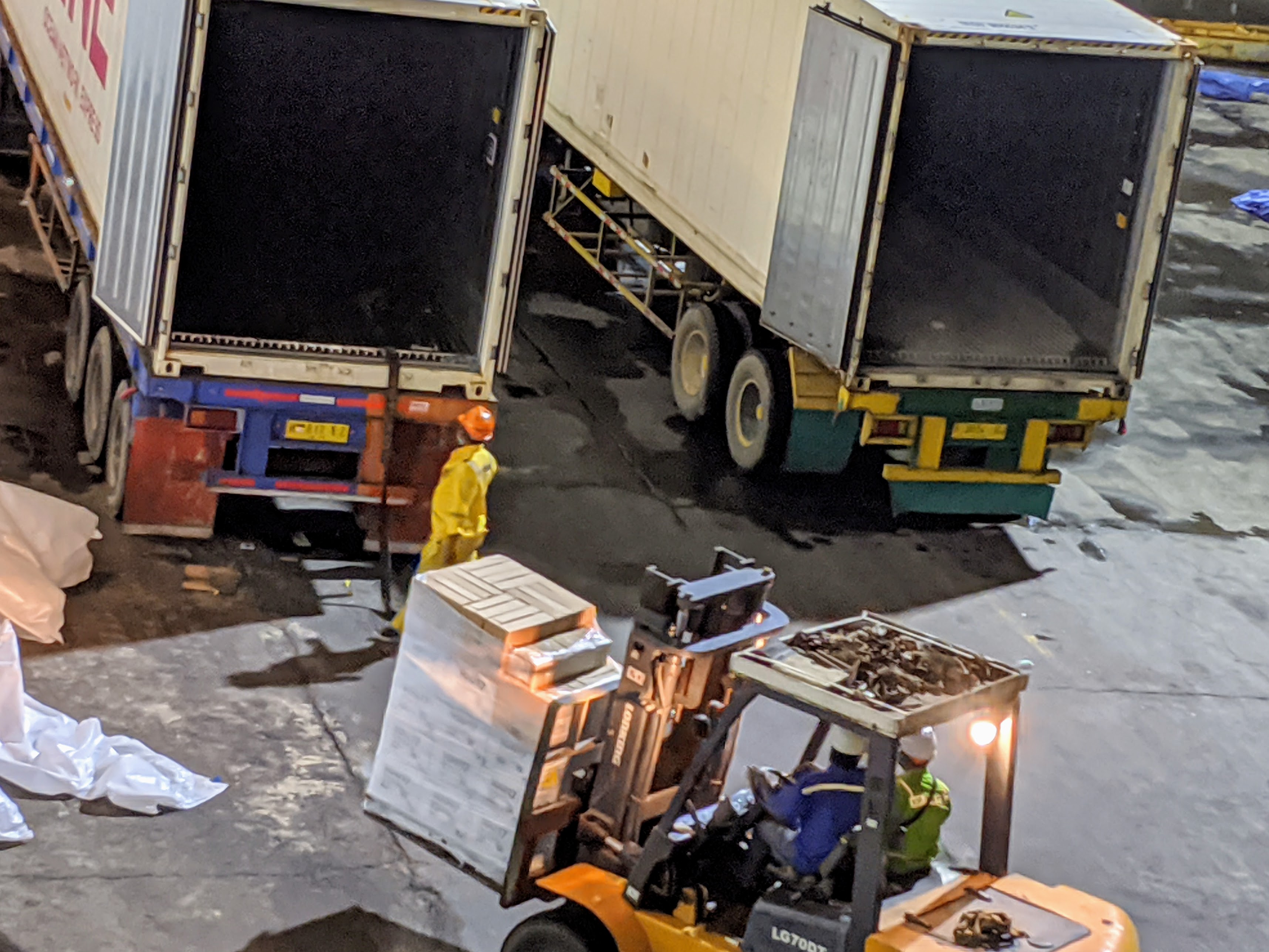
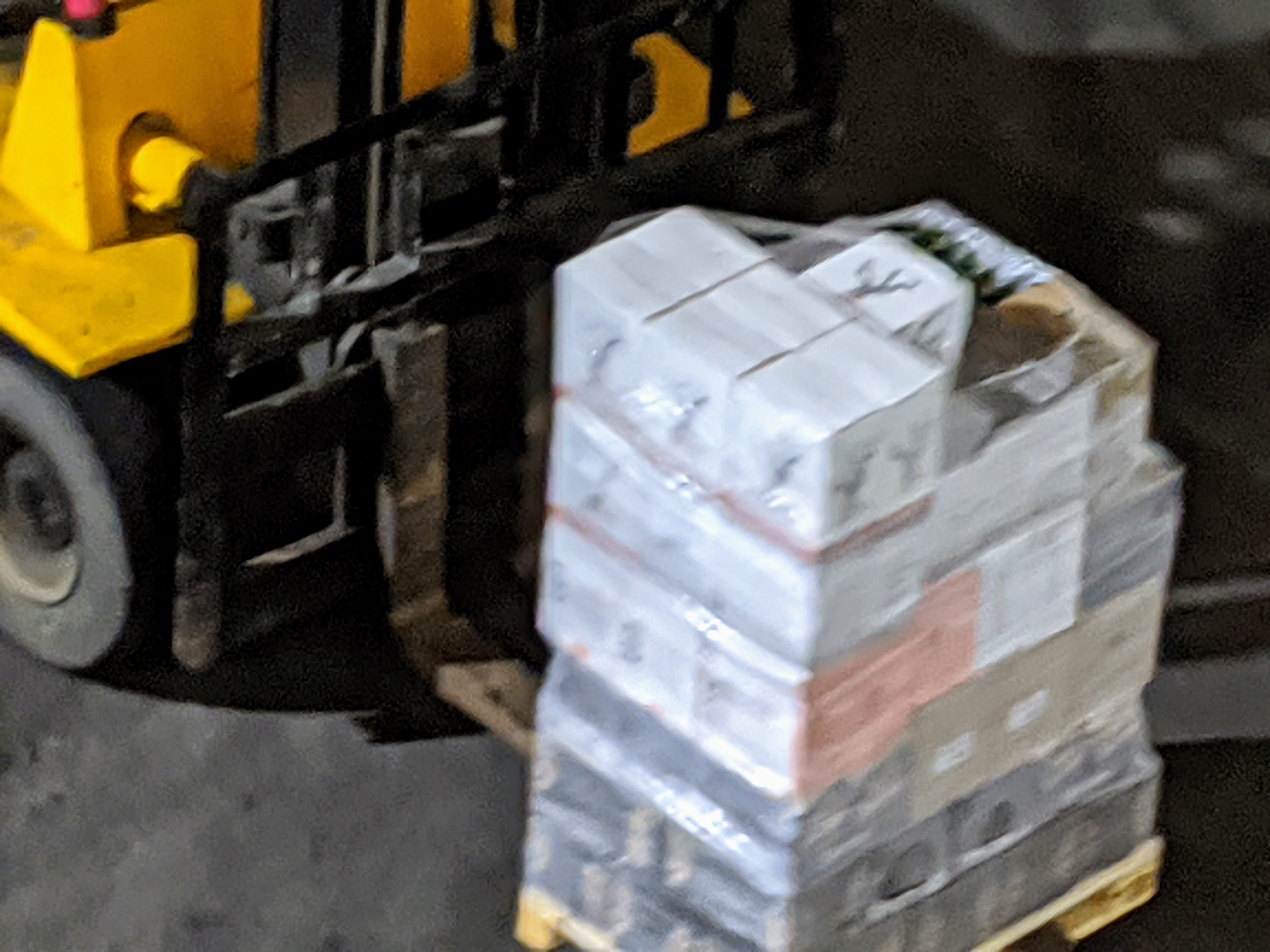
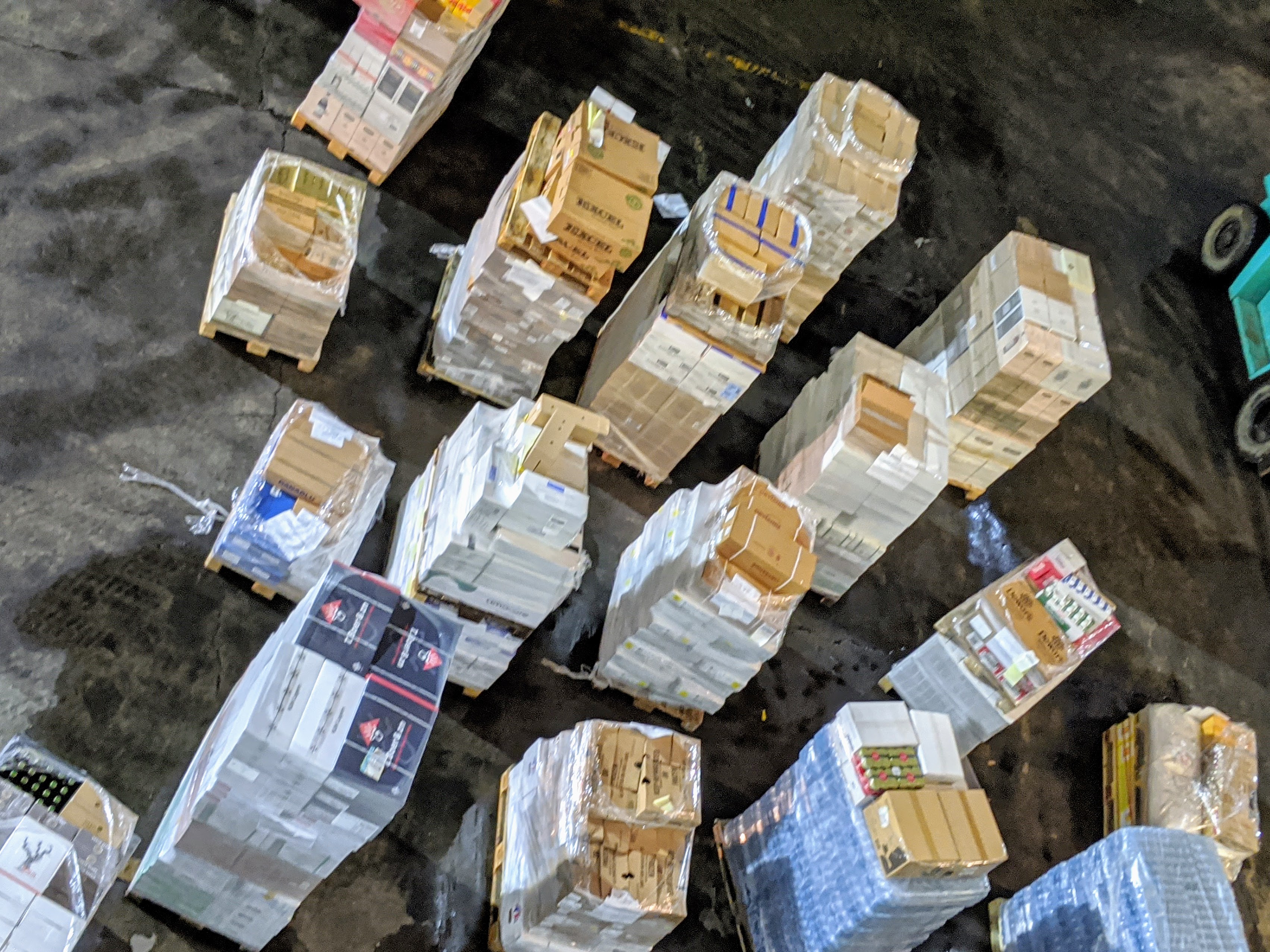
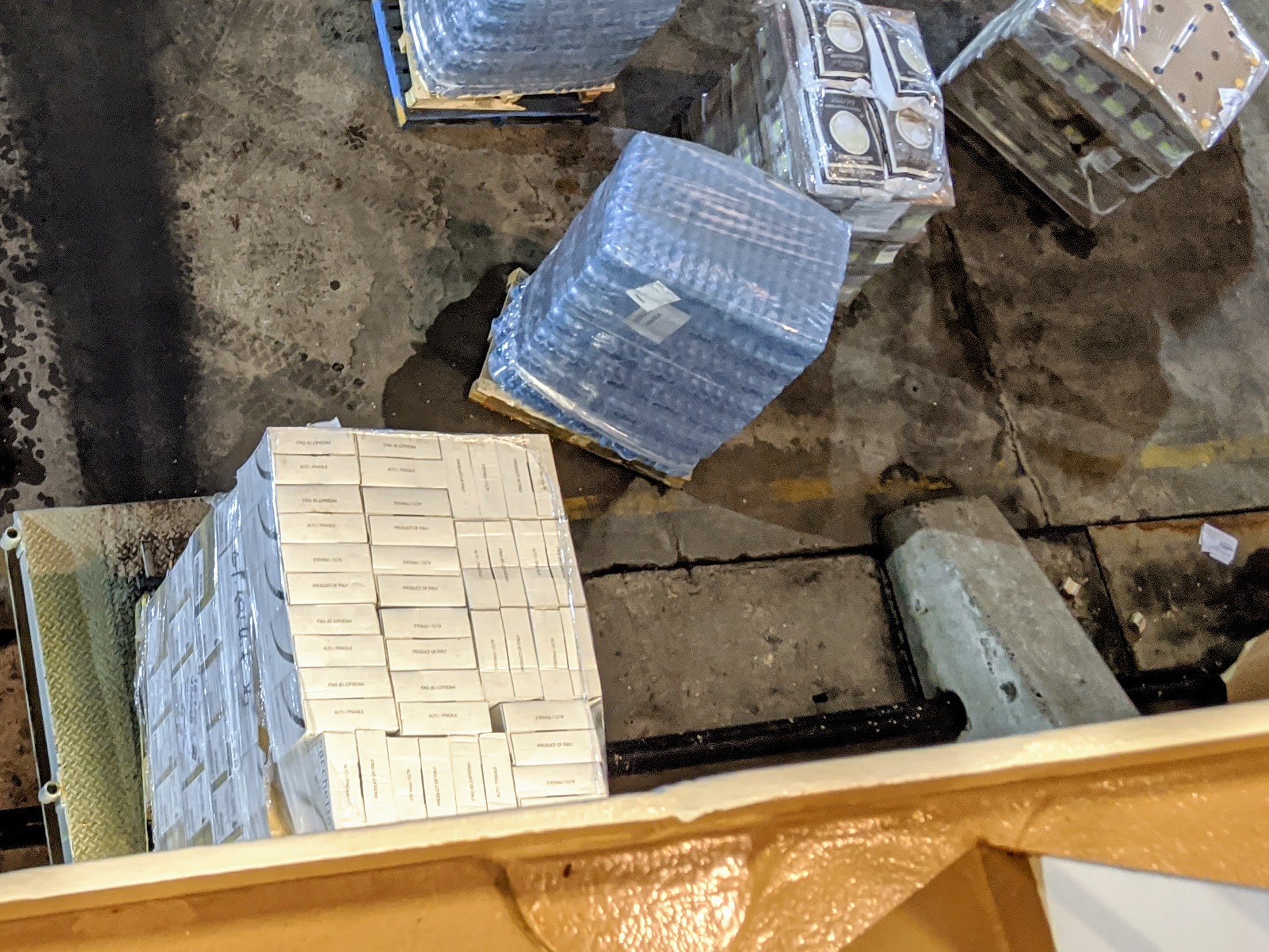
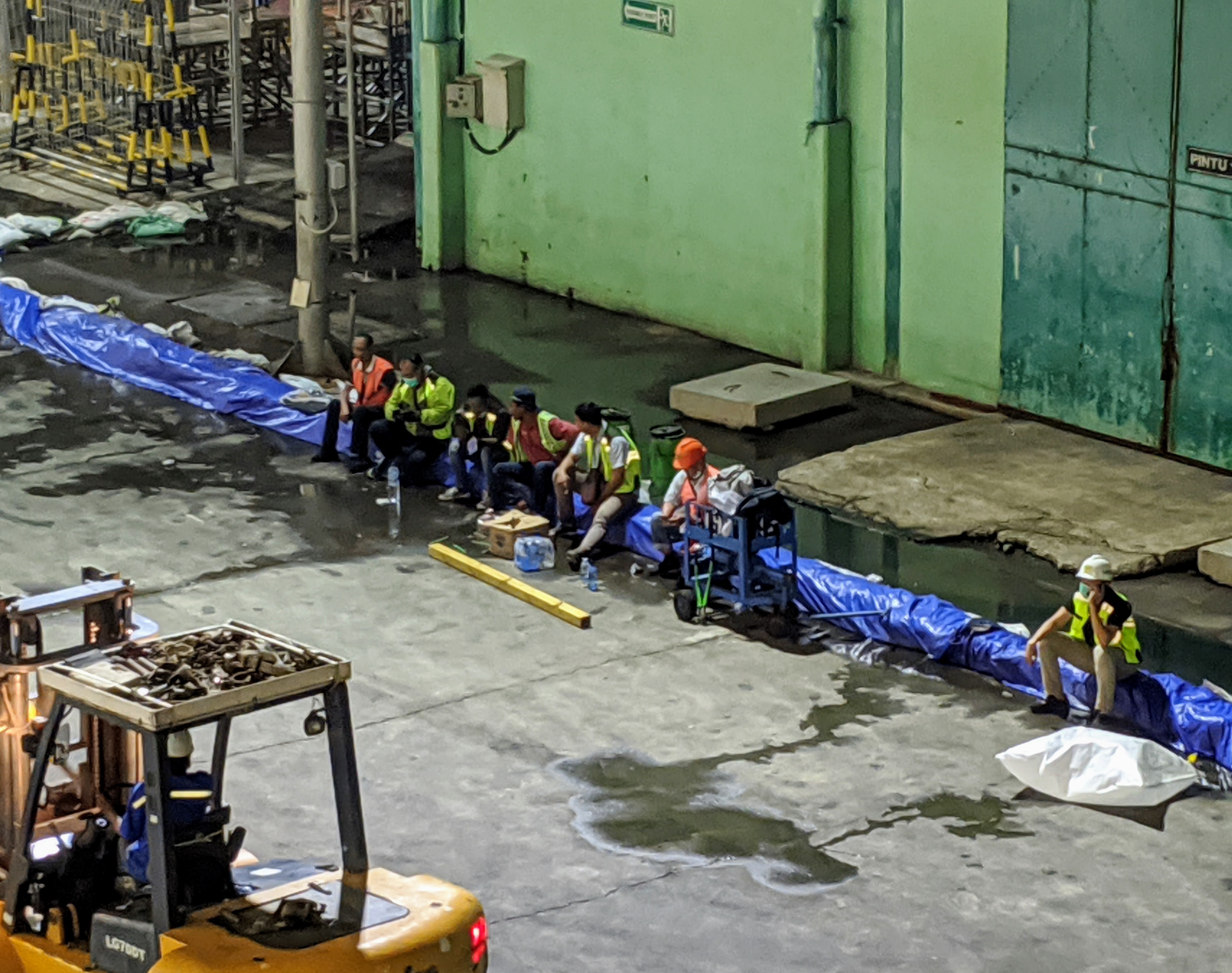
Today our ship anchored just off the port of Semarang, Java bright and early. The evening before, we had received a two-sided health screening form, and were informed that we should complete the form and report to our designated Assembly Station at 6:30 am. There, we were to be met by the Indonesian Health Department authorities for temperature checks and health screenings. We were all there ready to go when we were informed that the authorities would be late. We waited…and waited…and then the incredible Viking Sun servers showed up with trays of mimosas and sparkling wine to brighten the mood! The authorities arrived at about 8:30, and EVERY guest and crew member sailed through the screening. The 12 authorities who had come on board stayed for lunch, and shortly thereafter cleared us to arrive in the port of Semarang. And we waited…and waited…and waited. It seems that the authorities in Surabaya, Java (the port we were scheduled to visit the NEXT day) had picked up a fake news story about our visit to Komodo the previous day. The story reported that based on the health screenings performed in Komodo, two possible cases of coronavirus might be on board our ship. The story was entirely false, as everyone had passed the health screenings in Komodo as well. However, based on that information, Surabaya decided we could not come. And based on Surabaya’s decision, the local authorities in Semarang overrode the authorization we had been given by the Indonesian government, and canceled our visit to Semarang as well. Our incredible Captain Lars negotiated a “technical docking” in Semarang to allow our crew to unload several containers of supplies that were already there, but the directive was that no one would be allowed off the ship. A little while later, the pilot showed up in full hazmat gear to guide us into the port. And for the next several hours, fork lift operators moved pallet after pallet of supplies. It was actually an interesting process, as cases and cases of wine, produce, paper goods, meats, and other supplies were removed from the containers, moved to the dock, then loaded onto the ship. We watched for a while, and were moderately amused by a line of “supervisors” wearing masks and drinking water watched the fork lift operators and our crew work their tails off!

We know this post is very different from most of our other stories, but we wanted to share a bit about how the virus has affected our journey. Even more important, however, is how uncertain the world has become as a result of Covid 19. Our itinerary has become day to day, and while this has been a bit frustrating as travelers, it’s a drop in the ocean compared to what the people who are actually sick from this virus are going through. And it’s even less important than those who are caring for them, often under the most challenging of circumstances, with concern about adequate supplies and sufficient testing and treatment resources.

As we float around enjoying yet another magnificent sunset, our thoughts and prayers are with the countless public health professionals, healthcare workers, and researchers who are working tirelessly to combat this disease. And we remain grateful for Viking’s leadership in ensuring our safety and well being by keeping up with REAL information and providing CARE for each guest and crew member.

Here be Dragons!

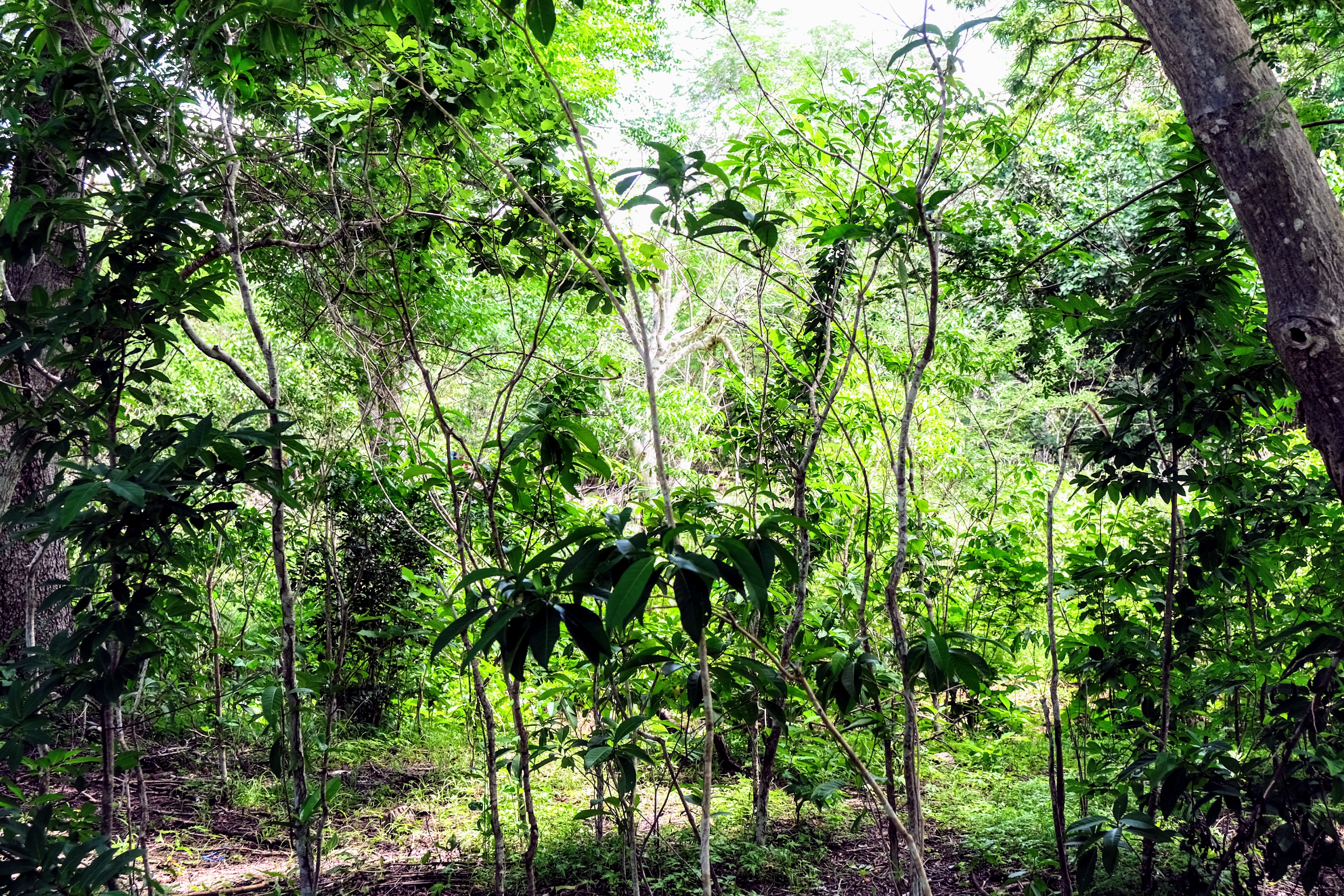
The quote “Here be Dragons!” hearkens back to the medieval practice of putting illustrations of dragons, sea monsters, and other mythological creatures on uncharted areas of maps where potential dangers were thought to exist. It seems particularly appropriate to use this phrase for this post for a couple of reasons. First, we visited Komodo, our first stop in Indonesia, to see the legendary dragons by the same name. The Indonesian public health officials required pre-visit temperature checks as a condition of entry for ALL passengers and crew before they would allow the ship to dock. In addition, Komodo was the first port to require all visitors to wear masks for the duration of our visit. We were willing to do just about whatever it took to visit this unique island, and so far this vigilance seems to be working, as all of the dragons we encountered seem to be in good health! Fortunately, all Viking Sun passengers and crew who wanted to go ashore were given the OK to go ashore. Later, we were informed that several tour groups before us were NOT permitted to visit. So although it was pretty steamy trekking through the tropical forest wearing a mask, with all that is unknown about the coronavirus, it can certainly be put into the category of other “uncharted areas where potential dangers are thought to exist!”

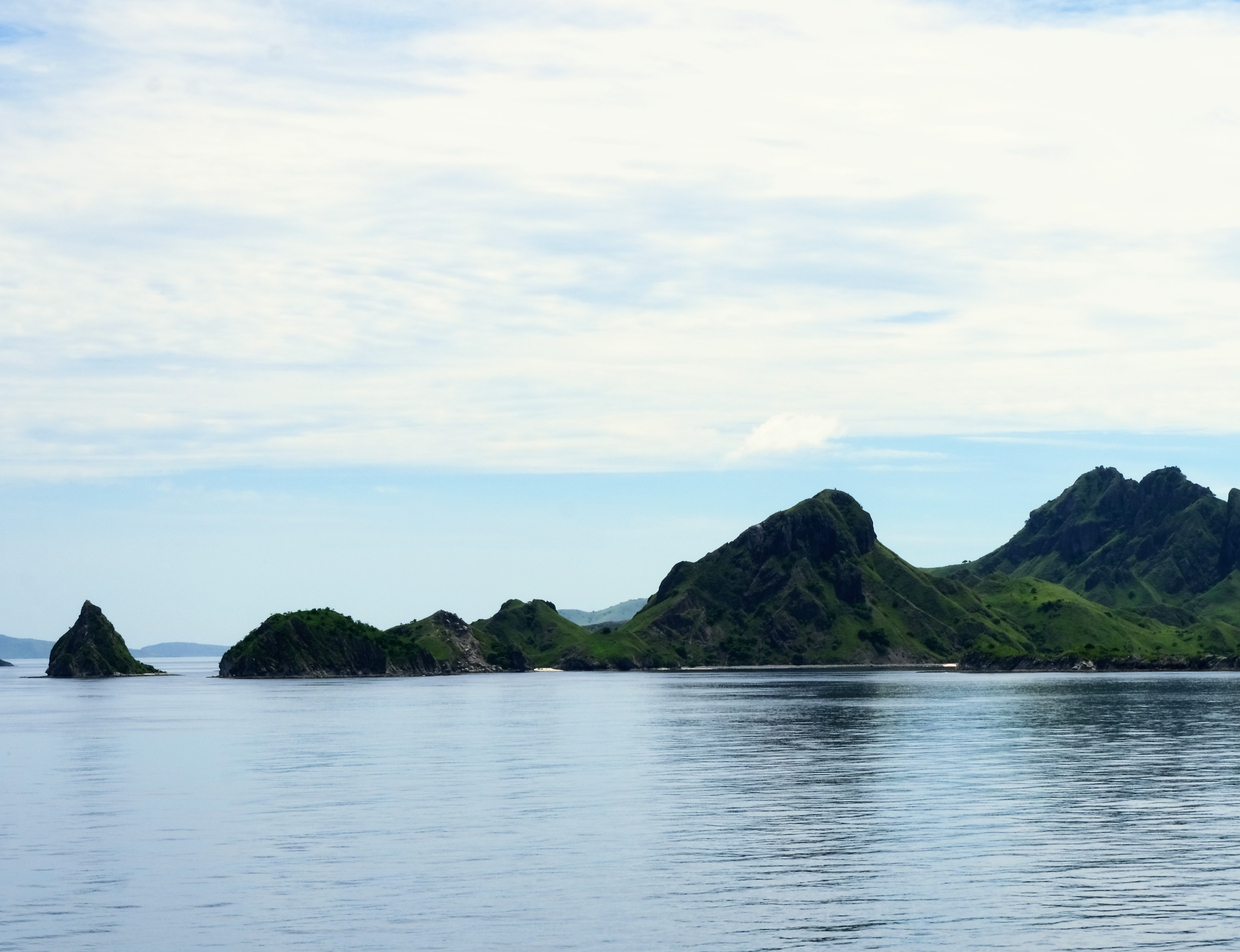
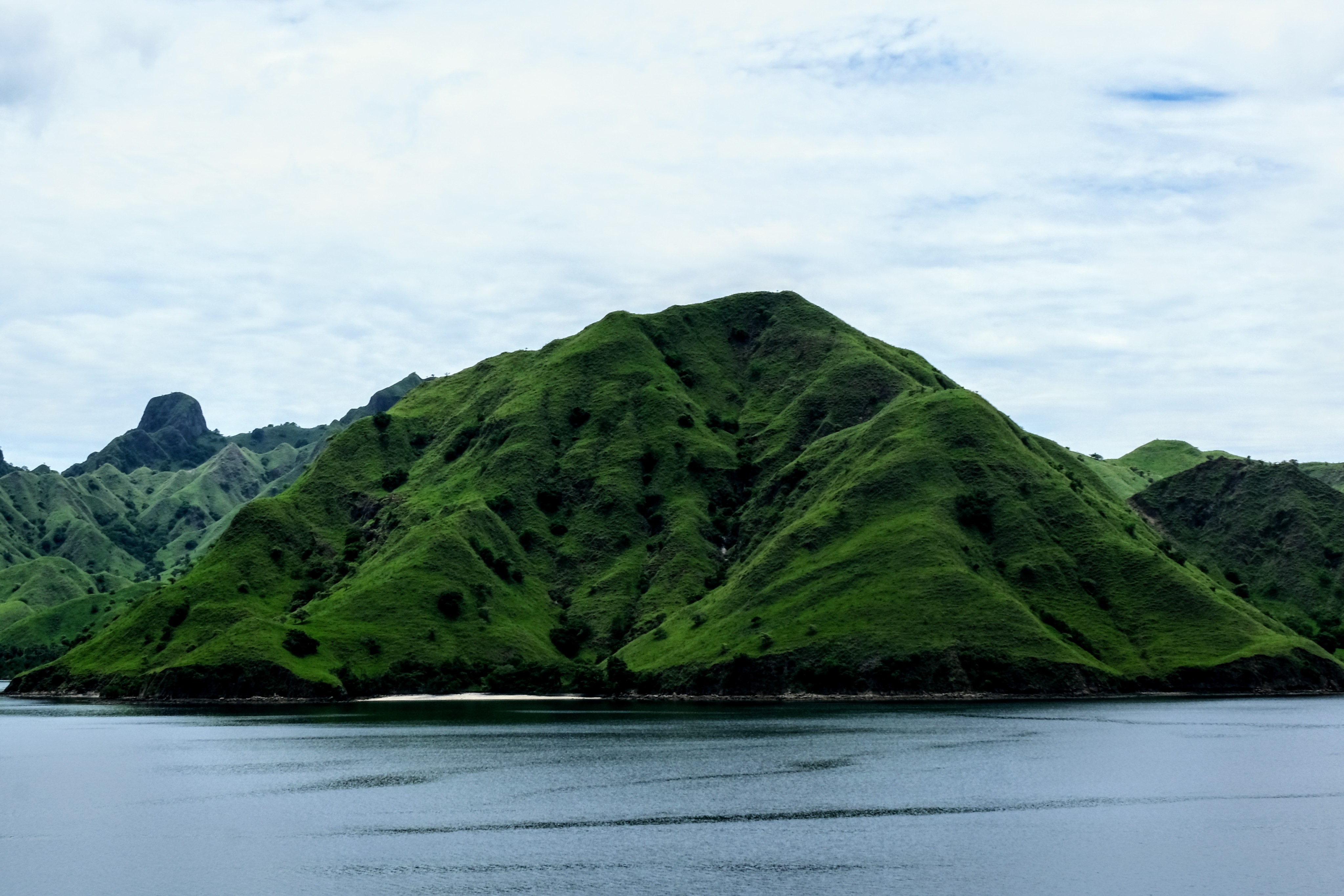
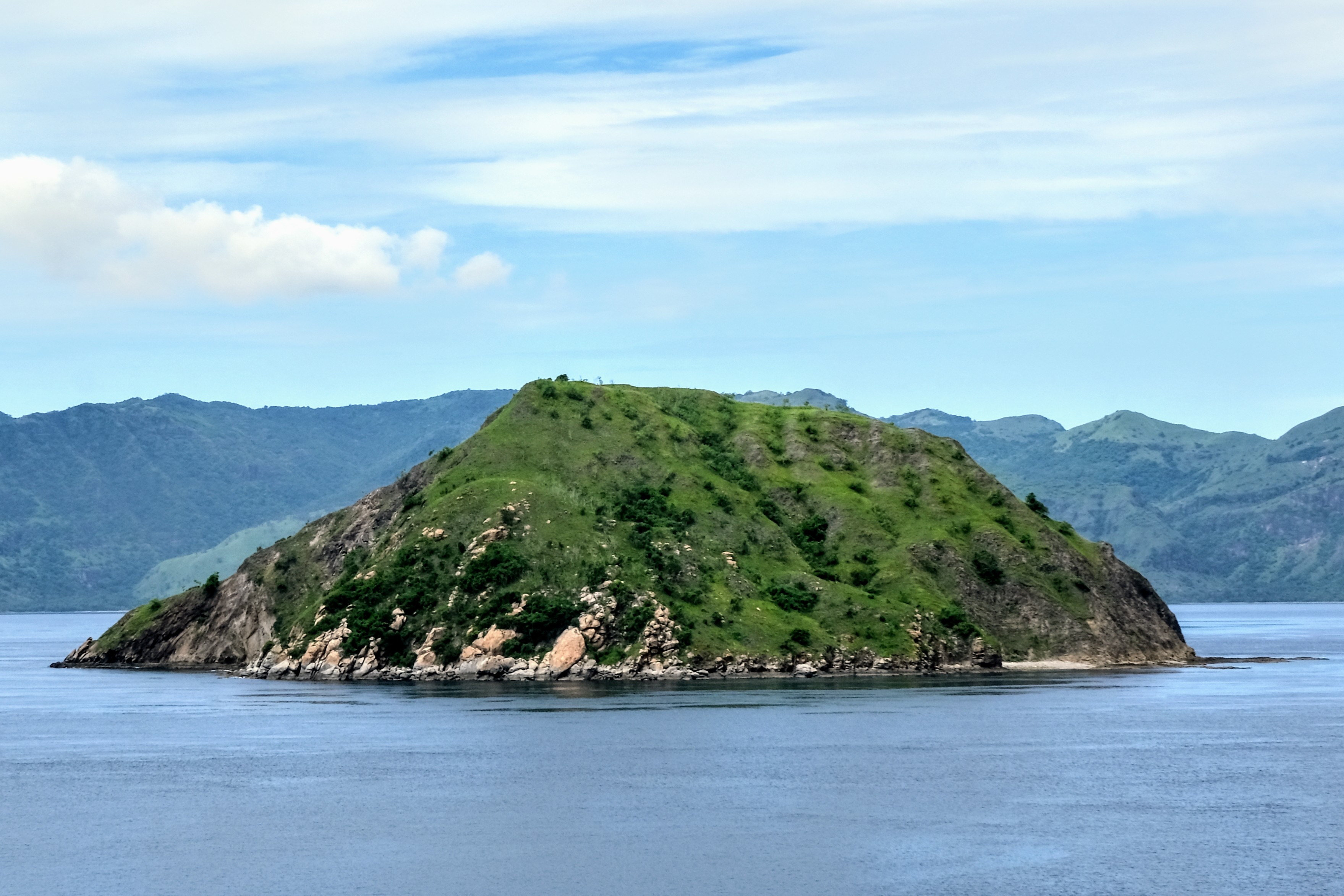
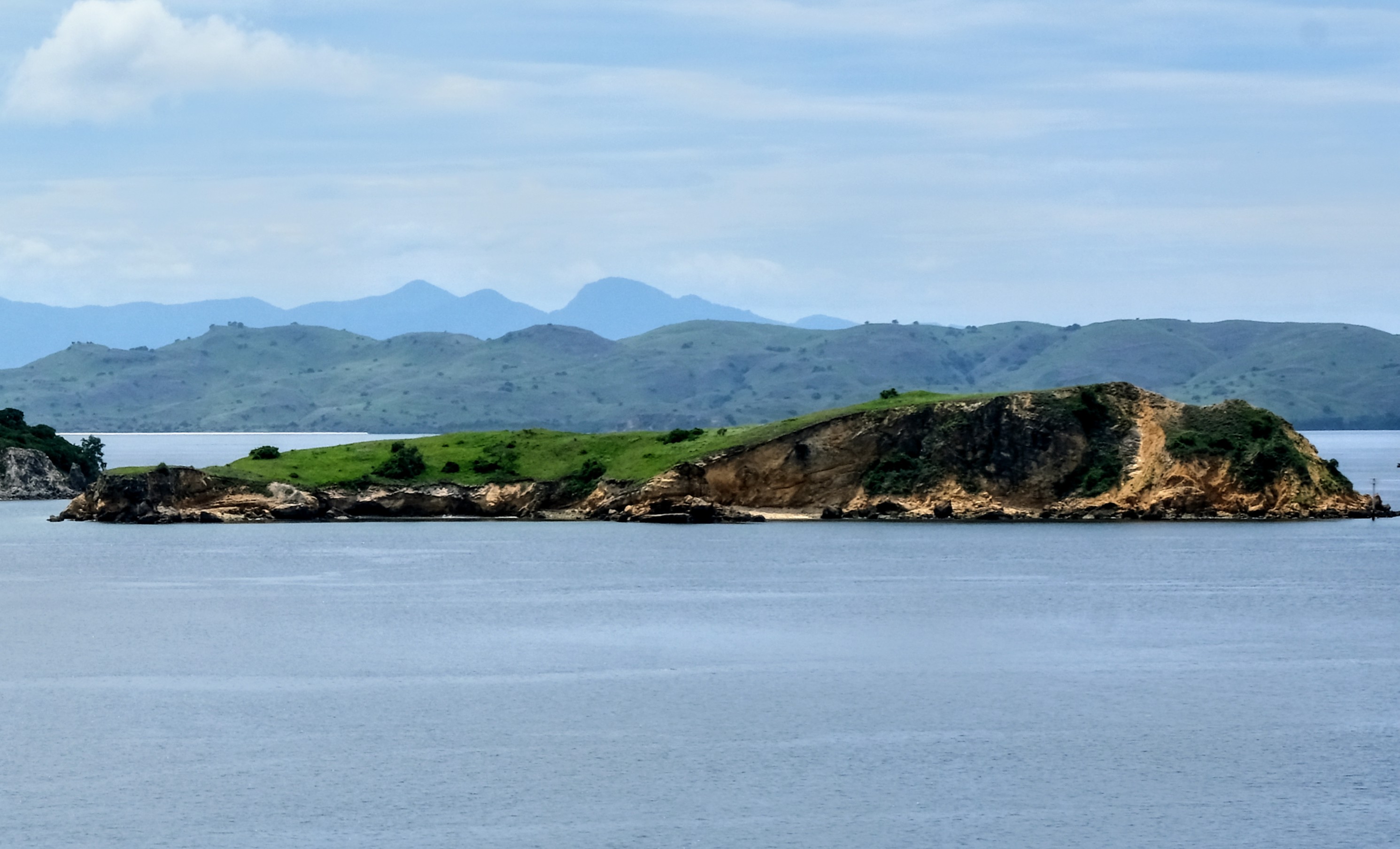
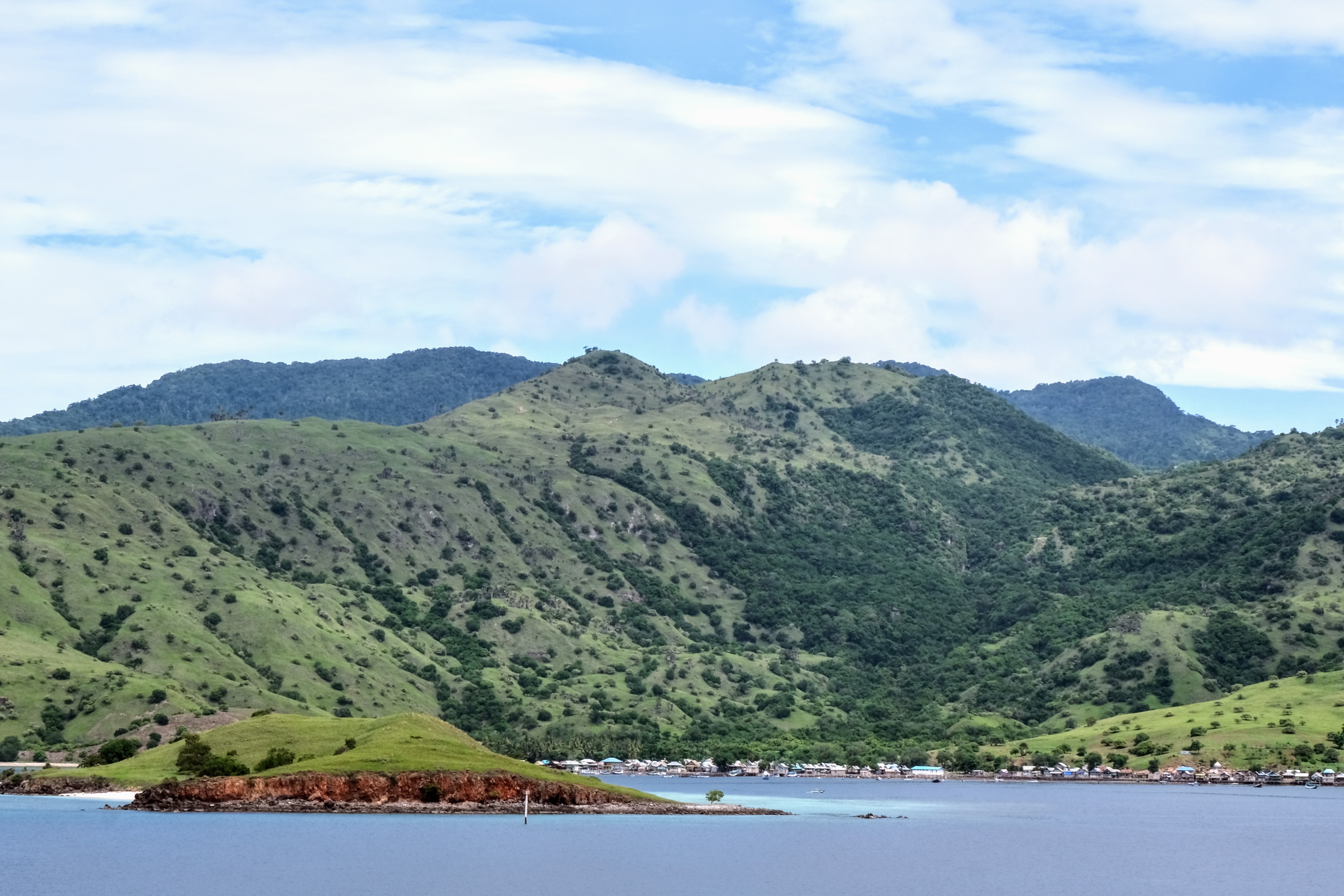
At just 150 square miles, the tiny island of Komodo is one of the 17,508 islands that comprise the Republic of Indonesia. Our approach provided stunning views of several of these islands, and our early morning arrival had an almost mystical feel to it. We learned that these waters are home to dolphins, whales, and over 1,000 species of fish.

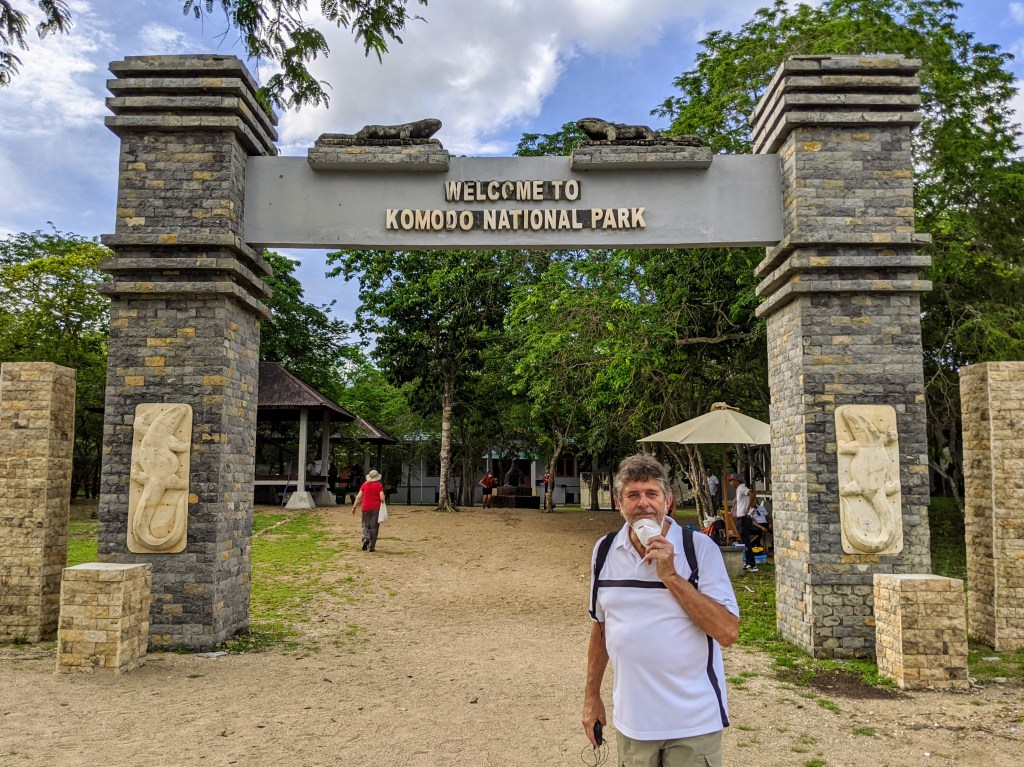
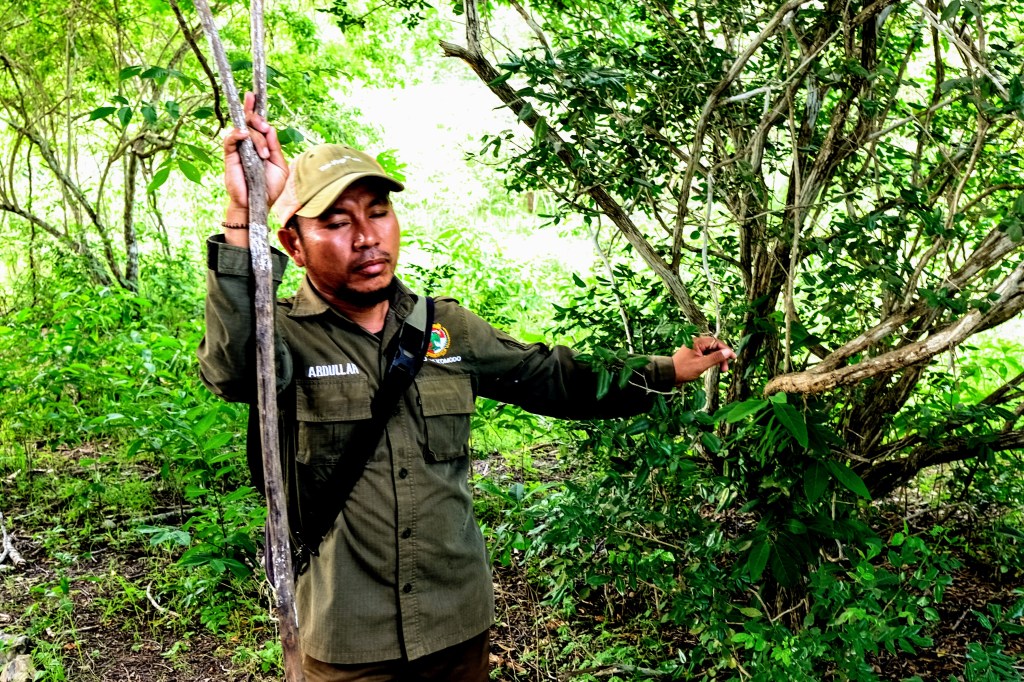
Once we entered the Komodo National Park, we learned that it was initially established in 1980 to conserve the unique Komodo dragon, first discovered by the scientific world in 1912. Since then, the park’s conservation goals have expanded to include protecting the entire biodiversity of the region, both marine and terrestrial. It was declared a World Heritage Site and a Man and Biosphere Reserve by UNESCO in 1991. We met our guide, Paul and our ranger, Abdullah, and we were given very specific instructions about staying close to them for the duration of our visit, keeping hydrated, staying with the group and on the path, and not littering. Given the choice of taking the short, medium, or long hike, we opted for the long hike and off we went. Our guides were very careful to tell anyone with an open cut or on her menstrual cycle to stay close to the stick-carrying ranger, because the dragons are very attracted to the smell of blood. Unfortunately, they didn’t mention the hungry mosquitos, and Denise learned that the lovely all-natural insecticide she brought is no match for Komodo’s tiniest beasts! She’ll be in search of DEET at our next stop!

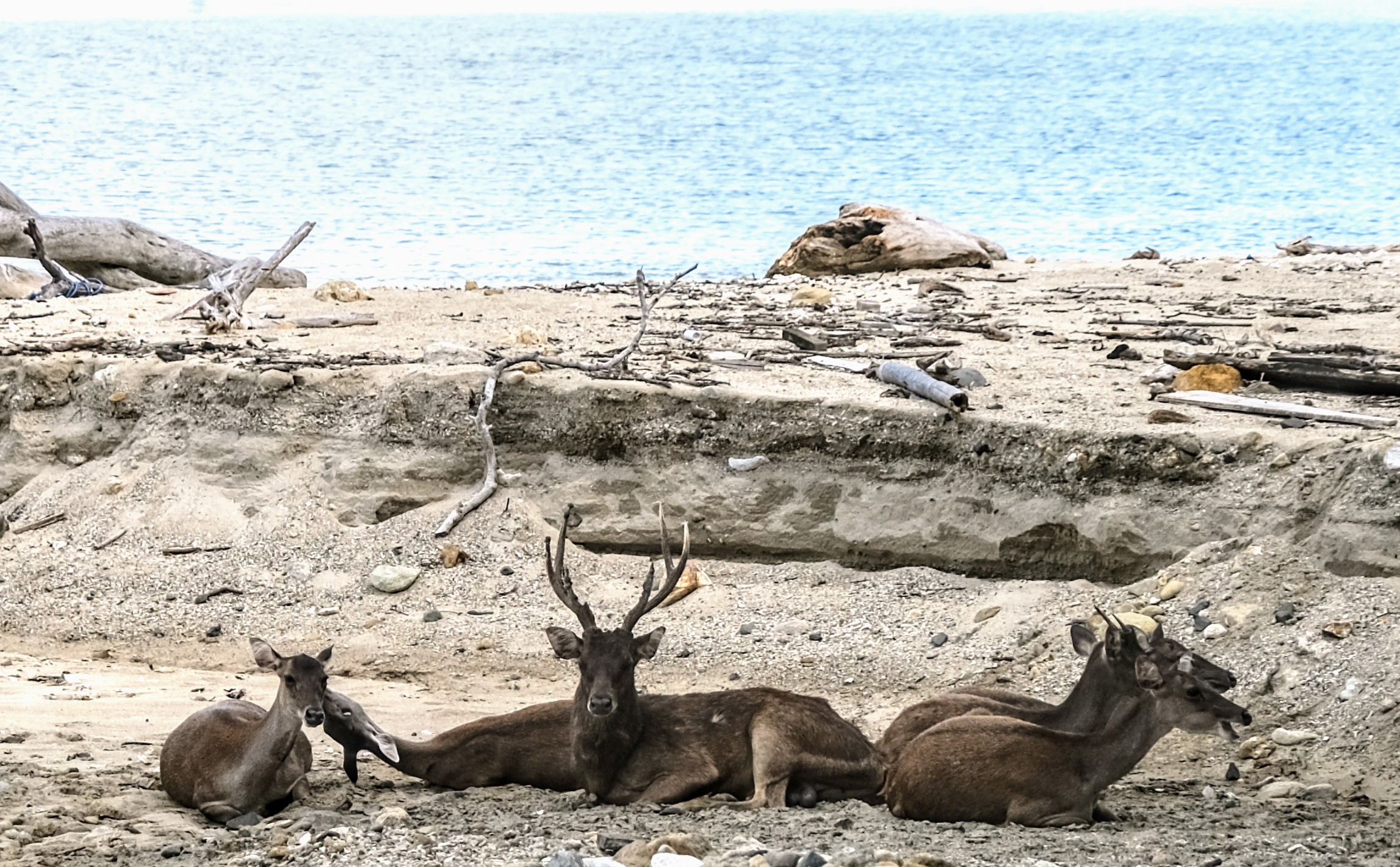
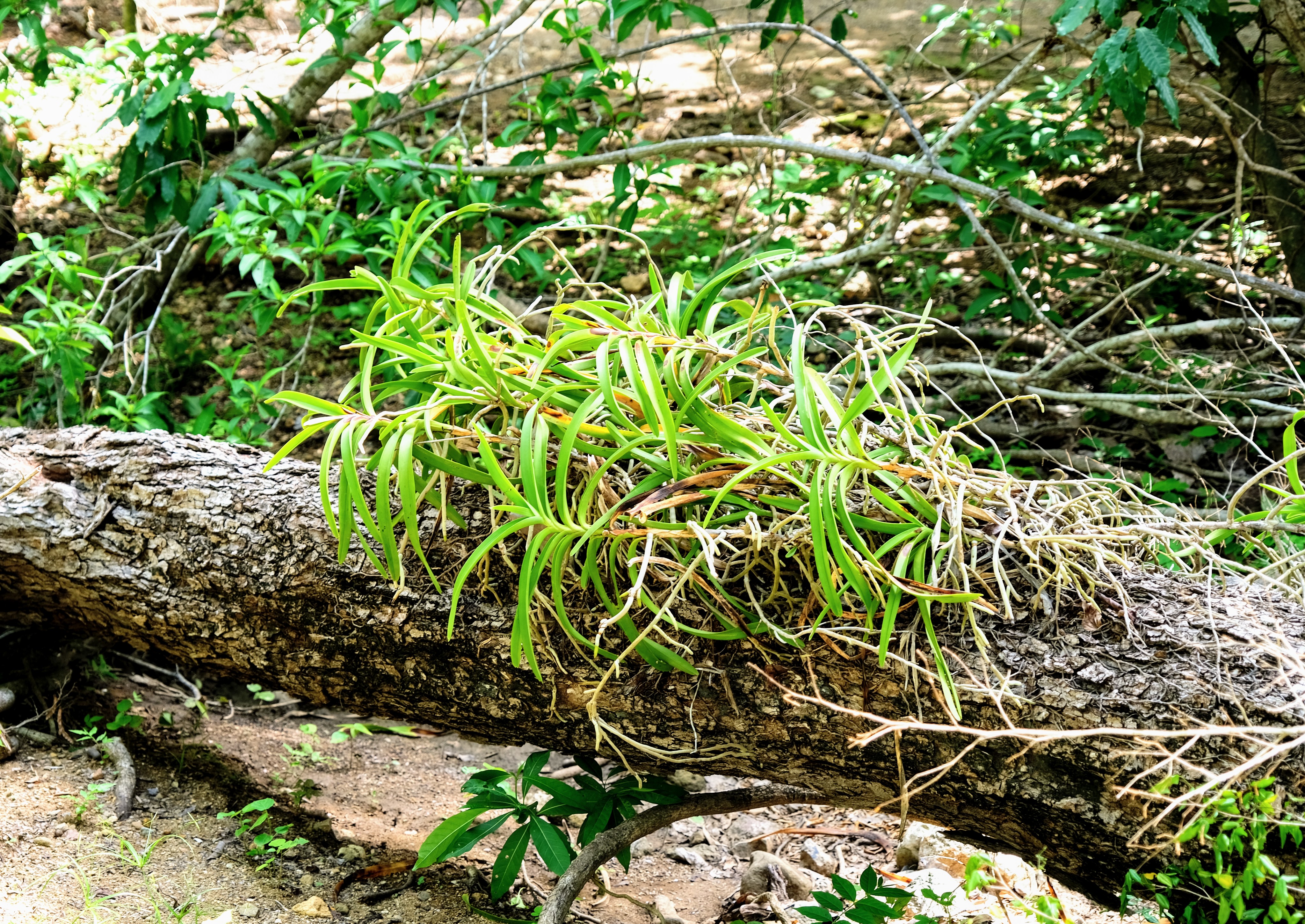
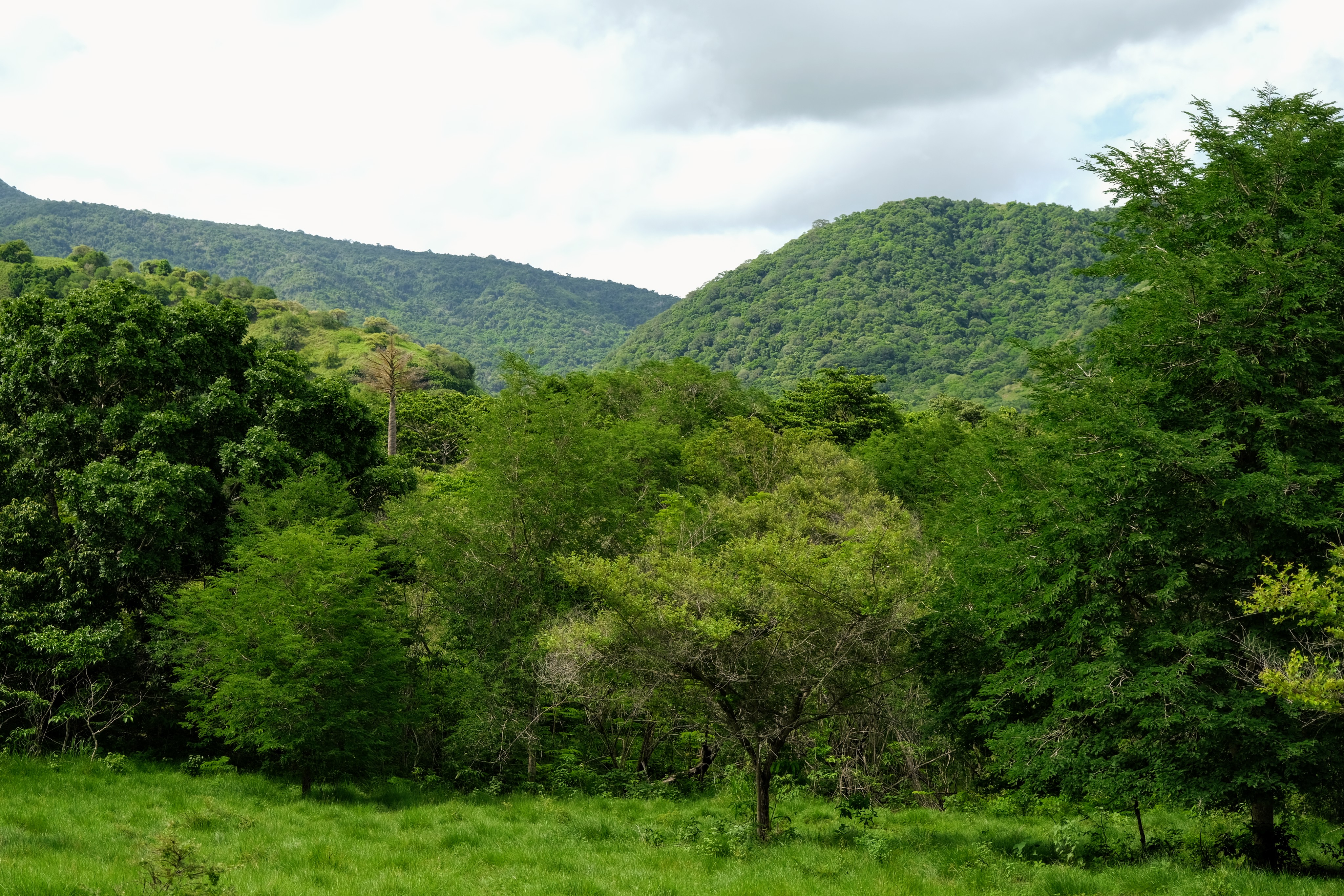
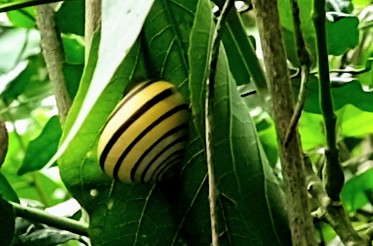
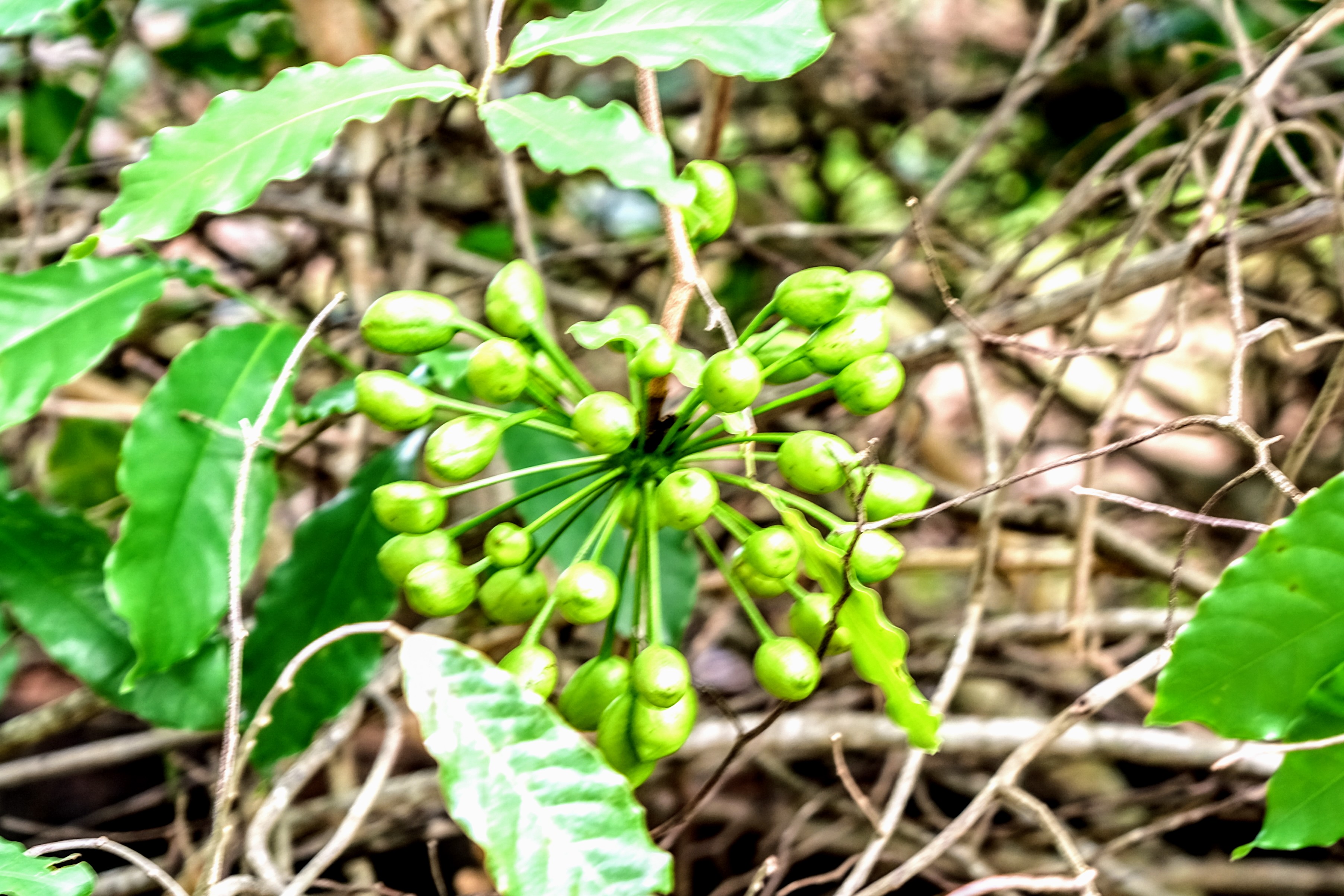
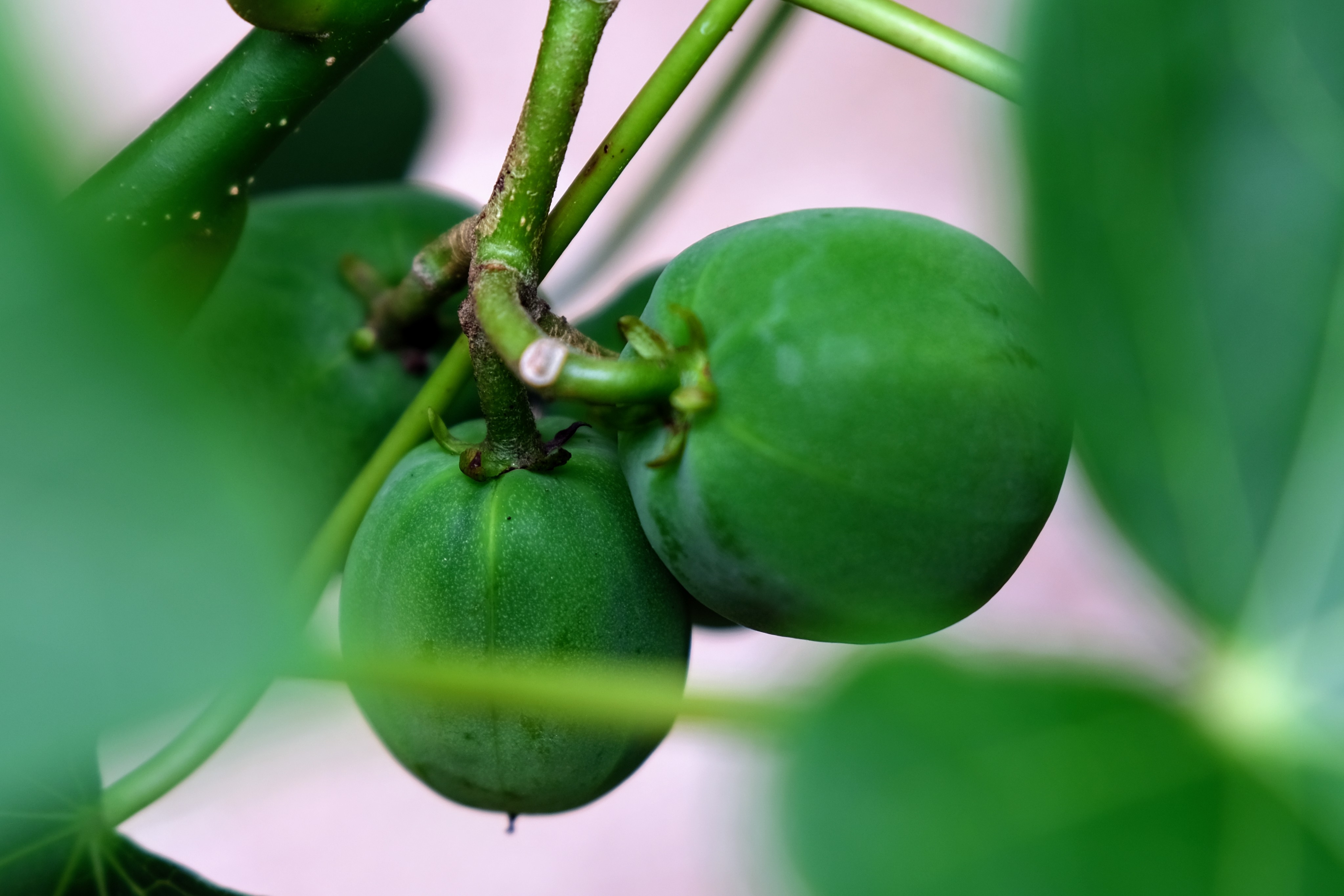
The park is truly a magnificent menagerie of trees, plants, and other wildlife. In addition to the dragons, we came upon a small herd of Timor deer and heard the sounds of wild boar. We were told that special evening tours are offered for visitors interested in seeing some of the 28 varieties of snakes that call Komodo home. And because this is the wet season, the tropical forest was lush and green, with occasional flowers, fruits, berries, and even a tiny snail peeking through the leaves.

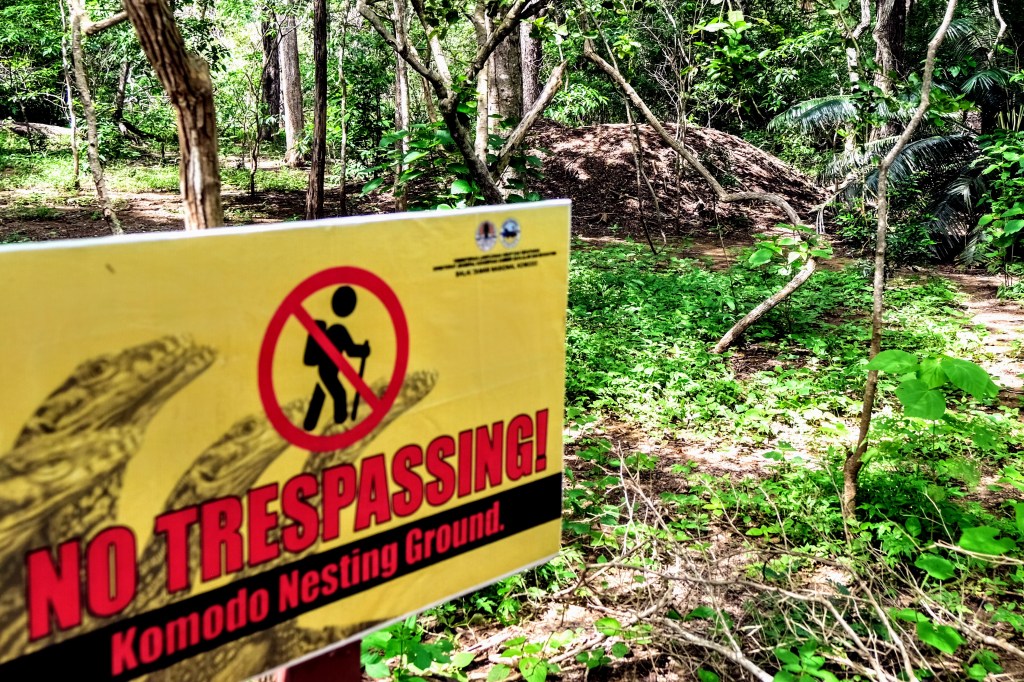
The dragons mate between May and August, and the females lay about 30 eggs that will hatch in March or April. They use three different nest types for their eggs: hillside nests, ground nests, and mound nests that are actually built by guinea fowl. Our park ranger, Abdullah, pointed out an active mound nest, and we were advised to be very quiet around the nest.

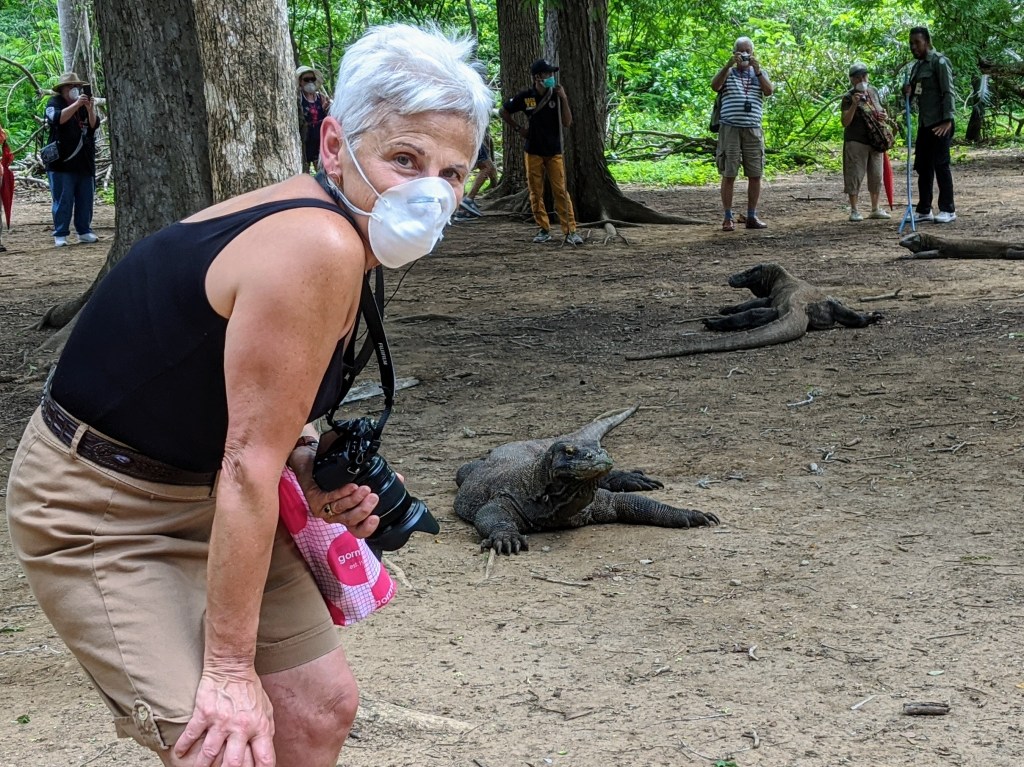
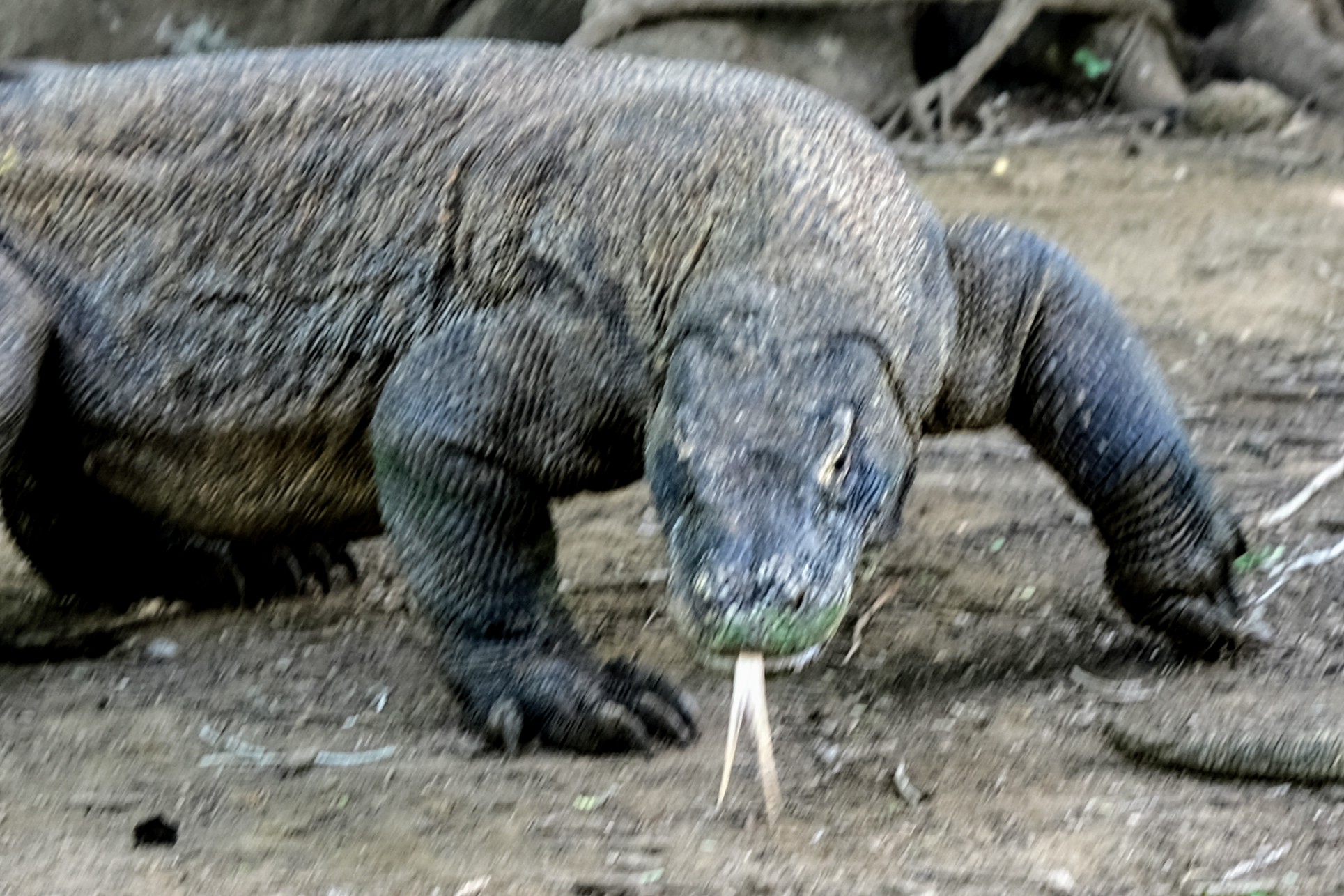
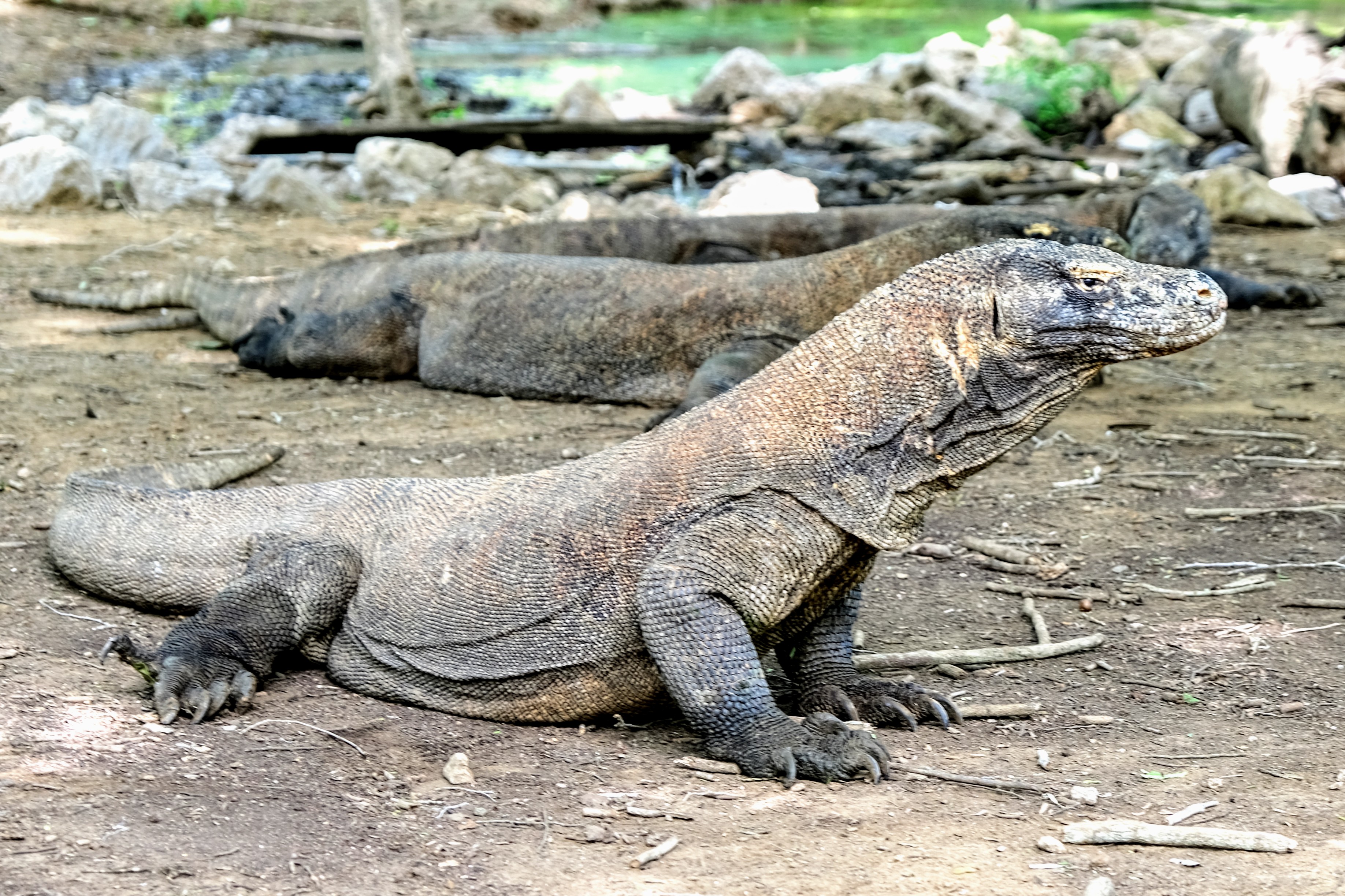
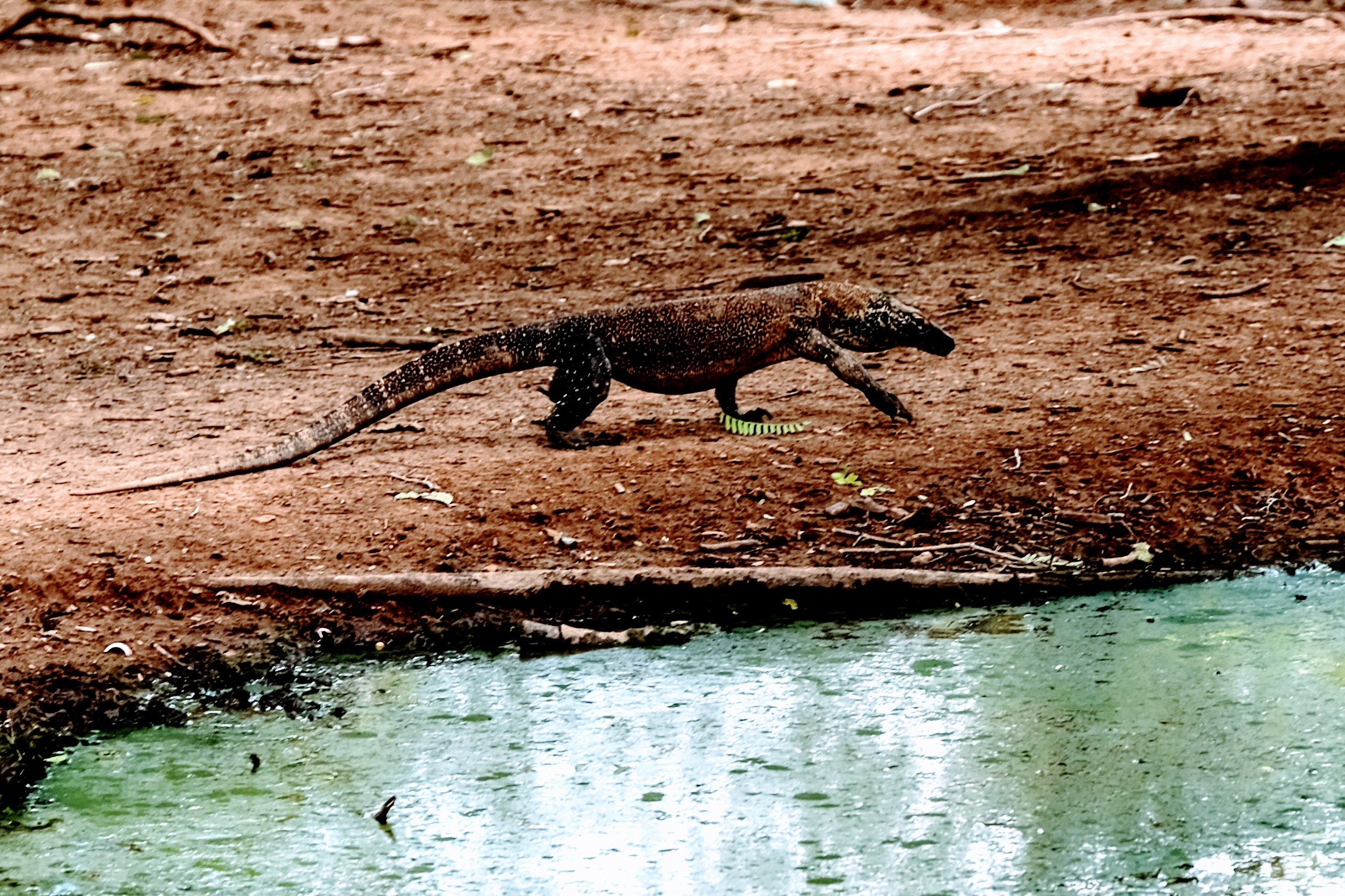
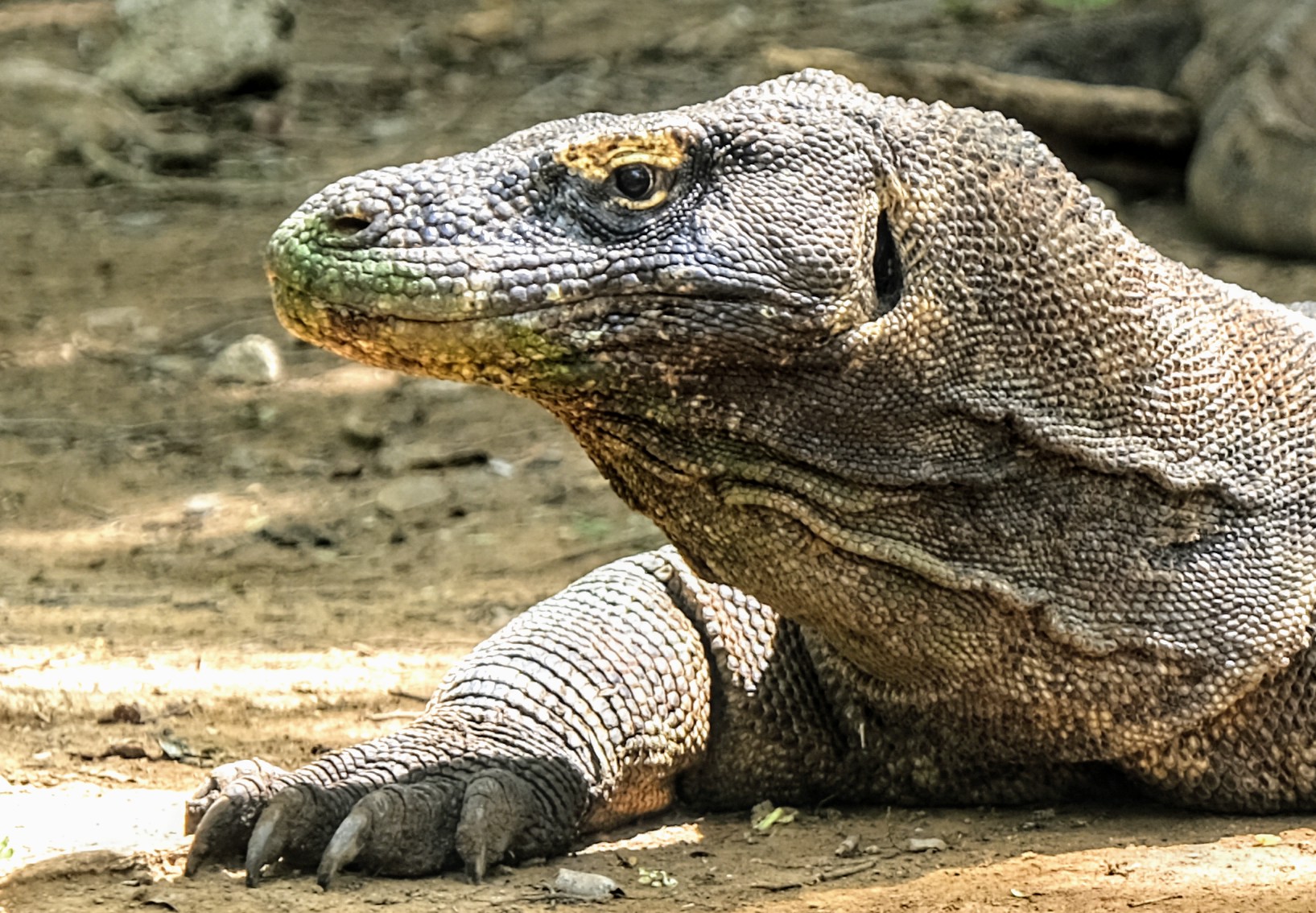
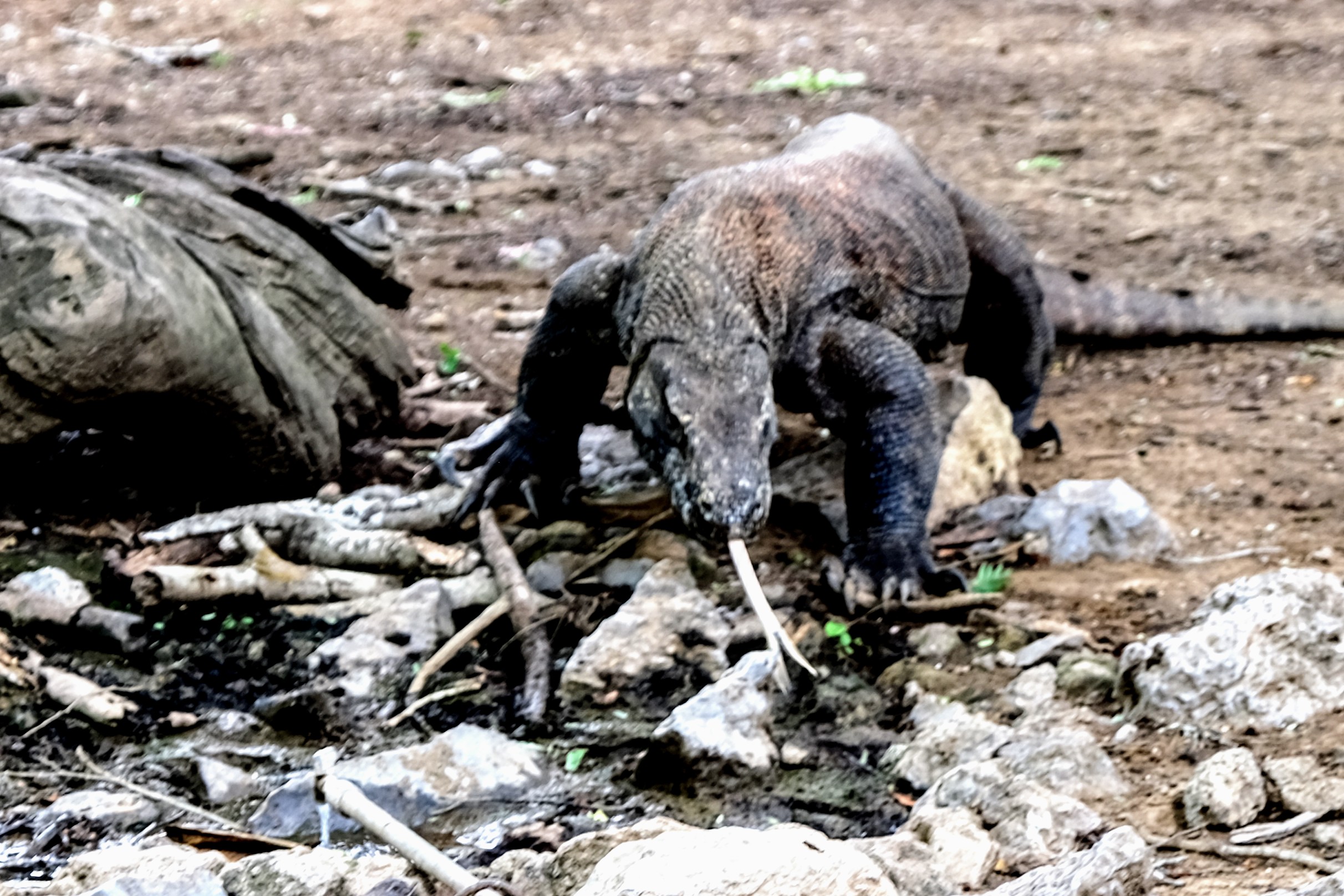
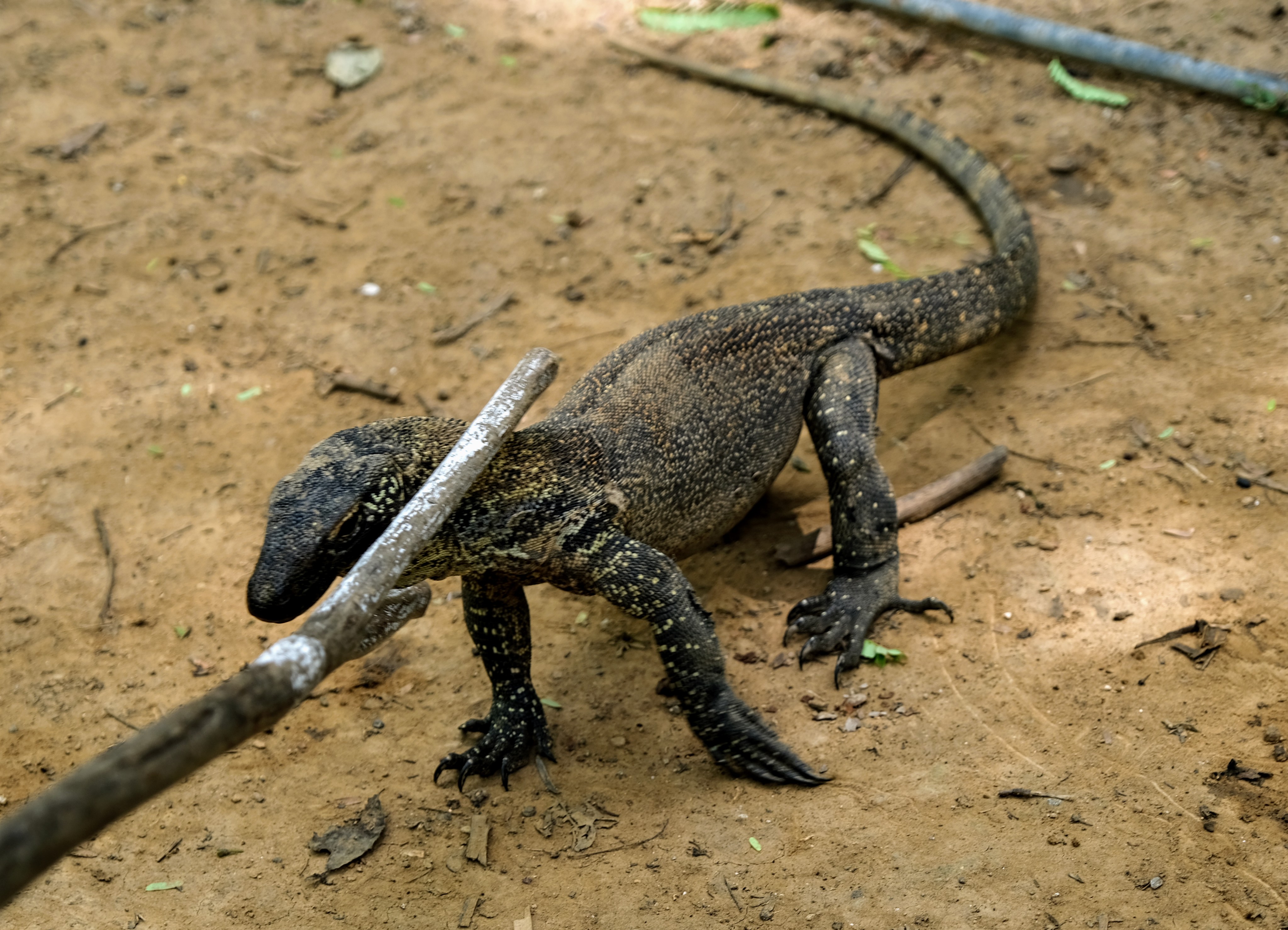
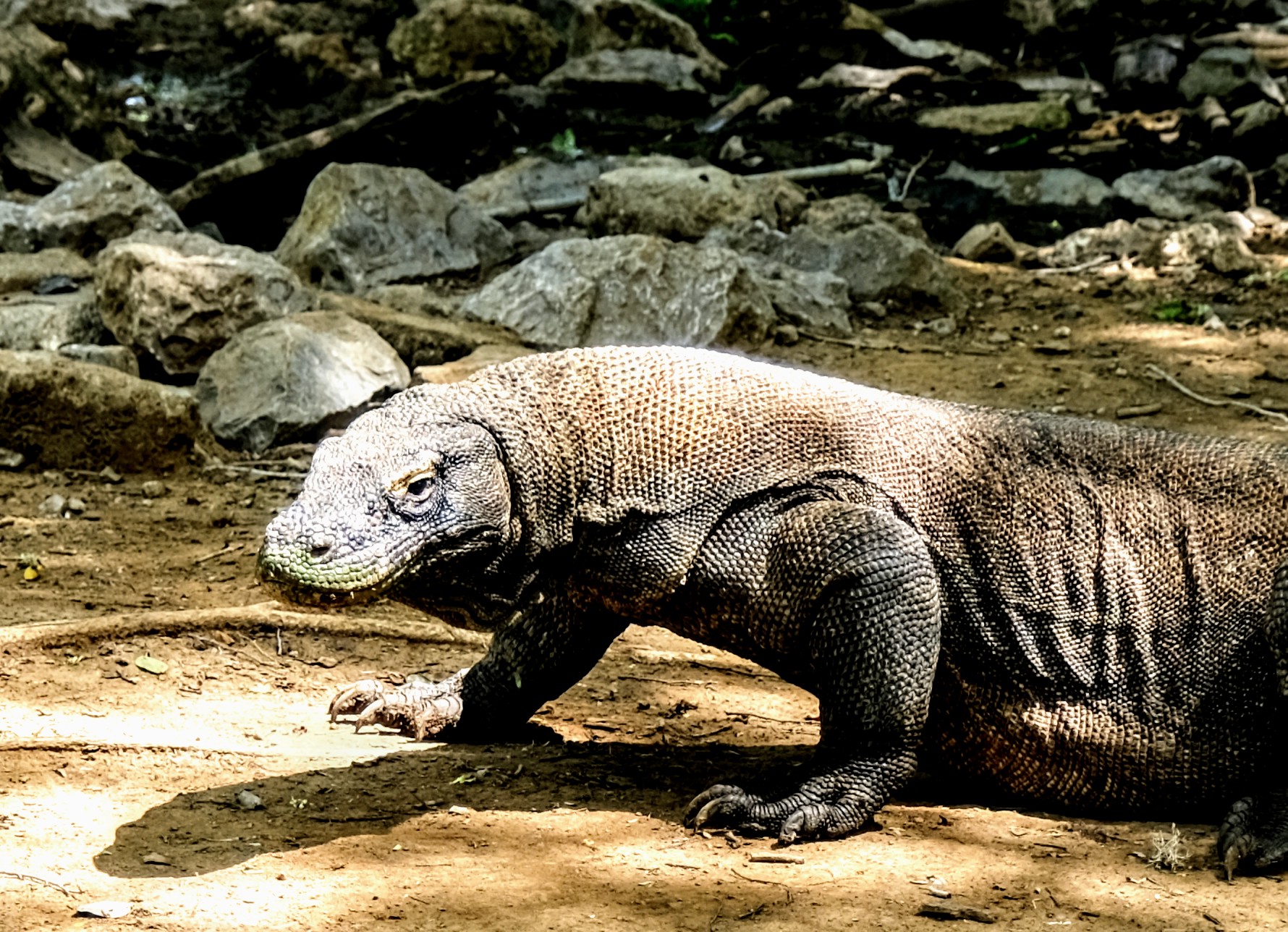
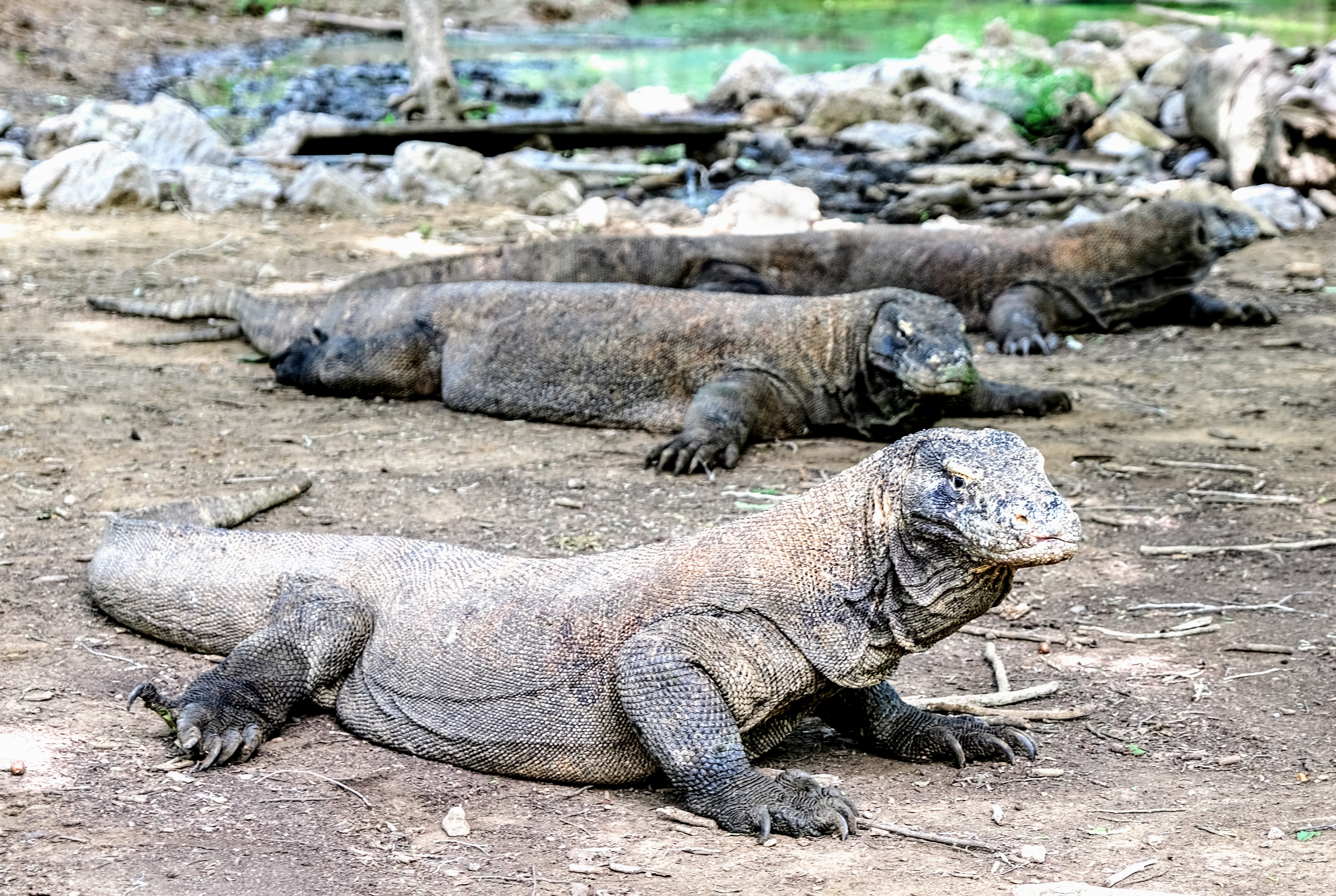
The dragons did not disappoint! As we approached their watering hole, we saw four large males lounging in the shade, and three youngsters running around. The largest lizard in the world, these breathtaking creatures can grow up to 10 feet long and usually weigh about 150 pounds. We were warned not to get too close to the dragons, as they are carnivores and can live off of one feed for a month. After two months of feasting on the incredible Viking Sun food, one of us could probably sustain an average dragon for longer than that! When one of the little guys got a bit too curious about Denise’s shoes, Abdullah used the forked end of his stick to re-direct him! We could show you literally hundreds of pictures, but here are a few of our favorites.

These are truly magnificent creatures, and we hope that the park remains open to visitors for many years to come. There are periodic discussions about restricting visitation to the park for a whole host of reasons, so it’s important for visitors to follow the rules…even if it means wearing a mask in the sweltering heat!

Two Days at the Top End

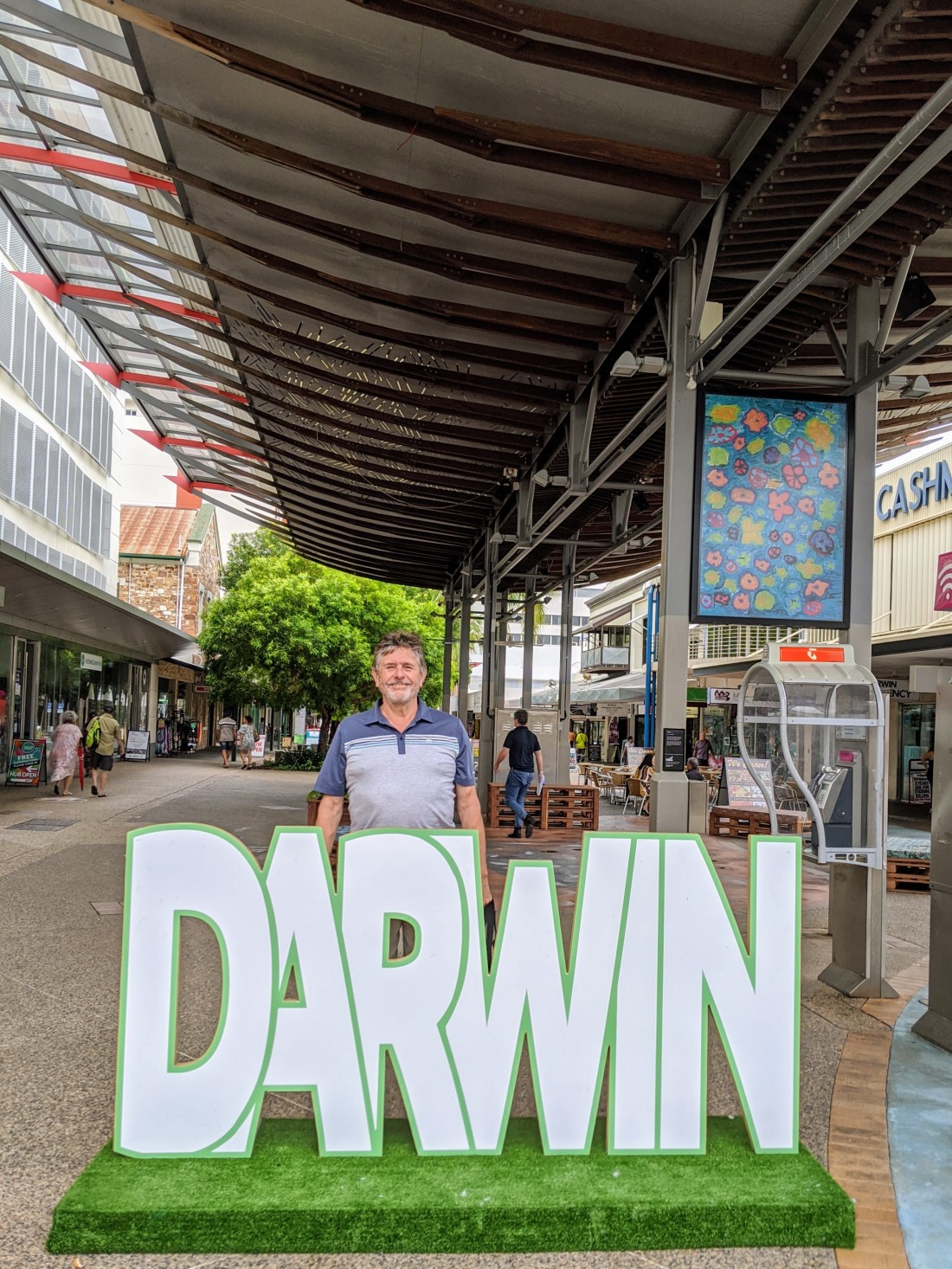
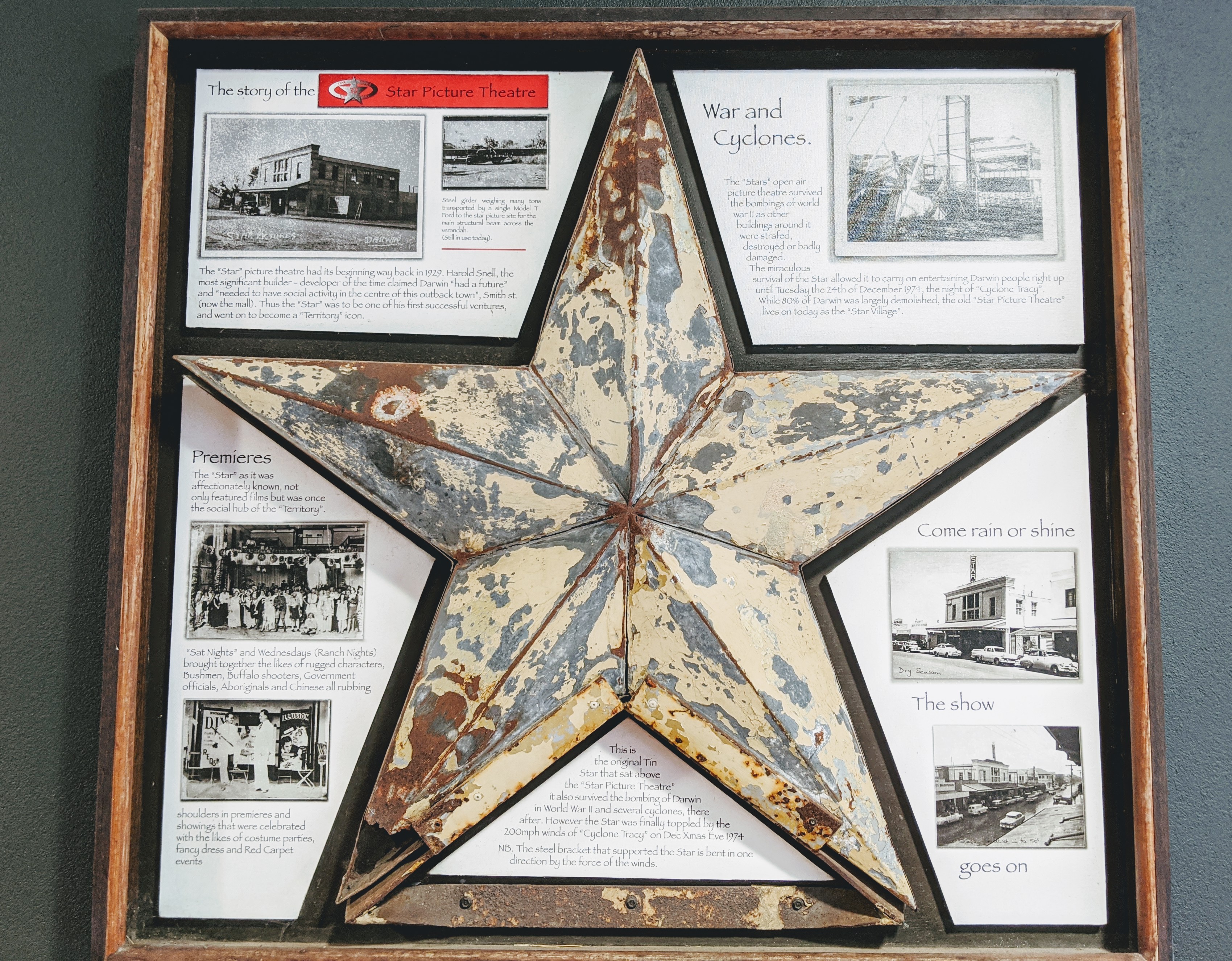
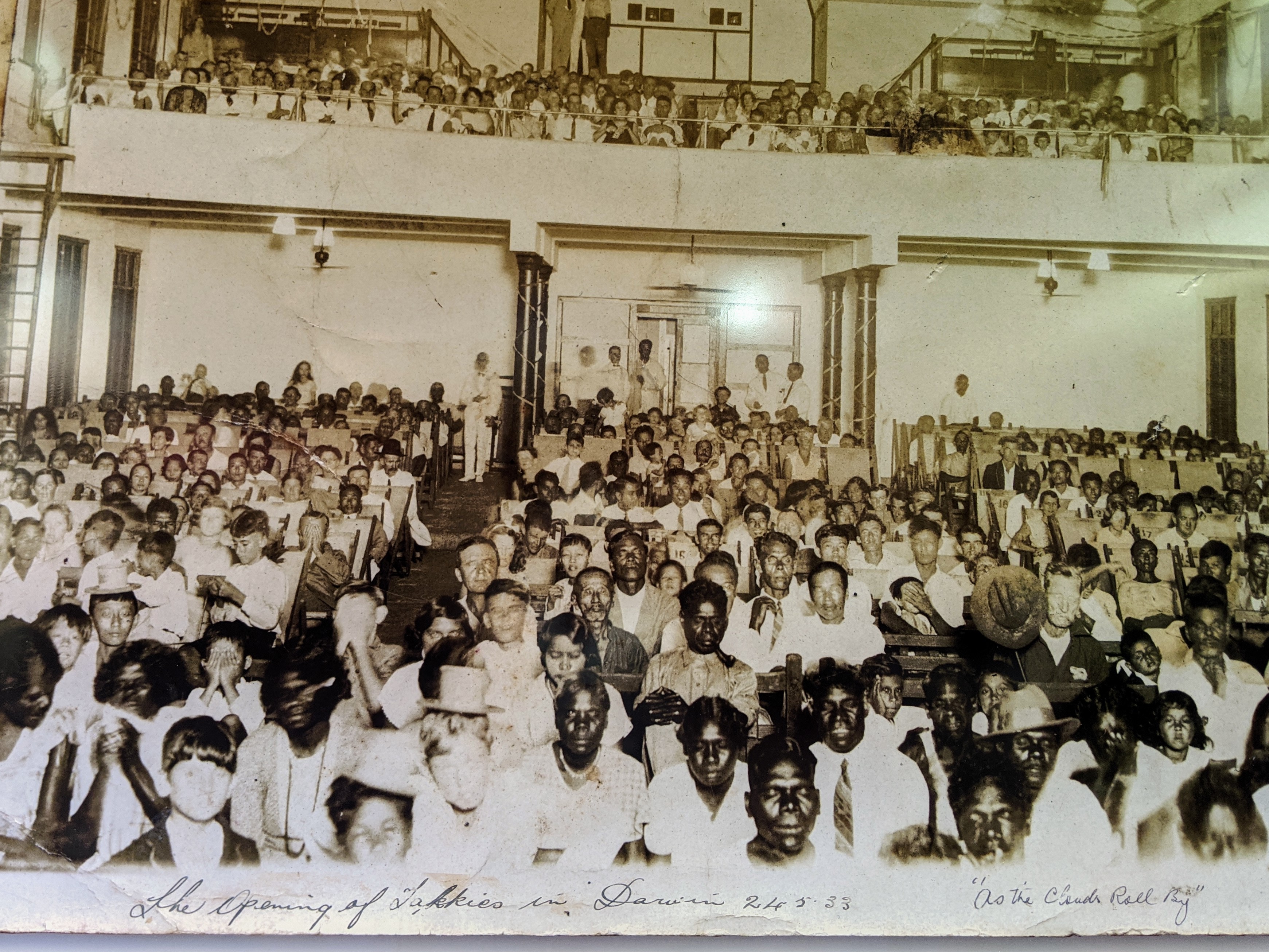
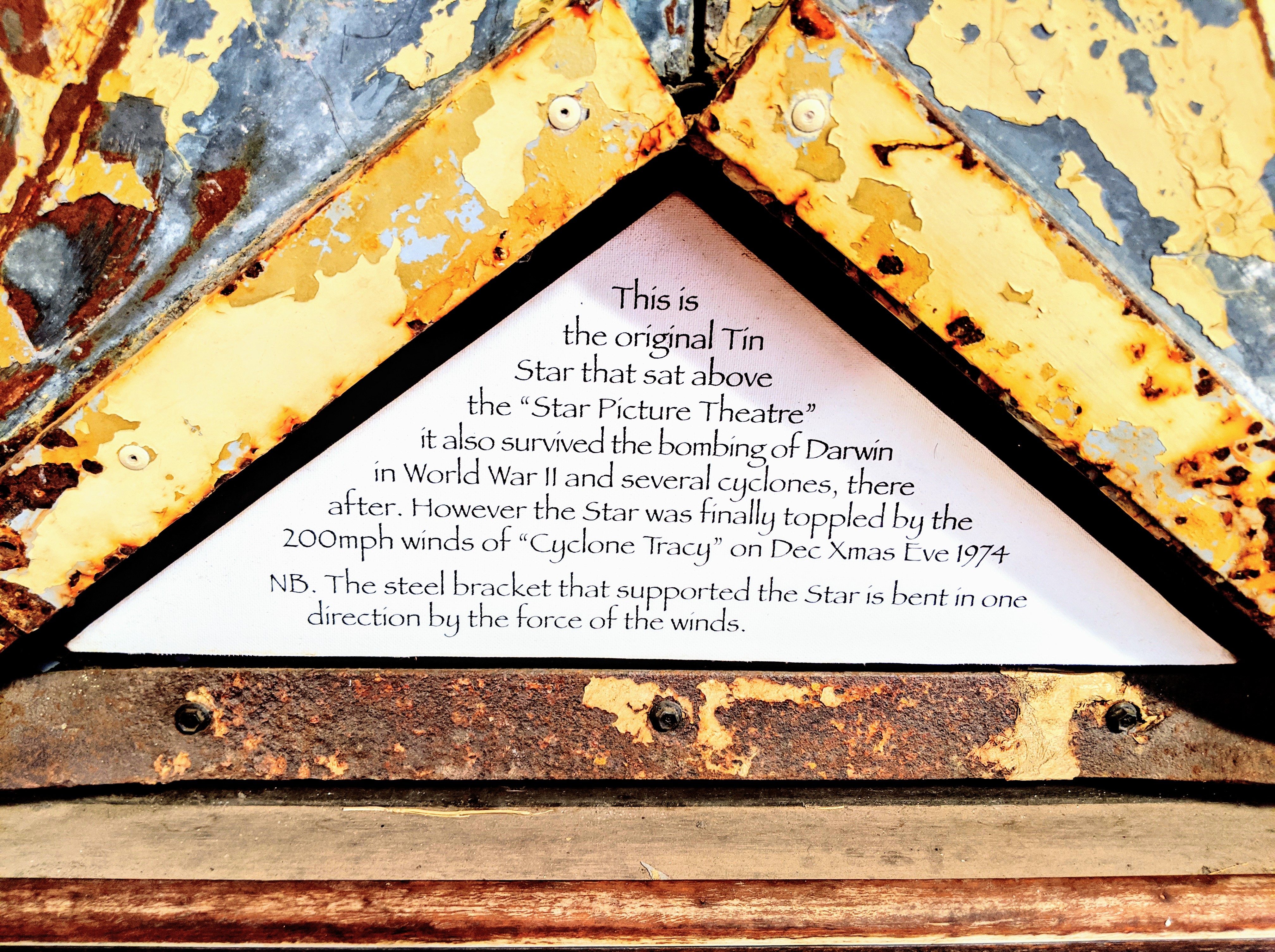
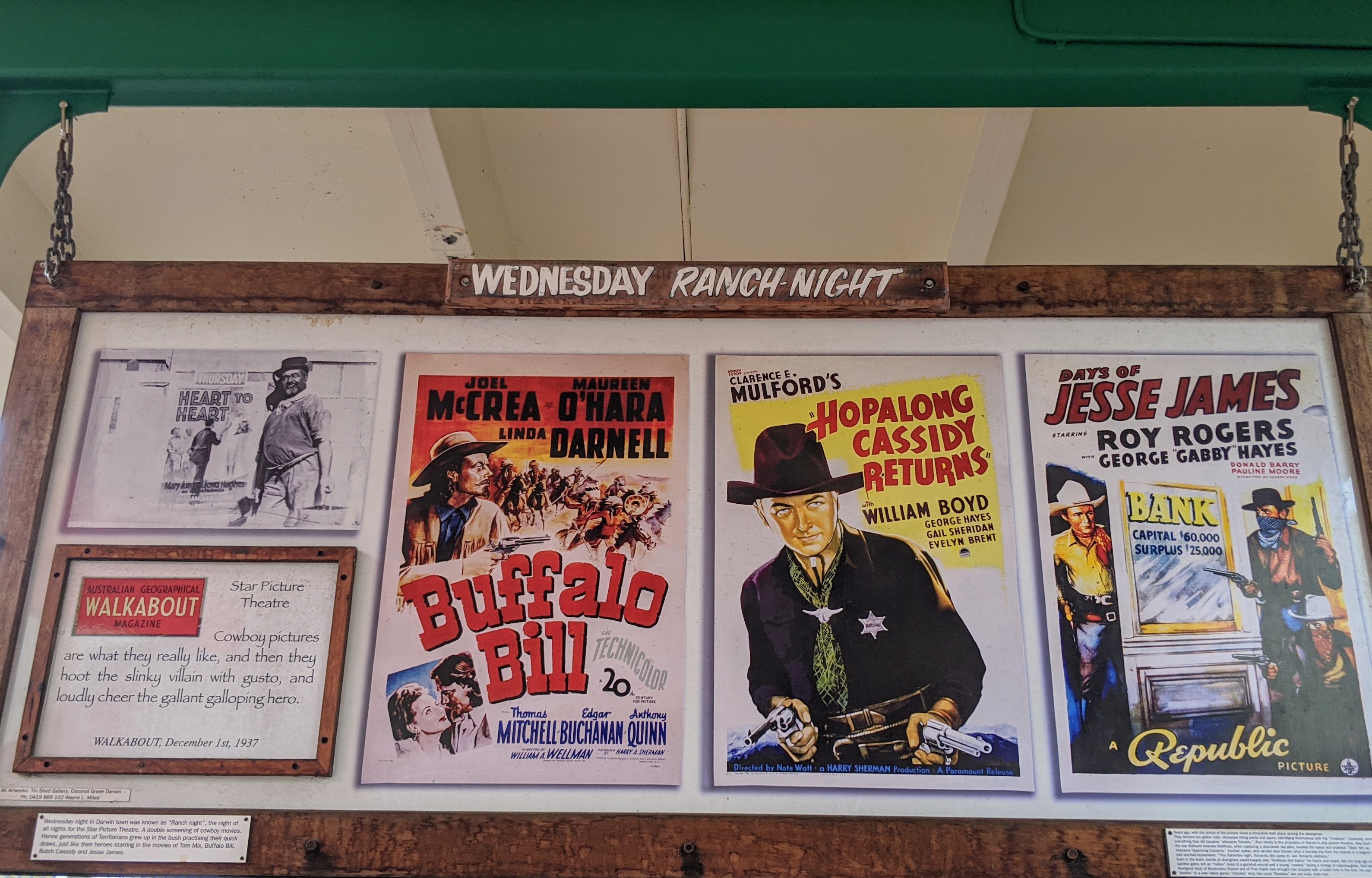
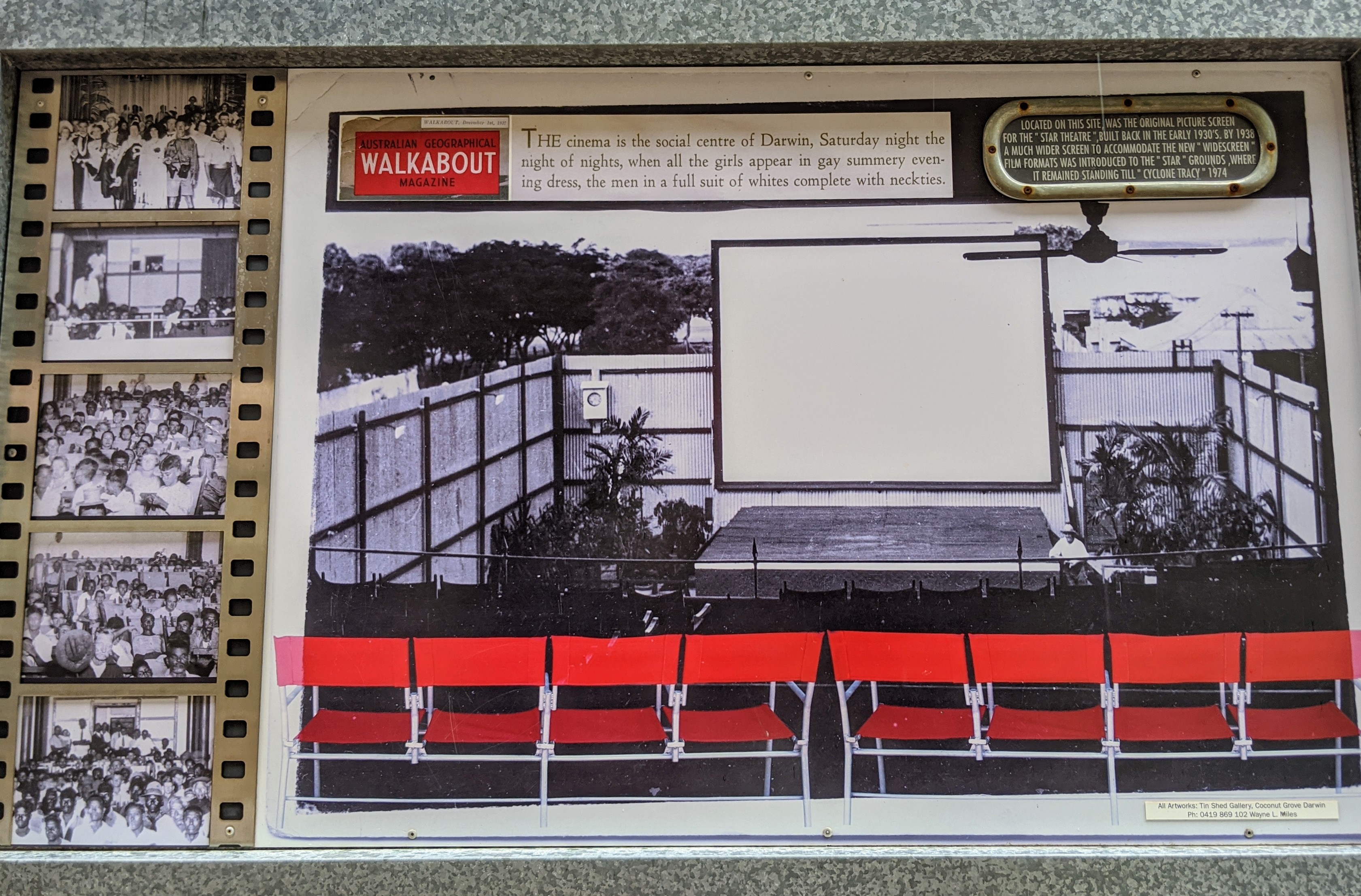
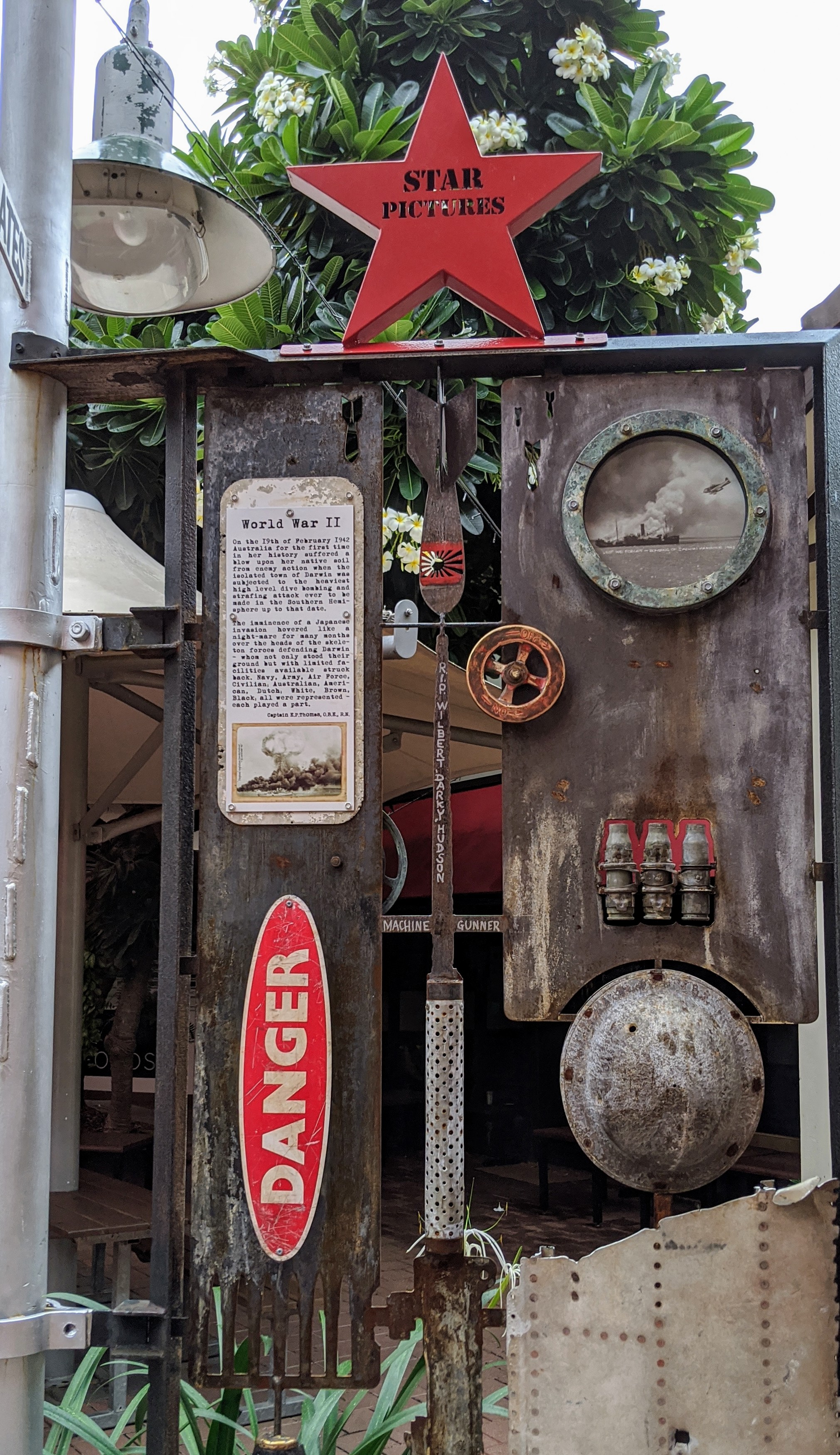
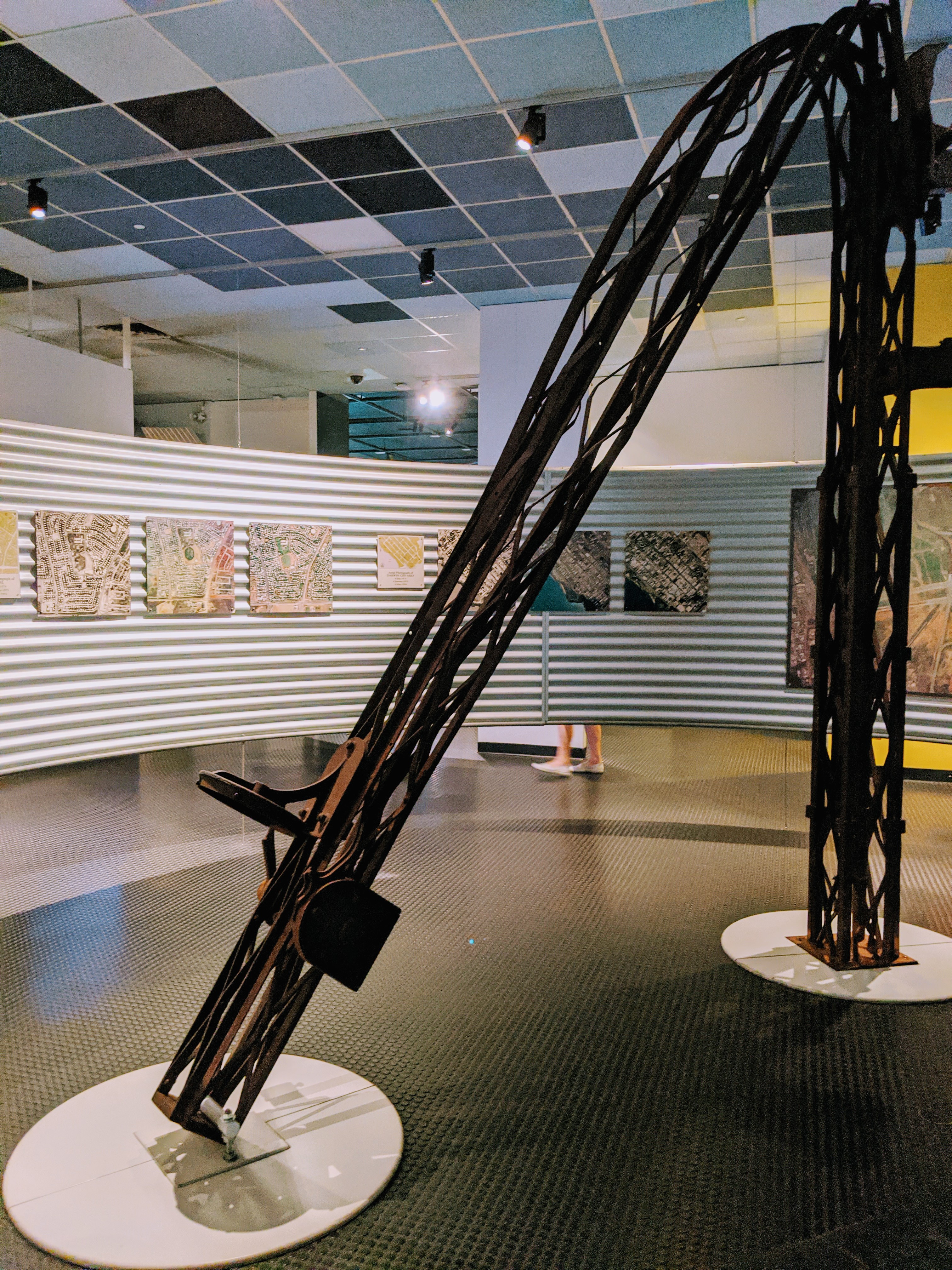
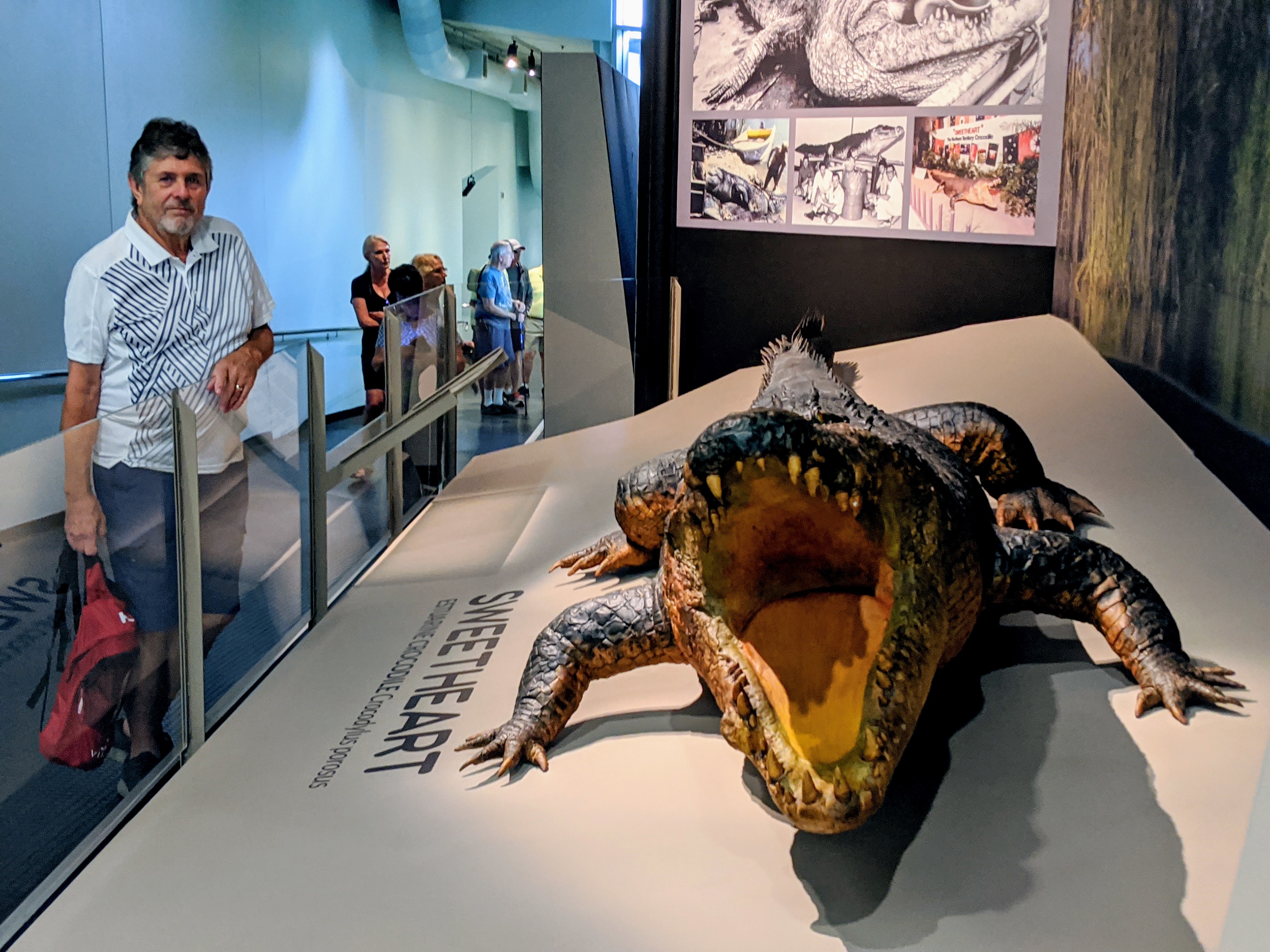
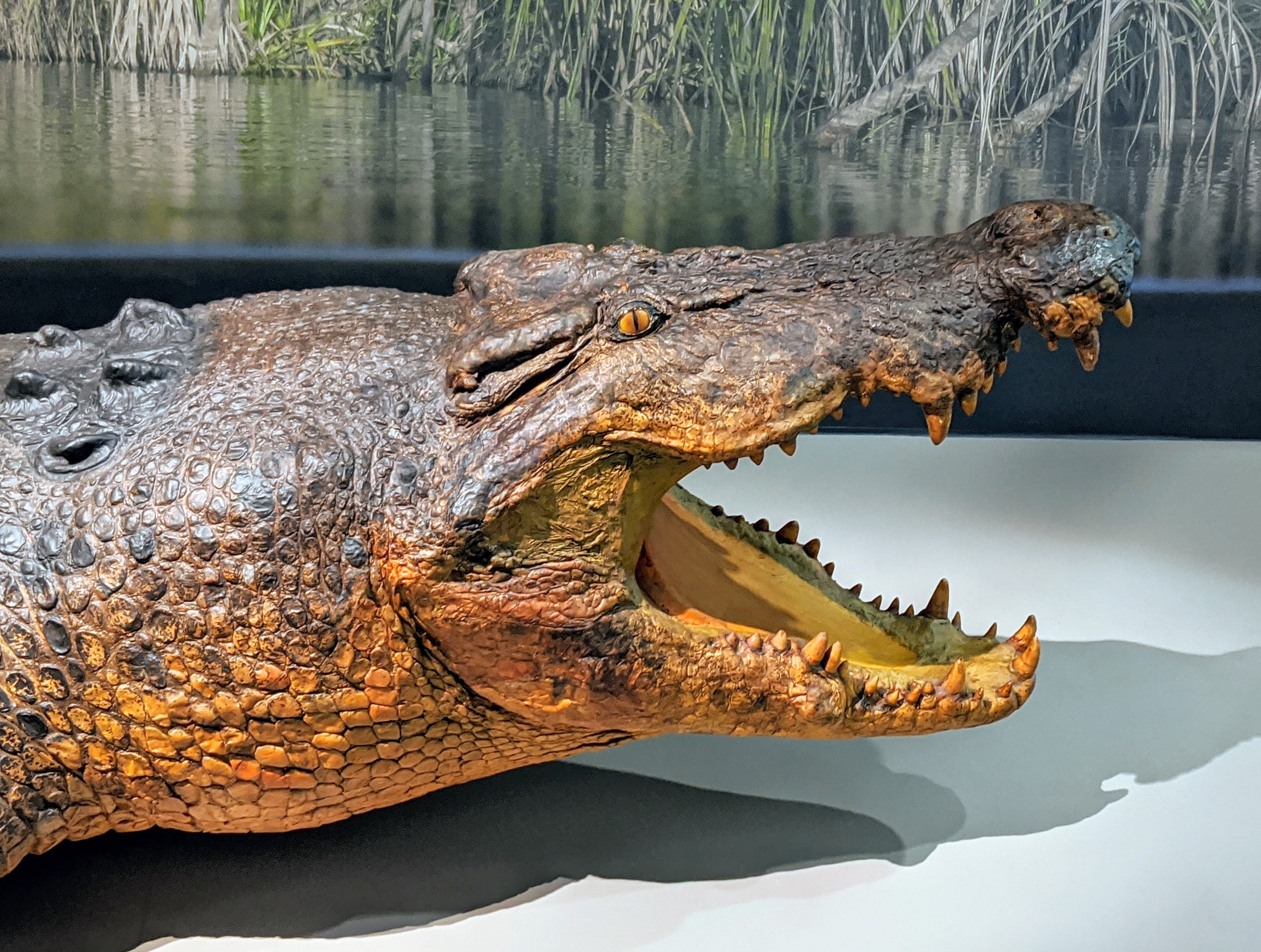
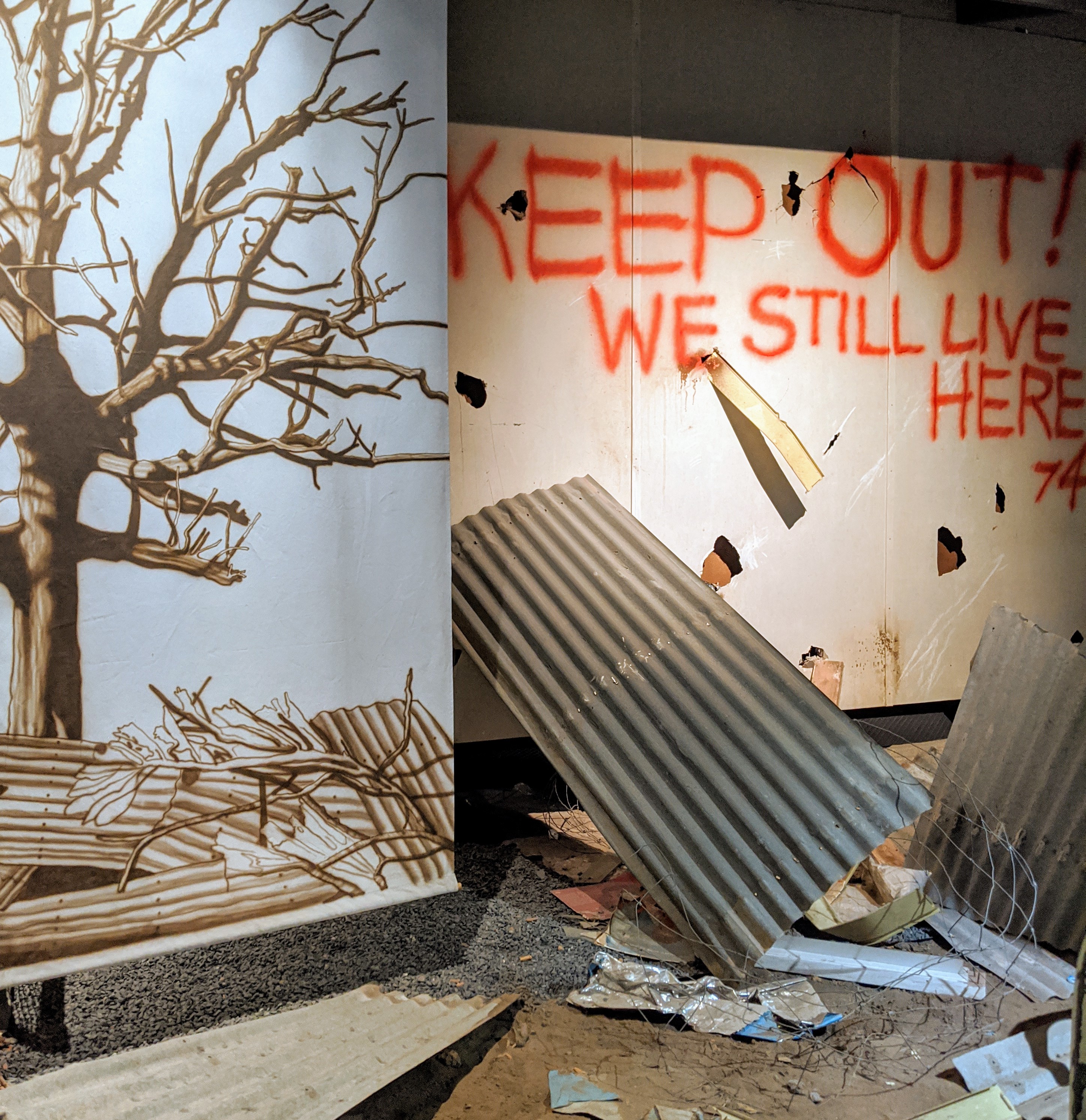
Darwin, Australia is the capital of Australia’s Northern Territory (also called the Top End) and a former frontier outpost. It’s also a gateway to the massive Kakadu National Parks well as to South East Asia. Its popular waterfront area has several beaches and green areas like Bicentennial Park, but we were cautioned to stay out of the water due to the presence of crocodiles! This laid-back city was named after Charles Darwin, who had sailed into the area on an expedition in 1838. Darwin today is a lively modern city, with practically everything built since 1974. In the early morning hours of Christmas Day in that year, Cyclone Tracy hit Darwin killing 71 people and leveling 80% of the city. A chilling exhibit at the Museum and Art Gallery of the Northern Territory (MAGNT) depicts the cyclone and its devastating impact (see below). This was actually the FOURTH time Darwinians demonstrated their resilience by re-building their city…twice before due to cyclones, and once as the target of the Japanese in World War II. Led by Naval Commander Mitsuo Fuchida, who also led the raid on Pearl Harbor ten weeks earlier, the attacks on Darwin killed or wounded hundreds of people, leveled most of the city’s prominent buildings, sunk over 20 ships, and destroyed 23 Allied aircraft. Remnants of this destruction are seen all around town, where beloved landmarks like the Star Theater and Hotel Victoria are fondly remembered.

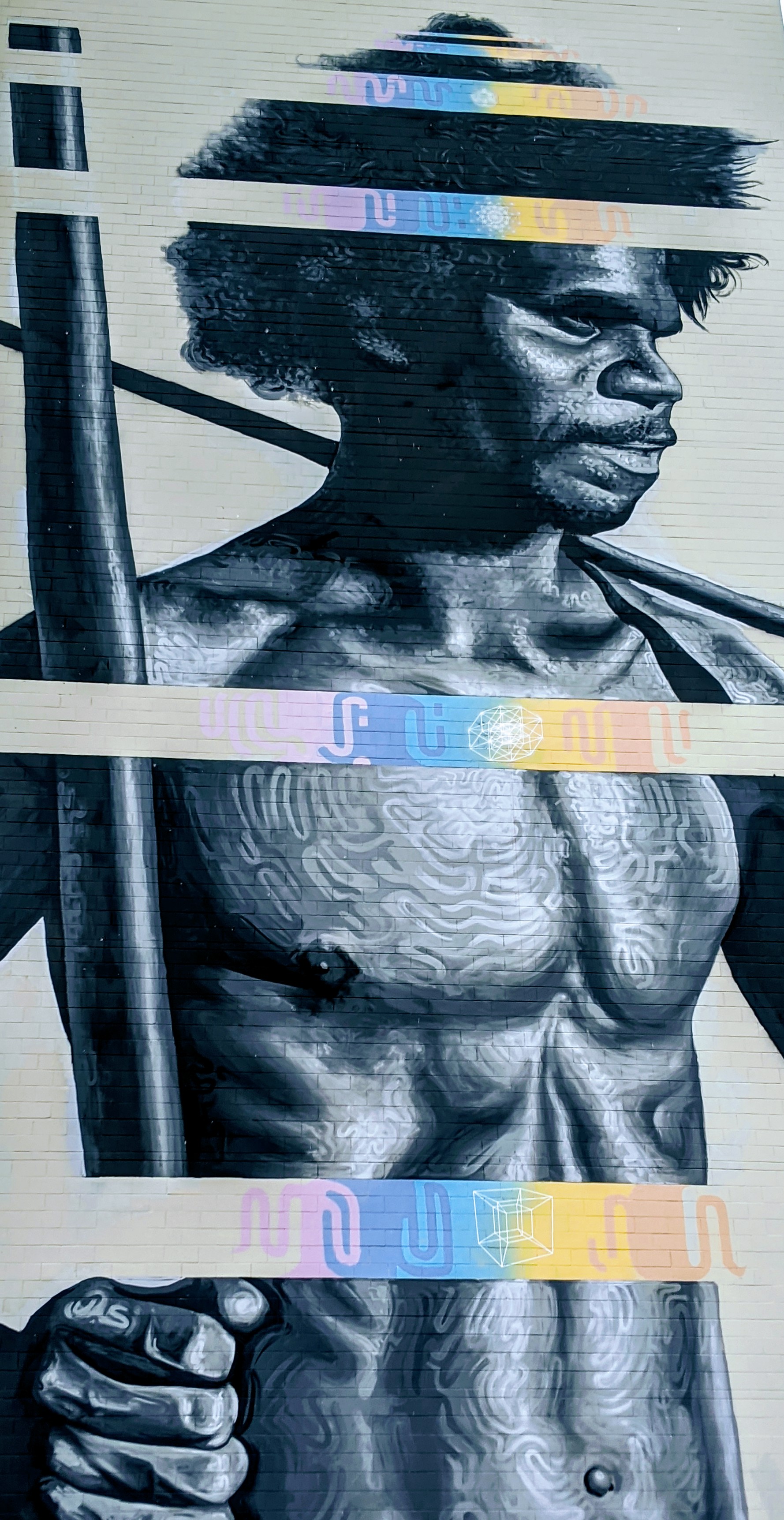
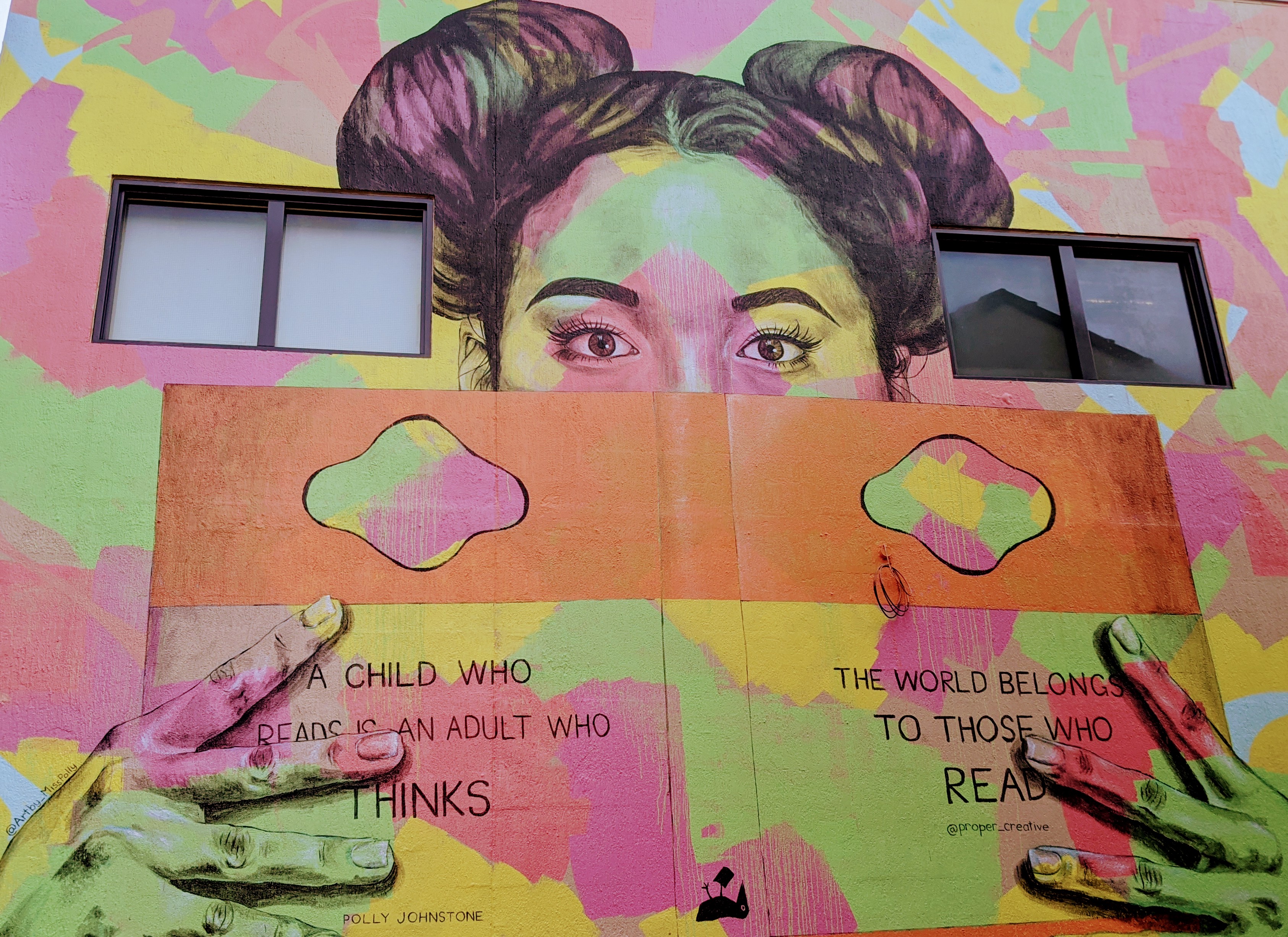
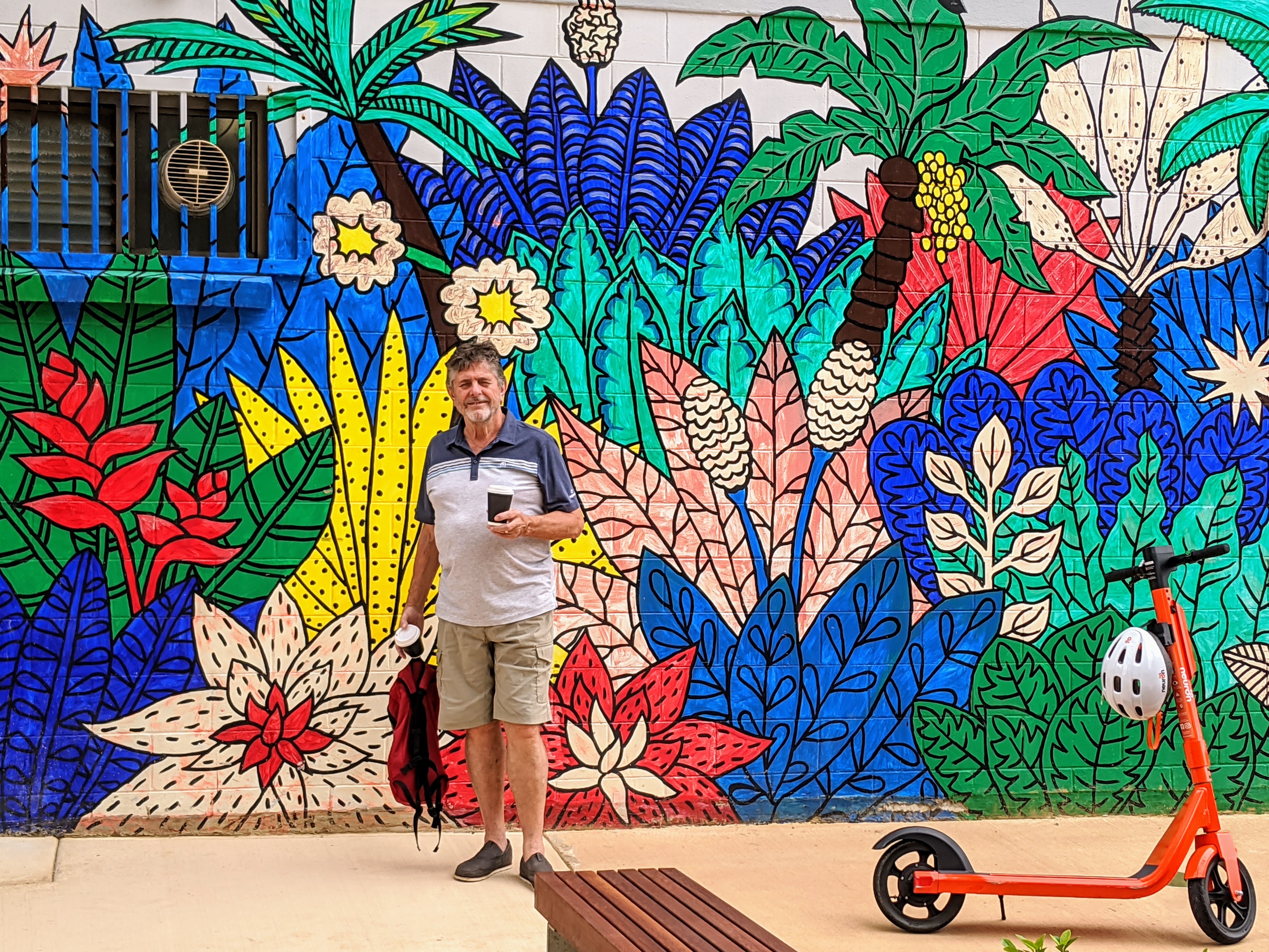
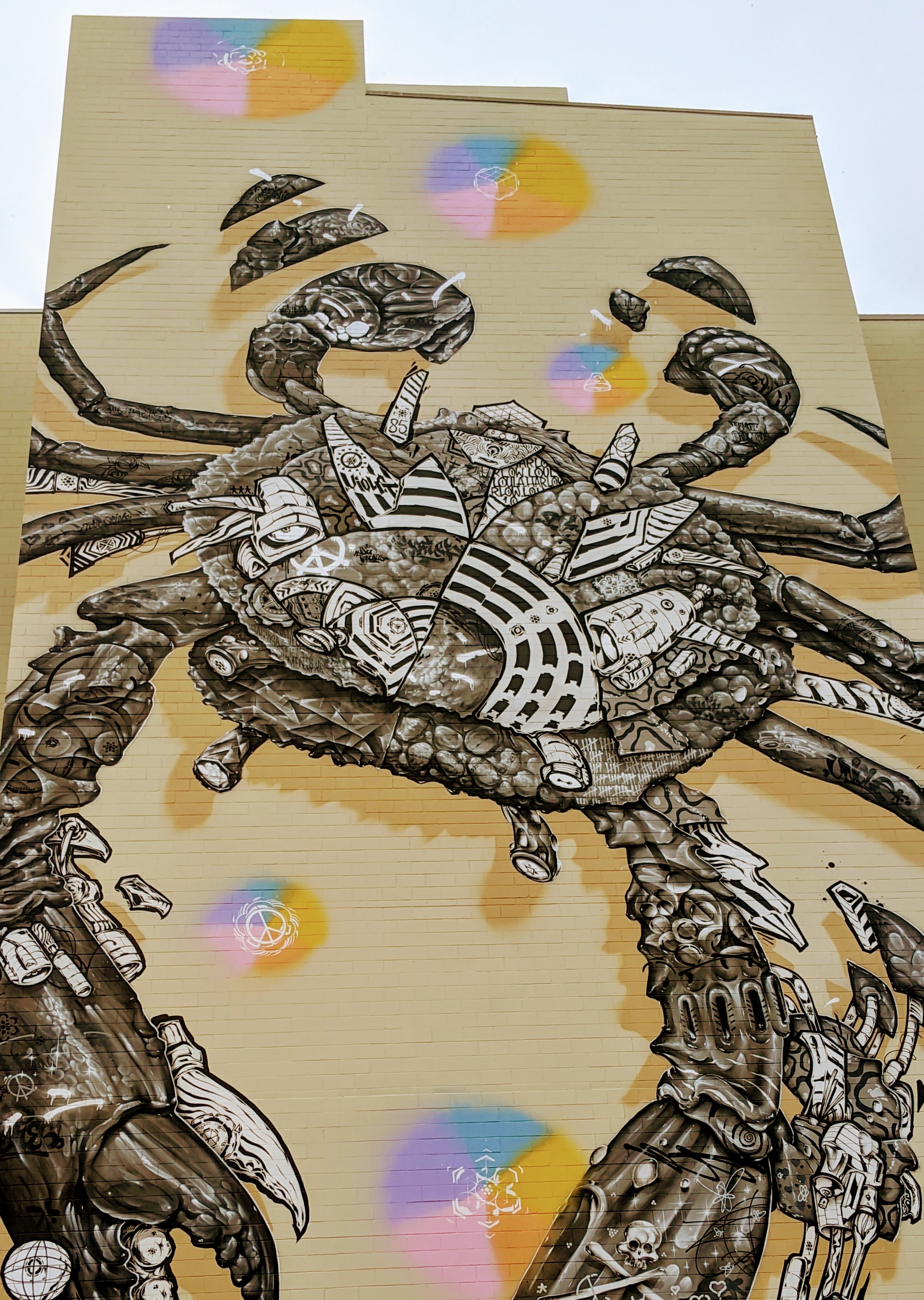
Darwin is lighting up the city with a new program CITYLIFE Platform. According to the city’s website, “Public art enhances our natural and built environments, it builds upon our cultural heritage, diversity, sense of identity and provides opportunities for our artists to contribute to the development of the city’s cultural vitality. Our strategic approach to the commissioning and delivery of contemporary public art, recognises the need to build local capacity and skills, provide opportunities for diversity in the program and support a model that encourages community debate around the role of public art. This artistic program is being trialed over three years with the intention of transforming selected outdoor public spaces into outdoor galleries. CITYLIFE Platform showcases local artists and their talent in addition to encouraging dialogue in the community.” We think our readers will agree that this intentional approach to public art is adding a great deal to the city! Here’s just a smattering of the beautiful artwork that is popping up all around the central business district.

With only two days to explore this wonderful city, we decided to spend some time at MAGNT, the Museum and Art Gallery of the Northern Territory. This excellent collection of art and artifacts reflects the region, its diverse culture, rich history, abundant marine life, and its indigenous people. It utilizes a variety of mediums to depict significant chapters in Darwin’s history and to showcase the region’s beautiful Aboriginal art from nearby islands and the inner desert. On the waterfront, the Indo-Pacific Marine Exhibition recreates various underwater ecosystems. It would take multiple visits to see everything, but here are a few glimpses of exhibits we found to be of particular interest.

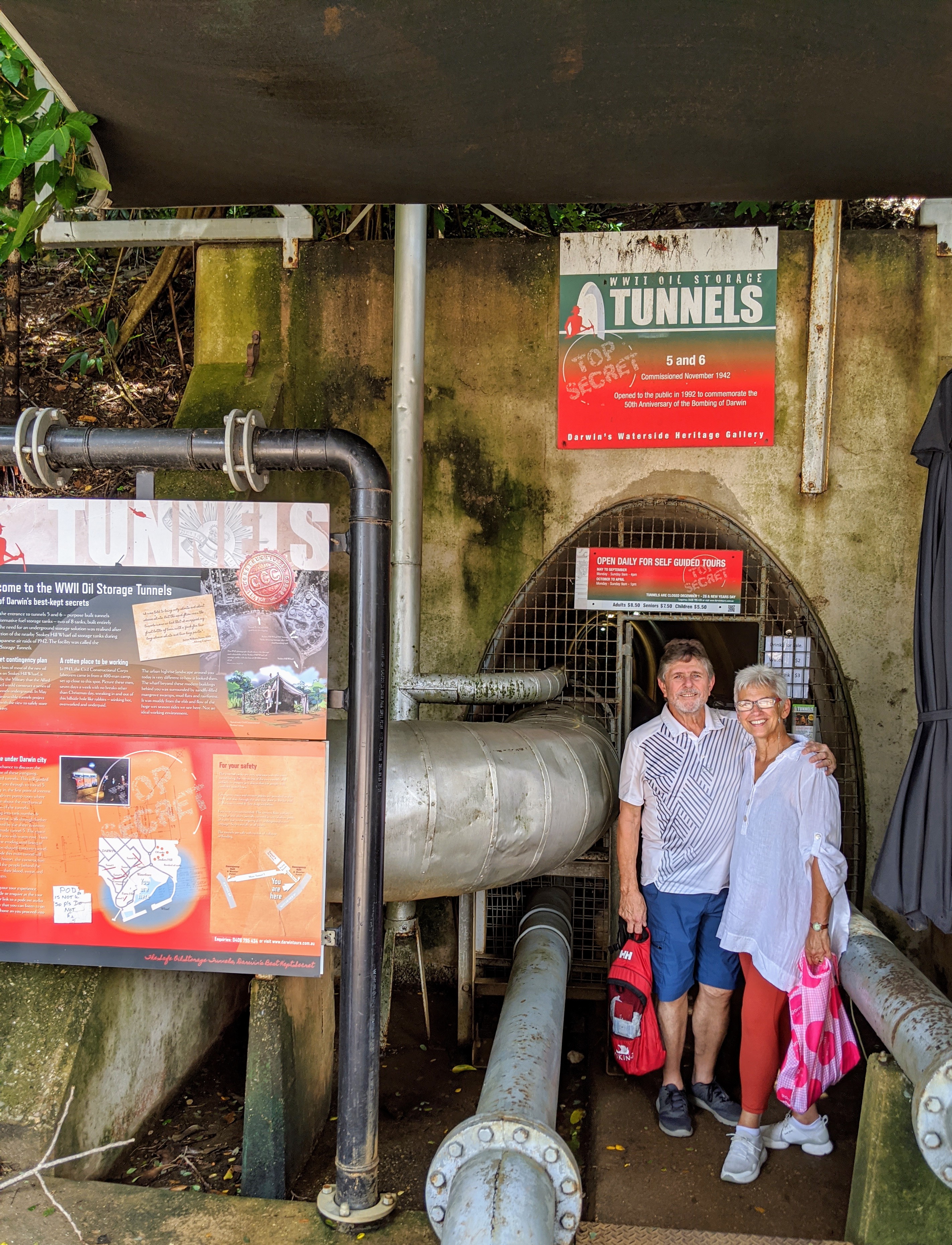
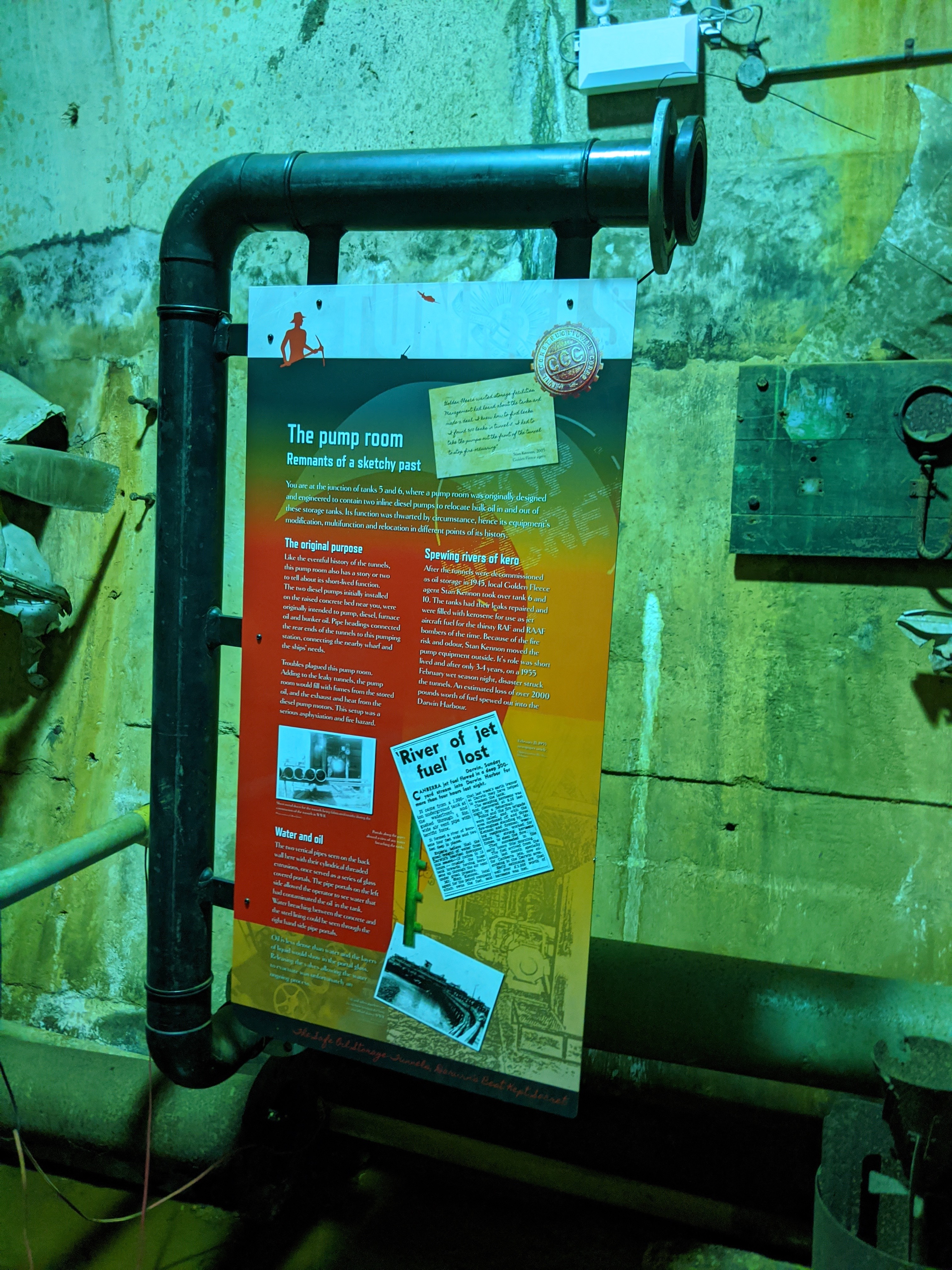
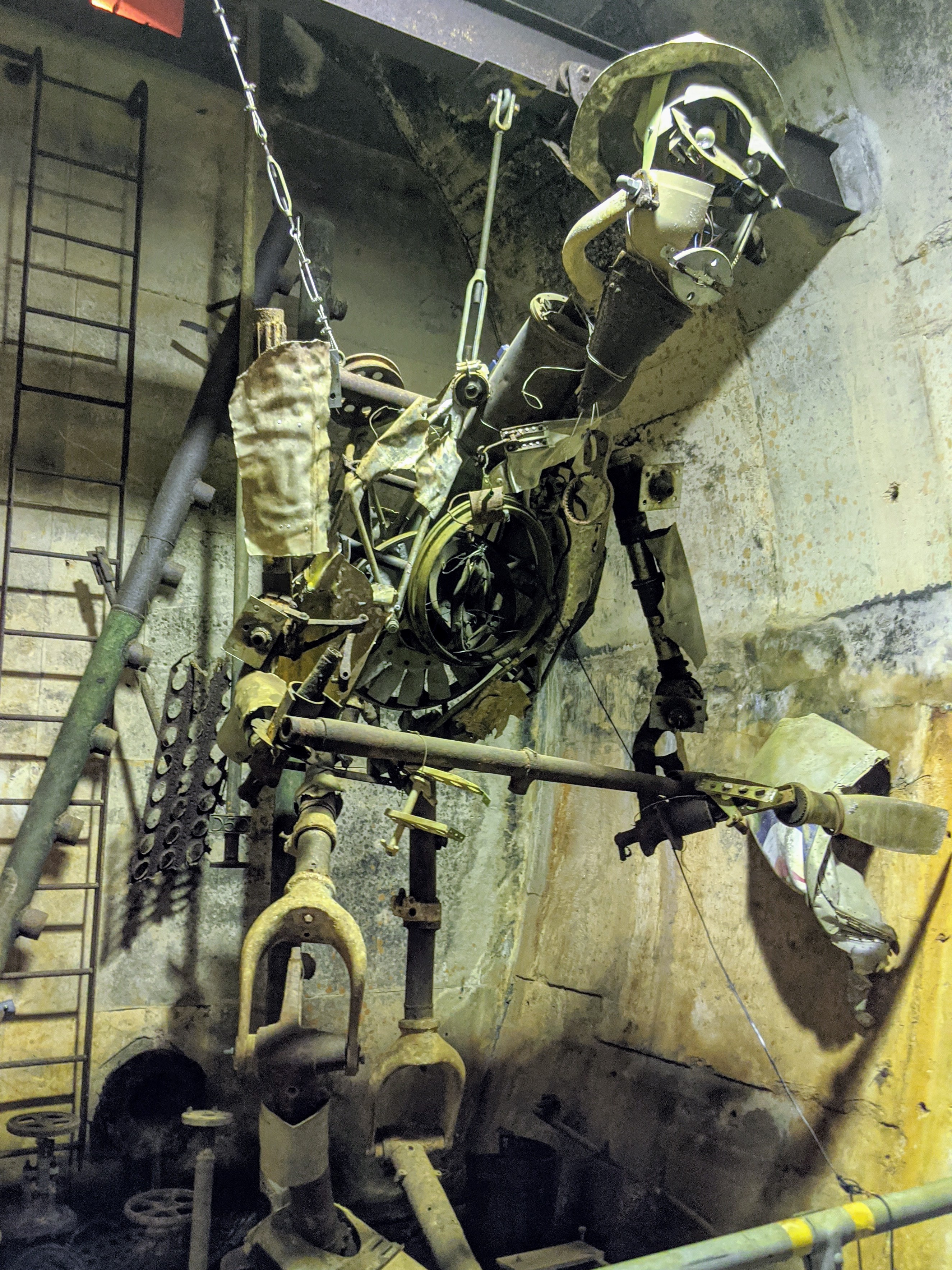
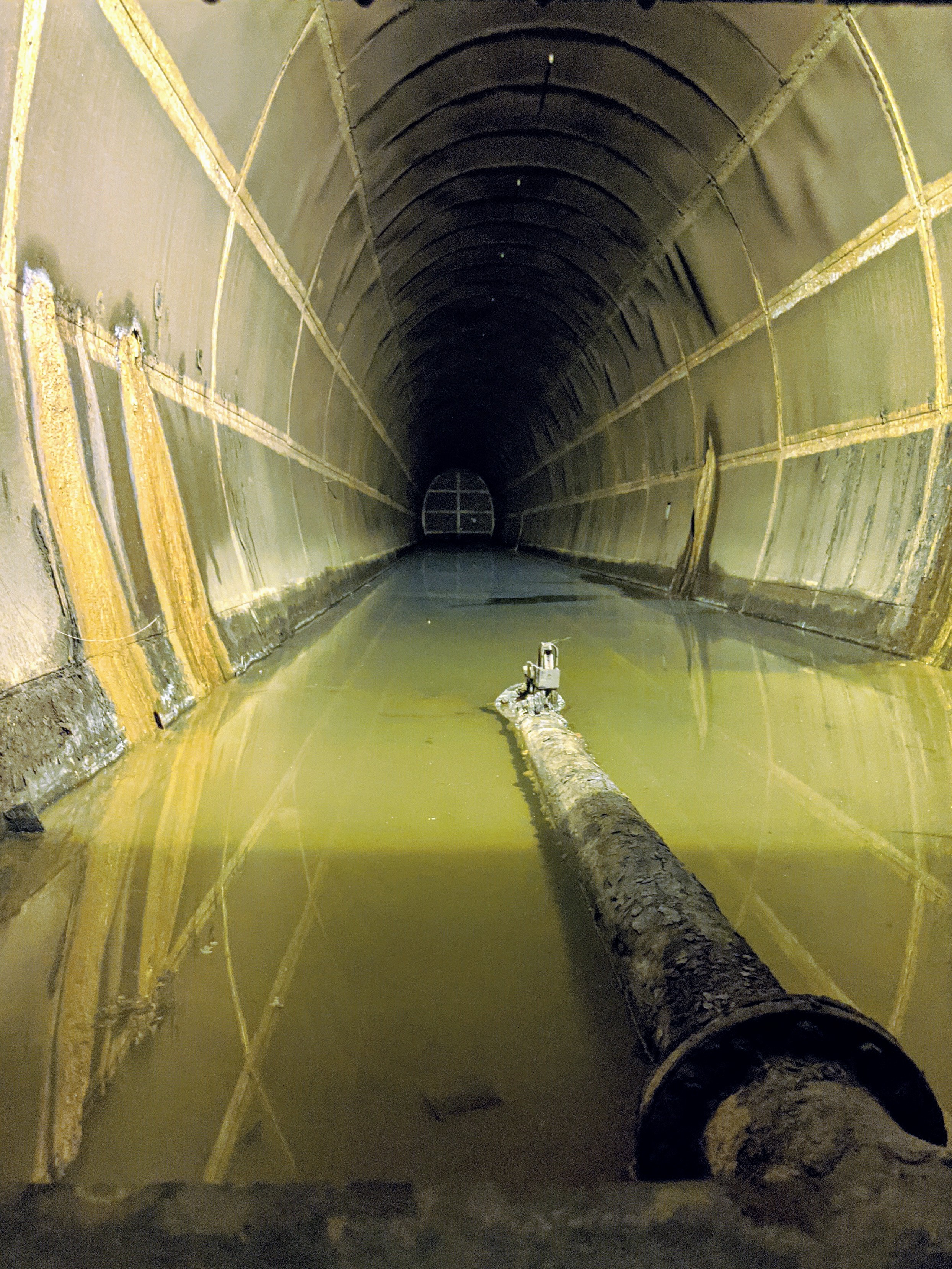
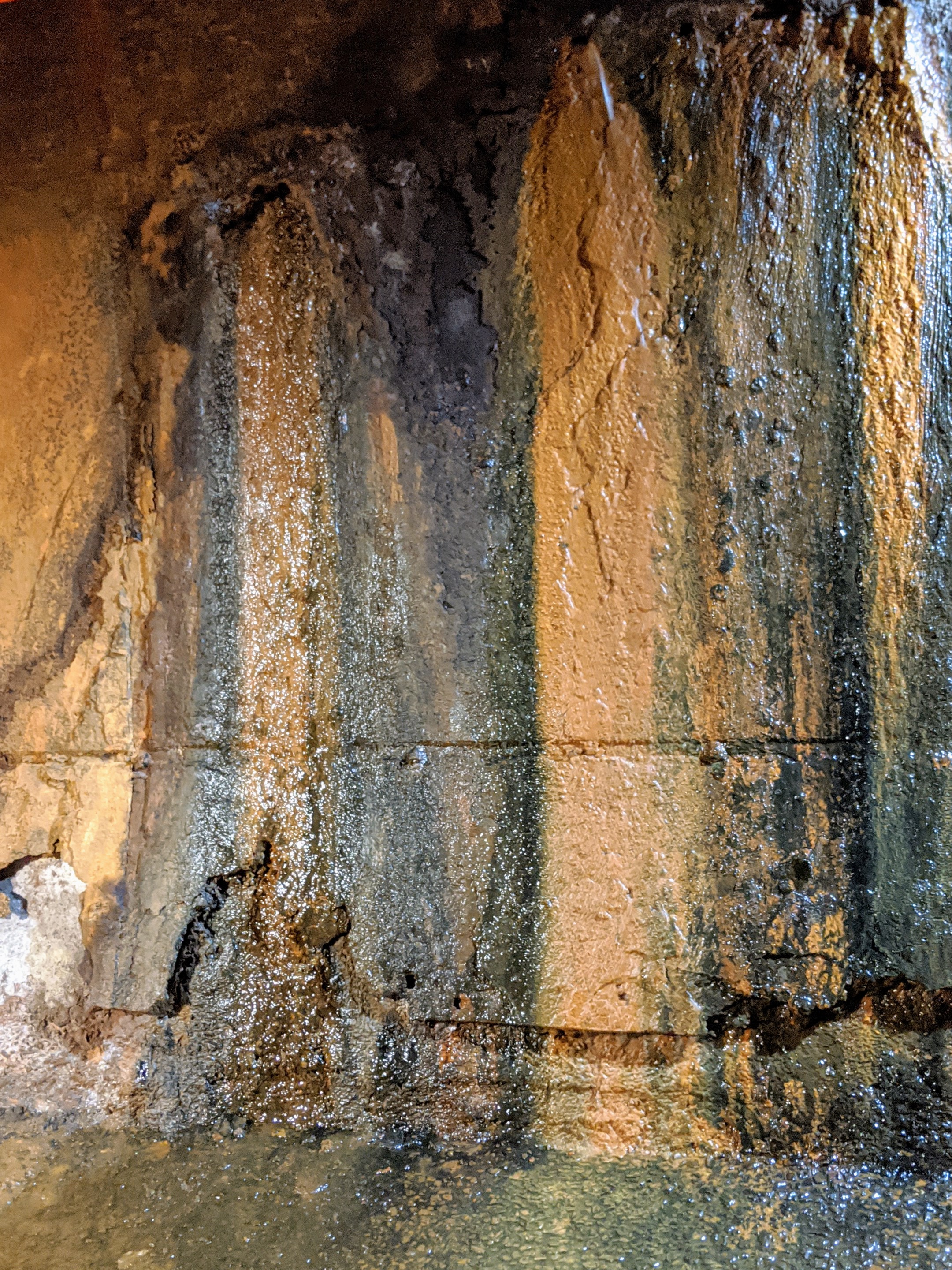
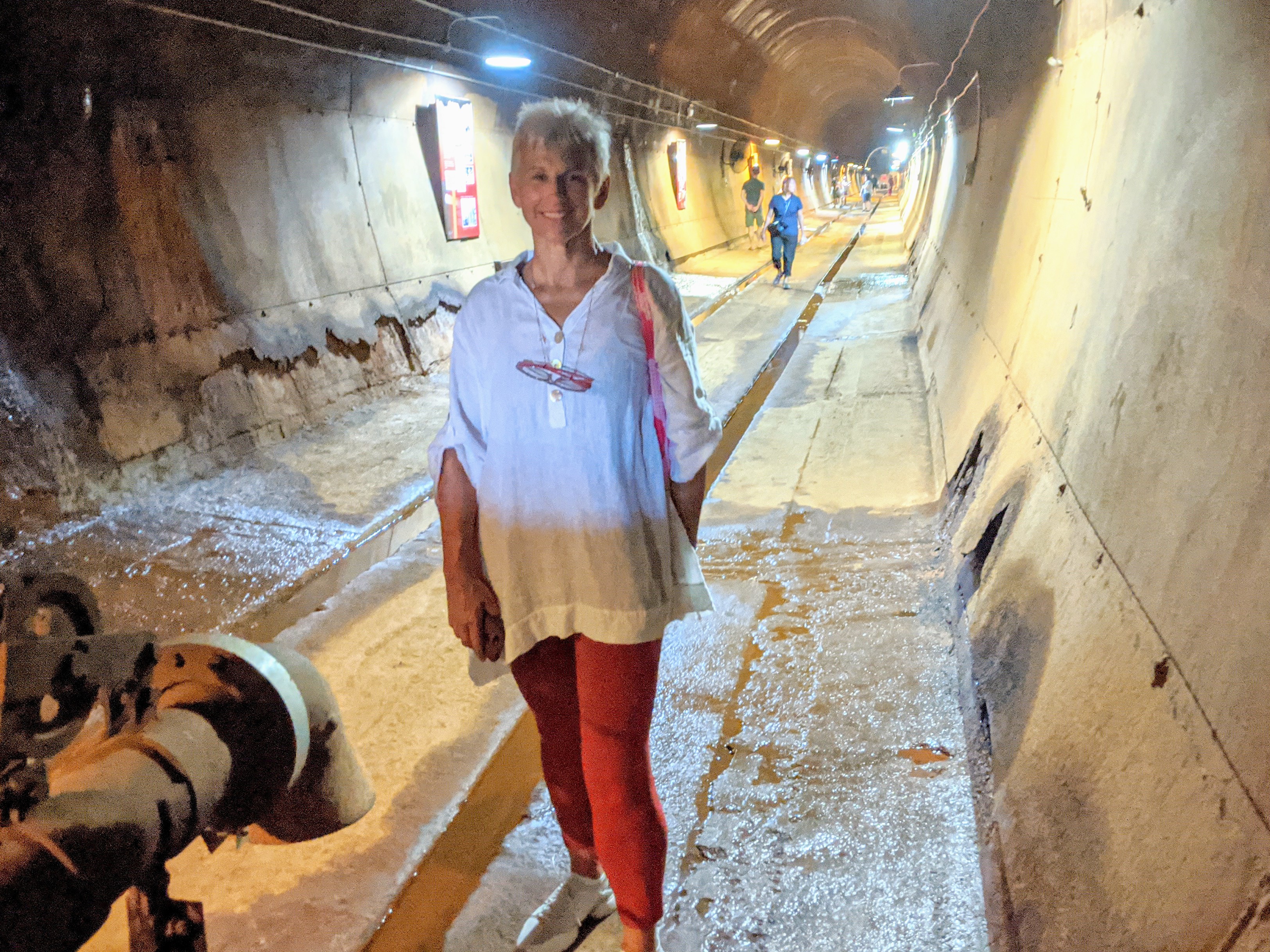
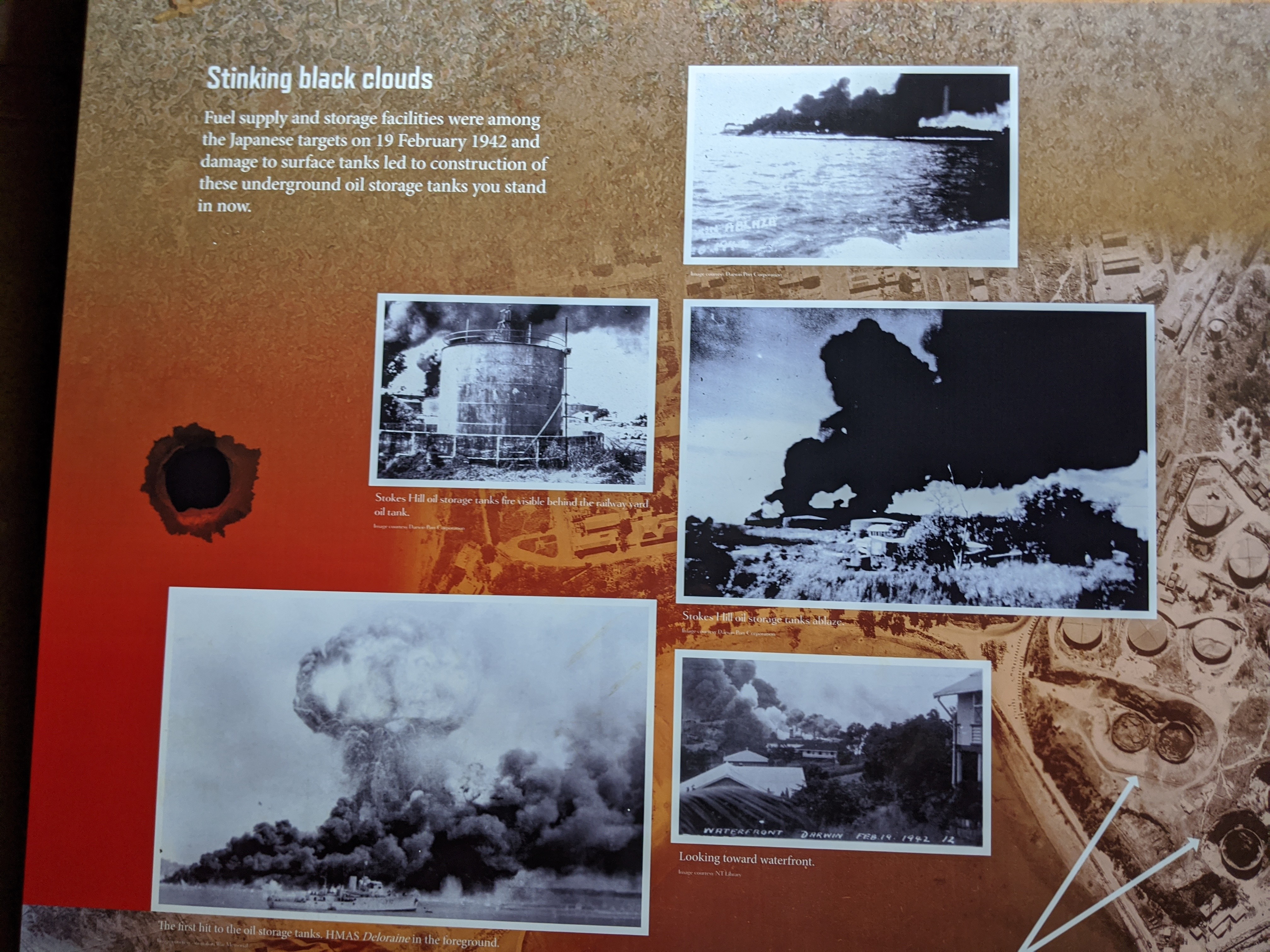
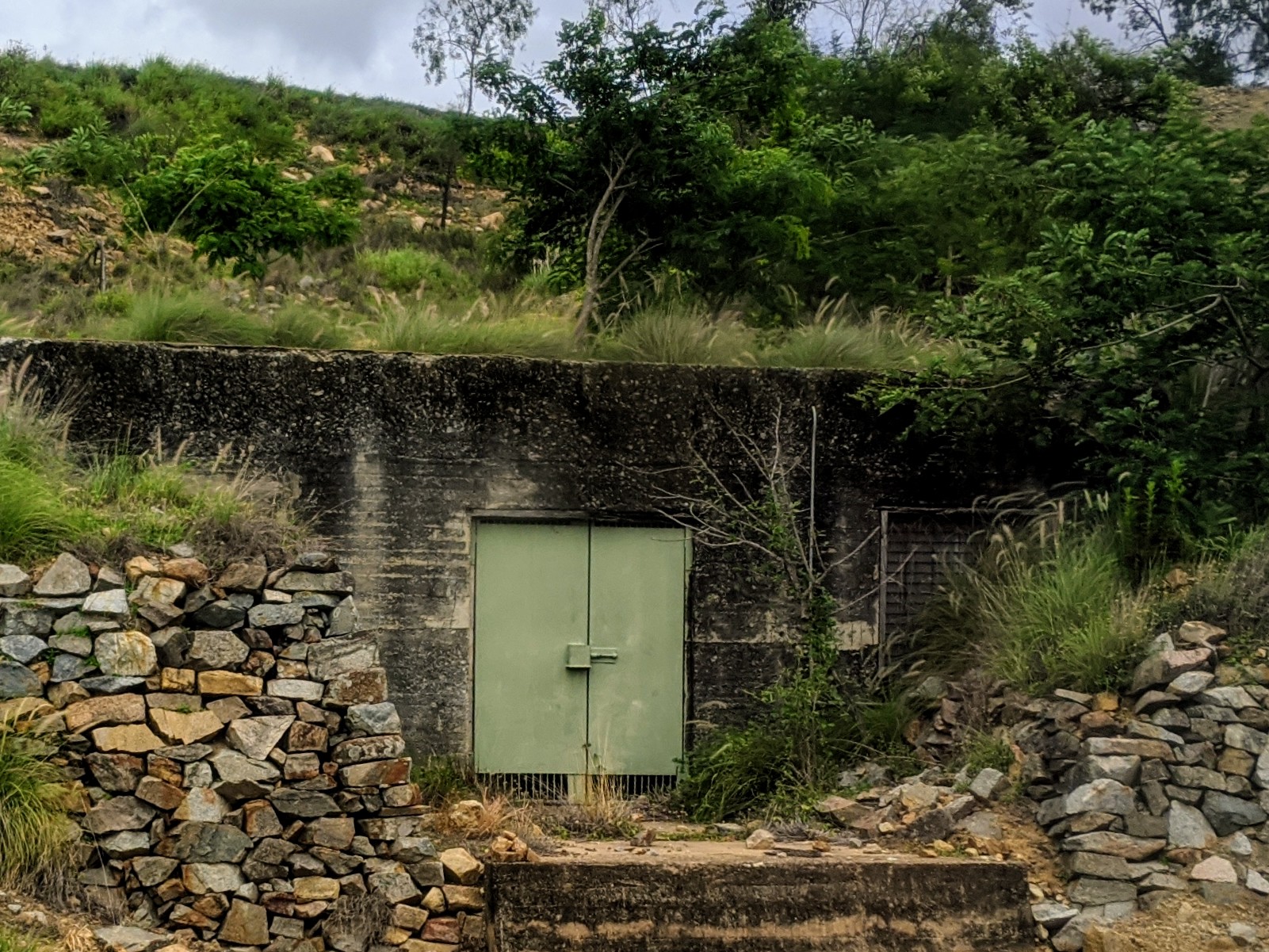
On our way back to the ship, we noticed a sign pointing to WW II Oil Storage Tunnels. Doug, a history buff who made his living owning an oil company for 29 years, was intrigued. The next couple of hours were quite interesting! We learned that in 1924, 11 above ground oil storage tanks were built on Stokes Hill Wharf near our dock. During the 1942 Japanese air-raids, 7 of the tanks were destroyed, spilling vast amounts of oil into the wharf. Later that year, 400 members of the Civil Constitutional Corps secretly dug hidden oil storage tunnels in the escarpment bordering the city. With temperatures and humidity reaching the 90s, the working conditions for these men were horrific! The ground was soft and unstable, and when the wet season came, the water poured in causing cave-ins and frustration leading to work stoppages. In the end, the tunnels never stored oil. It wasn’t until Australia’s conflict with Indonesia in the 1950s that an attempt to store jet fuel for the RAF and RAAF bombers in two of the tanks was made. This was short-lived, however, because during one night of heavy rain, excessive pressure caused the fuel to escape. The facility had to be abandoned. It is now open for tours, which we found fascinating.

We thoroughly enjoyed our visit to Darwin. The people are very warm and welcoming, and their history of building and re-building is inspiring. It was a fitting way to say goodbye to Australia and hello to whatever lies ahead. While many of our fellow travelers have made the understandable decision to head home due to the uncertain path of the coronavirus, we’ve decided to remain vigilant, resilient, and flexible. We’re certainly adhering to the strong hand washing requirements and trying to be smart about our choices, but we strongly believe that Viking is putting our safety and good health at the top of their priorities. And we’re doing the same!

Ash Wednesday on Thursday Island

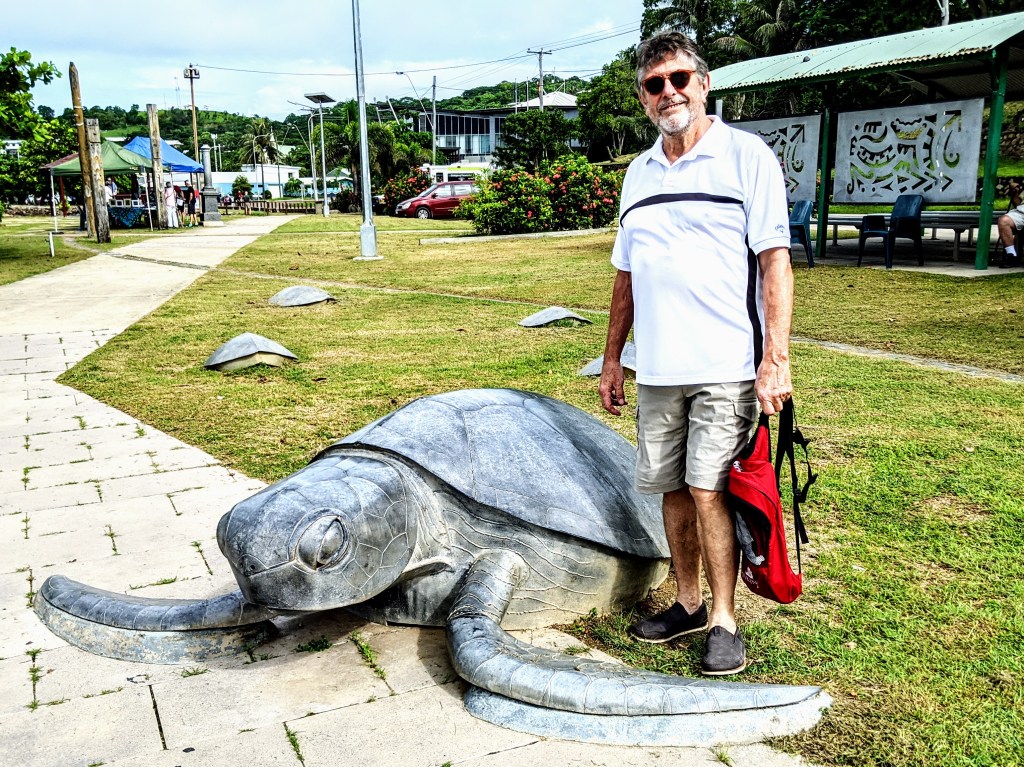
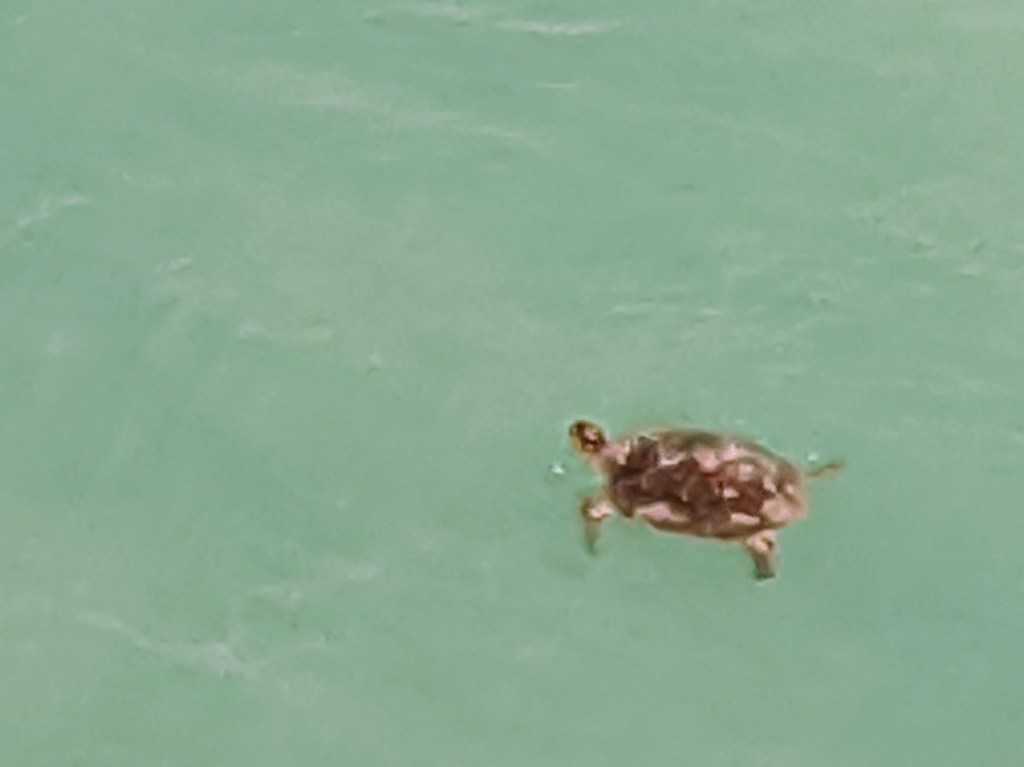
We awoke to a spectacular red sunrise over tiny (1.4 square miles) Thursday Island and realized that it was Ash Wednesday, the first day of Lent. Known by locals as “T.I.,” Thursday Island is one of the smallest of the Torres Strait Islands. TI was once home to a thriving pearl diving industry, but that has declined steadily over the years. To say that TI is “laid back” is an understatement! Many local residents live by a no-footwear policy out of respect for the spirits believed to live on the island. And although there are beaches all around, we were advised to refrain from swimming because of the current and marine life in the incredibly beautiful blue waters. Although we didn’t see any crocodiles, we did catch a very large turtle swimming around the ship in hopes of snapping up some of last night’s leftovers. And Doug found some “safe” turtles for a quick pic.

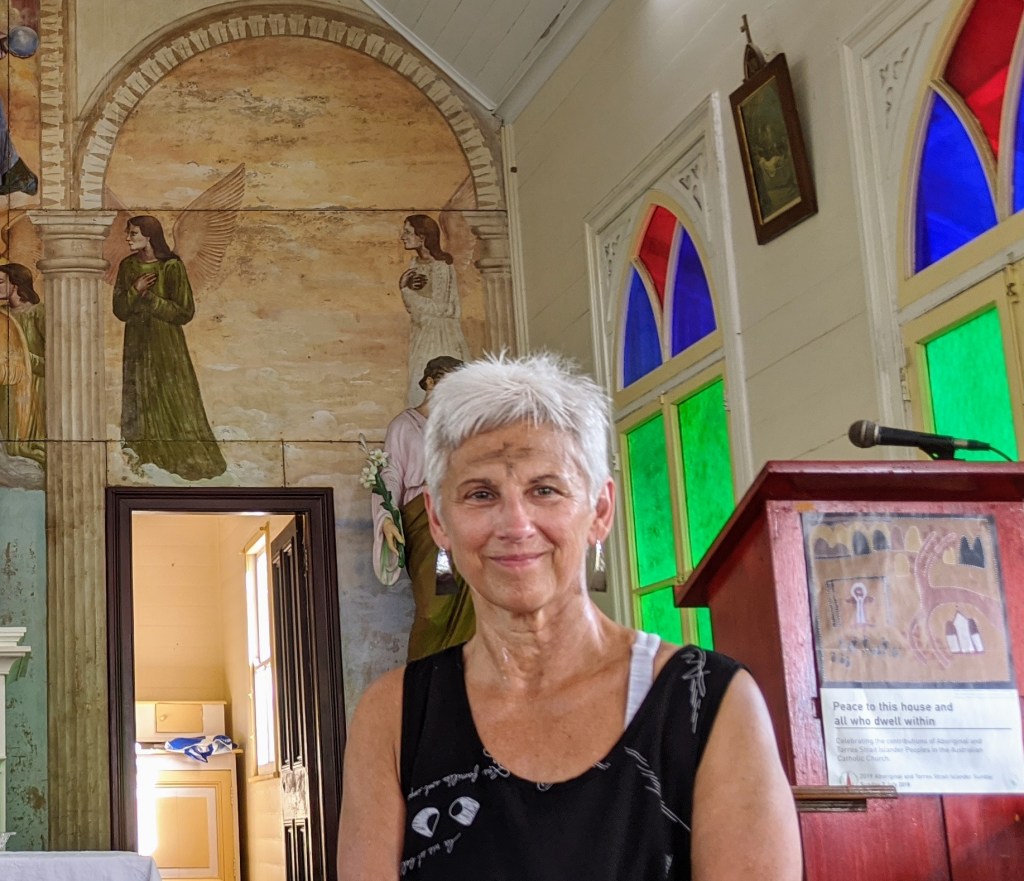
Denise found a charming little Catholic church along the main street. The priest had left a small dish of ashes near the altar, so she did a DIY and got her ashes.

We also saw a sign advertising “Australia’s Top Pub,” a reference to the location of TI at Australia’s northern most tip, but it was early morning so the pub was closed. And the Customs House makes an impressive statement near the tiny port.

There really isn’t much more to say about Thursday Island. It’s tiny, very quiet, and situated among some of the prettiest islands we’ve seen. From our first glimpse to our last, we certainly didn’t feel like we did any penance on this Ash Wednesday on Thursday Island…although it was hotter than Hell!

Touring Around Townsville

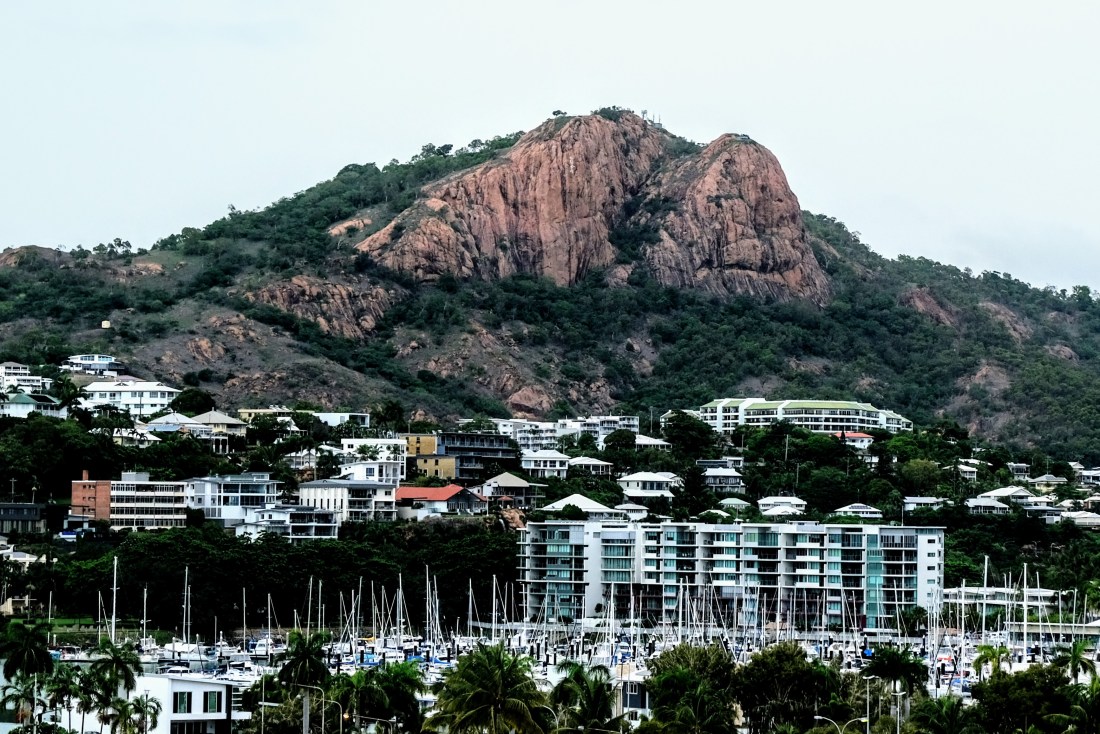
Cyclone Damien prevented us from anchoring in Whitsunday Islands, where we had been looking forward to a visit to Airlie Beach. Described as a place where “pure white sands meet cerulean waters, swirling together at sandbars to merge into a palette of turquoise, cream, and emerald green hills. Glassy, invigorating, and impossibly blue, the waters provide the ideal oasis for relaxation and idling away a few hours on the beach,” this place will remain a myth to us…at least for this trip! Ever prepared, we sailed on to a new place on our revised itinerary, Townsville, arriving on Sunday evening when virtually everything is closed. Hopeful for a day without rain, we awoke the next morning in Cleveland Bay (no reference to Cleveland, Ohio and/or Cleveland, Tennessee) to yet another foggy, rainy day. Nonetheless, we were promised that the red sandstone monolith of Castle Hill is, was, and always will be in view, rising from the city center. And by the end of the day, the fog had lifted and we did, indeed, get to enjoy a view of this beautiful landmark.

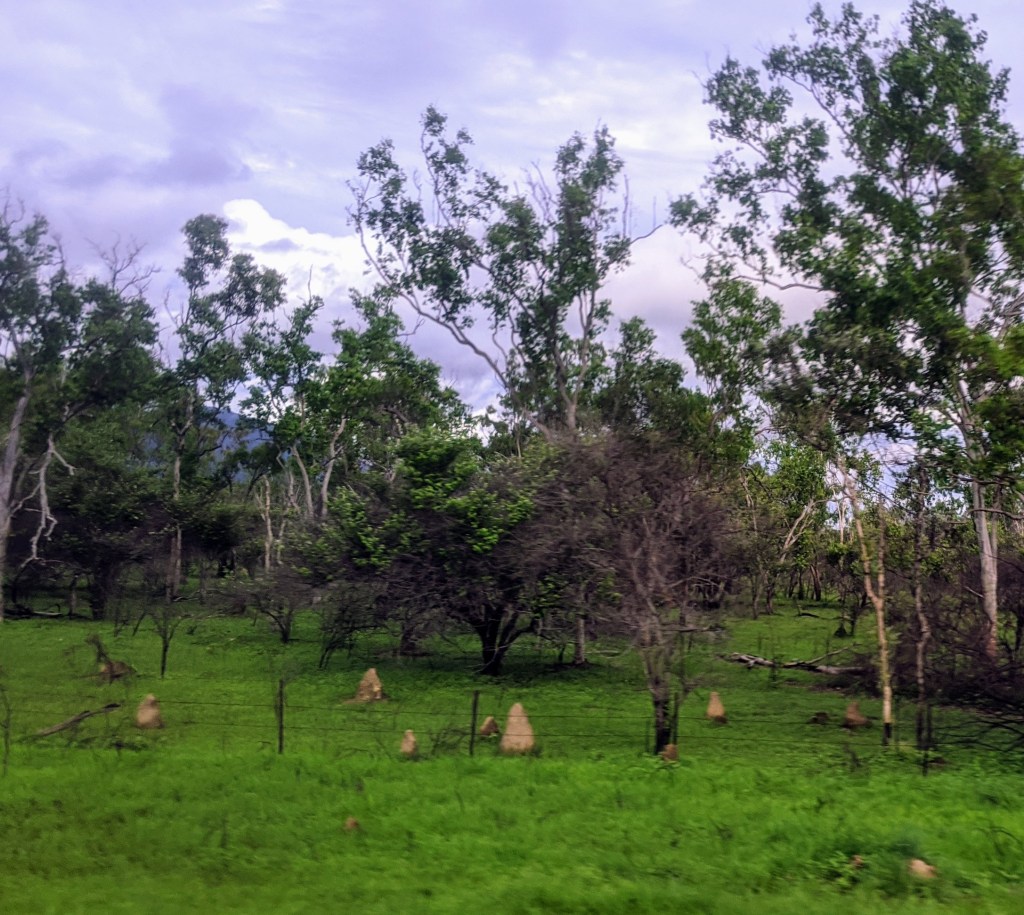
Rather than walking around in the rain, we opted to take an excursion to the charming town of Charters Towers, a 90 mile drive inland through the Australian bush. To our surprise, the bush was not a barren wasteland, but rather a lovely, somewhat bucolic stretch of land dotted by farms, trees, and numerous termite colonies, with habitats as large as three feet high! We learned about “back burning,” the practice of starting small fires along a man-made or natural firebreak in front of a main fire front in order to control burning and wildfire events that have recently taken a toll on much of Australia, and saw the unintended result of blackened bark on the bottom of many trees. And we crossed the Burdekin, Australia’s largest river.

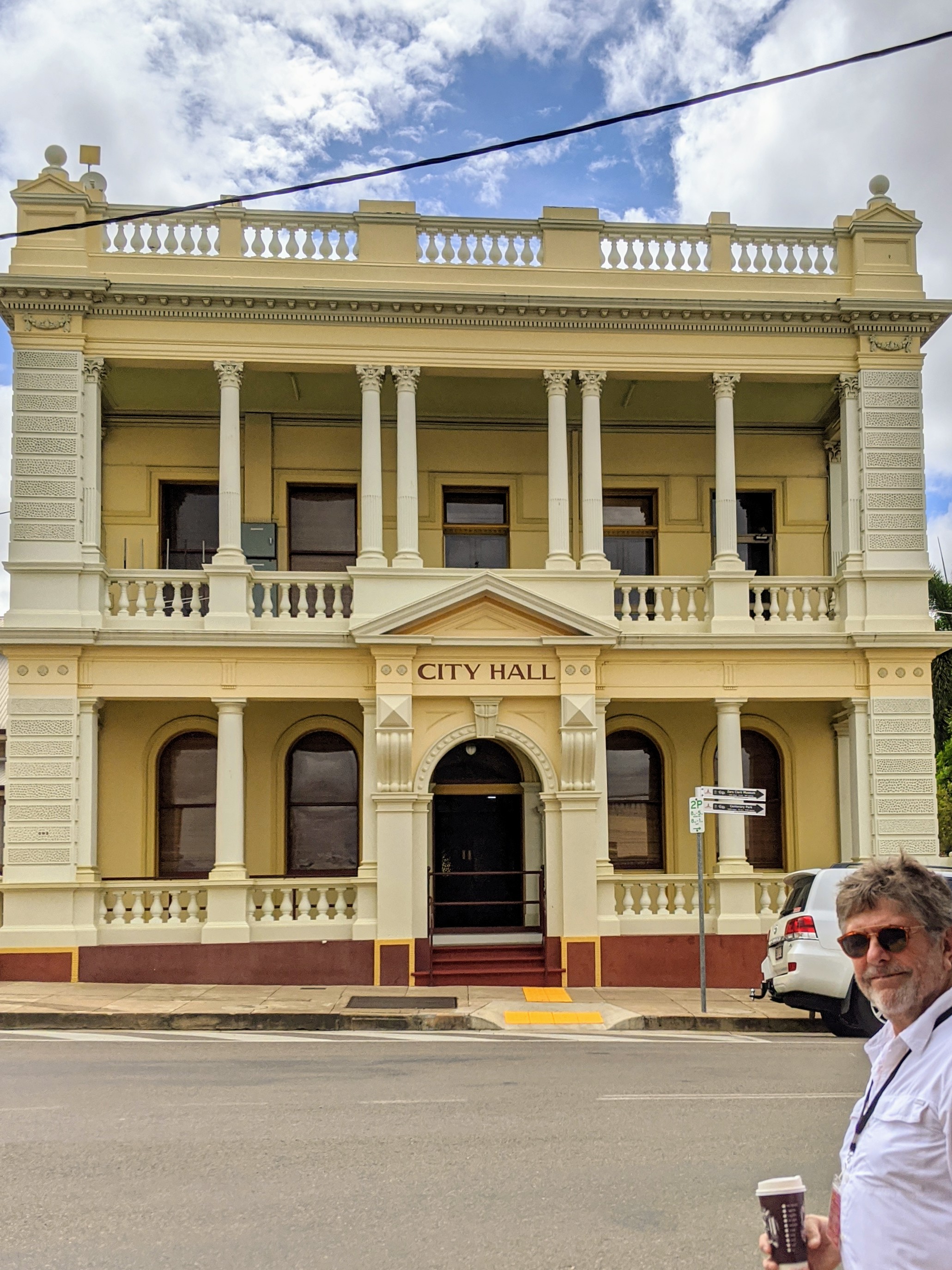
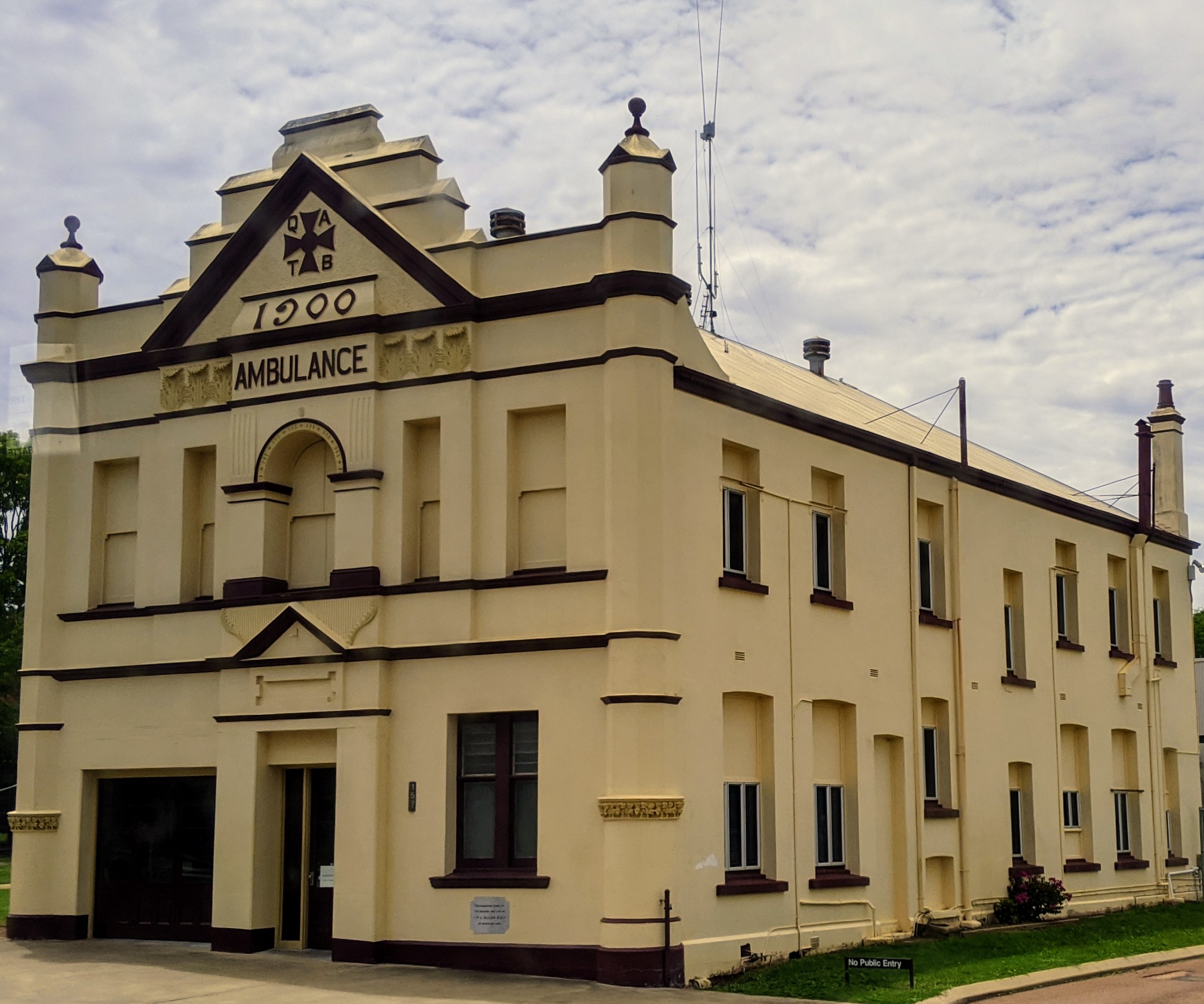
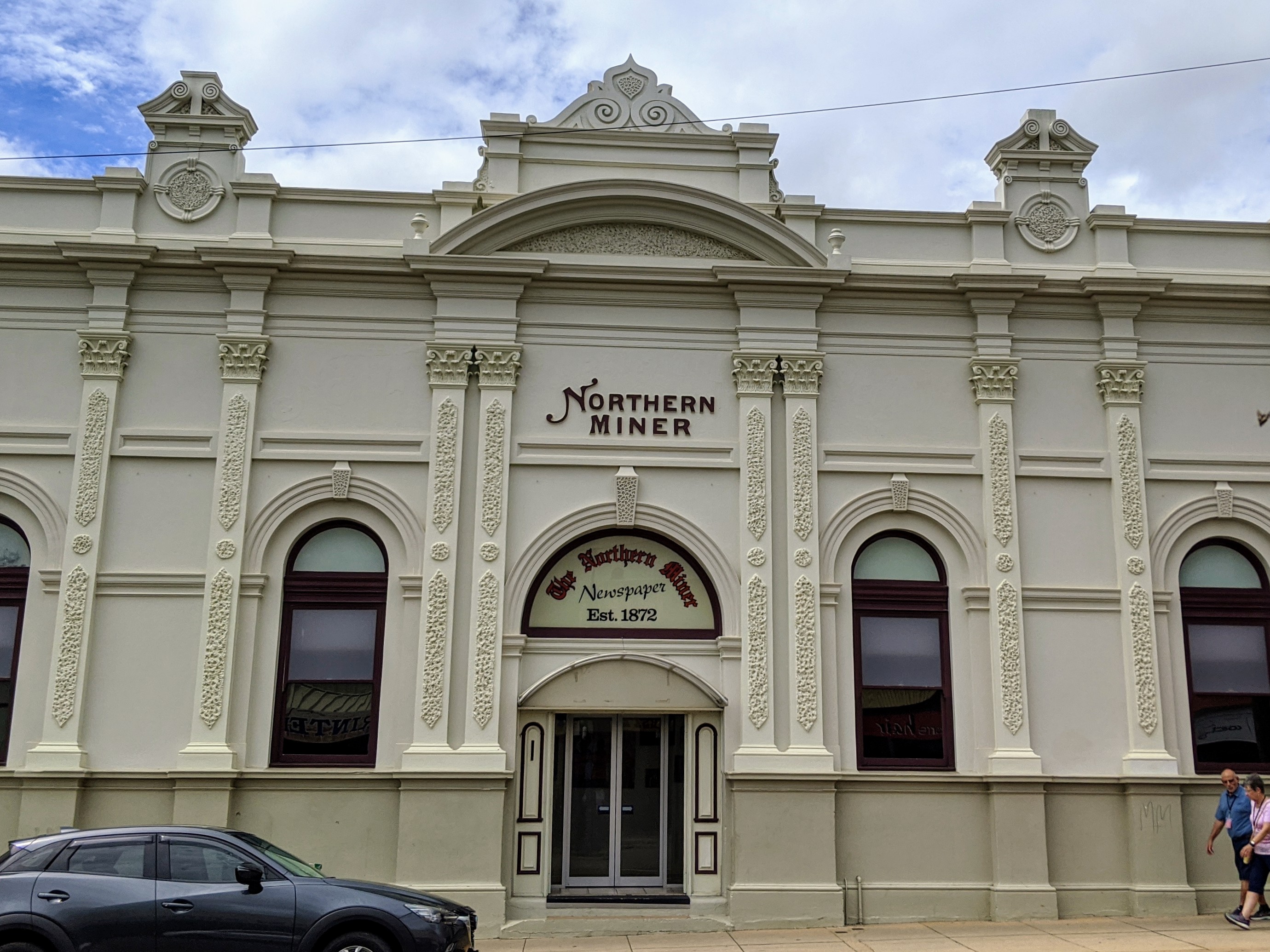
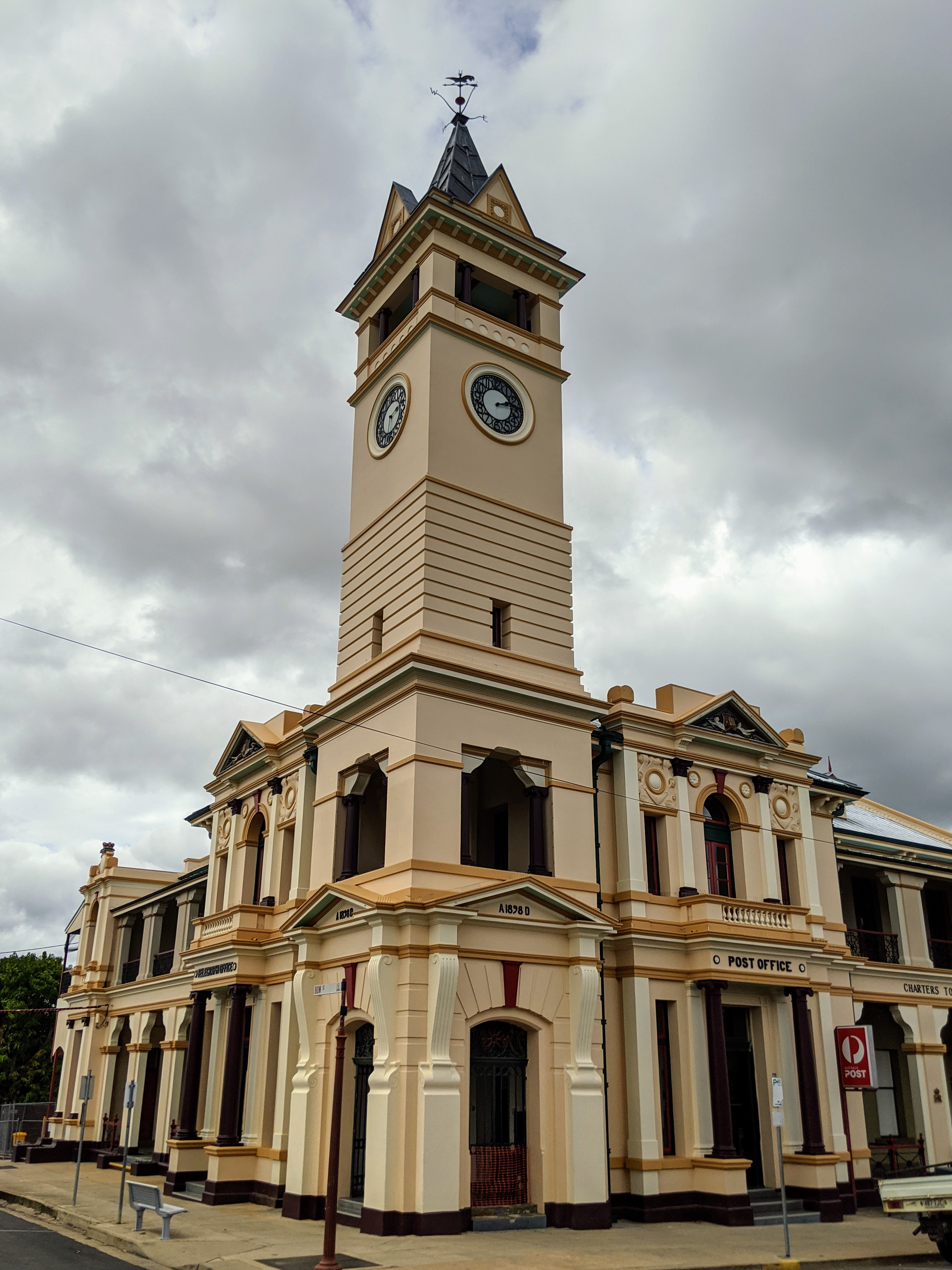
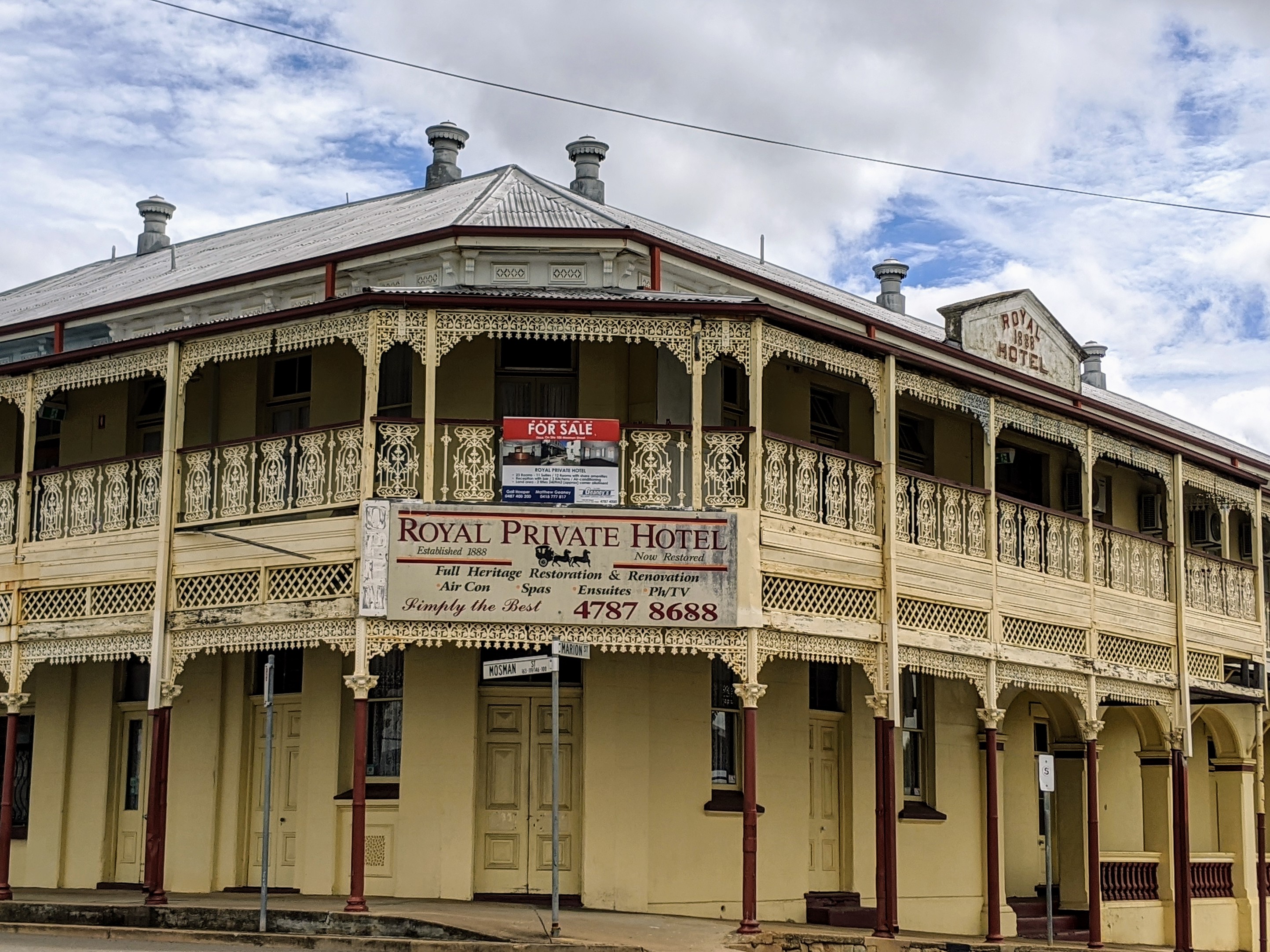
Arriving just in time for a lovely morning tea, we learned that Charters Towers was originally called Charters Tors after mining warden Charters and Tors for the hills in which gold was found. It was proudly known as “The World” during its post-gold rush heyday because it had everything one would need to live a happy, fulfilling life. The people of Charters Towers are justifiably proud of their town, and local folks are more than happy to share bits of information and history. We started our visit with a self-guided walking tour of the town’s beautifully preserved One Square Mile. Doug, of course, found a perfect latte, and enjoyed it as we strolled by numerous historic landmarks, many of which have been beautifully preserved. The Stock Exchange Arcade, where gold prices and claims were bartered, was built in 1888 and now serves as a shopping mall and pedestrian thoroughfare. The World Theater, originally the Australian Bank of Commerce, has been converted into a 660 seat performing arts center and cinema complex showing first run movies. City murals can be viewed throughout town, but the one that caught our eye is the one done by students from a local high school. City Hall is in the center of town, and the Post Office with its impressive clock tower, was built within six months of the discovery of gold in the area. There’s a department store, pharmacy, locally-owned toy store, book shops, grocery stores, bakeries, a railroad station and museum, newspaper, ambulance museum…indeed, everything one would need. There’s even a hotel that’s currently closed, but can be bought for the right price!

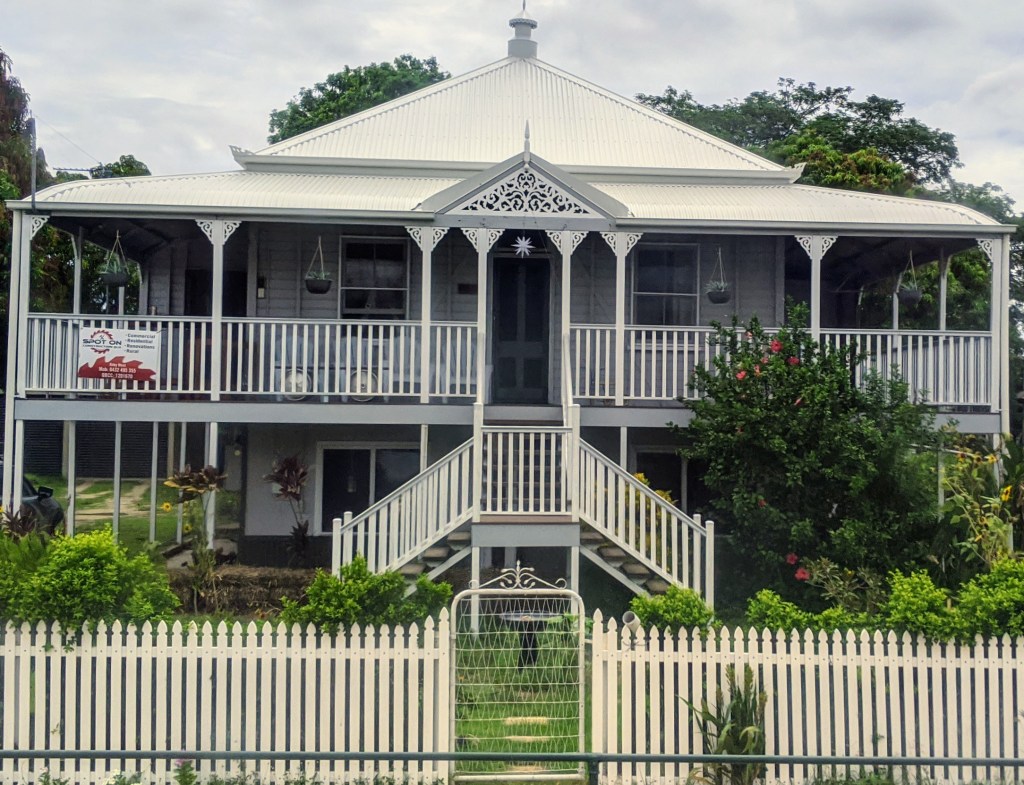
We learned that Charters Towers is becoming home to young families seeking affordable housing and excellent educational options and retirees looking for a place to live with beautiful weather and reasonable prices. Housing reflects the distinctive Queensland style architecture, with most of the historic homes being built on stilts to act as a kind of natural air conditioner.

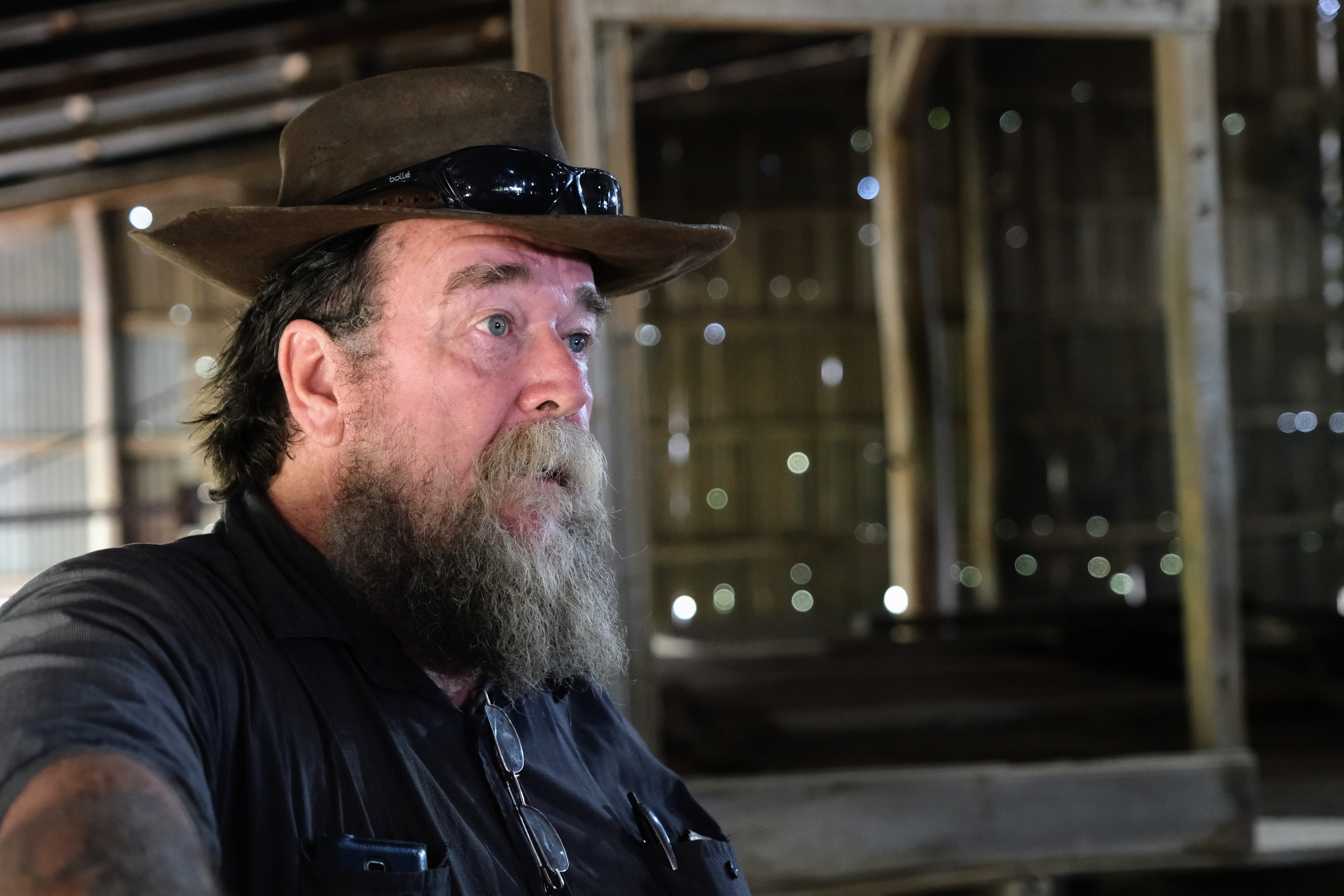
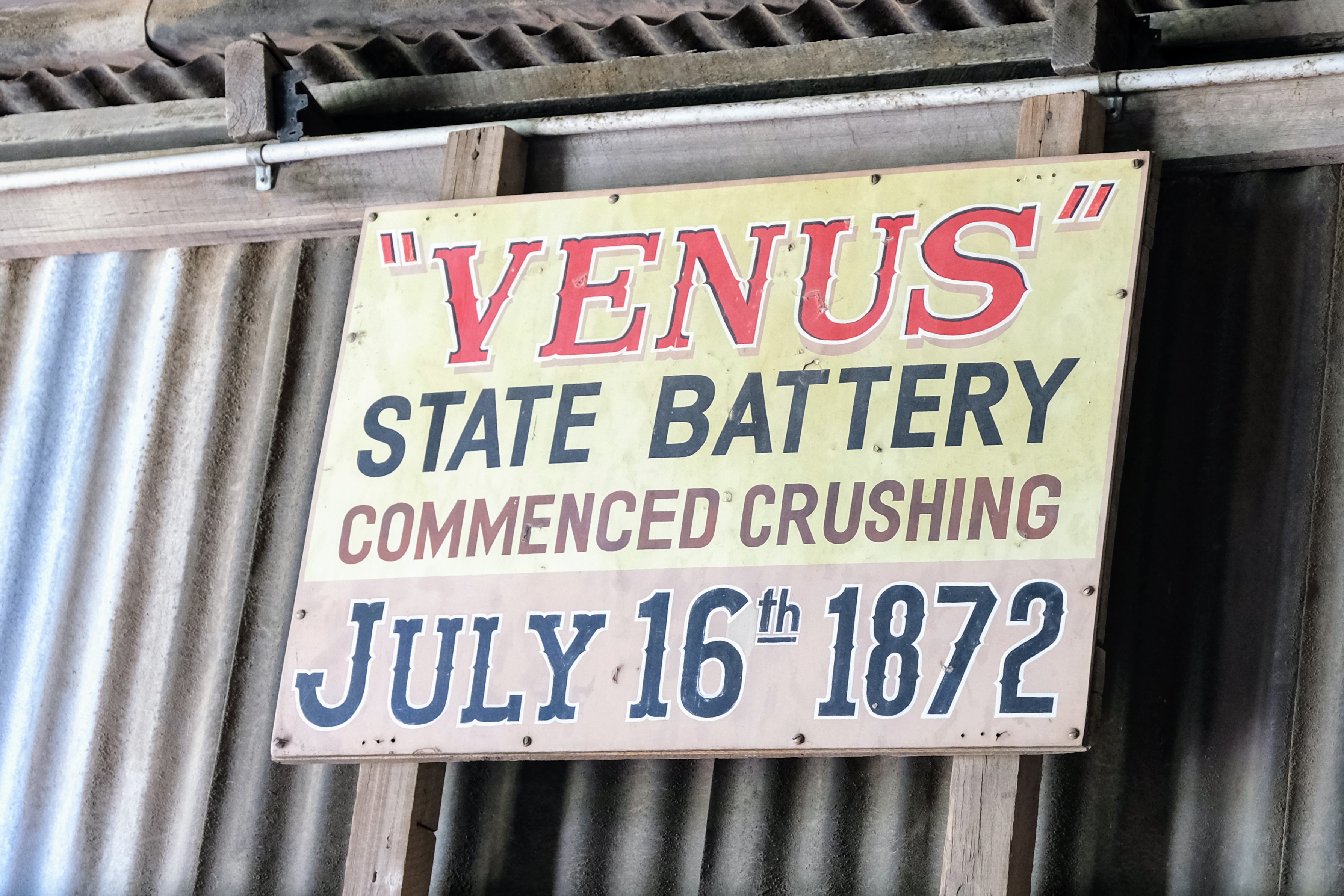
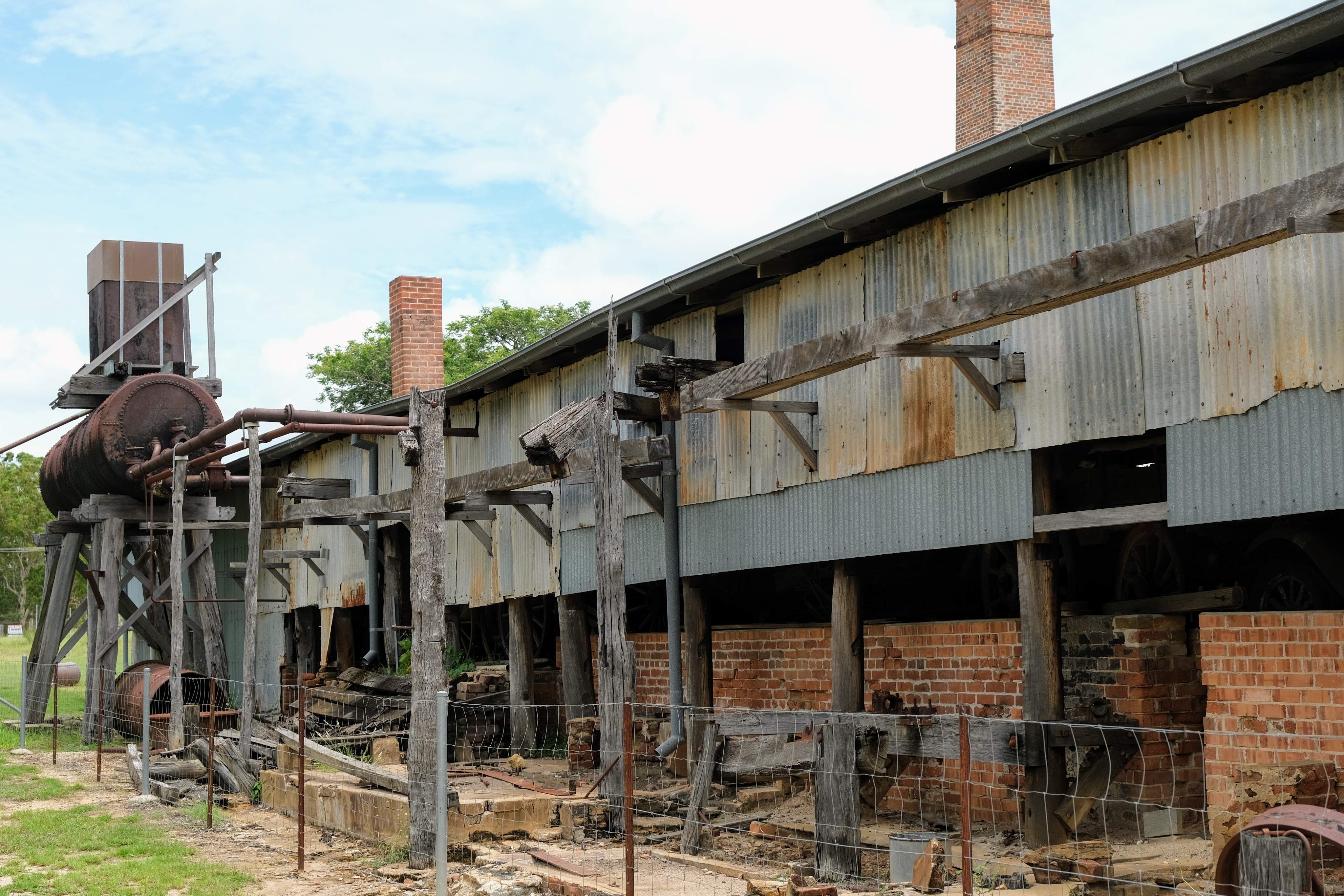
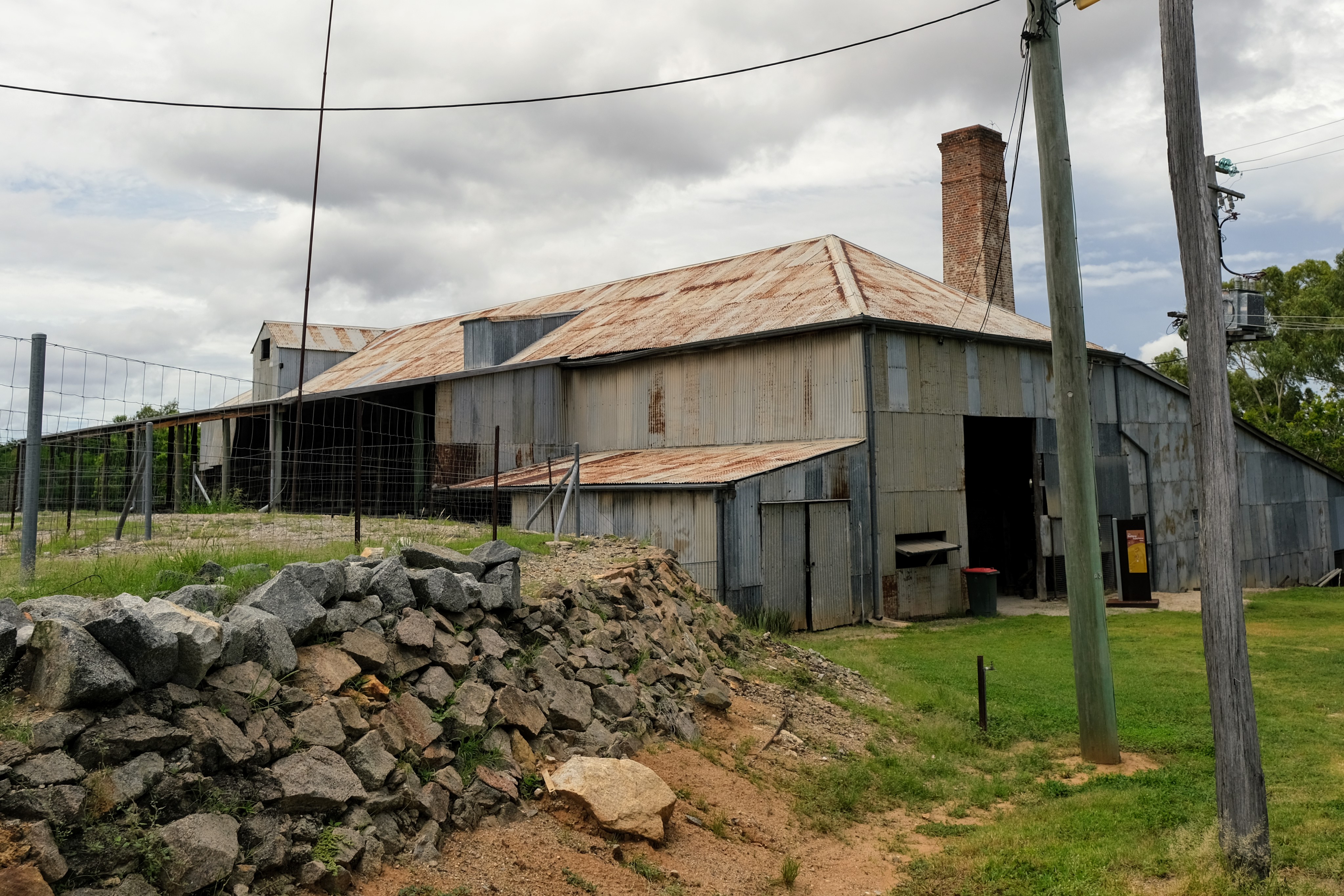
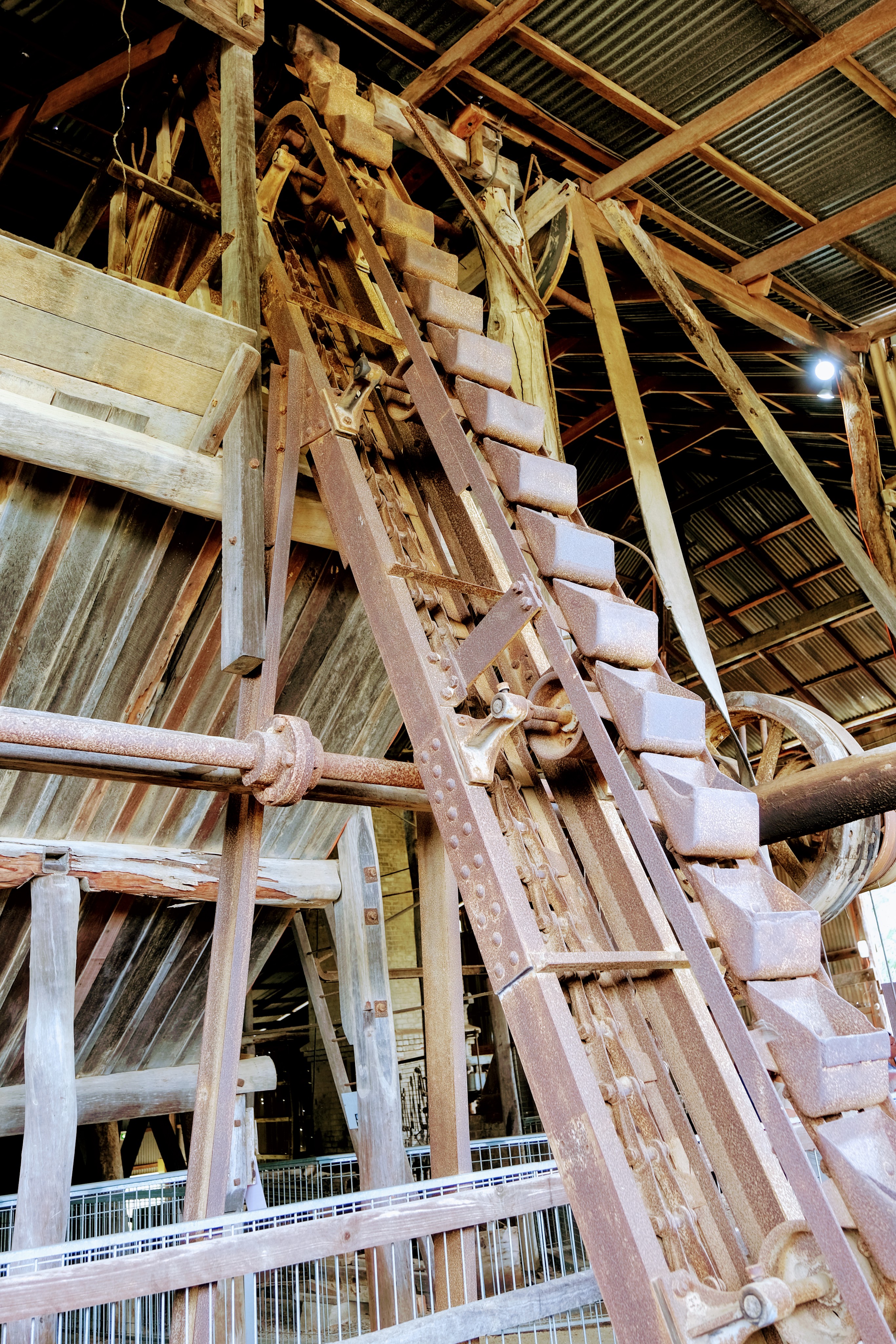
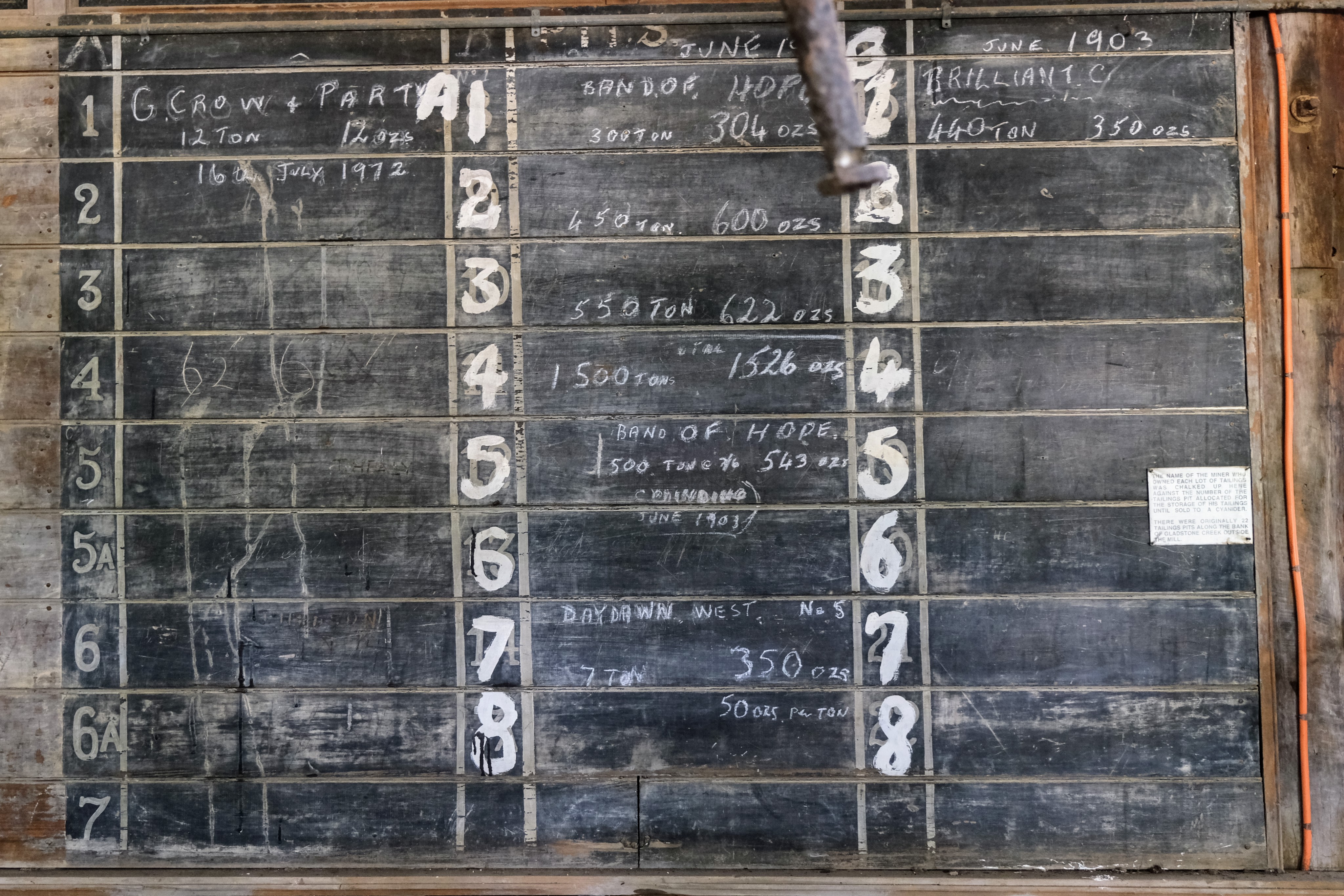
The discovery of gold in 1871 by an indigenous boy named Jupiter Mosman plays a significant role in the history of Charter’s Corners. The gold fields drew thousands of miners to the area, and the vast quantities of gold in the massive quartz reefs led to the need for several crushing batteries to process the ore into gold bricks. Of the original batteries, only the Venus State Battery remains. Over its 108 years of operation, Venus produced over 15.5 tons of gold! Our guide was delightful, and took us on a journey back to the days of the gold rush, regaling us with stories about significant characters, some of whom are reputed to haunt the battery to this day. The iconic Venus Gold Battery is truly a unique, picturesque venue, and we felt very lucky to have been able to take this informative tour.

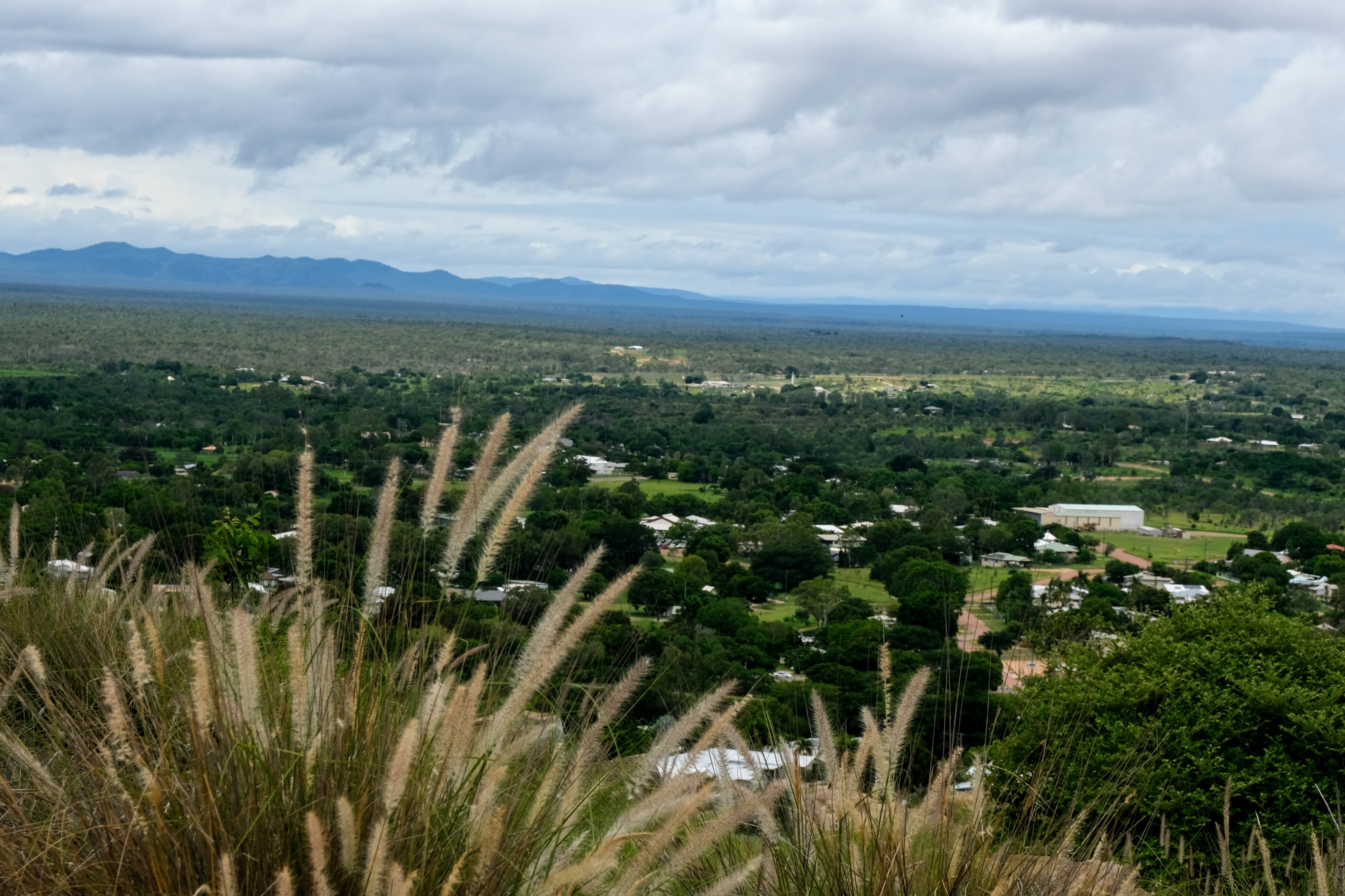
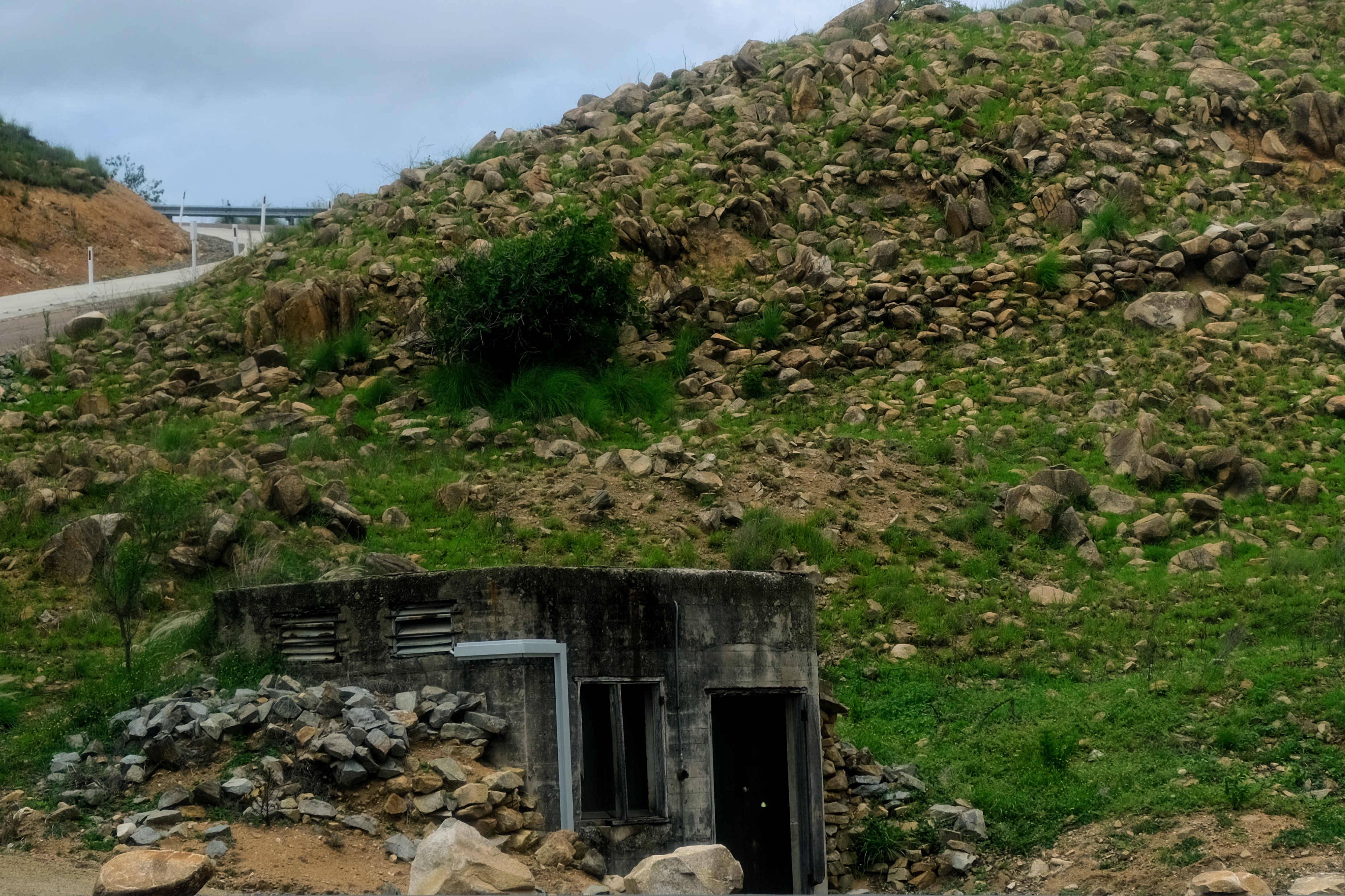
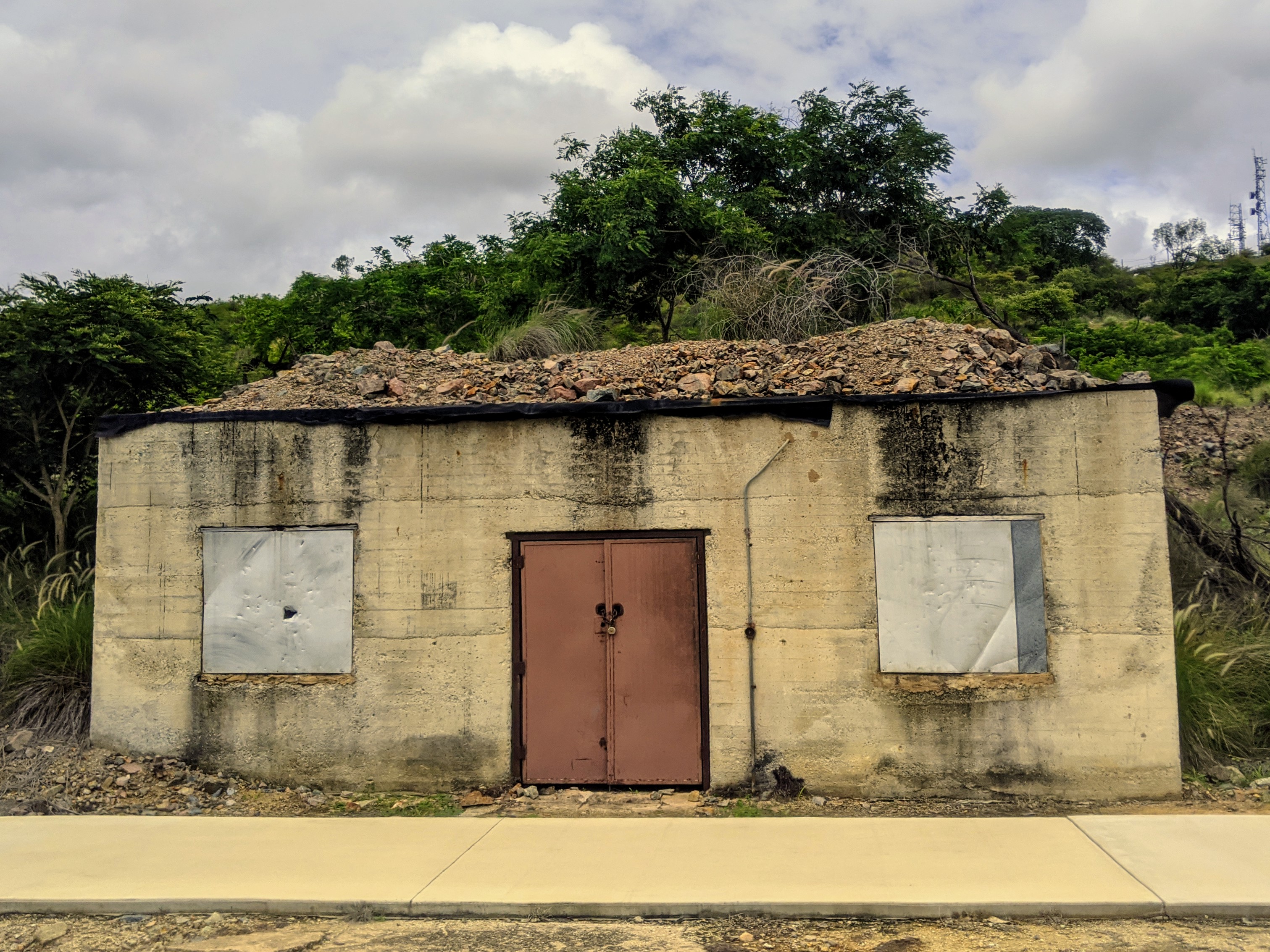
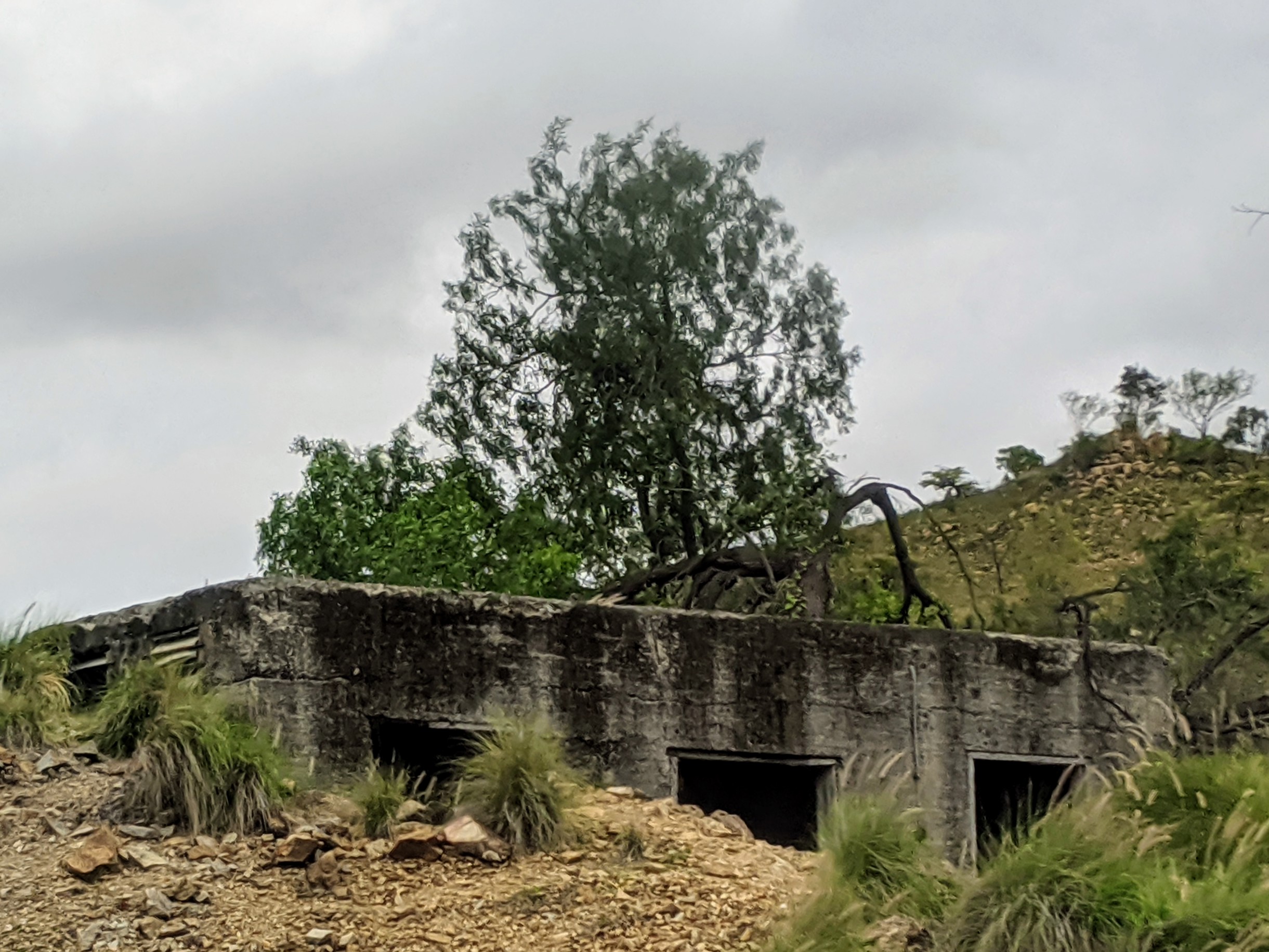
On our way out of town, we learned that Charters Corners played an important role in World War II. The United States Air Force had its airfield on the site of the present airport, and 15,000 US troops were stationed in the area. During the war, there were 42 bunkers on Towers Hill that were used by the RAAF and USAF to store munitions including bombs, ammunition, and parachute flares. The area around the bunkers offers beautiful views and is currently being developed with walking trails, picnic tables, and a museum.

This day really brings home the reality that just because things don’t go exactly as planned, they can still be wonderful! Weather and virus have seriously altered our plans, but with every change comes the opportunity to experience something new. We had never even heard of Townsville, Australia, and certainly never knew Charters Towers existed, and yet every day of this journey brings us new experiences and new learning…and at our age, that’s a blessing!

The Great Barrier Reef

The absolute highlight of our two day visit to Cairns (pronounced “cans”) was the day we spent with Sunlover Reef Tours at the Great Barrier Reef. The Great Barrier Reef is the largest continuous coral reef system on Earth. It is composed of over 2,900 individual reefs and 900 islands stretching for over 1,500 miles and an area of approximately 130,000 square miles. The reef is located in the Coral Sea, off the coast of Queensland, Australia. One of the seven natural wonders of the world, the reef is home to an incredible array of sea life, including thousands of varieties of fish, hundreds of species of colorful hard corals, and one-third of the world’s soft corals.

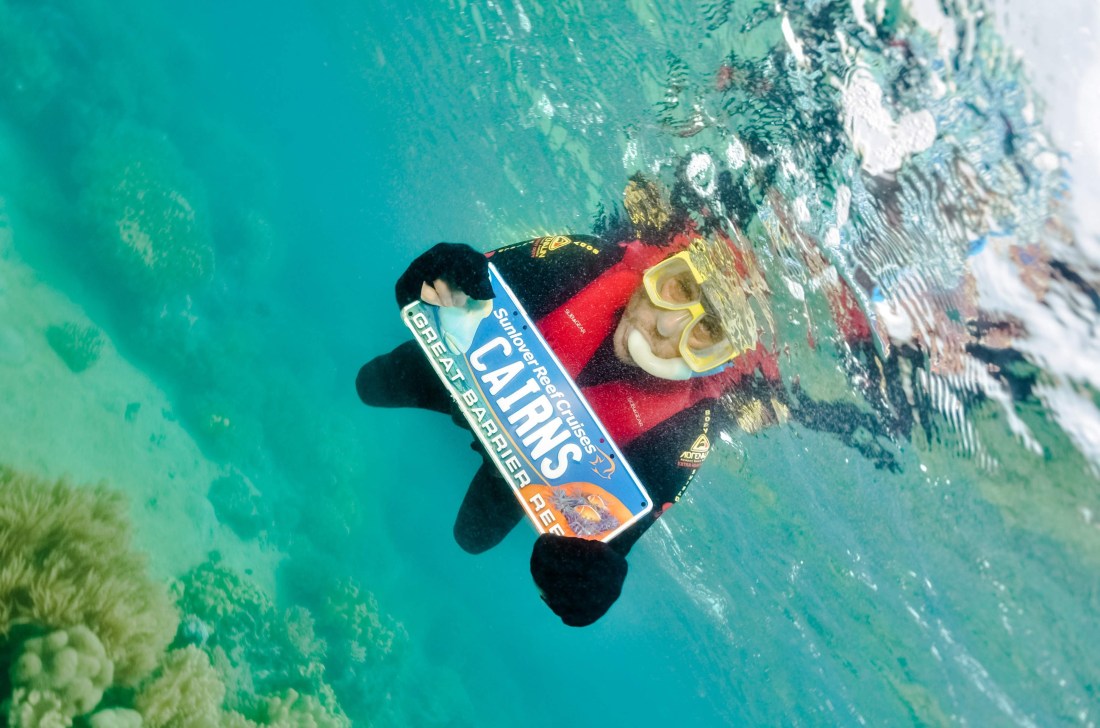
Sunlover offers outstanding options to explore the reef. We boarded their large, comfortable catamaran in Cairns, and settled back for the hour-long journey to the permanent pontoon marine base at the reef. En route, a marine biologist shared interesting information about the reef, and described the various options available to explore the reef including snorkeling, a glass-bottomed boat, diving instruction, and individual and group tours. We opted for snorkeling on our own, and Denise rented a water-proof camera to practice her underwater photo skills (heretofore untested!) We learned so much about the different varieties of corals and sea life, and the natural and man-made threats to this magnificent place. We also learned that conservationists and scientists with the Great Barrier Reef Marine Park Authority are concerned that building heat is threatening more coral bleaching along the reef on Queensland’s north coast by destroying the reef’s colorful algae, leaving the coral to starve to death. He added that if temperatures don’t drop from current levels over the next two weeks, the reef is likely to experience the third “mass bleaching event” in five years, noting that 2020 is likely to be the most extensive coral bleaching event to date. We were therefore instructed to be extremely careful to avoid touching the delicate, vulnerable coral in any way.

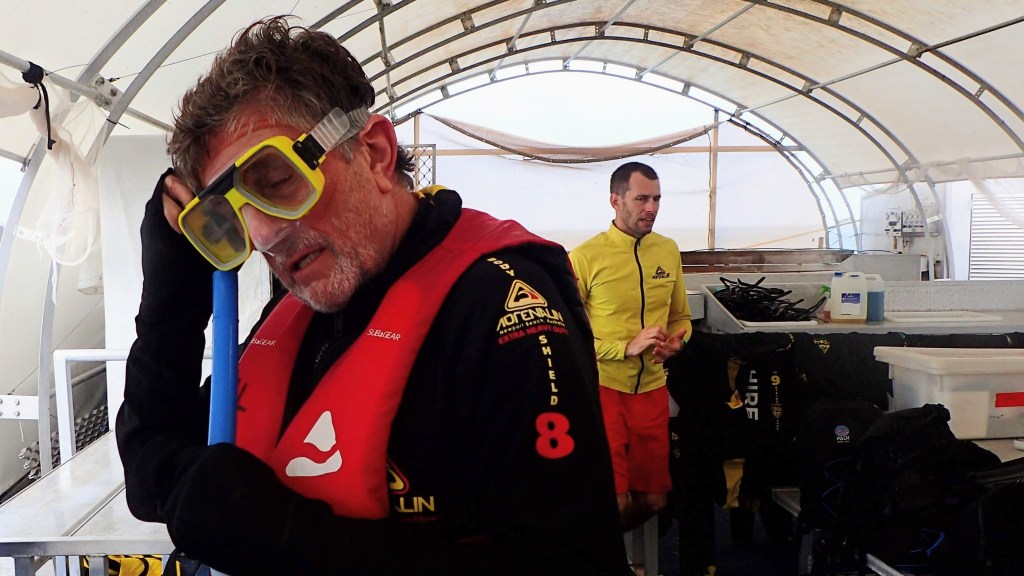
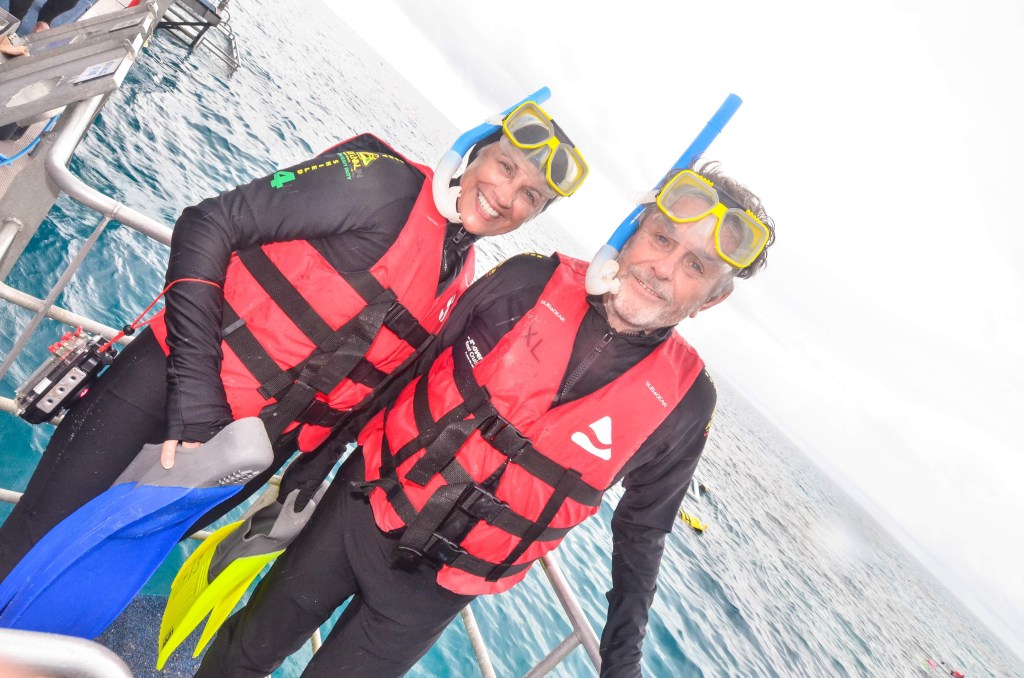
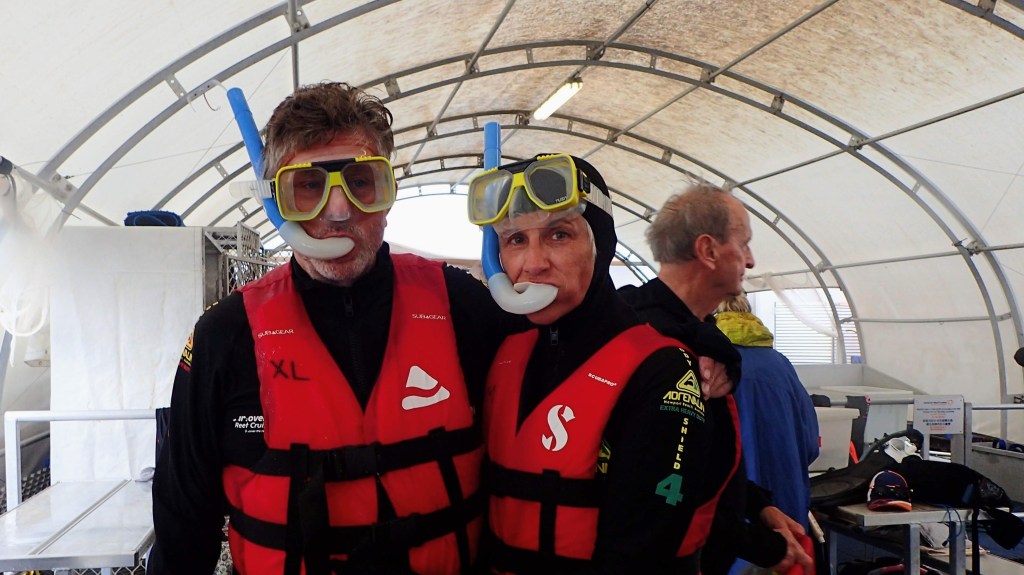
Upon arrival at the marine base, we were fitted for mandatory stinger suits (it’s jellyfish season!), masks, snorkels, fins, and life vests. Once “suited up,” we made our way into the water for a truly extraordinary experience.

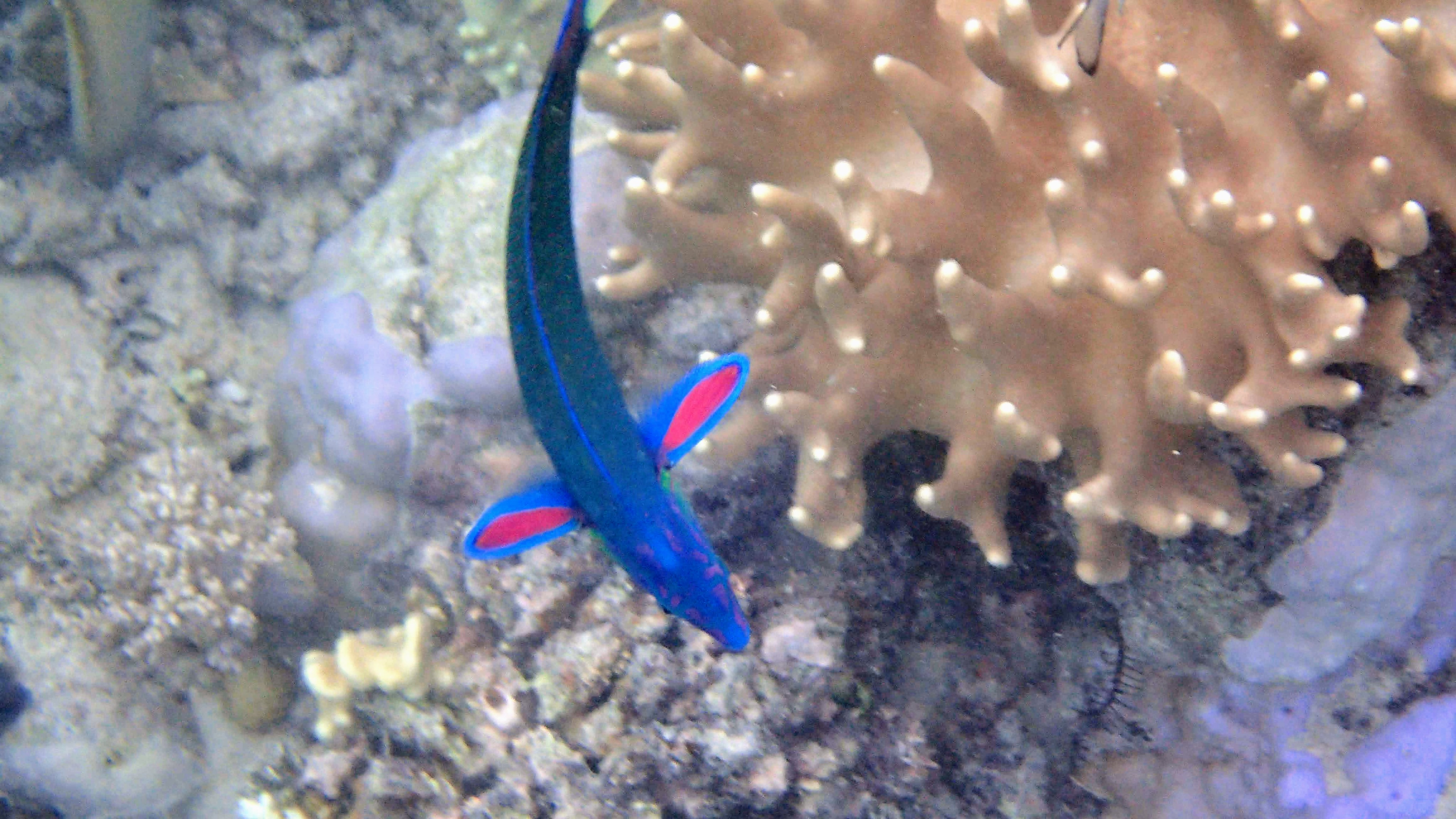
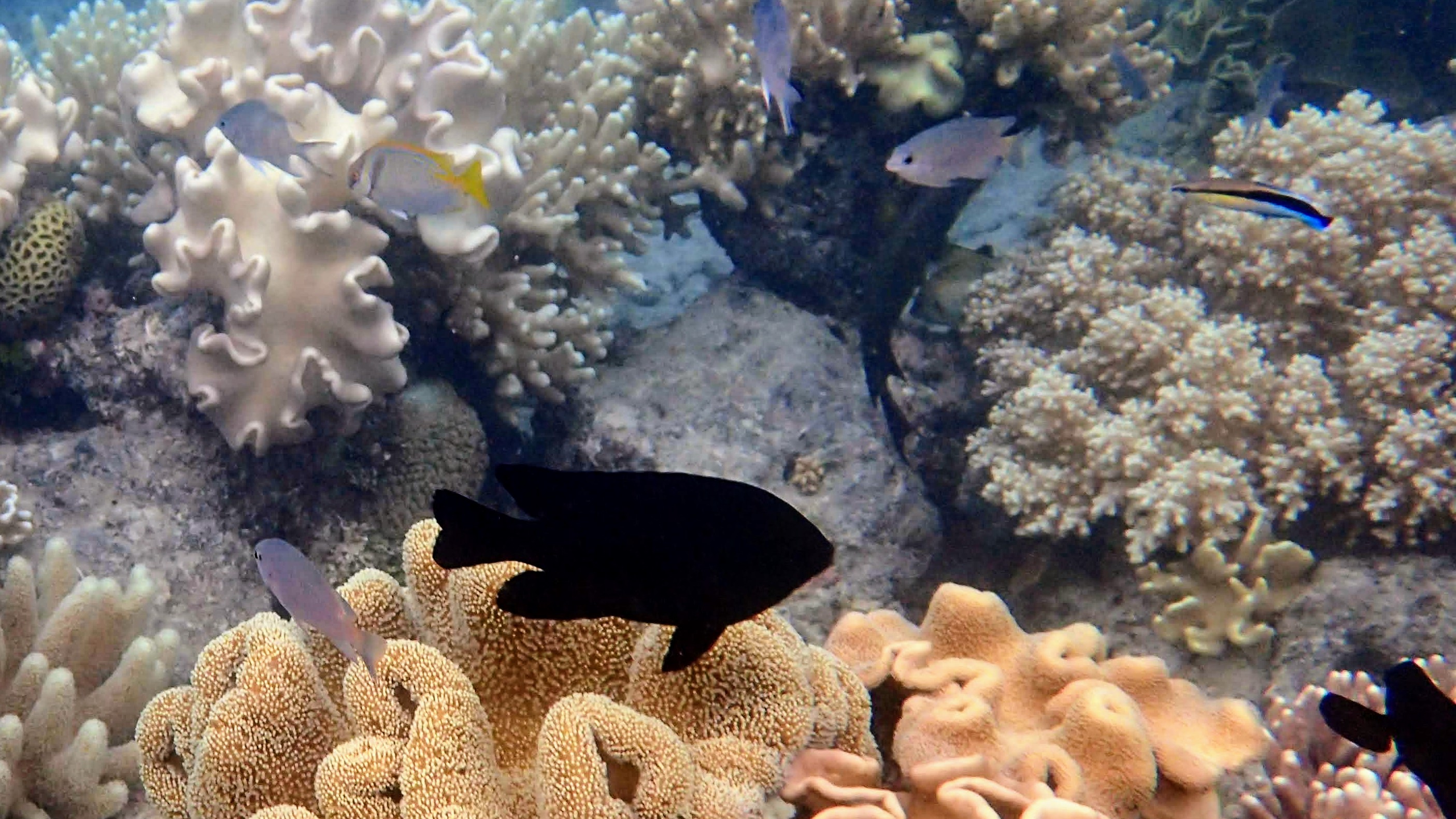
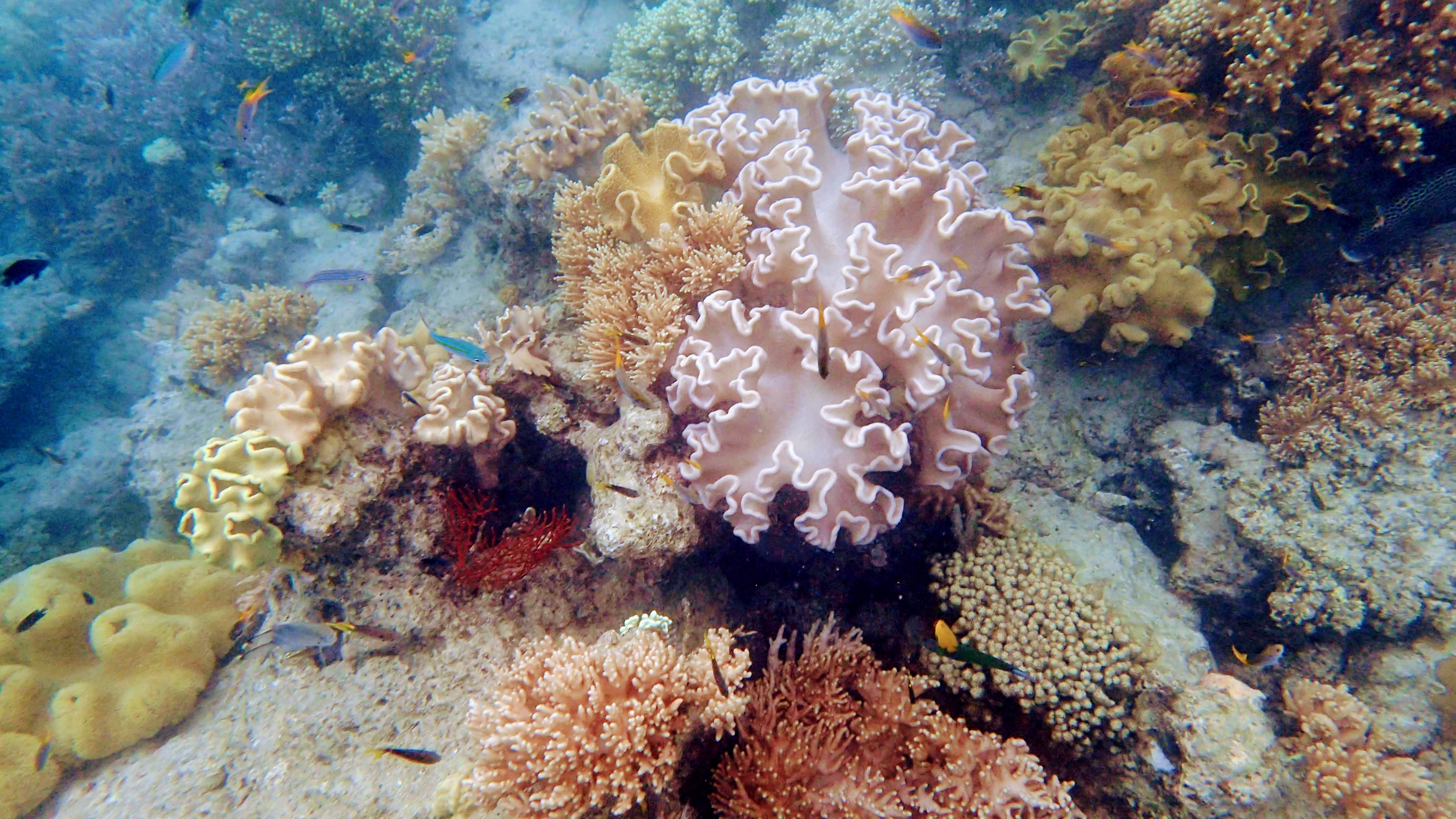
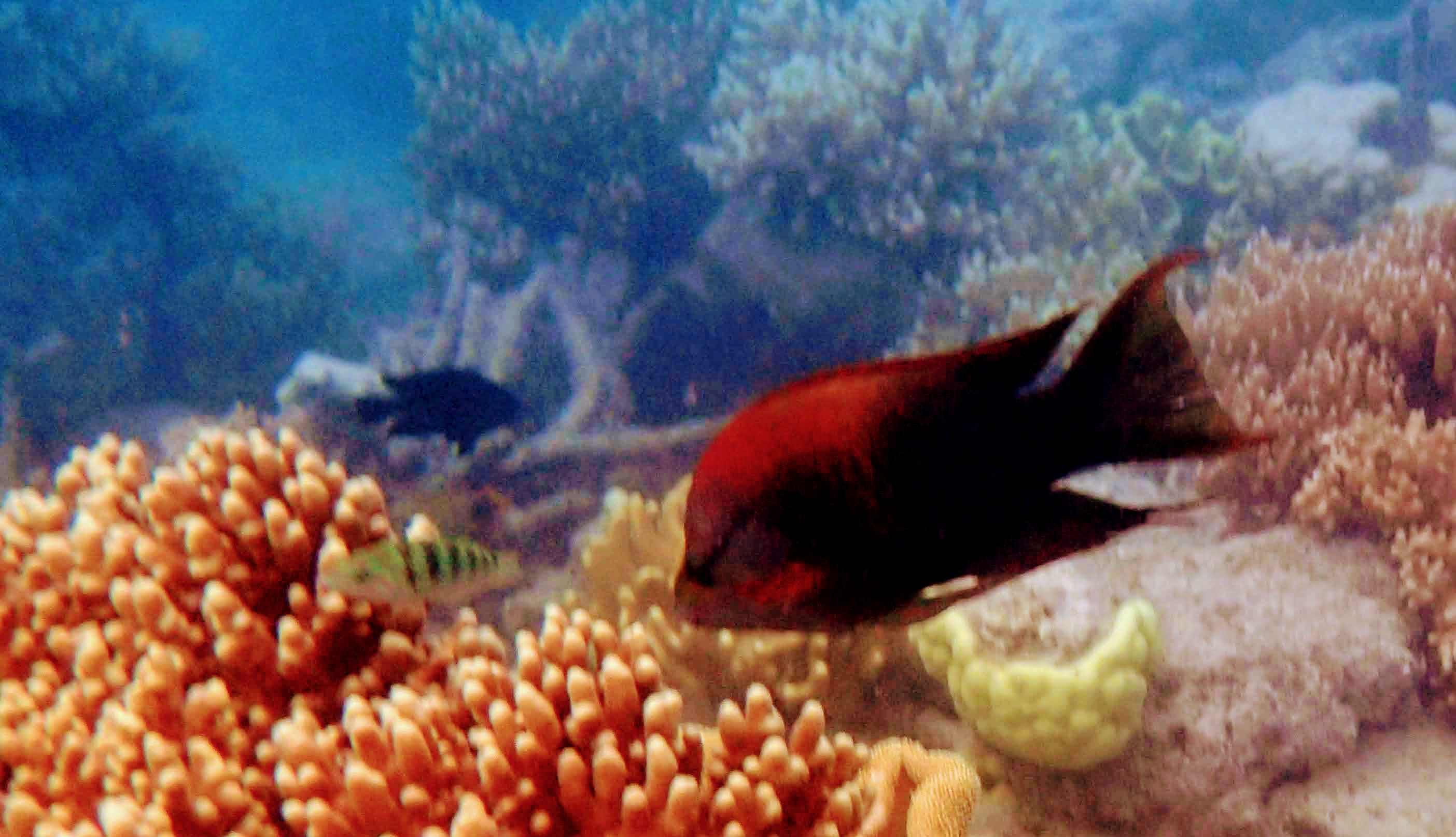
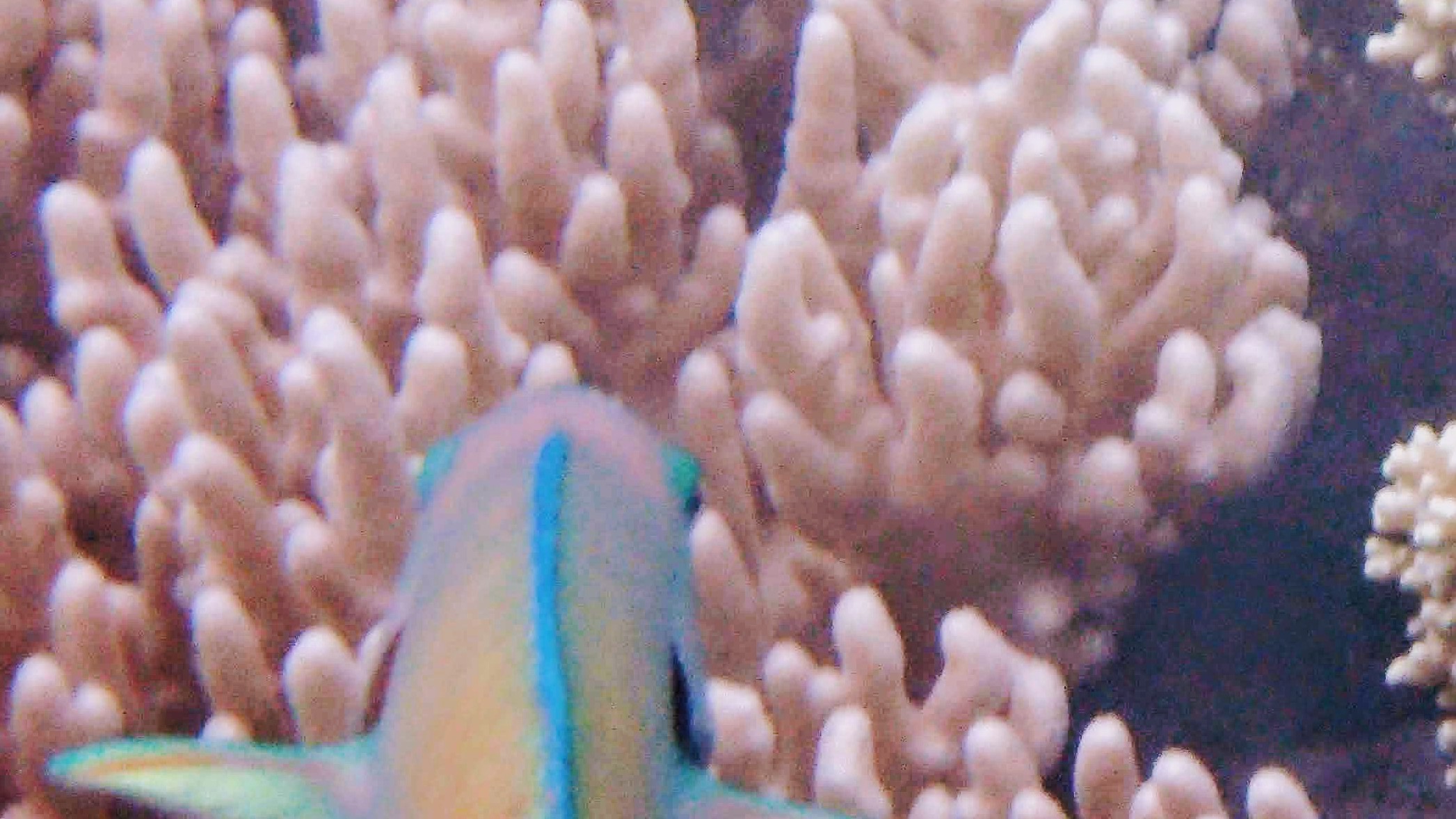
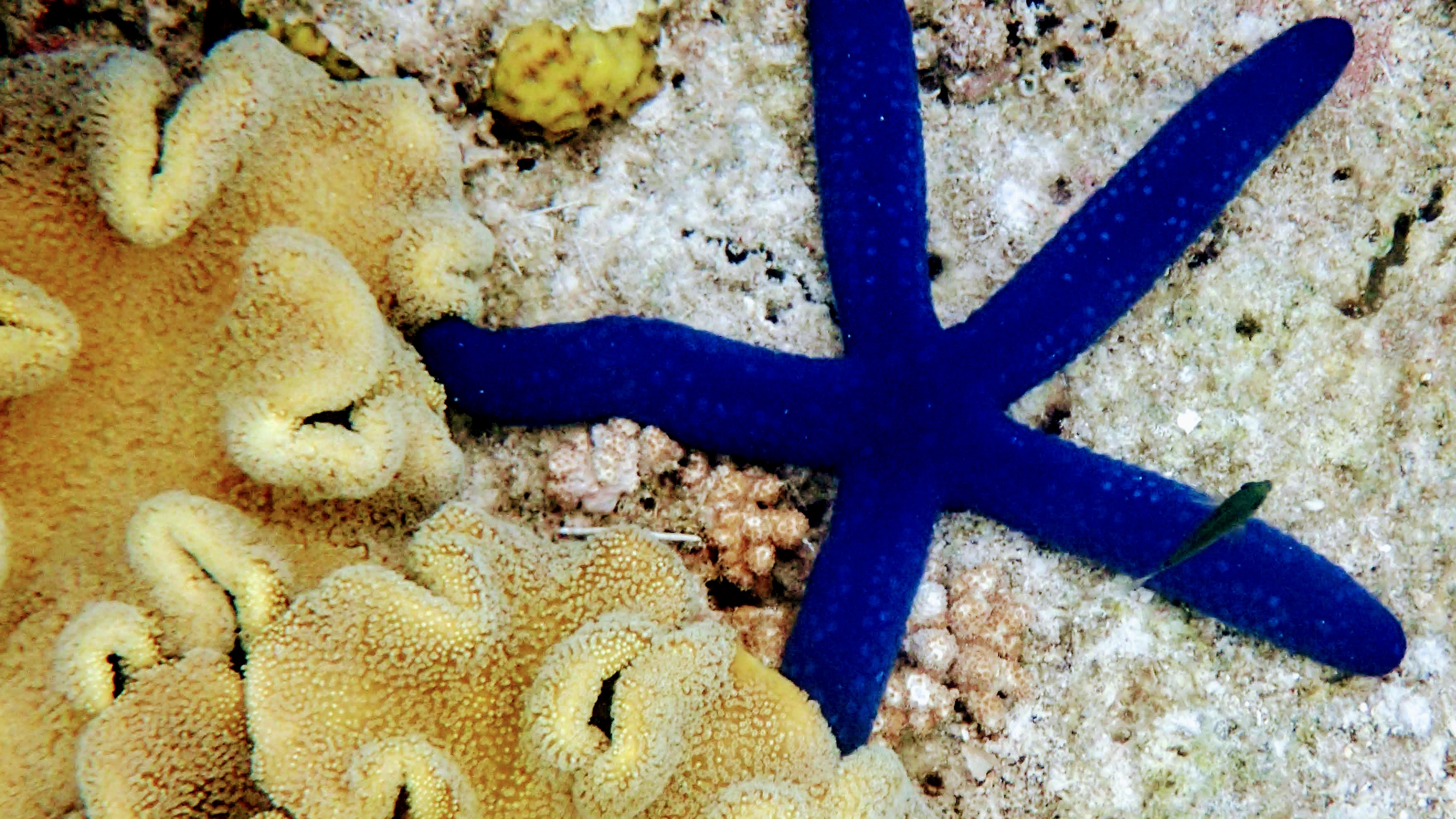
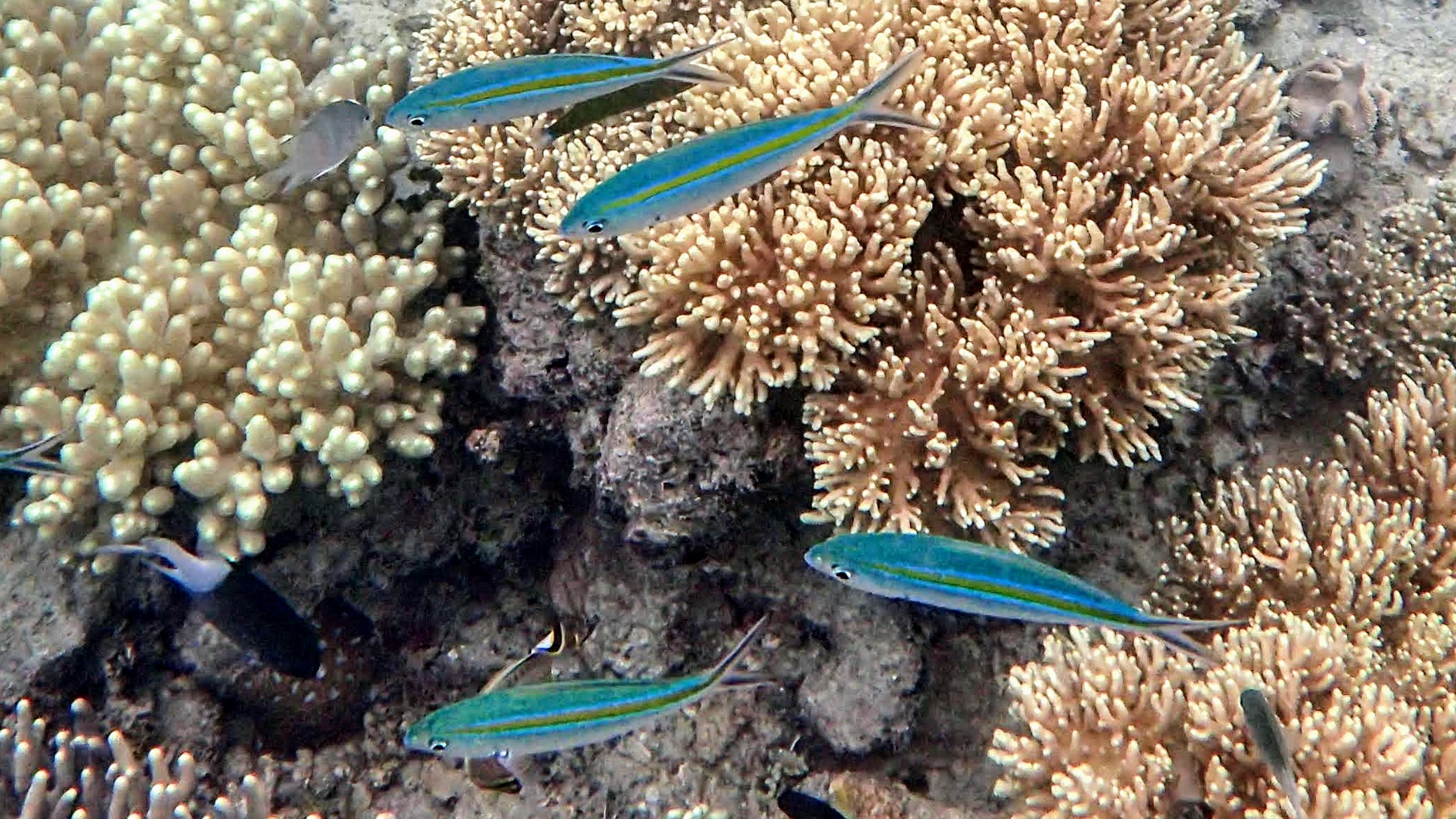
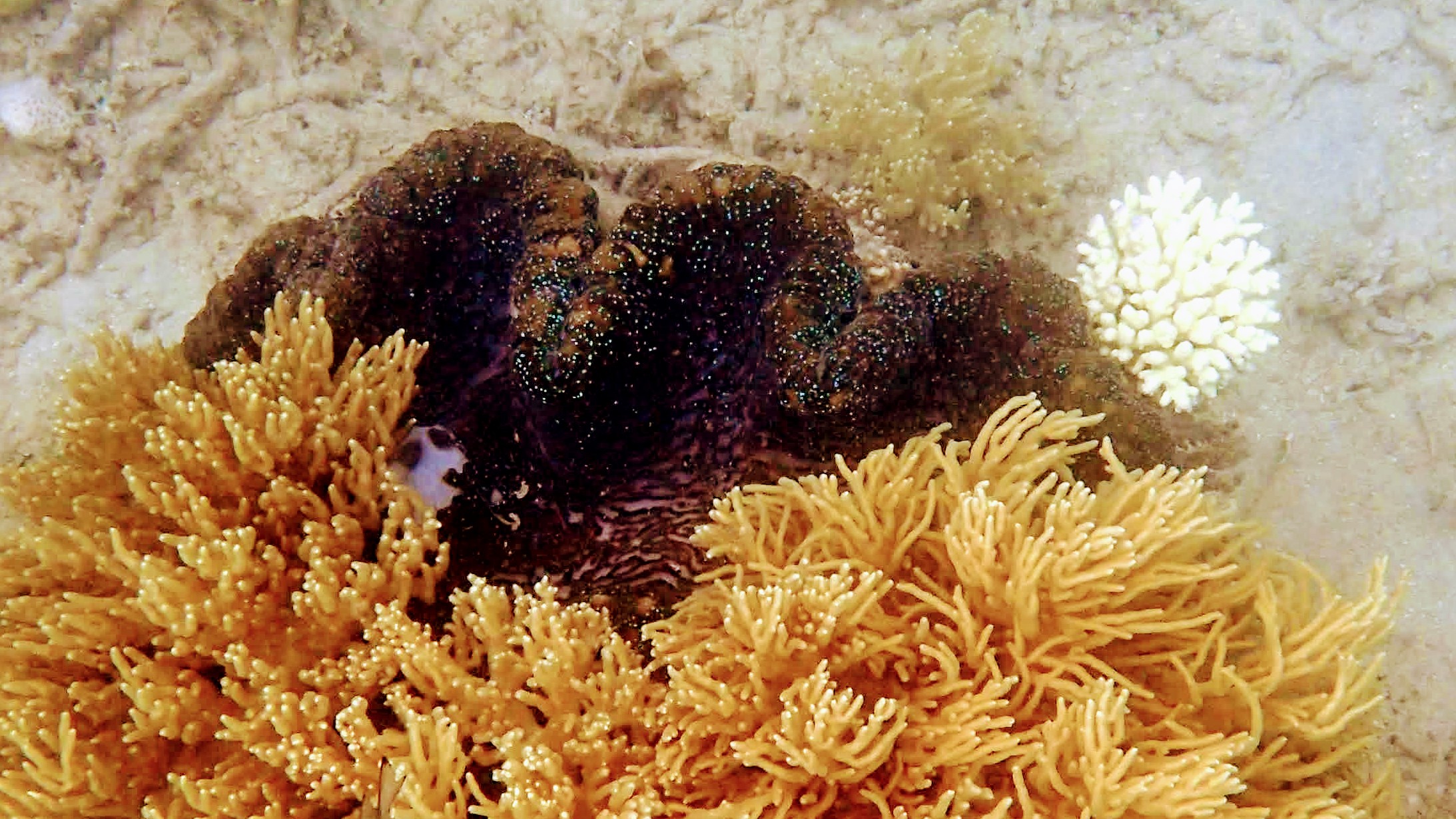
Our time in the water literally flew by! Mesmerized by the marine life and astonishing variety of coral, we were surprised when we realized we had been in the water for over two hours! The underwater camera worked pretty well, so here is a sampling of the photos Denise captured. Note the photos of white, bony coral which sadly show that coral bleaching is real.

Back on board the catamaran, we enjoyed a delicious buffet lunch and swapped stories of what we had experienced with our fellow passengers.

We’re so thrilled and grateful to have been able to enjoy the beauty and magic of this astonishing part of the world.

World Cruise Becomes Magical Mystery Tour!

As the World Health Organization and public health professionals around the world are working tirelessly to contain and combat COVID19, the current novel coronavirus, the Viking teams on board the Sun and back home at corporate headquarters have been working around the clock to keep us safe. From enhanced screening, to increased emphasis on frequent hand washing, to strategic changes to our itinerary, these travel professionals are doing everything possible to ensure our health and well being while we’re enjoying this world cruise. The latest itinerary changes include significant re-routing in and around Australia; the elimination of our visits to China, Hong Kong, Singapore, Thailand, Vietnam, Cambodia, Kota Kinabalu, and the Philippines; more days in Cairns, Darwin, and Bali; and the addition of visits to New Caledonia, Townsville, and Surabaya in Java. The itinerary will also include Sri Lanka, the Maldives, Cochin, Marmagoa and Mumbai. We’re pretty sure there will be more changes ahead between Bali and Mumbai, but for now this is what we know. In addition to the port changes, the team is making significant changes to the excursions available while in port, so one can only imagine the scheduling, pricing, and charging nightmares they’re enduring to get this right for each of 900 passengers! We’re choosing to go with the flow and make the best of each day.
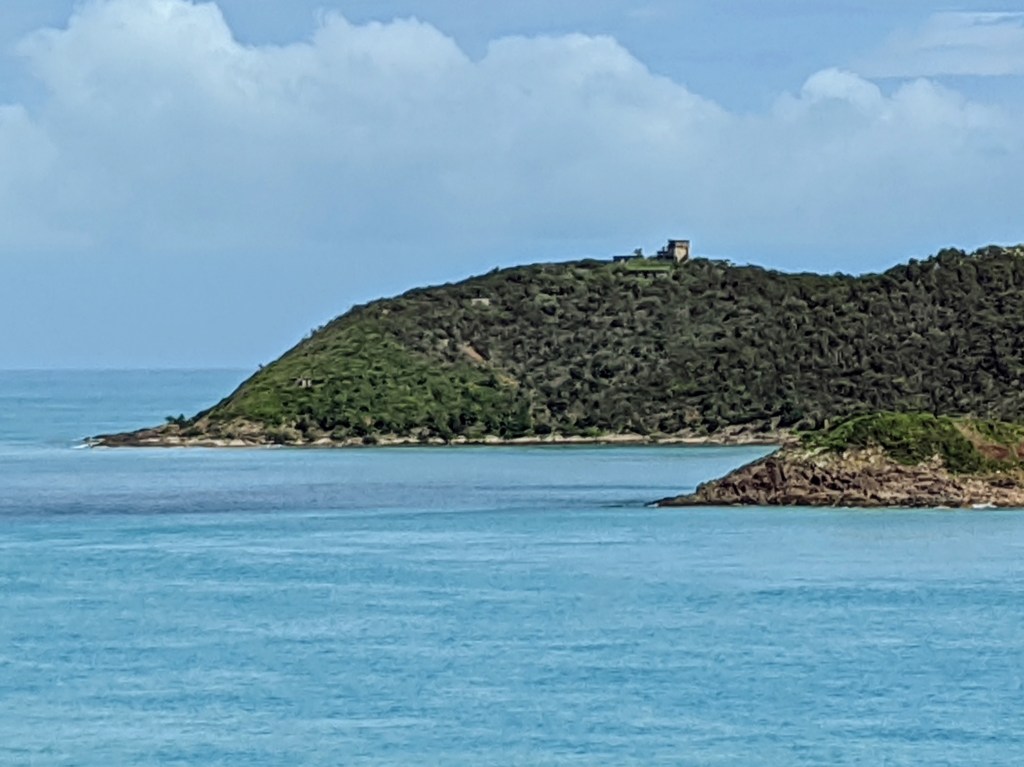
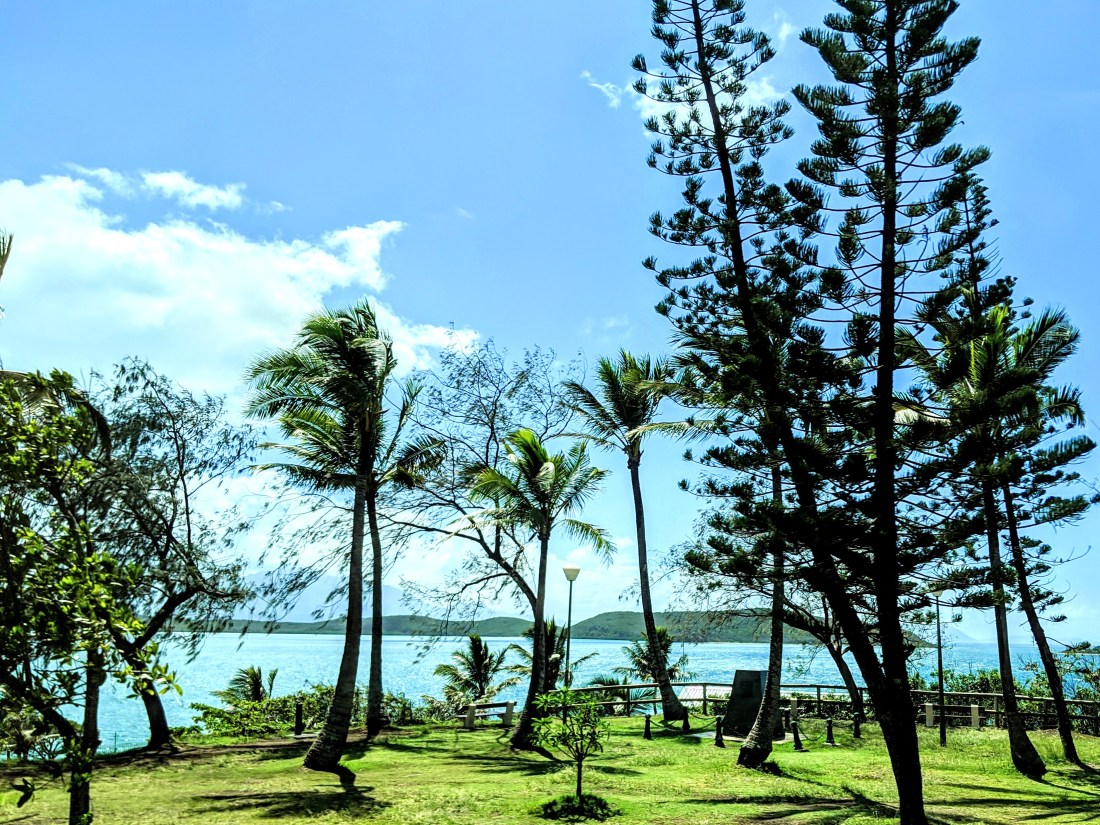
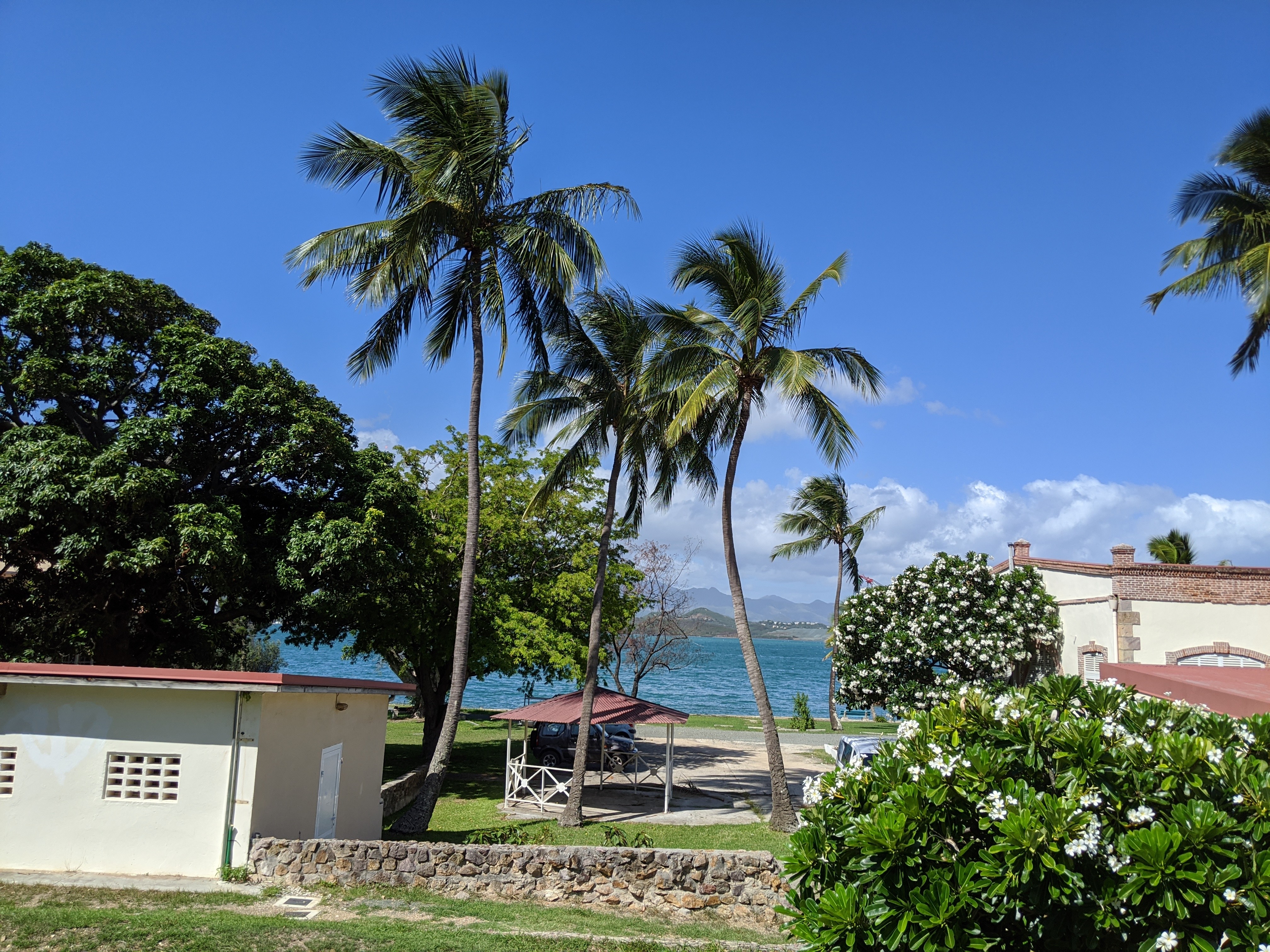
We left the beautiful city of Brisbane a couple of days ago and headed east on the Coral Sea en route to our “new” port of Noumea, New Caledonia. British explorer Captain James Cook first landed on this beautiful island in 1774 and named it New Caledonia because it reminded him of Scotland (Caledonia in Latin.) A special collectivity of France, New Caledonia includes the main island of Grande Terre, the Loyalty Islands, the Chesterfield Islands, the Belep archipelago, the Isle of Pines, and several remote islets. French people, and especially locals, refer to Grande Terre as Le Caillou (“the pebble”). French is the predominant language, and all residents can vote in French presidential elections.

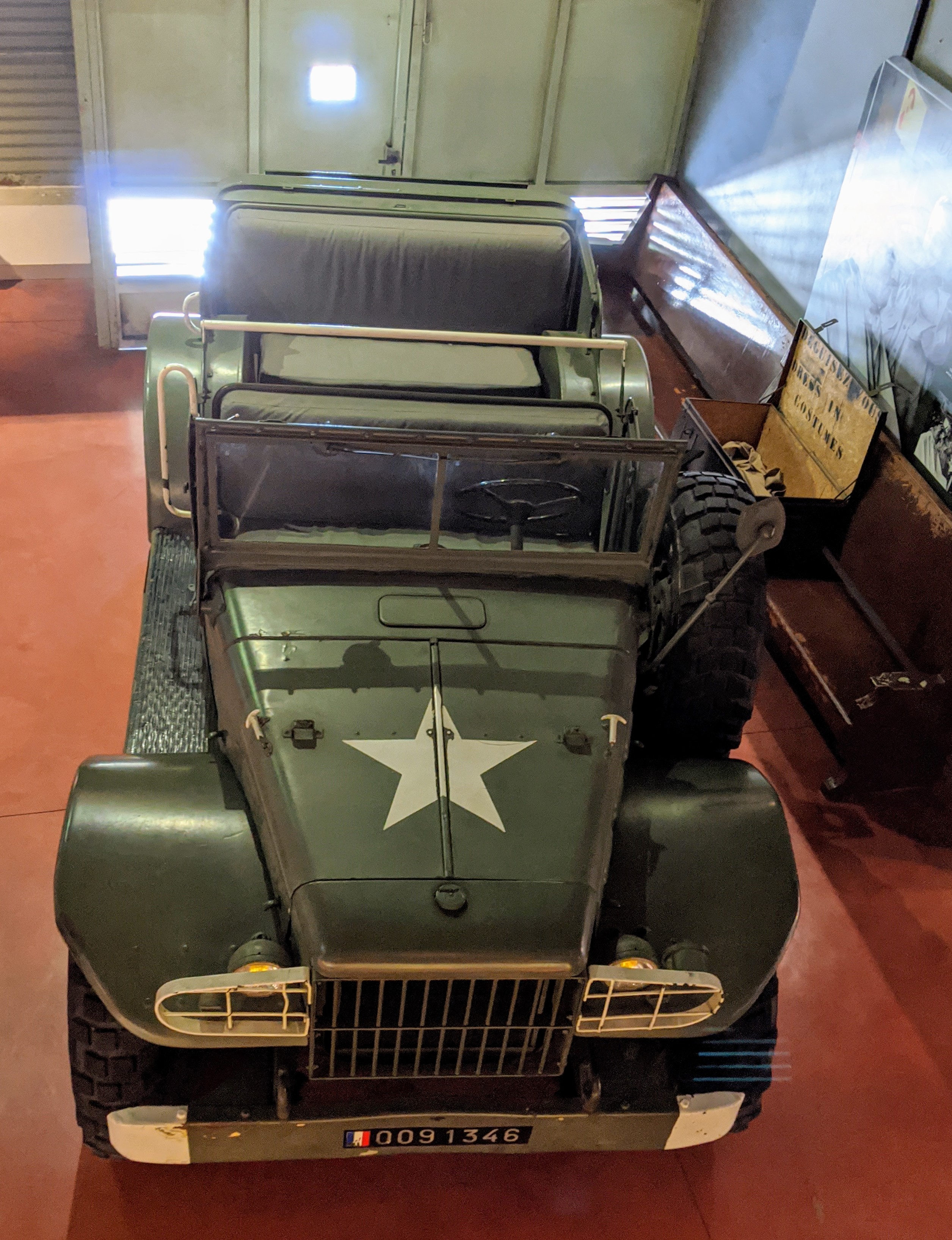
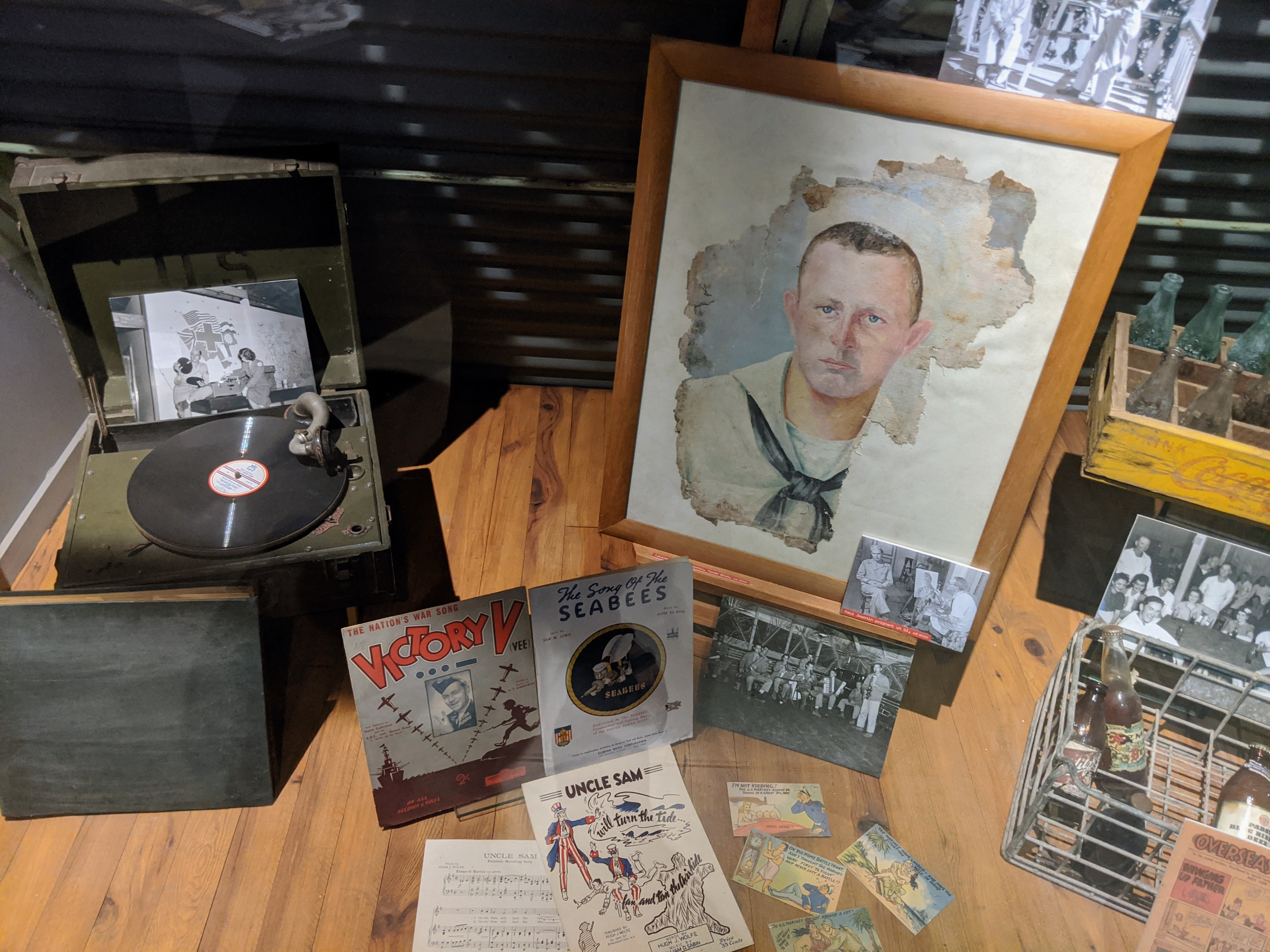
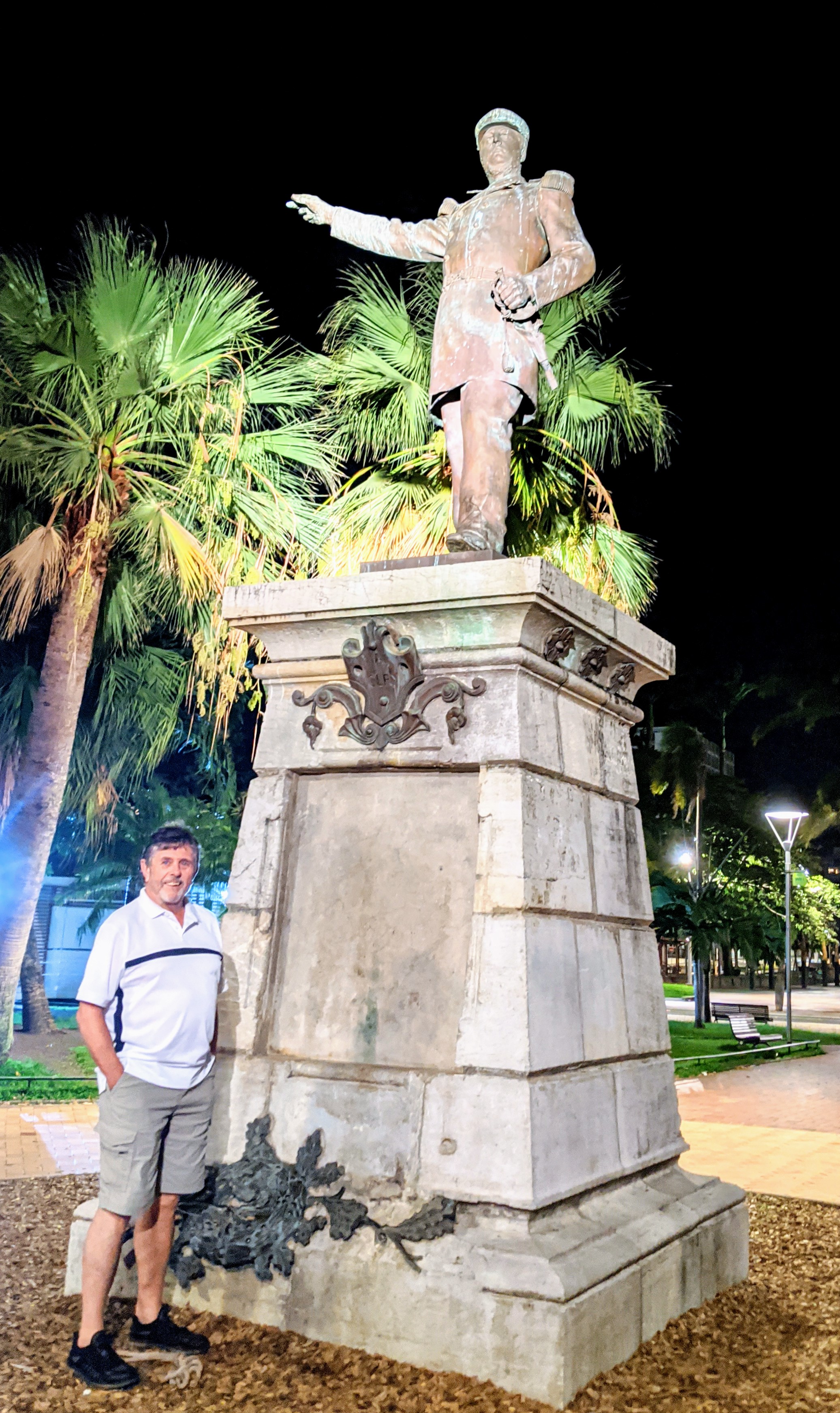
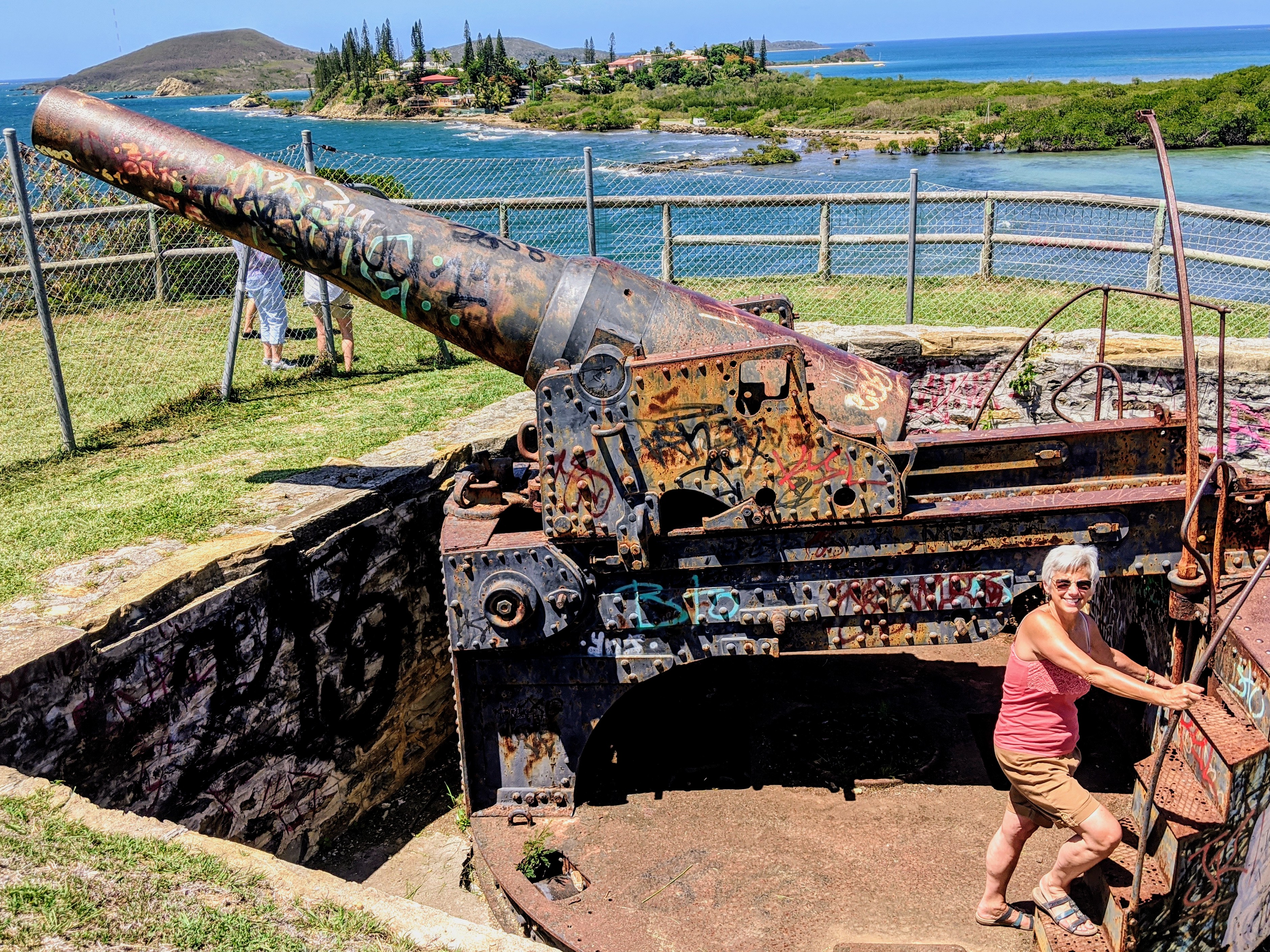
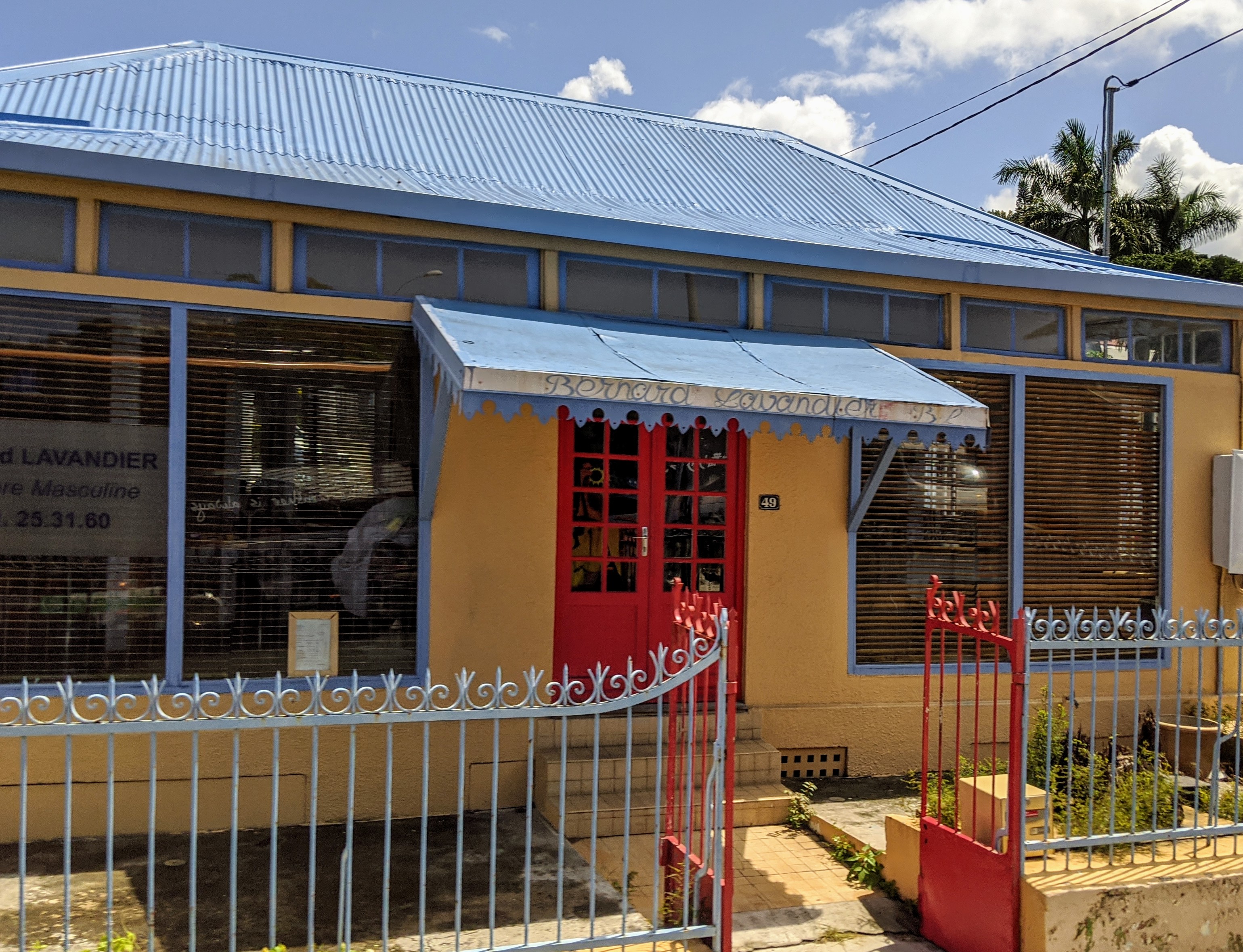
The capital city of Noumea, our “home” for two days, reflects a unique mix of French, colonial, and indigenous Kanak culture. During World War II, Noumea served as the headquarters of the US military in the South Pacific. The five-sided US military headquarters complex was adopted after the war as the base for a new regional intergovernmental development organization now known as the “Pacific Community.” The US military introduced many modern conveniences to the area, and a stylized US flag stands as a prominent monument near the center of town expressing the warmth New Caledonians feel towards Americans.

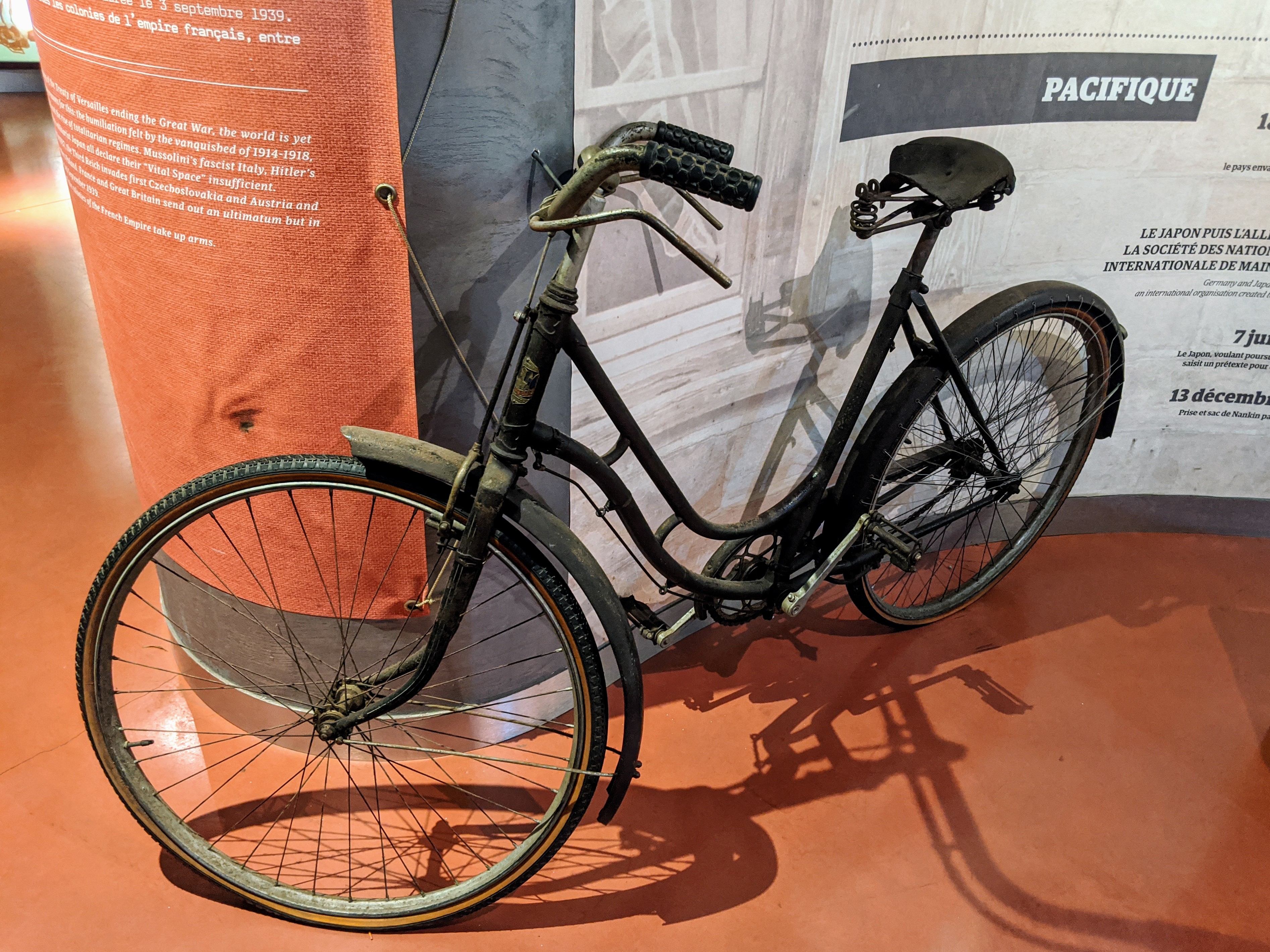
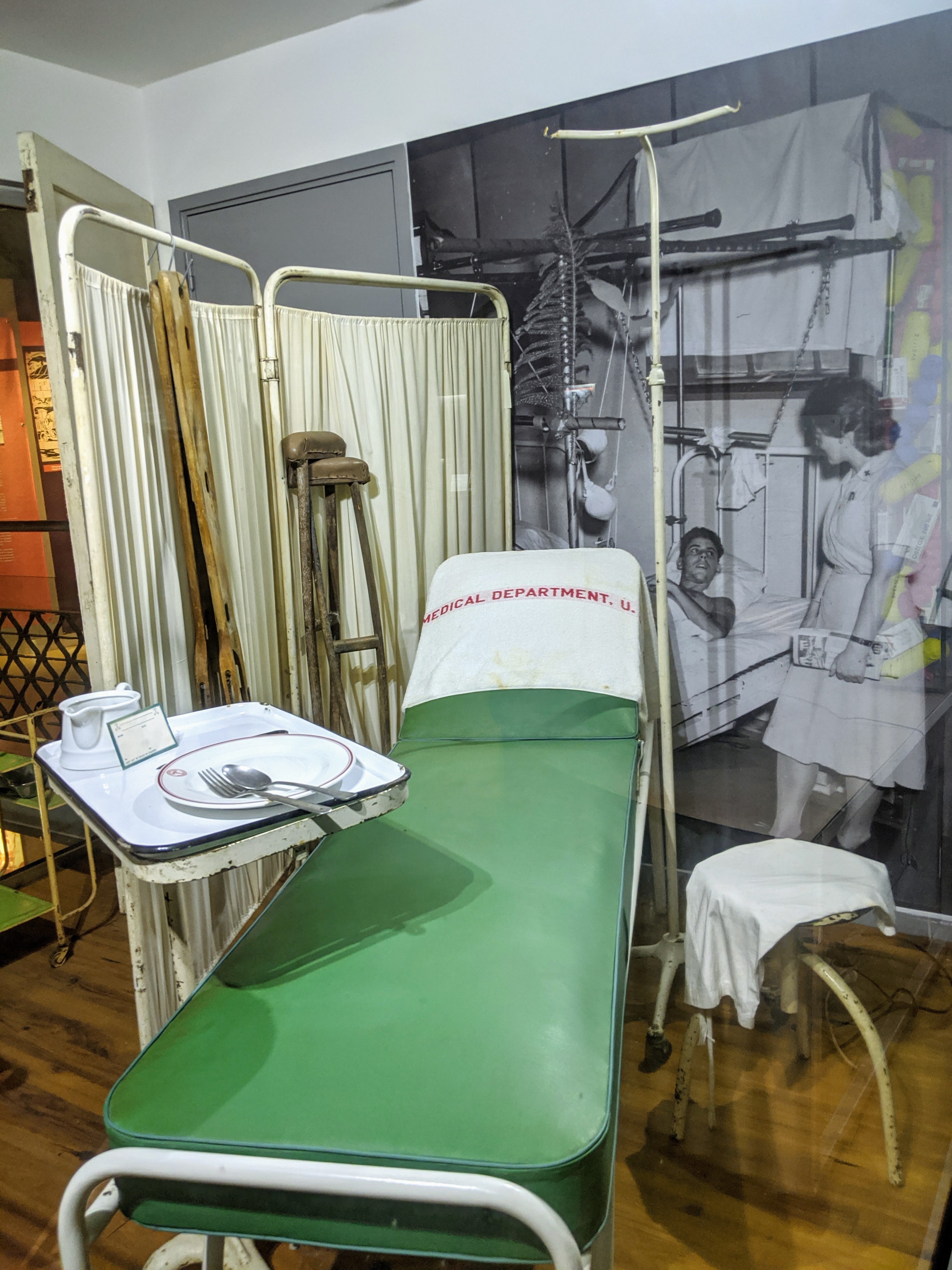
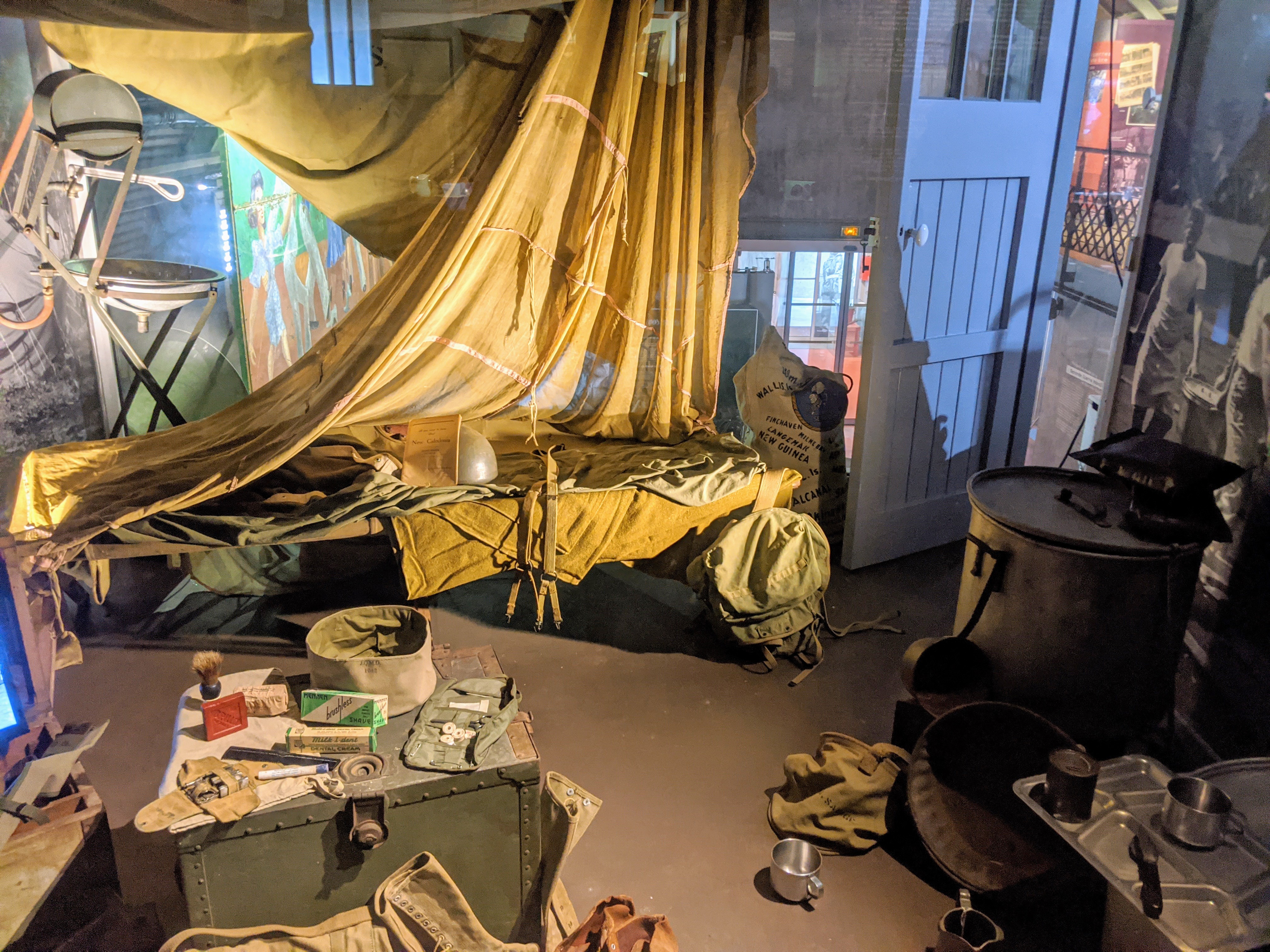
A visit to The Musee de la Seconde Guerre Mondiale (WW II Museum) provides a glimpse of what it must have been like for the population of New Caledonia to double with the presence of 50,000 Allied Troops during WW II. This small museum, housed in former Quonset huts, outlines the story of the important role New Caledonia played in the Pacific Ocean Theater. Although most of the exhibits are in French, there is enough English for most visitors to follow the story line. Doug, however, was longing for Gina to translate every word, ‘cuz that’s how he “does museums!”

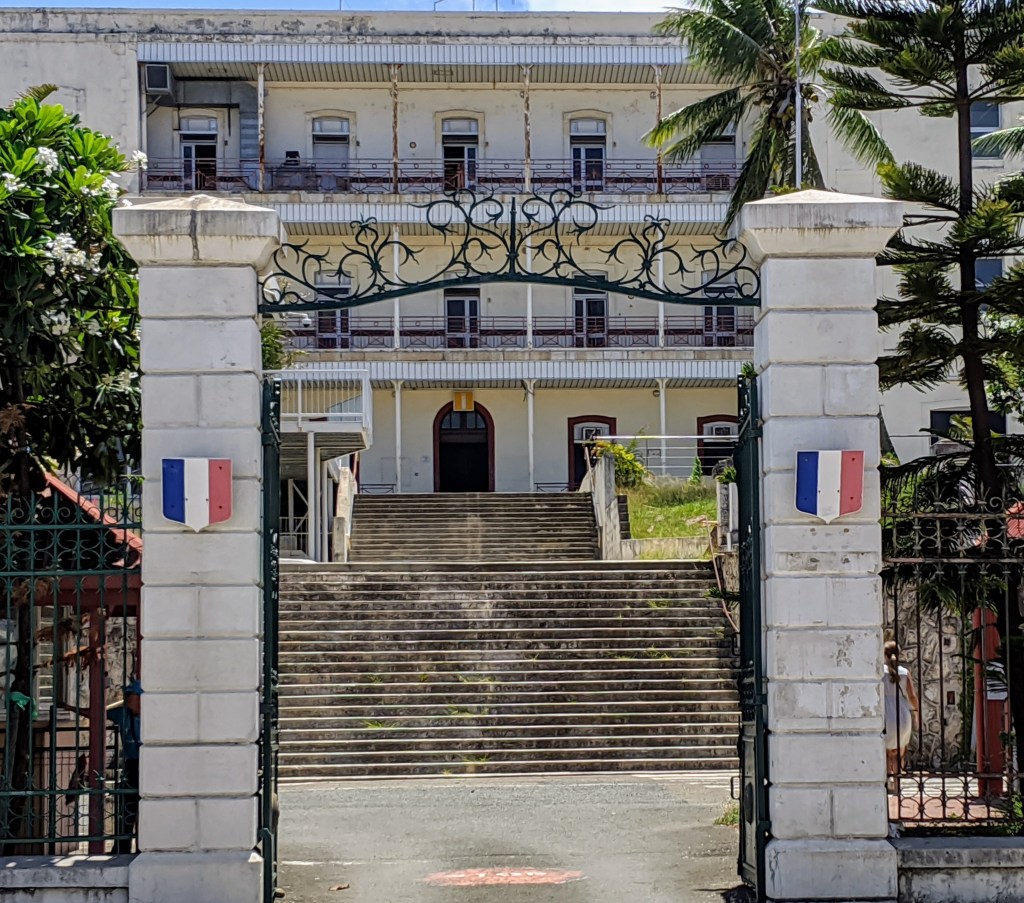
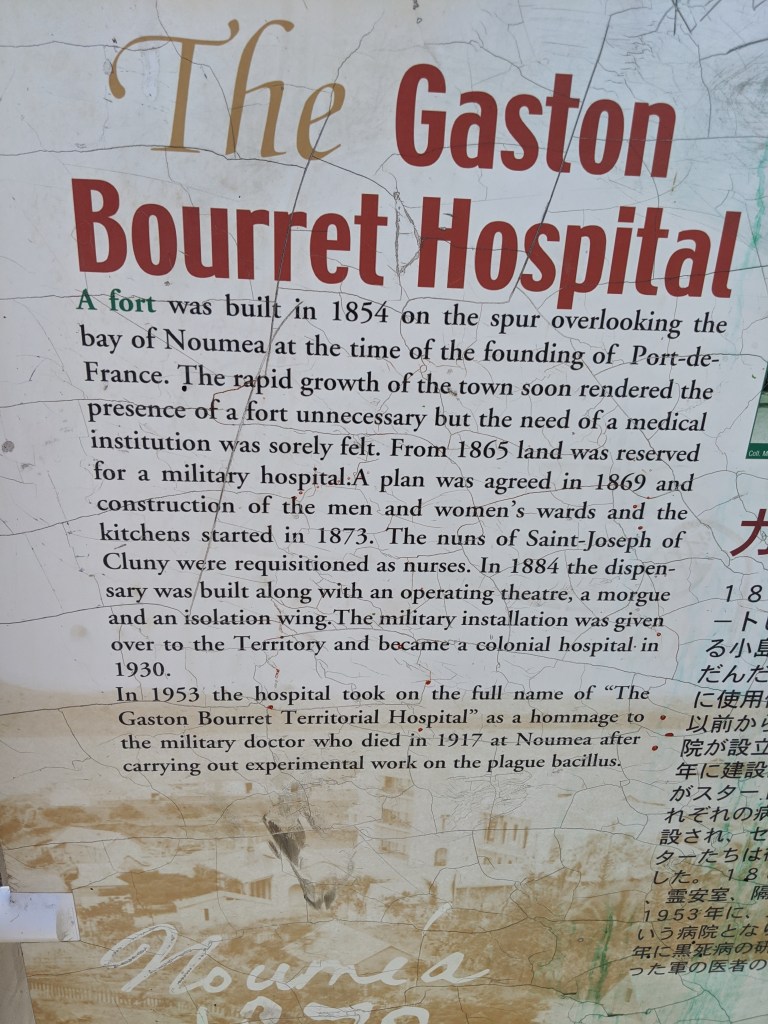
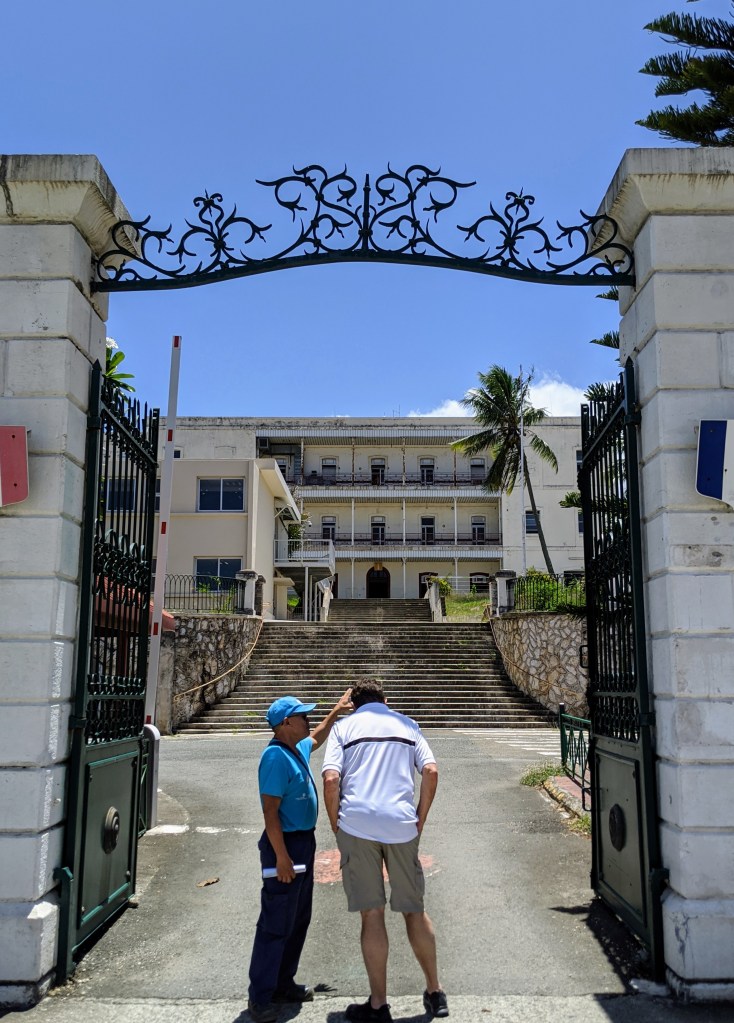
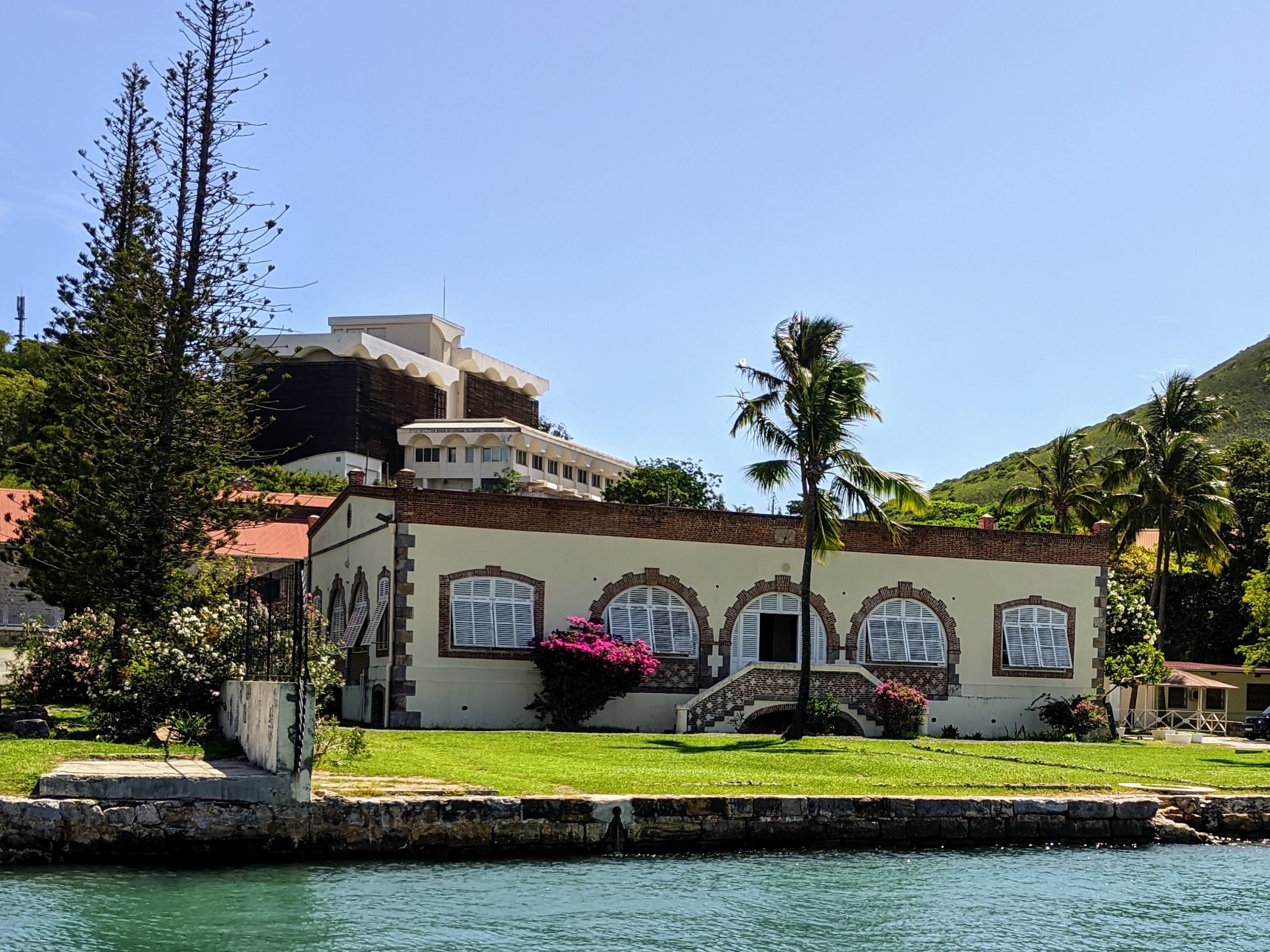
Across the street from the museum are the remains of the Gaston Bourret Hospital. Originally built as a fort in 1854, the Gaston-Bourret grew to 500 beds and served the military and local residents until a new, modern facility was built in 2016.

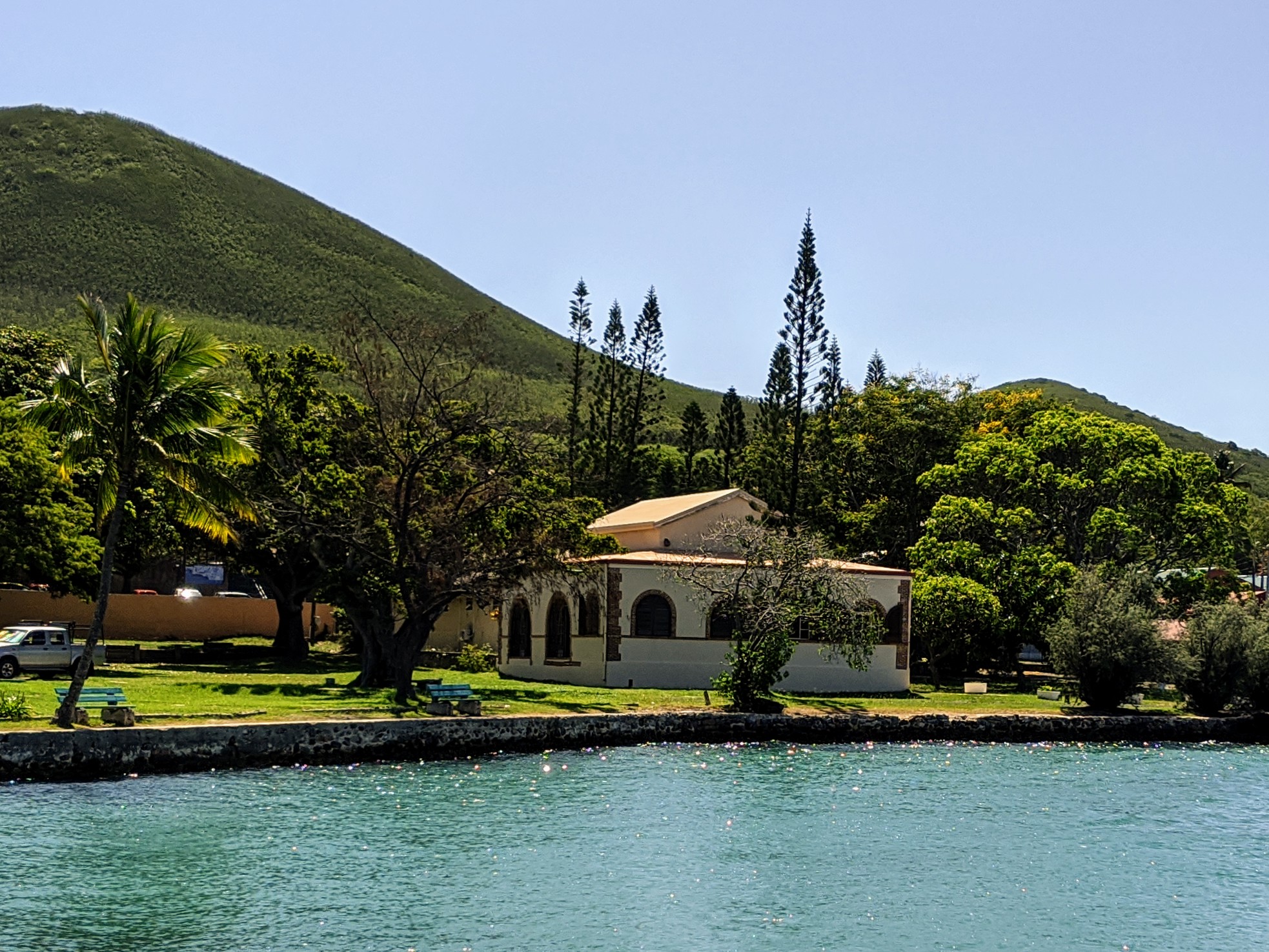
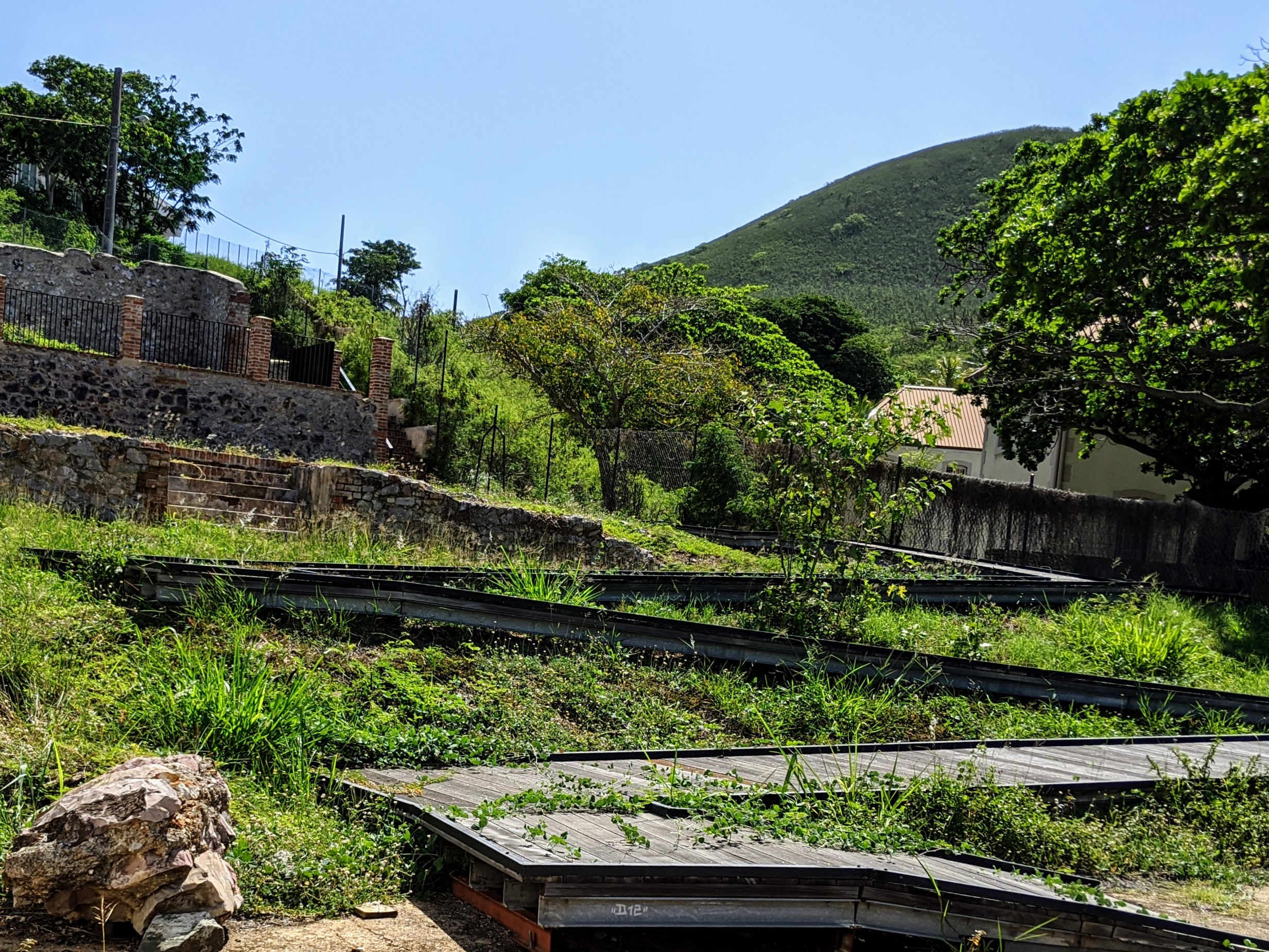
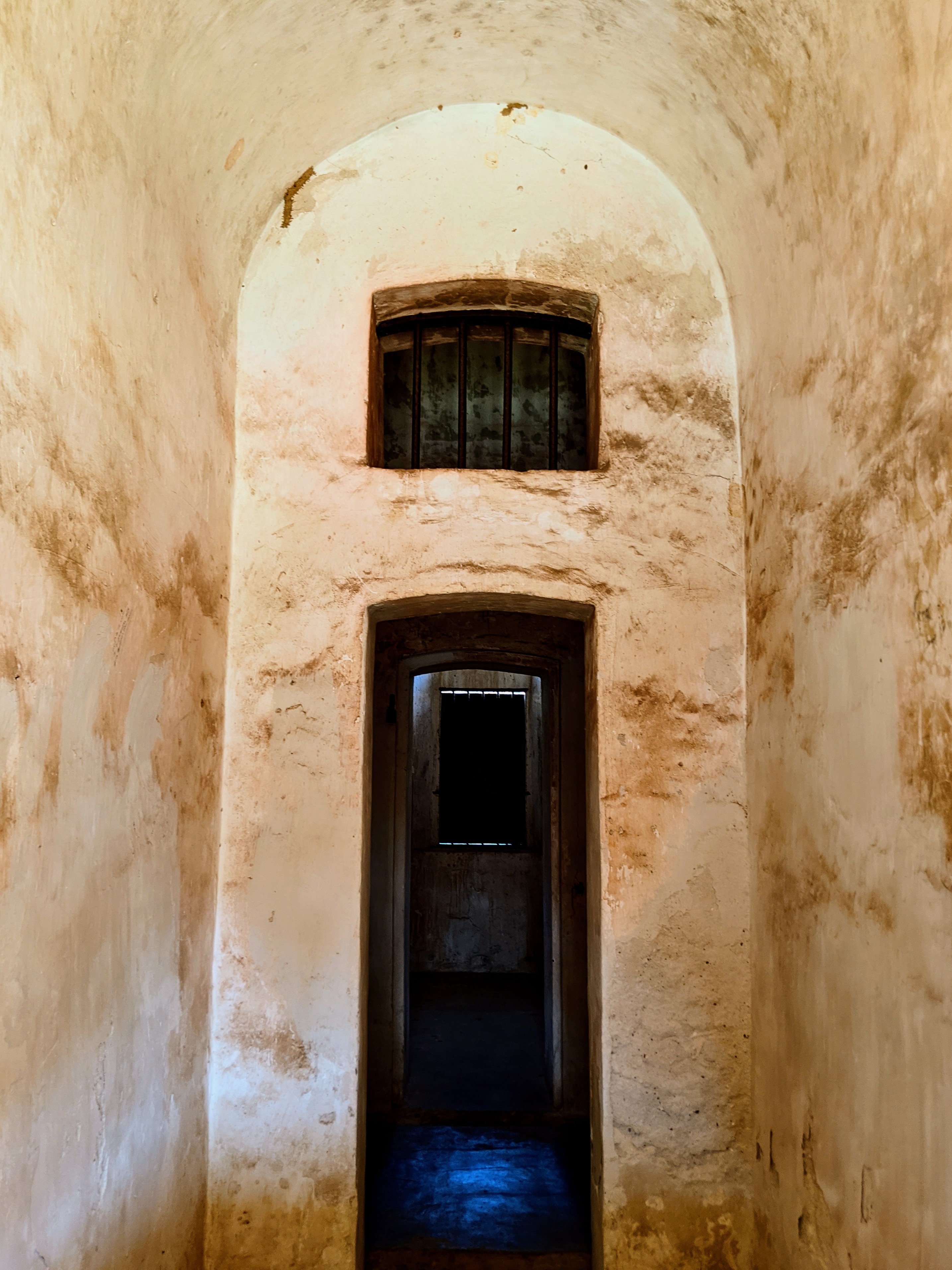
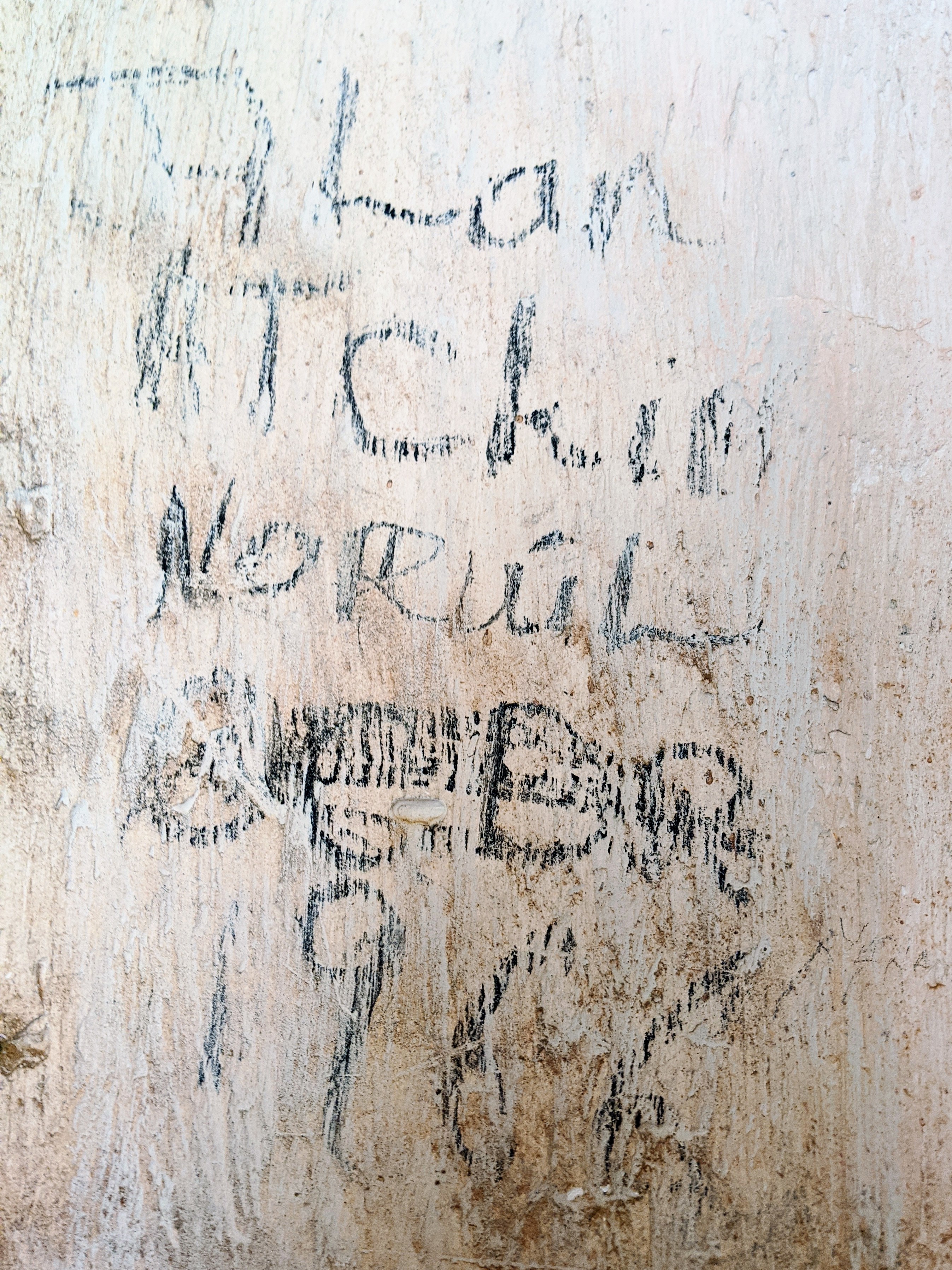
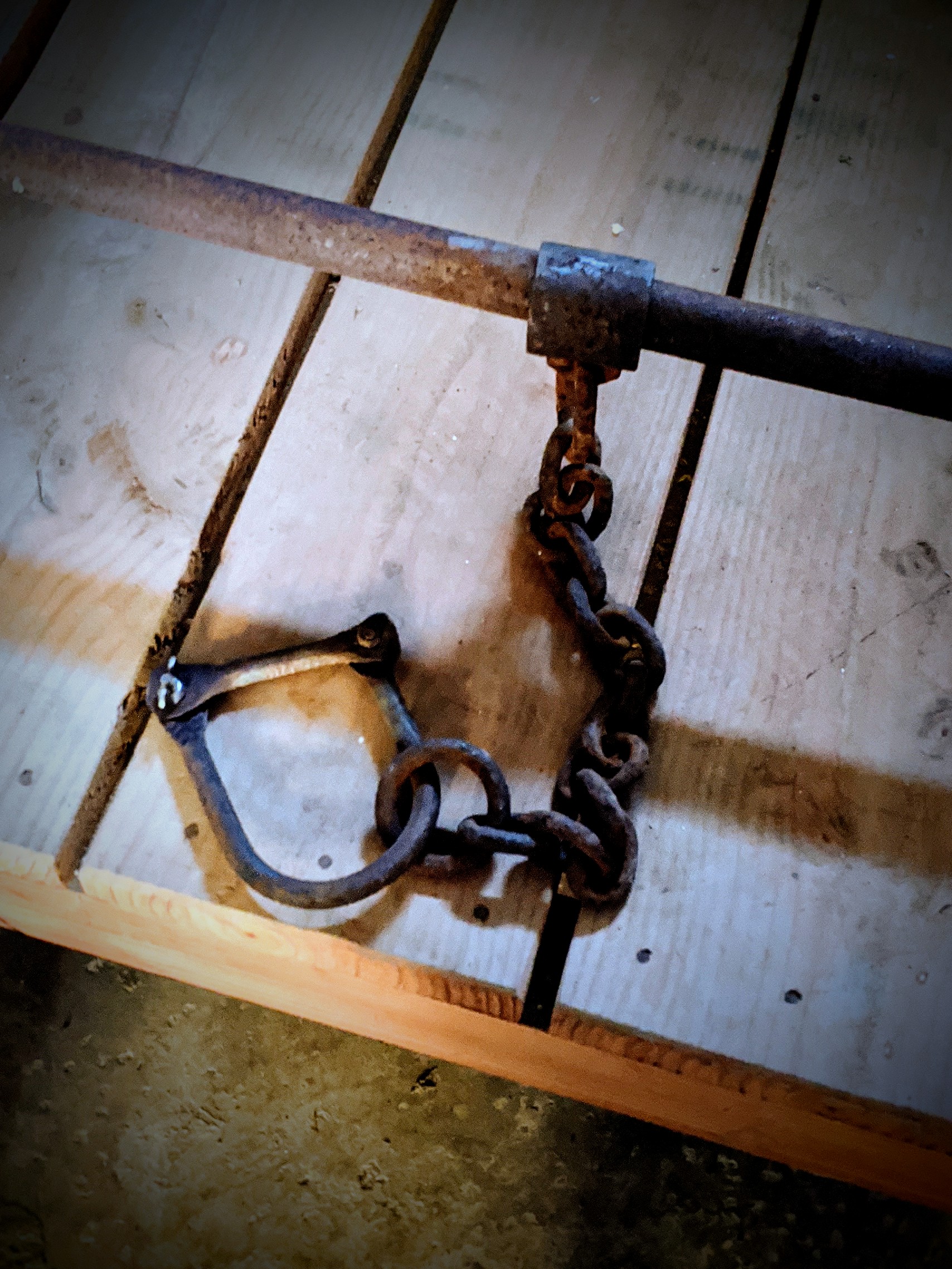
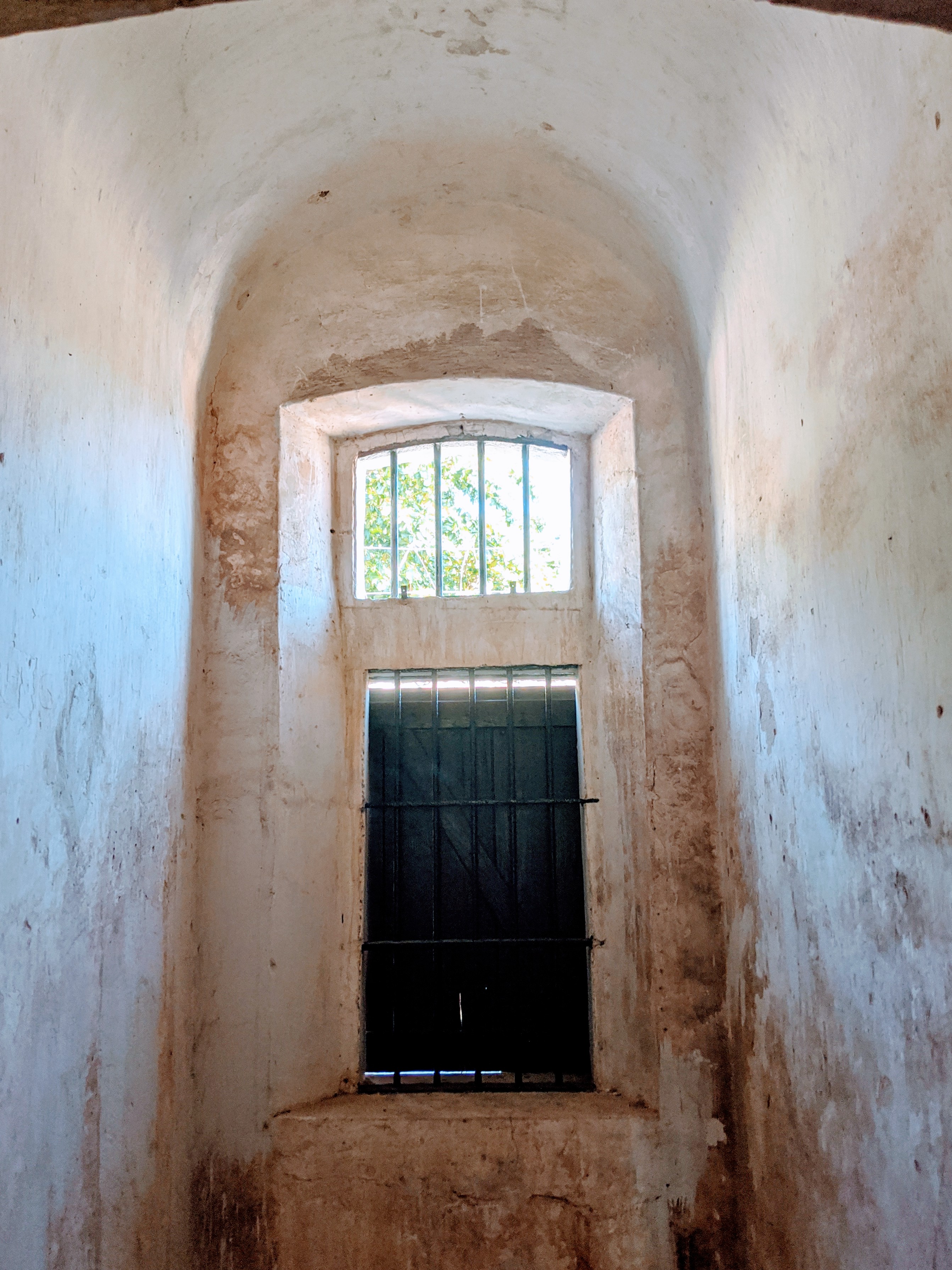
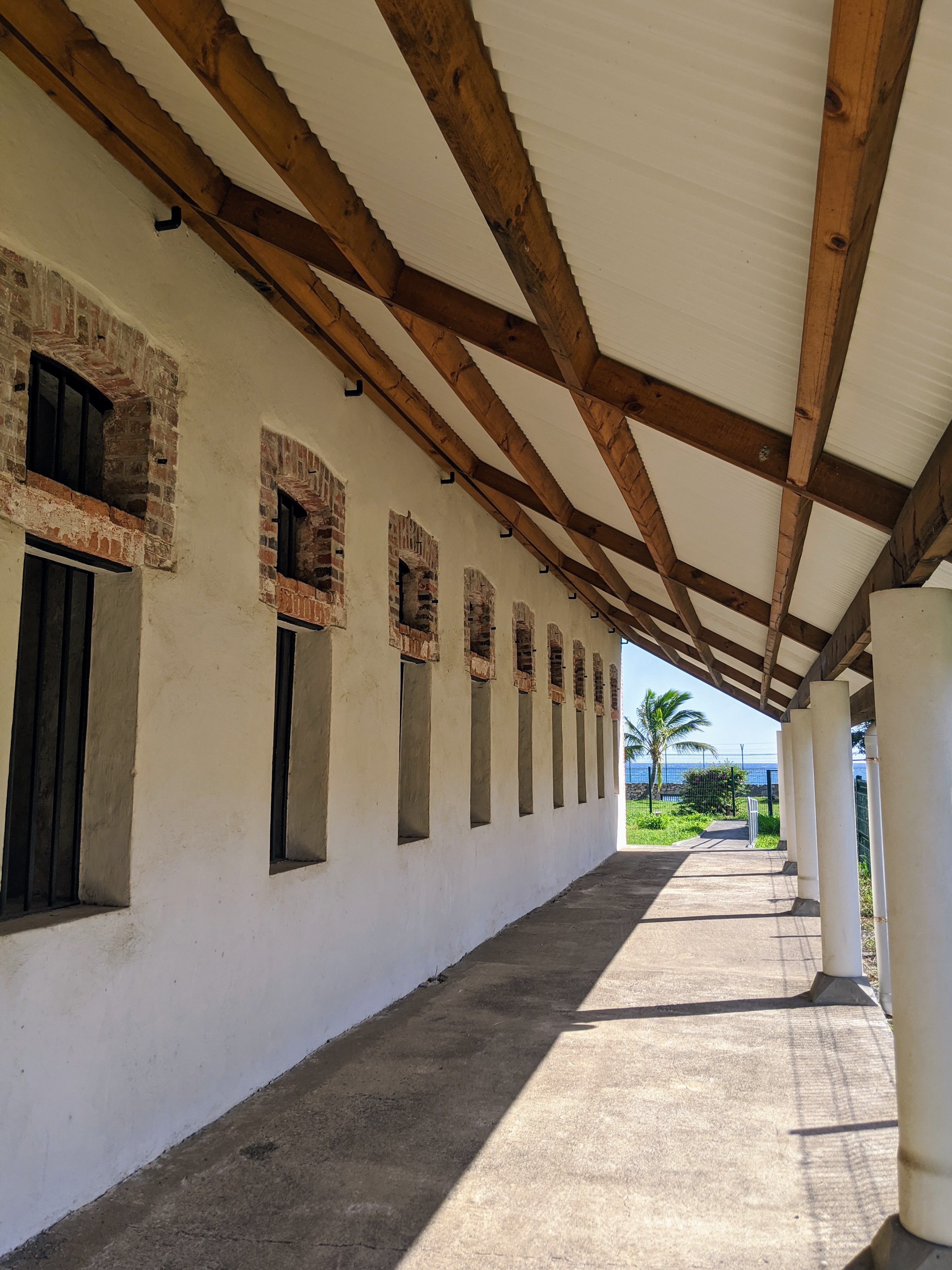
The French began sending convicts to New Caledonia in 1864. Over the next 30 years, about 25,000 “hard-labour convicts and petty offenders” made the six-month sea journey from France, and those who survived were housed in a penal colony. The convicts carried out most of the original construction in and around Noumea, including public buildings, churches, and even some homes. Once freed, the ex-convicts who were sentenced to eight years or more were subject to “perpetual residence in the colony” even after they had served their sentence. Most of them established families and became productive citizens. Today, a penal colony museum stands as a memorial to these earliest settlers. While some of the buildings have been restored, the original prison bakery and the former penal psych hospital are probably better reflections of the difficult times. The handwriting on the wall isn’t legible, but if those walls could talk, oh the stories they’d tell!

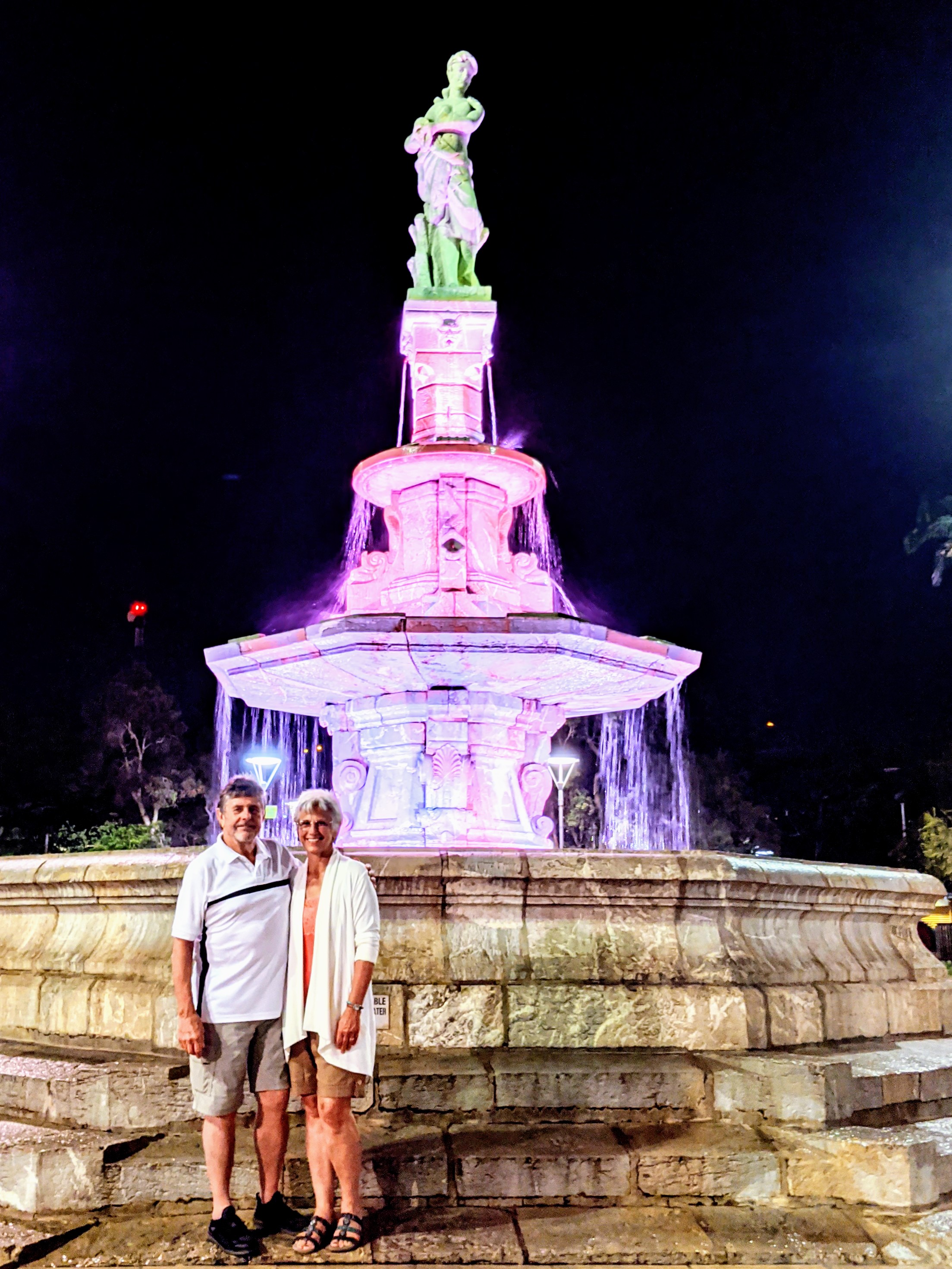
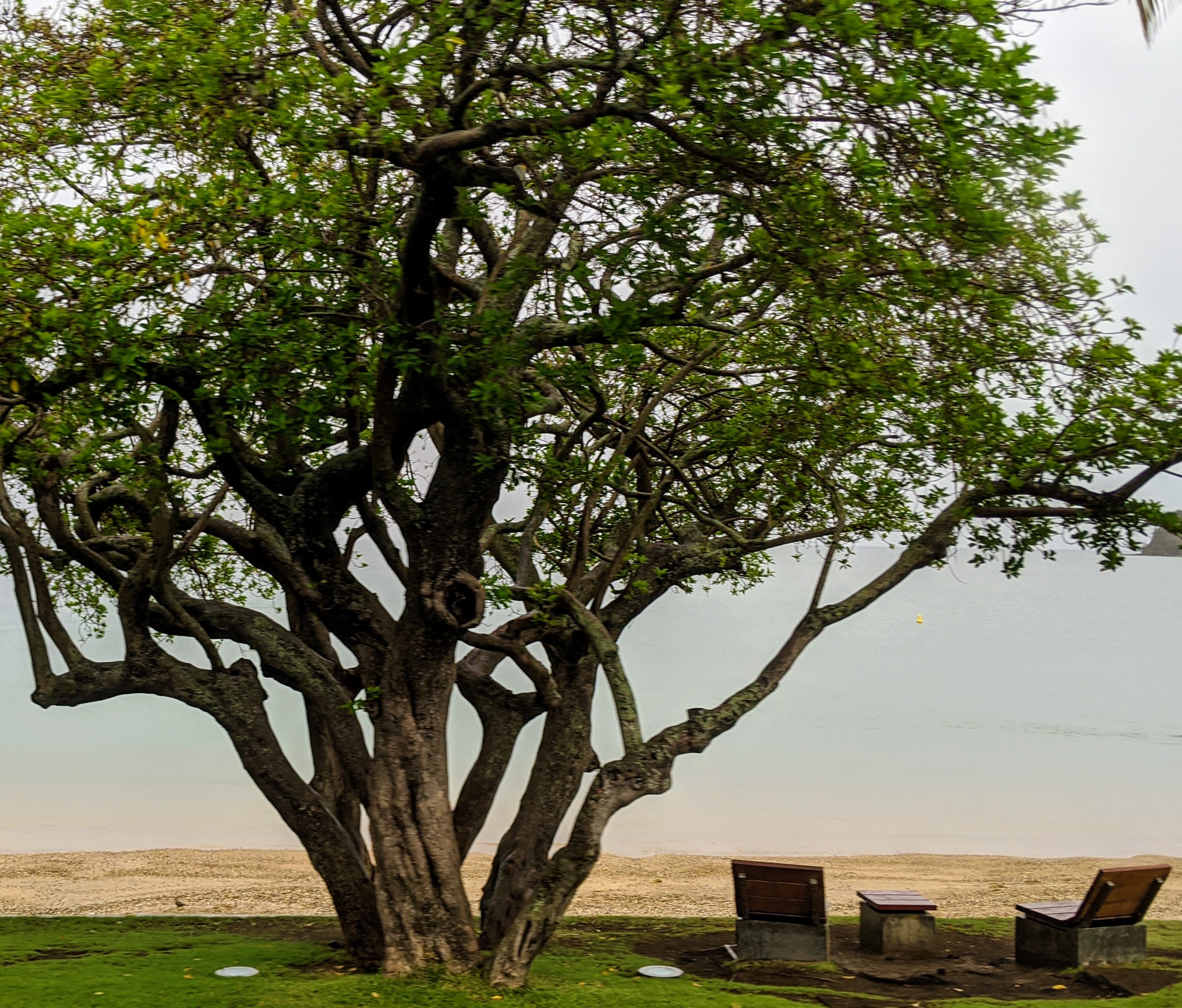
A panoramic tour of Noumea reflects the colonial and strategic military history and more contemporary nature of this capital city. With picturesque, relaxed beaches and clear, azure waters all around, it is also becoming a popular tourist destination. The discovery of nickel deposits has turned this city into a major seaport, and has drawn migrants from Europe, Indonesia, Vietnam, and China who are contributing to the dynamic multi-cultural artistic, architectural, and culinary scene. A focal point of Noumea is Coconut Palm Square, with its pedestrian-friendly walkways and colorfully-lit fountain.

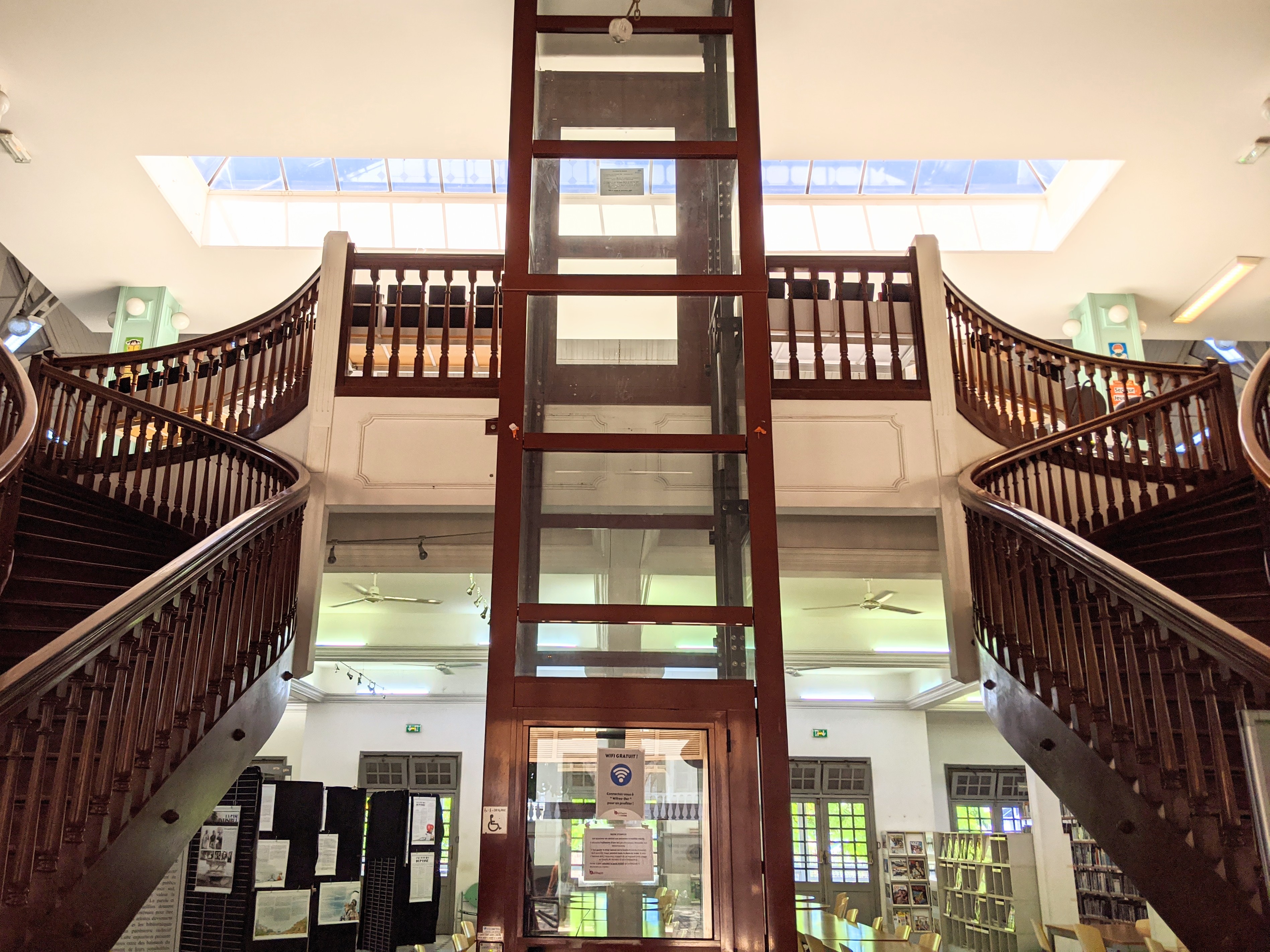
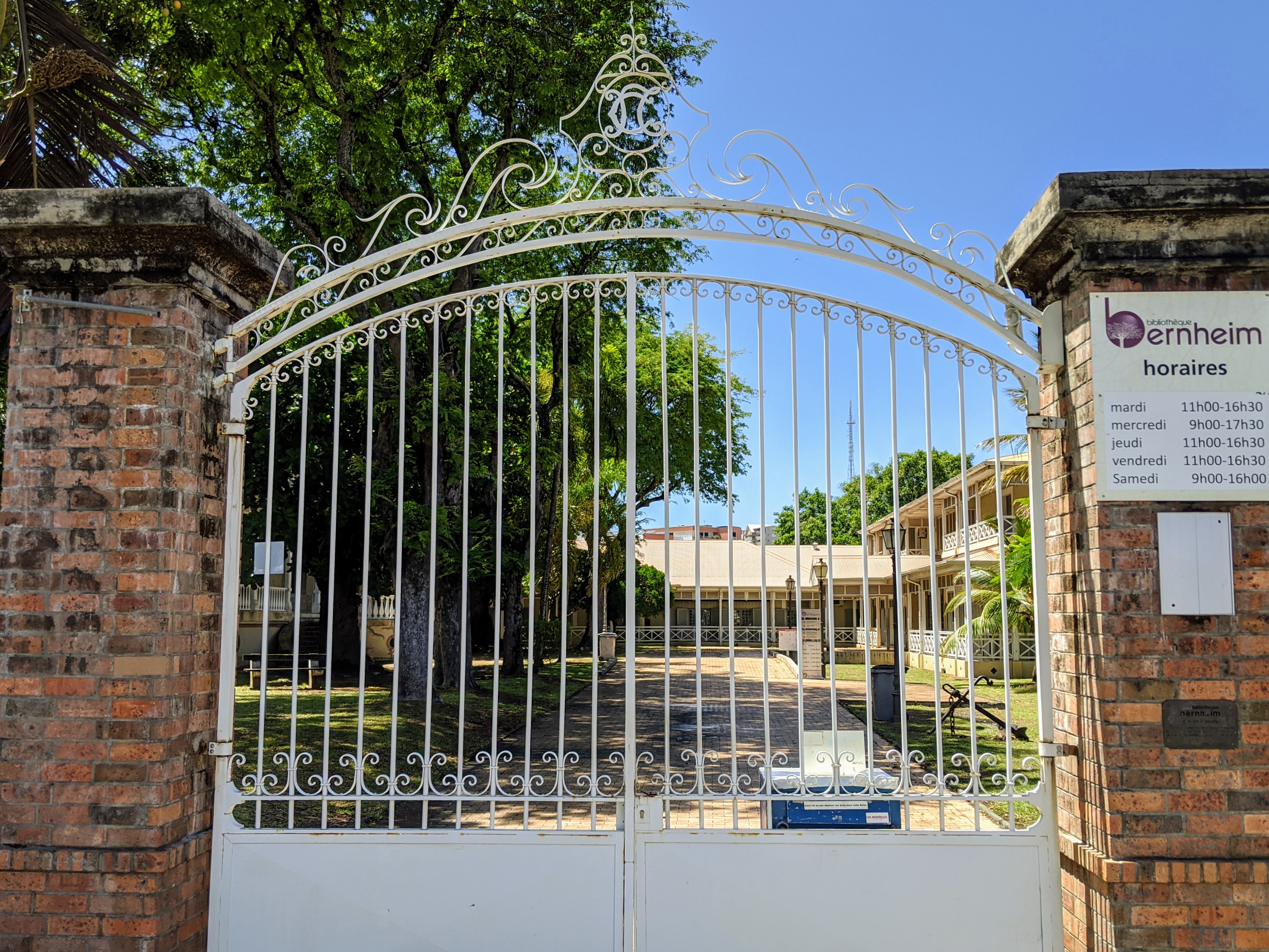
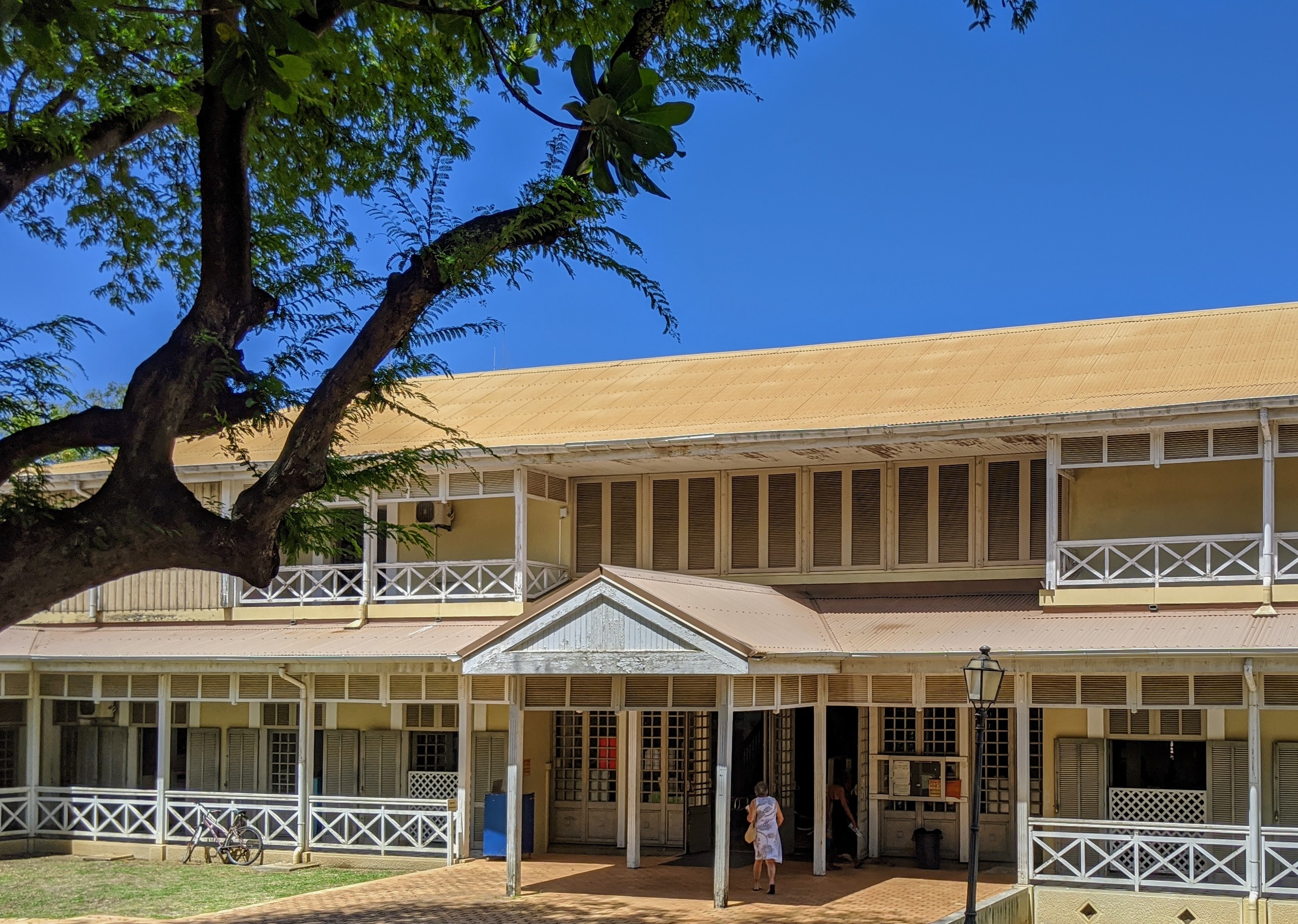
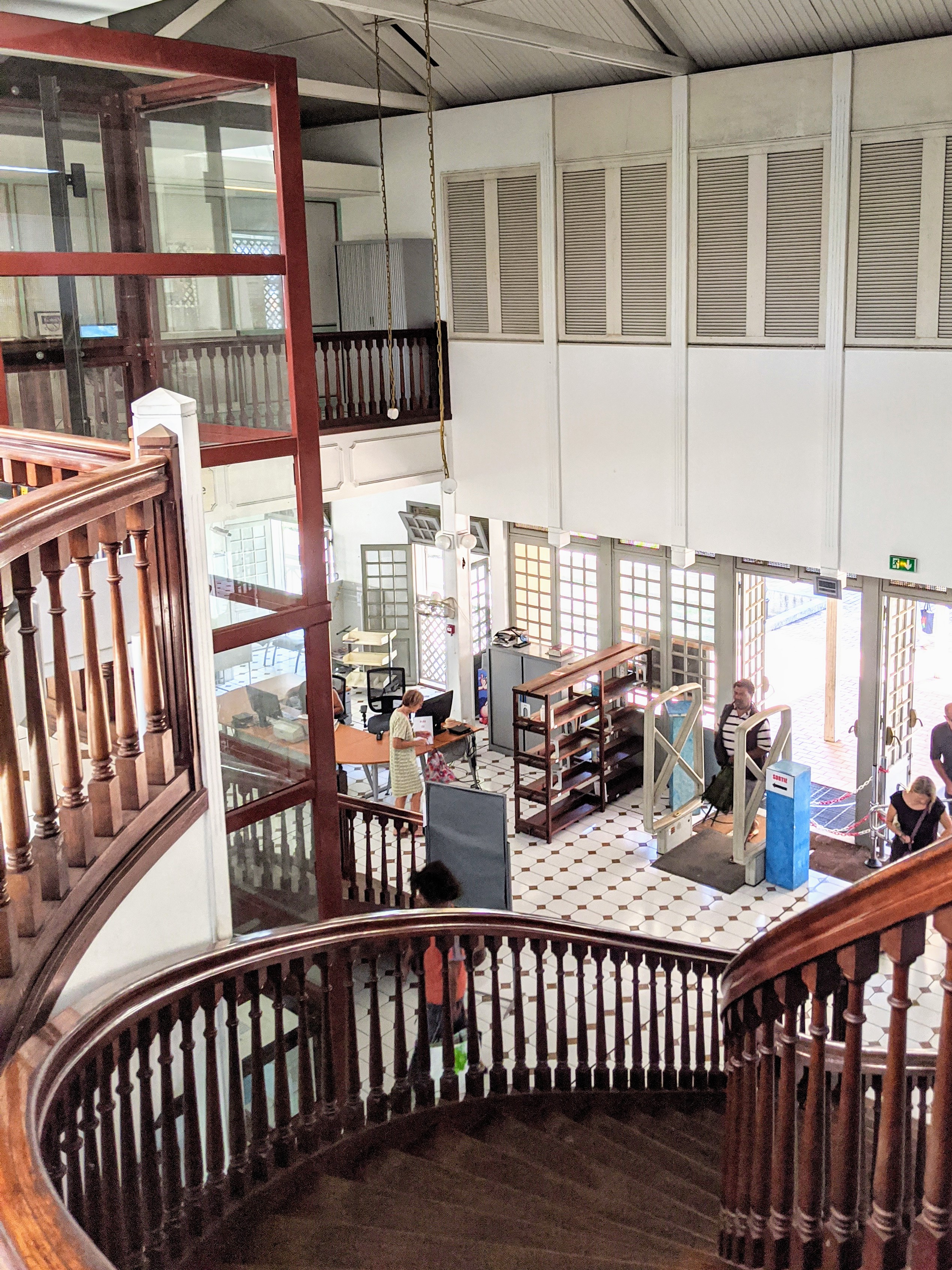
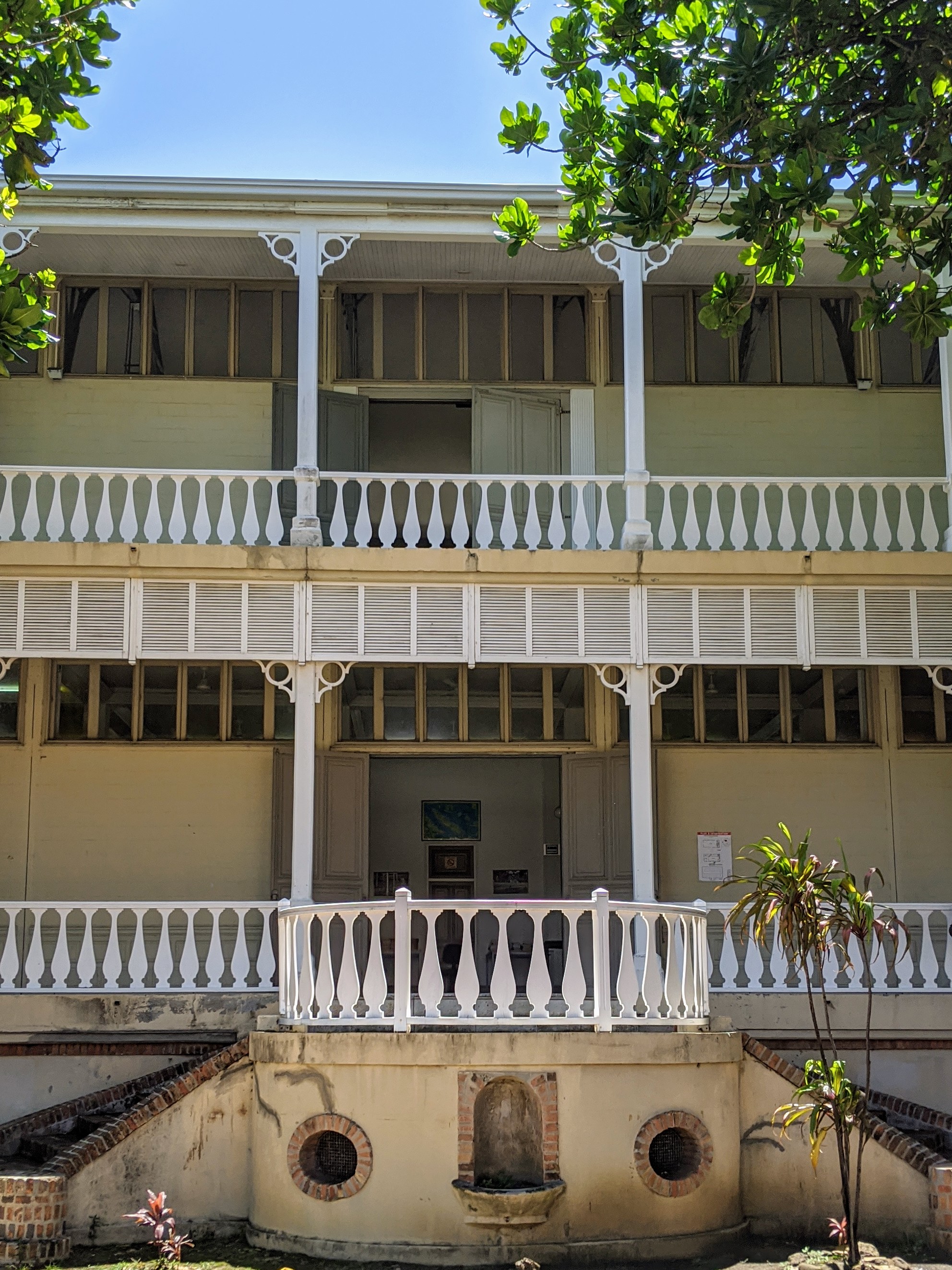
The Bibliotheque Bernheim was a highlight during our visit to Noumea, for its design as well as its history. The Exposition Universelle of 1900 was a world’s fair held Paris to celebrate the achievements of the past century and to accelerate development into the next. The fair, visited by nearly 50 million people, displayed several major structures that remain to this day, such as the Grand Palais, Petit Palais, the Gare d’Orsay (now the Musee d’Orsay), and two of the original entrances of Paris Metro stations by Hector Guimard. It also brought international attention to the Art Nouveau style. In addition, they included pavilions of French colonies featuring their traditional architecture and local products. The French colony of New Caledonia highlighted its exotic varieties of wood and rich mineral deposits in a pavilion designed by a Monsieur Bley. After the event, at the request and expense of Lucien Bernheim, a French industrialist who moved to New Caledonia and established nickel and chrome factories, the pavilion was dismantled and shipped to Noumea to become the town library and museum.

Although New Caledonia wasn’t on our original itinerary (in truth, we had barely heard of it before our visit!) we really had a great time and could have stayed longer. We barely saw the beaches, art museums, and restaurants, and we’d like the chance to meet more of the friendly, welcoming people.

Beautiful Brisbane

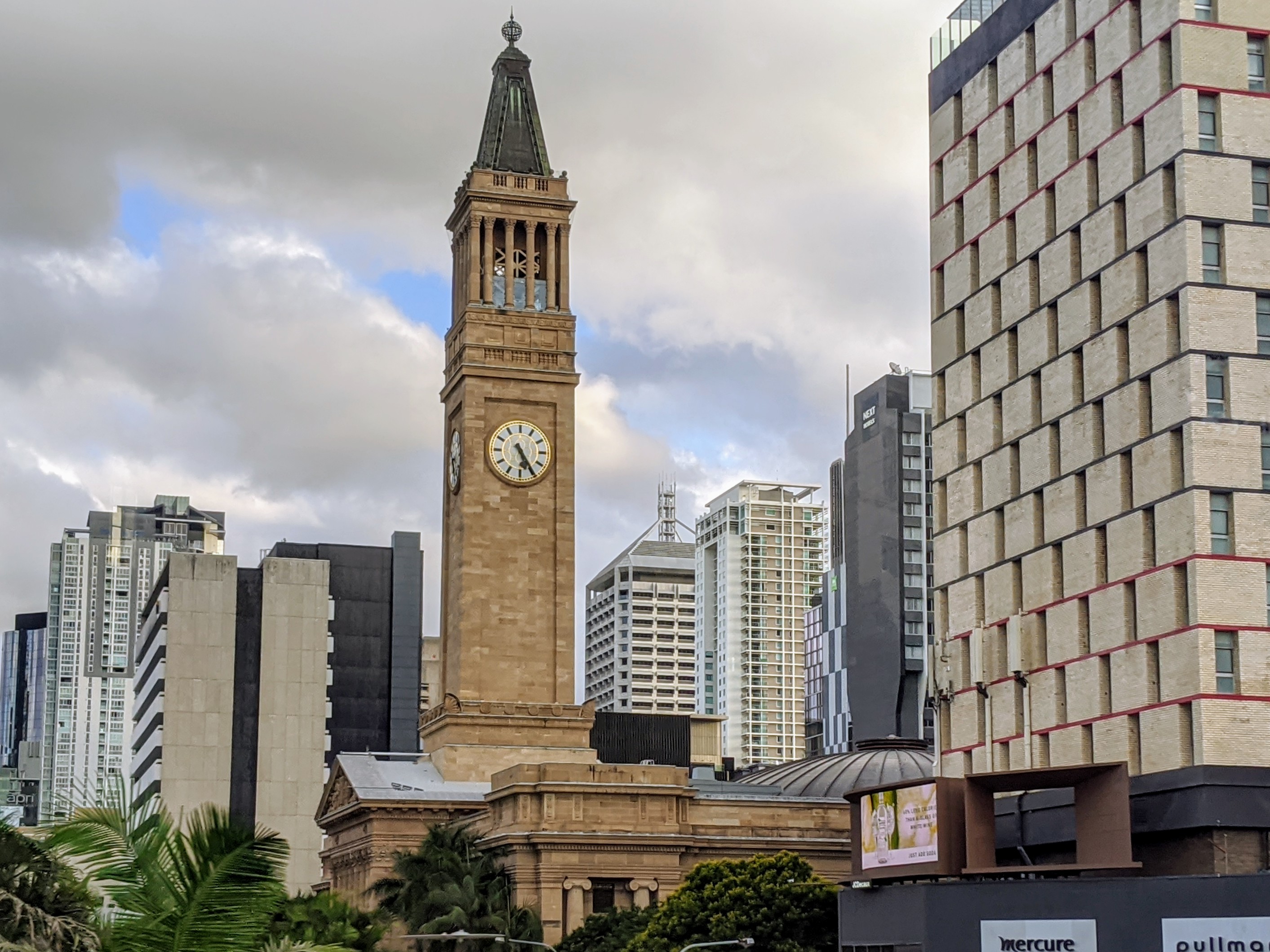
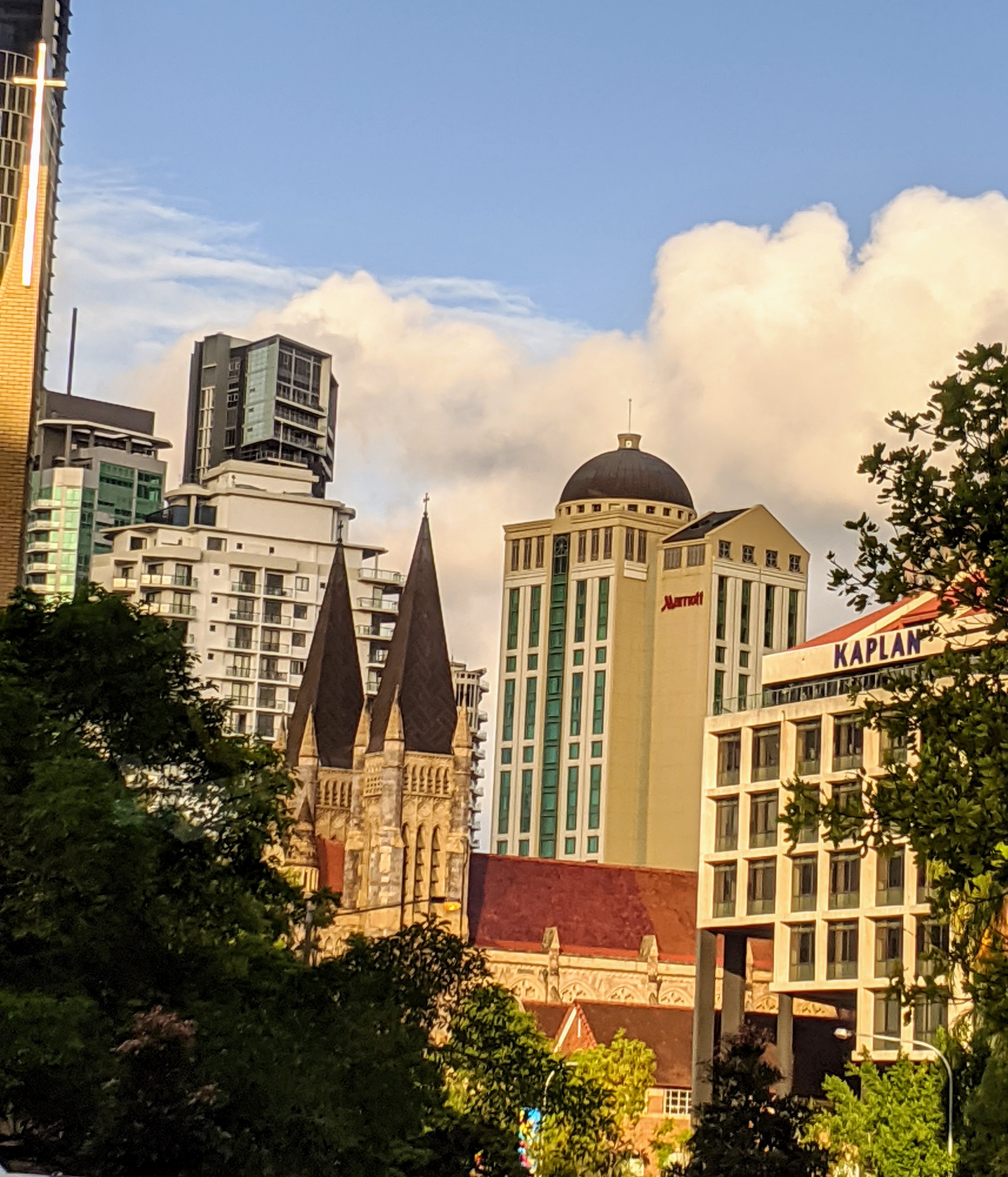
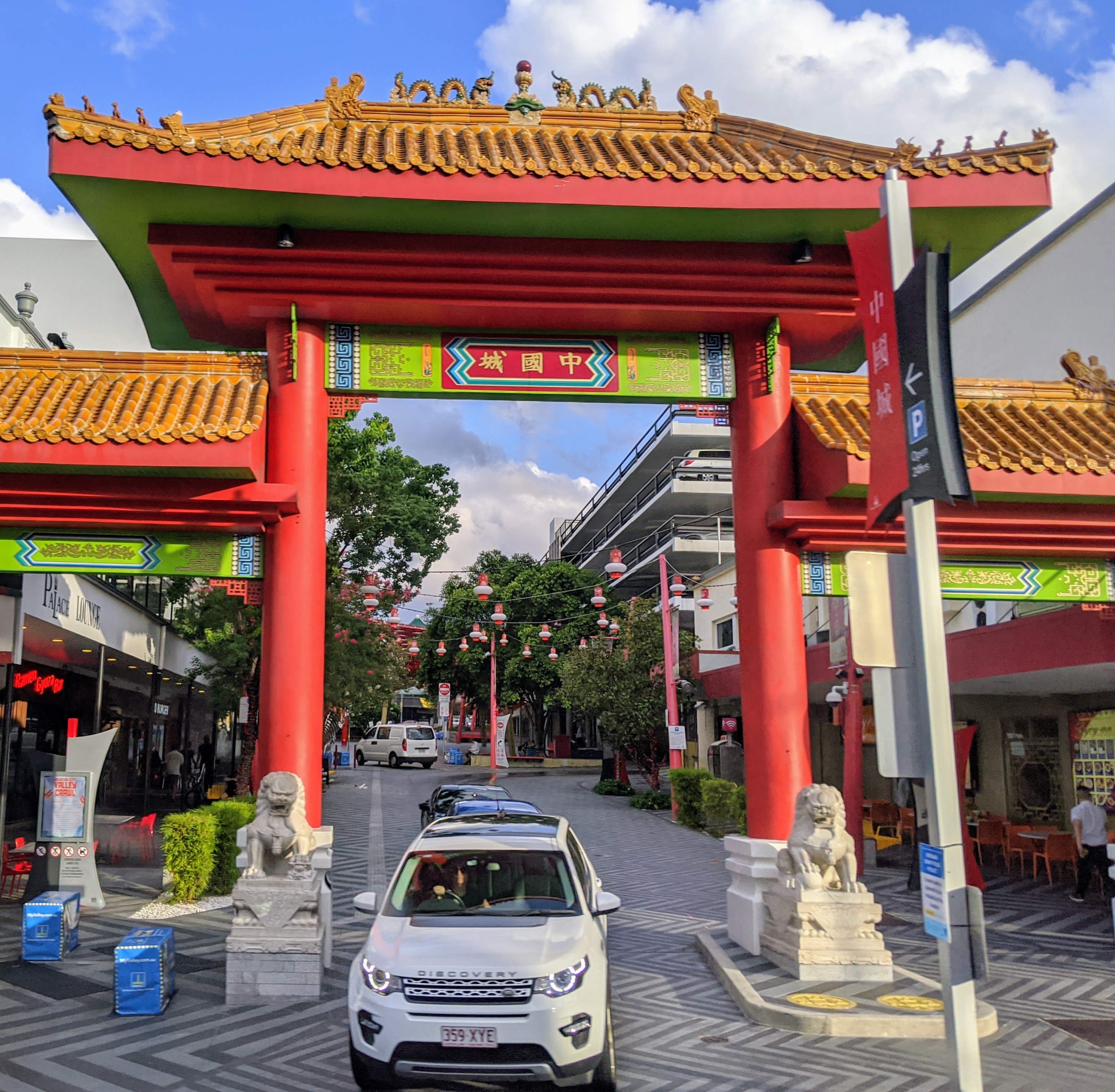
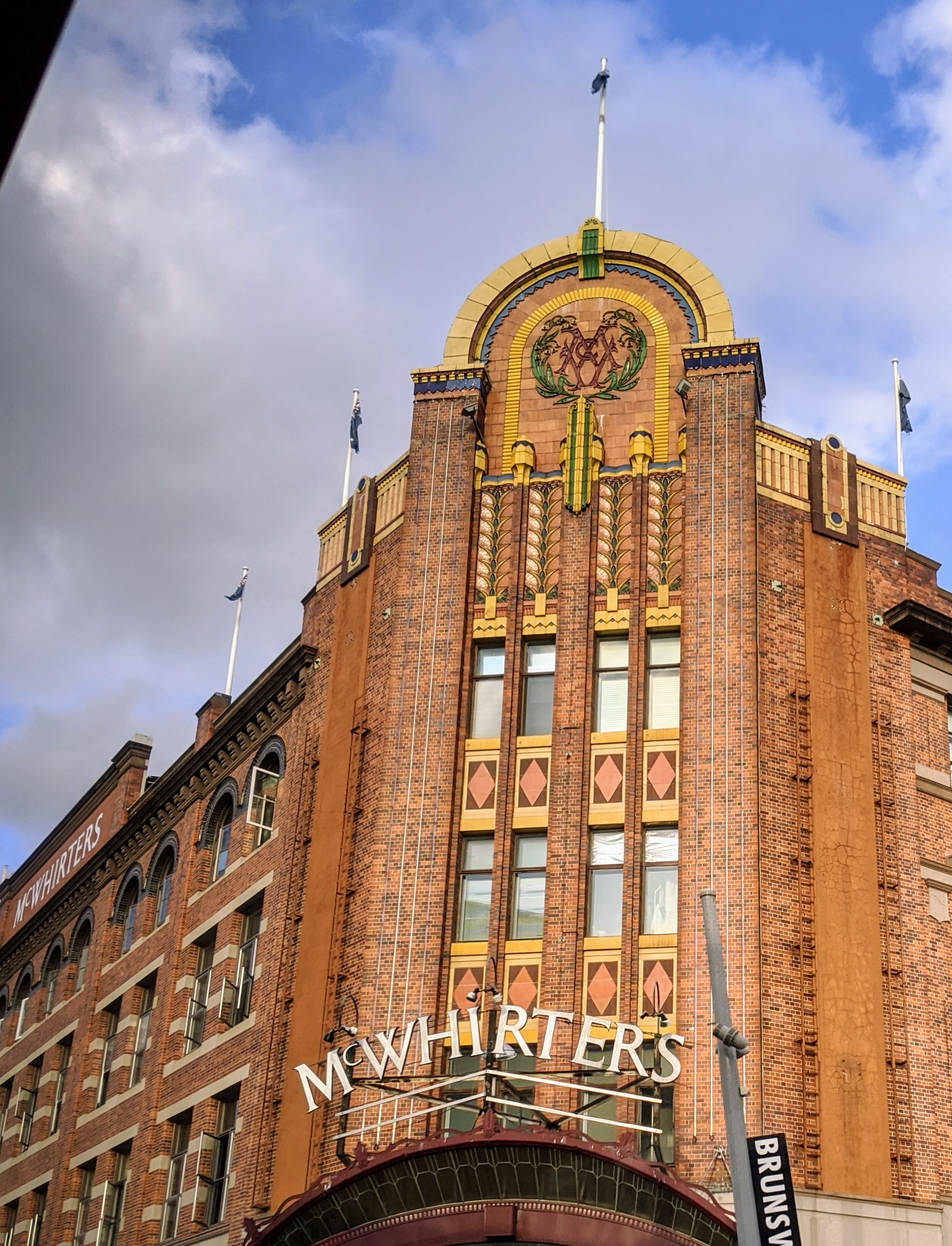
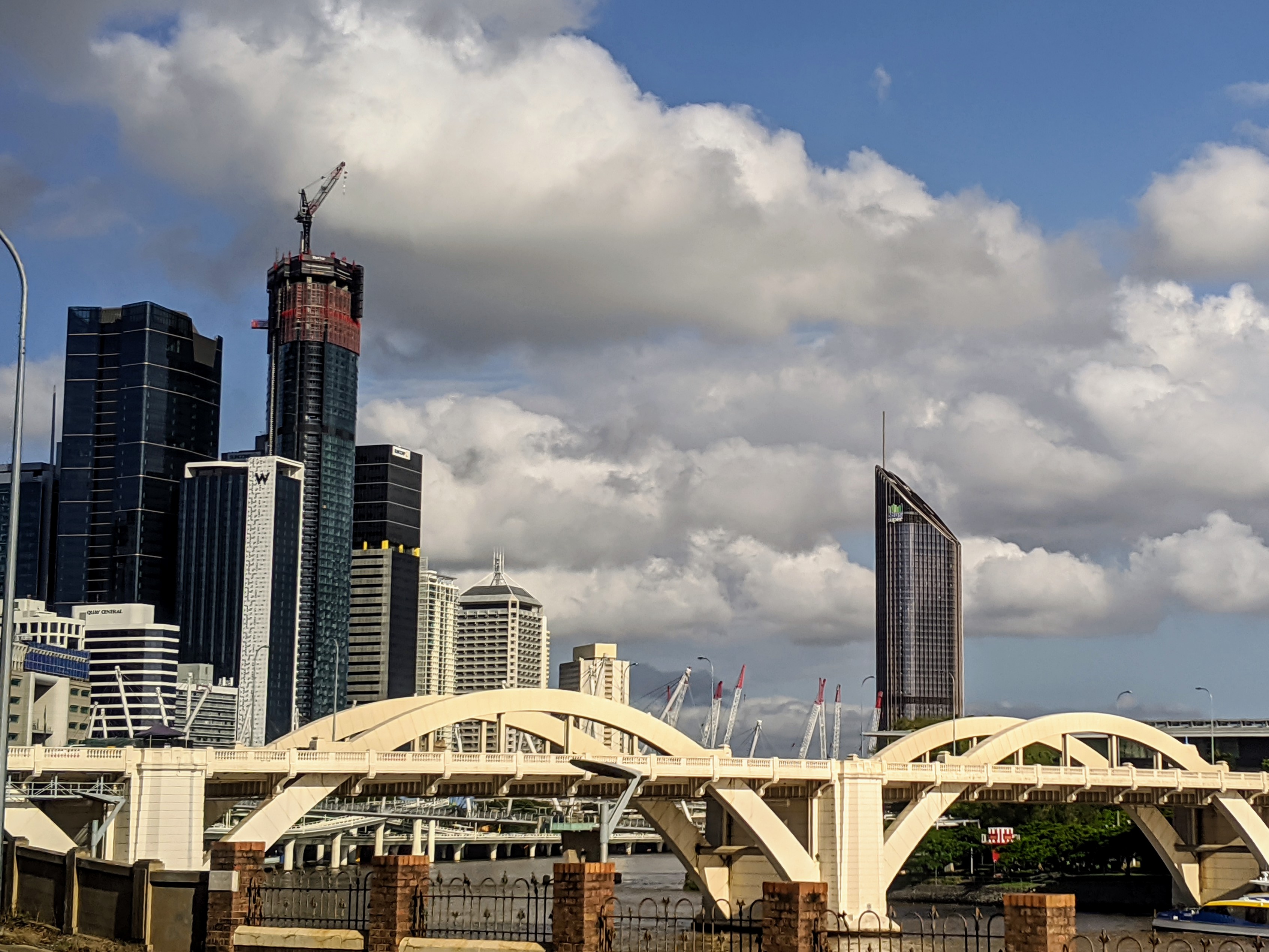
Brisbane is Australia’s third largest city and the capital of Queensland. Situated on its namesake river, it is famous for its amazing climate that is near perfect all year round, as well as its proximity to many of Queensland’s major tourist destinations. And while today’s weather was, indeed, “near perfect,” torrential rainstorms over the past two days led to a decision to delay our arrival by about four hours to ensure that the pilot could board the Viking Sun in daylight. This meant an abbreviated visit to Brisbane, and since we had made arrangements to visit the Lone Pine Koala Sanctuary (more on that later in this post), we were only able to enjoy brief drive through this beautiful city.

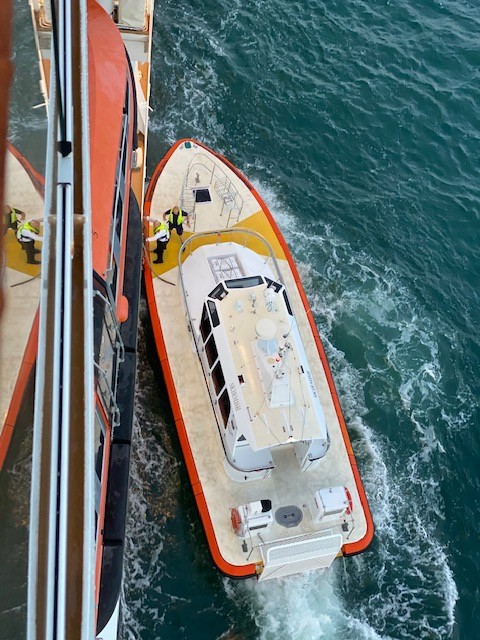
This delay, along with witnessing the difficulty of Sydney’s pilot getting back onto the pilot boat the night before, led us to investigate the exact role of the pilot boat and its importance to our safety. We happened to be seated near the window where the Sydney pilot boat was trying to get close enough to the Viking Sun for the pilot to jump safely from our ship back onto his deck in very heavy waves and wind. After several unsuccessful attempts, the pilot boat finally got close enough and the pilot made it back “home.” But we did a little digging, and this is what we learned. Most ports throughout the world require “pilotage,” the practice in which a local pilot comes on board near the entrance of a port to assist the ship’s captain with bringing the ship into port and docking or anchoring at the designated spot. The pilot also helps provide safe passage when the ship departs. Contrary to what we had thought, the pilot doesn’t take command of the ship from the captain. Captain Lars always stays in command of our Sun. Pilots are usually licensed master mariners with years of experience in their local port. As such, they have a wealth of knowledge about local currents, piers, docks, water depths, communication procedures and regulations, and local users of the waterway. Since no two ports in the world are alike and can change over time, this knowledge can be invaluable to the captain. On arrival at the breakwaters or fairway buoy, the ship is met by a pilot boat. The ship’s speed is adjusted to 8 to 15 knots, and course alterations are often necessary to ensure a safe and efficient transfer from the pilot boat to the ship. The pilot boat matches the speed of the ship and comes alongside near the pilot ladder, which is connected to an opening in the hull called a “shell door.” Wearing a harness, the pilot uses a rope ladder suspended from the shell door to board the ship, and is met at the top of the pilot ladder by a deck officer who is in radio communication with the bridge. This officer escorts the pilot to the bridge, where the pilot and captain decide on the appropriate arrival plan. At the time of departure, this process is reversed. We were lucky to capture the exciting departure of our Sydney pilot as well as the more peaceful arrival of our Brisbane pilot. We’re grateful to both for the role they play in keeping us safe.

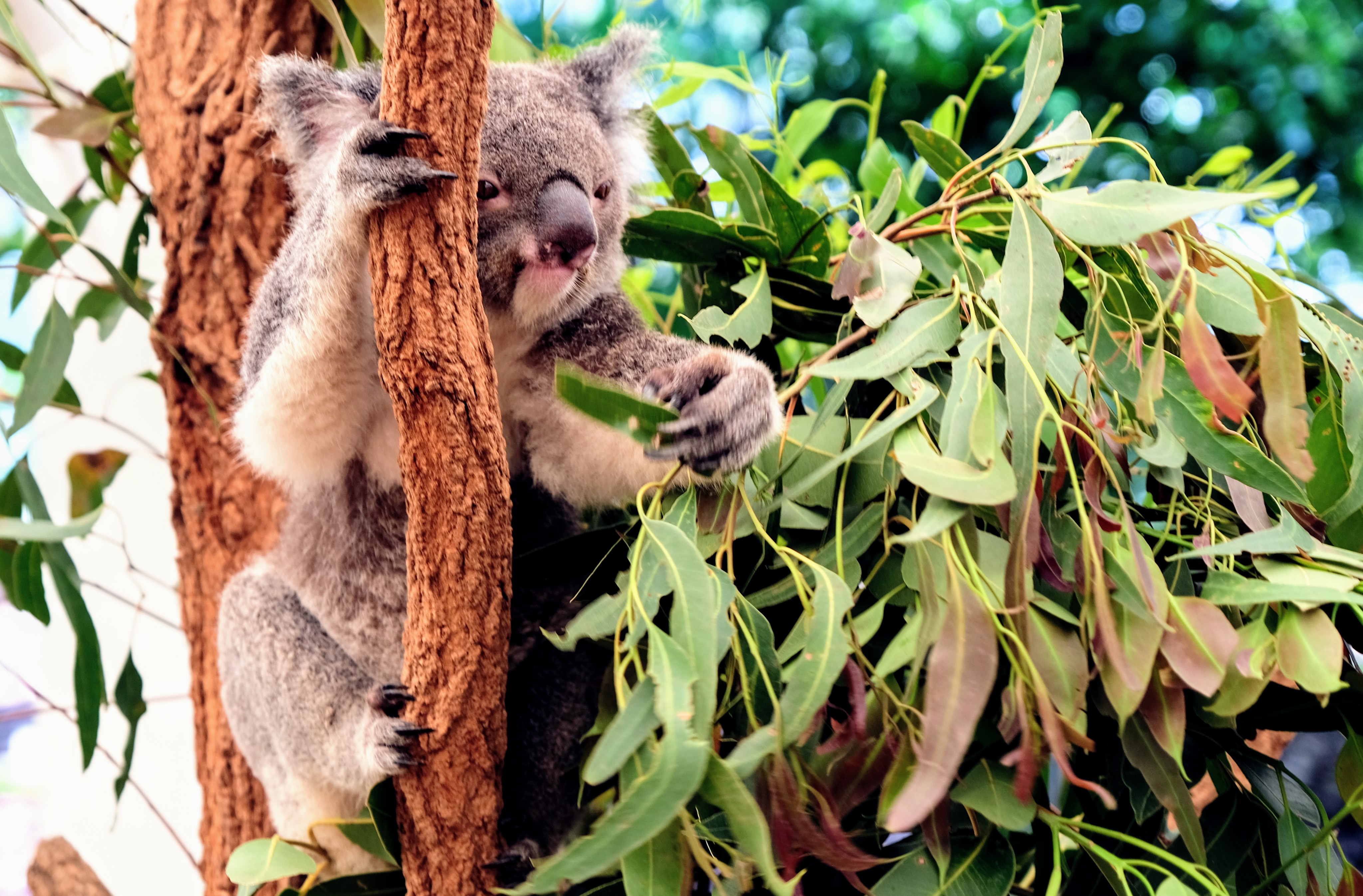
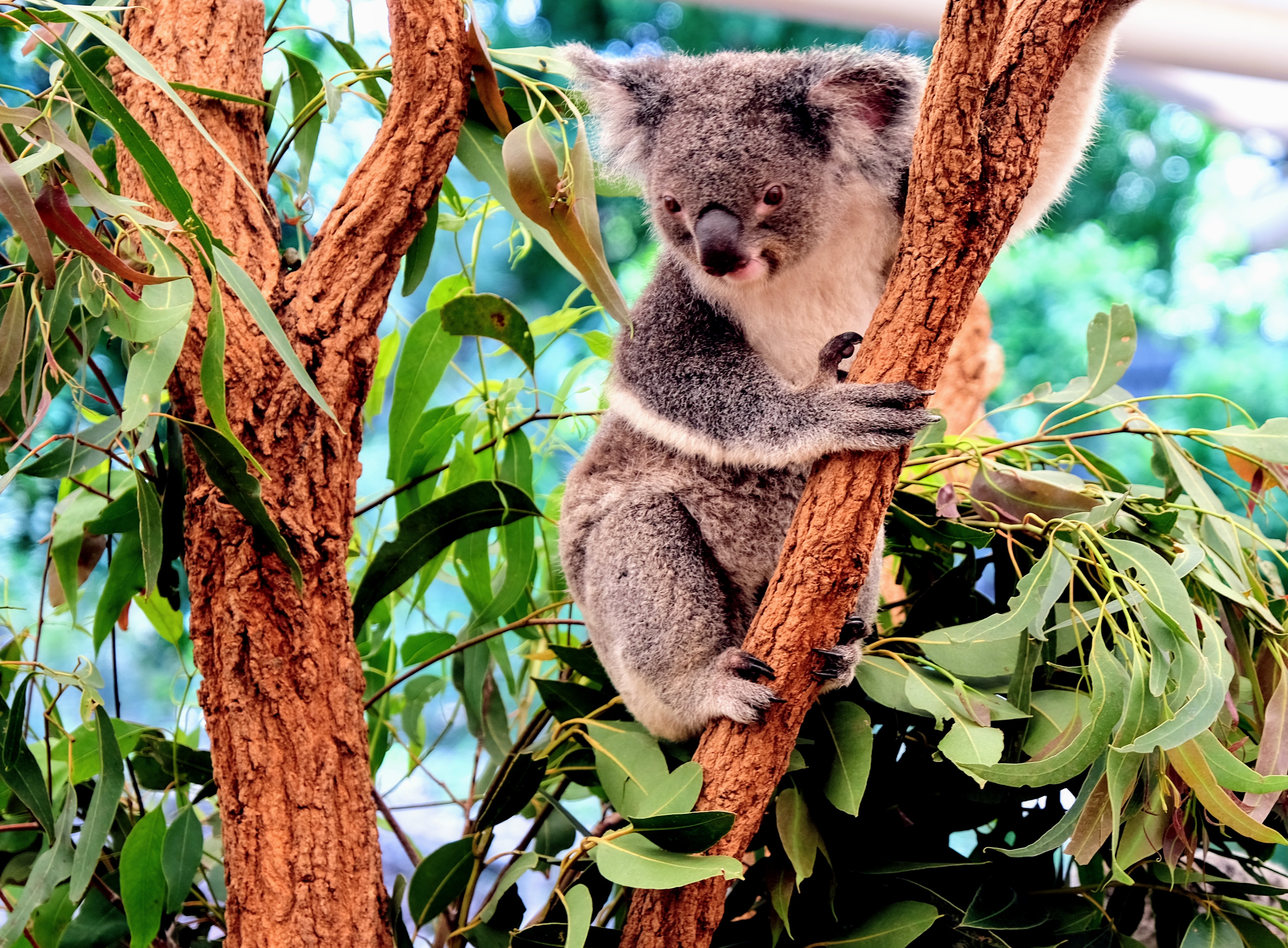
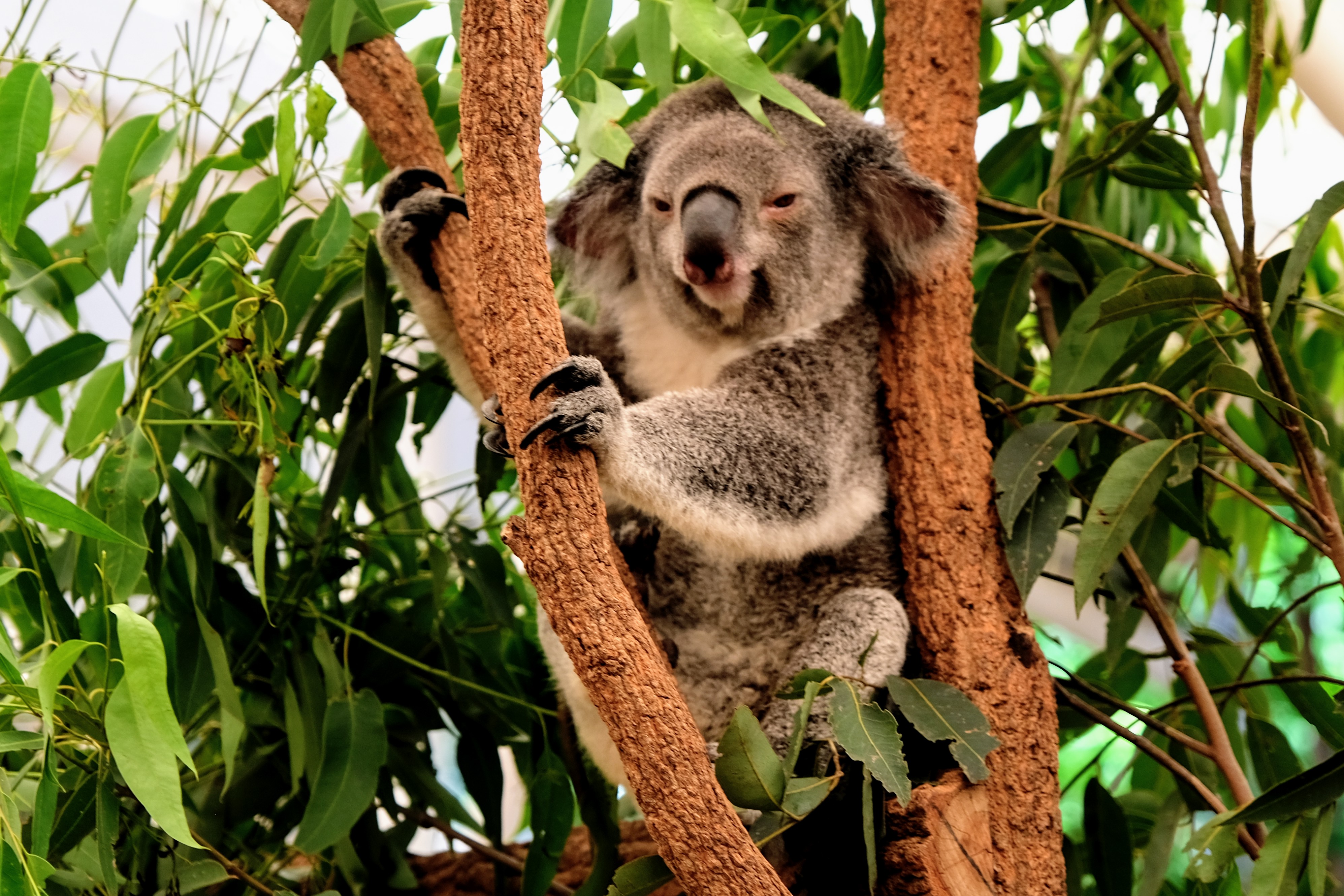
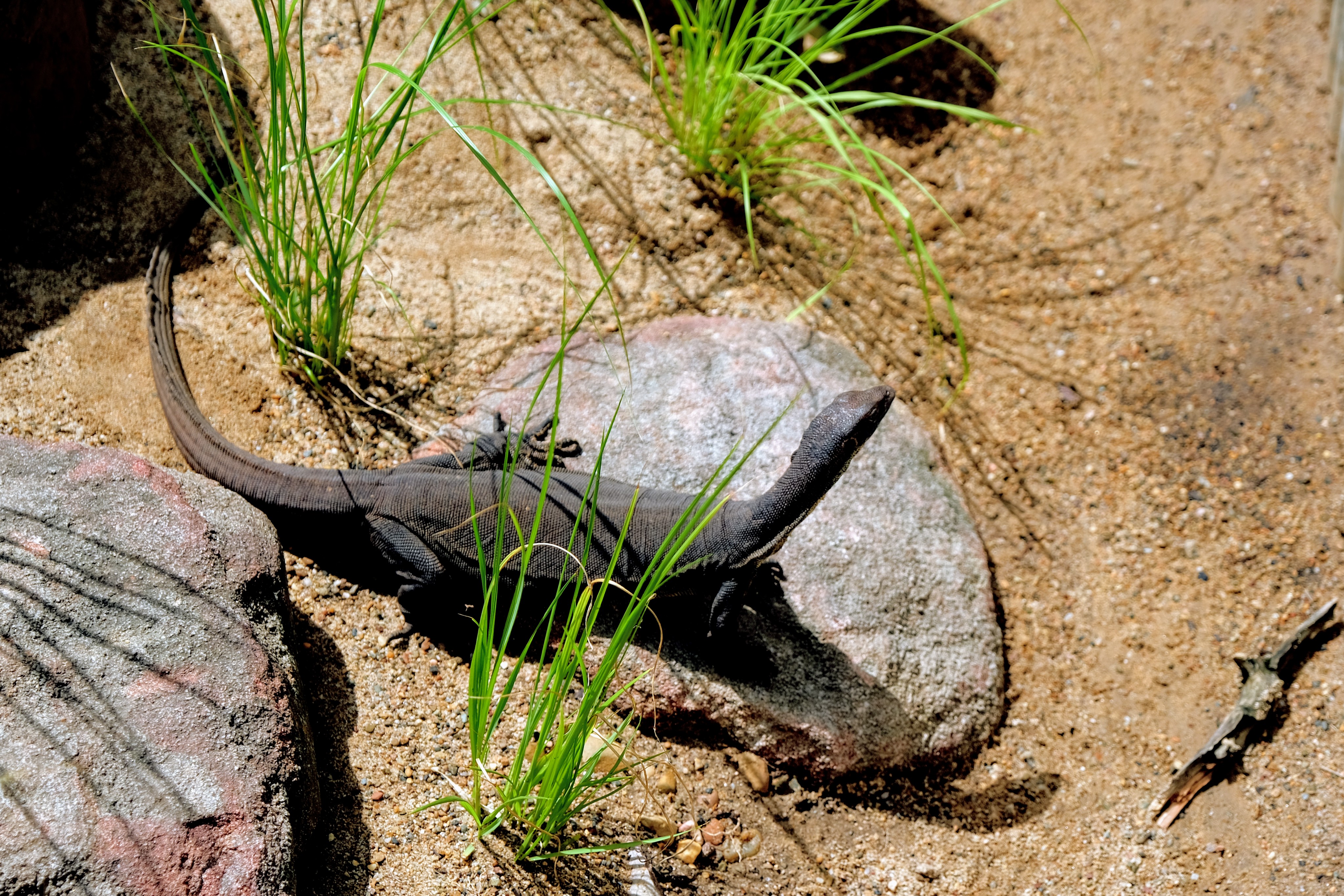
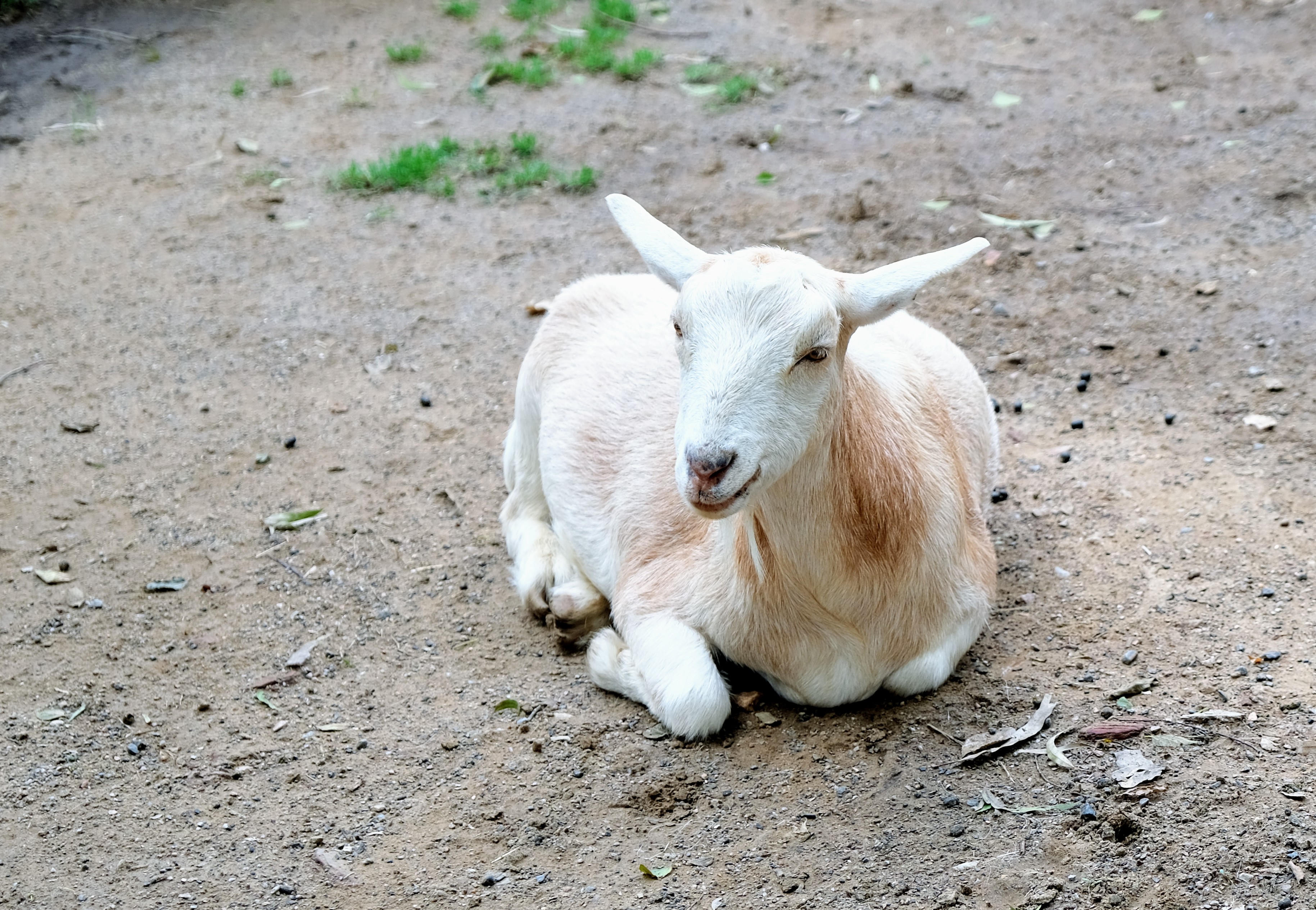
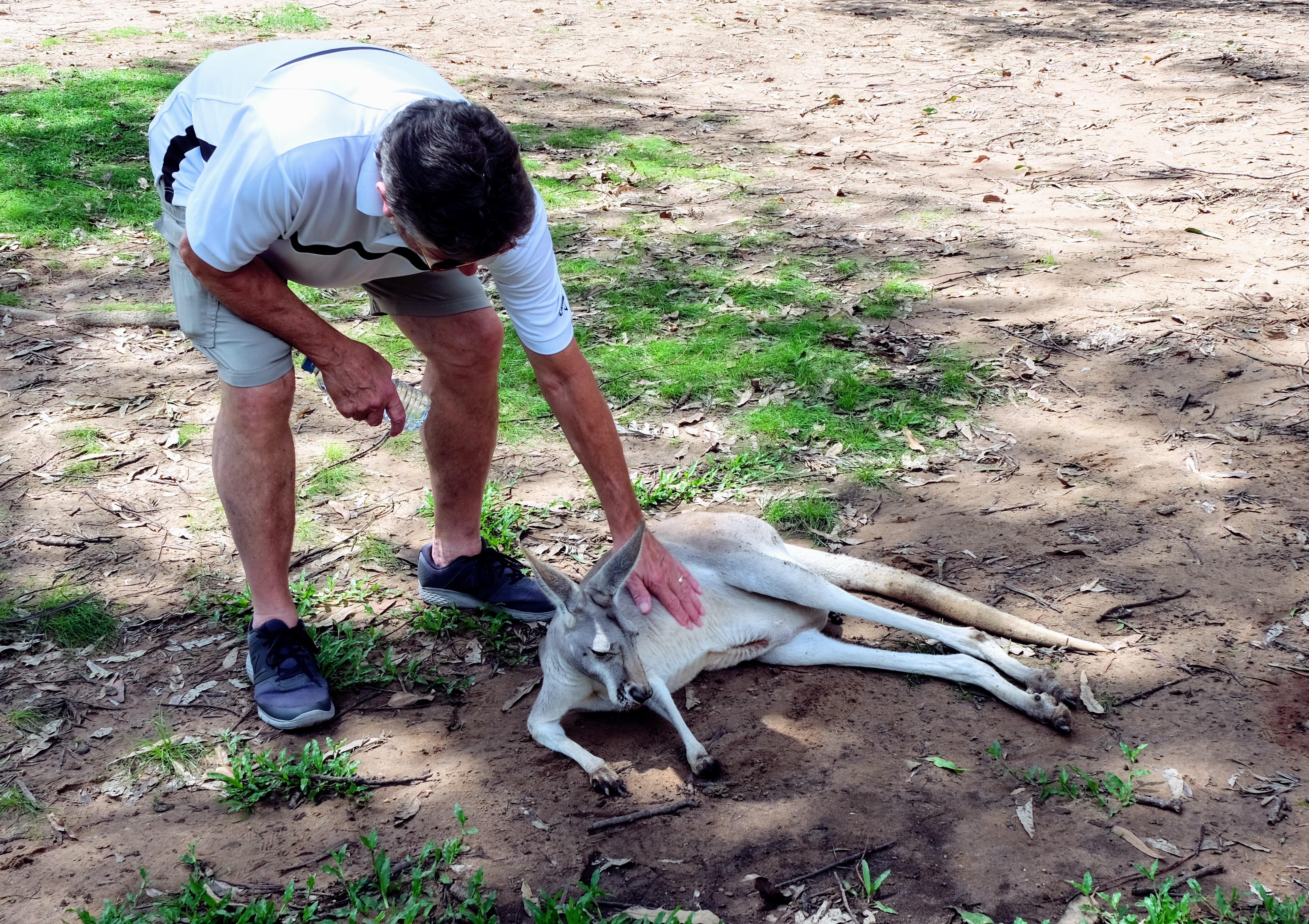
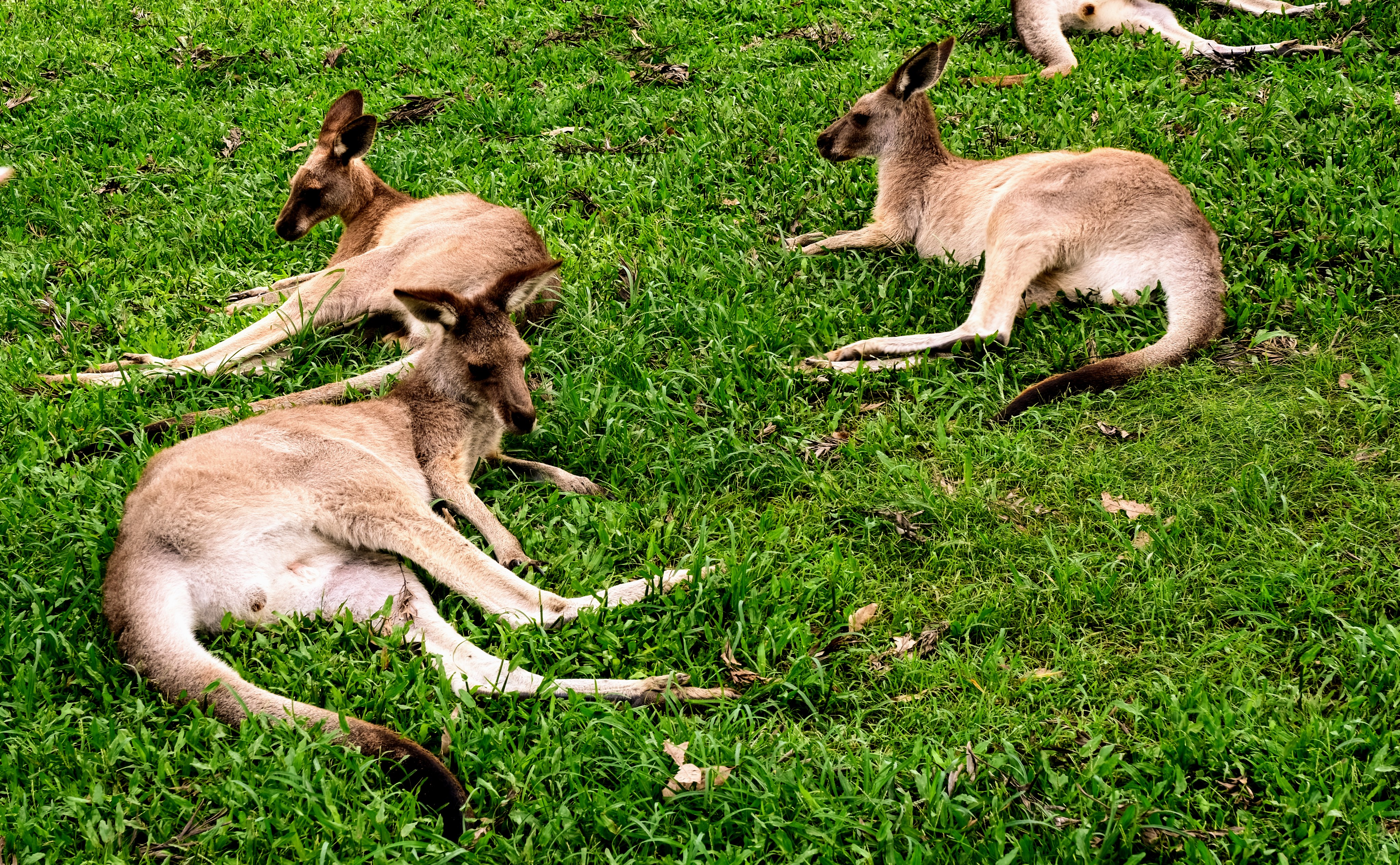
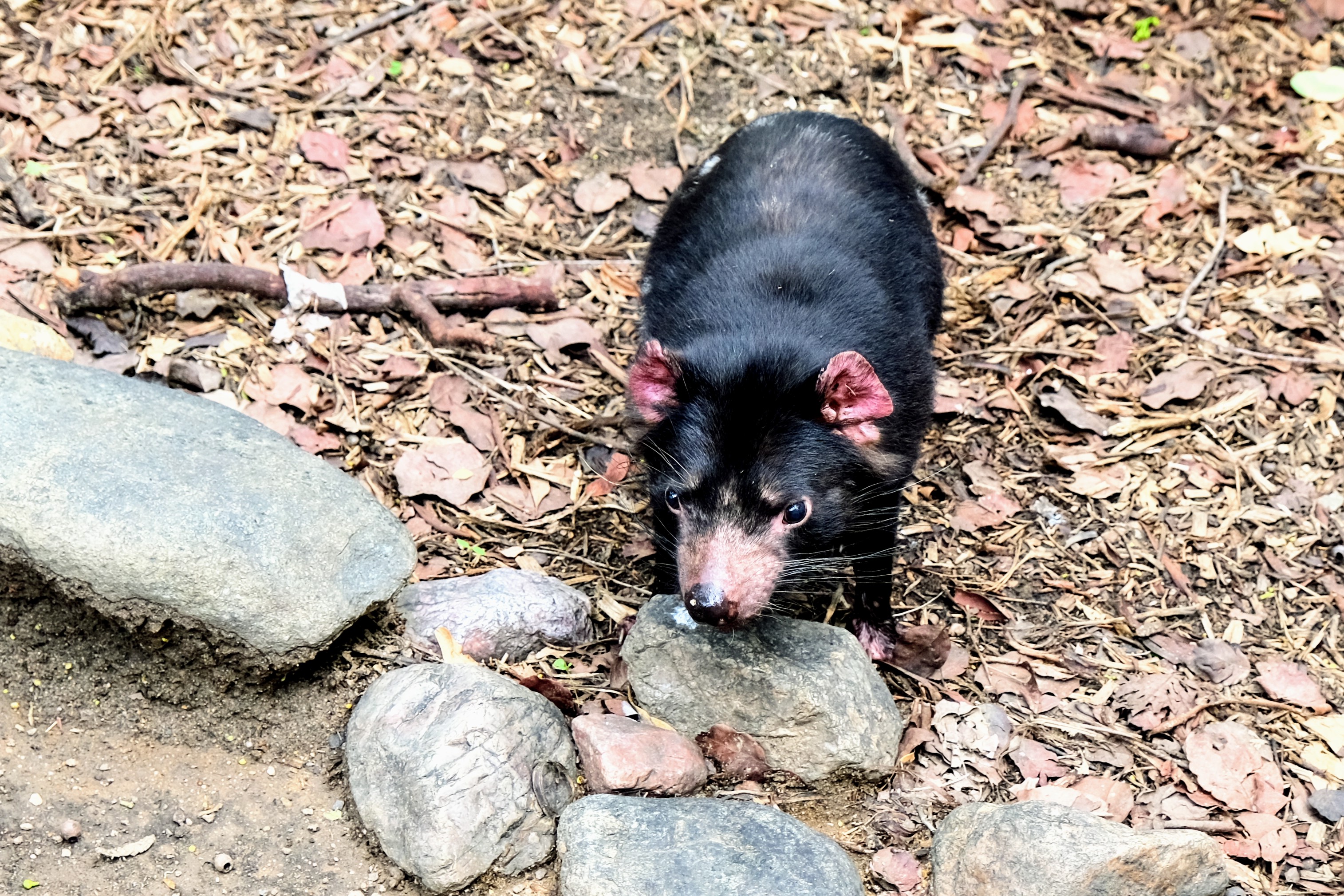
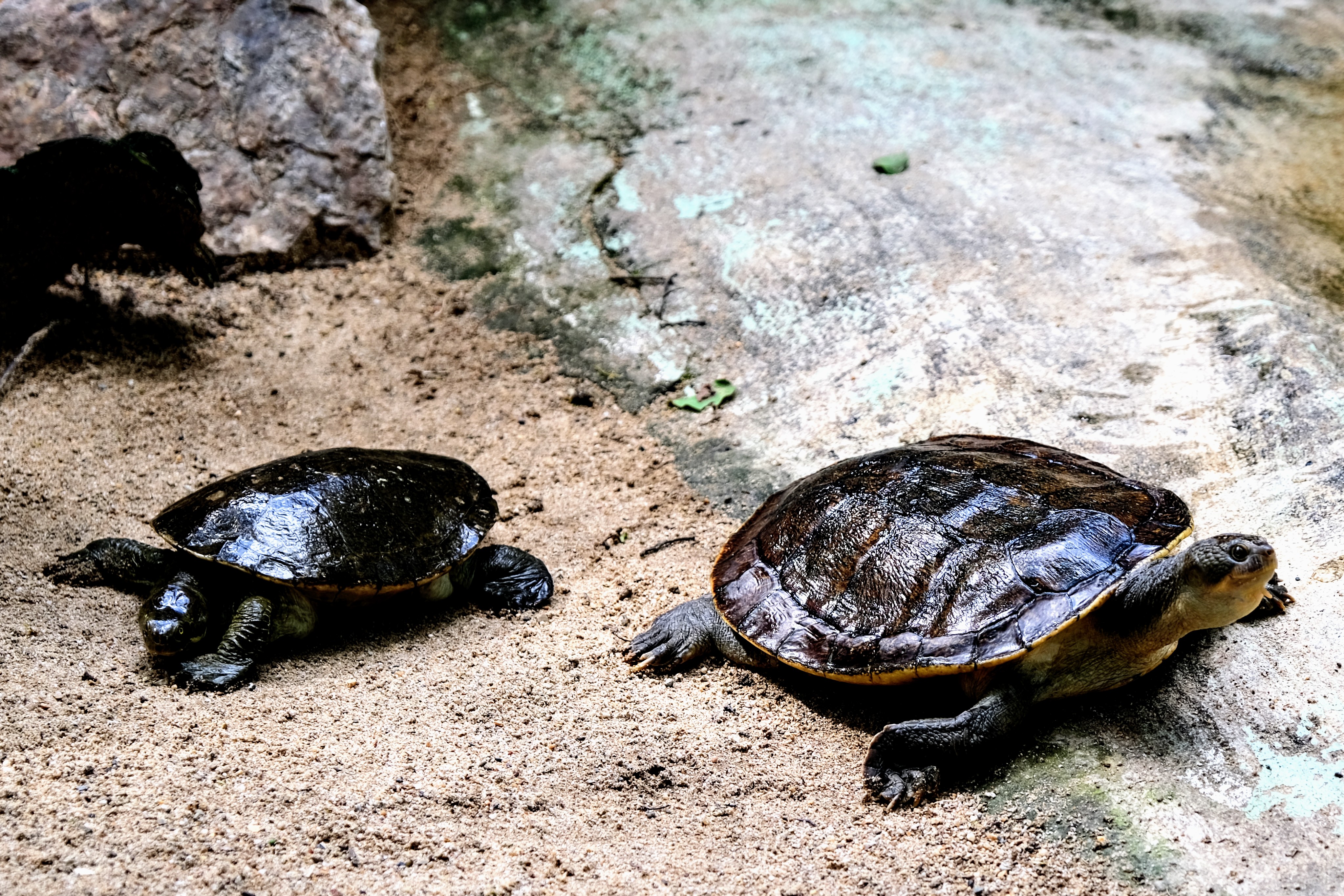
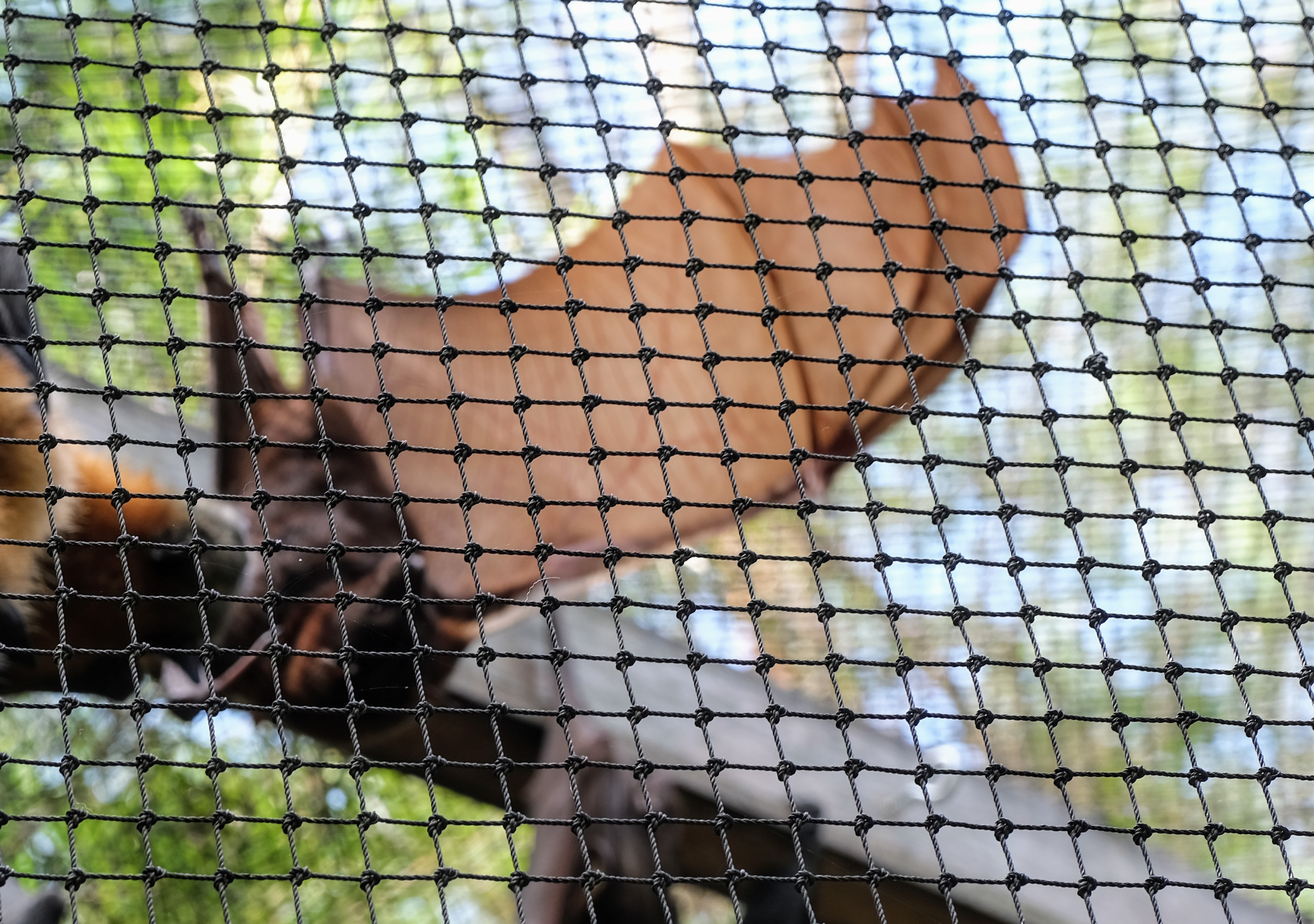
Shortly after our arrival in Brisbane, we headed to Lone Pine, where we enjoyed the world’s first and largest koala sanctuary. Starting with just two koalas named Jack and Jill, Lone Pine is set in a beautiful, natural environment and is home to more than 130 koalas and a menagerie of other exotic Australian wildlife. We met some of the dedicated animal handlers and learned about some of the fascinating wildlife research that takes place here. We captured some delightful photos of koalas, kangaroos, various reptiles, turtles, flying fox (a type of bat that looks like a fox with HUGE wings), and even the elusive Tasmanian devil.

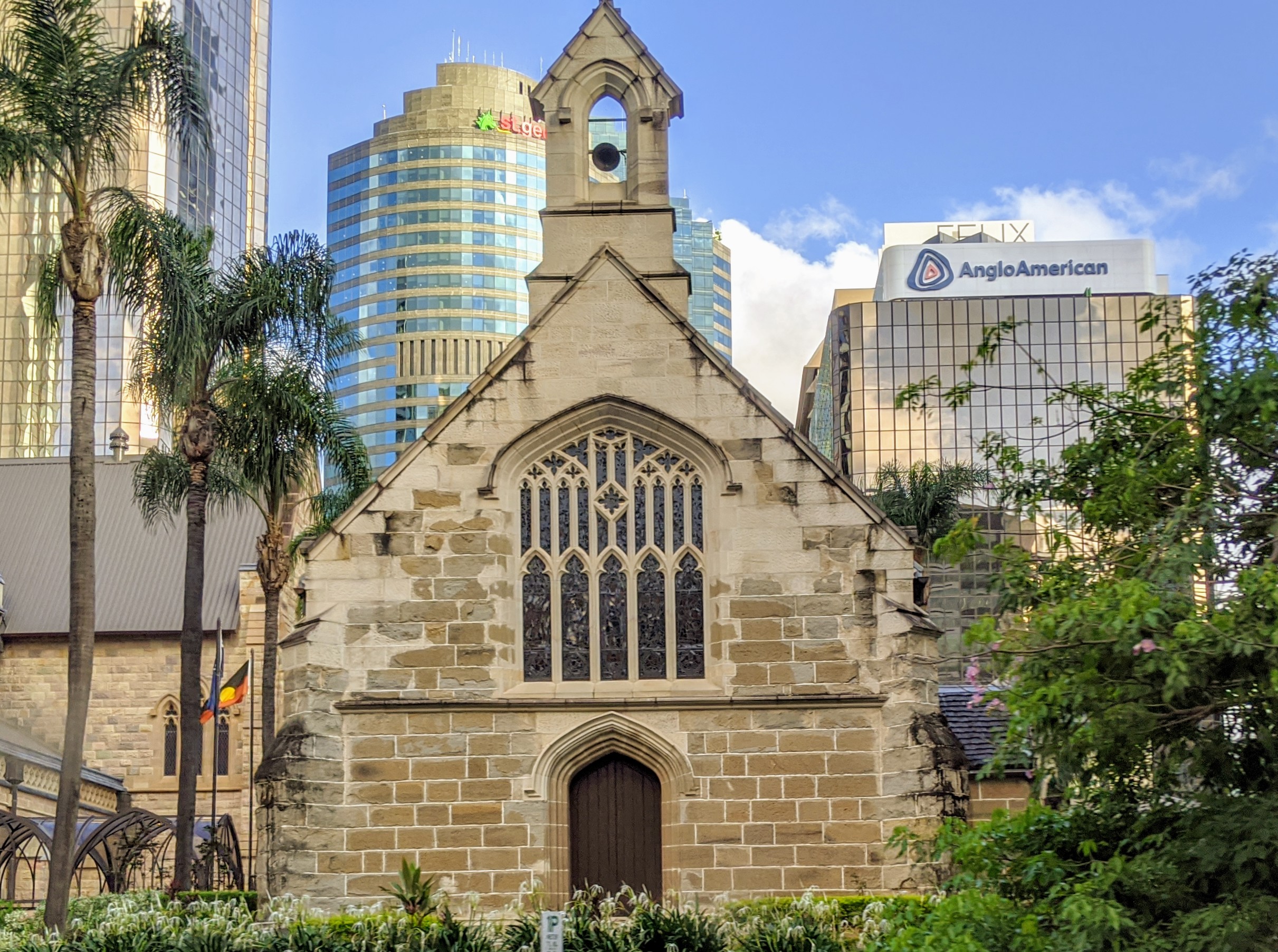
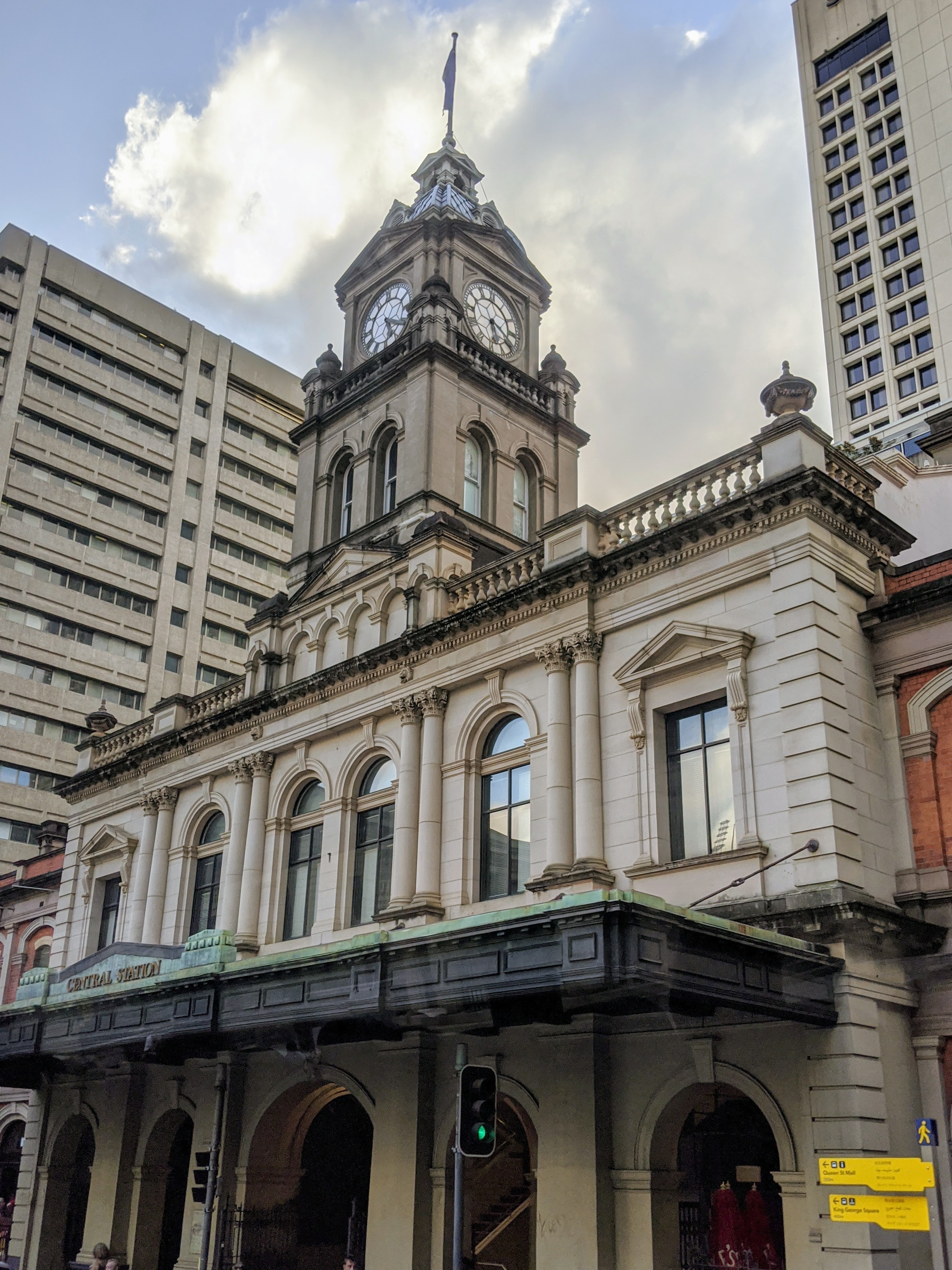
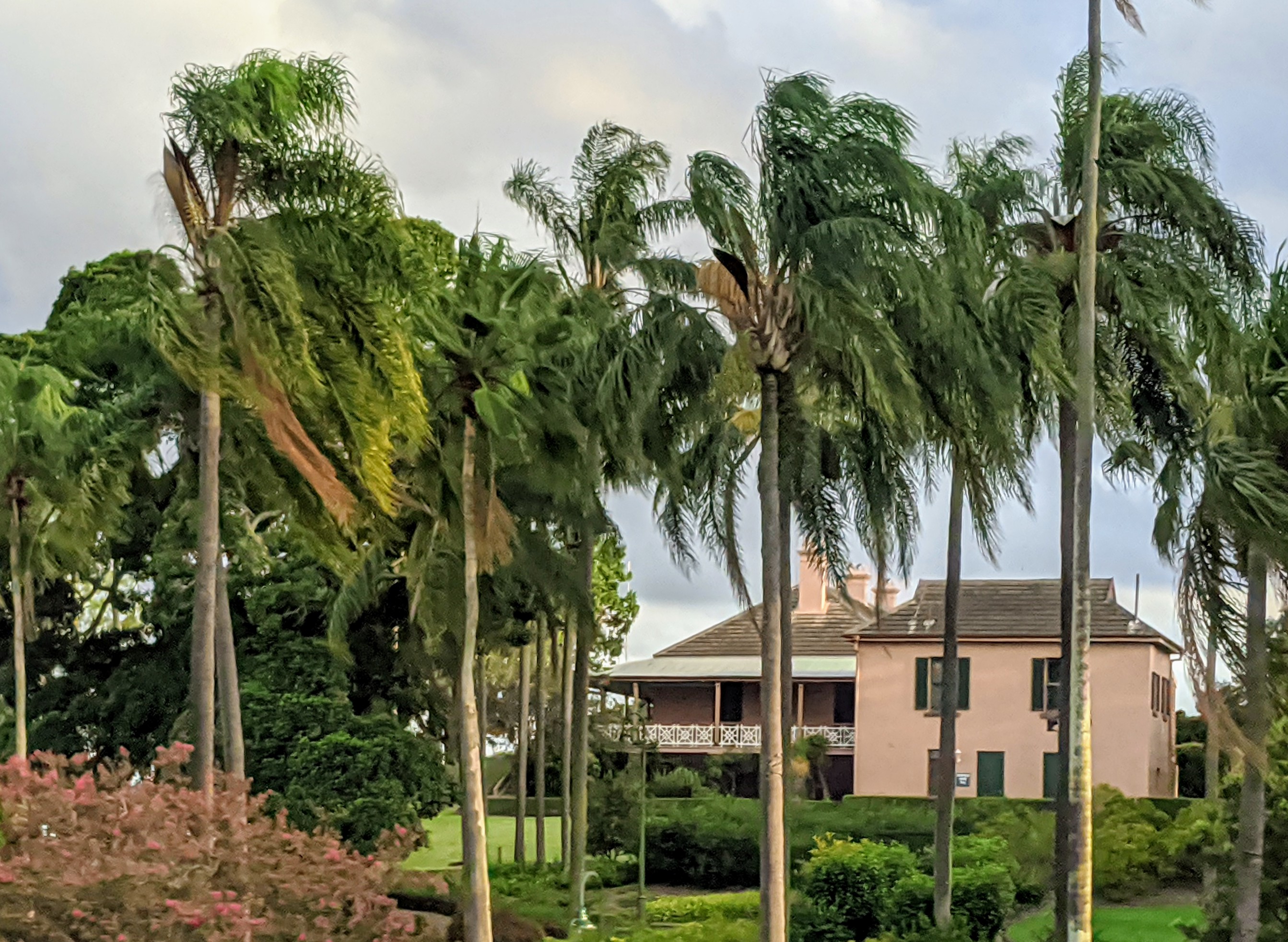
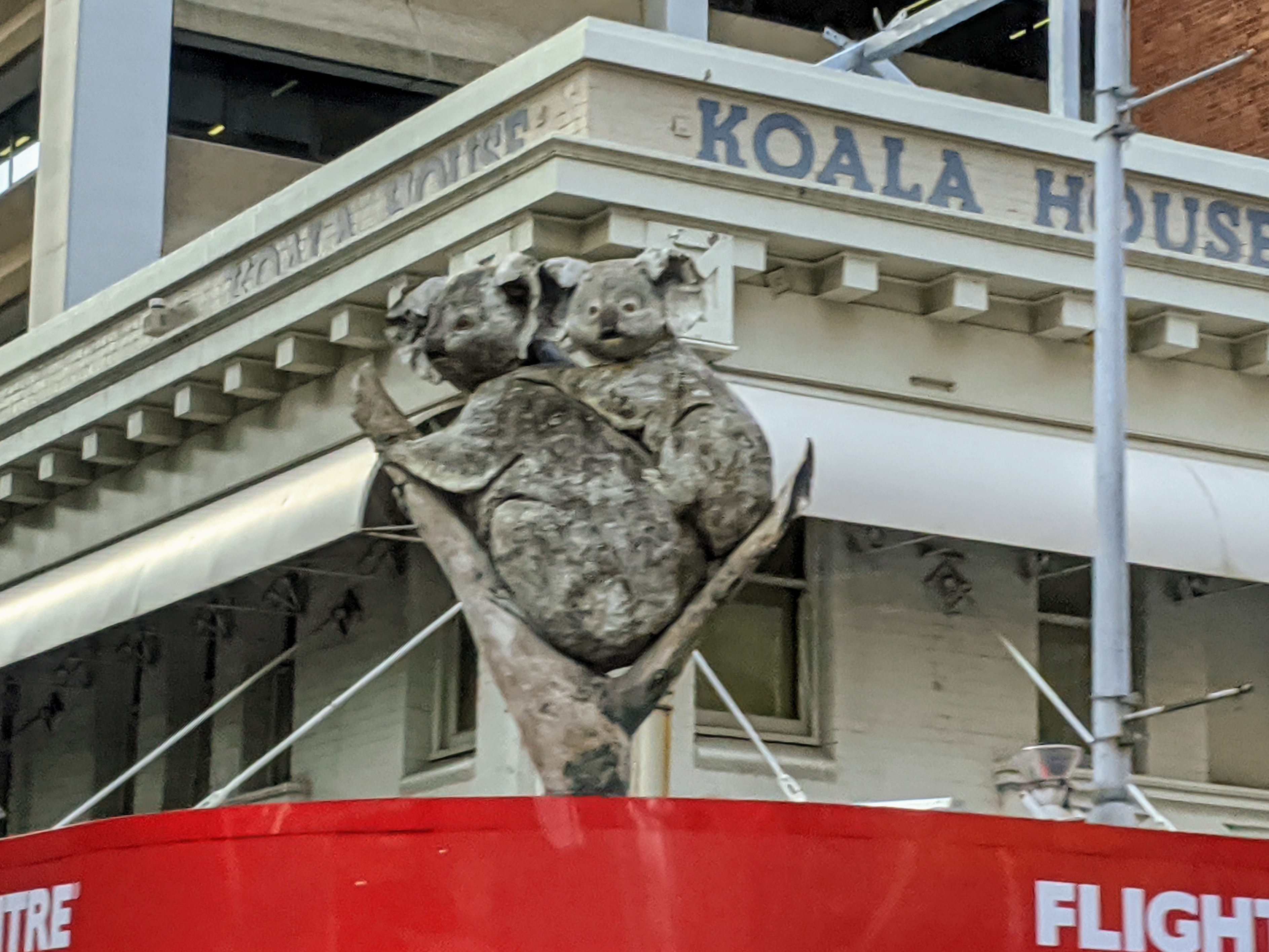
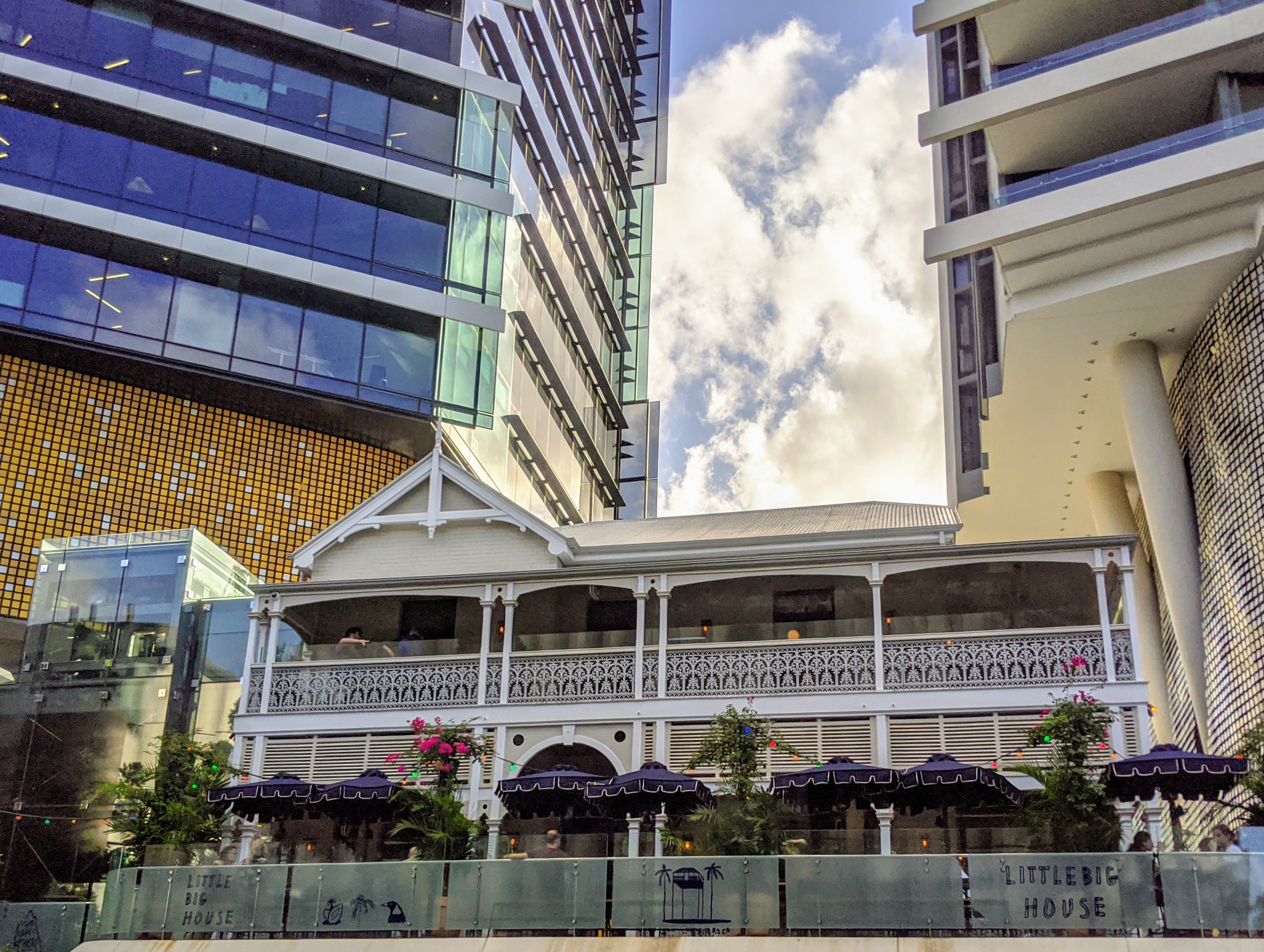
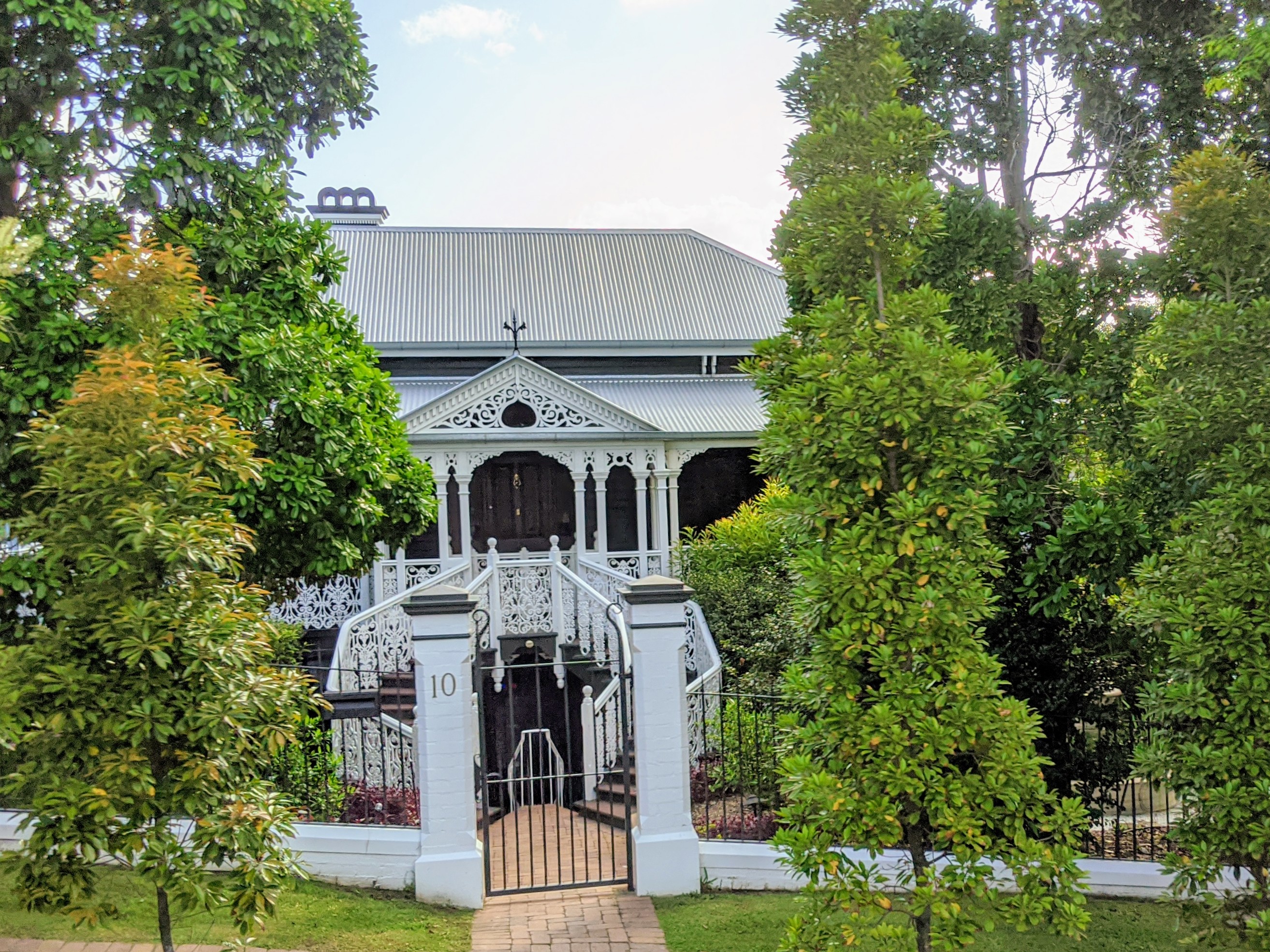
After that, we only had time for a whirlwind tour around Brisbane, where we caught glimpses of the ways distinctive Queenslander and modern architecture blend into an eclectic mix of old and new, often side-by-side, and sometimes even within the same structure, as shown in the bottom left picture of a new, modern hotel that had to incorporate a protected historic Queensland home into its new design.

Once again, we were left with a sense of “unfinished business,” and a desire for more time in this beautiful city that is rich with history and an unparalleled arts and design scene. Art galleries, museums, and a host of chic boutiques and cafes made us long for an opportunity to linger just a bit longer, but perhaps one day we will return. Until then, we left with fond memories of this city by the river.