
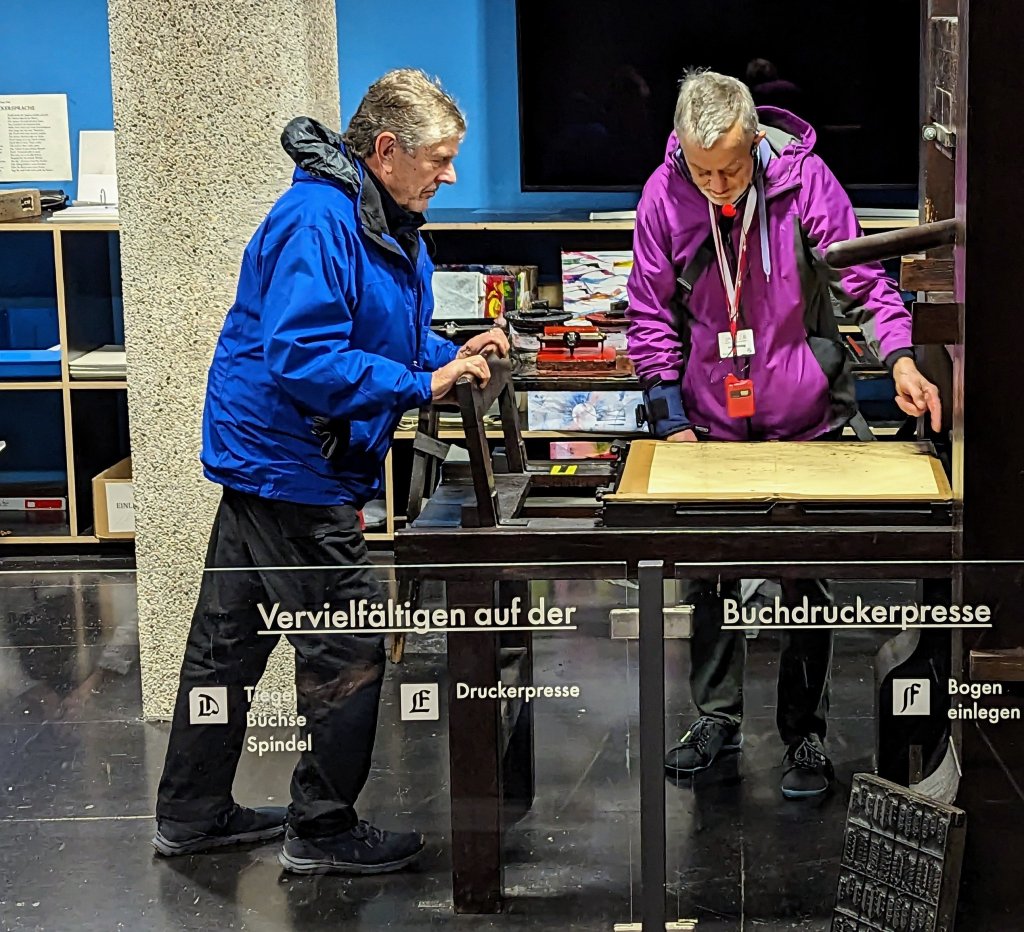
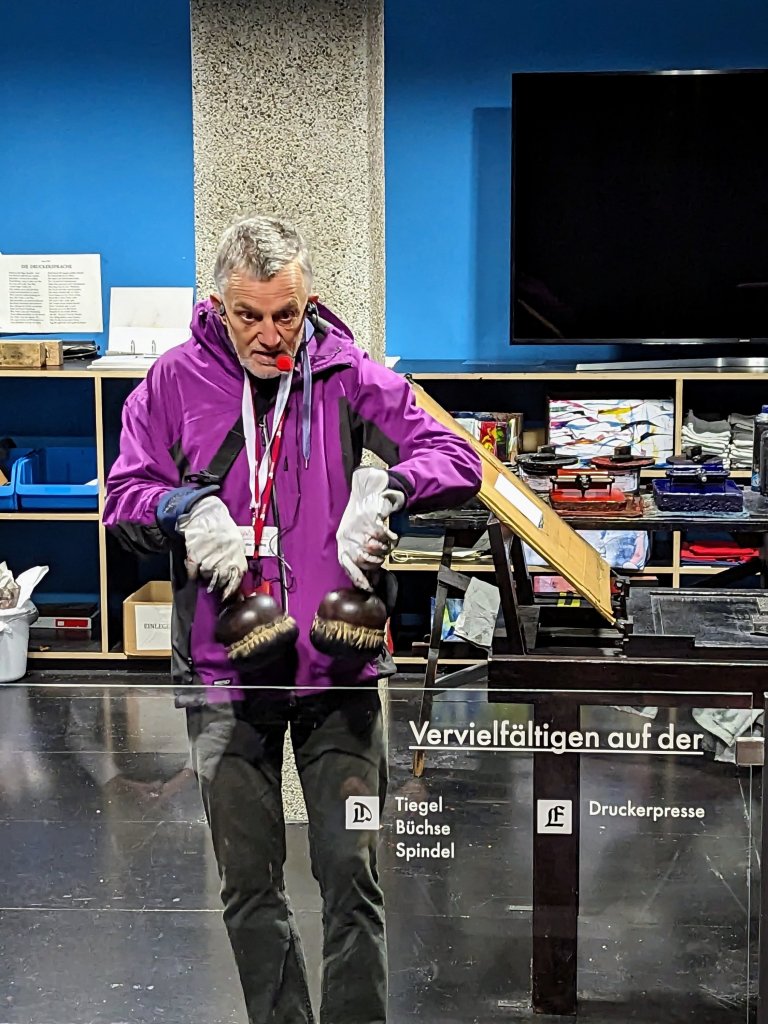
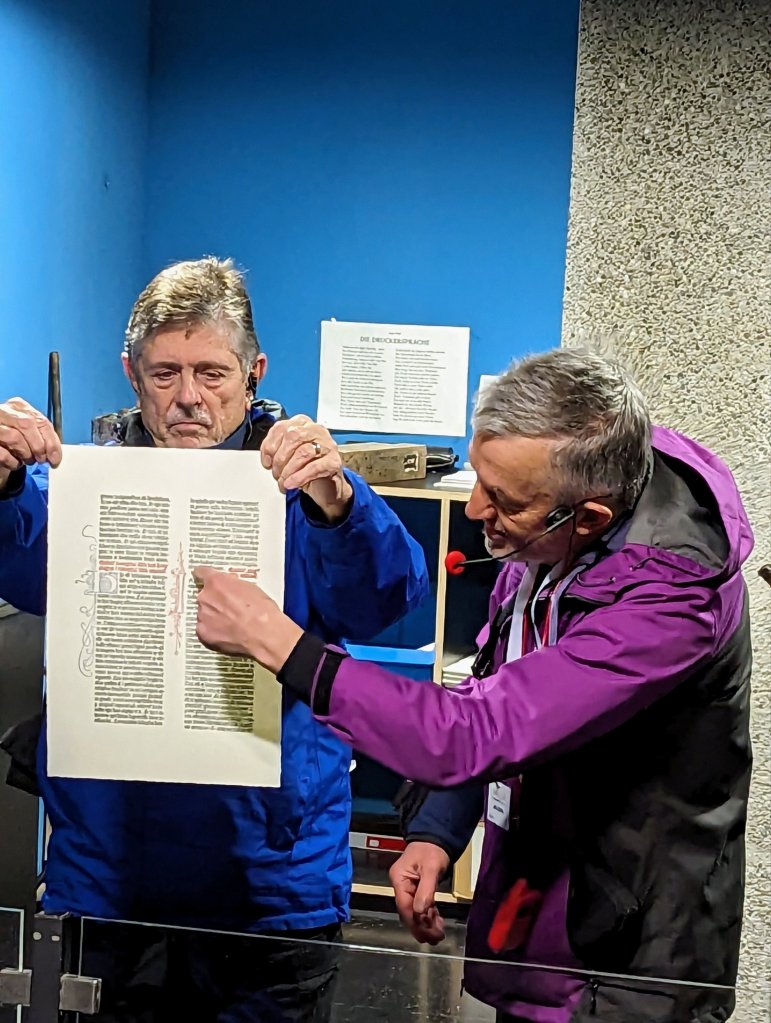
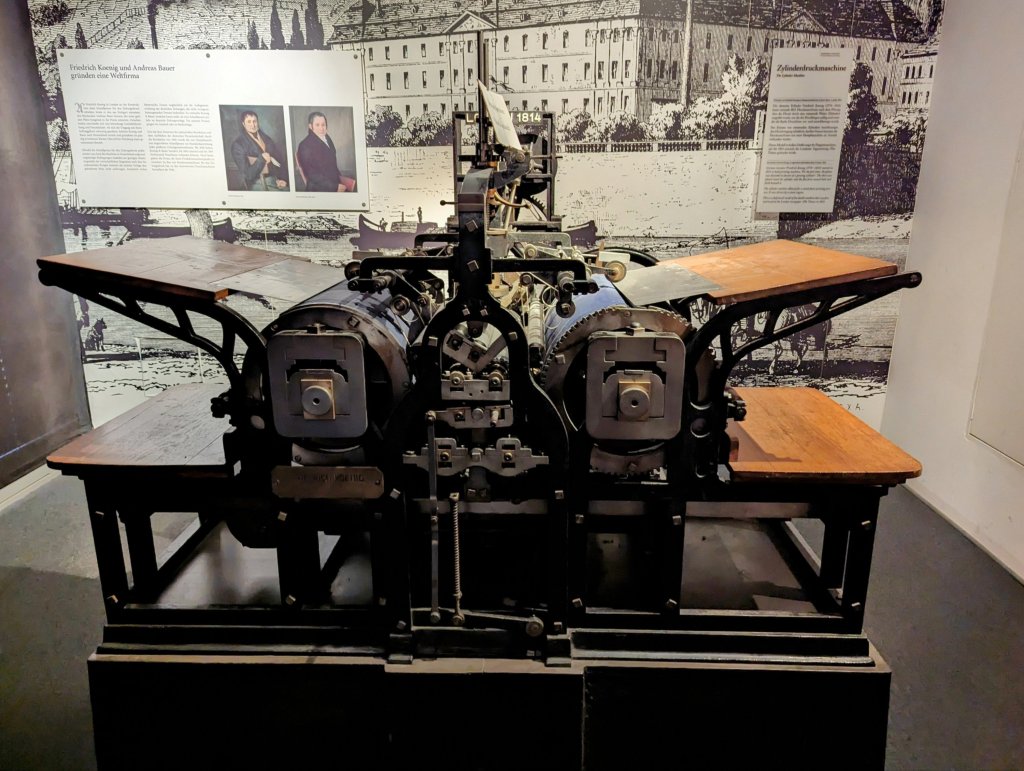
A highlight of our visit to the picturesque city of Mainz was the time we spent at the Gutenberg Museum. Dating back to 1900, the museum celebrates the invention of Mainz’ favorite son, Johannes Gutenberg: the mechanical movable-type printing press. There Doug tried his hand at typesetting and printing (above). We learned not only about the 1439 technological innovation that introduced the age of mass communication, but also about the history of printing and publishing around the world.
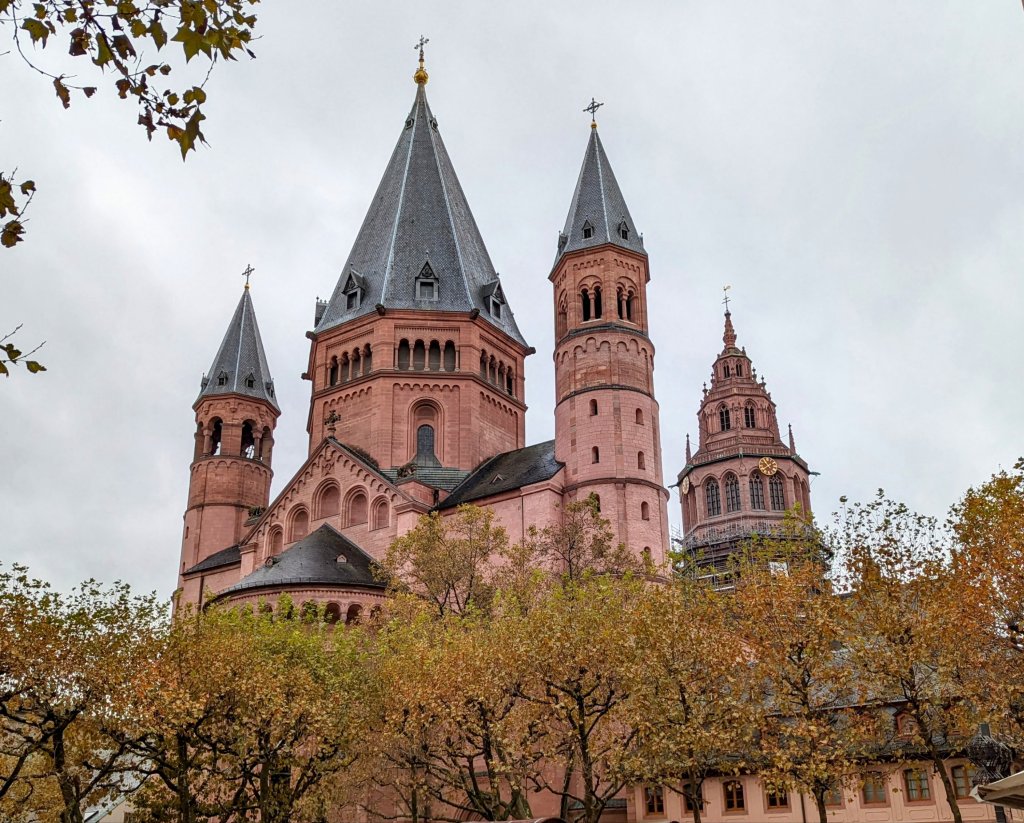
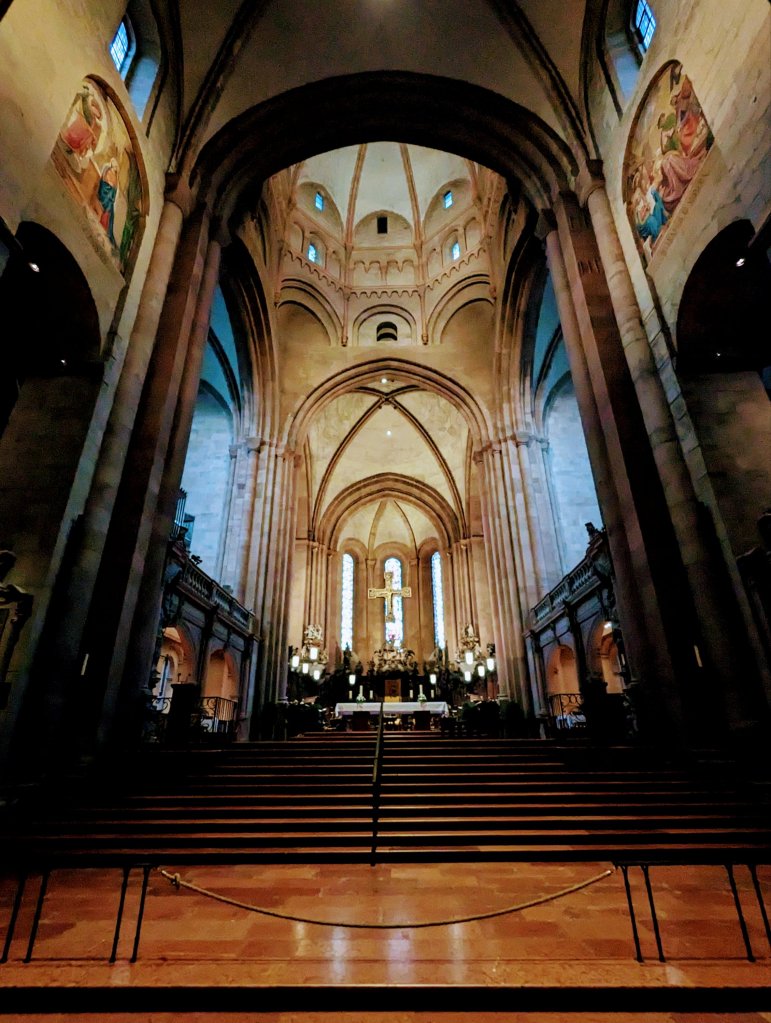
We also explored the soaring Mainz Cathedral. Over 1,000 years old, this city landmark is beautifully preserved inside and out.
Just outside the cathedral, workers were busy starting to decorate for the upcoming Christmas Markets. Every year the town square takes on a festive holiday vibe from a few days before Advent until December 23. Temporary warming huts are erected throughout the square where holiday shoppers can pause for some warm spiced wine.


Another short walk uphill from the square is the Church of St. Stephan. Heavily damaged in World War II, this unique church was restored and rebuilt in the sixties. After the renovation, a set of nine luminous blue stained glass windows were created for the church by artist Marc Chagall. Chagall, who fled France under Nazi occupation, is said to have created the windows as a symbol of Jewish-German reconciliation.
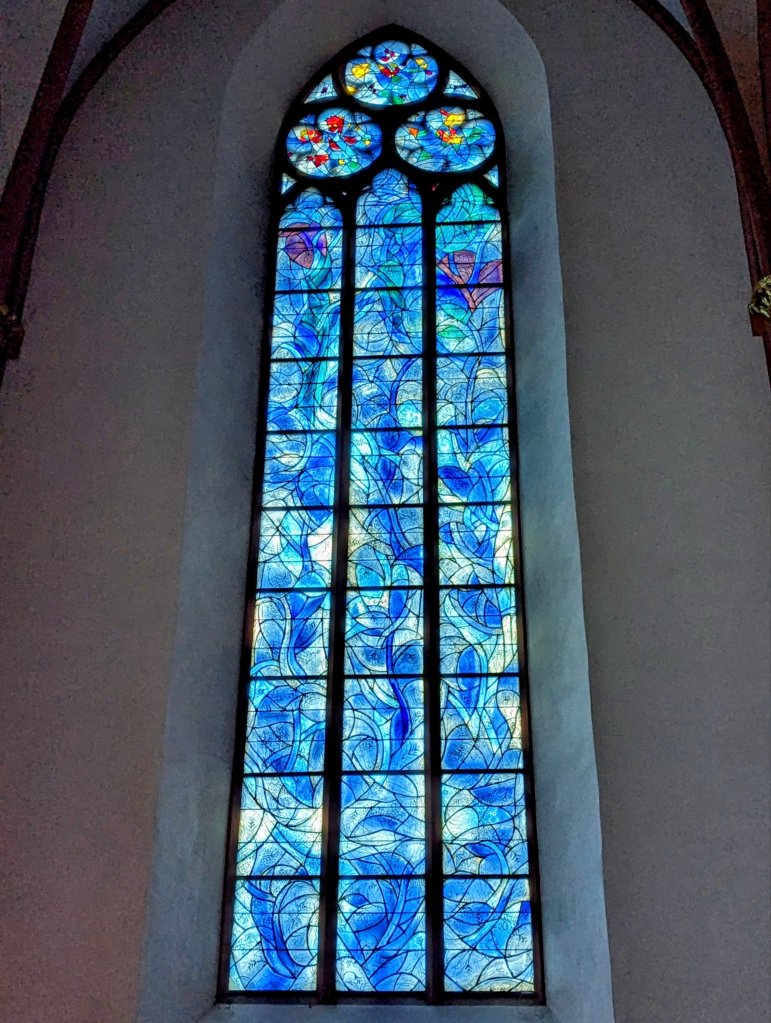

Quite coincidentally, we visited Mainz on November 9th as people throughout Germany paused to remember two significant events that occurred on this date: Kristallnacht (1938) and the fall of the Berlin Wall (1989). On this night 85 years ago, Jewish homes, businesses, hospitals, synagogues and schools were ransacked and destroyed. Members of the Nazi Party’s paramilitary forces and Hitler Youth forced people from their homes as the authorities looked on without intervention. The sidewalk “stumbling stones,” marking the location of the homes from which people were viciously removed took on a special significance as we made our way around Mainz today.

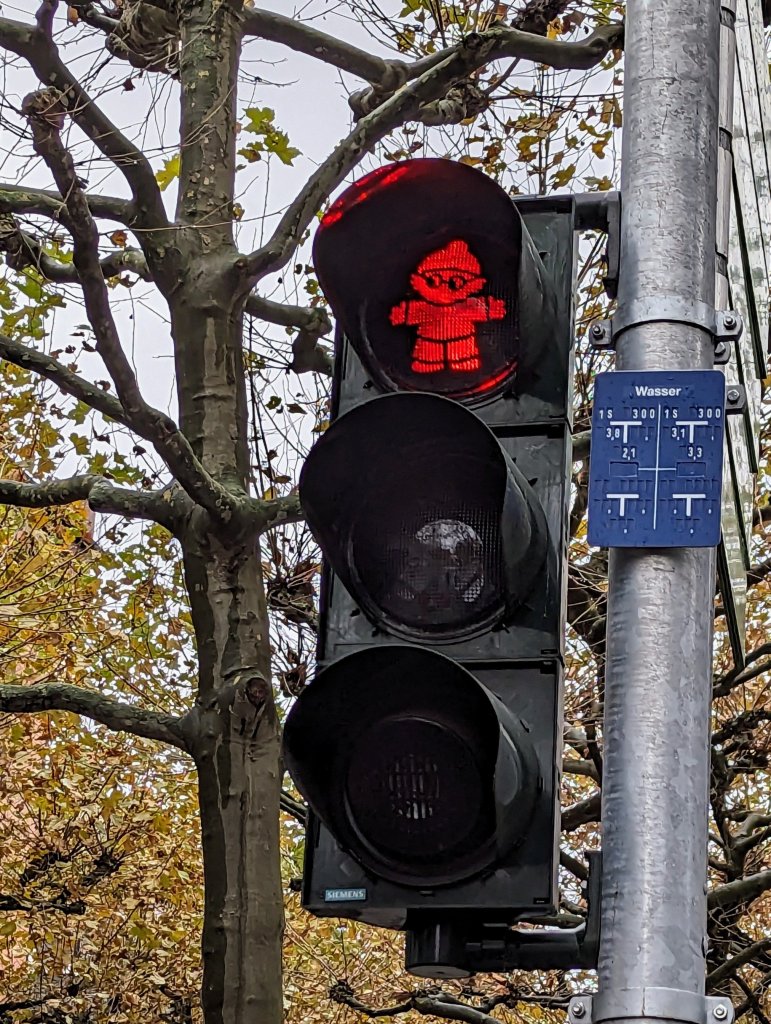
Mainz has had its share of tragedy and triumph, but it also has a sense of humor. This is reflected on its pedestrian traffic lights, on which a charming little guy named Det tells walkers to go or wait. Det is one of 6 beloved TV characters called Mainzelmannchen. The name and concept is from a kind of gnome from the folklore of nearby Cologne. They normally appear in brief skits during German TV between the show and commercials.

 Timeless Travelers
Loved today’s story and beautiful pictures, especially the windows.
LikeLiked by 1 person
Those Chagall windows!
LikeLiked by 1 person
The photos are simply beautiful, as is the story you shared with us today! Your journey
continues filled with education and beauty!
LikeLiked by 1 person
Loved the pictures and history. Enjoy!!
LikeLiked by 1 person
The beginning of “mass communication”
was especially interesting to me. Wonderful history lesson and beautiful photos !!
LikeLiked by 1 person
Keep loving your travels and discoveries!
LikeLiked by 1 person