

Greenland, the world’s largest non-continental island, is home to 56,000 people. It is a self-governing autonomous territory within the Kingdom of Denmark. Its people hold Danish citizenship and currency is the Danish Krone. Greenland is also the least populated country on earth. It was named Greenland in 982 by Eric the Red. Due to its harsh Arctic climate, “Greenlanders” live in the 20% of the country that is not covered with ice and snow. Greenland’s natural beauty is truly breathtaking. It is clear why people who live there say that they feel very small in the magnificent surroundings that include glaciers, fjords, mountains, and amazing fauna such as polar bears, musk oxen, walruses, reindeer and sea eagles. Greenland’s settlements are not connected by roads, so people travel between towns include by air and sea. In winter, dog-sleds and snowmobiles are popular ways to get around.
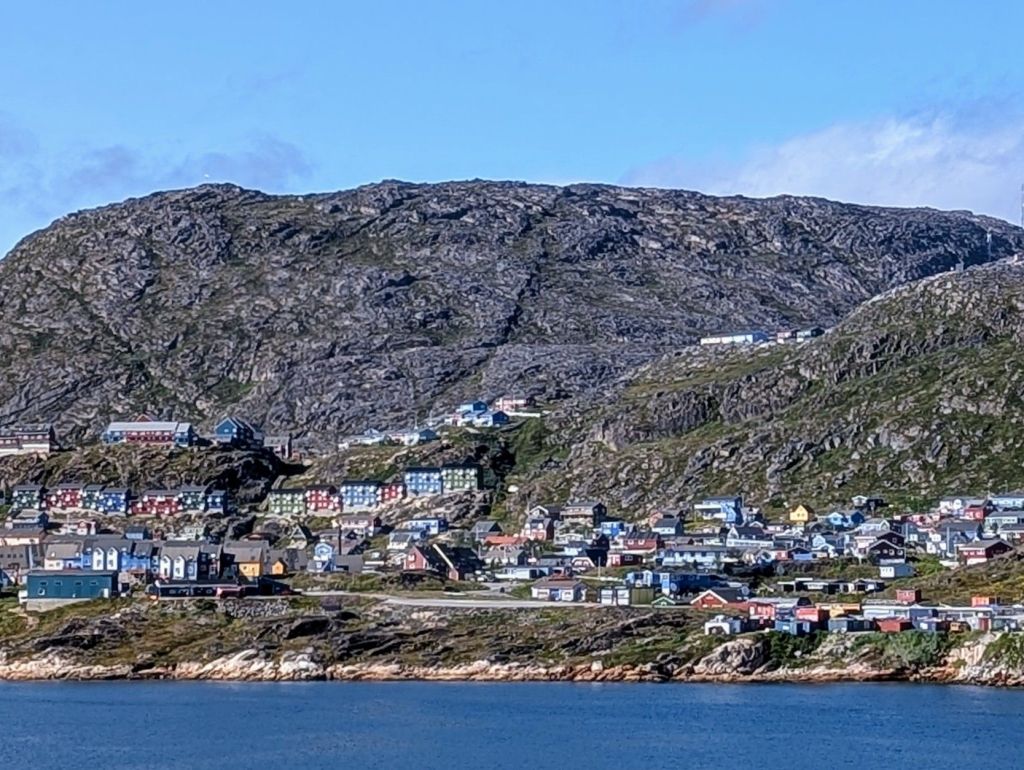
Qarqortoq, our first Greenlandic stop, has an intriguing and storied past. Although the town was colonized in 1775 by Norwegian trader and explorer Anders Olsen, there is archaeological evidence that the region was inhabited by the Saqqaq people more than 4,000 years ago followed by the Dorset people from Nunavut, Canada almost 3,000 years ago. As a UNESCO World Heritage Site, Qarqortoq keeps its rich Norse and Inuit history alive in storytelling and song. Today Qarqortoq is the most populated town in southern Greenland with just over 3,000 residents. Its spectacular setting attracts outdoor enthusiasts as well as “timeless travelers” who enjoy a leisurely stroll around a quaint and beautiful town.


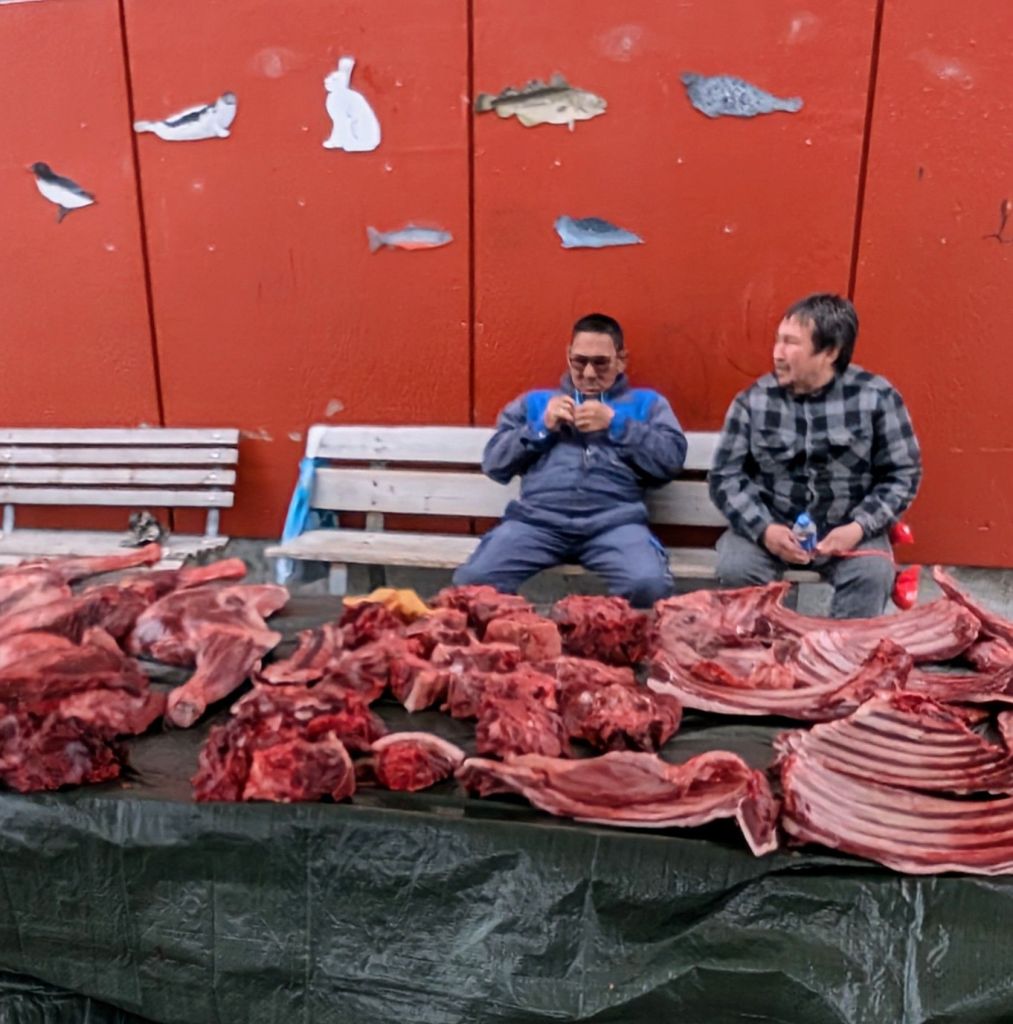
Historically a center for saddle-back seal trade, this seaport village is also known for fishing, shrimping, tanning, ship maintenance, and education.

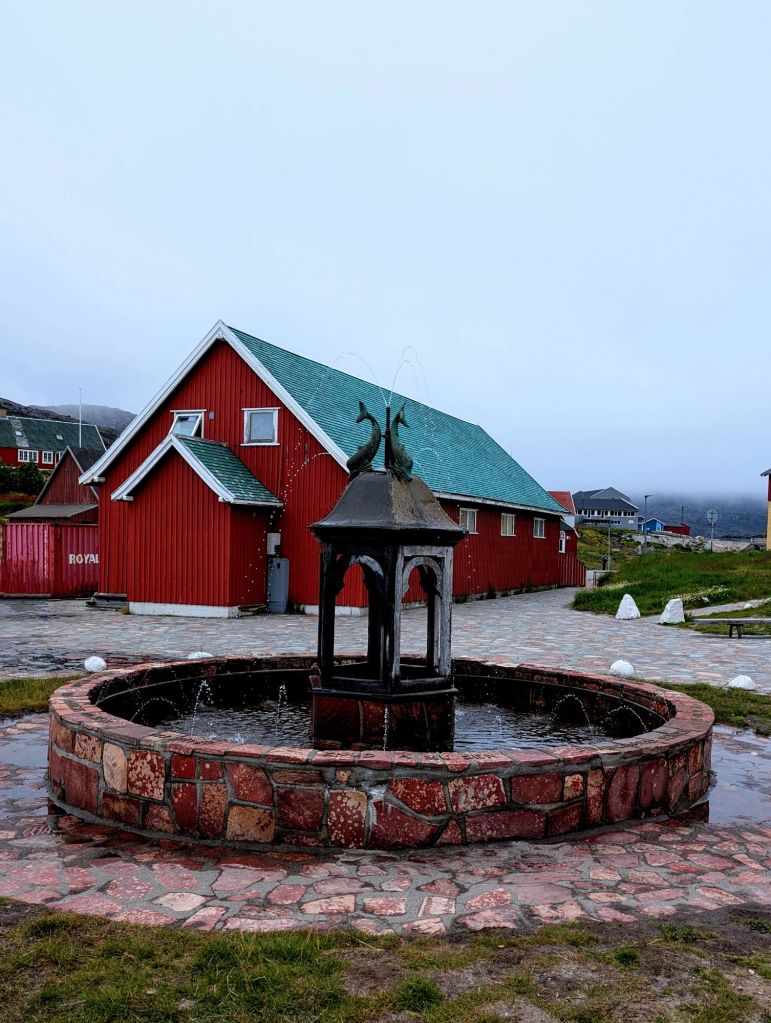
Qarqortoq is home to Greenland’s oldest fountain. Dating back to 1932, it sits in the middle of town and is a popular meeting point.

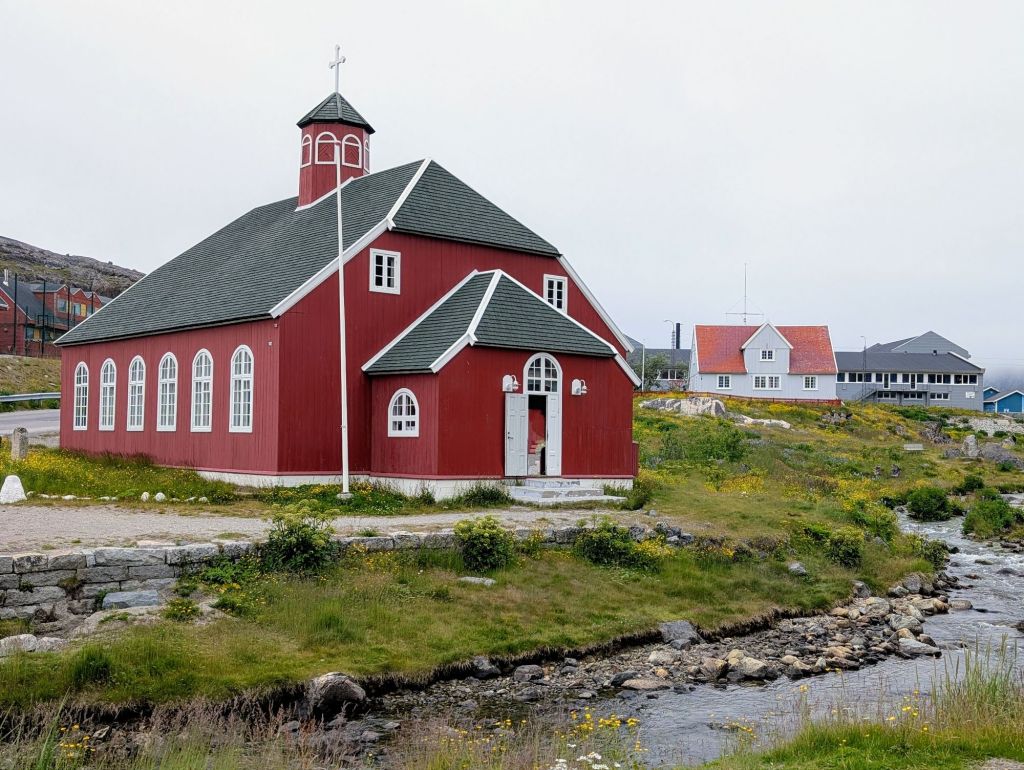
The Church of Our Savior (1832) is another popular gathering spot for religious services as well as meetings. Today we enjoyed more native singers at the church.

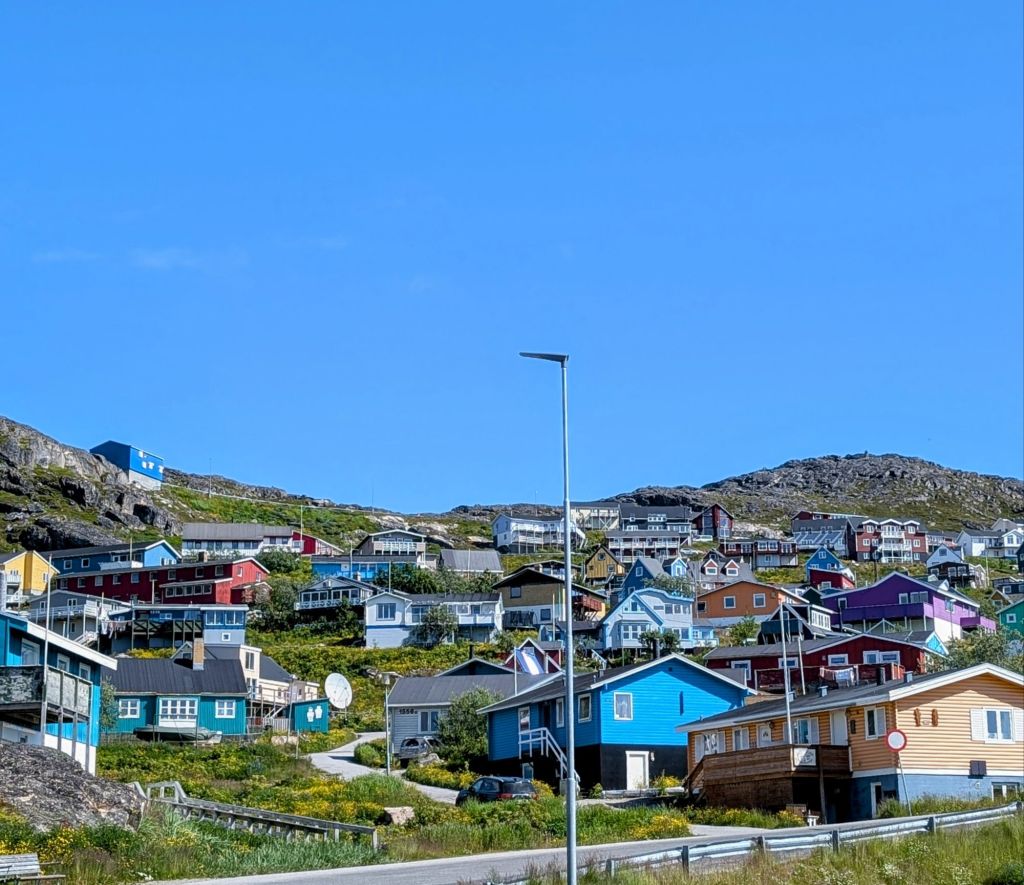
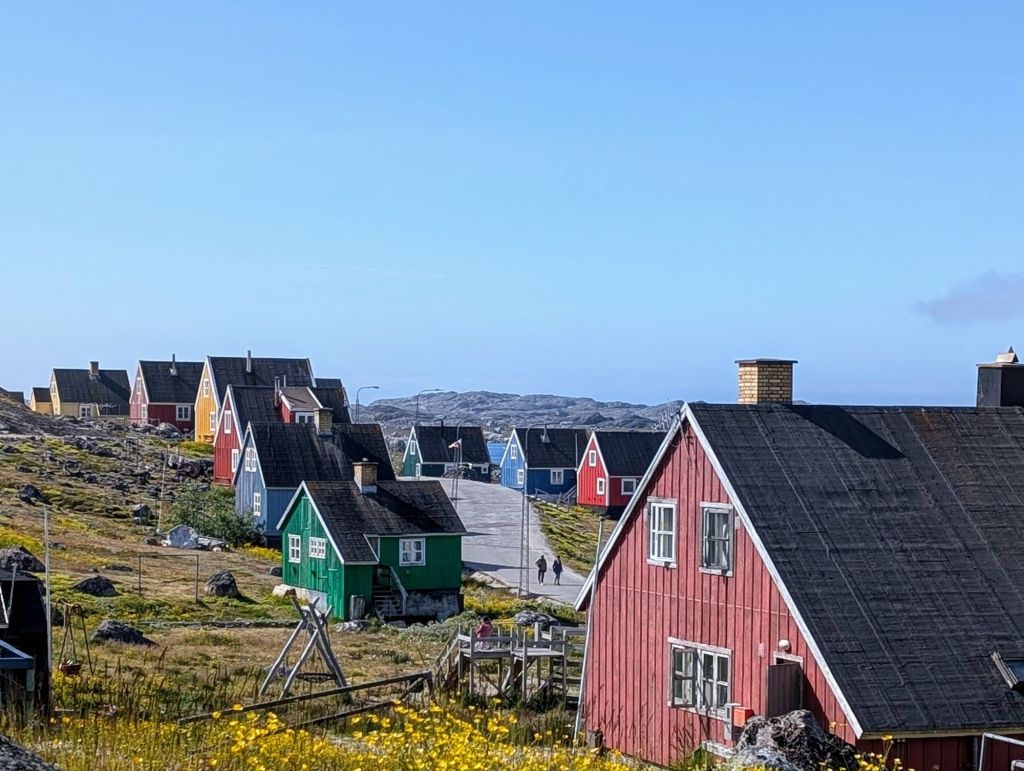
Qarqortoq is known for its colorful buildings and whimsical public art.


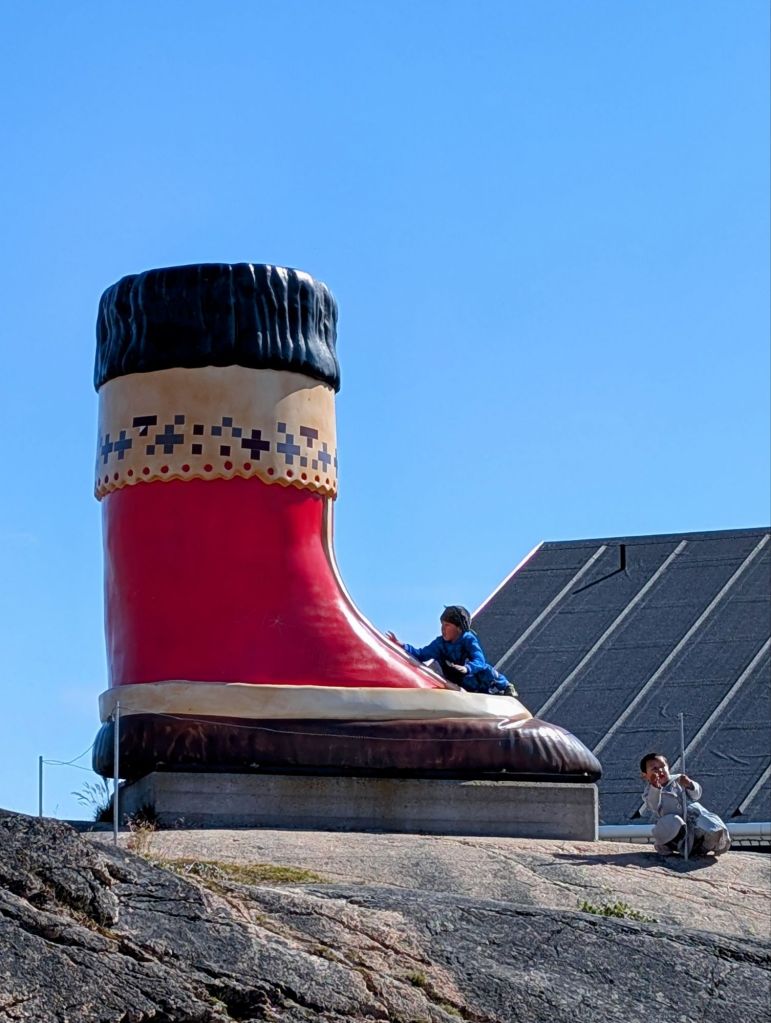
The most famous and expansive local public art project is “Stone & Man,” an endeavor of local artist Aka Hoegh who curated the project to turn her home town into a permanent open air art gallery. In 1993, Hoegh brought together 18 artists from Nordic countries including Norway, Iceland, Finland, Sweden and Greenland to transform the town’s granite rocks into artistic sculpture. Some of the works are three-dimensional while others resemble ancient tribal wall markings of fish, whales and faces. Additional sculptures have been added to the collection over the years and today Qarqortoq is home to more than 40 sculptures and carvings all around town.


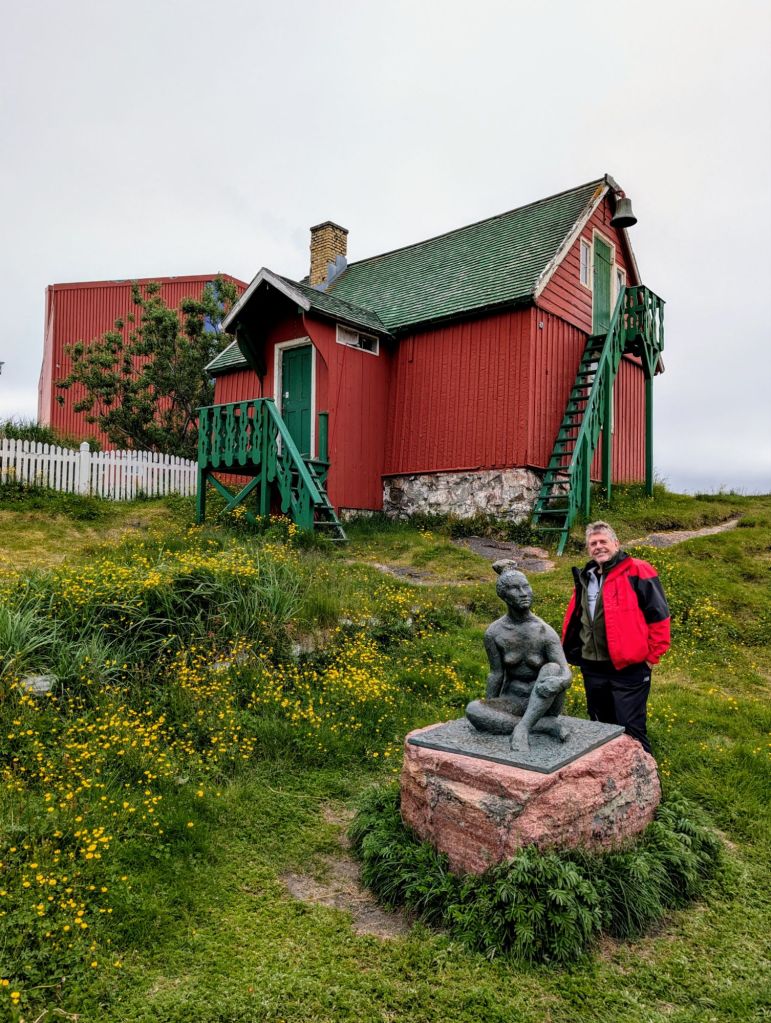


Nestled on an island near the mouth of the Tasman Fjord on the shores of the Labrador Sea, the austere and picturesque village of Nanortalik was our second Greenlandic stop. Established as a colony in 1770, Nanortalik is now home to the Inuit people who maintain their native traditions by fishing for crab, hunting hooded seals and welcoming visitors with a festive kaffe-milk, a coffee party with spiked coffee and tasty Greenlandic cake. Nanortalik means “place of the polar bears,” but unfortunately we didn’t have any bear sightings.
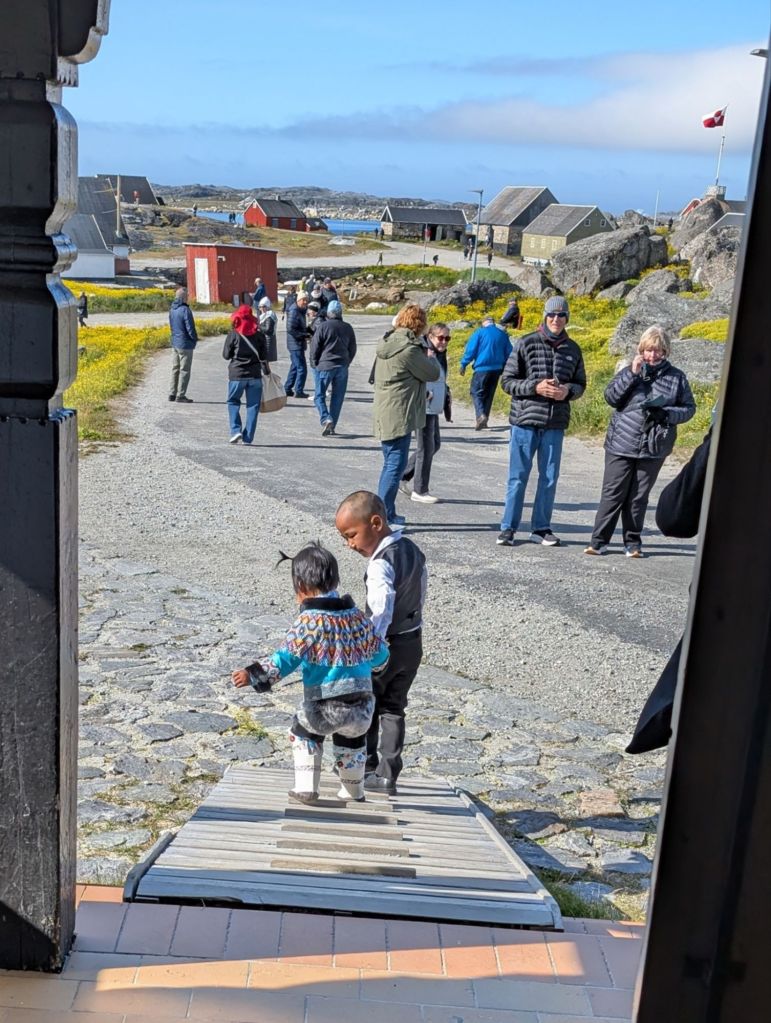
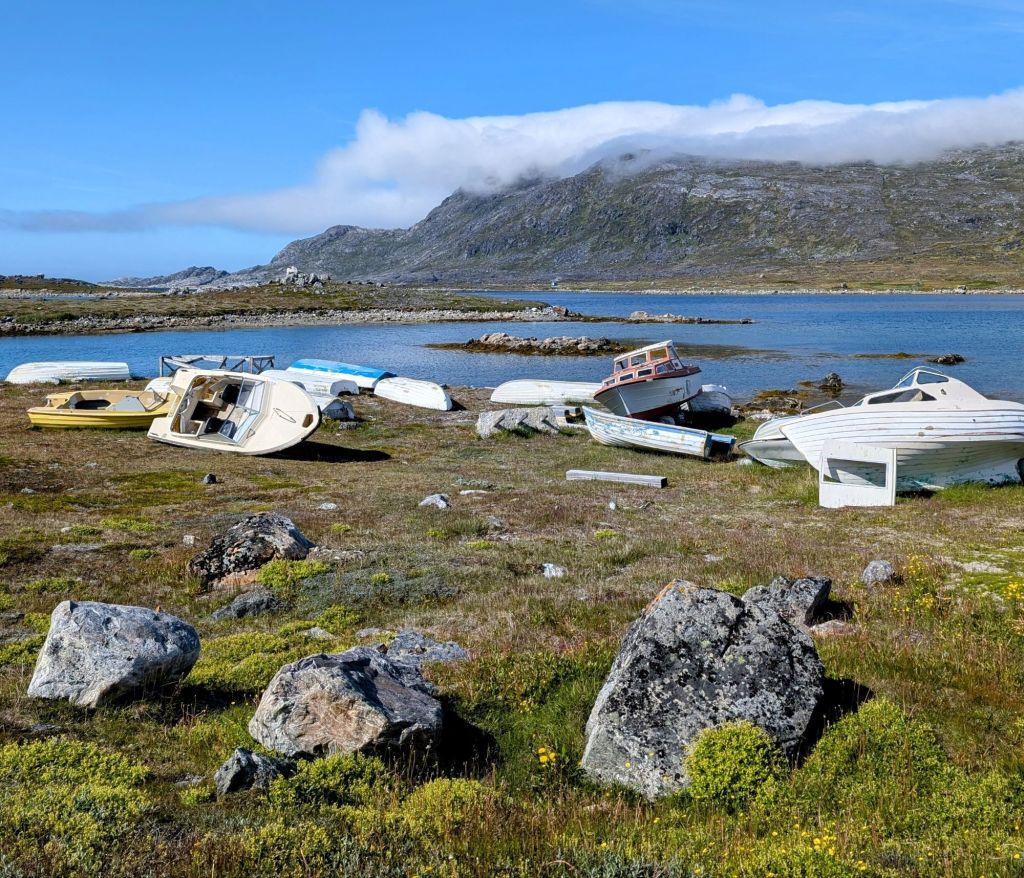
A small village of just over 1,000 residents, Nanortalik is surrounded by the natural beauty of towering mountains, fields of wildflowers and nearby glaciers.

The Nanortalik Museum is actually a collection of 9 historical buildings making it the largest outdoor museum in Greenland.

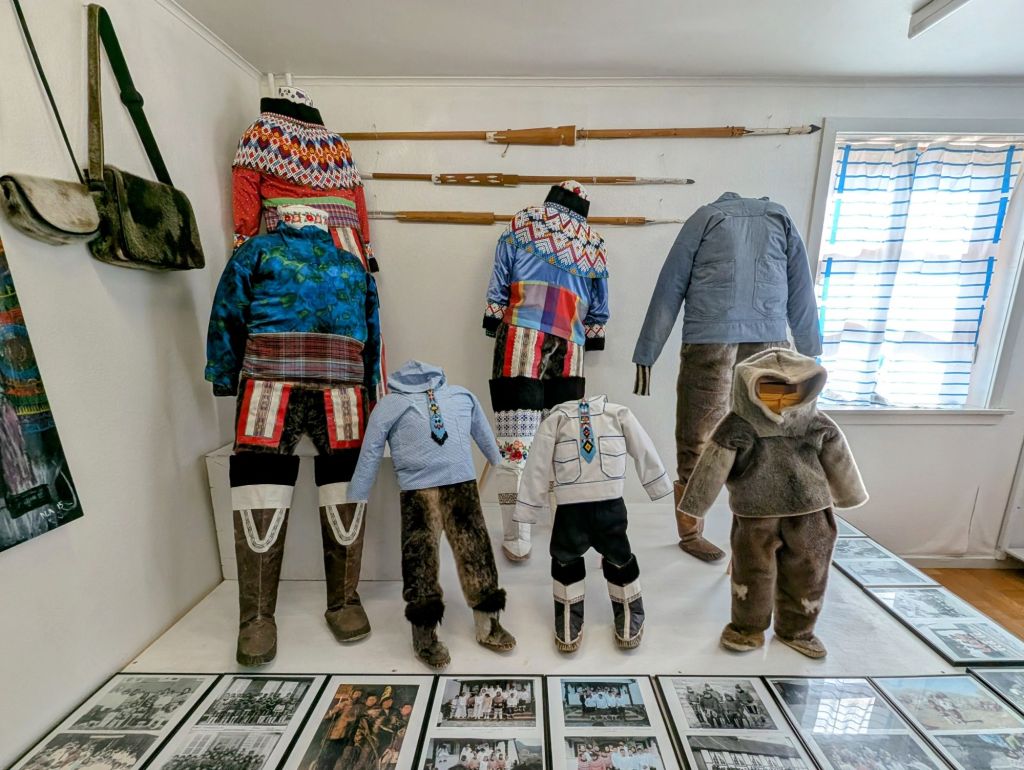
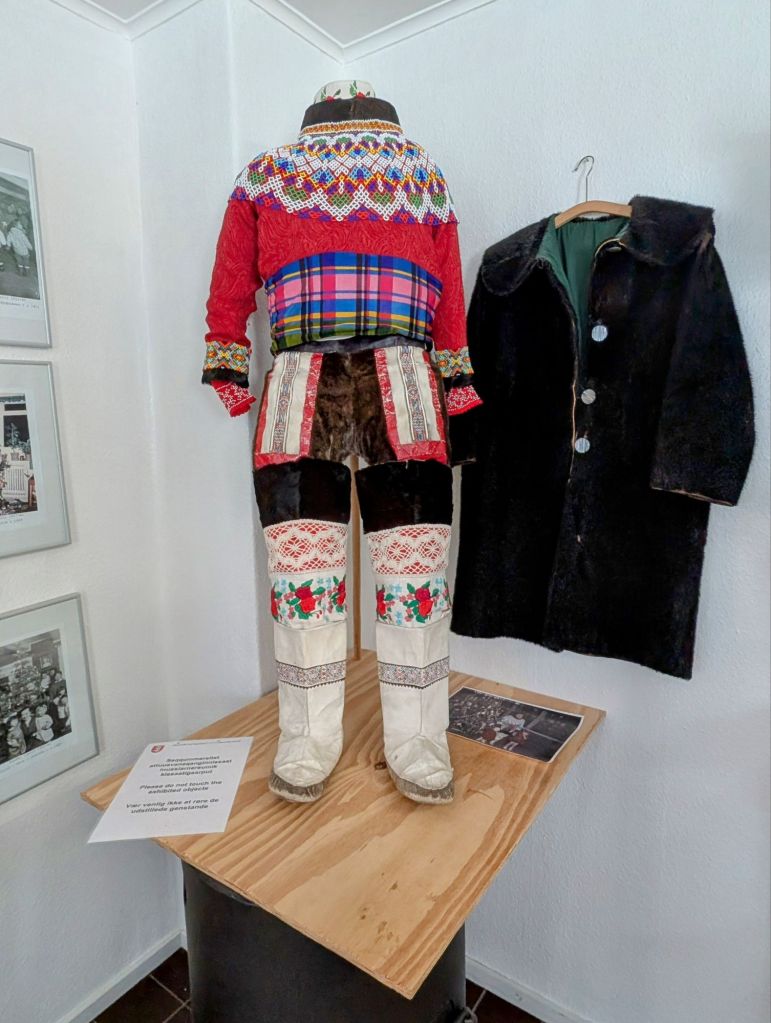
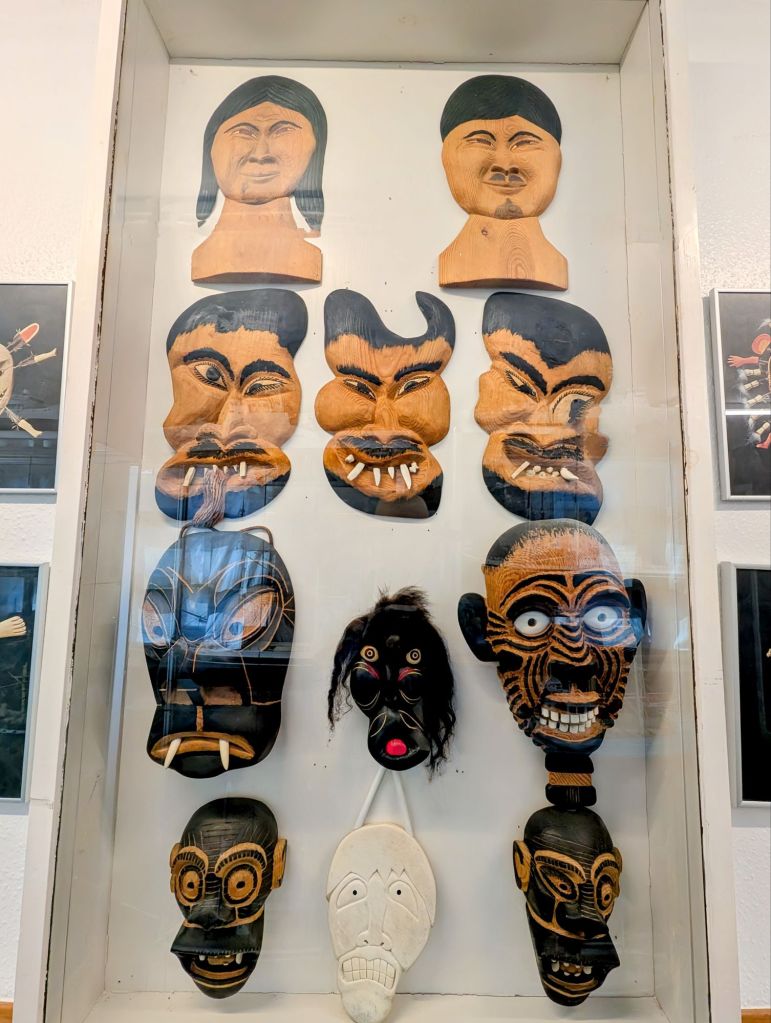
With crisp, fresh air and bright sunshine, it was a perfect day for a leisurely stroll through history.
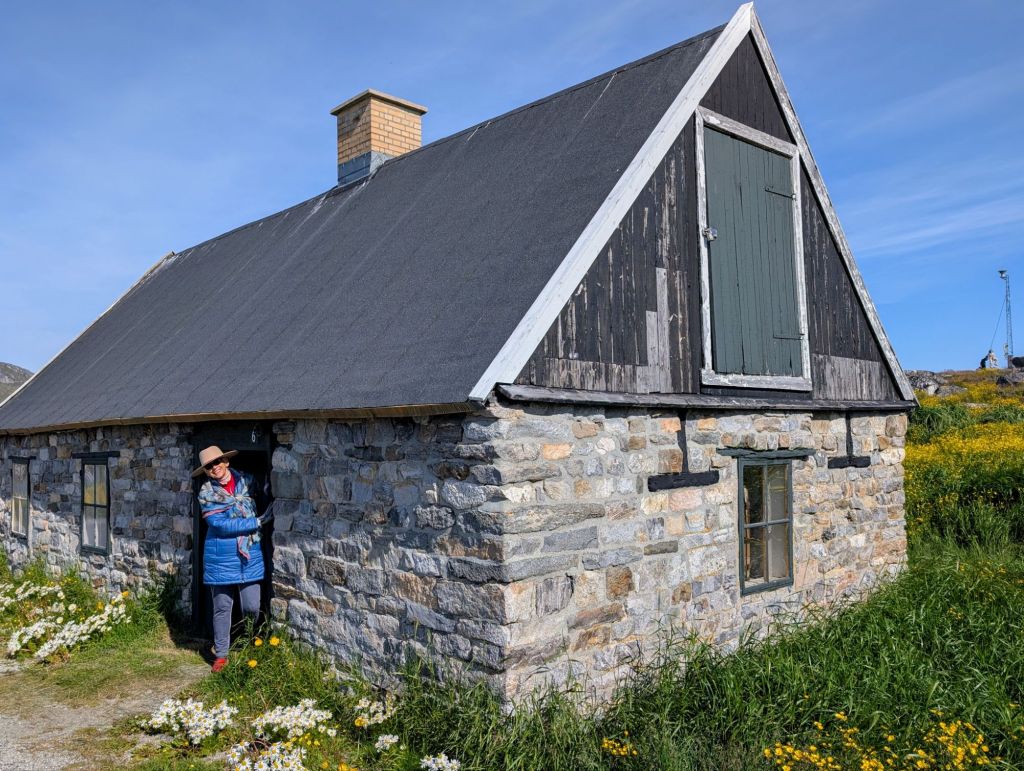


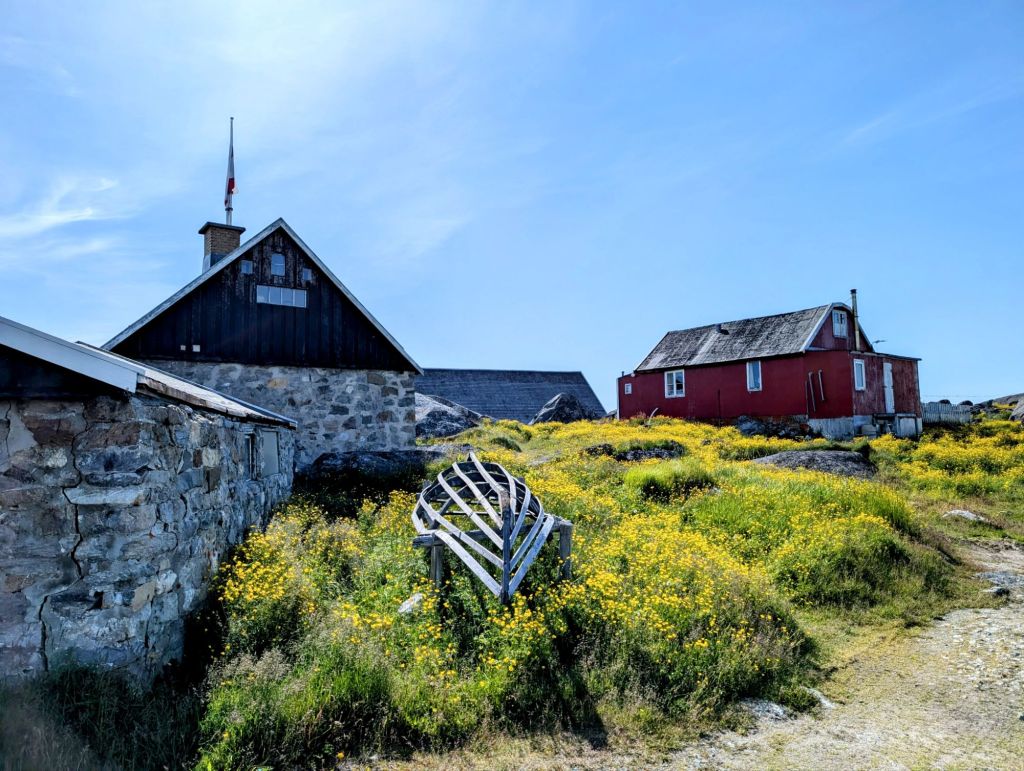
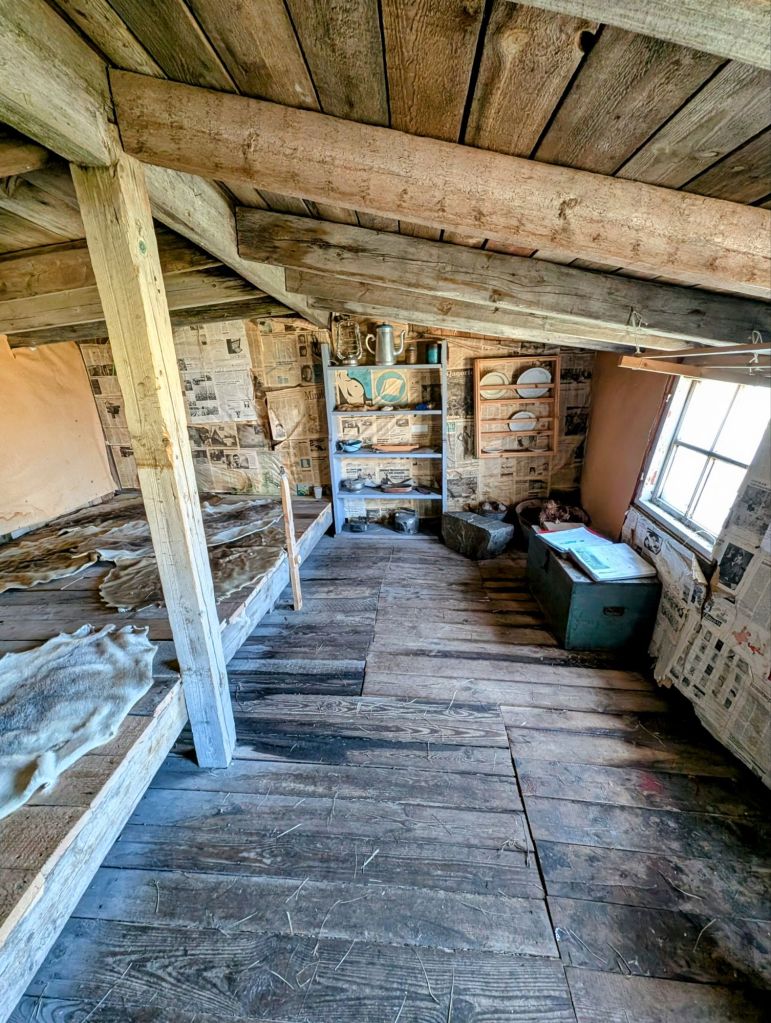
A traditional sod home, last occupied in 1979, is open for visitors.


Modern homes are compact and colorful. Dogs are popular pets.
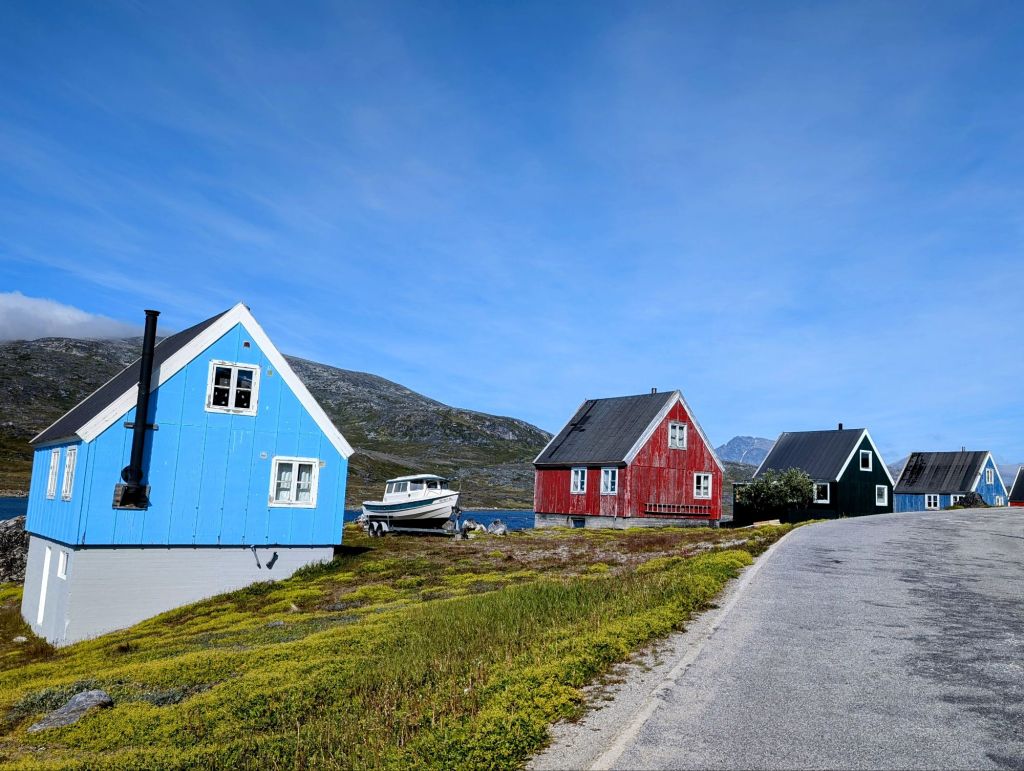
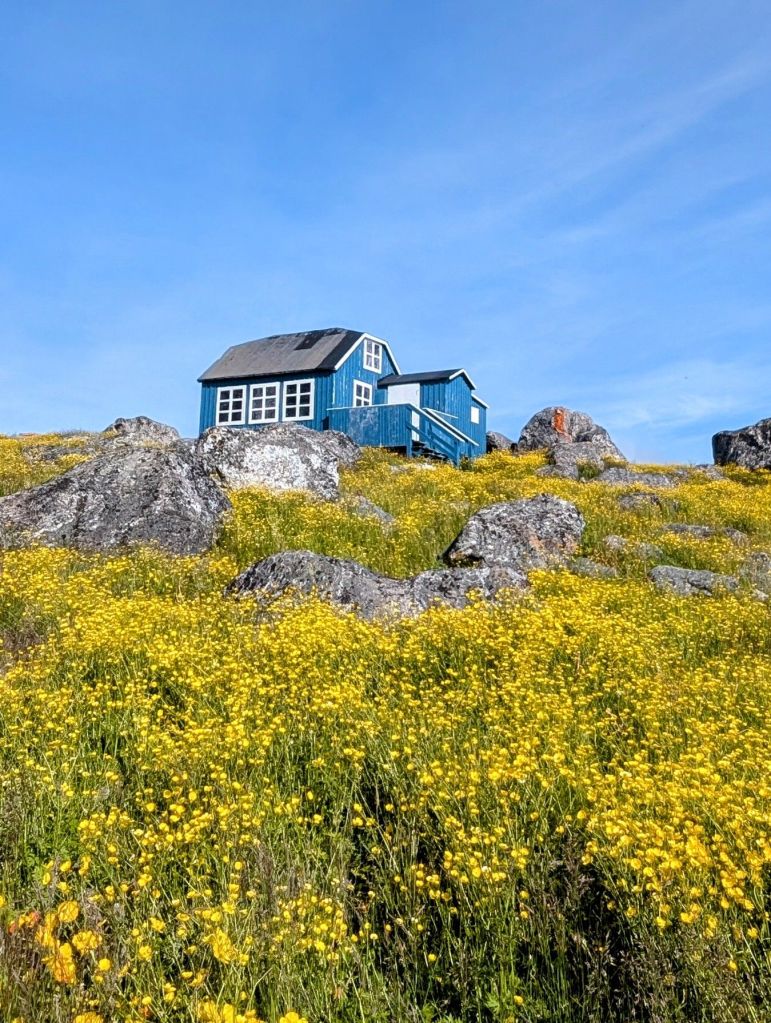

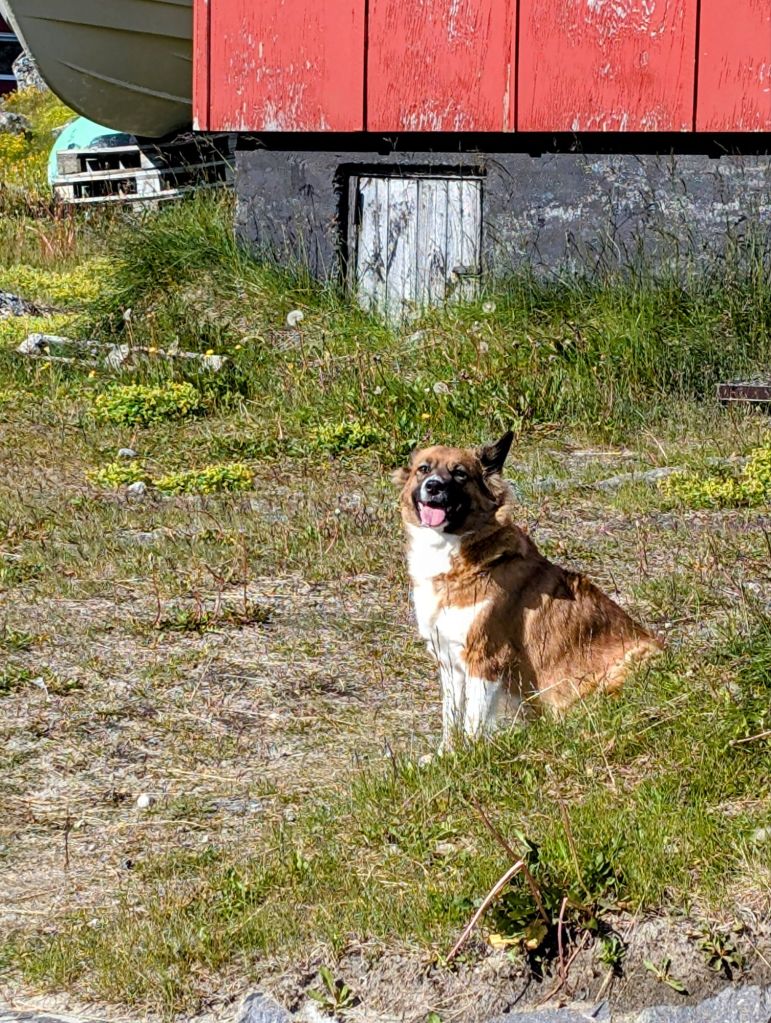
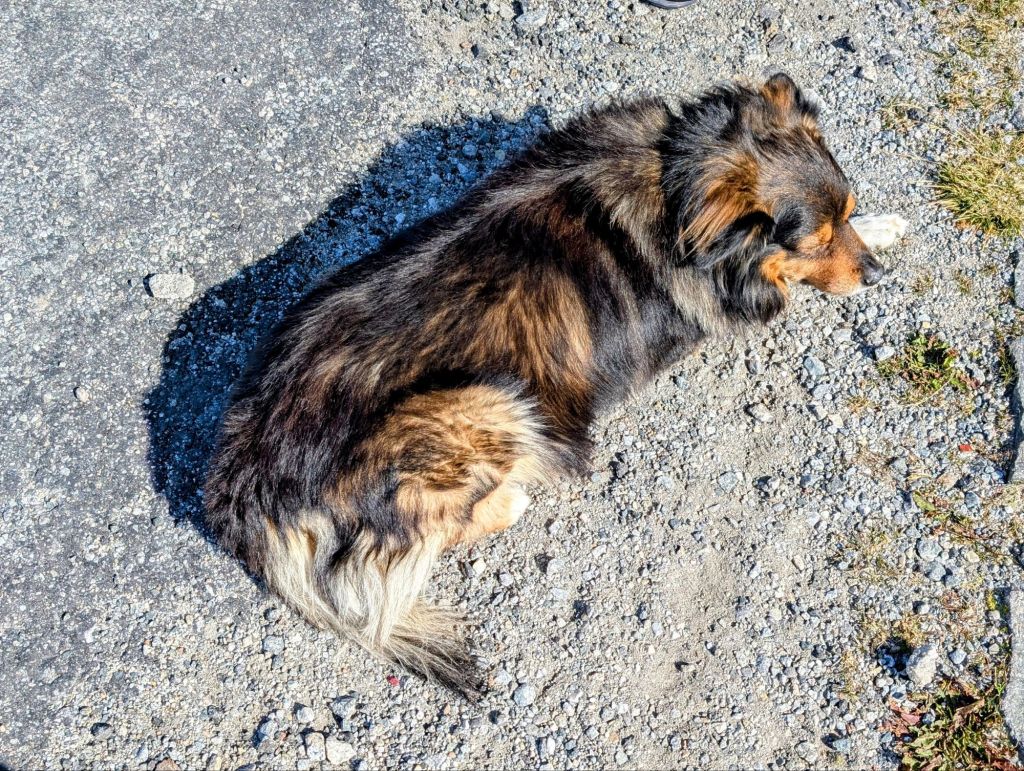
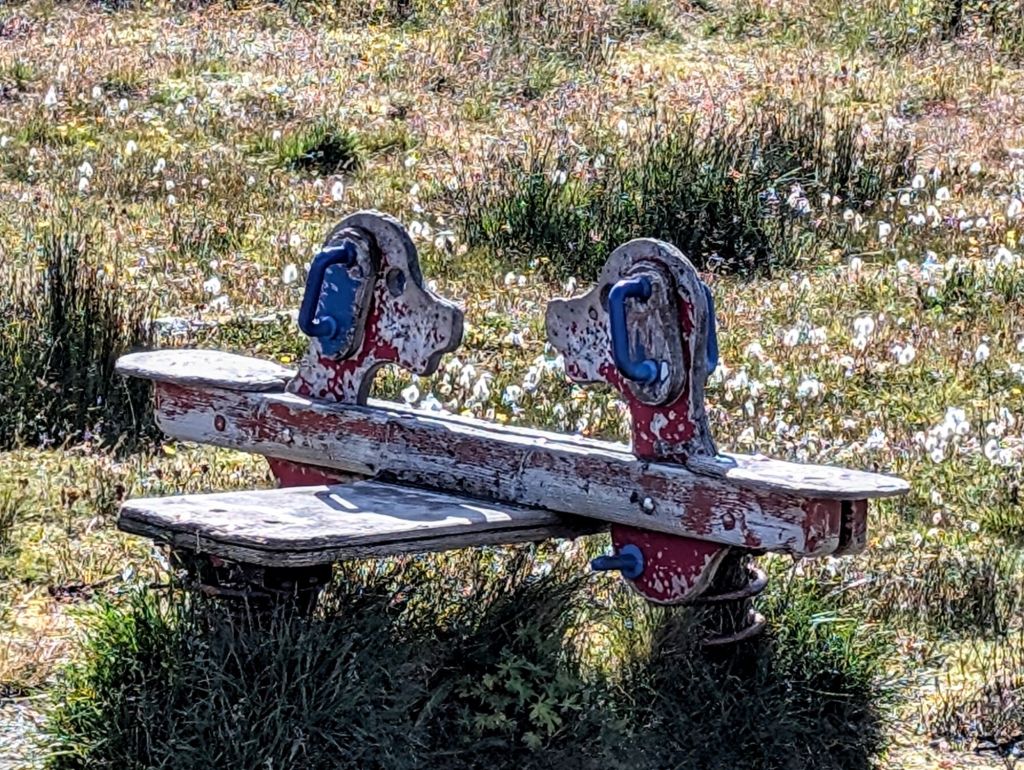
Many buildings are adorned with brightly painted murals.


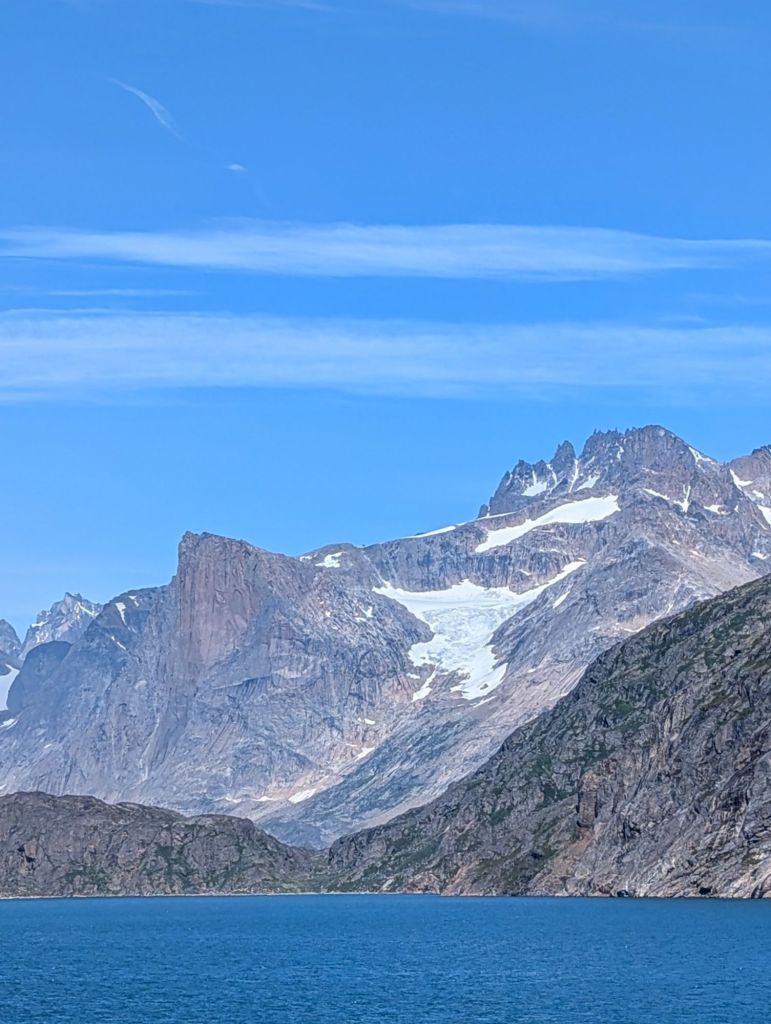
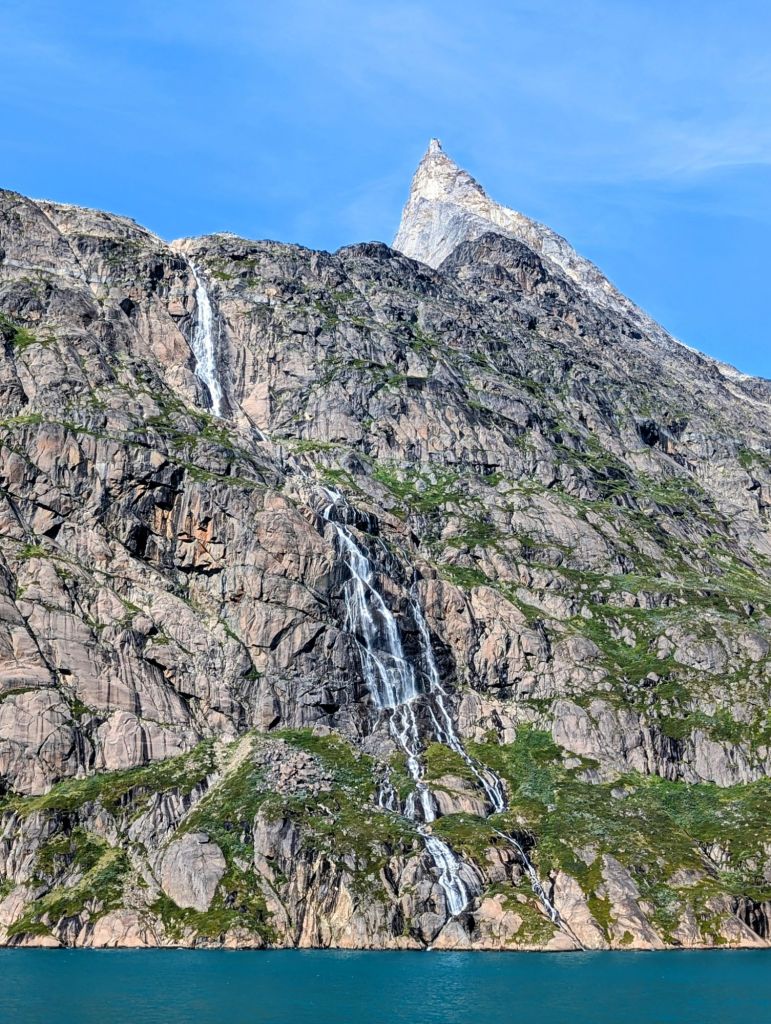
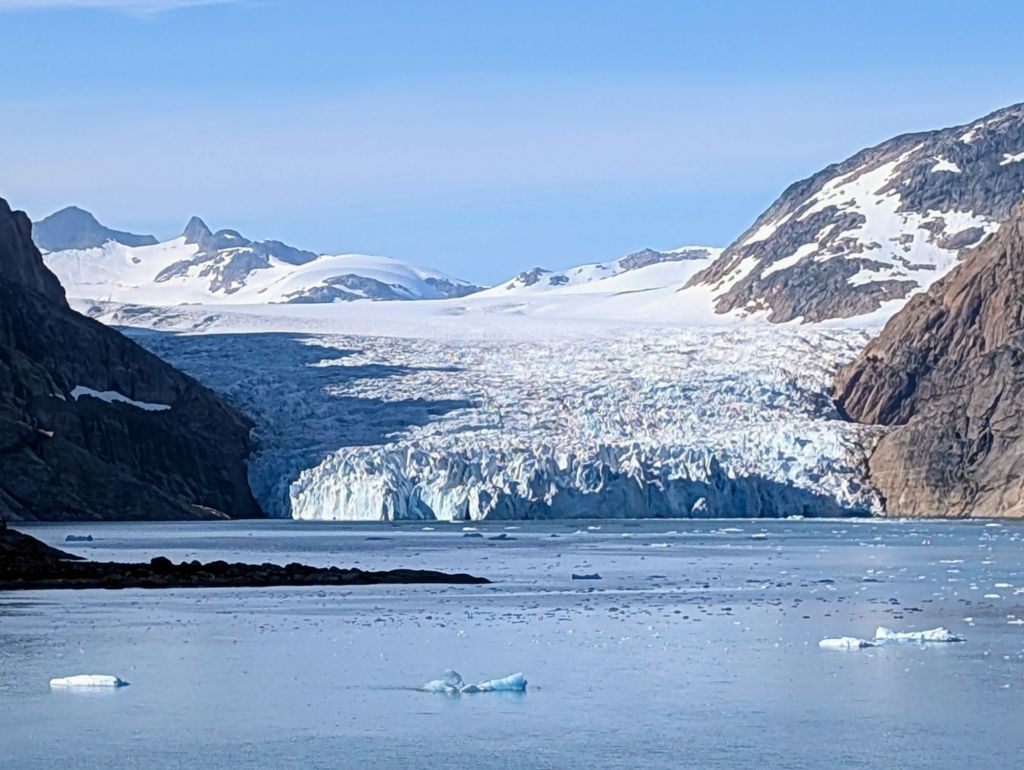
After two laid-back and enjoyable days in Greenland, we set sail toward Prince Christian Sound where we spent almost four hours in awe at the wonder of this exquisite work of nature. The pictures don’t do justice to the magnificent glaciers, waterfalls, and the surprise village of Aappilattoq. This tiny community of 90 residents has a general store, school, church and a helipad. The primary occupations are hunting and fishing, but I would guess these hearty souls simply relish in the beautiful surroundings.





 Timeless Travelers
Thanks for sharing so interesting 😁Sent from my iPhone
LikeLike
wow! This is so cool.
LikeLike
I am at a loss for words. Truly breathtaking. I look forward to your next posts. Enjoy this experience of a lifetime. ♥️♥️
LikeLike
I never imagined this area of the world was so beautiful. Thanks for sharing the photos and info.♥️♥️
LikeLike
Your photo skills are top notch! So enjoying the pics and your narrative.
LikeLike