This chilly morning we donned multiple layers of warm clothes and made our way to the sun deck. The forecast was cold and rain, but fortified with blankets and steaming hot chocolate with rum (yum !) we settled in for the most beautiful 40-mile stretch of the Middle Rhine between Bingen and Koblenz.
Much to our delight, the weather cooperated and starting out with a rainbow, we were rewarded with a fairytale -like sail past terraced vineyards on steep hillsides dotted with views of 30-some castles, each more picturesque than the last.
Here are some of our favorite sights along the way.
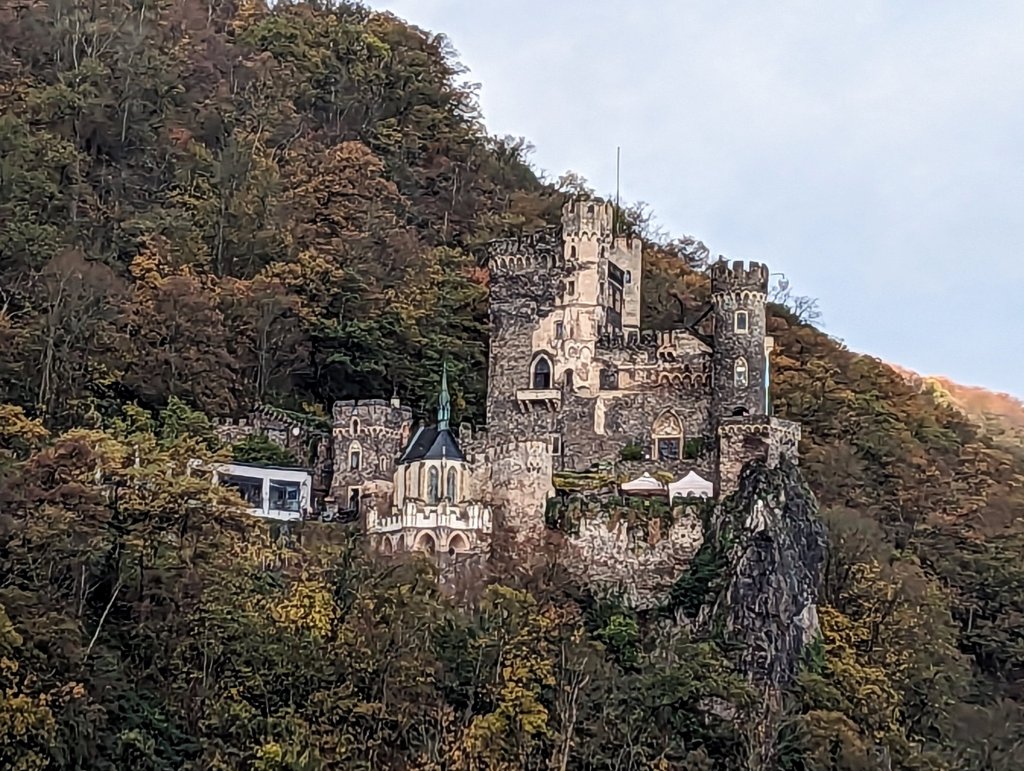
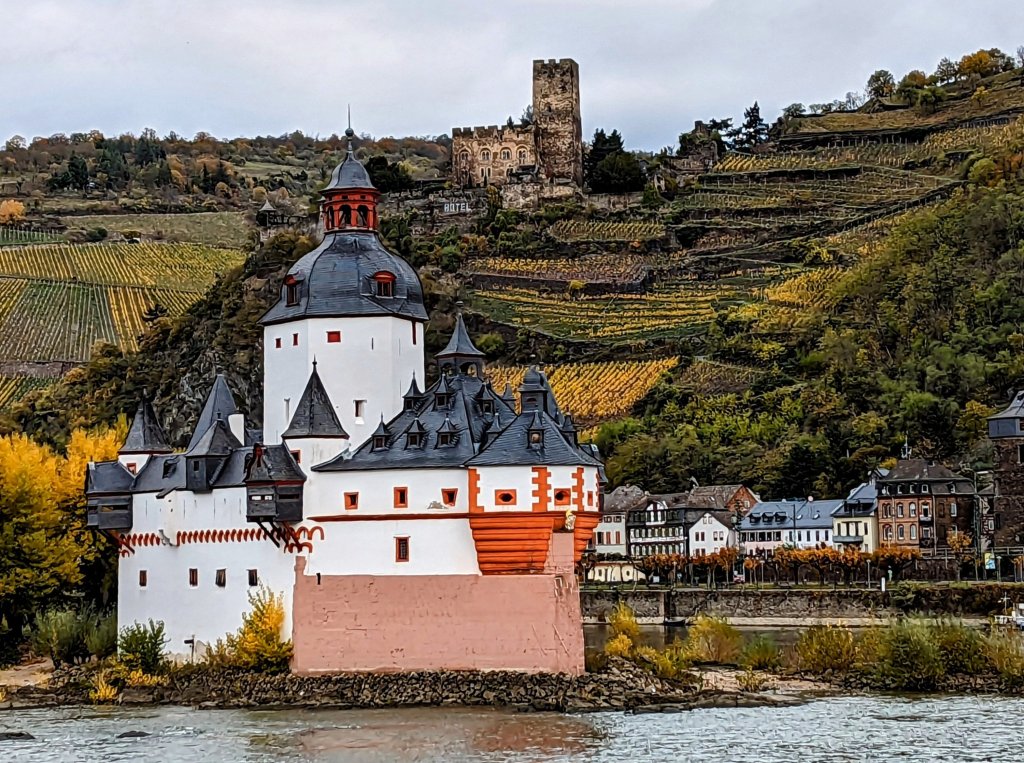
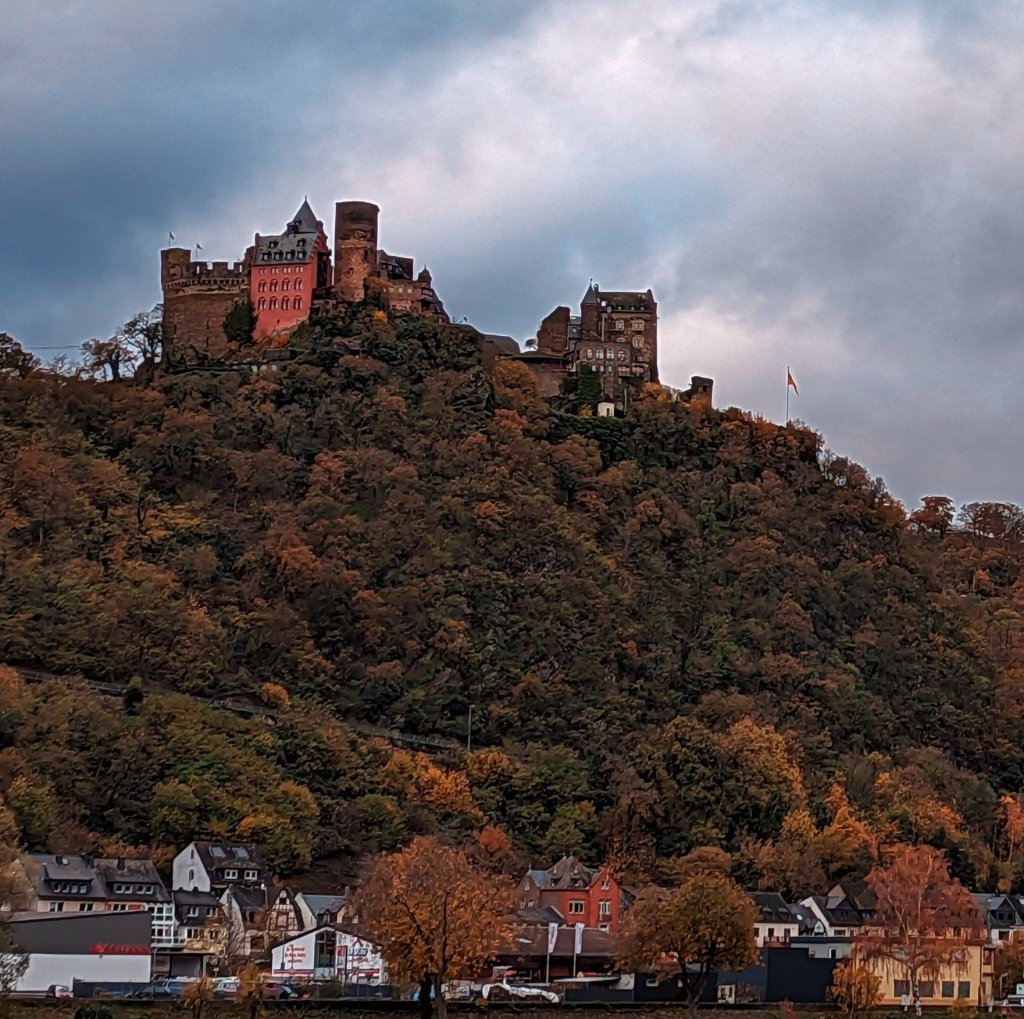
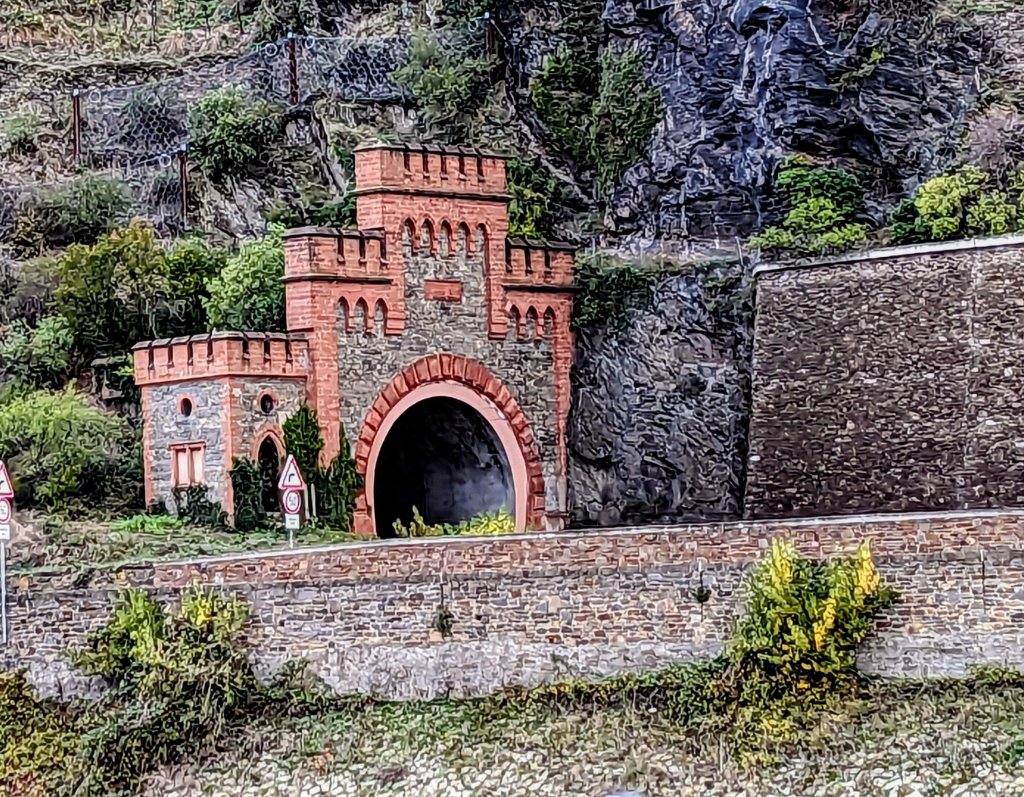
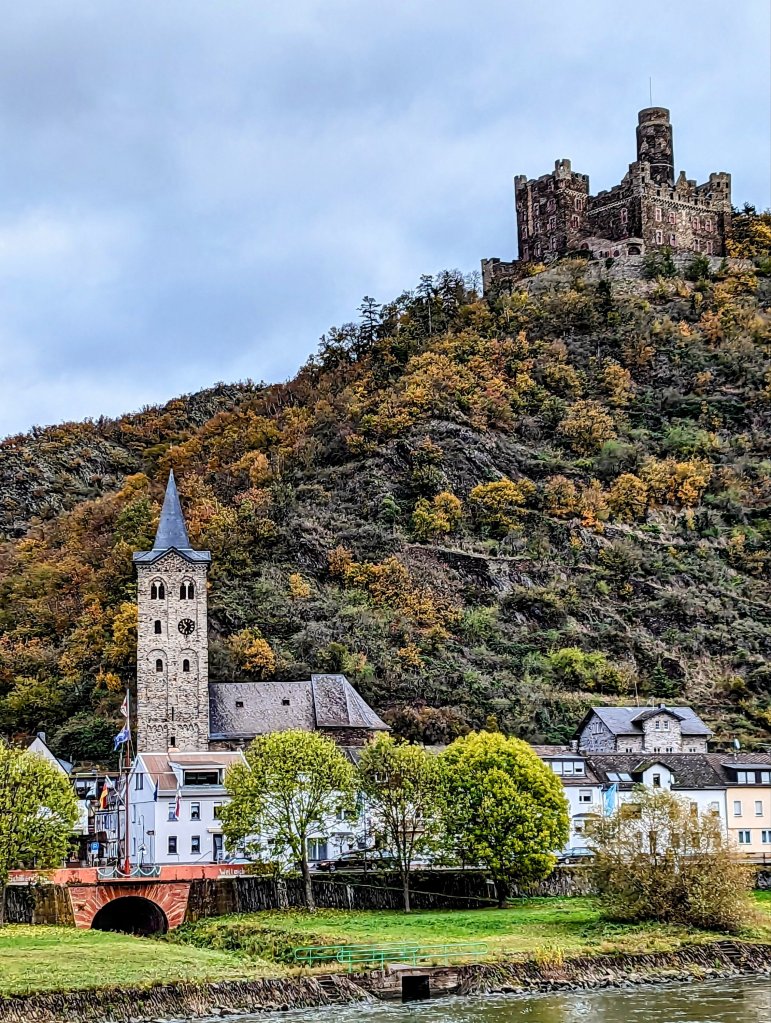
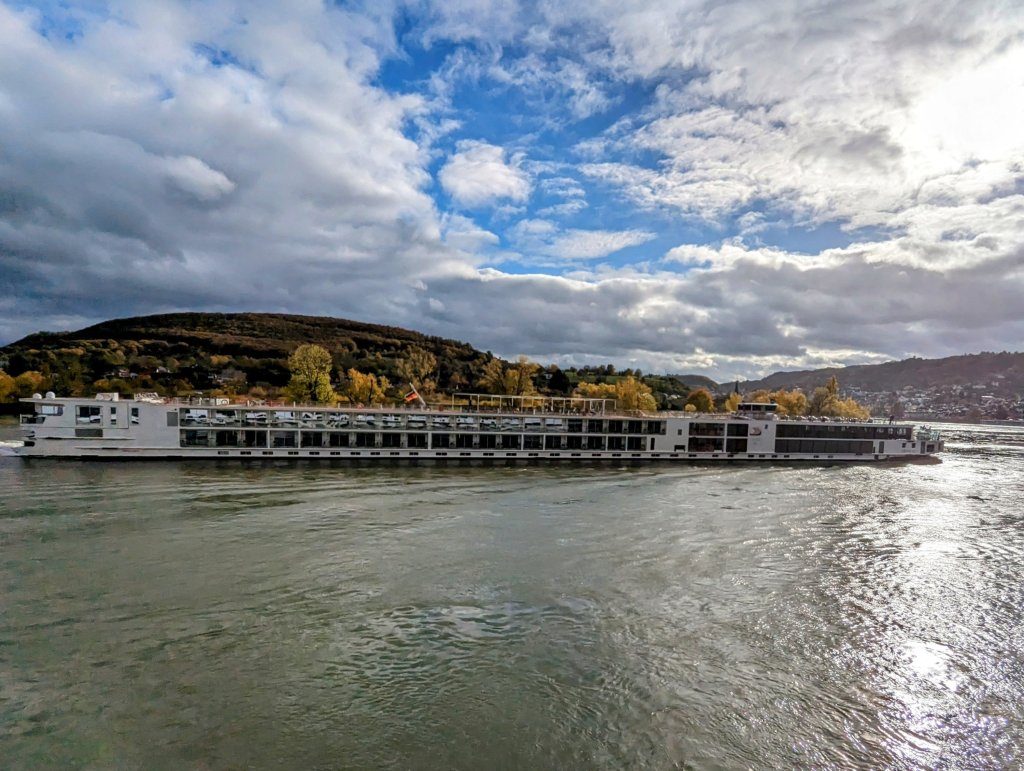
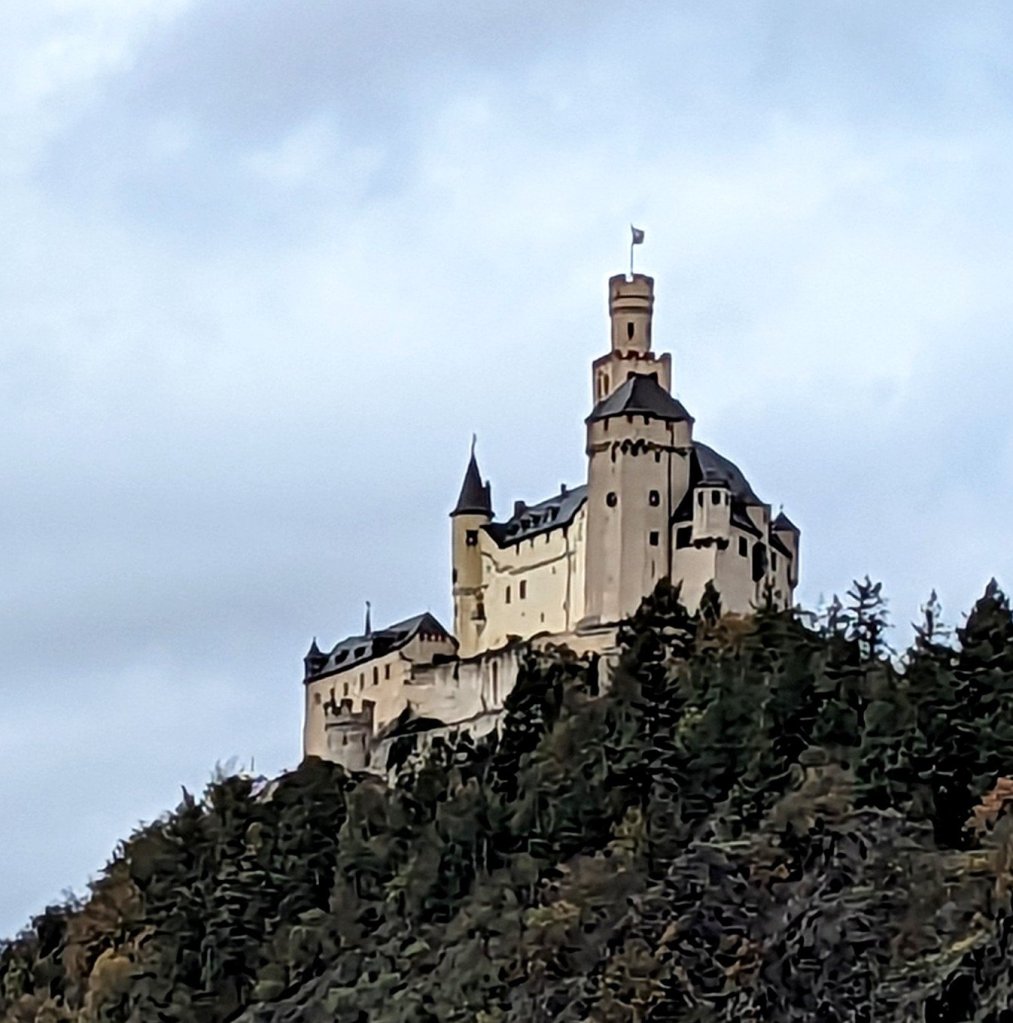
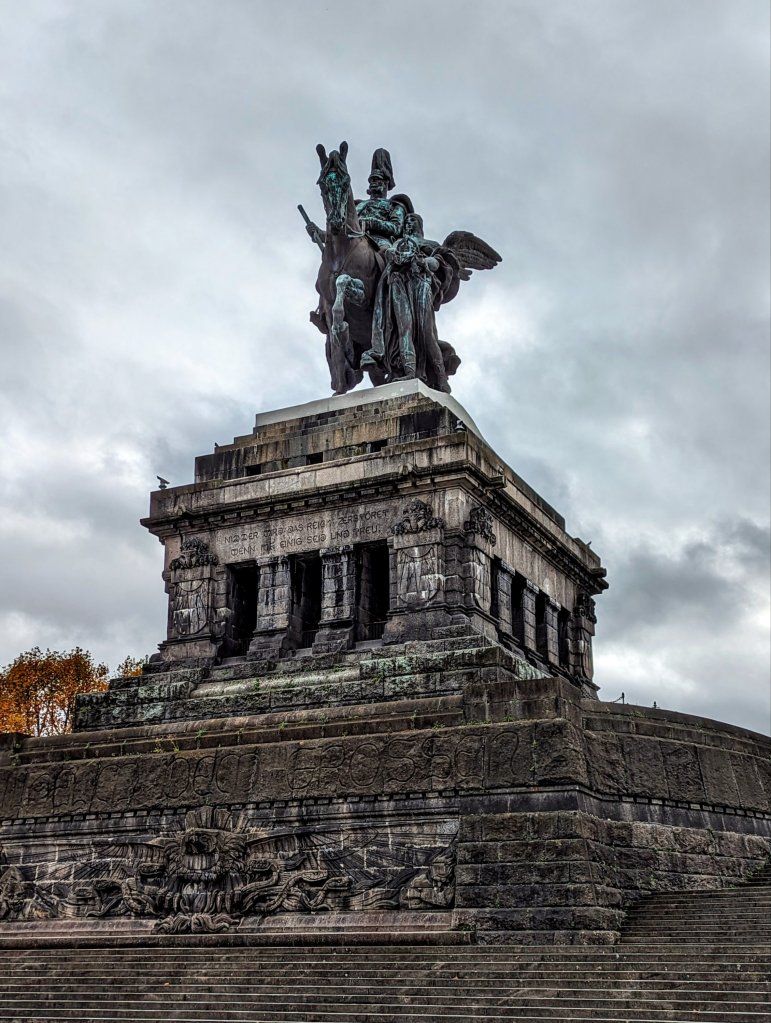
Rheinstein CastleReichenstein Castle high above the village chapel belowSooneck Castle Stahleck Castle Pfalzgrafenstein (below) and Gutenfels CastlesSchonburg CastleTrain tunnel entrances were built to look like castles to allow for safer travels, as the Allies had agreed not to bomb castlesLorelei Rock was made famous in the story of a maiden who, betrayed by her lover, committed suicide by leaping into the Rhine. She became a siren who lured sailors to their deaths.Beautiful Maiden LoreleiMaus CastleSterrenberg (left) and Liebenstein Castles Still known as “Hostile Brothers” who, as rivals for the same woman, built a wall between their castles. Sadly, the woman rejected them both.We greeted our sister longship Viking Ve as she sailed in the opposite direction on the Grand European itinerary Marksburg CastleThe “German Corner” Monument to Kaiser Wilhelm I where the Rhine and Mosselle Rivers meet
Our beautiful morning sail ended at Deutsches Eck, the “German Corner” in Koblenz where we disembarked for a leisurely stroll around this picturesque town.
Koblenz is home to more beautiful churches, most notably the Basilica of St. Kastor, its oldest church.
Basilica of St. Kastor
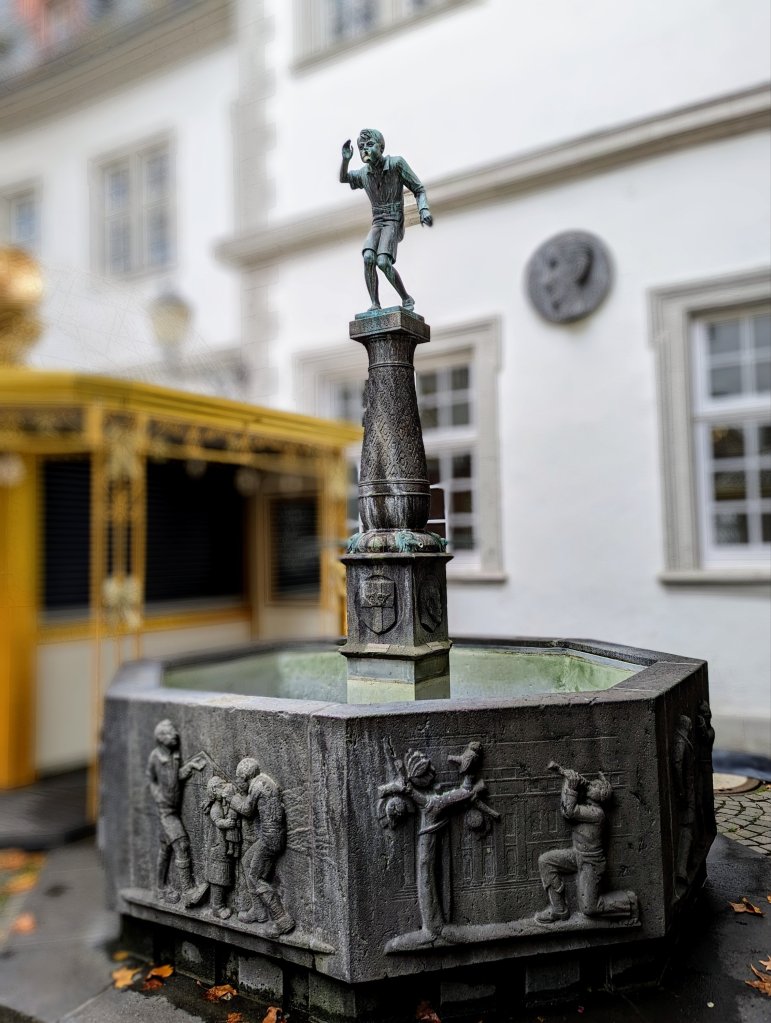
The landmarks around Koblenz have an almost whimsical flair. One is a statue/fountain of a young boy who spits water on unsuspecting passers-by every three minutes. It was built in 1941 to celebrate the joy of life.
Schangel Fountain
Another Koblenz landmark is a large bronze thumb emerging from the ground in front of the Museum of Modern Art. Ki
The Pouce de Caesar
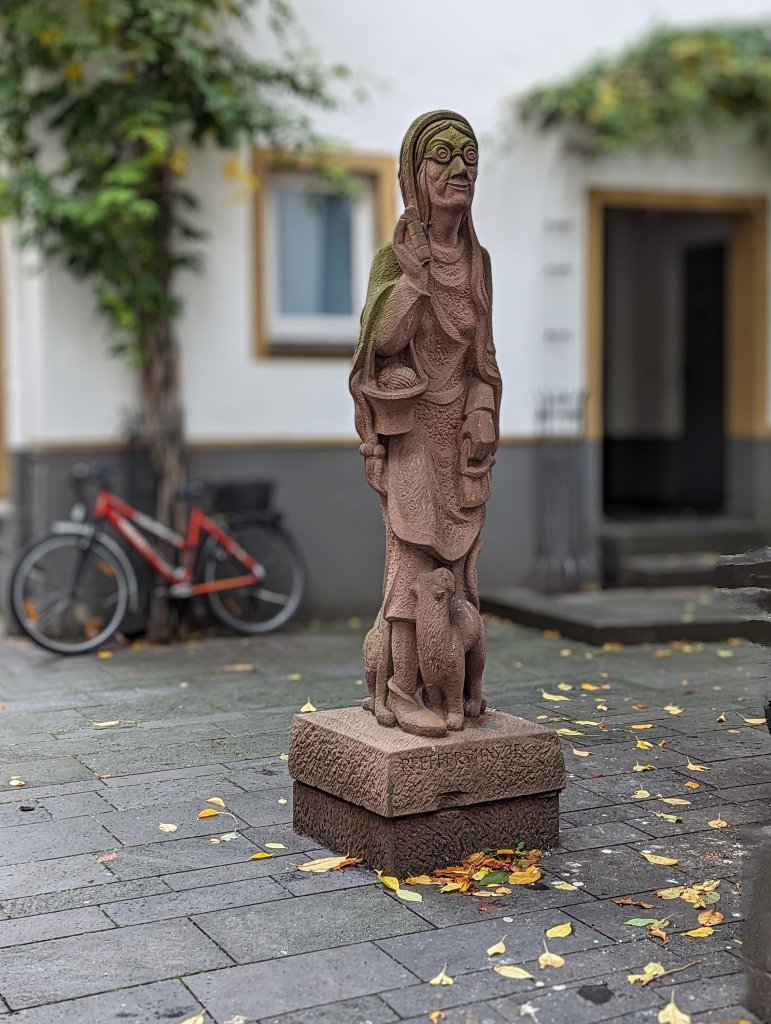
The ‘Cat Lady of Koblenz” was a well-known person in 1930s Koblenz as she made her way around town selling peppermints to the gents heading home after a night of drinking beer. The men would buy the mints to sweeten their breath, and Annemarie would use the cash to feed homeless dogs and cats. A statue was erected in her honor upon her death in 1940. The idea was to recognize the well -known, not necessarily the famous.
Cat Lady of Koblenz
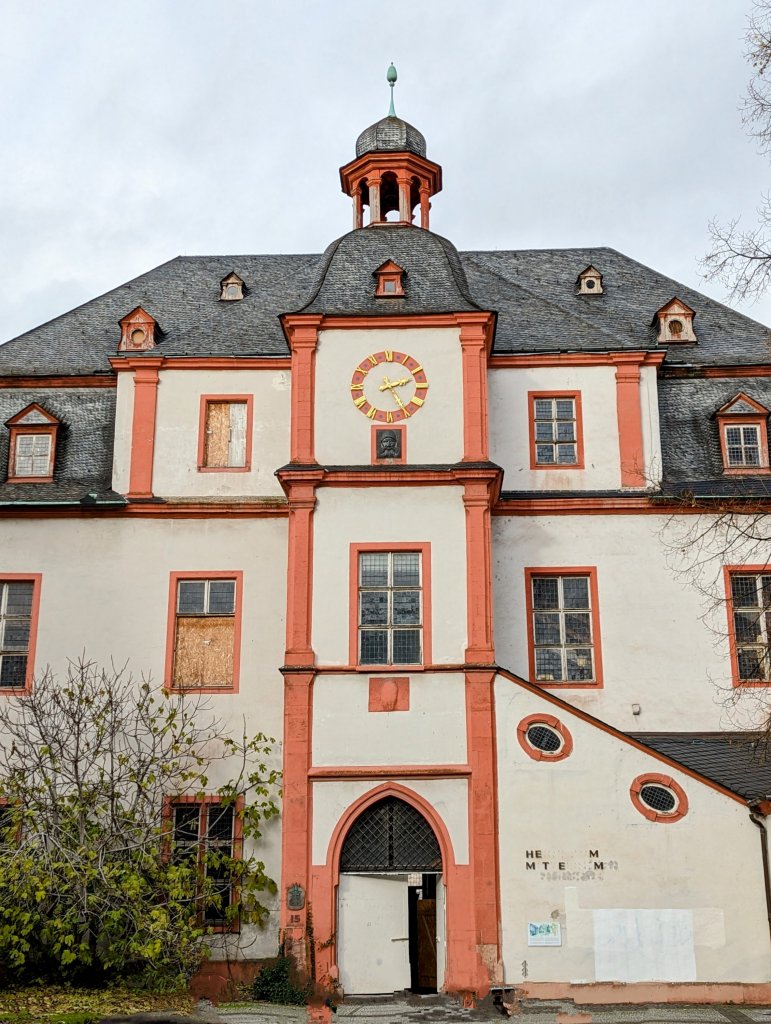
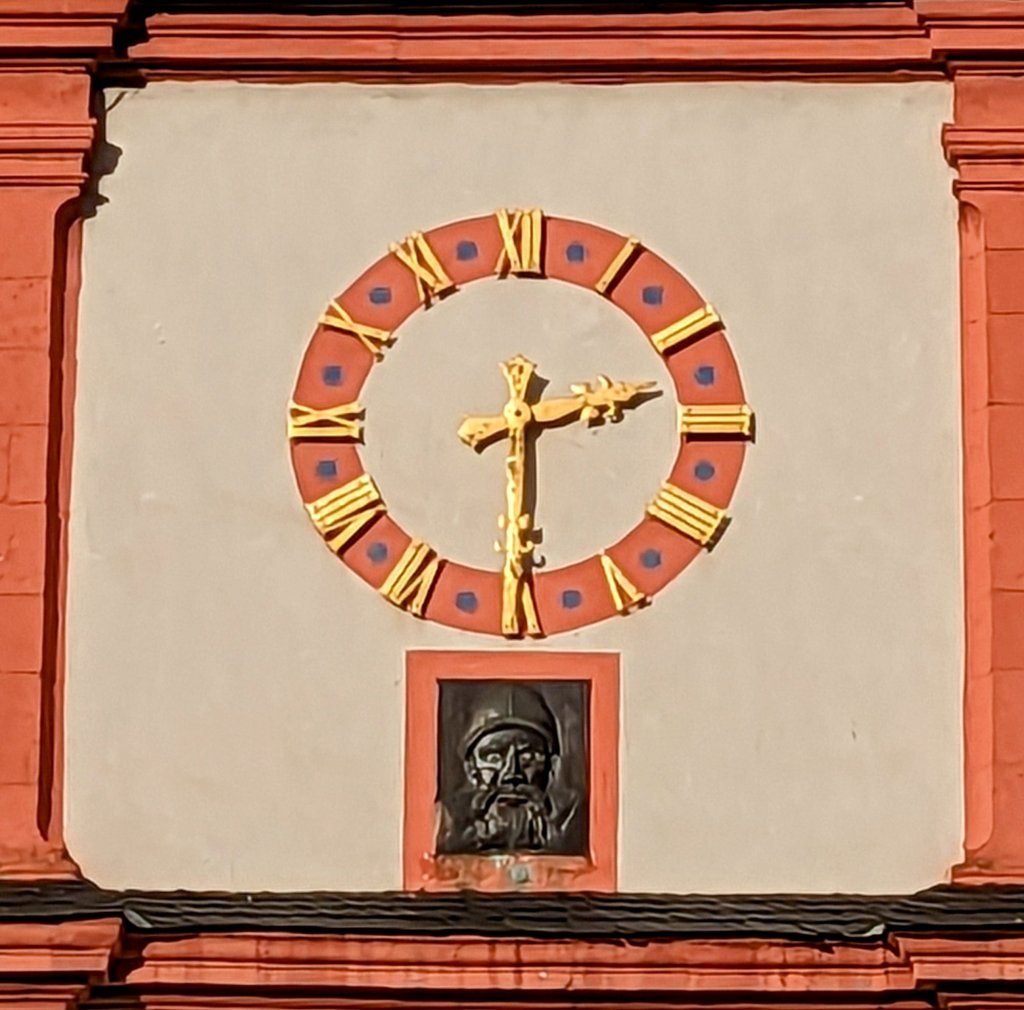
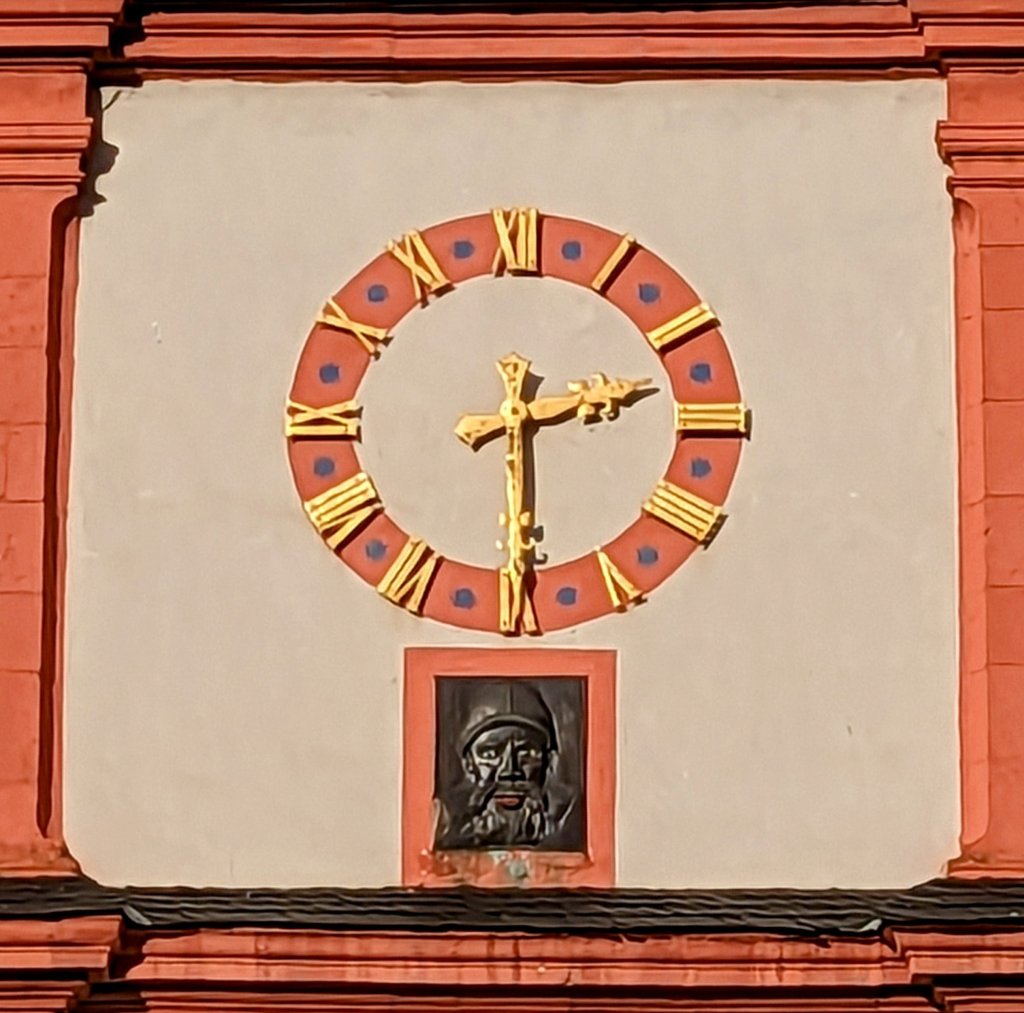
Another quirky landmark is the clock tower on the old city hall. The image below the clock represents a 16th century convicted robber who was beheaded in 1563. His watchful eyes go back and forth to mark seconds. Every 15 minutes people gather to watch him stick out his tongue…once at the quarter hour, twice at half, three times at three-quarters, and four times on the hour. It is said that parents show the face to their kids to deter bad behavior.
Old City HallJust before 2:302:30
Koblenz is a charming town that appeals to my sense of humor. It’s also a city steeped in the history and influence of Ancient Rome, the Middle Ages, and the Napoleonic eras as well as more recent history, as noted in the pieces from the Berlin Wall that adorn a local park.
Berlin Wall
The people of Koblenz are working hard to make their city attractive to tourists. Public art plays an important part in this renewal, and from our perspective they’re doing a great job.
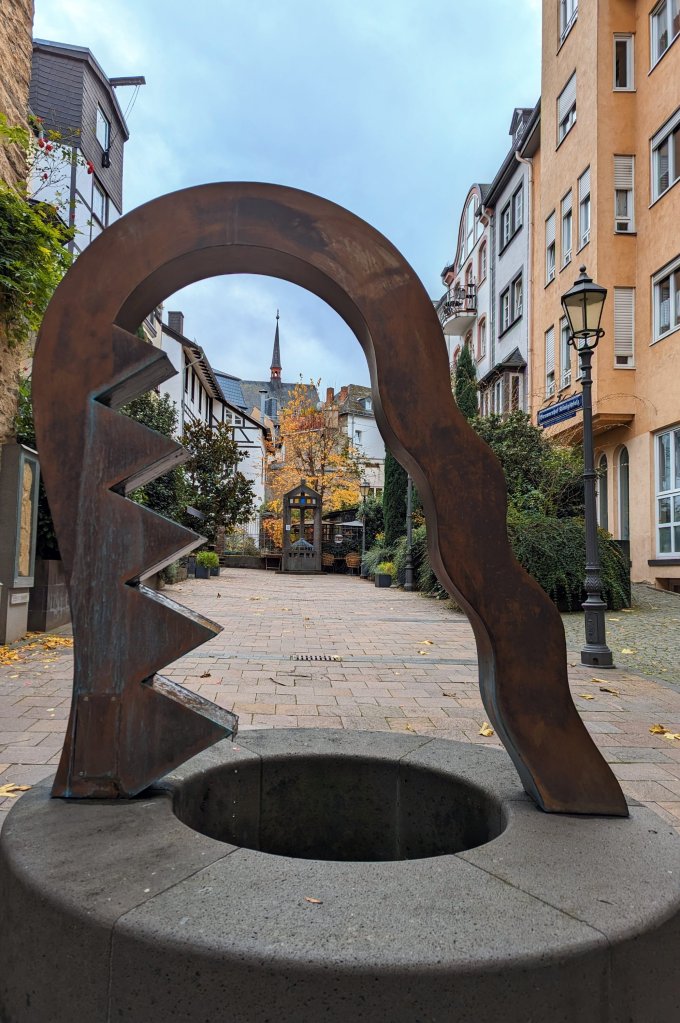
One of many beautiful alleyways in this safe and walkable city.
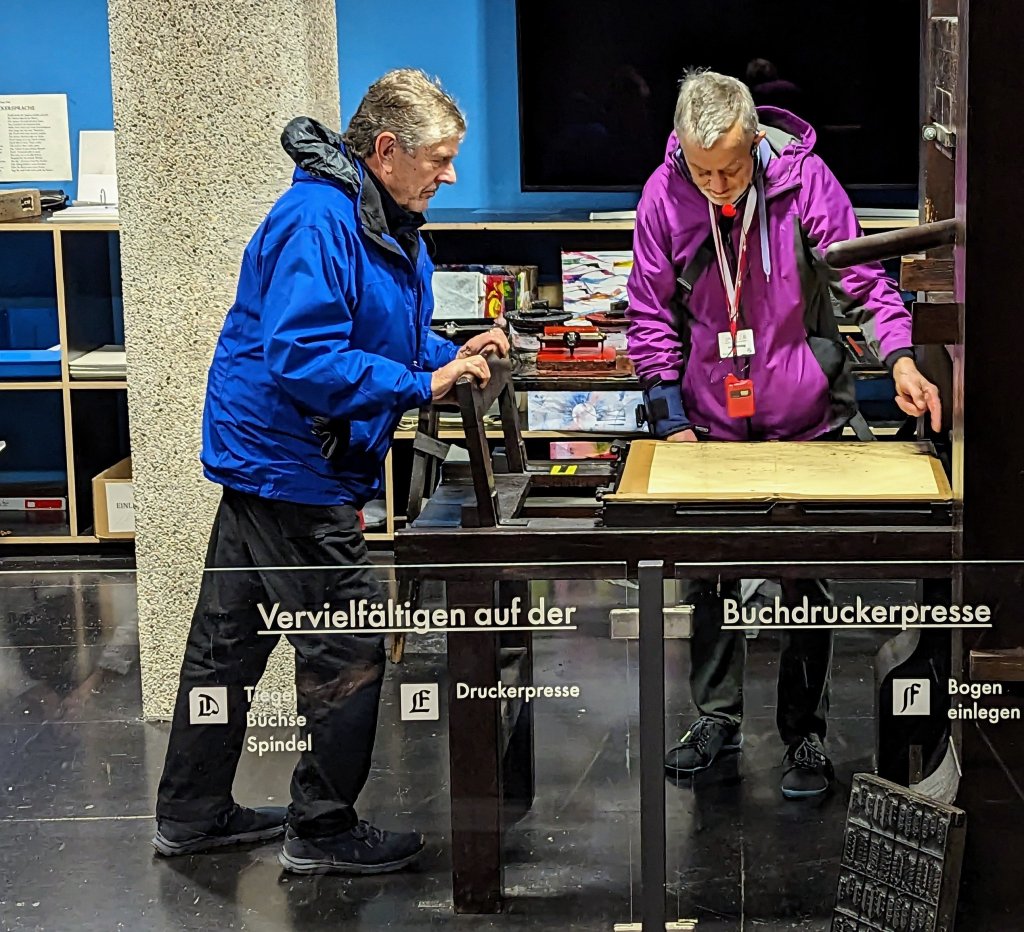
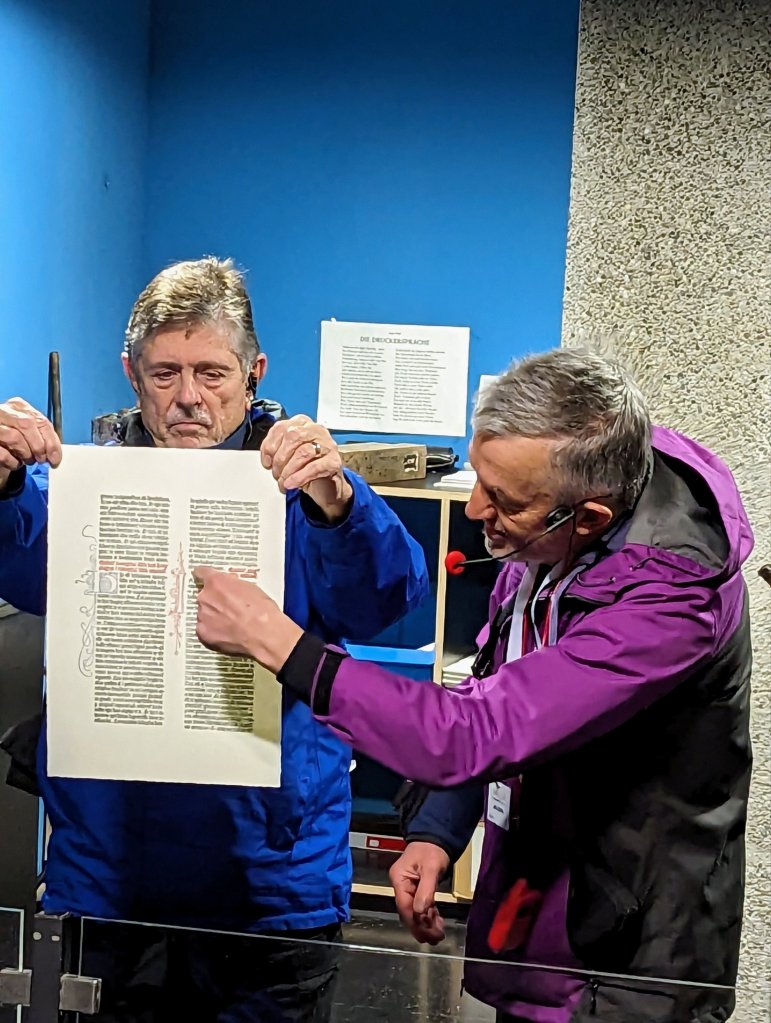
Doug printing a page of the Gutenberg Bible using a replica of the great inventor’s printing press
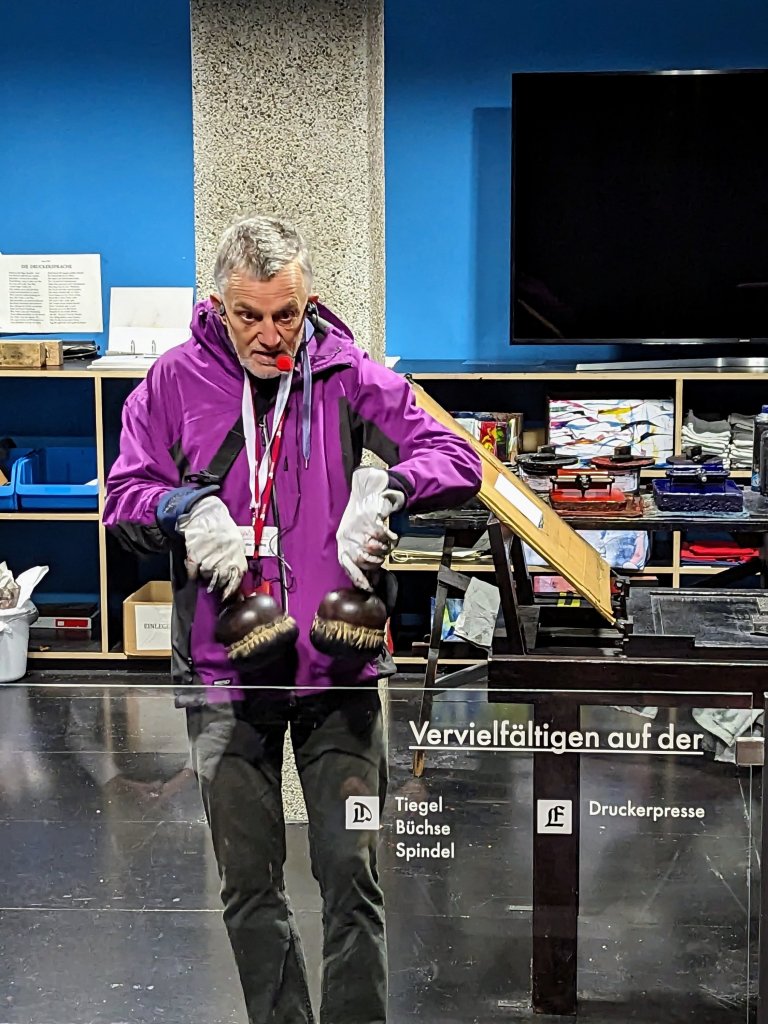
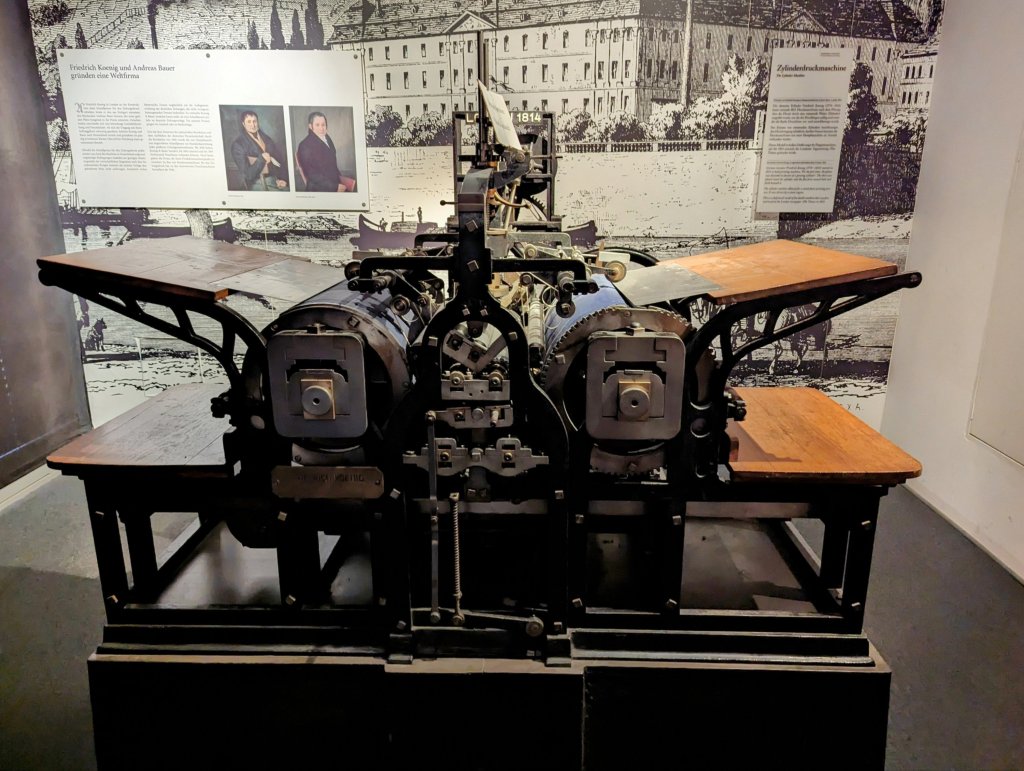
A highlight of our visit to the picturesque city of Mainz was the time we spent at the Gutenberg Museum. Dating back to 1900, the museum celebrates the invention of Mainz’ favorite son, Johannes Gutenberg: the mechanical movable-type printing press. There Doug tried his hand at typesetting and printing (above). We learned not only about the 1439 technological innovation that introduced the age of mass communication, but also about the history of printing and publishing around the world.
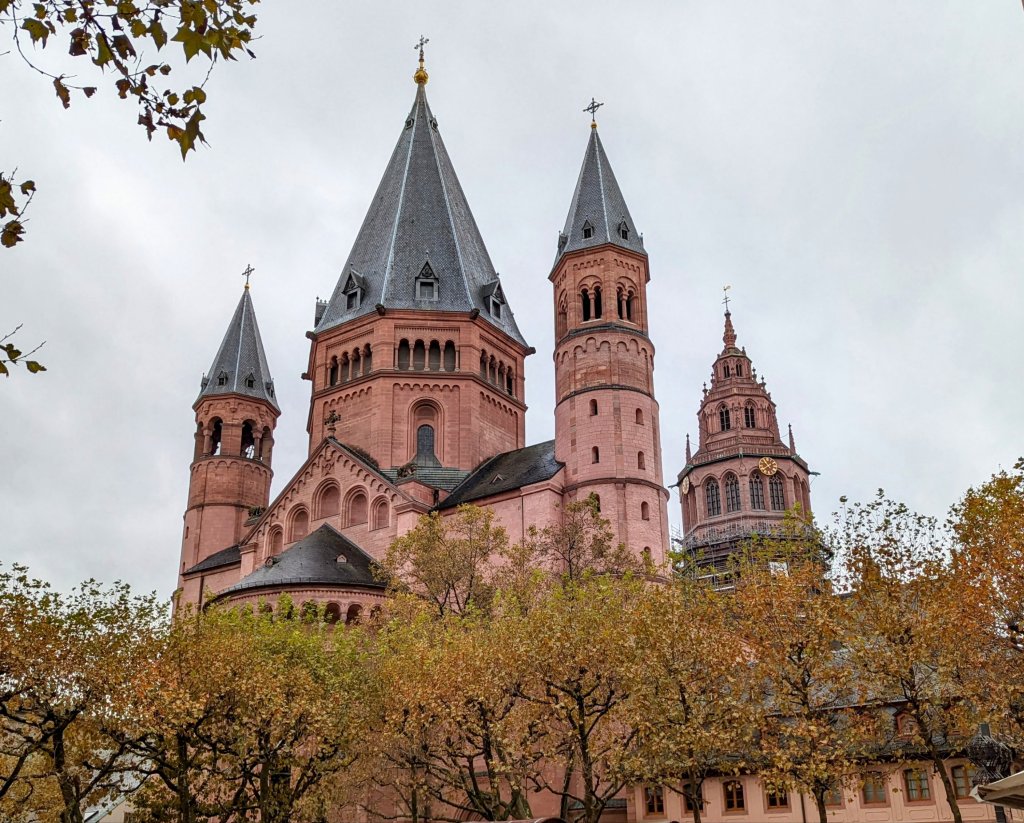
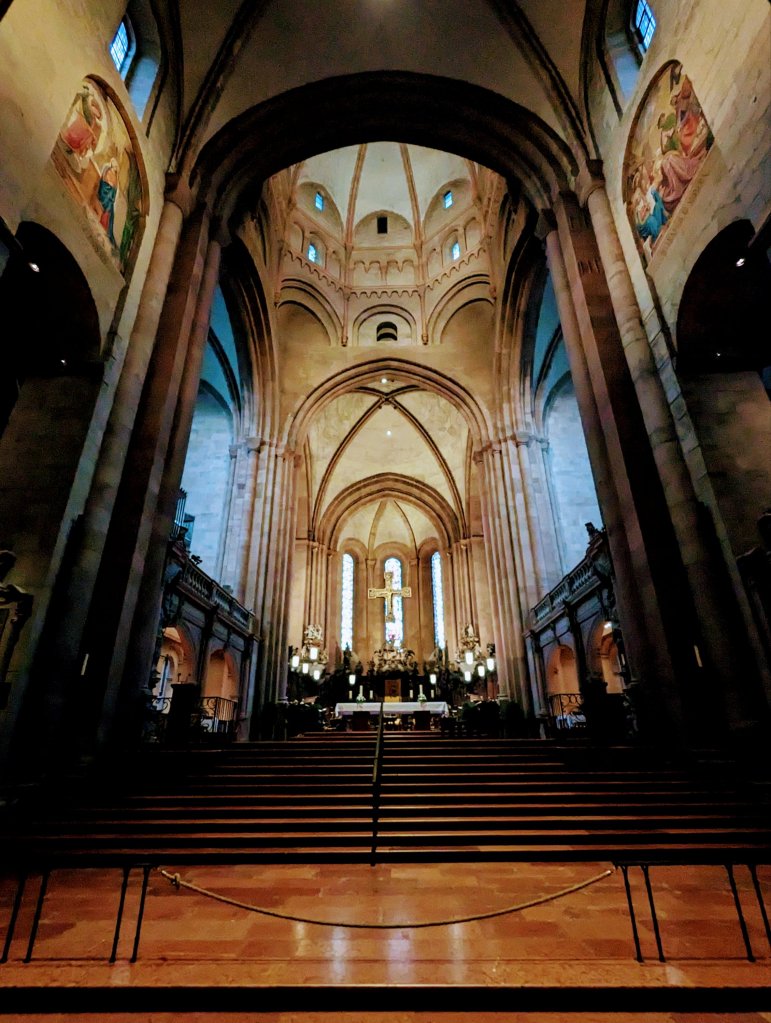
We also explored the soaring Mainz Cathedral. Over 1,000 years old, this city landmark is beautifully preserved inside and out.
Just outside the cathedral, workers were busy starting to decorate for the upcoming Christmas Markets. Every year the town square takes on a festive holiday vibe from a few days before Advent until December 23. Temporary warming huts are erected throughout the square where holiday shoppers can pause for some warm spiced wine.
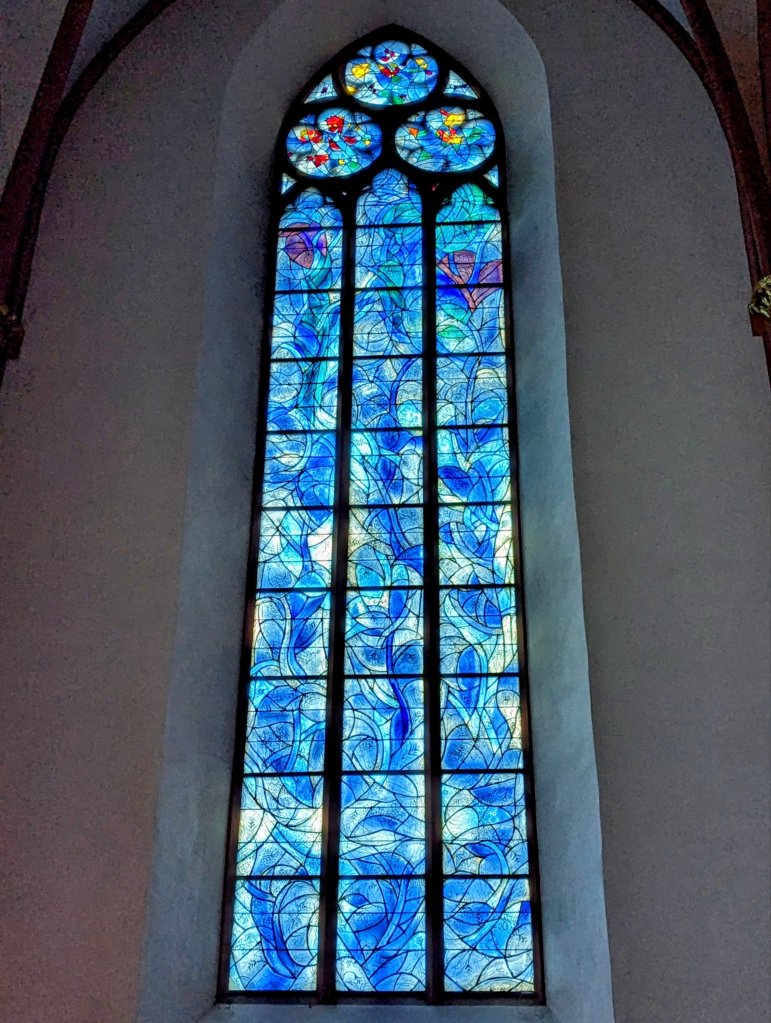
Another short walk uphill from the square is the Church of St. Stephan. Heavily damaged in World War II, this unique church was restored and rebuilt in the sixties. After the renovation, a set of nine luminous blue stained glass windows were created for the church by artist Marc Chagall. Chagall, who fled France under Nazi occupation, is said to have created the windows as a symbol of Jewish-German reconciliation.
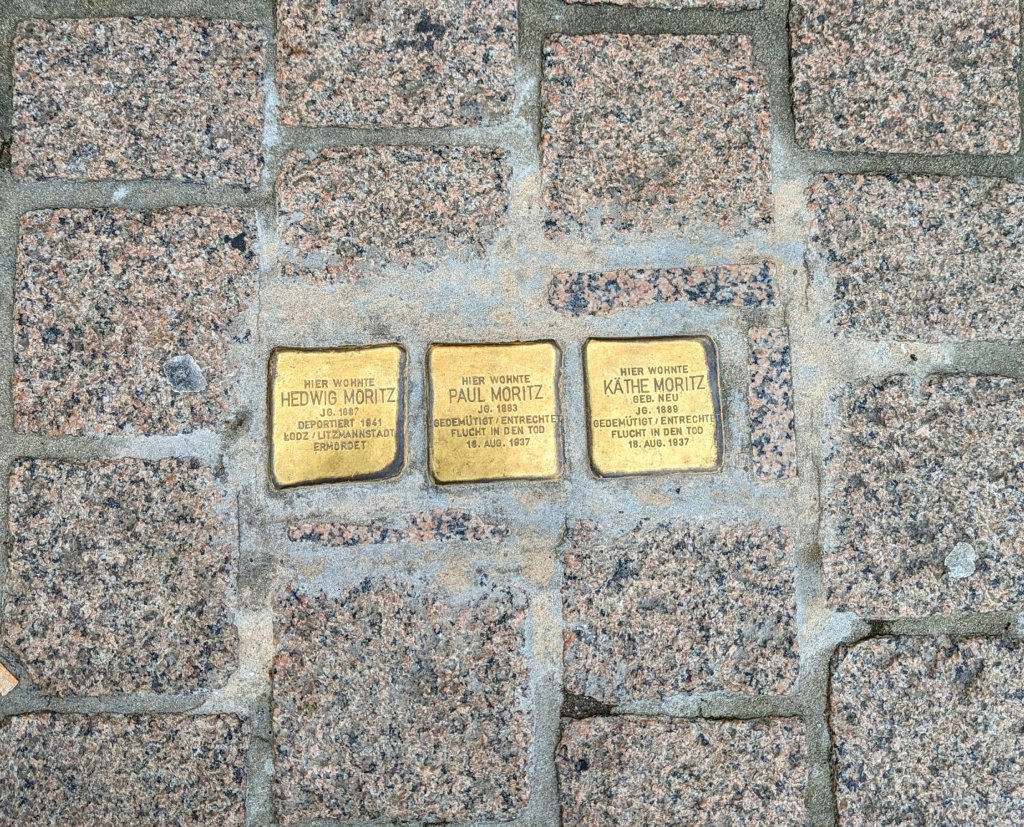
Quite coincidentally, we visited Mainz on November 9th as people throughout Germany paused to remember two significant events that occurred on this date: Kristallnacht (1938) and the fall of the Berlin Wall (1989). On this night 85 years ago, Jewish homes, businesses, hospitals, synagogues and schools were ransacked and destroyed. Members of the Nazi Party’s paramilitary forces and Hitler Youth forced people from their homes as the authorities looked on without intervention. The sidewalk “stumbling stones,” marking the location of the homes from which people were viciously removed took on a special significance as we made our way around Mainz today.
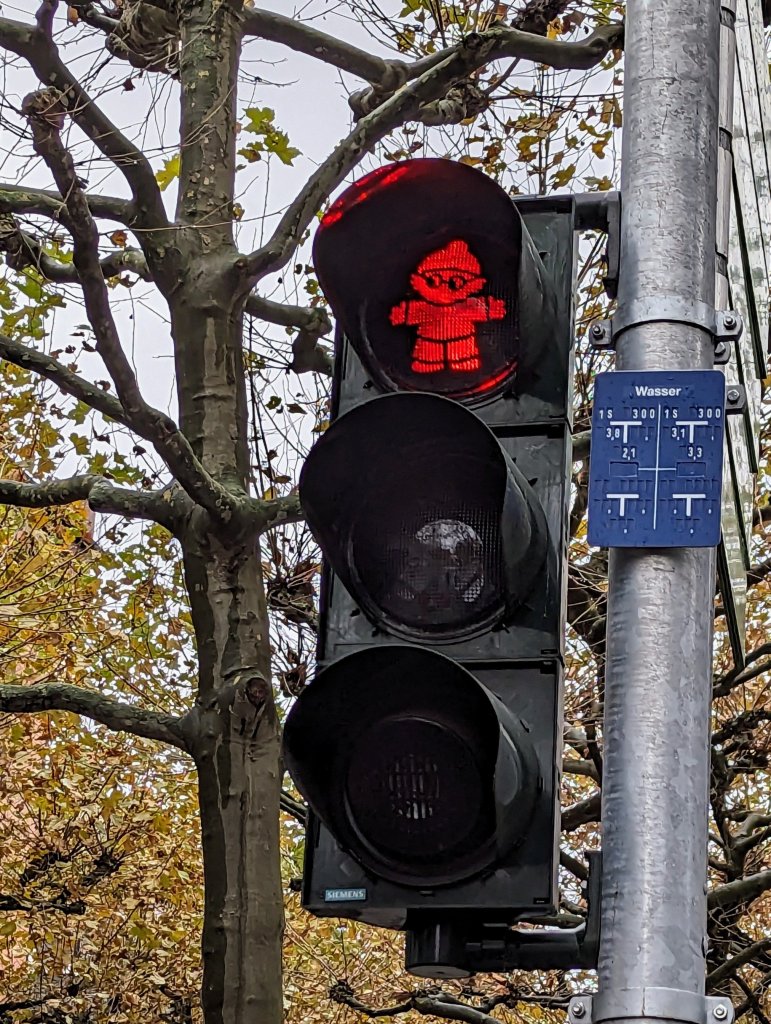
Mainz has had its share of tragedy and triumph, but it also has a sense of humor. This is reflected on its pedestrian traffic lights, on which a charming little guy named Det tells walkers to go or wait. Det is one of 6 beloved TV characters called Mainzelmannchen. The name and concept is from a kind of gnome from the folklore of nearby Cologne. They normally appear in brief skits during German TV between the show and commercials.
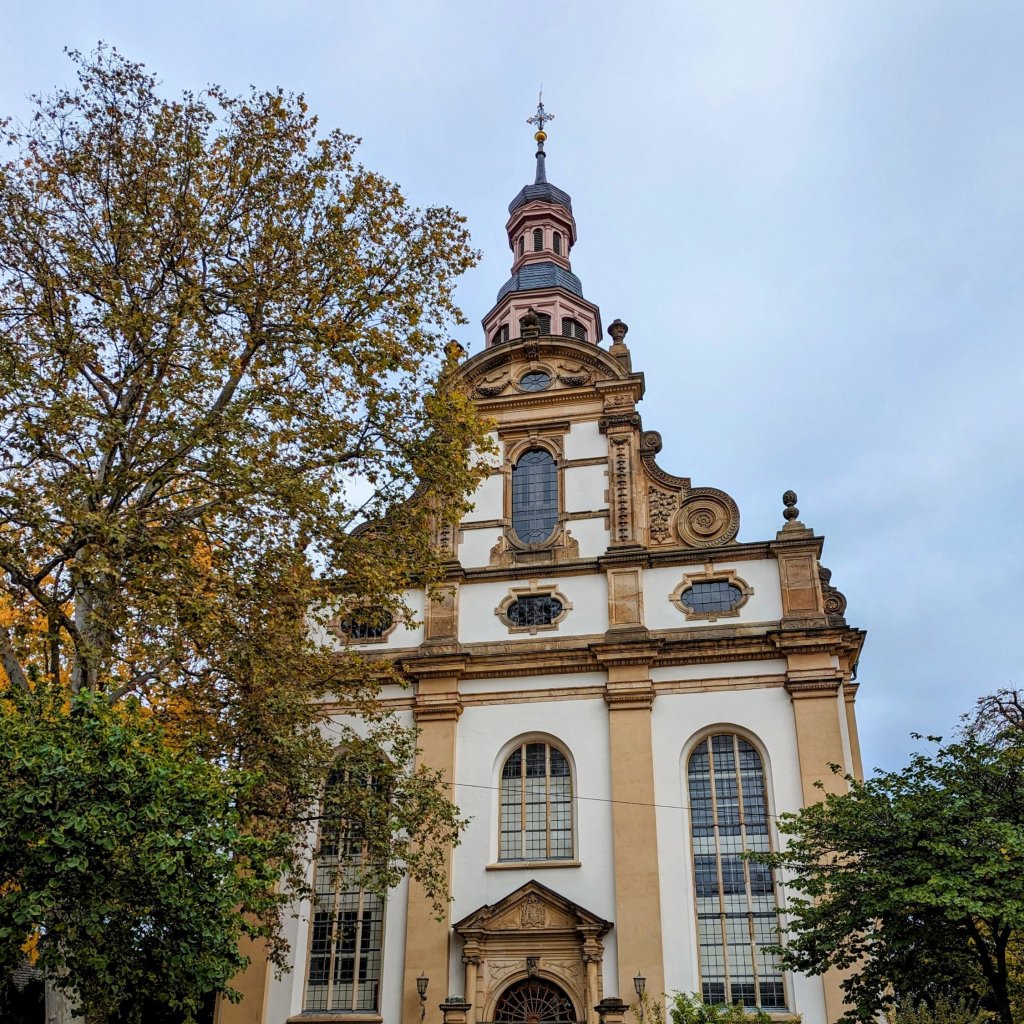
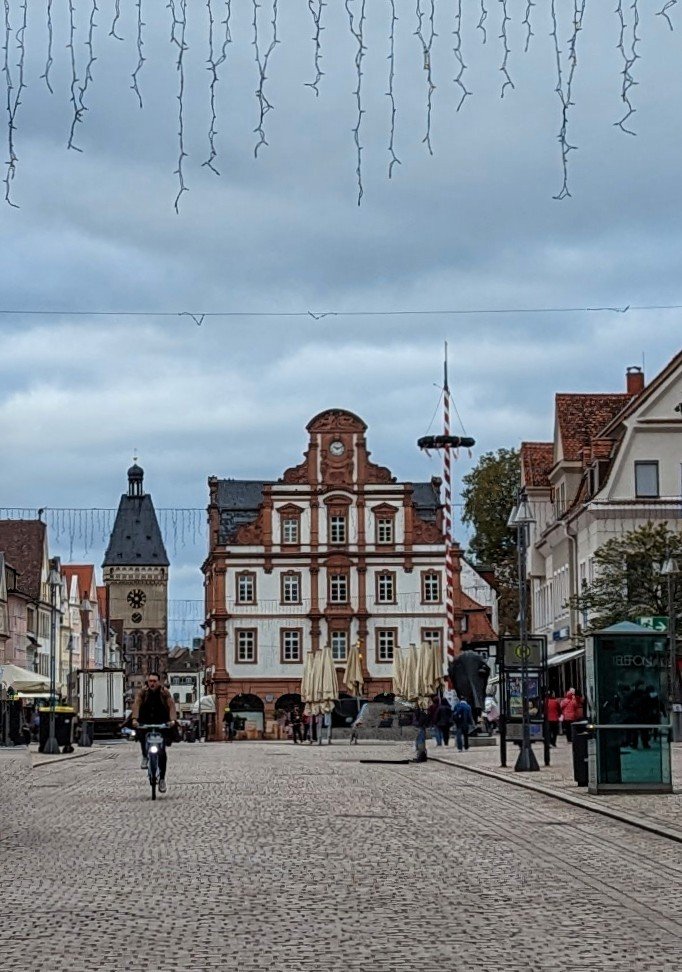
The quiet German town of Speyer is truly a city of spires! Once through the old city gates, one only has to look up to see towers of every kind adorning buildings and providing a fascinating skyline. The Romanesque imperial cathedral towers mark the final resting place for 4 of the most famous holy Roman emperors, 4 kings and 3 empresses. Some of their bones are on display. The term “Protestant” originated here at the Diet of Speyer in 1529.
Speyer was an important center of Ashkenazi Jewish spiritual and intellectual life where Jewish life thrived for many years. Today there are several reminders of Judaic life including the remains of a synagogue dating back to 1104, ruins of Germany’s oldest mikvah (1126), and of course the many “stumbling stones’ to mark the location of homes from which Jewish people were taken during the Holocaust.
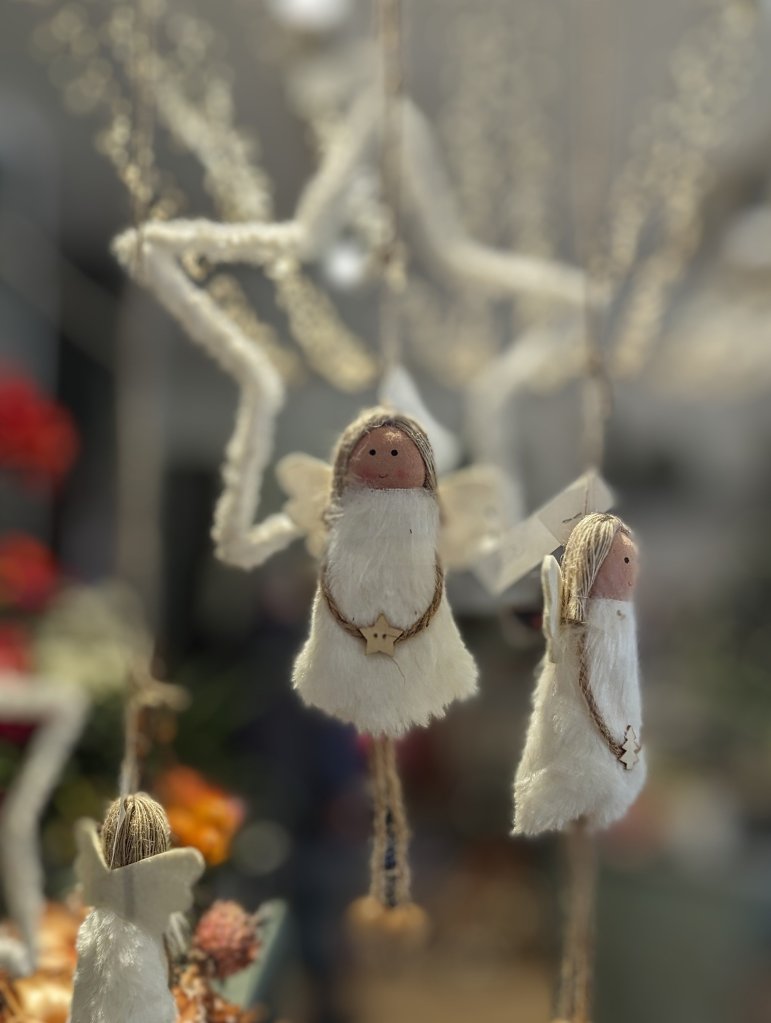
Speyer is a very walkable, welcoming town. Window shopping is a special treat as merchants begin their holiday decorating. We’re at the transition from fall to winter, and preparations for the busy Christmas Markets are well underway.
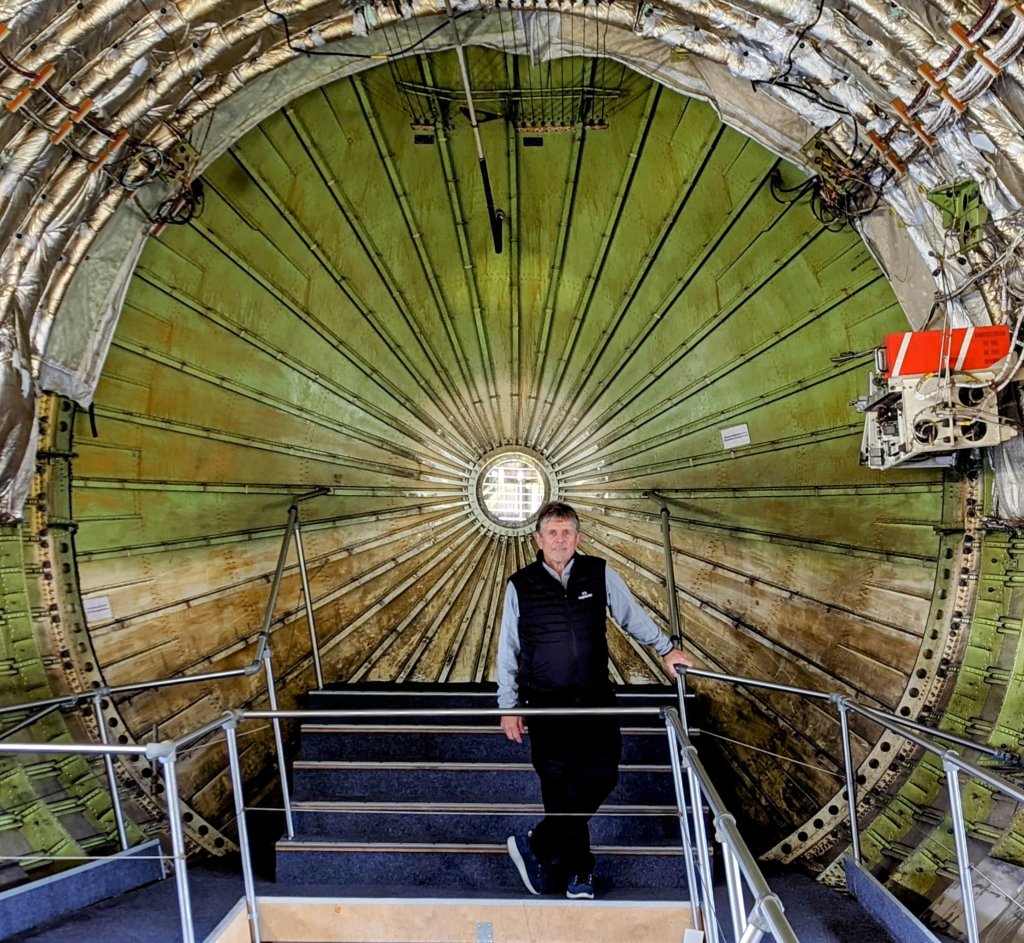
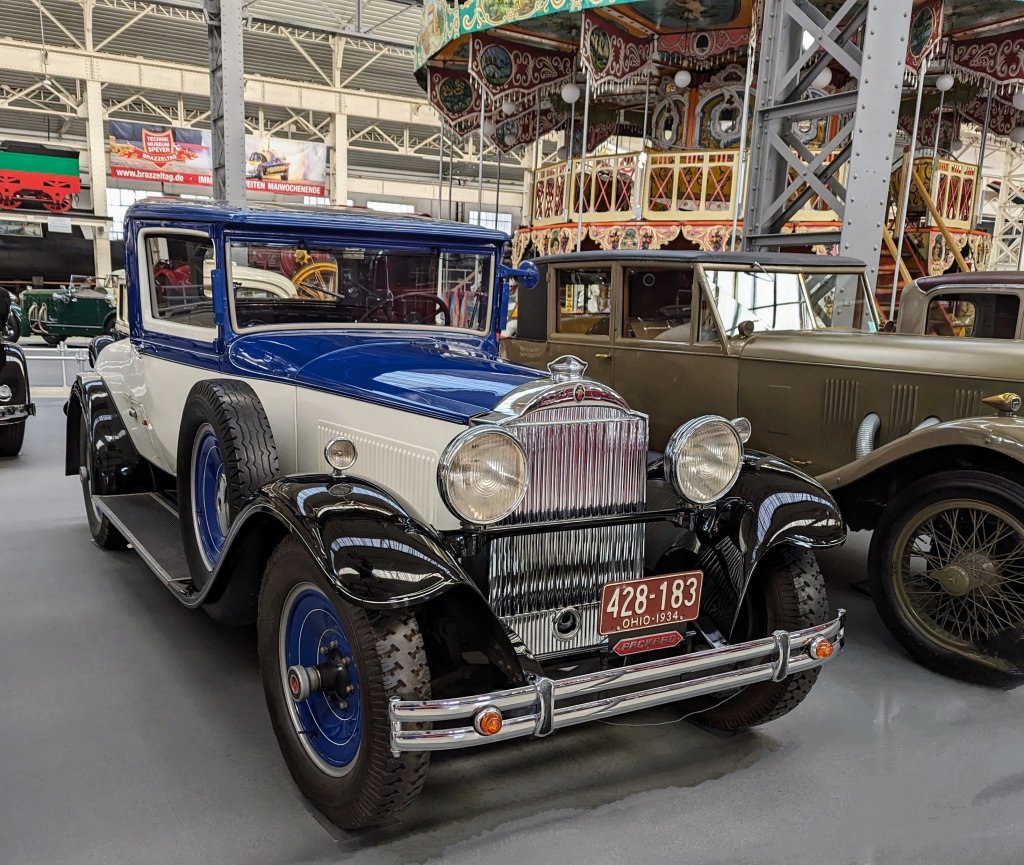
Our visit to Speyer’s Technik Museum did not disappoint. The Technik explores technology from underwater to outer space. In addition to housing Europe’s largest space and naval exhibits, the Technik has a wide variety of aircraft, classic cars, motorcycles, historic fire engines, huge steam locomotives, and antique mechanical music instruments. We noticed an antique Packard with Ohio plates, and and walked on the wing of an actual Lufthansa Boeing 747.
The museum also has an IMAX theater, and we were excited to learn that they were showing Apollo 11 in English. We realized our failure to completely understand German when the movie that came on was actually about dolphins, narrated by Pierce Brosnan with music by Sting…dubbed in German 😂 It was fun to watch them playing on the big screen, and a relaxing way to end our day exploring Speyer.
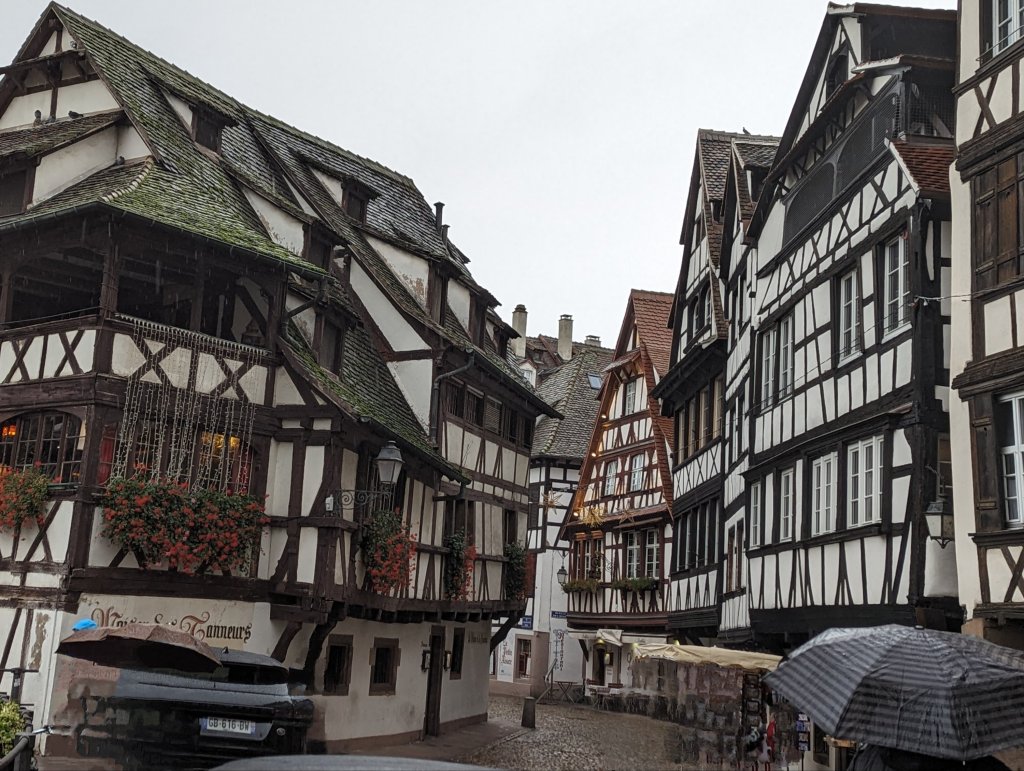
The largest port on the Upper Rhine, Strasbourg makes the most of its German and French cultures due to its location at the border of the two countries. The quaint and well preserved Old Town is enclosed on all sides by the Ill River giving it the feel of an island. Petit France is the city’s most picturesque and romantic area with half-timbered buildings, cobblestone streets, quaint sidewalk cafes, and historic guild and merchant houses. Four channels flow through the heart of the area via the Ponts Couverts, defensive bridges that were covered with wooden roofs.
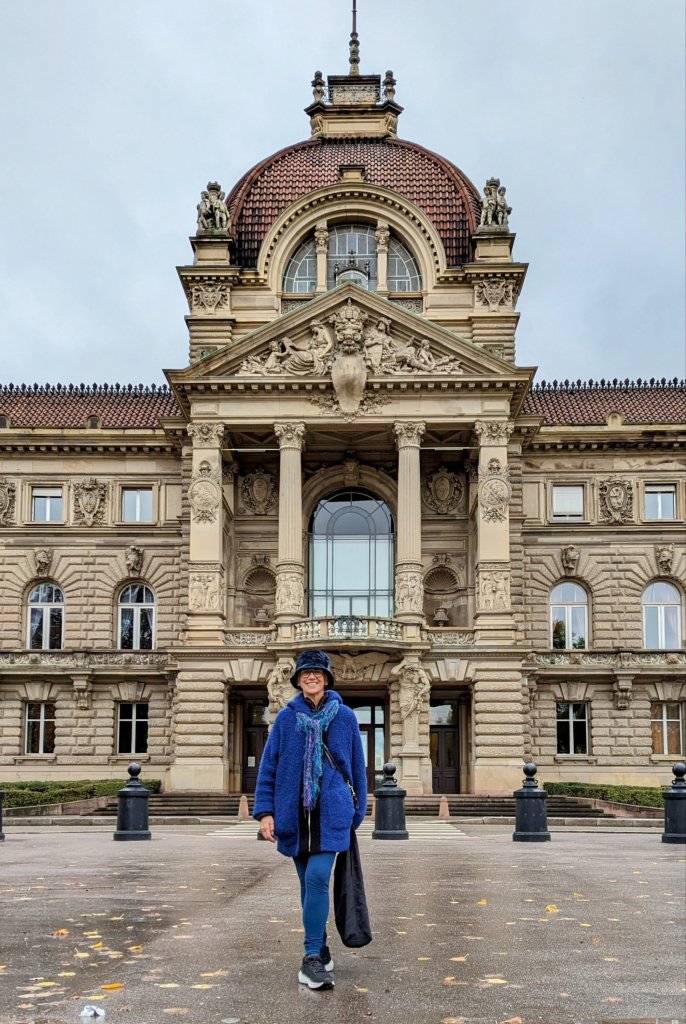
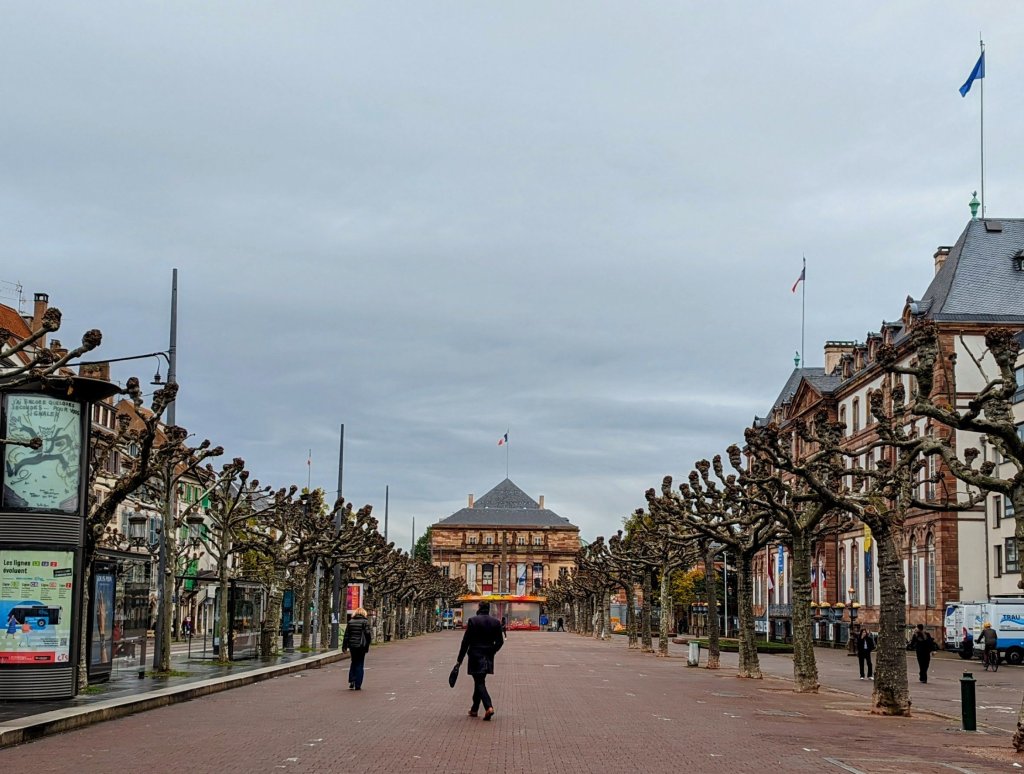
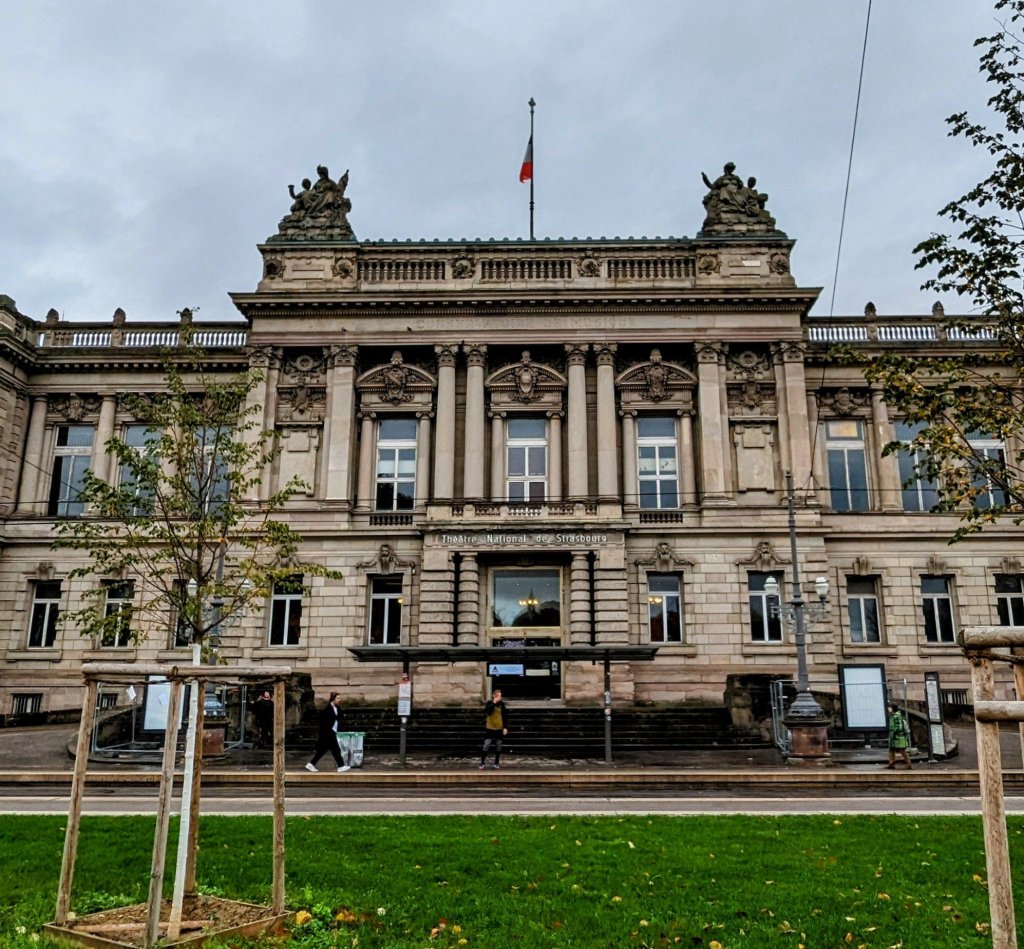
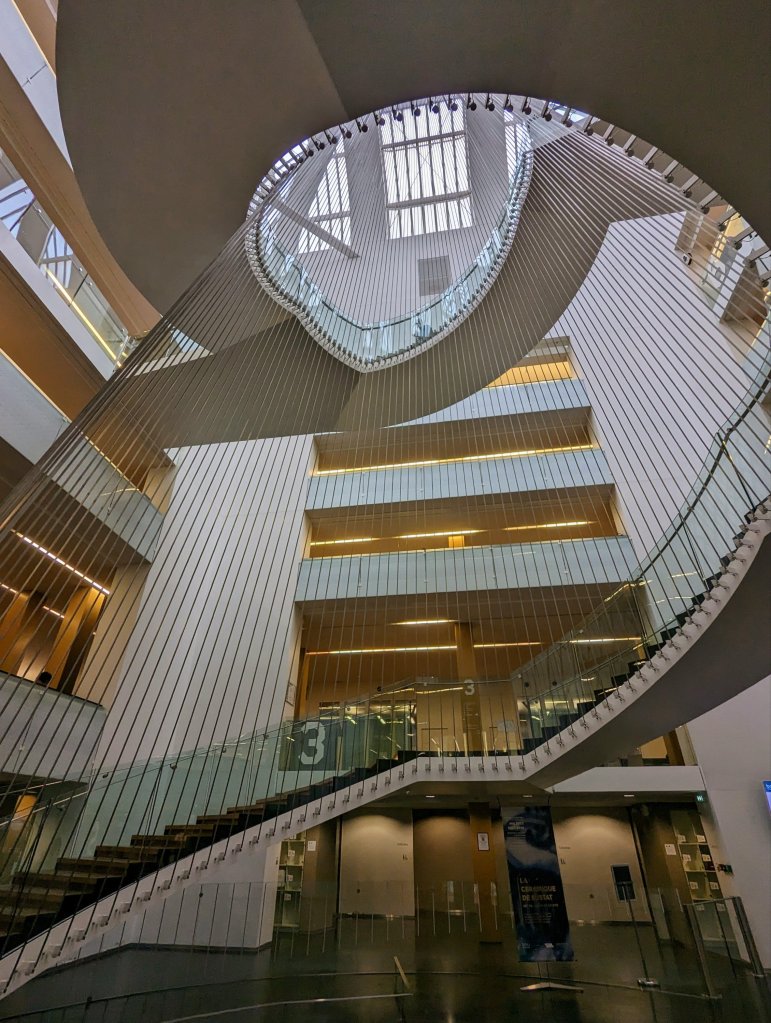
A very walkable city, Strasbourg has numerous ornate and well-preserved buildings. A tree-lined pathway takes visitors past the City Hall to a beautiful Opera House. A few steps away is the National Theater, and beyond that the National Library. The library is surprisingly modern inside. But the most impressive is the Palais du Rhin with its well-manicured park and grounds. Built in 1889 for Kaiser Wilhelm, it has served numerous purposes over the years.
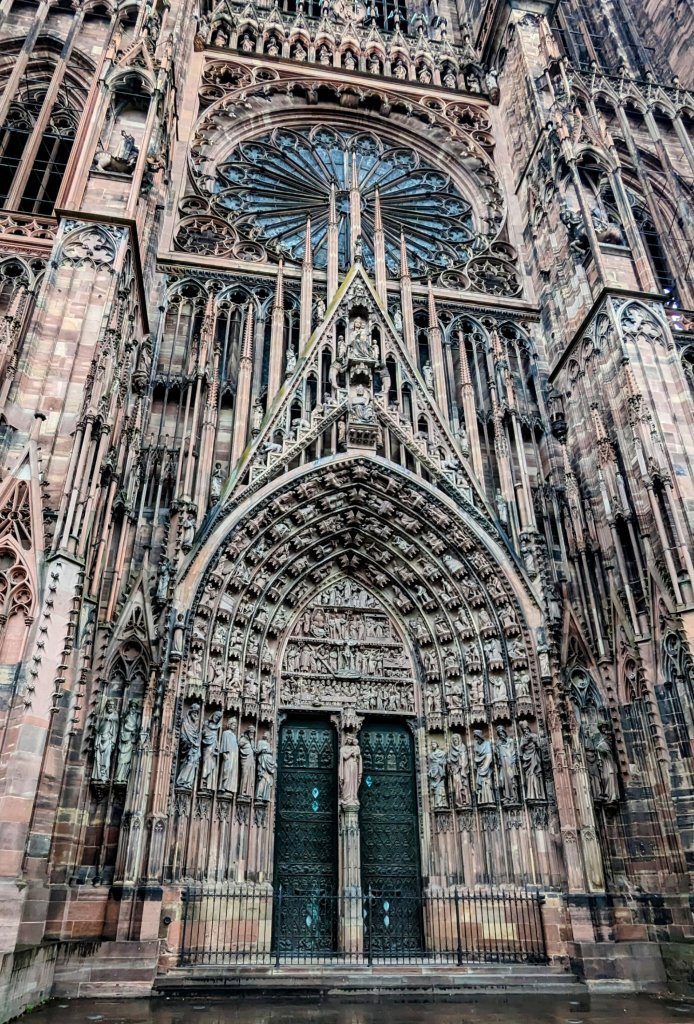
The Cathedral Notre-Fame de Strasbourg is acclaimed as one of the world’s most beautiful examples of high Gothic architecture. It was the tallest building in the world until 1874, it is truly a vision of breathtaking beauty.
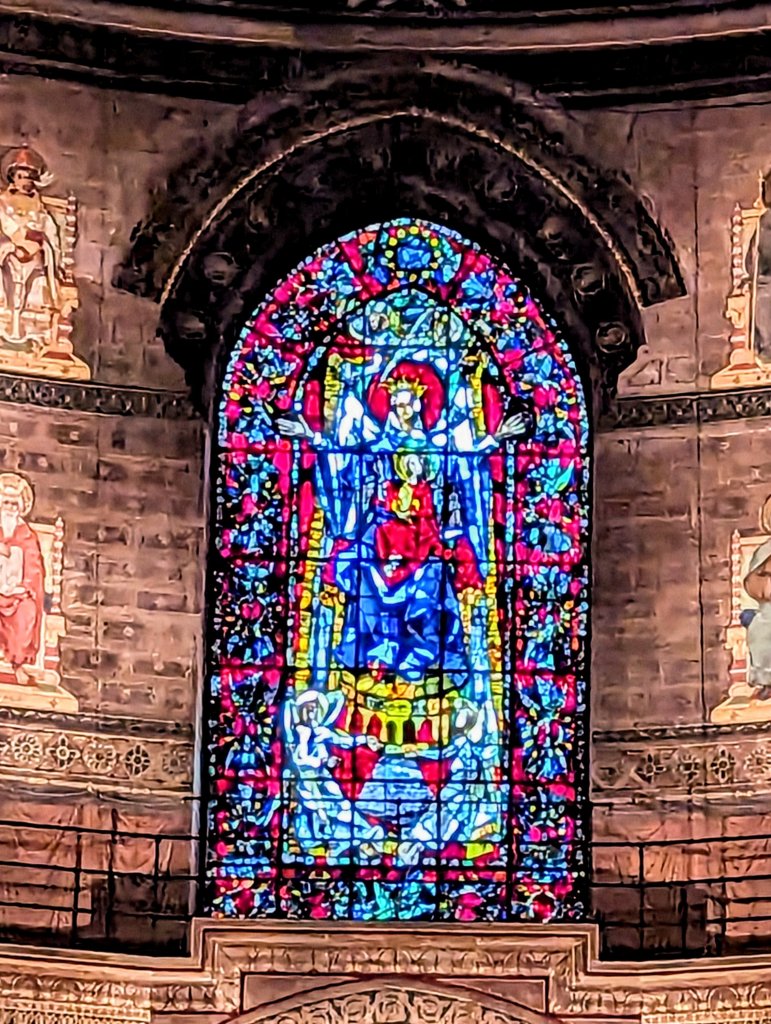
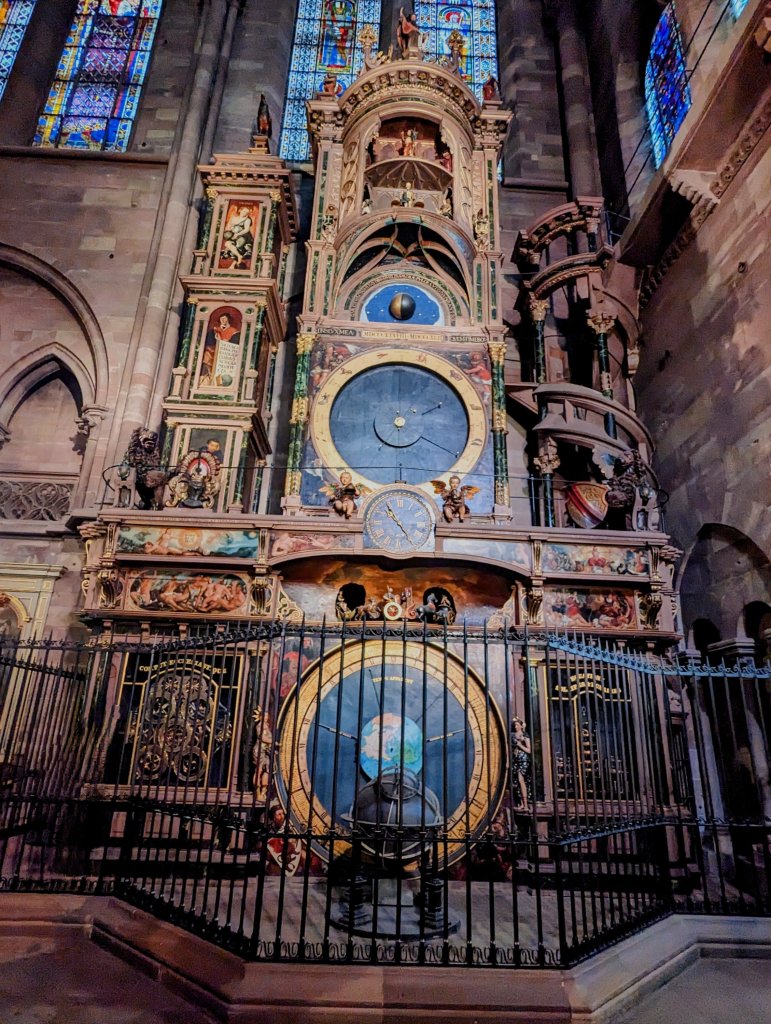
Lacy pink sandstone facadeSoaring sanctuary Magnificent stained glass window above main altarRose WindowAstronomical Clock with sculptures that animate at various times of the day
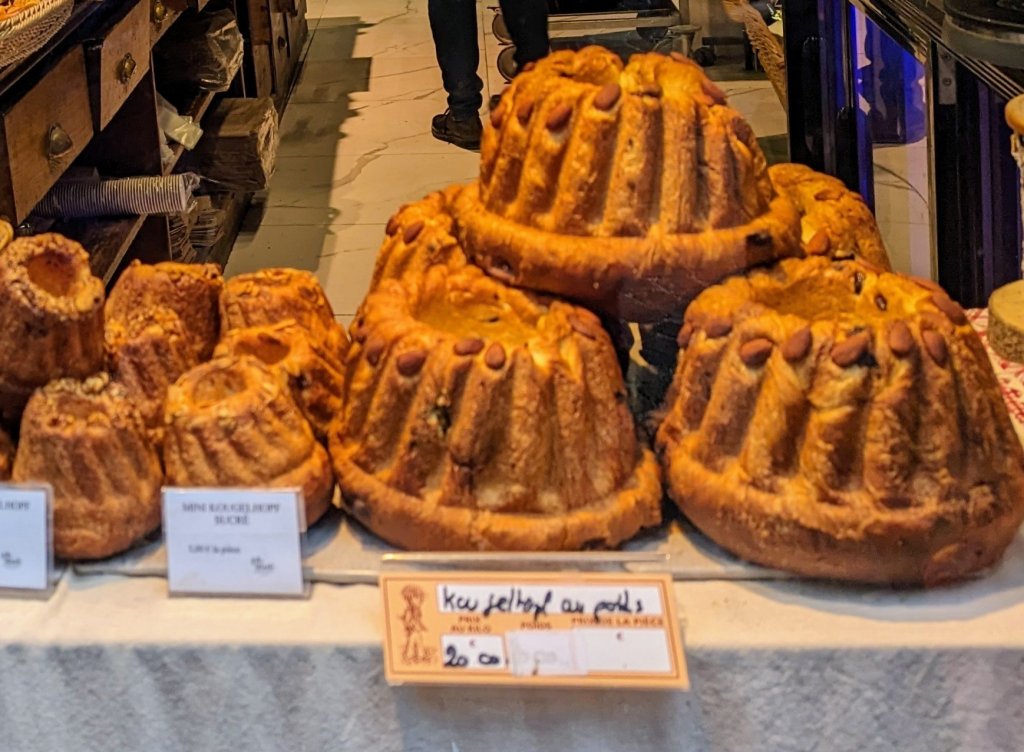
The Alsace region is known for the high quality of its cooking, which fuses hearty German fare with an elegant French flair. From cozy bistros to Michelin-starred restaurants, diners can feast on such delicacies as white asparagus, flammekueche (a chewy flatbread smothered with lardons, onions and creme fraiche), smooth creamy cheeses, the ubiquitous bretzel, and all kinds of tempting pastries.
Kougelhoph, made from brioche-type dough stuffed with rum-soaked raisins and topped with almonds. It is baked in a special round fluted pan
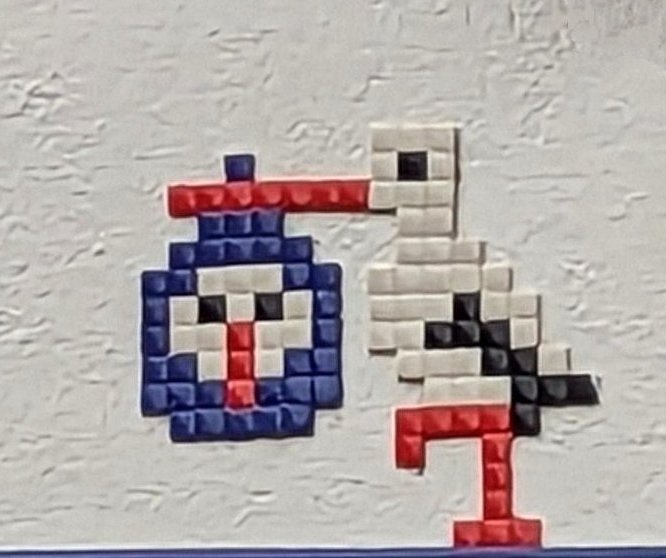
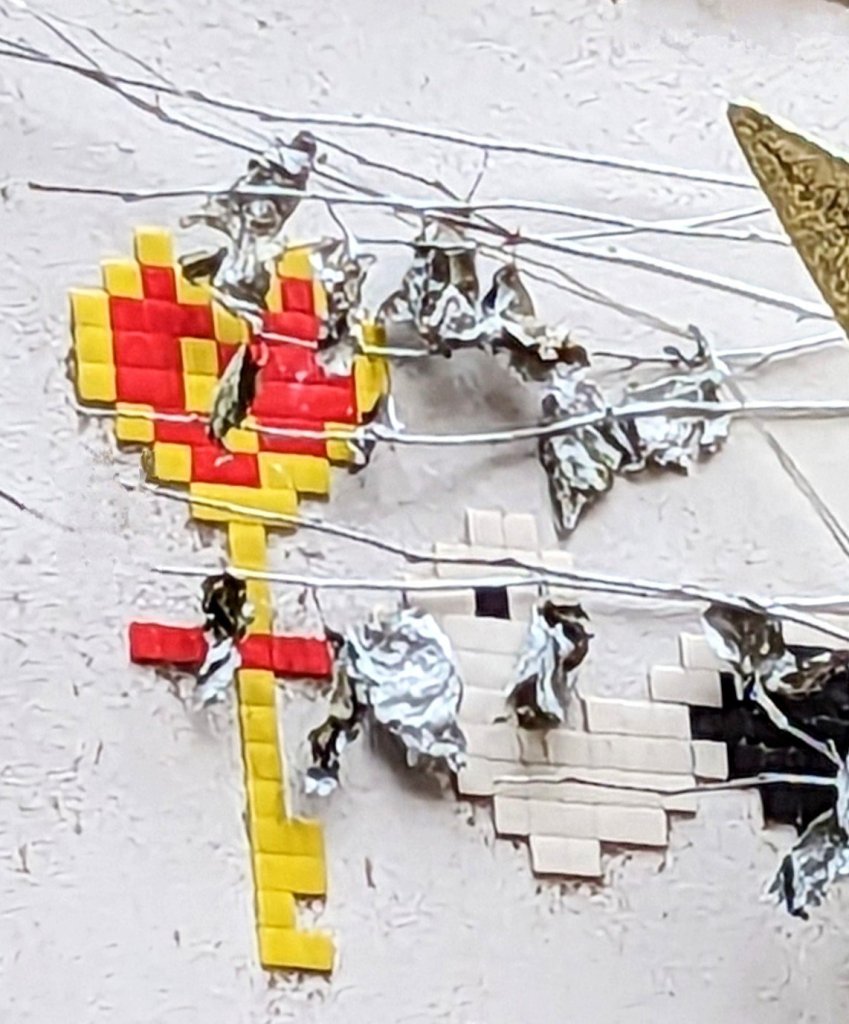
The white stork has historically been a symbol of Strasbourg. The species had dwindled over the years until 1971 when more than 900 storks were reintroduced to Parc de l’Orangerie. Although most had flown south for the winter, we saw hundreds of their nests as we passed through the park. A fun and quirky tribute to the city’s favorite birds is a collection of pixel storks that an artist has installed throughout the city. Inspired by Invaders mosaic invasion, Artist Stork’s goal is to stick his artwork everywhere. We spotted two of his pixel storks in Strasbourg (although the one on the right is somewhat obscured by Christmas decorations.)
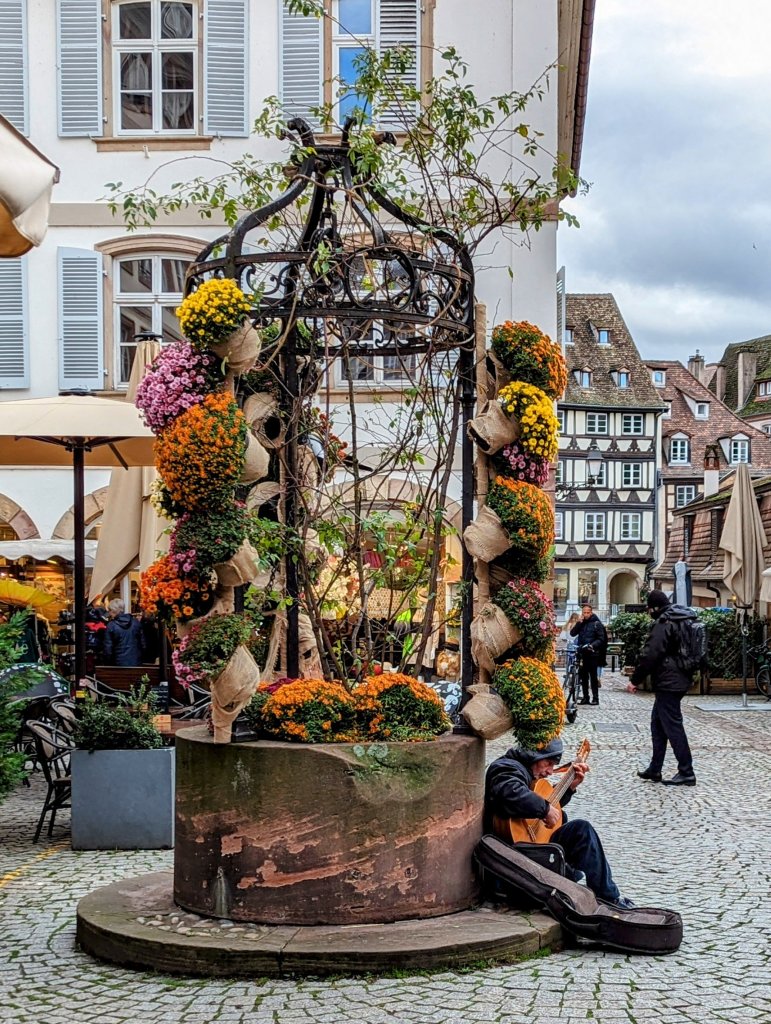
We started our day in Strasbourg dodging raindrops, but by the afternoon the sun came out and we could fully enjoy the sights and sounds of this beautiful city, including street music and food.
This was truly a day to remember! We learned so much about the rich culture of Alpine Switzerland while taking in magnificent vistas and charming mountain towns by bus to gondola to trains. As we made our way out of Zurich, we enjoyed a scenic drive through beautiful lake and rural areas.
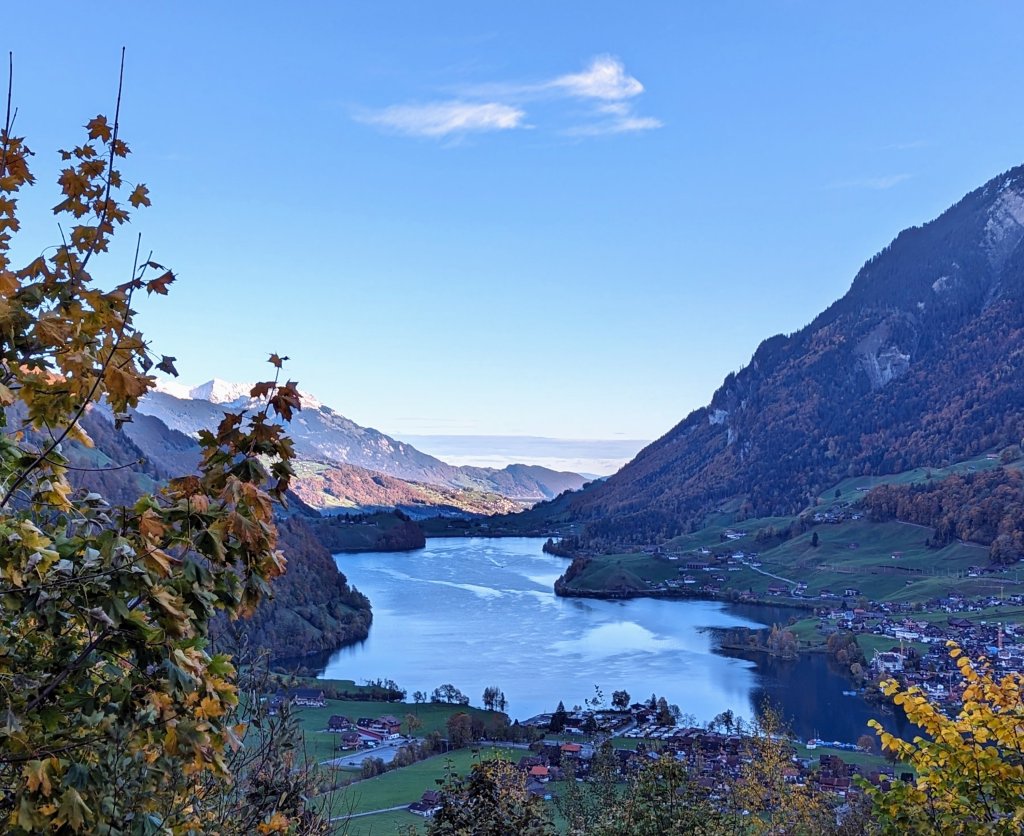
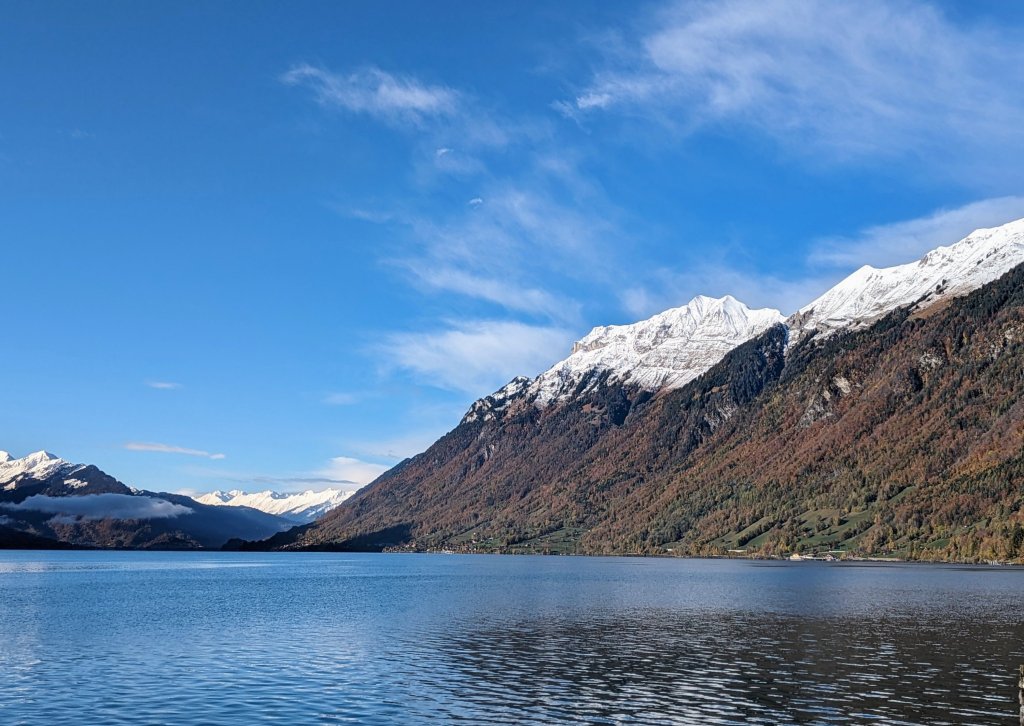
Sunrise over Lake LungernLake LungernLake and mountain views Beauty in every direction
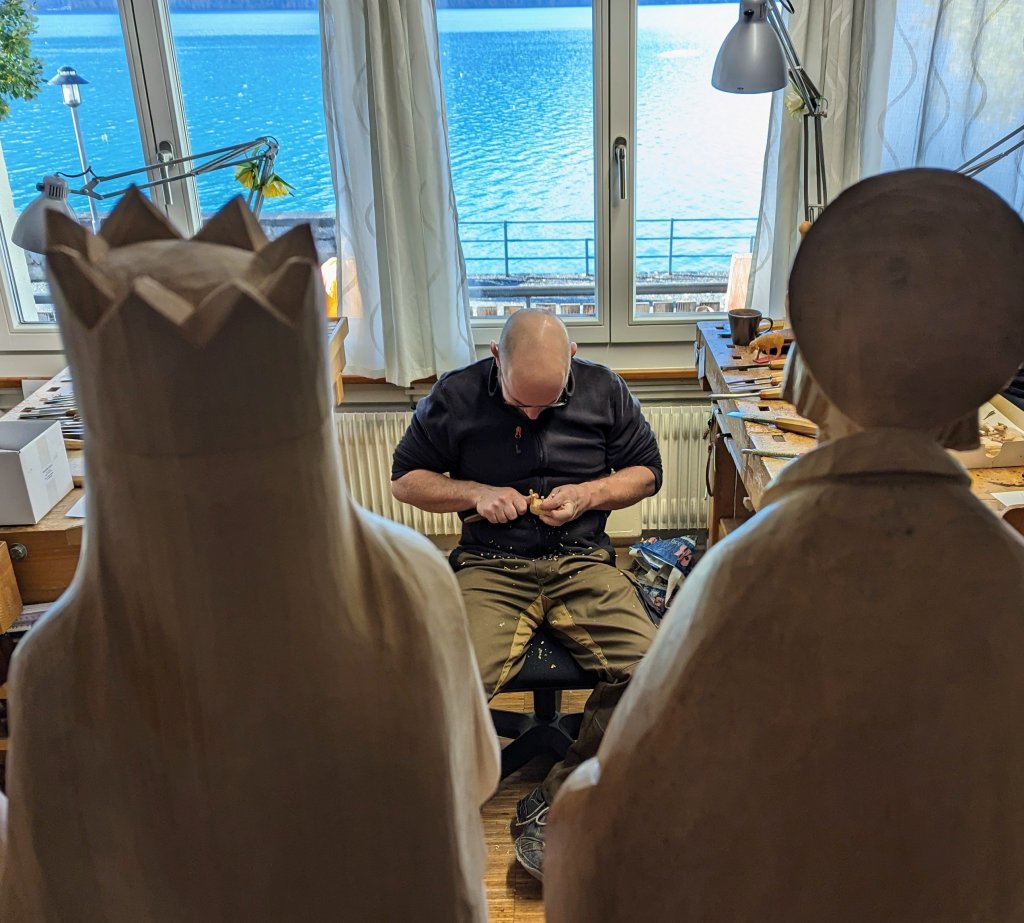
Brienz was the first charming village we visited. The predominant occupation here is woodcarving, and we were lucky to spend some time visiting with a wood carver who is keeping this traditional craft alive.
The homes in Brienz, all made of wood, are of classic Swiss chalet design and reflect the quaint, traditional architecture of the area. Whole streets are bursting with charm and color.
The charming houses of Brienz
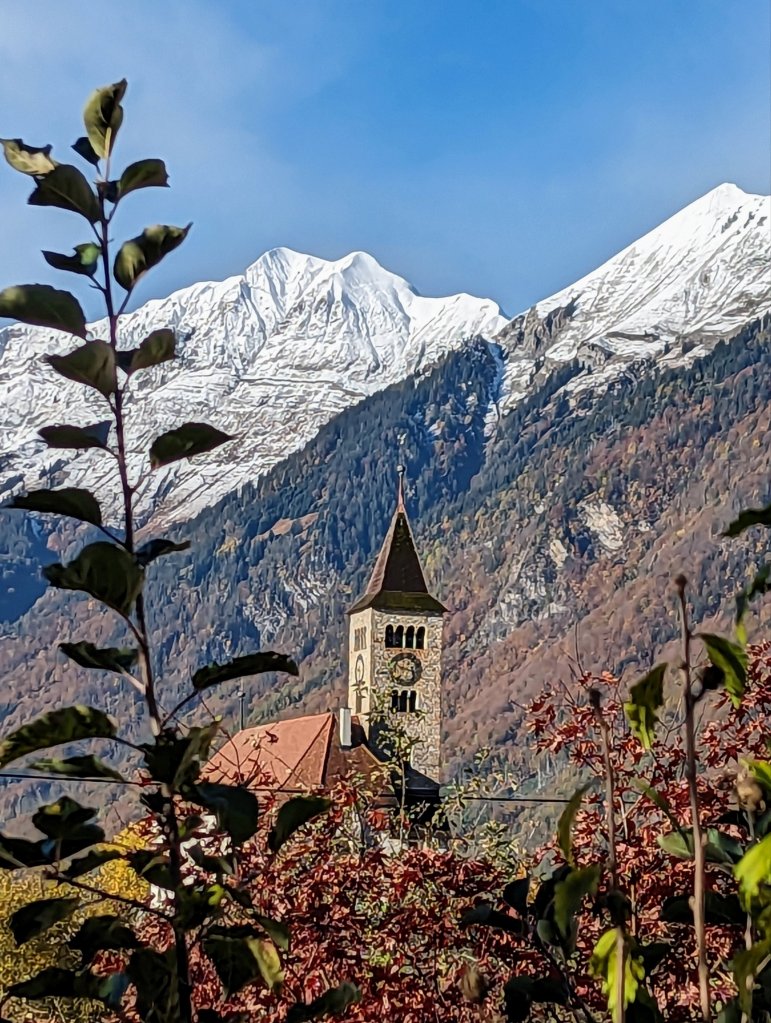
Strolling along the Lake of Brienz, we came upon a beautiful 12th century church that looks like something out of a story book.
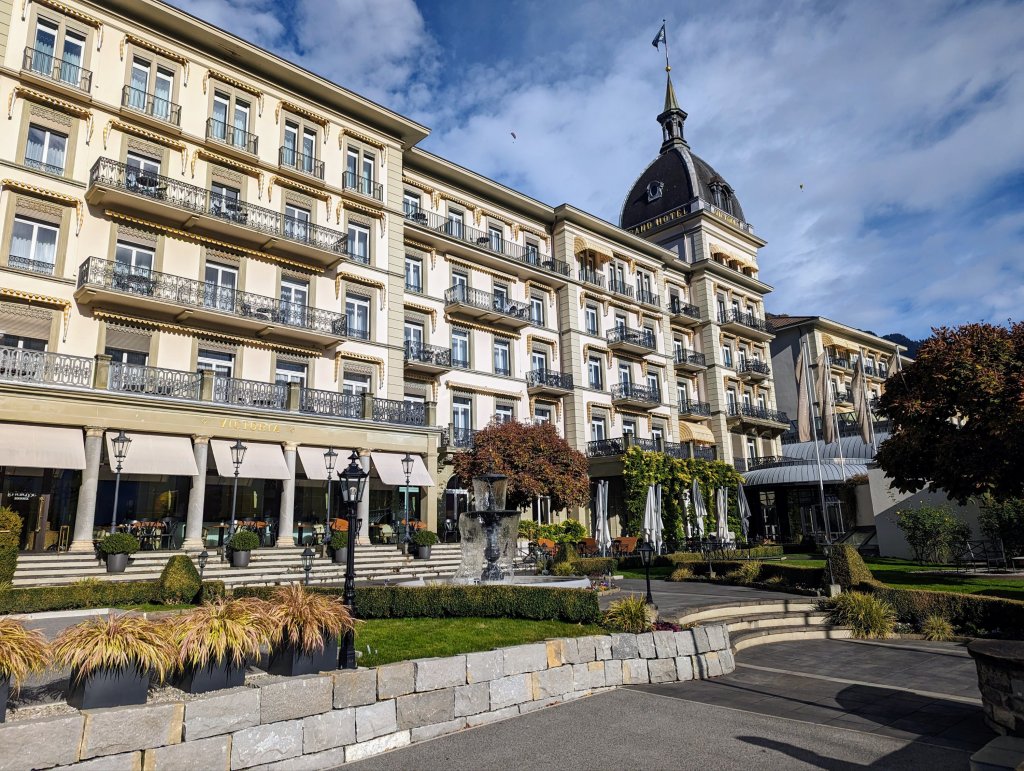
We continued on to the town of Interlaken, nestled between Lake Thun and Lake Brienz. There we sipped rich hot chocolate while strolling through this inviting and relaxed pocket of Switzerland that lures mountaineers and hikers with its gracious hotels and thrilling summits…and a charming casino.
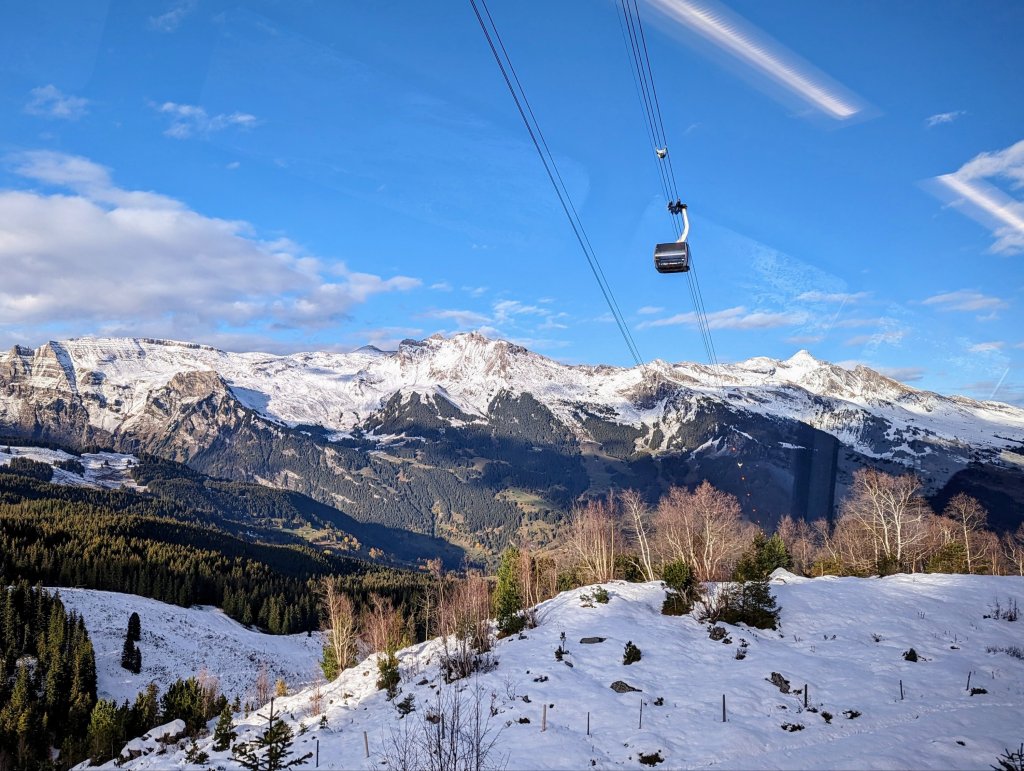
Our next adventure was a ride from Grindelwald on the Eiger Express gondola. This thrilling half hour ride provided panoramic views of snow-capped mountains, breathtaking mountain passes, and stunning views all around.
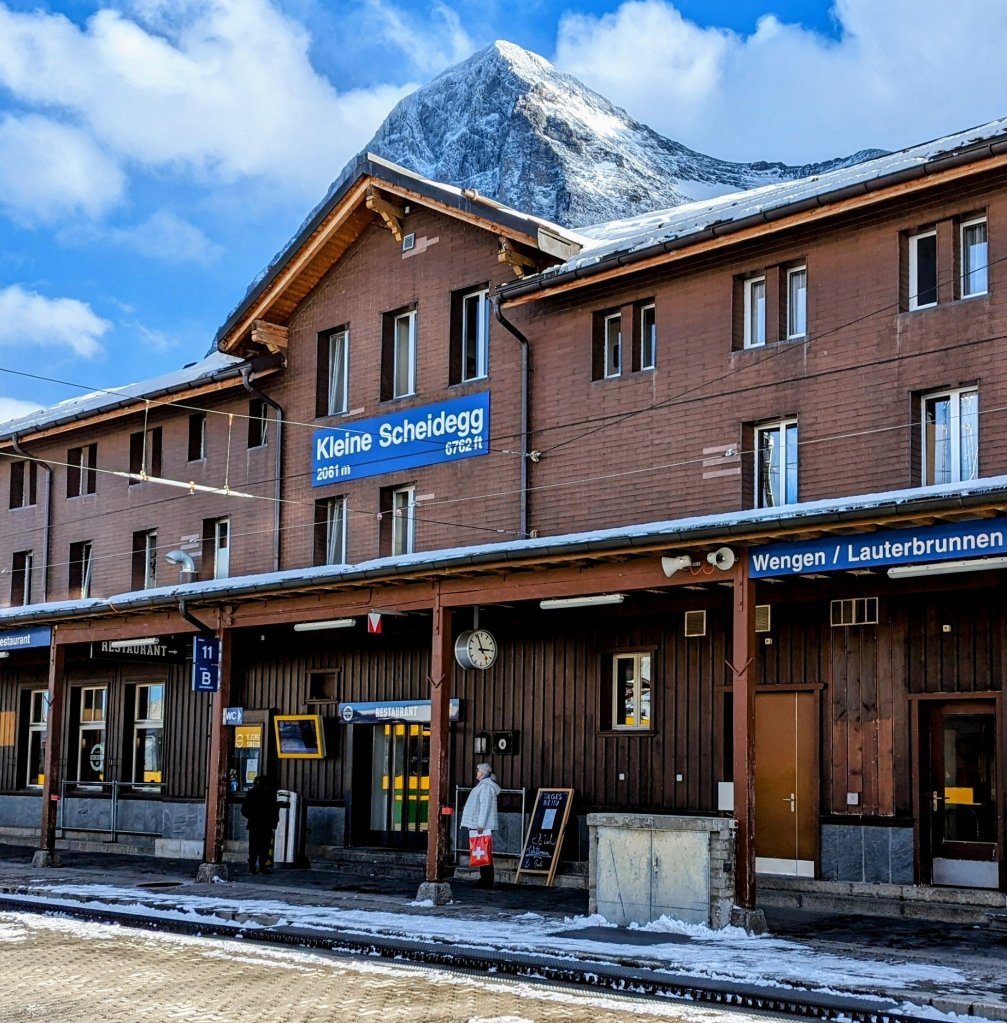
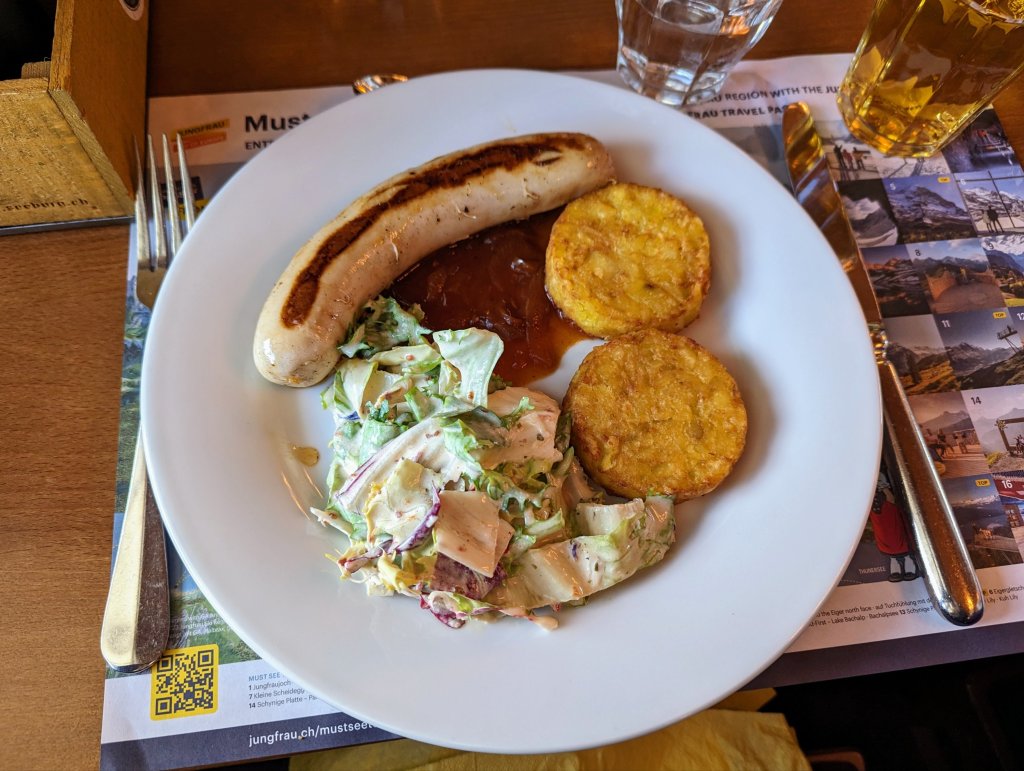
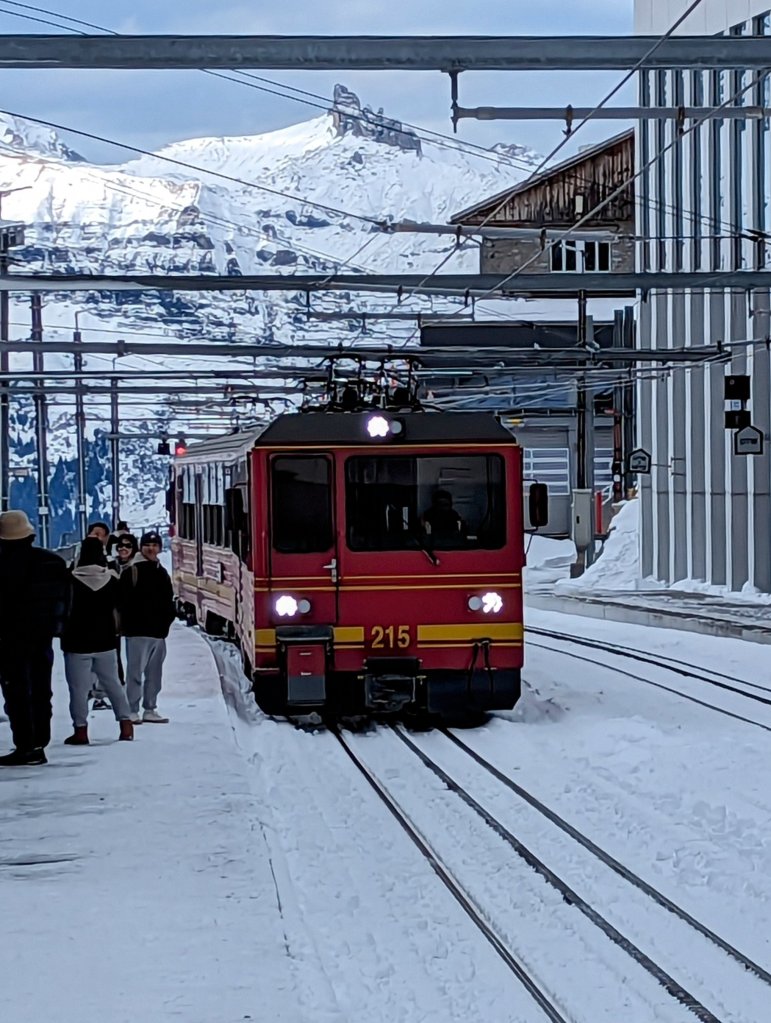
And if that wasn’t enough, we boarded a cogwheel train to climb a bit more to Kleine Scheidegg where we enjoyed a delicious lunch at a mountainside cafe.
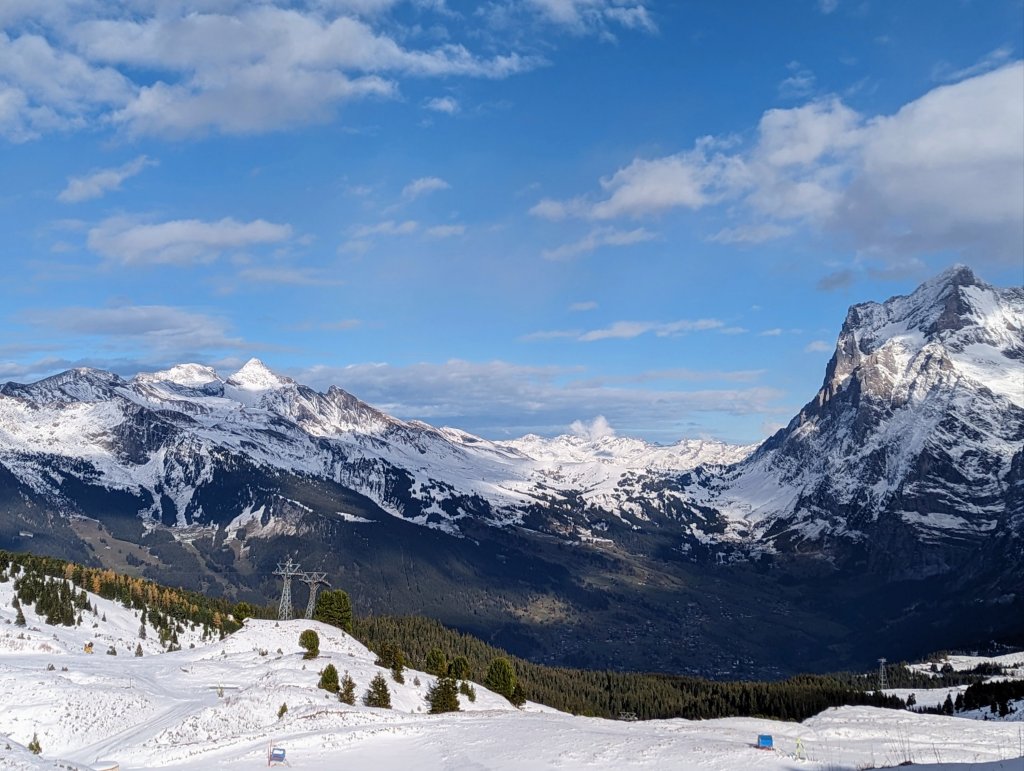
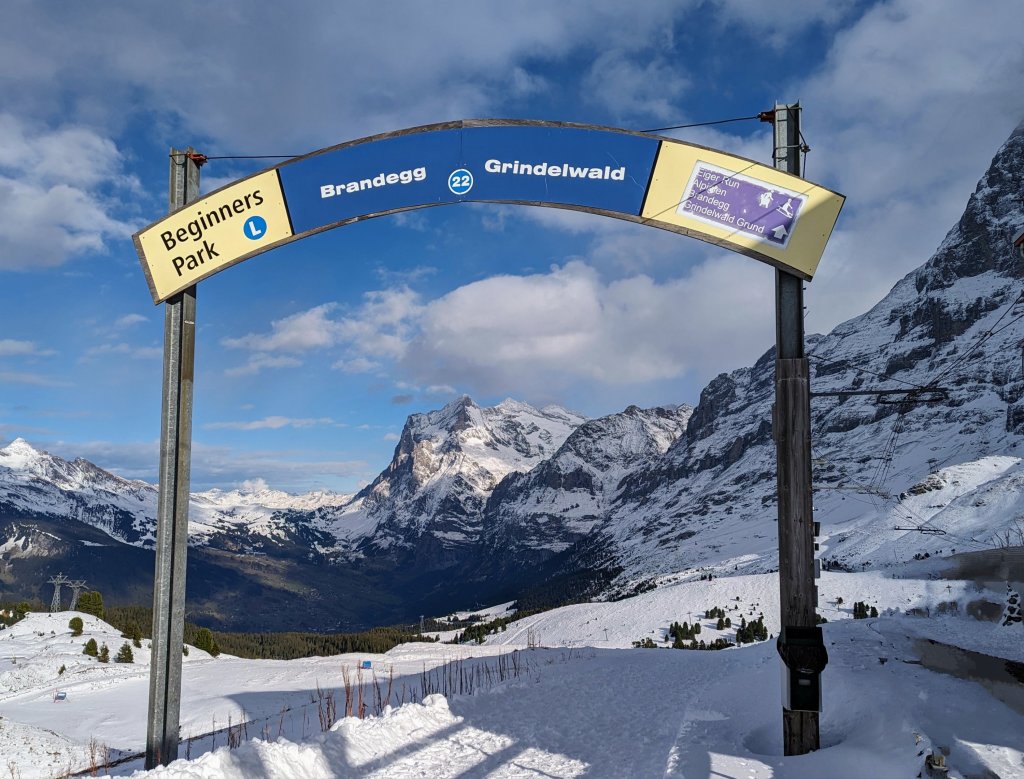
After spending some time walking off lunch, we boarded another train for our return trip through beautiful ski areas that are beginning to prepare for the busy season ahead.
As the afternoon faded into evening, we took a three hour ride into Basel, Switzerland where Switzerland, Germany and France meet. The city straddles the Rhine at the river’s farthest navigable point, and it is here where we boarded the Viking Hild to begin the next phase of our adventure: River cruise.
This is our itinerary for the next couple of weeks. It includes 2 nights in Zurich, 7 nights on the Viking Hild and 4 nights in Paris. We’ll start this blog post with Zurich and try to post from each port of call.
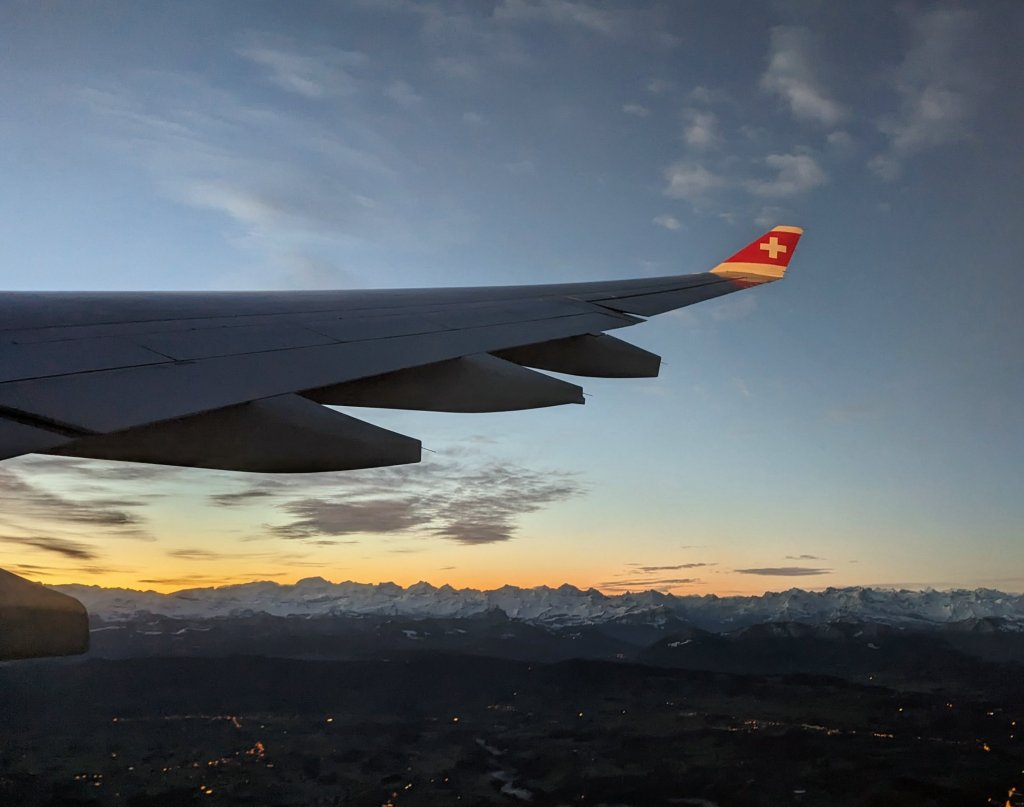
Toward the end of a restless overnight flight to Zurich, Switzerland we opened the shade to catch our first glimpse of the Alps. Not gonna’ lie, it was pretty thrilling!
View of the Alps from our Swissair flight
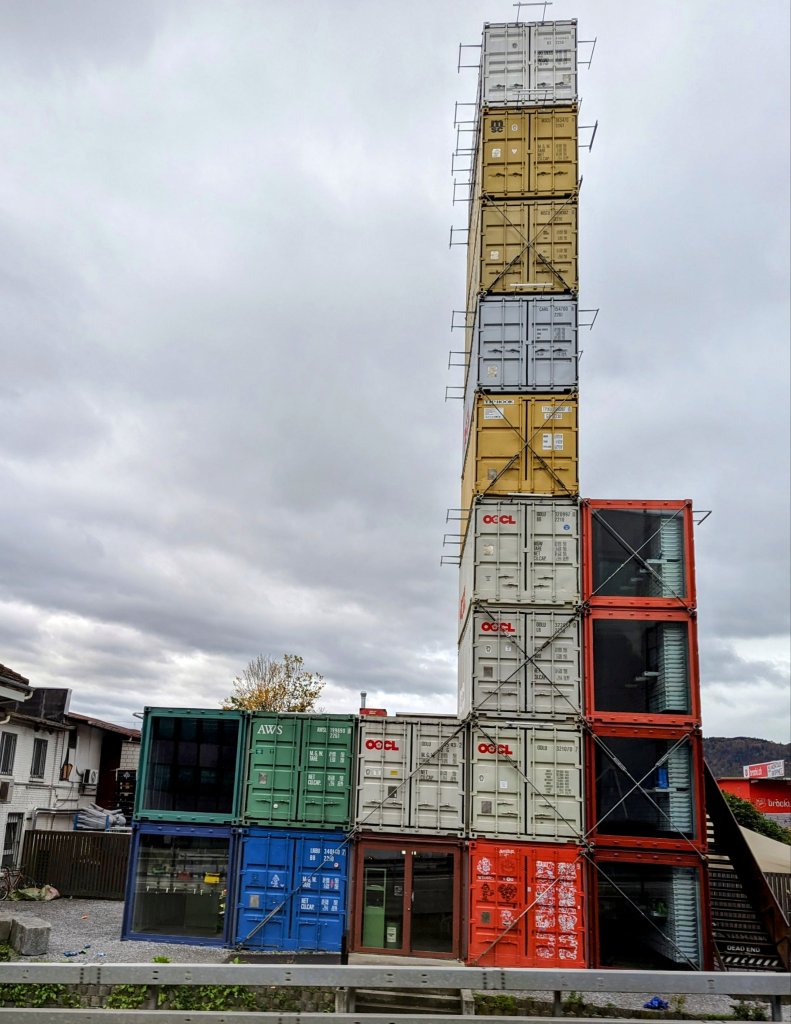
With only two days in Zurich, we had to make the most of our time there. It’s a very beautiful, clean, safe place with a rich history, interesting architecture, and lovely people. On our way into the Old Town, we caught a glimpse of the more contemporary side of life.
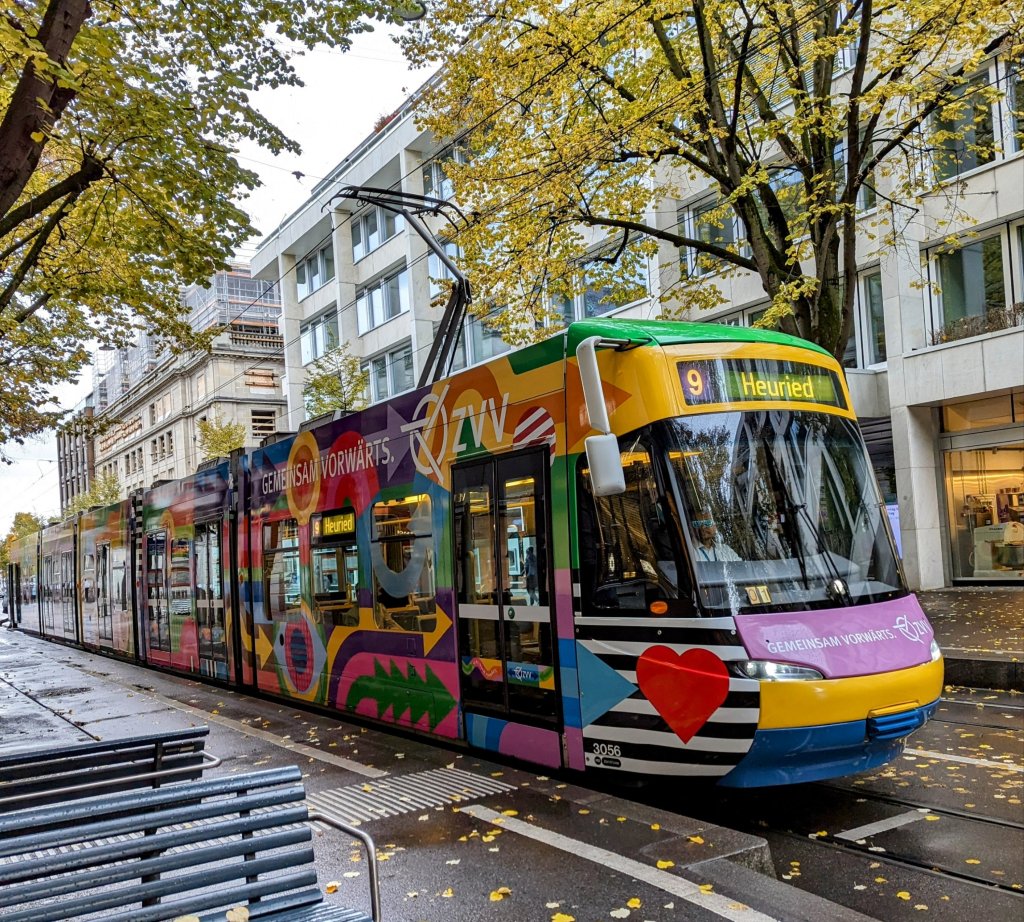
A park at the confluence of the Limmat and Sihl Rivers which flow through ZurichVery clever use of containers to build the Freitag Flagship Store Excellent public transportation, including the Tram which took us all over town
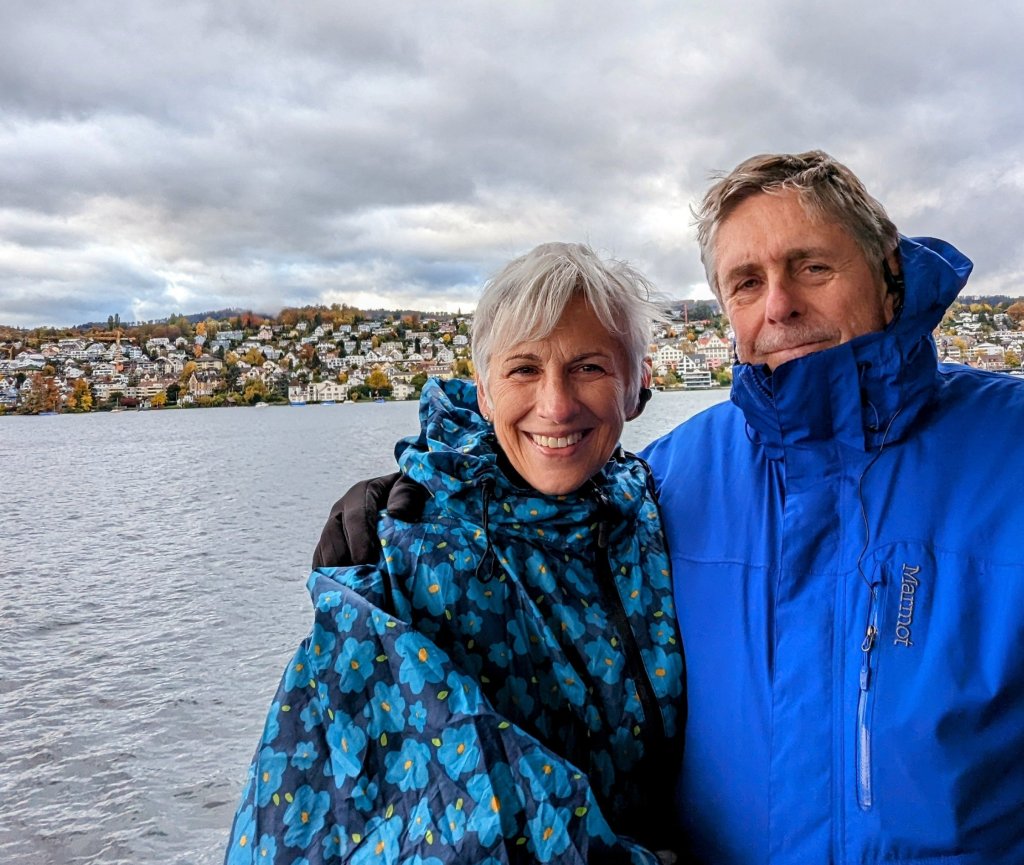
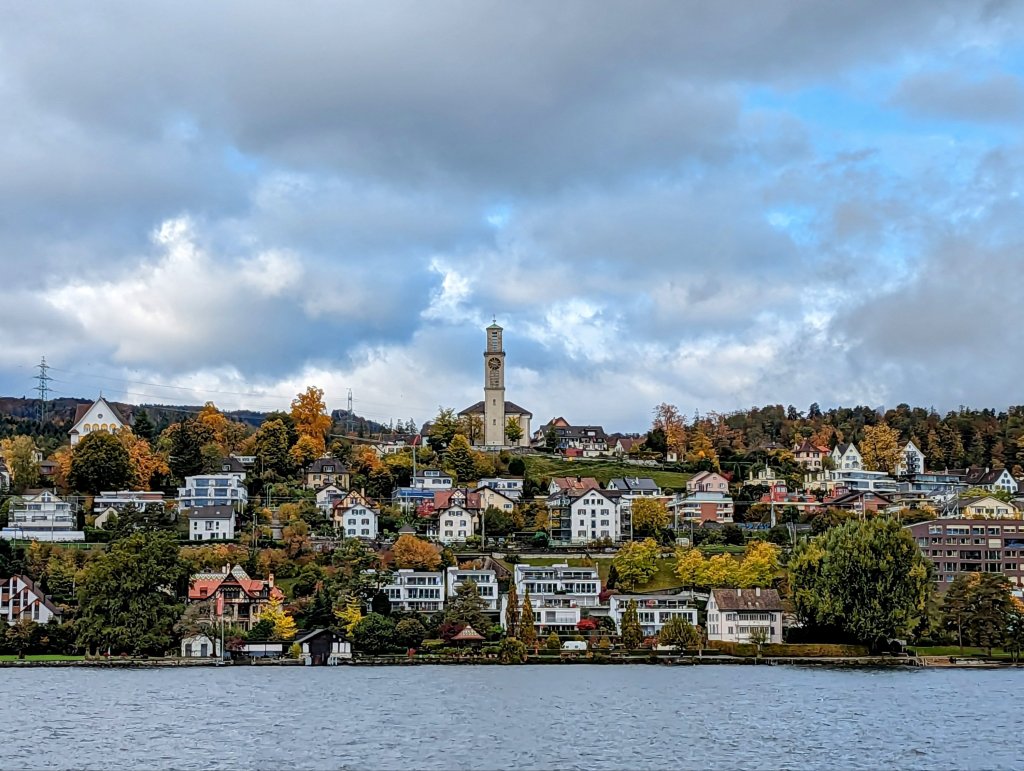
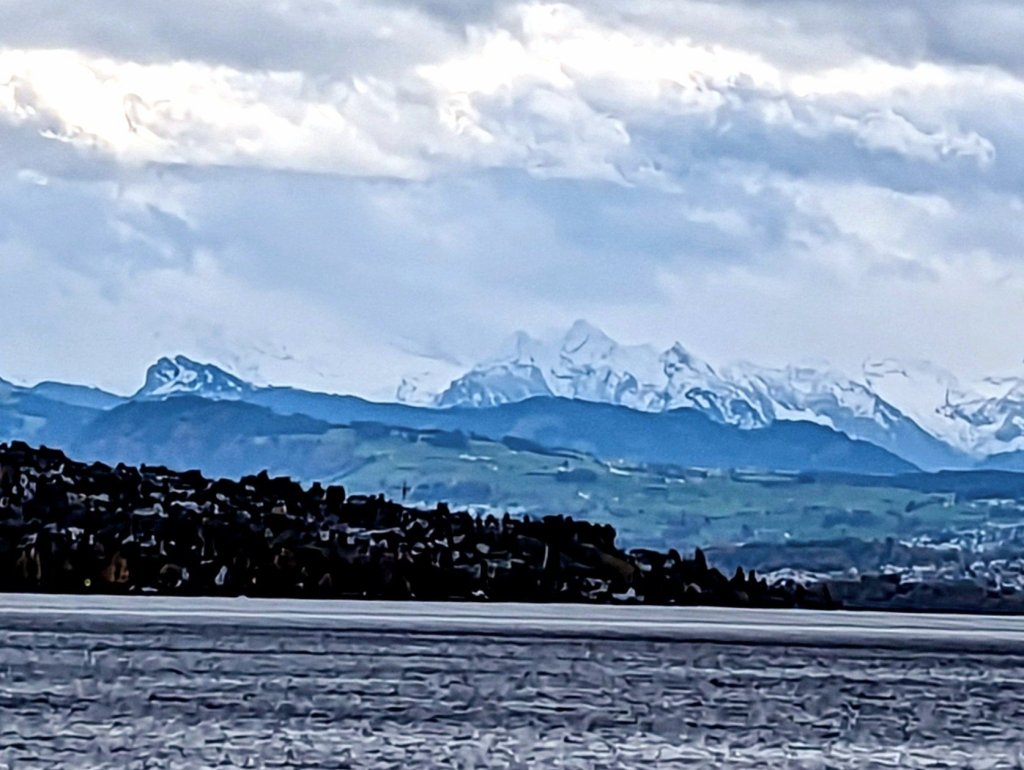
Although it was chilly, we donned our foul weather gear for a delightful boat ride on Zurich’s namesake lake to take in some of Switzerland’s stunning lakeside sights.
From top left: A little soggy; windsurfer; Tina Turner’s house (the grey one…caretaker lived in the boathouse!); small towns; lakeside churches; the Alps
Zurich is home to many churches. One with a particularly interesting history is Fraumunster. Founded as a Benedictine convent in 853, the nuns’ influence grew as evidenced by the fact that they had the right to mint coins on behalf of kings, collect tolls, and hold markets from the 11th century. In addition, the head abbess was the official ruler of Zurich, holding the title Royal Princess. Sadly, this era came to an end in 1524 with the Reformation.
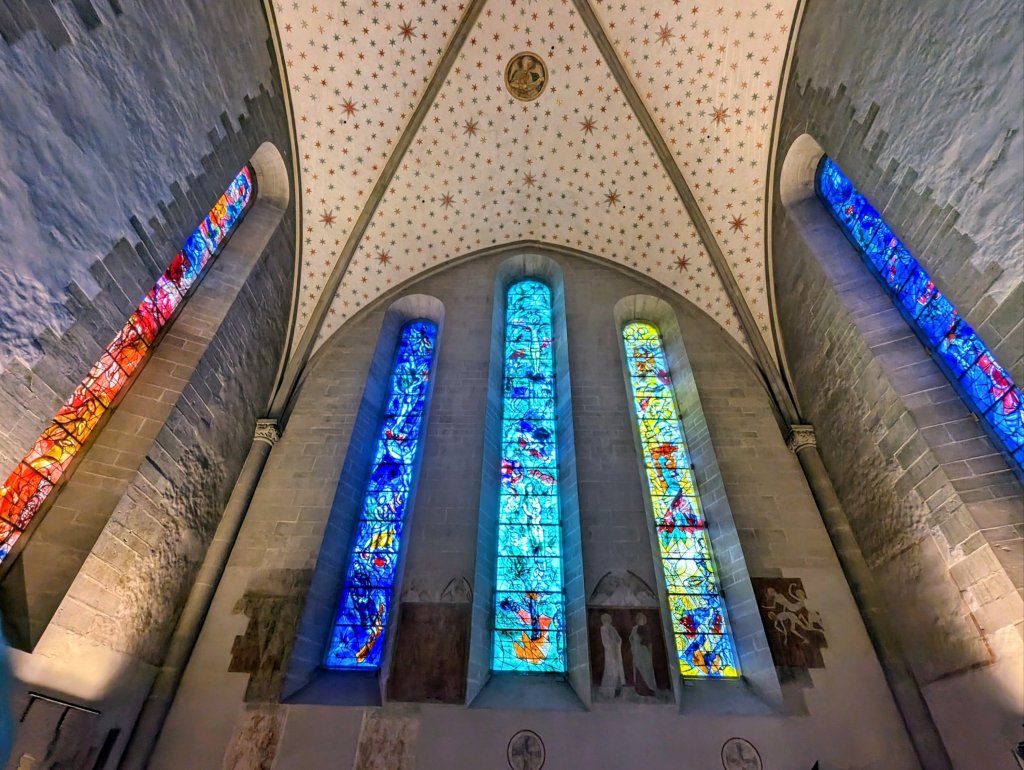
However, in 1967 the priest approached artist Marc Chagall to design a set of 5 stained glass windows for the church. An anonymous donor paid his fee and all production costs, and in 1970 the pictorial symphony of biblical images was inaugurated in the presence of the then 83-year-old Chagall. They are breathtaking.
L to R: Window of the Prophets, Window of Jacob, Window of Christ, Window of Zion, Window of Commandments
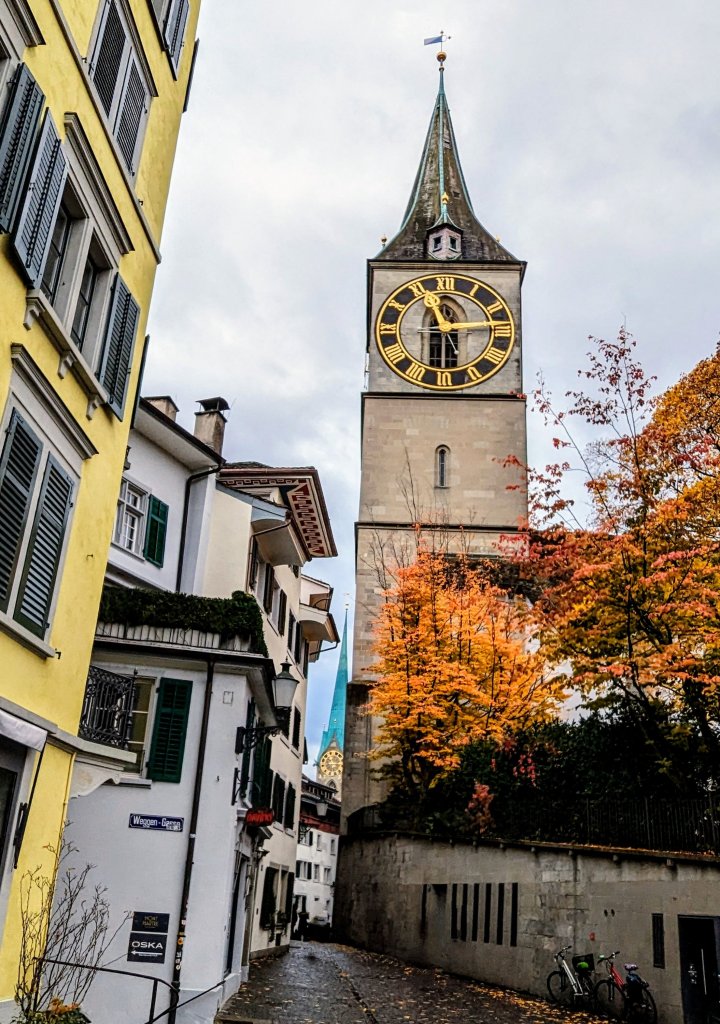
St. Peter’s Church boasts the largest clock tower in Europe.
St. Peter’s Church with Fraumunster’s steeple in the background
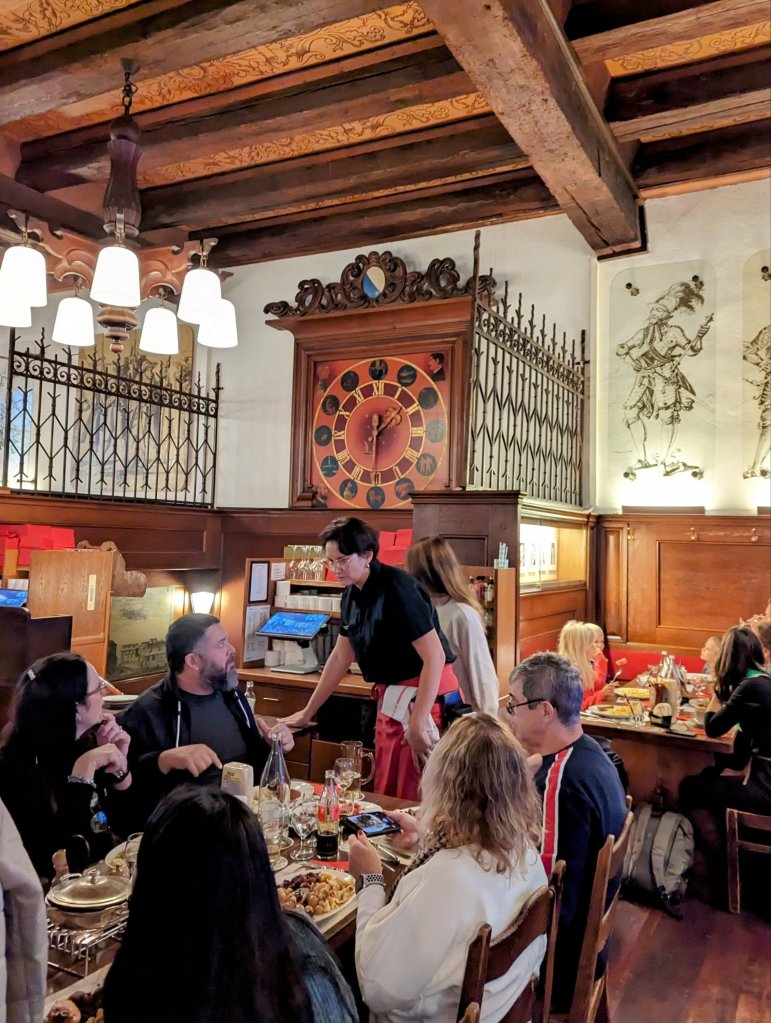
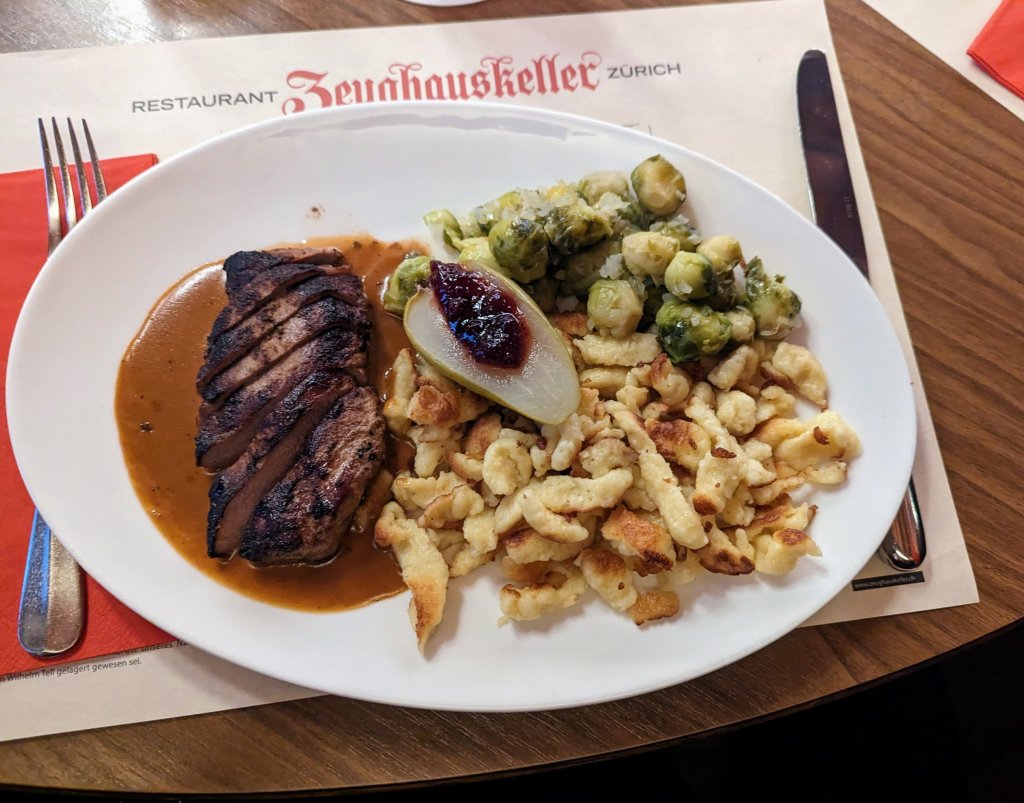
The culinary scene in Zurich is heavily influenced by its German and Italian neighbors, and chocolate is everywhere! We sampled our fair share, but our favorite restaurant was Zeughauskeller. Built in 1487 as an arsenal storehouse, legend has it that the Swiss national hero William Tell was issued his crossbow there. Today it’s a large, friendly place serving large portions of delicious food and drinks.
Zeughauskeller busy Sunday afternoon
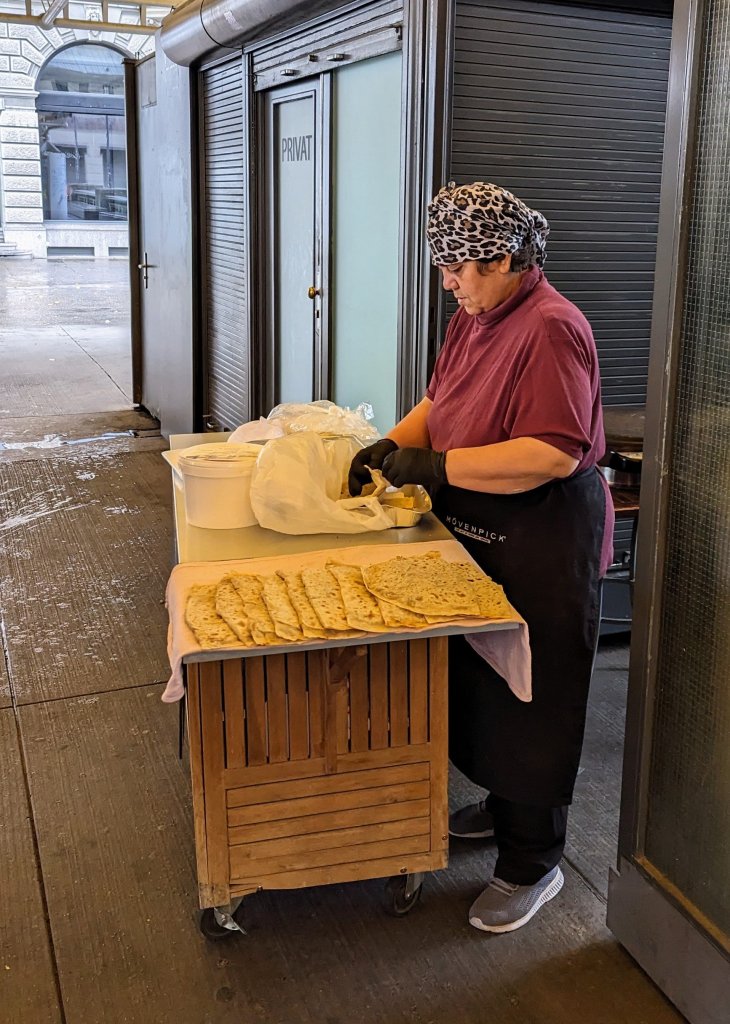
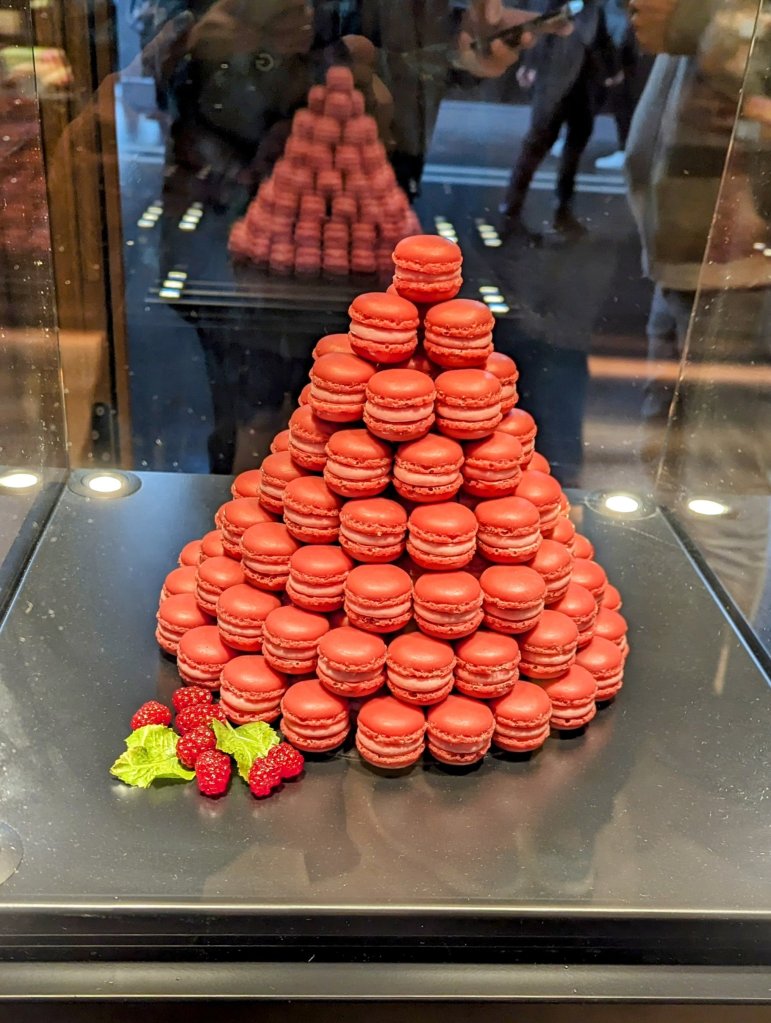
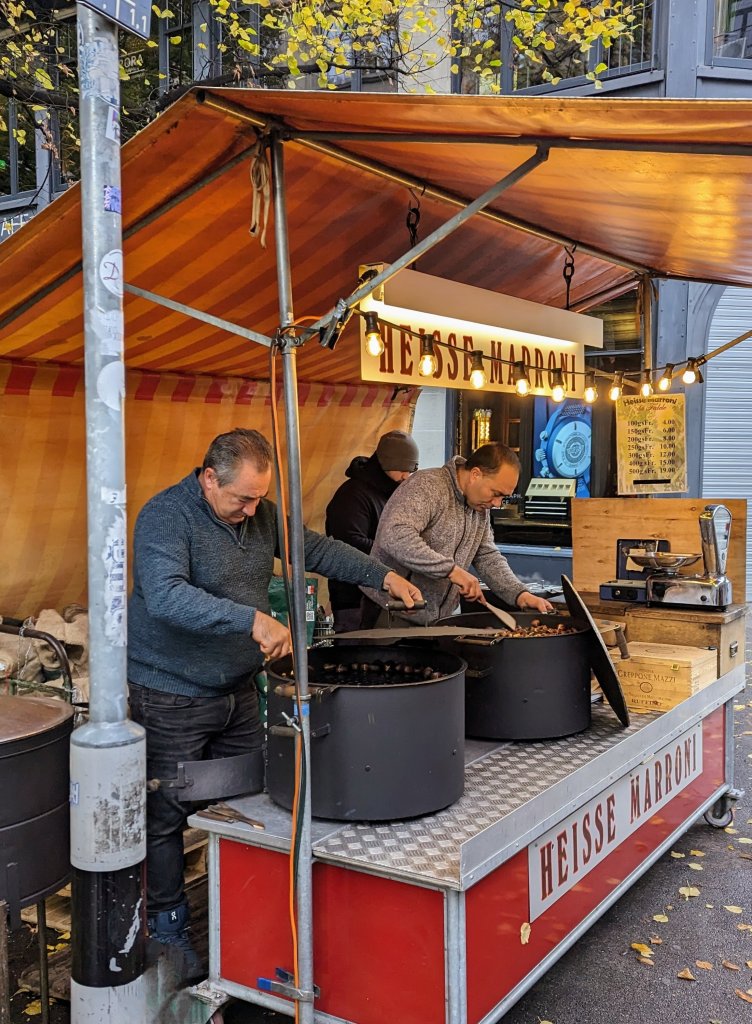
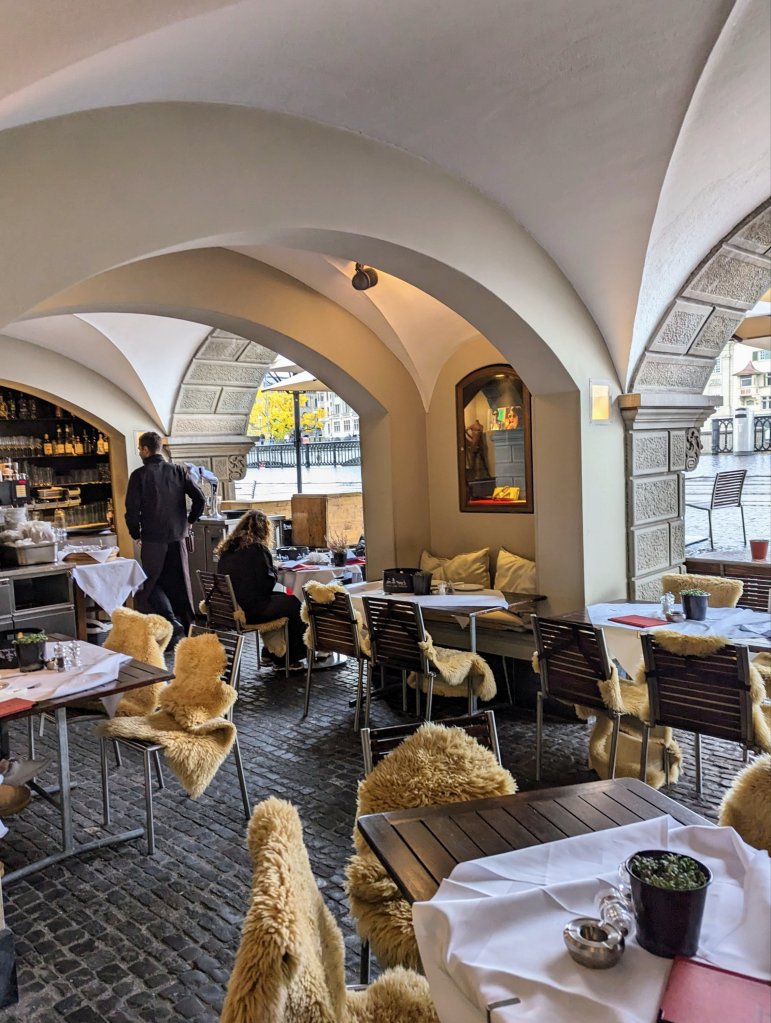
Street food, sweets, and fondue are also very popular in Switzerland, and the displays are irresistible!
From top left: warm pita bread, macarons, chocolate delights, roasted chestnuts, al fresco fondue restaurant
Tomorrow we’re heading to the Alps, so check back for more to come, and as always, thanks for coming along!
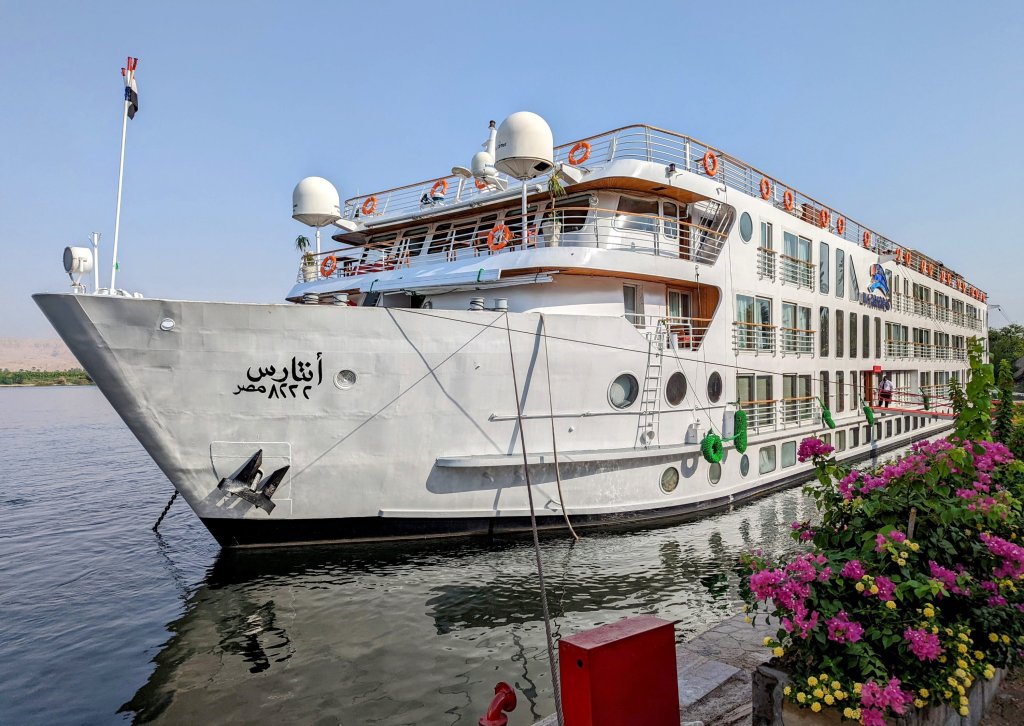
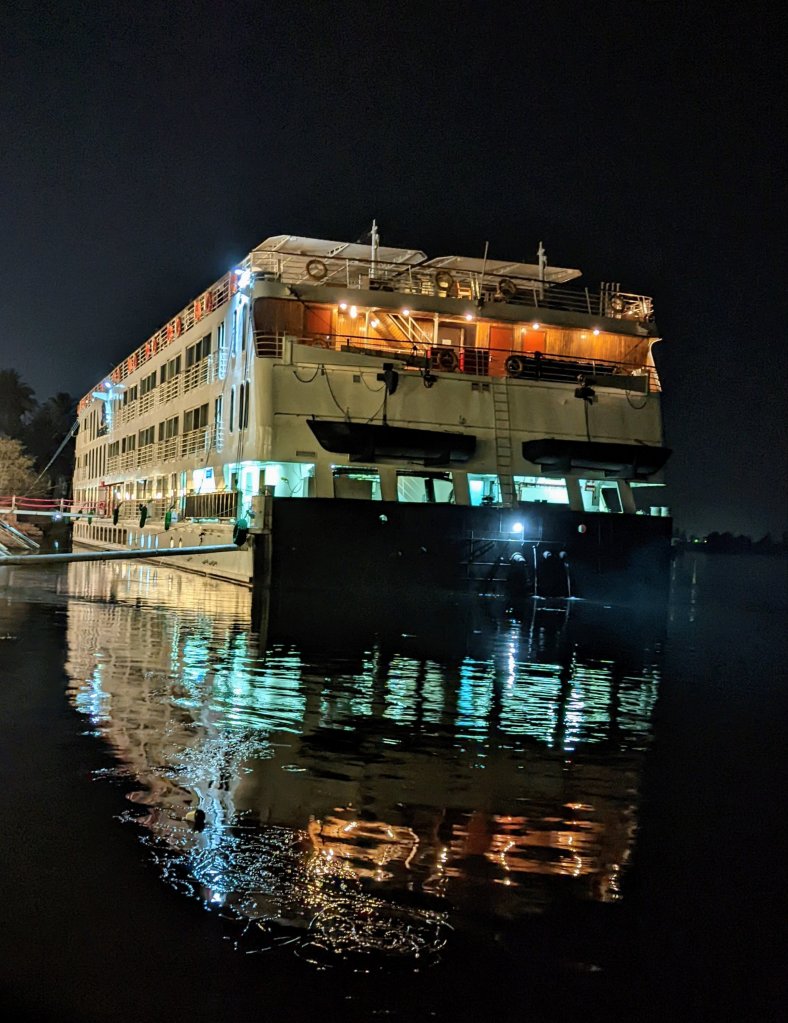
As we pack up to head home tomorrow, we would be remiss if we didn’t share something about our cruise boat, the Viking Antares. This lovely Egyptian vessel was built in 2007 according to the standards and specifications of Germanishcer of Lloyd’s. She has 3 propellers made by Rolls Royce and 3 engines made by Caterpillar. She’s 236 feet long, 47.5 feet wide, 38 feet high. She can cruise at 12.5 mph with the current and 10 mph against. She’s beautiful, comfortable, and cozy with a maximum capacity of 62 passengers. We cruised with a group of 57…plus those who followed along with this blog. To you we say thank you and hope you’ve enjoyed this trip as much as we have!
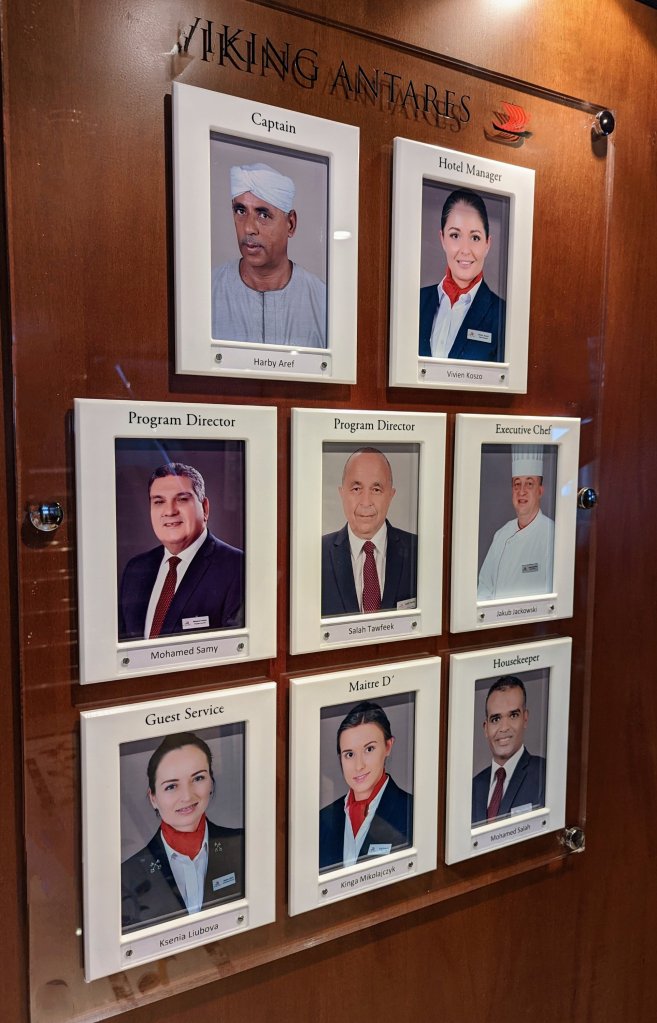
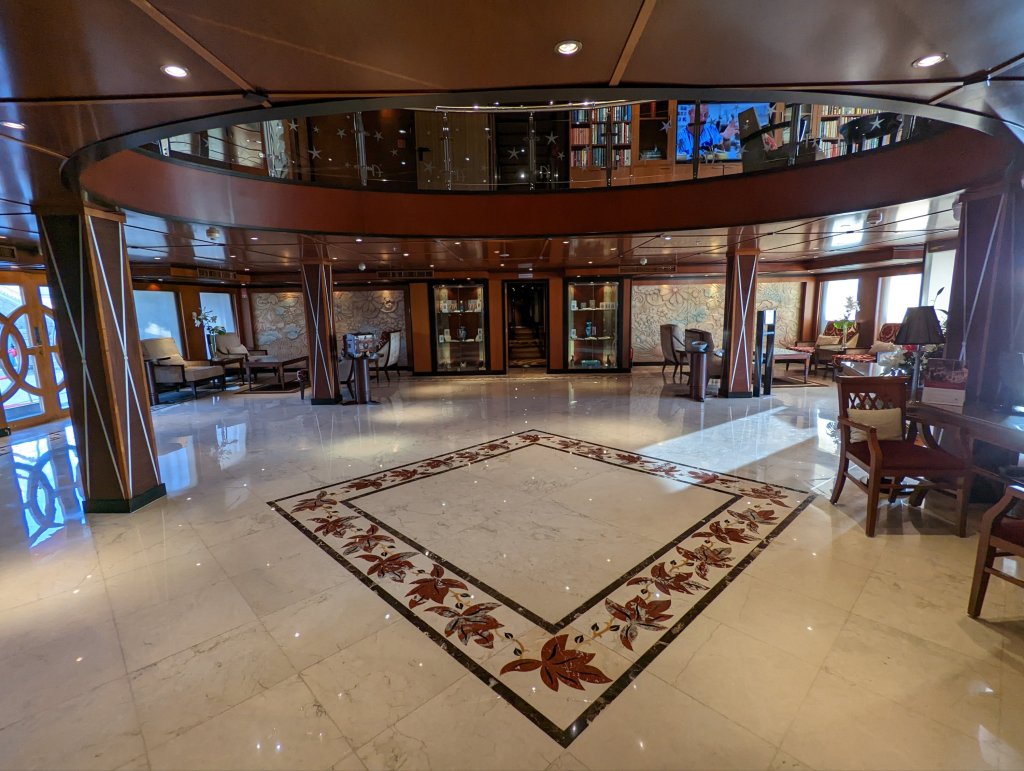
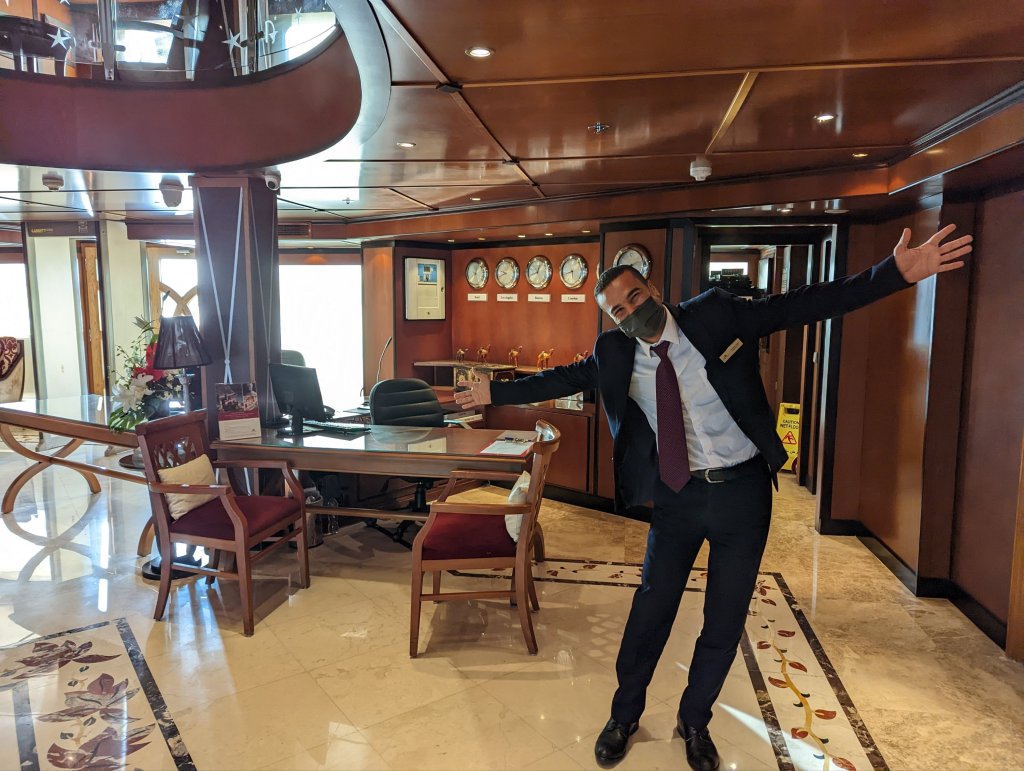
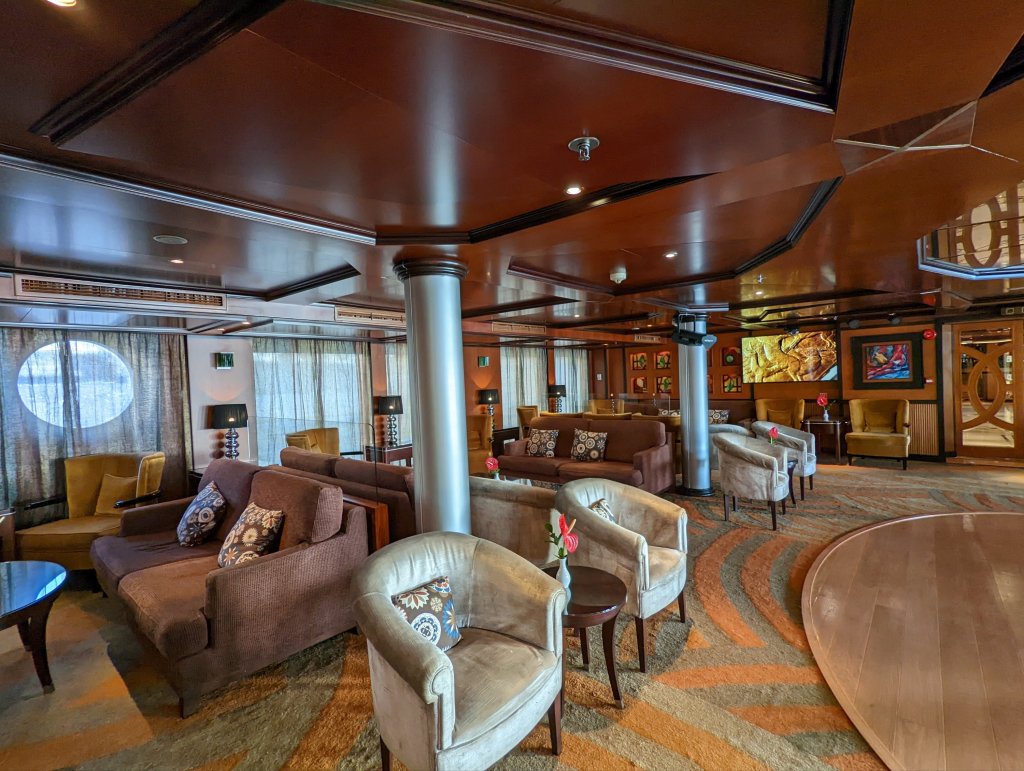
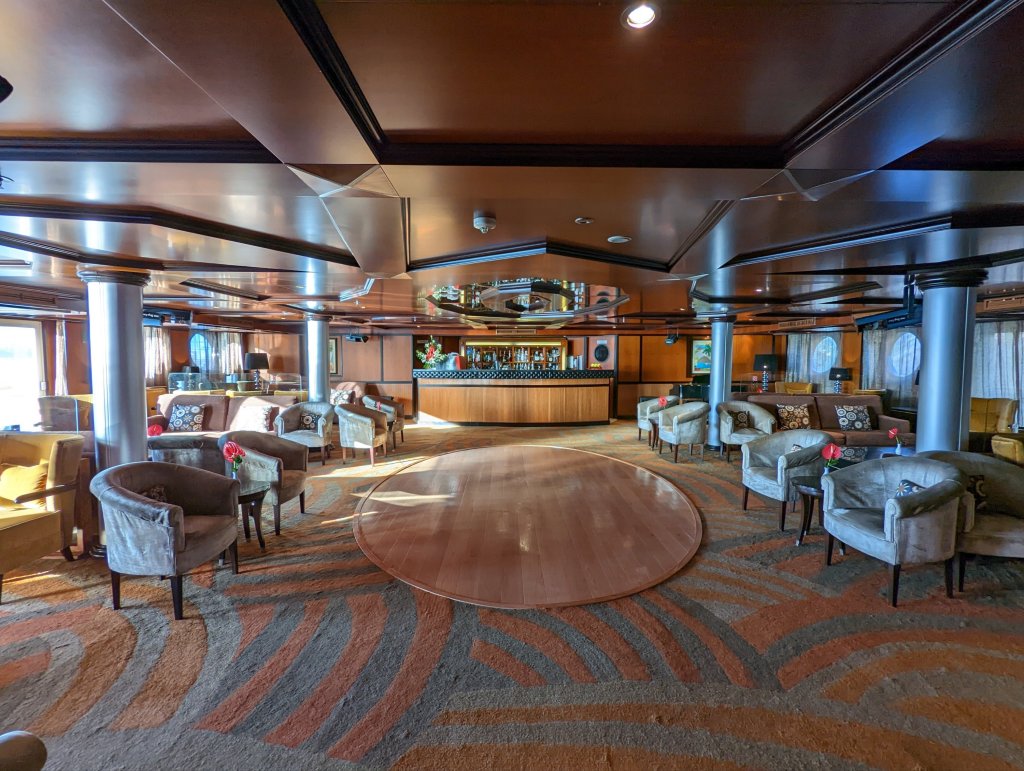
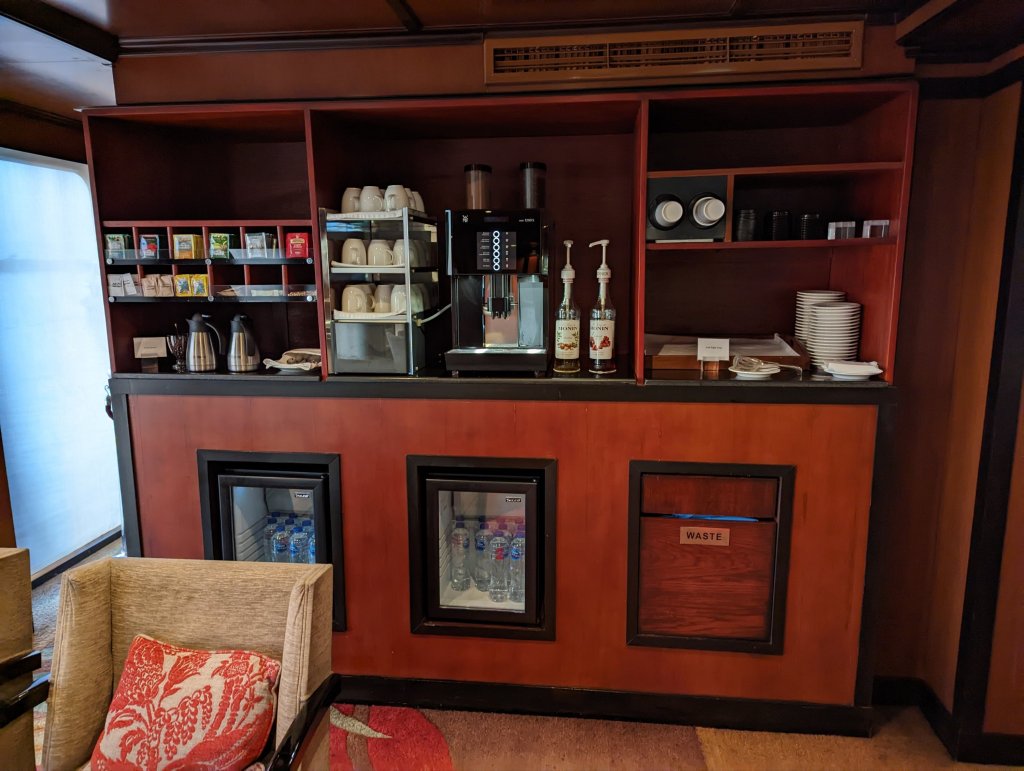
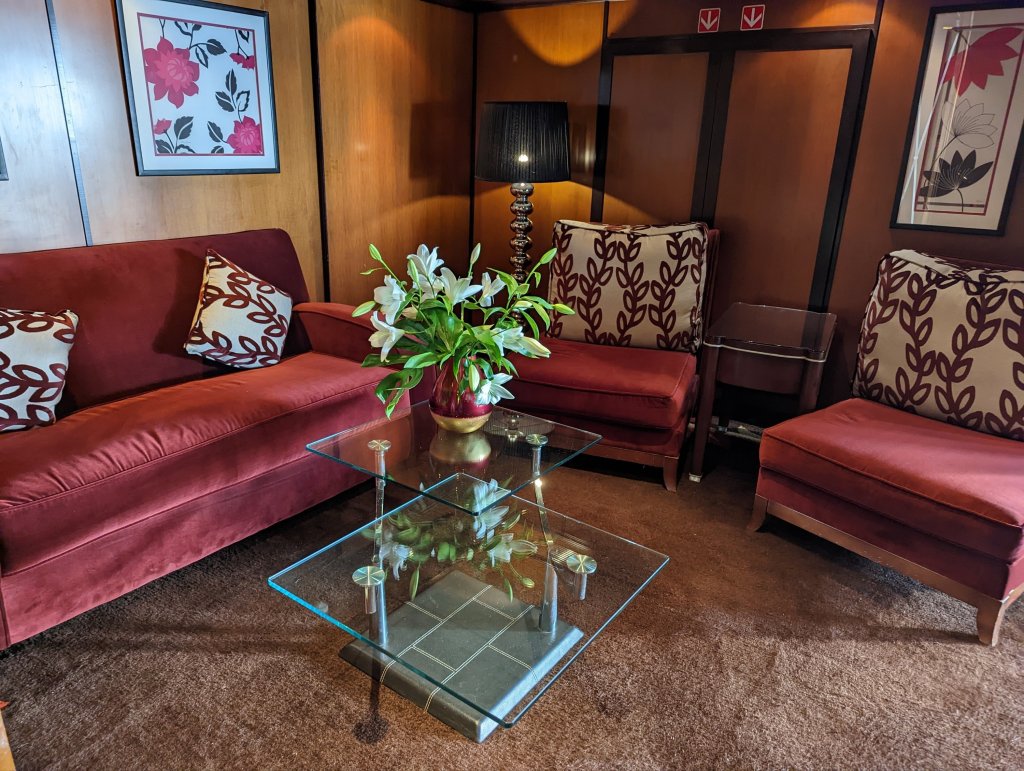
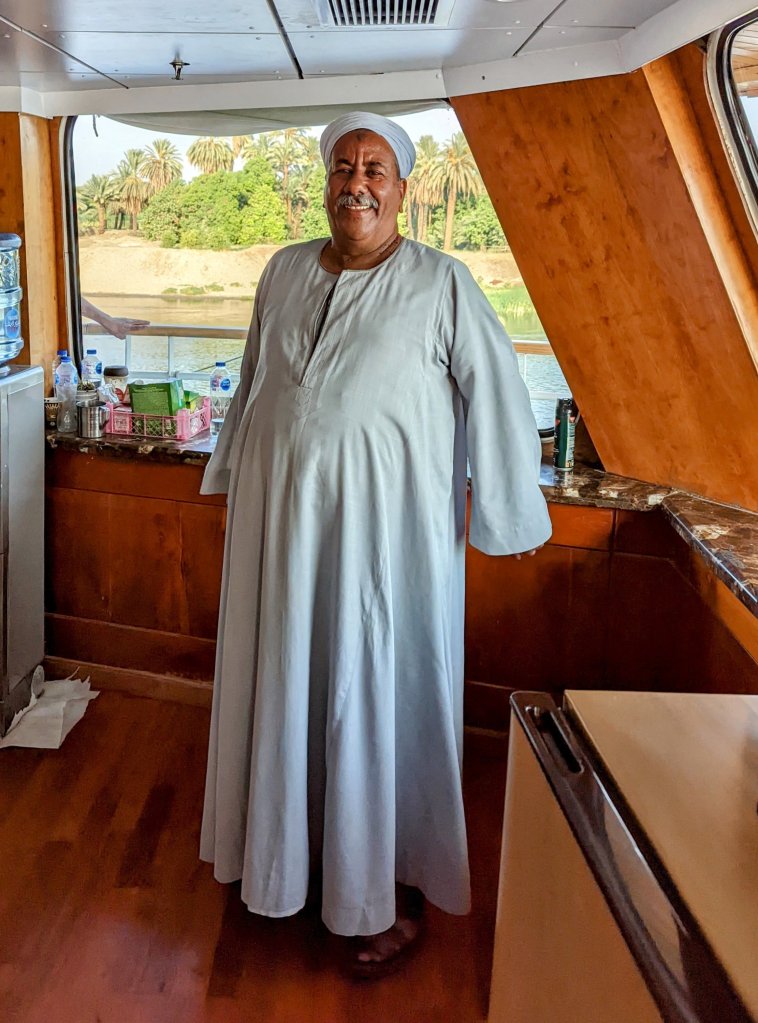
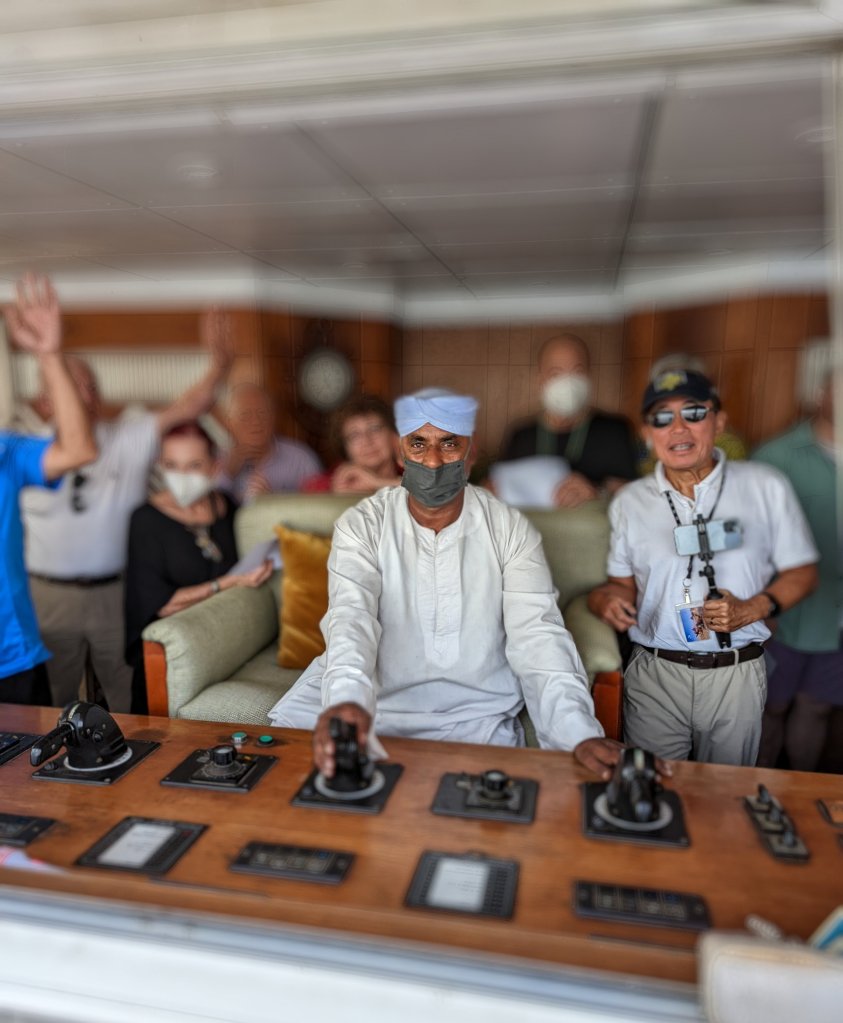
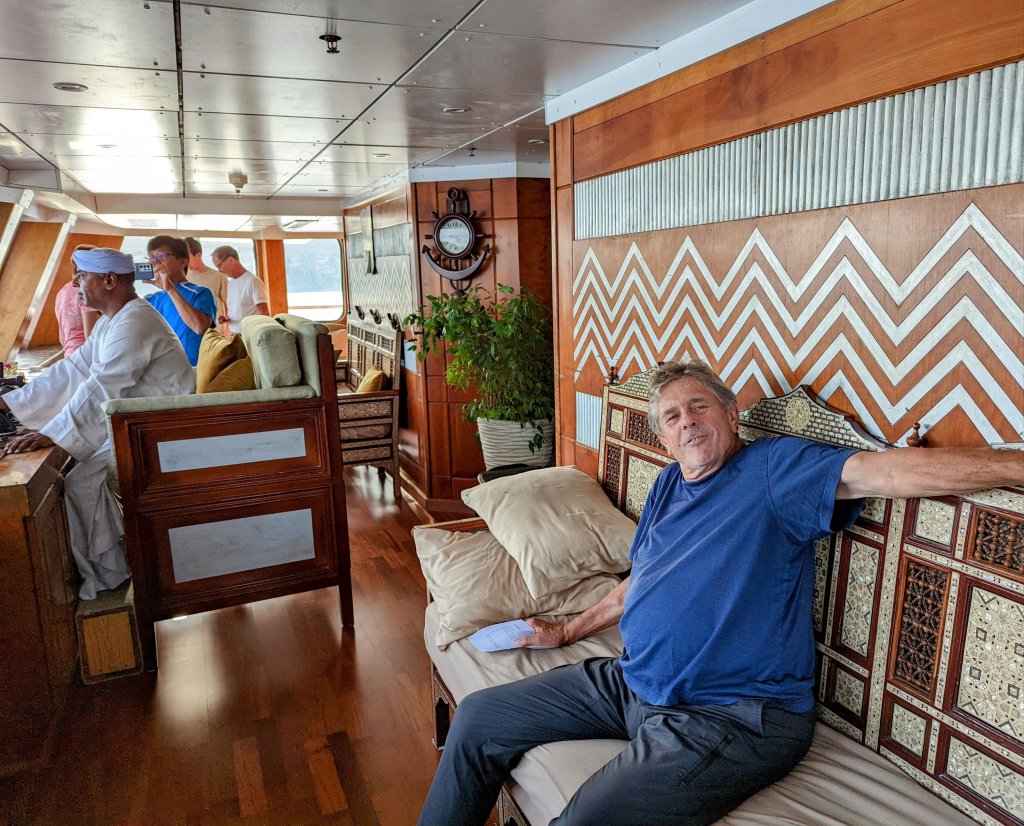
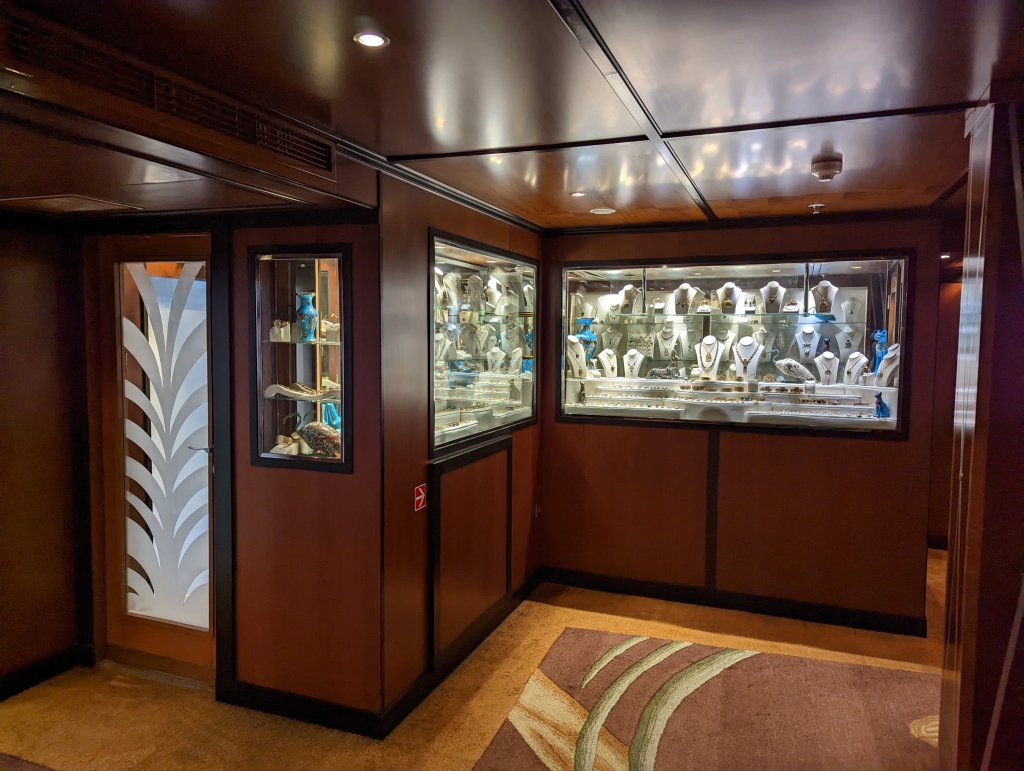
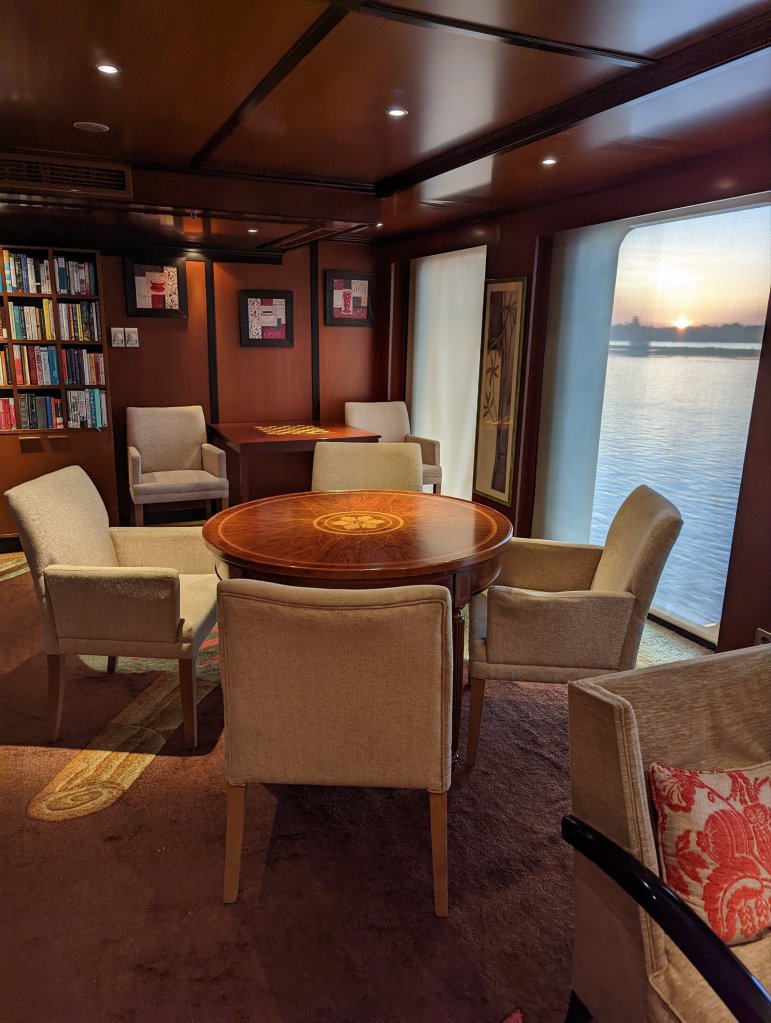
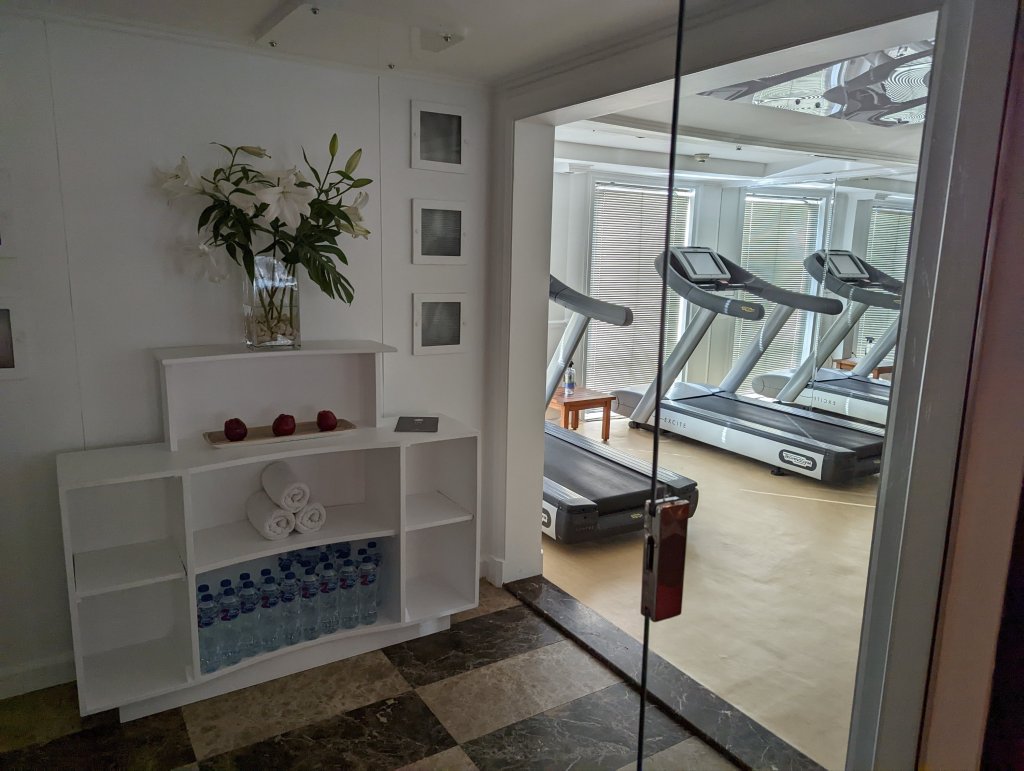
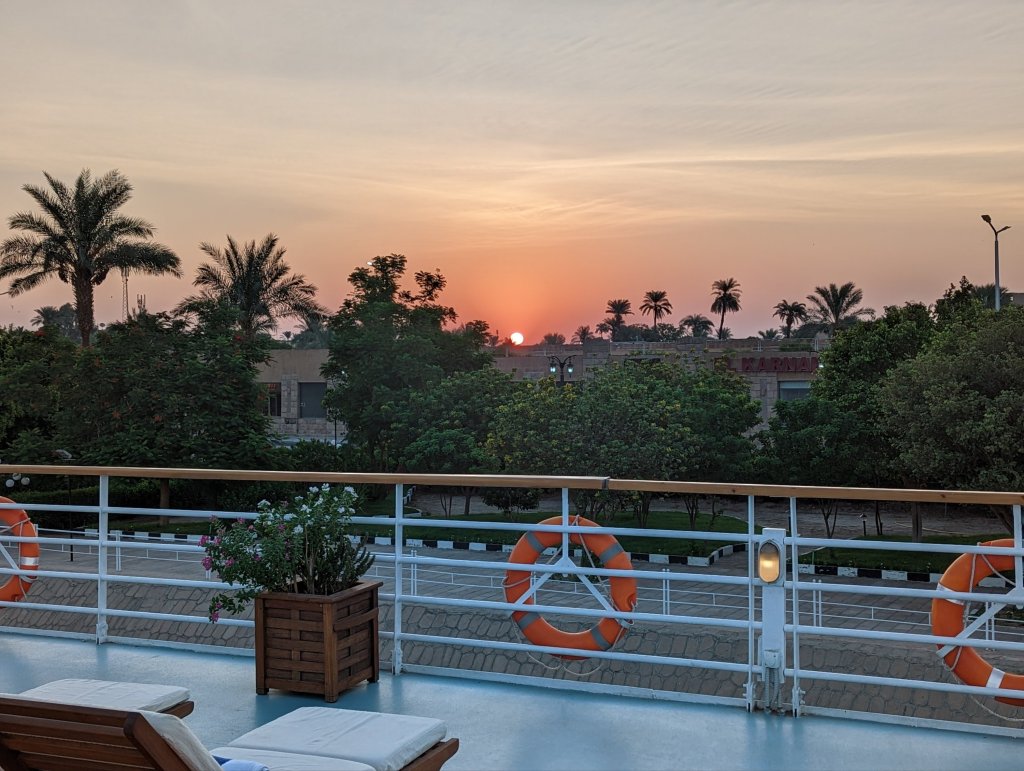
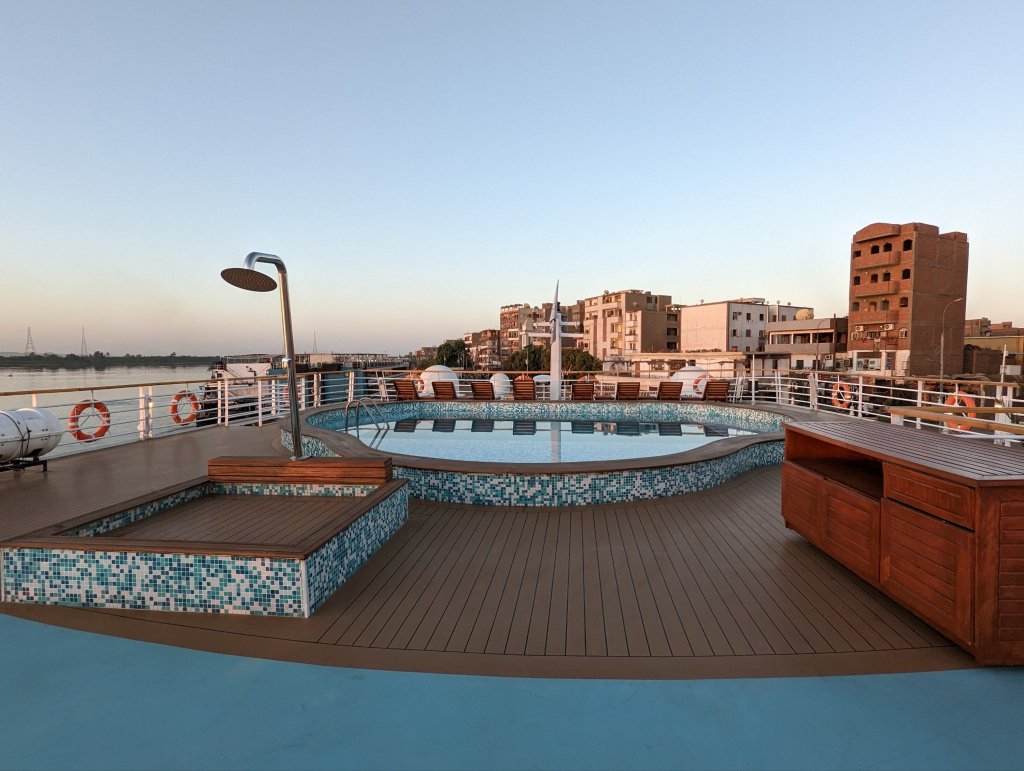
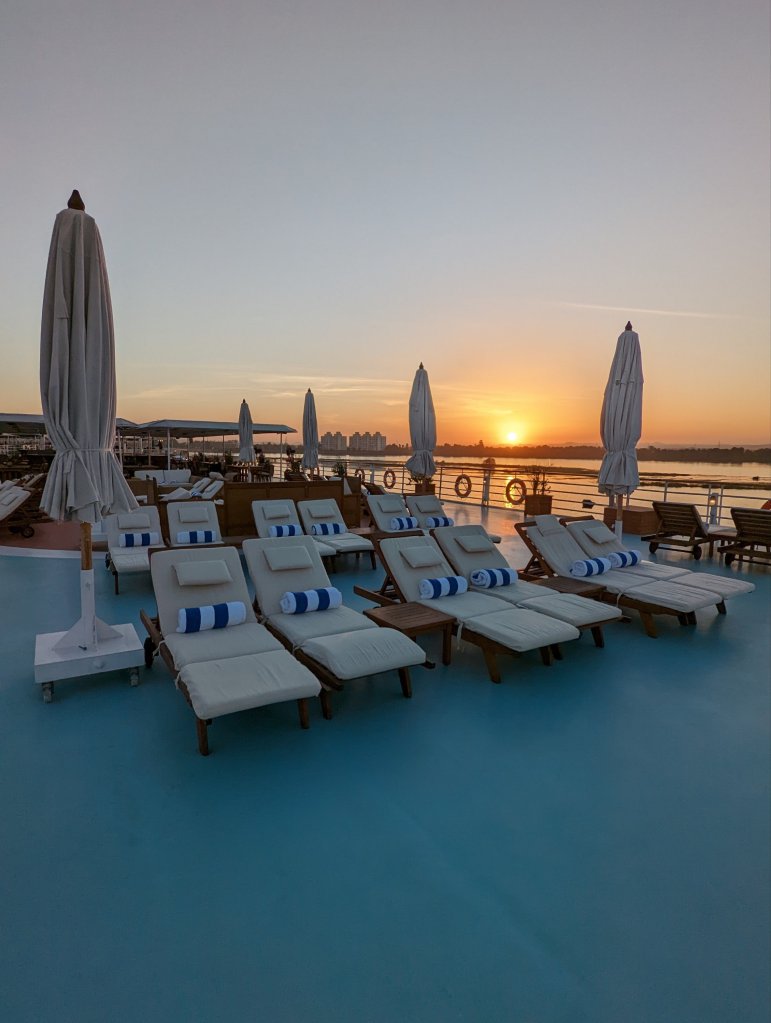
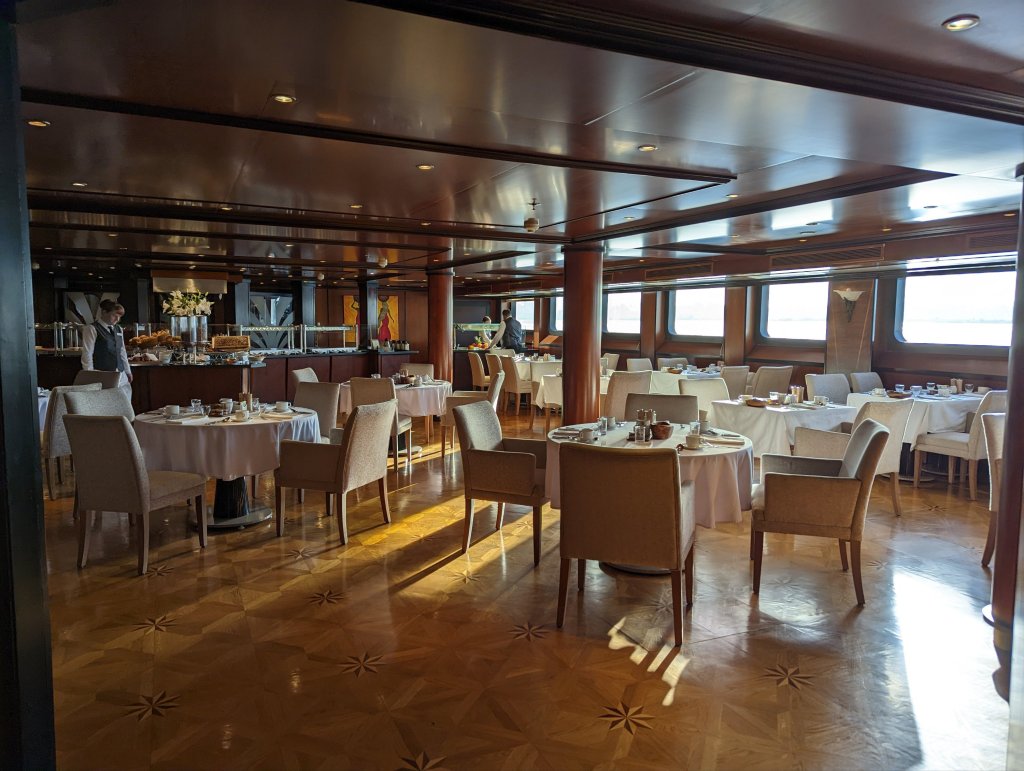
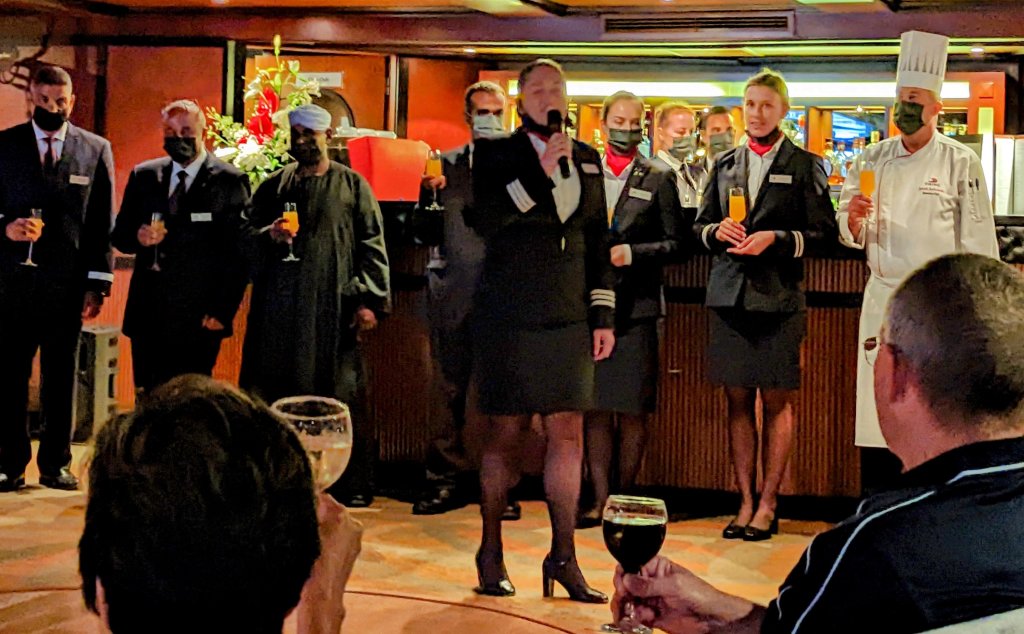
These are the people who make the magic happen on the Nile: First Captain Harby Aref; Hotel Manager Vivien Koszo; Program Directors Mohamed Samy (our group leader) and Salah Tawfeek; Executive Chef Paul Jackowski; Guest Services Ksenia Liubova; Maitre D’ Kinga Mikolajezyk; and Head Housekeeper Mohamed Selah. Each one led an incredible team that resulted in one of our best travel experiences to date. Main Lobby Any time of the day or night, the reception desk staff is ready and waiting to help with anything at all.The Lounge where everything happens … cocktail parties, port talks, lectures, entertainment, and just a warm, relaxing venueAnother view of the LoungeCoffee Corner with warm pastries at 5am and cookies all day. Papa Latte’s favorite place.Cozy nook on the lower levelCaptain Aref with over 50 years of experience navigating the Nile. He learned from his father starting when he was a boy. He doesn’t use any instruments, instead navigating by experience, even through the locks near Aswan. It was a smooth ride!The Second Captain was at the helm during our bridge tour Captain’s relaxation couchDoug had to try it out…he was hoping for a job offer!View from the Bridge…smooth sailing ahead Gift Shop with some unique Egyptian itemsMulti-purpose Room with books, game table and comfy chairsSalon and SpaSunrise on the Sun DeckPool and Outdoor ShowerSun Deck Lounging AreaThe Dining Room where three delicious meals are served every day. Chefs Paul’s soups are legendary! He’s from Poland, but his entire staff is Egyptian making for some interesting twists on traditional dishes.
The food onboard is excellent! A breakfast buffet is available every day with several cooked-to-order selections as well. At lunch there’s a soup, salad, and sandwich selection as well as heavier entrees and always ice cream. Dinner has a regional specialty, different selections of meat, fish, and vegetarian, as well as the traditional “Viking” regular menu available every evening. The food and service didn’t disappoint!
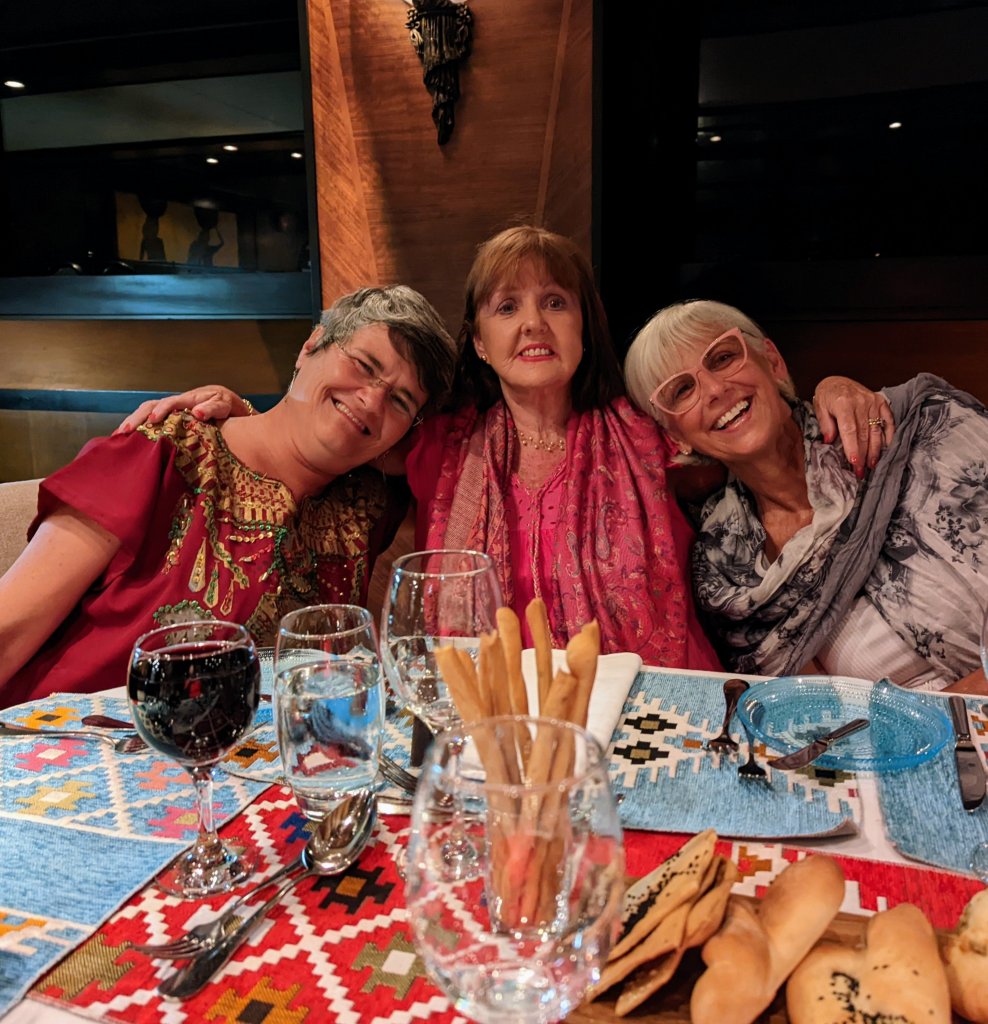
Egyptian Night was spectacular!“The Girls” Mary Rose from northern Canada, Helen from New Zealand and yours truly
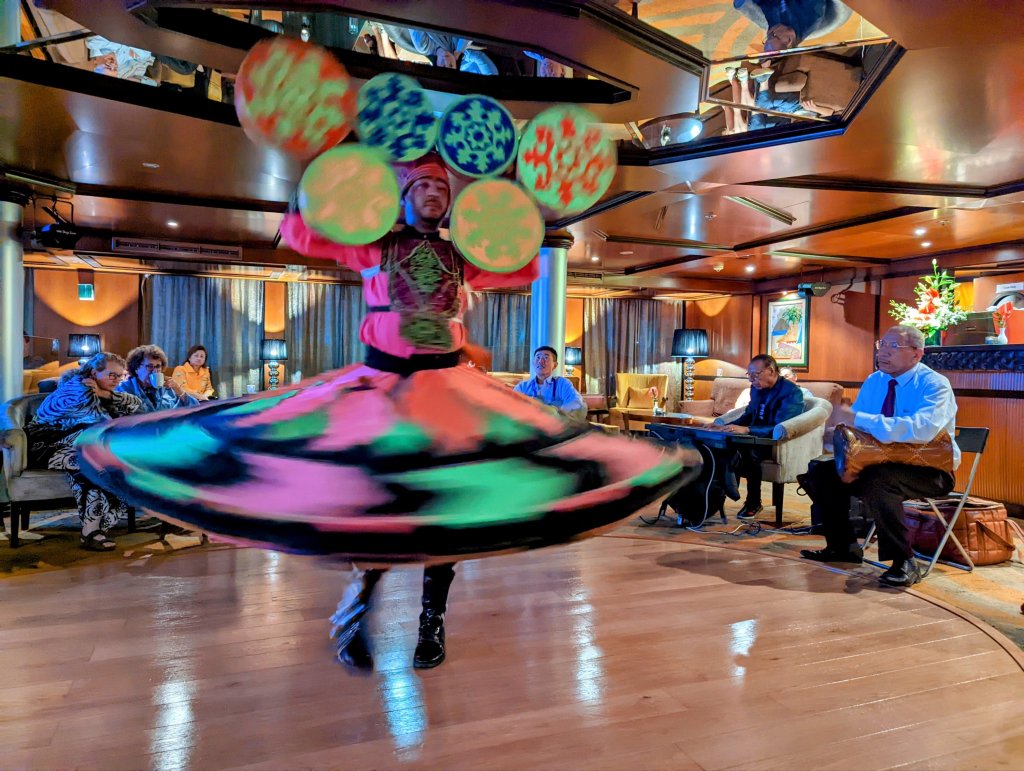
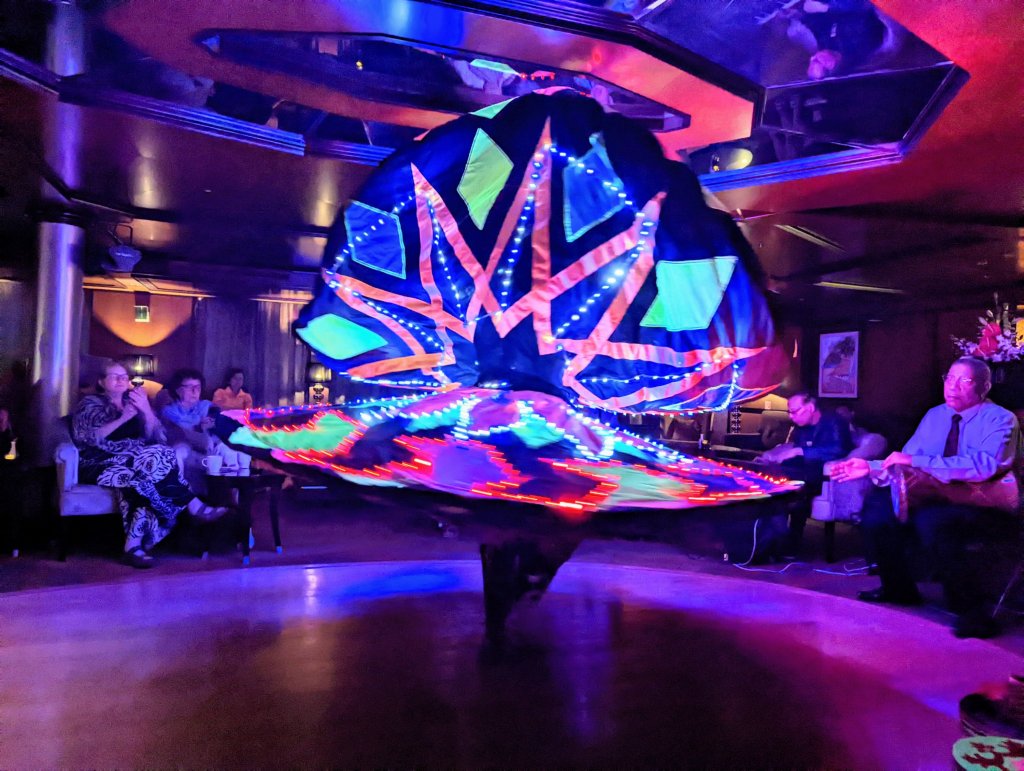
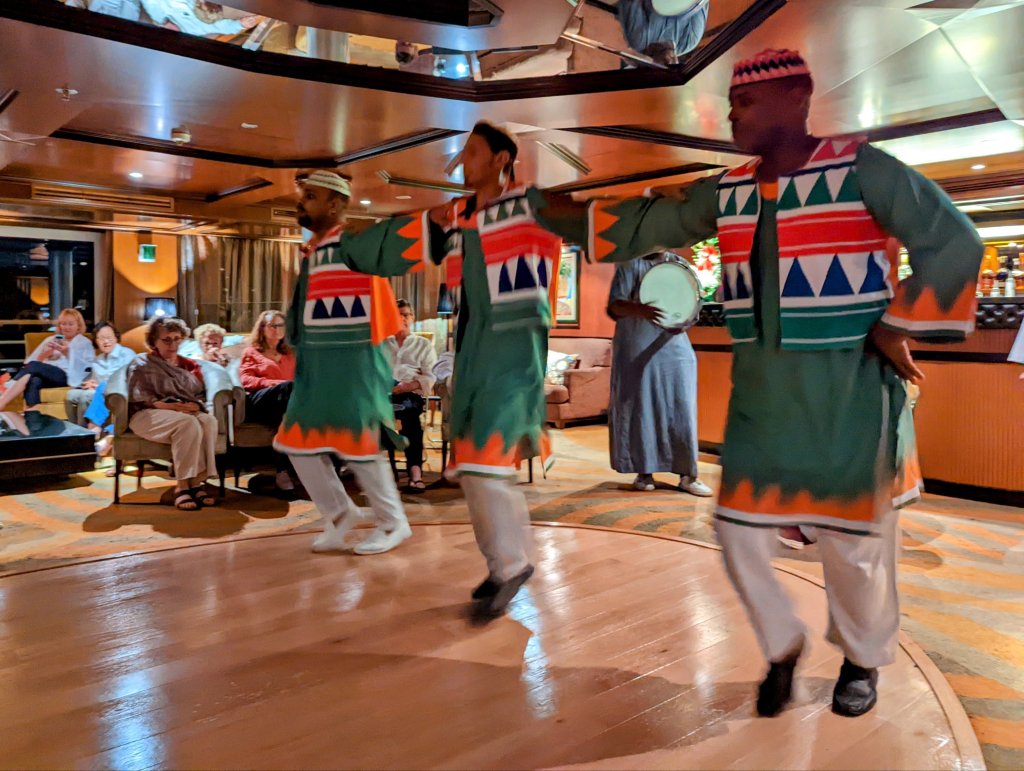
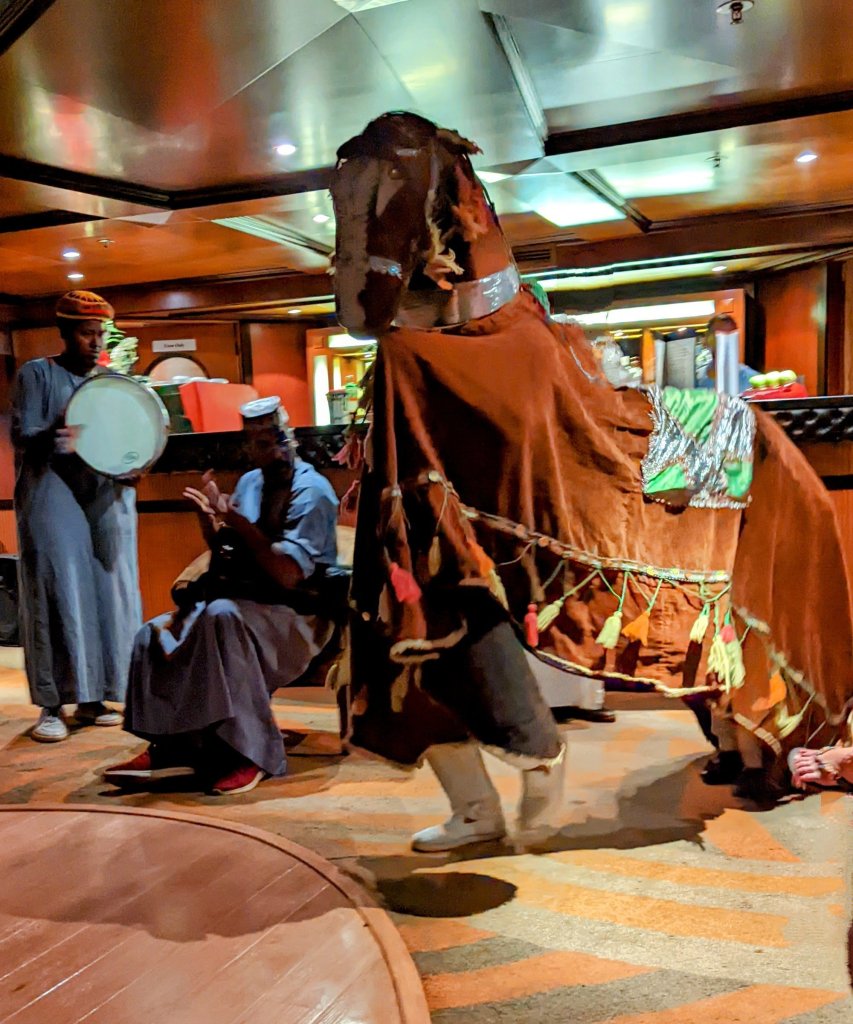
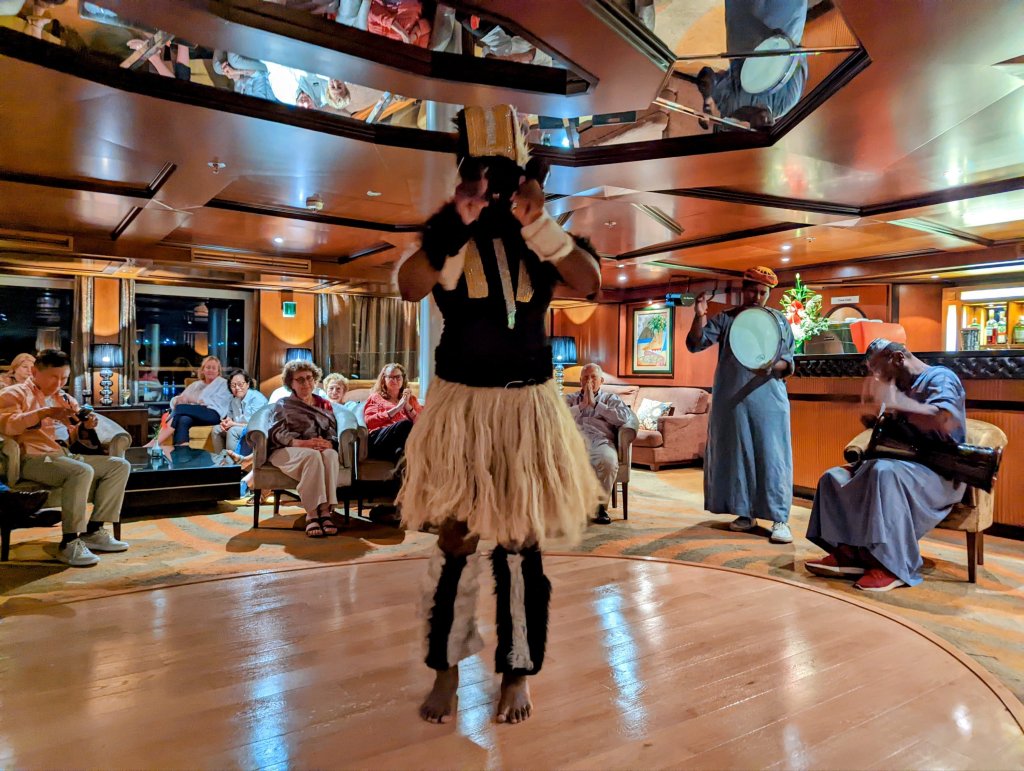
The entertainment is amazing! In addition to the lounge pianist, different groups came onboard to enrich us with traditional music and dance. The Whirling Dervish show was spectacular! And the Nubian singers and dancers on Egyptian Night added a chance for lively “audience participation.” So much fun!
Dervish RamadanThen he lit up!The Dervish Band Achmed, Achmed, and Achmed Nubian performers wore traditional costumes and danced in perfect unison “Temptations style!”The Nubian horse gave me a kiss!Nubian chief…we both danced and chanted with him. He really got the audience going! His song was “Proud I am of my Nubian culture” translated by our guide.
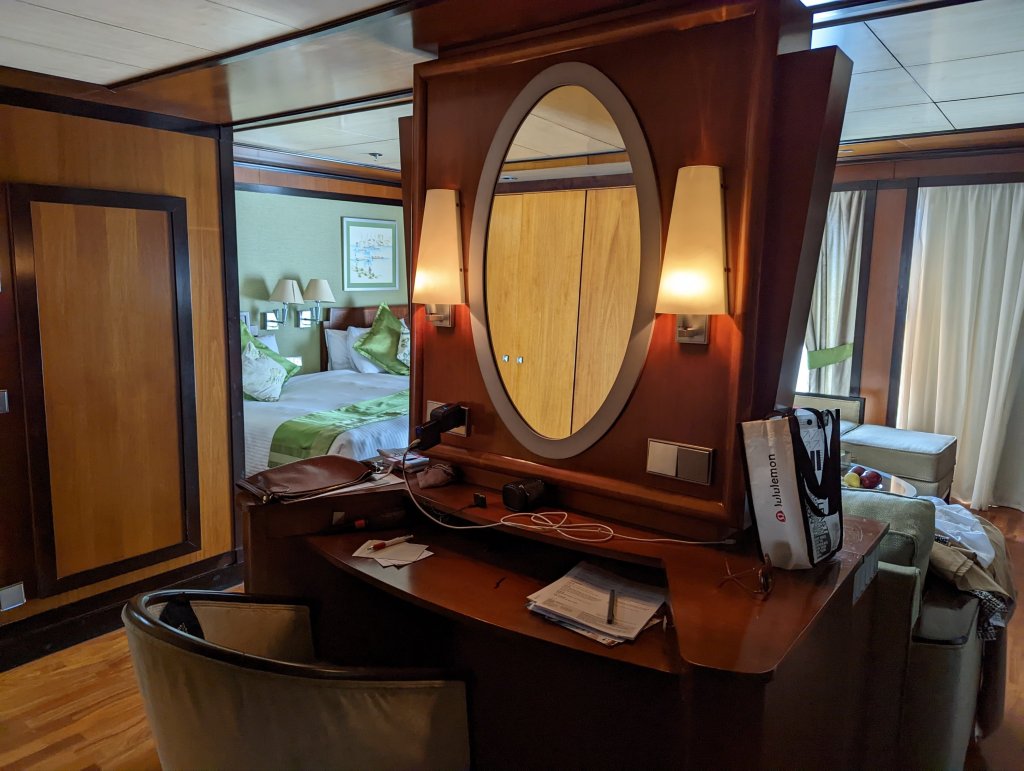
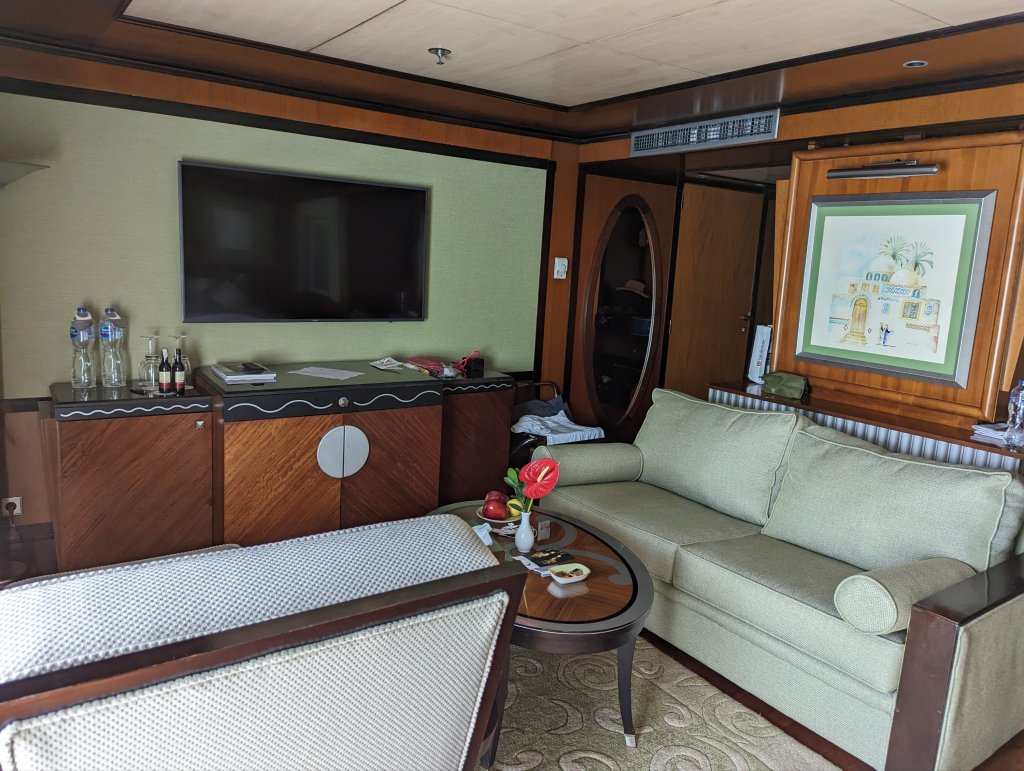
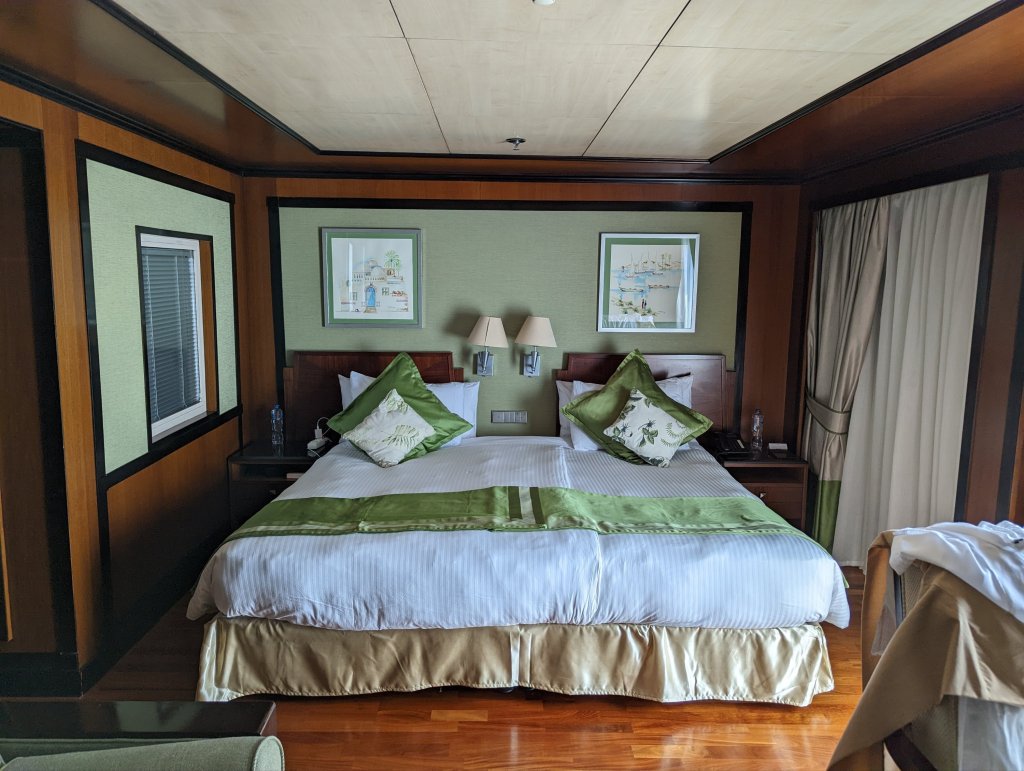
Our stateroom was huge and had every creature comfort a weary traveler could ask for including a French Balcony. It far exceeded every expectation!
Writing DeskSitting AreaBedroomBathroom with jet soaking tub and shower Farewell Toast with the amazing team Until we meet again
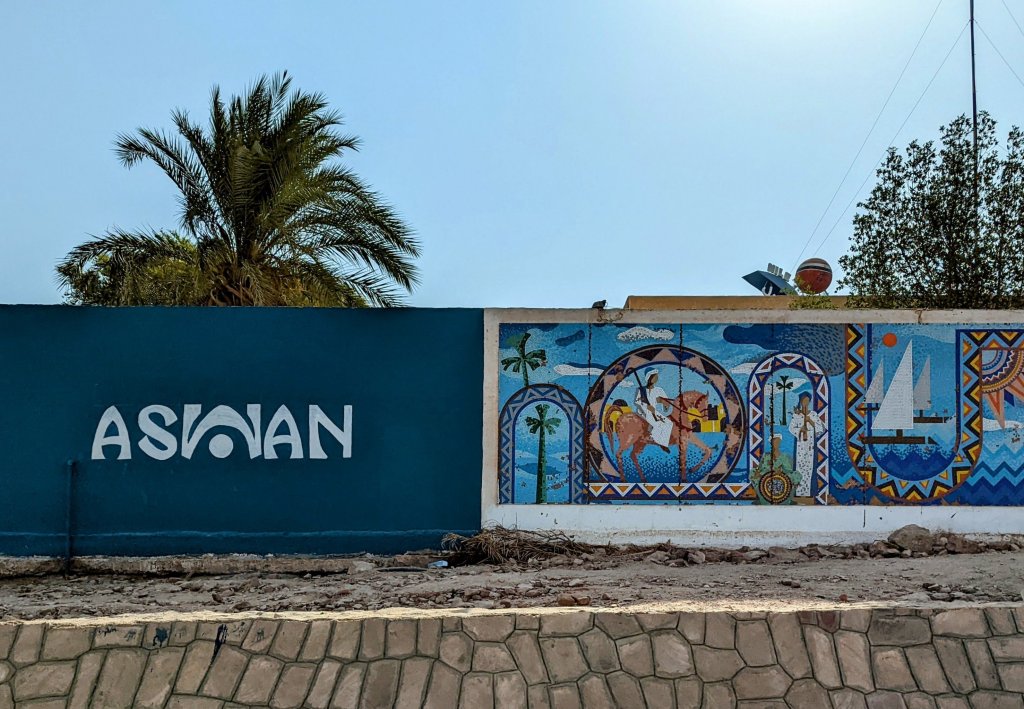
The Aswan region is a study in contrasts. An important trading area, the city is divided into the east side where some 500,000 people live and the west side where there’s nothing but the Sahara Desert until the Atlantic Ocean some 3,000 miles away. Aswan is located at the first cataract of the Nile. It has long been a place for trading. The city also thrived because of large granite quarries which were used to build Egypt’s countless temples, obelisks, and Pyramids. In the 1960s, the completion of the Aswan High Dam created Lake Nasser. As the lake rose, the region became a magnet for archaeologists intent on saving the ancient temples from submersion.
Our first stop in the Aswan region was the village of Esna where we walked among the local craftsmen who were busy demonstrating their work. Ancient Egyptians knew Esna as Latopolis, named for the largest of the perch species that swam in the Nile’s sacred waters. Its ancient past lives on in the colorful street markets overflowing with their goods and crafts. Although it was early Sunday morning, the residents were welcoming to our band of tourists.
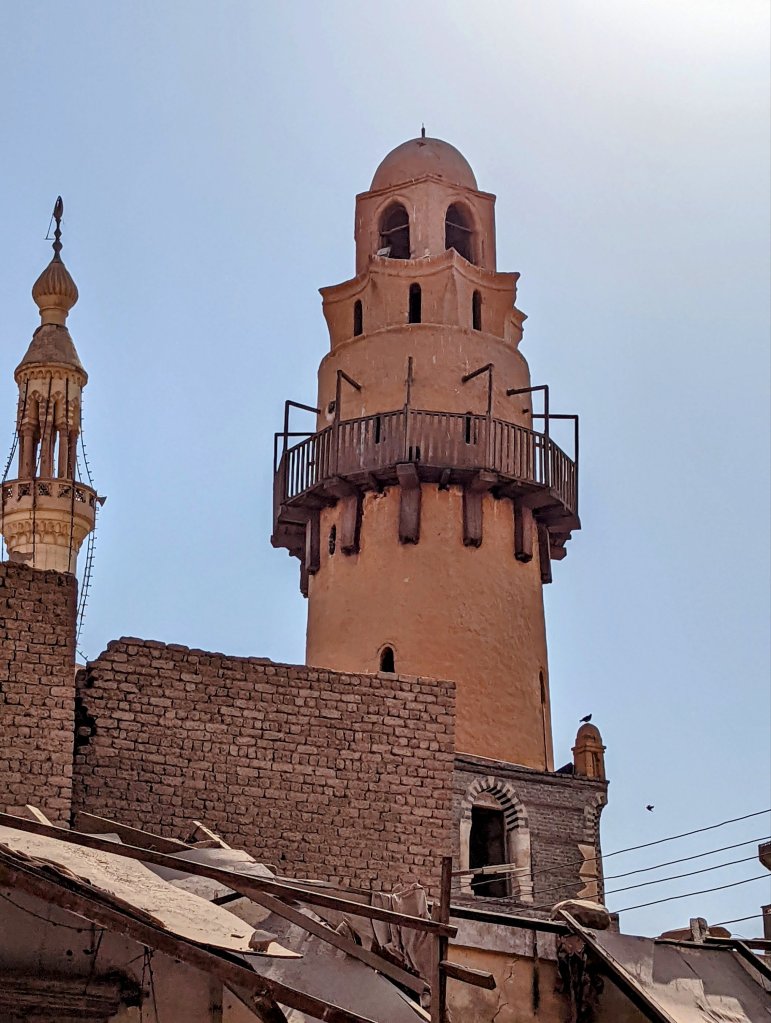
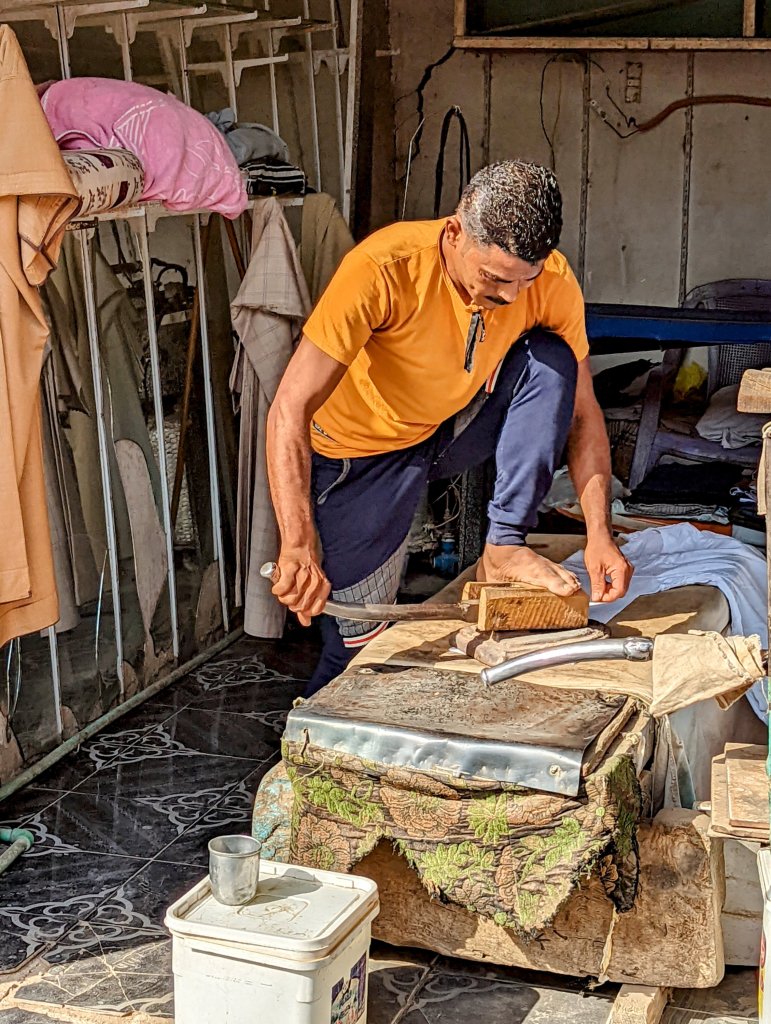
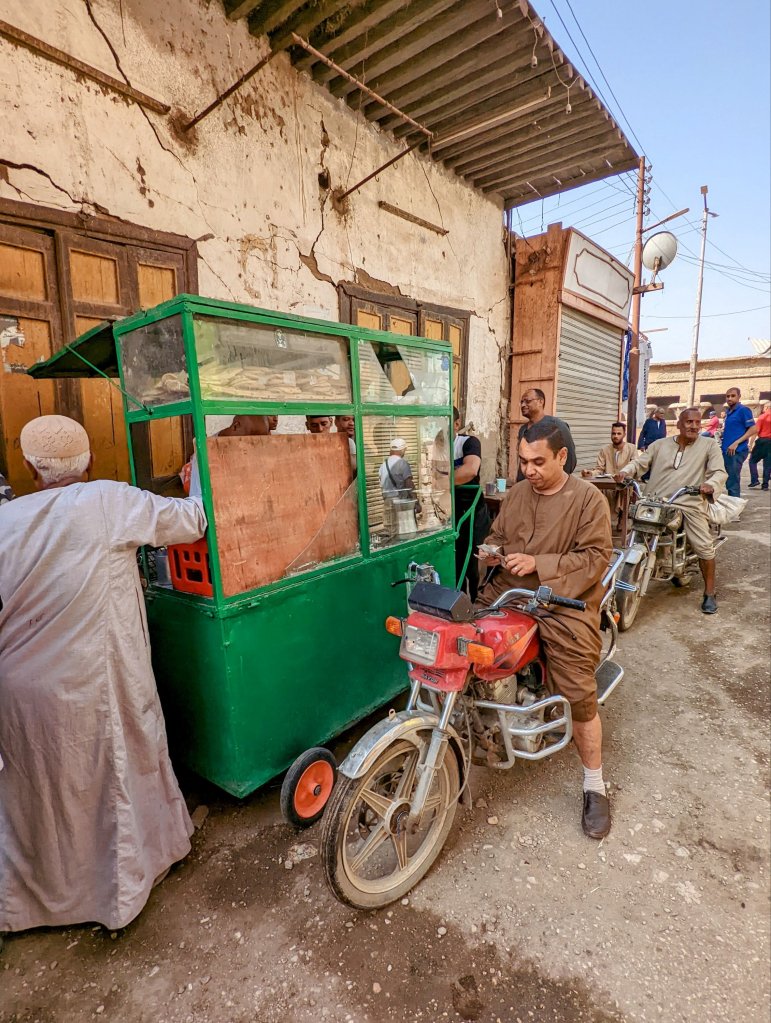
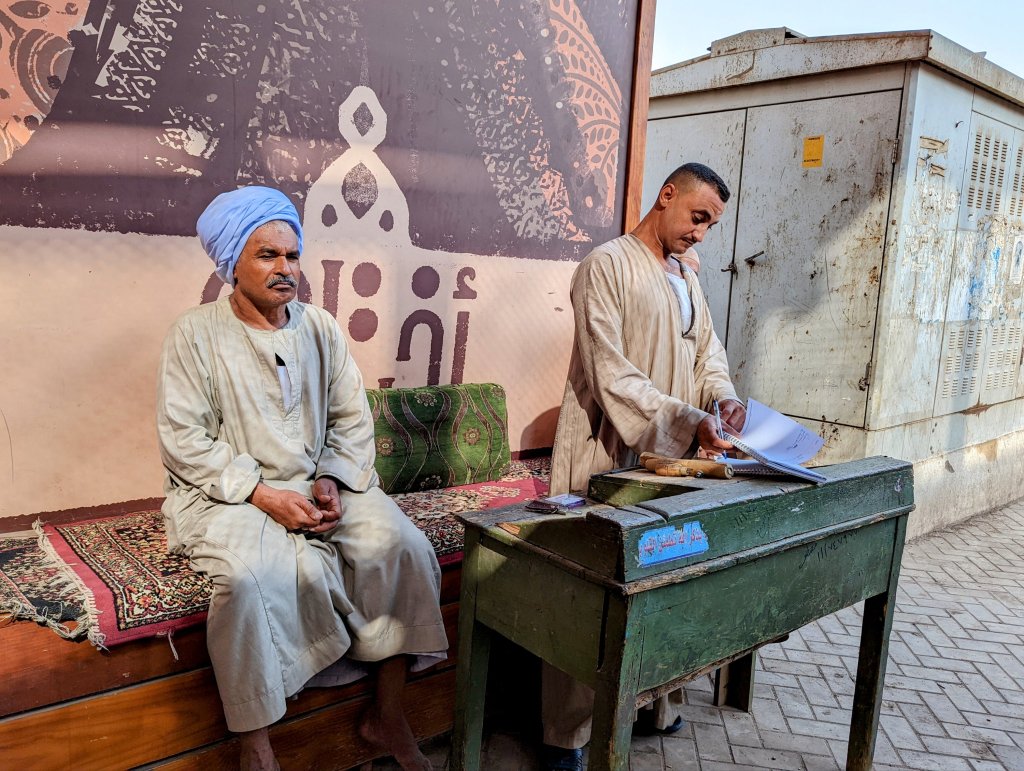
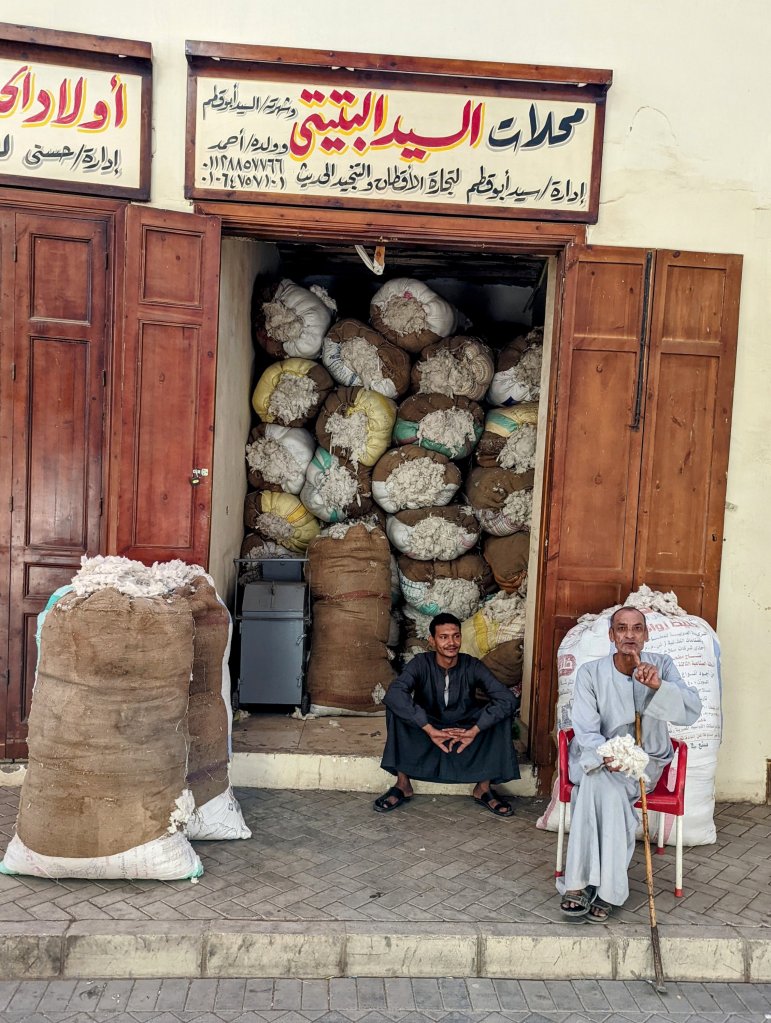
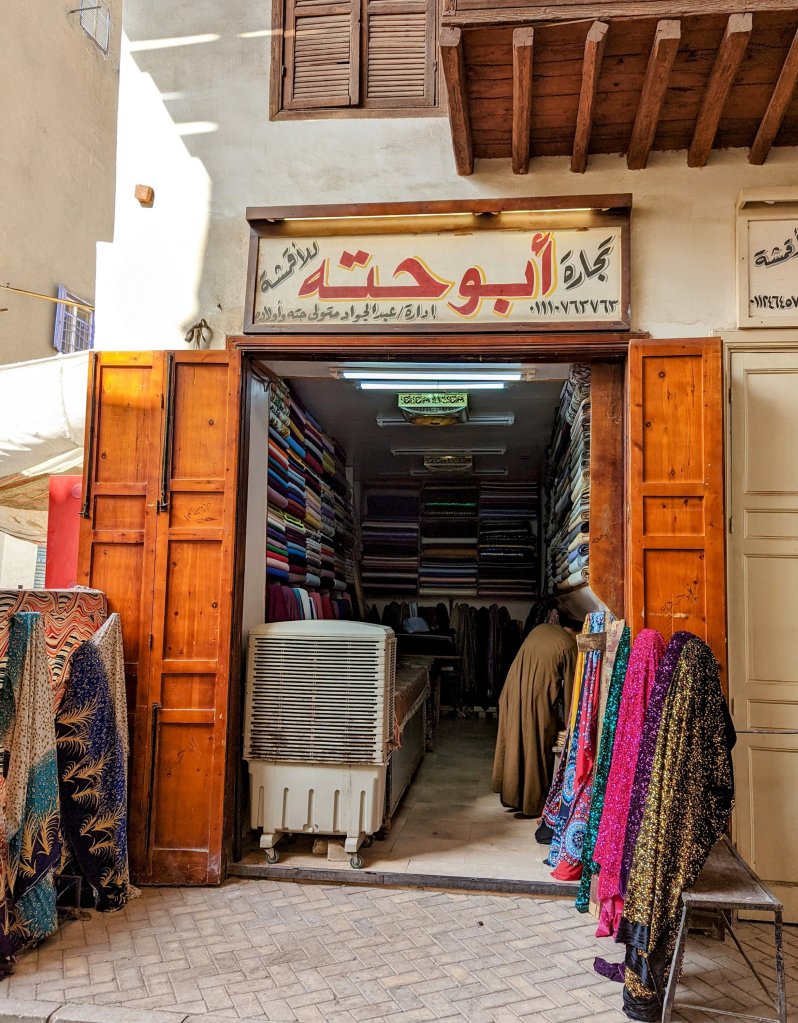
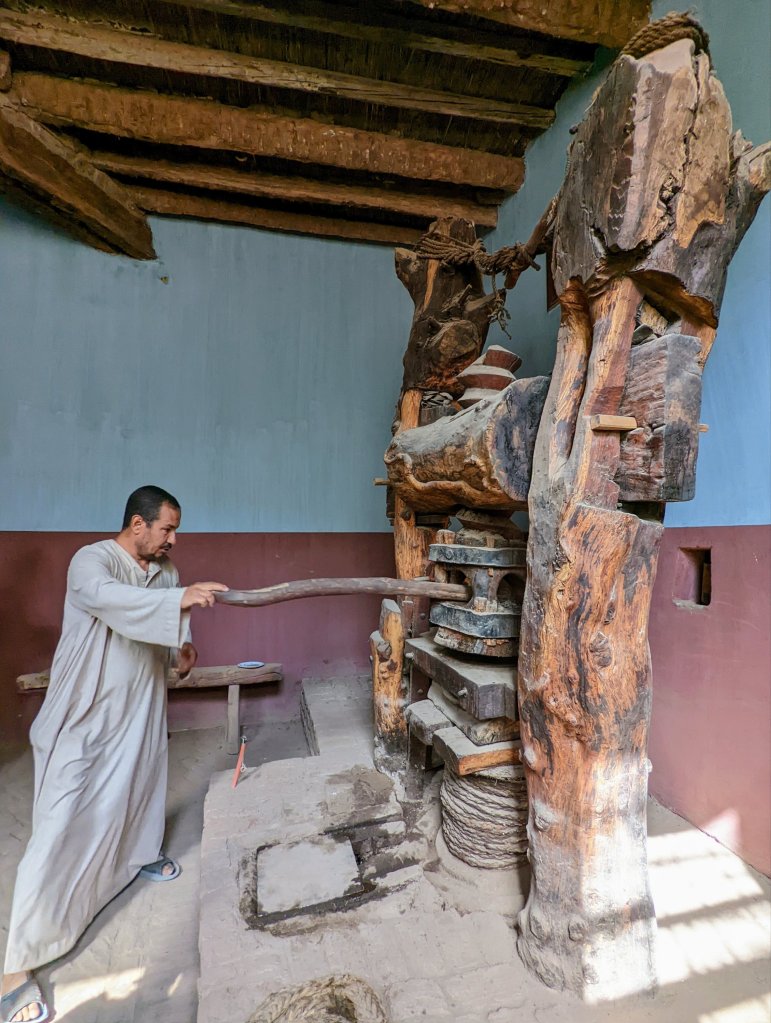
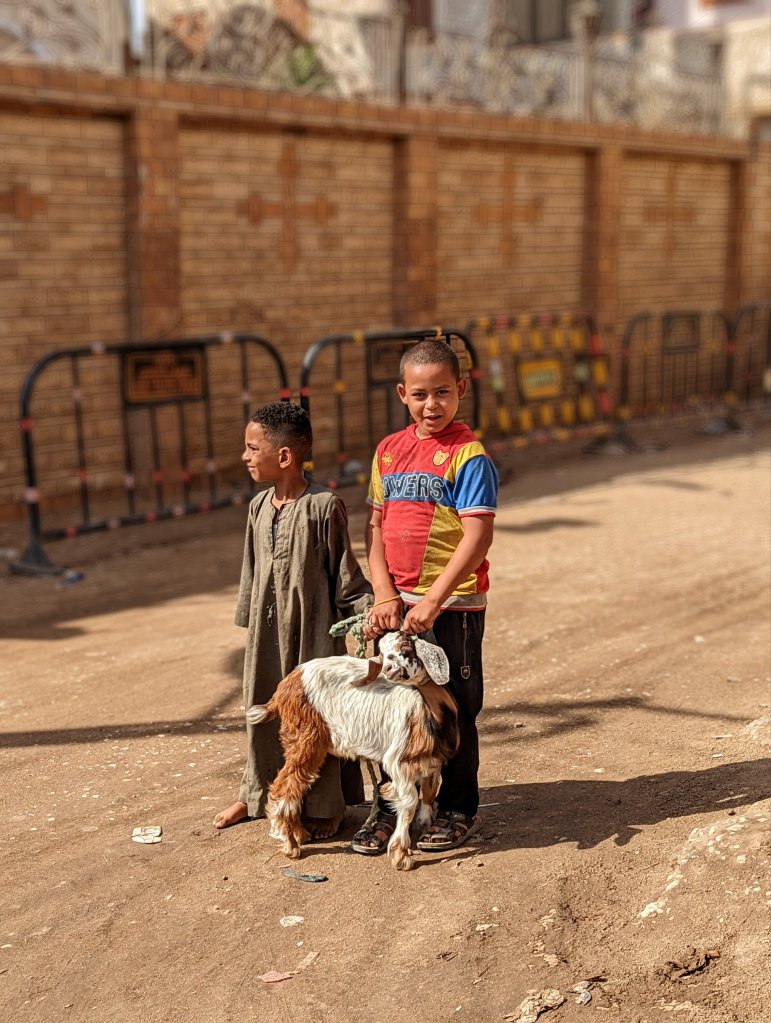
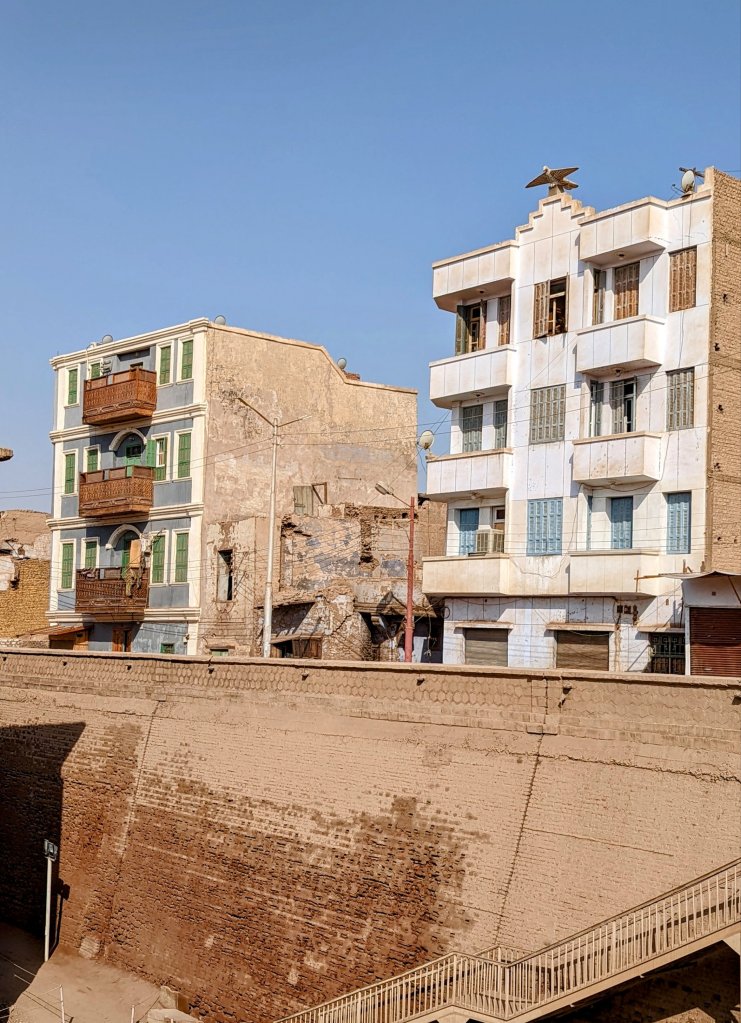
When I woke up, the call to prayer was coming from one of the oldest minarets in EgyptIt was Sunday morning, and the local Coptic Christian Church was full so we couldn’t go insideLooking out onto a plazaThis gentleman was pressing a galibaya using a hot iron and his foot! He sprinkled the cotton garment by taking a mouthful of water from the cup and spraying it all over the fabricThe tailor reminded me of my grandfather who was a tailor and my dad who taught me to sew.Falafel drive-thruThese men make seals so that people who couldn’t write could “sign” their documents.This cotton will be used to stuff mattresses and pillows.And this beautiful fabric will be turned into clothing.Doug jumped right in to help press oil the natural way The oil is then put through this machine to filter it.Fresh pita is made in wood-fired ovensAnd these little guys had their pet goat out for a walkAlthough in need of some tlc, many of the buildings in Esna have an Art Deco flair
On our way to the Aswan High Dam, our guide explained some of its pros and cons. The first dam was built in 1902 with help from the British. After raising it twice to prevent flooding, it had a capacity of 9 billion cubic feet of water. The High Dam was designed to capture excess water in Lake Nasser and store it in case of severe drought. It has a capacity of 168 cubic feet and was financed by the Soviet Union.
On the plus side, the dam reduces the amount of water lost to evaporation and helps avoid long periods of drought, increasing the number of annual harvests from one to three. It also helps to regulate flooding which had destroyed entire communities in the past. It has had a positive impact on fishing and tourism, and enables the hydro electric power station which provides much of Egypt’s electricity. That and solar power allow Egypt to export their excess electricity.
On the negative side, it has resulted in increased humidity, which we experienced first hand. It also reduced the amount of silt coming into the region, which had been a good natural fertilizer. The saddest outcome, in my opinion, was the relocation of about 140,000 Nubian residents. Although we were told that they were provided with compensation in the form of some land and money, the loss of their ancestral homes and communities was profound. Some moved to Sudan to start new lives while others stayed in Egypt and are trying to preserve their customs in different villages, which we had the opportunity to visit. I’ll talk more about that later.
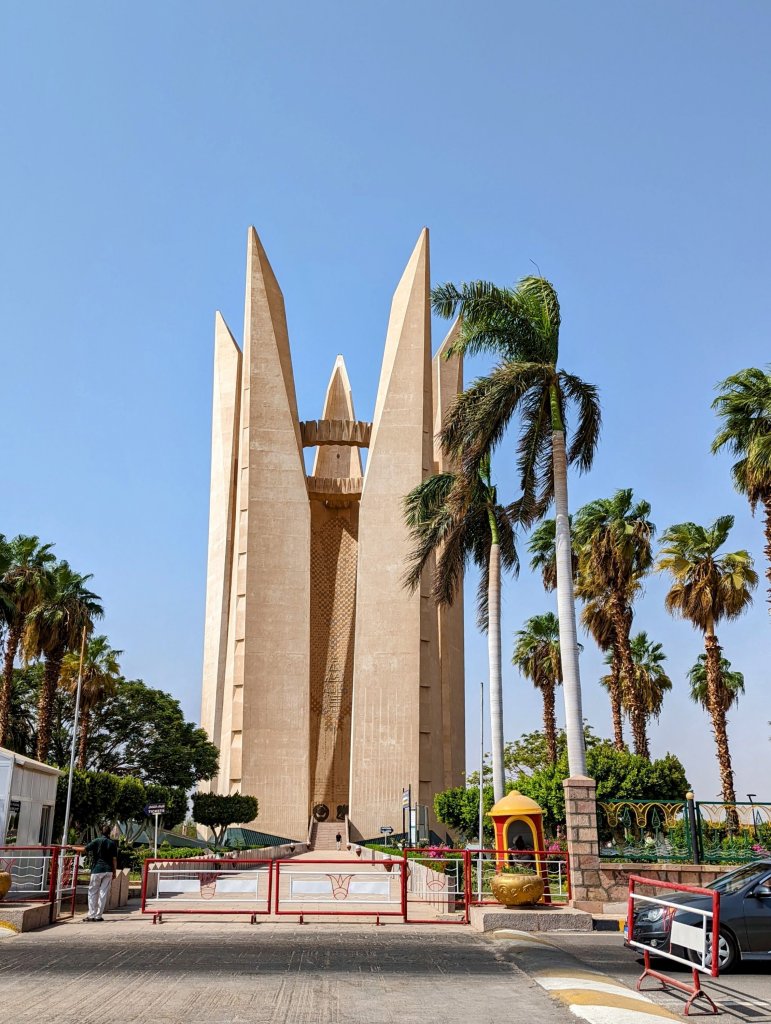
The dam is definitely impressive As we drove over the smaller dam, we could see the high towers dotting the skylineThis monument was built by the Soviets to commemorate the collaboration between them and Egypt. It’s supposed to depict the lotus flower and gears. A Soviet eagle is carved into the granite inside the monument.
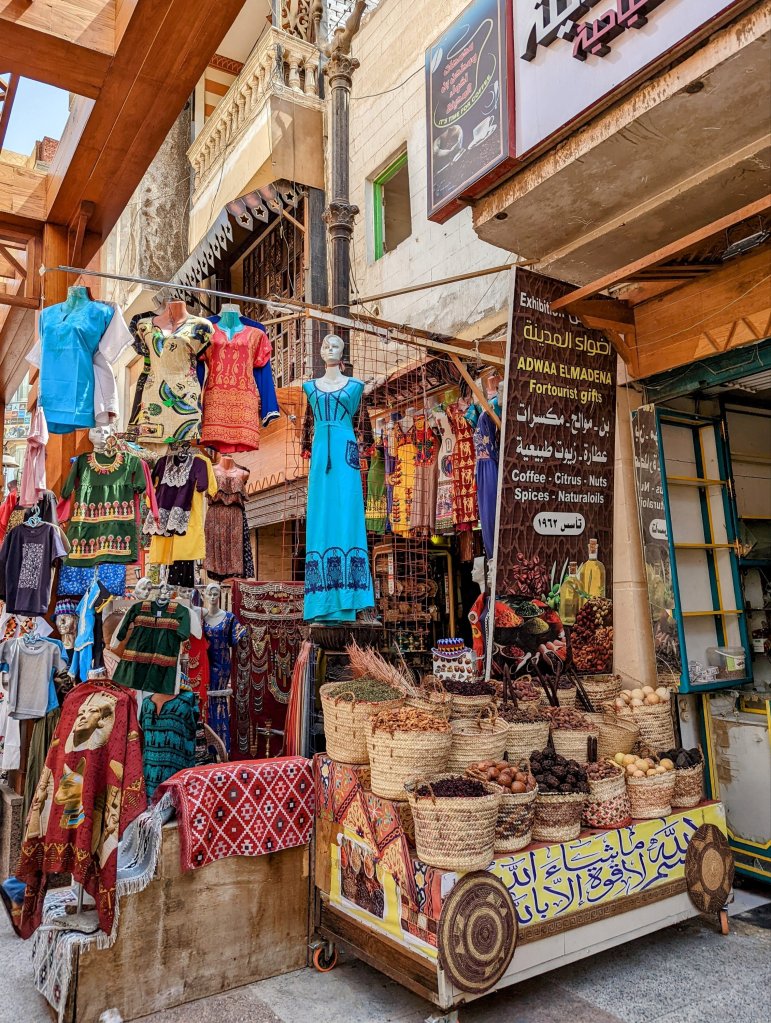
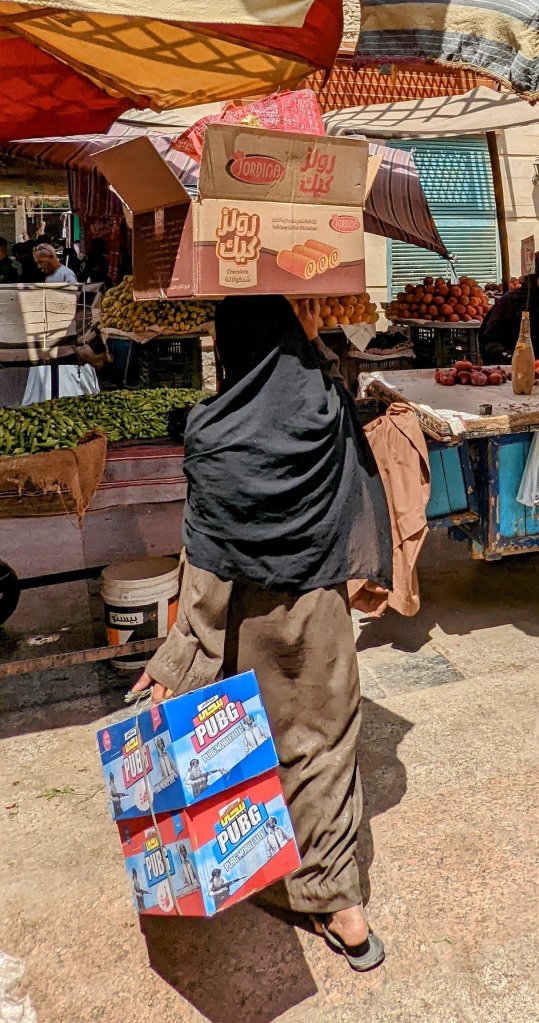
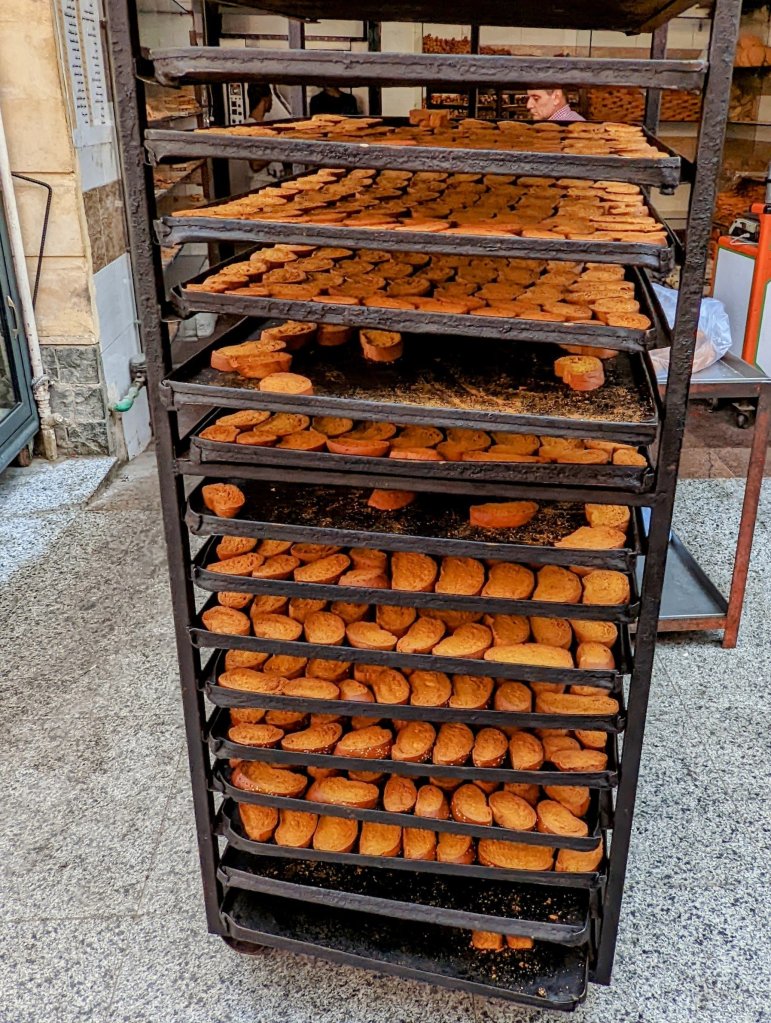
The Aswan Spice Market is divided into two sections: a tourist market and the local market. We visited both, and the differences were striking. The tourist market offers trinkets and other items of interest to visitors from brightly colored stalls. Vendors are pretty aggressive, often reducing their initial prices by up to 80%! The local market offers mostly fresh produce, baked goods, and some meat and fish, and the vendors do business quietly from behind their displays.
Spices on the tourist sideWoven items and dried herbs that can be packaged for touristsAttractive signs for tourists are often written in Arabic and EnglishFresh produce on the local sideShoppers often carry their purchases on their heads This bakery rack smelled delicious!
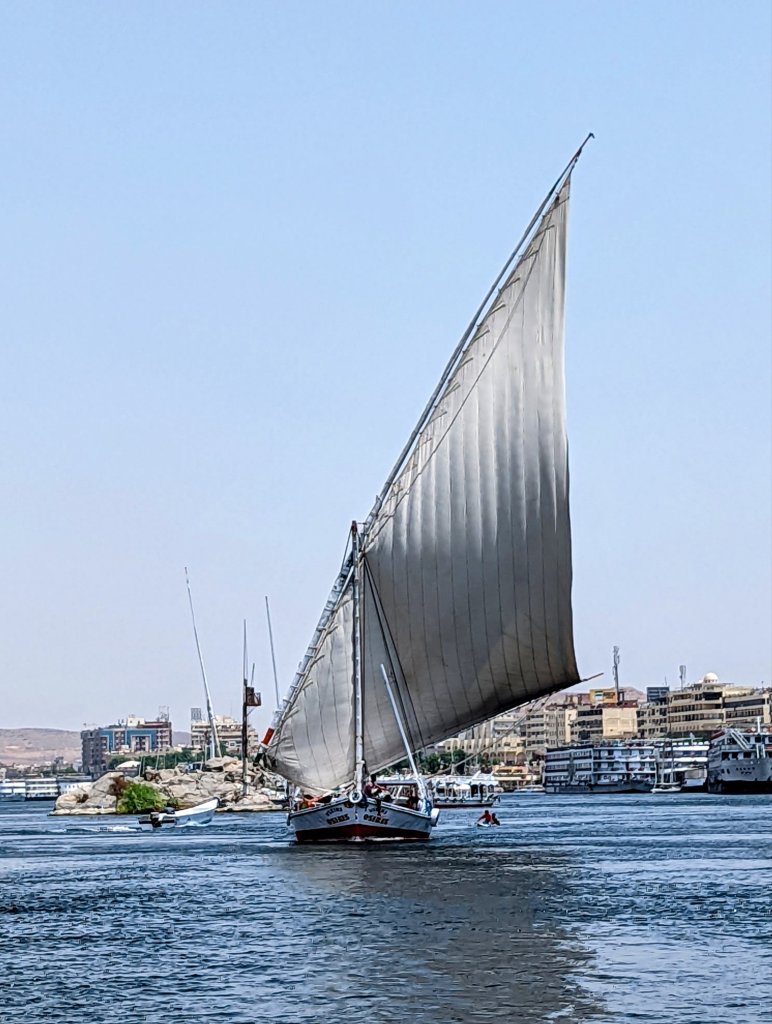
In the afternoon, we enjoyed a sail on a traditional falucca boat. The boats make a striking silhouette along the Nile with their unique and beautiful sails, and the sailors pass their trade down through generations.
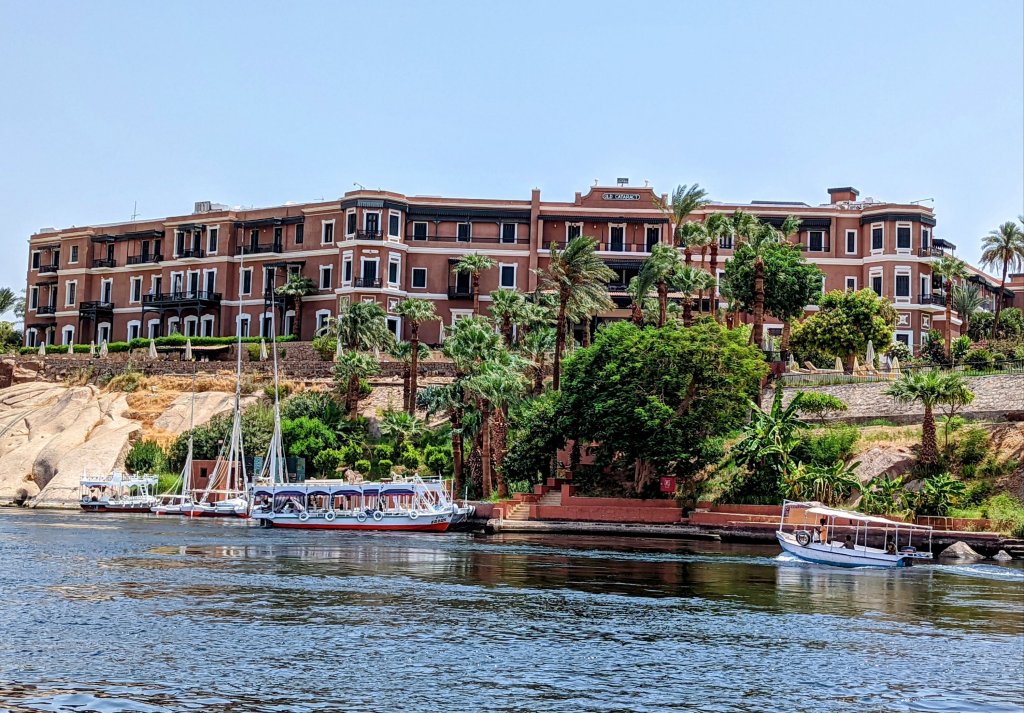
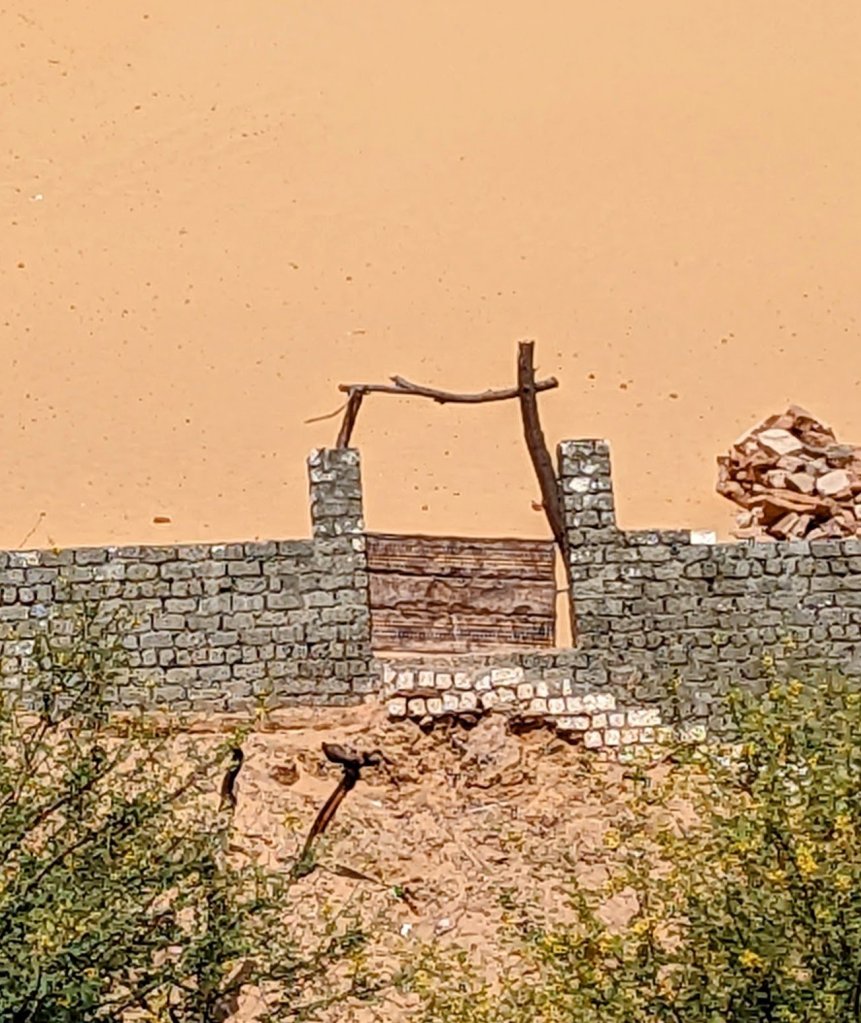
Our young skipperThese unique boats are a symbol of EgyptBeautiful against the Aswan coastline We even saw some camels along the river bank.The Old Cataract Hotel where it is said that Agatha Christie stayed while writing Death on the Nile A temple masoleum A desert archwayWe even had a couple of kayakers hitch a ride for a while
The next day we visited a local Nubian village. In ancient Nubia, around 5000 BC, herdsmen and hunters from what is now the Sahara migrated toward the Nile and became farmers and fishermen. The fertile river valley allowed them to grow an abundance of fruits and vegetables, and also to herd cattle. Nubia became a passageway for extravagant products such as ebony, incense, and ivory, which were brought from other parts of Africa and the Mediterranean. Over the years, their fortunes ebbed and their heritage was threatened in the name of “progress” as the dams were built on what was once their land.
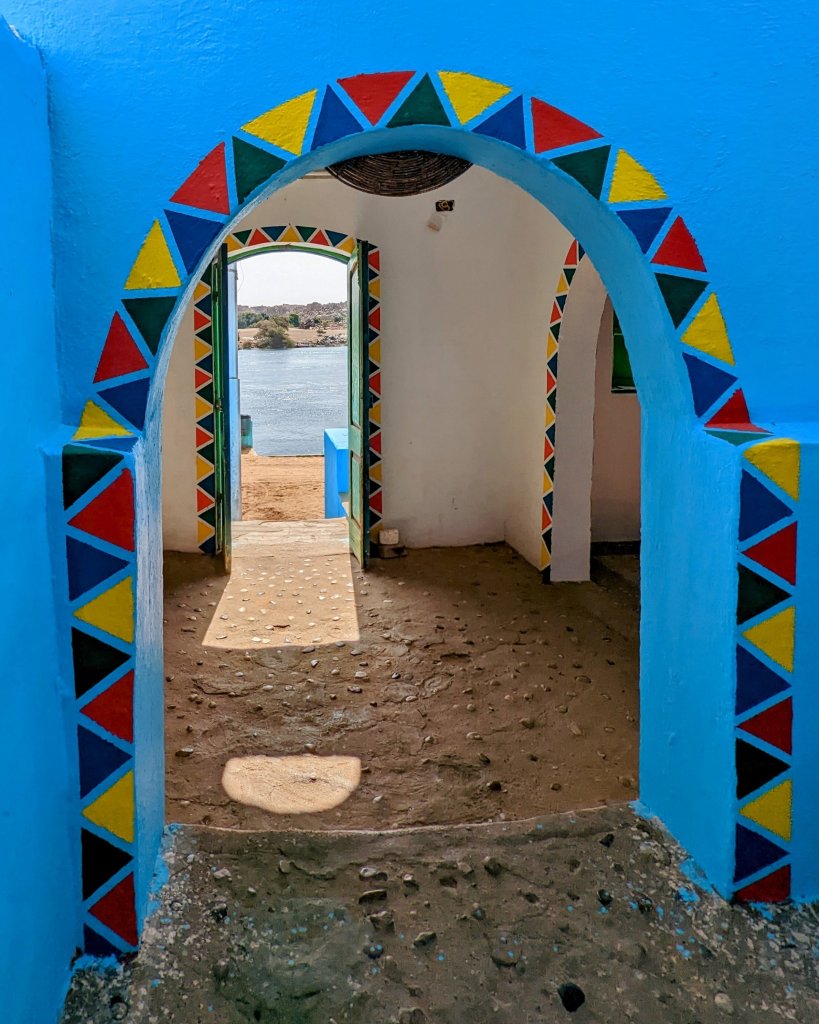
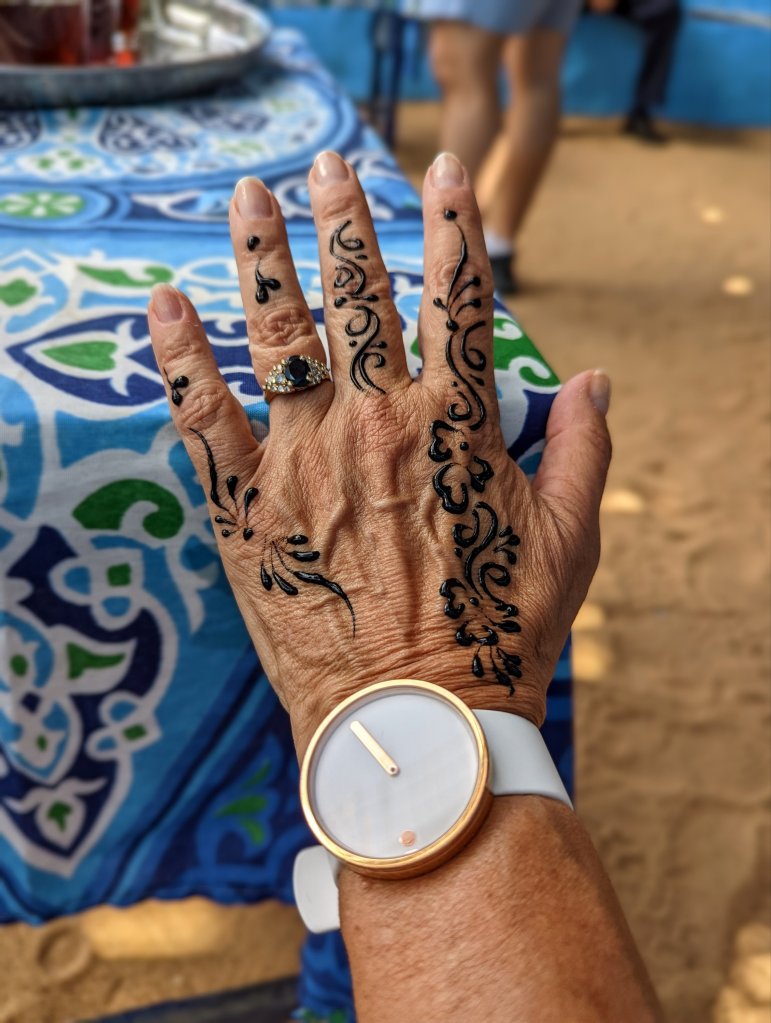
Although they lost so much, today’s Nubian families are working hard to carry on the traditions of their ancient ancestors. Many of their homes are built in a traditional domed style with vibrant colors in geometric patterns. We had the privilege of visiting one of their villages, where we were treated to a home visit as well as a stop at a local preschool. We received a warm welcome with traditional hibiscus tea; jabana coffee prepared with Sudanese coffee beans, ginger, and sugar; and a sweet homemade bread. The rhythmic sounds of drums and the rababa, a bowed, stringed instrument, filled the air with traditional Nubian music. And I treated myself to a beautiful botanical henna design, done by one of the local women to match hers.
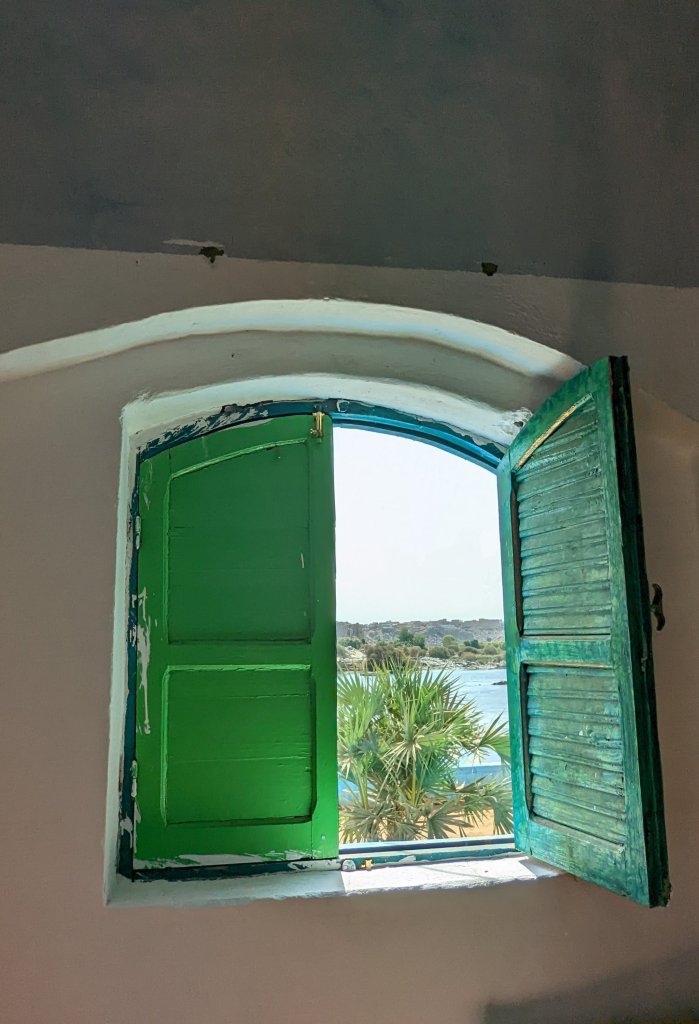
Beautiful vibrant colors decorate the homesA view to the river close byThe lovely teacher and her 4 year-old students who are learning Nubian, Arabic, and English The children were eager to share their knowledge with us My henna
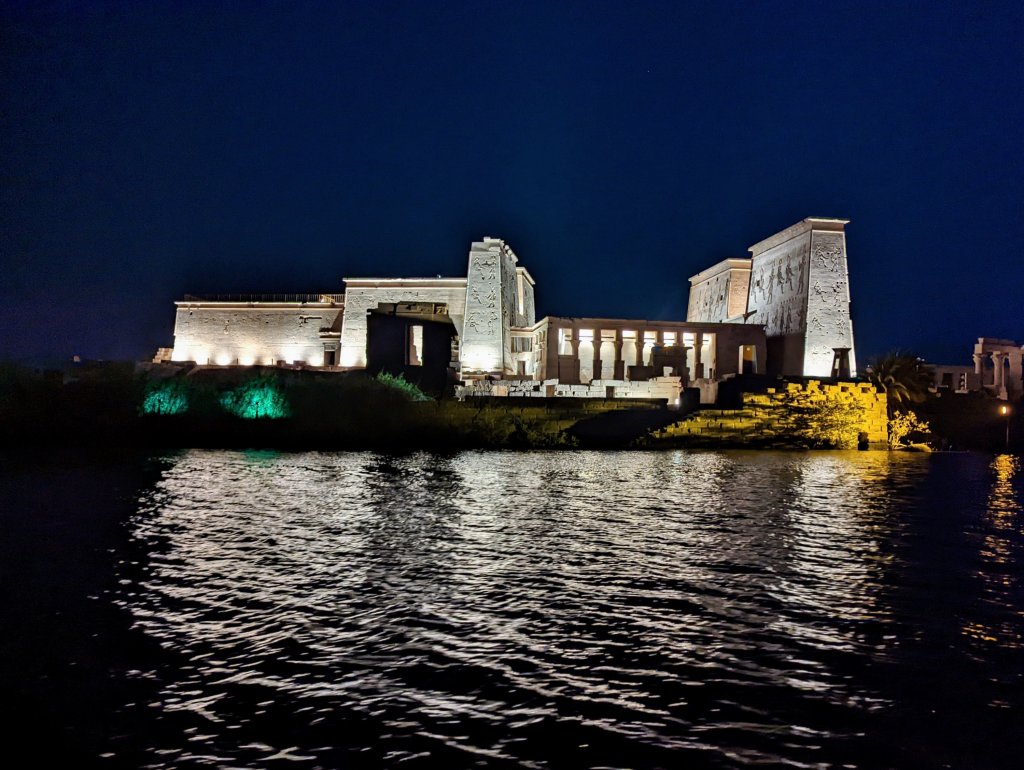
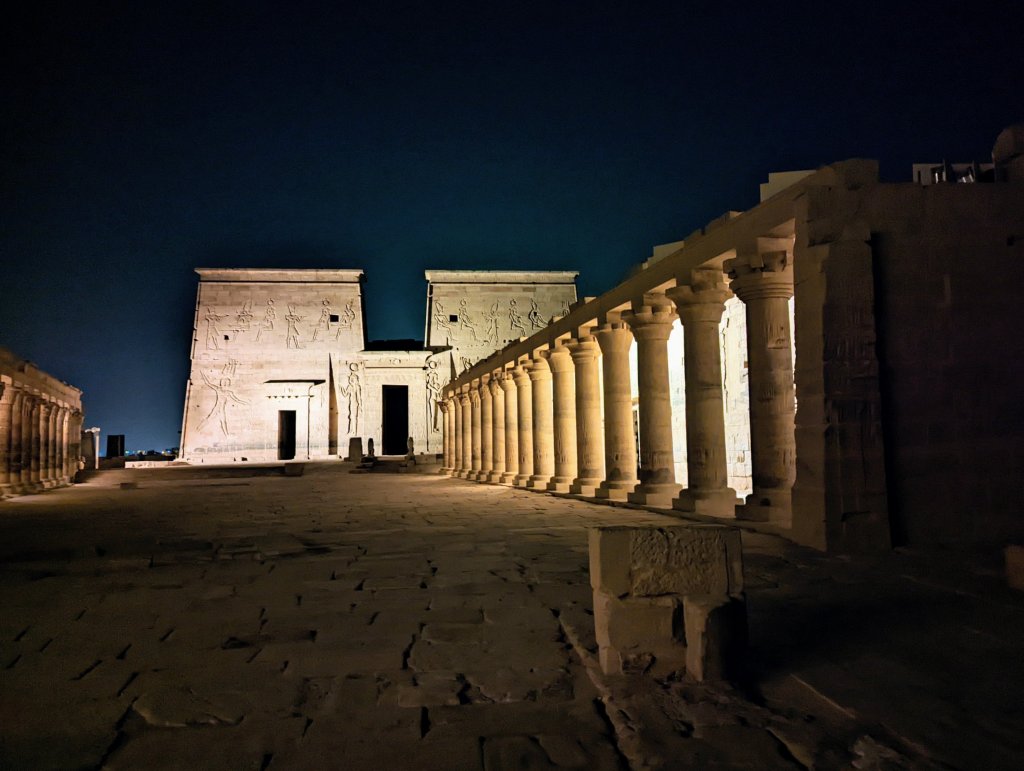
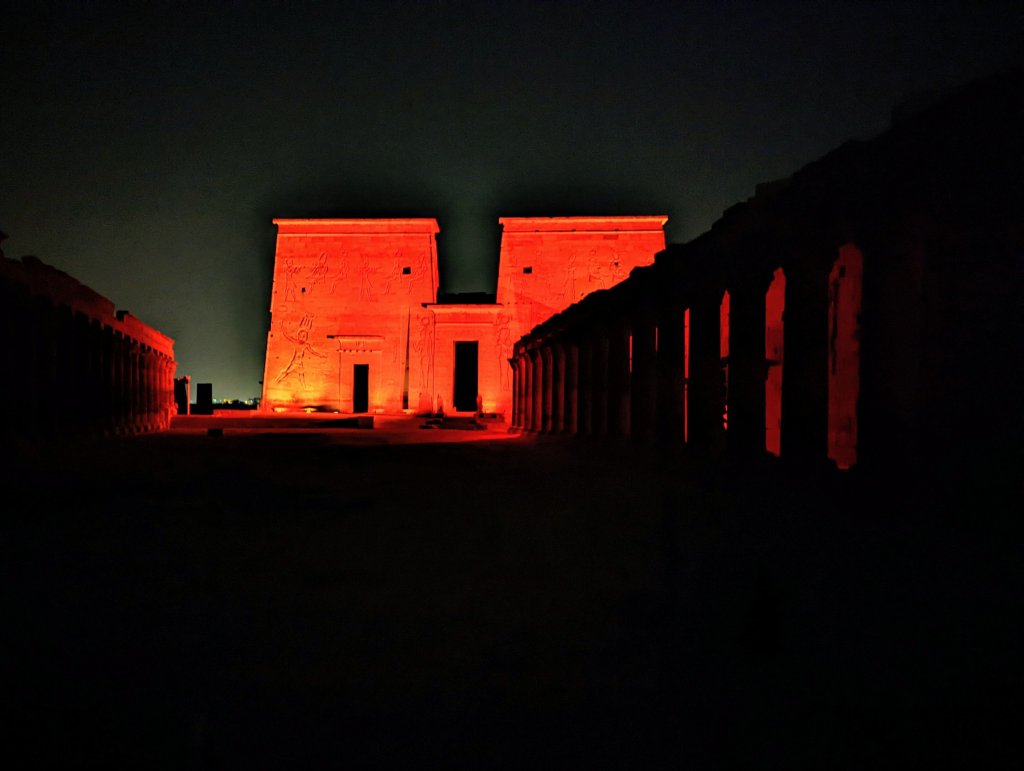
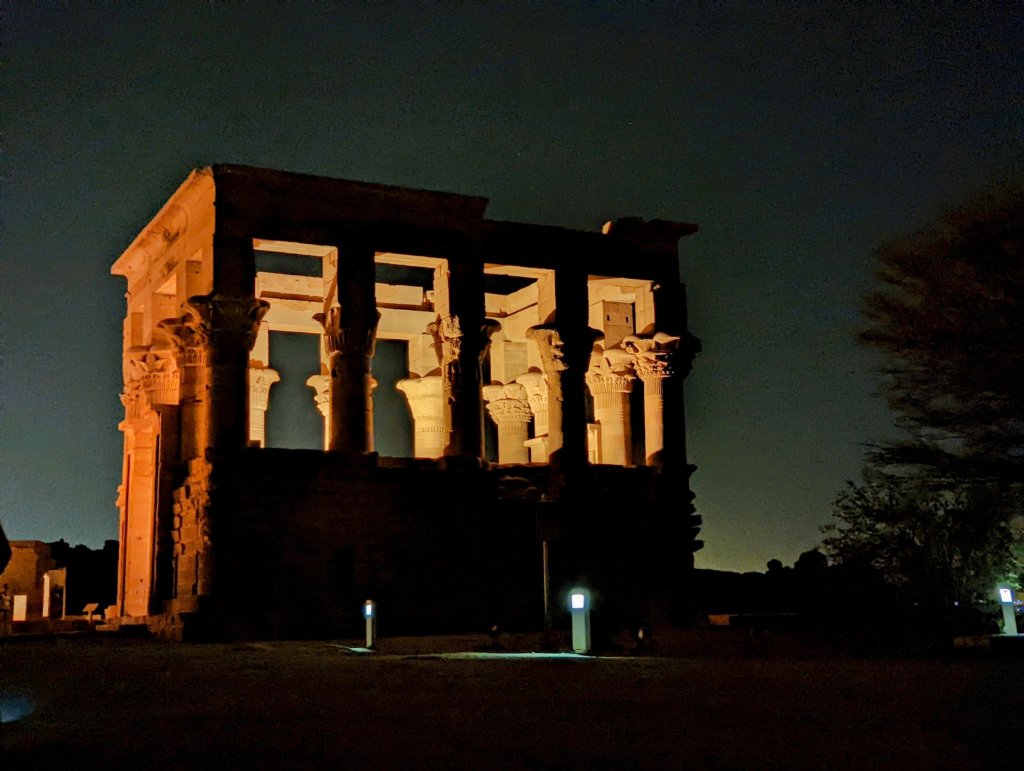
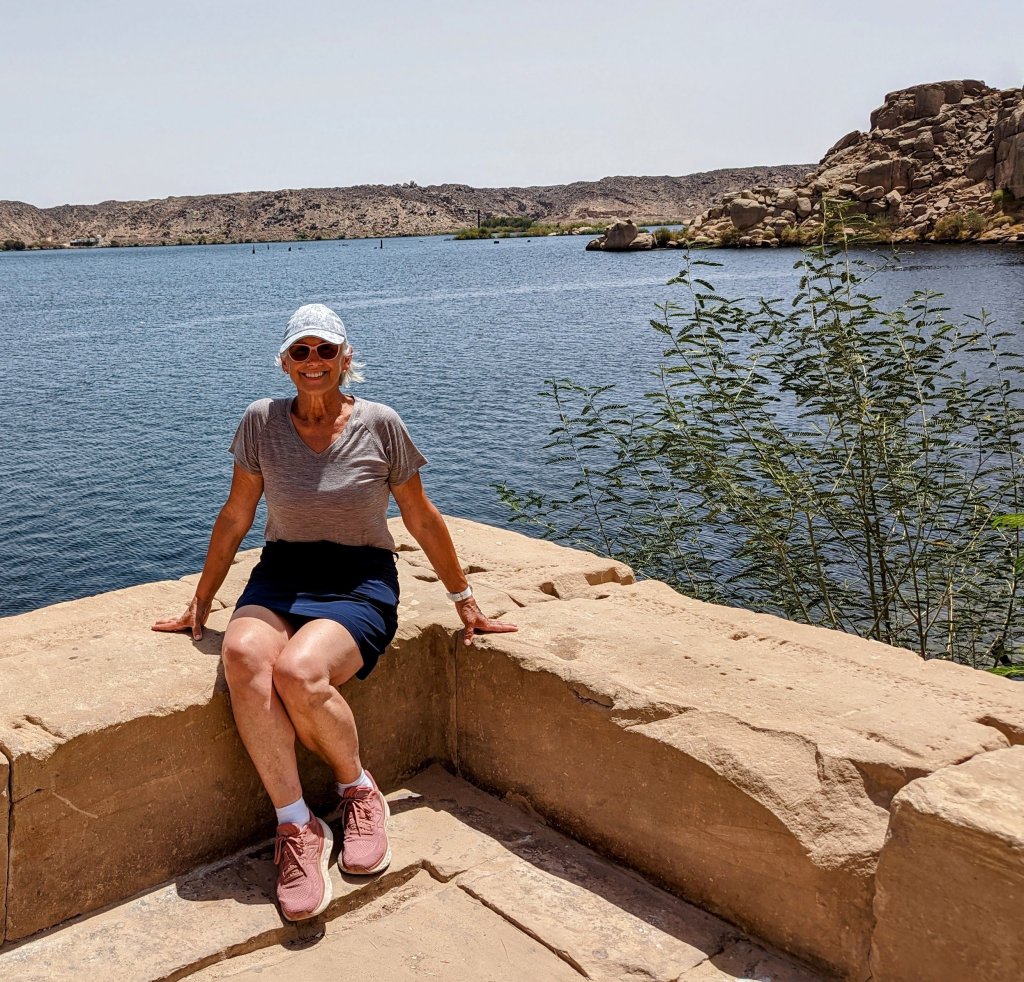
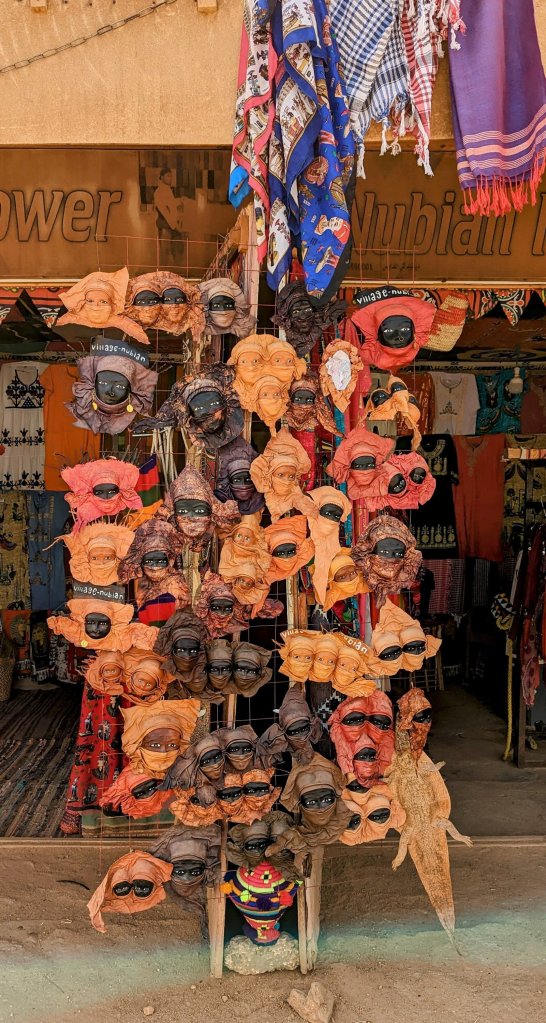
Later that evening we visited Agikia Island located in the Old Aswan Dam reservoir. There we saw the ancient temple dedicated to goddess Isis. This historic structure is part of a complex of temples called Philae. It too was relocated because of the dams. When the Old Aswan Dam was built, the complex was flooded or completely under water for months at a time. As part of the UNESCO Nubia Campaign, Philae was disassembled and moved to Agikia Island. It took workers almost 20 years to deconstruct and relocate the temple complex. We stopped by the following morning, and it was just as beautiful! We also had a chance to swing by the Nubian market where the clothes were far more beautiful than what we’ve seen so far. There’s much more gold and bling!
Nubian masksBeautiful dresses
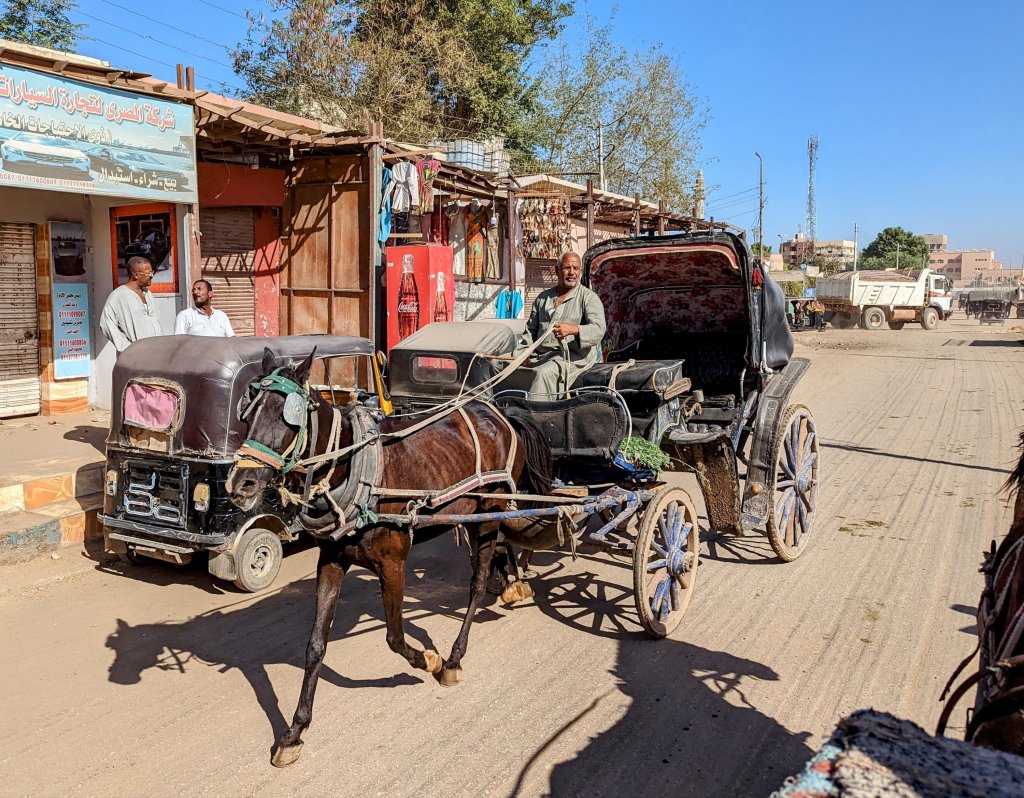
Aswan was the southernmost point on our journey on the Nile. As we began our trip back to Cairo, we stopped at the unique port of Edfu. Located on the west bank of the Nile between Luxor and Aswan, Edfu is steeped in Egyptian legend. When we arrived, about 30 horse-drawn carriages were lined up to take us to the temple. We climbed onboard and had the thrilling experience of “rush-hour” as our driver made his way through the heavy traffic, keeping pace with trucks, cars, and motorcycles.
Wild ride!
The ride to the temple didn’t quite prepare us for what was at the end of the road. Ancient Egyptian myth teaches that the falcon god Horus battled his uncle Seth after Seth brutally killed Horus’ father Osiris. To honor Horus, the people of Edfu built a grand temple from 237-57 BC. It is truly a magnificent example of an ancient Egyptian temple, with vivid stories and a magnificent Holy of Holies. There was a long line of tourists to take a “selfie” with the statue of Horis sitting in front of the temple. We passed on the selfie, catching a clean shot of Horus between the selfie-takers!
The Mamisi (Birthing Temple)Entrance arch with vivid colors still intactHoly of Holies Falcon god Horace
The Aswan Region is fast and slow, old and new, and its history and secrets will take some time to process. As we make our way back to Luxor, we’re left with a feeling that there is just so much to know and so much to do. But one thing is for sure… we’re happy to have made this particular journey before we’re too old.
Our visit to the west bank of the Nile was drenched in sunshine and the highest temperatures yet, but what we saw will be with us forever!
Valley of the Kings site plan
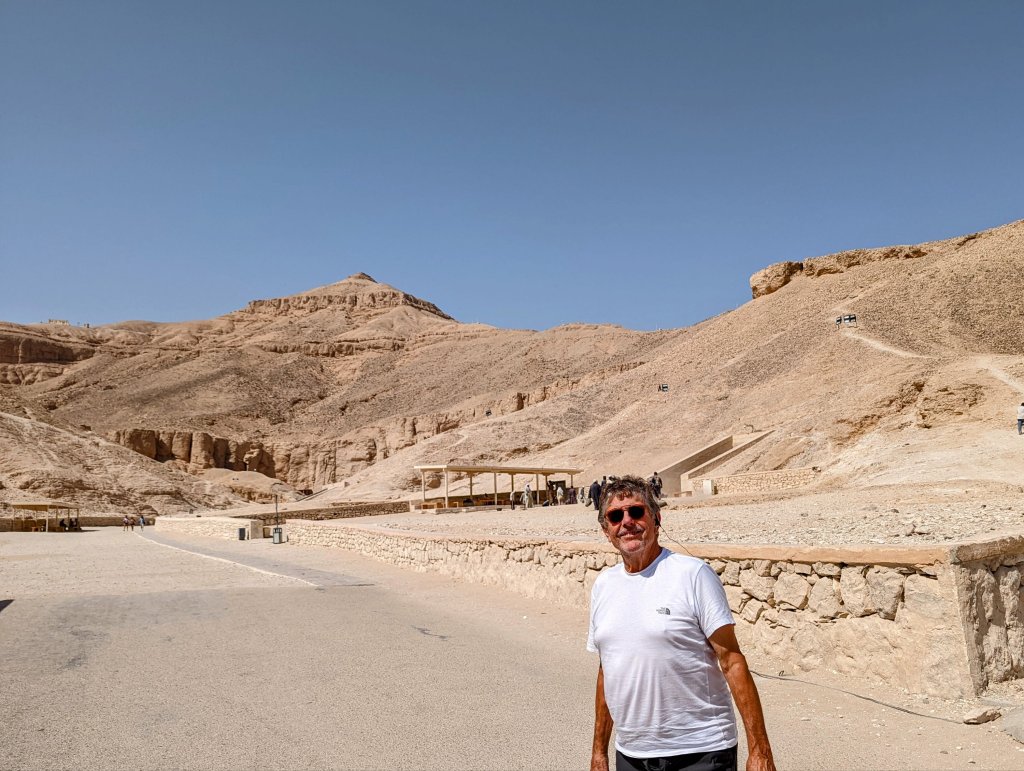
The Valley of the Kings sits in the heart of the Theban necropolis on the west bank of the Nile. This ancient site contains tombs from the 16th to the 11yh centuries BC. The Valley was constructed to provide holy burial sites for the kings, pharaohs, and other powerful nobles to ensure that their final resting places would be safe from the grave robbers. The Valley spans across two valleys, east and west, with the majority of the royal tombs situated in the east. The Valley contains at least 63 tombs in varying degrees of ongoing excavation. The more prominent tombs are open for viewing on a rotating basis. We were able to enter three, most notably that of King Tut.
Doug at the entrance to the Valley of the Kings
This area has been the focus of archaeological and Egyptological exploration since the end of the 18th century. In 1922, the Valley captured the world’s attention with the discovery of King Tutankhamen’s tomb. A new chamber was discovered in 2006, and two additional tomb entrances were identified in 2008. The tombs range in size from a simple pit to a complex tomb with more than 120 chambers. Today the Valley of the Kings is one of the most important sites for archaeological research and restoration.
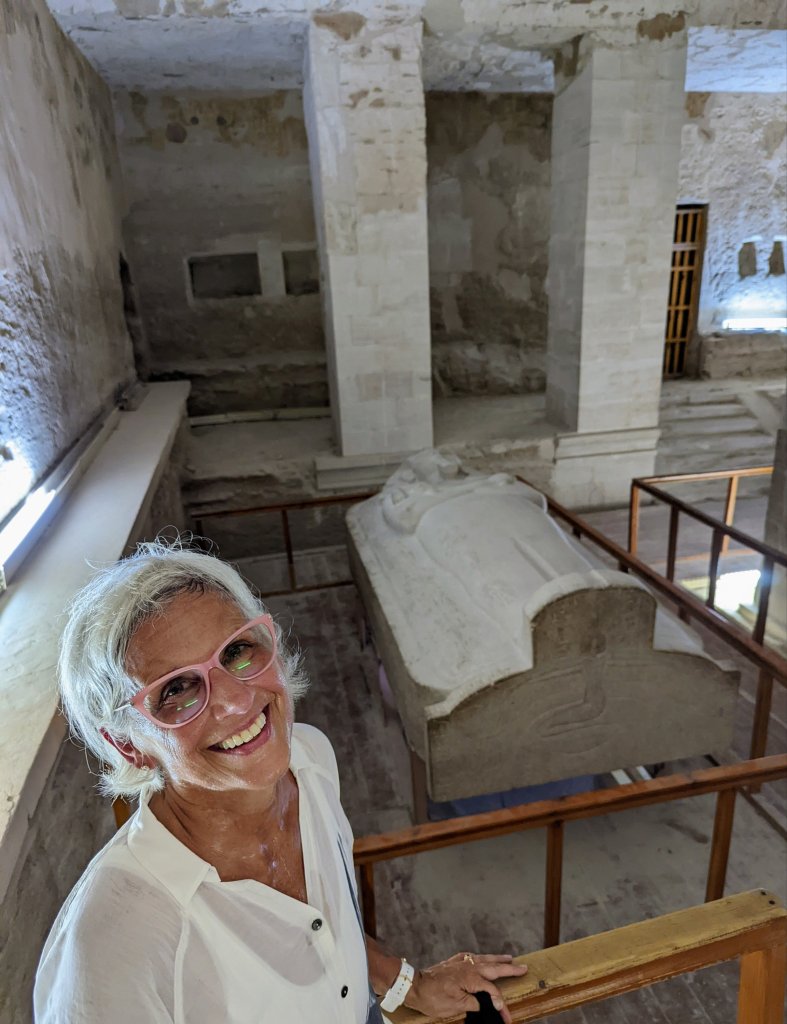
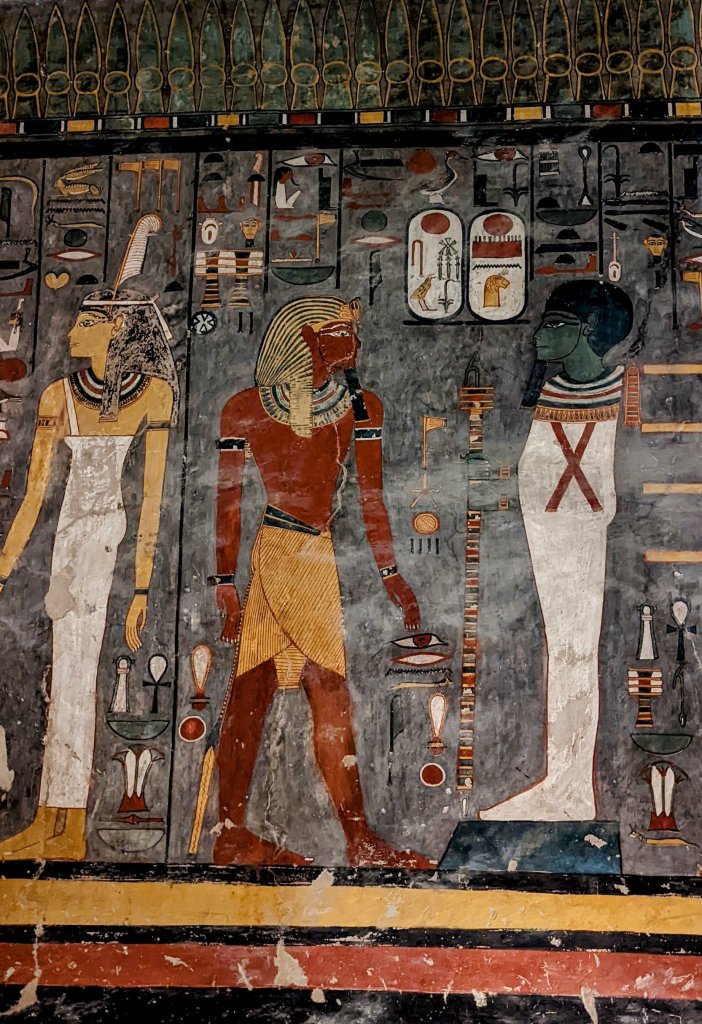
The Tomb of Merenptah is the second largest in the Valley. Discovered by Howard Carter in 1903, its main decorations come from the Book of Gates. Merenptah was a pharaoh during Ancient Egypt’s 19th dynasty and the son of King Ramses II.
Doug at the entrance to the Tomb of Merenptah The long way downStone Sarcophagus Part of the ceiling
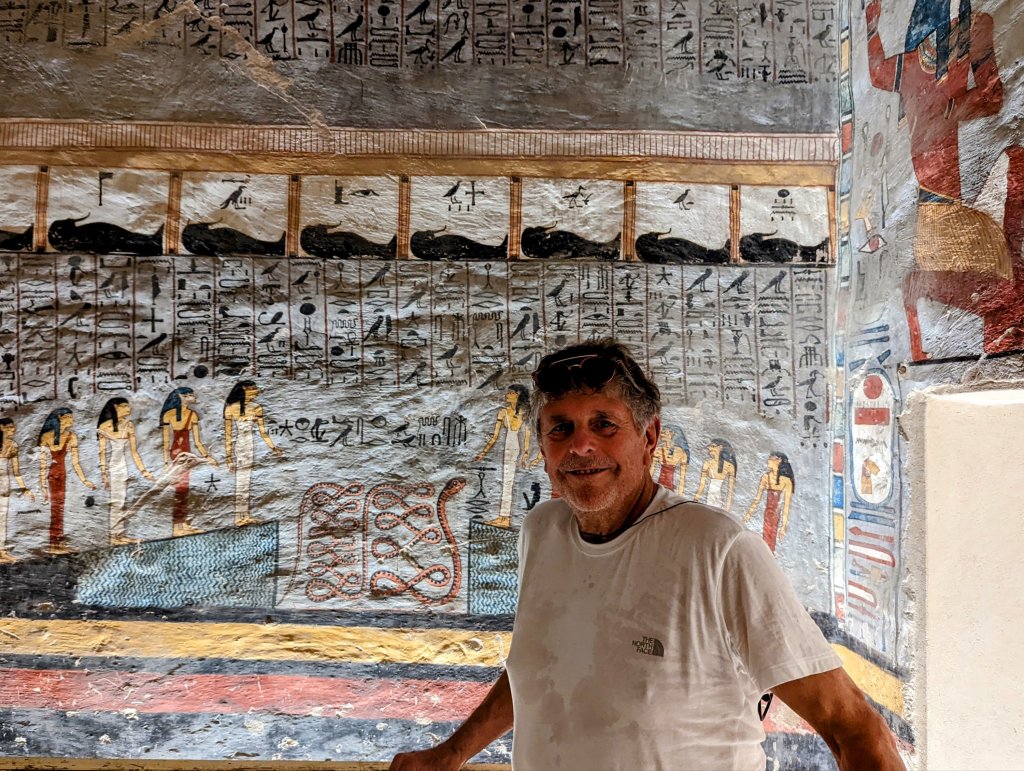
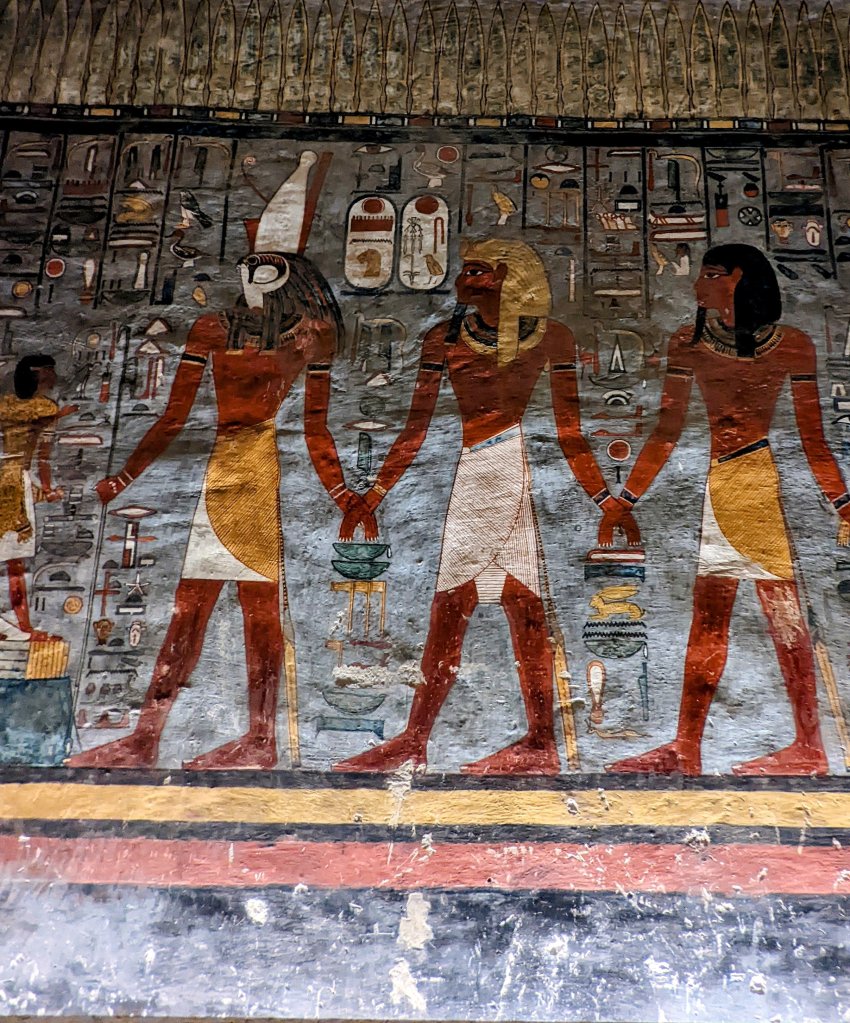
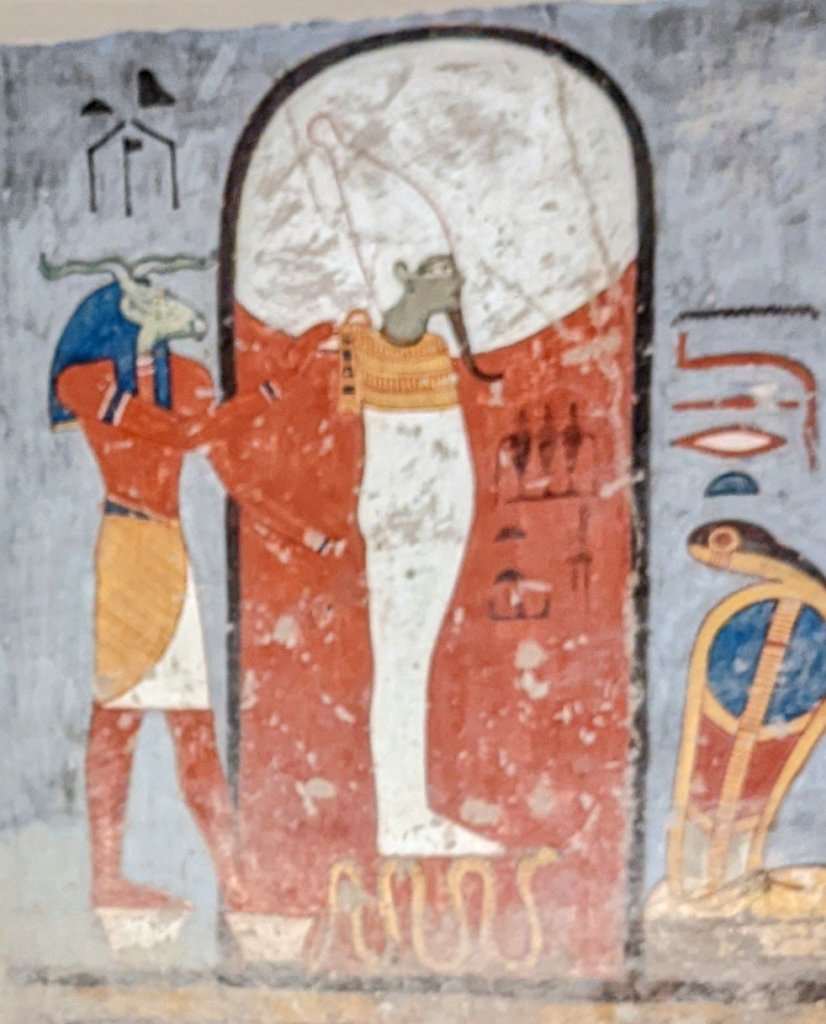
The Tomb of Ramses I was discovered in 1817 by Giovanni Belzoni. It is one of the smallest in size, presumably due to his advanced age and poor health when he took the throne. He reigned less than two years. His actual mummy was moved to a museum in Niagara Falls, Canada, then relocated to Emory University in 1999.
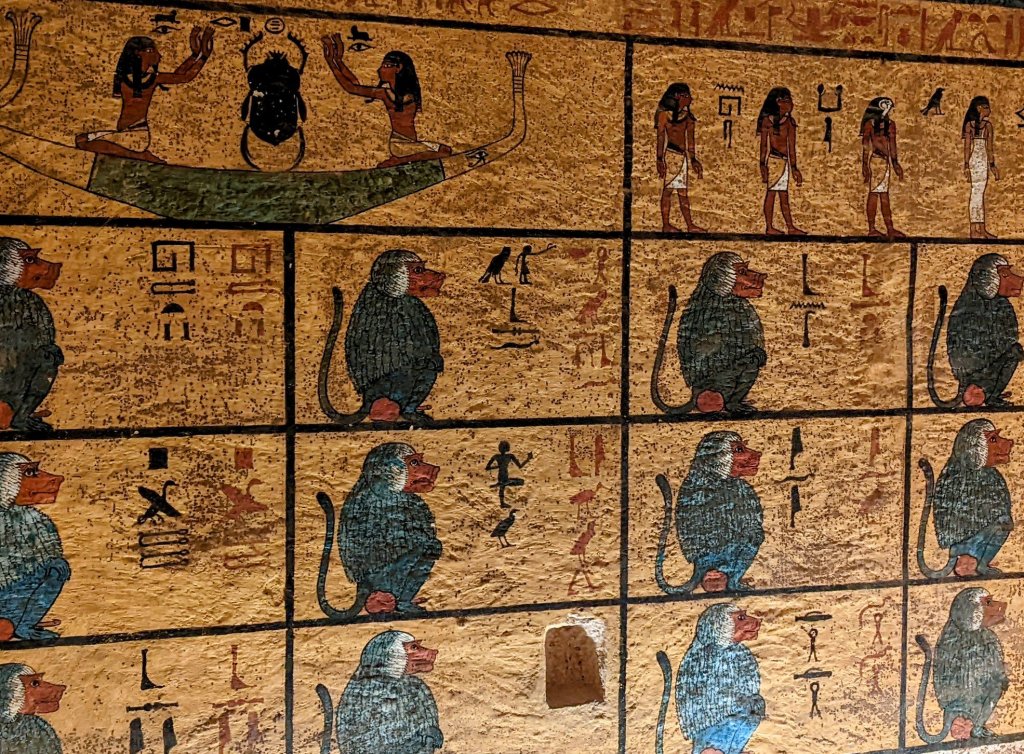
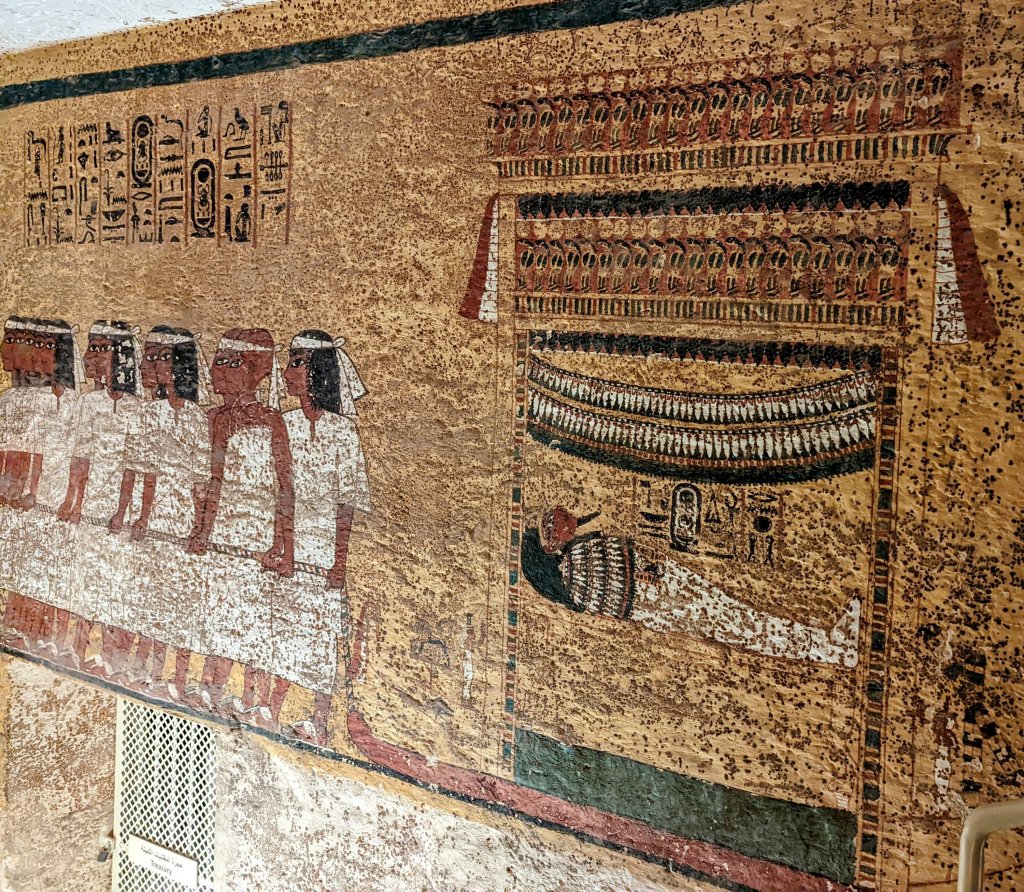
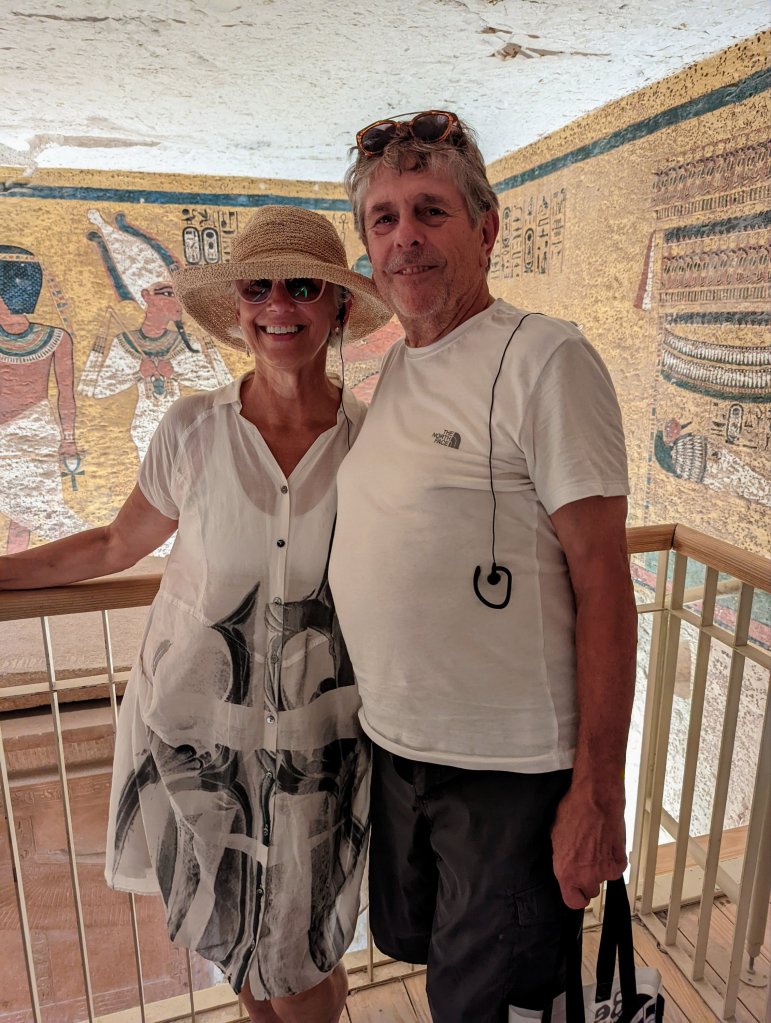
When King Tutankhamun died at age 19, an existing tomb was adapted for his burial. Only the burial chamber itself was painted, with scenes of his journey into the afterlife. Over 3,330 years old, the colors are still vibrant. It is considered the best preserved tomb ever found. Visitors are restricted to prevent further deterioration. The treasures have all been moved to Cairo museums, and some are in other places around the world. Today, only his mummy, the outermost of his three nested coffins, and its lid remain in the tomb. We were thrilled to be able to visit his tomb during the 100th anniversary of its discovery.
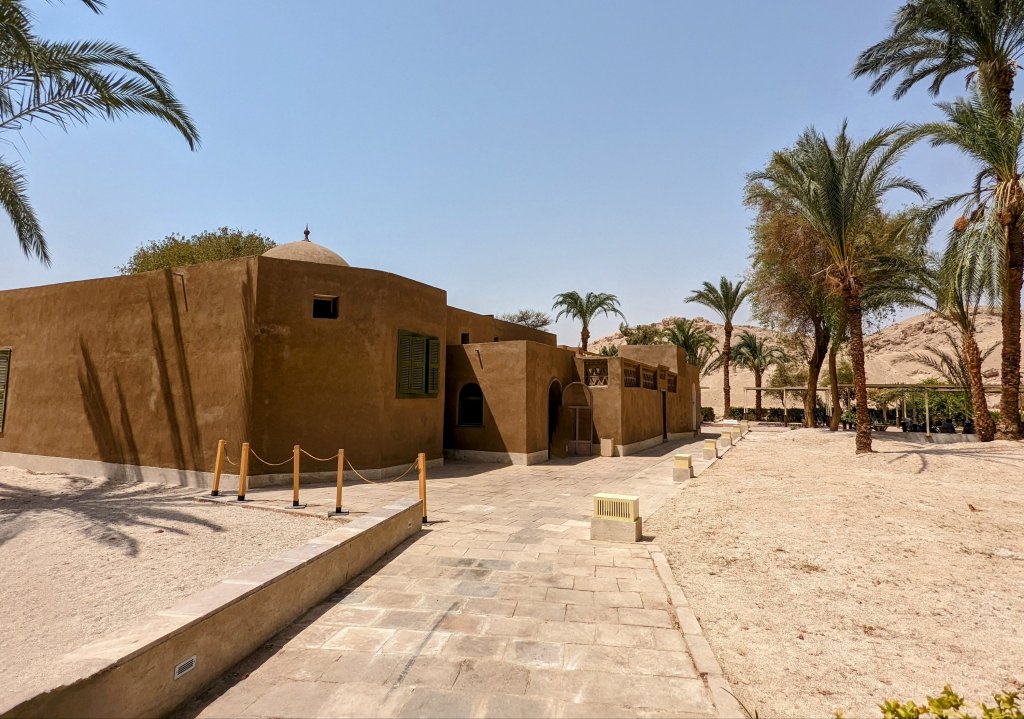
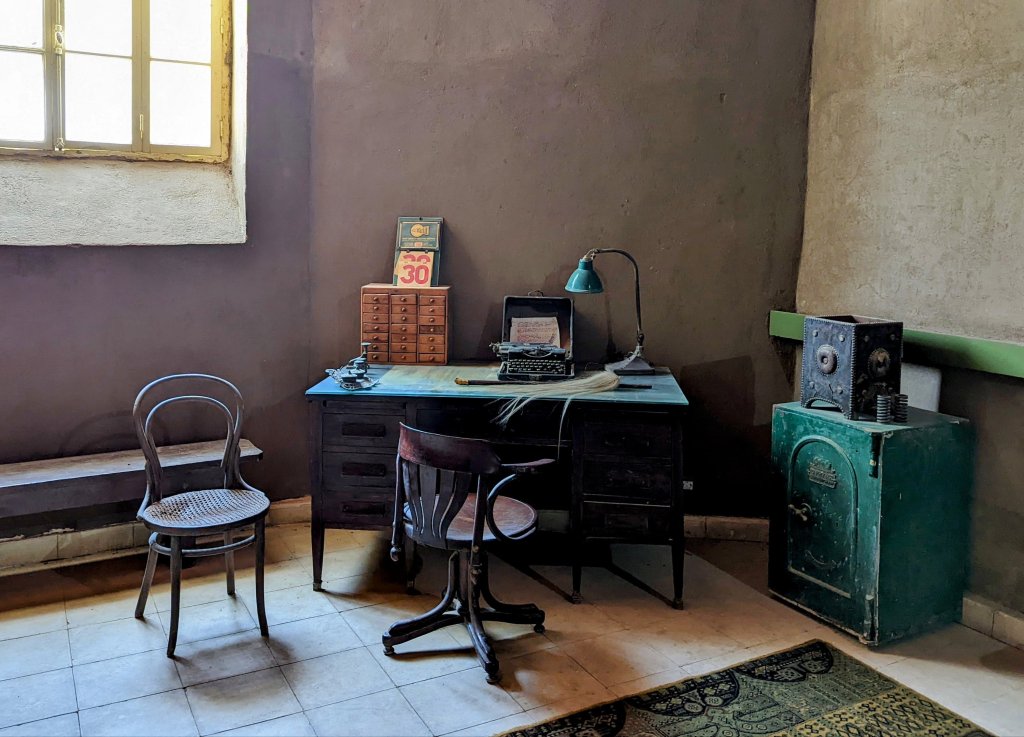
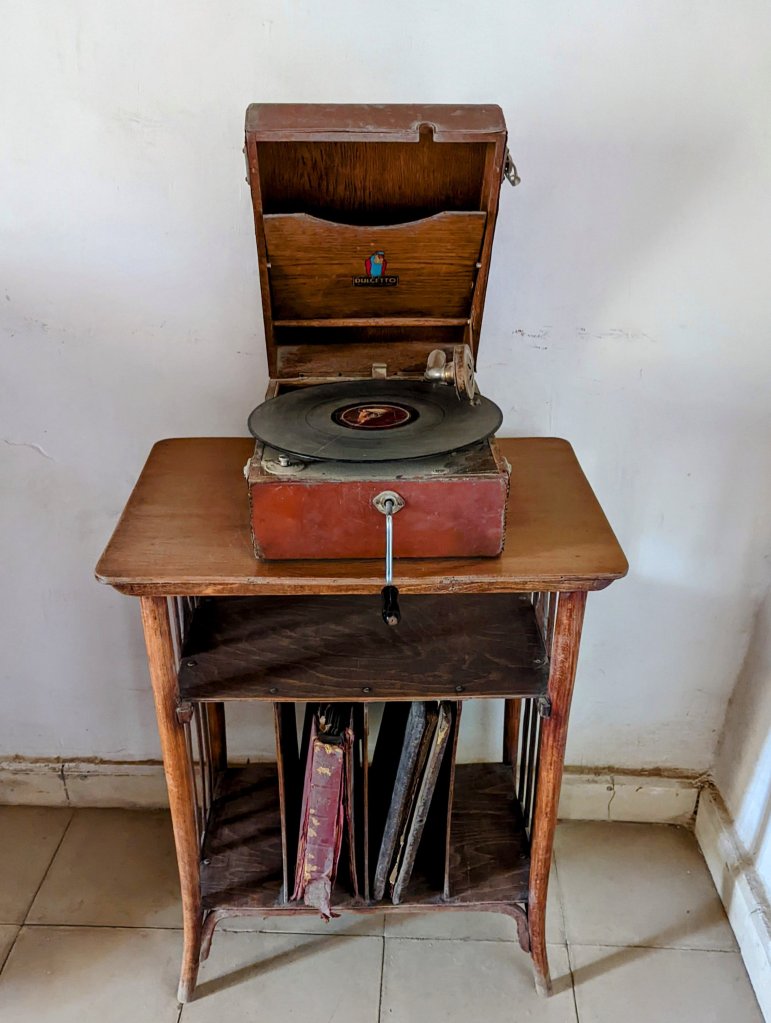
Curious to learn more about Howard Carter, the British archeologist and Egyptologist who discovered the intact tomb of the 18th century Dynasty Pharaoh Tutankhamun in November, 1922, we traveled over to the house he lived in while working in Egypt. Most of his belongings, including some tools, his camera and dark room, kitchen, office, and victrola remain intact. In fact, it looked as though he could walk through the door to catch us snooping through his things.
Following our visit to Carter’s home, it was time to visit the nearby Valley of the Queens. The queens and some of their children are buried here, although the reasons for its location is not clear.
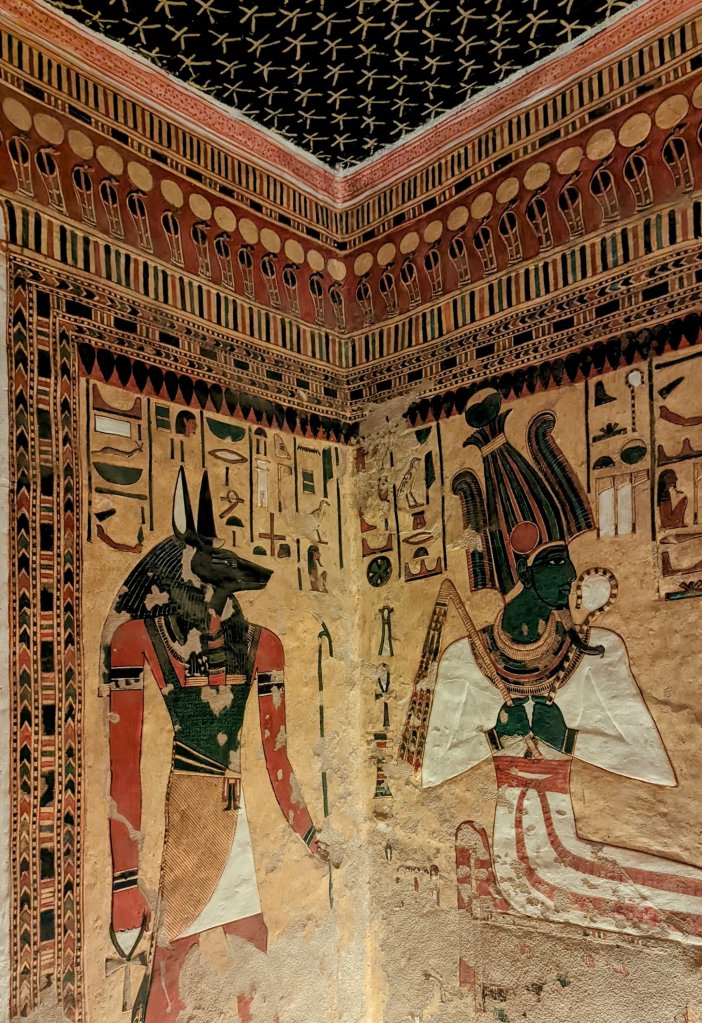
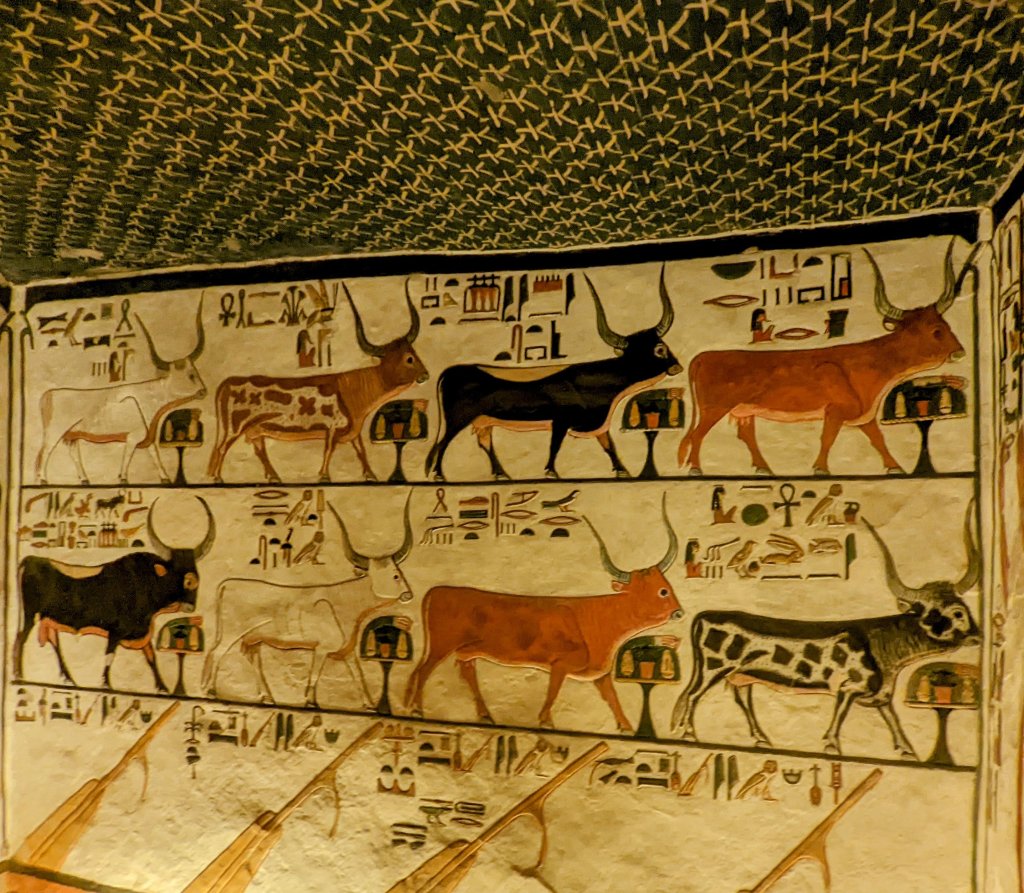
The largest and most elaborate of the tombs is that of Queen Nefertari, first of Pharaoh Ramses II (Ramses the Great)’s eight wives. Married at age 13, Nefertari had at least six children during their 24 year marriage. He called her “beautiful companion” and “the one for whom the sun shines.” Her tomb was discovered in 1904 by Ernesto Schiaparelli. It has intense color, with a ceiling painted deep blue and lined with stars. The walls are covered with elaborate imagery. It was badly deteriorated over the years, and was closed for restoration from the 1950’s until 1995. It was closed again from 2003-2016, and now has only limited visitation. Cameras are not allowed, and only cell phone cameras with no video and no flash can be brought into the tomb. The vivid walls depict her journey through the underworld. It is truly magnificent!
Doug had gone shopping for Egyptian Night at the market at the Valley of the Gods and was enjoying his new headgear in the 110° heat!
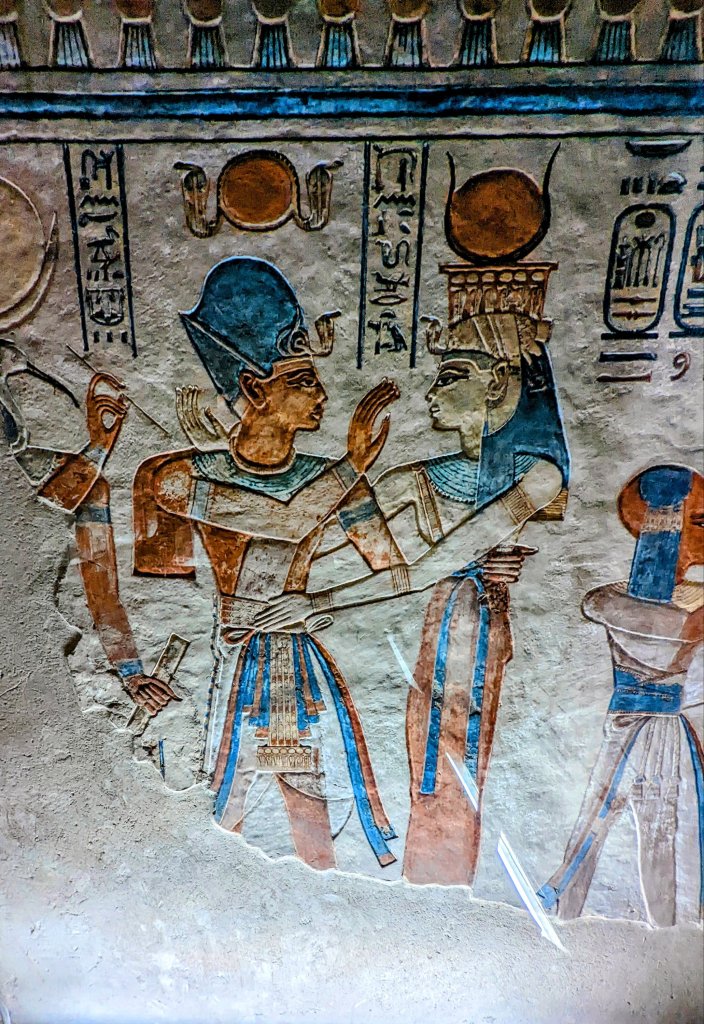
The tomb of Prince Amen Khopshef, son of Ramses III, is well preserved and very colorful. It is believed he died young, as he is seen as the small boy with his father in many scenes.
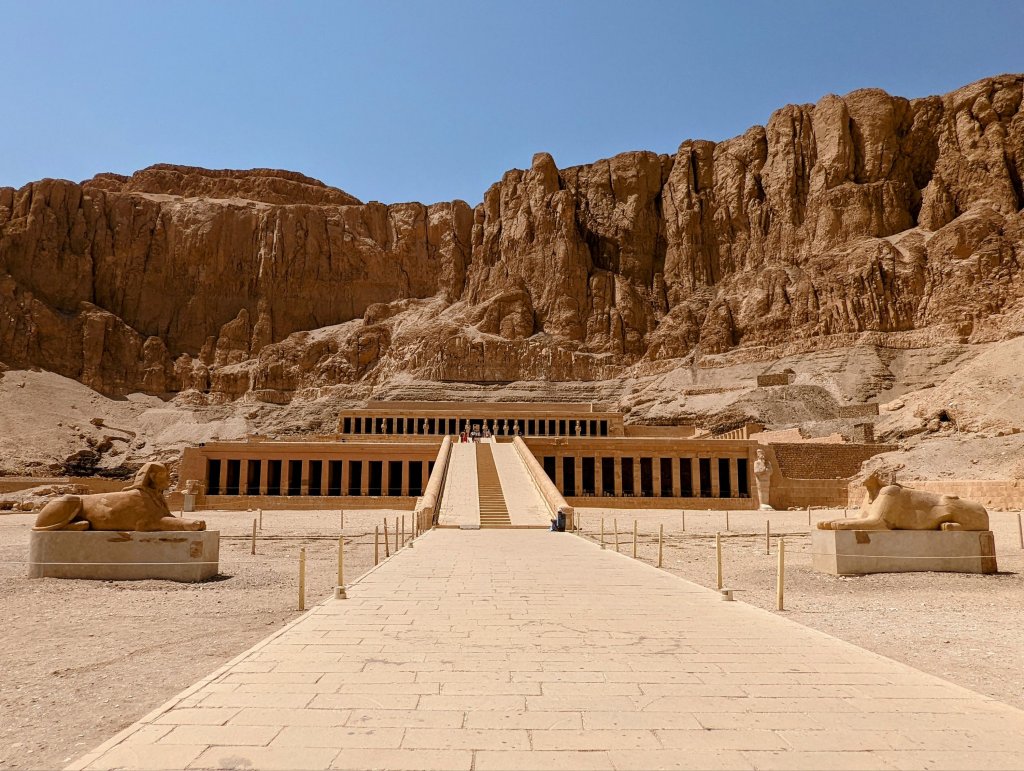
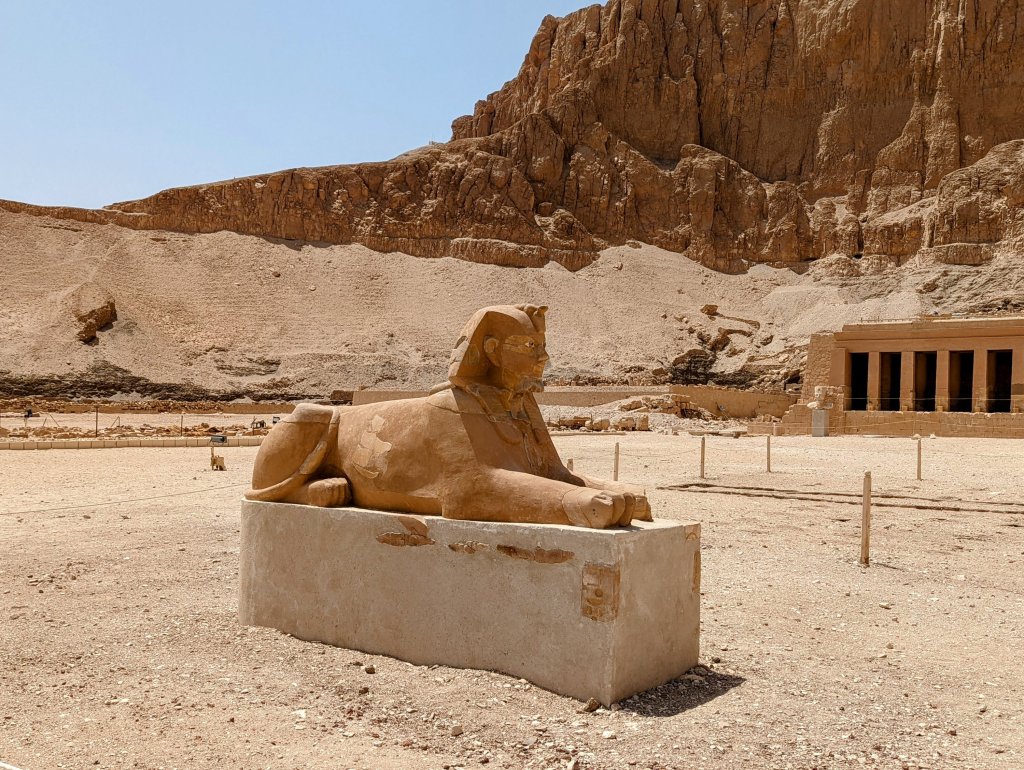
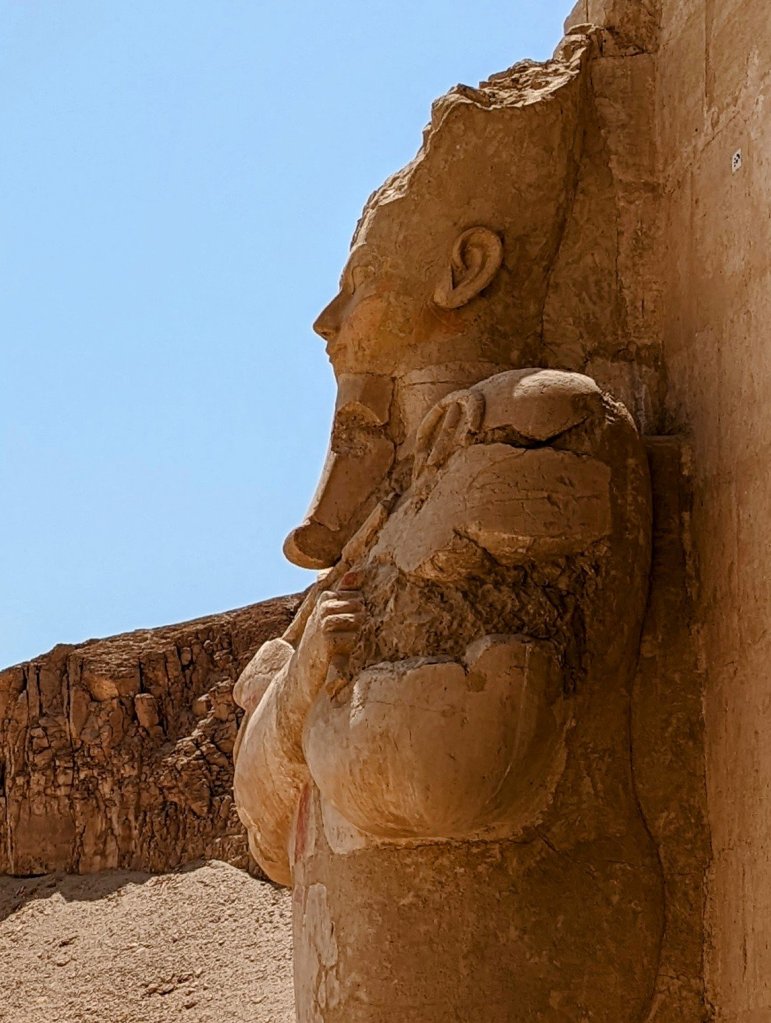
Our next stop on this action-filled day was the Mortuary Temple of Queen Hatshepsut. The temple is one of the most beautiful and striking of all of Egypt’s mortuary temples. Dedicated to the sun God Amun, this architectural masterpiece was designed in the 15th century BC to memorialize Queen Hatshepsut’s legacy among her male predecessors. It is an incomparable monument of ancient Egypt and a magnificent tribute to the greatest of Egypt’s female pharaohs.
Egypt had many queens, but none had the full powers of a pharaoh before Hatshepsut. From 1479-1458 BC, her reign was characterized by peace, prosperity, and the establishment of profitable trade with Punt (Somalia.) After her death, her stepson Thutmose III created the largest empire Egypt had ever seen. He also went to extremes to obliterate all traces of Hatshepsut, including chiseling off any and all images and cartouches, and demolishing all of her statues. The queen literally disappeared from history until 1903 when archaeologist Howard Carter found her tomb and her story was illuminated for the first time in 3,500 years.
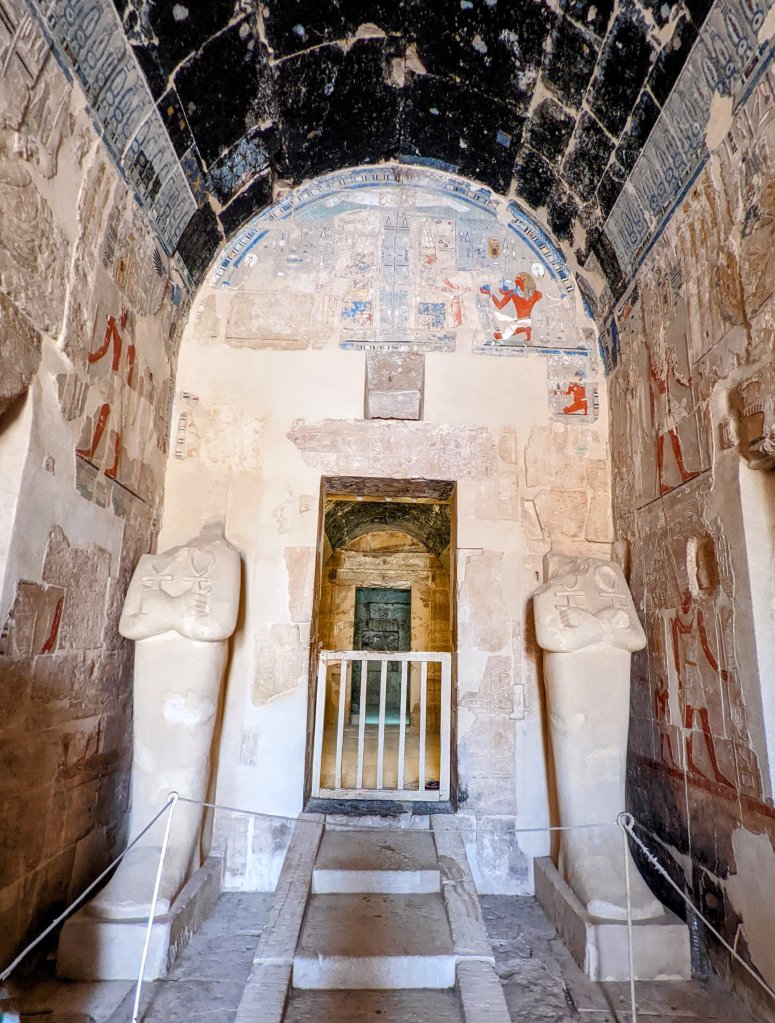
The Mortuary Temple Sphinx at the entrance The long way upStatues of the QueenThe well-guarded tomb
Our final stop was a brief photo stop at the Colossi of Memnon, the two massive stone statues of Pharaoh Amenhotep III. The Colossi have stood in front of the ruins of his temple, the largest in the Valley, since 1350 BC.
This was by far the longest and hottest day in our journey, but it was such a rich, rewarding experience. As we headed back to the east bank and our awaiting ship, we were a bit awe-struck (or sun-struck!) by everything we were privileged to see.
Our three days in Cairo were action-packed and exhausting, but we persevered and took in as much as possible. From the intact antiquities and wonders of the world to the present-day challenges with unbridled traffic, pollution, and housing issues, Cairo’s rich past and its unbridled passion provide non-stop stimulation in every way possible. We’ll try to capture some of why locals continue to refer to the city as “Umm al-Dunya,” Mother of the World.
The Nile lured visitors to Egypt as early as 5200 BC and by 3100 BC it had become the world’s first recognizable city-state. Formed around 45 million years ago, the Nile took thousands of years to become the longest watercourse in the world. Most of Egypt’s most important myths were based on the Nile, and even the ancient calendar was adjusted according to the patterns of the river. The Nile continues to be as integral to Egyptian life, lore, and commerce as it was so many years ago. We were blessed to be able to look out on the Nile from our hotel room balcony.
View from our balcony
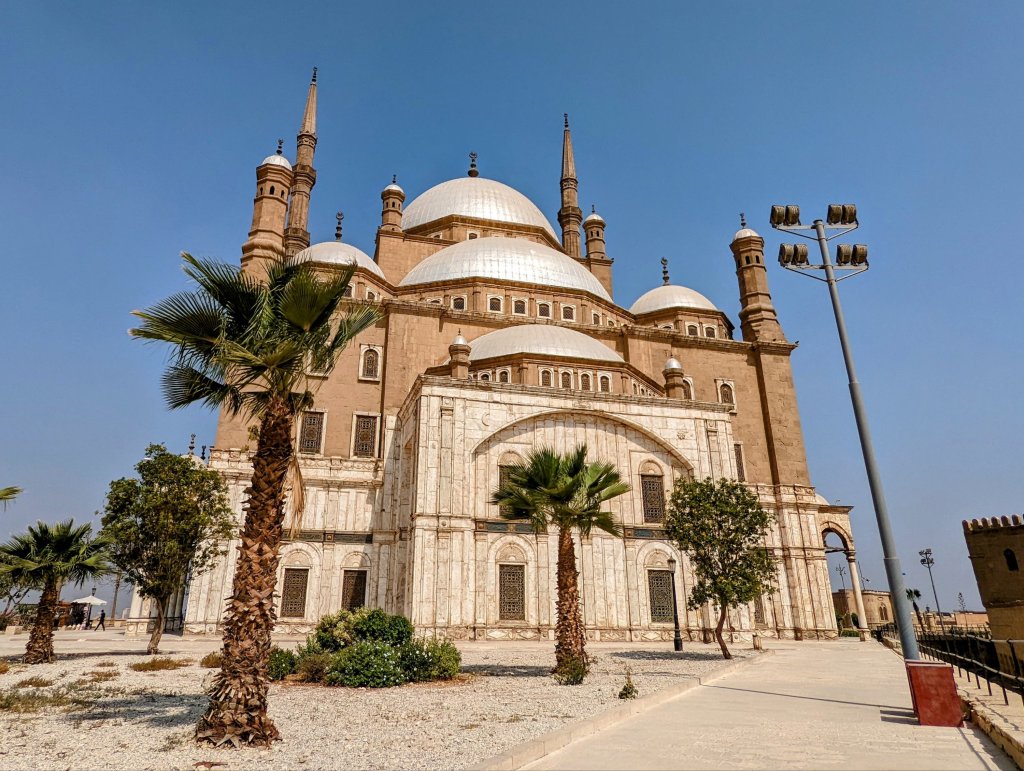
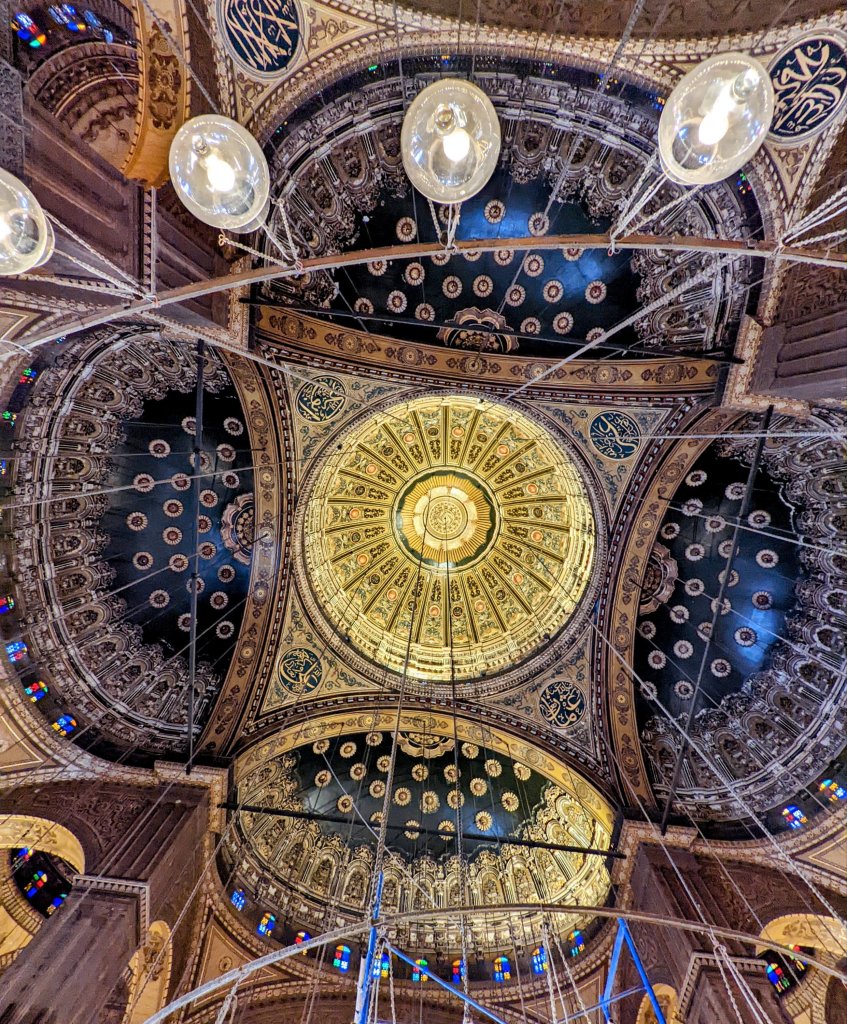
A visit to the Cairo Citadel provided us with a great introduction to the rich Islamic history surrounding this incredible place.
Cairo CitadelMosque of Muhammad AliCourtyard of the MosqueDome of the mosque
Moving on to the Egyptian Museum, we viewed many priceless antiquities, including some from King Tut’s tomb, and learned more about Egypt’s fascinating history. This visit provided meaningful context for some of the phenomenal things we’ll be experiencing on this journey of a lifetime.
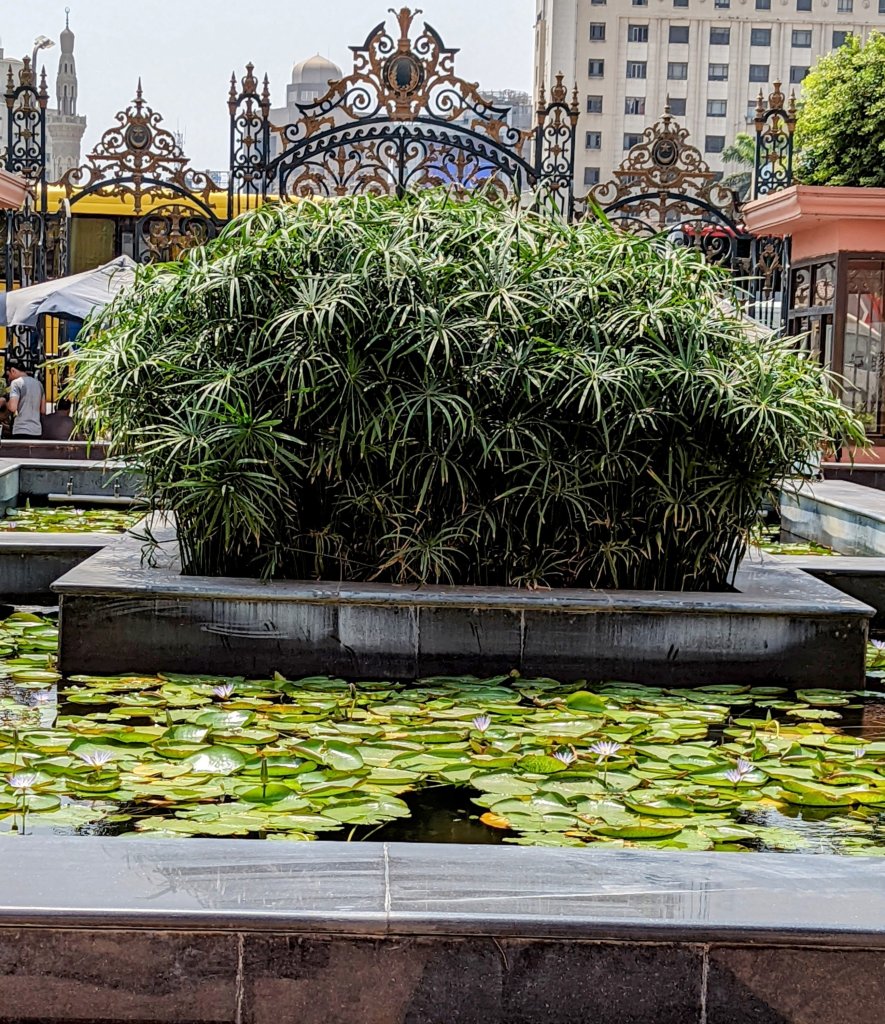
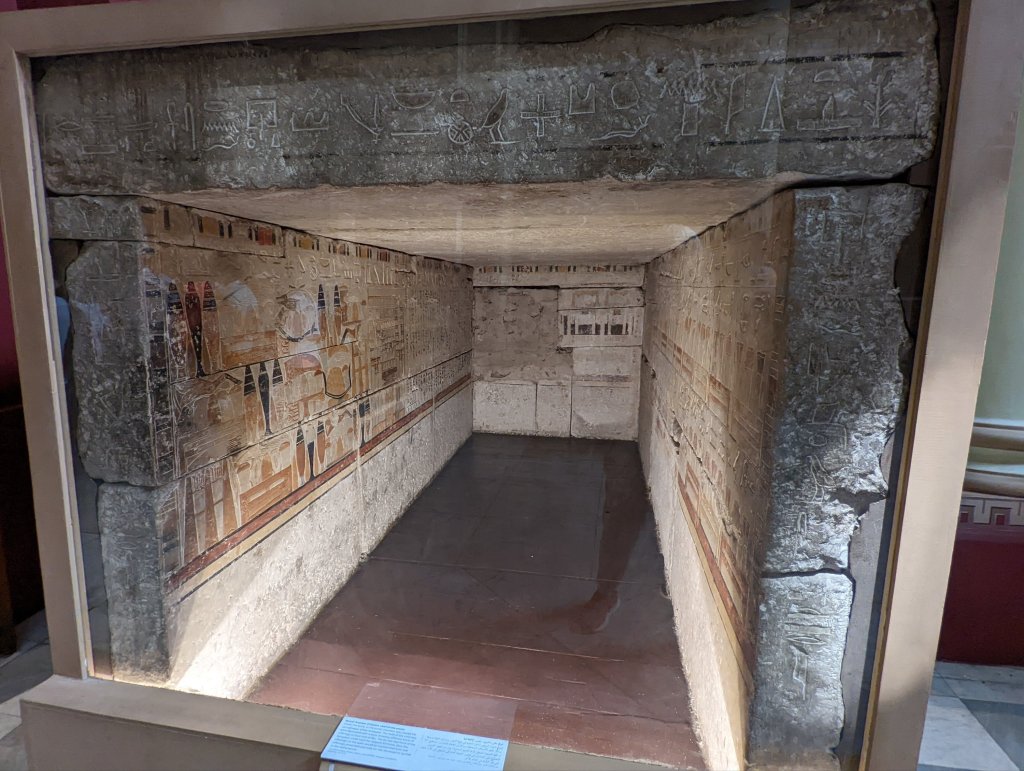
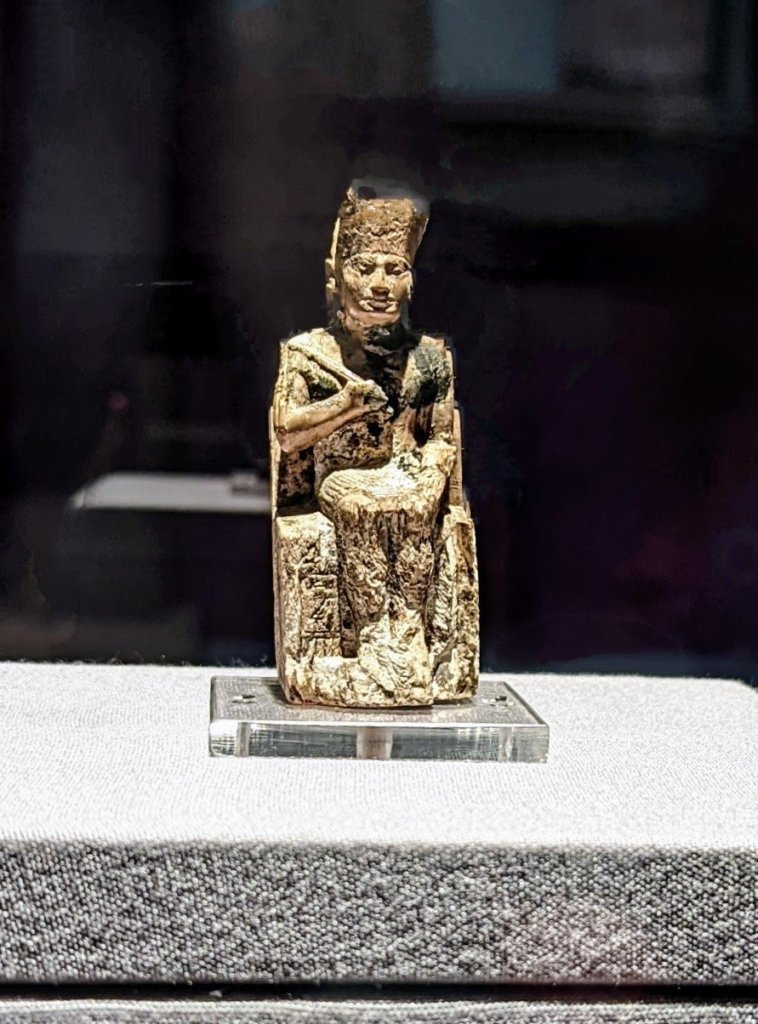
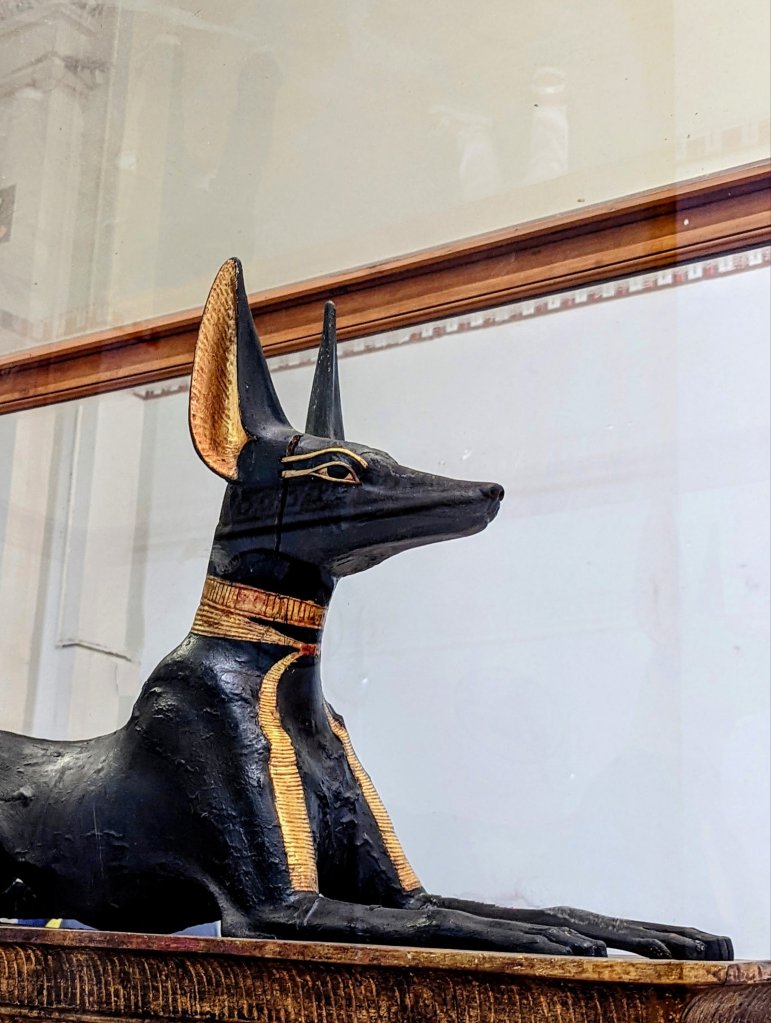
The lotus and papyrus pond at the museum entrance reflects Egyptian prosperity and royalty. Images of both are found in many of the antiquities.The actual burial chamber of Deshri, chief of the estate in around 2100 BC. The walls are decorated with images of ordinary items like food and drinks that could be transformed to meet his needs in the netherworld.The oldest known life-size Egyptian statue representing King Djoser (2649-2630 BC)Statue of Pharaoh Khafre (2520-2499 BC) with the god Hours depicted as a falcon to protect his backsideStatuette of Khufu, builder of the Great Pyramids of Giza. At 4″ tall, it is the smallest ivory statue in the museum, but one of the most significant.The throne of King TutankhamunAnubis, god of the dead, is the most famous depiction of a jackal which guarded the tomb.
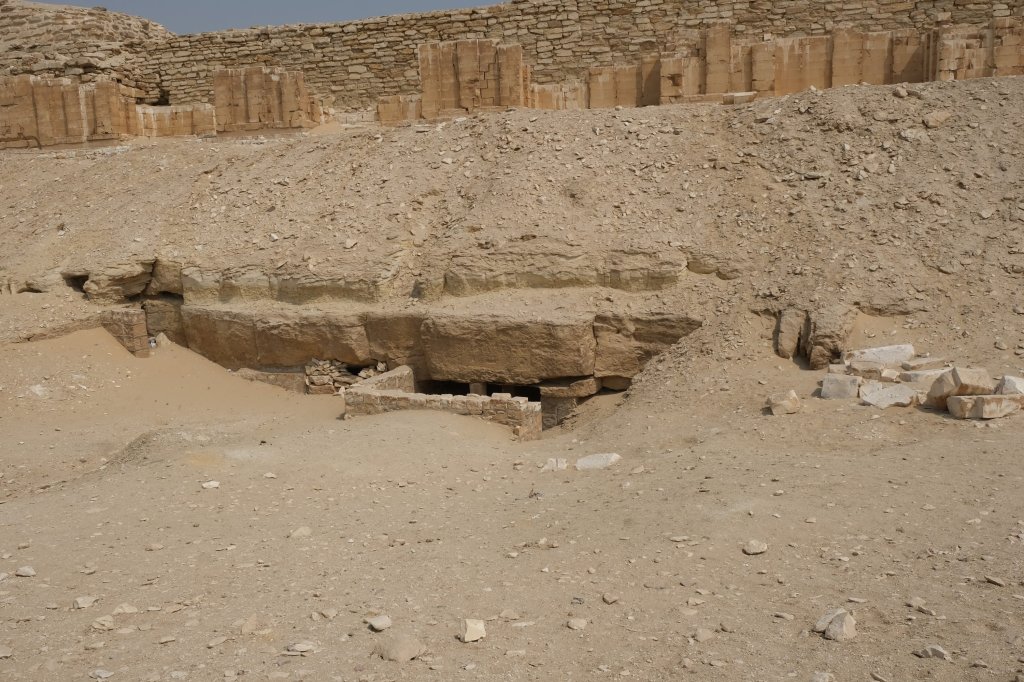
Pyramids represent the epitome of ancient Egypt’s glory. The first pyramid was the Sakkara Step Pyramid. Built under the direction of Imhotep, King Djoser’s chief minister and architect as the king’s final resting place, Sakkara soars to a height of 204 feet. Beneath it lies a labyrinth of tunnels and chambers including the king’a sarcophagus 75 feet underground. It is truly a sight to behold. Seeing the pyramids glowing in the sun is a breathtaking experience, especially knowing that what remains today are only the underlying core stones.
Sakkara Step Pyramid Sakkara tunnels Sakkara complex On their way to SakkaraFar in front of SakkaraThe necropolis is accessed by a collonade entrance which is flanked by stone columns in the shape of bundles of papyrus. When we were there, a puppy was sitting at the farm end, enjoying a rare bit of shade.
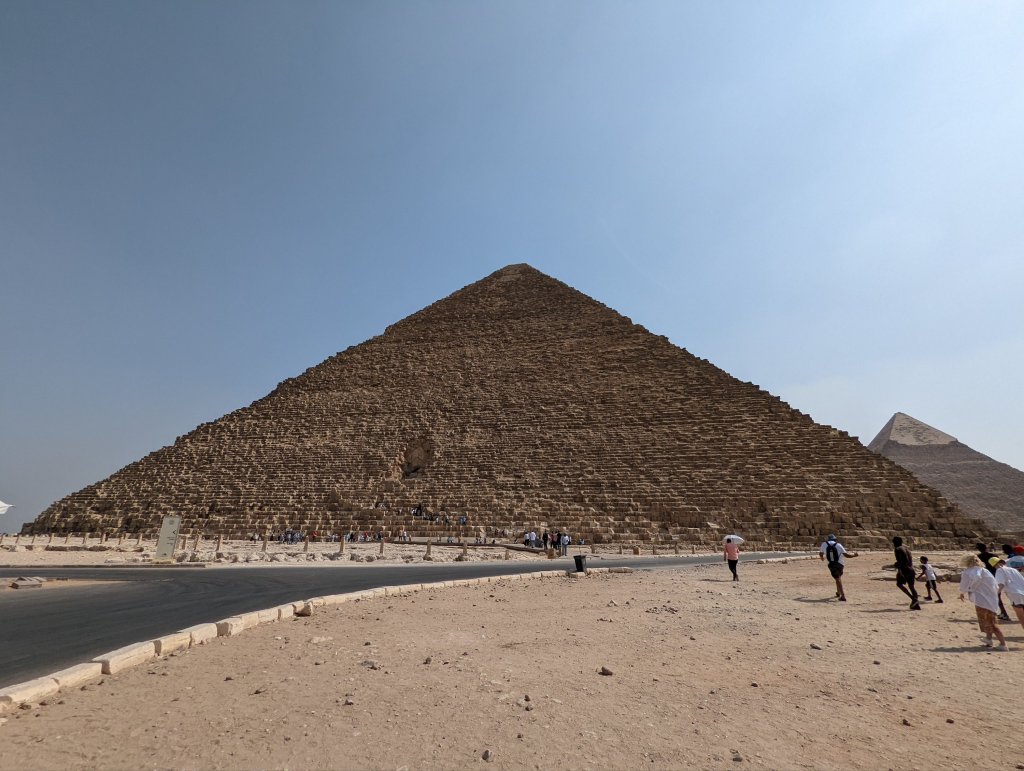
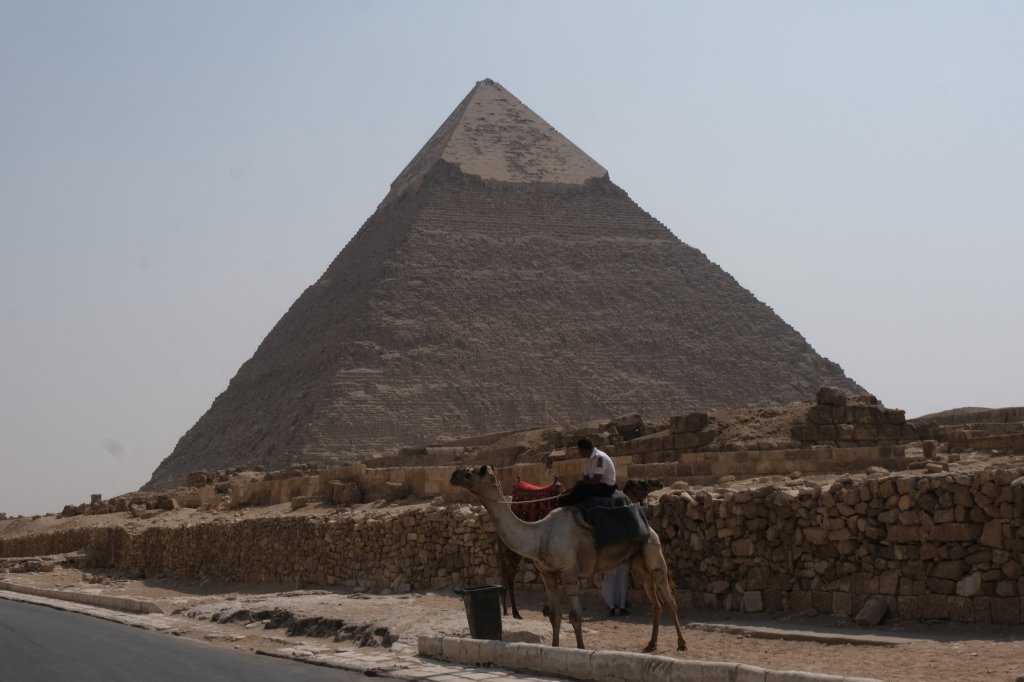
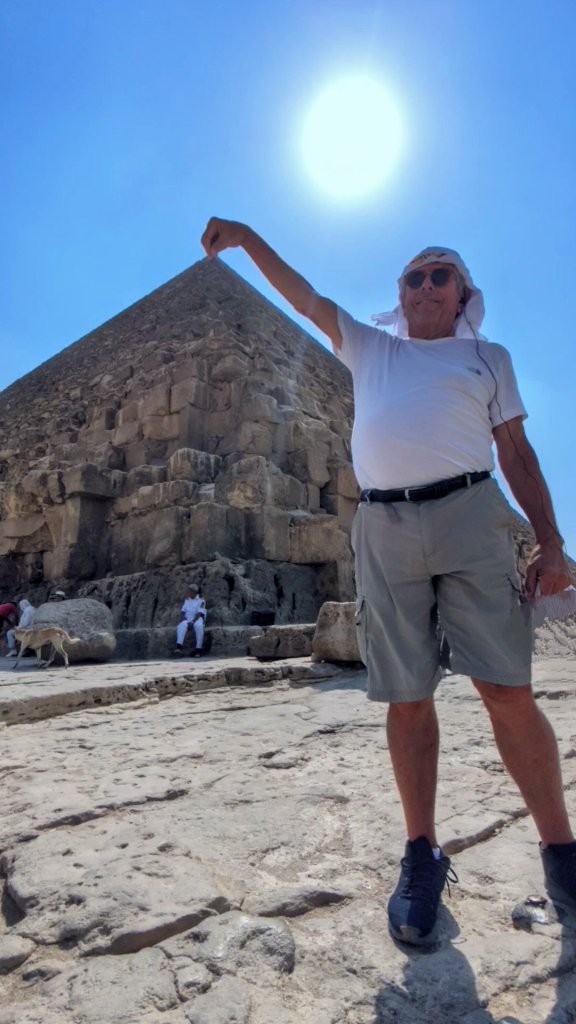
After Djoser, other kings built pyramids in Sakkara and elsewhere, but the greatest of all is the Great Pyramid of Khufu, also called Cheops. Described as one of the Seven Wonders of the World by ancient Greeks, it is the only one of those wonders still standing. It consists of 2.3 million stone blocks, each weighing between 2.5 and 15 tons. Contrary to popular belief, they were not built by slaves. Records show that the work was done by skilled craftsmen supervising paid laborers from all over Egypt. The Khufu/Cheops is flanked by the Pyramid of Khafre. The Pyramid of Menkaure is the smallest of the three, but has the most complex mortuary temple. All three are astronomically oriented with their four cardinal points within a fraction of a degree.
The Great Pyramid of Khufu with Khafre peeking out Main Entrance Side viewPyramid of KhafreAll three pyramids All three pyramidsPerhaps he’s had too much sun!
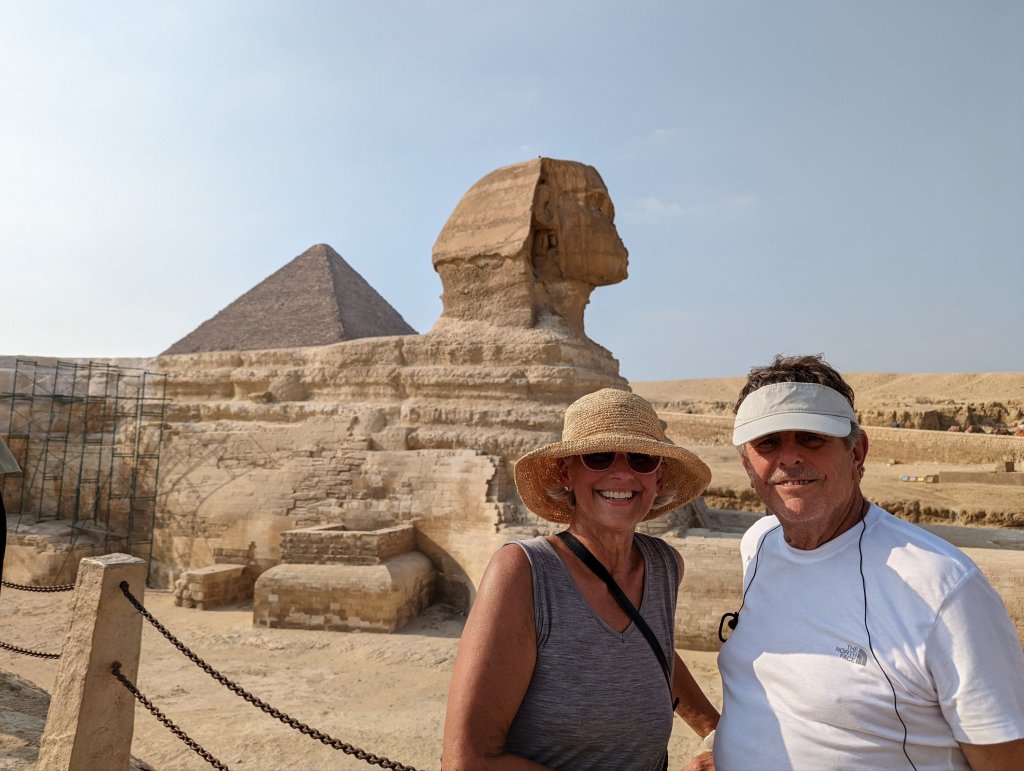
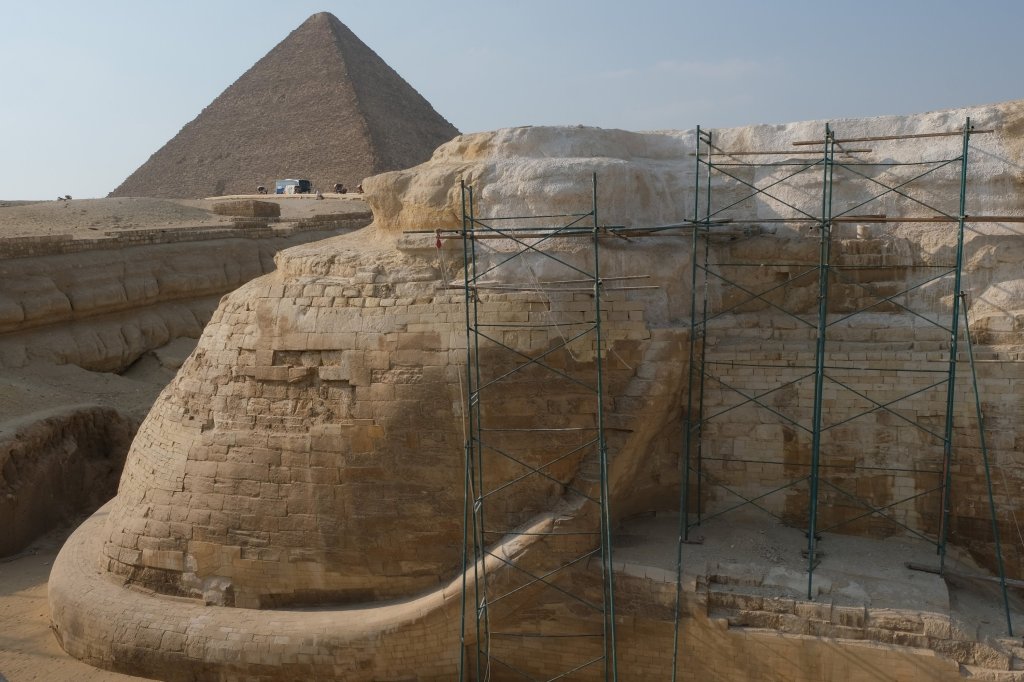
Full of mystery and wonder, the enigmatic Sphinx, carved from a single block of limestone and nestled near the Great Pyramids of Giza, is one of the most enduring symbols of Egypt. Its face is missing a nose after having been battered by winds and harsh climates for centuries. Bits of red coloring offer the possibility that it might have been painted red at one time. It didn’t always sit on the ground near the pyramids. In the 1930s, an Egyptian archaeologist dug the cat out of its tomb, allowing the iconic sculpture to bask in the desert sun for all to see.
The SphinxBackside showing the enormous tail and ongoing restoration
We also had a little bit of fun riding camels at the pyramids. The guides helped us mount the enormous beasts, who then abruptly stood up. Although a bit intimidating, it was great fun and something we’ll never forget.
Denise had to have a conversation, just to establish mutual trust!Doug fearlessly hopped right on, knee and hip replacements be damned!And off we went into the desert!
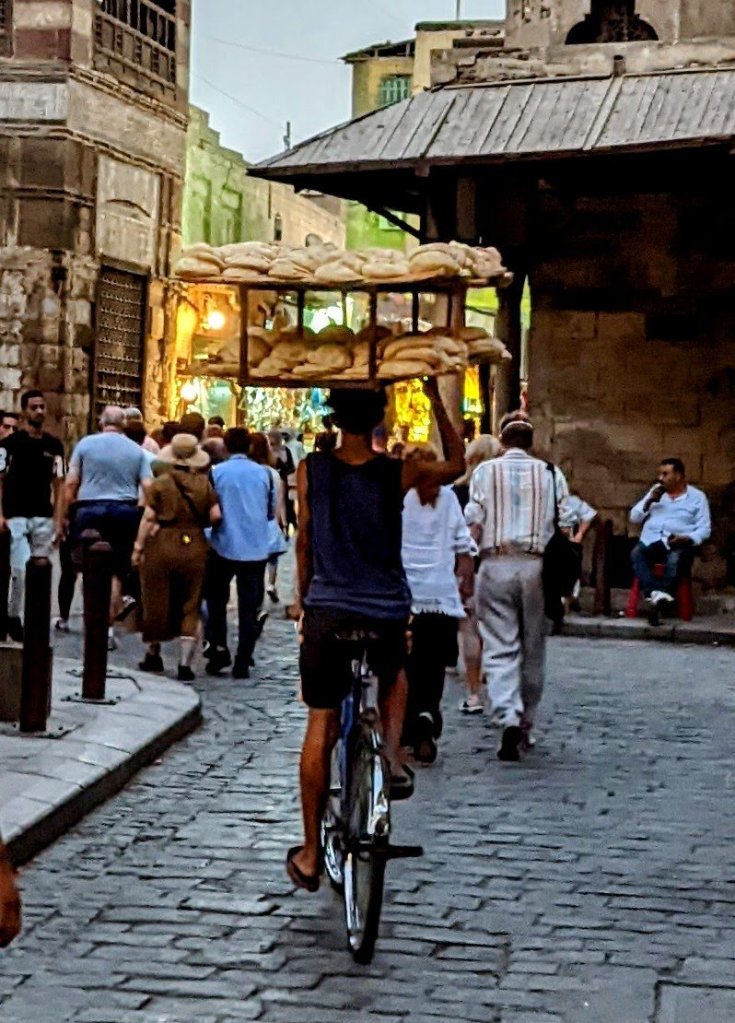
We also had the opportunity to visit Cairo’s oldest and largest open air bazaar, Khan el-Khalili, another thrilling experience! The bazaar, or souk in Arabic, is tucked into narrow streets and alleyways and offers a truly dynamic shopping experience. The Al-Hussein Mosque, a sacred religious site and important center of Islamic theology is adjacent to the bazaar.
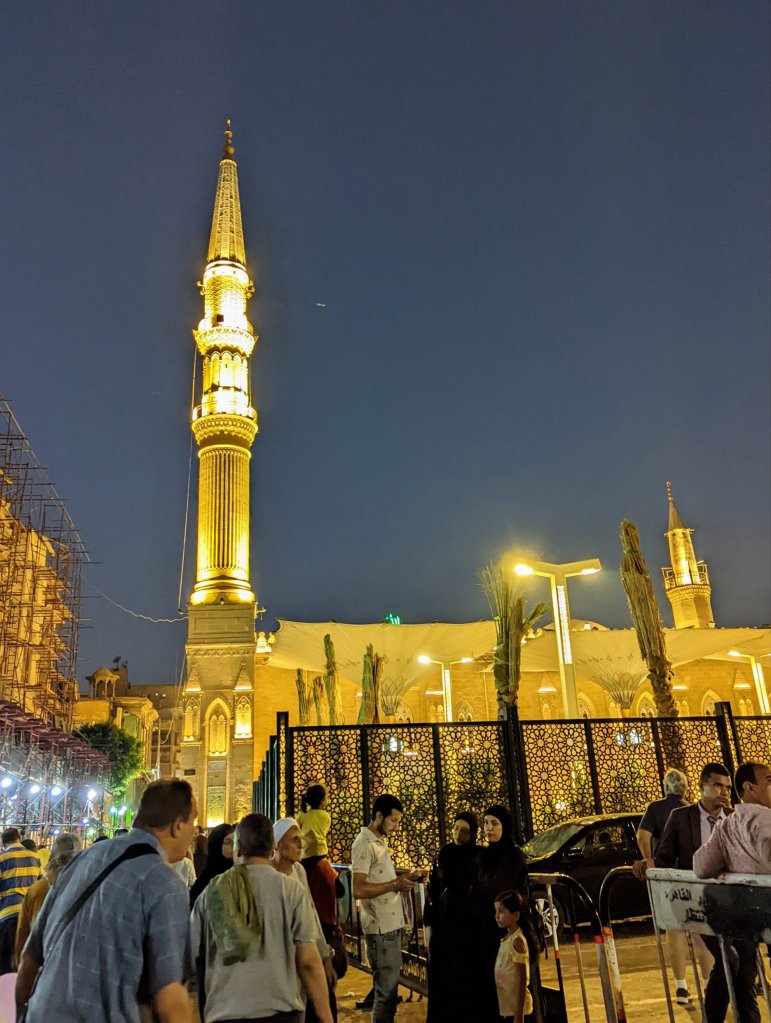
Amazing fashions Aromatic spices and exotic oilsMusicGold!And a young man balancing two tiers of bread on a bike!Historic mosqueMosque at the time of the call to evening prayers
All over Cairo we saw throngs of people! Over 20 million people live there, and there are clearly some quality of life issues needing attention. And although our three day visit didn’t scratch the surface, we were thrilled to be able to experience this amazing place. Where else can one experience life as it was so long ago, eat exotic and delicious food, see treasures from ancient tombs, dodge endless traffic, ride camels, and see this much cotton candy!






















































































































 Timeless Travelers